


Kubeli
A modern, native Kubernetes management desktop app for macOS & Windows. Multi-cluster support, real-time monitoring, AI assistant, terminal access, and more.
Stars: 229
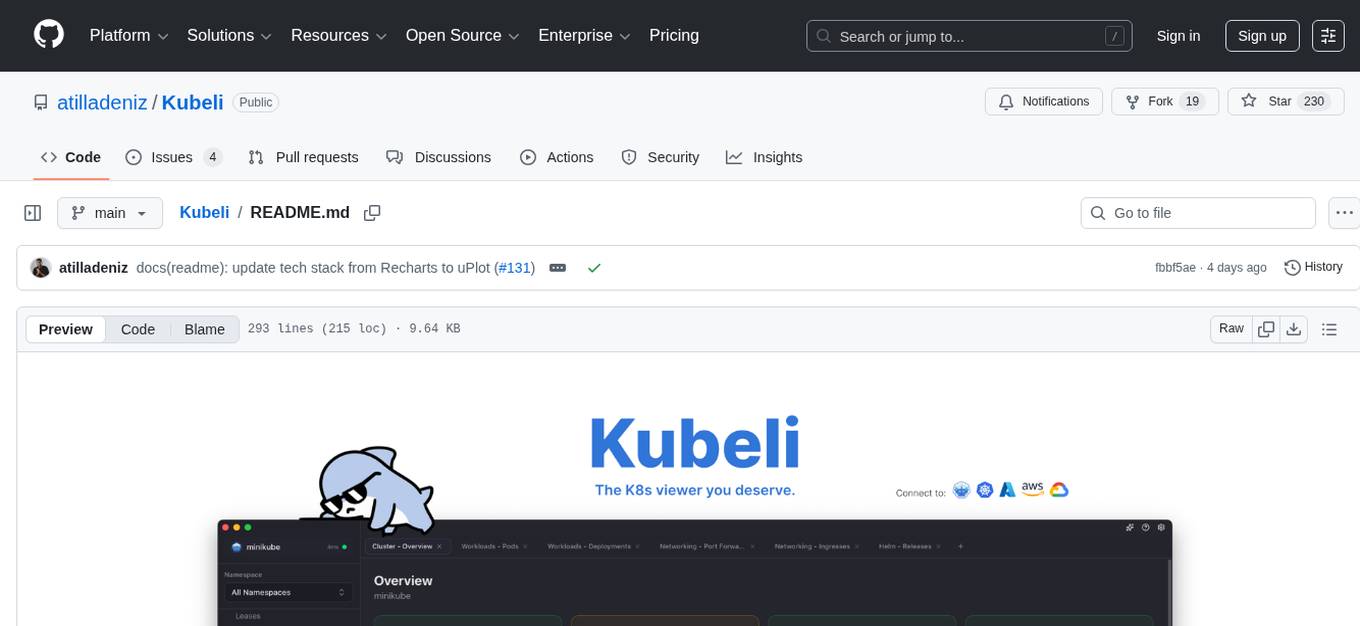
Kubeli is a modern, beautiful Kubernetes management desktop application with real-time monitoring, terminal access, and a polished user experience. It offers features like multi-cluster support, real-time updates, resource browser, pod logs streaming, terminal access, port forwarding, metrics dashboard, YAML editor, AI assistant, MCP server, Helm releases management, proxy support, internationalization, and dark/light mode. The tech stack includes Vite, React 19, TypeScript, Tailwind CSS 4 for frontend, Tauri 2.0 (Rust) for desktop, kube-rs with k8s-openapi v1.32 for K8s client, Zustand for state management, Radix UI and Lucide Icons for UI components, Monaco Editor for editing, XTerm.js for terminal, and uPlot for charts.
README:








A modern, beautiful Kubernetes management desktop application with real-time monitoring, terminal access, and a polished user experience.



-lightgrey?logo=apple)

- Multi-Cluster Support - Connect to multiple clusters, auto-detect provider type (Minikube, EKS, GKE, AKS)
- Real-Time Updates - WebSocket-based pod watching with efficient Kubernetes watch API
- Resource Browser - View and manage Pods, Deployments, Services, ConfigMaps, Secrets, Nodes, and more
- Pod Logs - Stream logs in real-time with filtering, search, and export
- Terminal Access - Interactive shell access to running containers via XTerm.js
- Port Forwarding - Forward ports from pods/services to localhost with status tracking
- Metrics Dashboard - CPU and memory usage visualization (requires metrics-server)
- YAML Editor - Full Monaco editor integration for viewing and editing resources
- AI Assistant - Integrated AI support with Claude Code CLI and OpenAI Codex CLI
- MCP Server - Model Context Protocol server for IDE integration (VS Code, Cursor, Claude Code)
- Helm Releases - View and manage Helm deployments
- Proxy Support - HTTP/HTTPS/SOCKS5 proxy configuration for corporate environments
- Internationalization - English and German language support
- Dark/Light Mode - Theme support with vibrancy effects
| Layer | Technology |
|---|---|
| Frontend | Vite, React 19, TypeScript, Tailwind CSS 4 |
| Desktop | Tauri 2.0 (Rust) |
| K8s Client | kube-rs with k8s-openapi v1.32 |
| State | Zustand |
| UI Components | Radix UI, Lucide Icons |
| Editor | Monaco Editor |
| Terminal | XTerm.js |
| Charts | uPlot |
Prerequisites:
- Node.js 18+
- Rust 1.70+
- pnpm (recommended) or npm
# Clone the repository
git clone https://github.com/atilladeniz/kubeli.git
cd kubeli

# Install dependencies
make install

# Run in development mode
make dev

# Build for production (macOS)
make build

# Build for Windows (cross-compile from macOS)
make install-windows-build-deps  # One-time setup
make build-windows

# Build both platforms
make build-all# Start Tauri + Vite dev environment
make dev
# Start Vite only (no Tauri)
make web-dev
# Run linting
make lint
# Format code
make format
# Type check
make check-
make devruns the live Tauri dev server with hot reload (uses the dev URL). -
make screenshot-buildcreates a bundled debug app (Kubeli.app) used for deep-link screenshot automation. This is not the same as dev mode.
For automated screenshots (deep links are debug-only):
# Build bundled debug app for screenshots
make screenshot-build

# Capture all screenshots
make screenshots
You can override the target context:
SCREENSHOT_CONTEXT="minikube (dev)" make screenshots# Frontend unit tests
npm run test
# Backend unit tests
cd src-tauri && cargo test
# E2E smoke tests (static export + mocked IPC)
npm run test:e2enpm run test:e2e loads environment defaults from config/e2e.env and injects a mocked Google Fonts response from config/font-mocks.cjs.
For testing Kubeli with simulated environments (OpenShift, EKS/GKE/AKS contexts, auth errors, scale testing), see the Local Testing Lab documentation. This allows you to test environment detection and error handling without cloud provider access.
# Quick examples
make minikube-setup-openshift    # OpenShift CRDs + Routes
make kubeconfig-fake-eks         # Fake EKS context
make minikube-setup-scale N=100 # Create 100 dummy podsKubeli provides CycloneDX SBOMs for supply chain security and compliance.
| SBOM File | Contents | Format |
|---|---|---|
sbom-npm.json |
Production npm dependencies | CycloneDX 1.5 JSON |
sbom-rust.json |
Production Rust crates | CycloneDX 1.5 JSON |
Every GitHub Release includes validated SBOMs as downloadable assets. The CI pipeline:
- Generates SBOMs excluding dev/build dependencies
- Validates against CycloneDX 1.5 schema
- Attaches to release for audit/compliance download
# Generate both SBOMs
make sbom

# Generate and validate (requires Docker)
make sbom-validateThese SBOMs support:
- Vulnerability scanning (Grype, Trivy, Snyk)
- License compliance audits
- Supply chain security (SLSA, SSDF frameworks)
- Regulatory requirements (FDA, EU CRA, Executive Order 14028)
Kubeli includes automated security scanning in CI and local development.
| Scanner | Purpose | Trigger |
|---|---|---|
| Trivy | SBOM vulnerability scanning | PRs, pushes to main |
| Trivy | Secret & misconfiguration detection | PRs, pushes to main |
| Semgrep | Static code analysis (SAST) | PRs, pushes to main |
Results appear in the GitHub Security tab (requires GitHub Advanced Security for private repos).
# Run all security scans (requires Docker)
make security-scan

# Individual scans
make security-trivy    # Vulnerability + secret scanning
make security-semgrep # Static code analysis-
trivy.yaml- Severity thresholds and scan settings -
trivy-secret.yaml- Secret detection rules -
.semgrep.yaml- Custom SAST rules for TypeScript and Rust
- Requirements: macOS 10.15+ (Catalina or later)
- Architecture: Apple Silicon (arm64) native
- Auto-Updates: Fully supported via Tauri updater
- Requirements: Windows 10/11 (64-bit)
- WebView2: Automatically installed if missing (embedded bootstrapper)
- Auto-Updates: Fully supported via Tauri updater
- Note: First launch may show SmartScreen warning (app is not code-signed with Microsoft certificate)
For developing or testing Kubeli on Windows, see the Windows Setup Guide.
| Provider | Detection | Icon |
|---|---|---|
| Minikube | Context name | Yes |
| AWS EKS | Context/URL pattern | Yes |
| Google GKE | Context/URL pattern | Yes |
| Azure AKS | Context/URL pattern | Yes |
| Generic K8s | Fallback | Yes |
kubeli/
├── src/                    # React frontend (Vite)
│   ├── app/                # App styles/tests
│   ├── components/         # React components
│   │   ├── features/       # Dashboard, Resources, Logs, Terminal
│   │   ├── layout/         # Sidebar, Titlebar
│   │   └── ui/             # Radix UI components
│   └── lib/
│       ├── hooks/          # useK8sResources, useLogs, useShell, etc.
│       ├── stores/         # Zustand stores
│       ├── tauri/          # Tauri command bindings
│       └── types/          # TypeScript definitions
├── src-tauri/              # Tauri/Rust backend
│   └── src/
│       ├── commands/       # clusters, resources, logs, shell, portforward
│       └── k8s/            # KubeClientManager, config parsing
└── Makefile                # Development shortcuts
We welcome contributions! Please read our Contributing Guide and AI Usage Policy before submitting PRs.
See CHANGELOG.md for a detailed list of changes.
This project is licensed under the MIT License - see the LICENSE file for details.
Created by Atilla Deniz
For Tasks:
Click tags to check more tools for each tasksFor Jobs:
Alternative AI tools for Kubeli
Similar Open Source Tools
Kubeli
Kubeli is a modern, beautiful Kubernetes management desktop application with real-time monitoring, terminal access, and a polished user experience. It offers features like multi-cluster support, real-time updates, resource browser, pod logs streaming, terminal access, port forwarding, metrics dashboard, YAML editor, AI assistant, MCP server, Helm releases management, proxy support, internationalization, and dark/light mode. The tech stack includes Vite, React 19, TypeScript, Tailwind CSS 4 for frontend, Tauri 2.0 (Rust) for desktop, kube-rs with k8s-openapi v1.32 for K8s client, Zustand for state management, Radix UI and Lucide Icons for UI components, Monaco Editor for editing, XTerm.js for terminal, and uPlot for charts.
Auto-Claude
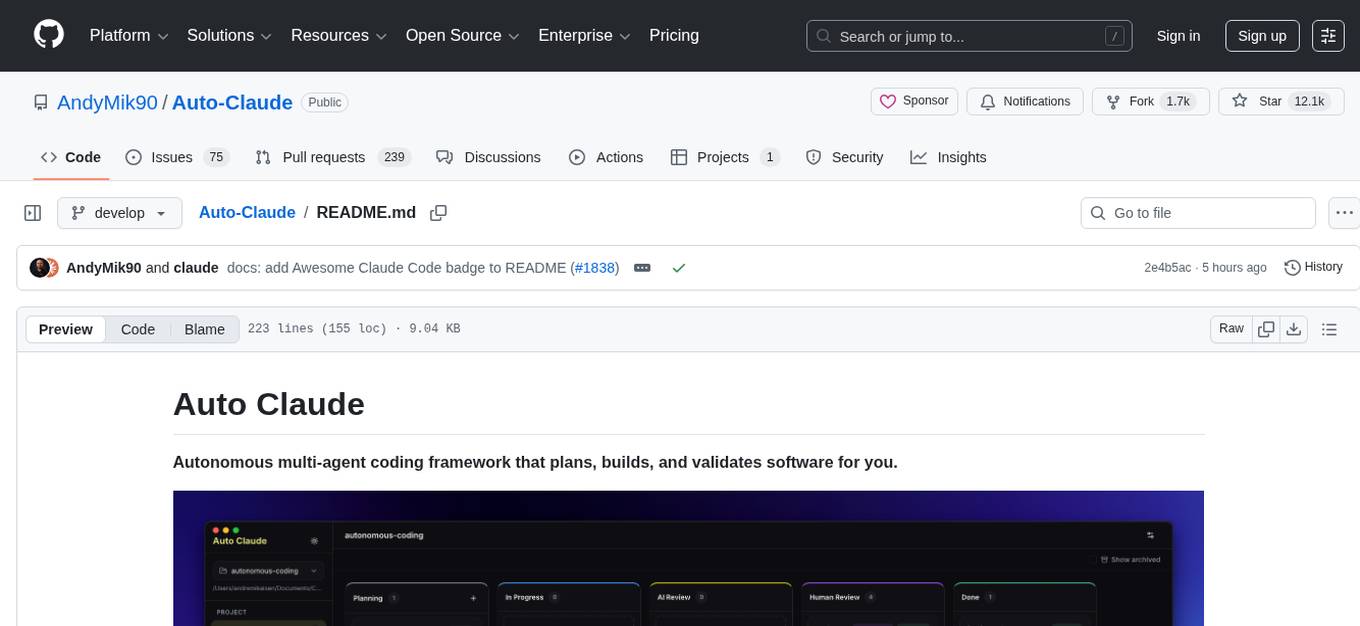
Auto Claude is an autonomous multi-agent coding framework that plans, builds, and validates software for users. It provides features such as autonomous tasks handling planning, implementation, and validation, parallel execution with multiple agent terminals, isolated workspaces for safe changes, self-validating quality assurance, AI-powered merge for conflict resolution, memory layer for smarter builds, GitHub/GitLab integration, cross-platform native desktop apps, auto-updates, and more. The tool offers a visual Kanban board for task management, AI-powered terminals for parallel work, AI-assisted feature planning, insights chat interface, ideation for code improvements, performance issues, and vulnerabilities discovery, and changelog generation from completed tasks. It follows a three-layer security model with OS sandbox, filesystem restrictions, and dynamic command allowlist, ensuring security through VirusTotal scans, SHA256 checksums, and code-signing for macOS releases.
LinJun
LinJun is a native desktop application for managing CLIProxyAPIPlus, a local proxy server that powers AI coding agents. It helps manage multiple AI accounts, track quotas, and configure CLI tools across macOS, Windows, and Linux. The tool offers features like expanded provider support, quota and model visibility, provider-aware model filtering, large log performance, one-click agent configuration, live dashboard monitoring, smart routing, API key management, system tray integration, and multilingual support. It supports various AI providers and compatible CLI agents, and provides installation instructions, usage guidelines, screenshots, settings customization, architecture overview, tech stack details, token storage information, FAQs, contribution guidelines, and license details.
claude-code-mastery
Claude Code Mastery is a comprehensive tool for maximizing Claude Code, offering a production-ready project template with 16 slash commands, deterministic hook enforcement, MongoDB wrapper, live AI monitoring, and three-layer security. It provides a security gatekeeper, project scaffolding blueprint, MCP server integration, workflow automation through custom commands, and emphasizes the importance of single-purpose chats to avoid performance degradation.
inspector
A developer tool for testing and debugging Model Context Protocol (MCP) servers. It allows users to test the compliance of their MCP servers with the latest MCP specs, supports various transports like STDIO, SSE, and Streamable HTTP, features an LLM Playground for testing server behavior against different models, provides comprehensive logging and error reporting for MCP server development, and offers a modern developer experience with multiple server connections and saved configurations. The tool is built using Next.js and integrates MCP capabilities, AI SDKs from OpenAI, Anthropic, and Ollama, and various technologies like Node.js, TypeScript, and Next.js.
aegra
Aegra is a self-hosted AI agent backend platform that provides LangGraph power without vendor lock-in. Built with FastAPI + PostgreSQL, it offers complete control over agent orchestration for teams looking to escape vendor lock-in, meet data sovereignty requirements, enable custom deployments, and optimize costs. Aegra is Agent Protocol compliant and perfect for teams seeking a free, self-hosted alternative to LangGraph Platform with zero lock-in, full control, and compatibility with existing LangGraph Client SDK.
axonhub
AxonHub is an all-in-one AI development platform that serves as an AI gateway allowing users to switch between model providers without changing any code. It provides features like vendor lock-in prevention, integration simplification, observability enhancement, and cost control. Users can access any model using any SDK with zero code changes. The platform offers full request tracing, enterprise RBAC, smart load balancing, and real-time cost tracking. AxonHub supports multiple databases, provides a unified API gateway, and offers flexible model management and API key creation for authentication. It also integrates with various AI coding tools and SDKs for seamless usage.
buster
Buster is a modern analytics platform designed with AI in mind, focusing on self-serve experiences powered by Large Language Models. It addresses pain points in existing tools by advocating for AI-centric app development, cost-effective data warehousing, improved CI/CD processes, and empowering data teams to create powerful, user-friendly data experiences. The platform aims to revolutionize AI analytics by enabling data teams to build deep integrations and own their entire analytics stack.
shadcn-ui-mcp-server
A Model Context Protocol (MCP) server that provides AI assistants with comprehensive access to shadcn/ui v4 components, blocks, demos, and metadata. It allows users to seamlessly retrieve React, Svelte, Vue, and React Native implementations for AI-powered development workflows. The server supports multi-frameworks, component source code, demos, blocks, metadata access, directory browsing, smart caching, SSE transport, and Docker containerization. Users can quickly start the server, integrate with Claude Desktop, deploy with SSE transport or Docker, and access documentation for installation, configuration, integration, usage, frameworks, troubleshooting, and API reference. The server supports React, Svelte, Vue, and React Native implementations, with options for UI library selection. It enables AI-powered development, multi-client deployments, production environments, component discovery, multi-framework learning, rapid prototyping, and code generation.
OpenOutreach
OpenOutreach is a self-hosted, open-source LinkedIn automation tool designed for B2B lead generation. It automates the entire outreach process in a stealthy, human-like way by discovering and enriching target profiles, ranking profiles using ML for smart prioritization, sending personalized connection requests, following up with custom messages after acceptance, and tracking everything in a built-in CRM with web UI. It offers features like undetectable behavior, fully customizable Python-based campaigns, local execution with CRM, easy deployment with Docker, and AI-ready templating for hyper-personalized messages.
Edit-Banana
Edit Banana is a universal content re-editor that allows users to transform fixed content into fully manipulatable assets. Powered by SAM 3 and multimodal large models, it enables high-fidelity reconstruction while preserving original diagram details and logical relationships. The platform offers advanced segmentation, fixed multi-round VLM scanning, high-quality OCR, user system with credits, multi-user concurrency, and a web interface. Users can upload images or PDFs to get editable DrawIO (XML) or PPTX files in seconds. The project structure includes components for segmentation, text extraction, frontend, models, and scripts, with detailed installation and setup instructions provided. The tool is open-source under the Apache License 2.0, allowing commercial use and secondary development.
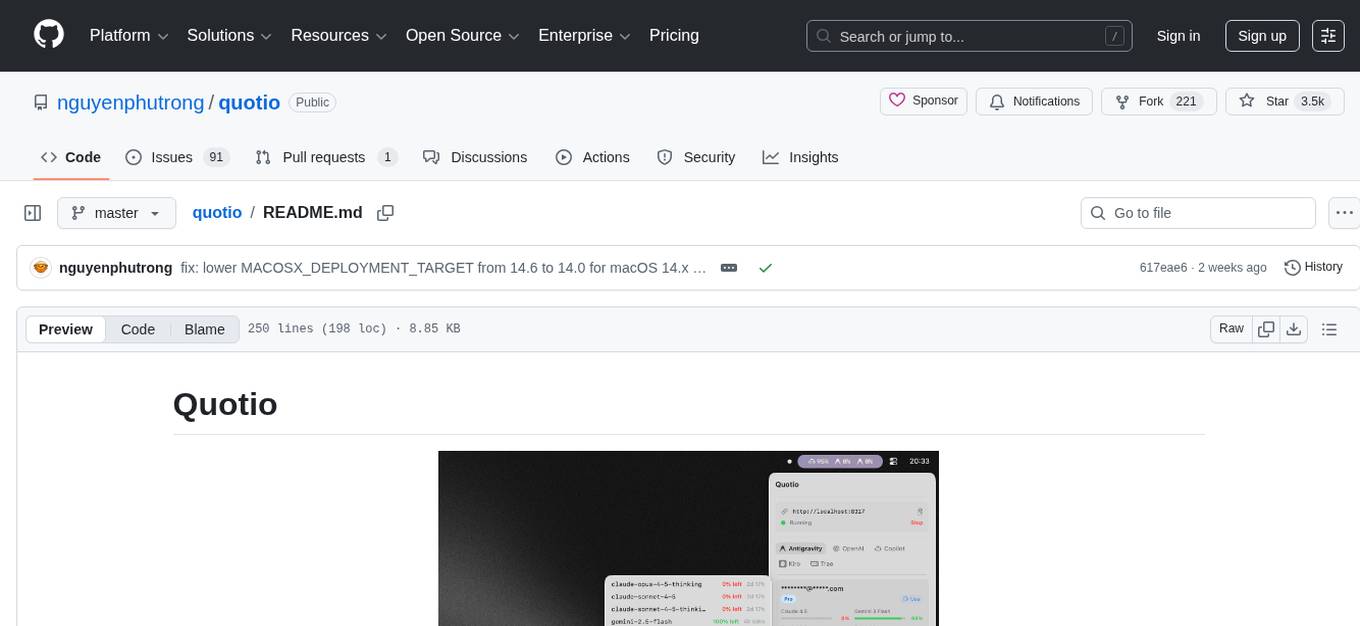
quotio
Quotio is a native macOS application designed as the ultimate command center for managing CLIProxyAPI, a local proxy server that powers AI coding agents. It allows users to connect multiple AI accounts, track quotas, configure CLI tools, and monitor request traffic in real-time. With features like multi-provider support, standalone quota mode, one-click agent configuration, real-time dashboard, smart quota management, API key management, menu bar integration, notifications, auto-update, and multilingual support, Quotio offers a comprehensive solution for AI coding assistants on macOS.
ProxyPilot
ProxyPilot is a powerful local API proxy tool built in Go that eliminates the need for separate API keys when using Claude Code, Codex, Gemini, Kiro, and Qwen subscriptions with any AI coding tool. It handles OAuth authentication, token management, and API translation automatically, providing a single server to route requests. The tool supports multiple authentication providers, universal API translation, tool calling repair, extended thinking models, OAuth integration, multi-account support, quota auto-switching, usage statistics tracking, context compression, agentic harness for coding agents, session memory, system tray app, auto-updates, rollback support, and over 60 management APIs. ProxyPilot also includes caching layers for response and prompt caching to reduce latency and token usage.
OpenSandbox
OpenSandbox is a general-purpose sandbox platform for AI applications, offering multi-language SDKs, unified sandbox APIs, and Docker/Kubernetes runtimes for scenarios like Coding Agents, GUI Agents, Agent Evaluation, AI Code Execution, and RL Training. It provides features such as multi-language SDKs, sandbox protocol, sandbox runtime, sandbox environments, and network policy. Users can perform basic sandbox operations like installing and configuring the sandbox server, starting the sandbox server, creating a code interpreter, and executing commands. The platform also offers examples for coding agent integrations, browser and desktop environments, and ML and training tasks.
openakita
OpenAkita is a self-evolving AI Agent framework that autonomously learns new skills, performs daily self-checks and repairs, accumulates experience from task execution, and persists until the task is done. It auto-generates skills, installs dependencies, learns from mistakes, and remembers preferences. The framework is standards-based, multi-platform, and provides a Setup Center GUI for intuitive installation and configuration. It features self-learning and evolution mechanisms, a Ralph Wiggum Mode for persistent execution, multi-LLM endpoints, multi-platform IM support, desktop automation, multi-agent architecture, scheduled tasks, identity and memory management, a tool system, and a guided wizard for setup.
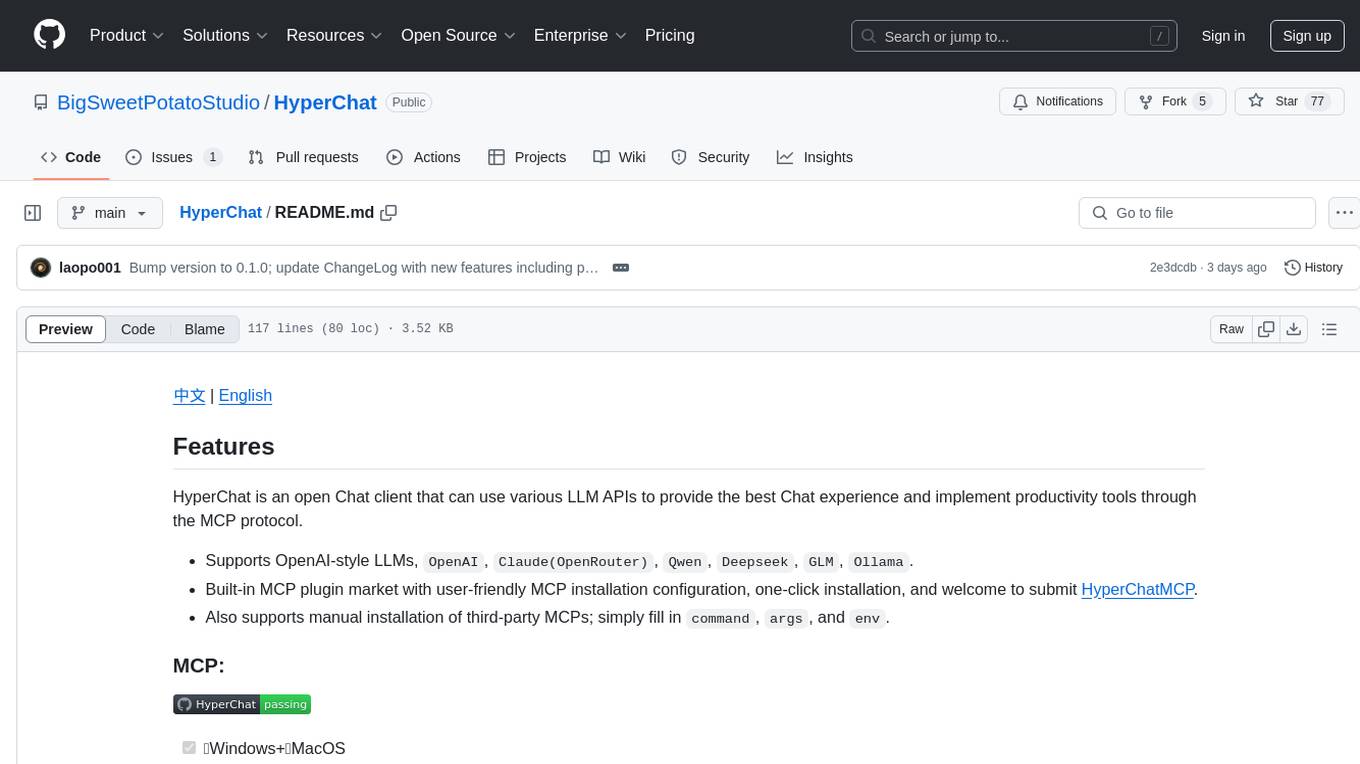
HyperChat
HyperChat is an open Chat client that utilizes various LLM APIs to enhance the Chat experience and offer productivity tools through the MCP protocol. It supports multiple LLMs like OpenAI, Claude, Qwen, Deepseek, GLM, Ollama. The platform includes a built-in MCP plugin market for easy installation and also allows manual installation of third-party MCPs. Features include Windows and MacOS support, resource support, tools support, English and Chinese language support, built-in MCP client 'hypertools', 'fetch' + 'search', Bot support, Artifacts rendering, KaTeX for mathematical formulas, WebDAV synchronization, and a MCP plugin market. Future plans include permission pop-up, scheduled tasks support, Projects + RAG support, tools implementation by LLM, and a local shell + nodejs + js on web runtime environment.
For similar tasks
Kubeli
Kubeli is a modern, beautiful Kubernetes management desktop application with real-time monitoring, terminal access, and a polished user experience. It offers features like multi-cluster support, real-time updates, resource browser, pod logs streaming, terminal access, port forwarding, metrics dashboard, YAML editor, AI assistant, MCP server, Helm releases management, proxy support, internationalization, and dark/light mode. The tech stack includes Vite, React 19, TypeScript, Tailwind CSS 4 for frontend, Tauri 2.0 (Rust) for desktop, kube-rs with k8s-openapi v1.32 for K8s client, Zustand for state management, Radix UI and Lucide Icons for UI components, Monaco Editor for editing, XTerm.js for terminal, and uPlot for charts.
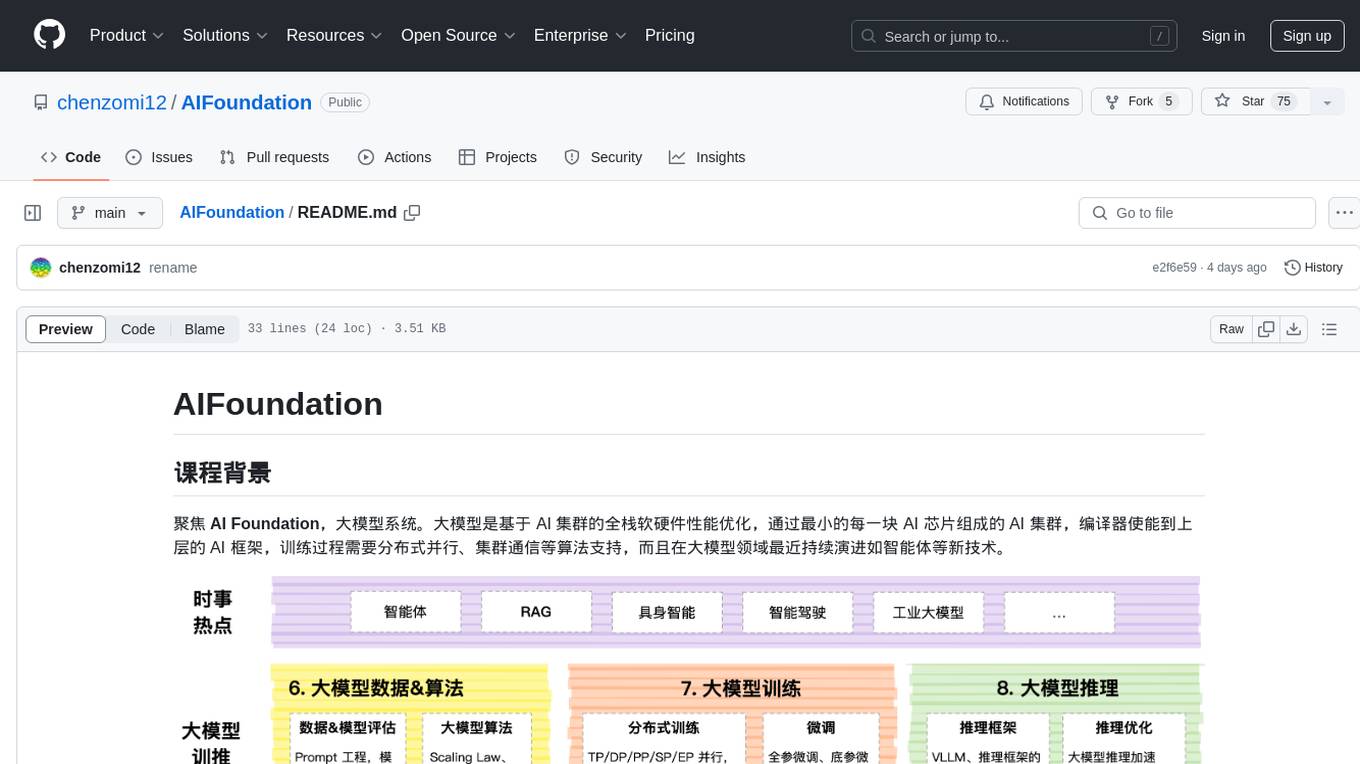
AIFoundation
AIFoundation focuses on AI Foundation, large model systems. Large models optimize the performance of full-stack hardware and software based on AI clusters. The training process requires distributed parallelism, cluster communication algorithms, and continuous evolution in the field of large models such as intelligent agents. The course covers modules like AI chip principles, communication & storage, AI clusters, computing architecture, communication architecture, large model algorithms, training, inference, and analysis of hot technologies in the large model field.
compute-blade
Compute Blade is a feature-rich carrier board designed for the Raspberry Pi Compute Module 4 and compatible alternatives, aimed at simplifying and automating the development and management of on-premise cluster environments. The solution streamlines complex processes, making cluster setup and management efficient and manageable for users, from homelabs to advanced AI clusters at scale.
bigtop-manager
Apache Bigtop Manager is a modern, AI-driven web application designed to simplify the complexity of bigdata cluster management. It provides an easy deployment solution not only for Apache Bigtop components, but also other community version bigdata components. The platform aims to streamline the management of bigdata clusters by leveraging AI technology and user-friendly interfaces.
ksail
KSail is a tool that bundles common Kubernetes tooling into a single binary, providing a unified workflow for creating clusters, deploying workloads, and operating cloud-native stacks across different distributions and providers. It eliminates the need for multiple CLI tools and bespoke scripts, offering features like one binary for provisioning and deployment, support for various cluster configurations, mirror registries, GitOps integration, customizable stack selection, built-in SOPS for secrets management, AI assistant for interactive chat, and a VSCode extension for cluster management.
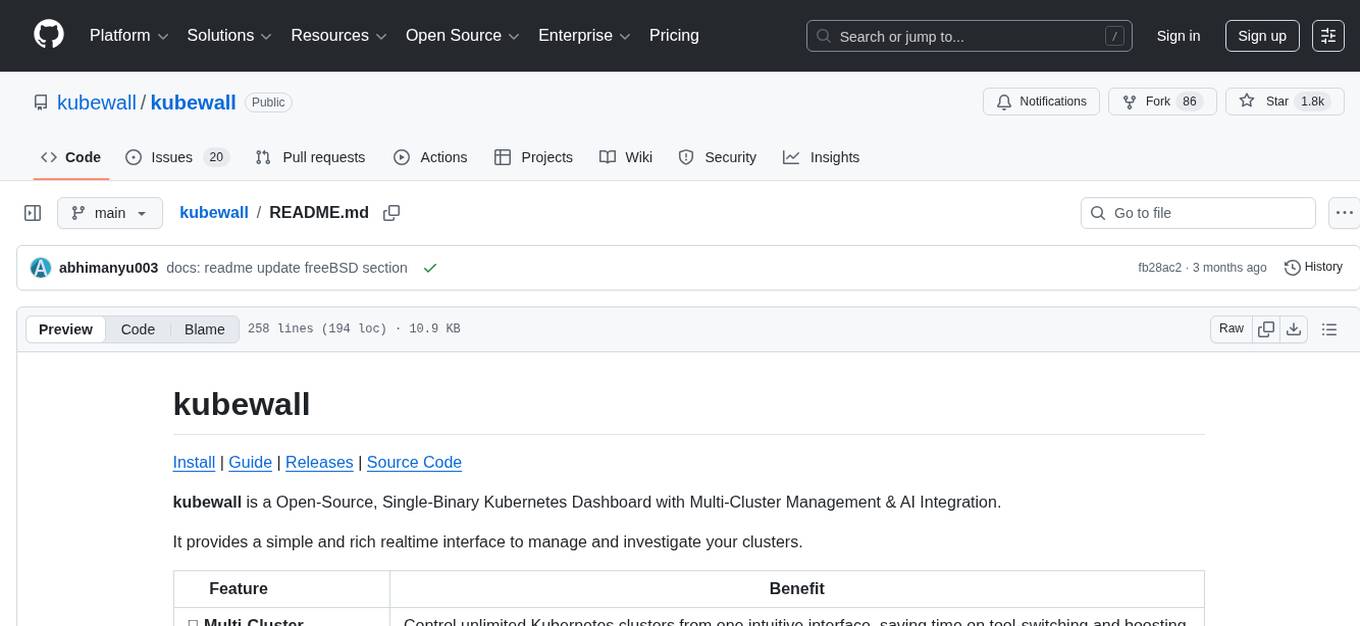
kubewall
kubewall is an open-source, single-binary Kubernetes dashboard with multi-cluster management and AI integration. It provides a simple and rich real-time interface to manage and investigate your clusters. With features like multi-cluster management, AI-powered troubleshooting, real-time monitoring, single-binary deployment, in-depth resource views, browser-based access, search and filter capabilities, privacy by default, port forwarding, live refresh, aggregated pod logs, and clean resource management, kubewall offers a comprehensive solution for Kubernetes cluster management.
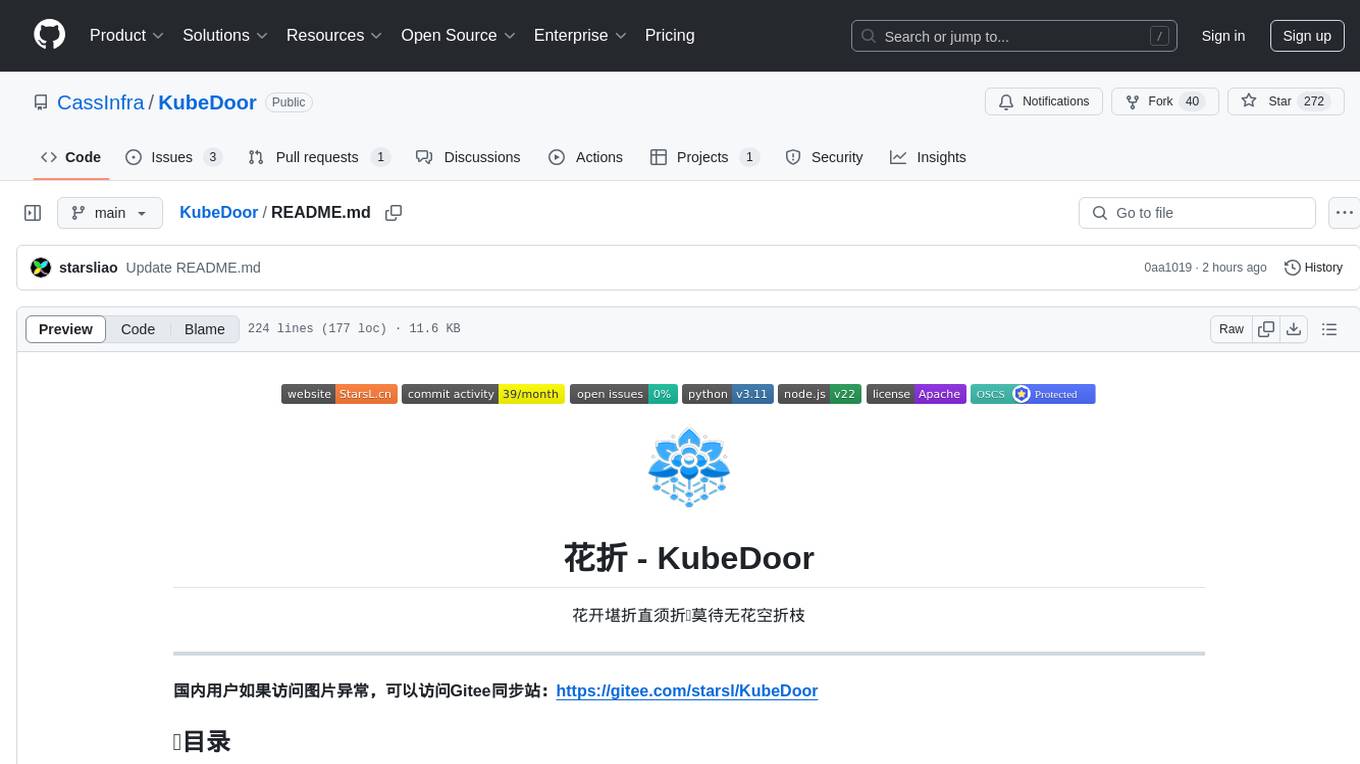
KubeDoor
KubeDoor is a microservice resource management platform developed using Python and Vue, based on K8S admission control mechanism. It supports unified remote storage, monitoring, alerting, notification, and display for multiple K8S clusters. The platform focuses on resource analysis and control during daily peak hours of microservices, ensuring consistency between resource request rate and actual usage rate.
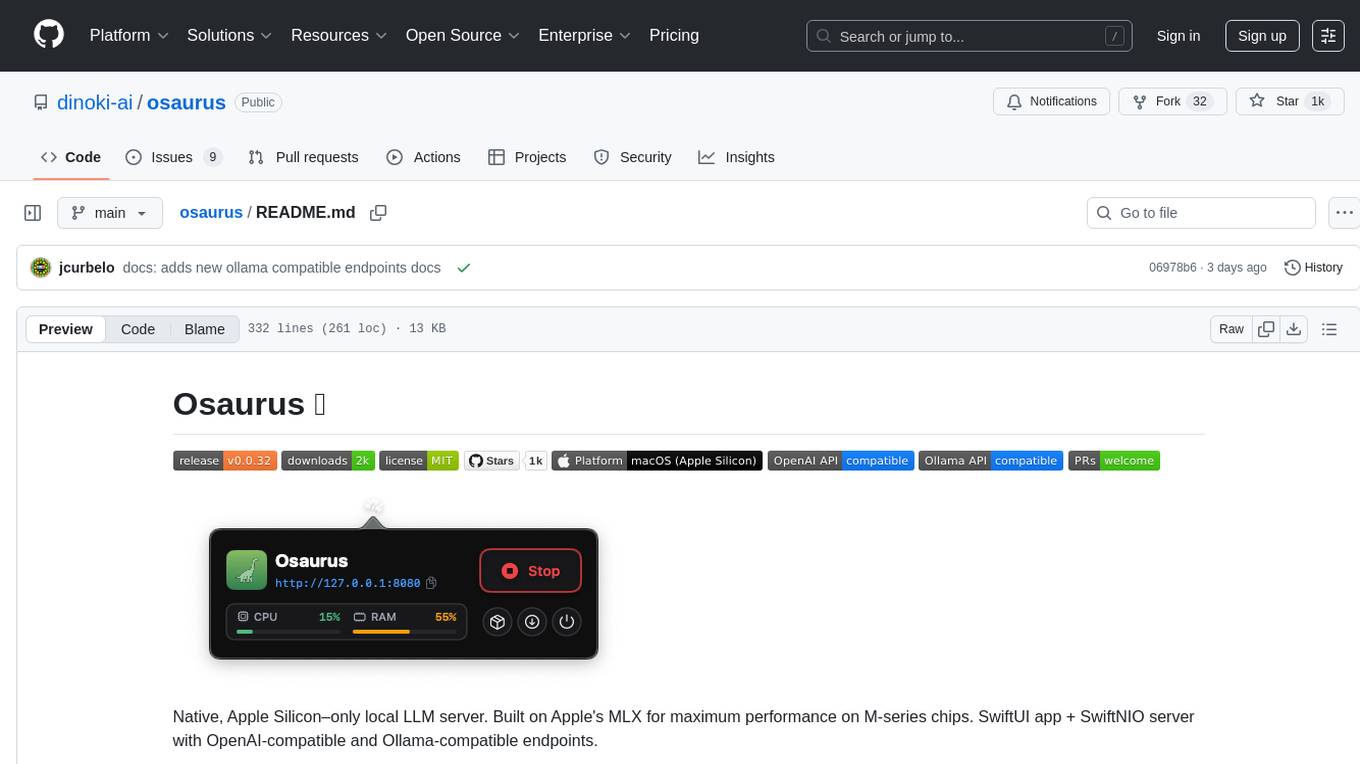
osaurus
Osaurus is a native, Apple Silicon-only local LLM server built on Apple's MLX for maximum performance on M‑series chips. It is a SwiftUI app + SwiftNIO server with OpenAI‑compatible and Ollama‑compatible endpoints. The tool supports native MLX text generation, model management, streaming and non‑streaming chat completions, OpenAI‑compatible function calling, real-time system resource monitoring, and path normalization for API compatibility. Osaurus is designed for macOS 15.5+ and Apple Silicon (M1 or newer) with Xcode 16.4+ required for building from source.
For similar jobs
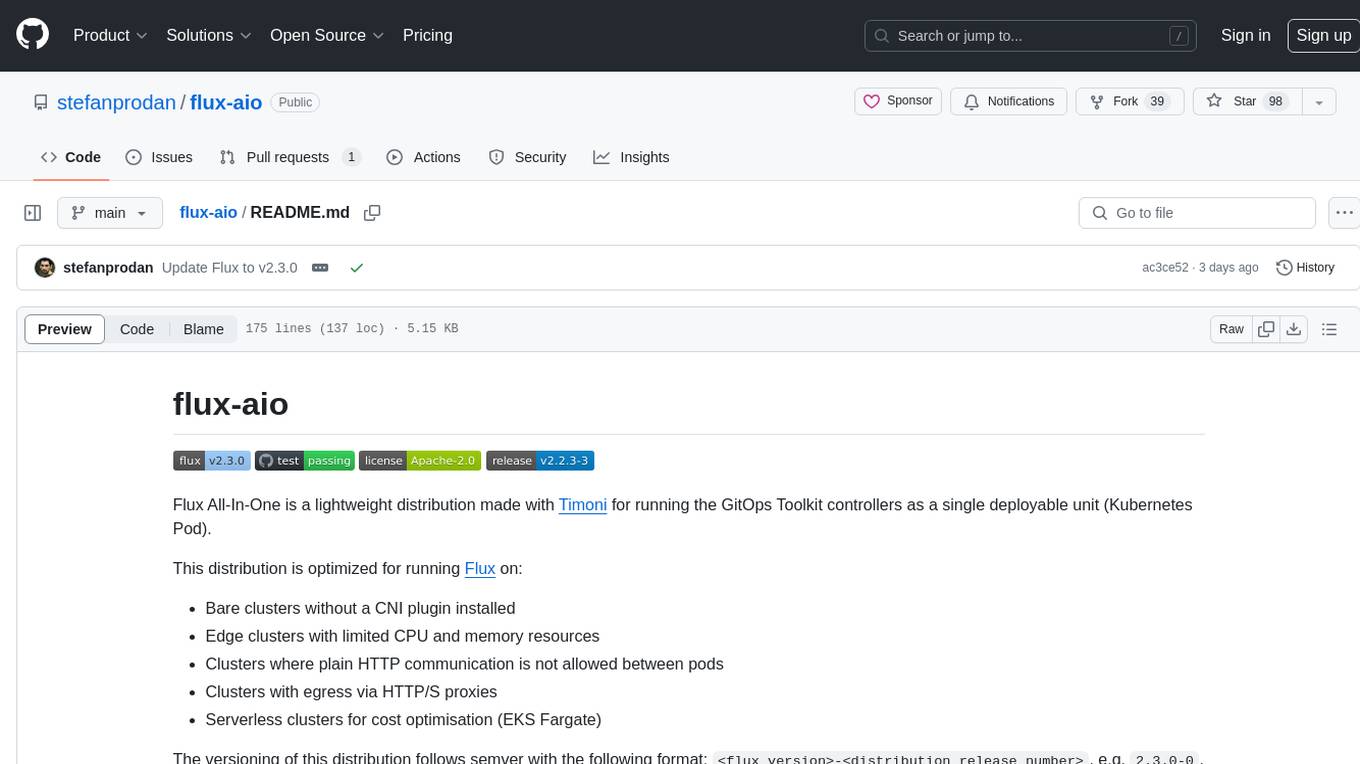
flux-aio
Flux All-In-One is a lightweight distribution optimized for running the GitOps Toolkit controllers as a single deployable unit on Kubernetes clusters. It is designed for bare clusters, edge clusters, clusters with restricted communication, clusters with egress via proxies, and serverless clusters. The distribution follows semver versioning and provides documentation for specifications, installation, upgrade, OCI sync configuration, Git sync configuration, and multi-tenancy configuration. Users can deploy Flux using Timoni CLI and a Timoni Bundle file, fine-tune installation options, sync from public Git repositories, bootstrap repositories, and uninstall Flux without affecting reconciled workloads.
paddler
Paddler is an open-source load balancer and reverse proxy designed specifically for optimizing servers running llama.cpp. It overcomes typical load balancing challenges by maintaining a stateful load balancer that is aware of each server's available slots, ensuring efficient request distribution. Paddler also supports dynamic addition or removal of servers, enabling integration with autoscaling tools.
DaoCloud-docs
DaoCloud Enterprise 5.0 Documentation provides detailed information on using DaoCloud, a Certified Kubernetes Service Provider. The documentation covers current and legacy versions, workflow control using GitOps, and instructions for opening a PR and previewing changes locally. It also includes naming conventions, writing tips, references, and acknowledgments to contributors. Users can find guidelines on writing, contributing, and translating pages, along with using tools like MkDocs, Docker, and Poetry for managing the documentation.
ztncui-aio
This repository contains a Docker image with ZeroTier One and ztncui to set up a standalone ZeroTier network controller with a web user interface. It provides features like Golang auto-mkworld for generating a planet file, supports local persistent storage configuration, and includes a public file server. Users can build the Docker image, set up the container with specific environment variables, and manage the ZeroTier network controller through the web interface.
devops-gpt
DevOpsGPT is a revolutionary tool designed to streamline your workflow and empower you to build systems and automate tasks with ease. Tired of spending hours on repetitive DevOps tasks? DevOpsGPT is here to help! Whether you're setting up infrastructure, speeding up deployments, or tackling any other DevOps challenge, our app can make your life easier and more productive. With DevOpsGPT, you can expect faster task completion, simplified workflows, and increased efficiency. Ready to experience the DevOpsGPT difference? Visit our website, sign in or create an account, start exploring the features, and share your feedback to help us improve. DevOpsGPT will become an essential tool in your DevOps toolkit.
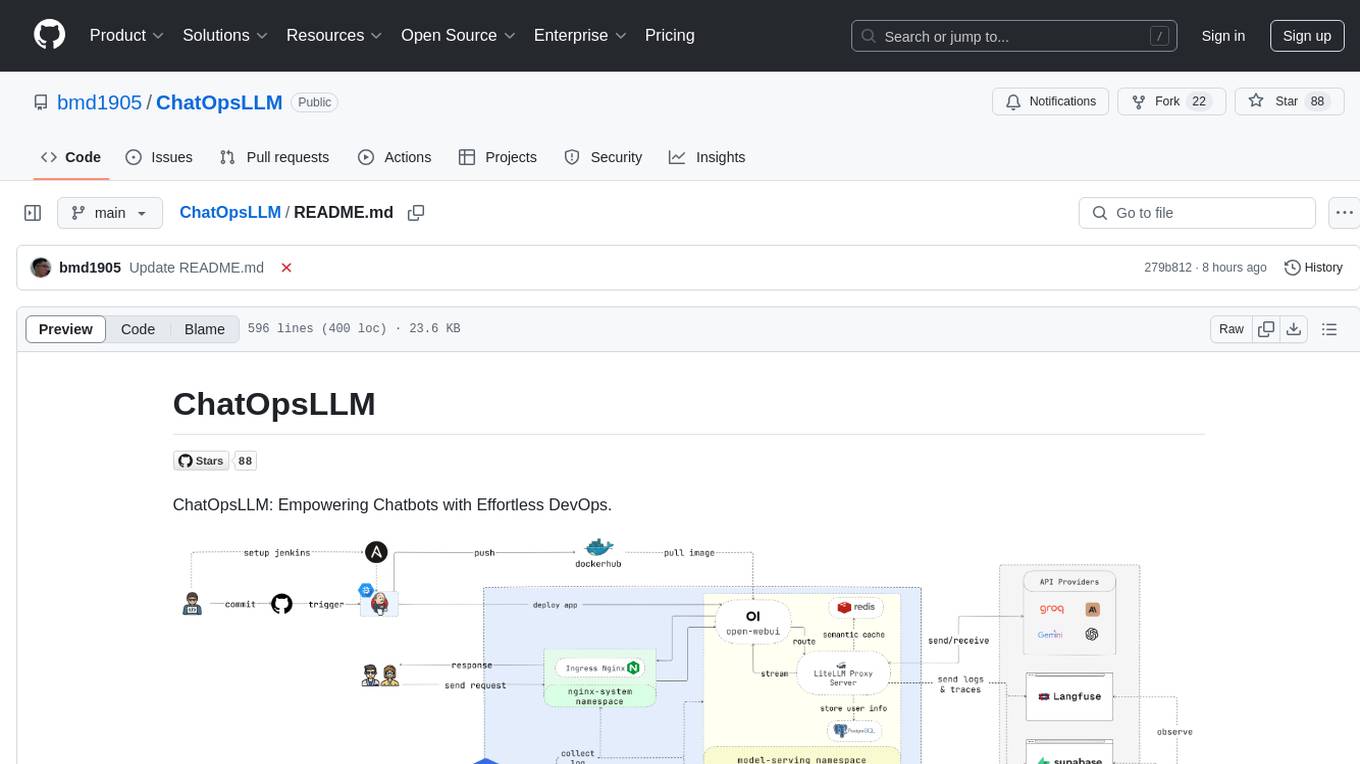
ChatOpsLLM
ChatOpsLLM is a project designed to empower chatbots with effortless DevOps capabilities. It provides an intuitive interface and streamlined workflows for managing and scaling language models. The project incorporates robust MLOps practices, including CI/CD pipelines with Jenkins and Ansible, monitoring with Prometheus and Grafana, and centralized logging with the ELK stack. Developers can find detailed documentation and instructions on the project's website.
aiops-modules
AIOps Modules is a collection of reusable Infrastructure as Code (IAC) modules that work with SeedFarmer CLI. The modules are decoupled and can be aggregated using GitOps principles to achieve desired use cases, removing heavy lifting for end users. They must be generic for reuse in Machine Learning and Foundation Model Operations domain, adhering to SeedFarmer Guide structure. The repository includes deployment steps, project manifests, and various modules for SageMaker, Mlflow, FMOps/LLMOps, MWAA, Step Functions, EKS, and example use cases. It also supports Industry Data Framework (IDF) and Autonomous Driving Data Framework (ADDF) Modules.
3FS
The Fire-Flyer File System (3FS) is a high-performance distributed file system designed for AI training and inference workloads. It leverages modern SSDs and RDMA networks to provide a shared storage layer that simplifies development of distributed applications. Key features include performance, disaggregated architecture, strong consistency, file interfaces, data preparation, dataloaders, checkpointing, and KVCache for inference. The system is well-documented with design notes, setup guide, USRBIO API reference, and P specifications. Performance metrics include peak throughput, GraySort benchmark results, and KVCache optimization. The source code is available on GitHub for cloning and installation of dependencies. Users can build 3FS and run test clusters following the provided instructions. Issues can be reported on the GitHub repository.