


auto-dev
🧙AutoDev: the AI-native Multi-Agent development platform built on Kotlin Multiplatform, covering all 7 phases of SDLC.
Stars: 4351
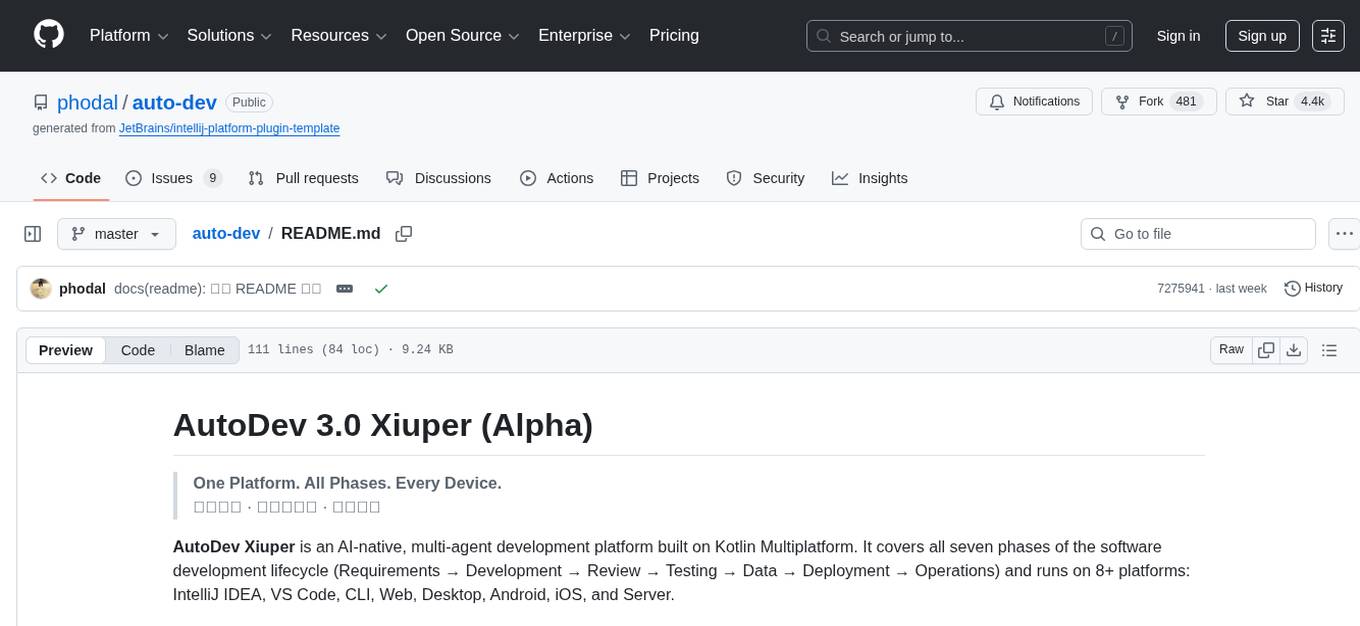
AutoDev Xiuper is an AI-native, multi-agent development platform built on Kotlin Multiplatform. It covers all seven phases of the software development lifecycle and runs on 8+ platforms. The platform provides a unified architecture for writing code once and running it anywhere, with specialized agents for each phase of development. It supports various devices including IntelliJ IDEA, VS Code, CLI, Web, Desktop, Android, iOS, and Server. The platform also offers features like Multi-LLM support, DevIns language for workflow automation, MCP Protocol for extensible tool ecosystem, and code intelligence for multiple programming languages.
README:
One Platform. All Phases. Every Device.
统一平台 · 全开发阶段 · 跨全设备
AutoDev Xiuper is an AI-native, multi-agent development platform built on Kotlin Multiplatform. It covers all seven phases of the software development lifecycle (Requirements → Development → Review → Testing → Data → Deployment → Operations) and runs on 8+ platforms: IntelliJ IDEA, VS Code, CLI, Web, Desktop, Android, iOS, and Server.
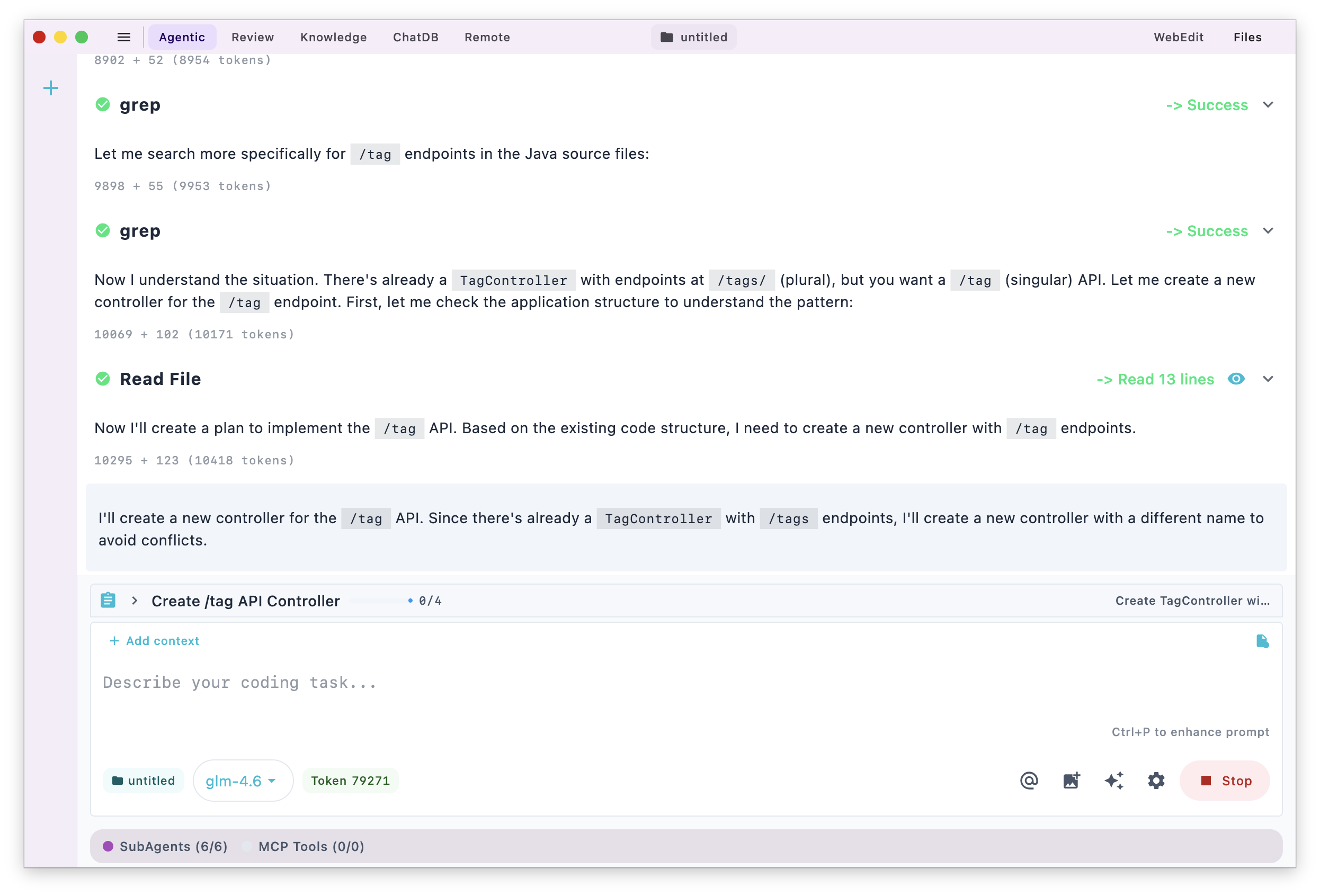
- IntelliJ IDEA Plugin: JetBrains Marketplace
- VSCode Extension: Visual Studio Marketplace
-
CLI Tool:
npm install -g @xiuper/cli - Web App: web.xiuper.com
- Desktop & Android: GitHub Releases
- iOS: Build from source.
| Module | Platform | Status | Description |
|---|---|---|---|
| mpp-idea | IntelliJ IDEA | ✅ Production | Jewel UI, Agent toolwindow, code review, remote agent |
| mpp-vscode | VSCode | ✅ Production | Xiuper Agent |
| mpp-ui (Desktop) | macOS/Windows/Linux | ✅ Production | Compose Multiplatform desktop app |
| mpp-ui (CLI) | Terminal (Node.js) | ✅ Production | Terminal UI (React/Ink), local/server mode |
| mpp-ui (Android) | Android | ✅ Production | Native Android app |
| mpp-web (Web) | Web | ✅ Production | Web app |
| mpp-server | Server | ✅ Production | JVM (Ktor) |
| mpp-ios | iOS | 🚧 Production Ready | Native iOS app (SwiftUI + Compose) |
Xiuper Edition marks a major milestone in AI-assisted development:
- One Platform: Unified Kotlin Multiplatform architecture—write once, run anywhere
-
All Phases: Seven specialized agents covering the full software development lifecycle
- Requirements → Development → Review → Testing → Data → Deployment → Operations
-
Every Device: Native support for 8+ platforms without compromising performance
- IDE: IntelliJ IDEA, VS Code
- Desktop: macOS, Windows, Linux (Compose Multiplatform)
- Mobile: Android, iOS (Native + Compose)
- Terminal: CLI (Node.js + React/Ink)
- Web: Web app
- Server: Remote agent server (Ktor)
- Multi-LLM Support: OpenAI, Anthropic, Google, DeepSeek, Ollama, and more
- DevIns Language: Executable agent scripting language for workflow automation
- MCP Protocol: Extensible tool ecosystem via Model Context Protocol (MCP)
- Code Intelligence: Tree-sitter based parsing for Java, Kotlin, Python, JavaScript/TypeScript, Go, Rust, C#
- Global Ready: Full internationalization (Chinese/English)
AutoDev Xiuper includes seven specialized agents mapped to the SDLC:
| Agent | SDLC Phase | Description | Capabilities | Status |
|---|---|---|---|---|
| Knowledge | Requirements | Requirements understanding and knowledge construction with AI-native document reading and analysis | DocQL / Context Engineering | ✅ Stable |
| Coding | Development | Autonomous coding agent with complete file system, shell, and tool access capabilities | MCP / SubAgents / DevIns DSL | ✅ Stable |
| Review | Code Review | Professional code review analyzing code quality, security, performance, and best practices | Linter / Summary / AutoFix | ✅ Stable |
| Testing | Testing | Automated testing agent that generates test cases, executes tests, and analyzes coverage | E2E / Self-healing / Coverage | 🚧 WIP |
| ChatDB | Data | Database conversation agent supporting Text-to-SQL and natural language data queries | Schema Linking / Multi-DB / Query | ✅ Stable |
| WebEdit | Deployment | Web editing agent for browsing pages, selecting DOM elements, and interacting with web content | Inspect / Chat / Mapping | 🔄 Beta |
| Ops | Operations | Operations monitoring agent for log analysis, performance monitoring, and alert handling | Logs / Metrics / Alerts | 🚧 Coming |
Each agent focuses on a specific phase of the lifecycle, providing end-to-end AI assistance—from requirements to production operations.
In addition to SDLC agents, AutoDev Xiuper includes specialized agents for specific use cases:
| Agent | Purpose | Description | Capabilities | Status |
|---|---|---|---|---|
| Artifact | Quick Demos | Generate self-contained, executable artifacts (HTML/JS, React, Node.js, Python) inspired by Claude's Artifacts | Interactive preview / Auto-fix / Multi-format support | ✅ Stable |
Artifact Agent focuses on creating complete, runnable artifacts without file system or shell access. It's ideal for:
- Quick prototyping and demos
- Interactive web applications
- Data visualizations
- Python scripts with dependencies
- SVG graphics and Mermaid diagrams
SubAgents are specialized micro-agents invoked by the main Coding Agent for focused tasks. They follow the "agent as tool" architecture pattern:
| SubAgent | Purpose | Key Features | Platform Support |
|---|---|---|---|
| NanoDSL Agent | Generate AI-native UI code from natural language descriptions | Token-efficient DSL / Component generation / State management / HTTP requests | All platforms |
| PlotDSL Agent | Generate statistical charts and data visualizations from natural language | ggplot2-inspired syntax / Multiple chart types / Themes / Lets-Plot rendering | JVM Desktop & Android |
| Chart Agent | Generate chart configurations for ComposeCharts library | Pie/Line/Column/Row charts / Data analysis / Cross-platform rendering | All platforms |
| Analysis Agent | Intelligently analyze and summarize any type of content (logs, errors, JSON, code, etc.) | Content type detection / Smart summarization / Metadata extraction | All platforms |
| Codebase Investigator | Investigate codebase structure, patterns, dependencies, and architectural issues | Architecture analysis / Pattern detection / Dependency mapping / Issue identification | All platforms |
| Domain Dict Agent | Generate domain dictionaries from codebase analysis for better context understanding | Hot file detection / Class/method extraction / Domain term identification | All platforms |
| Error Recovery Agent | Analyze errors and suggest fixes with self-healing capabilities | Error pattern recognition / Fix suggestion / Auto-retry logic | All platforms |
| SQL Revise Agent | Revise and optimize SQL queries based on schema and execution feedback | Schema-aware correction / Query optimization / Syntax validation | All platforms |
| E2E Testing Agent | Perform end-to-end testing with visual understanding and self-healing locators | Natural language test scenario generation / Multi-modal perception / Self-healing | All platforms |
SubAgents enable modular, composable workflows: complex work is decomposed into focused sub-tasks, each handled by a specialized agent.
This code is distributed under the MPL 2.0 license. See LICENSE in this directory.
For Tasks:
Click tags to check more tools for each tasksFor Jobs:
Alternative AI tools for auto-dev
Similar Open Source Tools
auto-dev
AutoDev Xiuper is an AI-native, multi-agent development platform built on Kotlin Multiplatform. It covers all seven phases of the software development lifecycle and runs on 8+ platforms. The platform provides a unified architecture for writing code once and running it anywhere, with specialized agents for each phase of development. It supports various devices including IntelliJ IDEA, VS Code, CLI, Web, Desktop, Android, iOS, and Server. The platform also offers features like Multi-LLM support, DevIns language for workflow automation, MCP Protocol for extensible tool ecosystem, and code intelligence for multiple programming languages.

motia
Motia is an AI agent framework designed for software engineers to create, test, and deploy production-ready AI agents quickly. It provides a code-first approach, allowing developers to write agent logic in familiar languages and visualize execution in real-time. With Motia, developers can focus on business logic rather than infrastructure, offering zero infrastructure headaches, multi-language support, composable steps, built-in observability, instant APIs, and full control over AI logic. Ideal for building sophisticated agents and intelligent automations, Motia's event-driven architecture and modular steps enable the creation of GenAI-powered workflows, decision-making systems, and data processing pipelines.
axonhub
AxonHub is an all-in-one AI development platform that serves as an AI gateway allowing users to switch between model providers without changing any code. It provides features like vendor lock-in prevention, integration simplification, observability enhancement, and cost control. Users can access any model using any SDK with zero code changes. The platform offers full request tracing, enterprise RBAC, smart load balancing, and real-time cost tracking. AxonHub supports multiple databases, provides a unified API gateway, and offers flexible model management and API key creation for authentication. It also integrates with various AI coding tools and SDKs for seamless usage.
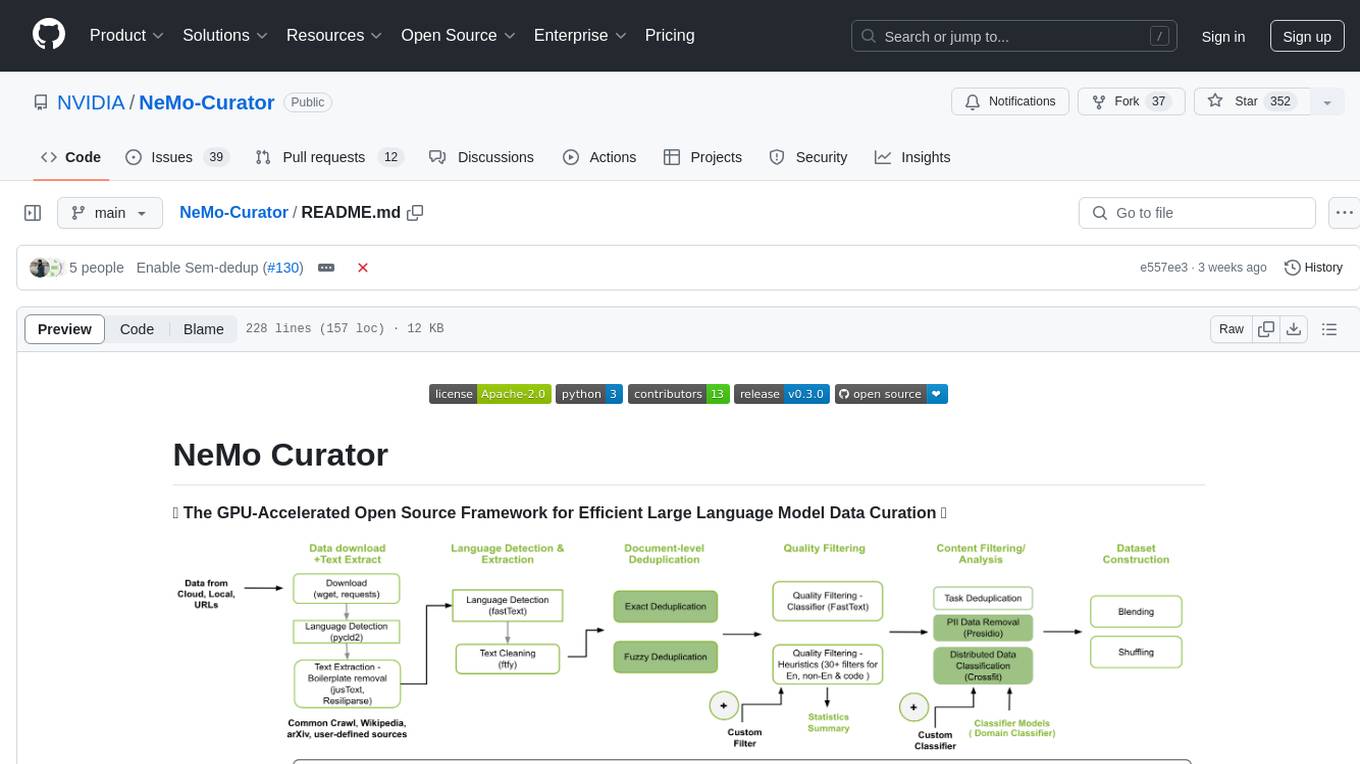
Curator
NeMo Curator is a Python library designed for fast and scalable data processing and curation for generative AI use cases. It accelerates data processing by leveraging GPUs with Dask and RAPIDS, providing customizable pipelines for text and image curation. The library offers pre-built pipelines for synthetic data generation, enabling users to train and customize generative AI models such as LLMs, VLMs, and WFMs.
eko
Eko is a lightweight and flexible command-line tool for managing environment variables in your projects. It allows you to easily set, get, and delete environment variables for different environments, making it simple to manage configurations across development, staging, and production environments. With Eko, you can streamline your workflow and ensure consistency in your application settings without the need for complex setup or configuration files.
rag-web-ui
RAG Web UI is an intelligent dialogue system based on RAG (Retrieval-Augmented Generation) technology. It helps enterprises and individuals build intelligent Q&A systems based on their own knowledge bases. By combining document retrieval and large language models, it delivers accurate and reliable knowledge-based question-answering services. The system is designed with features like intelligent document management, advanced dialogue engine, and a robust architecture. It supports multiple document formats, async document processing, multi-turn contextual dialogue, and reference citations in conversations. The architecture includes a backend stack with Python FastAPI, MySQL + ChromaDB, MinIO, Langchain, JWT + OAuth2 for authentication, and a frontend stack with Next.js, TypeScript, Tailwind CSS, Shadcn/UI, and Vercel AI SDK for AI integration. Performance optimization includes incremental document processing, streaming responses, vector database performance tuning, and distributed task processing. The project is licensed under the Apache-2.0 License and is intended for learning and sharing RAG knowledge only, not for commercial purposes.
auto-dev
AutoDev is an AI-powered coding wizard that supports multiple languages, including Java, Kotlin, JavaScript/TypeScript, Rust, Python, Golang, C/C++/OC, and more. It offers a range of features, including auto development mode, copilot mode, chat with AI, customization options, SDLC support, custom AI agent integration, and language features such as language support, extensions, and a DevIns language for AI agent development. AutoDev is designed to assist developers with tasks such as auto code generation, bug detection, code explanation, exception tracing, commit message generation, code review content generation, smart refactoring, Dockerfile generation, CI/CD config file generation, and custom shell/command generation. It also provides a built-in LLM fine-tune model and supports UnitEval for LLM result evaluation and UnitGen for code-LLM fine-tune data generation.
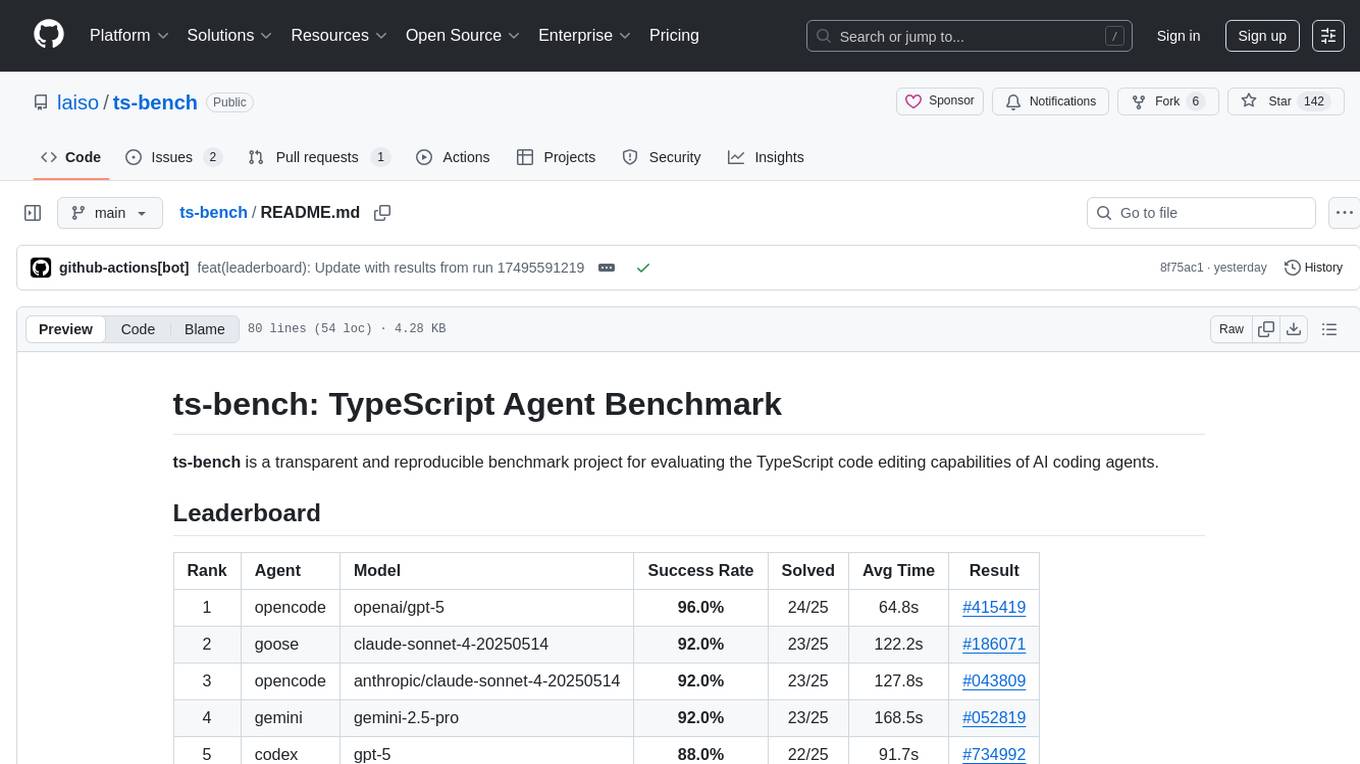
ts-bench
TS-Bench is a performance benchmarking tool for TypeScript projects. It provides detailed insights into the performance of TypeScript code, helping developers optimize their projects. With TS-Bench, users can measure and compare the execution time of different code snippets, functions, or modules. The tool offers a user-friendly interface for running benchmarks and analyzing the results. TS-Bench is a valuable asset for developers looking to enhance the performance of their TypeScript applications.
sktime
sktime is a Python library for time series analysis that provides a unified interface for various time series learning tasks such as classification, regression, clustering, annotation, and forecasting. It offers time series algorithms and tools compatible with scikit-learn for building, tuning, and validating time series models. sktime aims to enhance the interoperability and usability of the time series analysis ecosystem by empowering users to apply algorithms across different tasks and providing interfaces to related libraries like scikit-learn, statsmodels, tsfresh, PyOD, and fbprophet.
AReaL
AReaL (Ant Reasoning RL) is an open-source reinforcement learning system developed at the RL Lab, Ant Research. It is designed for training Large Reasoning Models (LRMs) in a fully open and inclusive manner. AReaL provides reproducible experiments for 1.5B and 7B LRMs, showcasing its scalability and performance across diverse computational budgets. The system follows an iterative training process to enhance model performance, with a focus on mathematical reasoning tasks. AReaL is equipped to adapt to different computational resource settings, enabling users to easily configure and launch training trials. Future plans include support for advanced models, optimizations for distributed training, and exploring research topics to enhance LRMs' reasoning capabilities.
pai-opencode
PAI-OpenCode is a complete port of Daniel Miessler's Personal AI Infrastructure (PAI) to OpenCode, an open-source, provider-agnostic AI coding assistant. It brings modular capabilities, dynamic multi-agent orchestration, session history, and lifecycle automation to personalize AI assistants for users. With support for 75+ AI providers, PAI-OpenCode offers dynamic per-task model routing, full PAI infrastructure, real-time session sharing, and multiple client options. The tool optimizes cost and quality with a 3-tier model strategy and a 3-tier research system, allowing users to switch presets for different routing strategies. PAI-OpenCode's architecture preserves PAI's design while adapting to OpenCode, documented through Architecture Decision Records (ADRs).
awesome-generative-ai-data-scientist
A curated list of 50+ resources to help you become a Generative AI Data Scientist. This repository includes resources on building GenAI applications with Large Language Models (LLMs), and deploying LLMs and GenAI with Cloud-based solutions.
Documents-Parsing-Lab
A curated collection of Jupyter notebooks for experimenting with state-of-the-art OCR, document parsing, table extraction, and chart understanding techniques. This repository enables easy benchmarking and practical usage of the latest open-source and cloud-based solutions for document image processing.
squirrelscan
Squirrelscan is a website audit tool designed for SEO, performance, and security audits. It offers 230+ rules across 21 categories, AI-native design for Claude Code and AI workflows, smart incremental crawling, and multiple output formats. It provides E-E-A-T auditing, crawl history tracking, and is developer-friendly with a CLI. Users can run audits in the terminal, integrate with AI coding agents, or pipe output to AI assistants. The tool is available for macOS, Linux, Windows, npm, and npx installations, and is suitable for autonomous AI workflows.
monoscope
Monoscope is an open-source monitoring and observability platform that uses artificial intelligence to understand and monitor systems automatically. It allows users to ingest and explore logs, traces, and metrics in S3 buckets, query in natural language via LLMs, and create AI agents to detect anomalies. Key capabilities include universal data ingestion, AI-powered understanding, natural language interface, cost-effective storage, and zero configuration. Monoscope is designed to reduce alert fatigue, catch issues before they impact users, and provide visibility across complex systems.
awesome-LangGraph
Awesome LangGraph is a curated list of projects, resources, and tools for building stateful, multi-actor applications with LangGraph. It provides valuable resources for developers at all stages of development, from beginners to those building production-ready systems. The repository covers core ecosystem components, LangChain ecosystem, LangGraph platform, official resources, starter templates, pre-built agents, example applications, development tools, community projects, AI assistants, content & media, knowledge & retrieval, finance & business, sustainability, learning resources, companies using LangGraph, contributing guidelines, and acknowledgments.
For similar tasks
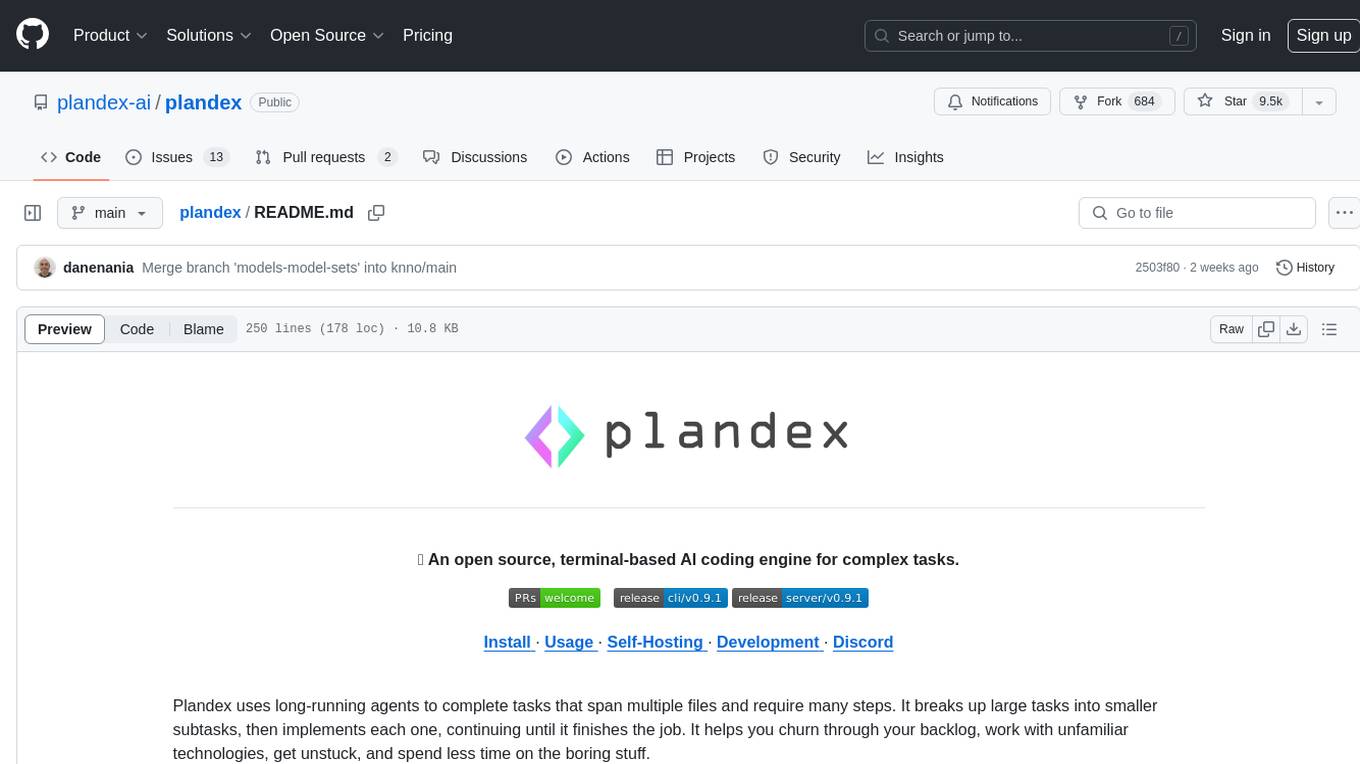
plandex
Plandex is an open source, terminal-based AI coding engine designed for complex tasks. It uses long-running agents to break up large tasks into smaller subtasks, helping users work through backlogs, navigate unfamiliar technologies, and save time on repetitive tasks. Plandex supports various AI models, including OpenAI, Anthropic Claude, Google Gemini, and more. It allows users to manage context efficiently in the terminal, experiment with different approaches using branches, and review changes before applying them. The tool is platform-independent and runs from a single binary with no dependencies.
auto-dev
AutoDev Xiuper is an AI-native, multi-agent development platform built on Kotlin Multiplatform. It covers all seven phases of the software development lifecycle and runs on 8+ platforms. The platform provides a unified architecture for writing code once and running it anywhere, with specialized agents for each phase of development. It supports various devices including IntelliJ IDEA, VS Code, CLI, Web, Desktop, Android, iOS, and Server. The platform also offers features like Multi-LLM support, DevIns language for workflow automation, MCP Protocol for extensible tool ecosystem, and code intelligence for multiple programming languages.
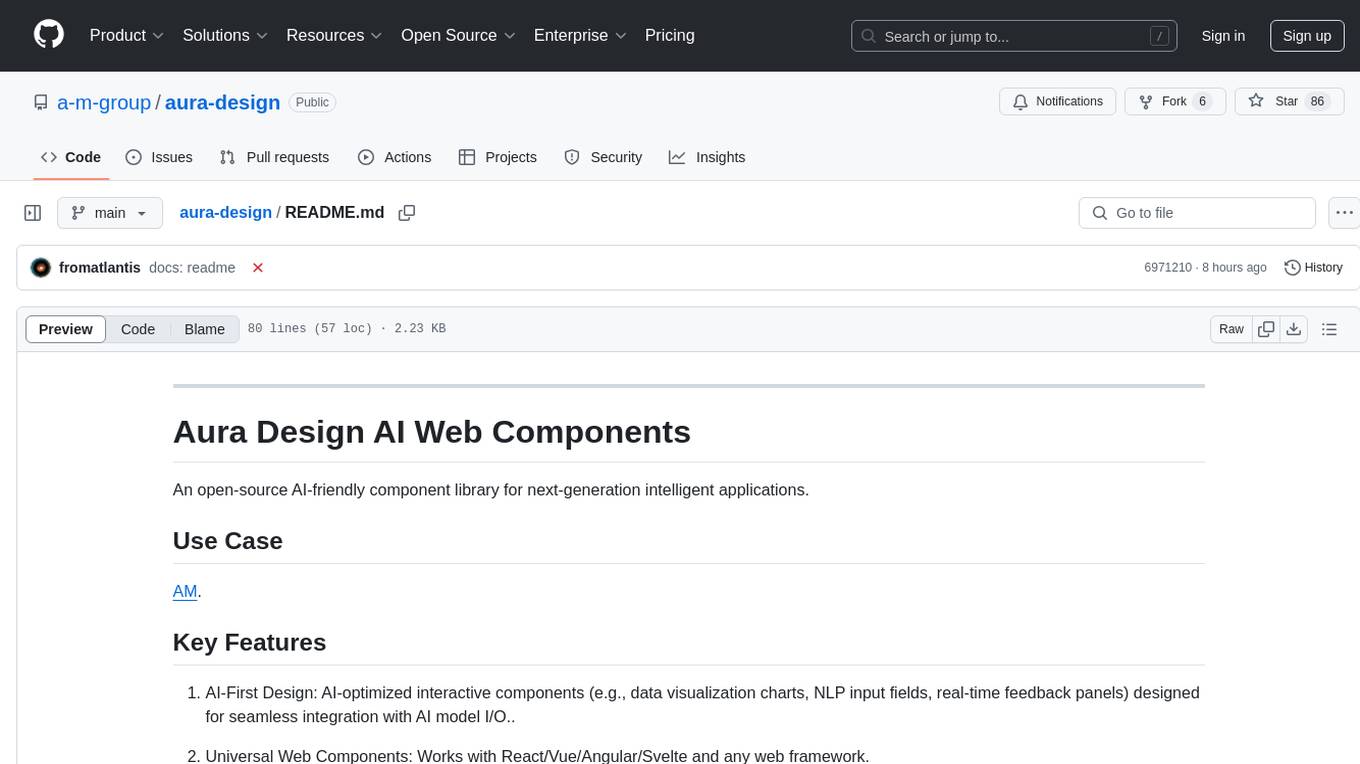
aura-design
Aura Design is an open-source AI-friendly component library for next-generation intelligent applications. It offers AI-optimized interactive components designed for seamless integration with AI model I/O. The library works with various web frameworks and allows easy customization to suit specific requirements. With a modern design and smart markdown renderer, Aura Design enhances the overall user experience.

EvoMaster
EvoMaster is an open-source AI-driven tool that automatically generates system-level test cases for web/enterprise applications. It uses Evolutionary Algorithm and Dynamic Program Analysis to evolve test cases, maximizing code coverage and fault detection. It supports REST, GraphQL, and RPC APIs, with whitebox testing for JVM-compiled APIs. The tool generates JUnit tests in Java or Kotlin, focusing on fault detection, self-contained tests, SQL handling, and authentication. Known limitations include manual driver creation for whitebox testing and longer execution times for better results. EvoMaster has been funded by ERC and RCN grants.
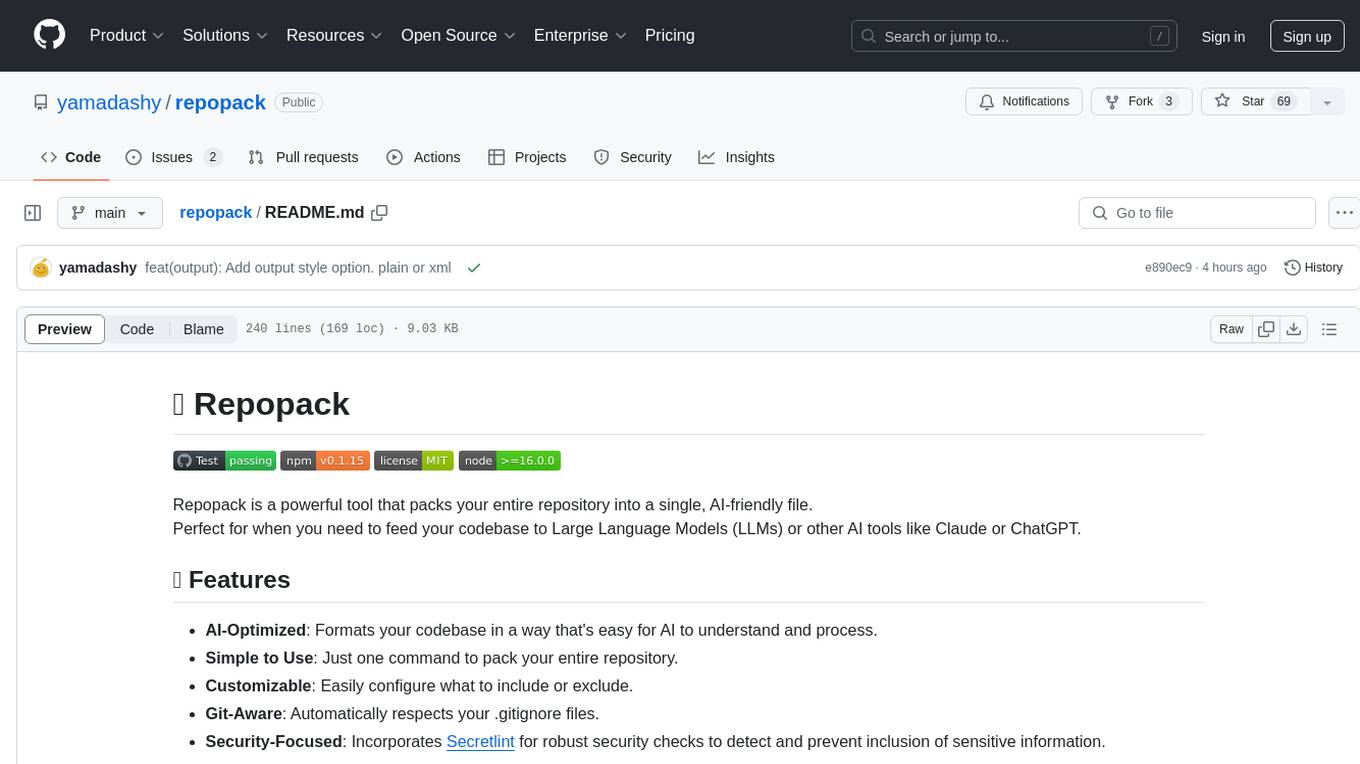
repopack
Repopack is a powerful tool that packs your entire repository into a single, AI-friendly file. It optimizes your codebase for AI comprehension, is simple to use with customizable options, and respects Gitignore files for security. The tool generates a packed file with clear separators and AI-oriented explanations, making it ideal for use with Generative AI tools like Claude or ChatGPT. Repopack offers command line options, configuration settings, and multiple methods for setting ignore patterns to exclude specific files or directories during the packing process. It includes features like comment removal for supported file types and a security check using Secretlint to detect sensitive information in files.
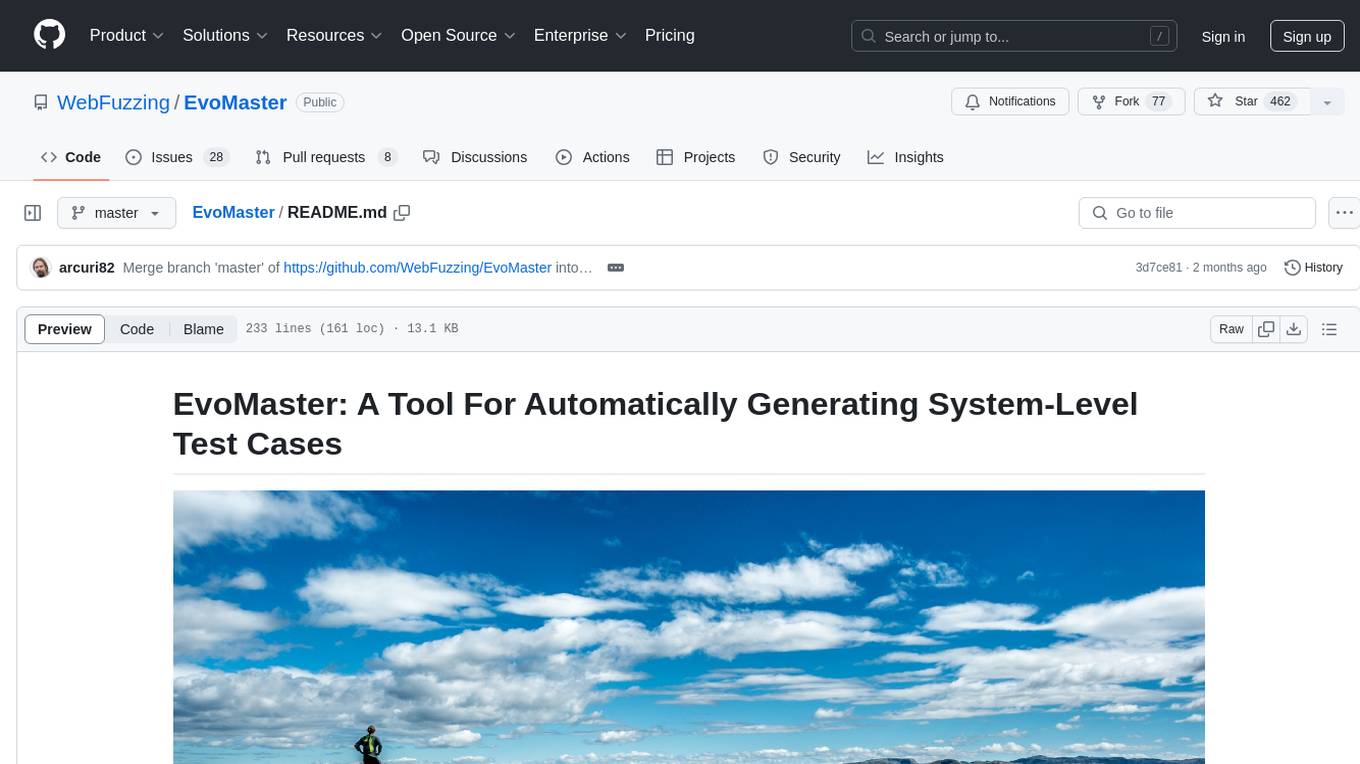
EvoMaster
EvoMaster is an open-source AI-driven tool that automatically generates system-level test cases for web/enterprise applications. It uses an Evolutionary Algorithm and Dynamic Program Analysis to evolve test cases, maximizing code coverage and fault detection. The tool supports REST, GraphQL, and RPC APIs, with whitebox testing for JVM-compiled languages. It generates JUnit tests, detects faults, handles SQL databases, and supports authentication. EvoMaster has been funded by the European Research Council and the Research Council of Norway.
ianvs
Ianvs is a distributed synergy AI benchmarking project incubated in KubeEdge SIG AI. It aims to test the performance of distributed synergy AI solutions following recognized standards, providing end-to-end benchmark toolkits, test environment management tools, test case control tools, and benchmark presentation tools. It also collaborates with other organizations to establish comprehensive benchmarks and related applications. The architecture includes critical components like Test Environment Manager, Test Case Controller, Generation Assistant, Simulation Controller, and Story Manager. Ianvs documentation covers quick start, guides, dataset descriptions, algorithms, user interfaces, stories, and roadmap.
NotHotDog
NotHotDog is an open-source platform for testing, evaluating, and simulating AI agents. It offers a robust framework for generating test cases, running conversational scenarios, and analyzing agent performance.
For similar jobs
sweep
Sweep is an AI junior developer that turns bugs and feature requests into code changes. It automatically handles developer experience improvements like adding type hints and improving test coverage.
teams-ai
The Teams AI Library is a software development kit (SDK) that helps developers create bots that can interact with Teams and Microsoft 365 applications. It is built on top of the Bot Framework SDK and simplifies the process of developing bots that interact with Teams' artificial intelligence capabilities. The SDK is available for JavaScript/TypeScript, .NET, and Python.
ai-guide
This guide is dedicated to Large Language Models (LLMs) that you can run on your home computer. It assumes your PC is a lower-end, non-gaming setup.
classifai
Supercharge WordPress Content Workflows and Engagement with Artificial Intelligence. Tap into leading cloud-based services like OpenAI, Microsoft Azure AI, Google Gemini and IBM Watson to augment your WordPress-powered websites. Publish content faster while improving SEO performance and increasing audience engagement. ClassifAI integrates Artificial Intelligence and Machine Learning technologies to lighten your workload and eliminate tedious tasks, giving you more time to create original content that matters.
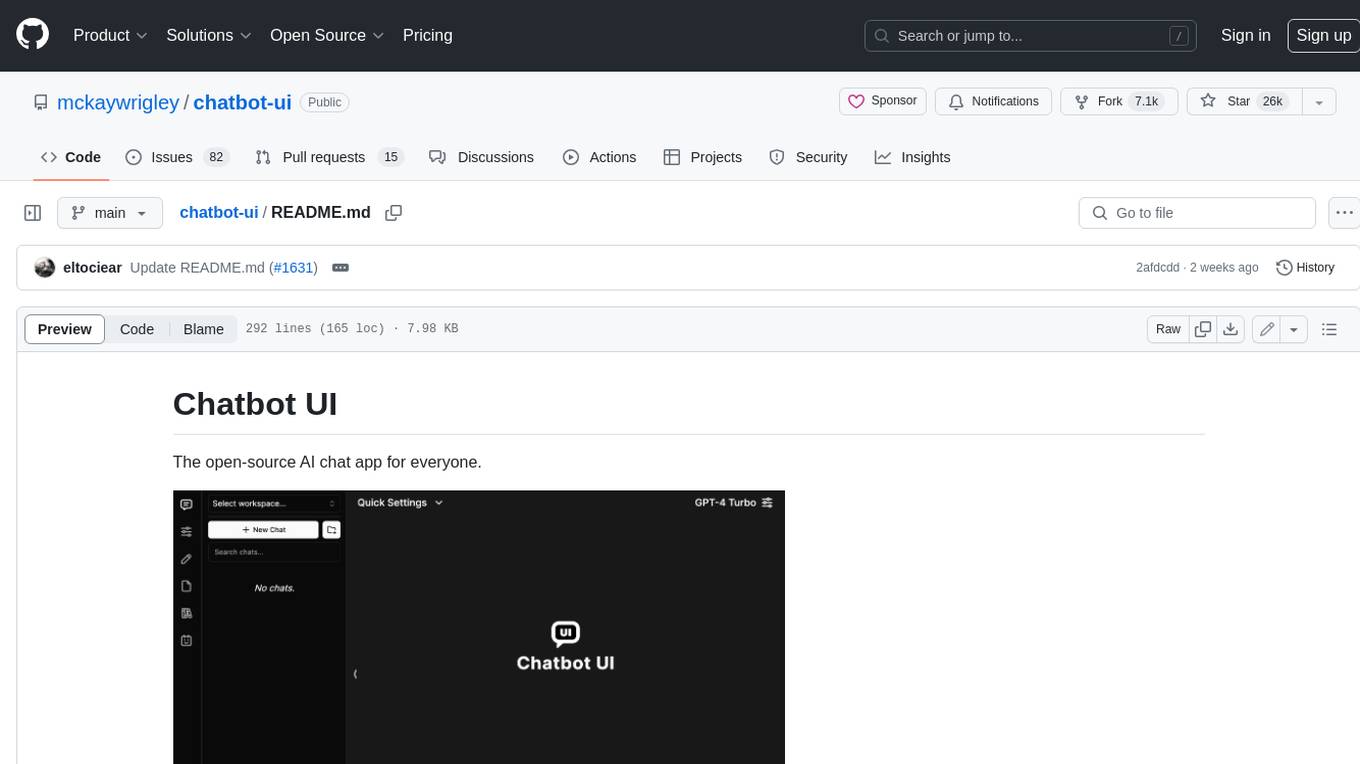
chatbot-ui
Chatbot UI is an open-source AI chat app that allows users to create and deploy their own AI chatbots. It is easy to use and can be customized to fit any need. Chatbot UI is perfect for businesses, developers, and anyone who wants to create a chatbot.
BricksLLM
BricksLLM is a cloud native AI gateway written in Go. Currently, it provides native support for OpenAI, Anthropic, Azure OpenAI and vLLM. BricksLLM aims to provide enterprise level infrastructure that can power any LLM production use cases. Here are some use cases for BricksLLM: * Set LLM usage limits for users on different pricing tiers * Track LLM usage on a per user and per organization basis * Block or redact requests containing PIIs * Improve LLM reliability with failovers, retries and caching * Distribute API keys with rate limits and cost limits for internal development/production use cases * Distribute API keys with rate limits and cost limits for students
uAgents
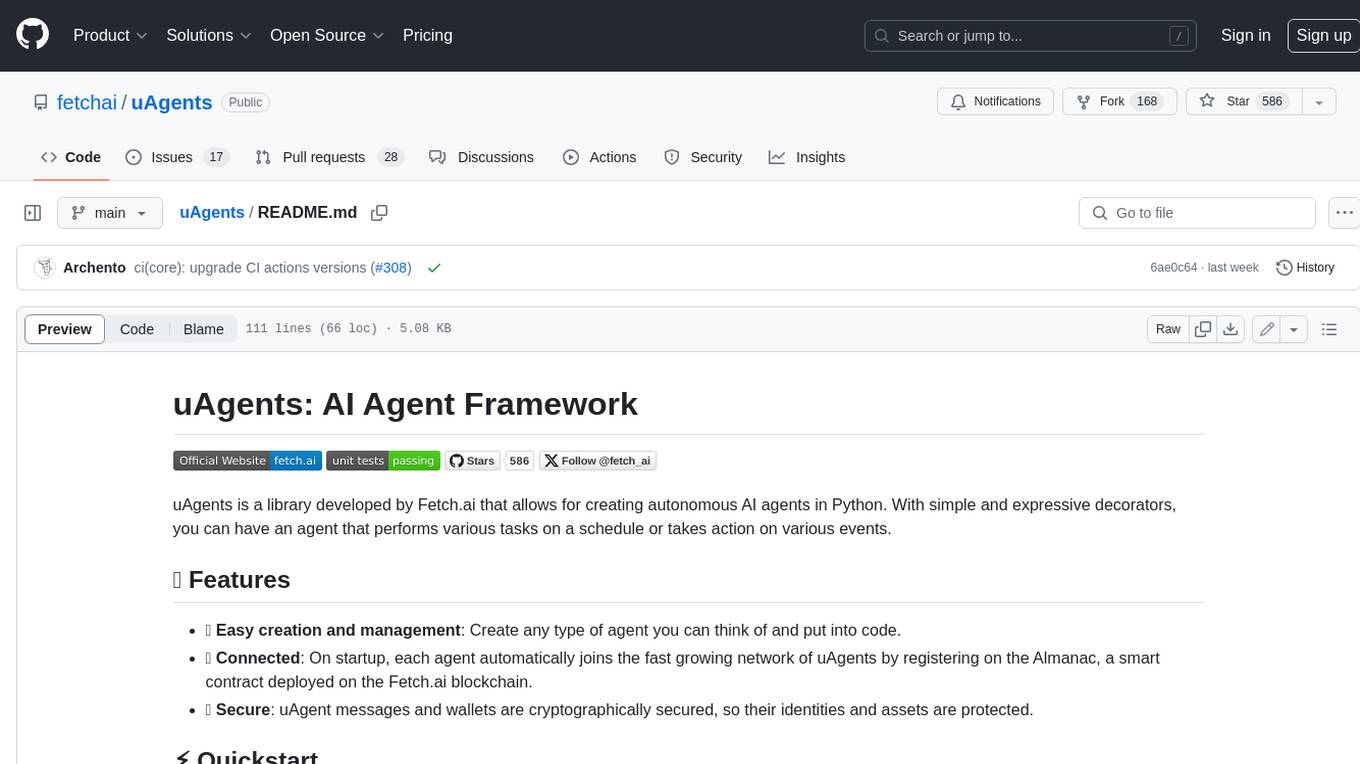
uAgents is a Python library developed by Fetch.ai that allows for the creation of autonomous AI agents. These agents can perform various tasks on a schedule or take action on various events. uAgents are easy to create and manage, and they are connected to a fast-growing network of other uAgents. They are also secure, with cryptographically secured messages and wallets.

griptape
Griptape is a modular Python framework for building AI-powered applications that securely connect to your enterprise data and APIs. It offers developers the ability to maintain control and flexibility at every step. Griptape's core components include Structures (Agents, Pipelines, and Workflows), Tasks, Tools, Memory (Conversation Memory, Task Memory, and Meta Memory), Drivers (Prompt and Embedding Drivers, Vector Store Drivers, Image Generation Drivers, Image Query Drivers, SQL Drivers, Web Scraper Drivers, and Conversation Memory Drivers), Engines (Query Engines, Extraction Engines, Summary Engines, Image Generation Engines, and Image Query Engines), and additional components (Rulesets, Loaders, Artifacts, Chunkers, and Tokenizers). Griptape enables developers to create AI-powered applications with ease and efficiency.