


mosaico
Mosaico - The data platform for Physical AI
Stars: 601
Mosaico is a blazing-fast data platform designed to bridge the gap between Robotics and Physical AI. It streamlines data management, compression, and search by replacing monolithic files with a structured archive powered by Rust and Python. The platform operates on a standard client-server model, with the server daemon, mosaicod, handling heavy lifting tasks like data conversion, compression, and organized storage. The Python SDK (mosaico-sdk-py) and Rust backend (mosaicod) are included in this monorepo configuration to simplify testing and reduce compatibility issues. Mosaico enables the ingestion of standard ROS sequences, transforming them into synchronized, randomized dataframes for Physical AI applications. Efficiency is built into the architecture, with data batches streamed directly from the Mosaico data platform, eliminating the need to download massive datasets locally.
README:


Mosaico is a blazing-fast data platform designed to bridge the gap between Robotics and Physical AI. It streamlines data management, compression, and search by replacing monolithic files with a structured archive powered by Rust and Python.
This repo contains both the Python SDK (mosaico-sdk-py) and the Rust backend (mosaicod). We have chosen to keep the code in a monorepo configuration to simplify the testing and reduce compatibility issues.
Mosaico takes a strictly code-first approach. We didn't want to force you to learn yet another SQL-like sublanguage just to move data around. Instead, we provide native SDKs (starting with Python) so you can query and upload data using the programming language you are already comfortable with.
Under the hood, the system operates on a standard client-server model.
The server daemon, mosaicod, acts as the central hub that takes care of the heavy lifting, like data conversion, compression, and organized storage.
On the other side, the client SDK is what you actually import into your scripts; it manages the communication logic and abstracts away the implementation details to keep your API usage stable, even as the platform evolves in the background.
For full documentation, see our Documentation.
If you use Mosaico for a publication, please cite it as:
@software{MosaicoLabs,
  author = {{Mosaico Team}},
  title = {{Mosaico: The Open-Source Data Platform for Robotics and Physical AI.}},
  url = {https://mosaico.dev},
  version = {0.0},
  year = {2025},
  month = {12},
  address = {Online},
  note = {Available from https://mosaico.dev/ and https://github.com/mosaico-labs/mosaico}
}
For Tasks:
Click tags to check more tools for each tasksFor Jobs:
Alternative AI tools for mosaico
Similar Open Source Tools
mosaico
Mosaico is a blazing-fast data platform designed to bridge the gap between Robotics and Physical AI. It streamlines data management, compression, and search by replacing monolithic files with a structured archive powered by Rust and Python. The platform operates on a standard client-server model, with the server daemon, mosaicod, handling heavy lifting tasks like data conversion, compression, and organized storage. The Python SDK (mosaico-sdk-py) and Rust backend (mosaicod) are included in this monorepo configuration to simplify testing and reduce compatibility issues. Mosaico enables the ingestion of standard ROS sequences, transforming them into synchronized, randomized dataframes for Physical AI applications. Efficiency is built into the architecture, with data batches streamed directly from the Mosaico data platform, eliminating the need to download massive datasets locally.
firecrawl
Firecrawl is an API service that empowers AI applications with clean data from any website. It features advanced scraping, crawling, and data extraction capabilities. The repository is still in development, integrating custom modules into the mono repo. Users can run it locally but it's not fully ready for self-hosted deployment yet. Firecrawl offers powerful capabilities like scraping, crawling, mapping, searching, and extracting structured data from single pages, multiple pages, or entire websites with AI. It supports various formats, actions, and batch scraping. The tool is designed to handle proxies, anti-bot mechanisms, dynamic content, media parsing, change tracking, and more. Firecrawl is available as an open-source project under the AGPL-3.0 license, with additional features offered in the cloud version.
spiceai
Spice is a portable runtime written in Rust that offers developers a unified SQL interface to materialize, accelerate, and query data from any database, data warehouse, or data lake. It connects, fuses, and delivers data to applications, machine-learning models, and AI-backends, functioning as an application-specific, tier-optimized Database CDN. Built with industry-leading technologies such as Apache DataFusion, Apache Arrow, Apache Arrow Flight, SQLite, and DuckDB. Spice makes it fast and easy to query data from one or more sources using SQL, co-locating a managed dataset with applications or machine learning models, and accelerating it with Arrow in-memory, SQLite/DuckDB, or attached PostgreSQL for fast, high-concurrency, low-latency queries.
distill
Distill is a reliability layer for LLM context that provides deterministic deduplication to remove redundancy before reaching the model. It aims to reduce redundant data, lower costs, provide faster responses, and offer more efficient and deterministic results. The tool works by deduplicating, compressing, summarizing, and caching context to ensure reliable outputs. It offers various installation methods, including binary download, Go install, Docker usage, and building from source. Distill can be used for tasks like deduplicating chunks, connecting to vector databases, integrating with AI assistants, analyzing files for duplicates, syncing vectors to Pinecone, querying from the command line, and managing configuration files. The tool supports self-hosting via Docker, Docker Compose, building from source, Fly.io deployment, Render deployment, and Railway integration. Distill also provides monitoring capabilities with Prometheus-compatible metrics, Grafana dashboard, and OpenTelemetry tracing.
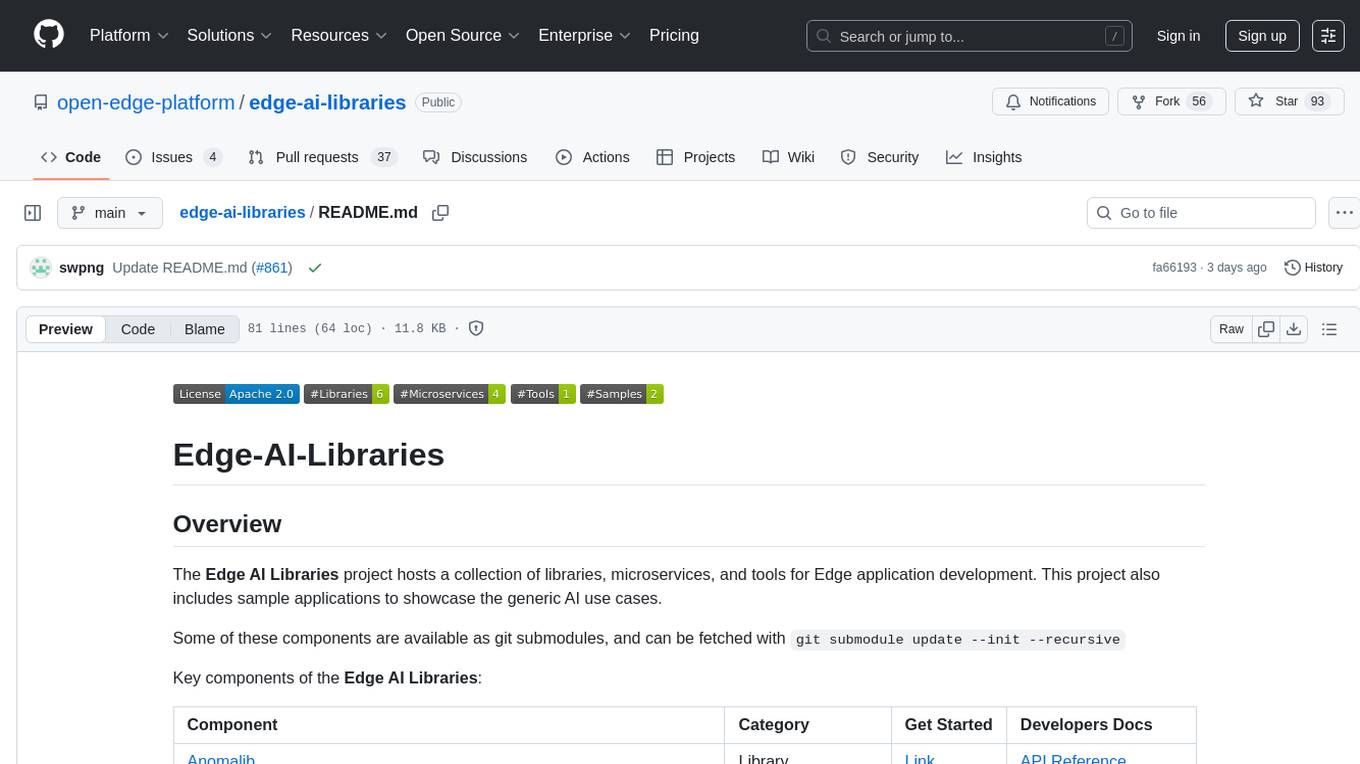
edge-ai-libraries
The Edge AI Libraries project is a collection of libraries, microservices, and tools for Edge application development. It includes sample applications showcasing generic AI use cases. Key components include Anomalib, Dataset Management Framework, Deep Learning Streamer, ECAT EnableKit, EtherCAT Masterstack, FLANN, OpenVINO toolkit, Audio Analyzer, ORB Extractor, PCL, PLCopen Servo, Real-time Data Agent, RTmotion, Audio Intelligence, Deep Learning Streamer Pipeline Server, Document Ingestion, Model Registry, Multimodal Embedding Serving, Time Series Analytics, Vector Retriever, Visual-Data Preparation, VLM Inference Serving, Intel Geti, Intel SceneScape, Visual Pipeline and Platform Evaluation Tool, Chat Question and Answer, Document Summarization, PLCopen Benchmark, PLCopen Databus, Video Search and Summarization, Isolation Forest Classifier, Random Forest Microservices. Visit sub-directories for instructions and guides.
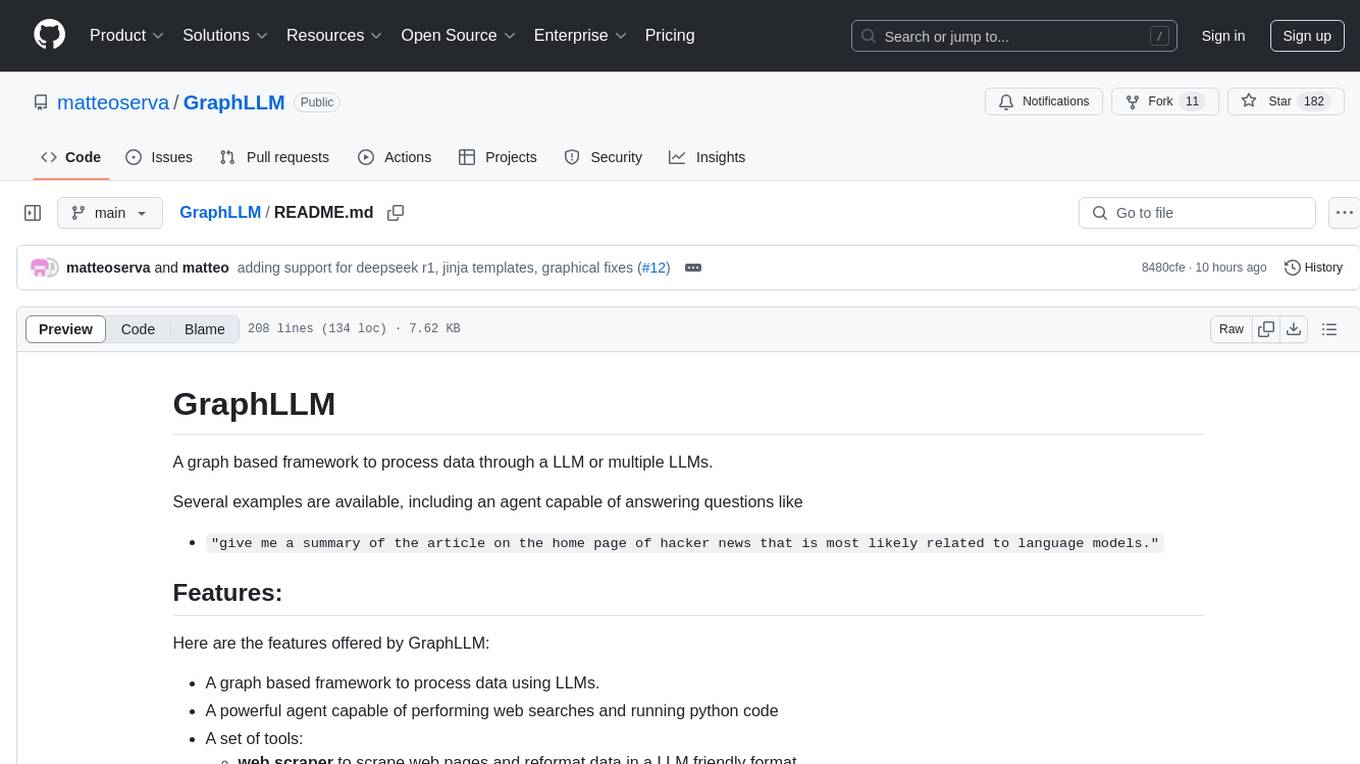
GraphLLM
GraphLLM is a graph-based framework designed to process data using LLMs. It offers a set of tools including a web scraper, PDF parser, YouTube subtitles downloader, Python sandbox, and TTS engine. The framework provides a GUI for building and debugging graphs with advanced features like loops, conditionals, parallel execution, streaming of results, hierarchical graphs, external tool integration, and dynamic scheduling. GraphLLM is a low-level framework that gives users full control over the raw prompt and output of models, with a steeper learning curve. It is tested with llama70b and qwen 32b, under heavy development with breaking changes expected.
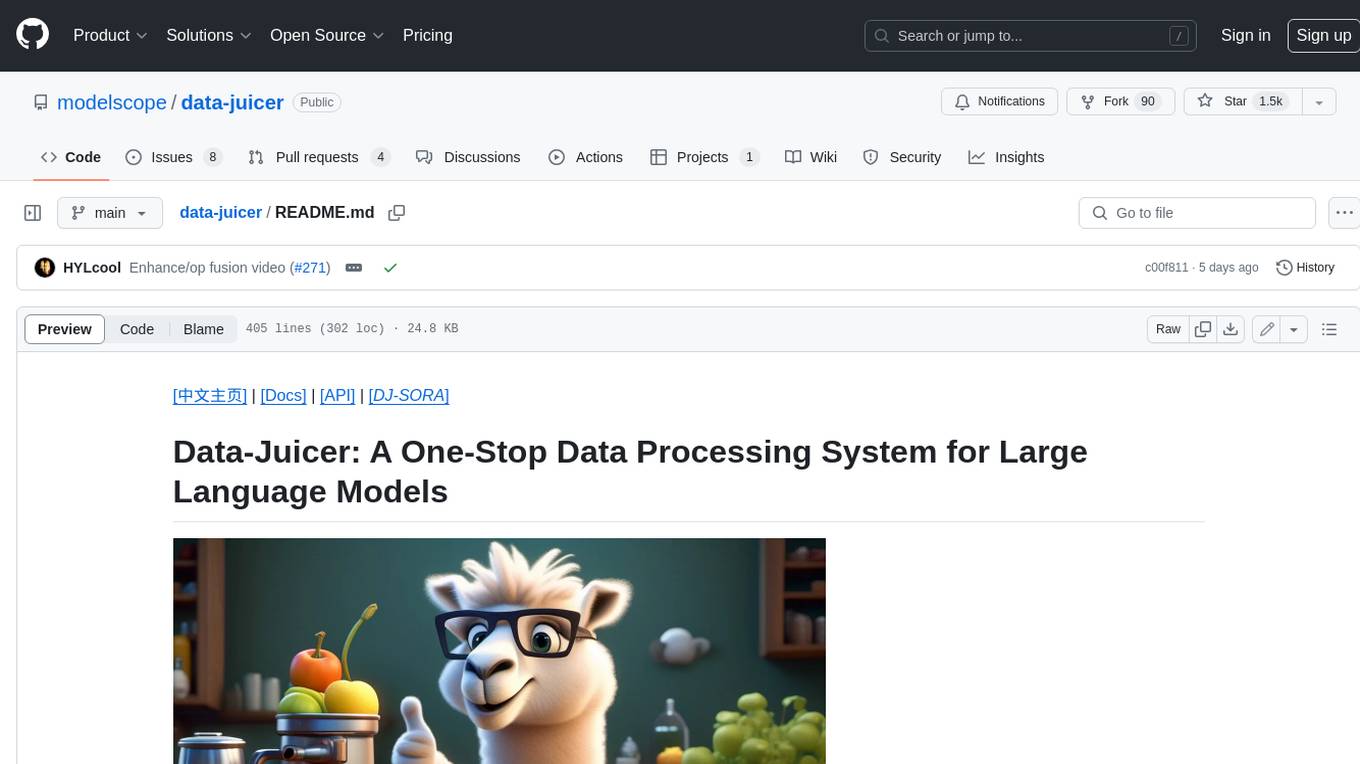
data-juicer
Data-Juicer is a one-stop data processing system to make data higher-quality, juicier, and more digestible for LLMs. It is a systematic & reusable library of 80+ core OPs, 20+ reusable config recipes, and 20+ feature-rich dedicated toolkits, designed to function independently of specific LLM datasets and processing pipelines. Data-Juicer allows detailed data analyses with an automated report generation feature for a deeper understanding of your dataset. Coupled with multi-dimension automatic evaluation capabilities, it supports a timely feedback loop at multiple stages in the LLM development process. Data-Juicer offers tens of pre-built data processing recipes for pre-training, fine-tuning, en, zh, and more scenarios. It provides a speedy data processing pipeline requiring less memory and CPU usage, optimized for maximum productivity. Data-Juicer is flexible & extensible, accommodating most types of data formats and allowing flexible combinations of OPs. It is designed for simplicity, with comprehensive documentation, easy start guides and demo configs, and intuitive configuration with simple adding/removing OPs from existing configs.
n8n-docs
n8n is an extendable workflow automation tool that enables you to connect anything to everything. It is open-source and can be self-hosted or used as a service. n8n provides a visual interface for creating workflows, which can be used to automate tasks such as data integration, data transformation, and data analysis. n8n also includes a library of pre-built nodes that can be used to connect to a variety of applications and services. This makes it easy to create complex workflows without having to write any code.
qsv
qsv is a command line program for querying, slicing, indexing, analyzing, filtering, enriching, transforming, sorting, validating, joining, formatting & converting tabular data (CSV, spreadsheets, DBs, parquet, etc). Commands are simple, composable & 'blazing fast'. It is a blazing-fast data-wrangling toolkit with a focus on speed, processing very large files, and being a complete data-wrangling toolkit. It is designed to be portable, easy to use, secure, and easy to contribute to. qsv follows the RFC 4180 CSV standard, requires UTF-8 encoding, and supports various file formats. It has extensive shell completion support, automatic compression/decompression using Snappy, and supports environment variables and dotenv files. qsv has a comprehensive test suite and is dual-licensed under MIT or the UNLICENSE.
redb-open
reDB Node is a distributed, policy-driven data mesh platform that enables True Data Portability across various databases, warehouses, clouds, and environments. It unifies data access, data mobility, and schema transformation into one open platform. Built for developers, architects, and AI systems, reDB addresses the challenges of fragmented data ecosystems in modern enterprises by providing multi-database interoperability, automated schema versioning, zero-downtime migration, real-time developer data environments with obfuscation, quantum-resistant encryption, and policy-based access control. The project aims to build a foundation for future-proof data infrastructure.
llama_index
LlamaIndex is a data framework for building LLM applications. It provides tools for ingesting, structuring, and querying data, as well as integrating with LLMs and other tools. LlamaIndex is designed to be easy to use for both beginner and advanced users, and it provides a comprehensive set of features for building LLM applications.
oio-sds
OpenIO SDS is a software solution for object storage, targeting very large-scale unstructured data volumes.
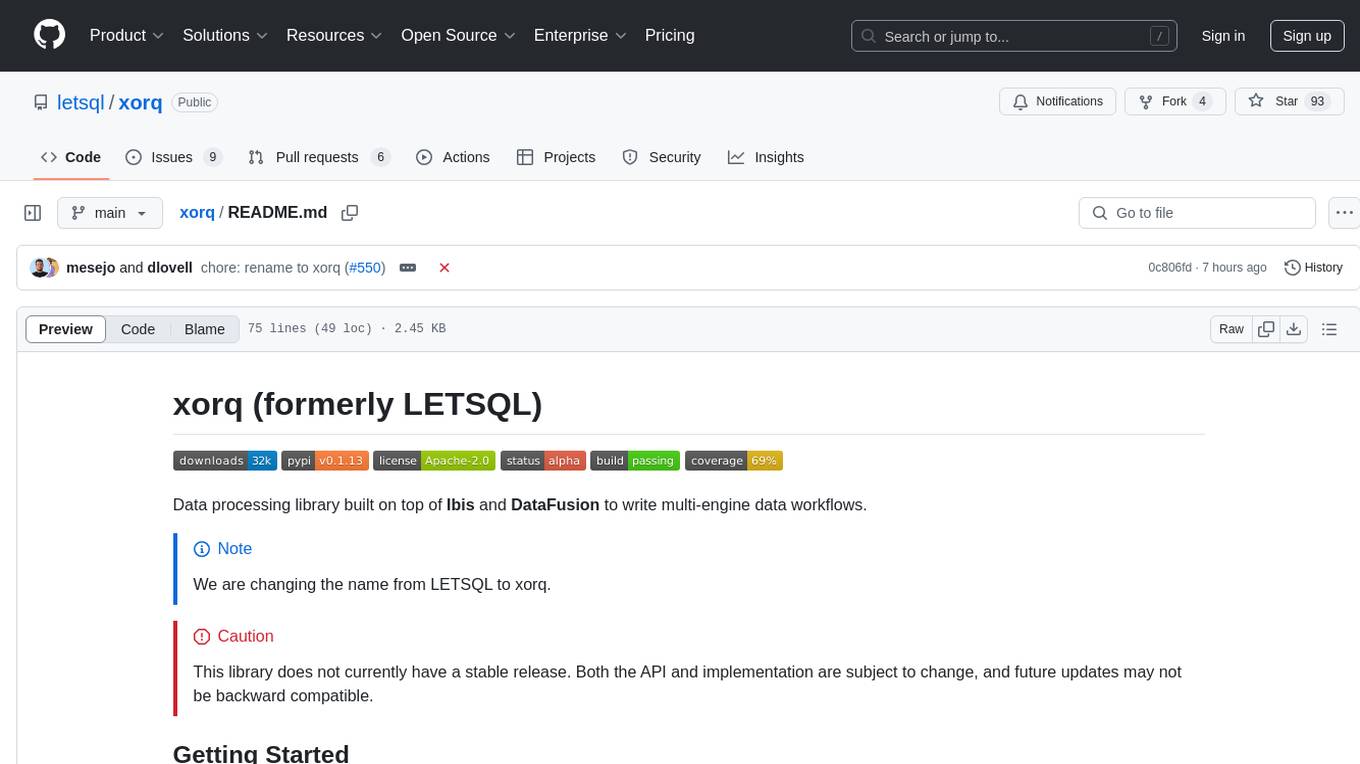
xorq
Xorq (formerly LETSQL) is a data processing library built on top of Ibis and DataFusion to write multi-engine data workflows. It provides a flexible and powerful tool for processing and analyzing data from various sources, enabling users to create complex data pipelines and perform advanced data transformations.
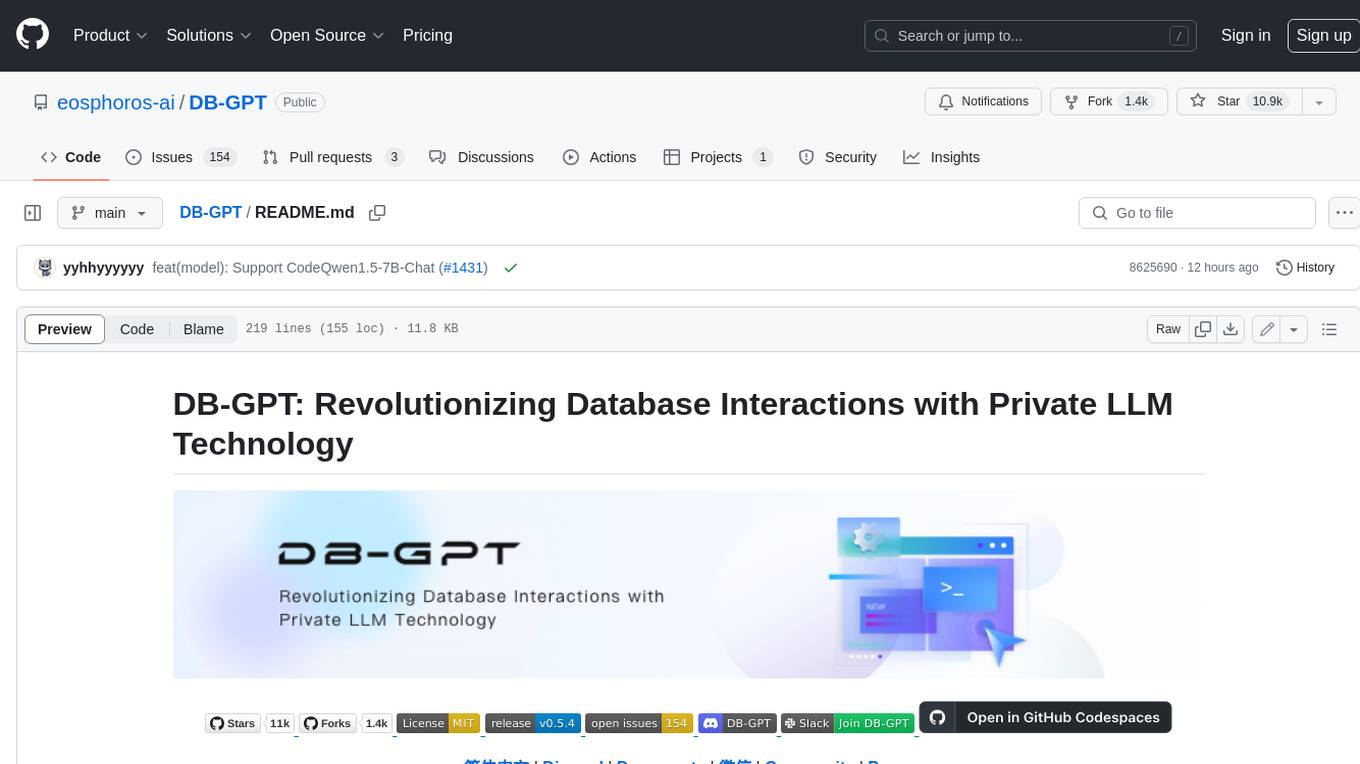
DB-GPT
DB-GPT is an open source AI native data app development framework with AWEL(Agentic Workflow Expression Language) and agents. It aims to build infrastructure in the field of large models, through the development of multiple technical capabilities such as multi-model management (SMMF), Text2SQL effect optimization, RAG framework and optimization, Multi-Agents framework collaboration, AWEL (agent workflow orchestration), etc. Which makes large model applications with data simpler and more convenient.
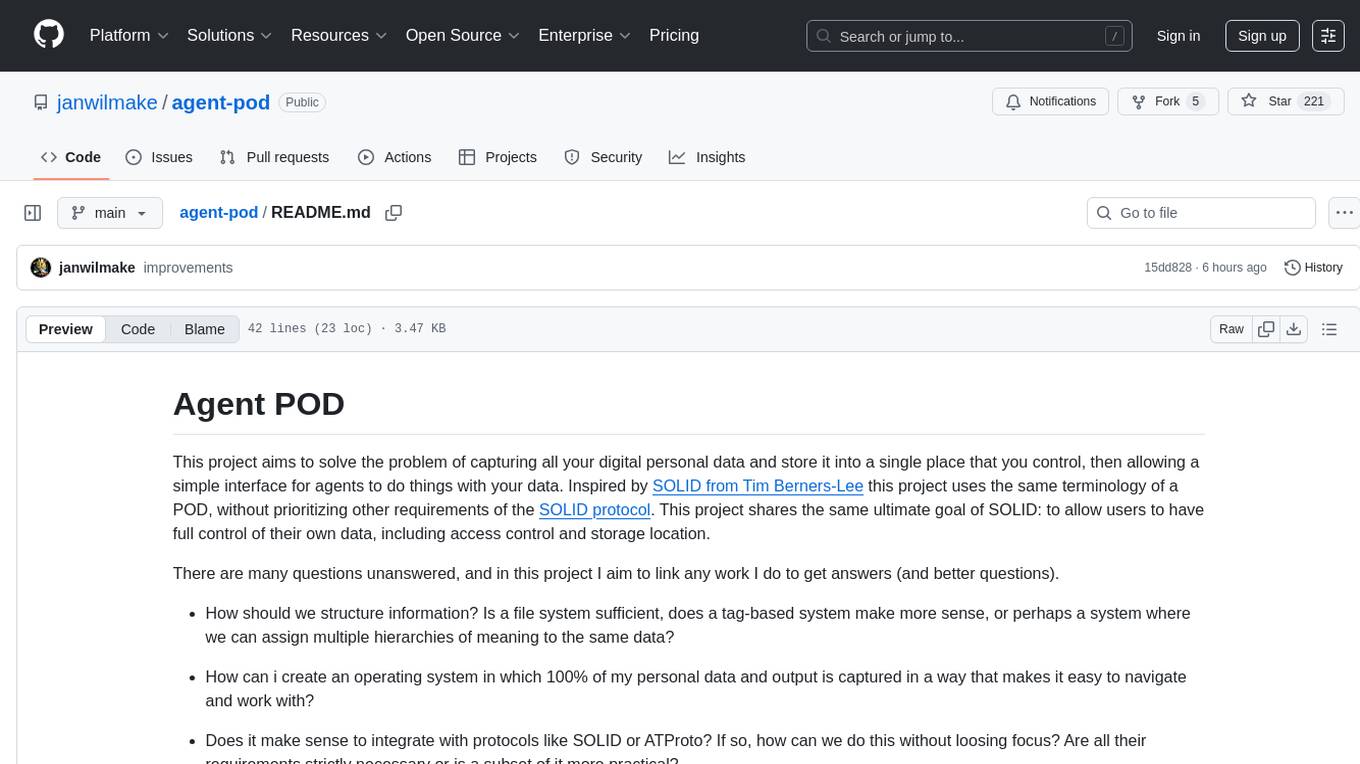
agent-pod
Agent POD is a project focused on capturing and storing personal digital data in a user-controlled environment, with the goal of enabling agents to interact with the data. It explores questions related to structuring information, creating an efficient data capture system, integrating with protocols like SOLID, and enabling data storage for groups. The project aims to transition from traditional data-storing apps to a system where personal data is owned and controlled by the user, facilitating the creation of 'solid-first' apps.
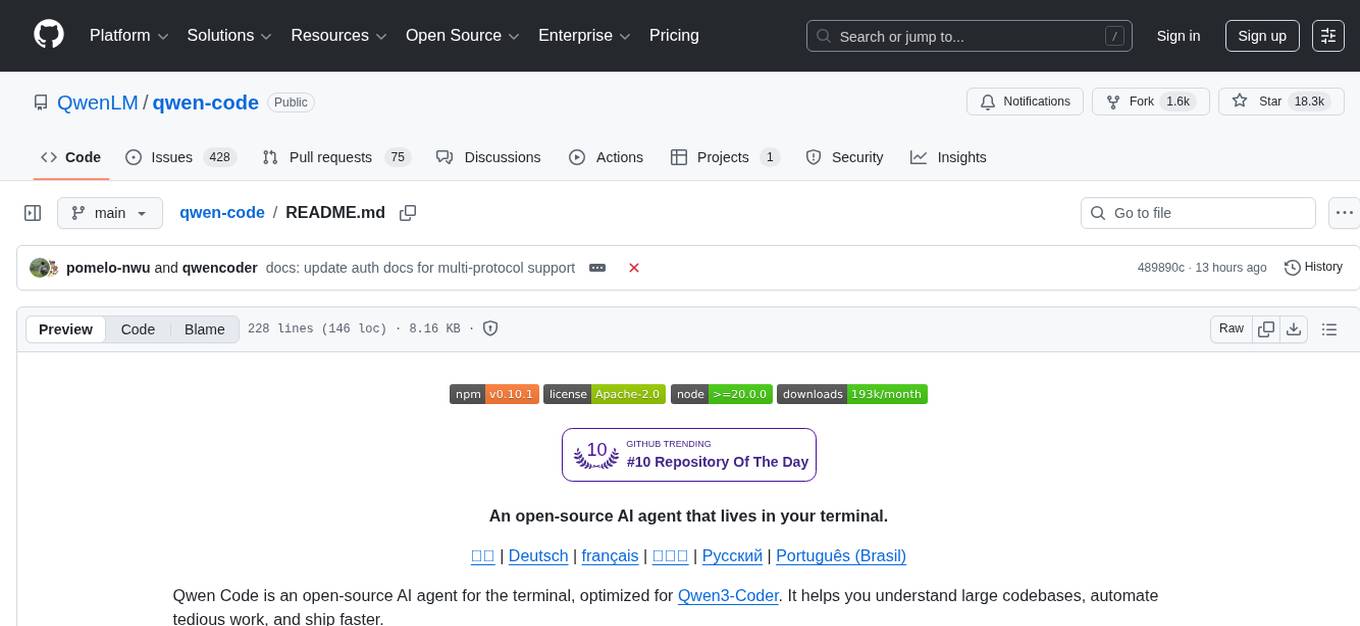
qwen-code
Qwen Code is an open-source AI agent optimized for Qwen3-Coder, designed to help users understand large codebases, automate tedious work, and expedite the shipping process. It offers an agentic workflow with rich built-in tools, a terminal-first approach with optional IDE integration, and supports both OpenAI-compatible API and Qwen OAuth authentication methods. Users can interact with Qwen Code in interactive mode, headless mode, IDE integration, and through a TypeScript SDK. The tool can be configured via settings.json, environment variables, and CLI flags, and offers benchmark results for performance evaluation. Qwen Code is part of an ecosystem that includes AionUi and Gemini CLI Desktop for graphical interfaces, and troubleshooting guides are available for issue resolution.
For similar tasks
zipnn
ZipNN is a lossless and near-lossless compression library optimized for numbers/tensors in the Foundation Models environment. It automatically prepares data for compression based on its type, allowing users to focus on core tasks without worrying about compression complexities. The library delivers effective compression techniques for different data types and structures, achieving high compression ratios and rates. ZipNN supports various compression methods like ZSTD, lz4, and snappy, and provides ready-made scripts for file compression/decompression. Users can also manually import the package to compress and decompress data. The library offers advanced configuration options for customization and validation tests for different input and compression types.
mosaico
Mosaico is a blazing-fast data platform designed to bridge the gap between Robotics and Physical AI. It streamlines data management, compression, and search by replacing monolithic files with a structured archive powered by Rust and Python. The platform operates on a standard client-server model, with the server daemon, mosaicod, handling heavy lifting tasks like data conversion, compression, and organized storage. The Python SDK (mosaico-sdk-py) and Rust backend (mosaicod) are included in this monorepo configuration to simplify testing and reduce compatibility issues. Mosaico enables the ingestion of standard ROS sequences, transforming them into synchronized, randomized dataframes for Physical AI applications. Efficiency is built into the architecture, with data batches streamed directly from the Mosaico data platform, eliminating the need to download massive datasets locally.
minio
MinIO is a High Performance Object Storage released under GNU Affero General Public License v3.0. It is API compatible with Amazon S3 cloud storage service. Use MinIO to build high performance infrastructure for machine learning, analytics and application data workloads.
airbyte
Airbyte is an open-source data integration platform that makes it easy to move data from any source to any destination. With Airbyte, you can build and manage data pipelines without writing any code. Airbyte provides a library of pre-built connectors that make it easy to connect to popular data sources and destinations. You can also create your own connectors using Airbyte's no-code Connector Builder or low-code CDK. Airbyte is used by data engineers and analysts at companies of all sizes to build and manage their data pipelines.
labelbox-python
Labelbox is a data-centric AI platform for enterprises to develop, optimize, and use AI to solve problems and power new products and services. Enterprises use Labelbox to curate data, generate high-quality human feedback data for computer vision and LLMs, evaluate model performance, and automate tasks by combining AI and human-centric workflows. The academic & research community uses Labelbox for cutting-edge AI research.
telemetry-airflow
This repository codifies the Airflow cluster that is deployed at workflow.telemetry.mozilla.org (behind SSO) and commonly referred to as "WTMO" or simply "Airflow". Some links relevant to users and developers of WTMO: * The `dags` directory in this repository contains some custom DAG definitions * Many of the DAGs registered with WTMO don't live in this repository, but are instead generated from ETL task definitions in bigquery-etl * The Data SRE team maintains a WTMO Developer Guide (behind SSO)
fasttrackml
FastTrackML is an experiment tracking server focused on speed and scalability, fully compatible with MLFlow. It provides a user-friendly interface to track and visualize your machine learning experiments, making it easy to compare different models and identify the best performing ones. FastTrackML is open source and can be easily installed and run with pip or Docker. It is also compatible with the MLFlow Python package, making it easy to integrate with your existing MLFlow workflows.
vertex-ai-samples
The Google Cloud Vertex AI sample repository contains notebooks and community content that demonstrate how to develop and manage ML workflows using Google Cloud Vertex AI.
For similar jobs
sweep
Sweep is an AI junior developer that turns bugs and feature requests into code changes. It automatically handles developer experience improvements like adding type hints and improving test coverage.
teams-ai
The Teams AI Library is a software development kit (SDK) that helps developers create bots that can interact with Teams and Microsoft 365 applications. It is built on top of the Bot Framework SDK and simplifies the process of developing bots that interact with Teams' artificial intelligence capabilities. The SDK is available for JavaScript/TypeScript, .NET, and Python.
ai-guide
This guide is dedicated to Large Language Models (LLMs) that you can run on your home computer. It assumes your PC is a lower-end, non-gaming setup.
classifai
Supercharge WordPress Content Workflows and Engagement with Artificial Intelligence. Tap into leading cloud-based services like OpenAI, Microsoft Azure AI, Google Gemini and IBM Watson to augment your WordPress-powered websites. Publish content faster while improving SEO performance and increasing audience engagement. ClassifAI integrates Artificial Intelligence and Machine Learning technologies to lighten your workload and eliminate tedious tasks, giving you more time to create original content that matters.
chatbot-ui
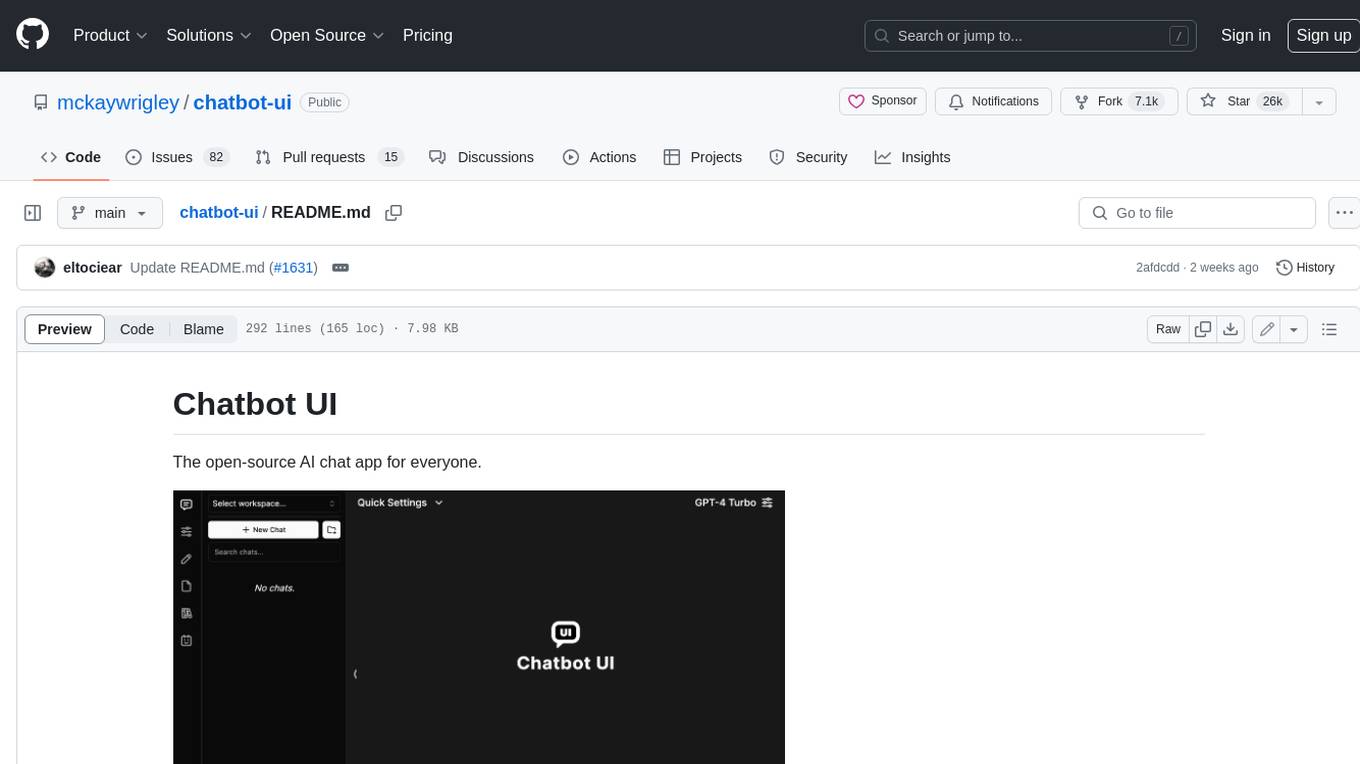
Chatbot UI is an open-source AI chat app that allows users to create and deploy their own AI chatbots. It is easy to use and can be customized to fit any need. Chatbot UI is perfect for businesses, developers, and anyone who wants to create a chatbot.
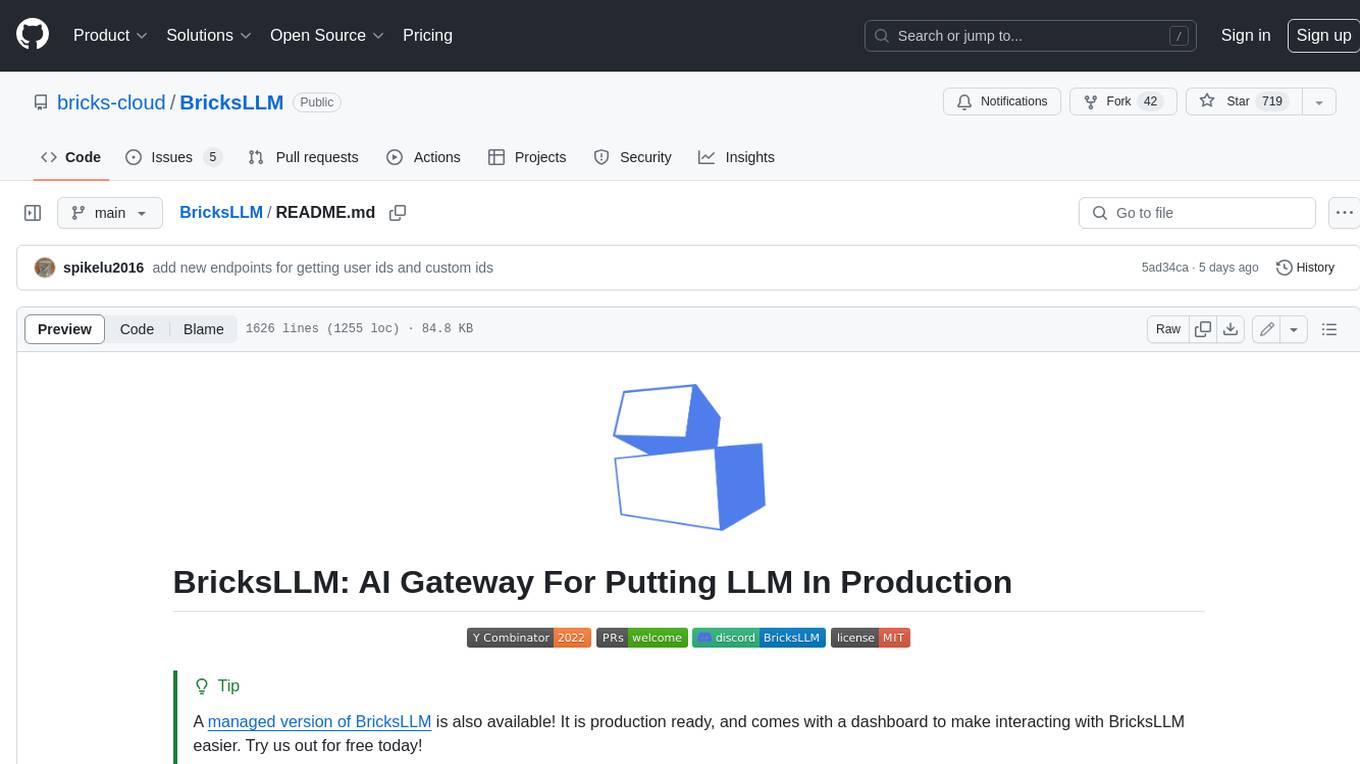
BricksLLM
BricksLLM is a cloud native AI gateway written in Go. Currently, it provides native support for OpenAI, Anthropic, Azure OpenAI and vLLM. BricksLLM aims to provide enterprise level infrastructure that can power any LLM production use cases. Here are some use cases for BricksLLM: * Set LLM usage limits for users on different pricing tiers * Track LLM usage on a per user and per organization basis * Block or redact requests containing PIIs * Improve LLM reliability with failovers, retries and caching * Distribute API keys with rate limits and cost limits for internal development/production use cases * Distribute API keys with rate limits and cost limits for students
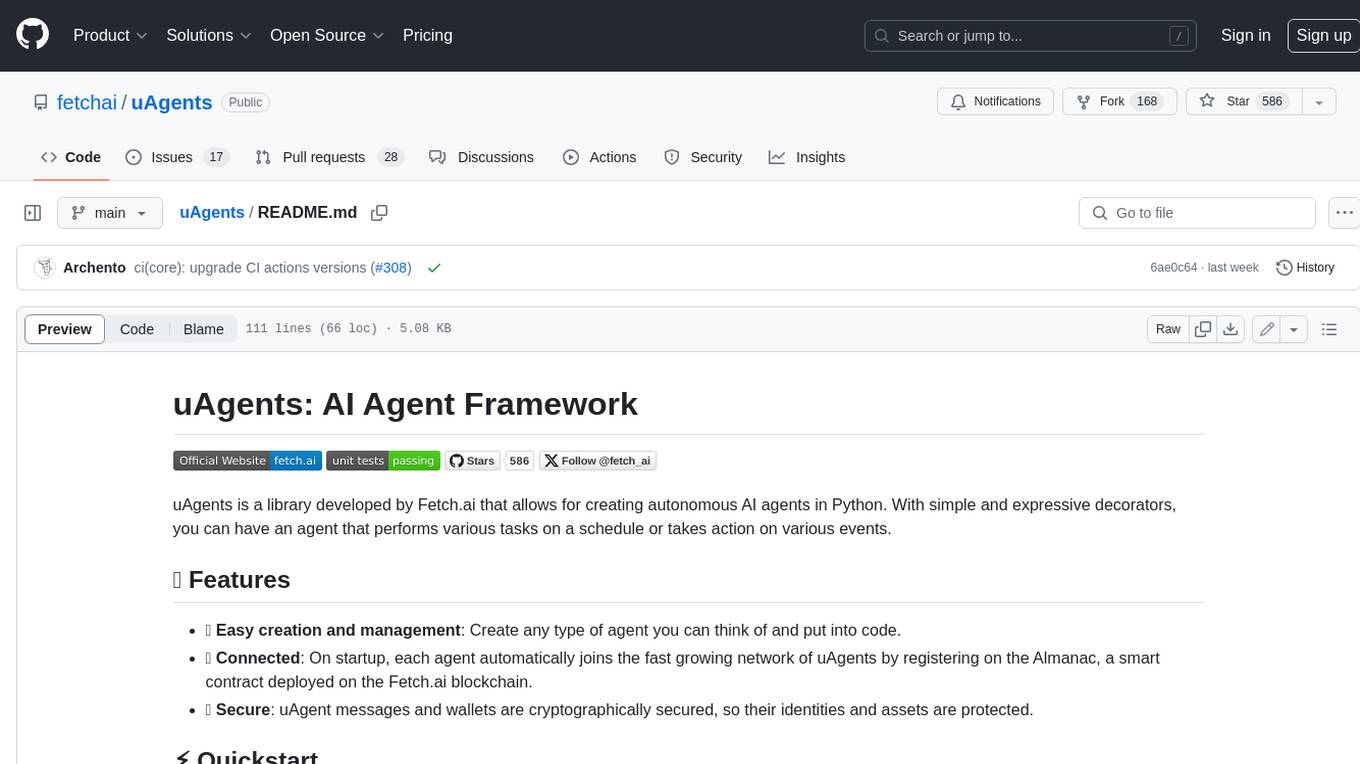
uAgents
uAgents is a Python library developed by Fetch.ai that allows for the creation of autonomous AI agents. These agents can perform various tasks on a schedule or take action on various events. uAgents are easy to create and manage, and they are connected to a fast-growing network of other uAgents. They are also secure, with cryptographically secured messages and wallets.
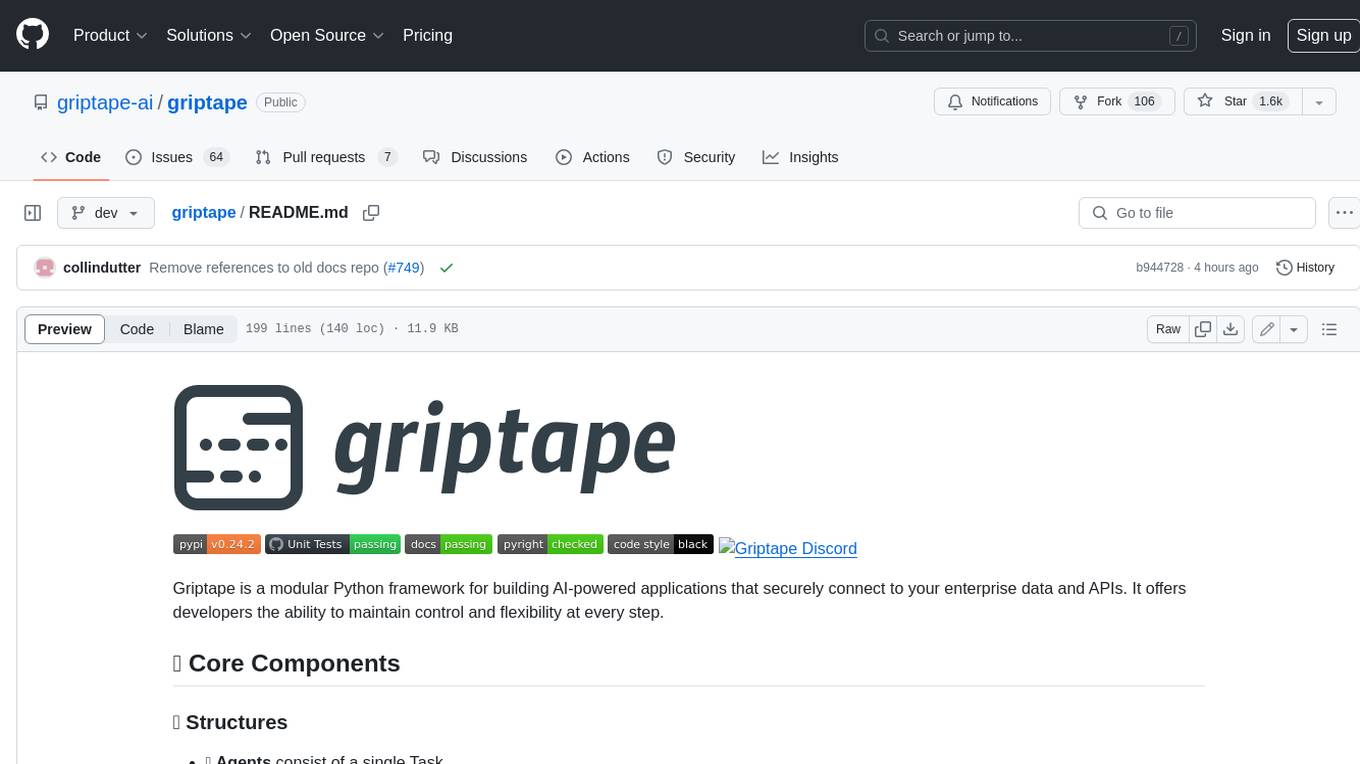
griptape
Griptape is a modular Python framework for building AI-powered applications that securely connect to your enterprise data and APIs. It offers developers the ability to maintain control and flexibility at every step. Griptape's core components include Structures (Agents, Pipelines, and Workflows), Tasks, Tools, Memory (Conversation Memory, Task Memory, and Meta Memory), Drivers (Prompt and Embedding Drivers, Vector Store Drivers, Image Generation Drivers, Image Query Drivers, SQL Drivers, Web Scraper Drivers, and Conversation Memory Drivers), Engines (Query Engines, Extraction Engines, Summary Engines, Image Generation Engines, and Image Query Engines), and additional components (Rulesets, Loaders, Artifacts, Chunkers, and Tokenizers). Griptape enables developers to create AI-powered applications with ease and efficiency.