


off-grid-mobile
The Swiss Army Knife of Offline AI. Chat, Speak, and Generate Images - Privacy First, Zero Internet. Download an LLM and use it on your mobile device. No data ever leaves your phone. Supports text-to-text, vision, text-to-image
Stars: 208
Off Grid is a complete offline AI suite that allows users to perform various tasks such as text generation, image generation, vision AI, voice transcription, and document analysis on their mobile devices without sending any data out. The tool offers high performance on flagship devices and supports a wide range of models for different tasks. Users can easily install the tool on Android by downloading the APK from GitHub Releases or build it from source with Node.js and JDK. The documentation provides detailed information on the system architecture, codebase, design system, visual hierarchy, test flows, and more. Contributions are welcome, and the tool is built with a focus on user privacy and data security, ensuring no cloud, subscription, or data harvesting.
README:

Chat. Generate images. See. Listen. All on your phone. All offline. Zero data leaves your device.




Most "local LLM" apps give you a text chatbot and call it a day. Off Grid is a complete offline AI suite — text generation, image generation, vision AI, voice transcription, and document analysis, all running natively on your phone's hardware.
 Onboarding |
 Text Generation |
 Image Generation |
 Vision AI |
 Attachments |
Text Generation — Run Qwen 3, Llama 3.2, Gemma 3, Phi-4, and any GGUF model. Streaming responses, thinking mode, 15-30 tok/s on flagship devices. Bring your own .gguf files too.
Image Generation — On-device Stable Diffusion with real-time preview. NPU-accelerated on Snapdragon (5-10s per image), Core ML on iOS. 20+ models including Absolute Reality, DreamShaper, Anything V5.
Vision AI — Point your camera at anything and ask questions. SmolVLM, Qwen3-VL, Gemma 3n — analyze documents, describe scenes, read receipts. ~7s on flagship devices.
Voice Input — On-device Whisper speech-to-text. Hold to record, auto-transcribe. No audio ever leaves your phone.
Document Analysis — Attach PDFs, code files, CSVs, and more to your conversations. Native PDF text extraction on both platforms.
AI Prompt Enhancement — Simple prompt in, detailed Stable Diffusion prompt out. Your text model automatically enhances image generation prompts.
| Task | Flagship | Mid-range |
|---|---|---|
| Text generation | 15-30 tok/s | 5-15 tok/s |
| Image gen (NPU) | 5-10s | — |
| Image gen (CPU) | ~15s | ~30s |
| Vision inference | ~7s | ~15s |
| Voice transcription | Real-time | Real-time |
Tested on Snapdragon 8 Gen 2/3, Apple A17 Pro. Results vary by model size and quantization.
Grab the latest APK from GitHub Releases, install, and start chatting in under 2 minutes.
git clone https://github.com/alichherawalla/off-grid-mobile.git
cd off-grid-mobile
npm install

# Android
cd android && ./gradlew clean && cd ..
npm run android

# iOS
cd ios && pod install && cd ..
npm run ios
Requires Node.js 20+, JDK 17 / Android SDK 36 (Android), Xcode 15+ (iOS). See full build guide.
| Document | Description |
|---|---|
| Architecture & Technical Reference | System architecture, design patterns, native modules, performance tuning |
| Codebase Guide | Comprehensive code walkthrough |
| Design System | Brutalist design philosophy, theme system, tokens |
| Visual Hierarchy Standard | Visual hierarchy and layout standards |
| Test Flows | End-to-end test flows |
| Test Coverage Report | Current test coverage status |
| Test Priority Map | Test prioritization guide |
| Test Spec Format | Test specification format reference |
Contributions welcome! Fork, branch, PR. See development guidelines for code style and the codebase guide for patterns.
Built on the shoulders of giants: llama.cpp | whisper.cpp | llama.rn | whisper.rn | local-dream | ml-stable-diffusion | MNN | Hugging Face
Off Grid — Your AI, your device, your data.
No cloud. No subscription. No data harvesting. Just AI that works anywhere.
For Tasks:
Click tags to check more tools for each tasksFor Jobs:
Alternative AI tools for off-grid-mobile
Similar Open Source Tools
off-grid-mobile
Off Grid is a complete offline AI suite that allows users to perform various tasks such as text generation, image generation, vision AI, voice transcription, and document analysis on their mobile devices without sending any data out. The tool offers high performance on flagship devices and supports a wide range of models for different tasks. Users can easily install the tool on Android by downloading the APK from GitHub Releases or build it from source with Node.js and JDK. The documentation provides detailed information on the system architecture, codebase, design system, visual hierarchy, test flows, and more. Contributions are welcome, and the tool is built with a focus on user privacy and data security, ensuring no cloud, subscription, or data harvesting.
Vision-Agents
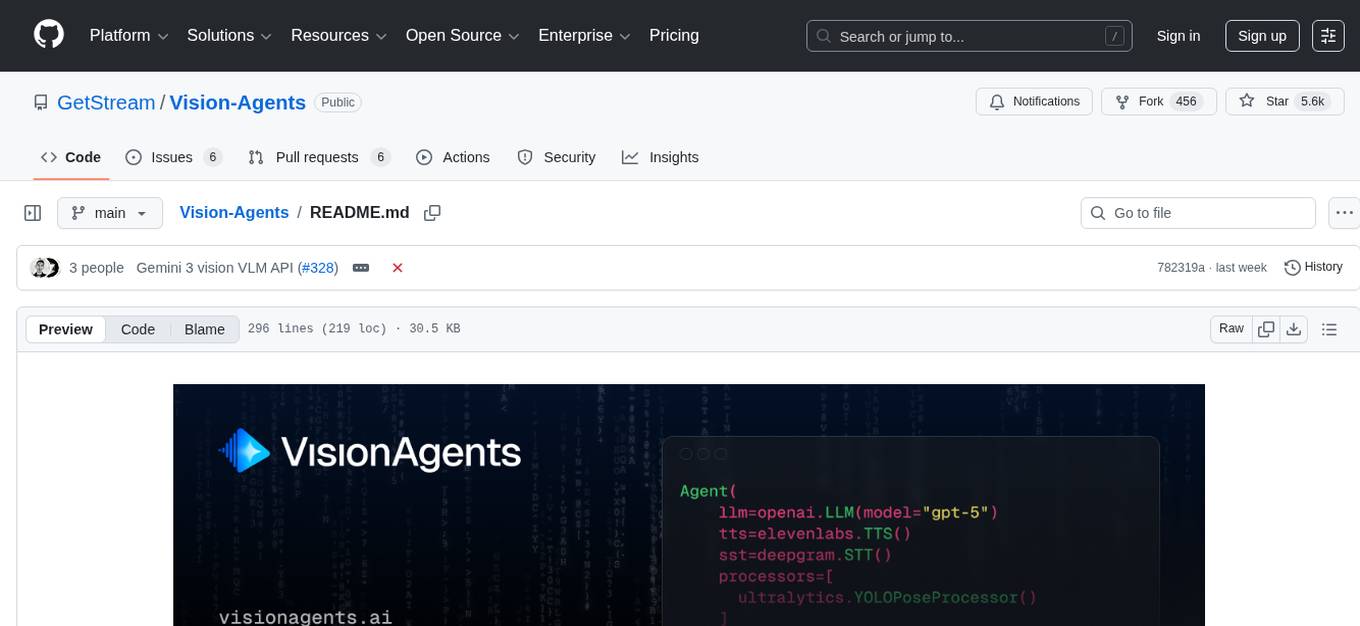
Vision Agents is an open-source project by Stream that provides building blocks for creating intelligent, low-latency video experiences powered by custom models and infrastructure. It offers multi-modal AI agents that watch, listen, and understand video in real-time. The project includes SDKs for various platforms and integrates with popular AI services like Gemini and OpenAI. Vision Agents can be used for tasks such as sports coaching, security camera systems with package theft detection, and building invisible assistants for various applications. The project aims to simplify the development of real-time vision AI applications by providing a range of processors, integrations, and out-of-the-box features.
coreply
Coreply is an open-source Android app that provides texting suggestions while typing, enhancing the typing experience with intelligent, context-aware suggestions. It supports various texting apps and offers real-time AI suggestions, customizable LLM settings, and ensures no data collection. Users can install the app, configure it with an API key, and start receiving suggestions while typing in messaging apps. The tool supports different AI models from providers like OpenAI, Google AI Studio, Openrouter, Groq, and Codestral for chat completion and fill-in-the-middle tasks.
mage-ai
Mage is an open-source data pipeline tool for transforming and integrating data. It offers an easy developer experience, engineering best practices built-in, and data as a first-class citizen. Mage makes it easy to build, preview, and launch data pipelines, and provides observability and scaling capabilities. It supports data integrations, streaming pipelines, and dbt integration.
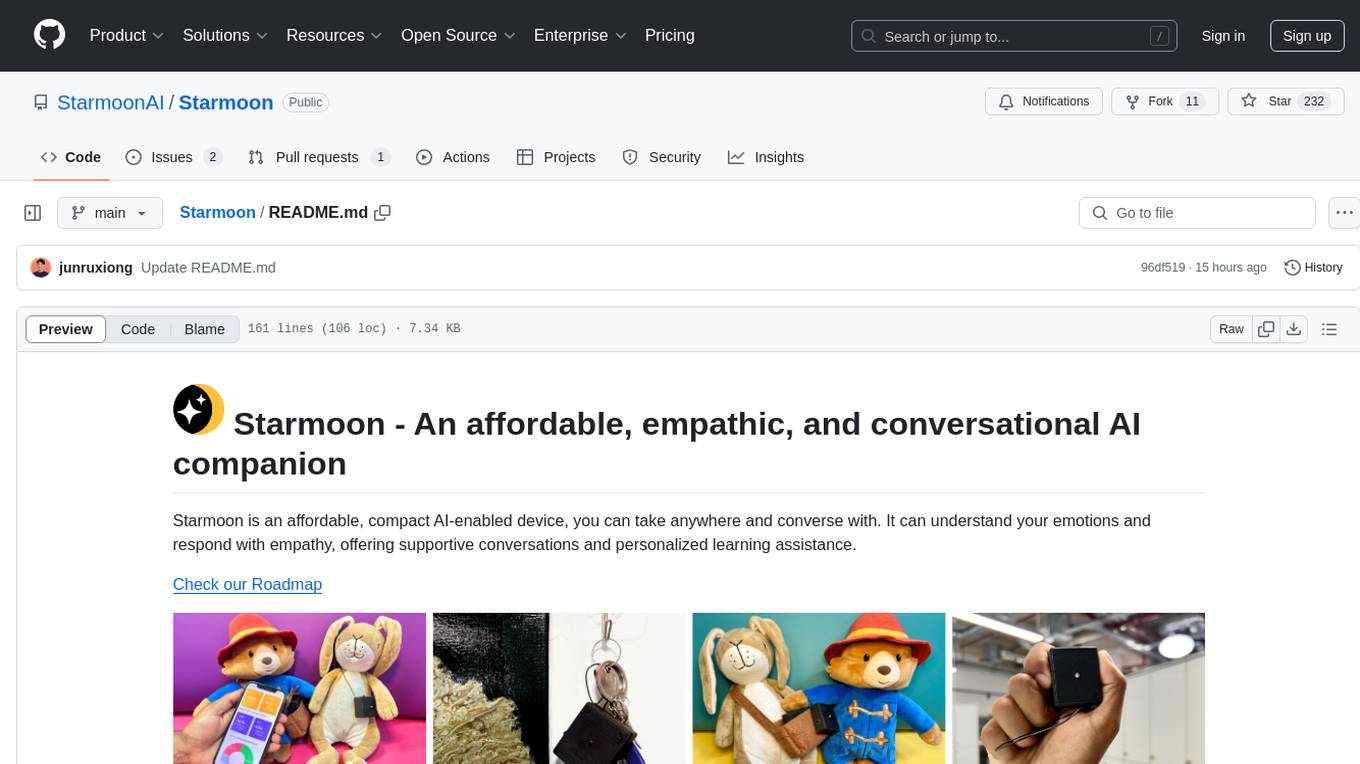
Starmoon
Starmoon is an affordable, compact AI-enabled device that can understand and respond to your emotions with empathy. It offers supportive conversations and personalized learning assistance. The device is cost-effective, voice-enabled, open-source, compact, and aims to reduce screen time. Users can assemble the device themselves using off-the-shelf components and deploy it locally for data privacy. Starmoon integrates various APIs for AI language models, speech-to-text, text-to-speech, and emotion intelligence. The hardware setup involves components like ESP32S3, microphone, amplifier, speaker, LED light, and button, along with software setup instructions for developers. The project also includes a web app, backend API, and background task dashboard for monitoring and management.
nuitrack-sdk
Nuitrack™ is an ultimate 3D body tracking solution developed by 3DiVi Inc. It enables body motion analytics applications for virtually any widespread depth sensors and hardware platforms, supporting a wide range of applications from real-time gesture recognition on embedded platforms to large-scale multisensor analytical systems. Nuitrack provides highly-sophisticated 3D skeletal tracking, basic facial analysis, hand tracking, and gesture recognition APIs for UI control. It offers two skeletal tracking engines: classical for embedded hardware and AI for complex poses, providing a human-centric spatial understanding tool for natural and intelligent user engagement.
MiniCPM-V-CookBook
MiniCPM-V & o Cookbook is a comprehensive repository for building multimodal AI applications effortlessly. It provides easy-to-use documentation, supports a wide range of users, and offers versatile deployment scenarios. The repository includes live demonstrations, inference recipes for vision and audio capabilities, fine-tuning recipes, serving recipes, quantization recipes, and a framework support matrix. Users can customize models, deploy them efficiently, and compress models to improve efficiency. The repository also showcases awesome works using MiniCPM-V & o and encourages community contributions.
EvoAgentX
EvoAgentX is an open-source framework for building, evaluating, and evolving LLM-based agents or agentic workflows in an automated, modular, and goal-driven manner. It enables developers and researchers to move beyond static prompt chaining or manual workflow orchestration by introducing a self-evolving agent ecosystem. The framework includes features such as agent workflow autoconstruction, built-in evaluation, self-evolution engine, plug-and-play compatibility, comprehensive built-in tools, memory module support, and human-in-the-loop interactions.
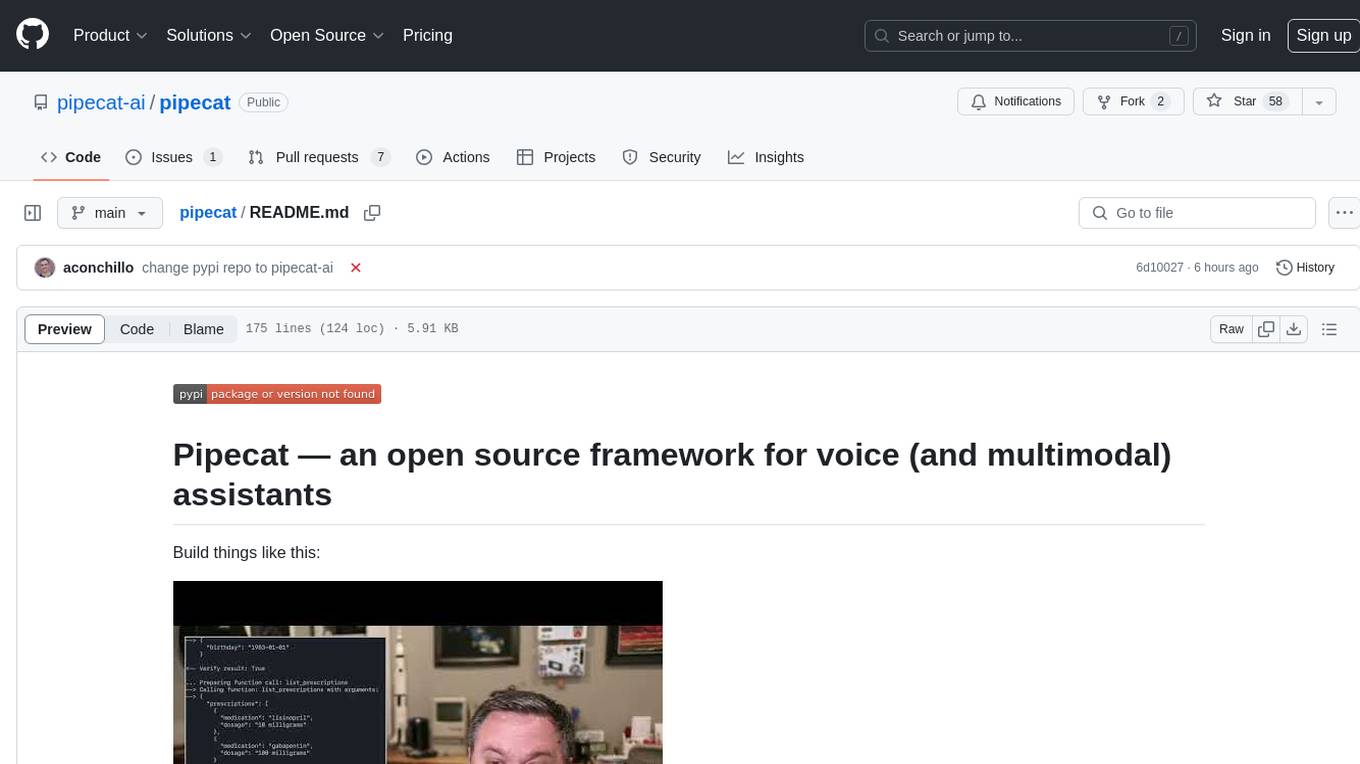
pipecat
Pipecat is an open-source framework designed for building generative AI voice bots and multimodal assistants. It provides code building blocks for interacting with AI services, creating low-latency data pipelines, and transporting audio, video, and events over the Internet. Pipecat supports various AI services like speech-to-text, text-to-speech, image generation, and vision models. Users can implement new services and contribute to the framework. Pipecat aims to simplify the development of applications like personal coaches, meeting assistants, customer support bots, and more by providing a complete framework for integrating AI services.
X-AnyLabeling
X-AnyLabeling is a robust annotation tool that seamlessly incorporates an AI inference engine alongside an array of sophisticated features. Tailored for practical applications, it is committed to delivering comprehensive, industrial-grade solutions for image data engineers. This tool excels in swiftly and automatically executing annotations across diverse and intricate tasks.
Everywhere
Everywhere is an interactive AI assistant with context-aware capabilities, featuring a sleek, modern UI and powerful integrated functionality. It instantly perceives and understands anything on your screen, providing seamless AI assistant support without the need for screenshots or app switching. The tool offers troubleshooting expertise, quick web summarization, instant translation, and email draft assistance. It supports LLM from various providers, integrates with web browsers, file systems, terminals, and more, and provides an interactive experience with a modern UI, context-aware invocation, keyboard shortcuts, and markdown rendering. Everywhere is available on Windows and macOS, with Linux support coming soon. Language support includes Simplified Chinese, English, German, Spanish, French, Italian, Japanese, Korean, Russian, Turkish, Traditional Chinese, and Traditional Chinese (Hong Kong).
inference
Xorbits Inference (Xinference) is a powerful and versatile library designed to serve language, speech recognition, and multimodal models. With Xorbits Inference, you can effortlessly deploy and serve your or state-of-the-art built-in models using just a single command. Whether you are a researcher, developer, or data scientist, Xorbits Inference empowers you to unleash the full potential of cutting-edge AI models.
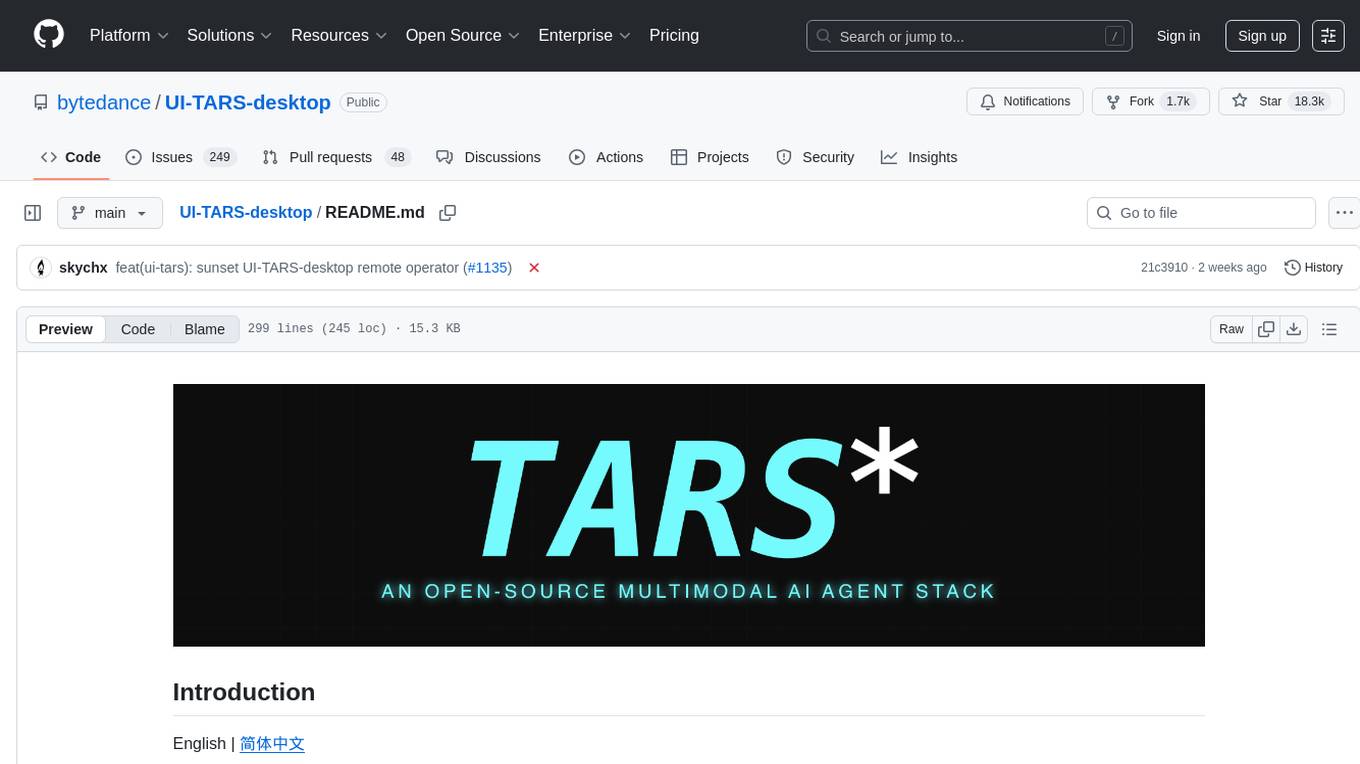
UI-TARS-desktop
UI-TARS-desktop is a desktop application that provides a native GUI Agent based on the UI-TARS model. It offers features such as natural language control powered by Vision-Language Model, screenshot and visual recognition support, precise mouse and keyboard control, cross-platform support (Windows/MacOS/Browser), real-time feedback and status display, and private and secure fully local processing. The application aims to enhance the user's computer experience, introduce new browser operation features, and support the advanced UI-TARS-1.5 model for improved performance and precise control.
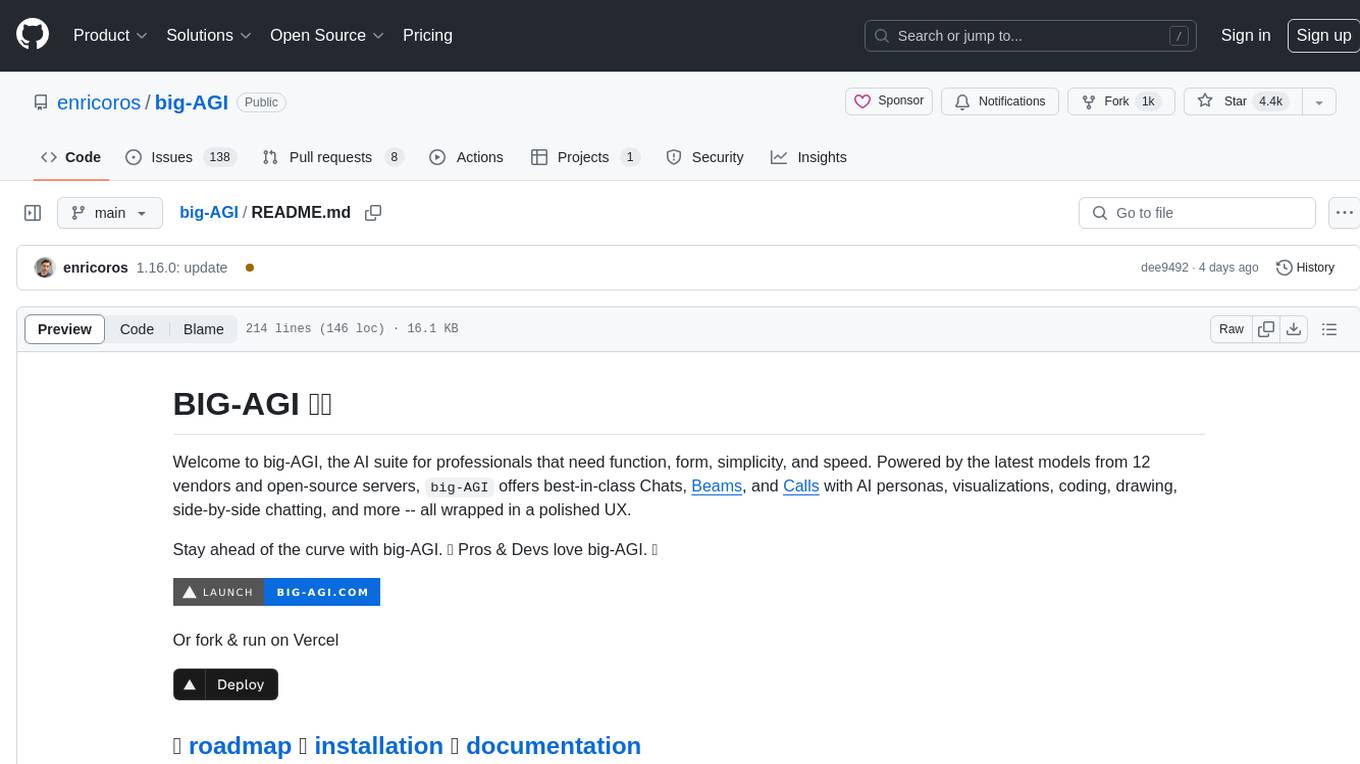
big-AGI
big-AGI is an AI suite designed for professionals seeking function, form, simplicity, and speed. It offers best-in-class Chats, Beams, and Calls with AI personas, visualizations, coding, drawing, side-by-side chatting, and more, all wrapped in a polished UX. The tool is powered by the latest models from 12 vendors and open-source servers, providing users with advanced AI capabilities and a seamless user experience. With continuous updates and enhancements, big-AGI aims to stay ahead of the curve in the AI landscape, catering to the needs of both developers and AI enthusiasts.

auto-news
Auto-News is an automatic news aggregator tool that utilizes Large Language Models (LLM) to pull information from various sources such as Tweets, RSS feeds, YouTube videos, web articles, Reddit, and journal notes. The tool aims to help users efficiently read and filter content based on personal interests, providing a unified reading experience and organizing information effectively. It features feed aggregation with summarization, transcript generation for videos and articles, noise reduction, task organization, and deep dive topic exploration. The tool supports multiple LLM backends, offers weekly top-k aggregations, and can be deployed on Linux/MacOS using docker-compose or Kubernetes.
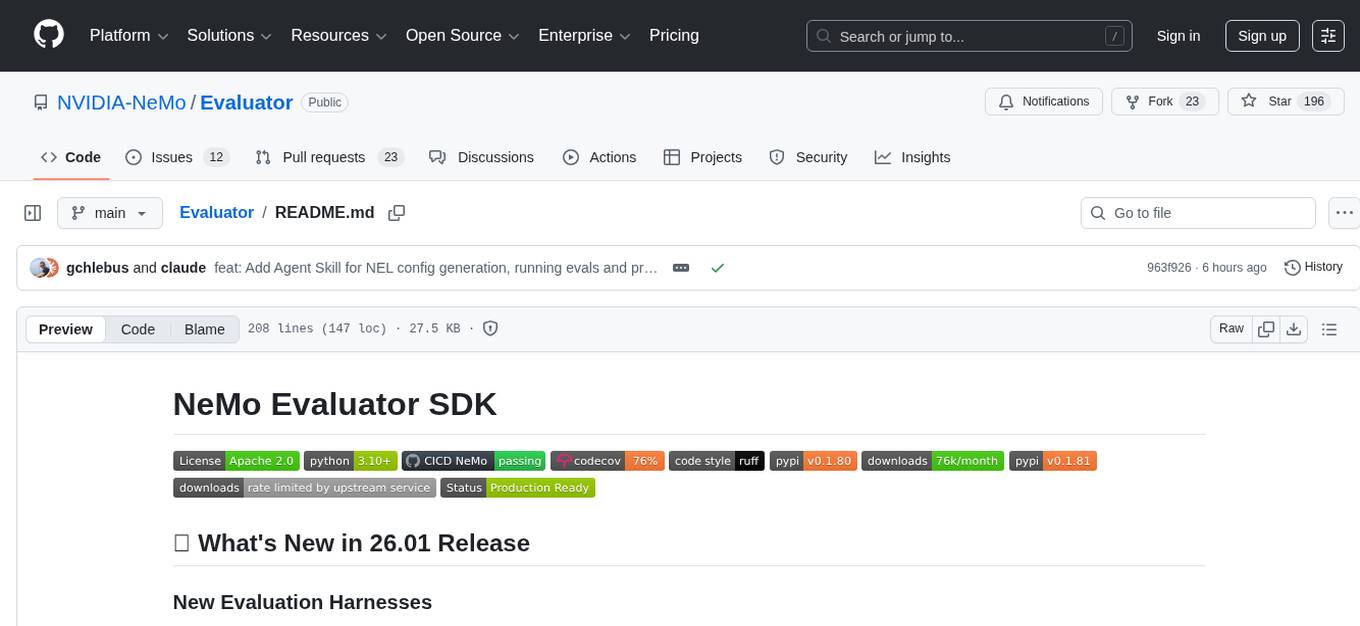
Evaluator
NeMo Evaluator SDK is an open-source platform for robust, reproducible, and scalable evaluation of Large Language Models. It enables running hundreds of benchmarks across popular evaluation harnesses against any OpenAI-compatible model API. The platform ensures auditable and trustworthy results by executing evaluations in open-source Docker containers. NeMo Evaluator SDK is built on four core principles: Reproducibility by Default, Scale Anywhere, State-of-the-Art Benchmarking, and Extensible and Customizable.
For similar tasks
document-ai-samples
The Google Cloud Document AI Samples repository contains code samples and Community Samples demonstrating how to analyze, classify, and search documents using Google Cloud Document AI. It includes various projects showcasing different functionalities such as integrating with Google Drive, processing documents using Python, content moderation with Dialogflow CX, fraud detection, language extraction, paper summarization, tax processing pipeline, and more. The repository also provides access to test document files stored in a publicly-accessible Google Cloud Storage Bucket. Additionally, there are codelabs available for optical character recognition (OCR), form parsing, specialized processors, and managing Document AI processors. Community samples, like the PDF Annotator Sample, are also included. Contributions are welcome, and users can seek help or report issues through the repository's issues page. Please note that this repository is not an officially supported Google product and is intended for demonstrative purposes only.
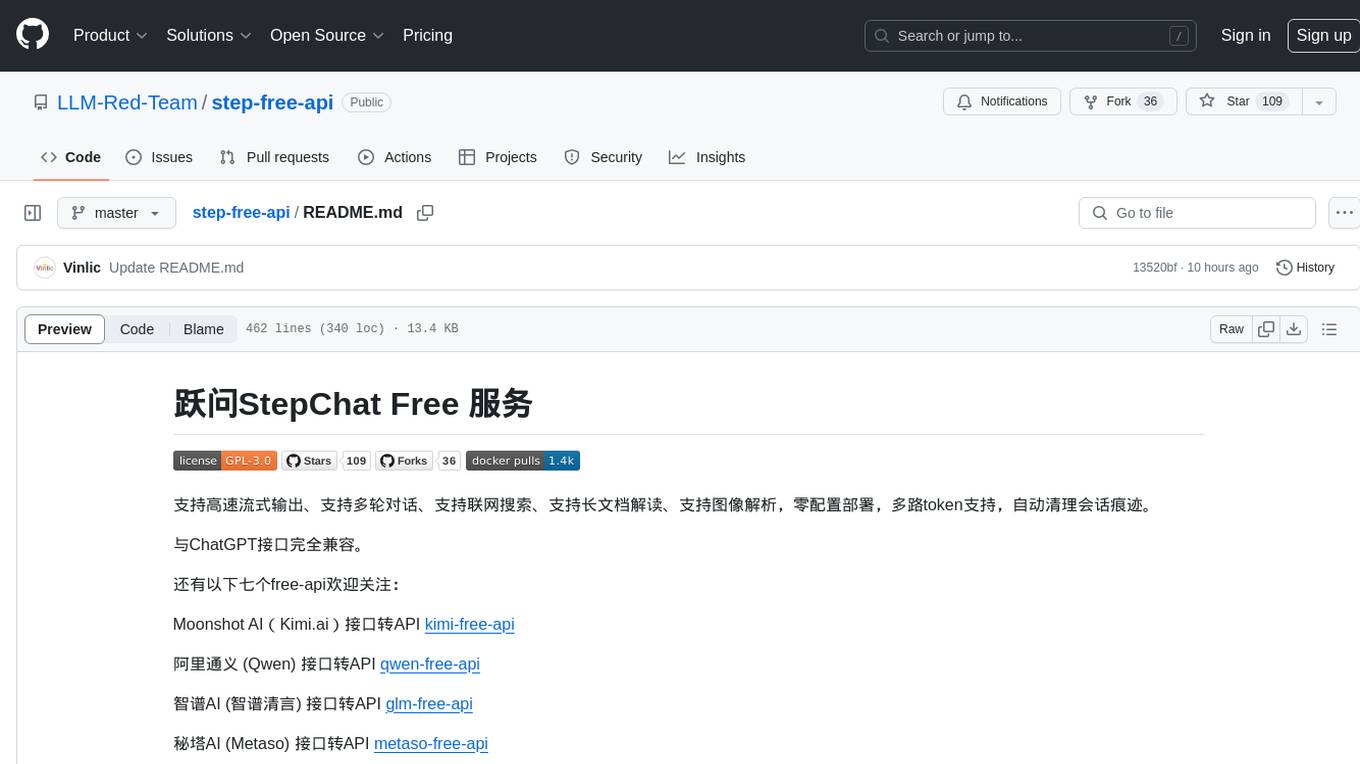
step-free-api
The StepChat Free service provides high-speed streaming output, multi-turn dialogue support, online search support, long document interpretation, and image parsing. It offers zero-configuration deployment, multi-token support, and automatic session trace cleaning. It is fully compatible with the ChatGPT interface. Additionally, it provides seven other free APIs for various services. The repository includes a disclaimer about using reverse APIs and encourages users to avoid commercial use to prevent service pressure on the official platform. It offers online testing links, showcases different demos, and provides deployment guides for Docker, Docker-compose, Render, Vercel, and native deployments. The repository also includes information on using multiple accounts, optimizing Nginx reverse proxy, and checking the liveliness of refresh tokens.
unilm
The 'unilm' repository is a collection of tools, models, and architectures for Foundation Models and General AI, focusing on tasks such as NLP, MT, Speech, Document AI, and Multimodal AI. It includes various pre-trained models, such as UniLM, InfoXLM, DeltaLM, MiniLM, AdaLM, BEiT, LayoutLM, WavLM, VALL-E, and more, designed for tasks like language understanding, generation, translation, vision, speech, and multimodal processing. The repository also features toolkits like s2s-ft for sequence-to-sequence fine-tuning and Aggressive Decoding for efficient sequence-to-sequence decoding. Additionally, it offers applications like TrOCR for OCR, LayoutReader for reading order detection, and XLM-T for multilingual NMT.
searchGPT
searchGPT is an open-source project that aims to build a search engine based on Large Language Model (LLM) technology to provide natural language answers. It supports web search with real-time results, file content search, and semantic search from sources like the Internet. The tool integrates LLM technologies such as OpenAI and GooseAI, and offers an easy-to-use frontend user interface. The project is designed to provide grounded answers by referencing real-time factual information, addressing the limitations of LLM's training data. Contributions, especially from frontend developers, are welcome under the MIT License.
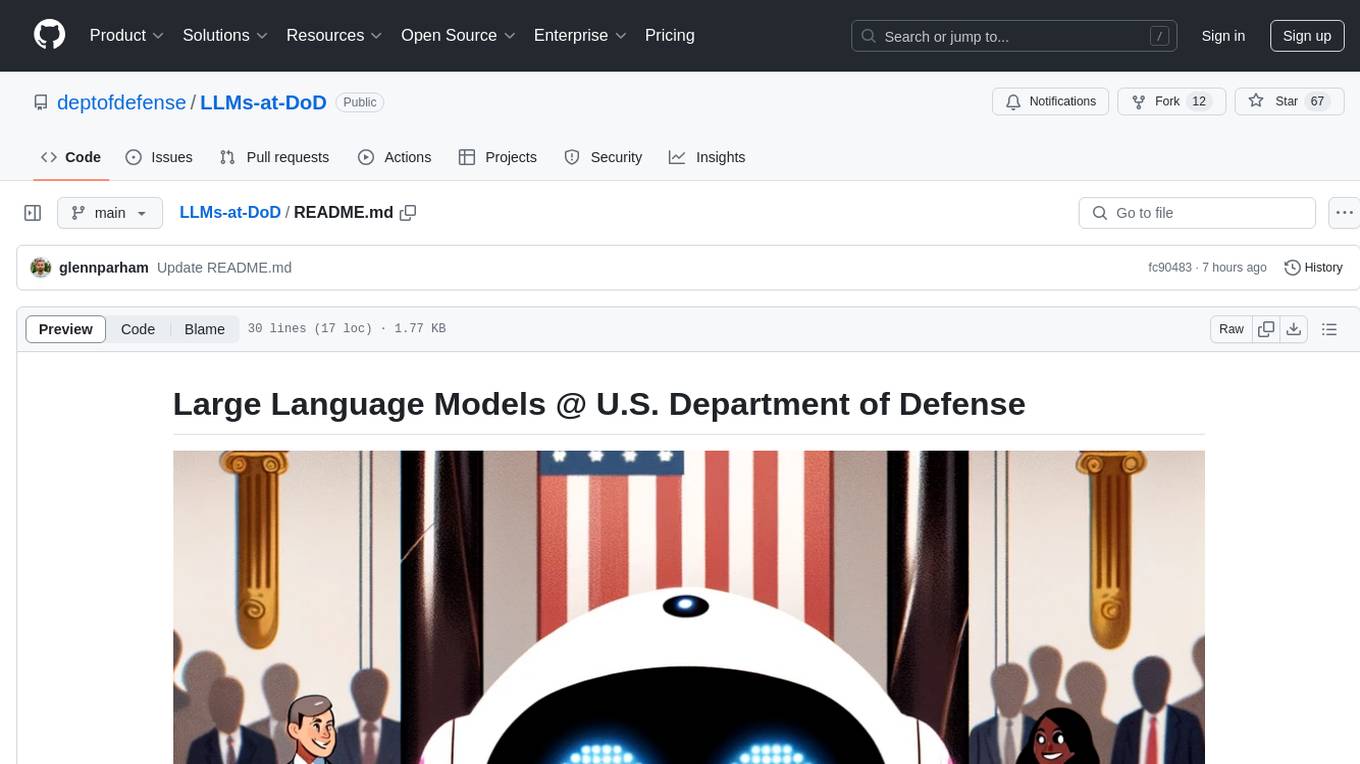
LLMs-at-DoD
This repository contains tutorials for using Large Language Models (LLMs) in the U.S. Department of Defense. The tutorials utilize open-source frameworks and LLMs, allowing users to run them in their own cloud environments. The repository is maintained by the Defense Digital Service and welcomes contributions from users.
LARS
LARS is an application that enables users to run Large Language Models (LLMs) locally on their devices, upload their own documents, and engage in conversations where the LLM grounds its responses with the uploaded content. The application focuses on Retrieval Augmented Generation (RAG) to increase accuracy and reduce AI-generated inaccuracies. LARS provides advanced citations, supports various file formats, allows follow-up questions, provides full chat history, and offers customization options for LLM settings. Users can force enable or disable RAG, change system prompts, and tweak advanced LLM settings. The application also supports GPU-accelerated inferencing, multiple embedding models, and text extraction methods. LARS is open-source and aims to be the ultimate RAG-centric LLM application.
EAGLE
Eagle is a family of Vision-Centric High-Resolution Multimodal LLMs that enhance multimodal LLM perception using a mix of vision encoders and various input resolutions. The model features a channel-concatenation-based fusion for vision experts with different architectures and knowledge, supporting up to over 1K input resolution. It excels in resolution-sensitive tasks like optical character recognition and document understanding.
erag
ERAG is an advanced system that combines lexical, semantic, text, and knowledge graph searches with conversation context to provide accurate and contextually relevant responses. This tool processes various document types, creates embeddings, builds knowledge graphs, and uses this information to answer user queries intelligently. It includes modules for interacting with web content, GitHub repositories, and performing exploratory data analysis using various language models.
For similar jobs
sweep
Sweep is an AI junior developer that turns bugs and feature requests into code changes. It automatically handles developer experience improvements like adding type hints and improving test coverage.
teams-ai
The Teams AI Library is a software development kit (SDK) that helps developers create bots that can interact with Teams and Microsoft 365 applications. It is built on top of the Bot Framework SDK and simplifies the process of developing bots that interact with Teams' artificial intelligence capabilities. The SDK is available for JavaScript/TypeScript, .NET, and Python.
ai-guide
This guide is dedicated to Large Language Models (LLMs) that you can run on your home computer. It assumes your PC is a lower-end, non-gaming setup.
classifai
Supercharge WordPress Content Workflows and Engagement with Artificial Intelligence. Tap into leading cloud-based services like OpenAI, Microsoft Azure AI, Google Gemini and IBM Watson to augment your WordPress-powered websites. Publish content faster while improving SEO performance and increasing audience engagement. ClassifAI integrates Artificial Intelligence and Machine Learning technologies to lighten your workload and eliminate tedious tasks, giving you more time to create original content that matters.
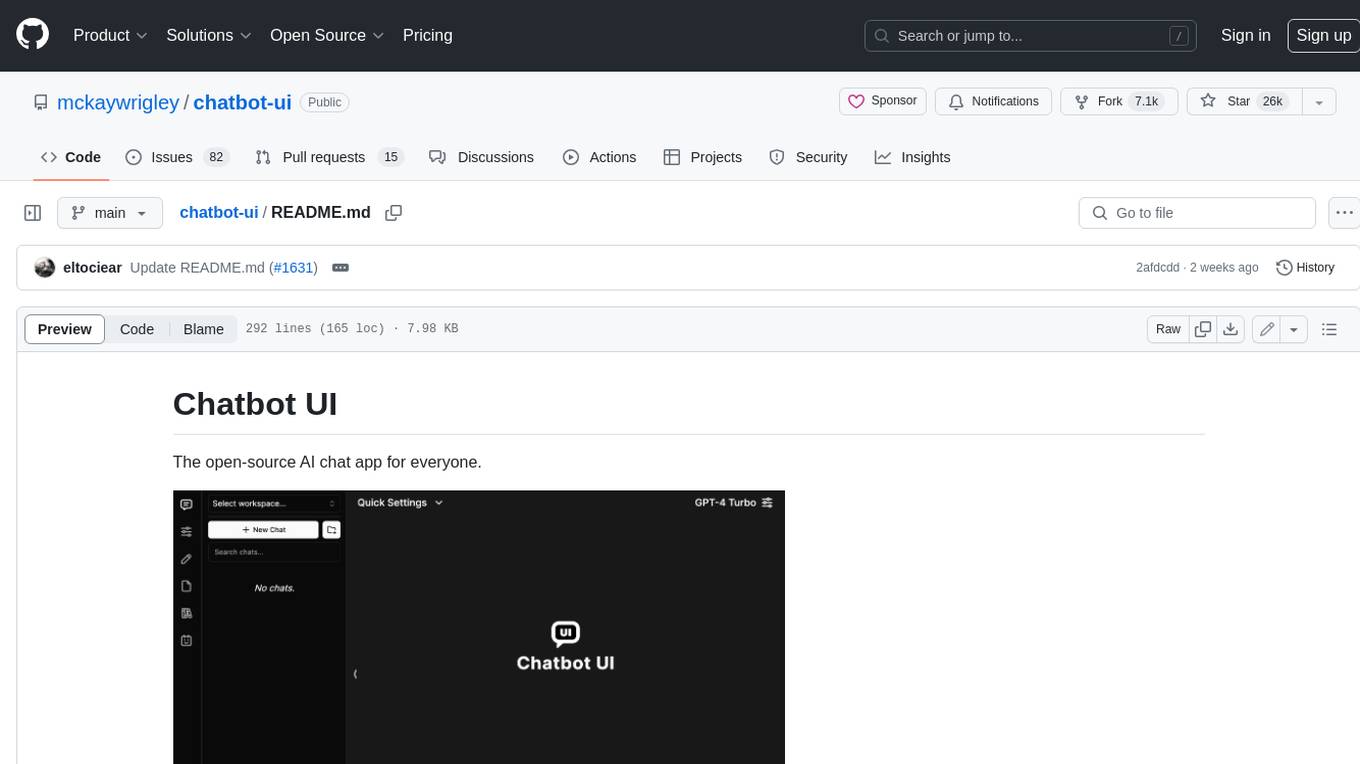
chatbot-ui
Chatbot UI is an open-source AI chat app that allows users to create and deploy their own AI chatbots. It is easy to use and can be customized to fit any need. Chatbot UI is perfect for businesses, developers, and anyone who wants to create a chatbot.
BricksLLM
BricksLLM is a cloud native AI gateway written in Go. Currently, it provides native support for OpenAI, Anthropic, Azure OpenAI and vLLM. BricksLLM aims to provide enterprise level infrastructure that can power any LLM production use cases. Here are some use cases for BricksLLM: * Set LLM usage limits for users on different pricing tiers * Track LLM usage on a per user and per organization basis * Block or redact requests containing PIIs * Improve LLM reliability with failovers, retries and caching * Distribute API keys with rate limits and cost limits for internal development/production use cases * Distribute API keys with rate limits and cost limits for students
uAgents
uAgents is a Python library developed by Fetch.ai that allows for the creation of autonomous AI agents. These agents can perform various tasks on a schedule or take action on various events. uAgents are easy to create and manage, and they are connected to a fast-growing network of other uAgents. They are also secure, with cryptographically secured messages and wallets.
griptape
Griptape is a modular Python framework for building AI-powered applications that securely connect to your enterprise data and APIs. It offers developers the ability to maintain control and flexibility at every step. Griptape's core components include Structures (Agents, Pipelines, and Workflows), Tasks, Tools, Memory (Conversation Memory, Task Memory, and Meta Memory), Drivers (Prompt and Embedding Drivers, Vector Store Drivers, Image Generation Drivers, Image Query Drivers, SQL Drivers, Web Scraper Drivers, and Conversation Memory Drivers), Engines (Query Engines, Extraction Engines, Summary Engines, Image Generation Engines, and Image Query Engines), and additional components (Rulesets, Loaders, Artifacts, Chunkers, and Tokenizers). Griptape enables developers to create AI-powered applications with ease and efficiency.