


quantcoder
AI-powered CLI tool: Transform trading research papers into QuantConnect algorithms
Stars: 87
QuantCoder is a local-first CLI tool that generates QuantConnect trading algorithms from academic research papers. It uses local LLMs for code generation, refinement, and error fixing. The tool does not require cloud API keys and offers models for reasoning, summarization, and chat. Users can interact with QuantCoder through interactive, CLI, programmatic, and autonomous modes. It also features an evolution mode inspired by AlphaEvolve, backtesting with detailed metrics, library building, and integration with QuantConnect for backtesting and deployment. The tool's architecture includes components for CLI, configuration management, NLP, multi-agent system, evolution engine, self-improving pipeline, library builder, and integration with QuantConnect MCP.
README:



Local-first CLI for generating QuantConnect trading algorithms from research papers — powered by Ollama
QuantCoder transforms academic quant research into compilable QuantConnect LEAN algorithms using local LLMs. No cloud API keys required.
Models (defaults):
- qwen2.5-coder:14b — code generation, refinement, error fixing
- mistral — reasoning, summarization, chat
Note: Testing with various local LLMs (devstral, qwen2.5-coder:32b, and others) is ongoing to determine optimal model pairings for the two-stage code generation pipeline. Any Ollama-compatible model can be configured via
~/.quantcoder/config.toml.
- Python 3.10+
- Ollama running locally
# Pull the required models
ollama pull qwen2.5-coder:14b
ollama pull mistralgit clone https://github.com/SL-Mar/quantcoder-cli.git
cd quantcoder-cli
python -m venv .venv
source .venv/bin/activate
pip install -e .
python -m spacy download en_core_web_sm# Check Ollama is running
curl http://localhost:11434/api/tags
# Launch QuantCoder
quantcoderquantcoder # or: qc# Search for papers
quantcoder search "momentum trading" --num 5
# Download and summarize
quantcoder download 1
quantcoder summarize 1
# Generate QuantConnect algorithm
quantcoder generate 1
quantcoder generate 1 --open-in-editor
# Validate and backtest (requires QC credentials)
quantcoder validate generated_code/algorithm_1.py
quantcoder backtest generated_code/algorithm_1.py --start 2022-01-01 --end 2024-01-01quantcoder --prompt "Find articles about mean reversion"quantcoder auto start --query "momentum trading" --max-iterations 50
quantcoder auto statusquantcoder evolve start 1 --gens 3 --variants 5
quantcoder evolve start 1 --gens 3 --push-to-qc # Push best to QC
quantcoder evolve list
quantcoder evolve export abc123# Shows Sharpe, Total Return, CAGR, Max Drawdown, Win Rate, Total Trades
quantcoder backtest generated_code/algorithm_1.py --start 2022-01-01 --end 2024-01-01quantcoder library build --comprehensive --max-hours 24
quantcoder library statusConfiguration is stored in ~/.quantcoder/config.toml:
[model]
provider = "ollama"
model = "qwen2.5-coder:14b"
code_model = "qwen2.5-coder:14b"
reasoning_model = "mistral"
ollama_base_url = "http://localhost:11434"
ollama_timeout = 600
temperature = 0.5
max_tokens = 3000

[ui]
theme = "monokai"
editor = "zed"For backtesting and deployment, set credentials in ~/.quantcoder/.env:
QUANTCONNECT_API_KEY=your_key
QUANTCONNECT_USER_ID=your_id
To use a remote Ollama instance:
[model]
ollama_base_url = "http://your-server:11434"quantcoder/
├── cli.py # CLI entry point
├── config.py # Configuration management
├── chat.py # Interactive chat
├── llm/ # Ollama provider layer
├── core/ # LLM handler, processor, NLP
├── agents/ # Multi-agent system (Coordinator, Alpha, Risk, Universe)
├── evolver/ # AlphaEvolve-inspired evolution engine
├── autonomous/ # Self-improving pipeline
├── library/ # Batch strategy library builder
├── tools/ # Pluggable tool system
└── mcp/ # QuantConnect MCP integration
QuantCoder was initiated in November 2023 based on "Dual Agent Chatbots and Expert Systems Design". The initial version coded a blended momentum/mean-reversion strategy from "Outperforming the Market (1000% in 10 years)", which received over 10,000 impressions on LinkedIn.
v2.0.0 is a complete rewrite — local-only inference, multi-agent architecture, evolution engine, and autonomous learning. Recent additions include a two-stage code generation pipeline (framework stubs then mathematical core), two-pass summarization for high-fidelity strategy extraction, and a cross-model fidelity assessment loop that prevents indicator substitution when papers describe novel mathematical models.
Apache License 2.0. See LICENSE.
For Tasks:
Click tags to check more tools for each tasksFor Jobs:
Alternative AI tools for quantcoder
Similar Open Source Tools
quantcoder
QuantCoder is a local-first CLI tool that generates QuantConnect trading algorithms from academic research papers. It uses local LLMs for code generation, refinement, and error fixing. The tool does not require cloud API keys and offers models for reasoning, summarization, and chat. Users can interact with QuantCoder through interactive, CLI, programmatic, and autonomous modes. It also features an evolution mode inspired by AlphaEvolve, backtesting with detailed metrics, library building, and integration with QuantConnect for backtesting and deployment. The tool's architecture includes components for CLI, configuration management, NLP, multi-agent system, evolution engine, self-improving pipeline, library builder, and integration with QuantConnect MCP.
plexe
Plexe is a tool that allows users to create machine learning models by describing them in plain language. Users can explain their requirements, provide a dataset, and the AI-powered system will build a fully functional model through an automated agentic approach. It supports multiple AI agents and model building frameworks like XGBoost, CatBoost, and Keras. Plexe also provides Docker images with pre-configured environments, YAML configuration for customization, and support for multiple LiteLLM providers. Users can visualize experiment results using the built-in Streamlit dashboard and extend Plexe's functionality through custom integrations.
R2R
R2R (RAG to Riches) is a fast and efficient framework for serving high-quality Retrieval-Augmented Generation (RAG) to end users. The framework is designed with customizable pipelines and a feature-rich FastAPI implementation, enabling developers to quickly deploy and scale RAG-based applications. R2R was conceived to bridge the gap between local LLM experimentation and scalable production solutions. **R2R is to LangChain/LlamaIndex what NextJS is to React**. A JavaScript client for R2R deployments can be found here. ### Key Features * **🚀 Deploy** : Instantly launch production-ready RAG pipelines with streaming capabilities. * **🧩 Customize** : Tailor your pipeline with intuitive configuration files. * **🔌 Extend** : Enhance your pipeline with custom code integrations. * **⚖️ Autoscale** : Scale your pipeline effortlessly in the cloud using SciPhi. * **🤖 OSS** : Benefit from a framework developed by the open-source community, designed to simplify RAG deployment.
qwen-code
Qwen Code is an open-source AI agent optimized for Qwen3-Coder, designed to help users understand large codebases, automate tedious work, and expedite the shipping process. It offers an agentic workflow with rich built-in tools, a terminal-first approach with optional IDE integration, and supports both OpenAI-compatible API and Qwen OAuth authentication methods. Users can interact with Qwen Code in interactive mode, headless mode, IDE integration, and through a TypeScript SDK. The tool can be configured via settings.json, environment variables, and CLI flags, and offers benchmark results for performance evaluation. Qwen Code is part of an ecosystem that includes AionUi and Gemini CLI Desktop for graphical interfaces, and troubleshooting guides are available for issue resolution.
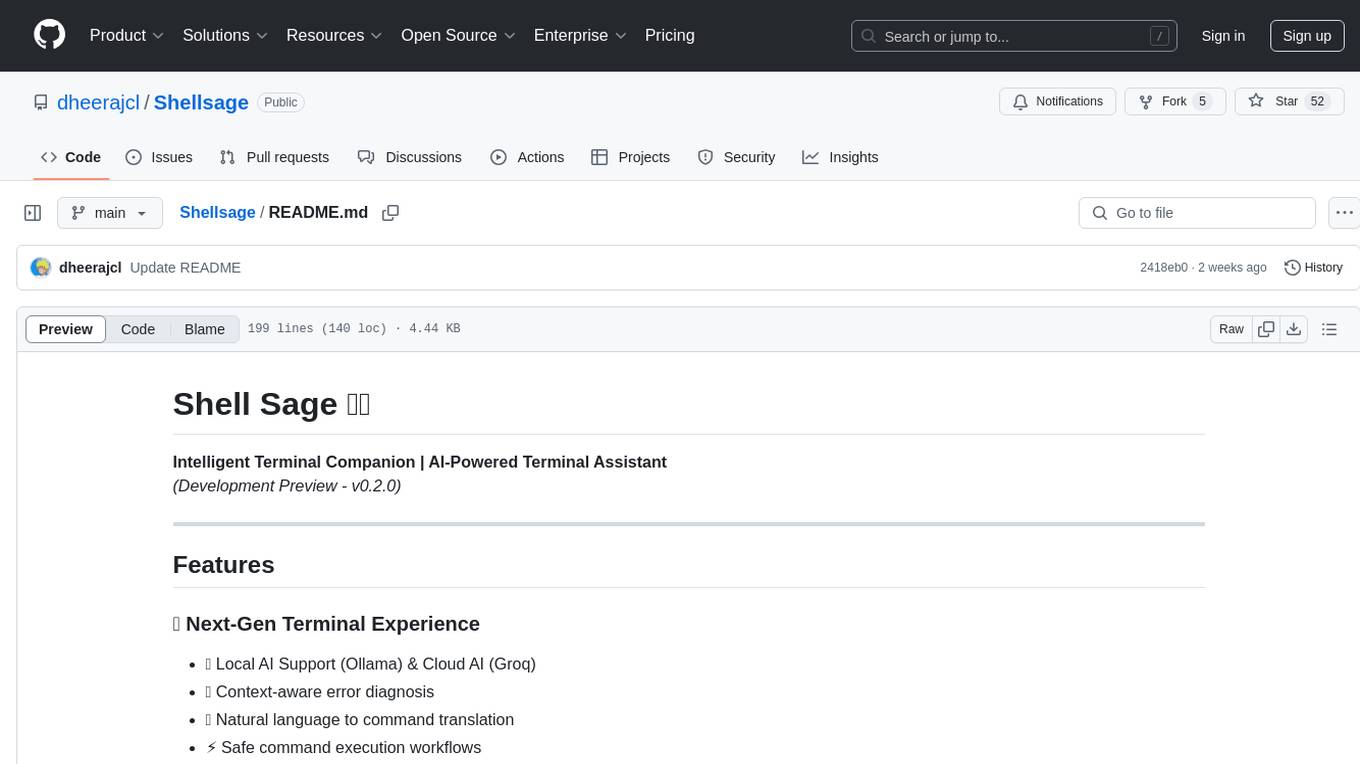
Shellsage
Shell Sage is an intelligent terminal companion and AI-powered terminal assistant that enhances the terminal experience with features like local and cloud AI support, context-aware error diagnosis, natural language to command translation, and safe command execution workflows. It offers interactive workflows, supports various API providers, and allows for custom model selection. Users can configure the tool for local or API mode, select specific models, and switch between modes easily. Currently in alpha development, Shell Sage has known limitations like limited Windows support and occasional false positives in error detection. The roadmap includes improvements like better context awareness, Windows PowerShell integration, Tmux integration, and CI/CD error pattern database.
npcpy
npcpy is a core library of the NPC Toolkit that enhances natural language processing pipelines and agent tooling. It provides a flexible framework for building applications and conducting research with LLMs. The tool supports various functionalities such as getting responses for agents, setting up agent teams, orchestrating jinx workflows, obtaining LLM responses, generating images, videos, audio, and more. It also includes a Flask server for deploying NPC teams, supports LiteLLM integration, and simplifies the development of NLP-based applications. The tool is versatile, supporting multiple models and providers, and offers a graphical user interface through NPC Studio and a command-line interface via NPC Shell.
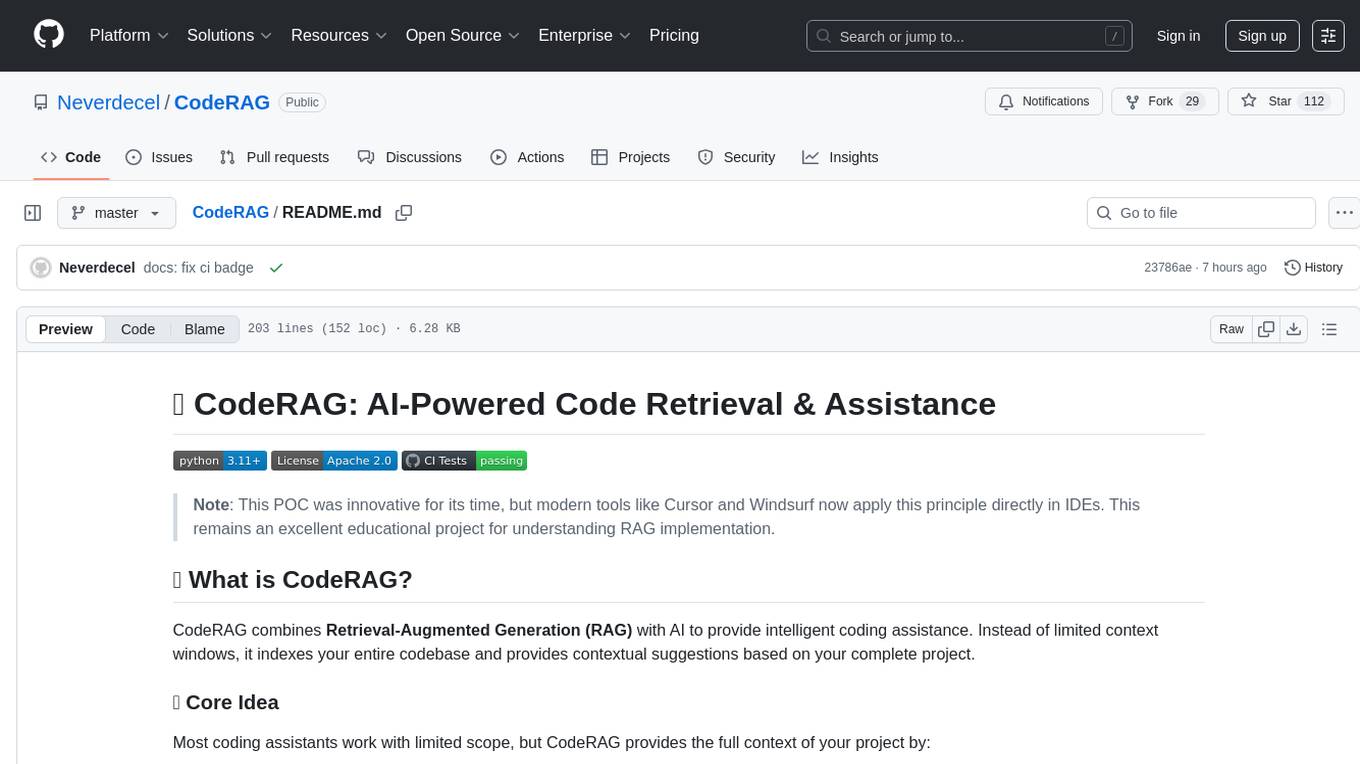
CodeRAG
CodeRAG is an AI-powered code retrieval and assistance tool that combines Retrieval-Augmented Generation (RAG) with AI to provide intelligent coding assistance. It indexes your entire codebase for contextual suggestions based on your complete project, offering real-time indexing, semantic code search, and contextual AI responses. The tool monitors your code directory, generates embeddings for Python files, stores them in a FAISS vector database, matches user queries against the code database, and sends retrieved code context to GPT models for intelligent responses. CodeRAG also features a Streamlit web interface with a chat-like experience for easy usage.
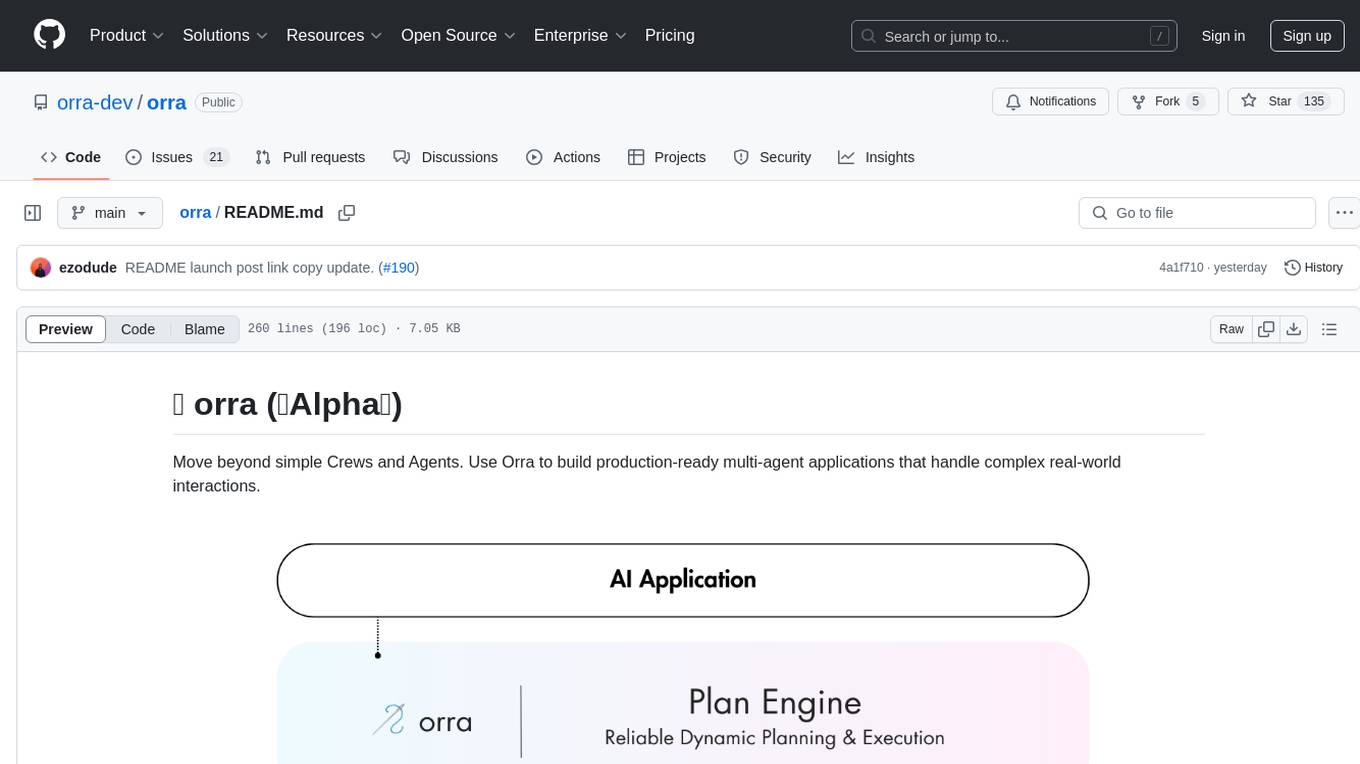
orra
Orra is a tool for building production-ready multi-agent applications that handle complex real-world interactions. It coordinates tasks across existing stack, agents, and tools run as services using intelligent reasoning. With features like smart pre-evaluated execution plans, domain grounding, durable execution, and automatic service health monitoring, Orra enables users to go fast with tools as services and revert state to handle failures. It provides real-time status tracking and webhook result delivery, making it ideal for developers looking to move beyond simple crews and agents.
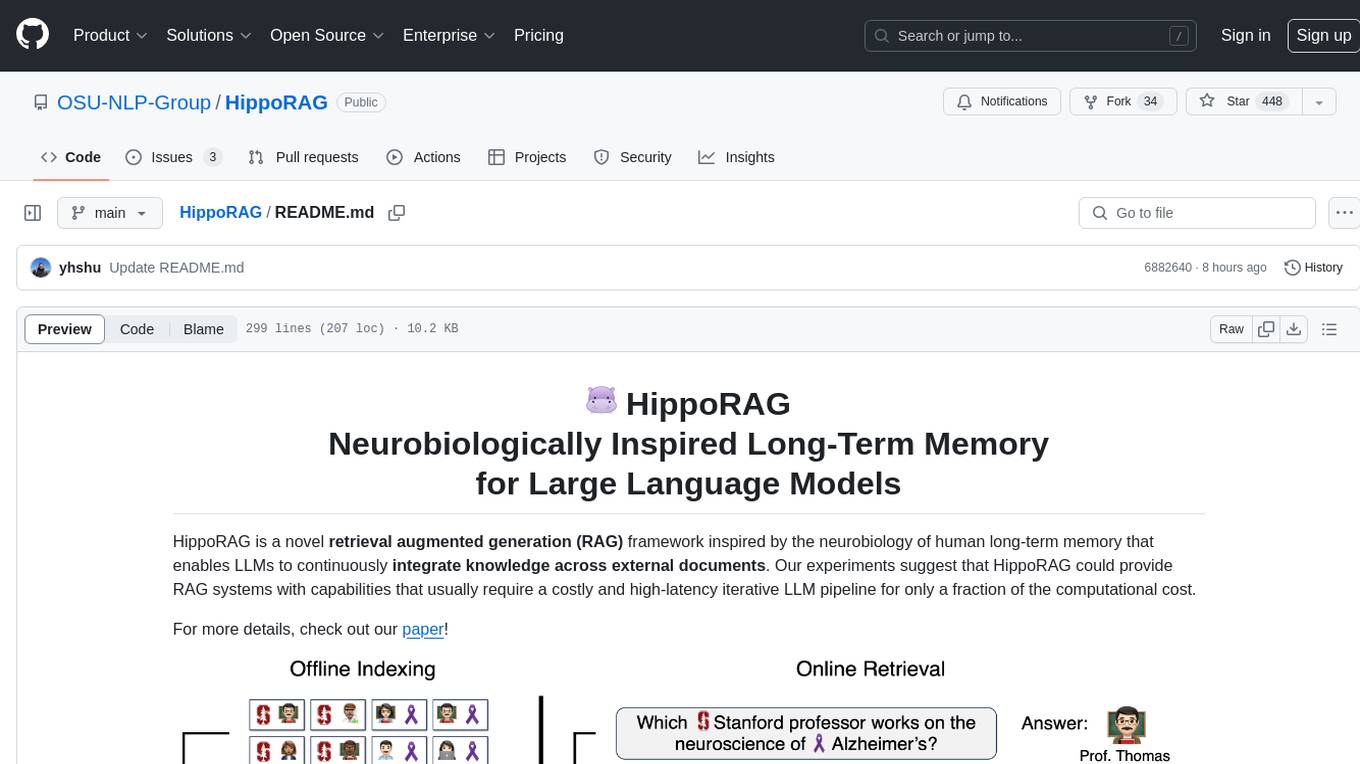
HippoRAG
HippoRAG is a novel retrieval augmented generation (RAG) framework inspired by the neurobiology of human long-term memory that enables Large Language Models (LLMs) to continuously integrate knowledge across external documents. It provides RAG systems with capabilities that usually require a costly and high-latency iterative LLM pipeline for only a fraction of the computational cost. The tool facilitates setting up retrieval corpus, indexing, and retrieval processes for LLMs, offering flexibility in choosing different online LLM APIs or offline LLM deployments through LangChain integration. Users can run retrieval on pre-defined queries or integrate directly with the HippoRAG API. The tool also supports reproducibility of experiments and provides data, baselines, and hyperparameter tuning scripts for research purposes.
sdg_hub
sdg_hub is a modular Python framework designed for building synthetic data generation pipelines using composable blocks and flows. Users can mix and match LLM-powered and traditional processing blocks to create sophisticated data generation workflows. The toolkit offers features such as modular composability, async performance, built-in validation, auto-discovery, rich monitoring, dataset schema discovery, and easy extensibility. sdg_hub provides detailed documentation and supports high-throughput processing with error handling. It simplifies the process of transforming datasets by allowing users to chain blocks together in YAML-configured flows, enabling the creation of complex data generation pipelines.
lionagi
LionAGI is a robust framework for orchestrating multi-step AI operations with precise control. It allows users to bring together multiple models, advanced reasoning, tool integrations, and custom validations in a single coherent pipeline. The framework is structured, expandable, controlled, and transparent, offering features like real-time logging, message introspection, and tool usage tracking. LionAGI supports advanced multi-step reasoning with ReAct, integrates with Anthropic's Model Context Protocol, and provides observability and debugging tools. Users can seamlessly orchestrate multiple models, integrate with Claude Code CLI SDK, and leverage a fan-out fan-in pattern for orchestration. The framework also offers optional dependencies for additional functionalities like reader tools, local inference support, rich output formatting, database support, and graph visualization.
lionagi
LionAGI is a powerful intelligent workflow automation framework that introduces advanced ML models into any existing workflows and data infrastructure. It can interact with almost any model, run interactions in parallel for most models, produce structured pydantic outputs with flexible usage, automate workflow via graph based agents, use advanced prompting techniques, and more. LionAGI aims to provide a centralized agent-managed framework for "ML-powered tools coordination" and to dramatically lower the barrier of entries for creating use-case/domain specific tools. It is designed to be asynchronous only and requires Python 3.10 or higher.

ck
ck (seek) is a semantic grep tool that finds code by meaning, not just keywords. It replaces traditional grep by understanding the user's search intent. It allows users to search for code based on concepts like 'error handling' and retrieves relevant code even if the exact keywords are not present. ck offers semantic search, drop-in grep compatibility, hybrid search combining keyword precision with semantic understanding, agent-friendly output in JSONL format, smart file filtering, and various advanced features. It supports multiple search modes, relevance scoring, top-K results, and smart exclusions. Users can index projects for semantic search, choose embedding models, and search specific files or directories. The tool is designed to improve code search efficiency and accuracy for developers and AI agents.
codemie-code
Unified AI Coding Assistant CLI for managing multiple AI agents like Claude Code, Google Gemini, OpenCode, and custom AI agents. Supports OpenAI, Azure OpenAI, AWS Bedrock, LiteLLM, Ollama, and Enterprise SSO. Features built-in LangGraph agent with file operations, command execution, and planning tools. Cross-platform support for Windows, Linux, and macOS. Ideal for developers seeking a powerful alternative to GitHub Copilot or Cursor.
evalchemy
Evalchemy is a unified and easy-to-use toolkit for evaluating language models, focusing on post-trained models. It integrates multiple existing benchmarks such as RepoBench, AlpacaEval, and ZeroEval. Key features include unified installation, parallel evaluation, simplified usage, and results management. Users can run various benchmarks with a consistent command-line interface and track results locally or integrate with a database for systematic tracking and leaderboard submission.
VASA-1-hack
VASA-1-hack is a repository containing the VASA implementation separated from EMOPortraits, with all components properly configured for standalone training. It provides detailed setup instructions, prerequisites, project structure, configuration details, running training modes, troubleshooting tips, monitoring training progress, development information, and acknowledgments. The repository aims to facilitate training volumetric avatar models with configurable parameters and logging levels for efficient debugging and testing.
For similar tasks
quantcoder
QuantCoder is a local-first CLI tool that generates QuantConnect trading algorithms from academic research papers. It uses local LLMs for code generation, refinement, and error fixing. The tool does not require cloud API keys and offers models for reasoning, summarization, and chat. Users can interact with QuantCoder through interactive, CLI, programmatic, and autonomous modes. It also features an evolution mode inspired by AlphaEvolve, backtesting with detailed metrics, library building, and integration with QuantConnect for backtesting and deployment. The tool's architecture includes components for CLI, configuration management, NLP, multi-agent system, evolution engine, self-improving pipeline, library builder, and integration with QuantConnect MCP.
libedgetpu
This repository contains the source code for the userspace level runtime driver for Coral devices. The software is distributed in binary form at coral.ai/software. Users can build the library using Docker + Bazel, Bazel, or Makefile methods. It supports building on Linux, macOS, and Windows. The library is used to enable the Edge TPU runtime, which may heat up during operation. Google does not accept responsibility for any loss or damage if the device is operated outside the recommended ambient temperature range.
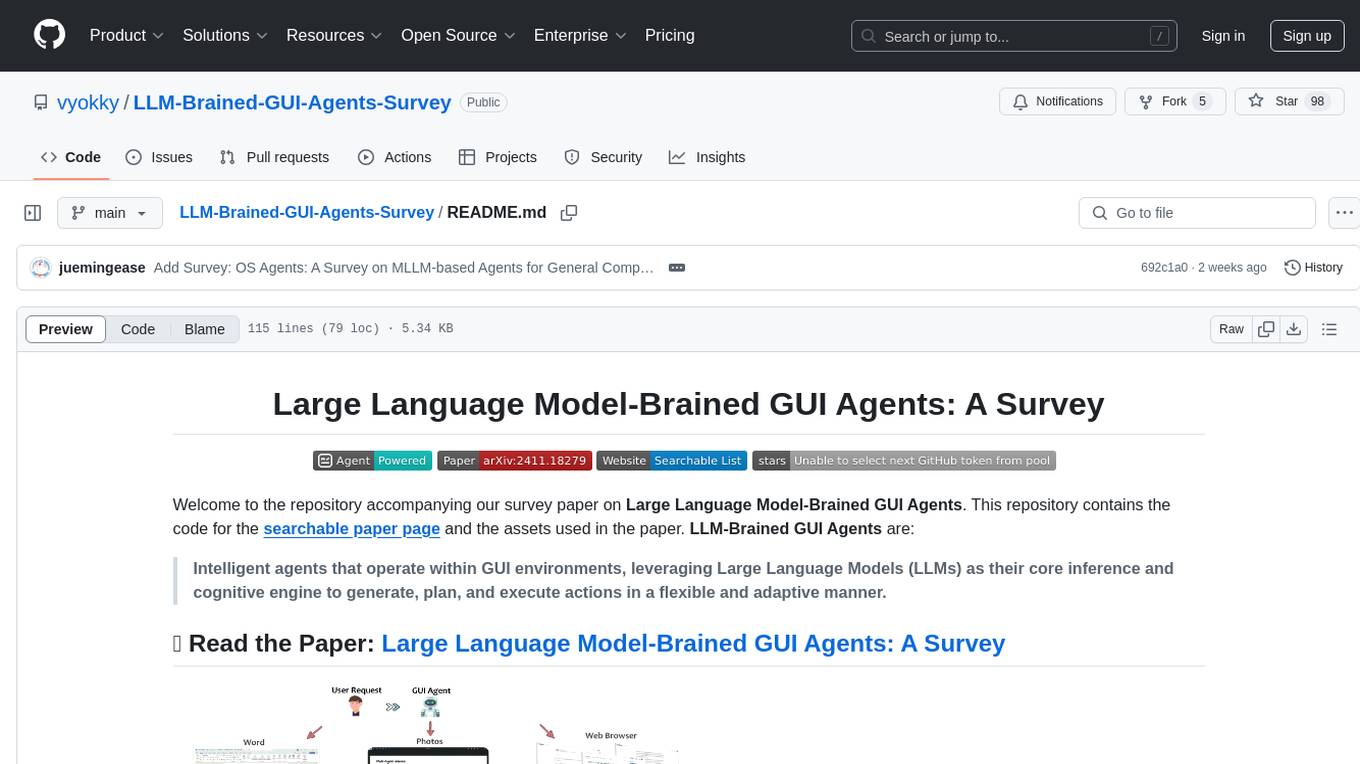
LLM-Brained-GUI-Agents-Survey
The 'LLM-Brained-GUI-Agents-Survey' repository contains code for a searchable paper page and assets used in the survey paper on Large Language Model-Brained GUI Agents. These agents operate within GUI environments, utilizing Large Language Models as their core inference and cognitive engine to generate, plan, and execute actions flexibly and adaptively. The repository also encourages contributions from the community for new papers, resources, or improvements related to LLM-Powered GUI Agents.
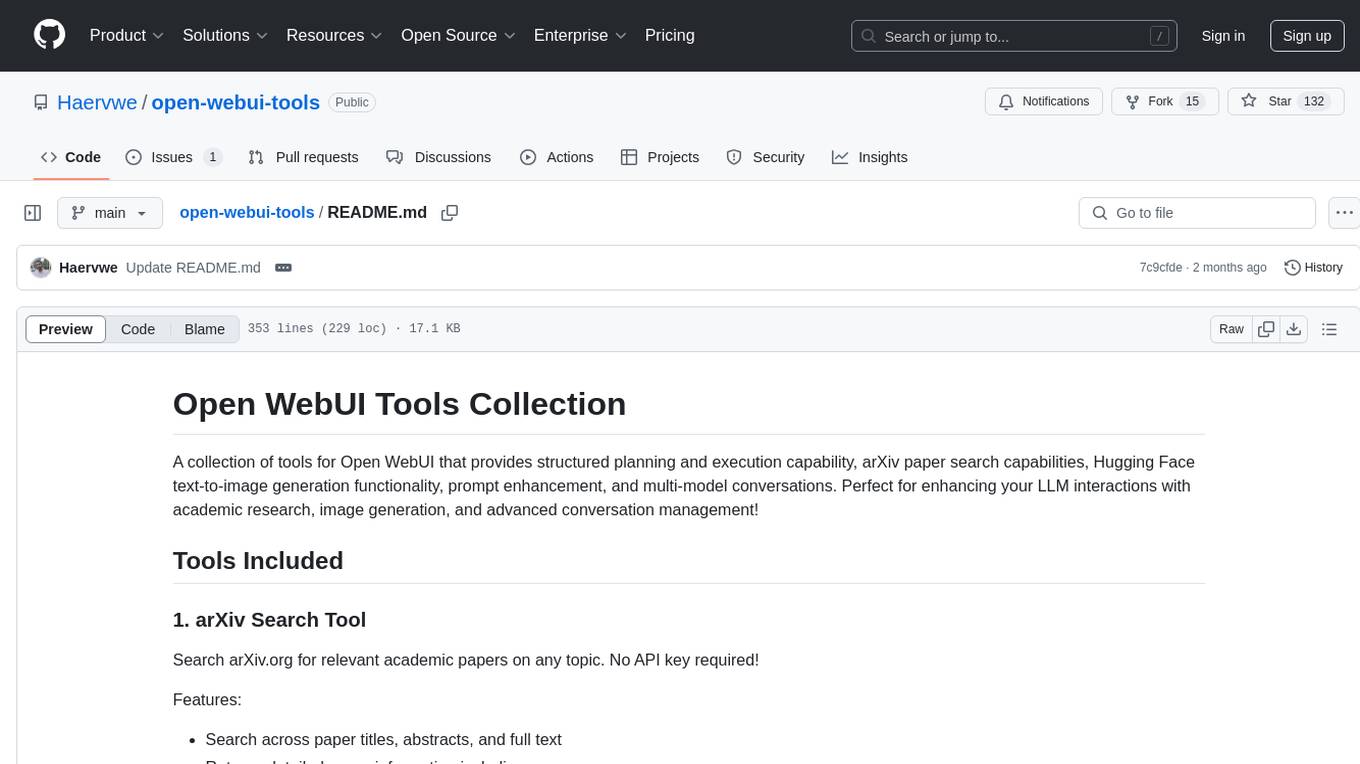
open-webui-tools
Open WebUI Tools Collection is a set of tools for structured planning, arXiv paper search, Hugging Face text-to-image generation, prompt enhancement, and multi-model conversations. It enhances LLM interactions with academic research, image generation, and conversation management. Tools include arXiv Search Tool and Hugging Face Image Generator. Function Pipes like Planner Agent offer autonomous plan generation and execution. Filters like Prompt Enhancer improve prompt quality. Installation and configuration instructions are provided for each tool and pipe.
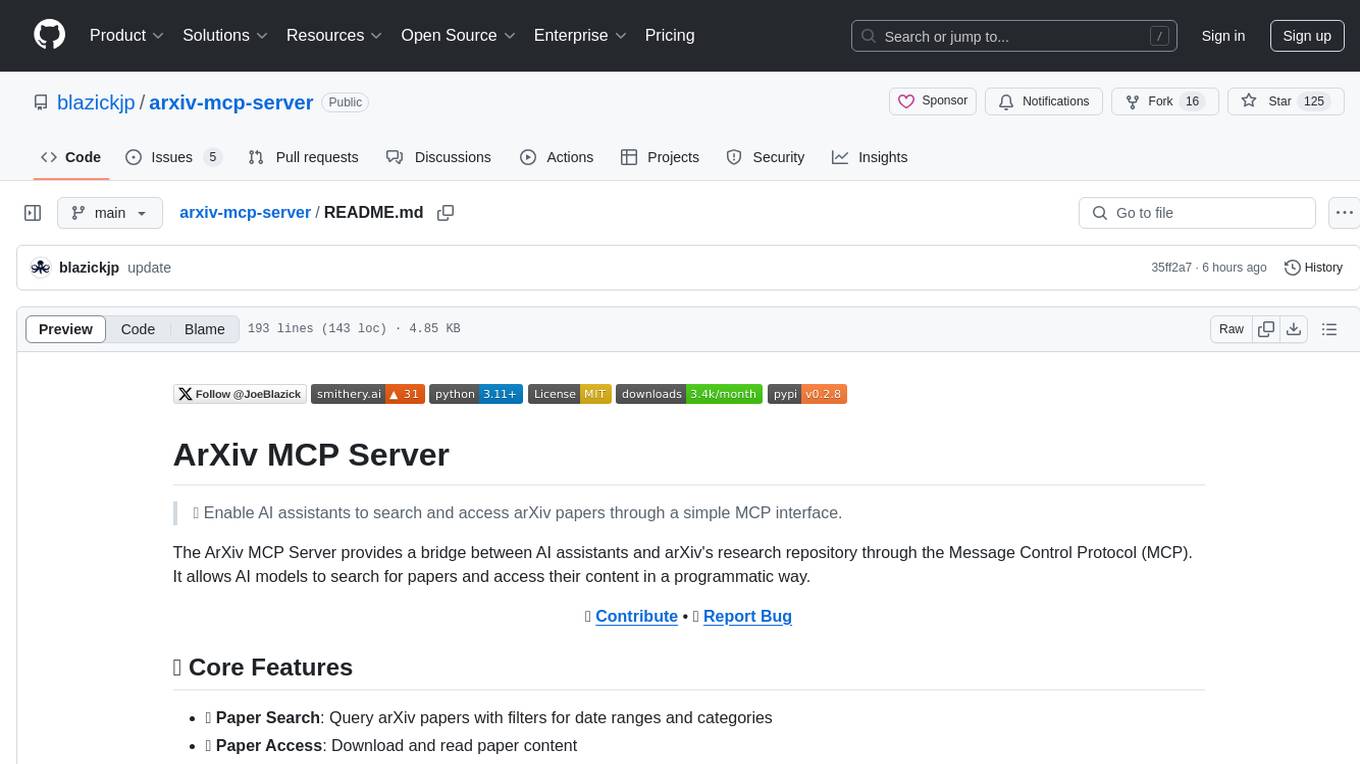
arxiv-mcp-server
The ArXiv MCP Server acts as a bridge between AI assistants and arXiv's research repository, enabling AI models to search for and access papers programmatically through the Message Control Protocol (MCP). It offers features like paper search, access, listing, local storage, and research prompts. Users can install it via Smithery or manually for Claude Desktop. The server provides tools for paper search, download, listing, and reading, along with specialized prompts for paper analysis. Configuration can be done through environment variables, and testing is supported with a test suite. The tool is released under the MIT License and is developed by the Pearl Labs Team.
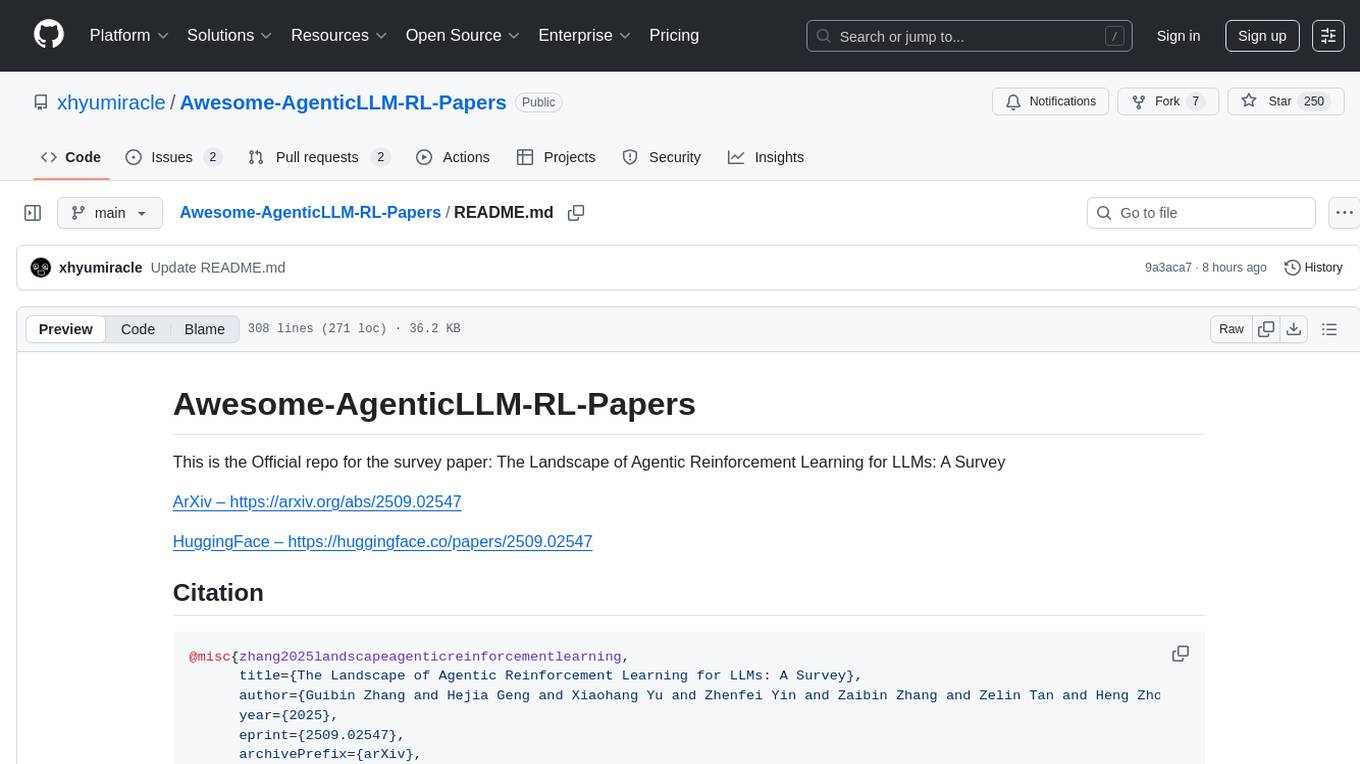
Awesome-AgenticLLM-RL-Papers
This repository serves as the official source for the survey paper 'The Landscape of Agentic Reinforcement Learning for LLMs: A Survey'. It provides an extensive overview of various algorithms, methods, and frameworks related to Agentic RL, including detailed information on different families of algorithms, their key mechanisms, objectives, and links to relevant papers and resources. The repository covers a wide range of tasks such as Search & Research Agent, Code Agent, Mathematical Agent, GUI Agent, RL in Vision Agents, RL in Embodied Agents, and RL in Multi-Agent Systems. Additionally, it includes information on environments, frameworks, and methods suitable for different tasks related to Agentic RL and LLMs.
csinva.github.io
csinva.github.io is a repository maintained by Chandan, a Senior Researcher at Microsoft Research, focusing on interpretable machine learning. The repository contains slides, research overviews, cheat sheets, notes, blog posts, and personal information related to machine learning, statistics, and neuroscience. It offers resources for presentations, summaries of recent papers, cheat sheets for various courses, and posts on different aspects of machine learning and neuroscience advancements.
For similar jobs
qlib
Qlib is an open-source, AI-oriented quantitative investment platform that supports diverse machine learning modeling paradigms, including supervised learning, market dynamics modeling, and reinforcement learning. It covers the entire chain of quantitative investment, from alpha seeking to order execution. The platform empowers researchers to explore ideas and implement productions using AI technologies in quantitative investment. Qlib collaboratively solves key challenges in quantitative investment by releasing state-of-the-art research works in various paradigms. It provides a full ML pipeline for data processing, model training, and back-testing, enabling users to perform tasks such as forecasting market patterns, adapting to market dynamics, and modeling continuous investment decisions.
jupyter-quant
Jupyter Quant is a dockerized environment tailored for quantitative research, equipped with essential tools like statsmodels, pymc, arch, py_vollib, zipline-reloaded, PyPortfolioOpt, numpy, pandas, sci-py, scikit-learn, yellowbricks, shap, optuna, ib_insync, Cython, Numba, bottleneck, numexpr, jedi language server, jupyterlab-lsp, black, isort, and more. It does not include conda/mamba and relies on pip for package installation. The image is optimized for size, includes common command line utilities, supports apt cache, and allows for the installation of additional packages. It is designed for ephemeral containers, ensuring data persistence, and offers volumes for data, configuration, and notebooks. Common tasks include setting up the server, managing configurations, setting passwords, listing installed packages, passing parameters to jupyter-lab, running commands in the container, building wheels outside the container, installing dotfiles and SSH keys, and creating SSH tunnels.
FinRobot
FinRobot is an open-source AI agent platform designed for financial applications using large language models. It transcends the scope of FinGPT, offering a comprehensive solution that integrates a diverse array of AI technologies. The platform's versatility and adaptability cater to the multifaceted needs of the financial industry. FinRobot's ecosystem is organized into four layers, including Financial AI Agents Layer, Financial LLMs Algorithms Layer, LLMOps and DataOps Layers, and Multi-source LLM Foundation Models Layer. The platform's agent workflow involves Perception, Brain, and Action modules to capture, process, and execute financial data and insights. The Smart Scheduler optimizes model diversity and selection for tasks, managed by components like Director Agent, Agent Registration, Agent Adaptor, and Task Manager. The tool provides a structured file organization with subfolders for agents, data sources, and functional modules, along with installation instructions and hands-on tutorials.
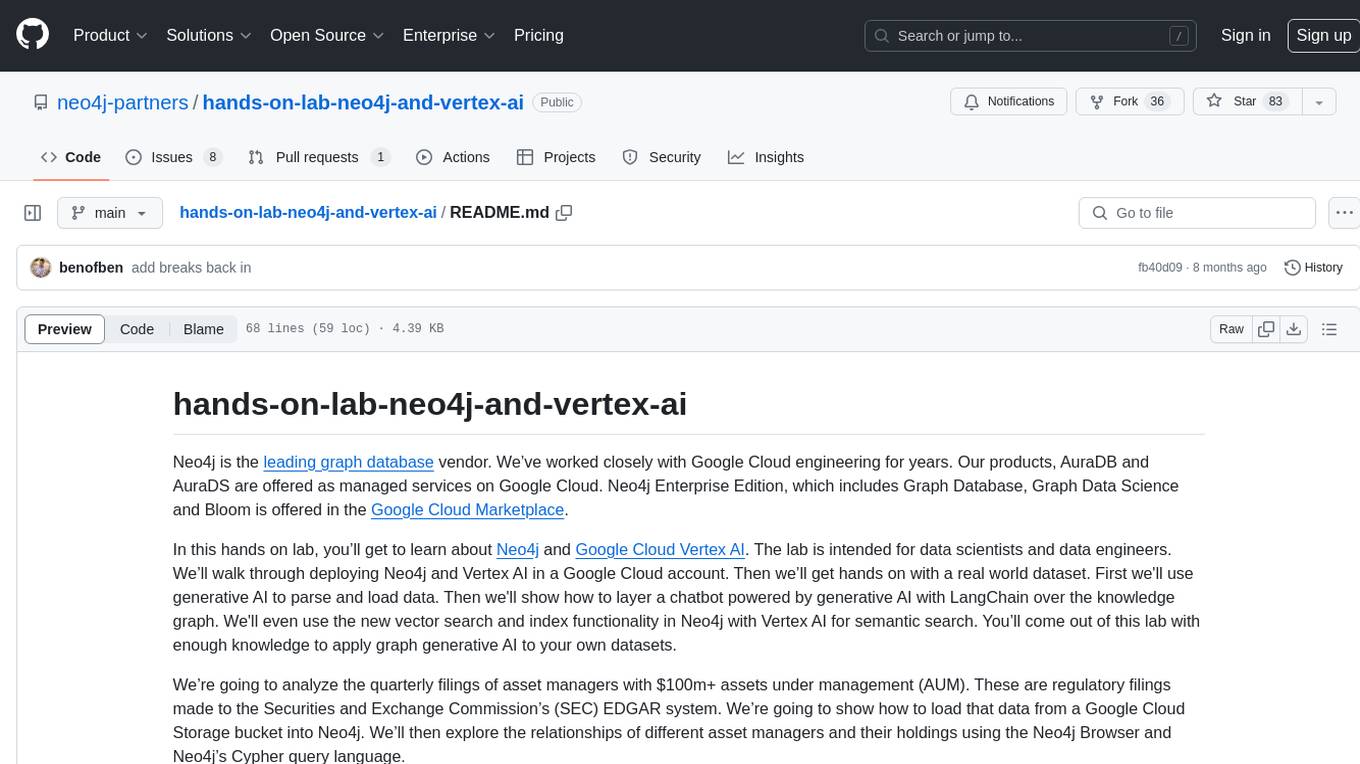
hands-on-lab-neo4j-and-vertex-ai
This repository provides a hands-on lab for learning about Neo4j and Google Cloud Vertex AI. It is intended for data scientists and data engineers to deploy Neo4j and Vertex AI in a Google Cloud account, work with real-world datasets, apply generative AI, build a chatbot over a knowledge graph, and use vector search and index functionality for semantic search. The lab focuses on analyzing quarterly filings of asset managers with $100m+ assets under management, exploring relationships using Neo4j Browser and Cypher query language, and discussing potential applications in capital markets such as algorithmic trading and securities master data management.
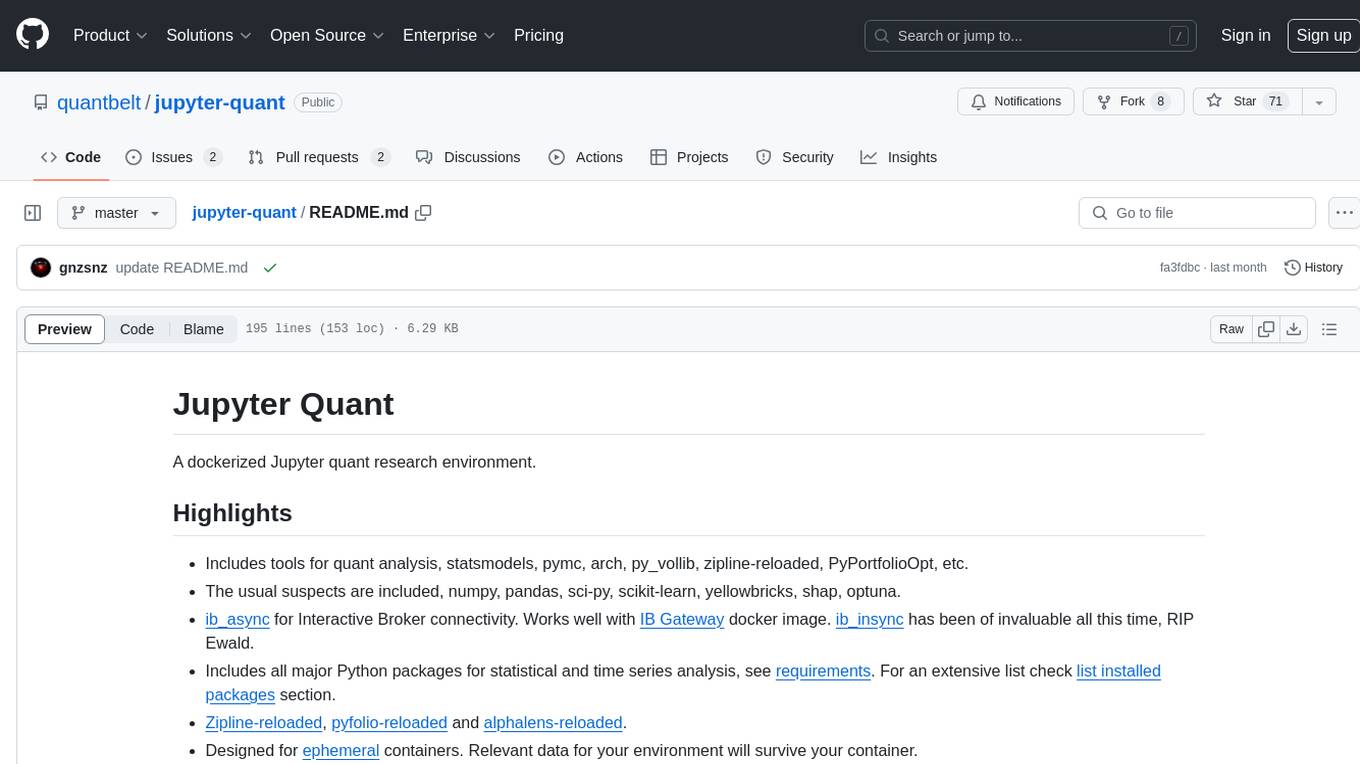
jupyter-quant
Jupyter Quant is a dockerized environment tailored for quantitative research, equipped with essential tools like statsmodels, pymc, arch, py_vollib, zipline-reloaded, PyPortfolioOpt, numpy, pandas, sci-py, scikit-learn, yellowbricks, shap, optuna, and more. It provides Interactive Broker connectivity via ib_async and includes major Python packages for statistical and time series analysis. The image is optimized for size, includes jedi language server, jupyterlab-lsp, and common command line utilities. Users can install new packages with sudo, leverage apt cache, and bring their own dot files and SSH keys. The tool is designed for ephemeral containers, ensuring data persistence and flexibility for quantitative analysis tasks.
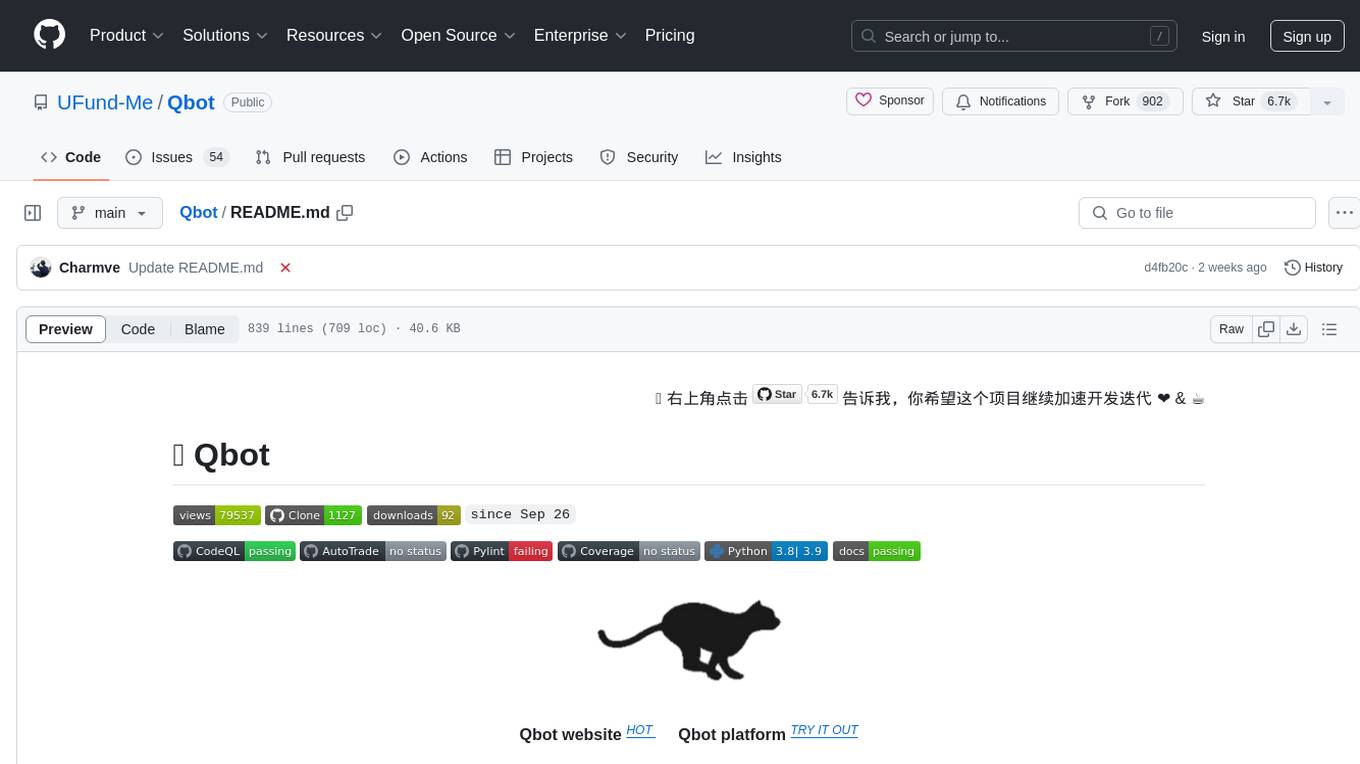
Qbot
Qbot is an AI-oriented automated quantitative investment platform that supports diverse machine learning modeling paradigms, including supervised learning, market dynamics modeling, and reinforcement learning. It provides a full closed-loop process from data acquisition, strategy development, backtesting, simulation trading to live trading. The platform emphasizes AI strategies such as machine learning, reinforcement learning, and deep learning, combined with multi-factor models to enhance returns. Users with some Python knowledge and trading experience can easily utilize the platform to address trading pain points and gaps in the market.
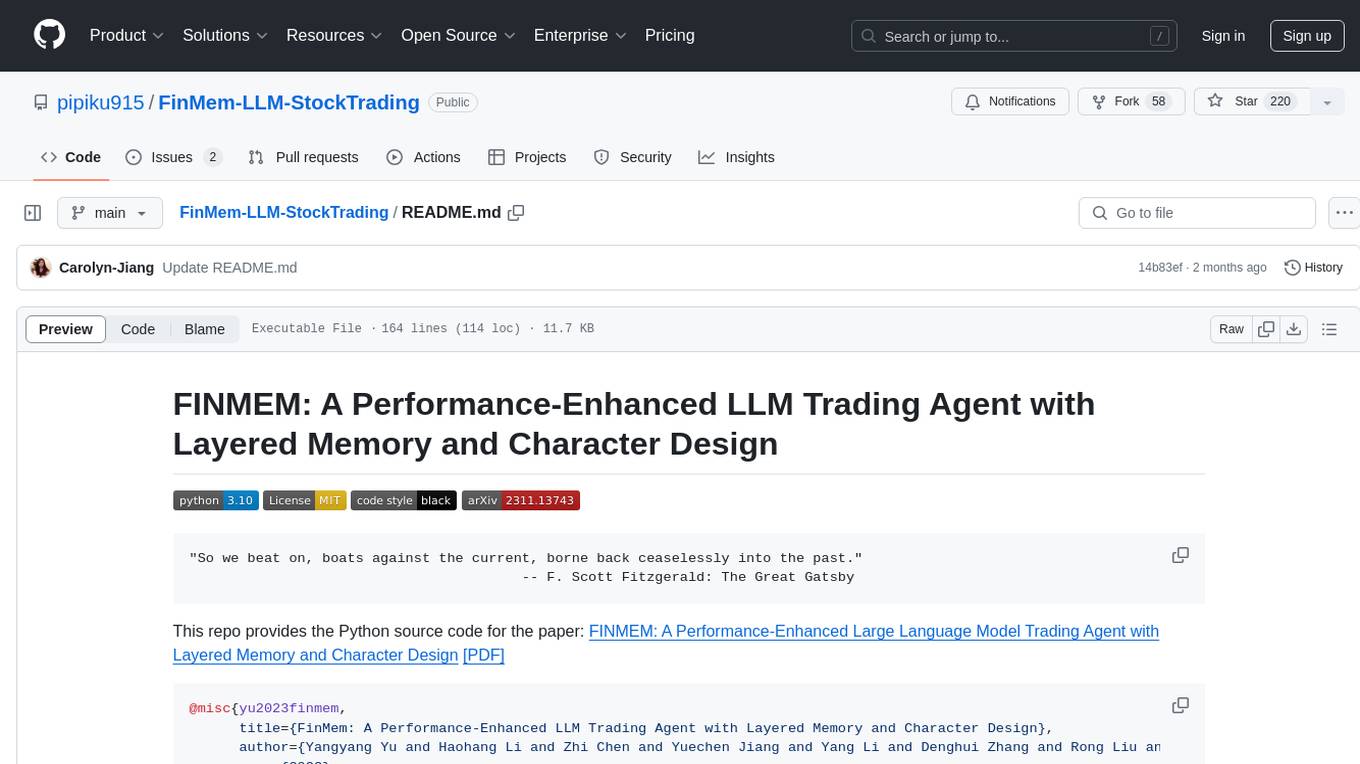
FinMem-LLM-StockTrading
This repository contains the Python source code for FINMEM, a Performance-Enhanced Large Language Model Trading Agent with Layered Memory and Character Design. It introduces FinMem, a novel LLM-based agent framework devised for financial decision-making, encompassing three core modules: Profiling, Memory with layered processing, and Decision-making. FinMem's memory module aligns closely with the cognitive structure of human traders, offering robust interpretability and real-time tuning. The framework enables the agent to self-evolve its professional knowledge, react agilely to new investment cues, and continuously refine trading decisions in the volatile financial environment. It presents a cutting-edge LLM agent framework for automated trading, boosting cumulative investment returns.
LLMs-in-Finance
This repository focuses on the application of Large Language Models (LLMs) in the field of finance. It provides insights and knowledge about how LLMs can be utilized in various scenarios within the finance industry, particularly in generating AI agents. The repository aims to explore the potential of LLMs to enhance financial processes and decision-making through the use of advanced natural language processing techniques.