


llmio
LLM API load-balancing gateway. LLM API 负载均衡网关.
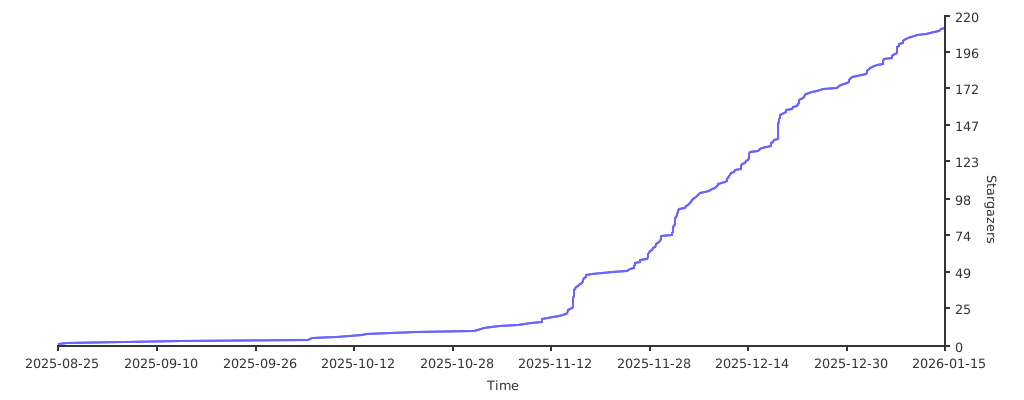
Stars: 229
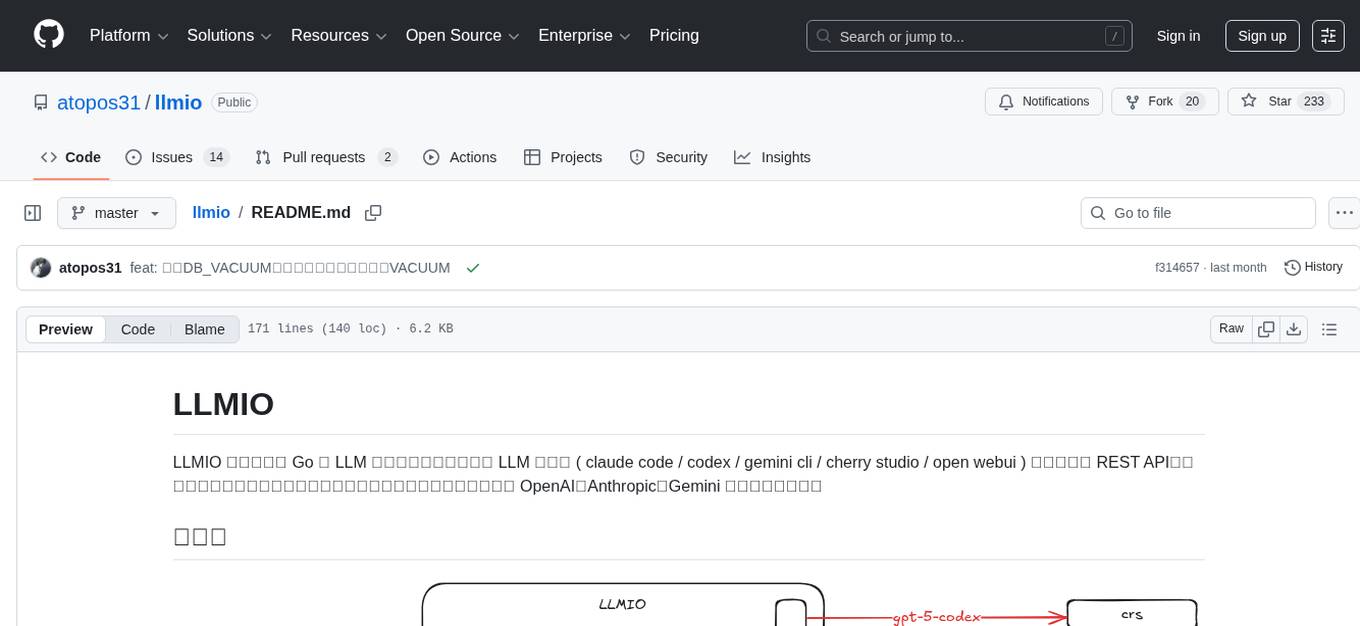
LLMIO is a Go-based LLM load balancing gateway that provides a unified REST API, weight scheduling, logging, and modern management interface for your LLM clients. It helps integrate different model capabilities from OpenAI, Anthropic, Gemini, and more in a single service. Features include unified API compatibility, weight scheduling with two strategies, visual management dashboard, rate and failure handling, and local persistence with SQLite. The tool supports multiple vendors' APIs and authentication methods, making it versatile for various AI model integrations.
README:
LLMIO 是一个基于 Go 的 LLM 负载均衡网关,为你的 LLM 客户端 ( claude code / codex / gemini cli / cherry studio / open webui ) 提供统一的 REST API、权重调度、日志记录与现代化管理界面,帮助你在一个服务中整合 OpenAI、Anthropic、Gemini 等不同模型能力。

- 统一 API:兼容 OpenAI Chat Completions、OpenAI Responses 、Gemini Native 与 Anthropic Messages 格式,支持透传流式与非流式响应。
-
权重调度:
balancers/提供两种调度策略(根据权重大小随机/根据权重高低优先),可按工具调用、结构化输出、多模态能力做智能分发。 - 可视化管理后台:Web UI(React + TypeScript + Tailwind + Vite)覆盖提供商、模型、关联、日志与指标。
- 速率与失败处理:内建速率限制兜底与提供商连通性检测,保证故障隔离。
-
本地持久化:通过纯 Go 实现的 SQLite (
db/llmio.db) 保存配置和调用记录,开箱即用。
services:
  llmio:
    image: atopos31/llmio:latest
    ports:
      - 7070:7070
    volumes:
      - ./db:/app/db
    environment:
      - GIN_MODE=release
      - TOKEN=<YOUR_TOKEN>
      - TZ=Asia/Shanghai
docker compose up -ddocker run -d \
--name llmio \
-p 7070:7070 \
-v $(pwd)/db:/app/db \
-e GIN_MODE=release \
-e TOKEN=<YOUR_TOKEN> \
-e TZ=Asia/Shanghai \
atopos31/llmio:latest前往 releases 下载对应操作系统及cpu架构的压缩包(版本大于0.5.13),这里以 linux amd64 为例。
wget https://github.com/atopos31/llmio/releases/download/v0.5.13/llmio_0.5.13_linux_amd64.tar.gz解压
tar -xzf ./llmio_0.5.13_linux_amd64.tar.gz启动
GIN_MODE=release TOKEN=<YOUR_TOKEN> ./llmio运行后会自动在当前目录下创建 ./db/llmio.db 作为 sqlite 持久化数据文件。
| 变量 | 说明 | 默认值 | 备注 |
|---|---|---|---|
TOKEN |
控制台登录与 /openai /anthropic /gemini /v1 等 API 鉴权凭证 |
无 | 公网访问必填 |
GIN_MODE |
控制 Gin 运行模式 | debug |
线上请设置为 release 获得最佳性能 |
LLMIO_SERVER_PORT |
服务监听端口 | 7070 |
服务监听端口 |
TZ |
时区设置,用于日志与任务调度 | 宿主机默认值 | 建议在容器环境中显式指定,如 Asia/Shanghai
|
DB_VACUUM |
启动时执行 SQLite VACUUM 回收空间 | 不执行 | 设置为 true 启用,用于优化数据库存储 |
克隆项目
git clone https://github.com/atopos31/llmio.git
cd llmio
编译前端(需要 pnpm 环境)
make webui运行后端(需要 go 版本 > 1.25.0)
TOKEN=<YOUR_TOKEN> make run访问入口webui:http://localhost:7070/
LLMIO 提供多供应商兼容的 REST API,支持以下端点:
| 供应商 | 端点路径 | 方法 | 功能 | 认证方式 |
|---|---|---|---|---|
| OpenAI | /openai/v1/models |
GET | 获取可用模型列表 | Bearer Token |
| OpenAI | /openai/v1/chat/completions |
POST | 创建聊天完成 | Bearer Token |
| OpenAI | /openai/v1/responses |
POST | 创建响应 | Bearer Token |
| Anthropic | /anthropic/v1/models |
GET | 获取可用模型列表 | x-api-key |
| Anthropic | /anthropic/v1/messages |
POST | 创建消息 | x-api-key |
| Anthropic | /anthropic/v1/messages/count_tokens |
POST | 计算Token数量 | x-api-key |
| Gemini | /gemini/v1beta/models |
GET | 获取可用模型列表 | x-goog-api-key |
| Gemini | /gemini/v1beta/models/{model}:generateContent |
POST | 生成内容 | x-goog-api-key |
| Gemini | /gemini/v1beta/models/{model}:streamGenerateContent |
POST | 流式生成内容 | x-goog-api-key |
| 通用 | /v1/models |
GET | 获取模型列表(兼容) | Bearer Token |
| 通用 | /v1/chat/completions |
POST | 创建聊天完成(兼容) | Bearer Token |
| 通用 | /v1/responses |
POST | 创建响应(兼容) | Bearer Token |
| 通用 | /v1/messages |
POST | 创建消息(兼容) | x-api-key |
| 通用 | /v1/messages/count_tokens |
POST | 计算Token数量(兼容) | x-api-key |
LLMIO 根据端点类型使用不同的认证方式:
适用于:/openai/v1/* 和 /v1/* 中的 OpenAI 兼容端点
curl -H "Authorization: Bearer YOUR_TOKEN" http://localhost:7070/openai/v1/models适用于:/anthropic/v1/* 和 /v1/* 中的 Anthropic 兼容端点
curl -H "x-api-key: YOUR_TOKEN" http://localhost:7070/anthropic/v1/messages适用于:/gemini/v1beta/* 中的 Gemini 原生端点
curl -H "x-goog-api-key: YOUR_TOKEN" http://localhost:7070/gemini/v1beta/models对于cc或者codex, 使用如下环境变量接入鉴权
export OPENAI_API_KEY=<YOUR_TOKEN>
export ANTHROPIC_API_KEY=<YOUR_TOKEN>
export GEMINI_API_KEY=<YOUR_TOKEN>注意:
/v1/*路径为兼容性保留,建议使用新的供应商特定路径。
.
├─ main.go              # HTTP 服务入口与路由注册
├─ handler/             # REST 接口层
├─ service/             # 业务逻辑与负载均衡调用
├─ middleware/          # 鉴权、速率限制与流式响应中间件
├─ providers/           # 多模型供应商适配实现
├─ balancers/           # 权重与调度策略
├─ models/              # GORM 实体定义与数据库初始化
├─ common/              # 通用工具与响应辅助方法
├─ webui/               # React + TypeScript 管理前端
└─ docs/                # 运维与使用说明


本项目基于 MIT License 发布。
For Tasks:
Click tags to check more tools for each tasksFor Jobs:
Alternative AI tools for llmio
Similar Open Source Tools
llmio
LLMIO is a Go-based LLM load balancing gateway that provides a unified REST API, weight scheduling, logging, and modern management interface for your LLM clients. It helps integrate different model capabilities from OpenAI, Anthropic, Gemini, and more in a single service. Features include unified API compatibility, weight scheduling with two strategies, visual management dashboard, rate and failure handling, and local persistence with SQLite. The tool supports multiple vendors' APIs and authentication methods, making it versatile for various AI model integrations.
petercat
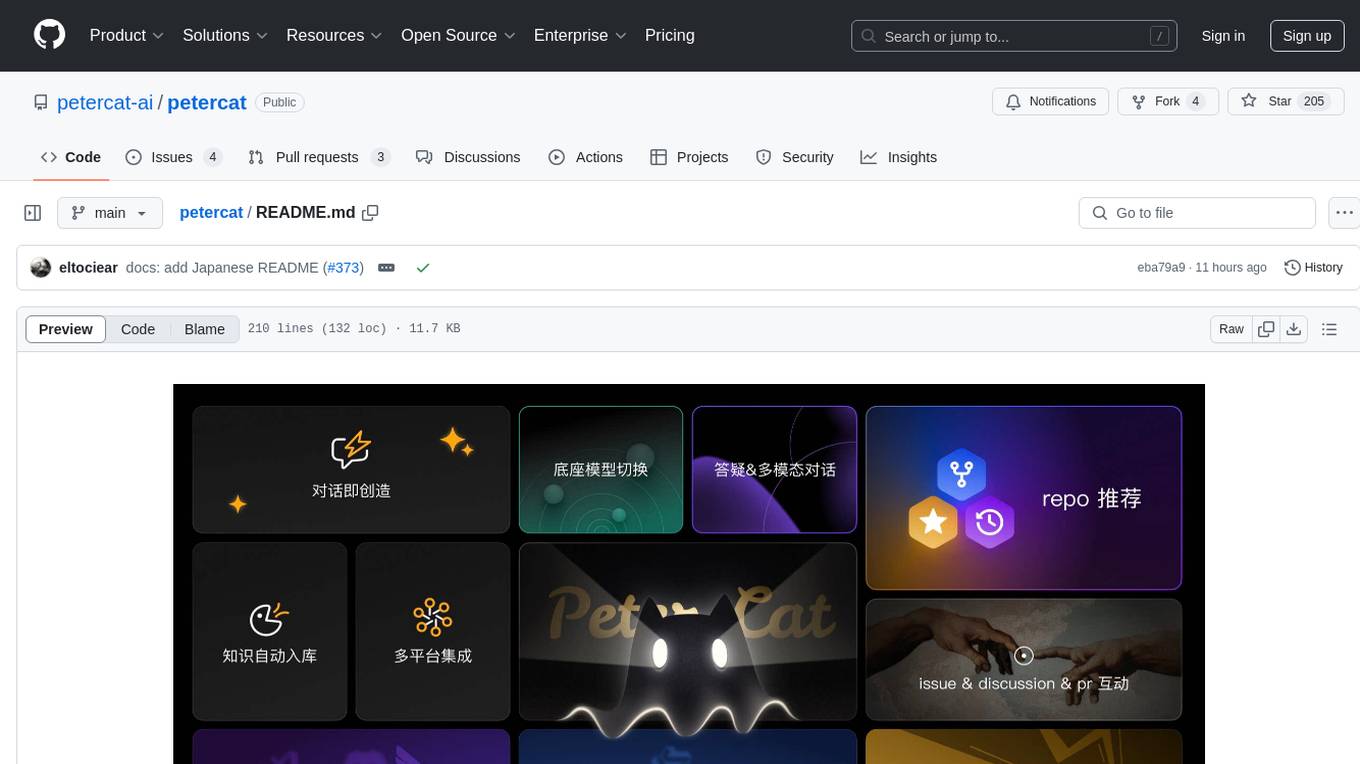
Peter Cat is an intelligent Q&A chatbot solution designed for community maintainers and developers. It provides a conversational Q&A agent configuration system, self-hosting deployment solutions, and a convenient integrated application SDK. Users can easily create intelligent Q&A chatbots for their GitHub repositories and quickly integrate them into various official websites or projects to provide more efficient technical support for the community.
daily_stock_analysis
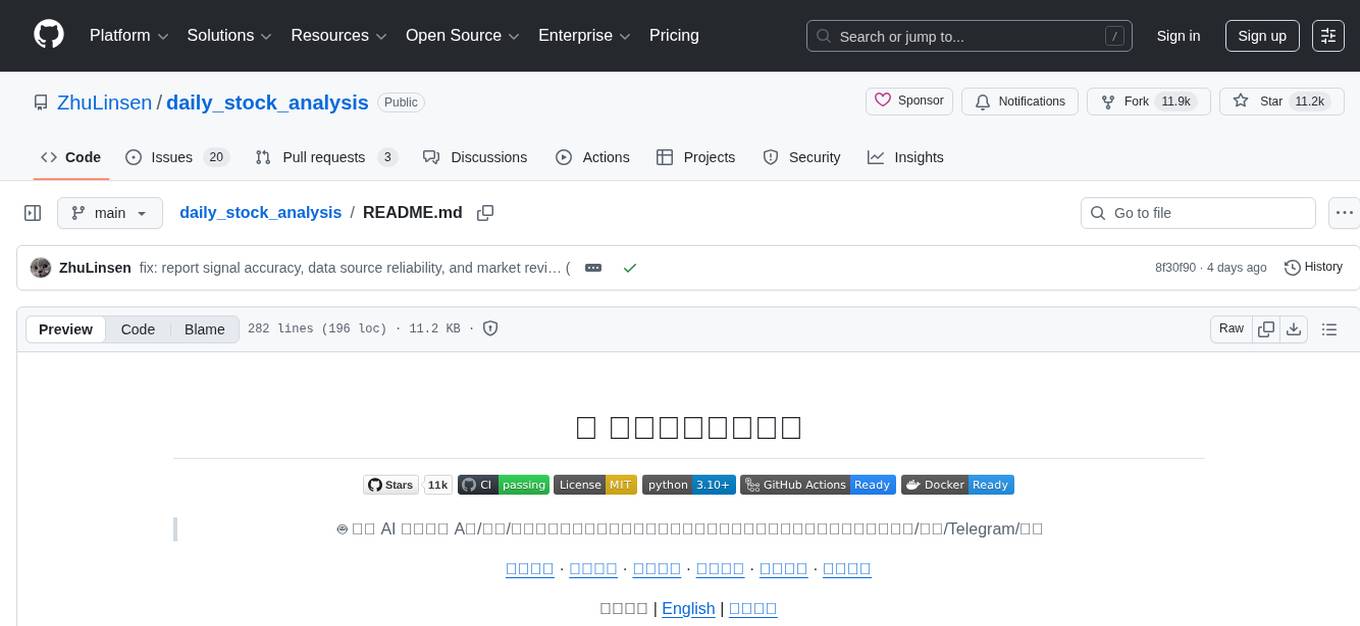
The daily_stock_analysis repository is an intelligent stock analysis system based on AI large models for A-share/Hong Kong stock/US stock selection. It automatically analyzes and pushes a 'decision dashboard' to WeChat Work/Feishu/Telegram/email daily. The system features multi-dimensional analysis, global market support, market review, AI backtesting validation, multi-channel notifications, and scheduled execution using GitHub Actions. It utilizes AI models like Gemini, OpenAI, DeepSeek, and data sources like AkShare, Tushare, Pytdx, Baostock, YFinance for analysis. The system includes built-in trading disciplines like risk warning, trend trading, precise entry/exit points, and checklist marking for conditions.
xiaogpt
xiaogpt is a tool that allows you to play ChatGPT and other LLMs with Xiaomi AI Speaker. It supports ChatGPT, New Bing, ChatGLM, Gemini, Doubao, and Tongyi Qianwen. You can use it to ask questions, get answers, and have conversations with AI assistants. xiaogpt is easy to use and can be set up in a few minutes. It is a great way to experience the power of AI and have fun with your Xiaomi AI Speaker.
md
The WeChat Markdown editor automatically renders Markdown documents as WeChat articles, eliminating the need to worry about WeChat content layout! As long as you know basic Markdown syntax (now with AI, you don't even need to know Markdown), you can create a simple and elegant WeChat article. The editor supports all basic Markdown syntax, mathematical formulas, rendering of Mermaid charts, GFM warning blocks, PlantUML rendering support, ruby annotation extension support, rich code block highlighting themes, custom theme colors and CSS styles, multiple image upload functionality with customizable configuration of image hosting services, convenient file import/export functionality, built-in local content management with automatic draft saving, integration of mainstream AI models (such as DeepSeek, OpenAI, Tongyi Qianwen, Tencent Hanyuan, Volcano Ark, etc.) to assist content creation.
Langchain-Chatchat
LangChain-Chatchat is an open-source, offline-deployable retrieval-enhanced generation (RAG) large model knowledge base project based on large language models such as ChatGLM and application frameworks such as Langchain. It aims to establish a knowledge base Q&A solution that is friendly to Chinese scenarios, supports open-source models, and can run offline.
Muice-Chatbot
Muice-Chatbot is an AI chatbot designed to proactively engage in conversations with users. It is based on the ChatGLM2-6B and Qwen-7B models, with a training dataset of 1.8K+ dialogues. The chatbot has a speaking style similar to a 2D girl, being somewhat tsundere but willing to share daily life details and greet users differently every day. It provides various functionalities, including initiating chats and offering 5 available commands. The project supports model loading through different methods and provides onebot service support for QQ users. Users can interact with the chatbot by running the main.py file in the project directory.
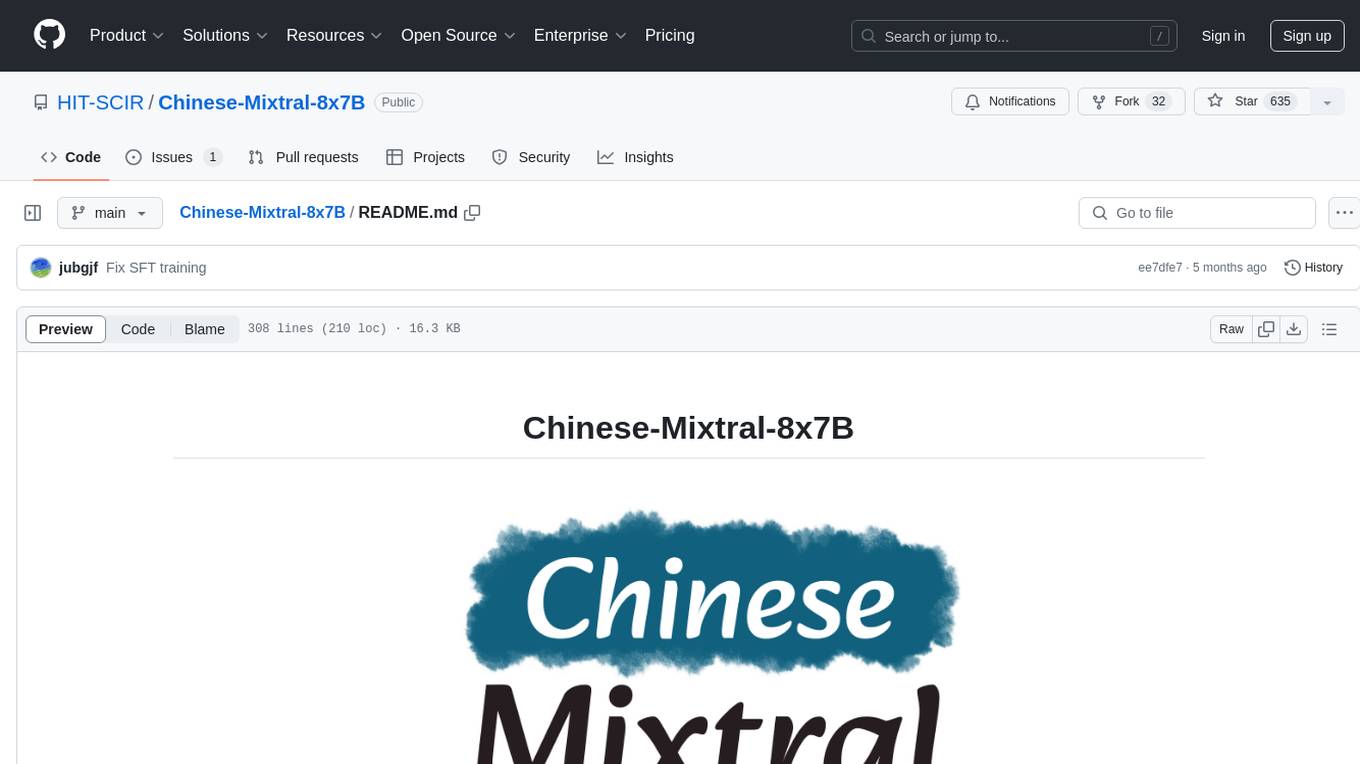
Chinese-Mixtral-8x7B
Chinese-Mixtral-8x7B is an open-source project based on Mistral's Mixtral-8x7B model for incremental pre-training of Chinese vocabulary, aiming to advance research on MoE models in the Chinese natural language processing community. The expanded vocabulary significantly improves the model's encoding and decoding efficiency for Chinese, and the model is pre-trained incrementally on a large-scale open-source corpus, enabling it with powerful Chinese generation and comprehension capabilities. The project includes a large model with expanded Chinese vocabulary and incremental pre-training code.
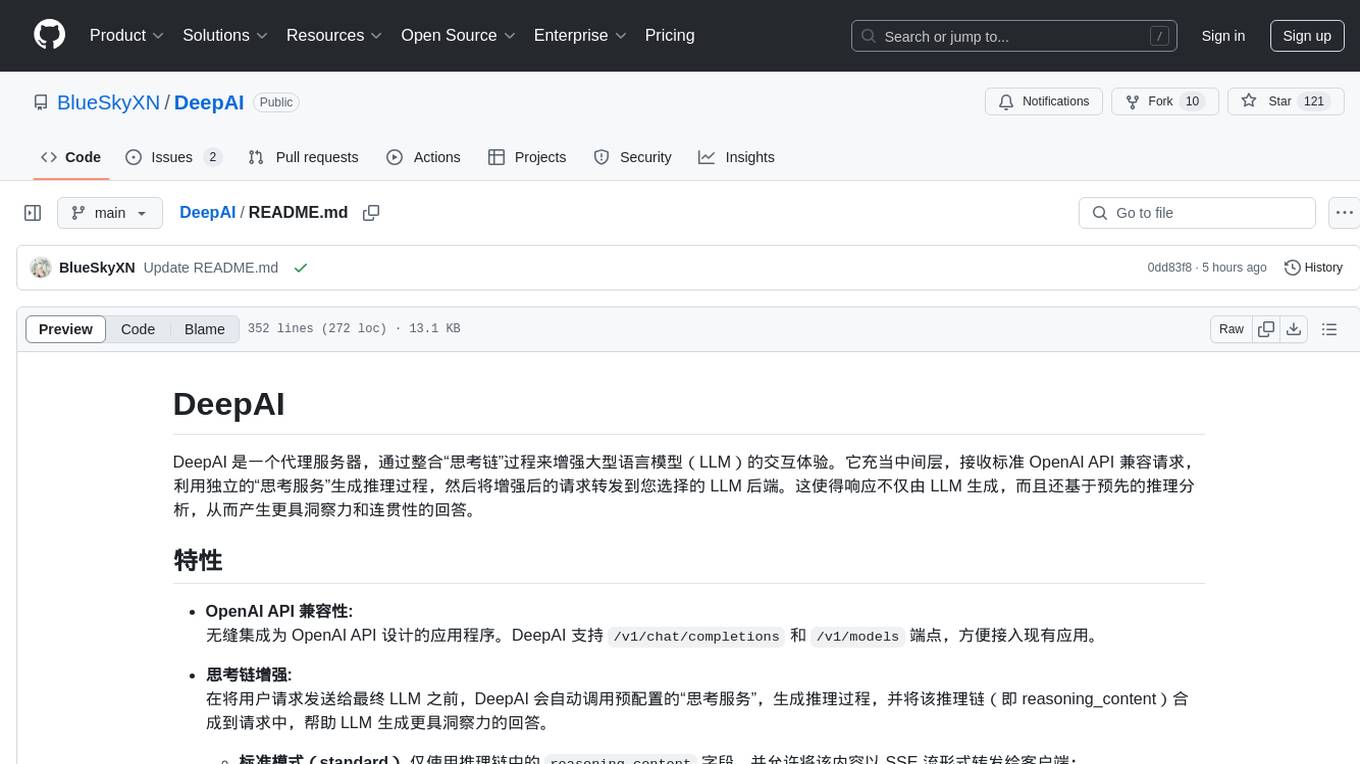
DeepAI
DeepAI is a proxy server that enhances the interaction experience of large language models (LLMs) by integrating the 'thinking chain' process. It acts as an intermediary layer, receiving standard OpenAI API compatible requests, using independent 'thinking services' to generate reasoning processes, and then forwarding the enhanced requests to the LLM backend of your choice. This ensures that responses are not only generated by the LLM but also based on pre-inference analysis, resulting in more insightful and coherent answers. DeepAI supports seamless integration with applications designed for the OpenAI API, providing endpoints for '/v1/chat/completions' and '/v1/models', making it easy to integrate into existing applications. It offers features such as reasoning chain enhancement, flexible backend support, API key routing, weighted random selection, proxy support, comprehensive logging, and graceful shutdown.
agentica
Agentica is a human-centric framework for building large language model agents. It provides functionalities for planning, memory management, tool usage, and supports features like reflection, planning and execution, RAG, multi-agent, multi-role, and workflow. The tool allows users to quickly code and orchestrate agents, customize prompts, and make API calls to various services. It supports API calls to OpenAI, Azure, Deepseek, Moonshot, Claude, Ollama, and Together. Agentica aims to simplify the process of building AI agents by providing a user-friendly interface and a range of functionalities for agent development.
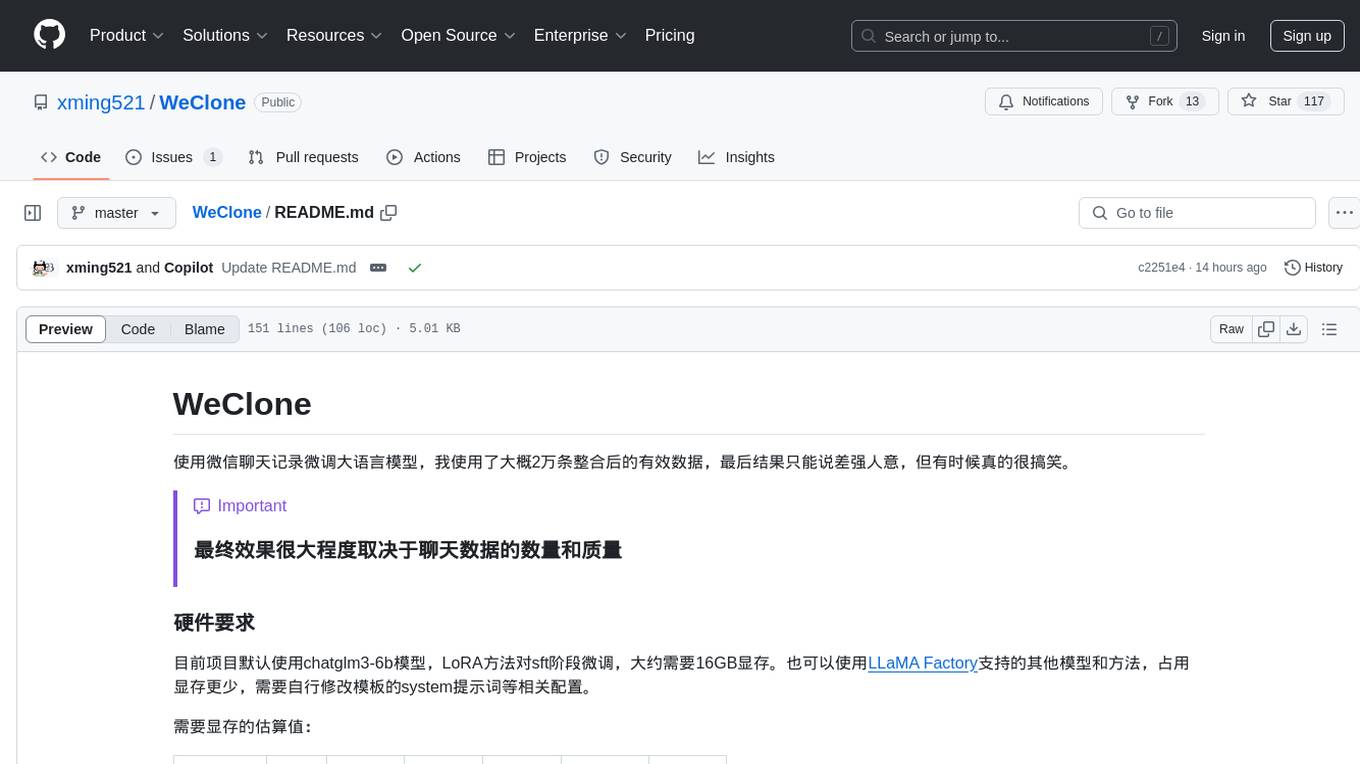
WeClone
WeClone is a tool that fine-tunes large language models using WeChat chat records. It utilizes approximately 20,000 integrated and effective data points, resulting in somewhat satisfactory outcomes that are occasionally humorous. The tool's effectiveness largely depends on the quantity and quality of the chat data provided. It requires a minimum of 16GB of GPU memory for training using the default chatglm3-6b model with LoRA method. Users can also opt for other models and methods supported by LLAMA Factory, which consume less memory. The tool has specific hardware and software requirements, including Python, Torch, Transformers, Datasets, Accelerate, and other optional packages like CUDA and Deepspeed. The tool facilitates environment setup, data preparation, data preprocessing, model downloading, parameter configuration, model fine-tuning, and inference through a browser demo or API service. Additionally, it offers the ability to deploy a WeChat chatbot, although users should be cautious due to the risk of account suspension by WeChat.
jimeng-free-api-all
Jimeng AI Free API is a reverse-engineered API server that encapsulates Jimeng AI's image and video generation capabilities into OpenAI-compatible API interfaces. It supports the latest jimeng-5.0-preview, jimeng-4.6 text-to-image models, Seedance 2.0 multi-image intelligent video generation, zero-configuration deployment, and multi-token support. The API is fully compatible with OpenAI API format, seamlessly integrating with existing clients and supporting multiple session IDs for polling usage.
k8m
k8m is an AI-driven Mini Kubernetes AI Dashboard lightweight console tool designed to simplify cluster management. It is built on AMIS and uses 'kom' as the Kubernetes API client. k8m has built-in Qwen2.5-Coder-7B model interaction capabilities and supports integration with your own private large models. Its key features include miniaturized design for easy deployment, user-friendly interface for intuitive operation, efficient performance with backend in Golang and frontend based on Baidu AMIS, pod file management for browsing, editing, uploading, downloading, and deleting files, pod runtime management for real-time log viewing, log downloading, and executing shell commands within pods, CRD management for automatic discovery and management of CRD resources, and intelligent translation and diagnosis based on ChatGPT for YAML property translation, Describe information interpretation, AI log diagnosis, and command recommendations, providing intelligent support for managing k8s. It is cross-platform compatible with Linux, macOS, and Windows, supporting multiple architectures like x86 and ARM for seamless operation. k8m's design philosophy is 'AI-driven, lightweight and efficient, simplifying complexity,' helping developers and operators quickly get started and easily manage Kubernetes clusters.
agentkit-samples
AgentKit Samples is a repository containing a series of examples and tutorials to help users understand, implement, and integrate various functionalities of AgentKit into their applications. The platform offers a complete solution for building, deploying, and maintaining AI agents, significantly reducing the complexity of developing intelligent applications. The repository provides different levels of examples and tutorials, including basic tutorials for understanding AgentKit's concepts and use cases, as well as more complex examples for experienced developers.
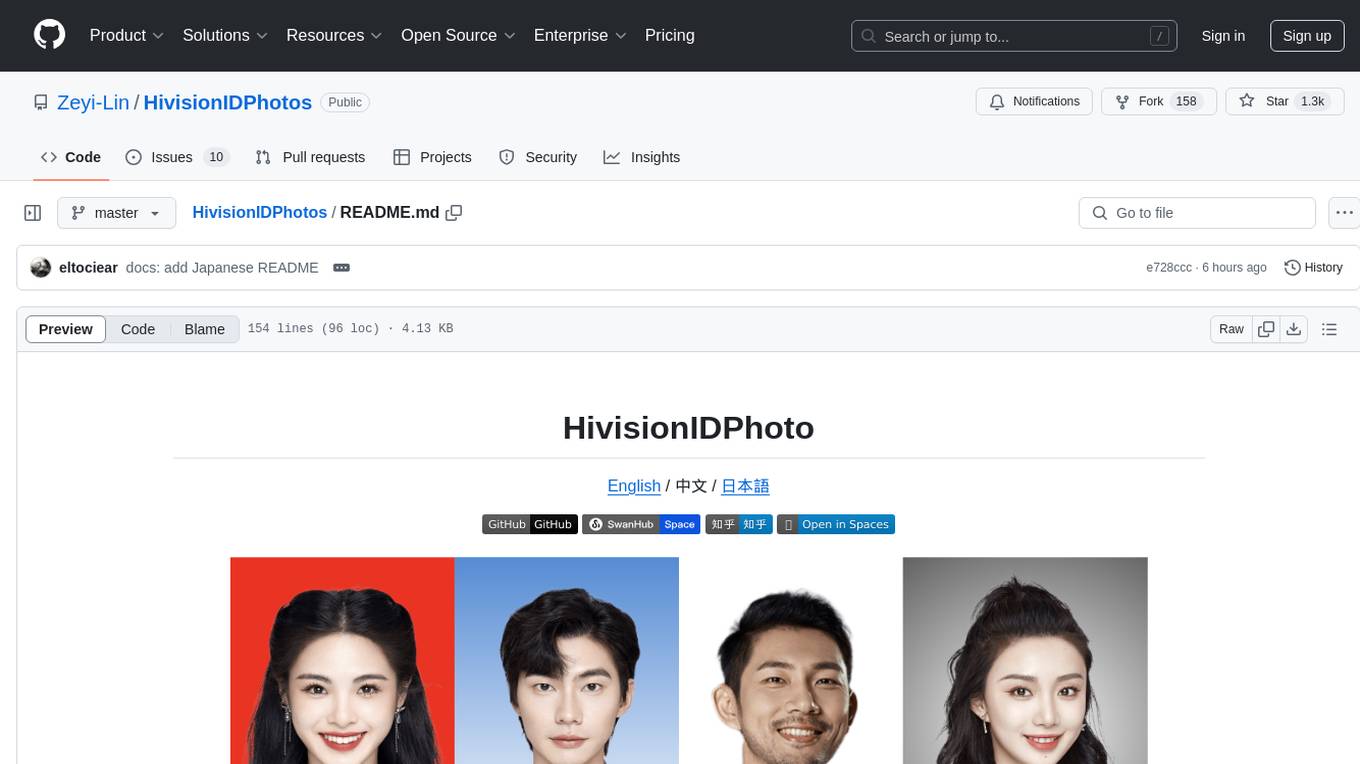
HivisionIDPhotos
HivisionIDPhoto is a practical algorithm for intelligent ID photo creation. It utilizes a comprehensive model workflow to recognize, cut out, and generate ID photos for various user photo scenarios. The tool offers lightweight cutting, standard ID photo generation based on different size specifications, six-inch layout photo generation, beauty enhancement (waiting), and intelligent outfit swapping (waiting). It aims to solve emergency ID photo creation issues.
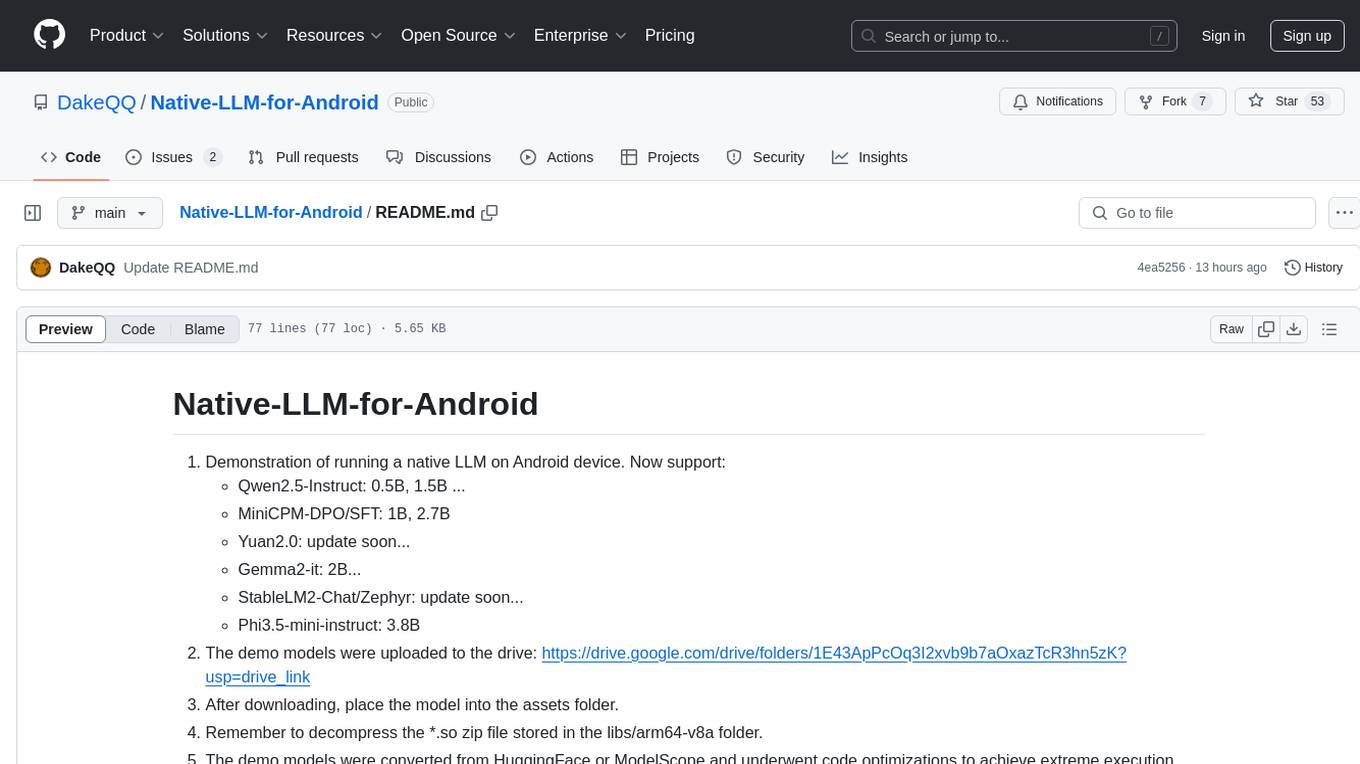
Native-LLM-for-Android
This repository provides a demonstration of running a native Large Language Model (LLM) on Android devices. It supports various models such as Qwen2.5-Instruct, MiniCPM-DPO/SFT, Yuan2.0, Gemma2-it, StableLM2-Chat/Zephyr, and Phi3.5-mini-instruct. The demo models are optimized for extreme execution speed after being converted from HuggingFace or ModelScope. Users can download the demo models from the provided drive link, place them in the assets folder, and follow specific instructions for decompression and model export. The repository also includes information on quantization methods and performance benchmarks for different models on various devices.
For similar tasks
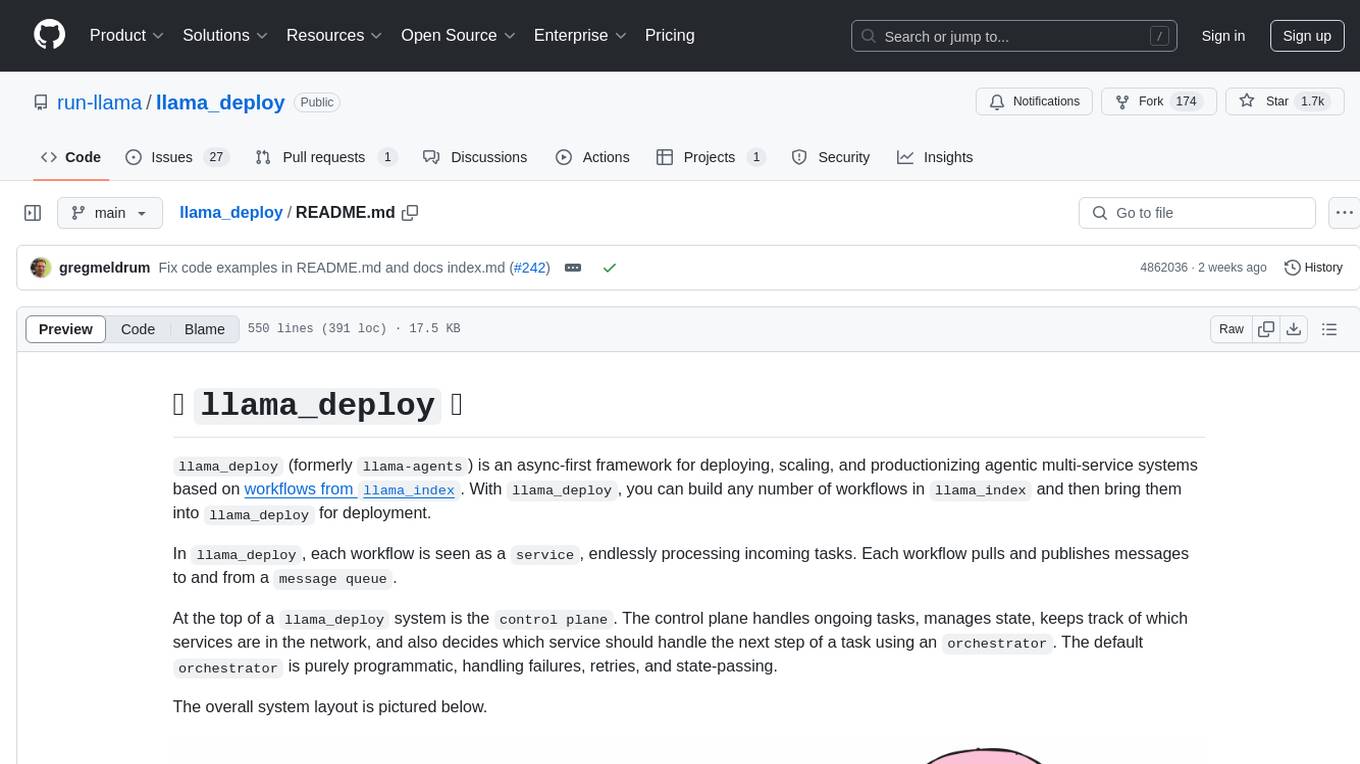
llama_deploy
llama_deploy is an async-first framework for deploying, scaling, and productionizing agentic multi-service systems based on workflows from llama_index. It allows building workflows in llama_index and deploying them seamlessly with minimal changes to code. The system includes services endlessly processing tasks, a control plane managing state and services, an orchestrator deciding task handling, and fault tolerance mechanisms. It is designed for high-concurrency scenarios, enabling real-time and high-throughput applications.
exospherehost
Exosphere is an open source infrastructure designed to run AI agents at scale for large data and long running flows. It allows developers to define plug and playable nodes that can be run on a reliable backbone in the form of a workflow, with features like dynamic state creation at runtime, infinite parallel agents, persistent state management, and failure handling. This enables the deployment of production agents that can scale beautifully to build robust autonomous AI workflows.
llmio
LLMIO is a Go-based LLM load balancing gateway that provides a unified REST API, weight scheduling, logging, and modern management interface for your LLM clients. It helps integrate different model capabilities from OpenAI, Anthropic, Gemini, and more in a single service. Features include unified API compatibility, weight scheduling with two strategies, visual management dashboard, rate and failure handling, and local persistence with SQLite. The tool supports multiple vendors' APIs and authentication methods, making it versatile for various AI model integrations.
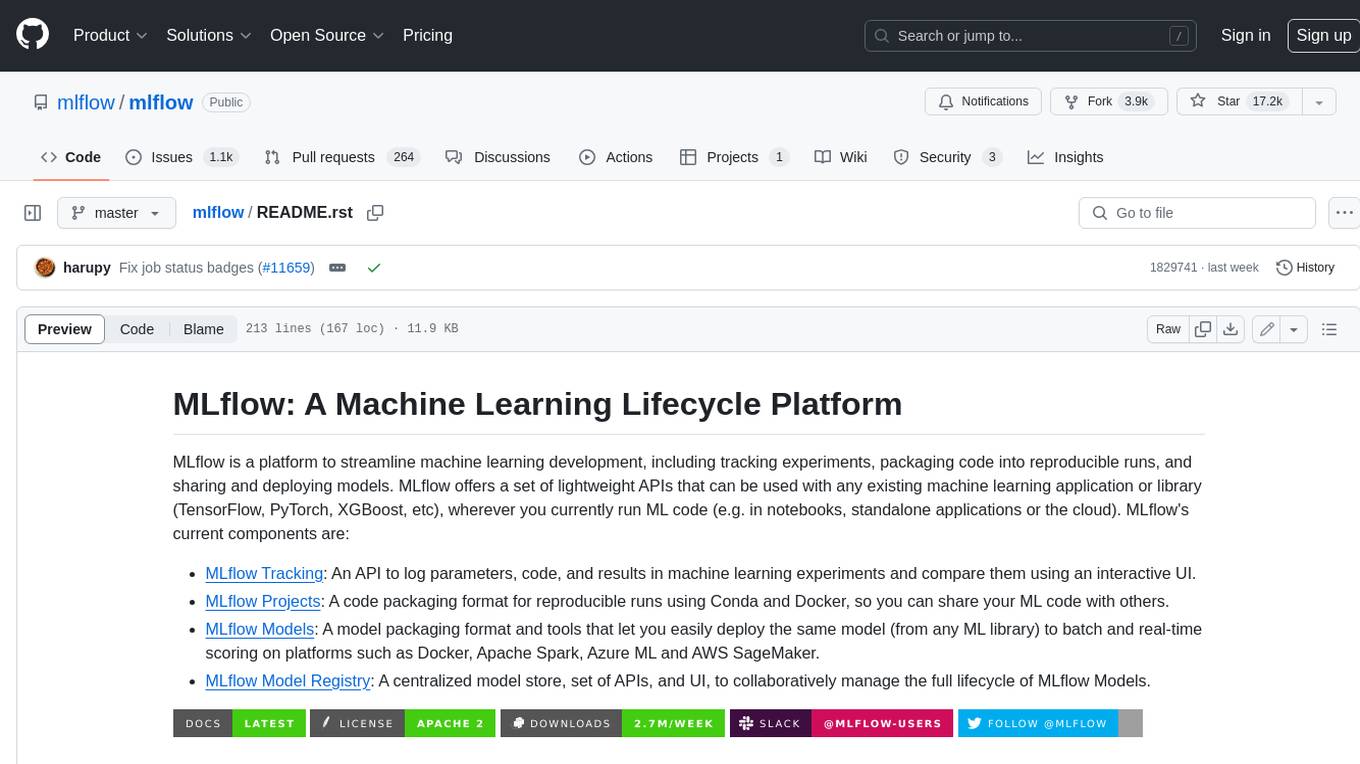
mlflow
MLflow is a platform to streamline machine learning development, including tracking experiments, packaging code into reproducible runs, and sharing and deploying models. MLflow offers a set of lightweight APIs that can be used with any existing machine learning application or library (TensorFlow, PyTorch, XGBoost, etc), wherever you currently run ML code (e.g. in notebooks, standalone applications or the cloud). MLflow's current components are:
* `MLflow Tracking
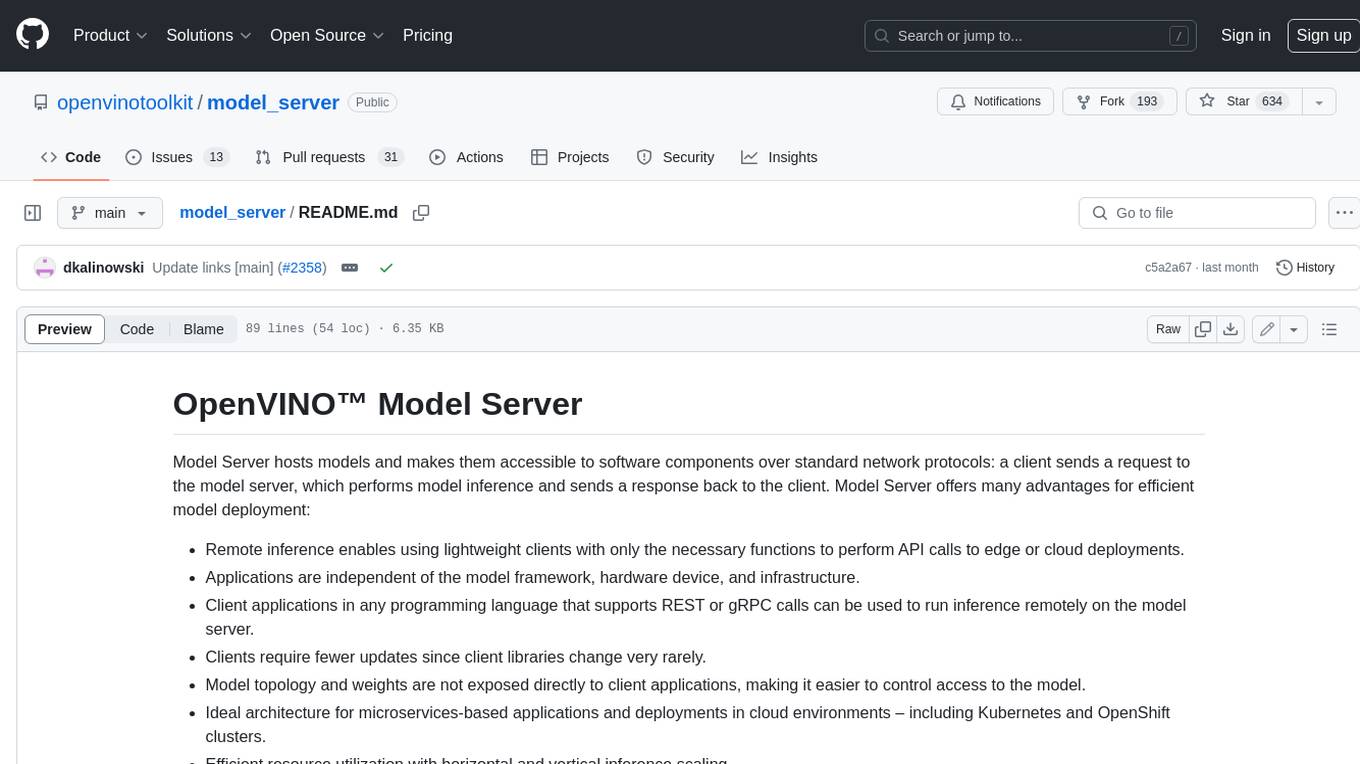
model_server
OpenVINO™ Model Server (OVMS) is a high-performance system for serving models. Implemented in C++ for scalability and optimized for deployment on Intel architectures, the model server uses the same architecture and API as TensorFlow Serving and KServe while applying OpenVINO for inference execution. Inference service is provided via gRPC or REST API, making deploying new algorithms and AI experiments easy.
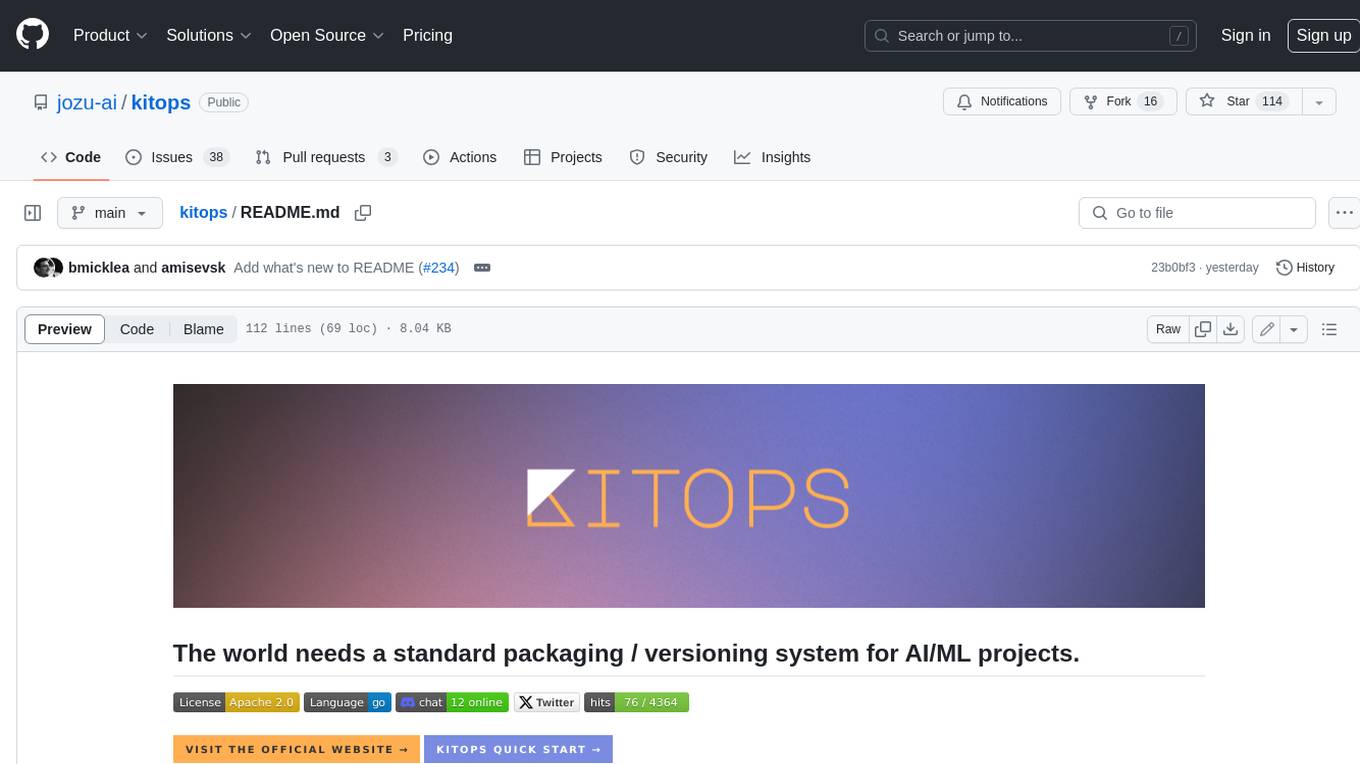
kitops
KitOps is a packaging and versioning system for AI/ML projects that uses open standards so it works with the AI/ML, development, and DevOps tools you are already using. KitOps simplifies the handoffs between data scientists, application developers, and SREs working with LLMs and other AI/ML models. KitOps' ModelKits are a standards-based package for models, their dependencies, configurations, and codebases. ModelKits are portable, reproducible, and work with the tools you already use.
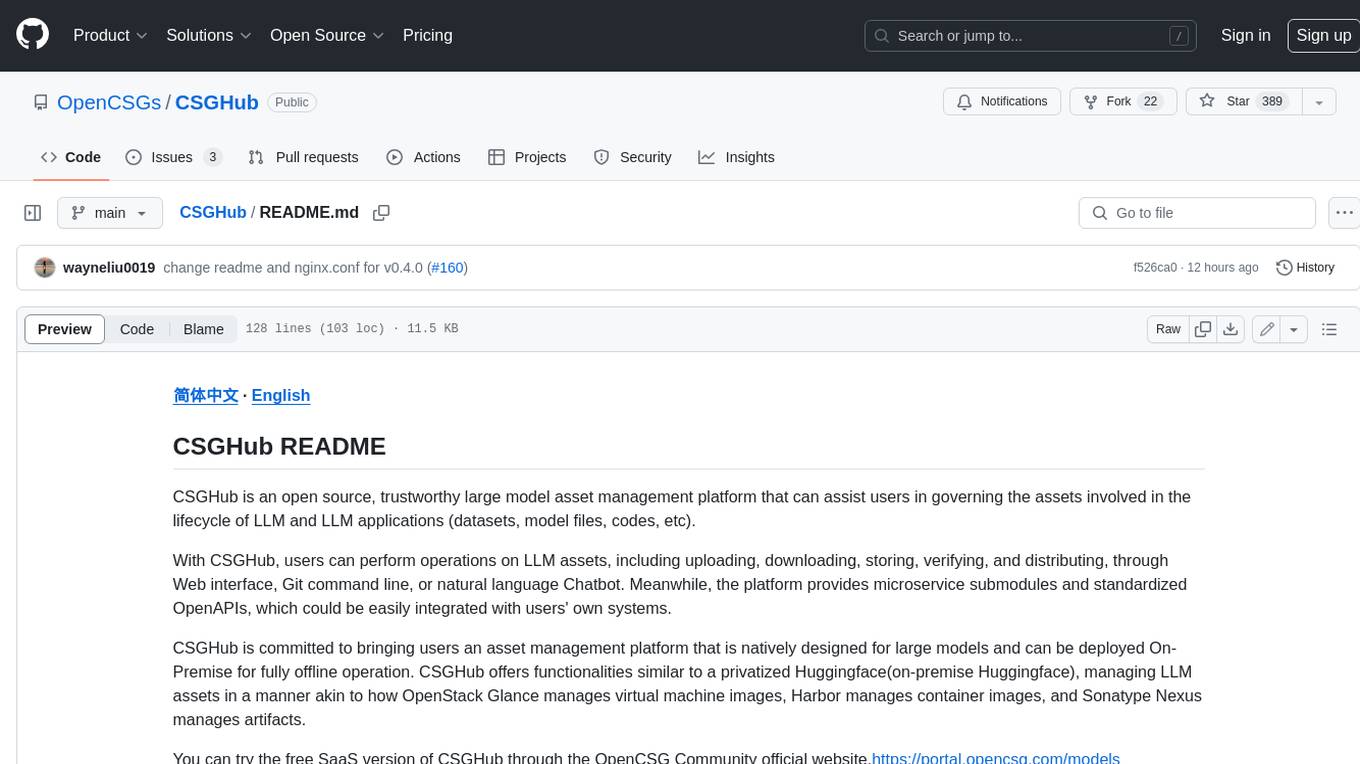
CSGHub
CSGHub is an open source, trustworthy large model asset management platform that can assist users in governing the assets involved in the lifecycle of LLM and LLM applications (datasets, model files, codes, etc). With CSGHub, users can perform operations on LLM assets, including uploading, downloading, storing, verifying, and distributing, through Web interface, Git command line, or natural language Chatbot. Meanwhile, the platform provides microservice submodules and standardized OpenAPIs, which could be easily integrated with users' own systems. CSGHub is committed to bringing users an asset management platform that is natively designed for large models and can be deployed On-Premise for fully offline operation. CSGHub offers functionalities similar to a privatized Huggingface(on-premise Huggingface), managing LLM assets in a manner akin to how OpenStack Glance manages virtual machine images, Harbor manages container images, and Sonatype Nexus manages artifacts.
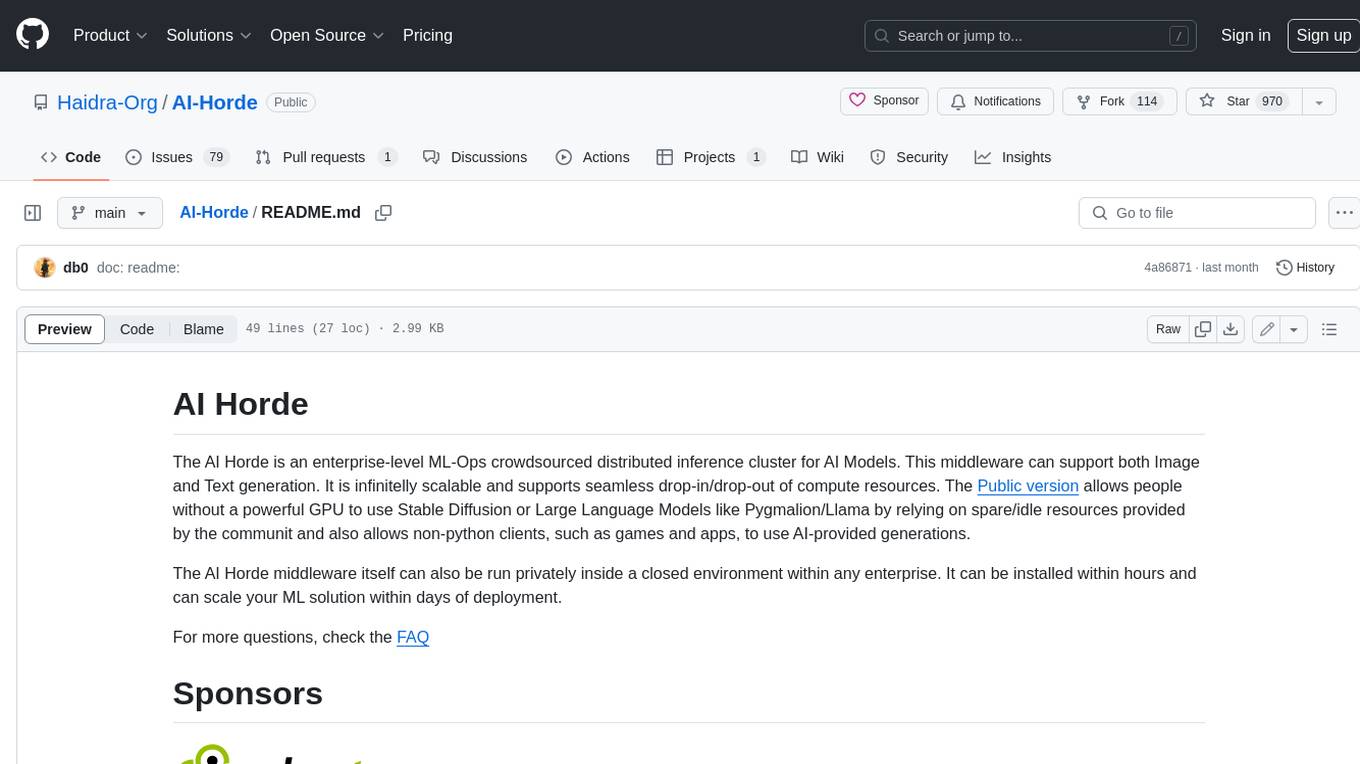
AI-Horde
The AI Horde is an enterprise-level ML-Ops crowdsourced distributed inference cluster for AI Models. This middleware can support both Image and Text generation. It is infinitely scalable and supports seamless drop-in/drop-out of compute resources. The Public version allows people without a powerful GPU to use Stable Diffusion or Large Language Models like Pygmalion/Llama by relying on spare/idle resources provided by the community and also allows non-python clients, such as games and apps, to use AI-provided generations.
For similar jobs
sweep
Sweep is an AI junior developer that turns bugs and feature requests into code changes. It automatically handles developer experience improvements like adding type hints and improving test coverage.
teams-ai
The Teams AI Library is a software development kit (SDK) that helps developers create bots that can interact with Teams and Microsoft 365 applications. It is built on top of the Bot Framework SDK and simplifies the process of developing bots that interact with Teams' artificial intelligence capabilities. The SDK is available for JavaScript/TypeScript, .NET, and Python.
ai-guide
This guide is dedicated to Large Language Models (LLMs) that you can run on your home computer. It assumes your PC is a lower-end, non-gaming setup.
classifai
Supercharge WordPress Content Workflows and Engagement with Artificial Intelligence. Tap into leading cloud-based services like OpenAI, Microsoft Azure AI, Google Gemini and IBM Watson to augment your WordPress-powered websites. Publish content faster while improving SEO performance and increasing audience engagement. ClassifAI integrates Artificial Intelligence and Machine Learning technologies to lighten your workload and eliminate tedious tasks, giving you more time to create original content that matters.
chatbot-ui
Chatbot UI is an open-source AI chat app that allows users to create and deploy their own AI chatbots. It is easy to use and can be customized to fit any need. Chatbot UI is perfect for businesses, developers, and anyone who wants to create a chatbot.
BricksLLM
BricksLLM is a cloud native AI gateway written in Go. Currently, it provides native support for OpenAI, Anthropic, Azure OpenAI and vLLM. BricksLLM aims to provide enterprise level infrastructure that can power any LLM production use cases. Here are some use cases for BricksLLM: * Set LLM usage limits for users on different pricing tiers * Track LLM usage on a per user and per organization basis * Block or redact requests containing PIIs * Improve LLM reliability with failovers, retries and caching * Distribute API keys with rate limits and cost limits for internal development/production use cases * Distribute API keys with rate limits and cost limits for students
uAgents
uAgents is a Python library developed by Fetch.ai that allows for the creation of autonomous AI agents. These agents can perform various tasks on a schedule or take action on various events. uAgents are easy to create and manage, and they are connected to a fast-growing network of other uAgents. They are also secure, with cryptographically secured messages and wallets.
griptape
Griptape is a modular Python framework for building AI-powered applications that securely connect to your enterprise data and APIs. It offers developers the ability to maintain control and flexibility at every step. Griptape's core components include Structures (Agents, Pipelines, and Workflows), Tasks, Tools, Memory (Conversation Memory, Task Memory, and Meta Memory), Drivers (Prompt and Embedding Drivers, Vector Store Drivers, Image Generation Drivers, Image Query Drivers, SQL Drivers, Web Scraper Drivers, and Conversation Memory Drivers), Engines (Query Engines, Extraction Engines, Summary Engines, Image Generation Engines, and Image Query Engines), and additional components (Rulesets, Loaders, Artifacts, Chunkers, and Tokenizers). Griptape enables developers to create AI-powered applications with ease and efficiency.