


sandbox-sdk
Run sandboxed code environments on Cloudflare's edge network
Stars: 911
The Cloudflare Sandbox SDK allows users to build secure, isolated code execution environments on Cloudflare. It enables running untrusted code safely in isolated containers, executing commands, managing files, running background processes, and exposing services from Workers applications. Ideal for AI code execution, interactive development environments, data analysis platforms, CI/CD systems, and applications requiring secure code execution at the edge.
README:


Build secure, isolated code execution environments on Cloudflare.
The Sandbox SDK lets you run untrusted code safely in isolated containers. Execute commands, manage files, run background processes, and expose services — all from your Workers applications.
Perfect for AI code execution, interactive development environments, data analysis platforms, CI/CD systems, and any application that needs secure code execution at the edge.
- Install Node.js (version 16.17.0 or later)
- Ensure Docker is running locally (see setup guide)
- For deploying to production, sign up for a Cloudflare account
Create a new Sandbox SDK project using the minimal template:
npm create cloudflare@latest -- my-sandbox --template=cloudflare/sandbox-sdk/examples/minimal
cd my-sandboxStart the development server:
npm run devNote: First run builds the Docker container (2-3 minutes). Subsequent runs are much faster.
Test the endpoints:
# Execute Python code
curl http://localhost:8787/run

# File operations
curl http://localhost:8787/fileDeploy your Worker and container:
npx wrangler deployWait for provisioning: After first deployment, wait 2-3 minutes before making requests.
📖 View the complete getting started guide for detailed instructions and explanations.
import { getSandbox, proxyToSandbox, type Sandbox } from '@cloudflare/sandbox';

export { Sandbox } from '@cloudflare/sandbox';

type Env = {
  Sandbox: DurableObjectNamespace<Sandbox>;
};

export default {
  async fetch(request: Request, env: Env): Promise<Response> {
    // Required for preview URLs
    const proxyResponse = await proxyToSandbox(request, env);
    if (proxyResponse) return proxyResponse;

    const url = new URL(request.url);
    const sandbox = getSandbox(env.Sandbox, 'my-sandbox');

    // Execute Python code
    if (url.pathname === '/run') {
      const result = await sandbox.exec('python3 -c "print(2 + 2)"');
      return Response.json({ output: result.stdout, success: result.success });
    }

    // Work with files
    if (url.pathname === '/file') {
      await sandbox.writeFile('/workspace/hello.txt', 'Hello, Sandbox!');
      const file = await sandbox.readFile('/workspace/hello.txt');
      return Response.json({ content: file.content });
    }

    return new Response('Try /run or /file');
  }
};- Get Started Guide - Step-by-step tutorial
- API Reference - Complete API docs
- Guides - Execute commands, manage files, expose services
- Examples - AI agents, data analysis, CI/CD pipelines
- Secure Isolation - Each sandbox runs in its own container
- Edge-Native - Runs on Cloudflare's global network
- Code Interpreter - Execute Python and JavaScript with rich outputs
- File System Access - Read, write, and manage files
- Command Execution - Run any command with streaming support
- Preview URLs - Expose services with public URLs
- Git Integration - Clone repositories directly
We welcome contributions from the community! See CONTRIBUTING.md for guidelines on:
- Setting up your development environment
- Creating pull requests
- Code style and testing requirements
This repository contains the SDK source code. Quick start:
# Clone the repo
git clone https://github.com/cloudflare/sandbox-sdk
cd sandbox-sdk

# Install dependencies
npm install

# Run tests
npm test

# Build the project
npm run build

# Type checking and linting
npm run checkSee the examples directory for complete working examples:
- Minimal - Start here: exec commands, read/write files
- Code Interpreter - Give gpt-oss on Workers AI a Python REPL
- Claude Code - Run Claude Code headless on any repo
-
OpenAI Agents -
ShellandEditortools for OpenAI Agents SDK - OpenCode - OpenCode web UI or SDK in a sandbox
- TypeScript Validator - Build with npm in sandbox, execute in isolates
Beta - The SDK is in active development. APIs may change before v1.0.
For Tasks:
Click tags to check more tools for each tasksFor Jobs:
Alternative AI tools for sandbox-sdk
Similar Open Source Tools
sandbox-sdk
The Cloudflare Sandbox SDK allows users to build secure, isolated code execution environments on Cloudflare. It enables running untrusted code safely in isolated containers, executing commands, managing files, running background processes, and exposing services from Workers applications. Ideal for AI code execution, interactive development environments, data analysis platforms, CI/CD systems, and applications requiring secure code execution at the edge.
codemie-code
Unified AI Coding Assistant CLI for managing multiple AI agents like Claude Code, Google Gemini, OpenCode, and custom AI agents. Supports OpenAI, Azure OpenAI, AWS Bedrock, LiteLLM, Ollama, and Enterprise SSO. Features built-in LangGraph agent with file operations, command execution, and planning tools. Cross-platform support for Windows, Linux, and macOS. Ideal for developers seeking a powerful alternative to GitHub Copilot or Cursor.
codewalk
CodeWalk is a native cross-platform client for OpenCode server mode, built with Flutter. It provides an AI chat interface for coding interactions, multi-server profile management, session lifecycle management, worktree management, speech-to-text input, and more. The project follows Clean Architecture with Flutter, Dart, Provider for state management, Dio for HTTP client, SharedPreferences for local storage, GetIt for dependency injection, and Material Design 3 for design system.

Zero
Zero is an open-source AI email solution that allows users to self-host their email app while integrating external services like Gmail. It aims to modernize and enhance emails through AI agents, offering features like open-source transparency, AI-driven enhancements, data privacy, self-hosting freedom, unified inbox, customizable UI, and developer-friendly extensibility. Built with modern technologies, Zero provides a reliable tech stack including Next.js, React, TypeScript, TailwindCSS, Node.js, Drizzle ORM, and PostgreSQL. Users can set up Zero using standard setup or Dev Container setup for VS Code users, with detailed environment setup instructions for Better Auth, Google OAuth, and optional GitHub OAuth. Database setup involves starting a local PostgreSQL instance, setting up database connection, and executing database commands for dependencies, tables, migrations, and content viewing.
enferno
Enferno is a modern Flask framework optimized for AI-assisted development workflows. It combines carefully crafted development patterns, smart Cursor Rules, and modern libraries to enable developers to build sophisticated web applications with unprecedented speed. Enferno's intelligent patterns and contextual guides help create production-ready SAAS applications faster than ever. It includes features like modern stack, authentication, OAuth integration, database support, task queue, frontend components, security measures, Docker readiness, and more.
backend.ai
Backend.AI is a streamlined, container-based computing cluster platform that hosts popular computing/ML frameworks and diverse programming languages, with pluggable heterogeneous accelerator support including CUDA GPU, ROCm GPU, TPU, IPU and other NPUs. It allocates and isolates the underlying computing resources for multi-tenant computation sessions on-demand or in batches with customizable job schedulers with its own orchestrator. All its functions are exposed as REST/GraphQL/WebSocket APIs.
E2B
E2B Sandbox is a secure sandboxed cloud environment made for AI agents and AI apps. Sandboxes allow AI agents and apps to have long running cloud secure environments. In these environments, large language models can use the same tools as humans do. For example: * Cloud browsers * GitHub repositories and CLIs * Coding tools like linters, autocomplete, "go-to defintion" * Running LLM generated code * Audio & video editing The E2B sandbox can be connected to any LLM and any AI agent or app.
open-gamma
Open Gamma is a production-ready AI Chat application that features tool integration with Google Slides, Vercel AI SDK for chat streaming, and NextAuth v5 for authentication. It utilizes PostgreSQL with Drizzle ORM for database management and is built on Next.js 16 with Tailwind CSS for styling. The application provides AI chat functionality powered by Vercel AI SDK supporting OpenAI, Anthropic, and Google. It offers custom authentication flows and ensures security through request validation and environment validation. Open Gamma is designed to streamline chat interactions, tool integrations, and authentication processes in a secure and efficient manner.
typedai
TypedAI is a TypeScript-first AI platform designed for developers to create and run autonomous AI agents, LLM based workflows, and chatbots. It offers advanced autonomous agents, software developer agents, pull request code review agent, AI chat interface, Slack chatbot, and supports various LLM services. The platform features configurable Human-in-the-loop settings, functional callable tools/integrations, CLI and Web UI interface, and can be run locally or deployed on the cloud with multi-user/SSO support. It leverages the Python AI ecosystem through executing Python scripts/packages and provides flexible run/deploy options like single user mode, Firestore & Cloud Run deployment, and multi-user SSO enterprise deployment. TypedAI also includes UI examples, code examples, and automated LLM function schemas for seamless development and execution of AI workflows.
hyper-mcp
hyper-mcp is a fast and secure MCP server that extends its capabilities through WebAssembly plugins. It makes it easy to add AI capabilities to applications by allowing users to write plugins in any language that compiles to WebAssembly, distribute them via standard OCI registries, and run them anywhere from cloud to edge. The tool is built with a security-first mindset, offering sandboxed plugins, memory-safe execution, secure plugin distribution, and fine-grained access control for host functions. Users can deploy hyper-mcp anywhere, benefit from cross-platform compatibility, and prevent tool name collisions with the support tool name prefix feature.
claude-code-telegram
Claude Code Telegram Bot is a Telegram bot that connects to Claude Code, offering a conversational AI interface for codebases. Users can chat naturally with Claude to analyze, edit, or explain code, maintain context across conversations, code on the go, receive proactive notifications, and stay secure with authentication and audit logging. The bot supports two interaction modes: Agentic Mode for natural language interaction and Classic Mode for a terminal-like interface. It features event-driven automation, working features like directory sandboxing and git integration, and planned enhancements like a plugin system. Security measures include access control, directory isolation, rate limiting, input validation, and webhook authentication.
moling
MoLing is a computer-use and browser-use MCP Server that implements system interaction through operating system APIs, enabling file system operations such as reading, writing, merging, statistics, and aggregation, as well as the ability to execute system commands. It is a dependency-free local office automation assistant. Requiring no installation of any dependencies, MoLing can be run directly and is compatible with multiple operating systems, including Windows, Linux, and macOS. This eliminates the hassle of dealing with environment conflicts involving Node.js, Python, Docker, and other development environments. Command-line operations are dangerous and should be used with caution. MoLing supports features like file system operations, command-line terminal execution, browser control powered by 'github.com/chromedp/chromedp', and future plans for personal PC data organization, document writing assistance, schedule planning, and life assistant features. MoLing has been tested on macOS but may have issues on other operating systems.
claude-code.nvim
Claude Code Neovim Plugin is a seamless integration between Claude Code AI assistant and Neovim. It allows users to toggle Claude Code in a terminal window with a single key press, automatically detect and reload files modified by Claude Code, provide real-time buffer updates when files are changed externally, offer customizable window position and size, integrate with which-key, use git project root as working directory, maintain a modular code structure, provide type annotations with LuaCATS for better IDE support, offer configuration validation, and include a testing framework for reliability. The plugin creates a terminal buffer running the Claude Code CLI, sets up autocommands to detect file changes on disk, automatically reloads files modified by Claude Code, provides keymaps and commands for toggling the terminal, and detects git repositories to set the working directory to the git root.
sdk-typescript
Strands Agents - TypeScript SDK is a lightweight and flexible SDK that takes a model-driven approach to building and running AI agents in TypeScript/JavaScript. It brings key features from the Python Strands framework to Node.js environments, enabling type-safe agent development for various applications. The SDK supports model agnostic development with first-class support for Amazon Bedrock and OpenAI, along with extensible architecture for custom providers. It also offers built-in MCP support, real-time response streaming, extensible hooks, and conversation management features. With tools for interaction with external systems and seamless integration with MCP servers, the SDK provides a comprehensive solution for developing AI agents.
airstore
Airstore is a filesystem for AI agents that adds any source of data into a virtual filesystem, allowing users to connect services like Gmail, GitHub, Linear, and more, and describe data needs in plain English. Results are presented as files that can be read by Claude Code. Features include smart folders for natural language queries, integrations with various services, executable MCP servers, team workspaces, and local mode operation on user infrastructure. Users can sign up, connect integrations, create smart folders, install the CLI, mount the filesystem, and use with Claude Code to perform tasks like summarizing invoices, identifying unpaid invoices, and extracting data into CSV format.
pentagi
PentAGI is an innovative tool for automated security testing that leverages cutting-edge artificial intelligence technologies. It is designed for information security professionals, researchers, and enthusiasts who need a powerful and flexible solution for conducting penetration tests. The tool provides secure and isolated operations in a sandboxed Docker environment, fully autonomous AI-powered agent for penetration testing steps, a suite of 20+ professional security tools, smart memory system for storing research results, web intelligence for gathering information, integration with external search systems, team delegation system, comprehensive monitoring and reporting, modern interface, API integration, persistent storage, scalable architecture, self-hosted solution, flexible authentication, and quick deployment through Docker Compose.
For similar tasks
LafTools
LafTools is a privacy-first, self-hosted, fully open source toolbox designed for programmers. It offers a wide range of tools, including code generation, translation, encryption, compression, data analysis, and more. LafTools is highly integrated with a productive UI and supports full GPT-alike functionality. It is available as Docker images and portable edition, with desktop edition support planned for the future.
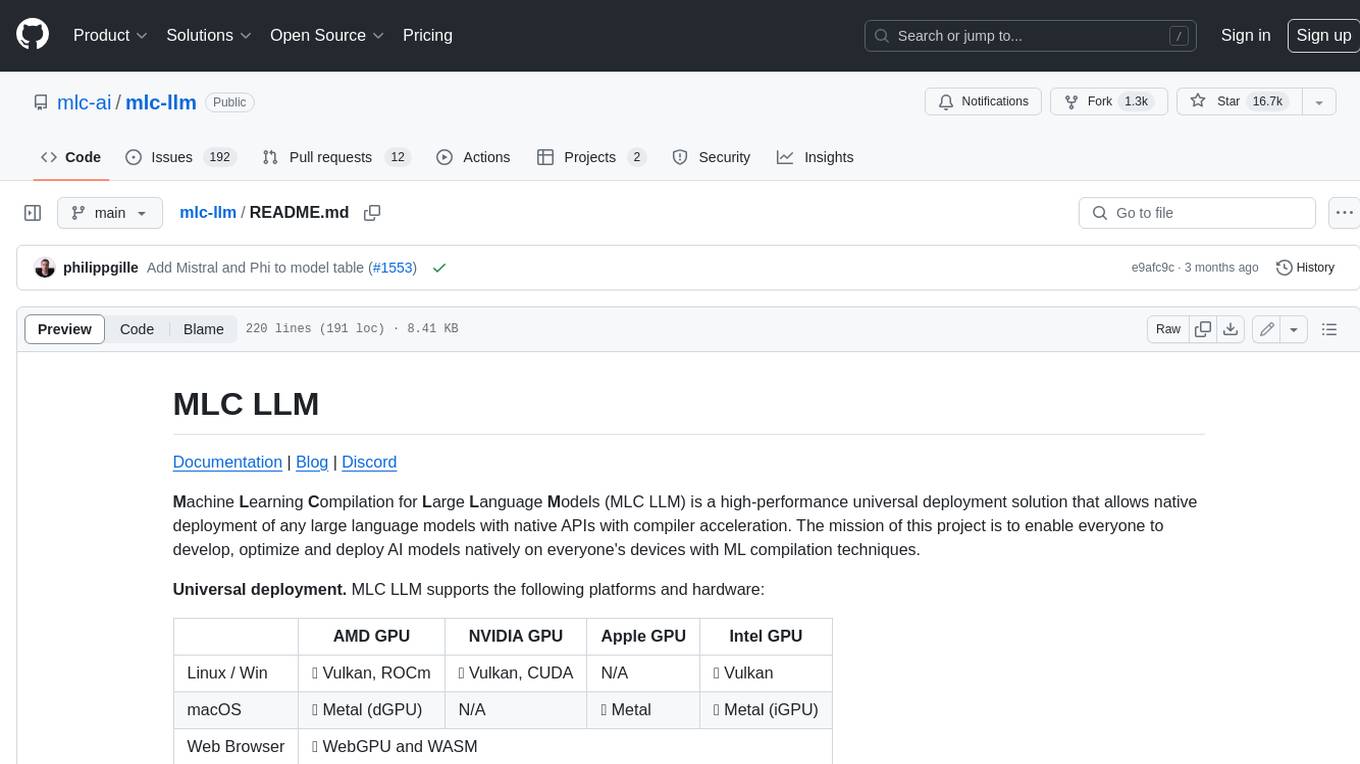
mlc-llm
MLC LLM is a high-performance universal deployment solution that allows native deployment of any large language models with native APIs with compiler acceleration. It supports a wide range of model architectures and variants, including Llama, GPT-NeoX, GPT-J, RWKV, MiniGPT, GPTBigCode, ChatGLM, StableLM, Mistral, and Phi. MLC LLM provides multiple sets of APIs across platforms and environments, including Python API, OpenAI-compatible Rest-API, C++ API, JavaScript API and Web LLM, Swift API for iOS App, and Java API and Android App.
crewAI
crewAI is a cutting-edge framework for orchestrating role-playing, autonomous AI agents. By fostering collaborative intelligence, CrewAI empowers agents to work together seamlessly, tackling complex tasks. It provides a flexible and structured approach to AI collaboration, enabling users to define agents with specific roles, goals, and tools, and assign them tasks within a customizable process. crewAI supports integration with various LLMs, including OpenAI, and offers features such as autonomous task delegation, flexible task management, and output parsing. It is open-source and welcomes contributions, with a focus on improving the library based on usage data collected through anonymous telemetry.
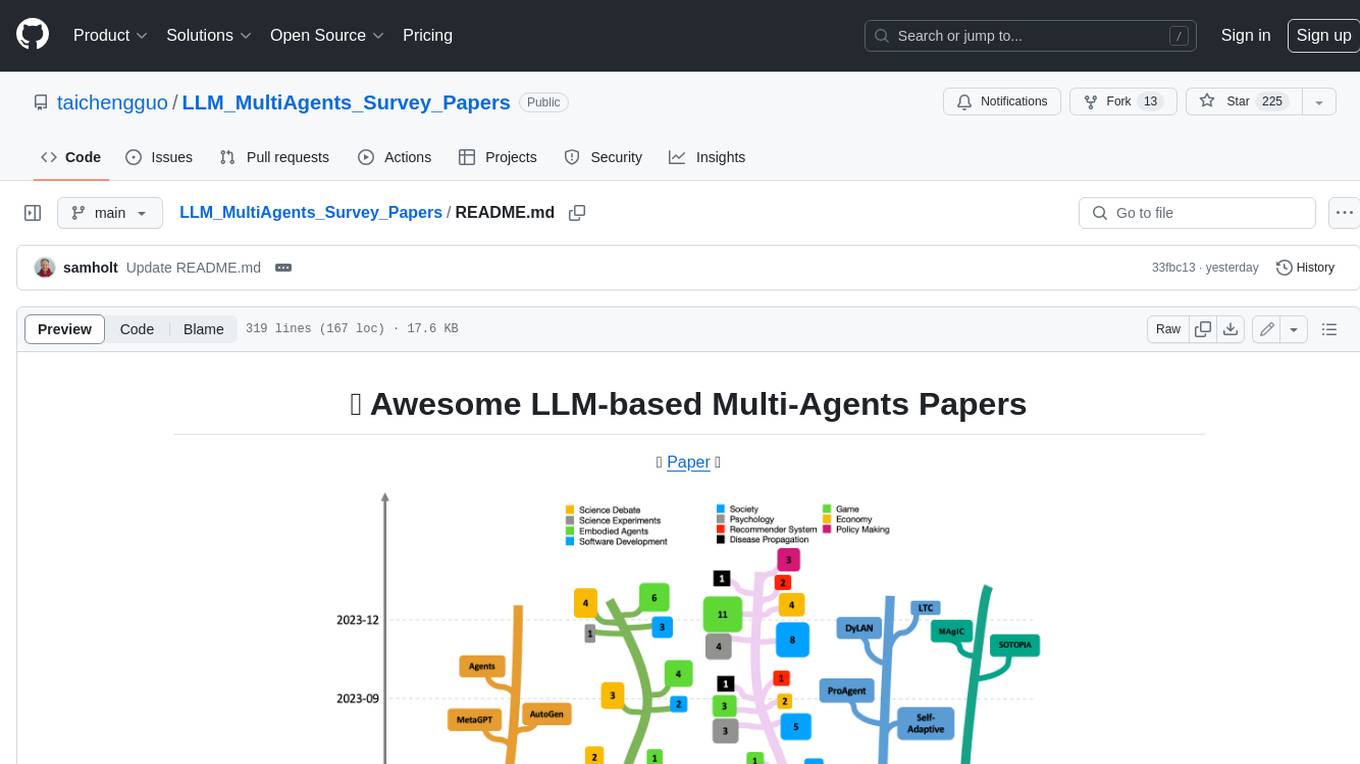
LLM_MultiAgents_Survey_Papers
This repository maintains a list of research papers on LLM-based Multi-Agents, categorized into five main streams: Multi-Agents Framework, Multi-Agents Orchestration and Efficiency, Multi-Agents for Problem Solving, Multi-Agents for World Simulation, and Multi-Agents Datasets and Benchmarks. The repository also includes a survey paper on LLM-based Multi-Agents and a table summarizing the key findings of the survey.
Awesome-LLM-Long-Context-Modeling
This repository includes papers and blogs about Efficient Transformers, Length Extrapolation, Long Term Memory, Retrieval Augmented Generation(RAG), and Evaluation for Long Context Modeling.
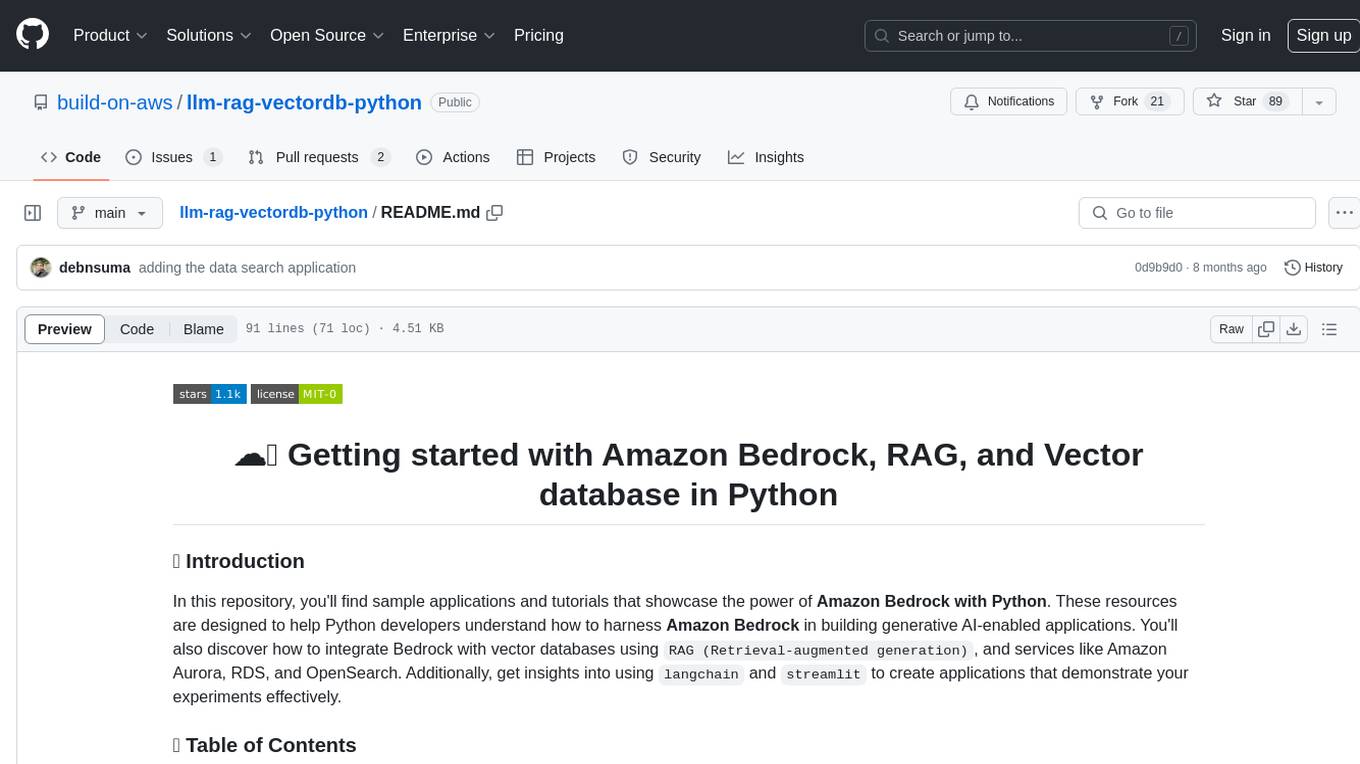
llm-rag-vectordb-python
This repository provides sample applications and tutorials to showcase the power of Amazon Bedrock with Python. It helps Python developers understand how to harness Amazon Bedrock in building generative AI-enabled applications. The resources also demonstrate integration with vector databases using RAG (Retrieval-augmented generation) and services like Amazon Aurora, RDS, and OpenSearch. Additionally, it explores using langchain and streamlit to create effective experimental applications.
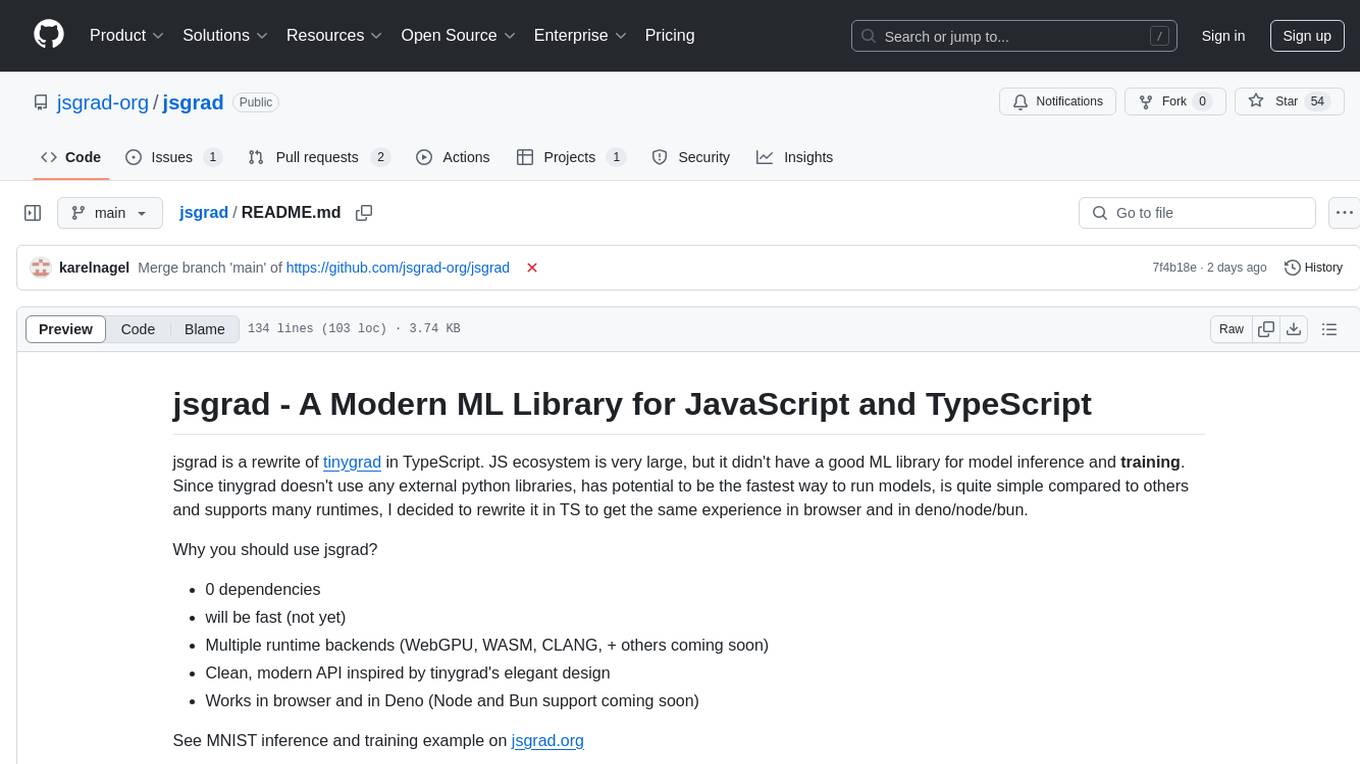
jsgrad
jsgrad is a modern ML library for JavaScript and TypeScript that aims to provide a fast and efficient way to run and train machine learning models. It is a rewrite of tinygrad in TypeScript, offering a clean and modern API with zero dependencies. The library supports multiple runtime backends such as WebGPU, WASM, and CLANG, making it versatile for various applications in browser and server environments. With a focus on simplicity and performance, jsgrad is designed to be easy to use for both model inference and training tasks.
sandbox-sdk
The Cloudflare Sandbox SDK allows users to build secure, isolated code execution environments on Cloudflare. It enables running untrusted code safely in isolated containers, executing commands, managing files, running background processes, and exposing services from Workers applications. Ideal for AI code execution, interactive development environments, data analysis platforms, CI/CD systems, and applications requiring secure code execution at the edge.
For similar jobs

AirGo
AirGo is a front and rear end separation, multi user, multi protocol proxy service management system, simple and easy to use. It supports vless, vmess, shadowsocks, and hysteria2.
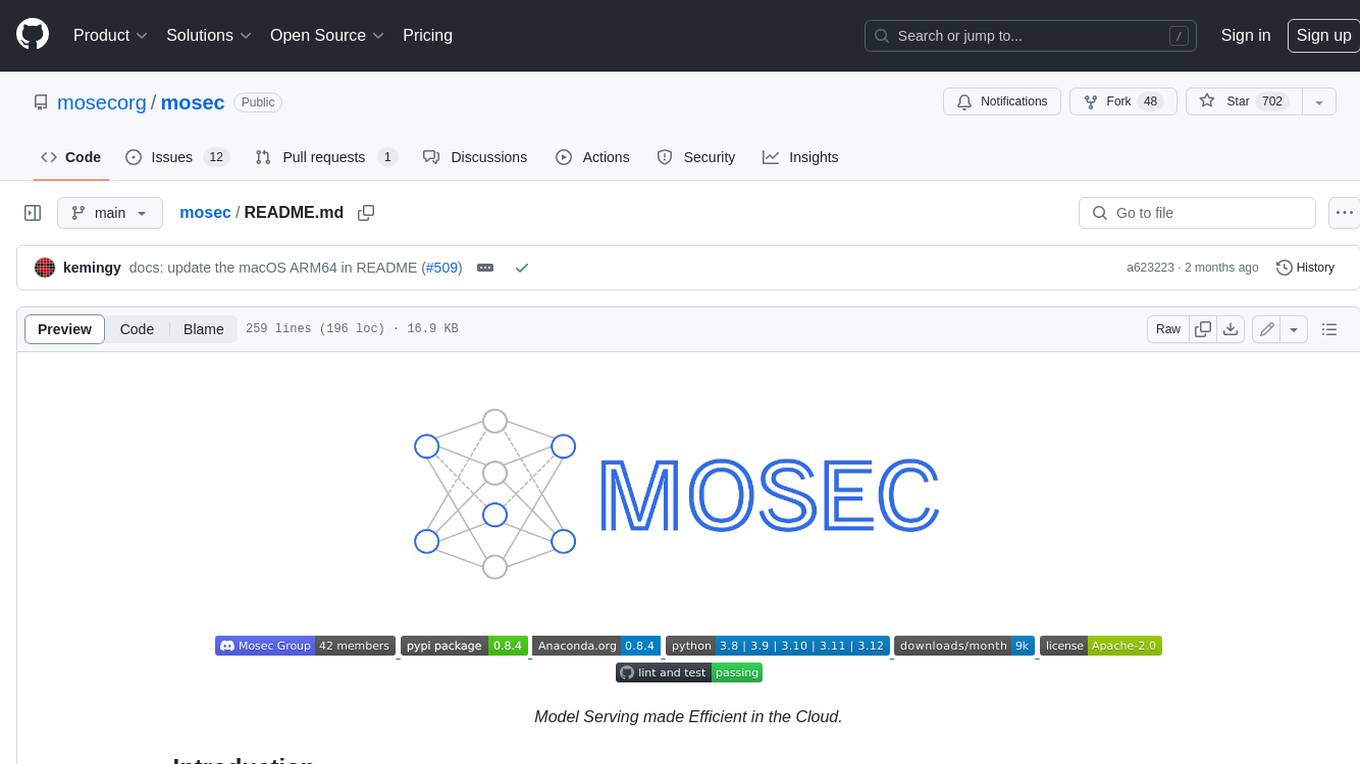
mosec
Mosec is a high-performance and flexible model serving framework for building ML model-enabled backend and microservices. It bridges the gap between any machine learning models you just trained and the efficient online service API. * **Highly performant** : web layer and task coordination built with Rust 🦀, which offers blazing speed in addition to efficient CPU utilization powered by async I/O * **Ease of use** : user interface purely in Python 🐍, by which users can serve their models in an ML framework-agnostic manner using the same code as they do for offline testing * **Dynamic batching** : aggregate requests from different users for batched inference and distribute results back * **Pipelined stages** : spawn multiple processes for pipelined stages to handle CPU/GPU/IO mixed workloads * **Cloud friendly** : designed to run in the cloud, with the model warmup, graceful shutdown, and Prometheus monitoring metrics, easily managed by Kubernetes or any container orchestration systems * **Do one thing well** : focus on the online serving part, users can pay attention to the model optimization and business logic
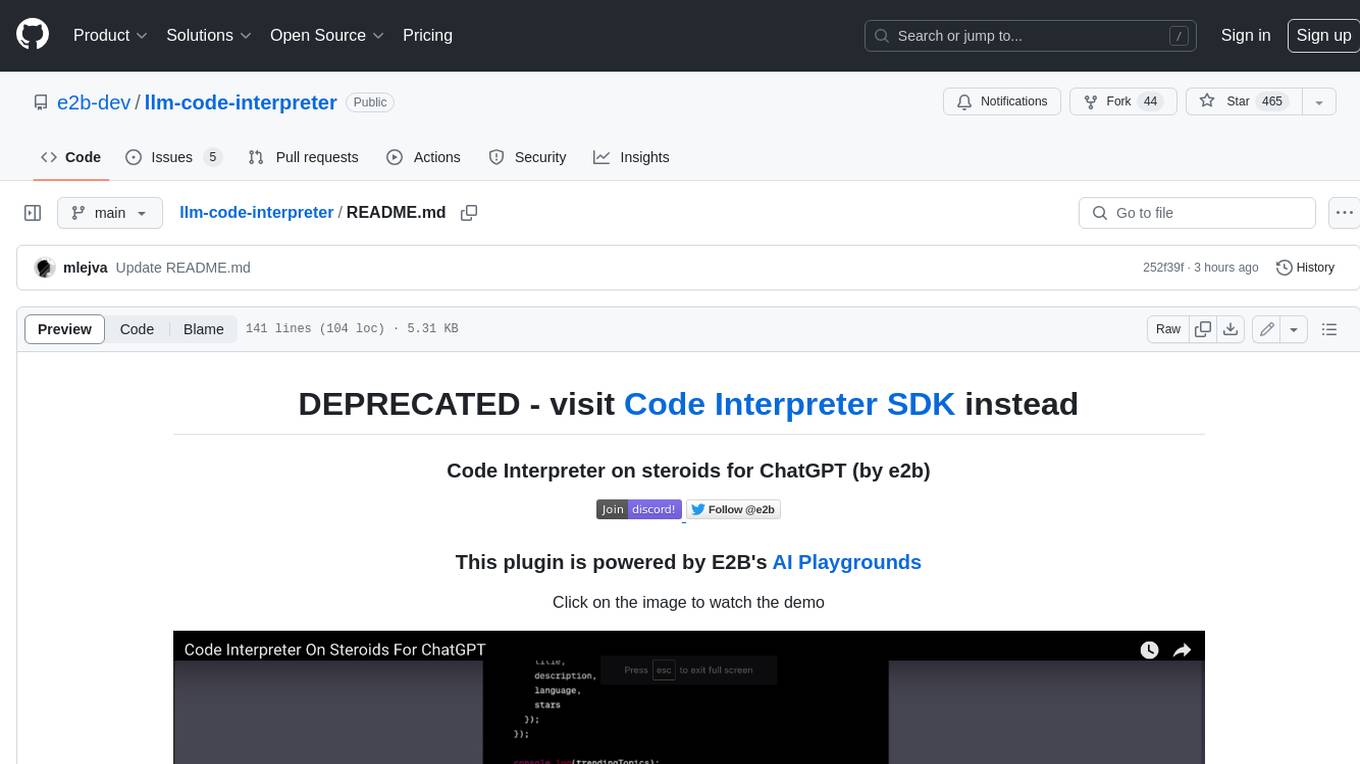
llm-code-interpreter
The 'llm-code-interpreter' repository is a deprecated plugin that provides a code interpreter on steroids for ChatGPT by E2B. It gives ChatGPT access to a sandboxed cloud environment with capabilities like running any code, accessing Linux OS, installing programs, using filesystem, running processes, and accessing the internet. The plugin exposes commands to run shell commands, read files, and write files, enabling various possibilities such as running different languages, installing programs, starting servers, deploying websites, and more. It is powered by the E2B API and is designed for agents to freely experiment within a sandboxed environment.

pezzo
Pezzo is a fully cloud-native and open-source LLMOps platform that allows users to observe and monitor AI operations, troubleshoot issues, save costs and latency, collaborate, manage prompts, and deliver AI changes instantly. It supports various clients for prompt management, observability, and caching. Users can run the full Pezzo stack locally using Docker Compose, with prerequisites including Node.js 18+, Docker, and a GraphQL Language Feature Support VSCode Extension. Contributions are welcome, and the source code is available under the Apache 2.0 License.
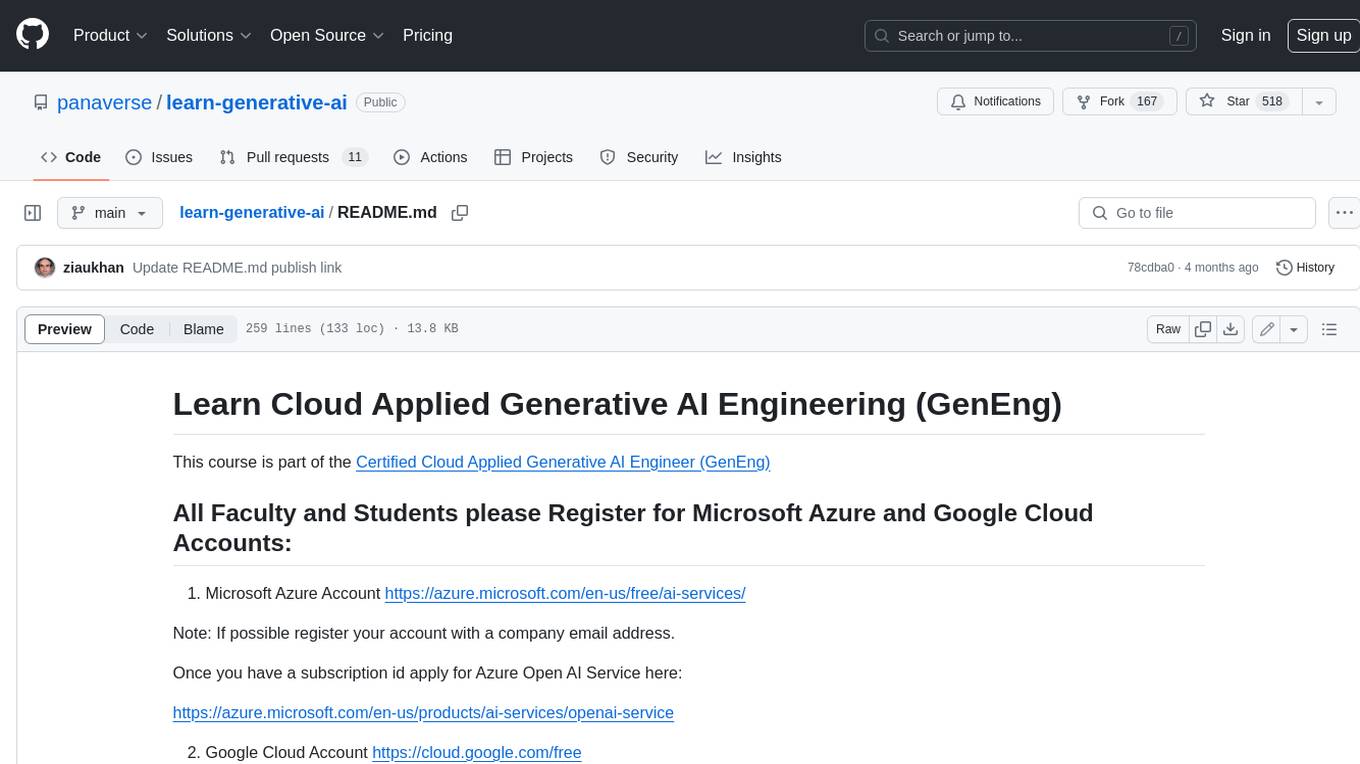
learn-generative-ai
Learn Cloud Applied Generative AI Engineering (GenEng) is a course focusing on the application of generative AI technologies in various industries. The course covers topics such as the economic impact of generative AI, the role of developers in adopting and integrating generative AI technologies, and the future trends in generative AI. Students will learn about tools like OpenAI API, LangChain, and Pinecone, and how to build and deploy Large Language Models (LLMs) for different applications. The course also explores the convergence of generative AI with Web 3.0 and its potential implications for decentralized intelligence.
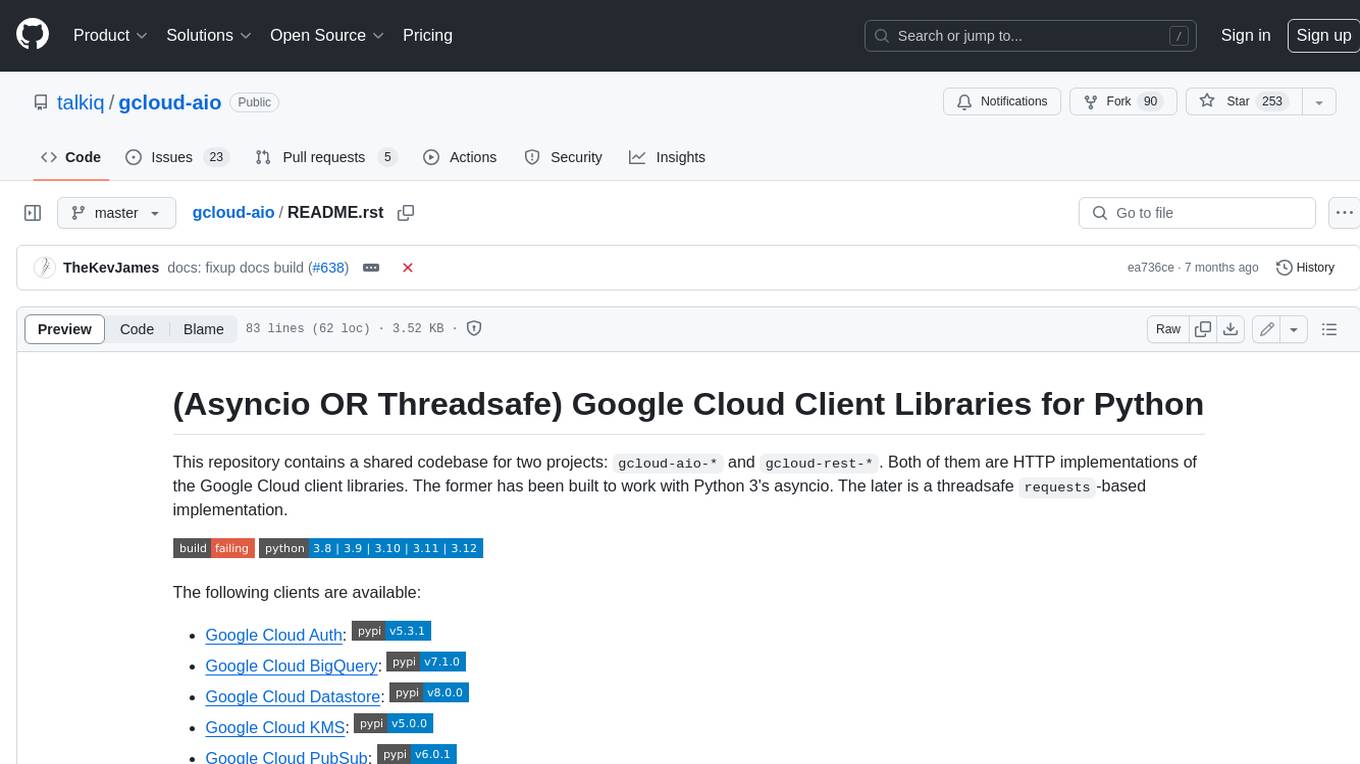
gcloud-aio
This repository contains shared codebase for two projects: gcloud-aio and gcloud-rest. gcloud-aio is built for Python 3's asyncio, while gcloud-rest is a threadsafe requests-based implementation. It provides clients for Google Cloud services like Auth, BigQuery, Datastore, KMS, PubSub, Storage, and Task Queue. Users can install the library using pip and refer to the documentation for usage details. Developers can contribute to the project by following the contribution guide.
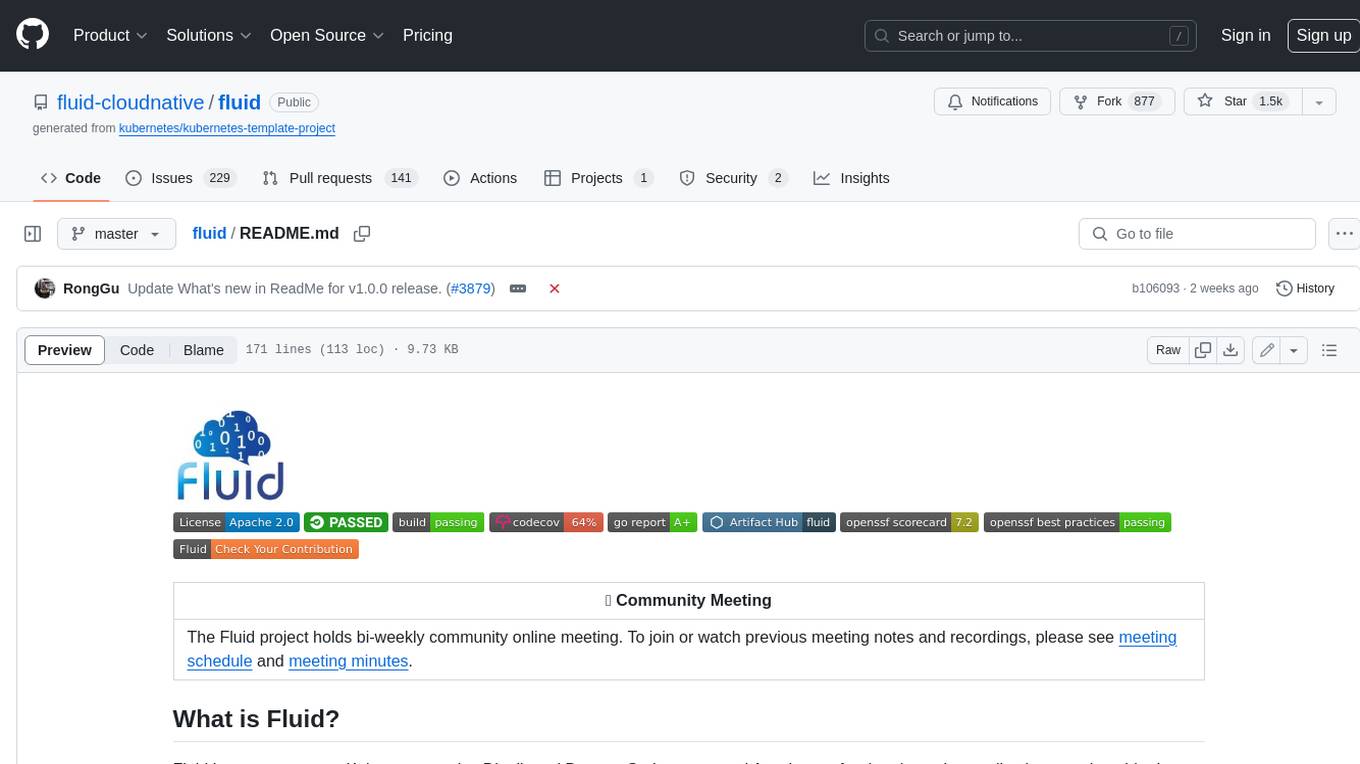
fluid
Fluid is an open source Kubernetes-native Distributed Dataset Orchestrator and Accelerator for data-intensive applications, such as big data and AI applications. It implements dataset abstraction, scalable cache runtime, automated data operations, elasticity and scheduling, and is runtime platform agnostic. Key concepts include Dataset and Runtime. Prerequisites include Kubernetes version > 1.16, Golang 1.18+, and Helm 3. The tool offers features like accelerating remote file accessing, machine learning, accelerating PVC, preloading dataset, and on-the-fly dataset cache scaling. Contributions are welcomed, and the project is under the Apache 2.0 license with a vendor-neutral approach.
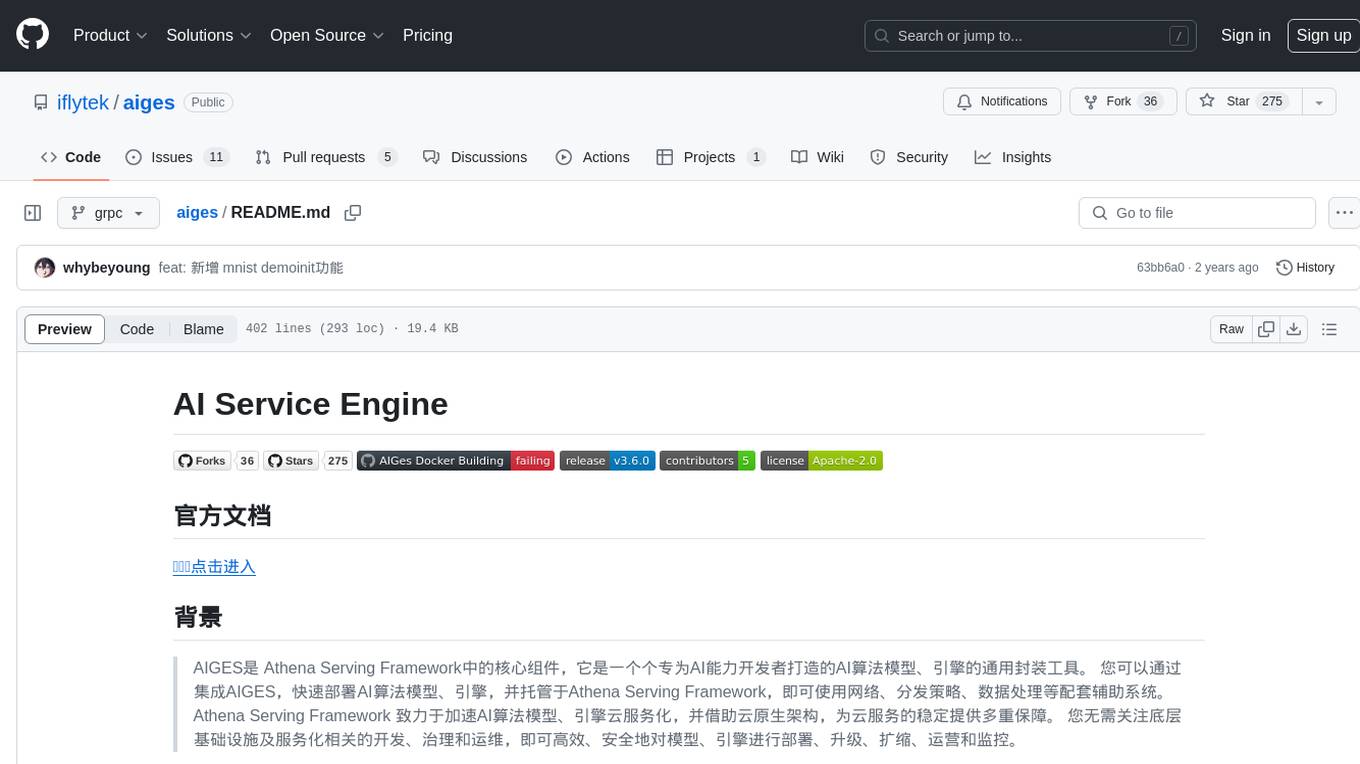
aiges
AIGES is a core component of the Athena Serving Framework, designed as a universal encapsulation tool for AI developers to deploy AI algorithm models and engines quickly. By integrating AIGES, you can deploy AI algorithm models and engines rapidly and host them on the Athena Serving Framework, utilizing supporting auxiliary systems for networking, distribution strategies, data processing, etc. The Athena Serving Framework aims to accelerate the cloud service of AI algorithm models and engines, providing multiple guarantees for cloud service stability through cloud-native architecture. You can efficiently and securely deploy, upgrade, scale, operate, and monitor models and engines without focusing on underlying infrastructure and service-related development, governance, and operations.