


solo-founder-superpowers
Complete software development lifecycle skills optimized for non-technical founders building SaaS applications with AI tools (Lovable, Replit, Claude Code).
Stars: 142
Solo Founder Superpowers is a comprehensive guide for non-technical founders building SaaS products with AI tools. It covers 43 expert skills across various aspects of planning, building, launching, and growing a software business. The repository provides actionable guides, checklists, and copy-paste prompts to assist founders in their entrepreneurial journey. Skills range from development and technical aspects to design, SEO, growth marketing, strategy, business operations, and more. The tool aims to empower solo founders with the necessary knowledge and resources to succeed in the competitive tech industry.
README:
43 expert skills for non-technical founders building SaaS with AI tools (Claude Code, Lovable, Replit, Cursor).
Covers the full lifecycle of planning, building, launching, and growing a software business — actionable guides, checklists, and copy-paste prompts.
Note: Installation differs by platform. Claude Code or Cursor have built-in plugin marketplaces. Codex and OpenCode require manual setup.
In Claude Code, register the marketplace first:
/plugin marketplace add whawkinsiv/solo-founder-superpowers
Then install the plugin from this marketplace:
/plugin install solo-founder-superpowers@solo-founder-superpowers-marketplace
In Cursor Agent chat, install from marketplace:
/plugin-add solo-founder-superpowers
Start a new session in your chosen platform and ask for something that should trigger a skill (for example, "help me validate this idea" or "help me plan this feature"). The agent should automatically invoke the relevant solo-founder-superpowers skill.
| Skill | What It Covers |
|---|---|
| build | AI-assisted dev workflows, tool selection (Claude Code, Lovable, Replit, Cursor) |
| database | Data modeling, schemas, relationships, Supabase/Firebase/Airtable setup |
| integrations | APIs, webhooks, Zapier/Make, connecting third-party services |
| ai-features | Adding AI/LLM capabilities to your product, cost management |
| deploy | Hosting selection, custom domains, environment variables, going live |
| secure | Security checklists, OWASP Top 10, auth and data protection |
| test | Test scenarios, edge cases, cross-browser testing |
| debug | Systematic debugging, error interpretation, diagnostics |
| optimize | Speed, code, database, and dependency optimization |
| monitor | Production monitoring, error alerts, incident response |
| Skill | What It Covers |
|---|---|
| design | Design systems, UI patterns, visual hierarchy, components, mobile-first |
| brand | Brand identity, color palettes, typography, logos, design tokens |
| navigation | App navigation, content hierarchy, menus, findability |
| onboarding | Onboarding flows, aha moments, activation rates, first-run UX |
| accessibility | WCAG compliance, ARIA, screen readers, keyboard navigation |
| Skill | What It Covers |
|---|---|
| seo | Keyword research, content calendars, on-page optimization |
| technical-seo | SEO audits, Core Web Vitals, GEO for AI search engines |
| content | Content strategy, build in public, audience building, distribution |
| copywriting | Headlines, CTAs, button text, error messages, UI copy |
| Skill | What It Covers |
|---|---|
| launch | Product Hunt, waitlists, beta programs, GTM sequencing |
| landing-page | Page structure, above-the-fold copy, conversion elements |
| growth | Product-led growth, viral loops, activation metrics, referrals |
| conversion | Funnel analysis, friction reduction, A/B testing |
| Email sequences, onboarding drips, behavioral triggers | |
| ads | Google Ads, ad copy, keyword selection, CAC/LTV optimization |
| sales | Cold outreach, prospect lists, landing the first 100 customers |
| social-media | Platform-specific tactics: Twitter/X, LinkedIn, Reddit, short-form video |
| community | Discord/Slack communities, user forums, community-led growth |
| Skill | What It Covers |
|---|---|
| plan | Turn ideas into buildable specs, MVPs, feature requirements |
| validate | Pre-build validation: smoke tests, fake door tests, concierge MVPs |
| customer-research | User interviews, JTBD framework, behavioral personas |
| market-research | Market sizing, competitor analysis, TAM/SAM/SOM |
| pricing | Pricing tiers, value metrics, psychology, monetization |
| prioritize | Feature prioritization, roadmaps, RICE scoring, MVP definition |
| feedback | Post-launch feedback collection, NPS, feature requests |
| analytics | Event tracking, funnels, key metrics, data quality |
| Skill | What It Covers |
|---|---|
| legal | Entity formation, ToS, Privacy Policy, compliance |
| finances | Financial models, unit economics, MRR/ARR/churn, burn rate |
| accounting | Bookkeeping, expense tracking, quarterly taxes, invoicing |
| payments | Stripe setup, subscriptions, billing, tax collection |
| hiring | Developer sourcing, vetting contractors, briefs, management |
| support | Help docs, knowledge bases, self-serve support |
| retention | Churn prevention, win-back campaigns, expansion revenue |
| Command | What It Does |
|---|---|
| improve-prompt | Transforms vague coding requests into detailed, specific prompts |
Skills are invoked automatically when Claude Code detects a relevant request, or manually:
/solo-founder-superpowers:plan
/solo-founder-superpowers:launch
/solo-founder-superpowers:payments
1. Validate   — validate, customer-research, market-research
2. Plan       — plan, prioritize, pricing, finances
3. Design     — design, brand, navigation
4. Build      — build, database, integrations, secure, test, debug
5. Deploy     — deploy, payments
6. Launch     — launch, landing-page, copywriting
7. Grow       — growth, content, seo, email, ads, social-media
8. Retain     — onboarding, retention, support, feedback
9. Scale      — optimize, monitor, analytics, ai-features, hiring
These skills assume Claude's intelligence — they focus on:
- Non-technical founder perspective and common mistakes
- Tool selection criteria (when to use Lovable vs Claude Code vs Replit)
- Actionable checklists and "Tell AI:" copy-paste prompts
- What's out of scope (preventing premature optimization)
- Concise, actionable content that avoids explaining concepts Claude already knows
Will Hawkins (@whawkinsiv)
For Tasks:
Click tags to check more tools for each tasksFor Jobs:
Alternative AI tools for solo-founder-superpowers
Similar Open Source Tools
solo-founder-superpowers
Solo Founder Superpowers is a comprehensive guide for non-technical founders building SaaS products with AI tools. It covers 43 expert skills across various aspects of planning, building, launching, and growing a software business. The repository provides actionable guides, checklists, and copy-paste prompts to assist founders in their entrepreneurial journey. Skills range from development and technical aspects to design, SEO, growth marketing, strategy, business operations, and more. The tool aims to empower solo founders with the necessary knowledge and resources to succeed in the competitive tech industry.
squirrelscan
Squirrelscan is a website audit tool designed for SEO, performance, and security audits. It offers 230+ rules across 21 categories, AI-native design for Claude Code and AI workflows, smart incremental crawling, and multiple output formats. It provides E-E-A-T auditing, crawl history tracking, and is developer-friendly with a CLI. Users can run audits in the terminal, integrate with AI coding agents, or pipe output to AI assistants. The tool is available for macOS, Linux, Windows, npm, and npx installations, and is suitable for autonomous AI workflows.
rhesis
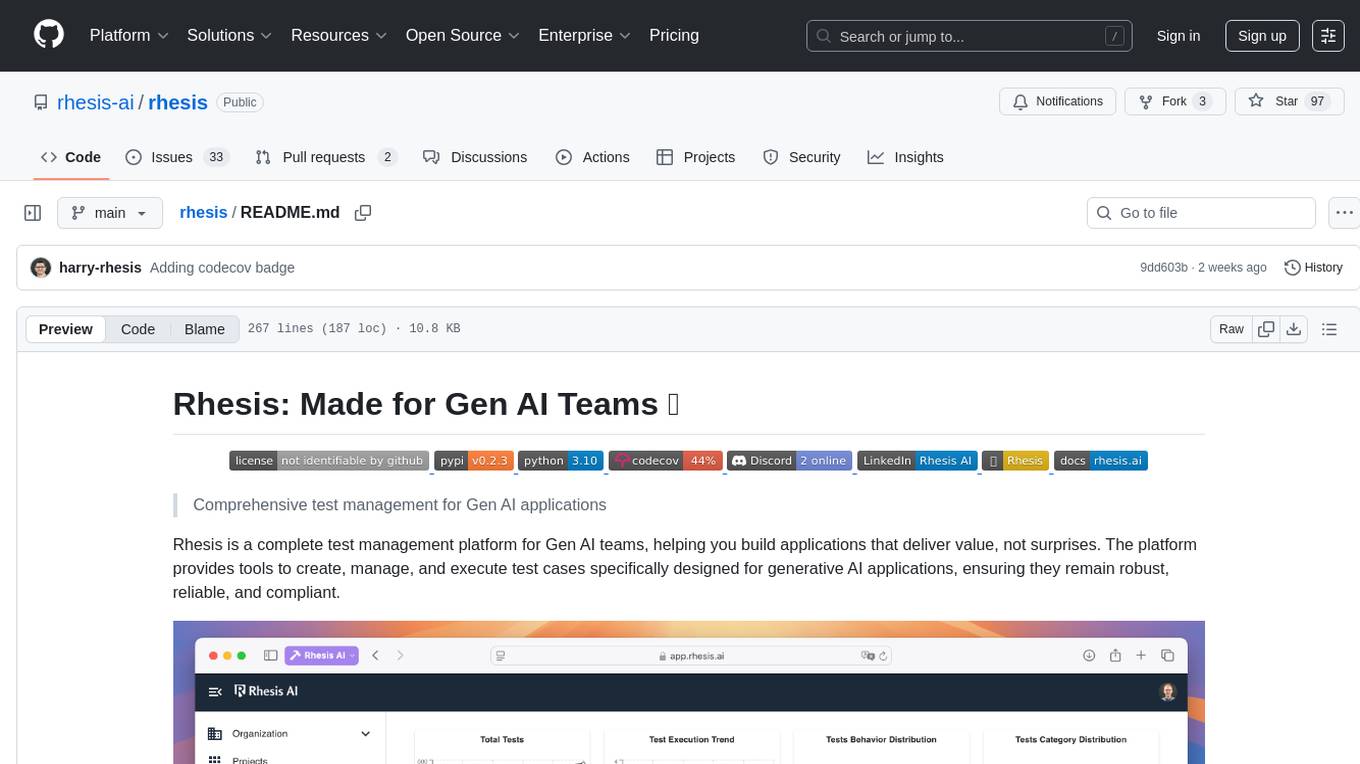
Rhesis is a comprehensive test management platform designed for Gen AI teams, offering tools to create, manage, and execute test cases for generative AI applications. It ensures the robustness, reliability, and compliance of AI systems through features like test set management, automated test generation, edge case discovery, compliance validation, integration capabilities, and performance tracking. The platform is open source, emphasizing community-driven development, transparency, extensible architecture, and democratizing AI safety. It includes components such as backend services, frontend applications, SDK for developers, worker services, chatbot applications, and Polyphemus for uncensored LLM service. Rhesis enables users to address challenges unique to testing generative AI applications, such as non-deterministic outputs, hallucinations, edge cases, ethical concerns, and compliance requirements.
BharatMLStack
BharatMLStack is a comprehensive, production-ready machine learning infrastructure platform designed to democratize ML capabilities across India and beyond. It provides a robust, scalable, and accessible ML stack empowering organizations to build, deploy, and manage machine learning solutions at massive scale. It includes core components like Horizon, Trufflebox UI, Online Feature Store, Go SDK, Python SDK, and Numerix, offering features such as control plane, ML management console, real-time features, mathematical compute engine, and more. The platform is production-ready, cloud agnostic, and offers observability through built-in monitoring and logging.
pai-opencode
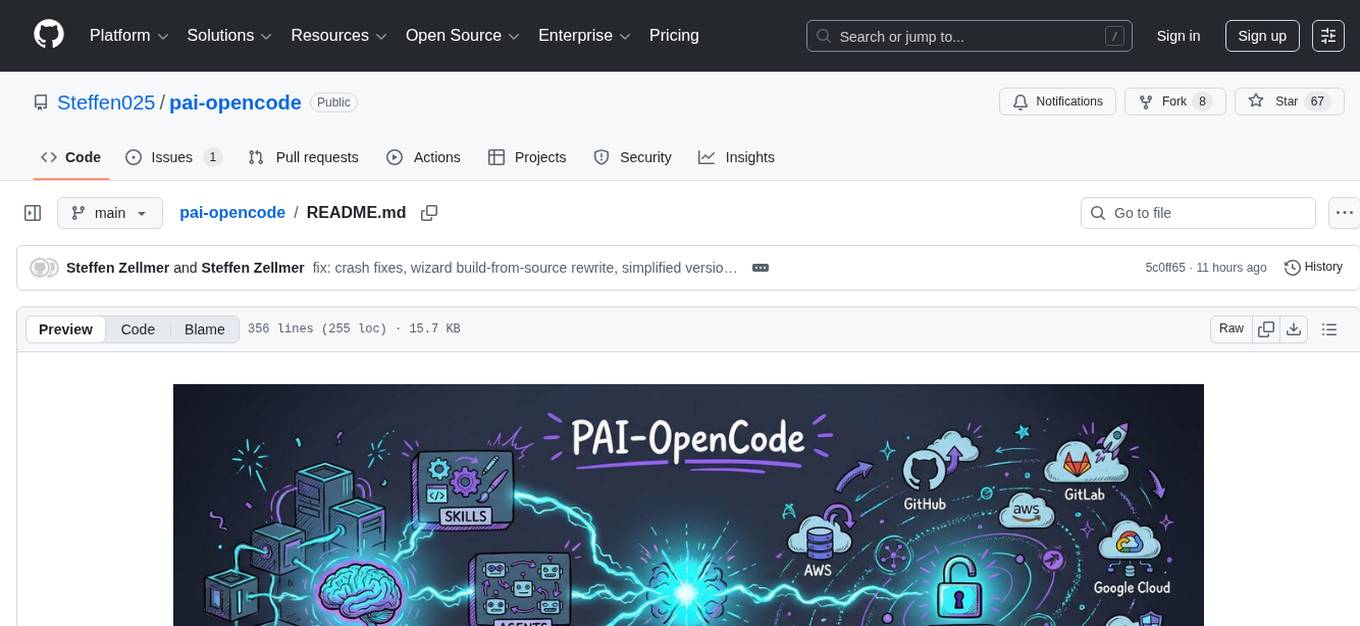
PAI-OpenCode is a complete port of Daniel Miessler's Personal AI Infrastructure (PAI) to OpenCode, an open-source, provider-agnostic AI coding assistant. It brings modular capabilities, dynamic multi-agent orchestration, session history, and lifecycle automation to personalize AI assistants for users. With support for 75+ AI providers, PAI-OpenCode offers dynamic per-task model routing, full PAI infrastructure, real-time session sharing, and multiple client options. The tool optimizes cost and quality with a 3-tier model strategy and a 3-tier research system, allowing users to switch presets for different routing strategies. PAI-OpenCode's architecture preserves PAI's design while adapting to OpenCode, documented through Architecture Decision Records (ADRs).

motia
Motia is an AI agent framework designed for software engineers to create, test, and deploy production-ready AI agents quickly. It provides a code-first approach, allowing developers to write agent logic in familiar languages and visualize execution in real-time. With Motia, developers can focus on business logic rather than infrastructure, offering zero infrastructure headaches, multi-language support, composable steps, built-in observability, instant APIs, and full control over AI logic. Ideal for building sophisticated agents and intelligent automations, Motia's event-driven architecture and modular steps enable the creation of GenAI-powered workflows, decision-making systems, and data processing pipelines.

Telco-AIX
Telco-AIX is a collaborative experimental workspace dedicated to exploring data-driven decision-making use-cases using open source AI capabilities and open datasets. The repository focuses on projects related to revenue assurance, fraud management, service assurance, latency predictions, 5G network operations, sustainability, energy efficiency, SecOps-AI for networking, AI-powered SmartGrid, IoT perimeter security, anomaly detection, root cause analysis, customer relationship management voice app, Starlink quality of experience predictions, and NoC AI augmentation for OSS.
camel
CAMEL is an open-source library designed for the study of autonomous and communicative agents. We believe that studying these agents on a large scale offers valuable insights into their behaviors, capabilities, and potential risks. To facilitate research in this field, we implement and support various types of agents, tasks, prompts, models, and simulated environments.
netdata
Netdata is an open-source, real-time infrastructure monitoring platform that provides instant insights, zero configuration deployment, ML-powered anomaly detection, efficient monitoring with minimal resource usage, and secure & distributed data storage. It offers real-time, per-second updates and clear insights at a glance. Netdata's origin story involves addressing the limitations of existing monitoring tools and led to a fundamental shift in infrastructure monitoring. It is recognized as the most energy-efficient tool for monitoring Docker-based systems according to a study by the University of Amsterdam.
Evaluator
NeMo Evaluator SDK is an open-source platform for robust, reproducible, and scalable evaluation of Large Language Models. It enables running hundreds of benchmarks across popular evaluation harnesses against any OpenAI-compatible model API. The platform ensures auditable and trustworthy results by executing evaluations in open-source Docker containers. NeMo Evaluator SDK is built on four core principles: Reproducibility by Default, Scale Anywhere, State-of-the-Art Benchmarking, and Extensible and Customizable.
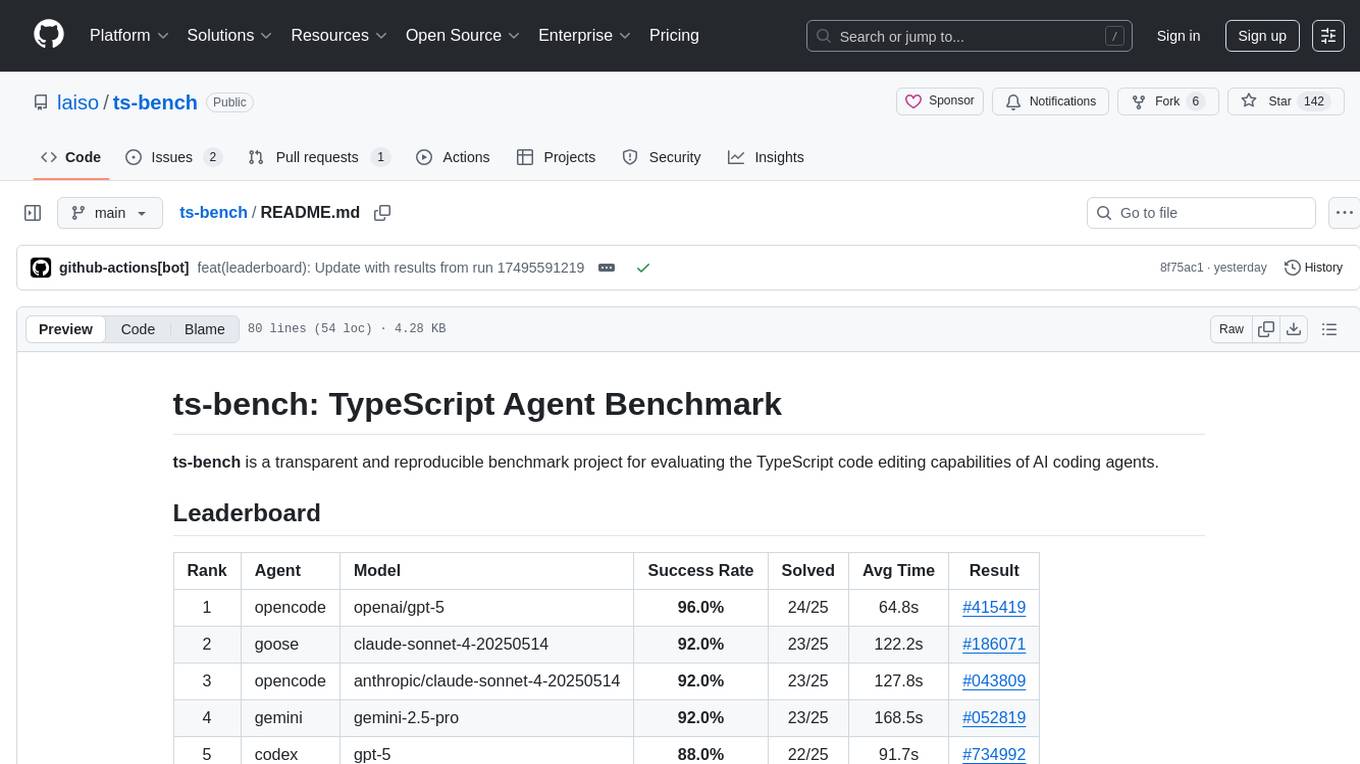
ts-bench
TS-Bench is a performance benchmarking tool for TypeScript projects. It provides detailed insights into the performance of TypeScript code, helping developers optimize their projects. With TS-Bench, users can measure and compare the execution time of different code snippets, functions, or modules. The tool offers a user-friendly interface for running benchmarks and analyzing the results. TS-Bench is a valuable asset for developers looking to enhance the performance of their TypeScript applications.
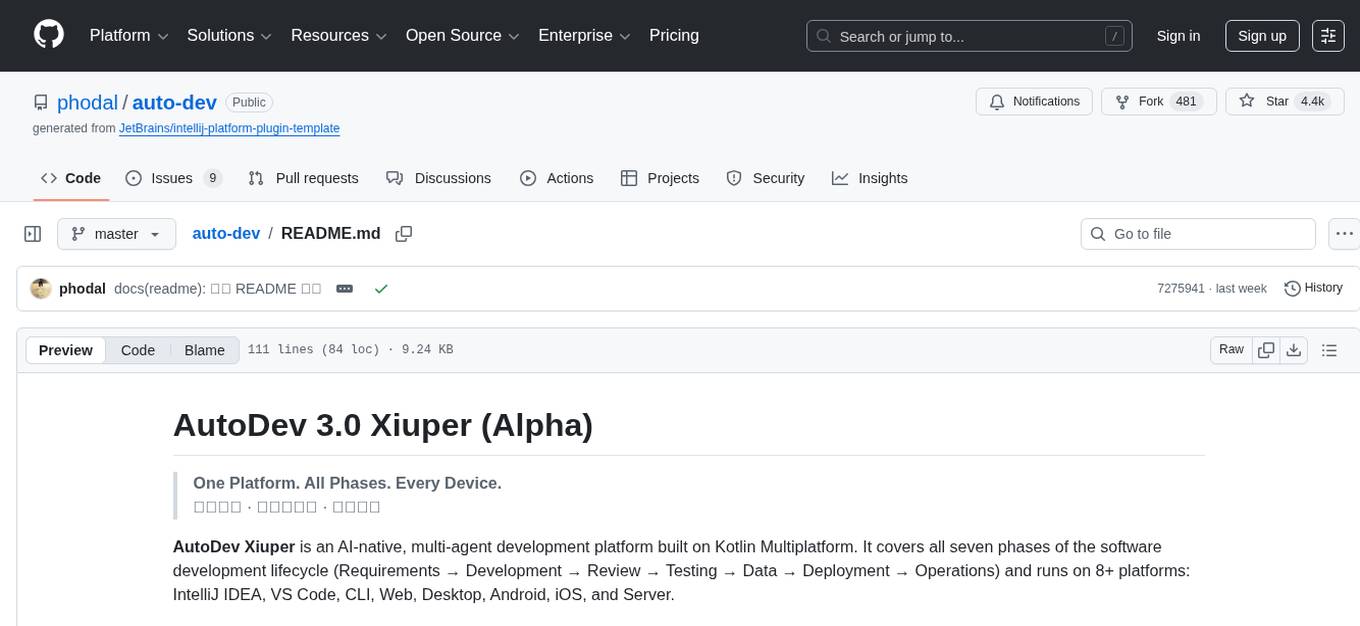
auto-dev
AutoDev Xiuper is an AI-native, multi-agent development platform built on Kotlin Multiplatform. It covers all seven phases of the software development lifecycle and runs on 8+ platforms. The platform provides a unified architecture for writing code once and running it anywhere, with specialized agents for each phase of development. It supports various devices including IntelliJ IDEA, VS Code, CLI, Web, Desktop, Android, iOS, and Server. The platform also offers features like Multi-LLM support, DevIns language for workflow automation, MCP Protocol for extensible tool ecosystem, and code intelligence for multiple programming languages.
runtime
Exosphere is a lightweight runtime designed to make AI agents resilient to failure and enable infinite scaling across distributed compute. It provides a powerful foundation for building and orchestrating AI applications with features such as lightweight runtime, inbuilt failure handling, infinite parallel agents, dynamic execution graphs, native state persistence, and observability. Whether you're working on data pipelines, AI agents, or complex workflow orchestrations, Exosphere offers the infrastructure backbone to make your AI applications production-ready and scalable.
llm4ad
LLM4AD is an open-source Python-based platform leveraging Large Language Models (LLMs) for Automatic Algorithm Design (AD). It provides unified interfaces for methods, tasks, and LLMs, along with features like evaluation acceleration, secure evaluation, logs, GUI support, and more. The platform was originally developed for optimization tasks but is versatile enough to be used in other areas such as machine learning, science discovery, game theory, and engineering design. It offers various search methods and algorithm design tasks across different domains. LLM4AD supports remote LLM API, local HuggingFace LLM deployment, and custom LLM interfaces. The project is licensed under the MIT License and welcomes contributions, collaborations, and issue reports.
spark-nlp
Spark NLP is a state-of-the-art Natural Language Processing library built on top of Apache Spark. It provides simple, performant, and accurate NLP annotations for machine learning pipelines that scale easily in a distributed environment. Spark NLP comes with 36000+ pretrained pipelines and models in more than 200+ languages. It offers tasks such as Tokenization, Word Segmentation, Part-of-Speech Tagging, Named Entity Recognition, Dependency Parsing, Spell Checking, Text Classification, Sentiment Analysis, Token Classification, Machine Translation, Summarization, Question Answering, Table Question Answering, Text Generation, Image Classification, Image to Text (captioning), Automatic Speech Recognition, Zero-Shot Learning, and many more NLP tasks. Spark NLP is the only open-source NLP library in production that offers state-of-the-art transformers such as BERT, CamemBERT, ALBERT, ELECTRA, XLNet, DistilBERT, RoBERTa, DeBERTa, XLM-RoBERTa, Longformer, ELMO, Universal Sentence Encoder, Llama-2, M2M100, BART, Instructor, E5, Google T5, MarianMT, OpenAI GPT2, Vision Transformers (ViT), OpenAI Whisper, and many more not only to Python and R, but also to JVM ecosystem (Java, Scala, and Kotlin) at scale by extending Apache Spark natively.
flow-like
Flow-Like is an enterprise-grade workflow operating system built upon Rust for uncompromising performance, efficiency, and code safety. It offers a modular frontend for apps, a rich set of events, a node catalog, a powerful no-code workflow IDE, and tools to manage teams, templates, and projects within organizations. With typed workflows, users can create complex, large-scale workflows with clear data origins, transformations, and contracts. Flow-Like is designed to automate any process through seamless integration of LLM, ML-based, and deterministic decision-making instances.
For similar tasks
solo-founder-superpowers
Solo Founder Superpowers is a comprehensive guide for non-technical founders building SaaS products with AI tools. It covers 43 expert skills across various aspects of planning, building, launching, and growing a software business. The repository provides actionable guides, checklists, and copy-paste prompts to assist founders in their entrepreneurial journey. Skills range from development and technical aspects to design, SEO, growth marketing, strategy, business operations, and more. The tool aims to empower solo founders with the necessary knowledge and resources to succeed in the competitive tech industry.
For similar jobs
Azure-Analytics-and-AI-Engagement
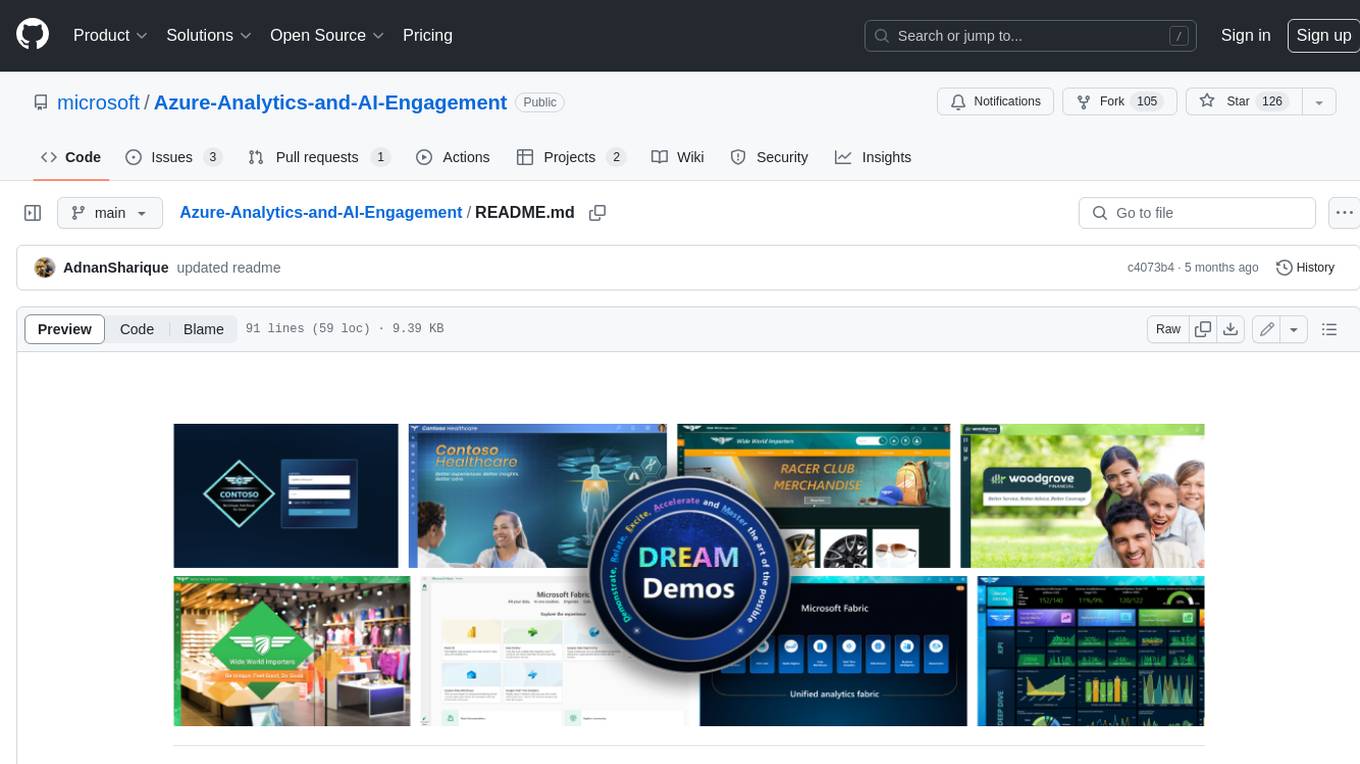
The Azure-Analytics-and-AI-Engagement repository provides packaged Industry Scenario DREAM Demos with ARM templates (Containing a demo web application, Power BI reports, Synapse resources, AML Notebooks etc.) that can be deployed in a customer’s subscription using the CAPE tool within a matter of few hours. Partners can also deploy DREAM Demos in their own subscriptions using DPoC.
skyvern
Skyvern automates browser-based workflows using LLMs and computer vision. It provides a simple API endpoint to fully automate manual workflows, replacing brittle or unreliable automation solutions. Traditional approaches to browser automations required writing custom scripts for websites, often relying on DOM parsing and XPath-based interactions which would break whenever the website layouts changed. Instead of only relying on code-defined XPath interactions, Skyvern adds computer vision and LLMs to the mix to parse items in the viewport in real-time, create a plan for interaction and interact with them. This approach gives us a few advantages: 1. Skyvern can operate on websites it’s never seen before, as it’s able to map visual elements to actions necessary to complete a workflow, without any customized code 2. Skyvern is resistant to website layout changes, as there are no pre-determined XPaths or other selectors our system is looking for while trying to navigate 3. Skyvern leverages LLMs to reason through interactions to ensure we can cover complex situations. Examples include: 1. If you wanted to get an auto insurance quote from Geico, the answer to a common question “Were you eligible to drive at 18?” could be inferred from the driver receiving their license at age 16 2. If you were doing competitor analysis, it’s understanding that an Arnold Palmer 22 oz can at 7/11 is almost definitely the same product as a 23 oz can at Gopuff (even though the sizes are slightly different, which could be a rounding error!) Want to see examples of Skyvern in action? Jump to #real-world-examples-of- skyvern
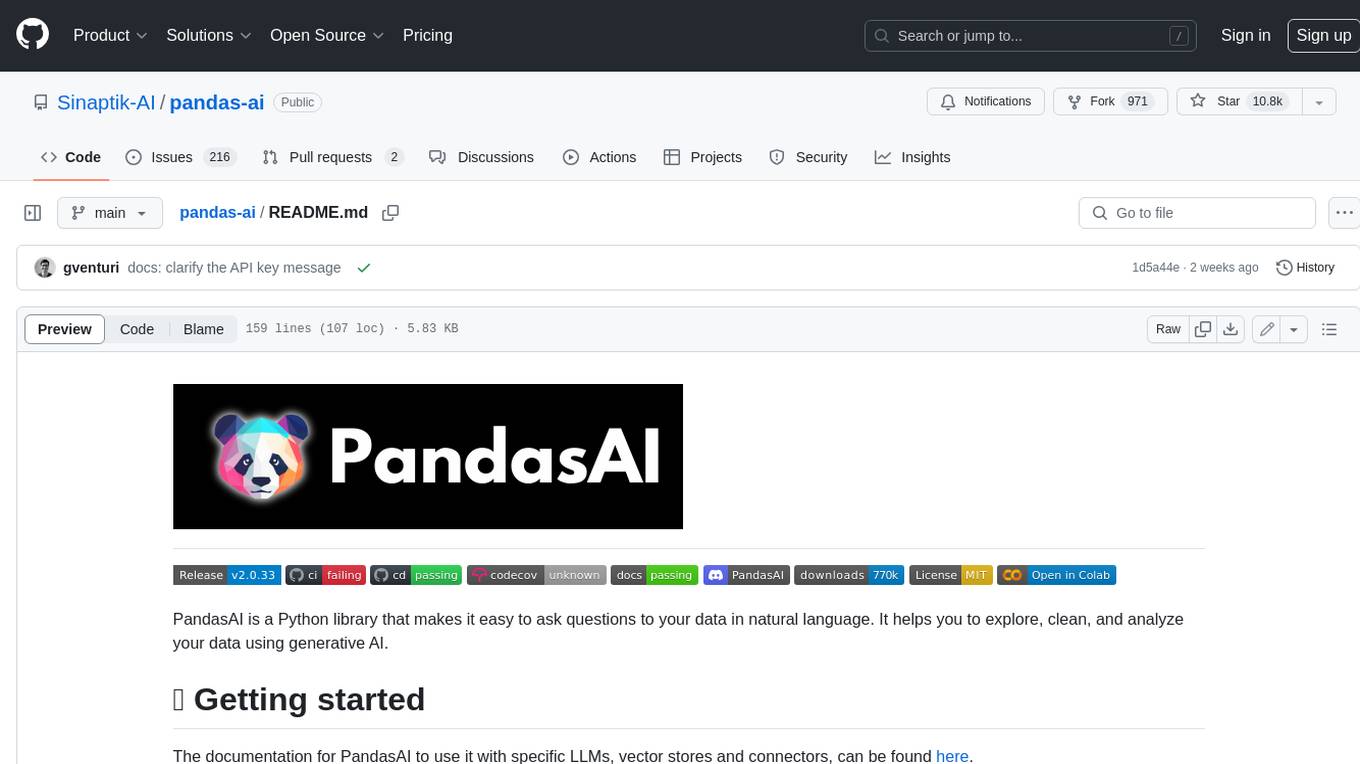
pandas-ai
PandasAI is a Python library that makes it easy to ask questions to your data in natural language. It helps you to explore, clean, and analyze your data using generative AI.
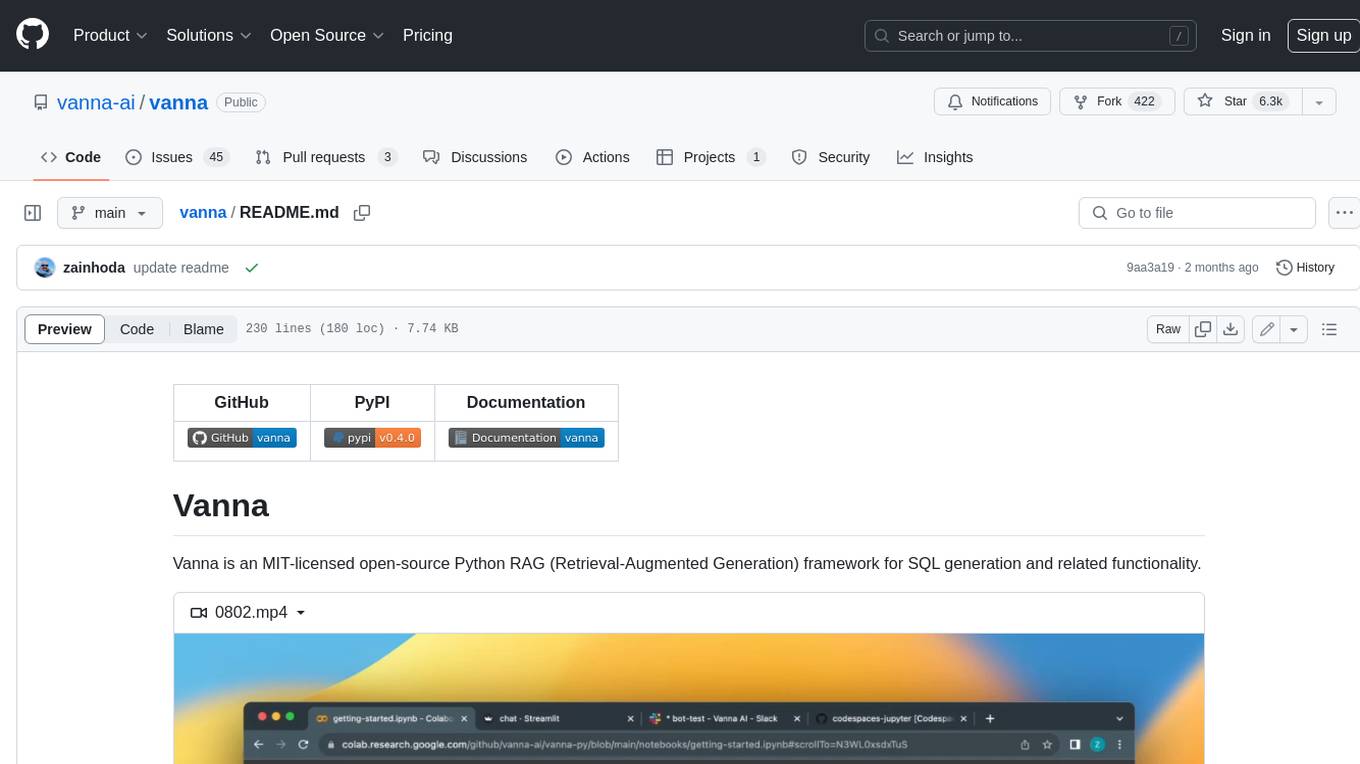
vanna
Vanna is an open-source Python framework for SQL generation and related functionality. It uses Retrieval-Augmented Generation (RAG) to train a model on your data, which can then be used to ask questions and get back SQL queries. Vanna is designed to be portable across different LLMs and vector databases, and it supports any SQL database. It is also secure and private, as your database contents are never sent to the LLM or the vector database.
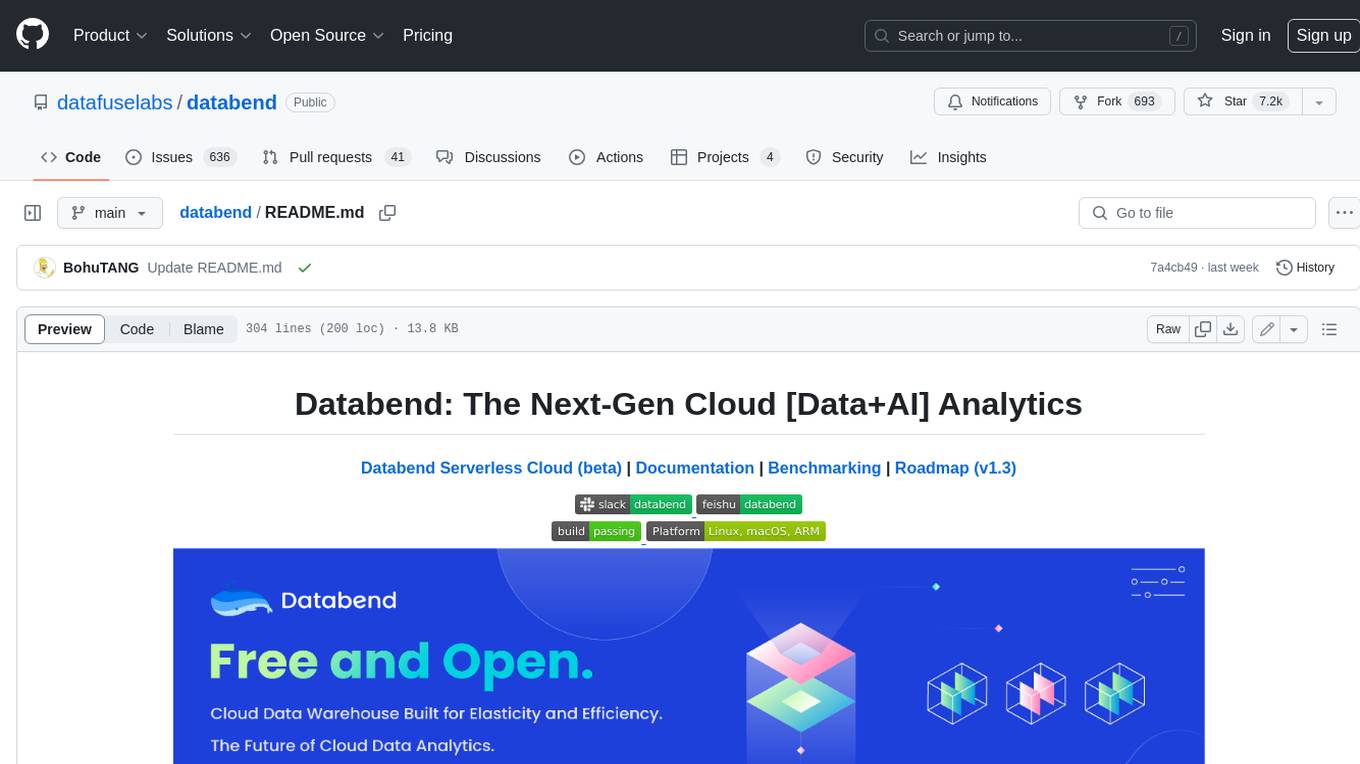
databend
Databend is an open-source cloud data warehouse that serves as a cost-effective alternative to Snowflake. With its focus on fast query execution and data ingestion, it's designed for complex analysis of the world's largest datasets.
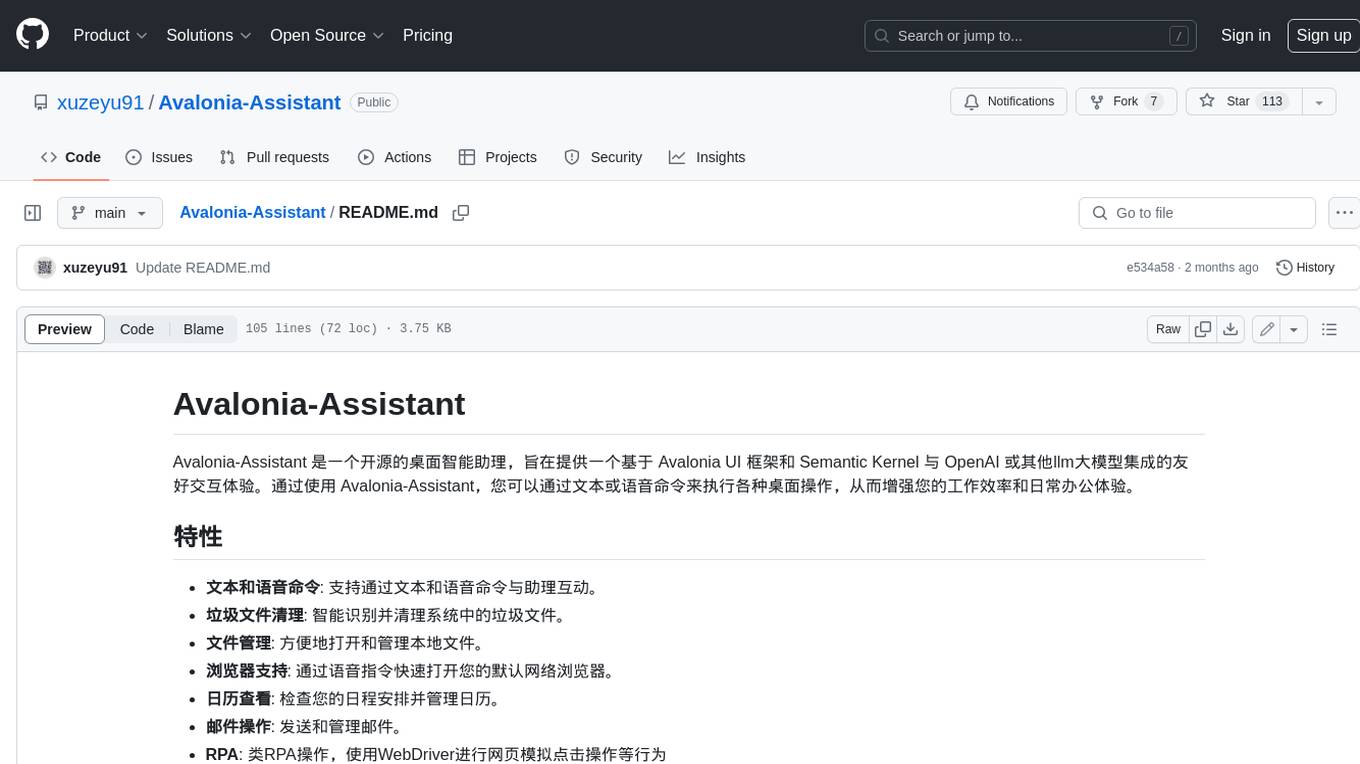
Avalonia-Assistant
Avalonia-Assistant is an open-source desktop intelligent assistant that aims to provide a user-friendly interactive experience based on the Avalonia UI framework and the integration of Semantic Kernel with OpenAI or other large LLM models. By utilizing Avalonia-Assistant, you can perform various desktop operations through text or voice commands, enhancing your productivity and daily office experience.
marvin
Marvin is a lightweight AI toolkit for building natural language interfaces that are reliable, scalable, and easy to trust. Each of Marvin's tools is simple and self-documenting, using AI to solve common but complex challenges like entity extraction, classification, and generating synthetic data. Each tool is independent and incrementally adoptable, so you can use them on their own or in combination with any other library. Marvin is also multi-modal, supporting both image and audio generation as well using images as inputs for extraction and classification. Marvin is for developers who care more about _using_ AI than _building_ AI, and we are focused on creating an exceptional developer experience. Marvin users should feel empowered to bring tightly-scoped "AI magic" into any traditional software project with just a few extra lines of code. Marvin aims to merge the best practices for building dependable, observable software with the best practices for building with generative AI into a single, easy-to-use library. It's a serious tool, but we hope you have fun with it. Marvin is open-source, free to use, and made with 💙 by the team at Prefect.
activepieces
Activepieces is an open source replacement for Zapier, designed to be extensible through a type-safe pieces framework written in Typescript. It features a user-friendly Workflow Builder with support for Branches, Loops, and Drag and Drop. Activepieces integrates with Google Sheets, OpenAI, Discord, and RSS, along with 80+ other integrations. The list of supported integrations continues to grow rapidly, thanks to valuable contributions from the community. Activepieces is an open ecosystem; all piece source code is available in the repository, and they are versioned and published directly to npmjs.com upon contributions. If you cannot find a specific piece on the pieces roadmap, please submit a request by visiting the following link: Request Piece Alternatively, if you are a developer, you can quickly build your own piece using our TypeScript framework. For guidance, please refer to the following guide: Contributor's Guide