


openclaw.ai
Website of openclaw.ai
Stars: 173
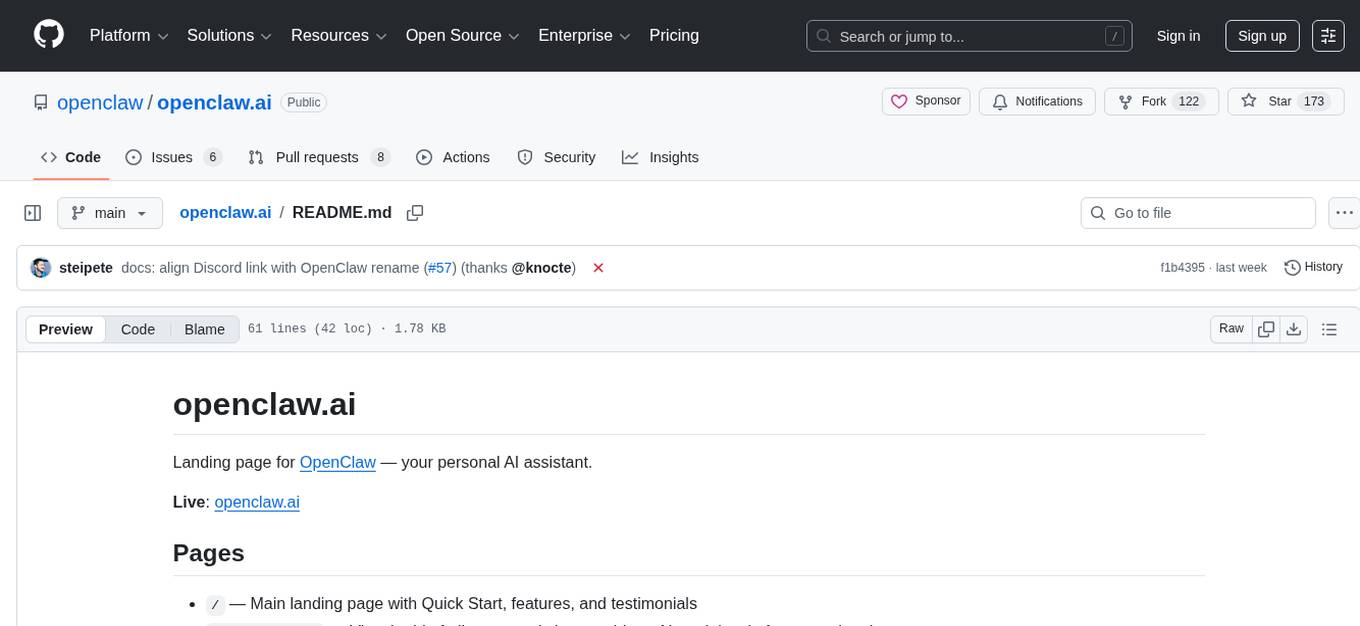
OpenClaw.ai is a landing page for OpenClaw, a personal AI assistant. The page includes Quick Start, features, testimonials, and a visual grid of supported chat providers, AI models, platforms, and tools. It is built using Astro as the static site generator and hosted on GitHub Pages with custom CSS. The landing page also provides installer scripts for macOS, Linux, and Windows, along with UI controls for installation options and automation. OpenClaw.ai is automatically deployed to GitHub Pages on push to the main branch.
README:
Landing page for OpenClaw — your personal AI assistant.
Live: openclaw.ai
-
/— Main landing page with Quick Start, features, and testimonials -
/integrations— Visual grid of all supported chat providers, AI models, platforms, and tools -
/shoutouts— Community testimonials and mentions
- Astro — Static site generator
- GitHub Pages — Hosting
- Custom CSS — No framework, just vibes
bun install
bun run devbun run build
bun run previewAutomatically deployed to GitHub Pages on push to main.
The landing page hosts installer scripts:
-
macOS/Linux:
curl -fsSL --proto '=https' --tlsv1.2 https://openclaw.ai/install.sh | bash -
macOS/Linux (CLI only, no onboarding):
curl -fsSL --proto '=https' --tlsv1.2 https://openclaw.ai/install-cli.sh | bash -
Windows:
iwr -useb https://openclaw.ai/install.ps1 | iex
Installer UI controls (macOS/Linux install.sh):
- Pass
--gumto force gum UI when supported, or--no-gumto disable gum output. - Set
OPENCLAW_USE_GUM=auto|1|0to control gum behavior in automation. - Compatibility alias:
CLAWDBOT_USE_GUM(mapped toOPENCLAW_USE_GUM).
These scripts:
- Install Homebrew (macOS) or detect package managers (Windows)
- Install Node.js 22+ if needed
- Install openclaw globally via npm
- Run
openclaw doctor --non-interactivefor migrations (upgrades only) - Prompt to run
openclaw onboard(new installs)
For Tasks:
Click tags to check more tools for each tasksFor Jobs:
Alternative AI tools for openclaw.ai
Similar Open Source Tools
openclaw.ai
OpenClaw.ai is a landing page for OpenClaw, a personal AI assistant. The page includes Quick Start, features, testimonials, and a visual grid of supported chat providers, AI models, platforms, and tools. It is built using Astro as the static site generator and hosted on GitHub Pages with custom CSS. The landing page also provides installer scripts for macOS, Linux, and Windows, along with UI controls for installation options and automation. OpenClaw.ai is automatically deployed to GitHub Pages on push to the main branch.
amazon-q-developer-cli
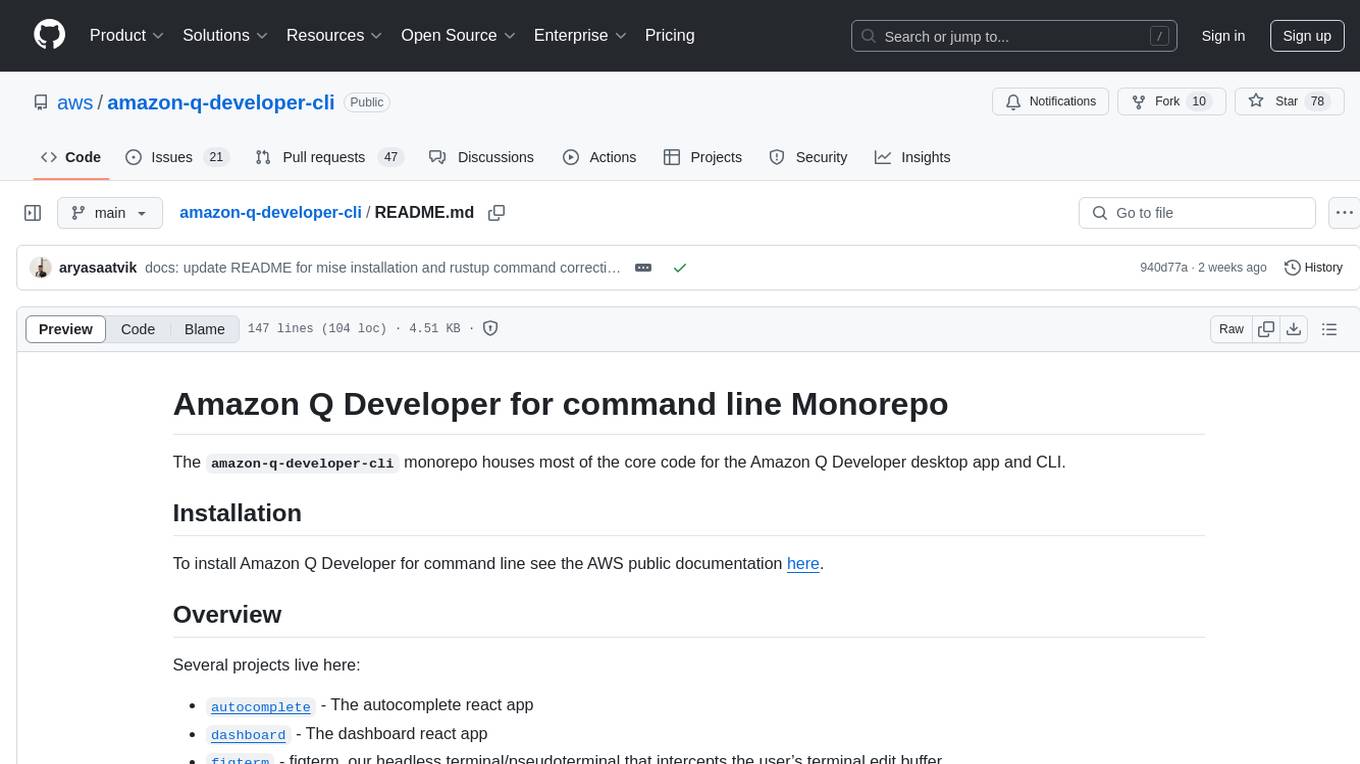
The `amazon-q-developer-cli` monorepo houses core code for the Amazon Q Developer desktop app and CLI. It includes projects like autocomplete, dashboard, figterm, q CLI, fig_desktop, fig_input_method, VSCode plugin, and JetBrains plugin. The repo also contains build scripts, internal rust crates, internal npm packages, protocol buffer message specification, and integration tests. The architecture involves different components communicating via IPC.
backend.ai-webui
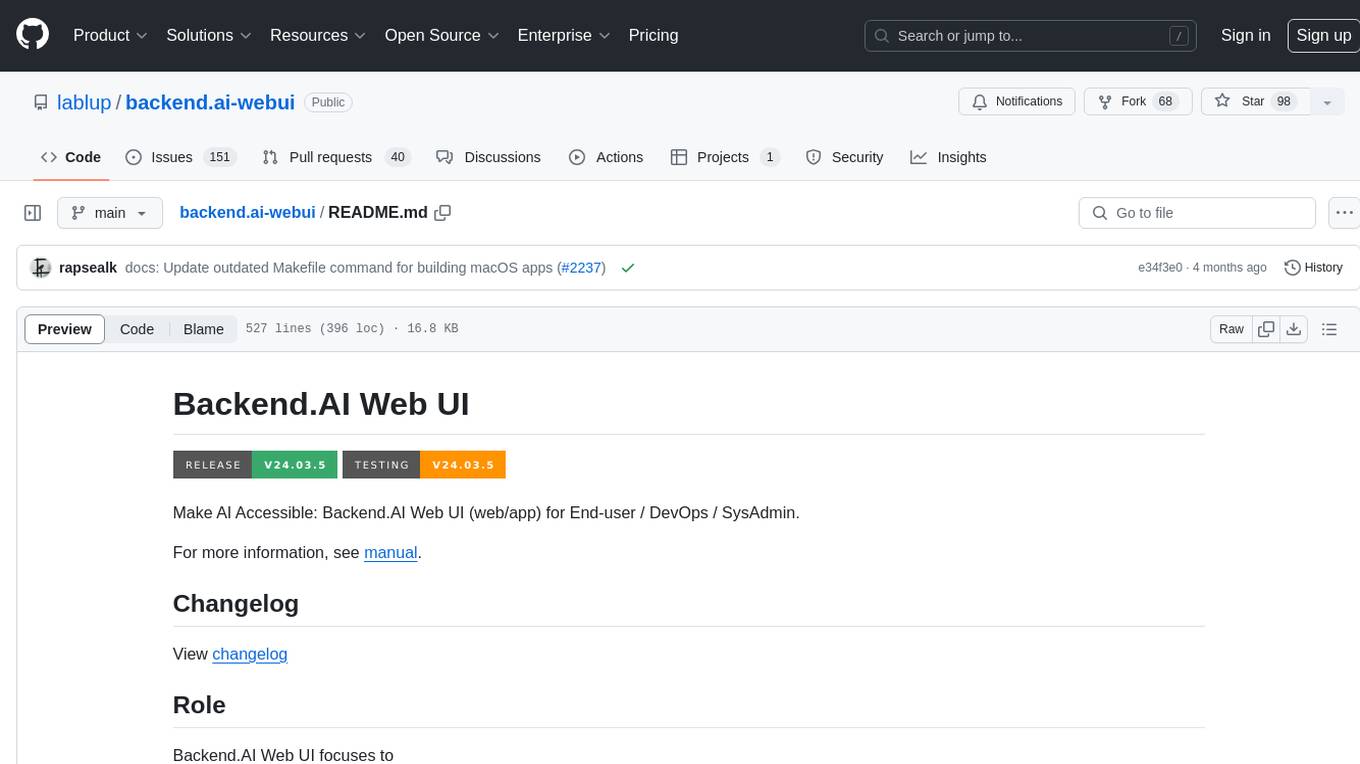
Backend.AI Web UI is a user-friendly web and app interface designed to make AI accessible for end-users, DevOps, and SysAdmins. It provides features for session management, inference service management, pipeline management, storage management, node management, statistics, configurations, license checking, plugins, help & manuals, kernel management, user management, keypair management, manager settings, proxy mode support, service information, and integration with the Backend.AI Web Server. The tool supports various devices, offers a built-in websocket proxy feature, and allows for versatile usage across different platforms. Users can easily manage resources, run environment-supported apps, access a web-based terminal, use Visual Studio Code editor, manage experiments, set up autoscaling, manage pipelines, handle storage, monitor nodes, view statistics, configure settings, and more.
AutoDocs
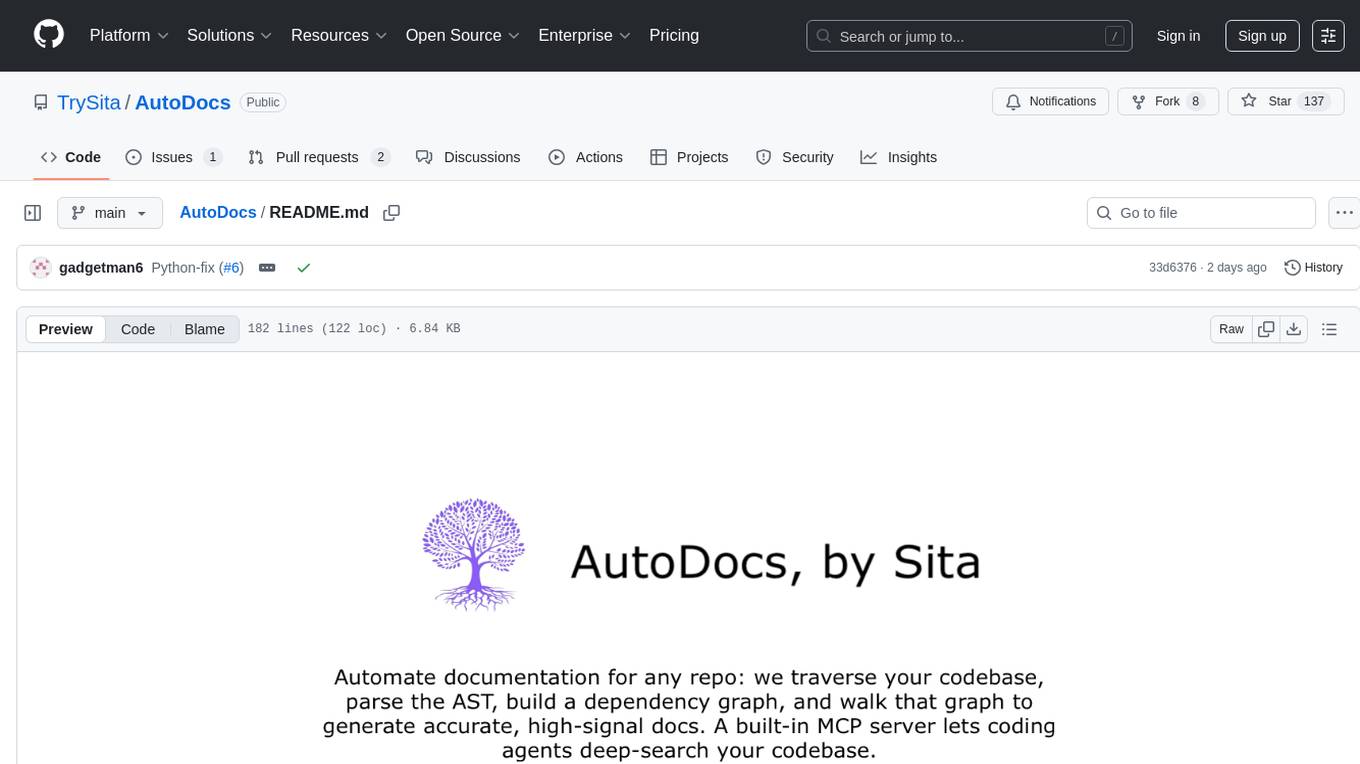
AutoDocs by Sita is a tool designed to automate documentation for any repository. It parses the repository using tree-sitter and SCIP, constructs a code dependency graph, and generates repository-wide, dependency-aware documentation and summaries. It provides a FastAPI backend for ingestion/search and a Next.js web UI for chat and exploration. Additionally, it includes an MCP server for deep search capabilities. The tool aims to simplify the process of generating accurate and high-signal documentation for codebases.
chat-vue
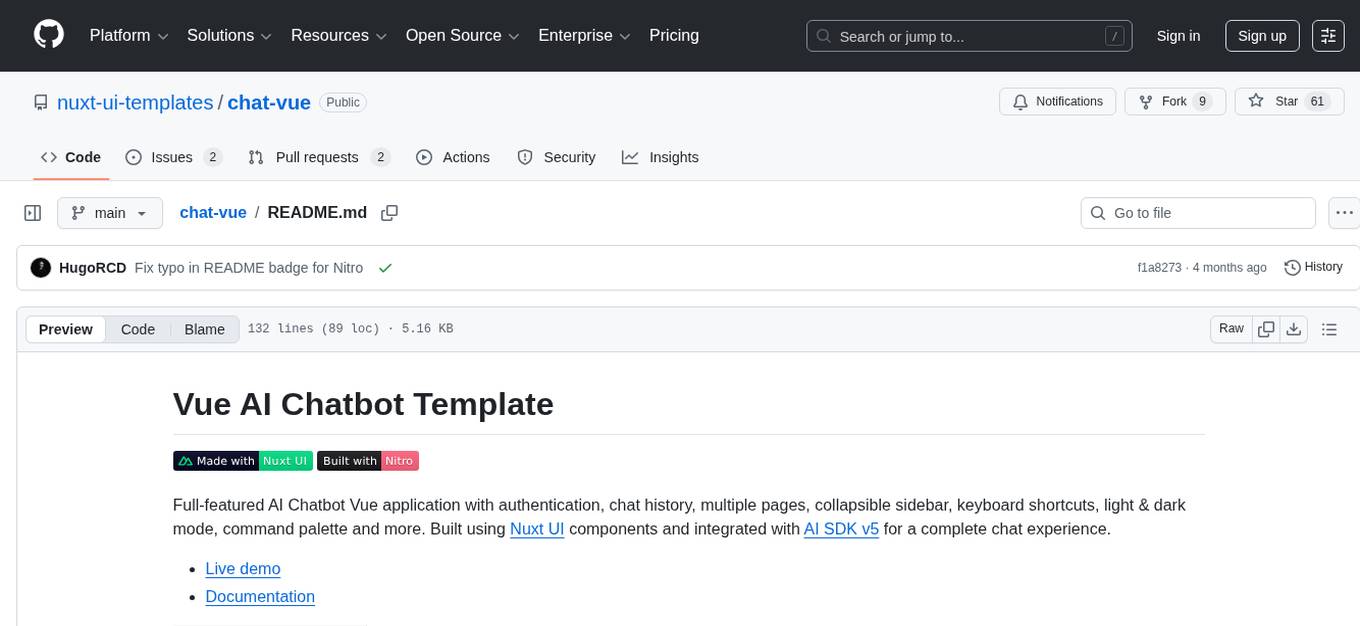
Full-featured AI Chatbot Vue application with authentication, chat history, multiple pages, collapsible sidebar, keyboard shortcuts, light & dark mode, command palette and more. Built using Nuxt UI components and integrated with AI SDK v5 for a complete chat experience. Features include streaming AI messages, multiple model support, authentication via GitHub OAuth, chat history persistence, markdown rendering, and easy deployment to Vercel with zero configuration.

orama-core
OramaCore is a database designed for AI projects, answer engines, copilots, and search functionalities. It offers features such as a full-text search engine, vector database, LLM interface, and various utilities. The tool is currently under active development and not recommended for production use due to potential API changes. OramaCore aims to provide a comprehensive solution for managing data and enabling advanced AI capabilities in projects.
web-ui
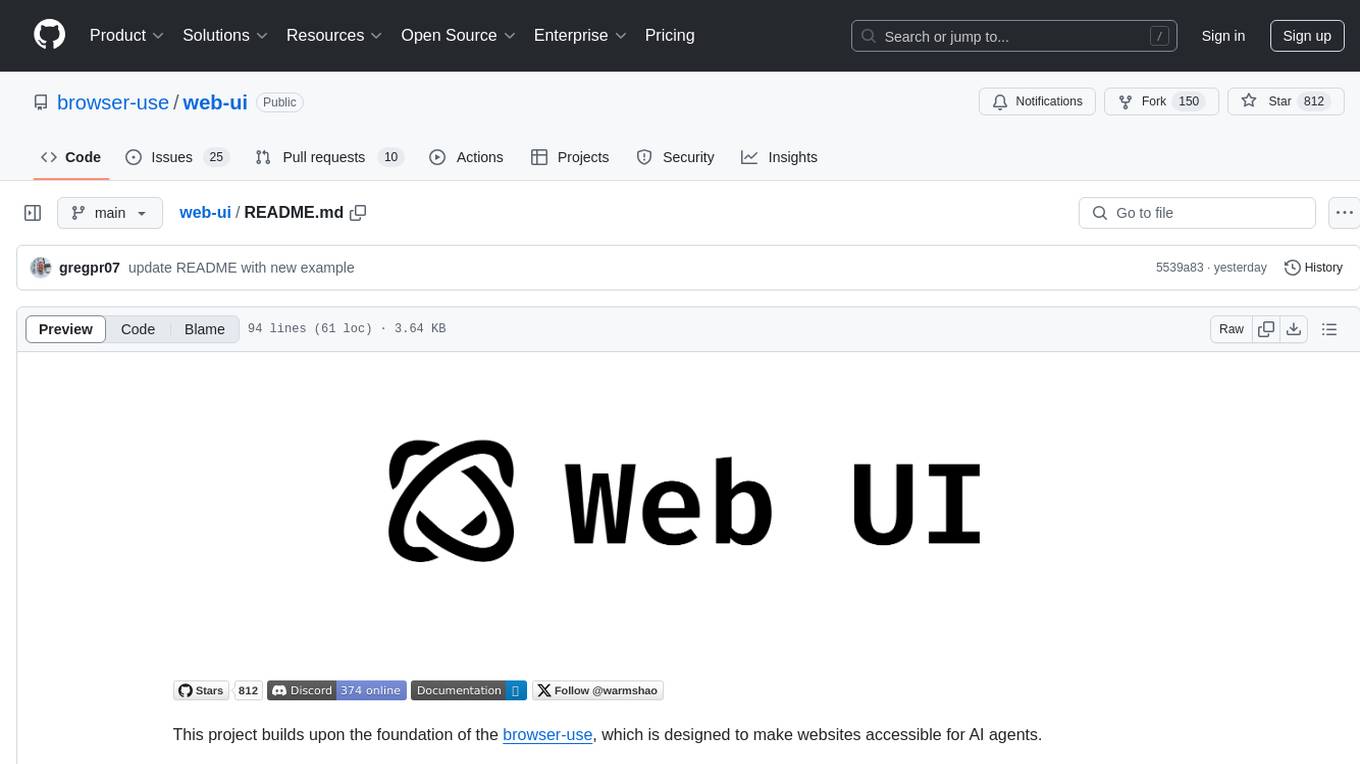
WebUI is a user-friendly tool built on Gradio that enhances website accessibility for AI agents. It supports various Large Language Models (LLMs) and allows custom browser integration for seamless interaction. The tool eliminates the need for re-login and authentication challenges, offering high-definition screen recording capabilities.
next-money
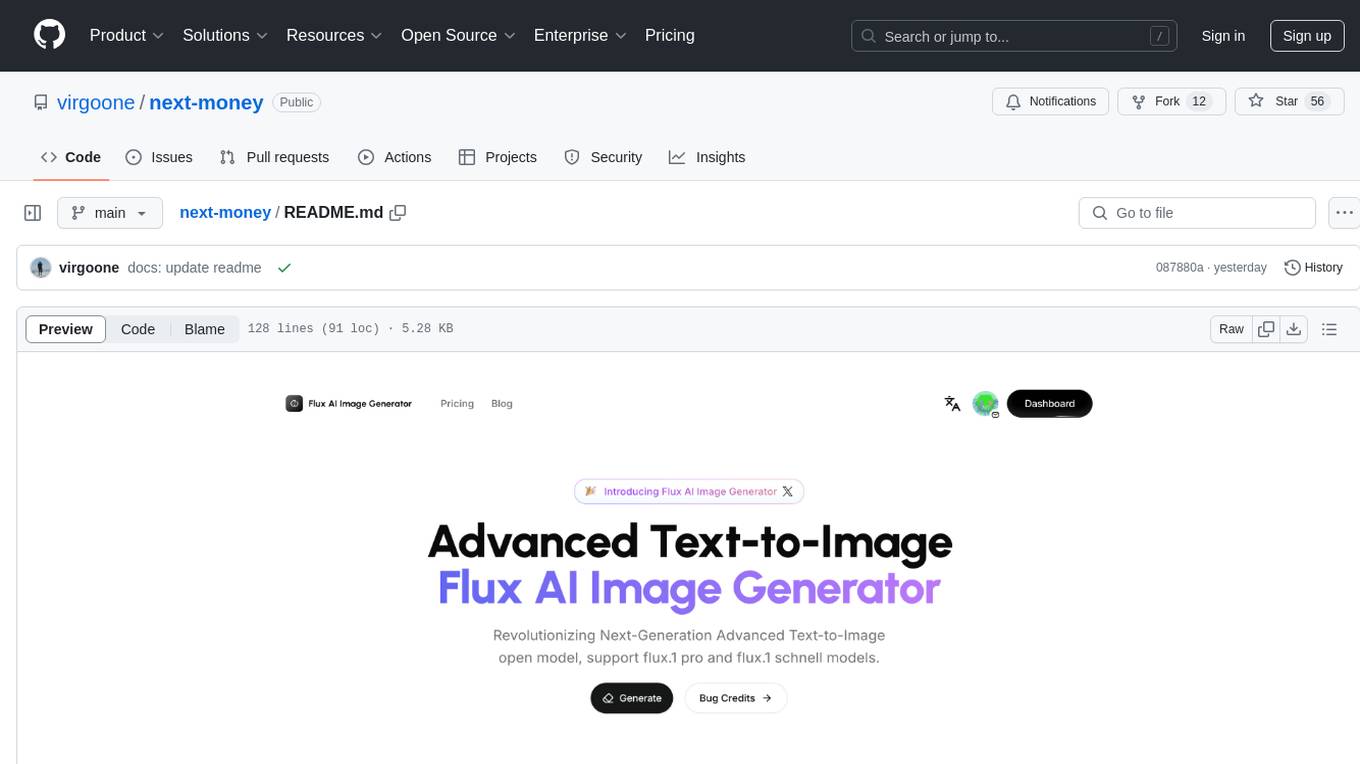
Next Money Stripe Starter is a SaaS Starter project that empowers your next project with a stack of Next.js, Prisma, Supabase, Clerk Auth, Resend, React Email, Shadcn/ui, and Stripe. It seamlessly integrates these technologies to accelerate your development and SaaS journey. The project includes frameworks, platforms, UI components, hooks and utilities, code quality tools, and miscellaneous features to enhance the development experience. Created by @koyaguo in 2023 and released under the MIT license.
webapp-starter
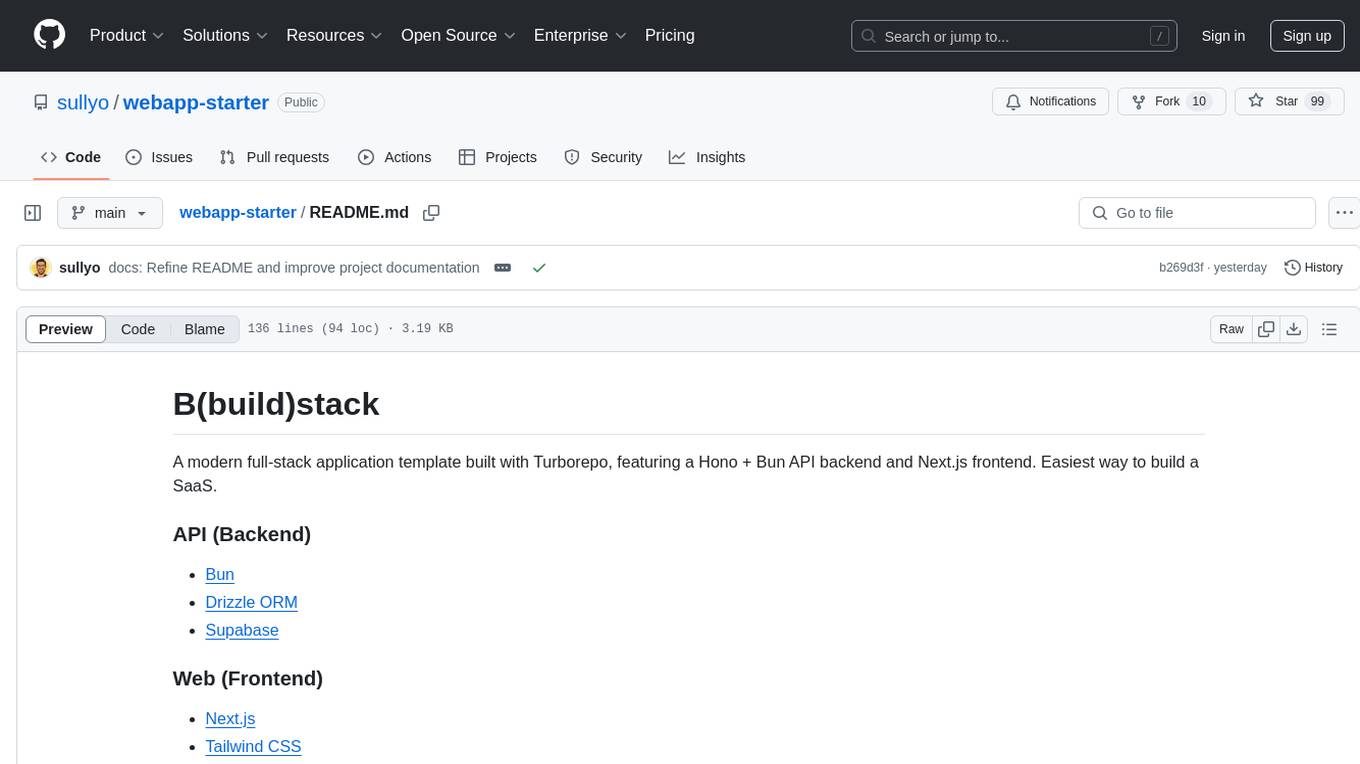
webapp-starter is a modern full-stack application template built with Turborepo, featuring a Hono + Bun API backend and Next.js frontend. It provides an easy way to build a SaaS product. The backend utilizes technologies like Bun, Drizzle ORM, and Supabase, while the frontend is built with Next.js, Tailwind CSS, Shadcn/ui, and Clerk. Deployment can be done using Vercel and Render. The project structure includes separate directories for API backend and Next.js frontend, along with shared packages for the main database. Setup involves installing dependencies, configuring environment variables, and setting up services like Bun, Supabase, and Clerk. Development can be done using 'turbo dev' command, and deployment instructions are provided for Vercel and Render. Contributions are welcome through pull requests.
sim
Sim is a platform that allows users to build and deploy AI agent workflows quickly and easily. It provides cloud-hosted and self-hosted options, along with support for local AI models. Users can set up the application using Docker Compose, Dev Containers, or manual setup with PostgreSQL and pgvector extension. The platform utilizes technologies like Next.js, Bun, PostgreSQL with Drizzle ORM, Better Auth for authentication, Shadcn and Tailwind CSS for UI, Zustand for state management, ReactFlow for flow editor, Fumadocs for documentation, Turborepo for monorepo management, Socket.io for real-time communication, and Trigger.dev for background jobs.
mcpd
mcpd is a tool developed by Mozilla AI to declaratively manage Model Context Protocol (MCP) servers, enabling consistent interface for defining and running tools across different environments. It bridges the gap between local development and enterprise deployment by providing secure secrets management, declarative configuration, and seamless environment promotion. mcpd simplifies the developer experience by offering zero-config tool setup, language-agnostic tooling, version-controlled configuration files, enterprise-ready secrets management, and smooth transition from local to production environments.
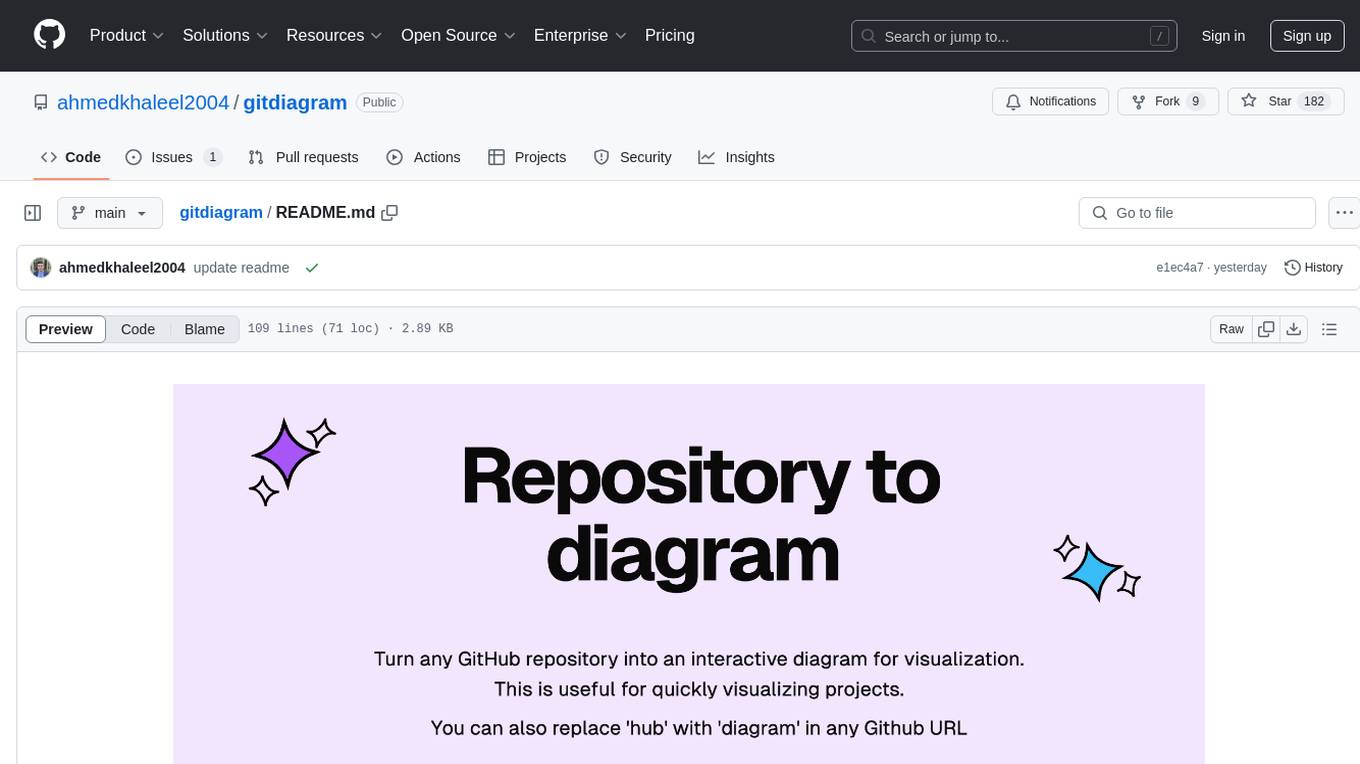
gitdiagram
GitDiagram is a tool that turns any GitHub repository into an interactive diagram for visualization in seconds. It offers instant visualization, interactivity, fast generation, customization, and API access. The tool utilizes a tech stack including Next.js, FastAPI, PostgreSQL, Claude 3.5 Sonnet, Vercel, EC2, GitHub Actions, PostHog, and Api-Analytics. Users can self-host the tool for local development and contribute to its development. GitDiagram is inspired by Gitingest and has future plans to use larger context models, allow user API key input, implement RAG with Mermaid.js docs, and include font-awesome icons in diagrams.
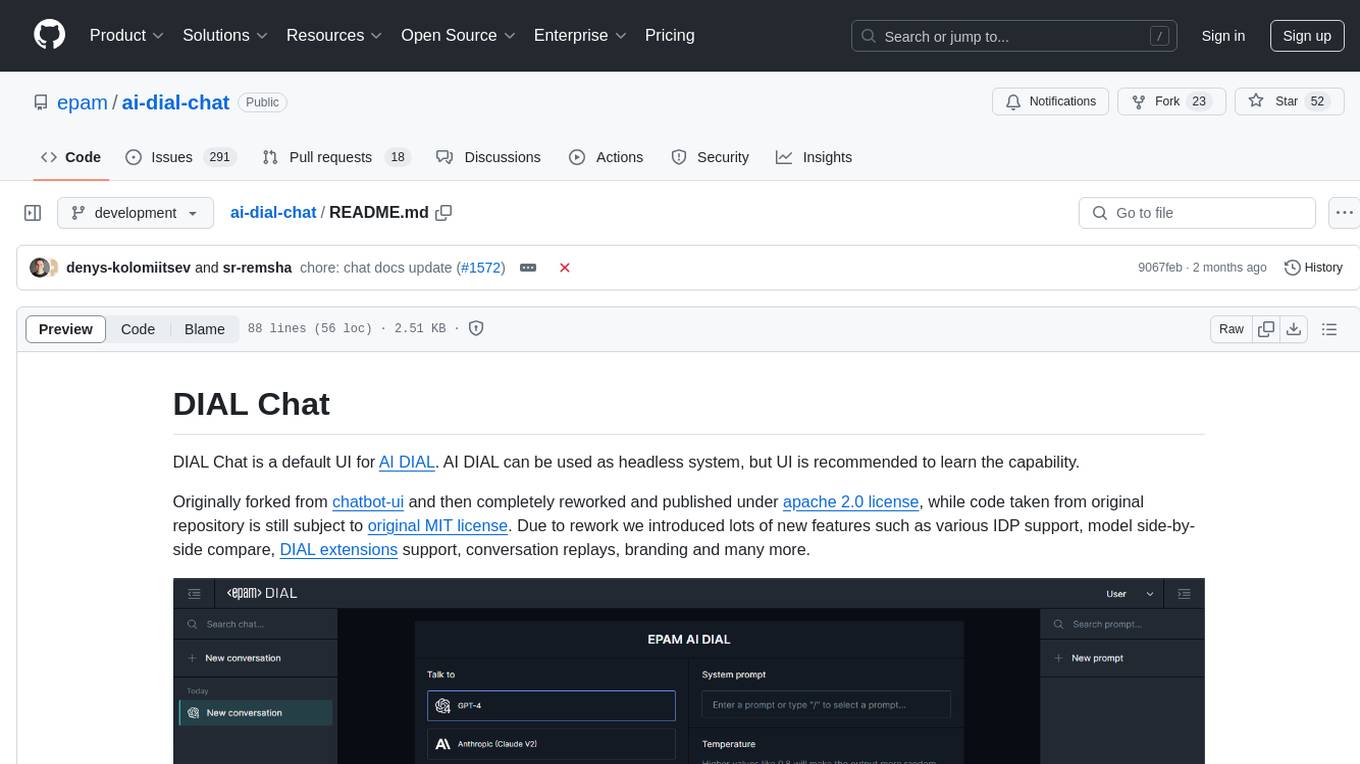
ai-dial-chat
DIAL Chat is a default UI for AI DIAL, recommended for learning the capability of the headless system. It offers various features like IDP support, model comparison, DIAL extensions, conversation replays, and branding. Managed as a monorepo by NX tools, it provides documentation for DIAL Chat, Theming, Overlay, and Visualizer Connector. Users can find a user guide for the AI DIAL Chat application in the AI DIAL repository.
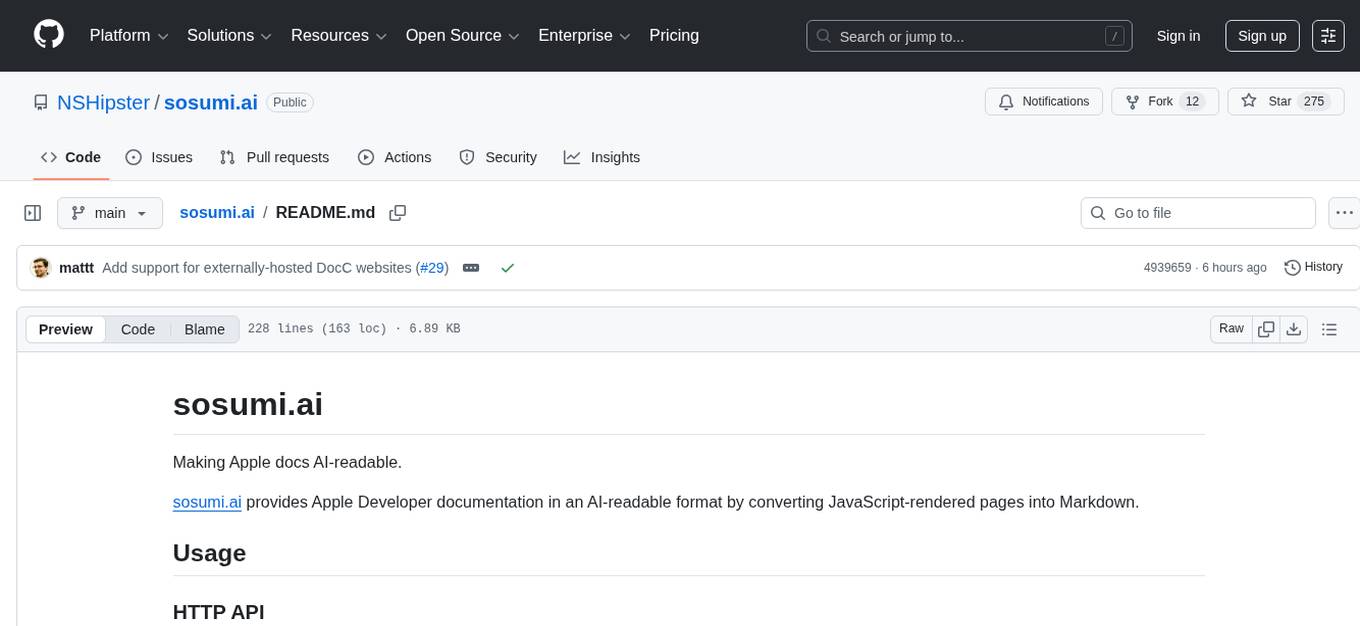
sosumi.ai
sosumi.ai provides Apple Developer documentation in an AI-readable format by converting JavaScript-rendered pages into Markdown. It offers an HTTP API to access Apple docs, supports external Swift-DocC sites, integrates with MCP server, and provides tools like searchAppleDocumentation and fetchAppleDocumentation. The project can be self-hosted and is currently hosted on Cloudflare Workers. It is built with Hono and supports various runtimes. The application is designed for accessibility-first, on-demand rendering of Apple Developer pages to Markdown.
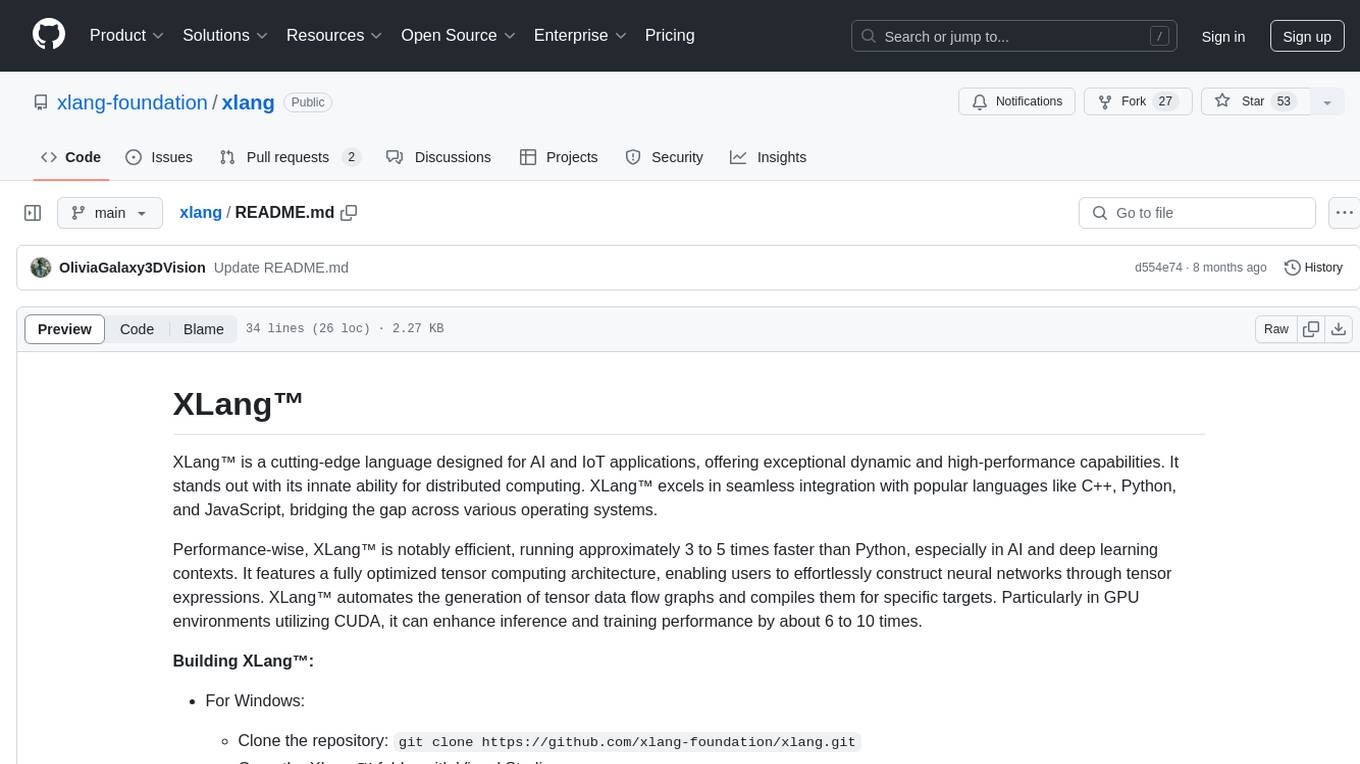
xlang
XLang™ is a cutting-edge language designed for AI and IoT applications, offering exceptional dynamic and high-performance capabilities. It excels in distributed computing and seamless integration with popular languages like C++, Python, and JavaScript. Notably efficient, running 3 to 5 times faster than Python in AI and deep learning contexts. Features optimized tensor computing architecture for constructing neural networks through tensor expressions. Automates tensor data flow graph generation and compilation for specific targets, enhancing GPU performance by 6 to 10 times in CUDA environments.
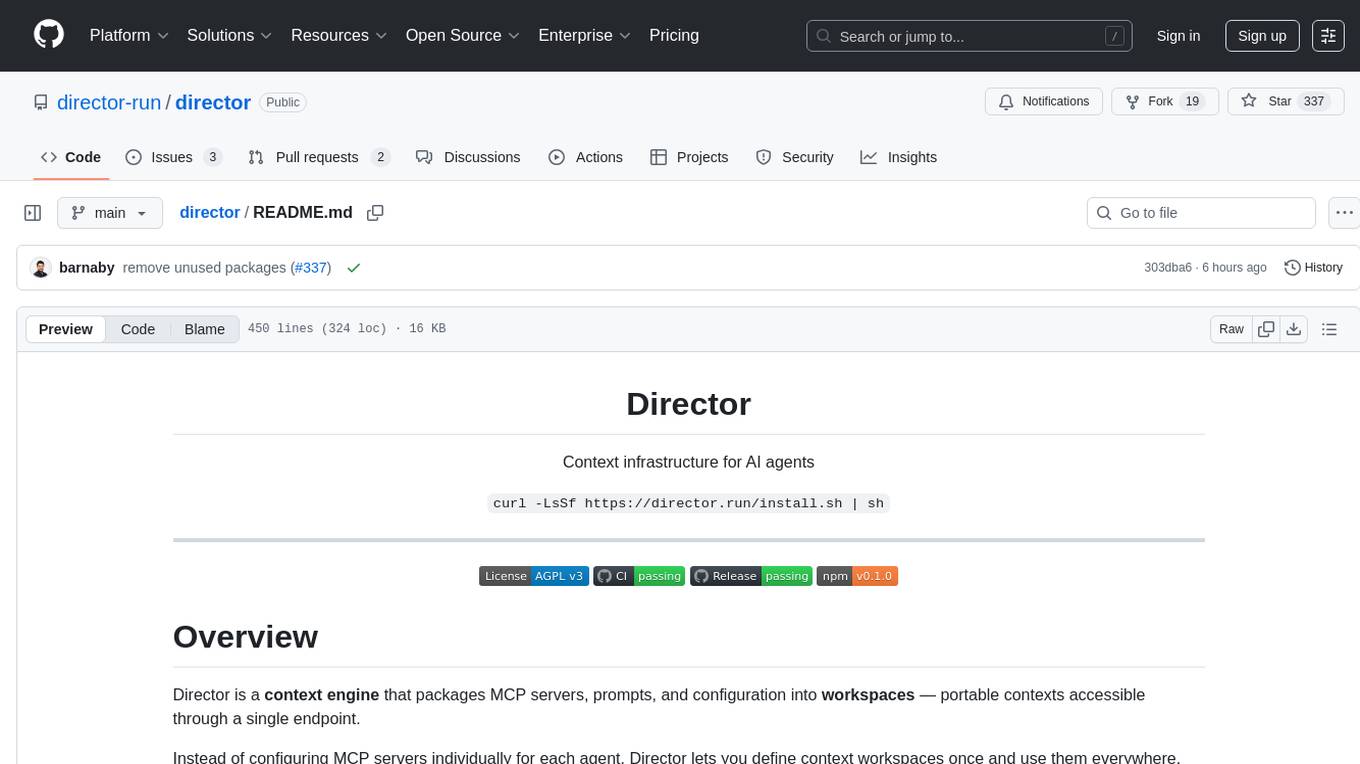
director
Director is a context infrastructure tool for AI agents that simplifies managing MCP servers, prompts, and configurations by packaging them into portable workspaces accessible through a single endpoint. It allows users to define context workspaces once and share them across different AI clients, enabling seamless collaboration, instant context switching, and secure isolation of untrusted servers without cloud dependencies or API keys. Director offers features like workspaces, universal portability, local-first architecture, sandboxing, smart filtering, unified OAuth, observability, multiple interfaces, and compatibility with all MCP clients and servers.
For similar tasks
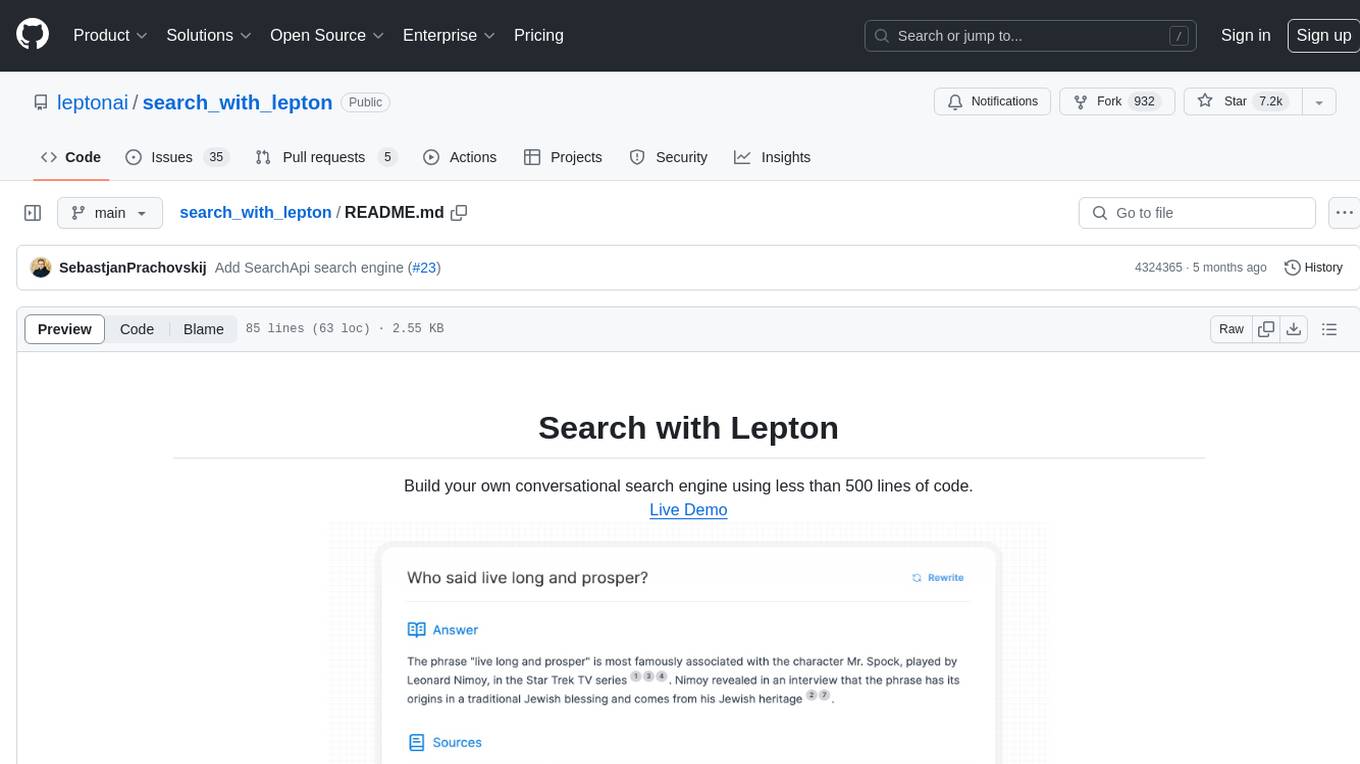
search_with_lepton
Build your own conversational search engine using less than 500 lines of code. Features built-in support for LLM, search engine, customizable UI interface, and shareable cached search results. Setup includes Bing and Google search engines. Utilize LLM and KV functions with Lepton for seamless integration. Easily deploy to Lepton AI or your own environment with one-click deployment options.
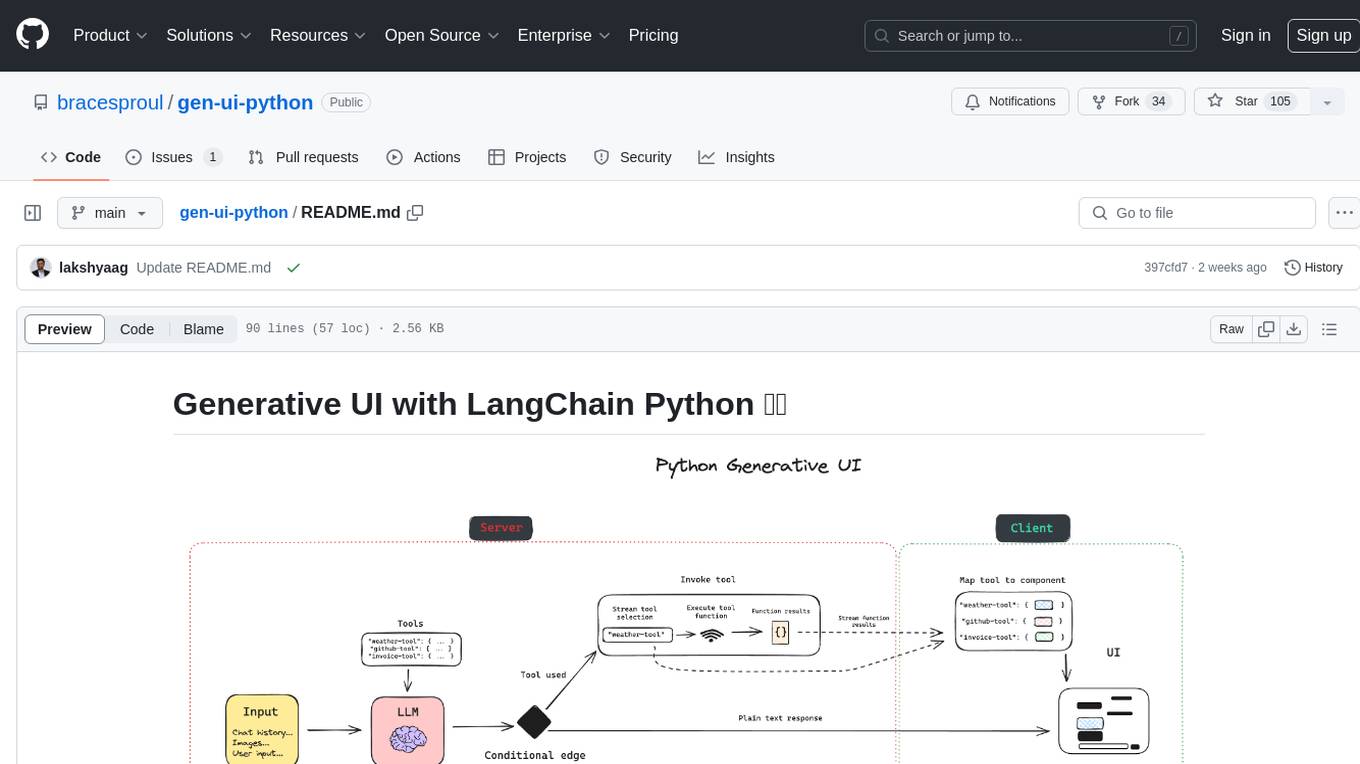
gen-ui-python
This application provides a template for building generative UI applications with LangChain Python. It includes pre-built UI components using Shadcn. Users can play around with gen ui features and customize the UI. The application requires setting environment variables for LangSmith keys, OpenAI API key, GitHub PAT, and Geocode API key. Users can further develop the application by generating React components, building custom components with LLM and Shadcn, using multiple tools and components, updating LangGraph agent, and rendering UI dynamically in different areas on the screen.
morgana-form
MorGana Form is a full-stack form builder project developed using Next.js, React, TypeScript, Ant Design, PostgreSQL, and other technologies. It allows users to quickly create and collect data through survey forms. The project structure includes components, hooks, utilities, pages, constants, Redux store, themes, types, server-side code, and component packages. Environment variables are required for database settings, NextAuth login configuration, and file upload services. Additionally, the project integrates an AI model for form generation using the Ali Qianwen model API.
ai-dial-chat
DIAL Chat is a default UI for AI DIAL, recommended for learning the capability of the headless system. It offers various features like IDP support, model comparison, DIAL extensions, conversation replays, and branding. Managed as a monorepo by NX tools, it provides documentation for DIAL Chat, Theming, Overlay, and Visualizer Connector. Users can find a user guide for the AI DIAL Chat application in the AI DIAL repository.

AmigaGPT
AmigaGPT is a versatile ChatGPT client for AmigaOS 3.x, 4.1, and MorphOS. It brings the capabilities of OpenAI’s GPT to Amiga systems, enabling text generation, question answering, and creative exploration. AmigaGPT can generate images using DALL-E, supports speech output, and seamlessly integrates with AmigaOS. Users can customize the UI, choose fonts and colors, and enjoy a native user experience. The tool requires specific system requirements and offers features like state-of-the-art language models, AI image generation, speech capability, and UI customization.
ChatGPT-Next-Web
ChatGPT Next Web is a well-designed cross-platform ChatGPT web UI tool that supports Claude, GPT4, and Gemini Pro models. It allows users to deploy their private ChatGPT applications with ease. The tool offers features like one-click deployment, compact client for Linux/Windows/MacOS, compatibility with self-deployed LLMs, privacy-first approach with local data storage, markdown support, responsive design, fast loading speed, prompt templates, awesome prompts, chat history compression, multilingual support, and more.
assistant-ui
assistant-ui is a set of React components for AI chat, providing wide model provider support out of the box and the ability to integrate custom APIs. It includes integrations with Langchain, Vercel AI SDK, TailwindCSS, shadcn-ui, react-markdown, react-syntax-highlighter, React Hook Form, and more. The tool allows users to quickly create AI chat applications with pre-configured templates and easy setup steps.
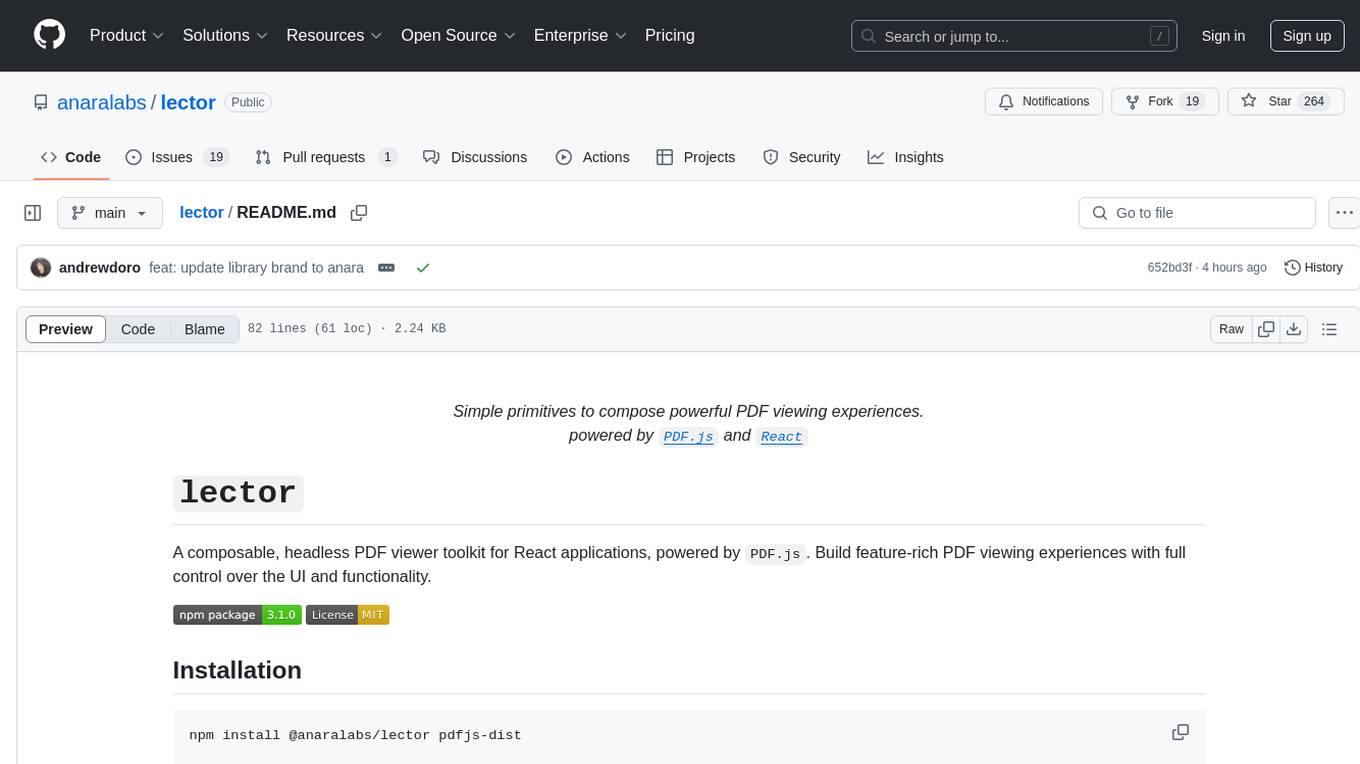
lector
A composable, headless PDF viewer toolkit for React applications, powered by PDF.js. Build feature-rich PDF viewing experiences with full control over the UI and functionality. It is responsive and mobile-friendly, fully customizable UI components, supports text selection and search functionality, page thumbnails and outline navigation, dark mode, pan and zoom controls, form filling support, internal and external link handling. Contributions are welcome in areas like performance optimizations, accessibility improvements, mobile/touch interactions, documentation, and examples. Inspired by open-source projects like react-pdf-headless and pdfreader. Licensed under MIT by Unriddle AI.
For similar jobs
sweep
Sweep is an AI junior developer that turns bugs and feature requests into code changes. It automatically handles developer experience improvements like adding type hints and improving test coverage.
teams-ai
The Teams AI Library is a software development kit (SDK) that helps developers create bots that can interact with Teams and Microsoft 365 applications. It is built on top of the Bot Framework SDK and simplifies the process of developing bots that interact with Teams' artificial intelligence capabilities. The SDK is available for JavaScript/TypeScript, .NET, and Python.
ai-guide
This guide is dedicated to Large Language Models (LLMs) that you can run on your home computer. It assumes your PC is a lower-end, non-gaming setup.
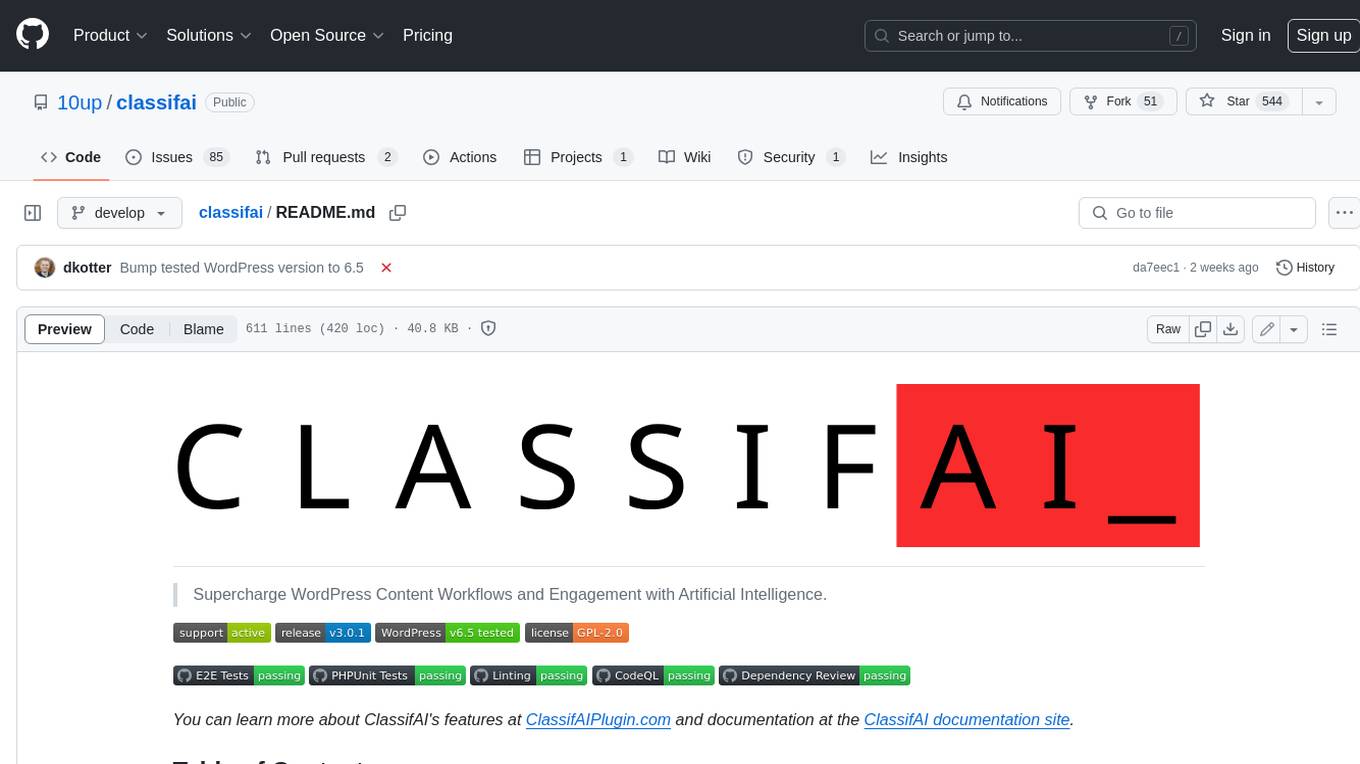
classifai
Supercharge WordPress Content Workflows and Engagement with Artificial Intelligence. Tap into leading cloud-based services like OpenAI, Microsoft Azure AI, Google Gemini and IBM Watson to augment your WordPress-powered websites. Publish content faster while improving SEO performance and increasing audience engagement. ClassifAI integrates Artificial Intelligence and Machine Learning technologies to lighten your workload and eliminate tedious tasks, giving you more time to create original content that matters.
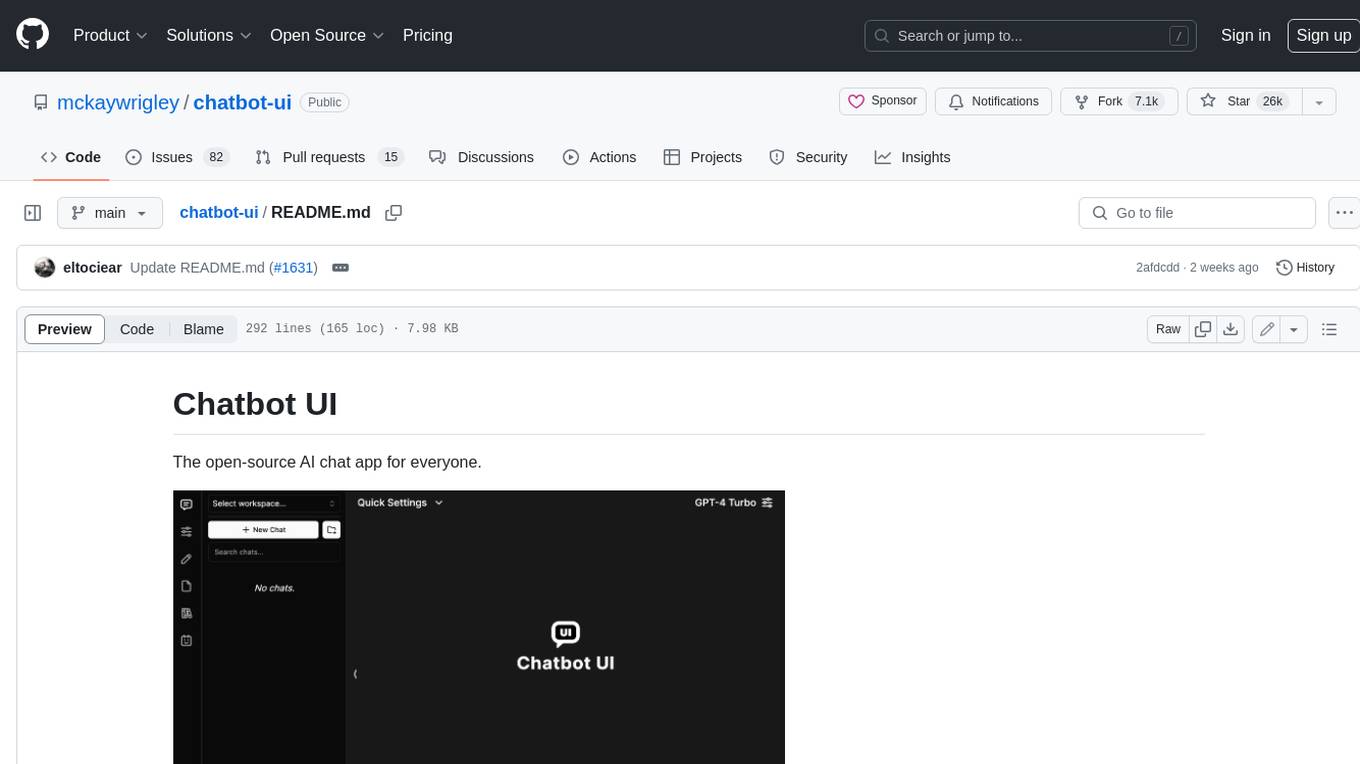
chatbot-ui
Chatbot UI is an open-source AI chat app that allows users to create and deploy their own AI chatbots. It is easy to use and can be customized to fit any need. Chatbot UI is perfect for businesses, developers, and anyone who wants to create a chatbot.
BricksLLM
BricksLLM is a cloud native AI gateway written in Go. Currently, it provides native support for OpenAI, Anthropic, Azure OpenAI and vLLM. BricksLLM aims to provide enterprise level infrastructure that can power any LLM production use cases. Here are some use cases for BricksLLM: * Set LLM usage limits for users on different pricing tiers * Track LLM usage on a per user and per organization basis * Block or redact requests containing PIIs * Improve LLM reliability with failovers, retries and caching * Distribute API keys with rate limits and cost limits for internal development/production use cases * Distribute API keys with rate limits and cost limits for students
uAgents
uAgents is a Python library developed by Fetch.ai that allows for the creation of autonomous AI agents. These agents can perform various tasks on a schedule or take action on various events. uAgents are easy to create and manage, and they are connected to a fast-growing network of other uAgents. They are also secure, with cryptographically secured messages and wallets.

griptape
Griptape is a modular Python framework for building AI-powered applications that securely connect to your enterprise data and APIs. It offers developers the ability to maintain control and flexibility at every step. Griptape's core components include Structures (Agents, Pipelines, and Workflows), Tasks, Tools, Memory (Conversation Memory, Task Memory, and Meta Memory), Drivers (Prompt and Embedding Drivers, Vector Store Drivers, Image Generation Drivers, Image Query Drivers, SQL Drivers, Web Scraper Drivers, and Conversation Memory Drivers), Engines (Query Engines, Extraction Engines, Summary Engines, Image Generation Engines, and Image Query Engines), and additional components (Rulesets, Loaders, Artifacts, Chunkers, and Tokenizers). Griptape enables developers to create AI-powered applications with ease and efficiency.