


wordlift-plugin
WordLift brings the power of Artificial Intelligence to beautifully organize content. Attract new readers and get their true attention.
Stars: 102
WordLift is a plugin that helps online content creators organize posts and pages by adding facts, links, and media to build beautifully structured websites for both humans and search engines. It allows users to create, own, and publish their own knowledge graph, and publishes content as Linked Open Data following Tim Berners-Lee's Linked Data Principles. The plugin supports writers by providing trustworthy and contextual facts, enriching content with images, links, and interactive visualizations, keeping readers engaged with relevant content recommendations, and producing content compatible with schema.org markup for better indexing and display on search engines. It also offers features like creating a personal Wikipedia, publishing metadata to share and distribute content, and supporting content tagging for better SEO.
README:


WordLift brings the power of Artificial Intelligence to beautifully organize content. Attract new readers and get their true attention.
- Who is WordLift for?
- Why shall I use WordLift?
- How does it work?
- What are the languages supported by WordLift?
- Who owns the structured metadata created with WordLift?
WordLift helps you organize posts and pages adding facts, links and media to build beautifully structured websites, for both humans and search engines.
WordLift lets you create, own and publish your own knowledge graph.
WordLift publishes your content as Linked Open Data following Tim Berners-Lee‘s Linked Data Principles.
WordLift is a plug-in for online content creators to:
- Support your writing process with trustworthy and contextual facts
- Enrich content with images, links and interactive visualizations
- Keep readers engaged with relevant content recommendations
- Produce content compatible with schema.org markup, allowing search engines to best index and display your website.
- Engage readers with relevant content recommendations
- Create your own personal Wikipedia
- Publish metadata to share, sell and distribute content
- The technology to self-organize content using publicly or privately available knowledge graphs
- An easy way to build datasets and full data ownership
- Support for creating web content using contextually relevant information
- Valued and free to use photos and illustrations from the Commons community ranging from maps to astronomical imagery to photographs, artworks and more
- New means to drive business growth with meaningful content discovery paths
- Content tagging for better SEO
WordLift currently supports the following languages: English, 中文 (Chinese), Español (Spanish), Русский (Russian), Português (Portuguese), Deutsch (German), Français (French), Italiano (Italian), Nederlands (Dutch), Svenska (Swedish) and Dansk (Danish).
The Plug-in is built on open source software.
- Upload
wordlift.zipto the/wp-content/plugins/directory - Extract the files in the wordlift subfolder
- Activate the plug-in using a WordLift key. You receive this key from us after purchasing the monthly service from our website. Once you have received the key go to the WordPress administration menu, click on Plugins / Installed Plugins. Then click on Settings on the WordLift plugin and add the key there.
WordLift is for all bloggers, journalists, and content marketers publishing and fighting for readers’ attention on the web.
WordLift democratizes the field, bringing to the hands of all web content creators the technology that web publisher giants such as Google, Facebook and the BBC are using to organize and monetize their content.
WordLift helps you create richer and more engaging content, optimizes it for all search engines and efficiently organizes your content creation process, allowing you to reach and speak directly to your tribe.
Organizing web content around an internal vocabulary rather than traditional web pages helps both users and machines finding and accessing it, improving navigation, content re-use, content repurposing, and search engine rankings.
WordLift organizes content, reducing the complexity of content management and content marketing operations, letting bloggers and site owners focus on stories and communities.
WordLift enriches your content with contextual information, links, and media, from custom vocabularies and/or the wealth of open data available on the web, bringing your user experience to a new level of engagement.
WordLift connects content with cross-media discovery and recommendations widgets, increasing content quality, exposure, trustworthiness and readership engagement.
WordLift optimizes content, complementing the offer of plug-ins such as SEO Ultimate or Yoast, automatically adding schema.org markups to your text, allowing all search engines to properly index your pages and deliver more traffic to your site.
To know more about how WordLift works, please watch the step-by-step video tutorials on our website.
WordLift works in subsequent stages.
-
The first step provides a full text analysis and suggests concepts and relationships found in open vocabularies (such as DBpedia, Wikidata, GeoNames, etc) to help writers classify and enrich their content and structure it for search engines like Google, according to schema.org vocabulary.
-
Writers can then create new entities, to complement the ones suggested automatically, and to be published as part of a proprietary vocabulary, acting both as a reference and a search magnet for their readers, according to the editorial plans.
-
WordLift also assists writers suggesting links, media and providing a set of powerful visualization widgets to connect and recommend alternative content, to boost readers’ engagement.
-
Finally WordLift provides means to record all these relationships in a graph database allowing search queries like “find all contents related to concept_y and relevant for target_z”.
WordLift currently supports 32 languages: Chinese, Danish, German, English, French, Italian, Dutch, Russian, Spanish, Portuguese, Swedish, Turkish, Albanian, Belarusian, Bulgarian, Catalan, Croatian, Czech, Estonian, Finnish, Hungarian, Icelandic, Indonesian, Latvian, Lithuanian, Norwegian, Polish, Romanian, Serbian, Slovak, Slovenian, Ukrainian.
You do! We believe content creators should retain the commercial value of their content and all the data they create and exploit it through new business models based on content syndication, data-as-a-service and a stronger relationship with their audience.
You can open your datasets to the public, attaching to it a free or a commercial licence. Otherwise, use your data to feed chat bots on Facebook Messenger or Telegram, providing live feed updates on your activity and/or automatic customer service in real time.
Find more FAQ in our Wiki.
Are you ready to contribute? Head over our Contributing Guide. Feel free to pop into Gitter wordlift/home if you have any questions for us.
For further info please head to WordLift's web site or to the plugin's documentation.
For Tasks:
Click tags to check more tools for each tasksFor Jobs:
Alternative AI tools for wordlift-plugin
Similar Open Source Tools
wordlift-plugin
WordLift is a plugin that helps online content creators organize posts and pages by adding facts, links, and media to build beautifully structured websites for both humans and search engines. It allows users to create, own, and publish their own knowledge graph, and publishes content as Linked Open Data following Tim Berners-Lee's Linked Data Principles. The plugin supports writers by providing trustworthy and contextual facts, enriching content with images, links, and interactive visualizations, keeping readers engaged with relevant content recommendations, and producing content compatible with schema.org markup for better indexing and display on search engines. It also offers features like creating a personal Wikipedia, publishing metadata to share and distribute content, and supporting content tagging for better SEO.
promptbook
Promptbook is a library designed to build responsible, controlled, and transparent applications on top of large language models (LLMs). It helps users overcome limitations of LLMs like hallucinations, off-topic responses, and poor quality output by offering features such as fine-tuning models, prompt-engineering, and orchestrating multiple prompts in a pipeline. The library separates concerns, establishes a common format for prompt business logic, and handles low-level details like model selection and context size. It also provides tools for pipeline execution, caching, fine-tuning, anomaly detection, and versioning. Promptbook supports advanced techniques like Retrieval-Augmented Generation (RAG) and knowledge utilization to enhance output quality.
weam
Weam is an open source platform designed to help teams systematically adopt AI. It provides a production-ready stack with Next.js frontend and Node.js/Python backend, allowing for immediate deployment and use. Weam connects to major LLM providers, enabling easy access to the latest AI models. The platform organizes AI interactions into 'Brains' for different departments, offering customization and expansion options. Features include chat system, productivity tools, sharing & access controls, prompt library, AI agents, RAG, MCP, enterprise features, pre-built automations, and upcoming AI app solutions. Weam is free, open source, and scalable to meet growing needs.
obsidian-llmsider
LLMSider is an AI assistant plugin for Obsidian that offers flexible multi-model support, deep workflow integration, privacy-first design, and a professional tool ecosystem. It provides comprehensive AI capabilities for personal knowledge management, from intelligent writing assistance to complex task automation, making AI a capable assistant for thinking and creating while ensuring data privacy.
learnhouse
LearnHouse is an open-source platform that allows anyone to easily provide world-class educational content. It supports various content types, including dynamic pages, videos, and documents. The platform is still in early development and should not be used in production environments. However, it offers several features, such as dynamic Notion-like pages, ease of use, multi-organization support, support for uploading videos and documents, course collections, user management, quizzes, course progress tracking, and an AI-powered assistant for teachers and students. LearnHouse is built using various open-source projects, including Next.js, TailwindCSS, Radix UI, Tiptap, FastAPI, YJS, PostgreSQL, LangChain, and React.
CodeGPT
CodeGPT is an extension for JetBrains IDEs that provides access to state-of-the-art large language models (LLMs) for coding assistance. It offers a range of features to enhance the coding experience, including code completions, a ChatGPT-like interface for instant coding advice, commit message generation, reference file support, name suggestions, and offline development support. CodeGPT is designed to keep privacy in mind, ensuring that user data remains secure and private.
ChatFAQ
ChatFAQ is an open-source comprehensive platform for creating a wide variety of chatbots: generic ones, business-trained, or even capable of redirecting requests to human operators. It includes a specialized NLP/NLG engine based on a RAG architecture and customized chat widgets, ensuring a tailored experience for users and avoiding vendor lock-in.
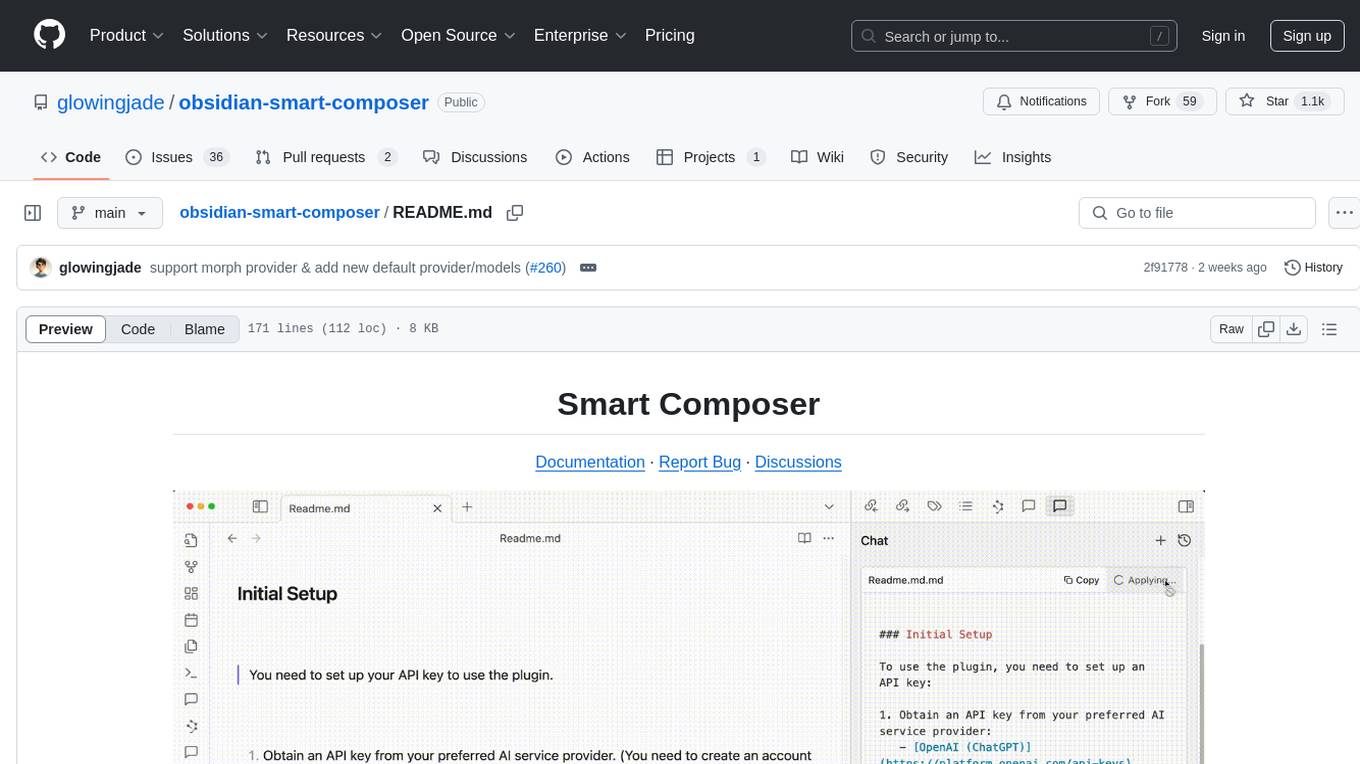
obsidian-smart-composer
Smart Composer is an Obsidian plugin that enhances note-taking and content creation by integrating AI capabilities. It allows users to efficiently write by referencing their vault content, providing contextual chat with precise context selection, multimedia context support for website links and images, document edit suggestions, and vault search for relevant notes. The plugin also offers features like custom model selection, local model support, custom system prompts, and prompt templates. Users can set up the plugin by installing it through the Obsidian community plugins, enabling it, and configuring API keys for supported providers like OpenAI, Anthropic, and Gemini. Smart Composer aims to streamline the writing process by leveraging AI technology within the Obsidian platform.
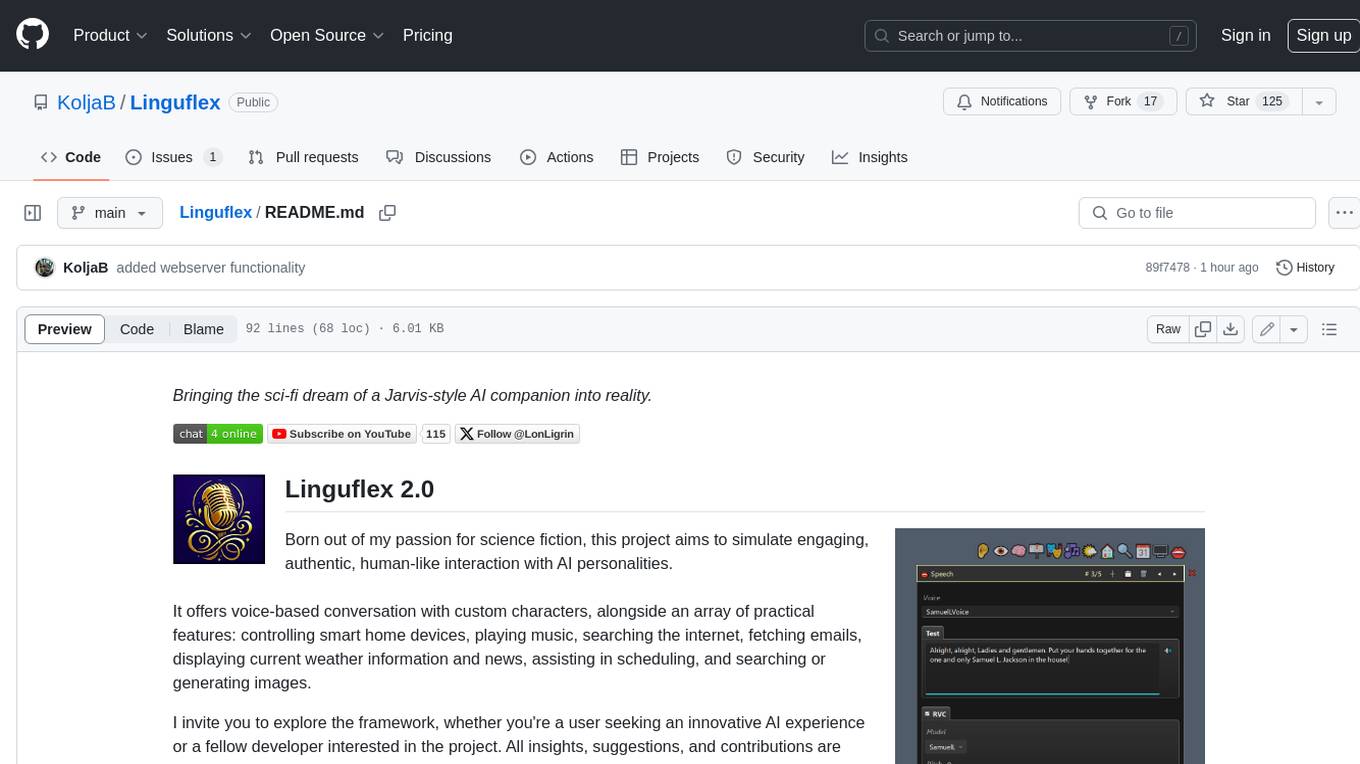
Linguflex
Linguflex is a project that aims to simulate engaging, authentic, human-like interaction with AI personalities. It offers voice-based conversation with custom characters, alongside an array of practical features such as controlling smart home devices, playing music, searching the internet, fetching emails, displaying current weather information and news, assisting in scheduling, and searching or generating images.
nanobrowser
Nanobrowser is an open-source AI web automation tool that runs in your browser. It is a free alternative to OpenAI Operator with flexible LLM options and a multi-agent system. Nanobrowser offers premium web automation capabilities while keeping users in complete control, with features like a multi-agent system, interactive side panel, task automation, follow-up questions, and multiple LLM support. Users can easily download and install Nanobrowser as a Chrome extension, configure agent models, and accomplish tasks such as news summary, GitHub research, and shopping research with just a sentence. The tool uses a specialized multi-agent system powered by large language models to understand and execute complex web tasks. Nanobrowser is actively developed with plans to expand LLM support, implement security measures, optimize memory usage, enable session replay, and develop specialized agents for domain-specific tasks. Contributions from the community are welcome to improve Nanobrowser and build the future of web automation.
saga-reader
Saga Reader is an AI-driven think tank-style reader that automatically retrieves information from the internet based on user-specified topics and preferences. It uses cloud or local large models to summarize and provide guidance, and it includes an AI-driven interactive companion reading function, allowing you to discuss and exchange ideas with AI about the content you've read. Saga Reader is completely free and open-source, meaning all data is securely stored on your own computer and is not controlled by third-party service providers. Additionally, you can manage your subscription keywords based on your interests and preferences without being disturbed by advertisements and commercialized content.
AgentForge
AgentForge is a low-code framework tailored for the rapid development, testing, and iteration of AI-powered autonomous agents and Cognitive Architectures. It is compatible with a range of LLM models and offers flexibility to run different models for different agents based on specific needs. The framework is designed for seamless extensibility and database-flexibility, making it an ideal playground for various AI projects. AgentForge is a beta-testing ground and future-proof hub for crafting intelligent, model-agnostic autonomous agents.
nexent
Nexent is a powerful tool for analyzing and visualizing network traffic data. It provides comprehensive insights into network behavior, helping users to identify patterns, anomalies, and potential security threats. With its user-friendly interface and advanced features, Nexent is suitable for network administrators, cybersecurity professionals, and anyone looking to gain a deeper understanding of their network infrastructure.
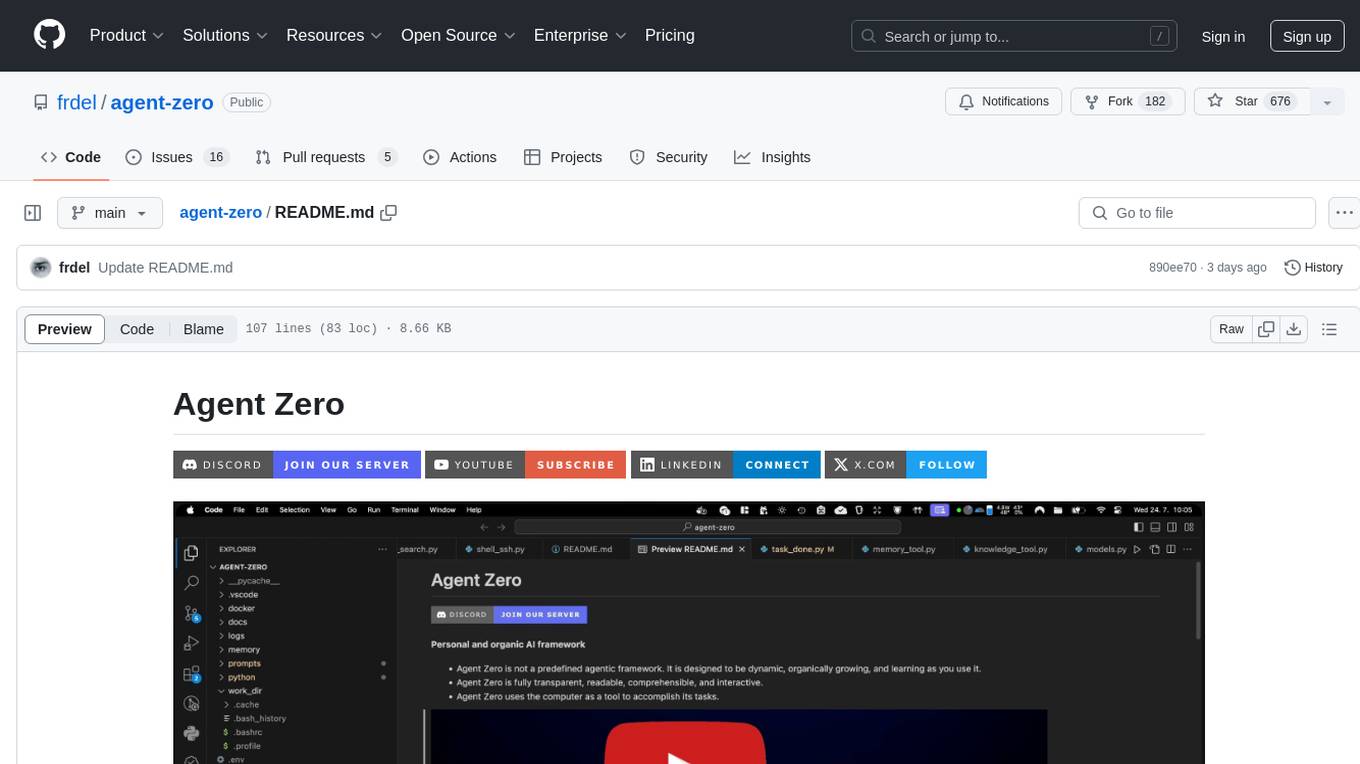
agent-zero
Agent Zero is a personal and organic AI framework designed to be dynamic, organically growing, and learning as you use it. It is fully transparent, readable, comprehensible, customizable, and interactive. The framework uses the computer as a tool to accomplish tasks, with no single-purpose tools pre-programmed. It emphasizes multi-agent cooperation, complete customization, and extensibility. Communication is key in this framework, allowing users to give proper system prompts and instructions to achieve desired outcomes. Agent Zero is capable of dangerous actions and should be run in an isolated environment. The framework is prompt-based, highly customizable, and requires a specific environment to run effectively.
refact-vscode
Refact.ai is an open-source AI coding assistant that boosts developer's productivity. It supports 25+ programming languages and offers features like code completion, AI Toolbox for code explanation and refactoring, integrated in-IDE chat, and self-hosting or cloud version. The Enterprise plan provides enhanced customization, security, fine-tuning, user statistics, efficient inference, priority support, and access to 20+ LLMs for up to 50 engineers per GPU.
MemGPT
MemGPT is a system that intelligently manages different memory tiers in LLMs in order to effectively provide extended context within the LLM's limited context window. For example, MemGPT knows when to push critical information to a vector database and when to retrieve it later in the chat, enabling perpetual conversations. MemGPT can be used to create perpetual chatbots with self-editing memory, chat with your data by talking to your local files or SQL database, and more.
For similar tasks
wordlift-plugin
WordLift is a plugin that helps online content creators organize posts and pages by adding facts, links, and media to build beautifully structured websites for both humans and search engines. It allows users to create, own, and publish their own knowledge graph, and publishes content as Linked Open Data following Tim Berners-Lee's Linked Data Principles. The plugin supports writers by providing trustworthy and contextual facts, enriching content with images, links, and interactive visualizations, keeping readers engaged with relevant content recommendations, and producing content compatible with schema.org markup for better indexing and display on search engines. It also offers features like creating a personal Wikipedia, publishing metadata to share and distribute content, and supporting content tagging for better SEO.
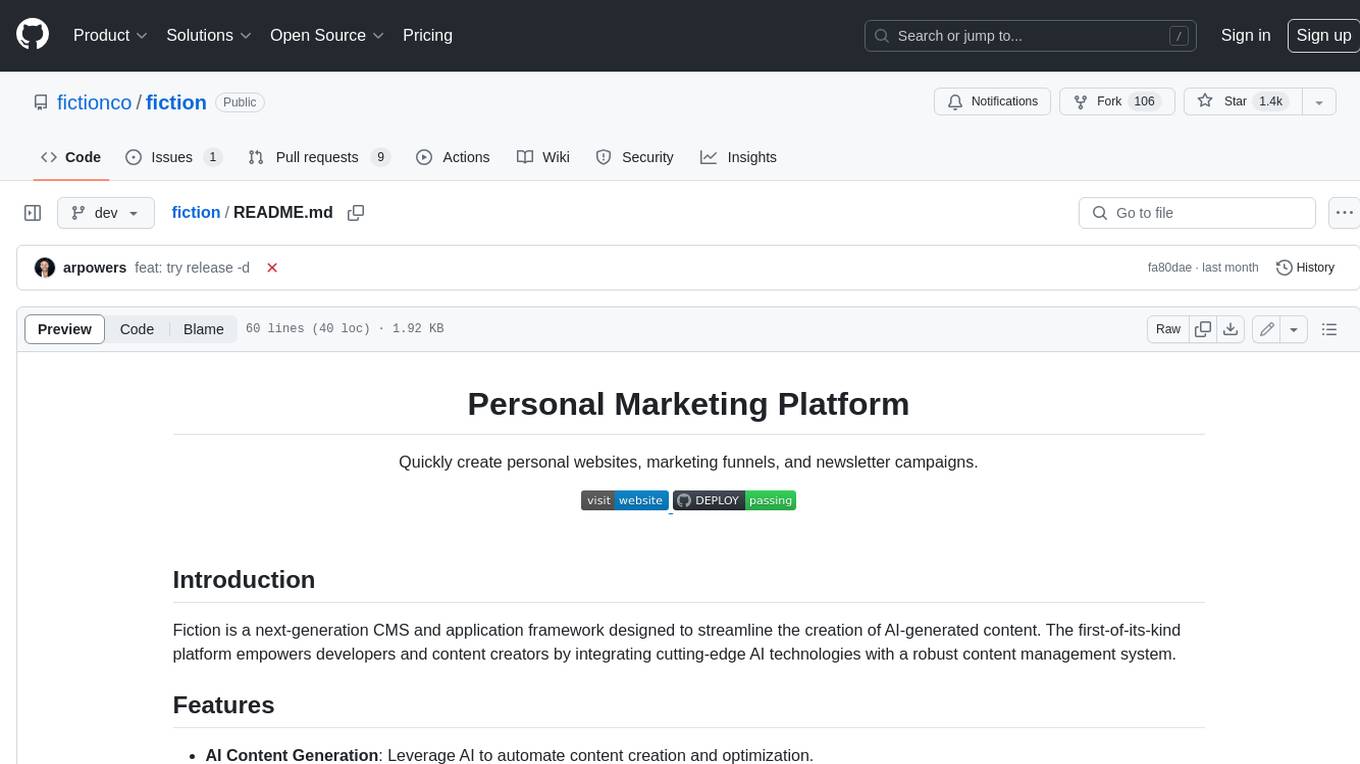
fiction
Fiction is a next-generation CMS and application framework designed to streamline the creation of AI-generated content. The first-of-its-kind platform empowers developers and content creators by integrating cutting-edge AI technologies with a robust content management system.
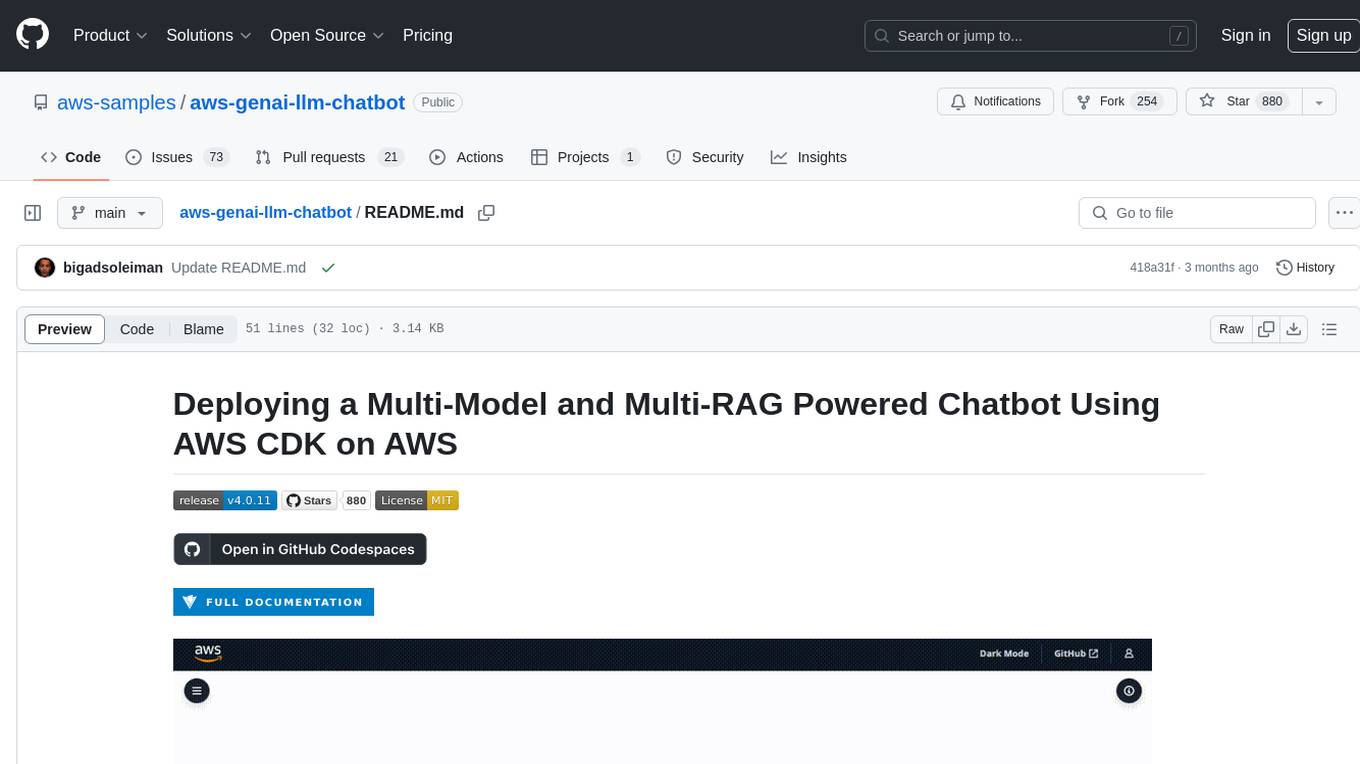
aws-genai-llm-chatbot
This repository provides code to deploy a chatbot powered by Multi-Model and Multi-RAG using AWS CDK on AWS. Users can experiment with various Large Language Models and Multimodal Language Models from different providers. The solution supports Amazon Bedrock, Amazon SageMaker self-hosted models, and third-party providers via API. It also offers additional resources like AWS Generative AI CDK Constructs and Project Lakechain for building generative AI solutions and document processing. The roadmap and authors are listed, along with contributors. The library is licensed under the MIT-0 License with information on changelog, code of conduct, and contributing guidelines. A legal disclaimer advises users to conduct their own assessment before using the content for production purposes.
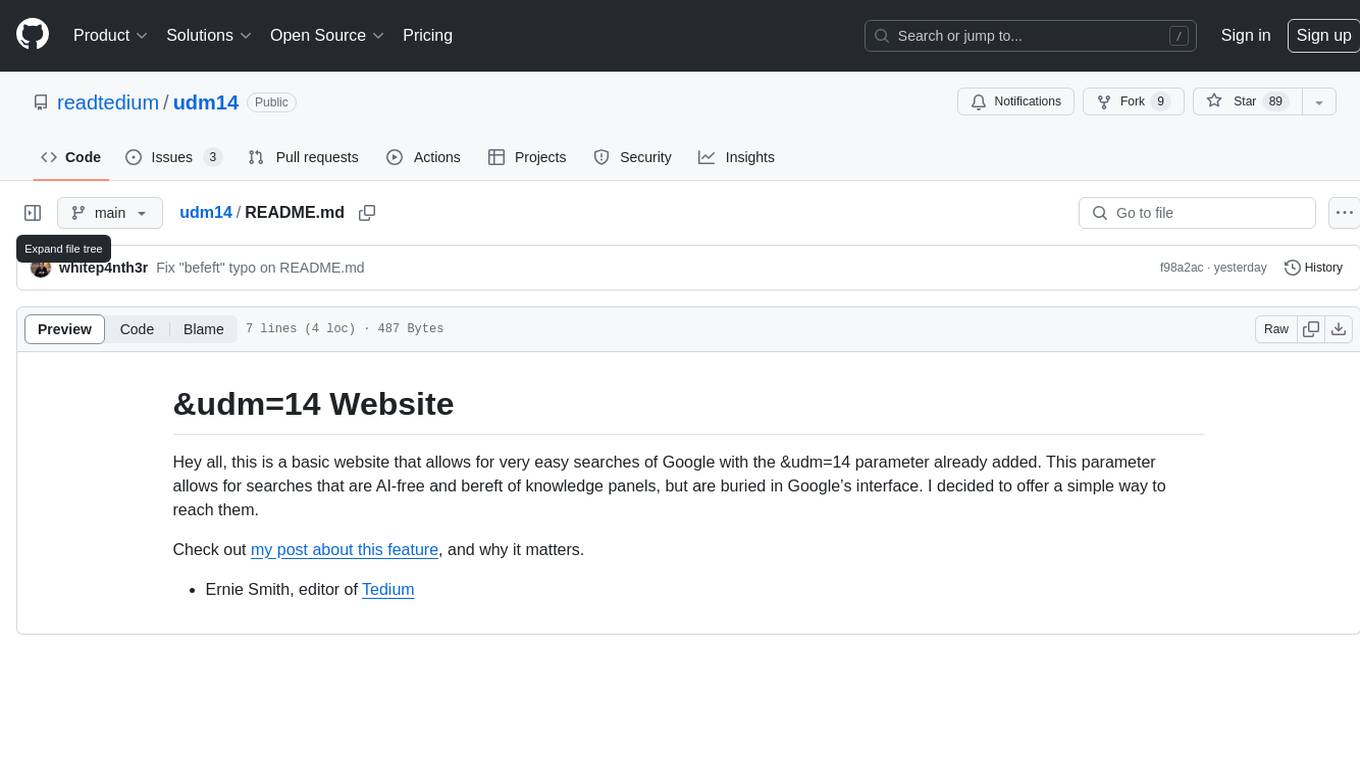
udm14
udm14 is a basic website designed to facilitate easy searches on Google with the &udm=14 parameter, ensuring AI-free results without knowledge panels. The tool simplifies access to these specific search results buried within Google's interface, providing a straightforward solution for users seeking this functionality.
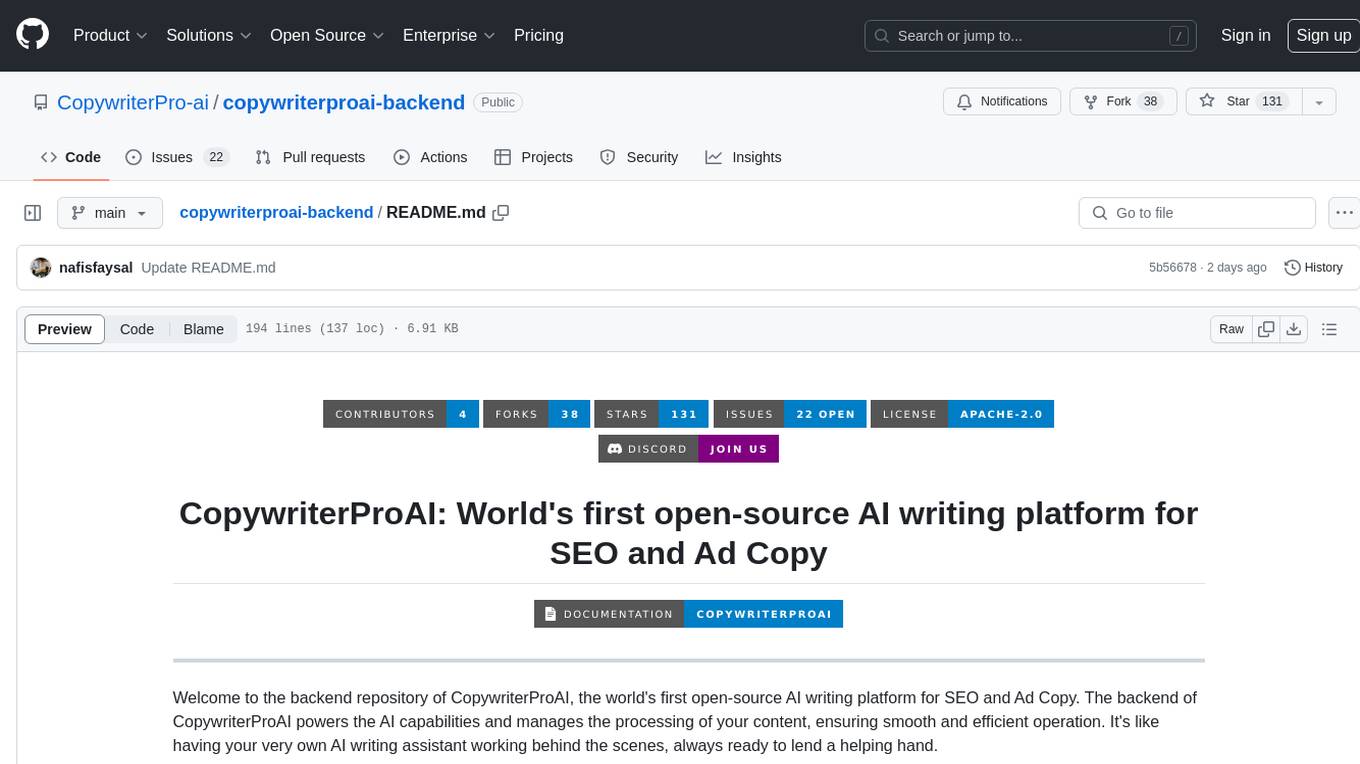
copywriterproai-backend
CopywriterProAI is the world's first open-source AI writing platform for SEO and Ad Copy. The backend repository powers the AI capabilities and manages content processing for smooth operation. It provides an AI writing assistant that works behind the scenes to assist users in content creation.
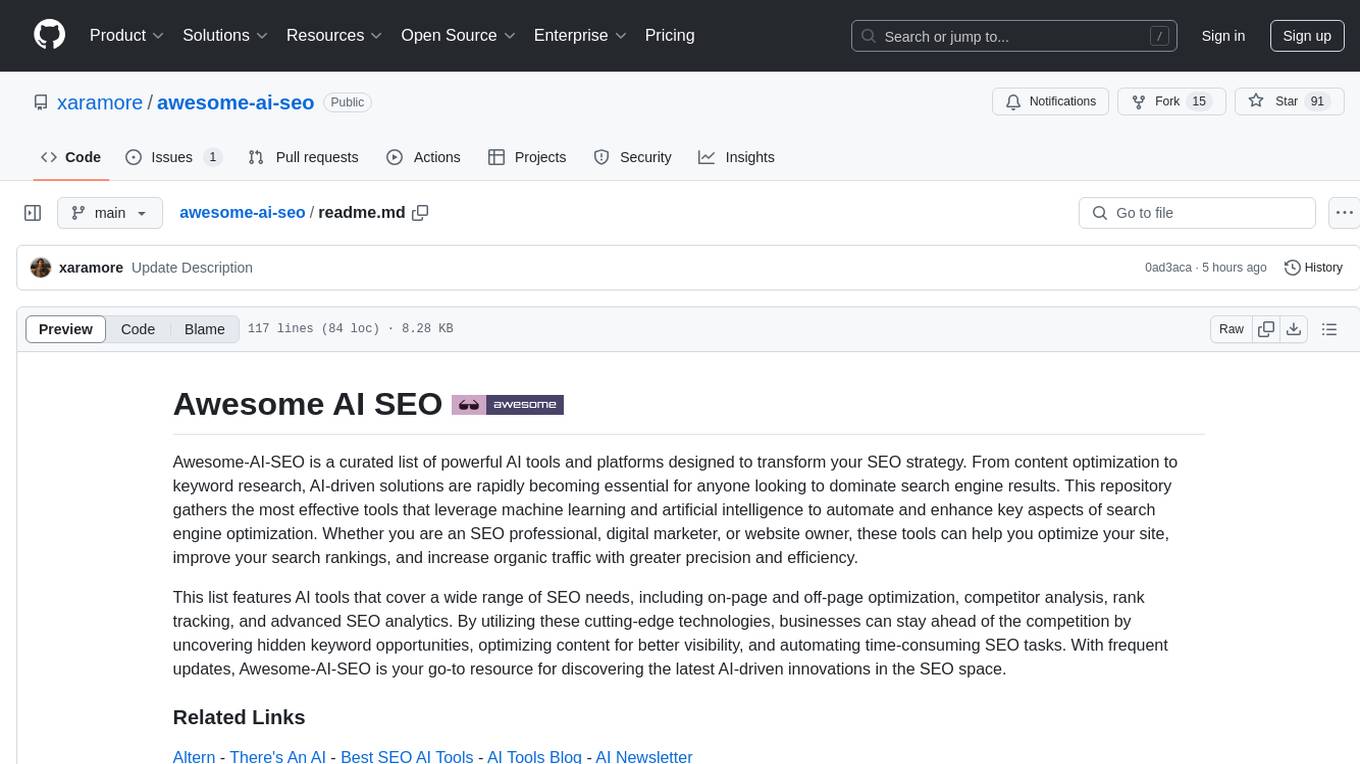
awesome-ai-seo
Awesome-AI-SEO is a curated list of powerful AI tools and platforms designed to transform your SEO strategy. This repository gathers the most effective tools that leverage machine learning and artificial intelligence to automate and enhance key aspects of search engine optimization. Whether you are an SEO professional, digital marketer, or website owner, these tools can help you optimize your site, improve your search rankings, and increase organic traffic with greater precision and efficiency. The list features AI tools covering on-page and off-page optimization, competitor analysis, rank tracking, and advanced SEO analytics. By utilizing cutting-edge technologies, businesses can stay ahead of the competition by uncovering hidden keyword opportunities, optimizing content for better visibility, and automating time-consuming SEO tasks. With frequent updates, Awesome-AI-SEO is your go-to resource for discovering the latest AI-driven innovations in the SEO space.
read-frog
Read-frog is a powerful text analysis tool designed to help users extract valuable insights from text data. It offers a wide range of features including sentiment analysis, keyword extraction, entity recognition, and text summarization. With its user-friendly interface and robust algorithms, Read-frog is suitable for both beginners and advanced users looking to analyze text data for various purposes such as market research, social media monitoring, and content optimization. Whether you are a data scientist, marketer, researcher, or student, Read-frog can streamline your text analysis workflow and provide actionable insights to drive decision-making and enhance productivity.
RustySEO
RustySEO is a free, modern SEO/GEO toolkit designed to help users crawl and analyze websites and server logs without crawl limits. It is an all-in-one, cross-platform marketing toolkit for comprehensive SEO & GEO analysis, providing actionable insights into marketing and SEO strategies. The tool offers features such as shallow & deep crawl, technical diagnostics, on-page SEO analysis, dashboards, reporting, topic and keyword generators, AI chatbot, crawl history, image conversion and optimization, and more. RustySEO aims to be a robust, free alternative to costly commercial SEO tools, with integrations like Google PageSpeed Insights, Google Gemini, and more.
For similar jobs
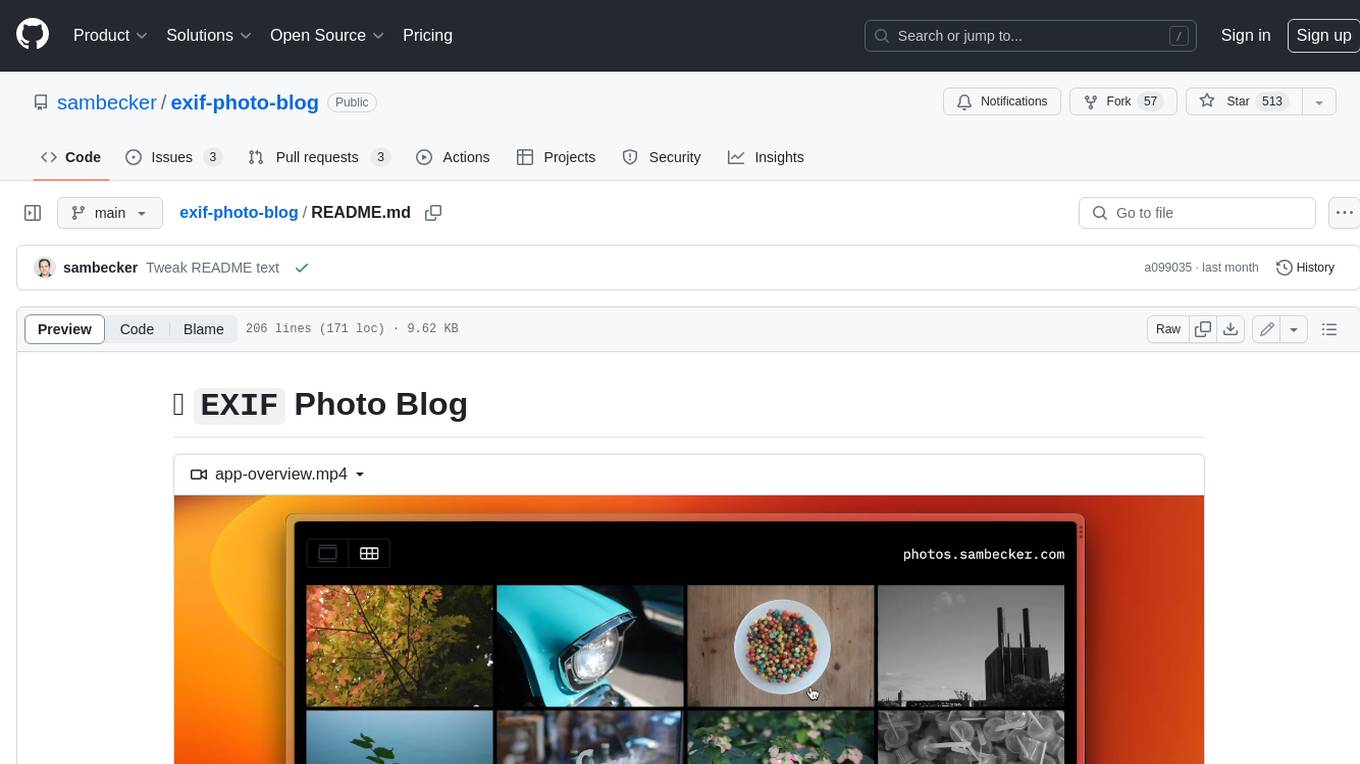
exif-photo-blog
EXIF Photo Blog is a full-stack photo blog application built with Next.js, Vercel, and Postgres. It features built-in authentication, photo upload with EXIF extraction, photo organization by tag, infinite scroll, light/dark mode, automatic OG image generation, a CMD-K menu with photo search, experimental support for AI-generated descriptions, and support for Fujifilm simulations. The application is easy to deploy to Vercel with just a few clicks and can be customized with a variety of environment variables.
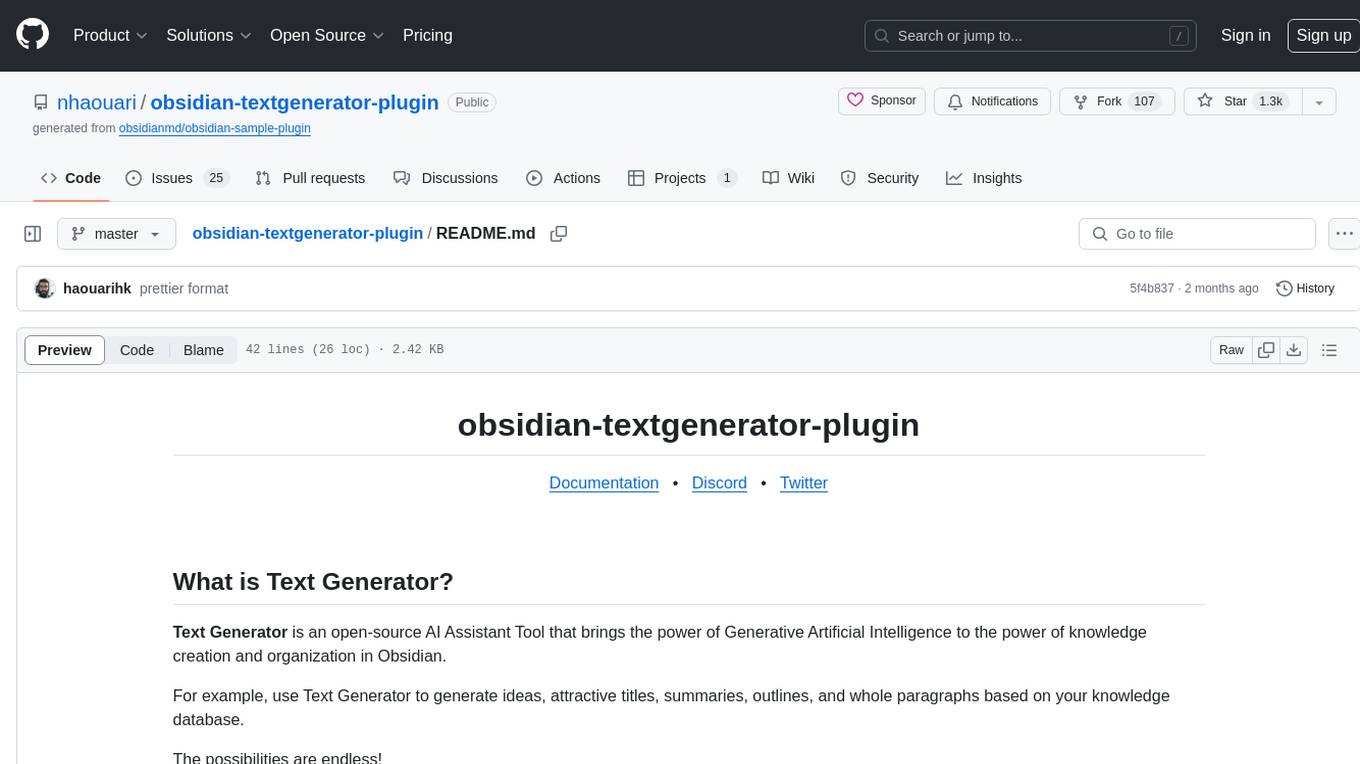
obsidian-textgenerator-plugin
Text Generator is an open-source AI Assistant Tool that leverages Generative Artificial Intelligence to enhance knowledge creation and organization in Obsidian. It allows users to generate ideas, titles, summaries, outlines, and paragraphs based on their knowledge database, offering endless possibilities. The plugin is free and open source, compatible with Obsidian for a powerful Personal Knowledge Management system. It provides flexible prompts, template engine for repetitive tasks, community templates for shared use cases, and highly flexible configuration with services like Google Generative AI, OpenAI, and HuggingFace.
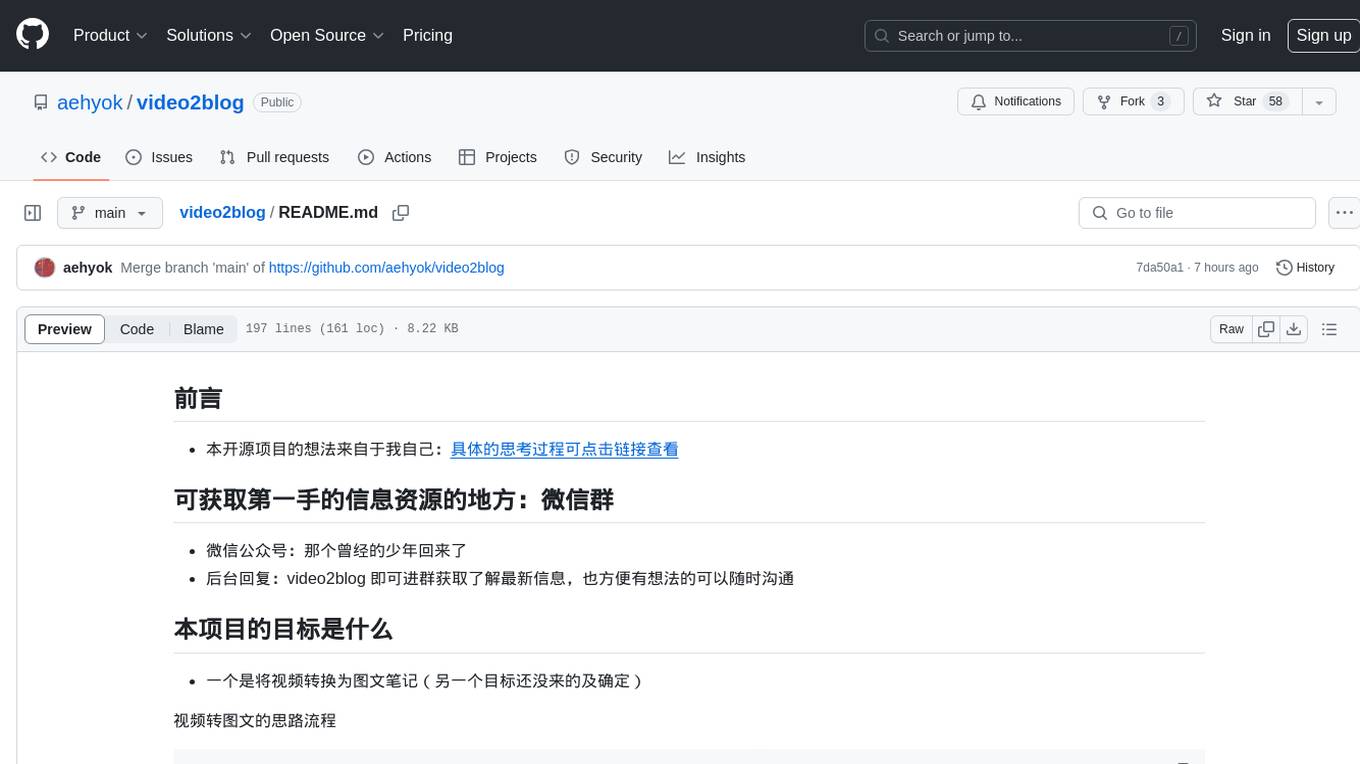
video2blog
video2blog is an open-source project aimed at converting videos into textual notes. The tool follows a process of extracting video information using yt-dlp, downloading the video, downloading subtitles if available, translating subtitles if not in Chinese, generating Chinese subtitles using whisper if no subtitles exist, converting subtitles to articles using gemini, and manually inserting images from the video into the article. The tool provides a solution for creating blog content from video resources, enhancing accessibility and content creation efficiency.
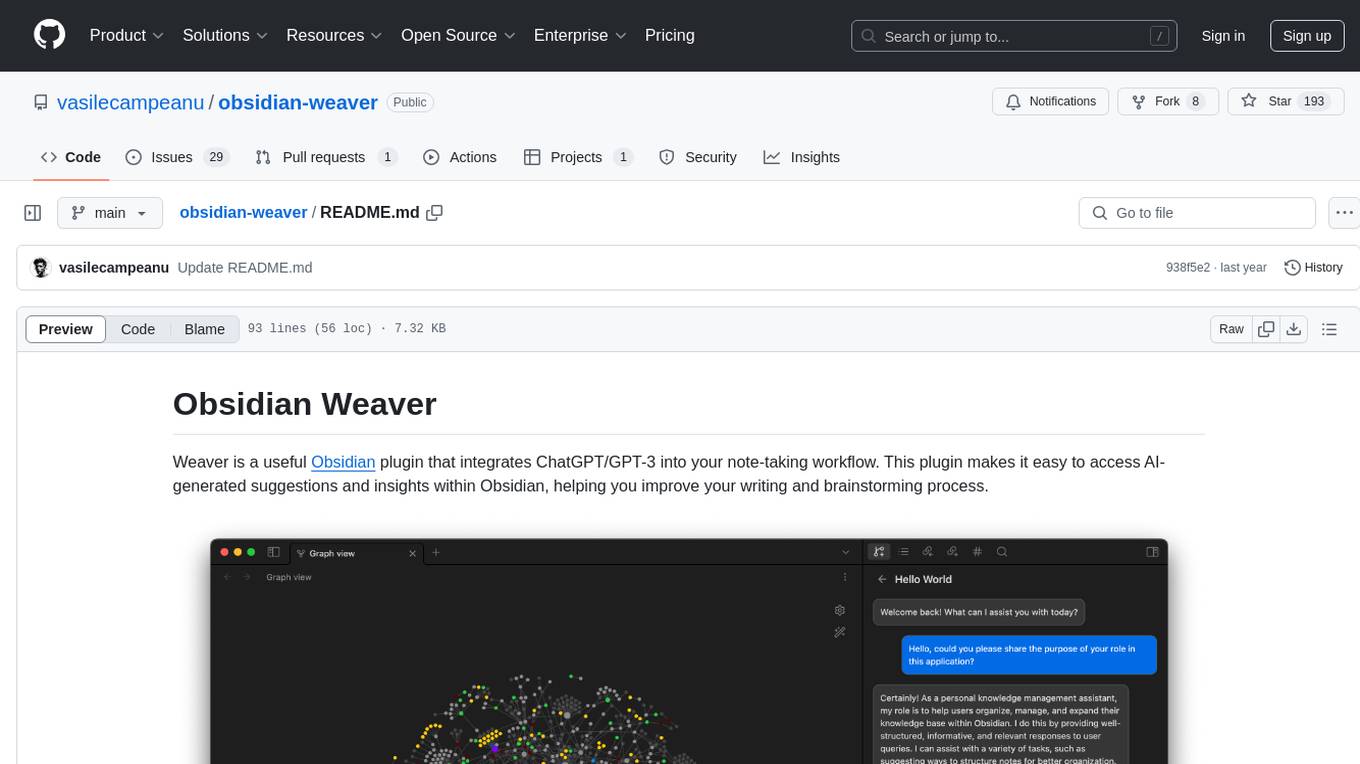
obsidian-weaver
Obsidian Weaver is a plugin that integrates ChatGPT/GPT-3 into the note-taking workflow of Obsidian. It allows users to easily access AI-generated suggestions and insights within Obsidian, enhancing the writing and brainstorming process. The plugin respects Obsidian's philosophy of storing notes locally, ensuring data security and privacy. Weaver offers features like creating new chat sessions with the AI assistant and receiving instant responses, all within the Obsidian environment. It provides a seamless integration with Obsidian's interface, making the writing process efficient and helping users stay focused. The plugin is constantly being improved with new features and updates to enhance the note-taking experience.
wordlift-plugin
WordLift is a plugin that helps online content creators organize posts and pages by adding facts, links, and media to build beautifully structured websites for both humans and search engines. It allows users to create, own, and publish their own knowledge graph, and publishes content as Linked Open Data following Tim Berners-Lee's Linked Data Principles. The plugin supports writers by providing trustworthy and contextual facts, enriching content with images, links, and interactive visualizations, keeping readers engaged with relevant content recommendations, and producing content compatible with schema.org markup for better indexing and display on search engines. It also offers features like creating a personal Wikipedia, publishing metadata to share and distribute content, and supporting content tagging for better SEO.
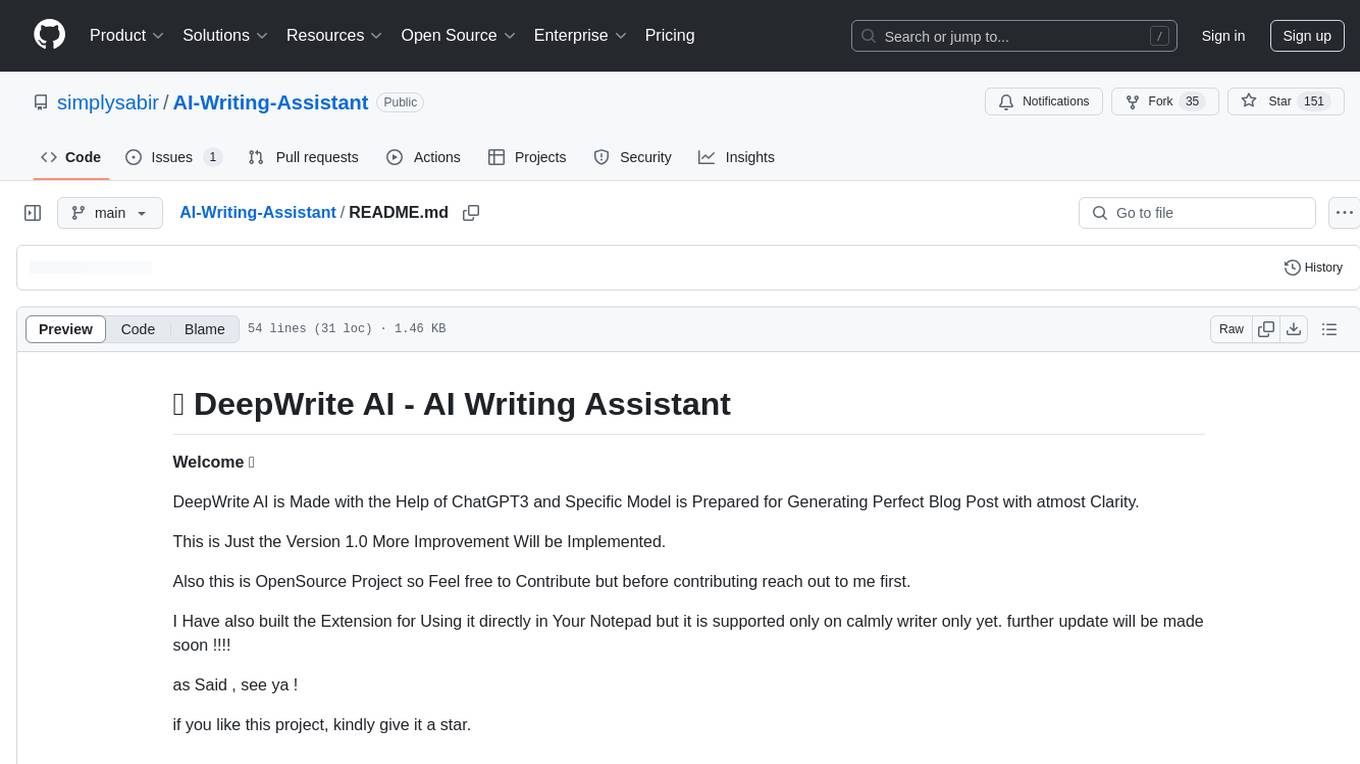
AI-Writing-Assistant
DeepWrite AI is an AI writing assistant tool created with the help of ChatGPT3. It is designed to generate perfect blog posts with utmost clarity. The tool is currently at version 1.0 with plans for further improvements. It is an open-source project, welcoming contributions. An extension has been developed for using the tool directly in Notepad, currently supported only on Calmly Writer. The tool requires installation and setup, utilizing technologies like React, Next, TailwindCSS, Node, and Express. For support, users can message the creator on Instagram. The creator, Sabir Khan, is an undergraduate student of Computer Science from Mumbai, known for frequently creating innovative projects.
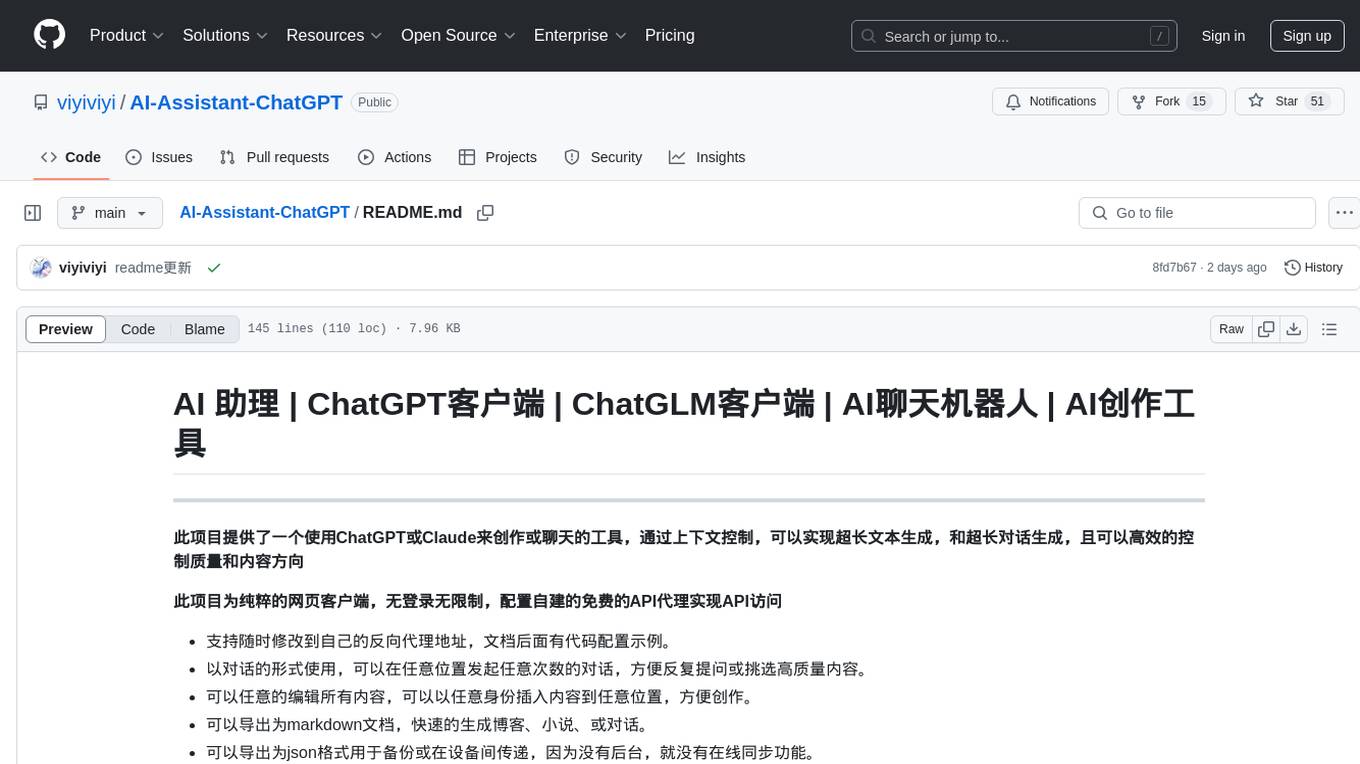
AI-Assistant-ChatGPT
AI Assistant ChatGPT is a web client tool that allows users to create or chat using ChatGPT or Claude. It enables generating long texts and conversations with efficient control over quality and content direction. The tool supports customization of reverse proxy address, conversation management, content editing, markdown document export, JSON backup, context customization, session-topic management, role customization, dynamic content navigation, and more. Users can access the tool directly at https://eaias.com or deploy it independently. It offers features for dialogue management, assistant configuration, session configuration, and more. The tool lacks data cloud storage and synchronization but provides guidelines for independent deployment. It is a frontend project that can be deployed using Cloudflare Pages and customized with backend modifications. The project is open-source under the MIT license.
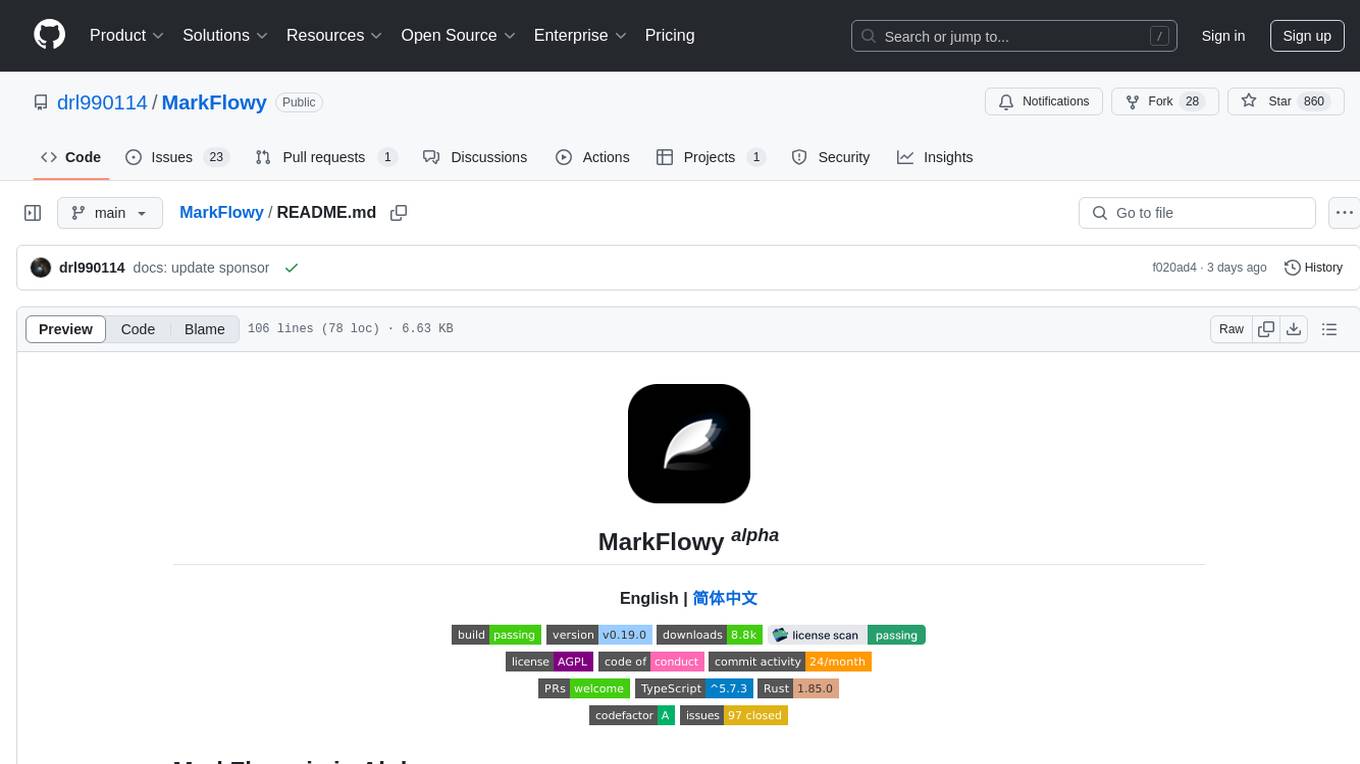
MarkFlowy
MarkFlowy is a lightweight and feature-rich Markdown editor with built-in AI capabilities. It supports one-click export of conversations, translation of articles, and obtaining article abstracts. Users can leverage large AI models like DeepSeek and Chatgpt as intelligent assistants. The editor provides high availability with multiple editing modes and custom themes. Available for Linux, macOS, and Windows, MarkFlowy aims to offer an efficient, beautiful, and data-safe Markdown editing experience for users.