


learnhouse
The Next-gen Open Source learning platform for everyone ✨
Stars: 812
LearnHouse is an open-source platform that allows anyone to easily provide world-class educational content. It supports various content types, including dynamic pages, videos, and documents. The platform is still in early development and should not be used in production environments. However, it offers several features, such as dynamic Notion-like pages, ease of use, multi-organization support, support for uploading videos and documents, course collections, user management, quizzes, course progress tracking, and an AI-powered assistant for teachers and students. LearnHouse is built using various open-source projects, including Next.js, TailwindCSS, Radix UI, Tiptap, FastAPI, YJS, PostgreSQL, LangChain, and React.
README:

LearnHouse is an open source platform that makes it easy for anyone to provide world-class educational content and it offers a variety of content types : Dynamic Pages, Videos, Documents & more..
🚧 LearnHouse is still on early development (alpha), as we reach stability we will release a stable version and add more features.
We prioritize issues depending on the most requested features from our users, please help us prioritize issues by commenting on them and sharing your thoughts
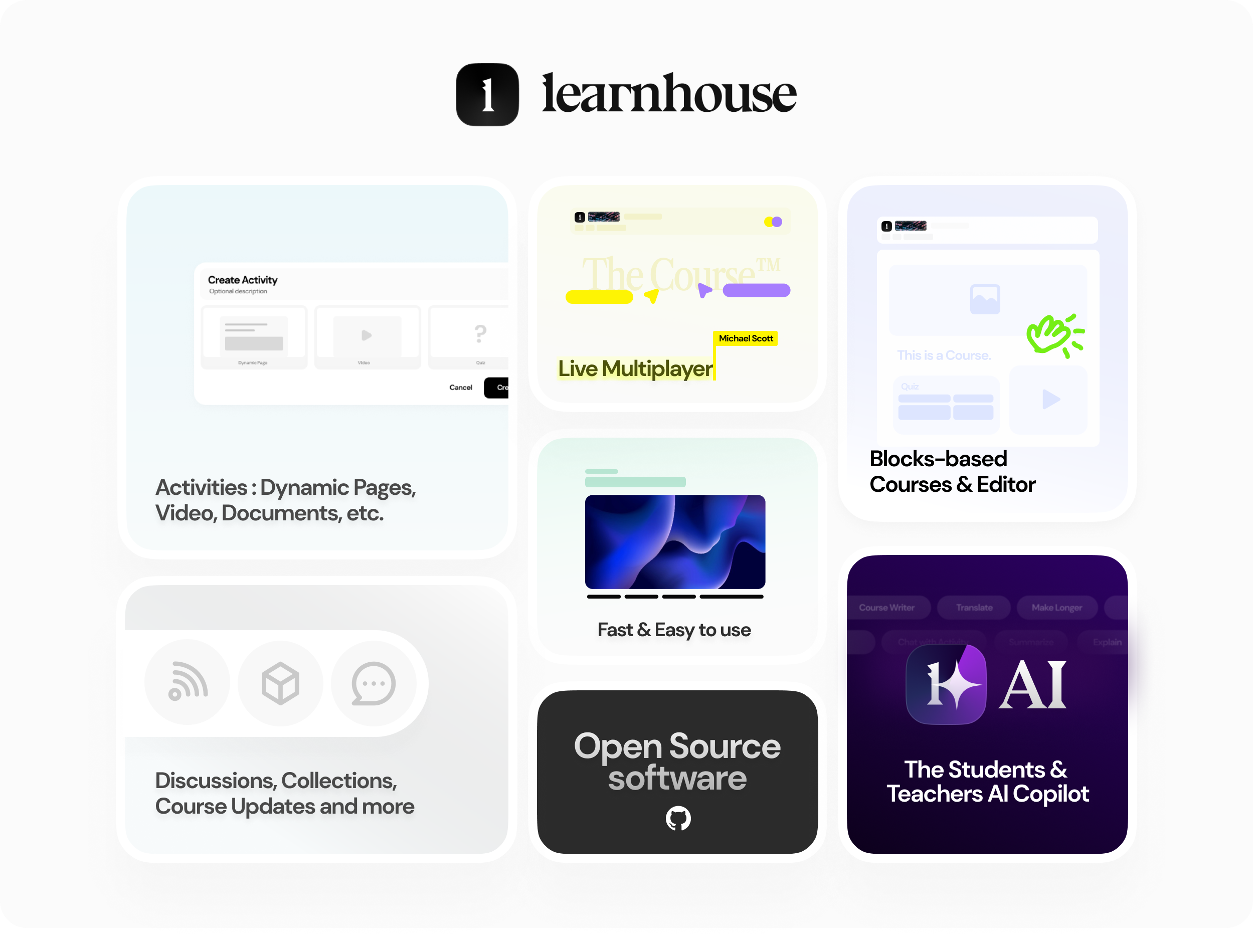
- 📄✨Dynamic notion-like Blocks-based Courses & editor
- 🏎️ Easy to use
- 👥 Multi-Organization
- 📹 Supports Uploadable Videos and external videos like YouTube
- 📄 Supports documents like PDF
- 👨🎓 Users & Groups Management
- 🙋 Quizzes
- 🍱 Course Collections
- 👟 Course Progress
- 🛜 Course Updates
- 💬 Discussions
- ✨ LearnHouse AI : The Teachers and Students copilot
- 👪 Multiplayer Course edition
- More to come
Please visit our Discord community 👋
Thank you for you interest 💖, here is how you can help :
- Getting Started
- Developers Quick start
- Submit a bug report
- Check good first issues & Help Wanted
- Spread the word and share the project with your friends
TLDR: Run docker-compose up -d and inspect the logs, should be ready to go in less than 2 mins
LearnHouse uses a number of open source projects to work properly:
- Next.js (14 with the App Directory) - The React Framework
- TailwindCSS - Styling
- Radix UI - Accessible UI Components
- Tiptap - An editor framework and headless wrapper around ProseMirror
- FastAPI - A high performance, async API framework for Python
- YJS - Shared data types for building collaborative software
- PostgreSQL - SQL Database
- Redis - In-Memory Database
- LangChain - LangChain is a framework for developing applications powered by language models
- React - duh
Learn about LearnHouse and how to use it, using LearnHouse
Learnhouse is made with 💜, from the UI to the features it is carefully designed to make students and teachers lives easier and make education software more enjoyable.
Thank you and have fun using/developing/testing LearnHouse !
For Tasks:
Click tags to check more tools for each tasksFor Jobs:
Alternative AI tools for learnhouse
Similar Open Source Tools
learnhouse
LearnHouse is an open-source platform that allows anyone to easily provide world-class educational content. It supports various content types, including dynamic pages, videos, and documents. The platform is still in early development and should not be used in production environments. However, it offers several features, such as dynamic Notion-like pages, ease of use, multi-organization support, support for uploading videos and documents, course collections, user management, quizzes, course progress tracking, and an AI-powered assistant for teachers and students. LearnHouse is built using various open-source projects, including Next.js, TailwindCSS, Radix UI, Tiptap, FastAPI, YJS, PostgreSQL, LangChain, and React.
weam
Weam is an open source platform designed to help teams systematically adopt AI. It provides a production-ready stack with Next.js frontend and Node.js/Python backend, allowing for immediate deployment and use. Weam connects to major LLM providers, enabling easy access to the latest AI models. The platform organizes AI interactions into 'Brains' for different departments, offering customization and expansion options. Features include chat system, productivity tools, sharing & access controls, prompt library, AI agents, RAG, MCP, enterprise features, pre-built automations, and upcoming AI app solutions. Weam is free, open source, and scalable to meet growing needs.
llmops-duke-aipi
LLMOps Duke AIPI is a course focused on operationalizing Large Language Models, teaching methodologies for developing applications using software development best practices with large language models. The course covers various topics such as generative AI concepts, setting up development environments, interacting with large language models, using local large language models, applied solutions with LLMs, extensibility using plugins and functions, retrieval augmented generation, introduction to Python web frameworks for APIs, DevOps principles, deploying machine learning APIs, LLM platforms, and final presentations. Students will learn to build, share, and present portfolios using Github, YouTube, and Linkedin, as well as develop non-linear life-long learning skills. Prerequisites include basic Linux and programming skills, with coursework available in Python or Rust. Additional resources and references are provided for further learning and exploration.
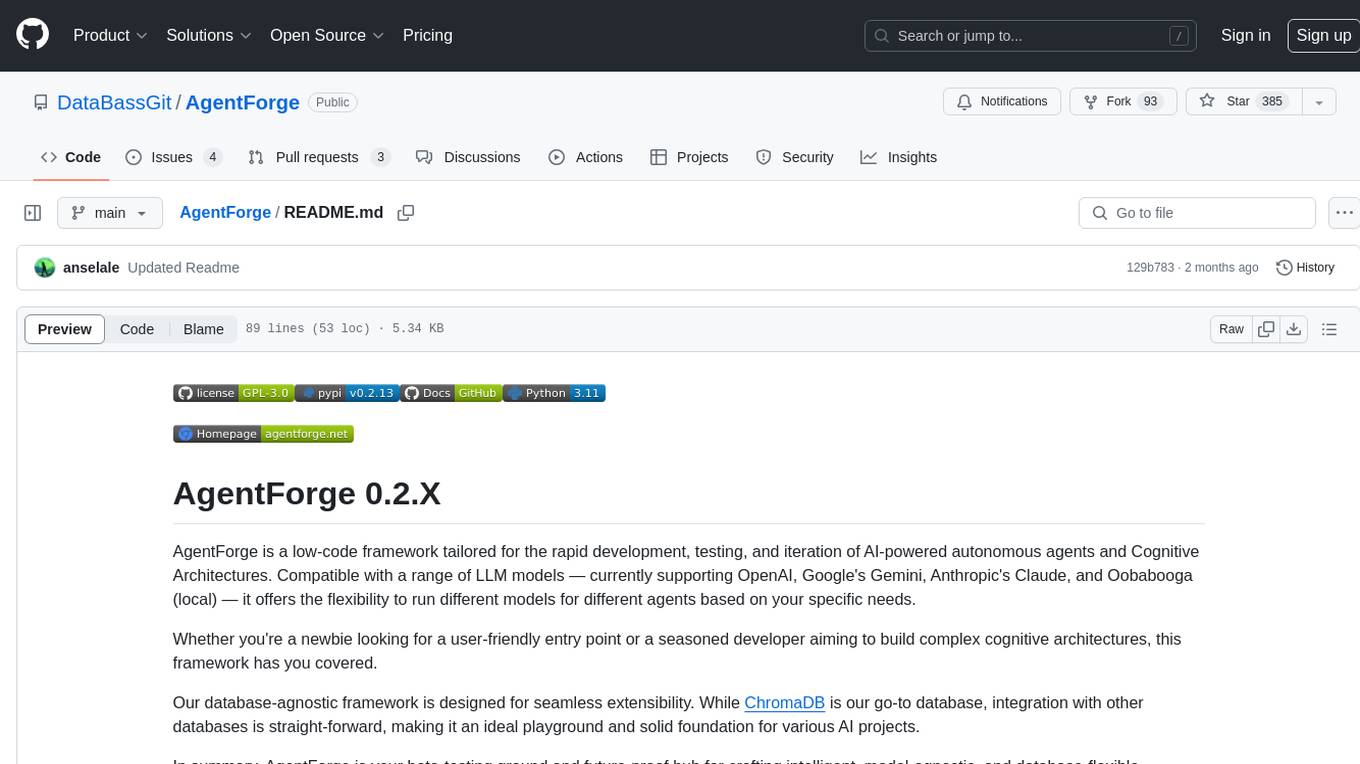
AgentForge
AgentForge is a low-code framework tailored for the rapid development, testing, and iteration of AI-powered autonomous agents and Cognitive Architectures. It is compatible with a range of LLM models and offers flexibility to run different models for different agents based on specific needs. The framework is designed for seamless extensibility and database-flexibility, making it an ideal playground for various AI projects. AgentForge is a beta-testing ground and future-proof hub for crafting intelligent, model-agnostic autonomous agents.
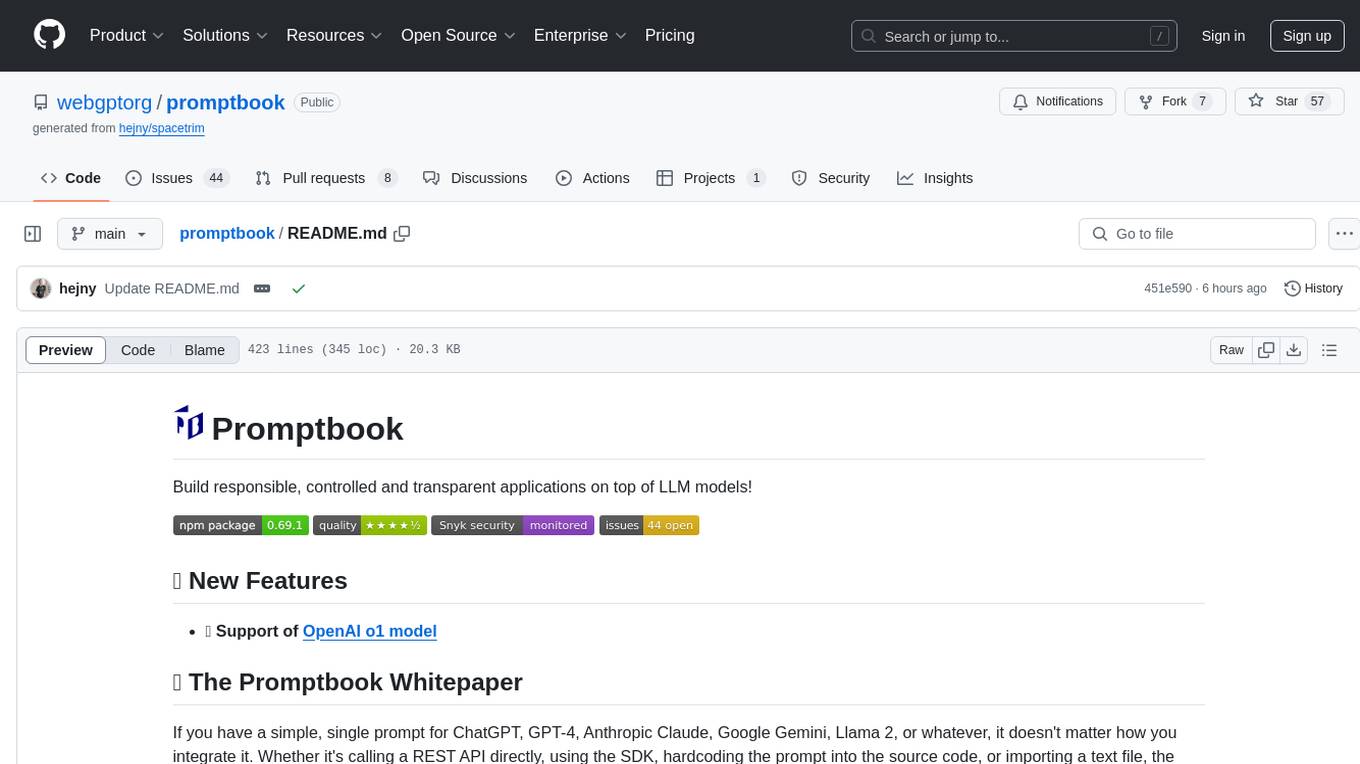
promptbook
Promptbook is a library designed to build responsible, controlled, and transparent applications on top of large language models (LLMs). It helps users overcome limitations of LLMs like hallucinations, off-topic responses, and poor quality output by offering features such as fine-tuning models, prompt-engineering, and orchestrating multiple prompts in a pipeline. The library separates concerns, establishes a common format for prompt business logic, and handles low-level details like model selection and context size. It also provides tools for pipeline execution, caching, fine-tuning, anomaly detection, and versioning. Promptbook supports advanced techniques like Retrieval-Augmented Generation (RAG) and knowledge utilization to enhance output quality.
nexent
Nexent is a powerful tool for analyzing and visualizing network traffic data. It provides comprehensive insights into network behavior, helping users to identify patterns, anomalies, and potential security threats. With its user-friendly interface and advanced features, Nexent is suitable for network administrators, cybersecurity professionals, and anyone looking to gain a deeper understanding of their network infrastructure.
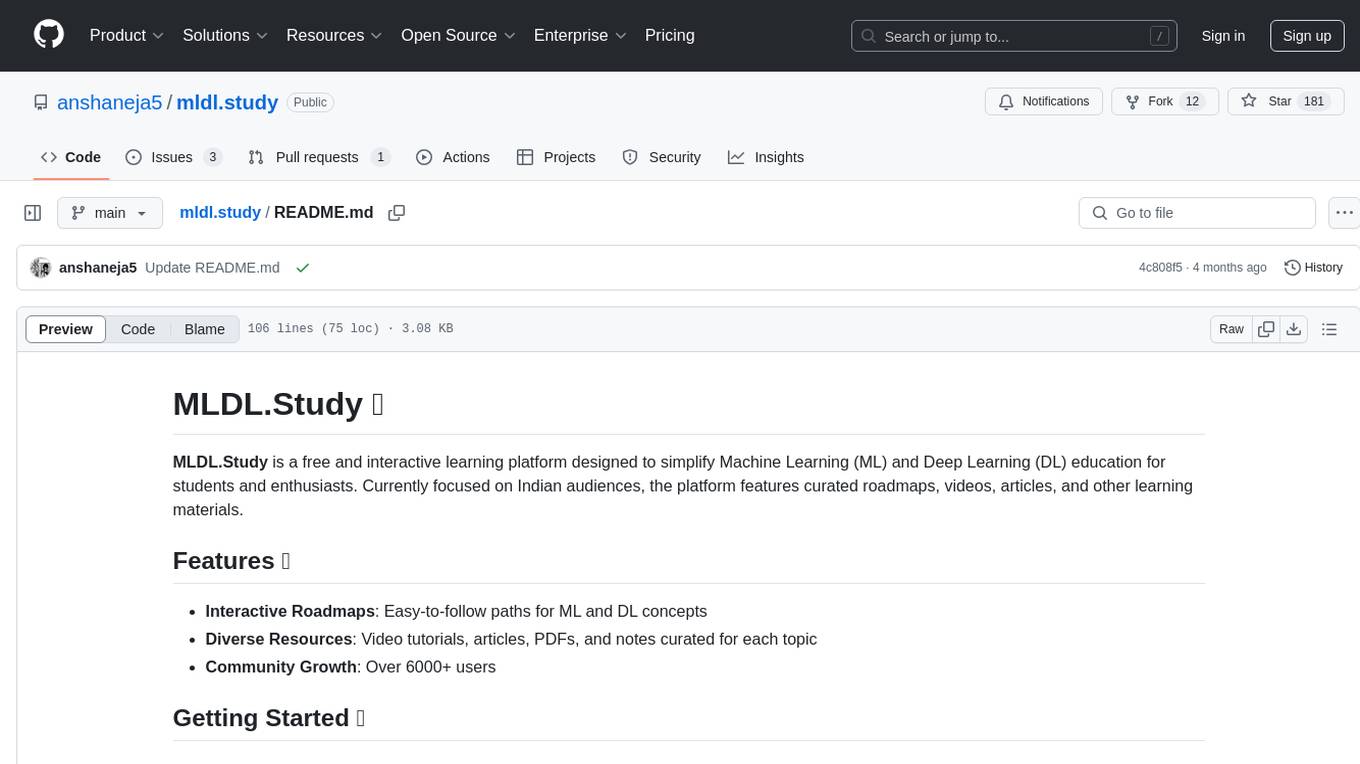
mldl.study
MLDL.Study is a free interactive learning platform focused on simplifying Machine Learning (ML) and Deep Learning (DL) education for students and enthusiasts. It features curated roadmaps, videos, articles, and other learning materials. The platform aims to provide a comprehensive learning experience for Indian audiences, with easy-to-follow paths for ML and DL concepts, diverse resources including video tutorials and articles, and a growing community of over 6000 users. Contributors can add new resources following specific guidelines to maintain quality and relevance. Future plans include expanding content for global learners, introducing a Python programming roadmap, and creating roadmaps for fields like Generative AI and Reinforcement Learning.
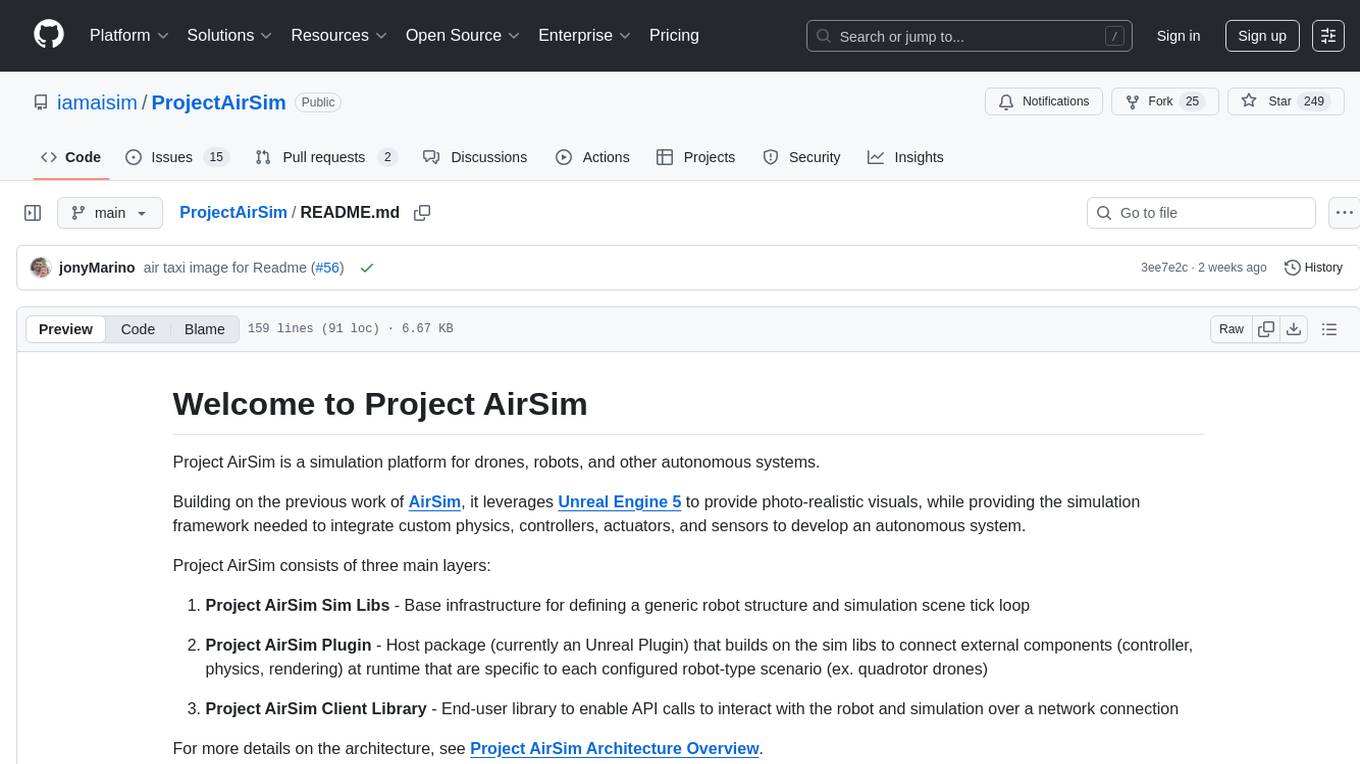
ProjectAirSim
Project AirSim is a simulation platform for drones, robots, and autonomous systems. Leveraging Unreal Engine 5, it provides photo-realistic visuals and a simulation framework for custom physics, controllers, actuators, and sensors. It consists of three main layers: Sim Libs, Plugin, and Client Library. It supports Windows 11 and Ubuntu 22, inviting collaboration and enterprise support. Users can join the community, contribute to the roadmap, and get started with pre-built binaries or building from source. It offers headless running options and references for configuration settings, API, controllers, sensors, scene, physics, and FAQ.
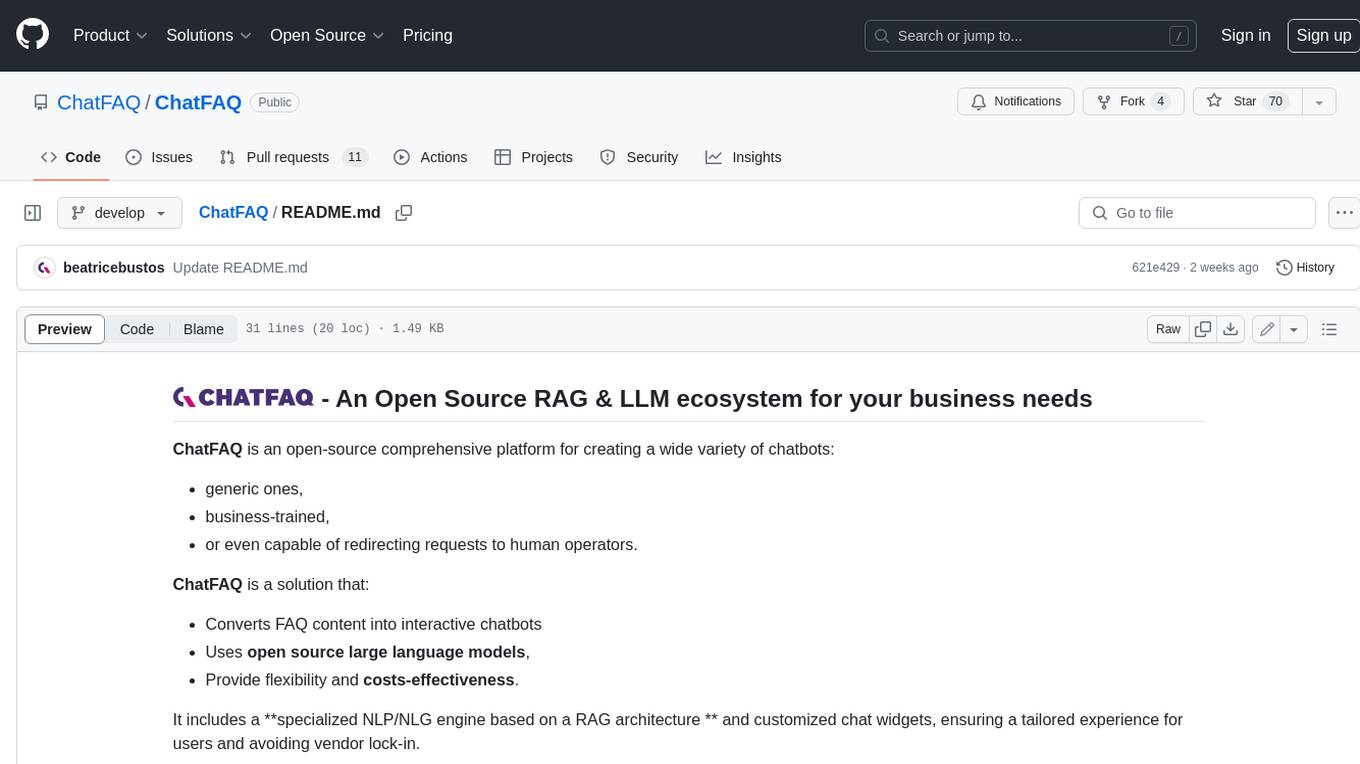
ChatFAQ
ChatFAQ is an open-source comprehensive platform for creating a wide variety of chatbots: generic ones, business-trained, or even capable of redirecting requests to human operators. It includes a specialized NLP/NLG engine based on a RAG architecture and customized chat widgets, ensuring a tailored experience for users and avoiding vendor lock-in.

DocsGPT
DocsGPT is an open-source documentation assistant powered by GPT models. It simplifies the process of searching for information in project documentation by allowing developers to ask questions and receive accurate answers. With DocsGPT, users can say goodbye to manual searches and quickly find the information they need. The tool aims to revolutionize project documentation experiences and offers features like live previews, Discord community, guides, and contribution opportunities. It consists of a Flask app, Chrome extension, similarity search index creation script, and a frontend built with Vite and React. Users can quickly get started with DocsGPT by following the provided setup instructions and can contribute to its development by following the guidelines in the CONTRIBUTING.md file. The project follows a Code of Conduct to ensure a harassment-free community environment for all participants. DocsGPT is licensed under MIT and is built with LangChain.
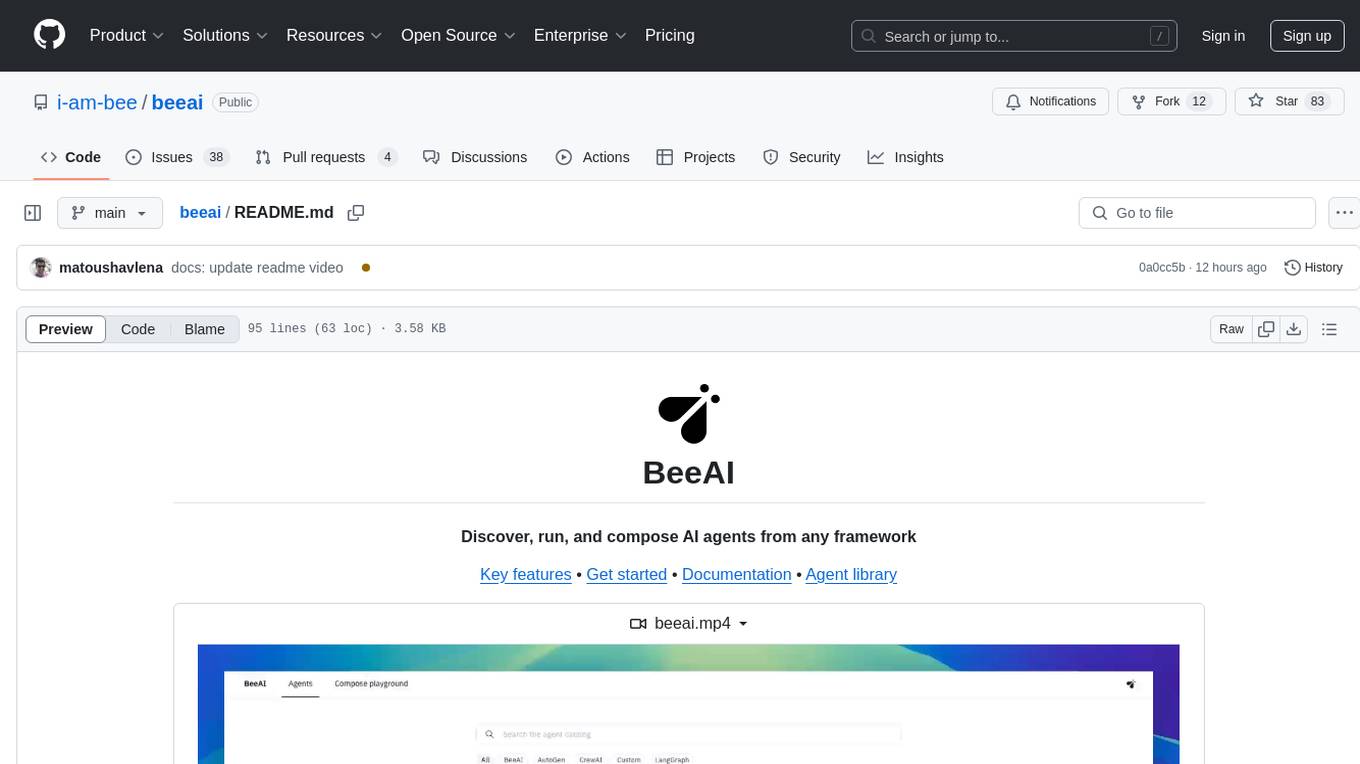
beeai
BeeAI is an open platform that helps users discover, run, and compose AI agents from any framework and language. It offers a framework-agnostic approach, allowing seamless integration of AI agents regardless of the language or platform. Users can build complex workflows using simple building blocks, explore a catalog of powerful agents with integrated search, and benefit from the BeeAI ecosystem with first-class support for Python and TypeScript agent developers.
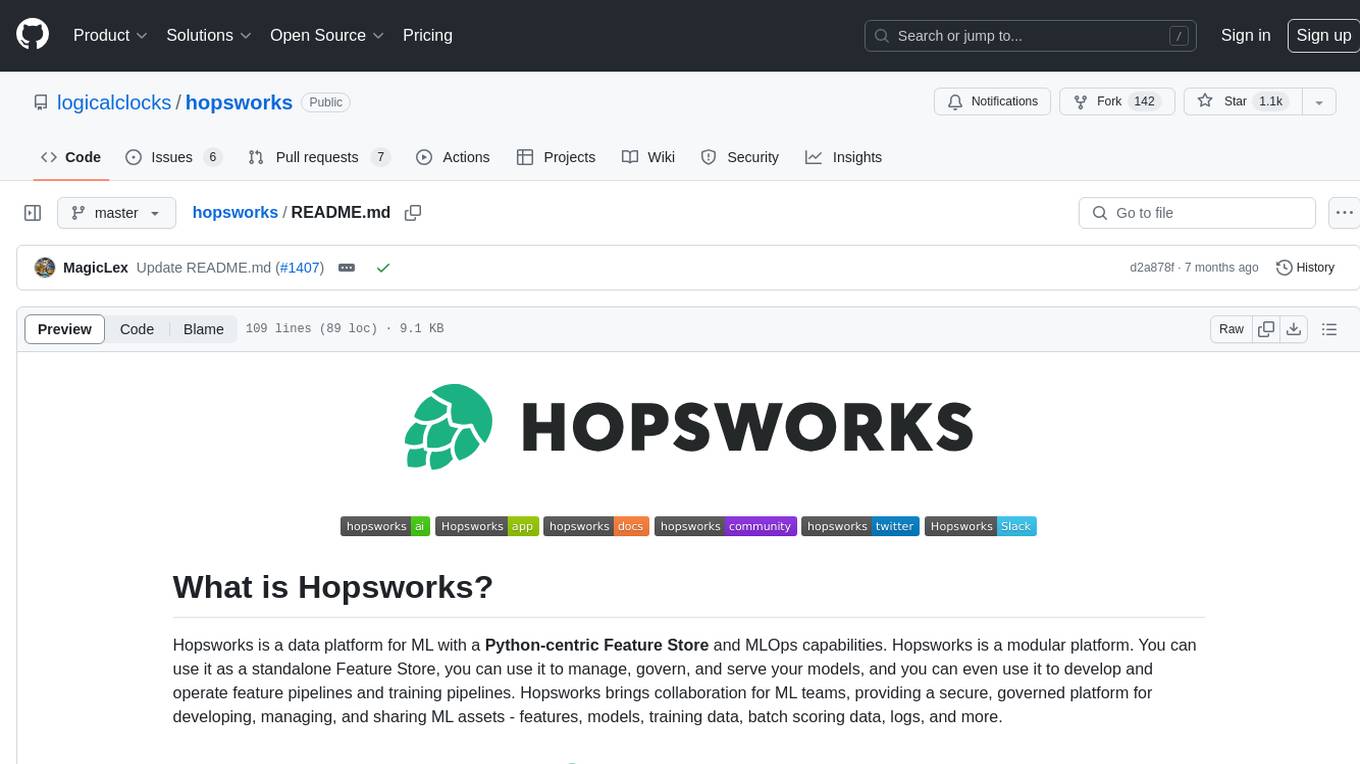
hopsworks
Hopsworks is a data platform for ML with a Python-centric Feature Store and MLOps capabilities. It provides collaboration for ML teams, offering a secure, governed platform for developing, managing, and sharing ML assets. Hopsworks supports project-based multi-tenancy, team collaboration, development tools for Data Science, and is available on any platform including managed cloud services and on-premise installations. The platform enables end-to-end responsibility from raw data to managed features and models, supports versioning, lineage, and provenance, and facilitates the complete MLOps life cycle.

langwatch
LangWatch is a monitoring and analytics platform designed to track, visualize, and analyze interactions with Large Language Models (LLMs). It offers real-time telemetry to optimize LLM cost and latency, a user-friendly interface for deep insights into LLM behavior, user analytics for engagement metrics, detailed debugging capabilities, and guardrails to monitor LLM outputs for issues like PII leaks and toxic language. The platform supports OpenAI and LangChain integrations, simplifying the process of tracing LLM calls and generating API keys for usage. LangWatch also provides documentation for easy integration and self-hosting options for interested users.
saga-reader
Saga Reader is an AI-driven think tank-style reader that automatically retrieves information from the internet based on user-specified topics and preferences. It uses cloud or local large models to summarize and provide guidance, and it includes an AI-driven interactive companion reading function, allowing you to discuss and exchange ideas with AI about the content you've read. Saga Reader is completely free and open-source, meaning all data is securely stored on your own computer and is not controlled by third-party service providers. Additionally, you can manage your subscription keywords based on your interests and preferences without being disturbed by advertisements and commercialized content.
latitude-llm
Latitude is an open-source prompt engineering platform that helps developers and product teams build AI features with confidence. It simplifies prompt management, aids in testing AI responses, and provides detailed analytics on request performance. Latitude offers collaborative prompt management, support for advanced features, version control, API and SDKs for integration, observability, evaluations in batch or real-time, and is community-driven. It can be deployed on Latitude Cloud for a managed solution or self-hosted for control and customization.
codegate
CodeGate is a local gateway that enhances the safety of AI coding assistants by ensuring AI-generated recommendations adhere to best practices, safeguarding code integrity, and protecting individual privacy. Developed by Stacklok, CodeGate allows users to confidently leverage AI in their development workflow without compromising security or productivity. It works seamlessly with coding assistants, providing real-time security analysis of AI suggestions. CodeGate is designed with privacy at its core, keeping all data on the user's machine and offering complete control over data.
For similar tasks
learnhouse
LearnHouse is an open-source platform that allows anyone to easily provide world-class educational content. It supports various content types, including dynamic pages, videos, and documents. The platform is still in early development and should not be used in production environments. However, it offers several features, such as dynamic Notion-like pages, ease of use, multi-organization support, support for uploading videos and documents, course collections, user management, quizzes, course progress tracking, and an AI-powered assistant for teachers and students. LearnHouse is built using various open-source projects, including Next.js, TailwindCSS, Radix UI, Tiptap, FastAPI, YJS, PostgreSQL, LangChain, and React.
PromptChains
ChatGPT Queue Prompts is a collection of prompt chains designed to enhance interactions with large language models like ChatGPT. These prompt chains help build context for the AI before performing specific tasks, improving performance. Users can copy and paste prompt chains into the ChatGPT Queue extension to process prompts in sequence. The repository includes example prompt chains for tasks like conducting AI company research, building SEO optimized blog posts, creating courses, revising resumes, enriching leads for CRM, personal finance document creation, workout and nutrition plans, marketing plans, and more.
zoonk
Zoonk is a web app designed for creating interactive courses using AI. Currently in early development stage, it is not yet ready for use but aims to be available for testing and contributions in the future. The project focuses on leveraging AI technology to enhance the learning experience by providing interactive course creation tools. Zoonk also conducts model evaluations on different prompts to improve its AI capabilities. The project has garnered support from various individuals who believe in its vision and potential.
deep-chat
Deep Chat is a fully customizable AI chat component that can be injected into your website with minimal to no effort. Whether you want to create a chatbot that leverages popular APIs such as ChatGPT or connect to your own custom service, this component can do it all! Explore deepchat.dev to view all of the available features, how to use them, examples and more!
nttu-chatbot
NTTU Chatbot is a student support chatbot developed using LLM + Document Retriever (RAG) technology in Vietnamese. It provides assistance to students by answering their queries and retrieving relevant documents. The chatbot aims to enhance the student support system by offering quick and accurate responses to user inquiries. It utilizes advanced language models and document retrieval techniques to deliver efficient and effective support to users.
wxflows
watsonx.ai Flows Engine is a powerful tool for building, running, and deploying AI agents. It allows users to create tools from various data sources and deploy them to the cloud. The tools built with watsonx.ai Flows Engine can be integrated into any Agentic Framework using the SDK for Python & JavaScript. The platform offers a range of tools and integrations, including exchange, wikipedia, google_books, math, and weather. Users can also build their own tools and leverage integrations like LangGraph, LangChain, watsonx.ai, and OpenAI. Examples of applications built with watsonx.ai Flows Engine include an end-to-end Agent Chat App, Text-to-SQL Agent, YouTube transcription agent, Math agent, and more. The platform provides comprehensive support through Discord for any questions or feedback.
tegon
Tegon is an open-source AI-First issue tracking tool designed for engineering teams. It aims to simplify task management by leveraging AI and integrations to automate task creation, prioritize tasks, and enhance bug resolution. Tegon offers features like issues tracking, automatic title generation, AI-generated labels and assignees, custom views, and upcoming features like sprints and task prioritization. It integrates with GitHub, Slack, and Sentry to streamline issue tracking processes. Tegon also plans to introduce AI Agents like PR Agent and Bug Agent to enhance product management and bug resolution. Contributions are welcome, and the product is licensed under the MIT License.
Aidoku
Aidoku is a free and open source manga reading application for iOS and iPadOS. It offers features like ad-free experience, robust WASM source system, online reading through external sources, iCloud sync support, downloads, and tracker support. Users can access the latest ipa from the releases page and join TestFlight via the Aidoku Discord for detailed installation instructions. The project is open to contributions, with planned features and fixes. Translation efforts are welcomed through Weblate for crowd-sourced translations.
For similar jobs
LLMStack
LLMStack is a no-code platform for building generative AI agents, workflows, and chatbots. It allows users to connect their own data, internal tools, and GPT-powered models without any coding experience. LLMStack can be deployed to the cloud or on-premise and can be accessed via HTTP API or triggered from Slack or Discord.
daily-poetry-image
Daily Chinese ancient poetry and AI-generated images powered by Bing DALL-E-3. GitHub Action triggers the process automatically. Poetry is provided by Today's Poem API. The website is built with Astro.
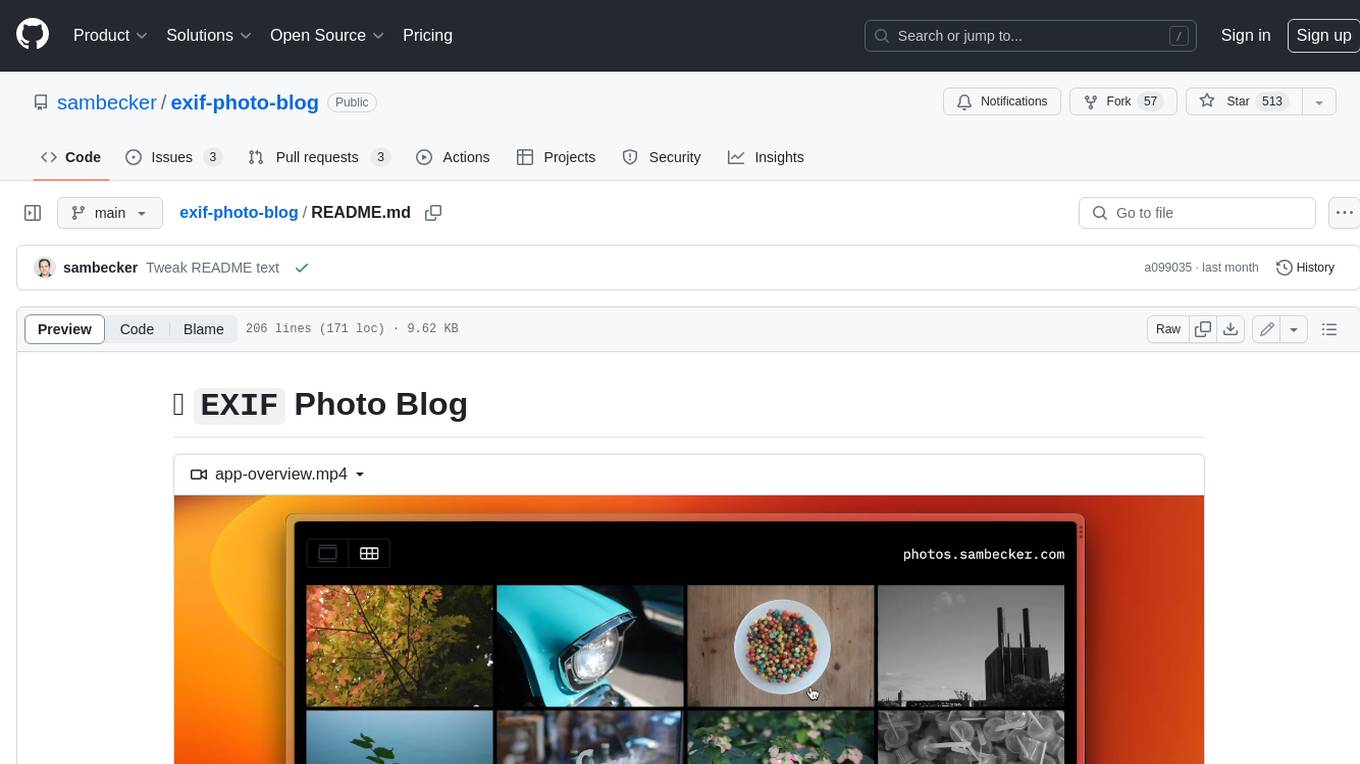
exif-photo-blog
EXIF Photo Blog is a full-stack photo blog application built with Next.js, Vercel, and Postgres. It features built-in authentication, photo upload with EXIF extraction, photo organization by tag, infinite scroll, light/dark mode, automatic OG image generation, a CMD-K menu with photo search, experimental support for AI-generated descriptions, and support for Fujifilm simulations. The application is easy to deploy to Vercel with just a few clicks and can be customized with a variety of environment variables.
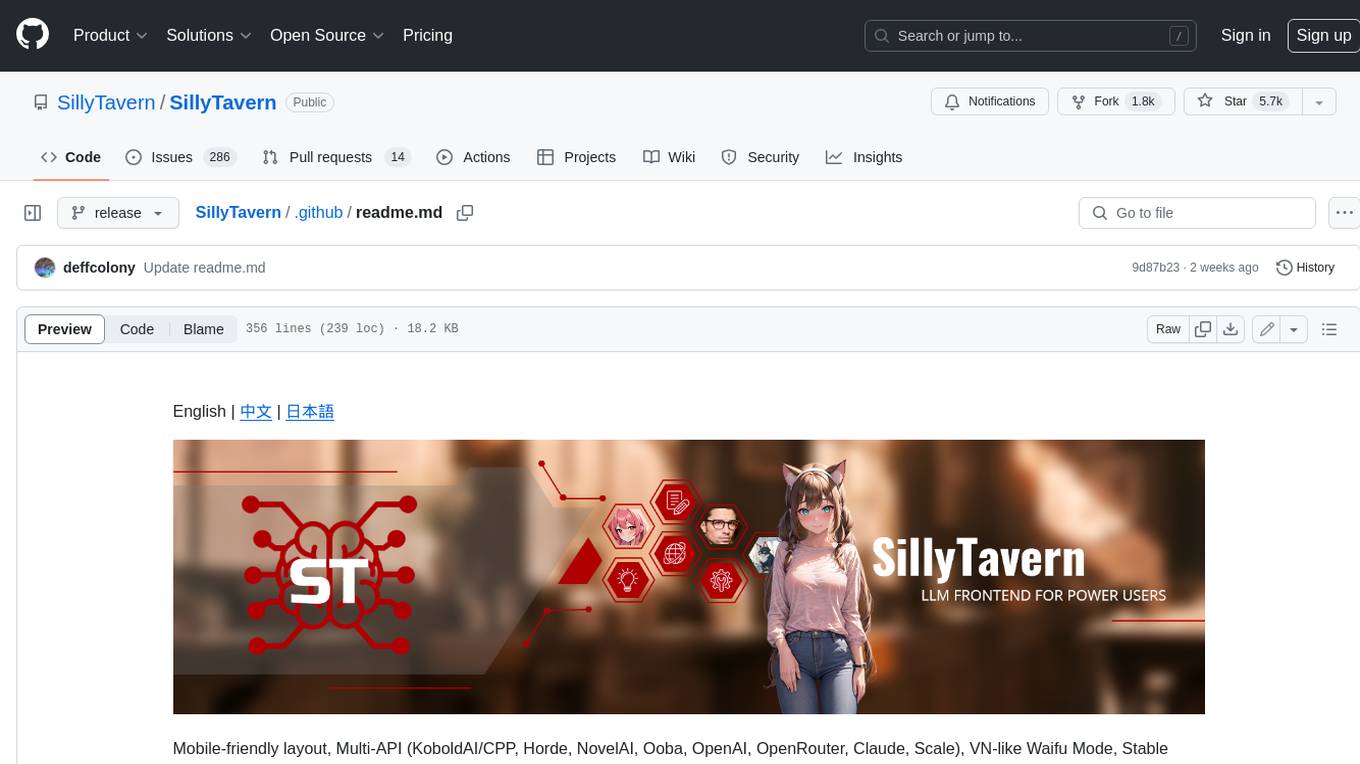
SillyTavern
SillyTavern is a user interface you can install on your computer (and Android phones) that allows you to interact with text generation AIs and chat/roleplay with characters you or the community create. SillyTavern is a fork of TavernAI 1.2.8 which is under more active development and has added many major features. At this point, they can be thought of as completely independent programs.
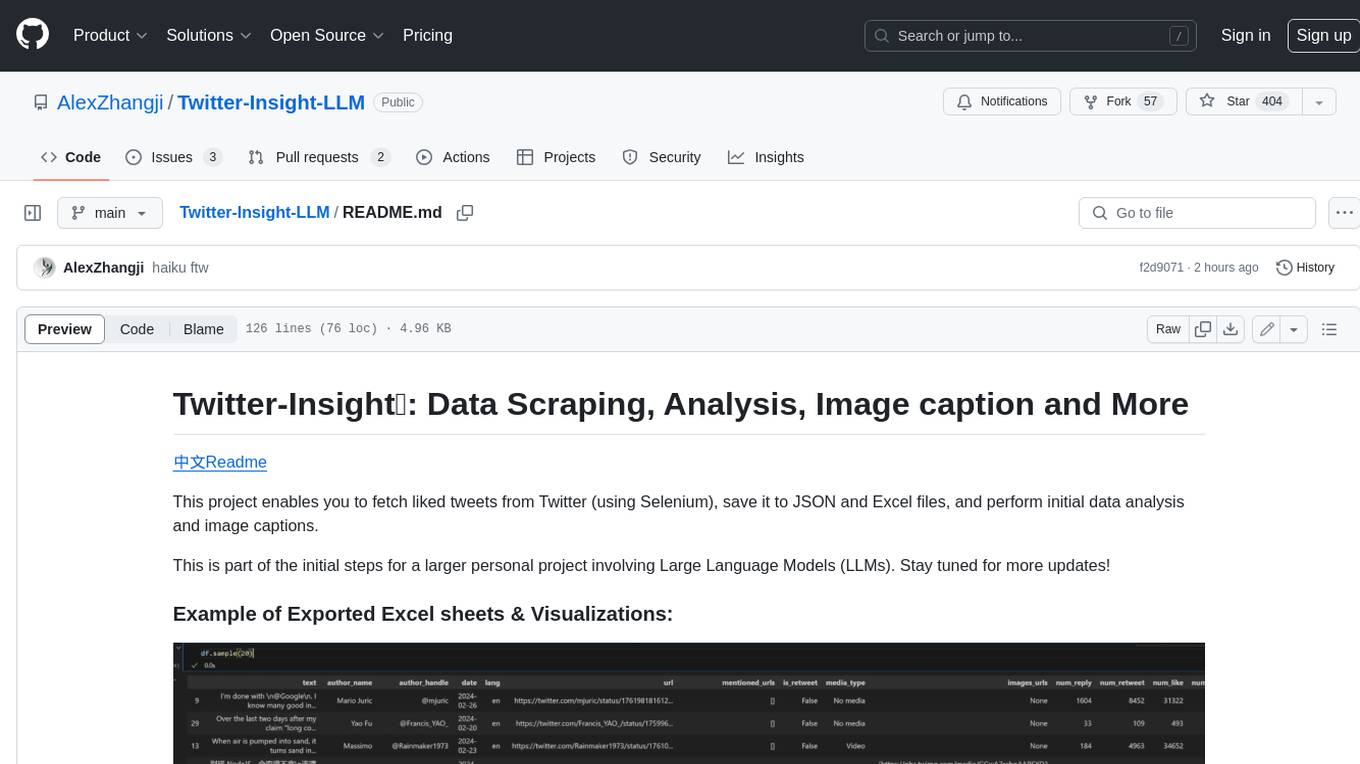
Twitter-Insight-LLM
This project enables you to fetch liked tweets from Twitter (using Selenium), save it to JSON and Excel files, and perform initial data analysis and image captions. This is part of the initial steps for a larger personal project involving Large Language Models (LLMs).
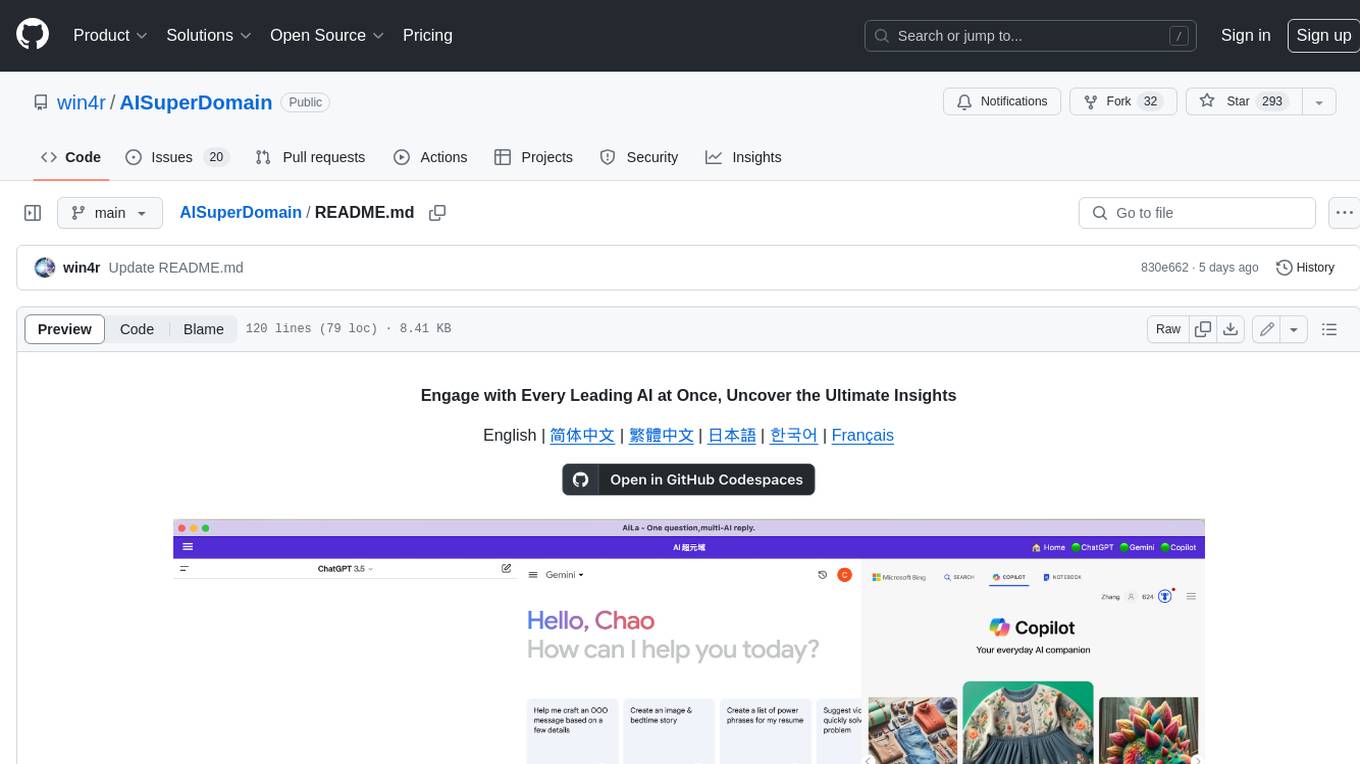
AISuperDomain
Aila Desktop Application is a powerful tool that integrates multiple leading AI models into a single desktop application. It allows users to interact with various AI models simultaneously, providing diverse responses and insights to their inquiries. With its user-friendly interface and customizable features, Aila empowers users to engage with AI seamlessly and efficiently. Whether you're a researcher, student, or professional, Aila can enhance your AI interactions and streamline your workflow.
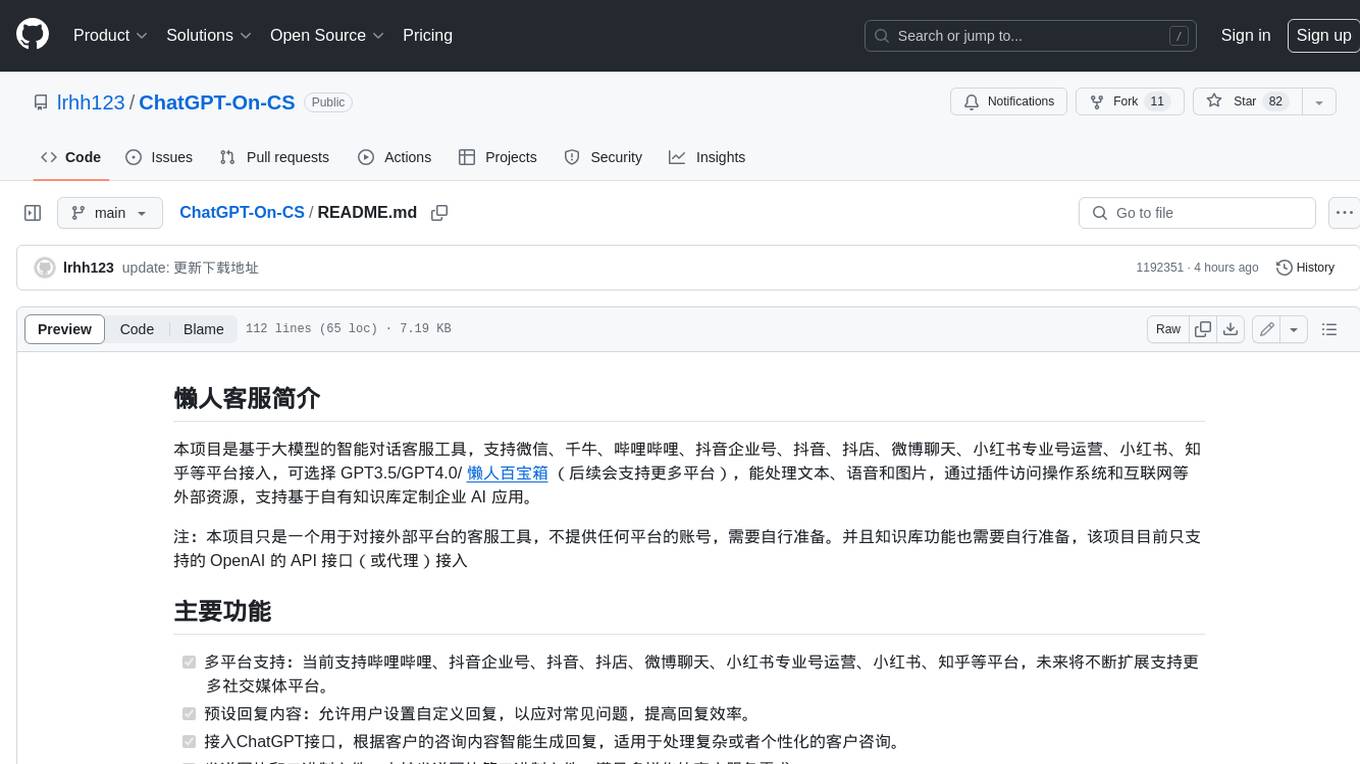
ChatGPT-On-CS
This project is an intelligent dialogue customer service tool based on a large model, which supports access to platforms such as WeChat, Qianniu, Bilibili, Douyin Enterprise, Douyin, Doudian, Weibo chat, Xiaohongshu professional account operation, Xiaohongshu, Zhihu, etc. You can choose GPT3.5/GPT4.0/ Lazy Treasure Box (more platforms will be supported in the future), which can process text, voice and pictures, and access external resources such as operating systems and the Internet through plug-ins, and support enterprise AI applications customized based on their own knowledge base.
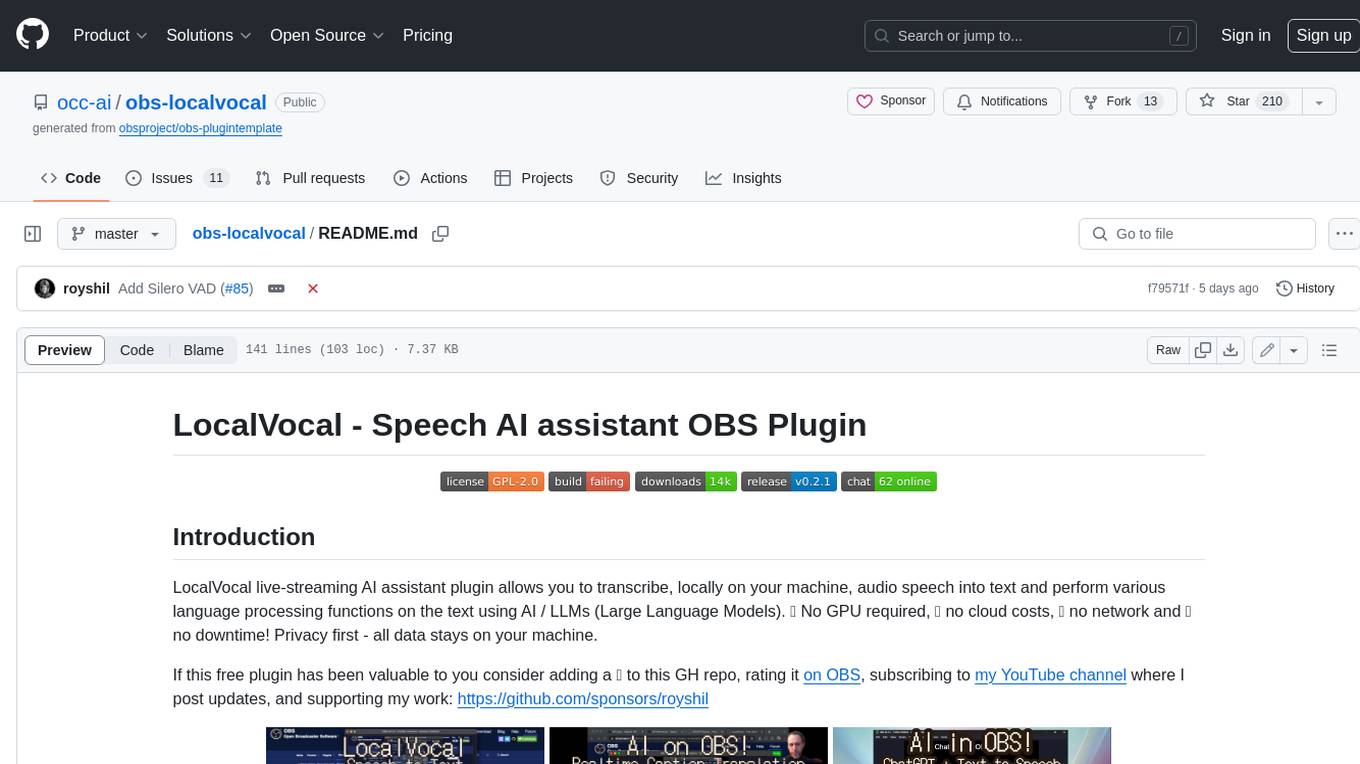
obs-localvocal
LocalVocal is a live-streaming AI assistant plugin for OBS that allows you to transcribe audio speech into text and perform various language processing functions on the text using AI / LLMs (Large Language Models). It's privacy-first, with all data staying on your machine, and requires no GPU, cloud costs, network, or downtime.