


Tutorial-of-AI-Kit-with-Raspberry-Pi-From-Zero-to-Hero
This repository provides a comprehensive step-by-step guide to building AI projects using the Raspberry Pi AI Kit.
Stars: 179
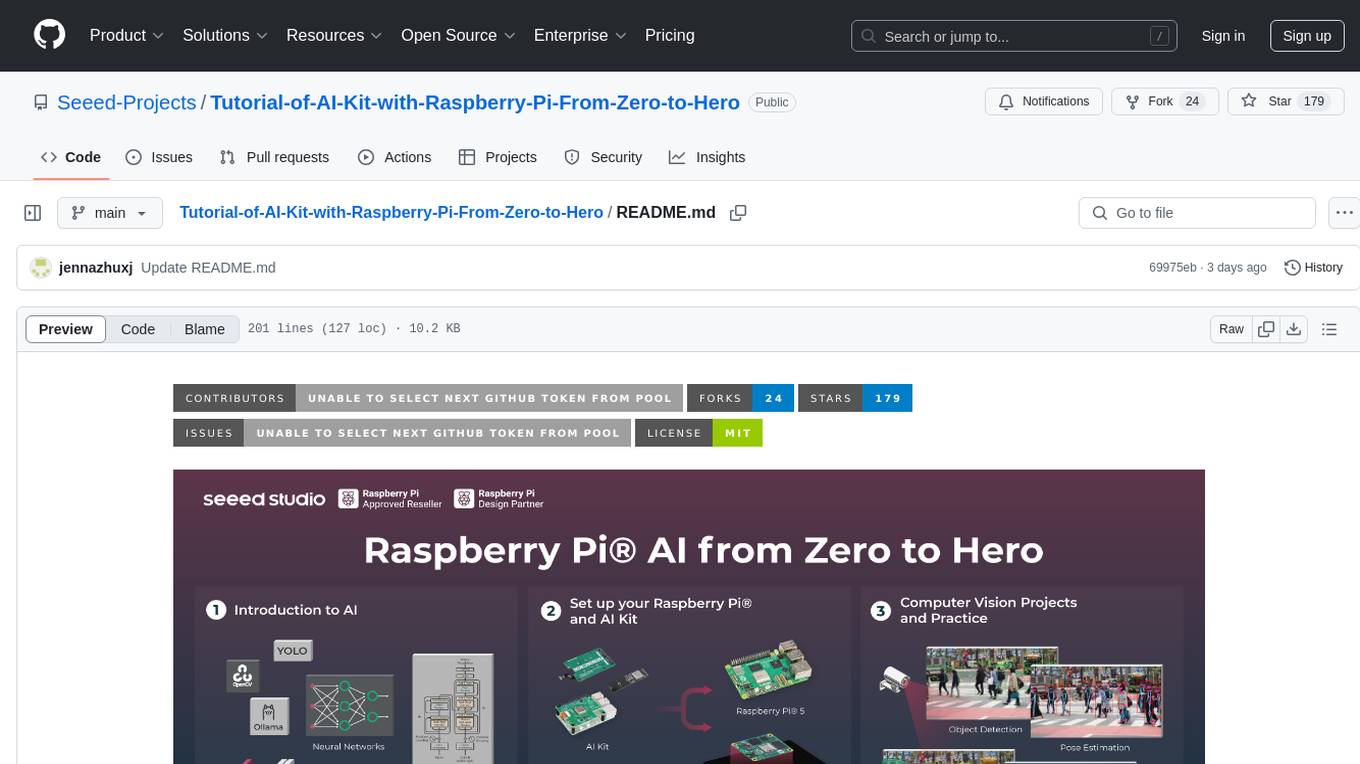
This course is designed to teach you how to harness the power of AI on the Raspberry Pi, with a focus on using an AI kit for computer vision tasks. Learn to integrate AI into IoT applications, from object detection to visual recognition. Suitable for hobbyists, students, and professionals to bring AI-driven solutions to life on resource-constrained devices like the Raspberry Pi.
README:






- Play your AI Kit from Beginner to Expert -

Report Bug |
Request Feature
This course is designed to teach you how to harness the power of AI on the Raspberry Pi, with a particular focus on using an AI kit to perform essential computer vision tasks. Throughout the course, you'll learn how to integrate AI into real-world IoT (Internet of Things) applications, from object detection and image classification to more complex visual recognition tasks. We will guide you step-by-step through setting up your Raspberry Pi, using AI frameworks, and deploying these models in various practical scenarios. Whether you are a hobbyist, a student, or a professional, this course will provide you with the foundational knowledge and hands-on experience necessary to bring AI-driven solutions to life on resource-constrained devices like the Raspberry Pi.
| reComputer AI R2130 |
|---|
 |
| Purchase Now |
| Raspberry Pi 5 Starter Kit |
|---|
 |
| Purchase Now |
| Raspberry Pi AI Kit | reComputer R1100 |
|---|---|
 |
 |
| Purchase Now | Purchase Now |
Introduction to Machine Learning with Python
Hands-On Machine Learning with Scikit-Learn, Keras, and TensorFlow
Programming Computer Vision with Python
Deep Learning for Computer Vision
Deep Learning for Natural Language Processing: Creating Neural Networks with Python








⏳ Indicates in progress, ✔️ indicates completed.
- ✔️ Introduction of Artificial Intelligence
- ✔️ Introduction of Deep Neural Network
- ✔️ Introduction of Convolutional Neural Network
- ✔️ Introduction of Computer Vision
- ✔️ Introduction of Large Language Model
- ✔️ Introduction to Pytorch in Raspberry Pi Environment
- ✔️ Introduction to TensorFlow in Raspberry Pi Environment
- ✔️ Introduction to OpenCV in Raspberry Pi Environment
- ✔️ Introduction to Ultralytics in Raspberry Pi Environment
- ⏳ Introduction to Hailo in Raspberry Pi Environment
- ✔️ Setup Ollama on RaspberryPi
- ✔️ Run Llama on RaspberryPi
- ✔️ Run Gemma2 on RaspberryPi
- ✔️ Run Phi3.5 on RaspberryPi
- ✔️ Run Multimodal on RaspberryPi
- ✔️ Use Ollama with Python
- ✔️ Training
- ✔️ Converting
- ✔️ Deploying
Open for everyone to contribute
See the open issues for a full list of proposed features (and known issues).
Contributions are what make the open source community such an amazing place to learn, inspire, and create. Any contributions you make are greatly appreciated.
If you have a suggestion that would make this better, please follow this Contributor Guidelines and contribute your own code.
Don't forget to give the project a star! Thanks again!
Distributed under the MIT License. See LICENSE for more information.
For Tasks:
Click tags to check more tools for each tasksFor Jobs:
Alternative AI tools for Tutorial-of-AI-Kit-with-Raspberry-Pi-From-Zero-to-Hero
Similar Open Source Tools
Tutorial-of-AI-Kit-with-Raspberry-Pi-From-Zero-to-Hero
This course is designed to teach you how to harness the power of AI on the Raspberry Pi, with a focus on using an AI kit for computer vision tasks. Learn to integrate AI into IoT applications, from object detection to visual recognition. Suitable for hobbyists, students, and professionals to bring AI-driven solutions to life on resource-constrained devices like the Raspberry Pi.
EverMemOS
EverMemOS is an AI memory system that enables AI to not only remember past events but also understand the meaning behind memories and use them to guide decisions. It achieves 93% reasoning accuracy on the LoCoMo benchmark by providing long-term memory capabilities for conversational AI agents through structured extraction, intelligent retrieval, and progressive profile building. The tool is production-ready with support for Milvus vector DB, Elasticsearch, MongoDB, and Redis, and offers easy integration via a simple REST API. Users can store and retrieve memories using Python code and benefit from features like multi-modal memory storage, smart retrieval mechanisms, and advanced techniques for memory management.
Pallaidium
Pallaidium is a generative AI movie studio integrated into the Blender video editor. It allows users to AI-generate video, image, and audio from text prompts or existing media files. The tool provides various features such as text to video, text to audio, text to speech, text to image, image to image, image to video, video to video, image to text, and more. It requires a Windows system with a CUDA-supported Nvidia card and at least 6 GB VRAM. Pallaidium offers batch processing capabilities, text to audio conversion using Bark, and various performance optimization tips. Users can install the tool by downloading the add-on and following the installation instructions provided. The tool comes with a set of restrictions on usage, prohibiting the generation of harmful, pornographic, violent, or false content.
brainwave
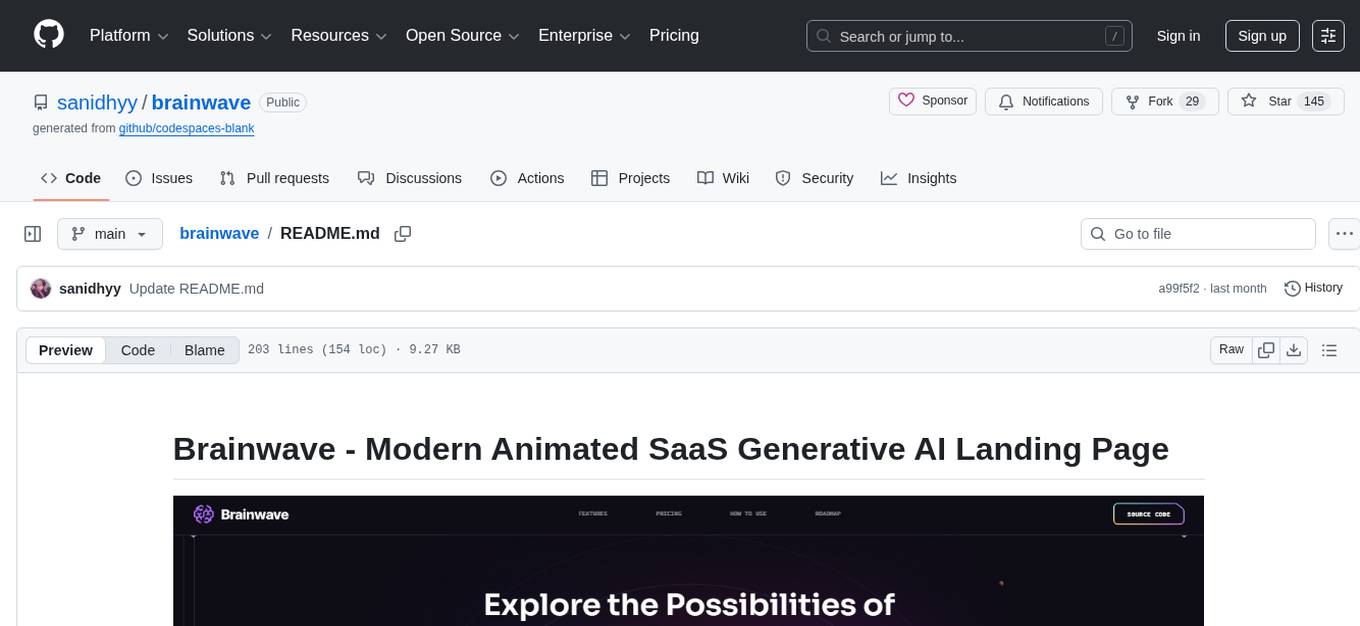
Brainwave is a modern animated SaaS generative AI landing page tool built using React JS, Vite JS, Javascript, and Tailwind CSS. It provides a visually appealing interface with features like AI chatbot, generative AI, modern animations, and onboarding section. Users can easily deploy the tool on Netlify and contribute to the project. The tool utilizes framer-motion, react-just-parallax, react-router-dom, scroll-lock, typewriter-effect, and other dependencies for enhanced functionality and user experience.
Open-Sora-Plan
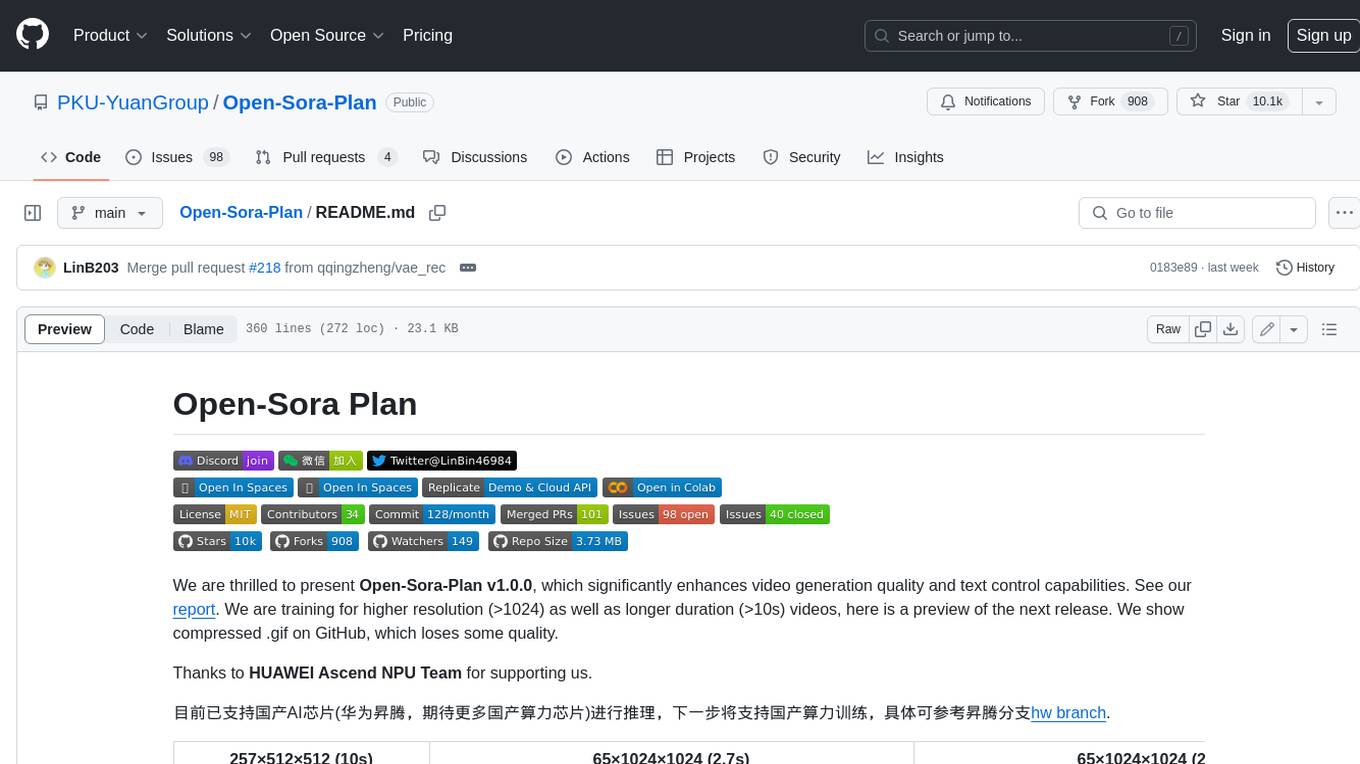
Open-Sora-Plan is a project that aims to create a simple and scalable repo to reproduce Sora (OpenAI, but we prefer to call it "ClosedAI"). The project is still in its early stages, but the team is working hard to improve it and make it more accessible to the open-source community. The project is currently focused on training an unconditional model on a landscape dataset, but the team plans to expand the scope of the project in the future to include text2video experiments, training on video2text datasets, and controlling the model with more conditions.
Imagine_AI
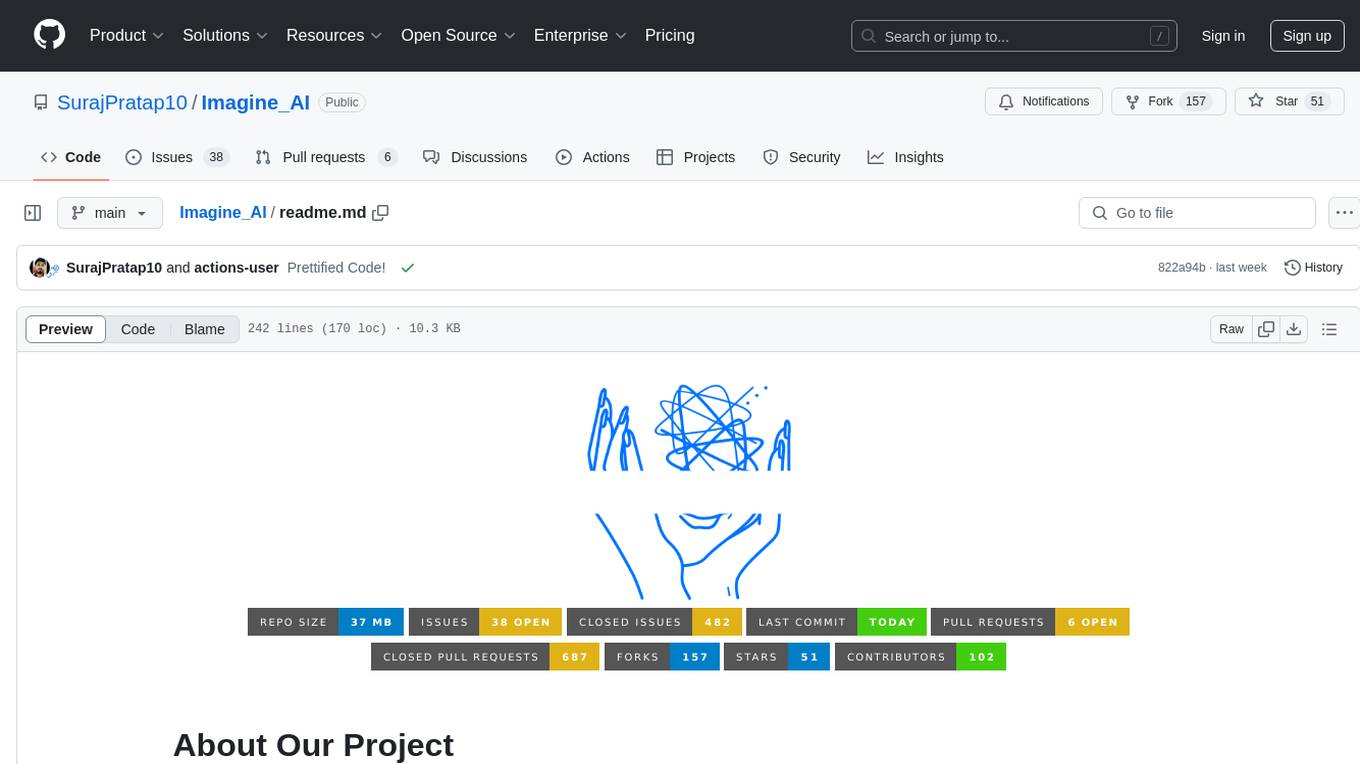
IMAGINE - AI is a groundbreaking image generator tool that leverages the power of OpenAI's DALL-E 2 API library to create extraordinary visuals. Developed using Node.js and Express, this tool offers a transformative way to unleash artistic creativity and imagination by generating unique and captivating images through simple prompts or keywords.
ST-LLM
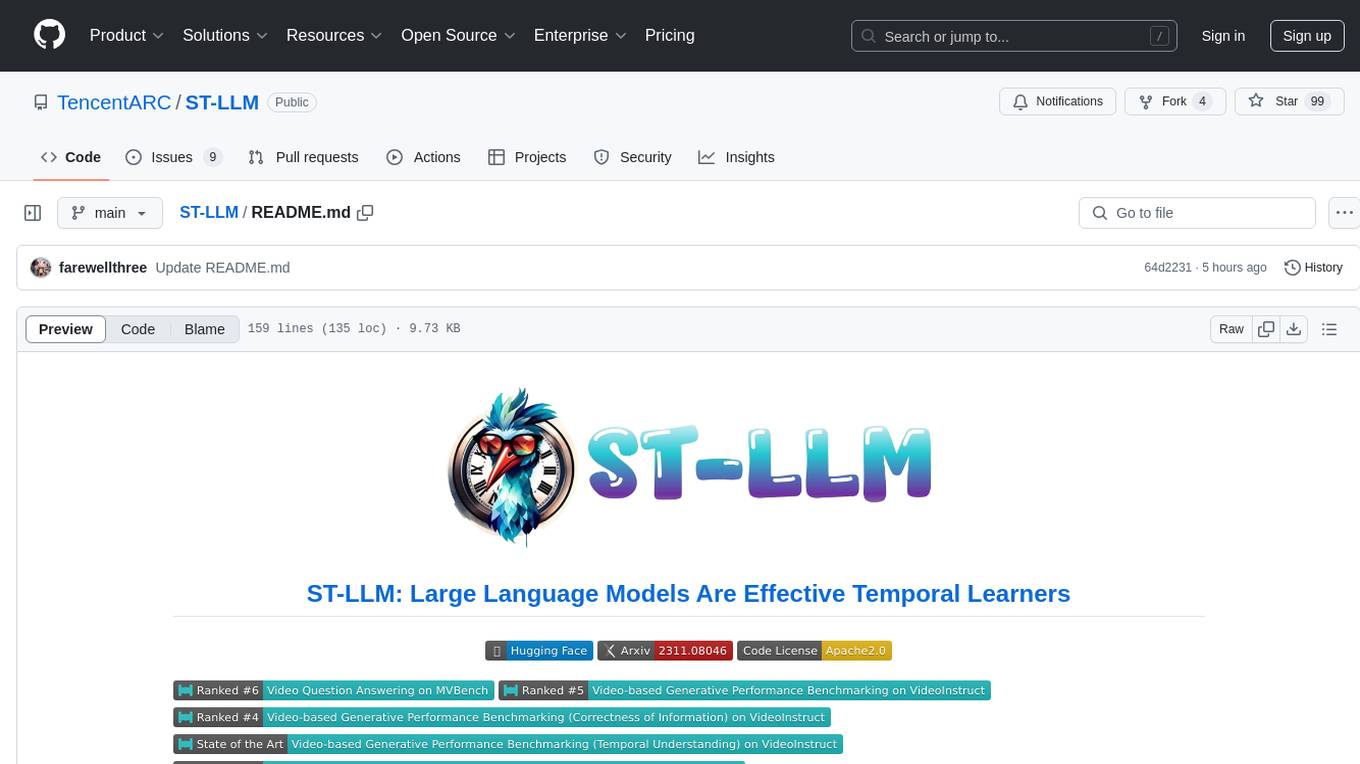
ST-LLM is a temporal-sensitive video large language model that incorporates joint spatial-temporal modeling, dynamic masking strategy, and global-local input module for effective video understanding. It has achieved state-of-the-art results on various video benchmarks. The repository provides code and weights for the model, along with demo scripts for easy usage. Users can train, validate, and use the model for tasks like video description, action identification, and reasoning.
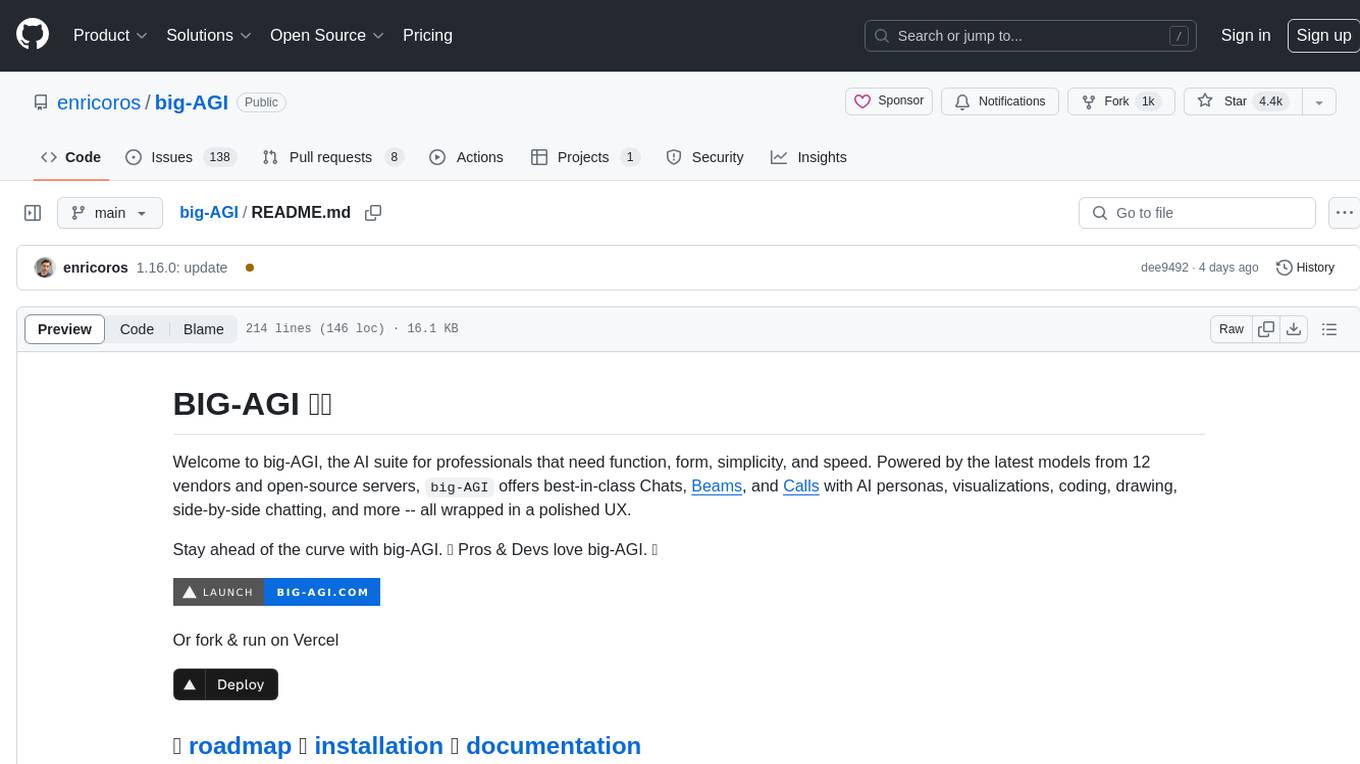
big-AGI
big-AGI is an AI suite designed for professionals seeking function, form, simplicity, and speed. It offers best-in-class Chats, Beams, and Calls with AI personas, visualizations, coding, drawing, side-by-side chatting, and more, all wrapped in a polished UX. The tool is powered by the latest models from 12 vendors and open-source servers, providing users with advanced AI capabilities and a seamless user experience. With continuous updates and enhancements, big-AGI aims to stay ahead of the curve in the AI landscape, catering to the needs of both developers and AI enthusiasts.
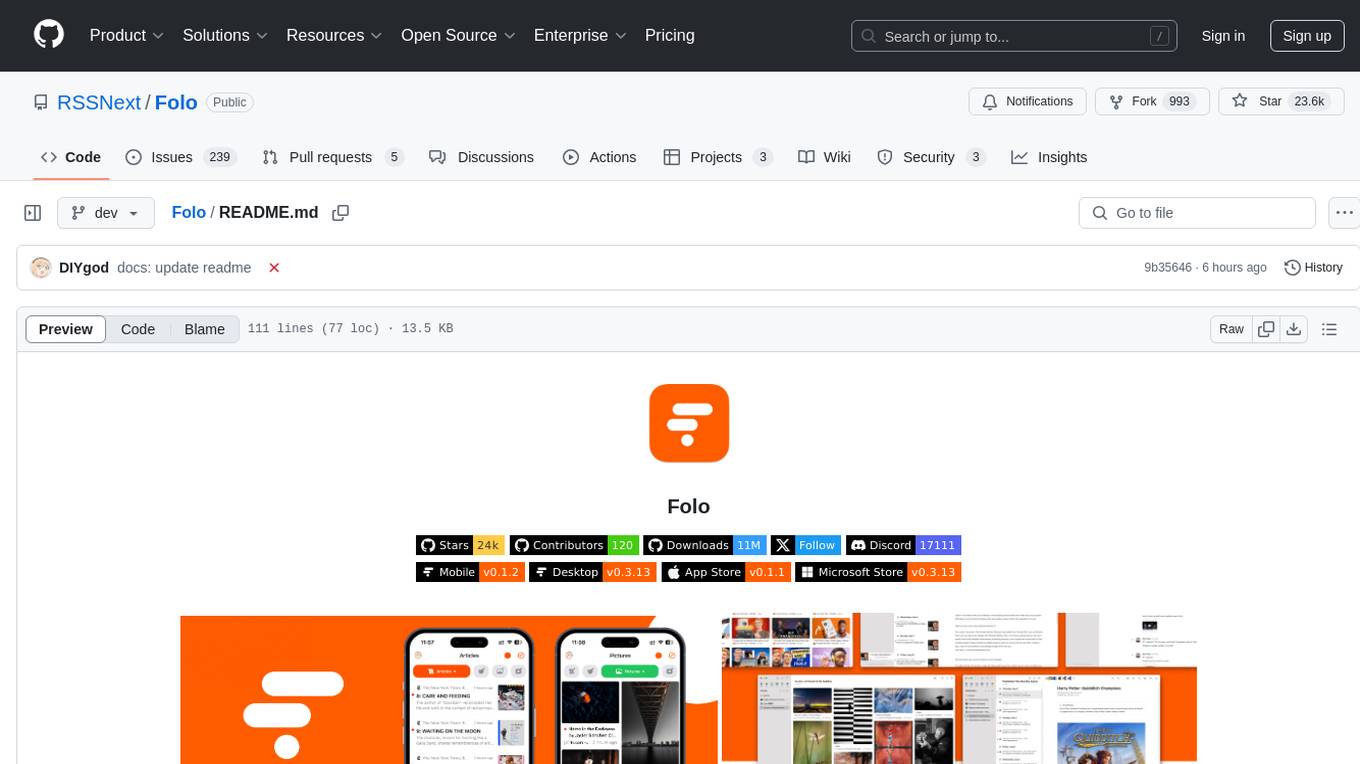
Folo
Folo is a content organization tool that creates a noise-free timeline for users. It allows sharing lists, exploring collections, and distraction-free browsing. Users can subscribe to feeds, curate favorites, and utilize AI-powered features like translation and summaries. Folo supports various content types such as articles, videos, images, and audio. It introduces an ownership economy with $POWER tipping for creators and fosters a community-driven experience. The tool is under active development, welcoming feedback from users and developers.
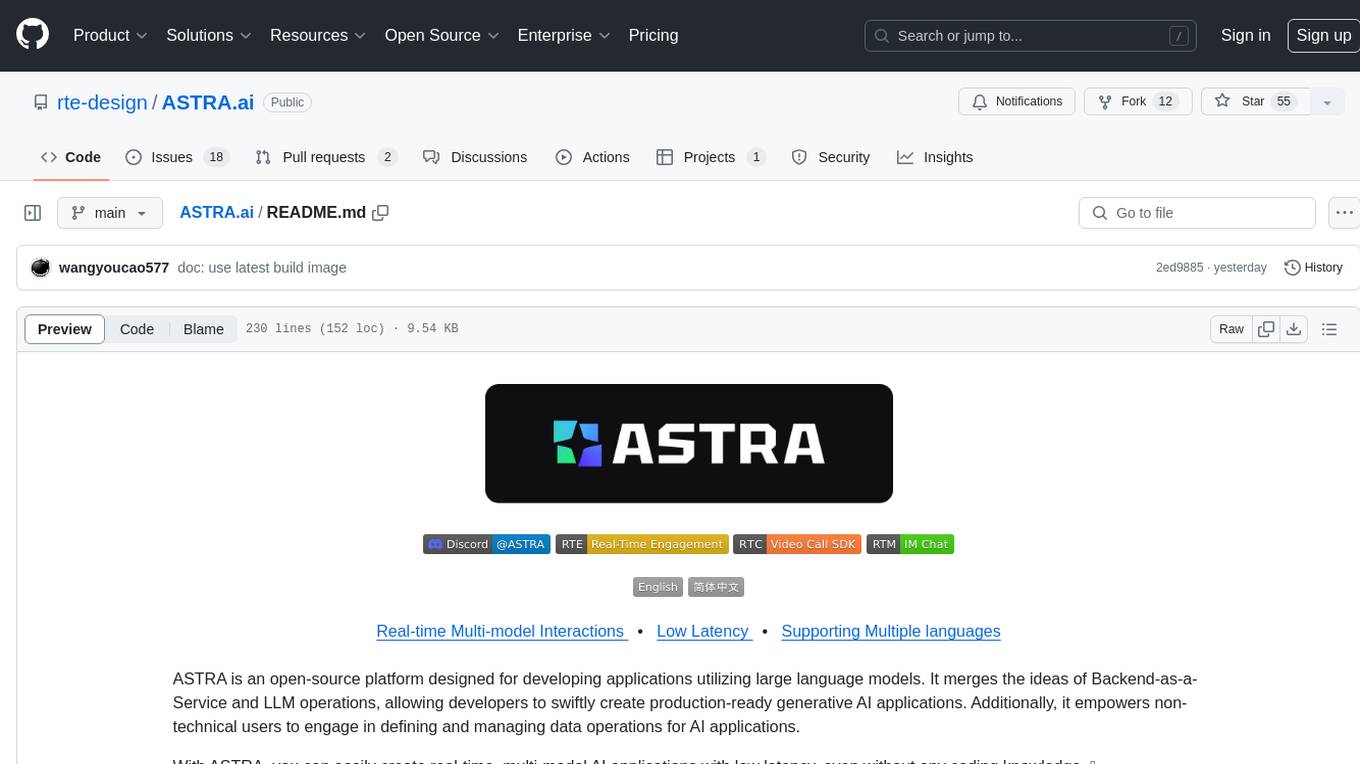
ASTRA.ai
ASTRA is an open-source platform designed for developing applications utilizing large language models. It merges the ideas of Backend-as-a-Service and LLM operations, allowing developers to swiftly create production-ready generative AI applications. Additionally, it empowers non-technical users to engage in defining and managing data operations for AI applications. With ASTRA, you can easily create real-time, multi-modal AI applications with low latency, even without any coding knowledge.
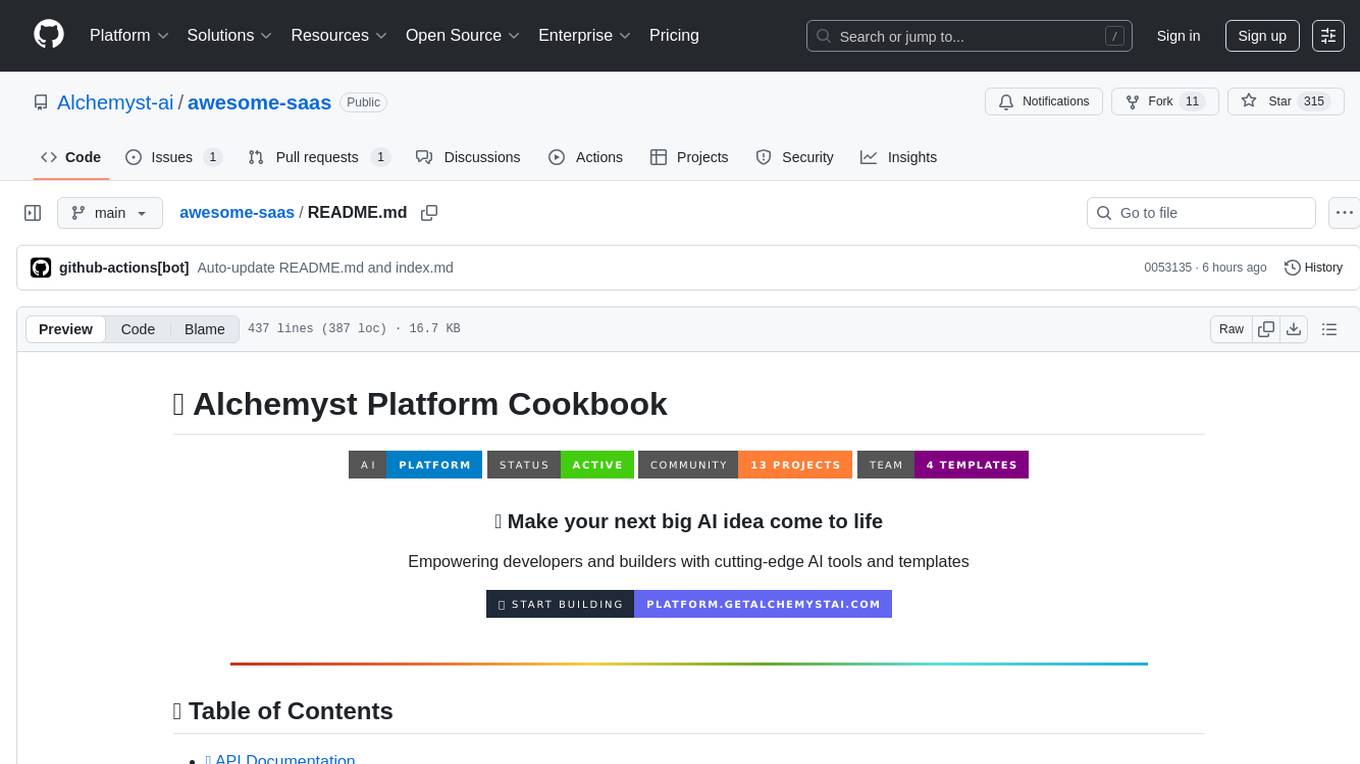
awesome-saas
The Alchemyst Platform Cookbook is a comprehensive guide for developers and builders to bring their AI ideas to life. It provides cutting-edge AI tools and templates to empower users in creating innovative projects. The platform offers API documentation, quick start guides, official and community templates for various projects. Users can contribute to the platform by forking the repository, adding the topic 'alchemyst-awesome-saas', making their repository public, and submitting a pull request. Troubleshooting guidelines are provided for contributors. The platform is actively maintained by the Alchemyst AI Team.
LLaVA-pp
This repository, LLaVA++, extends the visual capabilities of the LLaVA 1.5 model by incorporating the latest LLMs, Phi-3 Mini Instruct 3.8B, and LLaMA-3 Instruct 8B. It provides various models for instruction-following LMMS and academic-task-oriented datasets, along with training scripts for Phi-3-V and LLaMA-3-V. The repository also includes installation instructions and acknowledgments to related open-source contributions.
lemonade
Lemonade is a tool that helps users run local Large Language Models (LLMs) with high performance by configuring state-of-the-art inference engines for their Neural Processing Units (NPUs) and Graphics Processing Units (GPUs). It is used by startups, research teams, and large companies to run LLMs efficiently. Lemonade provides a high-level Python API for direct integration of LLMs into Python applications and a CLI for mixing and matching LLMs with various features like prompting templates, accuracy testing, performance benchmarking, and memory profiling. The tool supports both GGUF and ONNX models and allows importing custom models from Hugging Face using the Model Manager. Lemonade is designed to be easy to use and switch between different configurations at runtime, making it a versatile tool for running LLMs locally.
speakeasy
Speakeasy is a tool that helps developers create production-quality SDKs, Terraform providers, documentation, and more from OpenAPI specifications. It supports a wide range of languages, including Go, Python, TypeScript, Java, and C#, and provides features such as automatic maintenance, type safety, and fault tolerance. Speakeasy also integrates with popular package managers like npm, PyPI, Maven, and Terraform Registry for easy distribution.
nacos
Nacos is an easy-to-use platform designed for dynamic service discovery and configuration and service management. It helps build cloud native applications and microservices platform easily. Nacos provides functions like service discovery, health check, dynamic configuration management, dynamic DNS service, and service metadata management.
For similar tasks
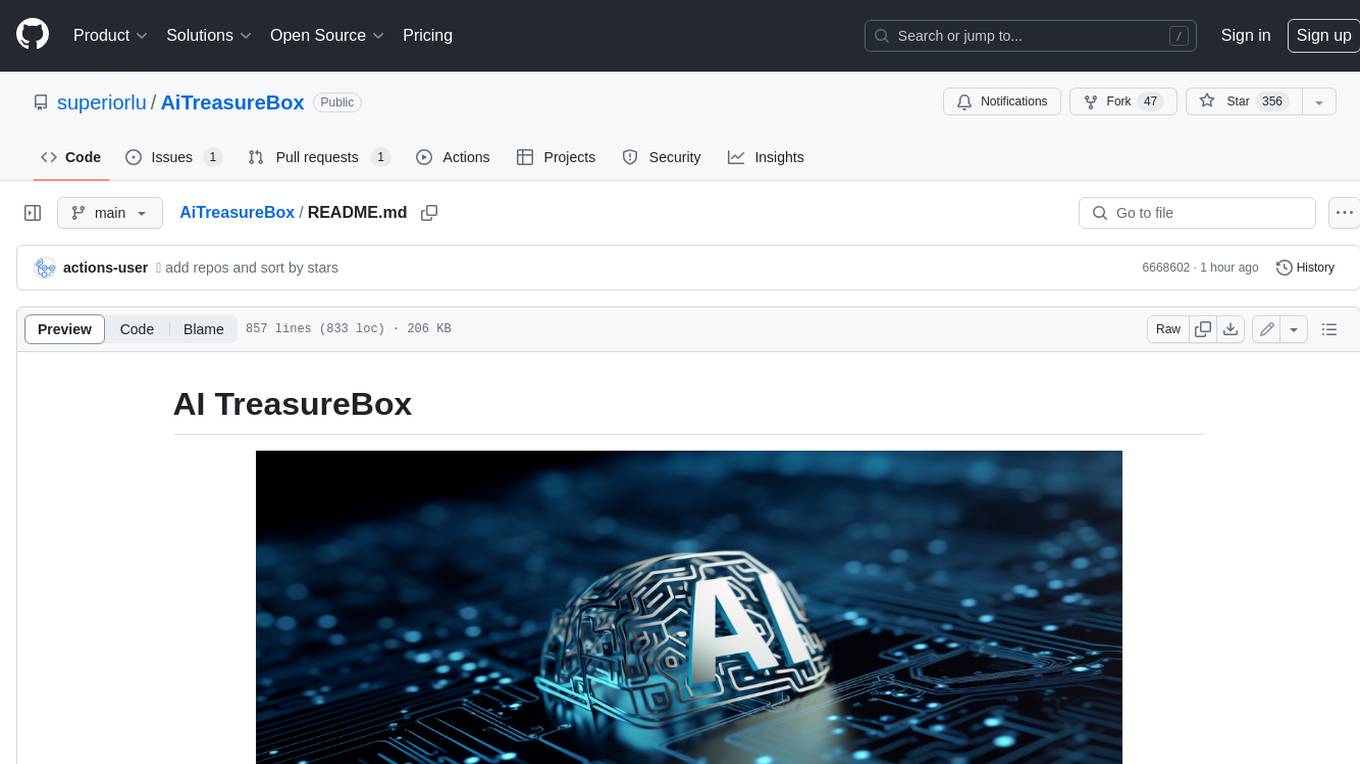
AiTreasureBox
AiTreasureBox is a versatile AI tool that provides a collection of pre-trained models and algorithms for various machine learning tasks. It simplifies the process of implementing AI solutions by offering ready-to-use components that can be easily integrated into projects. With AiTreasureBox, users can quickly prototype and deploy AI applications without the need for extensive knowledge in machine learning or deep learning. The tool covers a wide range of tasks such as image classification, text generation, sentiment analysis, object detection, and more. It is designed to be user-friendly and accessible to both beginners and experienced developers, making AI development more efficient and accessible to a wider audience.
InternVL
InternVL scales up the ViT to _**6B parameters**_ and aligns it with LLM. It is a vision-language foundation model that can perform various tasks, including: **Visual Perception** - Linear-Probe Image Classification - Semantic Segmentation - Zero-Shot Image Classification - Multilingual Zero-Shot Image Classification - Zero-Shot Video Classification **Cross-Modal Retrieval** - English Zero-Shot Image-Text Retrieval - Chinese Zero-Shot Image-Text Retrieval - Multilingual Zero-Shot Image-Text Retrieval on XTD **Multimodal Dialogue** - Zero-Shot Image Captioning - Multimodal Benchmarks with Frozen LLM - Multimodal Benchmarks with Trainable LLM - Tiny LVLM InternVL has been shown to achieve state-of-the-art results on a variety of benchmarks. For example, on the MMMU image classification benchmark, InternVL achieves a top-1 accuracy of 51.6%, which is higher than GPT-4V and Gemini Pro. On the DocVQA question answering benchmark, InternVL achieves a score of 82.2%, which is also higher than GPT-4V and Gemini Pro. InternVL is open-sourced and available on Hugging Face. It can be used for a variety of applications, including image classification, object detection, semantic segmentation, image captioning, and question answering.
clarifai-python
The Clarifai Python SDK offers a comprehensive set of tools to integrate Clarifai's AI platform to leverage computer vision capabilities like classification , detection ,segementation and natural language capabilities like classification , summarisation , generation , Q&A ,etc into your applications. With just a few lines of code, you can leverage cutting-edge artificial intelligence to unlock valuable insights from visual and textual content.
X-AnyLabeling
X-AnyLabeling is a robust annotation tool that seamlessly incorporates an AI inference engine alongside an array of sophisticated features. Tailored for practical applications, it is committed to delivering comprehensive, industrial-grade solutions for image data engineers. This tool excels in swiftly and automatically executing annotations across diverse and intricate tasks.
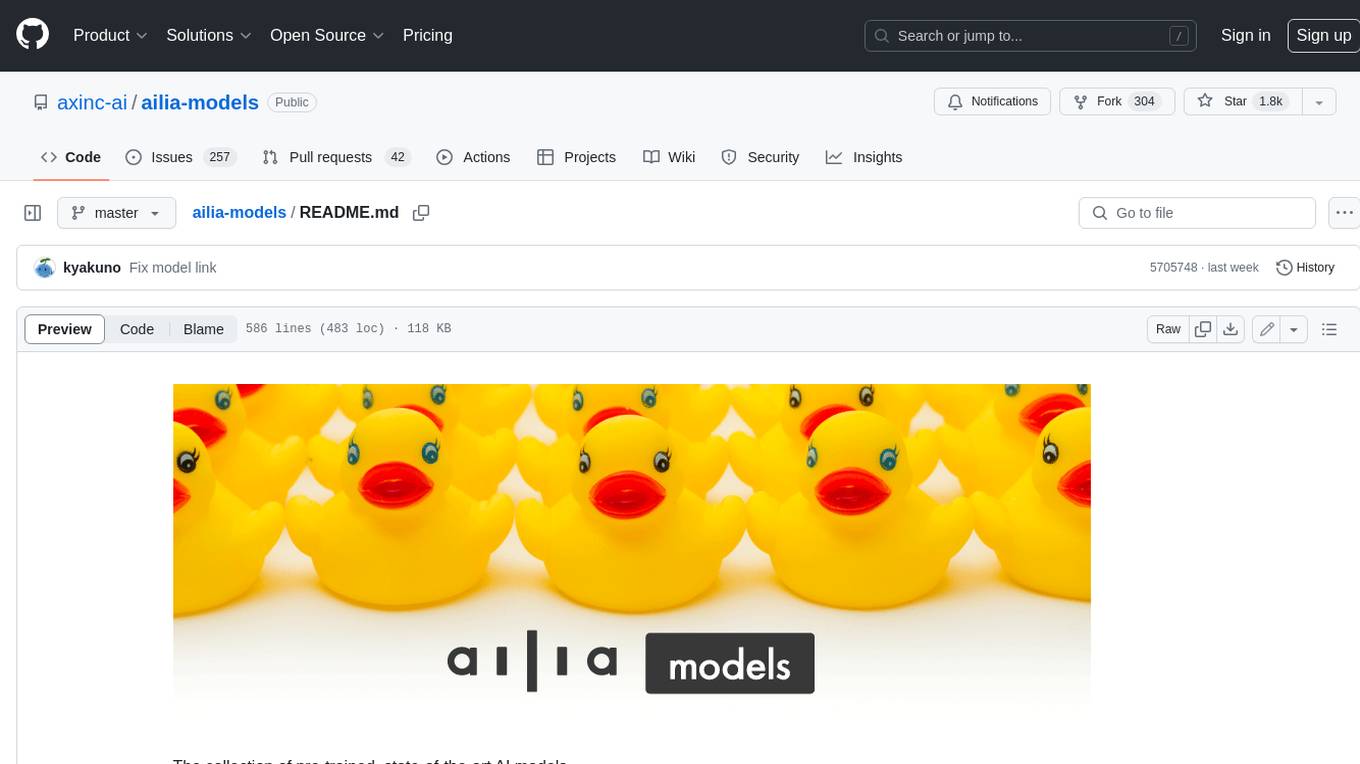
ailia-models
The collection of pre-trained, state-of-the-art AI models. ailia SDK is a self-contained, cross-platform, high-speed inference SDK for AI. The ailia SDK provides a consistent C++ API across Windows, Mac, Linux, iOS, Android, Jetson, and Raspberry Pi platforms. It also supports Unity (C#), Python, Rust, Flutter(Dart) and JNI for efficient AI implementation. The ailia SDK makes extensive use of the GPU through Vulkan and Metal to enable accelerated computing. # Supported models 323 models as of April 8th, 2024
edenai-apis
Eden AI aims to simplify the use and deployment of AI technologies by providing a unique API that connects to all the best AI engines. With the rise of **AI as a Service** , a lot of companies provide off-the-shelf trained models that you can access directly through an API. These companies are either the tech giants (Google, Microsoft , Amazon) or other smaller, more specialized companies, and there are hundreds of them. Some of the most known are : DeepL (translation), OpenAI (text and image analysis), AssemblyAI (speech analysis). There are **hundreds of companies** doing that. We're regrouping the best ones **in one place** !
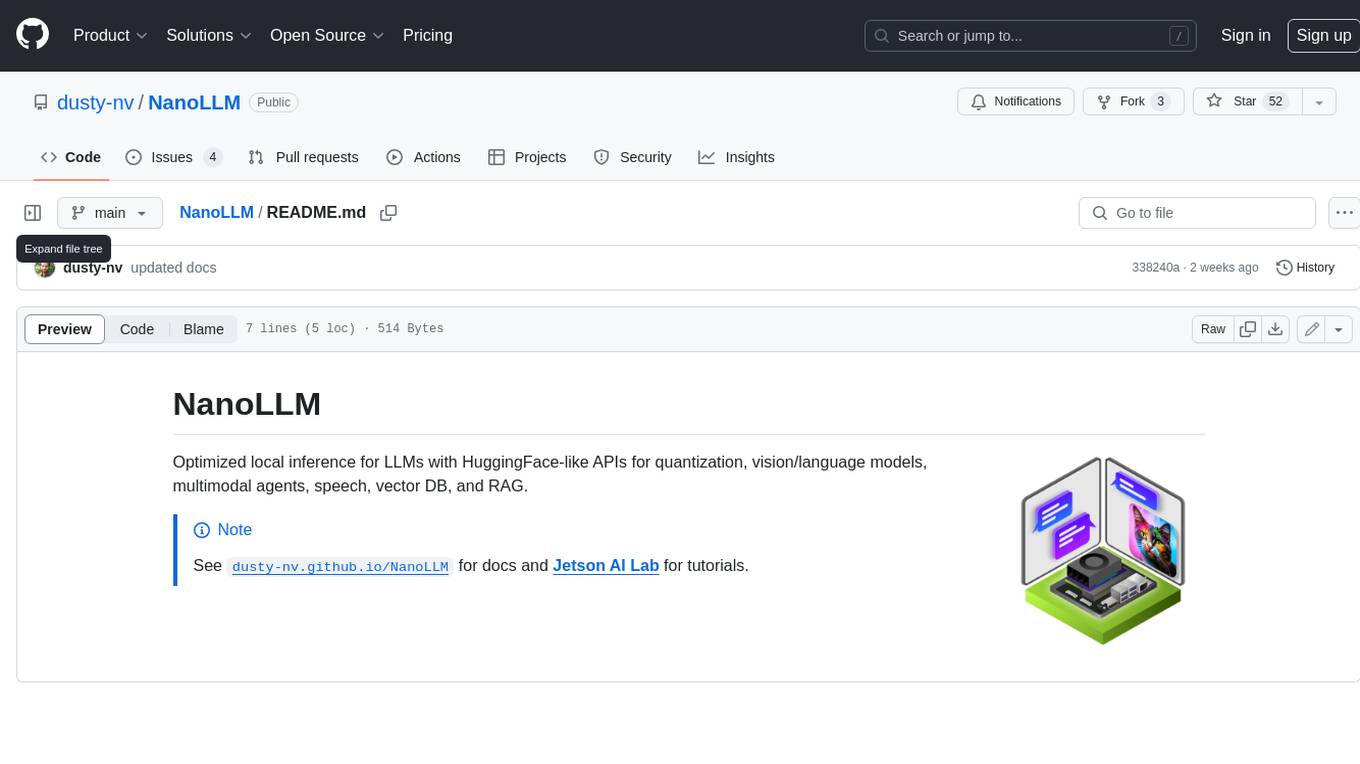
NanoLLM
NanoLLM is a tool designed for optimized local inference for Large Language Models (LLMs) using HuggingFace-like APIs. It supports quantization, vision/language models, multimodal agents, speech, vector DB, and RAG. The tool aims to provide efficient and effective processing for LLMs on local devices, enhancing performance and usability for various AI applications.
open-ai
Open AI is a powerful tool for artificial intelligence research and development. It provides a wide range of machine learning models and algorithms, making it easier for developers to create innovative AI applications. With Open AI, users can explore cutting-edge technologies such as natural language processing, computer vision, and reinforcement learning. The platform offers a user-friendly interface and comprehensive documentation to support users in building and deploying AI solutions. Whether you are a beginner or an experienced AI practitioner, Open AI offers the tools and resources you need to accelerate your AI projects and stay ahead in the rapidly evolving field of artificial intelligence.
For similar jobs
sweep
Sweep is an AI junior developer that turns bugs and feature requests into code changes. It automatically handles developer experience improvements like adding type hints and improving test coverage.
teams-ai
The Teams AI Library is a software development kit (SDK) that helps developers create bots that can interact with Teams and Microsoft 365 applications. It is built on top of the Bot Framework SDK and simplifies the process of developing bots that interact with Teams' artificial intelligence capabilities. The SDK is available for JavaScript/TypeScript, .NET, and Python.
ai-guide
This guide is dedicated to Large Language Models (LLMs) that you can run on your home computer. It assumes your PC is a lower-end, non-gaming setup.
classifai
Supercharge WordPress Content Workflows and Engagement with Artificial Intelligence. Tap into leading cloud-based services like OpenAI, Microsoft Azure AI, Google Gemini and IBM Watson to augment your WordPress-powered websites. Publish content faster while improving SEO performance and increasing audience engagement. ClassifAI integrates Artificial Intelligence and Machine Learning technologies to lighten your workload and eliminate tedious tasks, giving you more time to create original content that matters.
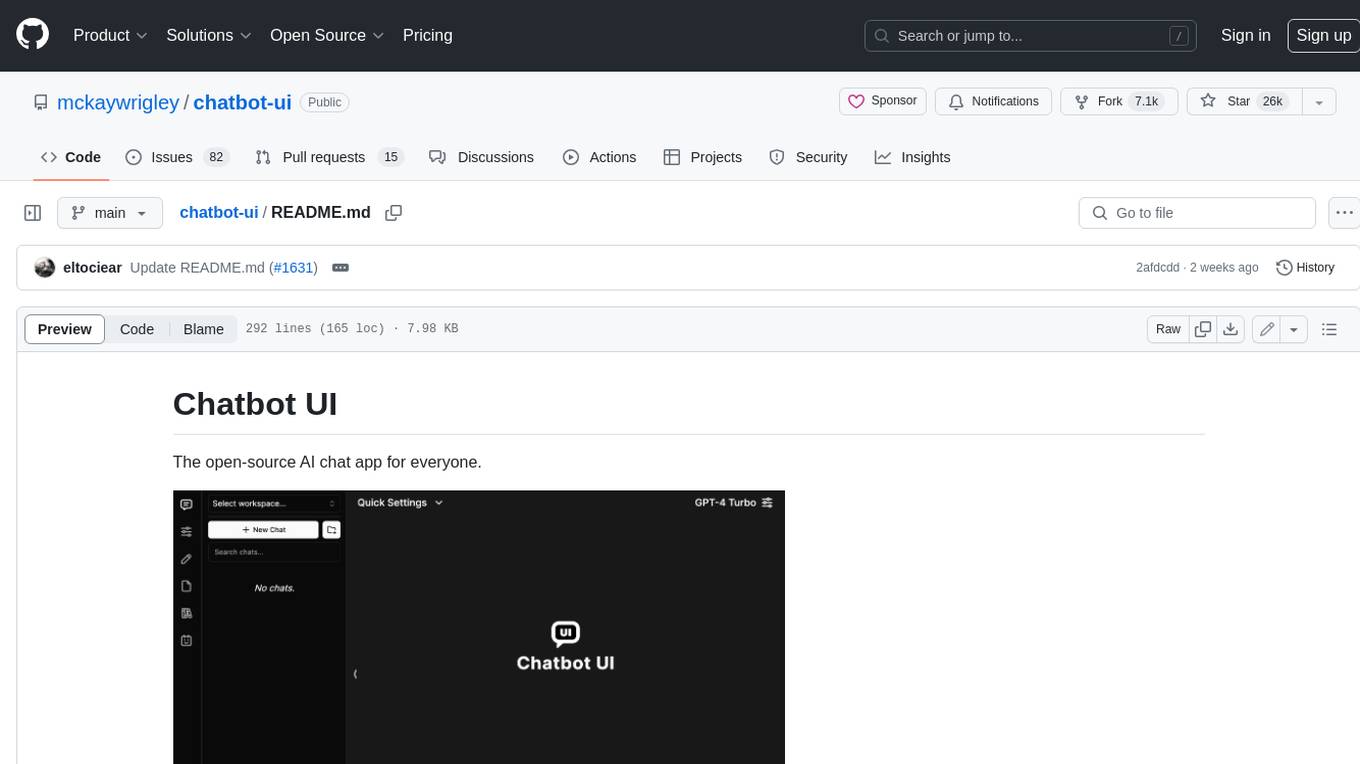
chatbot-ui
Chatbot UI is an open-source AI chat app that allows users to create and deploy their own AI chatbots. It is easy to use and can be customized to fit any need. Chatbot UI is perfect for businesses, developers, and anyone who wants to create a chatbot.
BricksLLM
BricksLLM is a cloud native AI gateway written in Go. Currently, it provides native support for OpenAI, Anthropic, Azure OpenAI and vLLM. BricksLLM aims to provide enterprise level infrastructure that can power any LLM production use cases. Here are some use cases for BricksLLM: * Set LLM usage limits for users on different pricing tiers * Track LLM usage on a per user and per organization basis * Block or redact requests containing PIIs * Improve LLM reliability with failovers, retries and caching * Distribute API keys with rate limits and cost limits for internal development/production use cases * Distribute API keys with rate limits and cost limits for students
uAgents
uAgents is a Python library developed by Fetch.ai that allows for the creation of autonomous AI agents. These agents can perform various tasks on a schedule or take action on various events. uAgents are easy to create and manage, and they are connected to a fast-growing network of other uAgents. They are also secure, with cryptographically secured messages and wallets.
griptape
Griptape is a modular Python framework for building AI-powered applications that securely connect to your enterprise data and APIs. It offers developers the ability to maintain control and flexibility at every step. Griptape's core components include Structures (Agents, Pipelines, and Workflows), Tasks, Tools, Memory (Conversation Memory, Task Memory, and Meta Memory), Drivers (Prompt and Embedding Drivers, Vector Store Drivers, Image Generation Drivers, Image Query Drivers, SQL Drivers, Web Scraper Drivers, and Conversation Memory Drivers), Engines (Query Engines, Extraction Engines, Summary Engines, Image Generation Engines, and Image Query Engines), and additional components (Rulesets, Loaders, Artifacts, Chunkers, and Tokenizers). Griptape enables developers to create AI-powered applications with ease and efficiency.