


Awesome-AI-Data-Guided-Projects
A curated list of data science & AI guided projects to start building your portfolio
Stars: 83
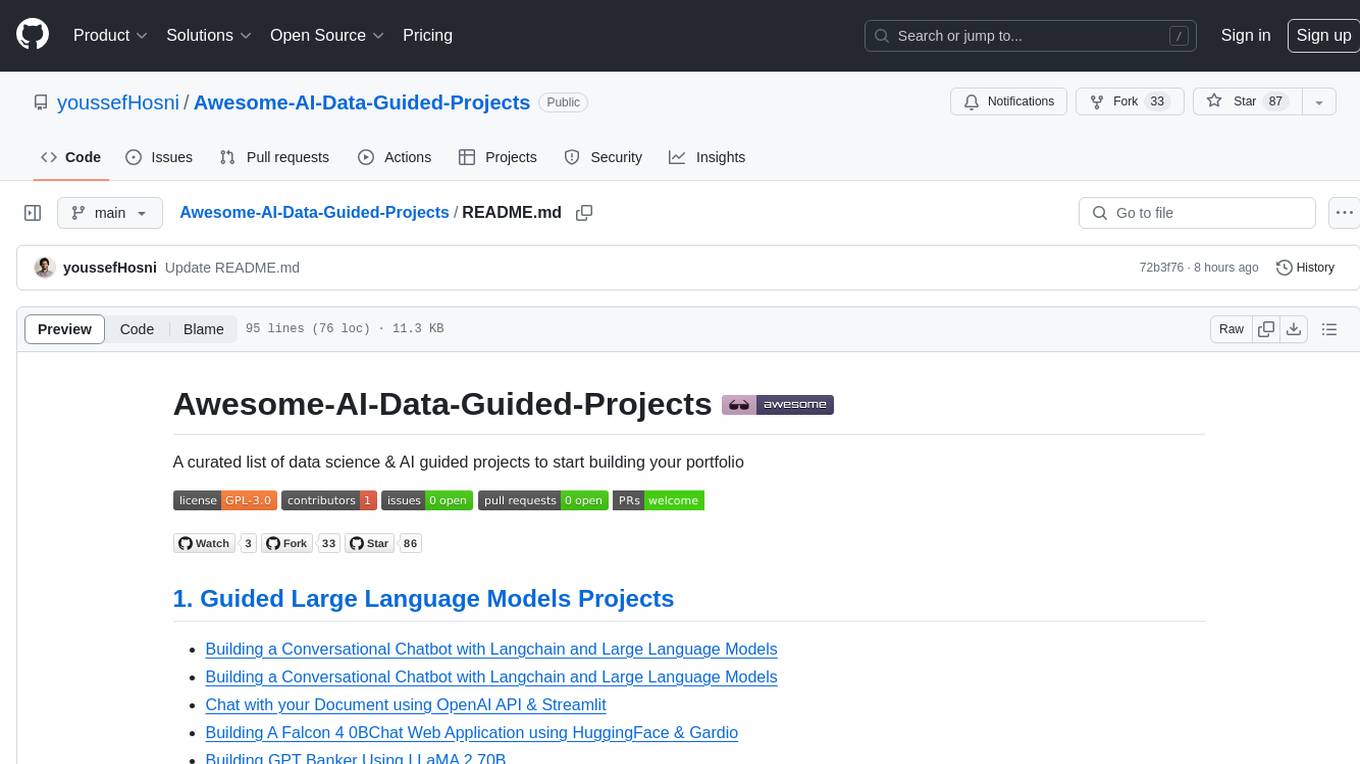
A curated list of data science & AI guided projects to start building your portfolio. The repository contains guided projects covering various topics such as large language models, time series analysis, computer vision, natural language processing (NLP), and data science. Each project provides detailed instructions on how to implement specific tasks using different tools and technologies.
README:

A curated list of data science & AI guided projects to start building your portfolio






- Building a Conversational Chatbot with Langchain and Large Language Models
- Building a Conversational Chatbot with Langchain and Large Language Models
- Chat with your Document using OpenAI API & Streamlit
- Building A Falcon 4 0BChat Web Application using HuggingFace & Gardio
- Building GPT Banker Using LLaMA 2 70B
- Finetune Llama 2 On Your Local Machine Using HuggingFace Autotrain
- Building a Lex Fridman Podcast Summarization App with Whisper Jax, Azure OpenAI, and Langchain
- Creating a Veterinary Chatbot using Llama 2: Harnessing Gen AI for Pet Care
- Deploy Llama 2 on AWS SageMaker using DLC (Deep Learning Containers)
- Article/Blog Generation App using Llama2, Langchain, and Pexels
- Efficiently Train Large Language Models with LoRA and Hugging Face
- Fine-Tune Llama 2 Model in a Colab Notebook
- Guanaco Chatbot Demo with LLaMA-7B Model
- PEFT Finetune-Bloom-560m-tagger
- Finetune_Meta_OPT-6–1b_Model_bnb_peft
- Finetune Falcon-7b with BNB Self-Supervised Training
- FineTune LLaMa2 with QLoRa
- Stable Vicuna 1 3B_8bit in Google Colab
- GPT-Neo-X 20B bnb2bit Training
- MPT-Instruct-30B Model Training
- RLHF Training for CustomDataset for AnyModel
- Fine Tuning Microsoft Phi 15 B On Custom Dataset
- Finetuning OpenAI GPT3.5 Turbo
- Finetuning Mistral-7b using Autotrain Advanced
- Stock Price Prediction And Forecasting Using Stacked LSTM- Deep Learning
- Time Series Forecasting with Facebook Prophet and Python
- Forecasting Future Sales Using ARIMA and SARIMAX
- Forecasting Weather with Neural Prophet and Python
- Time Series Forecasting with XGBoost — Use Python and machine learning to predict energy consumption
- Build A Stock Prediction Web App In Python
- Time Series Forecasting with PyCaret Regression Module
- [Hourly Energy Data Time Series Analysis](](https://towardsdatascience.com/part-1-time-series-analysis-predicting-hourly-energy-consumption-of-san-diego-short-term-long-3a1dd1a589c9)
- Stock Market Performance Analysis using Python
- Exploratory Data Analysis for Time Series Data using PyCaret
- Machine Learning — Anomaly Detection via PyCaret
- An End-to-End Unsupervised Anomaly Detection
- Time Series Anomaly Detection with PyFBAD
- Build a Deep Facial Recognition App from Paper to Code
- Real-Time Sign Language Detection Web App
- Building Production-Ready Enterprise-Level Image Classifier with AWS & React
- Building Computer Vision Mobile Apps
- Building an Image Search Engine with Python and OpenCV
- Vehicle Detection, Tracking, and Speed Estimation using a Raspberry Pi & Intel Movidius NCS
- MaskFormer Segmentation Model with Hugging Face Transformers
- Age Detection with Deep Learning
- Building a Horse to Zebra CycleGAN Webapp with Streamlit
- Computer Vision App with Azure Cognitive Services
- Object Detection with Amazon Sagemaker
- Potato Disease Classification Mobile APP
- Sports Celebrity Image Classification Web App
For Tasks:
Click tags to check more tools for each tasksFor Jobs:
Alternative AI tools for Awesome-AI-Data-Guided-Projects
Similar Open Source Tools
Awesome-AI-Data-Guided-Projects
A curated list of data science & AI guided projects to start building your portfolio. The repository contains guided projects covering various topics such as large language models, time series analysis, computer vision, natural language processing (NLP), and data science. Each project provides detailed instructions on how to implement specific tasks using different tools and technologies.
Awesome-AI-Data-GitHub-Repos
Awesome AI & Data GitHub-Repos is a curated list of essential GitHub repositories covering the AI & ML landscape. It includes resources for Natural Language Processing, Large Language Models, Computer Vision, Data Science, Machine Learning, MLOps, Data Engineering, SQL & Database, and Statistics. The repository aims to provide a comprehensive collection of projects and resources for individuals studying or working in the field of AI and data science.
xpert
Xpert is a powerful tool for data analysis and visualization. It provides a user-friendly interface to explore and manipulate datasets, perform statistical analysis, and create insightful visualizations. With Xpert, users can easily import data from various sources, clean and preprocess data, analyze trends and patterns, and generate interactive charts and graphs. Whether you are a data scientist, analyst, researcher, or student, Xpert simplifies the process of data analysis and visualization, making it accessible to users with varying levels of expertise.
Kiln
Kiln is an intuitive tool for fine-tuning LLM models, generating synthetic data, and collaborating on datasets. It offers desktop apps for Windows, MacOS, and Linux, zero-code fine-tuning for various models, interactive data generation, and Git-based version control. Users can easily collaborate with QA, PM, and subject matter experts, generate auto-prompts, and work with a wide range of models and providers. The tool is open-source, privacy-first, and supports structured data tasks in JSON format. Kiln is free to use and helps build high-quality AI products with datasets, facilitates collaboration between technical and non-technical teams, allows comparison of models and techniques without code, ensures structured data integrity, and prioritizes user privacy.
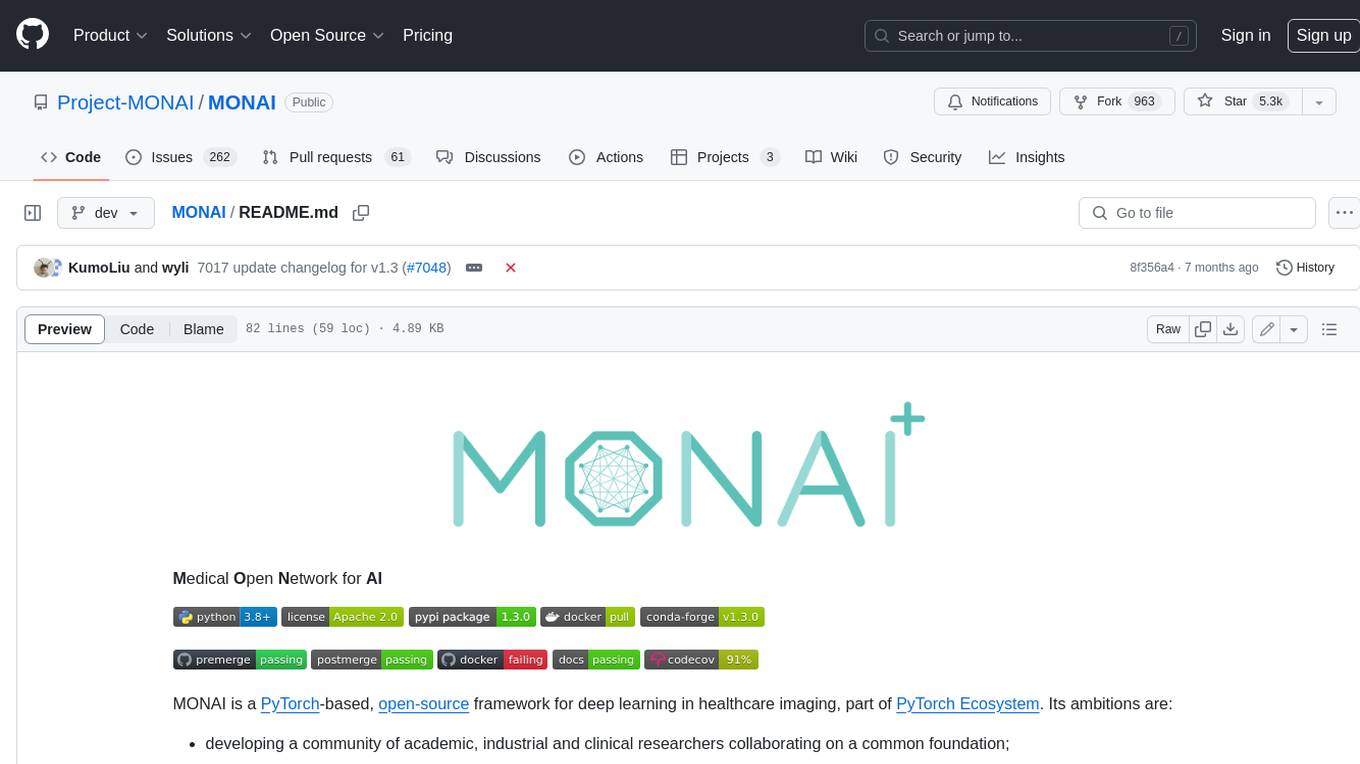
MONAI
MONAI is a PyTorch-based, open-source framework for deep learning in healthcare imaging. It provides a comprehensive set of tools for medical image analysis, including data preprocessing, model training, and evaluation. MONAI is designed to be flexible and easy to use, making it a valuable resource for researchers and developers in the field of medical imaging.
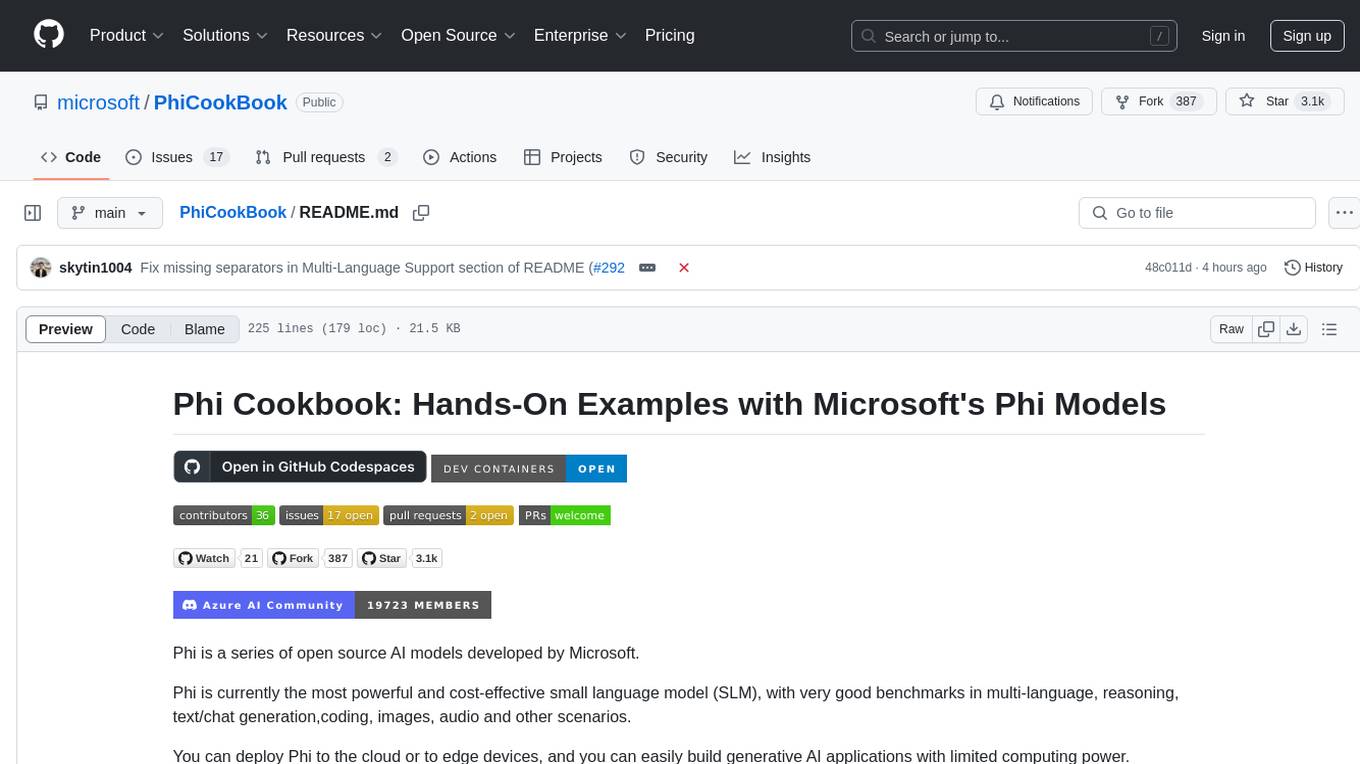
PhiCookBook
Phi Cookbook is a repository containing hands-on examples with Microsoft's Phi models, which are a series of open source AI models developed by Microsoft. Phi is currently the most powerful and cost-effective small language model with benchmarks in various scenarios like multi-language, reasoning, text/chat generation, coding, images, audio, and more. Users can deploy Phi to the cloud or edge devices to build generative AI applications with limited computing power.
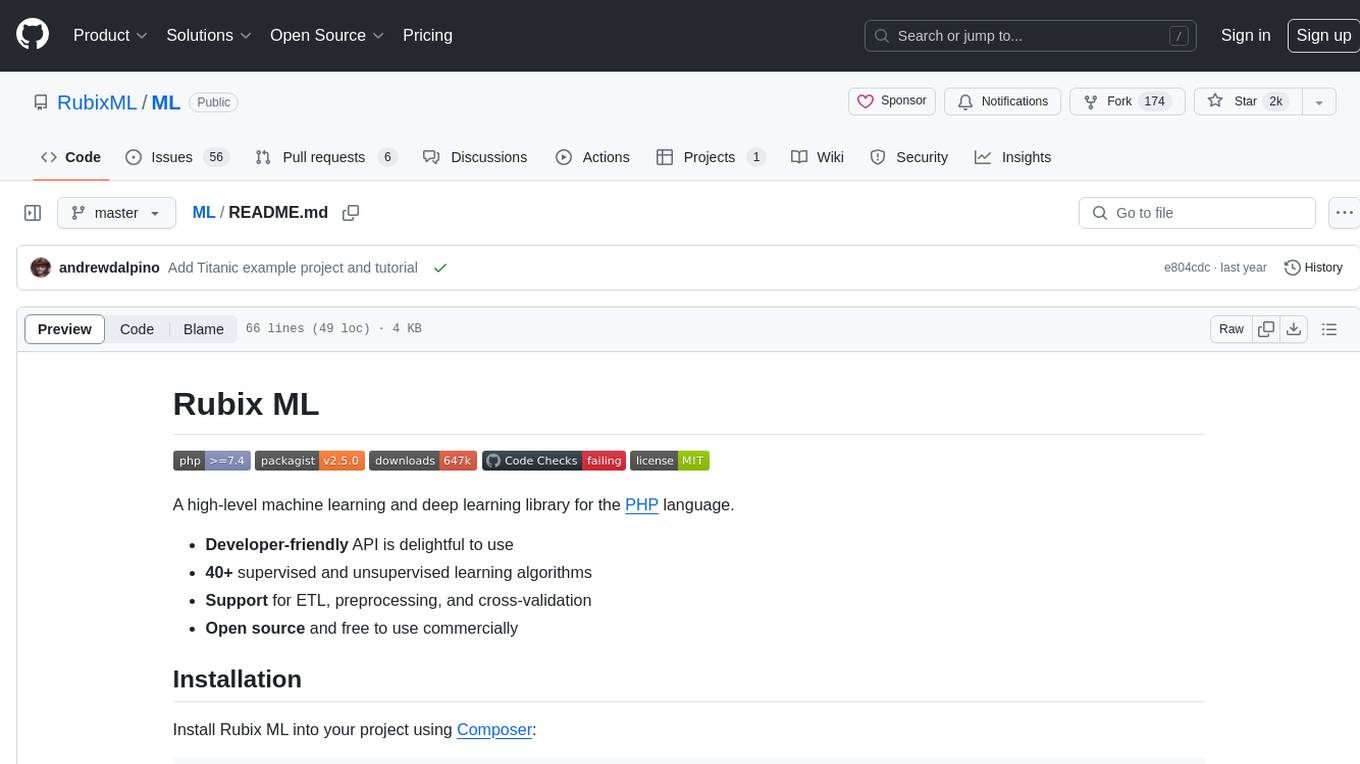
ML
Rubix ML is a high-level machine learning and deep learning library for the PHP language. It provides a developer-friendly API with over 40 supervised and unsupervised learning algorithms, support for ETL, preprocessing, and cross-validation. The library is open source and free to use commercially. Rubix ML allows users to build machine learning programs in PHP, covering the entire machine learning life cycle from data processing to training and production. It also offers tutorials and educational content to help users get started with machine learning projects.
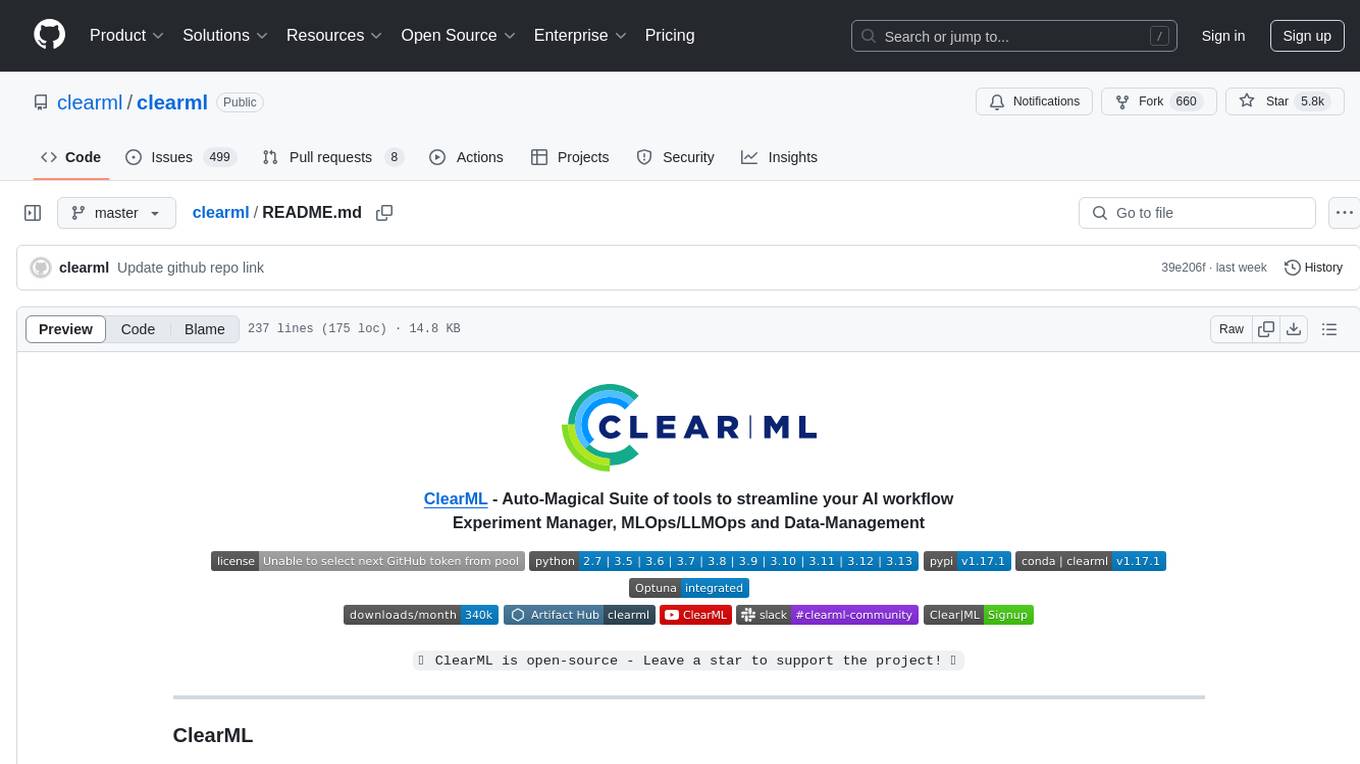
clearml
ClearML is an auto-magical suite of tools designed to streamline AI workflows. It includes modules for experiment management, MLOps/LLMOps, data management, model serving, and more. ClearML offers features like experiment tracking, model serving, orchestration, and automation. It supports various ML/DL frameworks and integrates with Jupyter Notebook and PyCharm for remote debugging. ClearML aims to simplify collaboration, automate processes, and enhance visibility in AI projects.
parallax
Parallax is a fully decentralized inference engine developed by Gradient. It allows users to build their own AI cluster for model inference across distributed nodes with varying configurations and physical locations. Core features include hosting local LLM on personal devices, cross-platform support, pipeline parallel model sharding, paged KV cache management, continuous batching for Mac, dynamic request scheduling, and routing for high performance. The backend architecture includes P2P communication powered by Lattica, GPU backend powered by SGLang and vLLM, and MAC backend powered by MLX LM.
AI-Engineering.academy
AI Engineering Academy aims to provide a structured learning path for individuals looking to learn Applied AI effectively. The platform offers multiple roadmaps covering topics like Retrieval Augmented Generation, Fine-tuning, and Deployment. Each roadmap equips learners with the knowledge and skills needed to excel in applied GenAI. Additionally, the platform will feature Hands-on End-to-End AI projects in the future.
pipeshub-ai
Pipeshub-ai is a versatile tool for automating data pipelines in AI projects. It provides a user-friendly interface to design, deploy, and monitor complex data workflows, enabling seamless integration of various AI models and data sources. With Pipeshub-ai, users can easily create end-to-end pipelines for tasks such as data preprocessing, model training, and inference, streamlining the AI development process and improving productivity. The tool supports integration with popular AI frameworks and cloud services, making it suitable for both beginners and experienced AI practitioners.
geoai
geoai is a Python package designed for utilizing Artificial Intelligence (AI) in the context of geospatial data. It allows users to visualize various types of geospatial data such as vector, raster, and LiDAR data. Additionally, the package offers functionalities for segmenting remote sensing imagery using the Segment Anything Model and classifying remote sensing imagery with deep learning models. With a focus on geospatial AI applications, geoai provides a versatile tool for processing and analyzing spatial data with the power of AI.
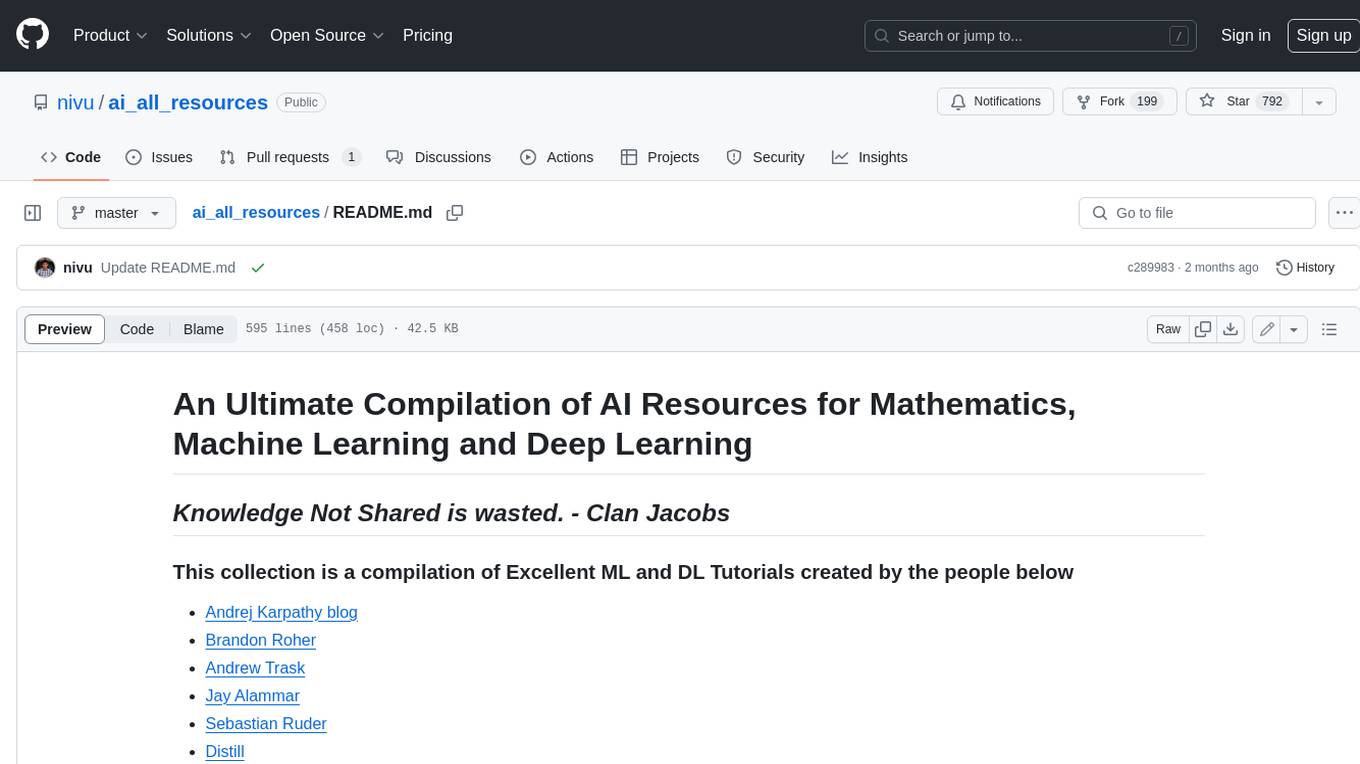
ai_all_resources
This repository is a compilation of excellent ML and DL tutorials created by various individuals and organizations. It covers a wide range of topics, including machine learning fundamentals, deep learning, computer vision, natural language processing, reinforcement learning, and more. The resources are organized into categories, making it easy to find the information you need. Whether you're a beginner or an experienced practitioner, you're sure to find something valuable in this repository.
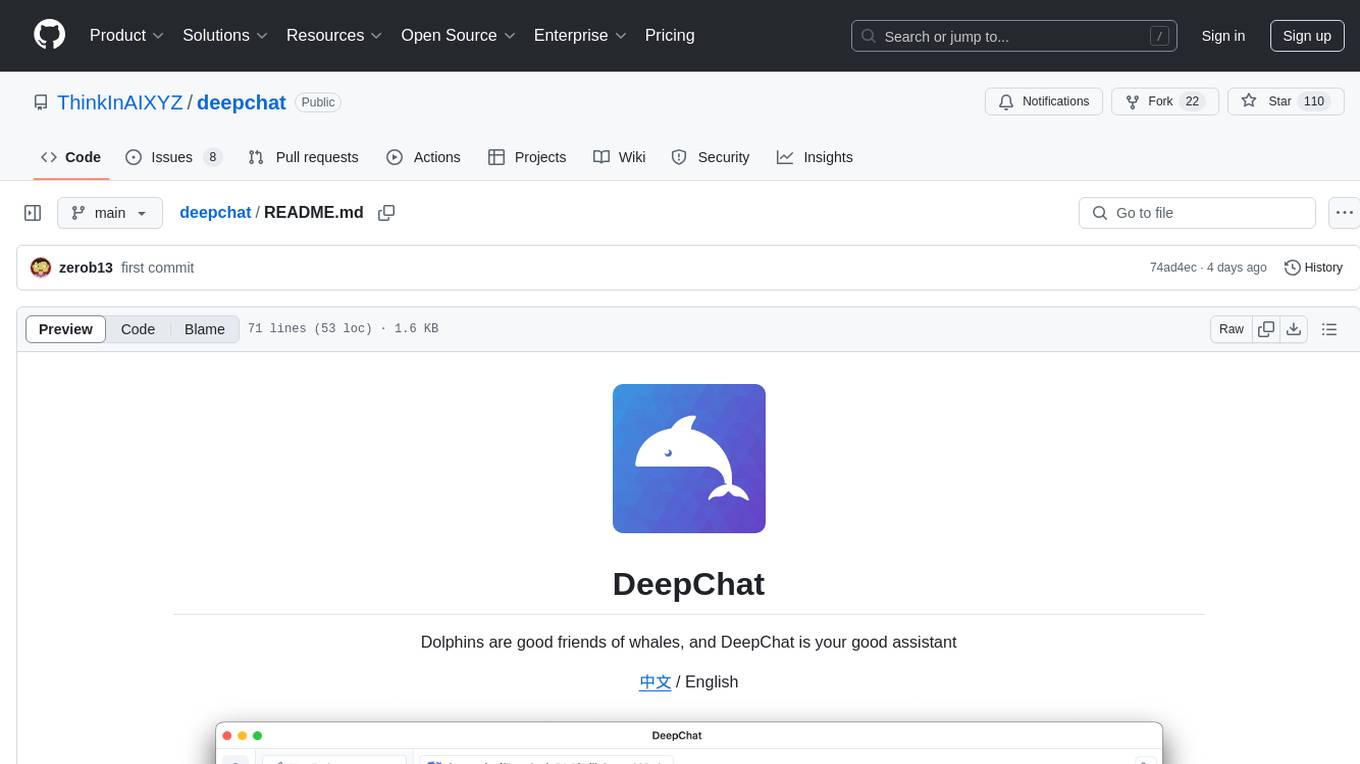
deepchat
DeepChat is a versatile chat tool that supports multiple model cloud services and local model deployment. It offers multi-channel chat concurrency support, platform compatibility, complete Markdown rendering, and easy usability with a comprehensive guide. The tool aims to enhance chat experiences by leveraging various AI models and ensuring efficient conversation management.
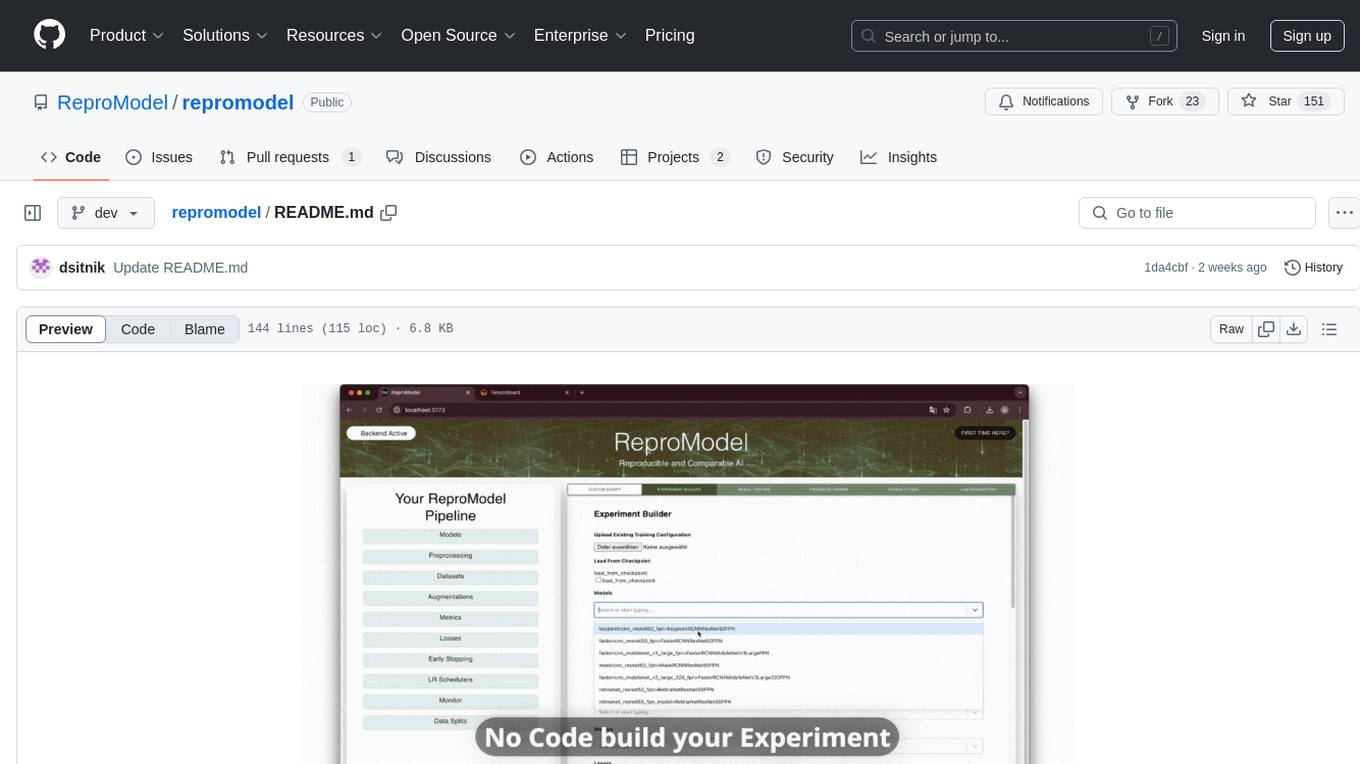
repromodel
ReproModel is an open-source toolbox designed to boost AI research efficiency by enabling researchers to reproduce, compare, train, and test AI models faster. It provides standardized models, dataloaders, and processing procedures, allowing researchers to focus on new datasets and model development. With a no-code solution, users can access benchmark and SOTA models and datasets, utilize training visualizations, extract code for publication, and leverage an LLM-powered automated methodology description writer. The toolbox helps researchers modularize development, compare pipeline performance reproducibly, and reduce time for model development, computation, and writing. Future versions aim to facilitate building upon state-of-the-art research by loading previously published study IDs with verified code, experiments, and results stored in the system.
giselle
Giselle is an open source AI tool designed for agentic workflows, facilitating seamless collaboration between humans and AI. It offers cloud hosting with free agent time, self-hosting options, and a Vibe Cording Guide for using AI coding assistants. Giselle is suitable for developers and non-engineers alike, empowering users to leverage AI capabilities without extensive coding knowledge. The tool is actively developed, with a roadmap in progress, and welcomes contributions from the community under the Apache License Version 2.0.
For similar tasks
Flowise
Flowise is a tool that allows users to build customized LLM flows with a drag-and-drop UI. It is open-source and self-hostable, and it supports various deployments, including AWS, Azure, Digital Ocean, GCP, Railway, Render, HuggingFace Spaces, Elestio, Sealos, and RepoCloud. Flowise has three different modules in a single mono repository: server, ui, and components. The server module is a Node backend that serves API logics, the ui module is a React frontend, and the components module contains third-party node integrations. Flowise supports different environment variables to configure your instance, and you can specify these variables in the .env file inside the packages/server folder.

nlux
nlux is an open-source Javascript and React JS library that makes it super simple to integrate powerful large language models (LLMs) like ChatGPT into your web app or website. With just a few lines of code, you can add conversational AI capabilities and interact with your favourite LLM.
generative-ai-go
The Google AI Go SDK enables developers to use Google's state-of-the-art generative AI models (like Gemini) to build AI-powered features and applications. It supports use cases like generating text from text-only input, generating text from text-and-images input (multimodal), building multi-turn conversations (chat), and embedding.
awesome-langchain-zh
The awesome-langchain-zh repository is a collection of resources related to LangChain, a framework for building AI applications using large language models (LLMs). The repository includes sections on the LangChain framework itself, other language ports of LangChain, tools for low-code development, services, agents, templates, platforms, open-source projects related to knowledge management and chatbots, as well as learning resources such as notebooks, videos, and articles. It also covers other LLM frameworks and provides additional resources for exploring and working with LLMs. The repository serves as a comprehensive guide for developers and AI enthusiasts interested in leveraging LangChain and LLMs for various applications.
Large-Language-Model-Notebooks-Course
This practical free hands-on course focuses on Large Language models and their applications, providing a hands-on experience using models from OpenAI and the Hugging Face library. The course is divided into three major sections: Techniques and Libraries, Projects, and Enterprise Solutions. It covers topics such as Chatbots, Code Generation, Vector databases, LangChain, Fine Tuning, PEFT Fine Tuning, Soft Prompt tuning, LoRA, QLoRA, Evaluate Models, Knowledge Distillation, and more. Each section contains chapters with lessons supported by notebooks and articles. The course aims to help users build projects and explore enterprise solutions using Large Language Models.
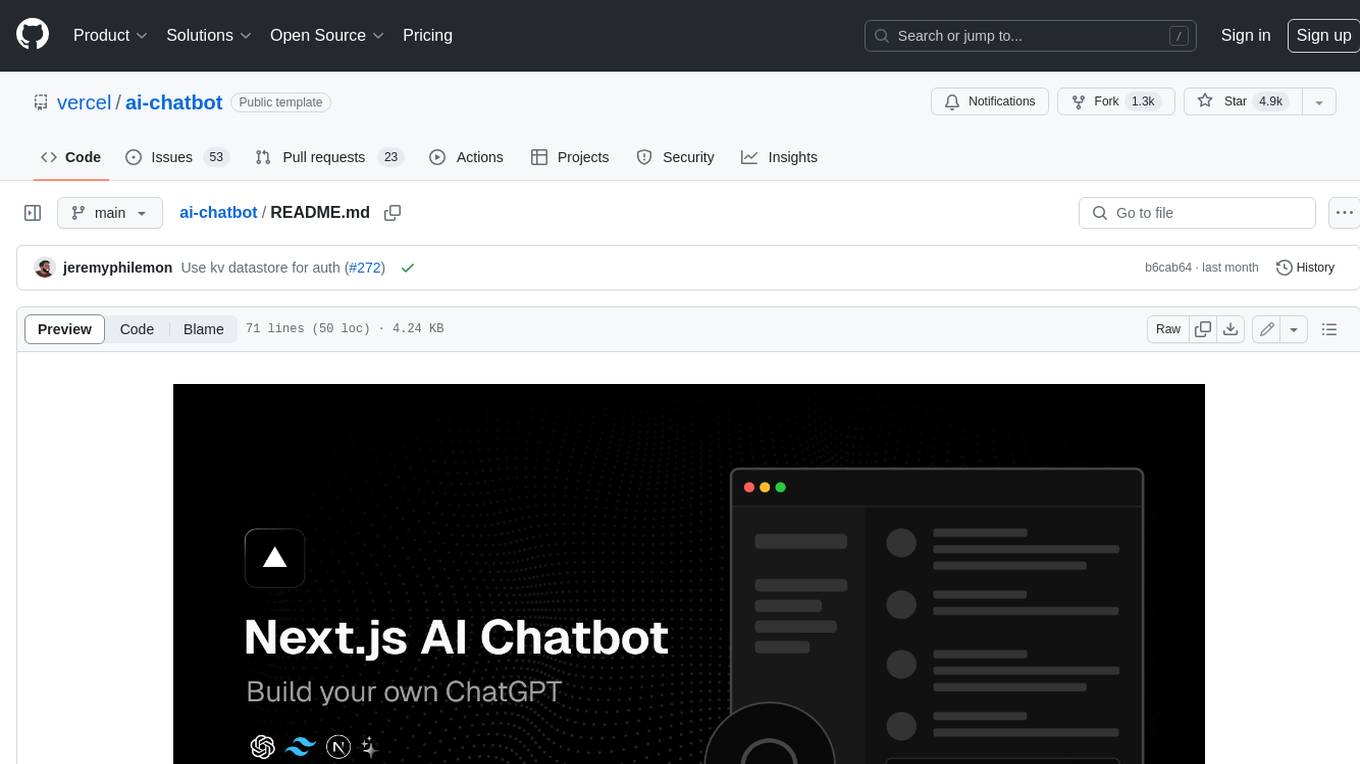
ai-chatbot
Next.js AI Chatbot is an open-source app template for building AI chatbots using Next.js, Vercel AI SDK, OpenAI, and Vercel KV. It includes features like Next.js App Router, React Server Components, Vercel AI SDK for streaming chat UI, support for various AI models, Tailwind CSS styling, Radix UI for headless components, chat history management, rate limiting, session storage with Vercel KV, and authentication with NextAuth.js. The template allows easy deployment to Vercel and customization of AI model providers.
awesome-local-llms
The 'awesome-local-llms' repository is a curated list of open-source tools for local Large Language Model (LLM) inference, covering both proprietary and open weights LLMs. The repository categorizes these tools into LLM inference backend engines, LLM front end UIs, and all-in-one desktop applications. It collects GitHub repository metrics as proxies for popularity and active maintenance. Contributions are encouraged, and users can suggest additional open-source repositories through the Issues section or by running a provided script to update the README and make a pull request. The repository aims to provide a comprehensive resource for exploring and utilizing local LLM tools.
Awesome-AI-Data-Guided-Projects
A curated list of data science & AI guided projects to start building your portfolio. The repository contains guided projects covering various topics such as large language models, time series analysis, computer vision, natural language processing (NLP), and data science. Each project provides detailed instructions on how to implement specific tasks using different tools and technologies.
For similar jobs
weave
Weave is a toolkit for developing Generative AI applications, built by Weights & Biases. With Weave, you can log and debug language model inputs, outputs, and traces; build rigorous, apples-to-apples evaluations for language model use cases; and organize all the information generated across the LLM workflow, from experimentation to evaluations to production. Weave aims to bring rigor, best-practices, and composability to the inherently experimental process of developing Generative AI software, without introducing cognitive overhead.
LLMStack
LLMStack is a no-code platform for building generative AI agents, workflows, and chatbots. It allows users to connect their own data, internal tools, and GPT-powered models without any coding experience. LLMStack can be deployed to the cloud or on-premise and can be accessed via HTTP API or triggered from Slack or Discord.
VisionCraft
The VisionCraft API is a free API for using over 100 different AI models. From images to sound.
kaito
Kaito is an operator that automates the AI/ML inference model deployment in a Kubernetes cluster. It manages large model files using container images, avoids tuning deployment parameters to fit GPU hardware by providing preset configurations, auto-provisions GPU nodes based on model requirements, and hosts large model images in the public Microsoft Container Registry (MCR) if the license allows. Using Kaito, the workflow of onboarding large AI inference models in Kubernetes is largely simplified.
PyRIT
PyRIT is an open access automation framework designed to empower security professionals and ML engineers to red team foundation models and their applications. It automates AI Red Teaming tasks to allow operators to focus on more complicated and time-consuming tasks and can also identify security harms such as misuse (e.g., malware generation, jailbreaking), and privacy harms (e.g., identity theft). The goal is to allow researchers to have a baseline of how well their model and entire inference pipeline is doing against different harm categories and to be able to compare that baseline to future iterations of their model. This allows them to have empirical data on how well their model is doing today, and detect any degradation of performance based on future improvements.
tabby
Tabby is a self-hosted AI coding assistant, offering an open-source and on-premises alternative to GitHub Copilot. It boasts several key features: * Self-contained, with no need for a DBMS or cloud service. * OpenAPI interface, easy to integrate with existing infrastructure (e.g Cloud IDE). * Supports consumer-grade GPUs.
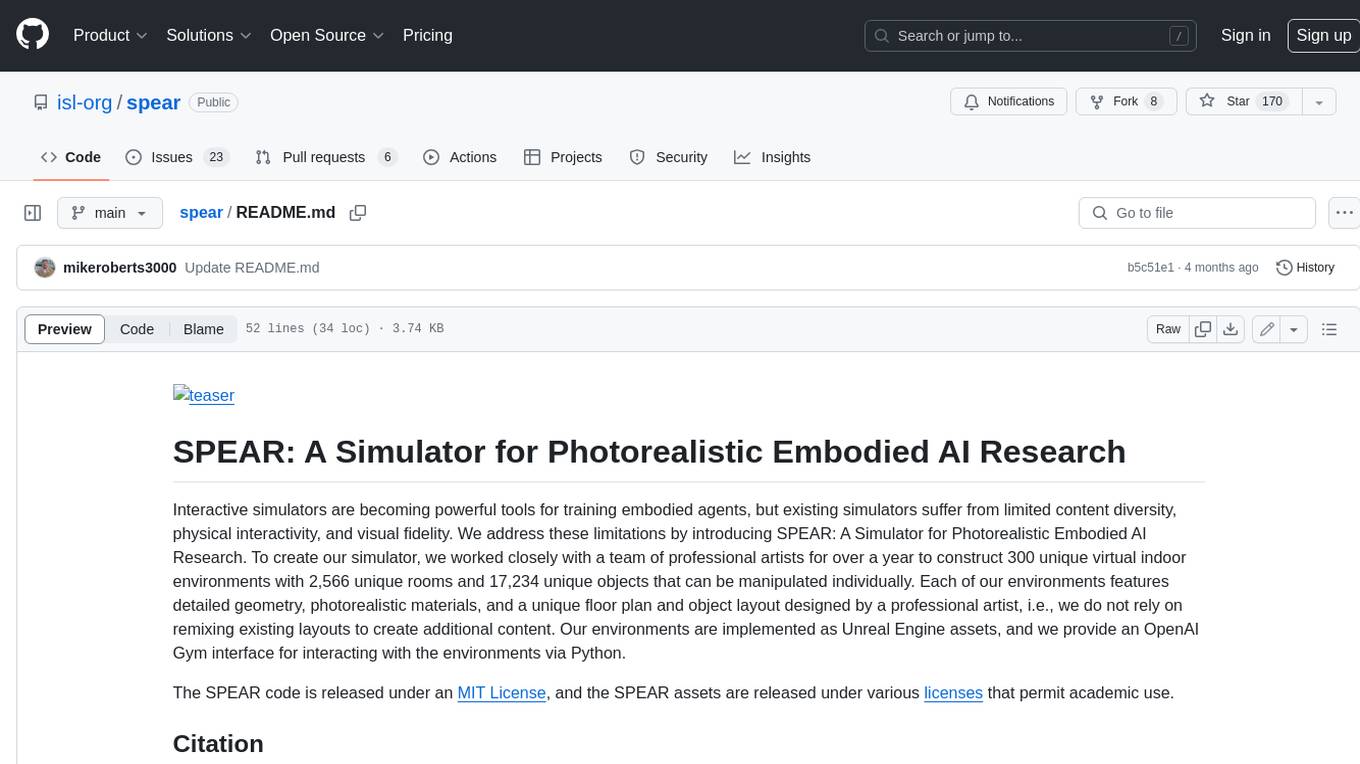
spear
SPEAR (Simulator for Photorealistic Embodied AI Research) is a powerful tool for training embodied agents. It features 300 unique virtual indoor environments with 2,566 unique rooms and 17,234 unique objects that can be manipulated individually. Each environment is designed by a professional artist and features detailed geometry, photorealistic materials, and a unique floor plan and object layout. SPEAR is implemented as Unreal Engine assets and provides an OpenAI Gym interface for interacting with the environments via Python.
Magick
Magick is a groundbreaking visual AIDE (Artificial Intelligence Development Environment) for no-code data pipelines and multimodal agents. Magick can connect to other services and comes with nodes and templates well-suited for intelligent agents, chatbots, complex reasoning systems and realistic characters.