


WaterCrawl
Transform Web Content into LLM-Ready Data
Stars: 1800
WaterCrawl is a powerful web application that uses Python, Django, Scrapy, and Celery to crawl web pages and extract relevant data. It provides advanced web crawling and scraping capabilities, a powerful search engine, multi-language support, asynchronous processing, REST API with OpenAPI, rich ecosystem integrations, self-hosted and open-source options, and advanced results handling. The tool allows users to crawl websites with customizable options, search for relevant content across the web, monitor real-time progress of crawls, and process search results with customizable parameters.
README:
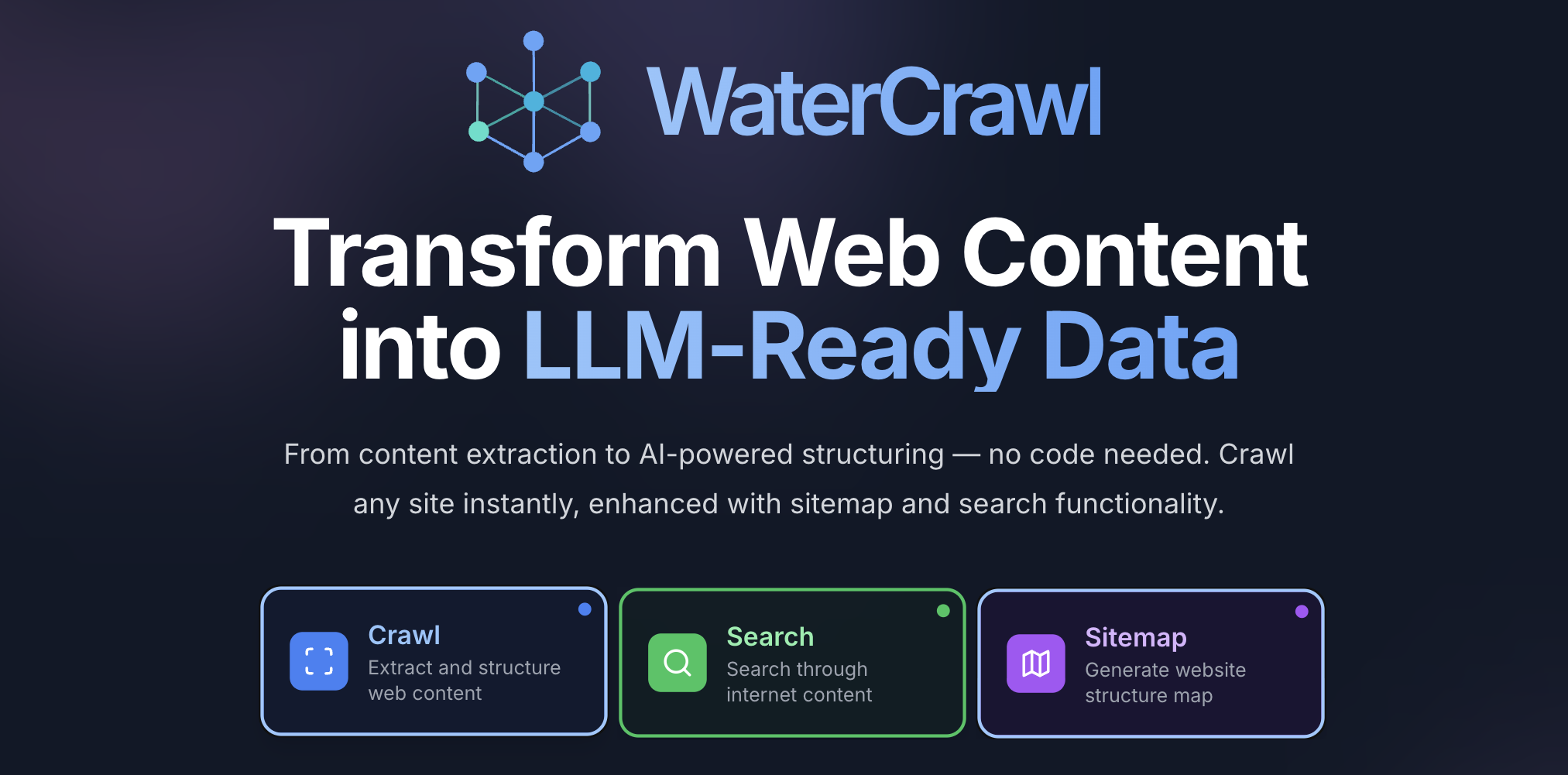





🕷️ WaterCrawl is a powerful web application that uses Python, Django, Scrapy, and Celery to crawl web pages and extract relevant data.
To build and run WaterCrawl on Docker locally, please follow these steps:
-
Clone the repository:
git clone https://github.com/watercrawl/watercrawl.git cd watercrawl -
Build and run the Docker containers:
cd docker cp .env.example .env docker compose up -d -
Access the application with open http://localhost
⚠️ IMPORTANT: If you're deploying on a domain or IP address other than localhost, you MUST update the MinIO configuration in your .env file:# Change this from 'localhost' to your actual domain or IP MINIO_EXTERNAL_ENDPOINT=your-domain.com # Also update these URLs accordingly MINIO_BROWSER_REDIRECT_URL=http://your-domain.com/minio-console/ MINIO_SERVER_URL=http://your-domain.com/Failure to update these settings will result in broken file uploads and downloads. For more details, see DEPLOYMENT.md.
Important: Before deploying to production, ensure that you update the
.envfile with the appropriate configuration values. Additionally, make sure to set up and configure the database, MinIO, and any other required services. for more information, please read the Deployment Guide.
For local development and contribution, please follow our Contributing Guide 🤝

- 🕸️ Advanced Web Crawling & Scraping - Crawl websites with highly customizable options for depth, speed, and targeting specific content
- 🔍 Powerful Search Engine - Find relevant content across the web with multiple search depths (basic, advanced, ultimate)
- 🌐 Multi-language Support - Search and crawl content in different languages with country-specific targeting
- ⚡ Asynchronous Processing - Monitor real-time progress of crawls and searches via Server-Sent Events (SSE)
- 🔄 REST API with OpenAPI - Comprehensive API with detailed documentation and client libraries
- 🔌 Rich Ecosystem - Integrations with Dify, N8N, and other AI/automation platforms
- 🏠 Self-hosted & Open Source - Full control over your data with easy deployment options
- 📊 Advanced Results Handling - Download and process search results with customizable parameters
Check our API Overview to learn more about these features.
- ✅ Python Client - Full-featured SDK with support for all API endpoints
- ✅ Node.js Client - Complete JavaScript/TypeScript integration
- ✅ Go Client - Full-featured SDK with support for all API endpoints
- ✅ PHP Client - Full-featured SDK with support for all API endpoints
- 🔜 Rust Client - Coming soon
- ✅ Dify Plugin (source code)
- ✅ N8N workflow node (source code)
- ✅ Dify Knowledge Base
- 🔄 Langflow (Pull Request - Not Merged yet)
- 🔜 Flowise (Coming soon)
- ✅ WaterCrawl plugin
- ✅ OpenAI Plugin
This repository is available under the WaterCrawl License, which is essentially MIT with a few additional restrictions.
For Tasks:
Click tags to check more tools for each tasksFor Jobs:
Alternative AI tools for WaterCrawl
Similar Open Source Tools
WaterCrawl
WaterCrawl is a powerful web application that uses Python, Django, Scrapy, and Celery to crawl web pages and extract relevant data. It provides advanced web crawling and scraping capabilities, a powerful search engine, multi-language support, asynchronous processing, REST API with OpenAPI, rich ecosystem integrations, self-hosted and open-source options, and advanced results handling. The tool allows users to crawl websites with customizable options, search for relevant content across the web, monitor real-time progress of crawls, and process search results with customizable parameters.
db2rest
DB2Rest is a modern low code REST DATA API platform that enables the rapid development of intelligent applications by combining databases, language models, and vector stores. It facilitates context-aware, reasoning applications without vendor lock-in. The tool accelerates application delivery, fosters faster innovation with AI, serves as a secure database gateway, and simplifies integration. It supports various databases like PostgreSQL, MySQL, MS SQL Server, Oracle, MongoDB, and more, with planned support for additional databases. Users can connect on Discord for support and contact [email protected] for inquiries.
chatnio
Chat Nio is a next-generation AIGC one-stop business solution that combines the advantages of frontend-oriented lightweight deployment projects with powerful API distribution systems. It offers rich model support, beautiful UI design, complete Markdown support, multi-theme support, internationalization support, text-to-image support, powerful conversation sync, model market & preset system, rich file parsing, full model internet search, Progressive Web App (PWA) support, comprehensive backend management, multiple billing methods, innovative model caching, and additional features. The project aims to address limitations in conversation synchronization, billing, file parsing, conversation URL sharing, channel management, and API call support found in existing AIGC commercial sites, while also providing a user-friendly interface design and C-end features.
codexia
Codexia is a powerful GUI and Toolkit for Codex CLI, offering features like fork chat, file-tree integration, notepad, git diff, built-in pdf/csv/xlsx viewer, and more. It provides multi-file format support, flexible configuration with multiple AI providers, professional UX with responsive UI, security features like sandbox execution modes, and prioritizes privacy. The tool supports interactive chat, code generation/editing, file operations with sandbox, command execution with approval, multiple AI providers, project-aware assistance, streaming responses, and built-in web search. The roadmap includes plans for MCP tool call, more file format support, better UI customization, plugin system, real-time collaboration, performance optimizations, and token count.
growi
GROWI is a collaborative wiki platform that allows users to create hierarchical pages with markdown, edit simultaneously with multiple people, and support authentication with LDAP/Active Directory, OAuth, and SAML. It also integrates with Slack/Mattermost, IFTTT, and allows for plugin customization. GROWI is Docker and Docker Compose ready, supports multiple sites, HTTPS with Let's Encrypt proxy integration, and offers migration guides for on-premise installations. The tool is built with Node.js, npm, pnpm, Turborepo, and requires MongoDB, with optional dependencies on Redis and ElasticSearch for full-text search functionality.
actionbook
Actionbook is a browser action engine designed for AI agents, providing up-to-date action manuals and DOM structure to enable instant website operations without guesswork. It offers faster execution, token savings, resilient automation, and universal compatibility, making it ideal for building reliable browser agents. Actionbook integrates seamlessly with AI coding assistants and offers three integration methods: CLI, MCP Server, and JavaScript SDK. The tool is well-documented and actively developed in a monorepo setup using pnpm workspaces and Turborepo.
BubbleLab
Bubble Lab is an open-source agentic workflow automation builder designed for developers seeking full control, transparency, and type safety. It compiles workflows into clean, production-ready TypeScript code that can be debugged and deployed anywhere. With features like natural language prompt to workflow generation, full observability, seamless migration from other platforms, and instant export as TypeScript/API, Bubble Lab offers a flexible and code-centric approach to workflow automation.
deepchat
DeepChat is a versatile chat tool that supports multiple model cloud services and local model deployment. It offers multi-channel chat concurrency support, platform compatibility, complete Markdown rendering, and easy usability with a comprehensive guide. The tool aims to enhance chat experiences by leveraging various AI models and ensuring efficient conversation management.
LynxHub
LynxHub is a platform that allows users to seamlessly install, configure, launch, and manage all their AI interfaces from a single, intuitive dashboard. It offers features like AI interface management, arguments manager, custom run commands, pre-launch actions, extension management, in-app tools like terminal and web browser, AI information dashboard, Discord integration, and additional features like theme options and favorite interface pinning. The platform supports modular design for custom AI modules and upcoming extensions system for complete customization. LynxHub aims to streamline AI workflow and enhance user experience with a user-friendly interface and comprehensive functionalities.
qwery-core
Qwery is a platform for querying and visualizing data using natural language without technical knowledge. It seamlessly integrates with various datasources, generates optimized queries, and delivers outcomes like result sets, dashboards, and APIs. Features include natural language querying, multi-database support, AI-powered agents, visual data apps, desktop & cloud options, template library, and extensibility through plugins. The project is under active development and not yet suitable for production use.
pyspur
PySpur is a graph-based editor designed for LLM (Large Language Models) workflows. It offers modular building blocks, node-level debugging, and performance evaluation. The tool is easy to hack, supports JSON configs for workflow graphs, and is lightweight with minimal dependencies. Users can quickly set up PySpur by cloning the repository, creating a .env file, starting docker services, and accessing the portal. PySpur can also work with local models served using Ollama, with steps provided for configuration. The roadmap includes features like canvas, async/batch execution, support for Ollama, new nodes, pipeline optimization, templates, code compilation, multimodal support, and more.
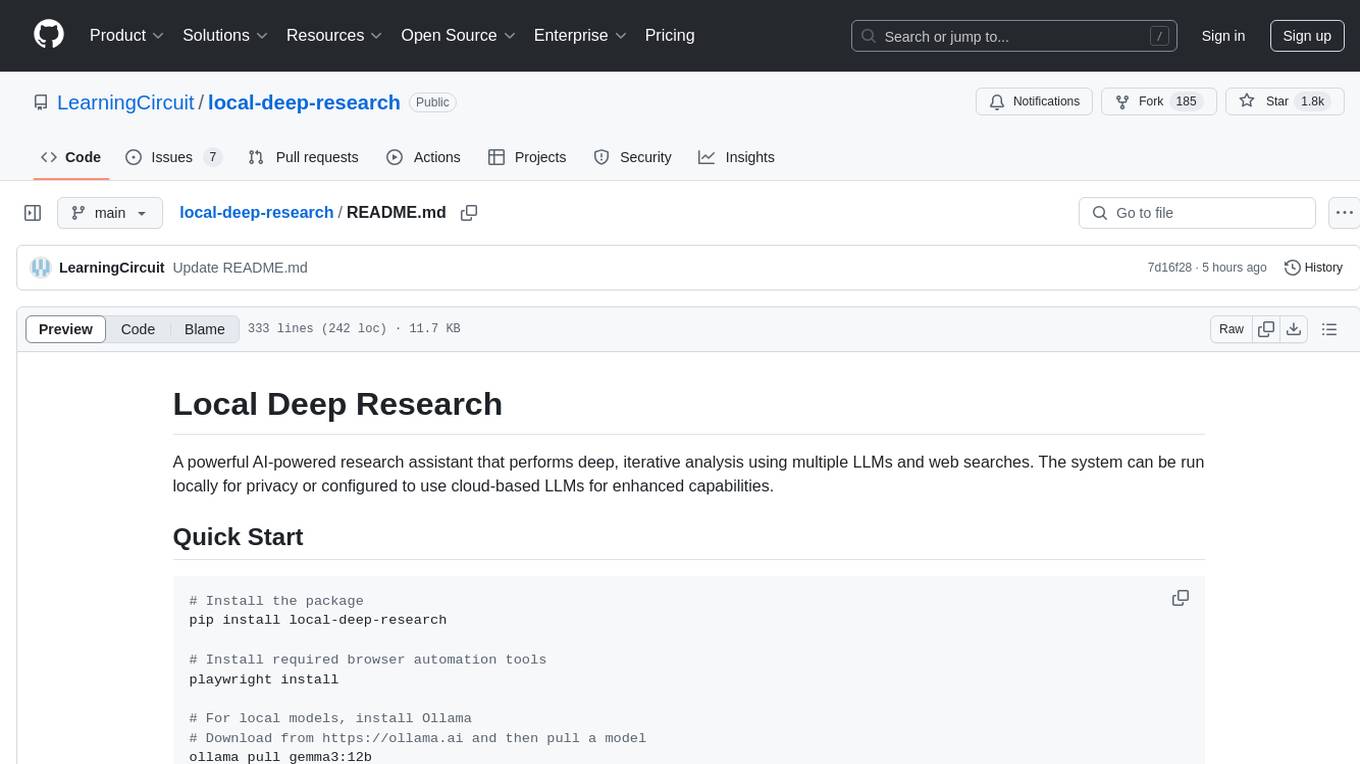
local-deep-research
Local Deep Research is a powerful AI-powered research assistant that performs deep, iterative analysis using multiple LLMs and web searches. It can be run locally for privacy or configured to use cloud-based LLMs for enhanced capabilities. The tool offers advanced research capabilities, flexible LLM support, rich output options, privacy-focused operation, enhanced search integration, and academic & scientific integration. It also provides a web interface, command line interface, and supports multiple LLM providers and search engines. Users can configure AI models, search engines, and research parameters for customized research experiences.
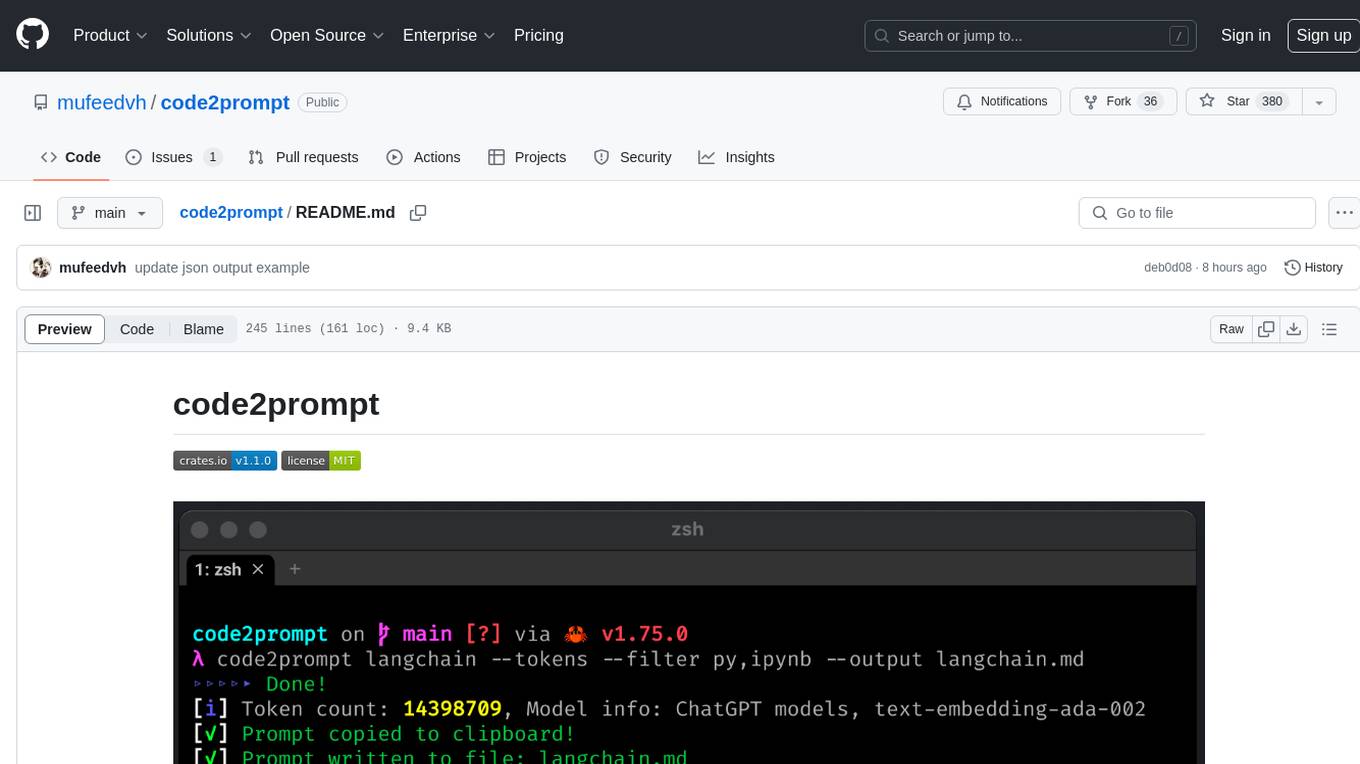
code2prompt
code2prompt is a command-line tool that converts your codebase into a single LLM prompt with a source tree, prompt templating, and token counting. It automates generating LLM prompts from codebases of any size, customizing prompt generation with Handlebars templates, respecting .gitignore, filtering and excluding files using glob patterns, displaying token count, including Git diff output, copying prompt to clipboard, saving prompt to an output file, excluding files and folders, adding line numbers to source code blocks, and more. It helps streamline the process of creating LLM prompts for code analysis, generation, and other tasks.
tracecat
Tracecat is an open-source automation platform for security teams. It's designed to be simple but powerful, with a focus on AI features and a practitioner-obsessed UI/UX. Tracecat can be used to automate a variety of tasks, including phishing email investigation, evidence collection, and remediation plan generation.
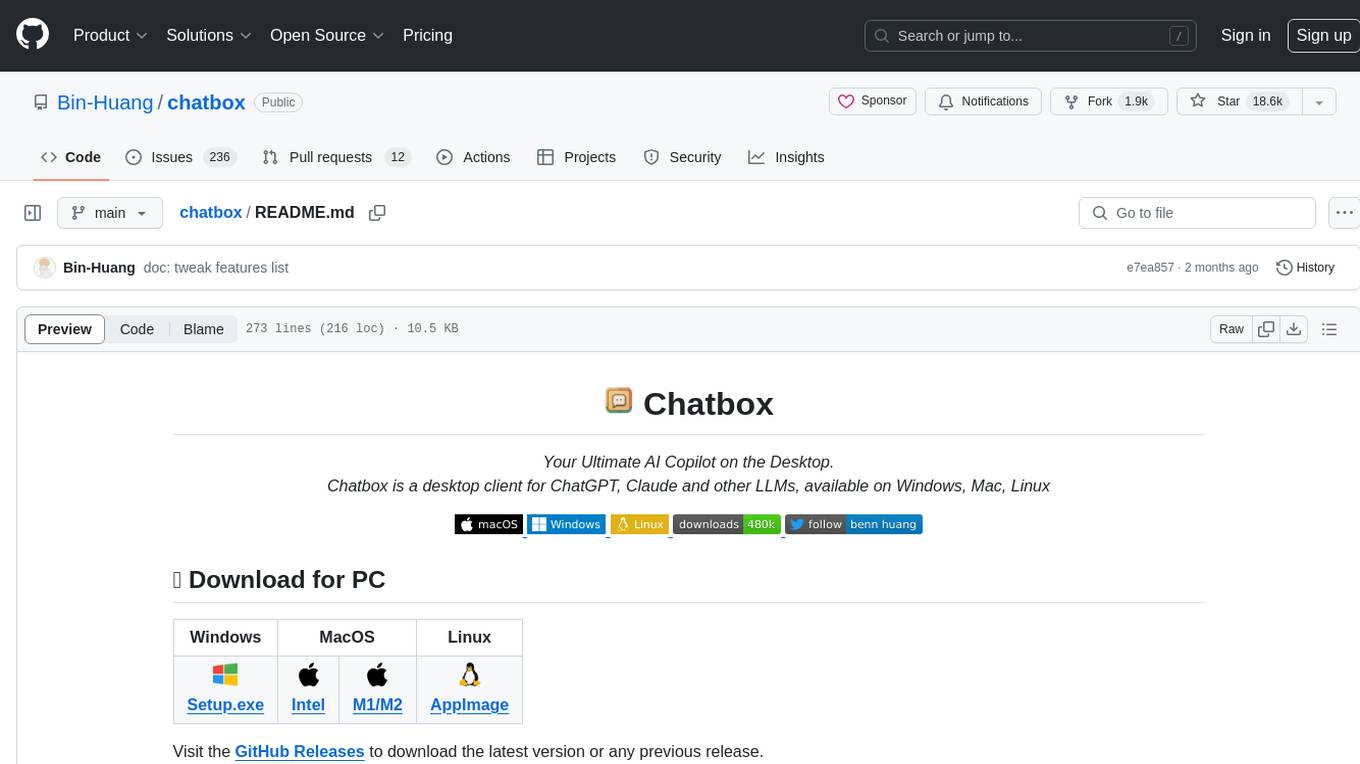
chatbox
Chatbox is a desktop client for ChatGPT, Claude, and other LLMs, providing a user-friendly interface for AI copilot assistance on Windows, Mac, and Linux. It offers features like local data storage, multiple LLM provider support, image generation with Dall-E-3, enhanced prompting, keyboard shortcuts, and more. Users can collaborate, access the tool on various platforms, and enjoy multilingual support. Chatbox is constantly evolving with new features to enhance the user experience.
AgentGPT
AgentGPT is a platform that allows users to configure and deploy autonomous AI agents. Users can name their own custom AI and set it on any goal. The AI will think of tasks, execute them, and learn from the results to reach the goal. The platform provides a demo experience, automatic setup CLI, and a tech stack including Next.js, FastAPI, Prisma, TailwindCSS, Zod, and more. AgentGPT is designed to help users easily create and deploy AI agents for various tasks.
For similar tasks
crawl4ai
Crawl4AI is a powerful and free web crawling service that extracts valuable data from websites and provides LLM-friendly output formats. It supports crawling multiple URLs simultaneously, replaces media tags with ALT, and is completely free to use and open-source. Users can integrate Crawl4AI into Python projects as a library or run it as a standalone local server. The tool allows users to crawl and extract data from specified URLs using different providers and models, with options to include raw HTML content, force fresh crawls, and extract meaningful text blocks. Configuration settings can be adjusted in the `crawler/config.py` file to customize providers, API keys, chunk processing, and word thresholds. Contributions to Crawl4AI are welcome from the open-source community to enhance its value for AI enthusiasts and developers.
aio-scrapy
Aio-scrapy is an asyncio-based web crawling and web scraping framework inspired by Scrapy. It supports distributed crawling/scraping, implements compatibility with scrapyd, and provides options for using redis queue and rabbitmq queue. The framework is designed for fast extraction of structured data from websites. Aio-scrapy requires Python 3.9+ and is compatible with Linux, Windows, macOS, and BSD systems.
firecrawl-mcp-server
Firecrawl MCP Server is a Model Context Protocol (MCP) server implementation that integrates with Firecrawl for web scraping capabilities. It supports features like scrape, crawl, search, extract, and batch scrape. It provides web scraping with JS rendering, URL discovery, web search with content extraction, automatic retries with exponential backoff, credit usage monitoring, comprehensive logging system, support for cloud and self-hosted FireCrawl instances, mobile/desktop viewport support, and smart content filtering with tag inclusion/exclusion. The server includes configurable parameters for retry behavior and credit usage monitoring, rate limiting and batch processing capabilities, and tools for scraping, batch scraping, checking batch status, searching, crawling, and extracting structured information from web pages.
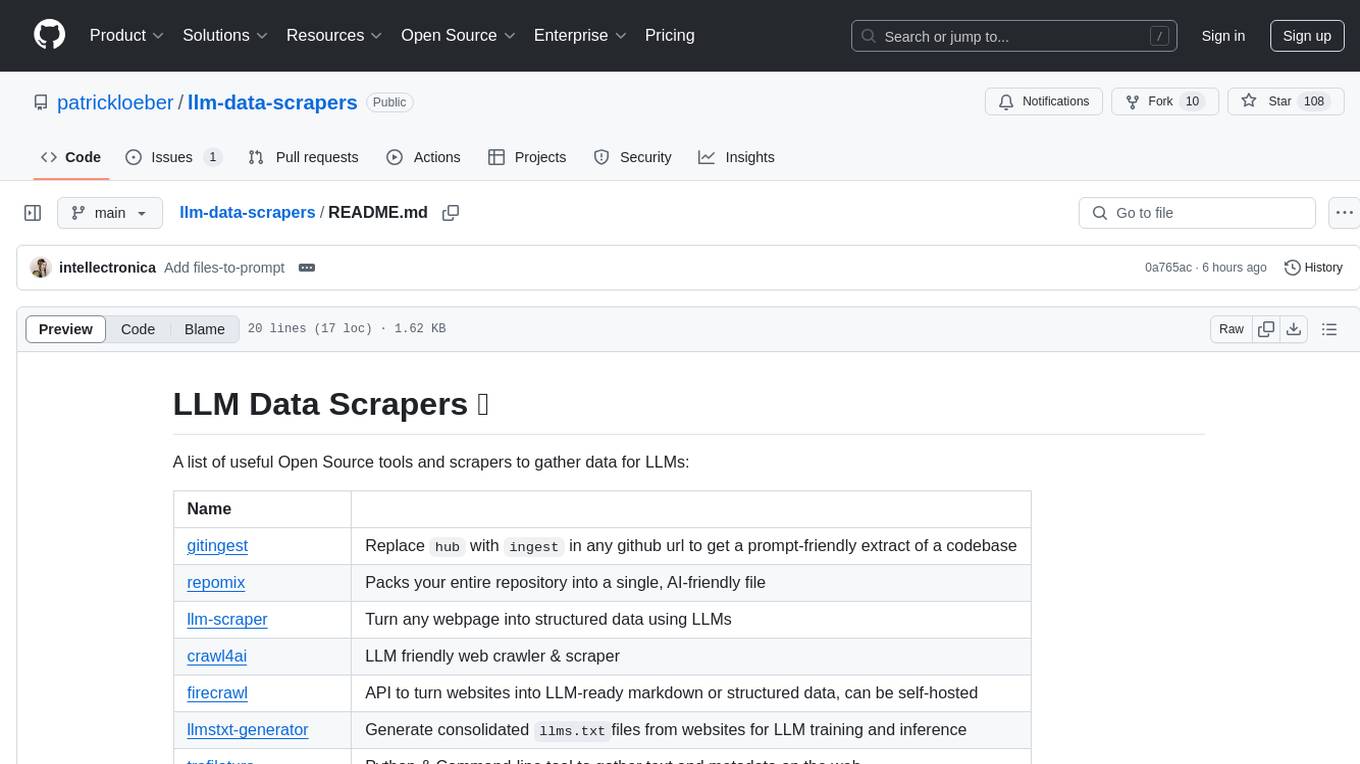
llm-data-scrapers
LLM Data Scrapers is a collection of open source tools and scrapers designed to gather data for Large Language Models (LLMs). The repository includes various tools such as gitingest for extracting codebases, repomix for packing repositories into AI-friendly files, llm-scraper for converting webpages into structured data, crawl4ai for web crawling, and firecrawl for turning websites into LLM-ready markdown or structured data. Additionally, the repository offers tools like llmstxt-generator for generating training data, trafilatura for gathering web text and metadata, RepoToTextForLLMs for fetching repo content, marker for converting PDFs, reader for converting URLs to LLM-friendly inputs, and files-to-prompt for concatenating files into prompts for LLMs.
WaterCrawl
WaterCrawl is a powerful web application that uses Python, Django, Scrapy, and Celery to crawl web pages and extract relevant data. It provides advanced web crawling and scraping capabilities, a powerful search engine, multi-language support, asynchronous processing, REST API with OpenAPI, rich ecosystem integrations, self-hosted and open-source options, and advanced results handling. The tool allows users to crawl websites with customizable options, search for relevant content across the web, monitor real-time progress of crawls, and process search results with customizable parameters.

airflow
Apache Airflow (or simply Airflow) is a platform to programmatically author, schedule, and monitor workflows. When workflows are defined as code, they become more maintainable, versionable, testable, and collaborative. Use Airflow to author workflows as directed acyclic graphs (DAGs) of tasks. The Airflow scheduler executes your tasks on an array of workers while following the specified dependencies. Rich command line utilities make performing complex surgeries on DAGs a snap. The rich user interface makes it easy to visualize pipelines running in production, monitor progress, and troubleshoot issues when needed.
MateCat
Matecat is an enterprise-level, web-based CAT tool designed to make post-editing and outsourcing easy and to provide a complete set of features to manage and monitor translation projects.
daydreams
Daydreams is a generative agent library designed for playing onchain games by injecting context. It is chain agnostic and allows users to perform onchain tasks, including playing any onchain game. The tool is lightweight and powerful, enabling users to define game context, register actions, set goals, monitor progress, and integrate with external agents. Daydreams aims to be 'lite' and 'composable', dynamically generating code needed to play games. It is currently in pre-alpha stage, seeking feedback and collaboration for further development.
For similar jobs
sweep
Sweep is an AI junior developer that turns bugs and feature requests into code changes. It automatically handles developer experience improvements like adding type hints and improving test coverage.
teams-ai
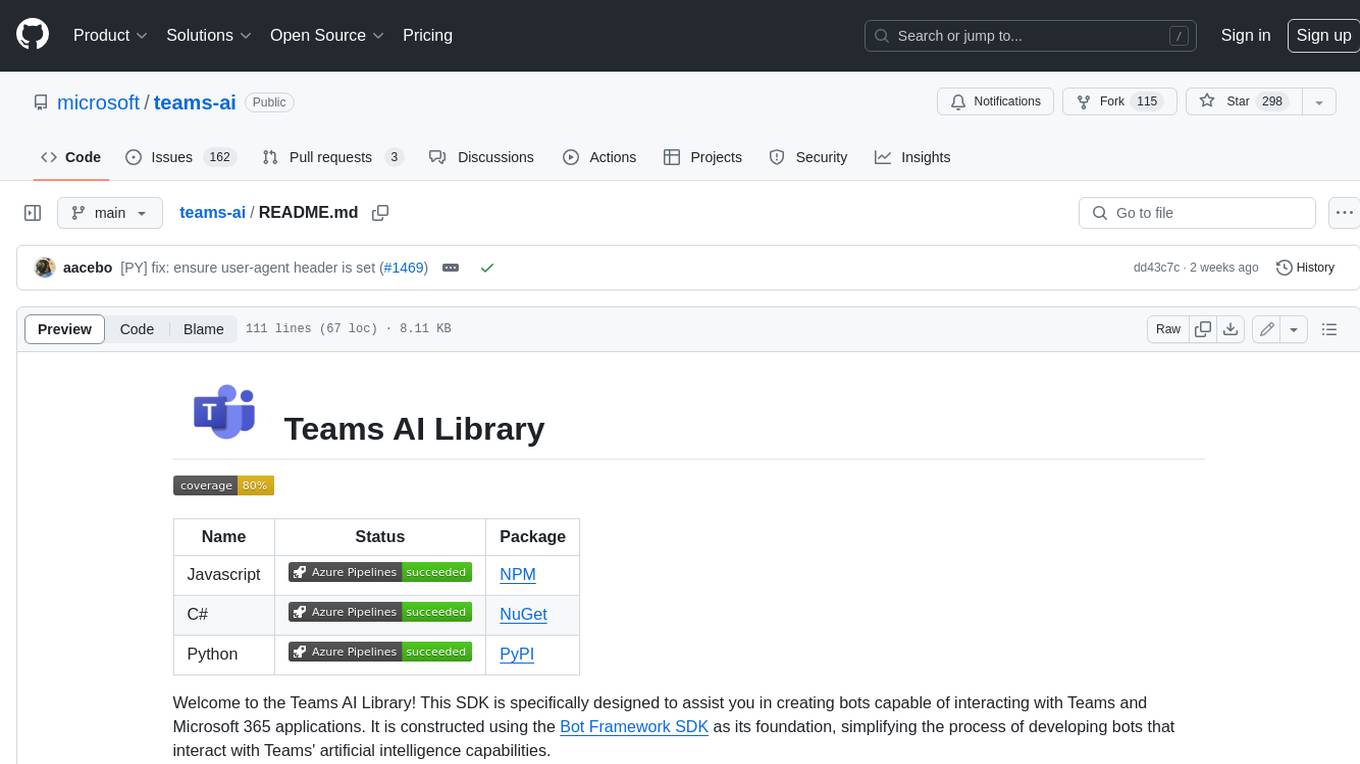
The Teams AI Library is a software development kit (SDK) that helps developers create bots that can interact with Teams and Microsoft 365 applications. It is built on top of the Bot Framework SDK and simplifies the process of developing bots that interact with Teams' artificial intelligence capabilities. The SDK is available for JavaScript/TypeScript, .NET, and Python.
ai-guide
This guide is dedicated to Large Language Models (LLMs) that you can run on your home computer. It assumes your PC is a lower-end, non-gaming setup.
classifai
Supercharge WordPress Content Workflows and Engagement with Artificial Intelligence. Tap into leading cloud-based services like OpenAI, Microsoft Azure AI, Google Gemini and IBM Watson to augment your WordPress-powered websites. Publish content faster while improving SEO performance and increasing audience engagement. ClassifAI integrates Artificial Intelligence and Machine Learning technologies to lighten your workload and eliminate tedious tasks, giving you more time to create original content that matters.
chatbot-ui
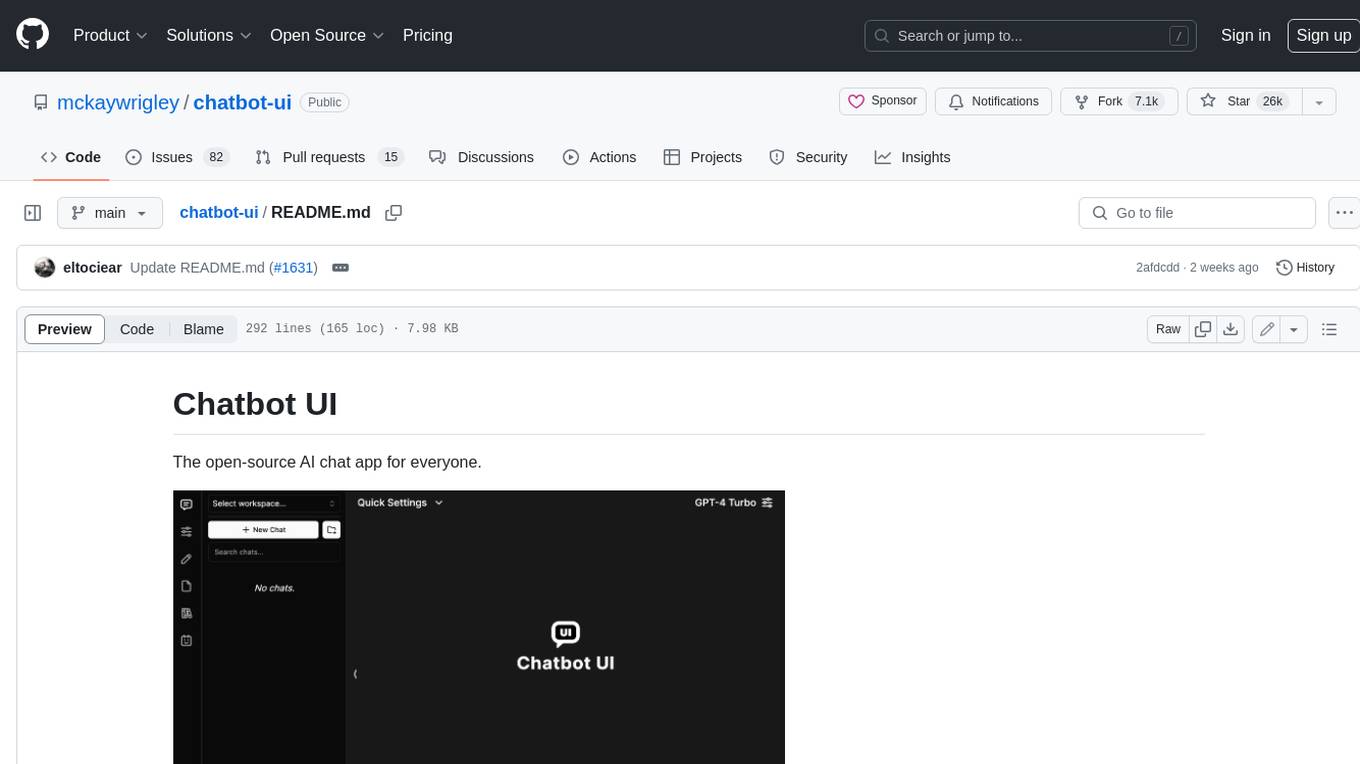
Chatbot UI is an open-source AI chat app that allows users to create and deploy their own AI chatbots. It is easy to use and can be customized to fit any need. Chatbot UI is perfect for businesses, developers, and anyone who wants to create a chatbot.
BricksLLM
BricksLLM is a cloud native AI gateway written in Go. Currently, it provides native support for OpenAI, Anthropic, Azure OpenAI and vLLM. BricksLLM aims to provide enterprise level infrastructure that can power any LLM production use cases. Here are some use cases for BricksLLM: * Set LLM usage limits for users on different pricing tiers * Track LLM usage on a per user and per organization basis * Block or redact requests containing PIIs * Improve LLM reliability with failovers, retries and caching * Distribute API keys with rate limits and cost limits for internal development/production use cases * Distribute API keys with rate limits and cost limits for students
uAgents
uAgents is a Python library developed by Fetch.ai that allows for the creation of autonomous AI agents. These agents can perform various tasks on a schedule or take action on various events. uAgents are easy to create and manage, and they are connected to a fast-growing network of other uAgents. They are also secure, with cryptographically secured messages and wallets.
griptape
Griptape is a modular Python framework for building AI-powered applications that securely connect to your enterprise data and APIs. It offers developers the ability to maintain control and flexibility at every step. Griptape's core components include Structures (Agents, Pipelines, and Workflows), Tasks, Tools, Memory (Conversation Memory, Task Memory, and Meta Memory), Drivers (Prompt and Embedding Drivers, Vector Store Drivers, Image Generation Drivers, Image Query Drivers, SQL Drivers, Web Scraper Drivers, and Conversation Memory Drivers), Engines (Query Engines, Extraction Engines, Summary Engines, Image Generation Engines, and Image Query Engines), and additional components (Rulesets, Loaders, Artifacts, Chunkers, and Tokenizers). Griptape enables developers to create AI-powered applications with ease and efficiency.