


astron-agent
Enterprise-grade, commercial-friendly agentic workflow platform for building next-generation SuperAgents.
Stars: 9375
Astron Agent is an enterprise-grade, commercial-friendly Agentic Workflow development platform that integrates AI workflow orchestration, model management, AI and MCP tool integration, RPA automation, and team collaboration features. It supports high-availability deployment, enabling organizations to rapidly build scalable, production-ready intelligent agent applications and establish their AI foundation for the future. The platform is stable, reliable, and business-friendly, with key features such as enterprise-grade high availability, intelligent RPA integration, ready-to-use tool ecosystem, and flexible large model support.
README:




English | 简体中文
Astron Agent is an enterprise-grade, commercial-friendly Agentic Workflow development platform that integrates AI workflow orchestration, model management, AI and MCP tool integration, RPA automation, and team collaboration features. The platform supports high-availability deployment, enabling organizations to rapidly build scalable, production-ready intelligent agent applications and establish their AI foundation for the future.
- Stable and Reliable: Built on the same core technology as the iFLYTEK Astron Agent Platform, providing enterprise-grade reliability with a fully available high-availability version open source.
- Cross-System Integration: Natively integrates intelligent RPA, efficiently connecting internal and external enterprise systems, enabling seamless interaction between Agents and enterprise systems.
- Enterprise-Grade Open Ecosystem: Deeply compatible with various industry models and tools, supporting custom extensions and flexibly adapting to diverse enterprise scenarios.
- Business-Friendly: Released under the Apache 2.0 License, with no commercial restrictions, allowing free commercial use.
- Enterprise-Grade High Availability: Full-stack capabilities for development, building, optimization, and management. Supports one-click deployment with strong reliability.
- Intelligent RPA Integration: Enables cross-system process automation, empowering Agents with controllable execution to achieve a complete loop “from decision to action.”
- Ready-to-Use Tool Ecosystem: Integrates massive AI capabilities and tools from the iFLYTEK Open Platform, validated by millions of developers, supporting plug-and-play integration without extra development.
- Flexible Large Model Support: Offers diverse access methods, from rapid API-based model access and validation to one-click deployment of enterprise-level MaaS (Model as a Service) on-premises clusters, meeting needs of all scales.
-
Astron Hackathon @ 2025 iFLYTEK Global 1024 Developer Festival 🎤
 @mklong
-
Astron Agent Zhengzhou Meetup 🎤
 @lyj715824
  @wowo-zZ
-
Astron on Campus @ Zhejiang University of Finance and Economics 🎤 @lyj715824
-
Astron Agent & RPA · Qingdao Meetup Brings Agentic AI! 🎤
 @vsxd
@vsxd  @doctorbruce
  @MaxwellJean
-
Astron Training Camp · Cohort #1 🎤 @lyj715824
-
Astron Talk @ Chongqing Mini Tech Fest 🎤 @lyj715824
We offer two deployment methods to meet different scenarios:
# Clone the repository
git clone https://github.com/iflytek/astron-agent.git

# Navigate to astronAgent directory
cd docker/astronAgent

# Copy environment configuration
cp .env.example .env

# Configure environment variables
vim .env
For environment variable configuration, please refer to the documentation:DEPLOYMENT_GUIDE_WITH_AUTH.md
# Start all services (including Casdoor)
docker compose -f docker-compose-with-auth.yaml up -dAfter startup, you can access the services at the following addresses:
Authentication Service
- Casdoor Admin Interface: http://localhost:8000
AstronAgent
- Application Frontend (nginx proxy): http://localhost/
Note
- Default Casdoor login credentials: username:
admin, password:123
🚧 Note: Helm charts are currently under development. Stay tuned for updates!
# Coming soon
# helm repo add astron-agent https://iflytek.github.io/astron-agent
# helm install astron-agent astron-agent/astron-agent
📖 For complete deployment instructions and configuration details, see Deployment Guide
Try Astron:Astron Cloud provides a ready-to-use environment for creating and managing Agents.Free quick access https://agent.xfyun.cn.
Using Guide:For detailed usage instructions, please refer to Quick Start Guide.
- 🚀 Deployment Guide
- 🔧 Configuration
- 🚀 Quick Start
- 📘 Development Guide
- 💡 Best Practices
- 📱 Use Cases
- ❓ FAQ
We welcome contributions of all kinds! Please see our Contributing Guide
- 💬 Community Discussion: GitHub Discussions
- 🐛 Bug Reports: Issues
- 👥 WeChat Work Group:

This project is licensed under the Apache 2.0 License, allowing free use, modification, distribution, and commercial use without any restrictions.
For Tasks:
Click tags to check more tools for each tasksFor Jobs:
Alternative AI tools for astron-agent
Similar Open Source Tools
astron-agent
Astron Agent is an enterprise-grade, commercial-friendly Agentic Workflow development platform that integrates AI workflow orchestration, model management, AI and MCP tool integration, RPA automation, and team collaboration features. It supports high-availability deployment, enabling organizations to rapidly build scalable, production-ready intelligent agent applications and establish their AI foundation for the future. The platform is stable, reliable, and business-friendly, with key features such as enterprise-grade high availability, intelligent RPA integration, ready-to-use tool ecosystem, and flexible large model support.
astron-rpa
AstronRPA is an enterprise-grade Robotic Process Automation (RPA) desktop application that supports low-code/no-code development. It enables users to rapidly build workflows and automate desktop software and web pages. The tool offers comprehensive automation support for various applications, highly component-based design, enterprise-grade security and collaboration features, developer-friendly experience, native agent empowerment, and multi-channel trigger integration. It follows a frontend-backend separation architecture with components for system operations, browser automation, GUI automation, AI integration, and more. The tool is deployed via Docker and designed for complex RPA scenarios.
ComfyUI-Copilot
ComfyUI-Copilot is an intelligent assistant built on the Comfy-UI framework that simplifies and enhances the AI algorithm debugging and deployment process through natural language interactions. It offers intuitive node recommendations, workflow building aids, and model querying services to streamline development processes. With features like interactive Q&A bot, natural language node suggestions, smart workflow assistance, and model querying, ComfyUI-Copilot aims to lower the barriers to entry for beginners, boost development efficiency with AI-driven suggestions, and provide real-time assistance for developers.
meeting-minutes
An open-source AI assistant for taking meeting notes that captures live meeting audio, transcribes it in real-time, and generates summaries while ensuring user privacy. Perfect for teams to focus on discussions while automatically capturing and organizing meeting content without external servers or complex infrastructure. Features include modern UI, real-time audio capture, speaker diarization, local processing for privacy, and more. The tool also offers a Rust-based implementation for better performance and native integration, with features like live transcription, speaker diarization, and a rich text editor for notes. Future plans include database connection for saving meeting minutes, improving summarization quality, and adding download options for meeting transcriptions and summaries. The backend supports multiple LLM providers through a unified interface, with configurations for Anthropic, Groq, and Ollama models. System architecture includes core components like audio capture service, transcription engine, LLM orchestrator, data services, and API layer. Prerequisites for setup include Node.js, Python, FFmpeg, and Rust. Development guidelines emphasize project structure, testing, documentation, type hints, and ESLint configuration. Contributions are welcome under the MIT License.
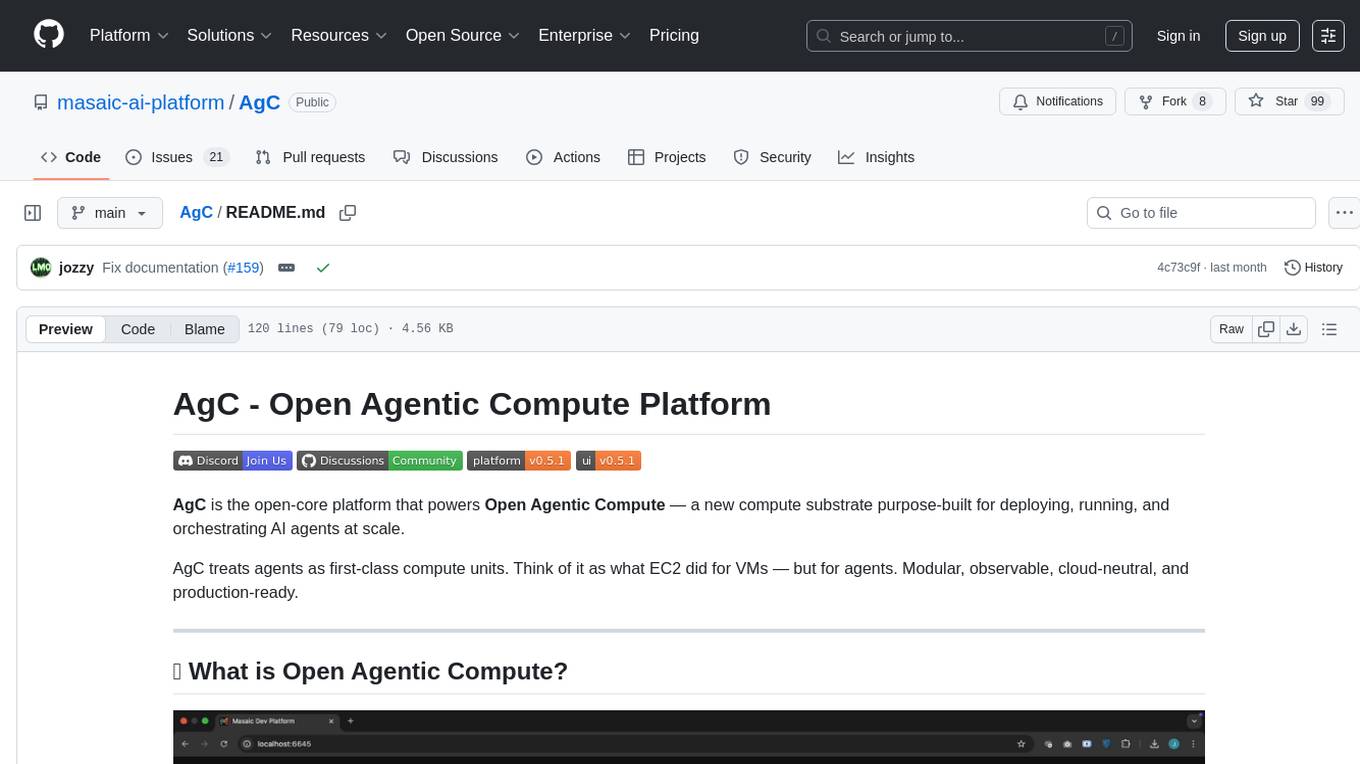
AgC
AgC is an open-core platform designed for deploying, running, and orchestrating AI agents at scale. It treats agents as first-class compute units, providing a modular, observable, cloud-neutral, and production-ready environment. Open Agentic Compute empowers developers and organizations to run agents like cloud-native workloads without lock-in.
aibrix
AIBrix is an open-source initiative providing essential building blocks for scalable GenAI inference infrastructure. It delivers a cloud-native solution optimized for deploying, managing, and scaling large language model (LLM) inference, tailored to enterprise needs. Key features include High-Density LoRA Management, LLM Gateway and Routing, LLM App-Tailored Autoscaler, Unified AI Runtime, Distributed Inference, Distributed KV Cache, Cost-efficient Heterogeneous Serving, and GPU Hardware Failure Detection.
heurist-agent-framework
Heurist Agent Framework is a flexible multi-interface AI agent framework that allows processing text and voice messages, generating images and videos, interacting across multiple platforms, fetching and storing information in a knowledge base, accessing external APIs and tools, and composing complex workflows using Mesh Agents. It supports various platforms like Telegram, Discord, Twitter, Farcaster, REST API, and MCP. The framework is built on a modular architecture and provides core components, tools, workflows, and tool integration with MCP support.
flow-like
Flow-Like is an enterprise-grade workflow operating system built upon Rust for uncompromising performance, efficiency, and code safety. It offers a modular frontend for apps, a rich set of events, a node catalog, a powerful no-code workflow IDE, and tools to manage teams, templates, and projects within organizations. With typed workflows, users can create complex, large-scale workflows with clear data origins, transformations, and contracts. Flow-Like is designed to automate any process through seamless integration of LLM, ML-based, and deterministic decision-making instances.
openops
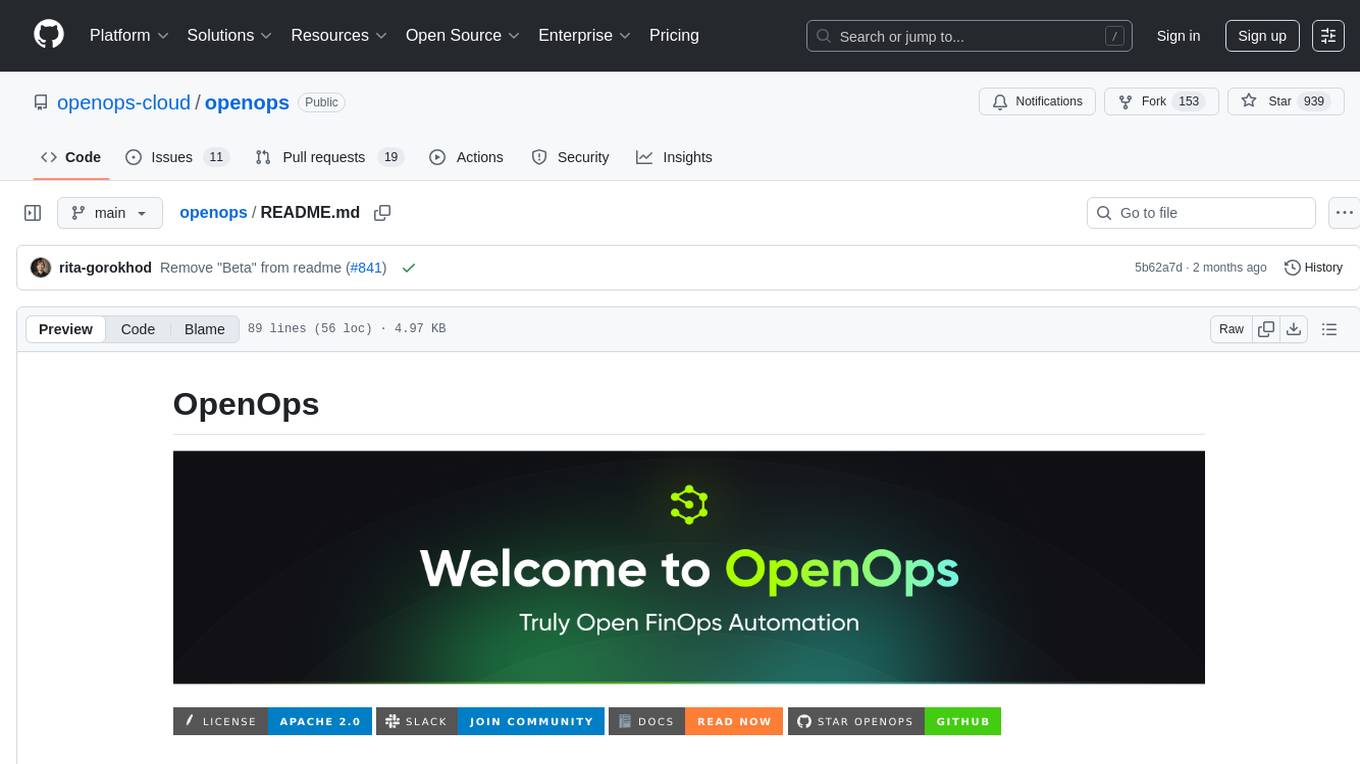
OpenOps is a No-Code FinOps automation platform designed to help organizations reduce cloud costs and streamline financial operations. It offers customizable workflows for automating key FinOps processes, comes with its own Excel-like database and visualization system, and enables collaboration between different teams. OpenOps integrates seamlessly with major cloud providers, third-party FinOps tools, communication platforms, and project management tools, providing a comprehensive solution for efficient cost-saving measures implementation.
talkcody
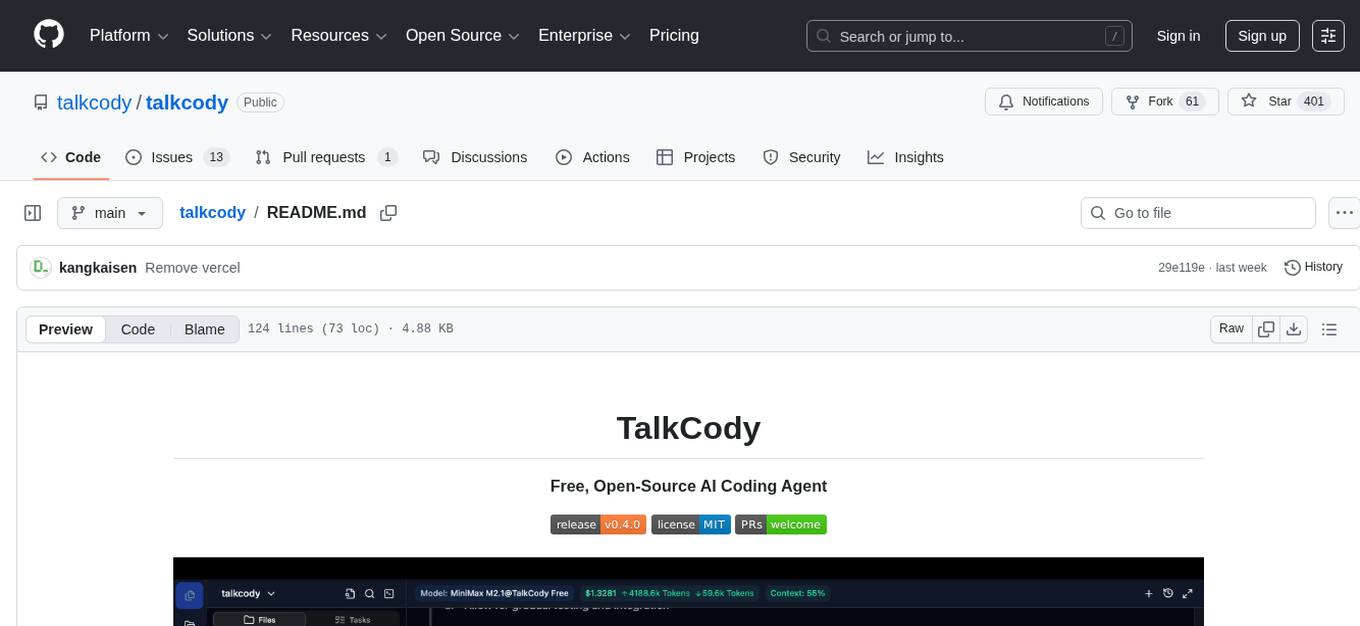
TalkCody is a free, open-source AI coding agent designed for developers who value speed, cost, control, and privacy. It offers true freedom to use any AI model without vendor lock-in, maximum speed through unique four-level parallelism, and complete privacy as everything runs locally without leaving the user's machine. With professional-grade features like multimodal input support, MCP server compatibility, and a marketplace for agents and skills, TalkCody aims to enhance development productivity and flexibility.
aigne-hub
AIGNE Hub is a unified AI gateway that manages connections to multiple LLM and AIGC providers, eliminating the complexity of handling API keys, usage tracking, and billing across different AI services. It provides self-hosting capabilities, multi-provider management, unified security, usage analytics, flexible billing, and seamless integration with the AIGNE framework. The tool supports various AI providers and deployment scenarios, catering to both enterprise self-hosting and service provider modes. Users can easily deploy and configure AI providers, enable billing, and utilize core capabilities such as chat completions, image generation, embeddings, and RESTful APIs. AIGNE Hub ensures secure access, encrypted API key management, user permissions, and audit logging. Built with modern technologies like AIGNE Framework, Node.js, TypeScript, React, SQLite, and Blocklet for cloud-native deployment.
MaxKB
MaxKB is a knowledge base Q&A system based on the LLM large language model. MaxKB = Max Knowledge Base, which aims to become the most powerful brain of the enterprise.
CortexON
CortexON is an open-source, multi-agent AI system designed to automate and simplify everyday tasks. It integrates specialized agents like Web Agent, File Agent, Coder Agent, Executor Agent, and API Agent to accomplish user-defined objectives. CortexON excels at executing complex workflows, research tasks, technical operations, and business process automations by dynamically coordinating the agents' unique capabilities. It offers advanced research automation, multi-agent orchestration, integration with third-party APIs, code generation and execution, efficient file and data management, and personalized task execution for travel planning, market analysis, educational content creation, and business intelligence.
abi
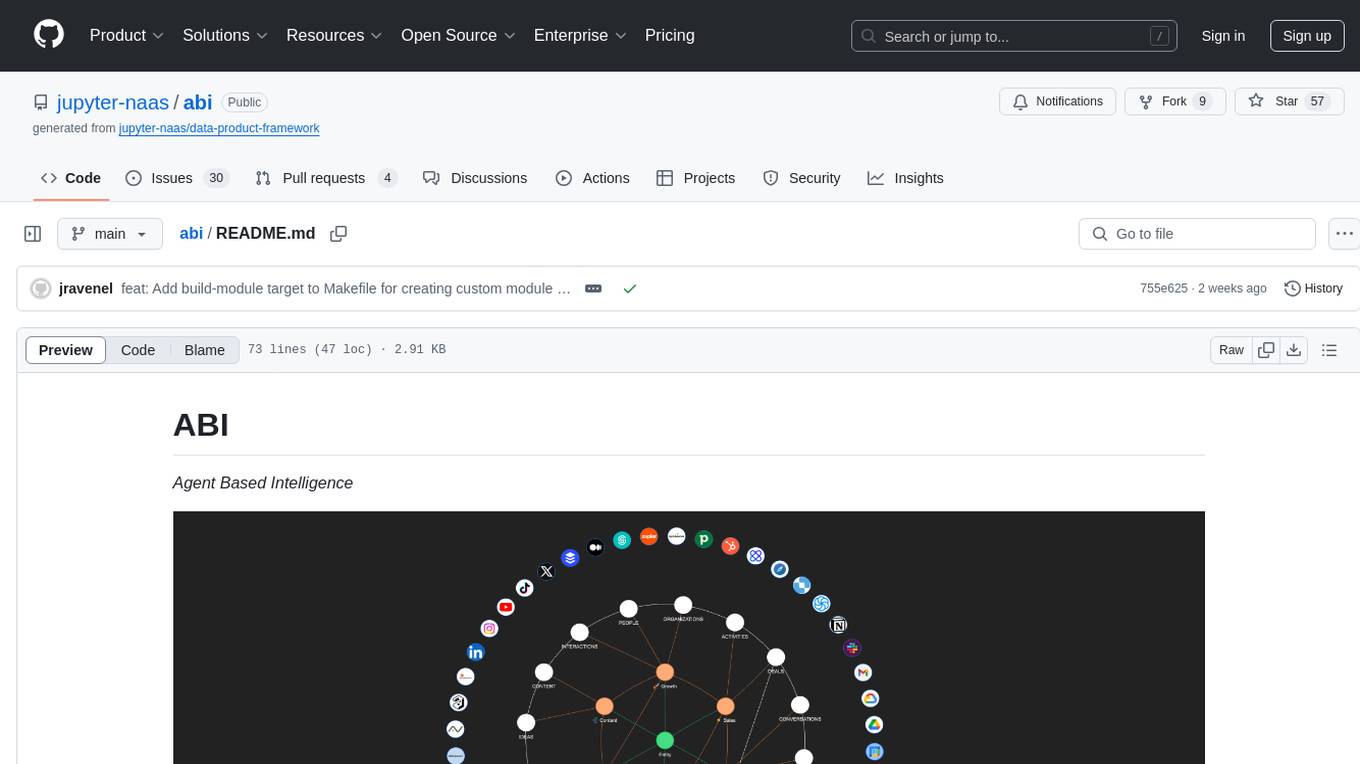
ABI (Agentic Brain Infrastructure) is a Python-based AI Operating System designed to serve as the core infrastructure for building an Agentic AI Ontology Engine. It empowers organizations to integrate, manage, and scale AI-driven operations with multiple AI models, focusing on ontology, agent-driven workflows, and analytics. ABI emphasizes modularity and customization, providing a customizable framework aligned with international standards and regulatory frameworks. It offers features such as configurable AI agents, ontology management, integrations with external data sources, data processing pipelines, workflow automation, analytics, and data handling capabilities.
ai
Jetify's AI SDK for Go is a unified interface for interacting with multiple AI providers including OpenAI, Anthropic, and more. It addresses the challenges of fragmented ecosystems, vendor lock-in, poor Go developer experience, and complex multi-modal handling by providing a unified interface, Go-first design, production-ready features, multi-modal support, and extensible architecture. The SDK supports language models, embeddings, image generation, multi-provider support, multi-modal inputs, tool calling, and structured outputs.
memU
MemU is an open-source memory framework designed for AI companions, offering high accuracy, fast retrieval, and cost-effectiveness. It serves as an intelligent 'memory folder' that adapts to various AI companion scenarios. With MemU, users can create AI companions that remember them, learn their preferences, and evolve through interactions. The framework provides advanced retrieval strategies, 24/7 support, and is specialized for AI companions. MemU offers cloud, enterprise, and self-hosting options, with features like memory organization, interconnected knowledge graph, continuous self-improvement, and adaptive forgetting mechanism. It boasts high memory accuracy, fast retrieval, and low cost, making it suitable for building intelligent agents with persistent memory capabilities.
For similar tasks
unstract
Unstract is a no-code platform that enables users to launch APIs and ETL pipelines to structure unstructured documents. With Unstract, users can go beyond co-pilots by enabling machine-to-machine automation. Unstract's Prompt Studio provides a simple, no-code approach to creating prompts for LLMs, vector databases, embedding models, and text extractors. Users can then configure Prompt Studio projects as API deployments or ETL pipelines to automate critical business processes that involve complex documents. Unstract supports a wide range of LLM providers, vector databases, embeddings, text extractors, ETL sources, and ETL destinations, providing users with the flexibility to choose the best tools for their needs.
mslearn-knowledge-mining
The mslearn-knowledge-mining repository contains lab files for Azure AI Knowledge Mining modules. It provides resources for learning and implementing knowledge mining techniques using Azure AI services. The repository is designed to help users explore and understand how to leverage AI for knowledge mining purposes within the Azure ecosystem.
nous
Nous is an open-source TypeScript platform for autonomous AI agents and LLM based workflows. It aims to automate processes, support requests, review code, assist with refactorings, and more. The platform supports various integrations, multiple LLMs/services, CLI and web interface, human-in-the-loop interactions, flexible deployment options, observability with OpenTelemetry tracing, and specific agents for code editing, software engineering, and code review. It offers advanced features like reasoning/planning, memory and function call history, hierarchical task decomposition, and control-loop function calling options. Nous is designed to be a flexible platform for the TypeScript community to expand and support different use cases and integrations.
LLMs-in-Finance
This repository focuses on the application of Large Language Models (LLMs) in the field of finance. It provides insights and knowledge about how LLMs can be utilized in various scenarios within the finance industry, particularly in generating AI agents. The repository aims to explore the potential of LLMs to enhance financial processes and decision-making through the use of advanced natural language processing techniques.
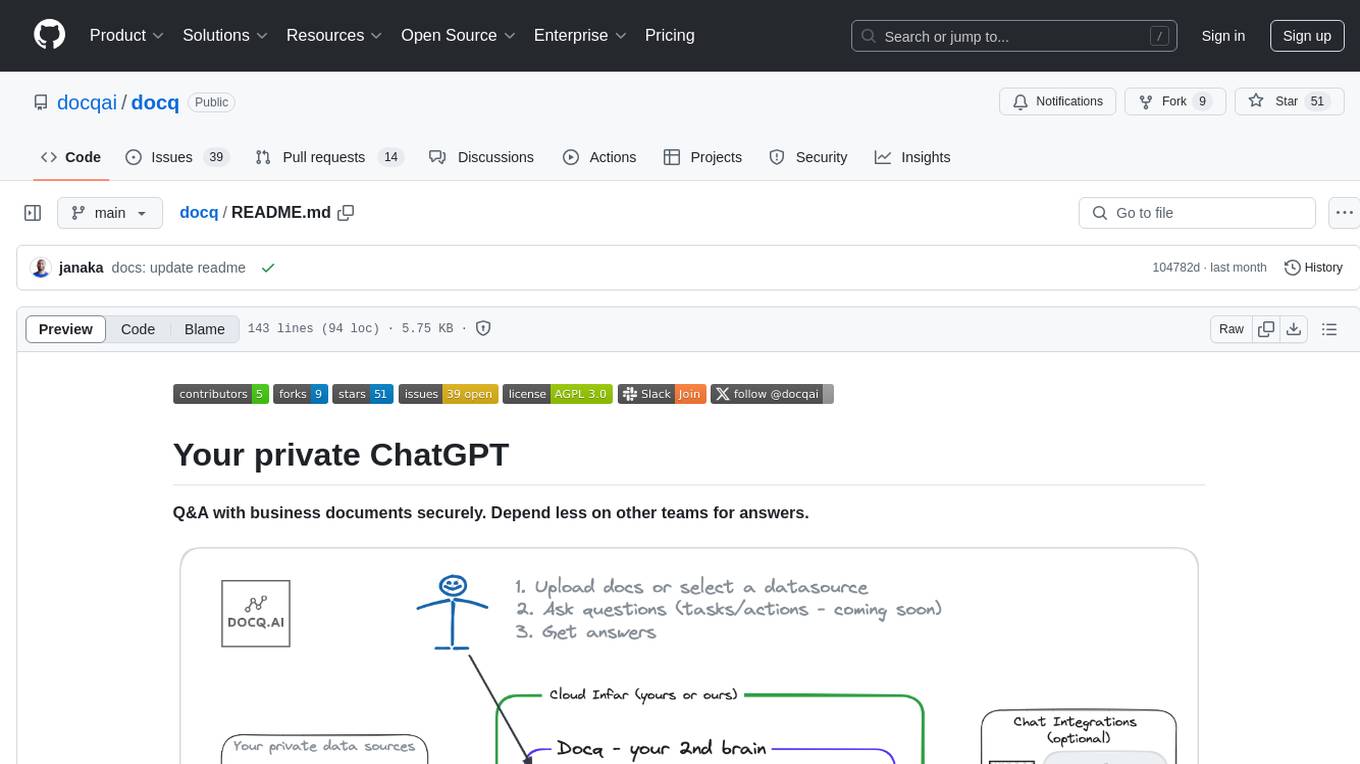
docq
Docq is a private and secure GenAI tool designed to extract knowledge from business documents, enabling users to find answers independently. It allows data to stay within organizational boundaries, supports self-hosting with various cloud vendors, and offers multi-model and multi-modal capabilities. Docq is extensible, open-source (AGPLv3), and provides commercial licensing options. The tool aims to be a turnkey solution for organizations to adopt AI innovation safely, with plans for future features like more data ingestion options and model fine-tuning.
sophia
Sophia is an open-source TypeScript platform designed for autonomous AI agents and LLM based workflows. It aims to automate processes, review code, assist with refactorings, and support various integrations. The platform offers features like advanced autonomous agents, reasoning/planning inspired by Google's Self-Discover paper, memory and function call history, adaptive iterative planning, and more. Sophia supports multiple LLMs/services, CLI and web interface, human-in-the-loop interactions, flexible deployment options, observability with OpenTelemetry tracing, and specific agents for code editing, software engineering, and code review. It provides a flexible platform for the TypeScript community to expand and support various use cases and integrations.
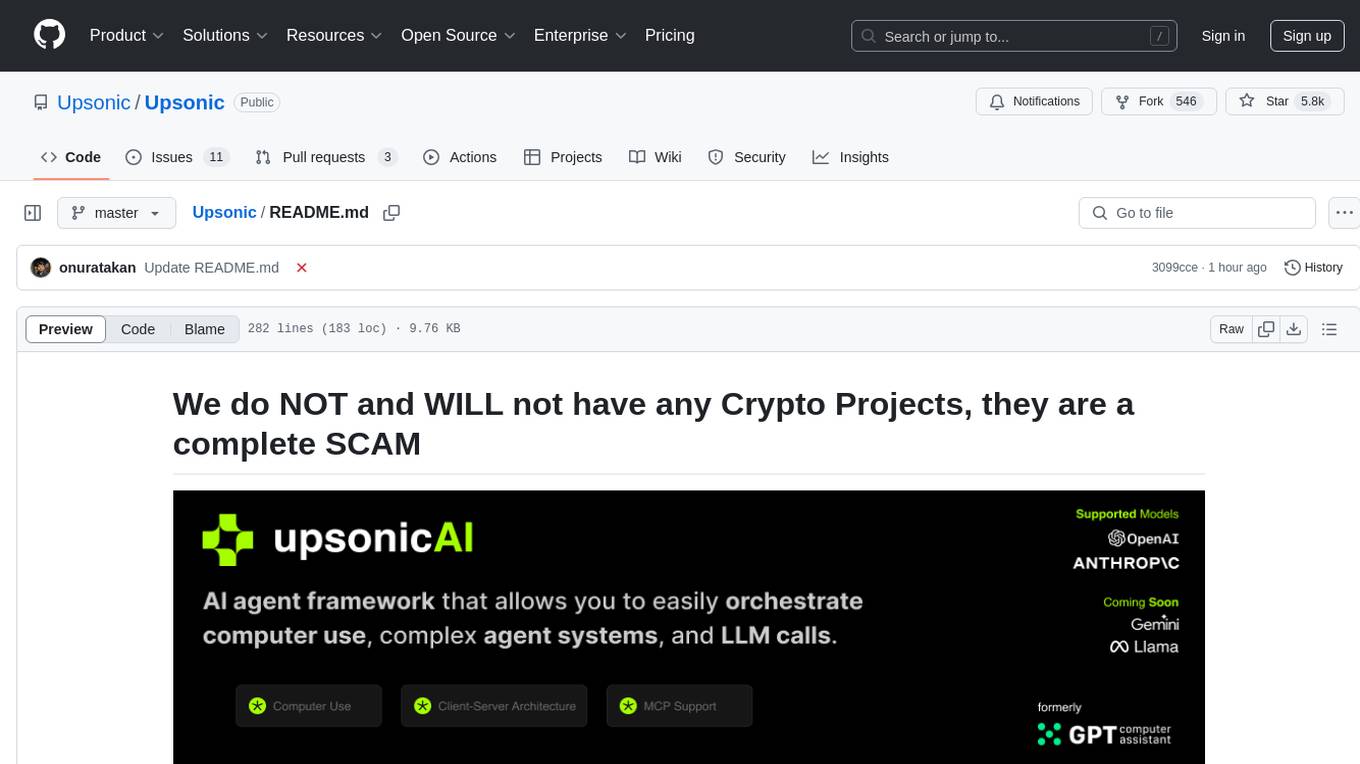
Upsonic
Upsonic offers a cutting-edge enterprise-ready framework for orchestrating LLM calls, agents, and computer use to complete tasks cost-effectively. It provides reliable systems, scalability, and a task-oriented structure for real-world cases. Key features include production-ready scalability, task-centric design, MCP server support, tool-calling server, computer use integration, and easy addition of custom tools. The framework supports client-server architecture and allows seamless deployment on AWS, GCP, or locally using Docker.
clearml
ClearML is an auto-magical suite of tools designed to streamline AI workflows. It includes modules for experiment management, MLOps/LLMOps, data management, model serving, and more. ClearML offers features like experiment tracking, model serving, orchestration, and automation. It supports various ML/DL frameworks and integrates with Jupyter Notebook and PyCharm for remote debugging. ClearML aims to simplify collaboration, automate processes, and enhance visibility in AI projects.
For similar jobs
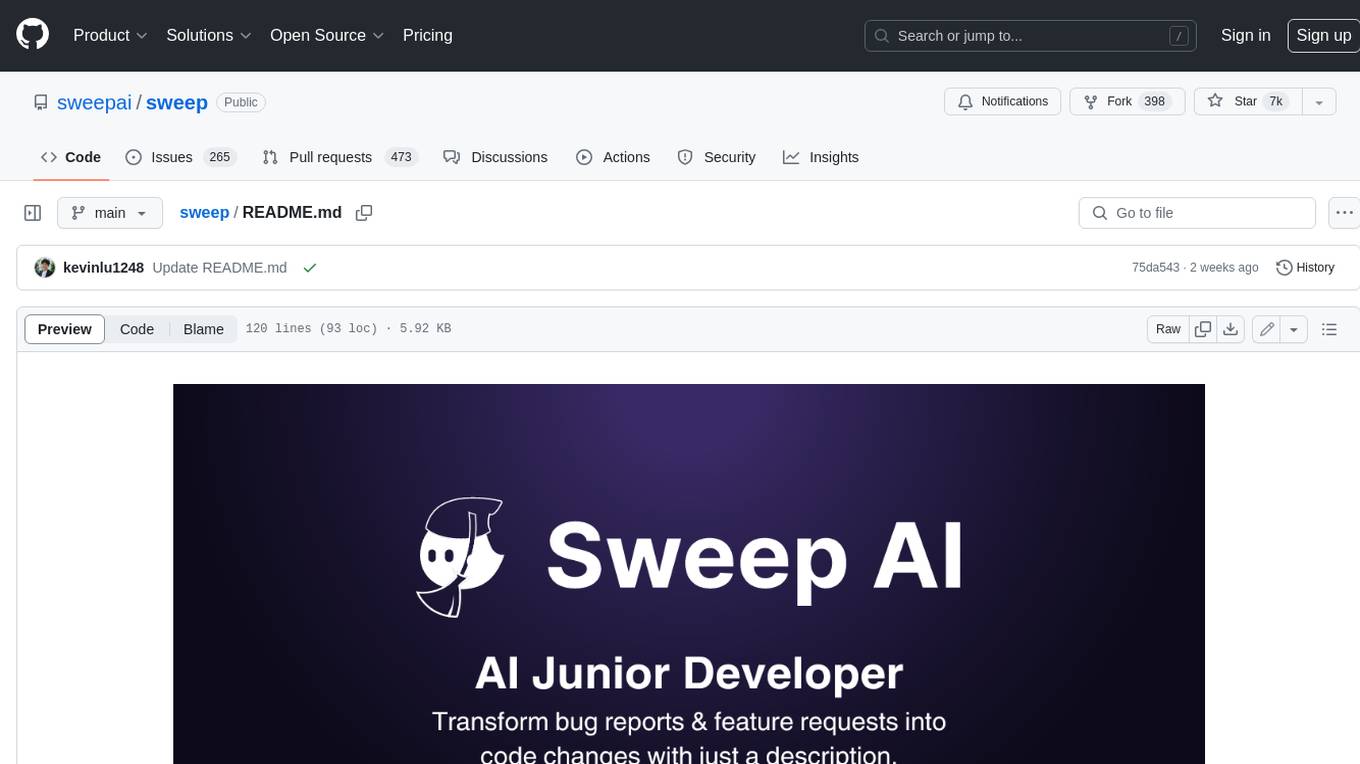
sweep
Sweep is an AI junior developer that turns bugs and feature requests into code changes. It automatically handles developer experience improvements like adding type hints and improving test coverage.
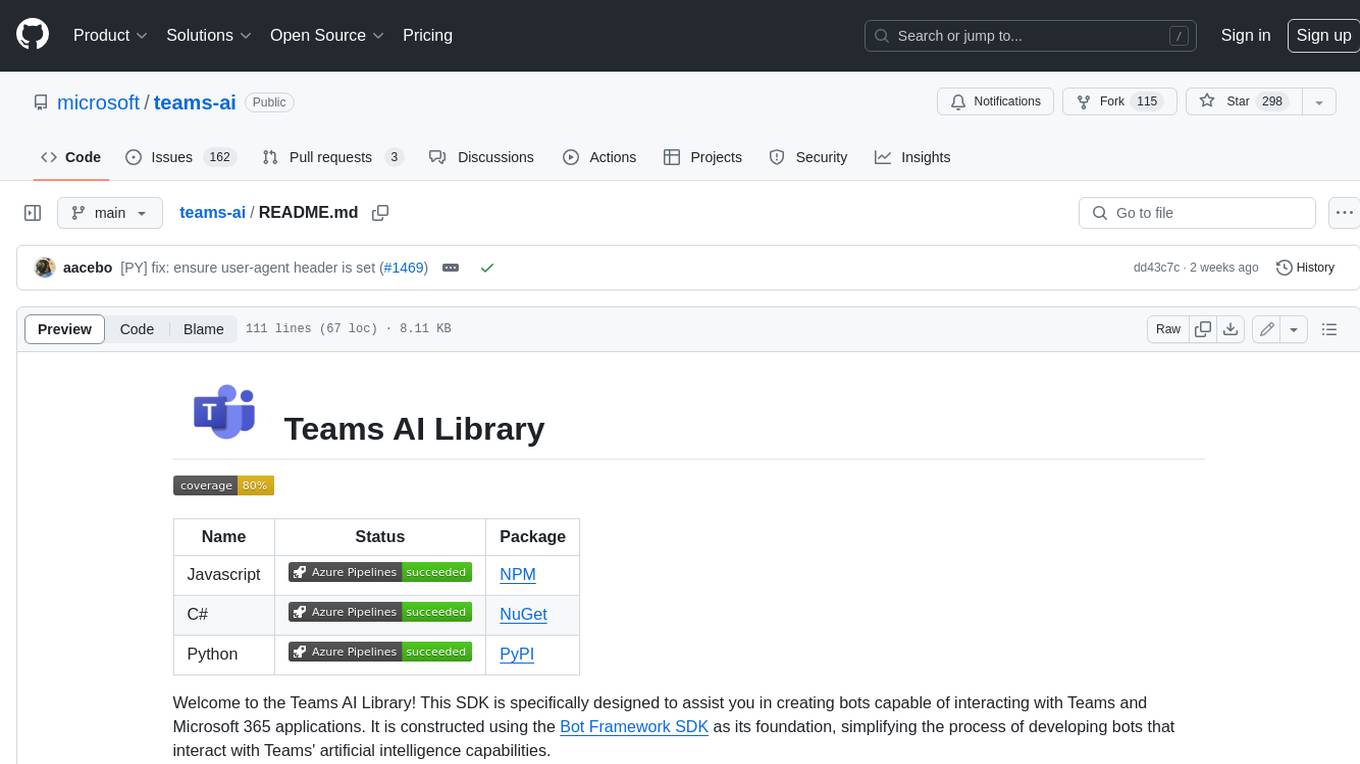
teams-ai
The Teams AI Library is a software development kit (SDK) that helps developers create bots that can interact with Teams and Microsoft 365 applications. It is built on top of the Bot Framework SDK and simplifies the process of developing bots that interact with Teams' artificial intelligence capabilities. The SDK is available for JavaScript/TypeScript, .NET, and Python.
ai-guide
This guide is dedicated to Large Language Models (LLMs) that you can run on your home computer. It assumes your PC is a lower-end, non-gaming setup.
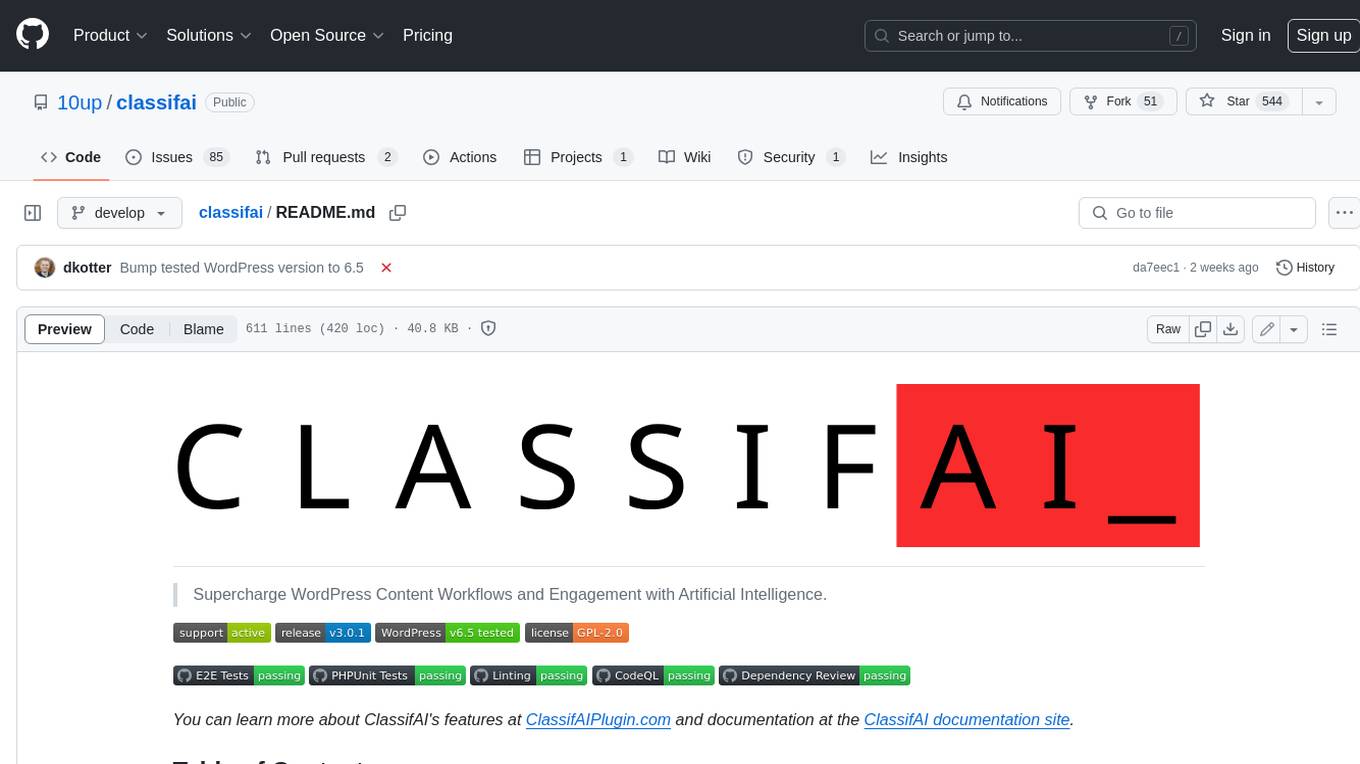
classifai
Supercharge WordPress Content Workflows and Engagement with Artificial Intelligence. Tap into leading cloud-based services like OpenAI, Microsoft Azure AI, Google Gemini and IBM Watson to augment your WordPress-powered websites. Publish content faster while improving SEO performance and increasing audience engagement. ClassifAI integrates Artificial Intelligence and Machine Learning technologies to lighten your workload and eliminate tedious tasks, giving you more time to create original content that matters.
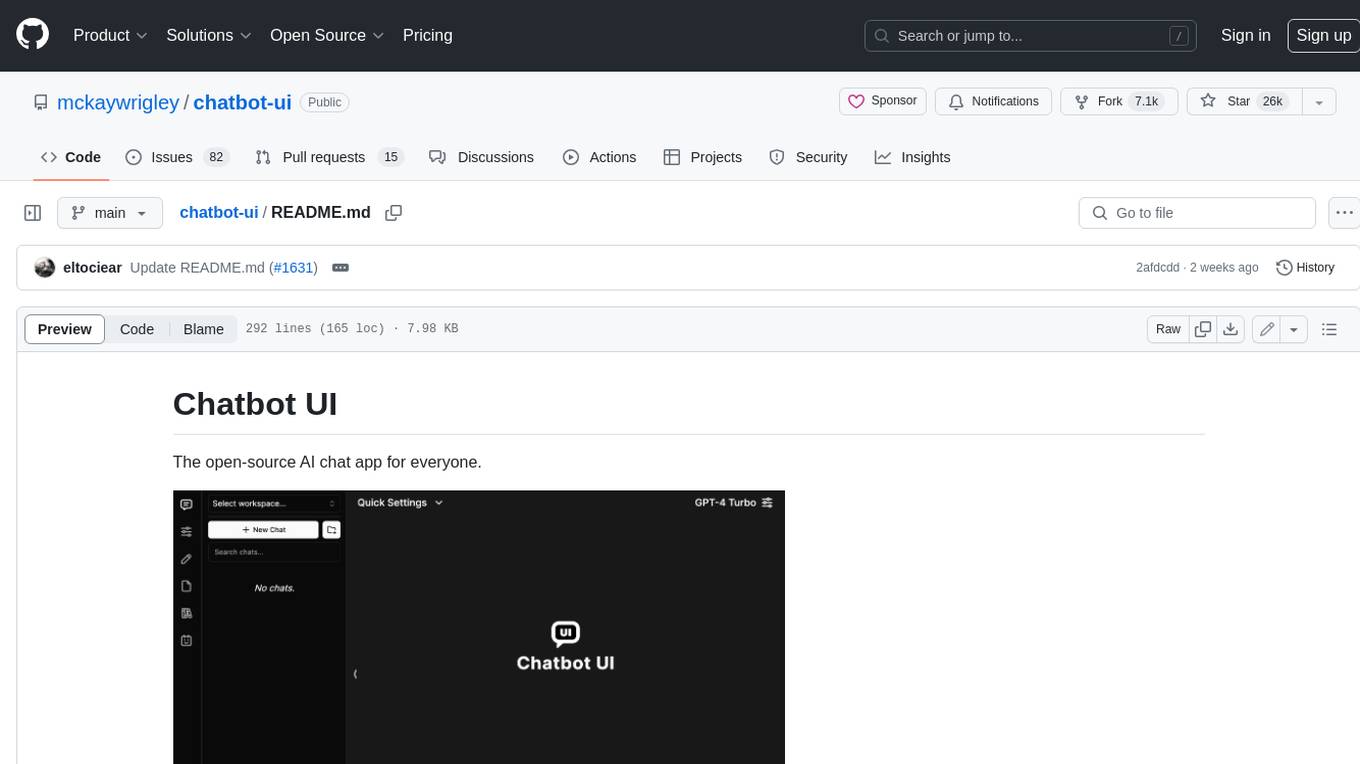
chatbot-ui
Chatbot UI is an open-source AI chat app that allows users to create and deploy their own AI chatbots. It is easy to use and can be customized to fit any need. Chatbot UI is perfect for businesses, developers, and anyone who wants to create a chatbot.
BricksLLM
BricksLLM is a cloud native AI gateway written in Go. Currently, it provides native support for OpenAI, Anthropic, Azure OpenAI and vLLM. BricksLLM aims to provide enterprise level infrastructure that can power any LLM production use cases. Here are some use cases for BricksLLM: * Set LLM usage limits for users on different pricing tiers * Track LLM usage on a per user and per organization basis * Block or redact requests containing PIIs * Improve LLM reliability with failovers, retries and caching * Distribute API keys with rate limits and cost limits for internal development/production use cases * Distribute API keys with rate limits and cost limits for students
uAgents
uAgents is a Python library developed by Fetch.ai that allows for the creation of autonomous AI agents. These agents can perform various tasks on a schedule or take action on various events. uAgents are easy to create and manage, and they are connected to a fast-growing network of other uAgents. They are also secure, with cryptographically secured messages and wallets.
griptape
Griptape is a modular Python framework for building AI-powered applications that securely connect to your enterprise data and APIs. It offers developers the ability to maintain control and flexibility at every step. Griptape's core components include Structures (Agents, Pipelines, and Workflows), Tasks, Tools, Memory (Conversation Memory, Task Memory, and Meta Memory), Drivers (Prompt and Embedding Drivers, Vector Store Drivers, Image Generation Drivers, Image Query Drivers, SQL Drivers, Web Scraper Drivers, and Conversation Memory Drivers), Engines (Query Engines, Extraction Engines, Summary Engines, Image Generation Engines, and Image Query Engines), and additional components (Rulesets, Loaders, Artifacts, Chunkers, and Tokenizers). Griptape enables developers to create AI-powered applications with ease and efficiency.