


ai
💭 Free, unlimited AI and image generation for teens
Stars: 102
The hack club AI proxy is a lightweight LLM proxy that provides various functionalities such as hack club auth, API keys, chat and embedding model support, moderation model support, global analytics, usage statistic logging, coding tool blocking, spending limits, and more. It requires a reverse proxy like traefik and openrouter for billing and provider ratelimits. The tech stack includes bun as the runtime, hono for the server, postgres for the database, drizzle for the ORM, alpine + htmx for the frontend, and various other tools for error tracking, analytics, and model support.
README:
this is a lightweight LLM proxy, that amongst other things, implements:
- hack club auth
- API keys
- chat and embedding model support
- moderation model support
- (OpenAI's one is free, but it needs an active balance to be able to use it. if you don't want to/can't add payment details to OpenAI's portal and buy credits, we've got you covered.)
- global analytics
- usage statistic logging
- (optional) sentry support
- coding tool (e.g. copilot, cursor) blocking
- spending limits
- replicate support (optional, behind a feature flag)
- posthog analytics + feature flags
is it the best code? probably not. but hey, it works!
you must have a reverse proxy (e.g. traefik) in front of the service to ensure that IPs aren't spoofed. we also highly recommend using openrouter, since it makes things like billing and provider ratelimits a lot less annoying, and also gives you much greater room to experiment and try out new models.
see below.
# what model?
ALLOWED_EMBEDDING_MODELS=qwen/qwen3-embedding-8b,mistralai/codestral-embed-2505,openai/text-embedding-3-large
ALLOWED_IMAGE_MODELS=google/gemini-2.5-flash-image
ALLOWED_LANGUAGE_MODELS=qwen/qwen3-32b,moonshotai/kimi-k2-thinking,openai/gpt-oss-120b,moonshotai/kimi-k2-0905,qwen/qwen3-vl-235b-a22b-instruct,nvidia/nemotron-nano-12b-v2-vl,google/gemini-2.5-flash,openai/gpt-5-mini,deepseek/deepseek-v3.2-exp,deepseek/deepseek-r1-0528,z-ai/glm-4.6

# you should not commit these - although i hope you know that already!
OPENAI_API_KEY=
OPENAI_API_URL=https://openrouter.ai/api
OPENAI_MODERATION_API_KEY=
OPENAI_MODERATION_API_URL=https://api.openai.com/v1/moderations

# get these from https://account.hackclub.com
HACK_CLUB_CLIENT_ID=
HACK_CLUB_CLIENT_SECRET=

# check that users are ID verified?
ENFORCE_IDV=true

# postgres 18 database
# not needed for docker compose
DATABASE_URL=

BASE_URL=https://ai.hackclub.com
NODE_ENV=production # not needed for docker compose
PORT=54321 # not needed for docker compose

# openrouter provisioning key - get it from https://openrouter.ai/account
# this is used to view remaining credit balance
OPENROUTER_PROVISIONING_KEY=

# replicate - for image generation/stt/tts/etc
REPLICATE_API_KEY=
REPLICATE_SESSION_ID=
REPLICATE_USERNAME=

# posthog analytics + feature flags
POSTHOG_API_KEY=
POSTHOG_UI_HOST=https://us.posthog.com
POSTHOG_API_HOST=https://us.i.posthog.com/

# sentry.io support (optional)
SENTRY_DSN=
- bun as the runtime
- hono for the server
- postgres for the database
- drizzle for the ORM
- alpine + htmx +
hono/jsxfor the frontend- developing HCAI? turn on alpine + htmx in the layout if you need to use them!
- sentry for error tracking (optional)
- openrouter as the main LLM provider
- replicate for image generation + speech to text + text to speech + other models
- posthog for analytics + feature flags
- biome for code formatting + linting
- openai for moderation API
For Tasks:
Click tags to check more tools for each tasksFor Jobs:
Alternative AI tools for ai
Similar Open Source Tools
ai
The hack club AI proxy is a lightweight LLM proxy that provides various functionalities such as hack club auth, API keys, chat and embedding model support, moderation model support, global analytics, usage statistic logging, coding tool blocking, spending limits, and more. It requires a reverse proxy like traefik and openrouter for billing and provider ratelimits. The tech stack includes bun as the runtime, hono for the server, postgres for the database, drizzle for the ORM, alpine + htmx for the frontend, and various other tools for error tracking, analytics, and model support.
gptme
GPTMe is a tool that allows users to interact with an LLM assistant directly in their terminal in a chat-style interface. The tool provides features for the assistant to run shell commands, execute code, read/write files, and more, making it suitable for various development and terminal-based tasks. It serves as a local alternative to ChatGPT's 'Code Interpreter,' offering flexibility and privacy when using a local model. GPTMe supports code execution, file manipulation, context passing, self-correction, and works with various AI models like GPT-4. It also includes a GitHub Bot for requesting changes and operates entirely in GitHub Actions. In progress features include handling long contexts intelligently, a web UI and API for conversations, web and desktop vision, and a tree-based conversation structure.
superduper
superduper.io is a Python framework that integrates AI models, APIs, and vector search engines directly with existing databases. It allows hosting of models, streaming inference, and scalable model training/fine-tuning. Key features include integration of AI with data infrastructure, inference via change-data-capture, scalable model training, model chaining, simple Python interface, Python-first approach, working with difficult data types, feature storing, and vector search capabilities. The tool enables users to turn their existing databases into centralized repositories for managing AI model inputs and outputs, as well as conducting vector searches without the need for specialized databases.
chatnio
Chat Nio is a next-generation AI one-stop solution that provides a rich and user-friendly interface for interacting with various AI models. It offers features such as AI chat conversation, rich format compatibility, markdown support, message menu support, multi-platform adaptation, dialogue memory, full-model file parsing, full-model DuckDuckGo online search, full-screen large text editing, model marketplace, preset support, site announcements, preference settings, internationalization support, and a rich admin system. Chat Nio also boasts a powerful channel management system that utilizes a self-developed channel distribution algorithm, supports multi-channel management, is compatible with multiple formats, allows for custom models, supports channel retries, enables balanced load within the same channel, and provides channel model mapping and user grouping. Additionally, Chat Nio offers forwarding API services that are compatible with multiple formats in the OpenAI universal format and support multiple model compatible layers. It also provides a custom build and install option for highly customizable deployments. Chat Nio is an open-source project licensed under the Apache License 2.0 and welcomes contributions from the community.
pyqt-openai
VividNode is a cross-platform AI desktop chatbot application for LLM such as GPT, Claude, Gemini, Llama chatbot interaction and image generation. It offers customizable features, local chat history, and enhanced performance without requiring a browser. The application is powered by GPT4Free and allows users to interact with chatbots and generate images seamlessly. VividNode supports Windows, Mac, and Linux, securely stores chat history locally, and provides features like chat interface customization, image generation, focus and accessibility modes, and extensive customization options with keyboard shortcuts for efficient operations.
BentoML
BentoML is an open-source model serving library for building performant and scalable AI applications with Python. It comes with everything you need for serving optimization, model packaging, and production deployment.
Revornix
Revornix is an information management tool designed for the AI era. It allows users to conveniently integrate all visible information and generates comprehensive reports at specific times. The tool offers cross-platform availability, all-in-one content aggregation, document transformation & vectorized storage, native multi-tenancy, localization & open-source features, smart assistant & built-in MCP, seamless LLM integration, and multilingual & responsive experience for users.
logfire
Pydantic Logfire is an observability platform that provides simple and powerful dashboard, Python-centric insights, SQL querying, OpenTelemetry integration, and Pydantic validation analytics. It offers unparalleled visibility into Python applications' behavior and allows querying data using standard SQL. Logfire is an opinionated wrapper around OpenTelemetry, supporting traces, metrics, and logs. The Python SDK for logfire is open source, while the server application for recording and displaying data is closed source.
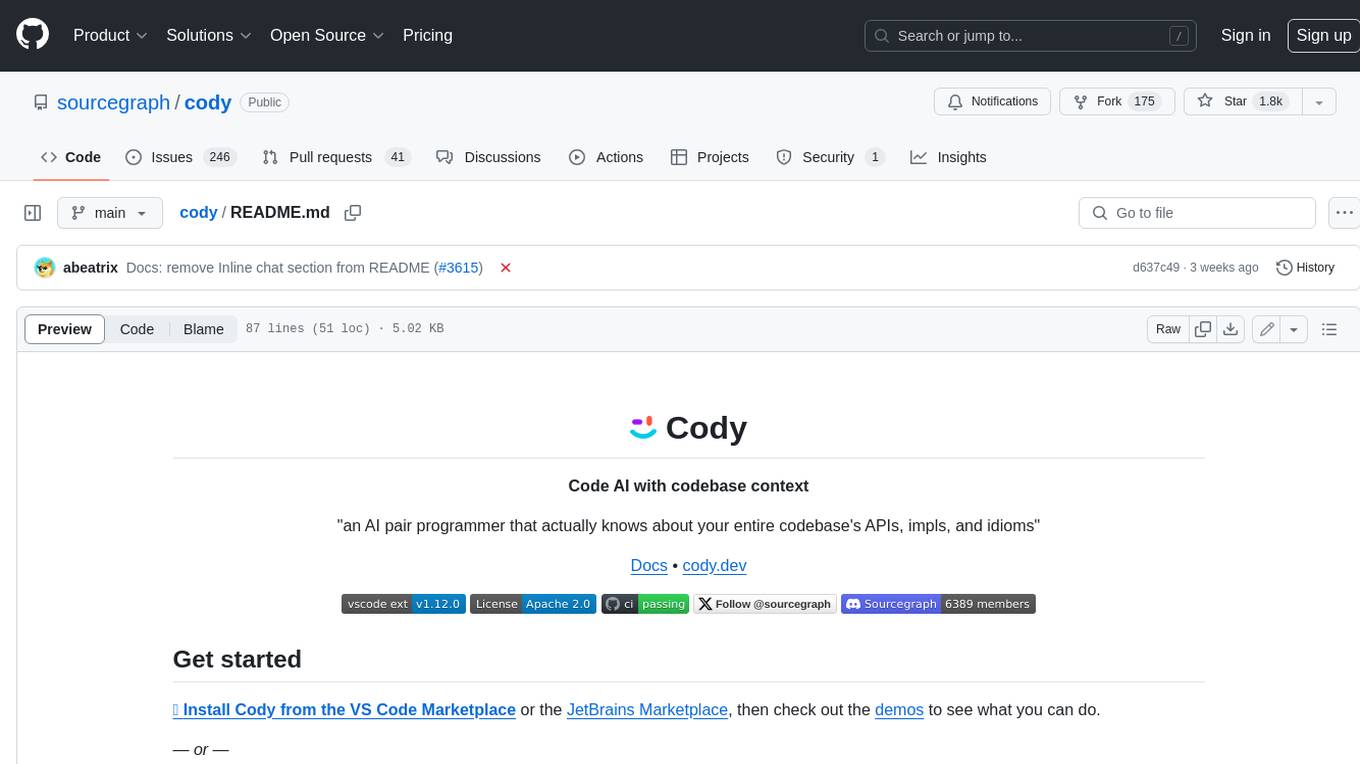
cody
Cody is a free, open-source AI coding assistant that can write and fix code, provide AI-generated autocomplete, and answer your coding questions. Cody fetches relevant code context from across your entire codebase to write better code that uses more of your codebase's APIs, impls, and idioms, with less hallucination.
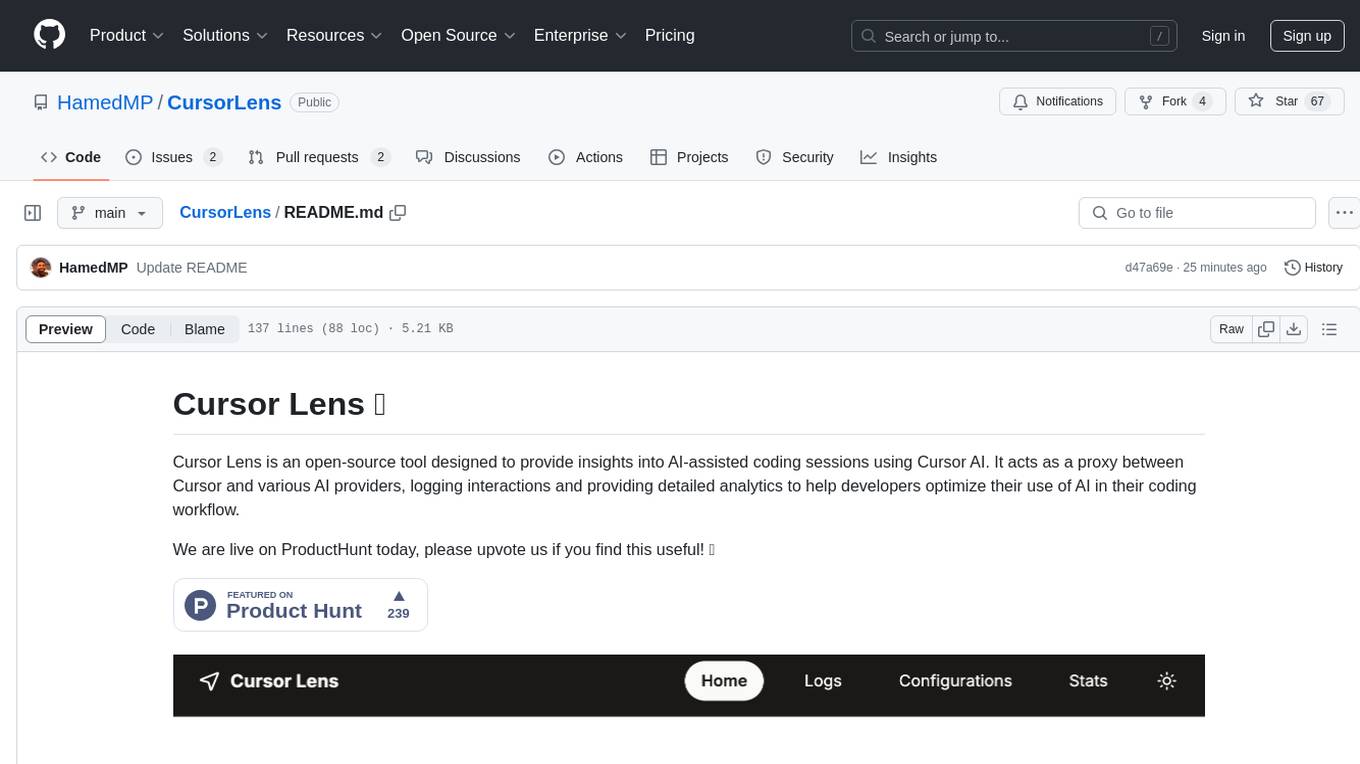
CursorLens
Cursor Lens is an open-source tool that acts as a proxy between Cursor and various AI providers, logging interactions and providing detailed analytics to help developers optimize their use of AI in their coding workflow. It supports multiple AI providers, captures and logs all requests, provides visual analytics on AI usage, allows users to set up and switch between different AI configurations, offers real-time monitoring of AI interactions, tracks token usage, estimates costs based on token usage and model pricing. Built with Next.js, React, PostgreSQL, Prisma ORM, Vercel AI SDK, Tailwind CSS, and shadcn/ui components.
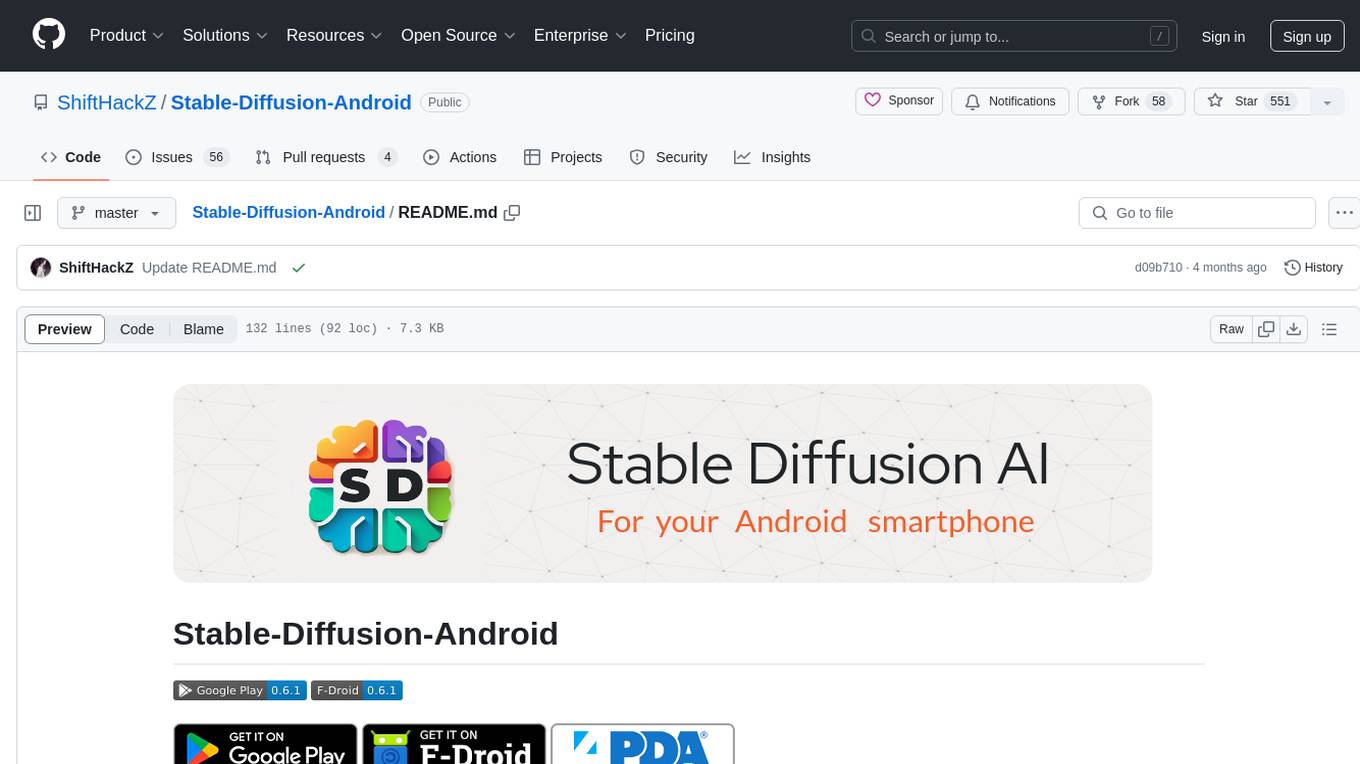
Stable-Diffusion-Android
Stable Diffusion AI is an easy-to-use app for generating images from text or other images. It allows communication with servers powered by various AI technologies like AI Horde, Hugging Face Inference API, OpenAI, StabilityAI, and LocalDiffusion. The app supports Txt2Img and Img2Img modes, positive and negative prompts, dynamic size and sampling methods, unique seed input, and batch image generation. Users can also inpaint images, select faces from gallery or camera, and export images. The app offers settings for server URL, SD Model selection, auto-saving images, and clearing cache.
codebox-api
CodeBox is a cloud infrastructure tool designed for running Python code in an isolated environment. It also offers simple file input/output capabilities and will soon support vector database operations. Users can install CodeBox using pip and utilize it by setting up an API key. The tool allows users to execute Python code snippets and interact with the isolated environment. CodeBox is currently in early development stages and requires manual handling for certain operations like refunds and cancellations. The tool is open for contributions through issue reporting and pull requests. It is licensed under MIT and can be contacted via email at [email protected].
ChatLLM-Web
ChatLLM Web is a browser-based AI chat tool powered by WebGPU, providing a seamless and private chat experience. It runs models in a web worker, supports model caching, and offers multi-conversation chat with data stored locally. The tool features a well-designed UI with dark mode, PWA support for offline use, and markdown and streaming response capabilities. Users can deploy it easily on Vercel and interact with the AI like Vicuna in their browser.
graphiti
Graphiti is a framework for building and querying temporally-aware knowledge graphs, tailored for AI agents in dynamic environments. It continuously integrates user interactions, structured and unstructured data, and external information into a coherent, queryable graph. The framework supports incremental data updates, efficient retrieval, and precise historical queries without complete graph recomputation, making it suitable for developing interactive, context-aware AI applications.
deep-research
Deep Research is a lightning-fast tool that uses powerful AI models to generate comprehensive research reports in just a few minutes. It leverages advanced 'Thinking' and 'Task' models, combined with an internet connection, to provide fast and insightful analysis on various topics. The tool ensures privacy by processing and storing all data locally. It supports multi-platform deployment, offers support for various large language models, web search functionality, knowledge graph generation, research history preservation, local and server API support, PWA technology, multi-key payload support, multi-language support, and is built with modern technologies like Next.js and Shadcn UI. Deep Research is open-source under the MIT License.
lunary
Lunary is an open-source observability and prompt platform for Large Language Models (LLMs). It provides a suite of features to help AI developers take their applications into production, including analytics, monitoring, prompt templates, fine-tuning dataset creation, chat and feedback tracking, and evaluations. Lunary is designed to be usable with any model, not just OpenAI, and is easy to integrate and self-host.
For similar tasks
ai
The hack club AI proxy is a lightweight LLM proxy that provides various functionalities such as hack club auth, API keys, chat and embedding model support, moderation model support, global analytics, usage statistic logging, coding tool blocking, spending limits, and more. It requires a reverse proxy like traefik and openrouter for billing and provider ratelimits. The tech stack includes bun as the runtime, hono for the server, postgres for the database, drizzle for the ORM, alpine + htmx for the frontend, and various other tools for error tracking, analytics, and model support.
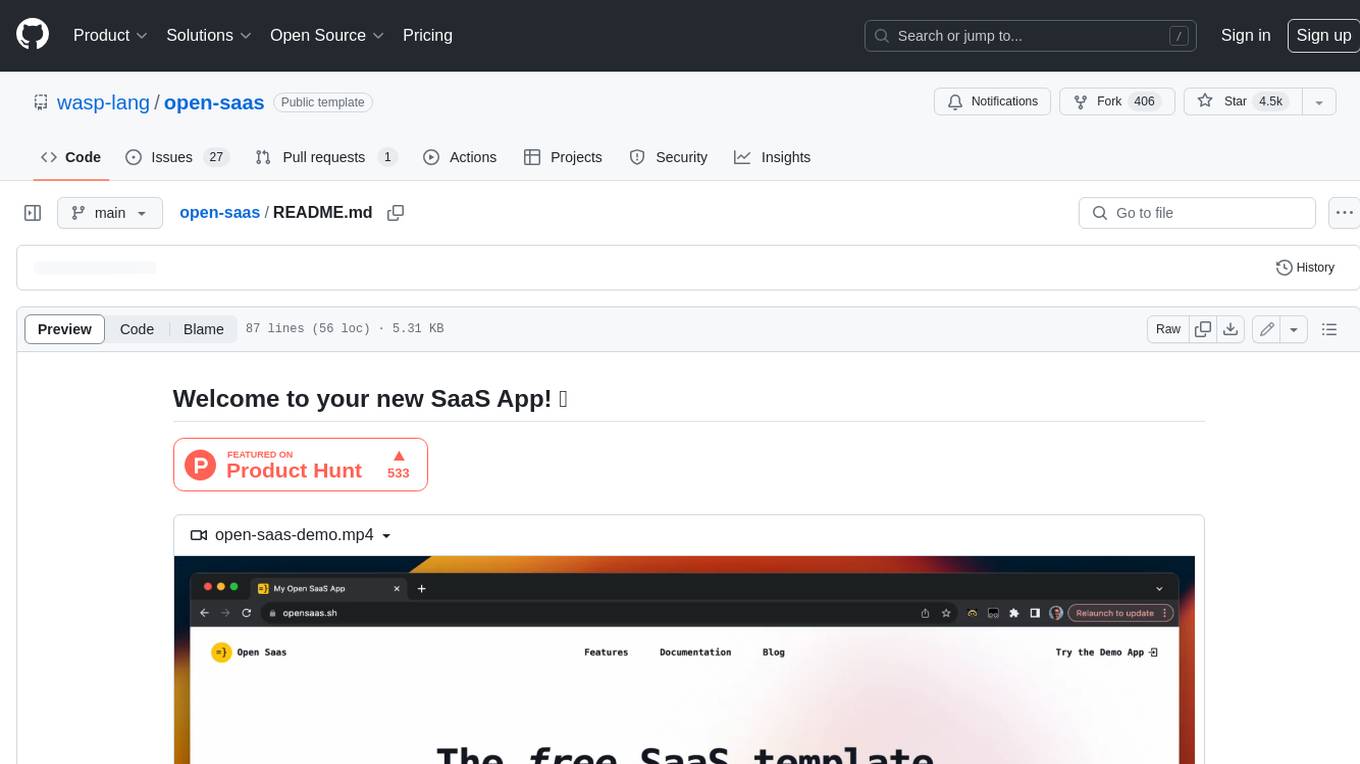
open-saas
Open SaaS is a free and open-source React and Node.js template for building SaaS applications. It comes with a variety of features out of the box, including authentication, payments, analytics, and more. Open SaaS is built on top of the Wasp framework, which provides a number of features to make it easy to build SaaS applications, such as full-stack authentication, end-to-end type safety, jobs, and one-command deploy.
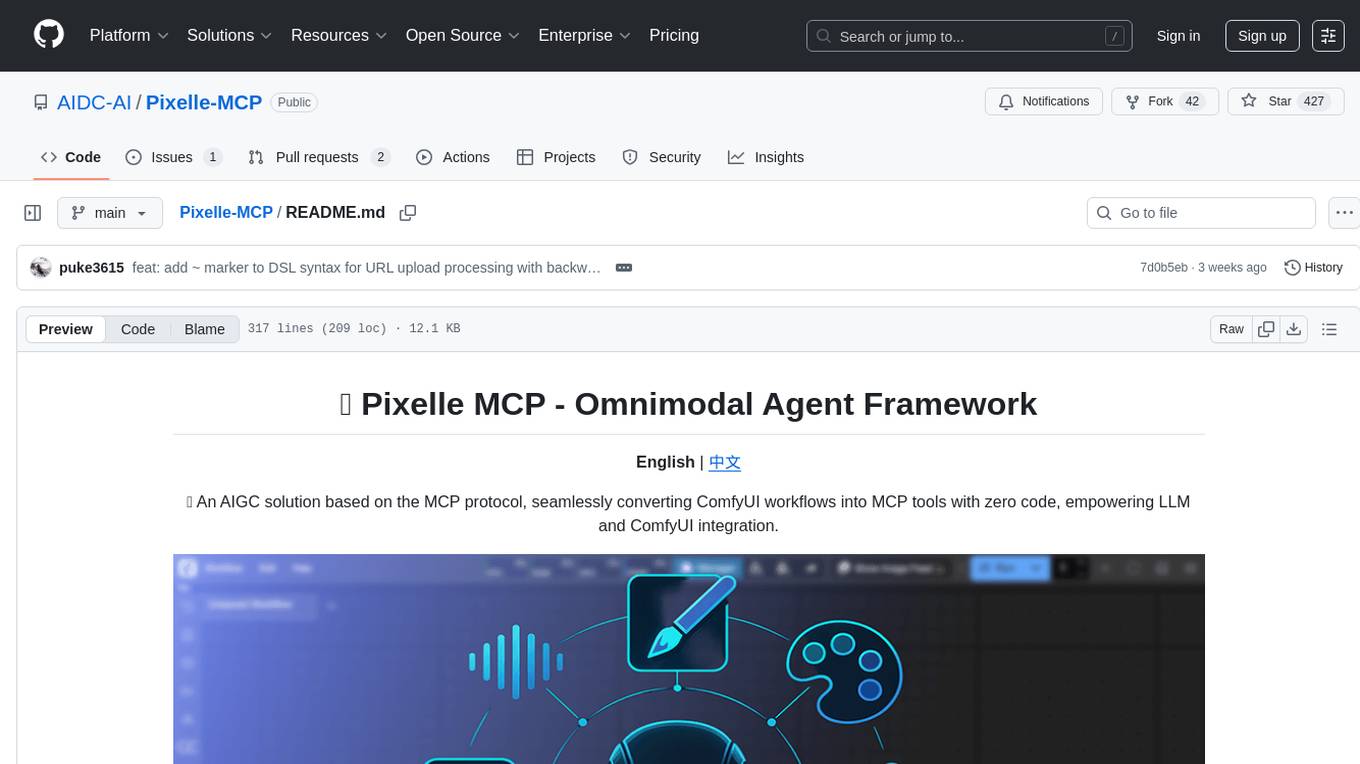
Pixelle-MCP
Pixelle-MCP is a multi-channel publishing tool designed to streamline the process of publishing content across various social media platforms. It allows users to create, schedule, and publish posts simultaneously on platforms such as Facebook, Twitter, and Instagram. With a user-friendly interface and advanced scheduling features, Pixelle-MCP helps users save time and effort in managing their social media presence. The tool also provides analytics and insights to track the performance of posts and optimize content strategy. Whether you are a social media manager, content creator, or digital marketer, Pixelle-MCP is a valuable tool to enhance your online presence and engage with your audience effectively.
For similar jobs
sweep
Sweep is an AI junior developer that turns bugs and feature requests into code changes. It automatically handles developer experience improvements like adding type hints and improving test coverage.
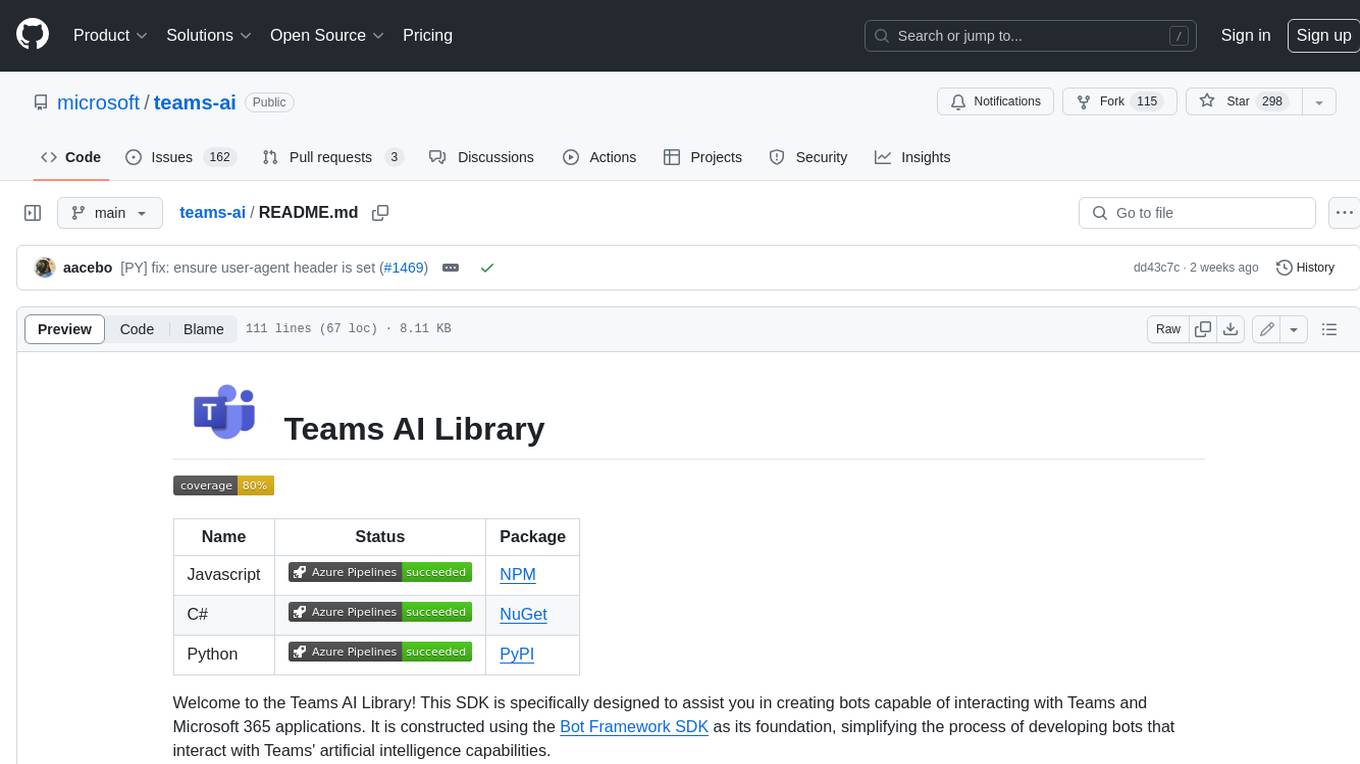
teams-ai
The Teams AI Library is a software development kit (SDK) that helps developers create bots that can interact with Teams and Microsoft 365 applications. It is built on top of the Bot Framework SDK and simplifies the process of developing bots that interact with Teams' artificial intelligence capabilities. The SDK is available for JavaScript/TypeScript, .NET, and Python.
ai-guide
This guide is dedicated to Large Language Models (LLMs) that you can run on your home computer. It assumes your PC is a lower-end, non-gaming setup.
classifai
Supercharge WordPress Content Workflows and Engagement with Artificial Intelligence. Tap into leading cloud-based services like OpenAI, Microsoft Azure AI, Google Gemini and IBM Watson to augment your WordPress-powered websites. Publish content faster while improving SEO performance and increasing audience engagement. ClassifAI integrates Artificial Intelligence and Machine Learning technologies to lighten your workload and eliminate tedious tasks, giving you more time to create original content that matters.
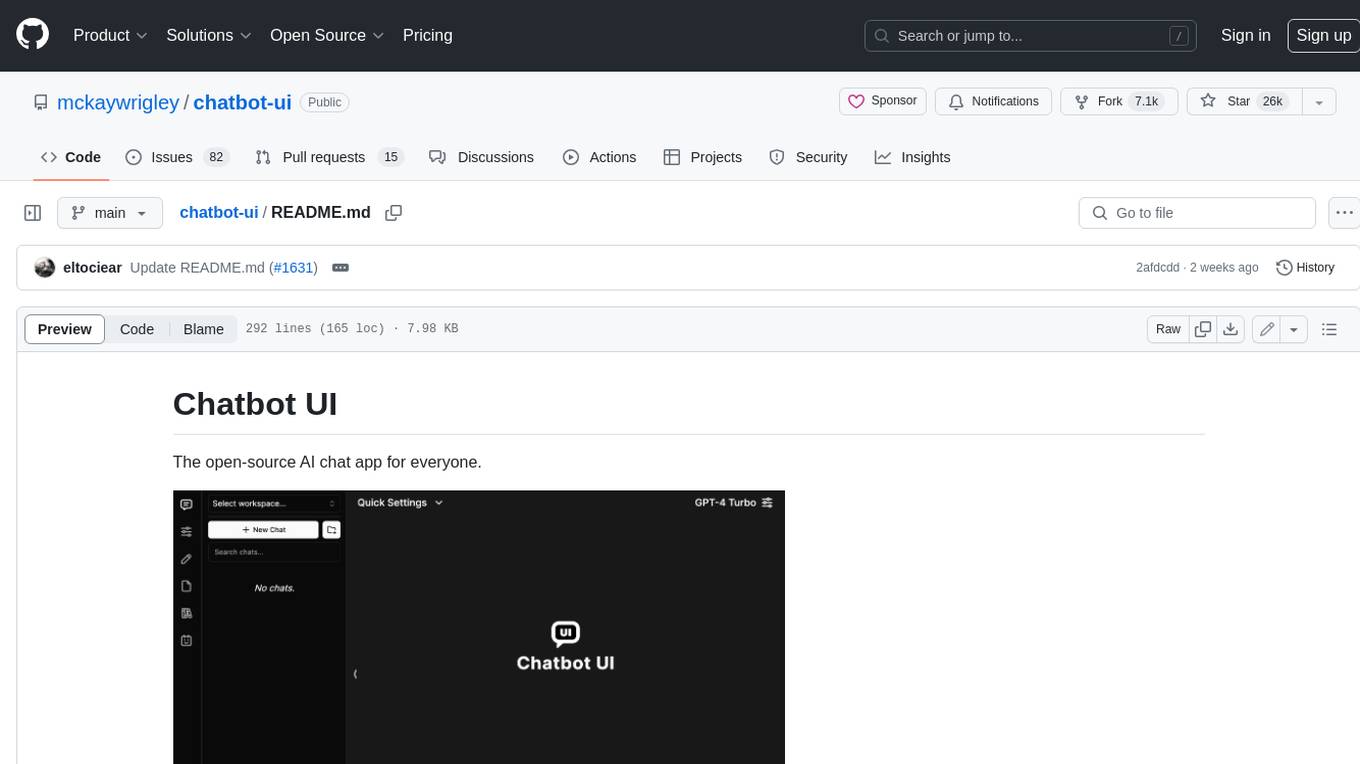
chatbot-ui
Chatbot UI is an open-source AI chat app that allows users to create and deploy their own AI chatbots. It is easy to use and can be customized to fit any need. Chatbot UI is perfect for businesses, developers, and anyone who wants to create a chatbot.
BricksLLM
BricksLLM is a cloud native AI gateway written in Go. Currently, it provides native support for OpenAI, Anthropic, Azure OpenAI and vLLM. BricksLLM aims to provide enterprise level infrastructure that can power any LLM production use cases. Here are some use cases for BricksLLM: * Set LLM usage limits for users on different pricing tiers * Track LLM usage on a per user and per organization basis * Block or redact requests containing PIIs * Improve LLM reliability with failovers, retries and caching * Distribute API keys with rate limits and cost limits for internal development/production use cases * Distribute API keys with rate limits and cost limits for students
uAgents
uAgents is a Python library developed by Fetch.ai that allows for the creation of autonomous AI agents. These agents can perform various tasks on a schedule or take action on various events. uAgents are easy to create and manage, and they are connected to a fast-growing network of other uAgents. They are also secure, with cryptographically secured messages and wallets.
griptape
Griptape is a modular Python framework for building AI-powered applications that securely connect to your enterprise data and APIs. It offers developers the ability to maintain control and flexibility at every step. Griptape's core components include Structures (Agents, Pipelines, and Workflows), Tasks, Tools, Memory (Conversation Memory, Task Memory, and Meta Memory), Drivers (Prompt and Embedding Drivers, Vector Store Drivers, Image Generation Drivers, Image Query Drivers, SQL Drivers, Web Scraper Drivers, and Conversation Memory Drivers), Engines (Query Engines, Extraction Engines, Summary Engines, Image Generation Engines, and Image Query Engines), and additional components (Rulesets, Loaders, Artifacts, Chunkers, and Tokenizers). Griptape enables developers to create AI-powered applications with ease and efficiency.