


so-vits-models
收集有关so-vits-svc、TTS、SD、LLMs的各种模型、应用以及文字、声音、图片、视频有关的model。
Stars: 164
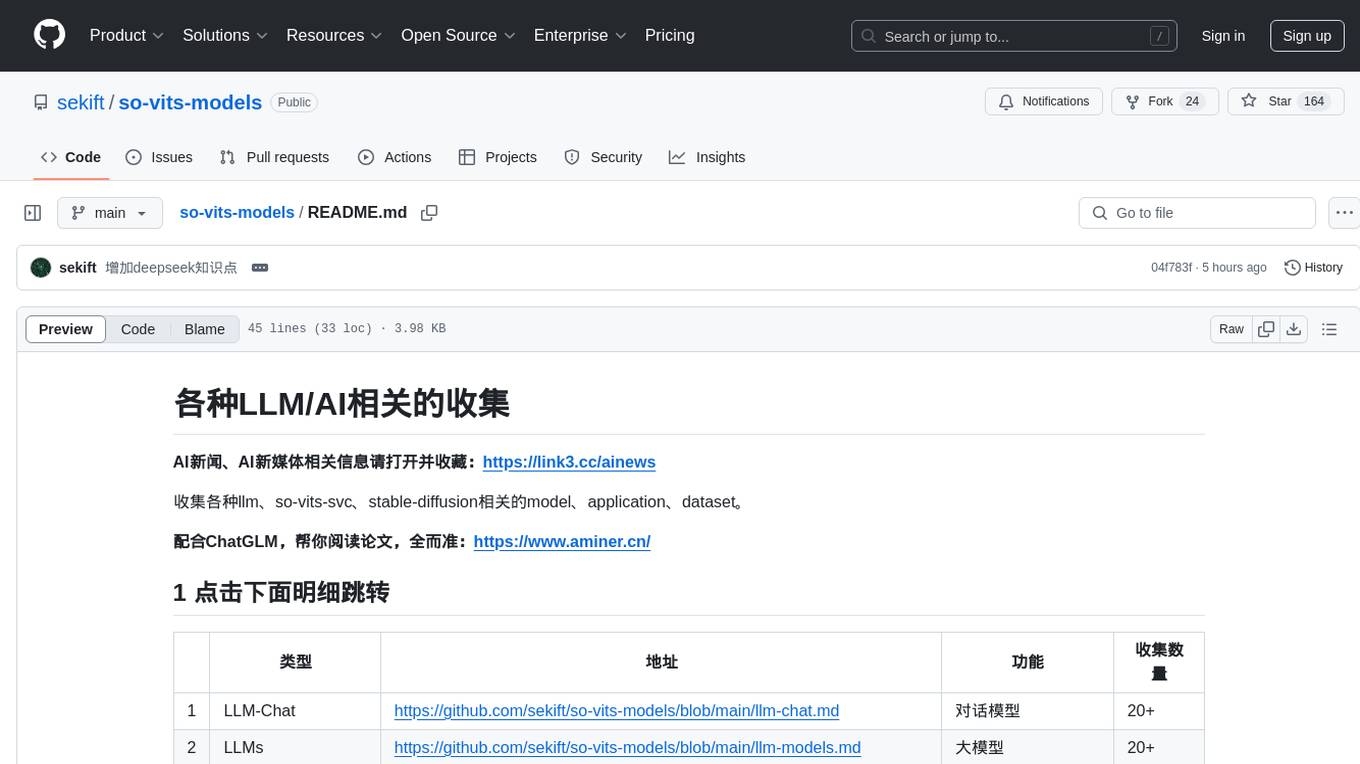
This repository collects various LLM, AI-related models, applications, and datasets, including LLM-Chat for dialogue models, LLMs for large models, so-vits-svc for sound-related models, stable-diffusion for image-related models, and virtual-digital-person for generating videos. It also provides resources for deep learning courses and overviews, AI competitions, and specific AI tasks such as text, image, voice, and video processing.
README:
AI新闻、AI新媒体相关信息请打开并收藏:https://link3.cc/ainews
收集各种llm、so-vits-svc、stable-diffusion相关的model、application、dataset。
配合ChatGLM,帮你阅读论文,全而准:https://www.aminer.cn/
| 类型 | 地址 | 功能 | 收集数量 | |
|---|---|---|---|---|
| 1 | LLM-Chat | https://github.com/sekift/so-vits-models/blob/main/llm-chat.md | 对话模型 | 20+ |
| 2 | LLMs | https://github.com/sekift/so-vits-models/blob/main/llm-models.md | 大模型 | 20+ |
| 3 | so-vits-svc | https://github.com/sekift/so-vits-models/blob/main/so-vits-models.md | 声音 | 80+ |
| 4 | stable-diffusion | https://github.com/sekift/so-vits-models/blob/main/stable-diffusion-models.md | 图片、图像 | 70+ |
| 5 | virtual-digital-person | https://github.com/sekift/so-vits-models/blob/main/virtual-digital-person.md | 虚拟数字人/生成视频 | 10- |
| 6 | prompt-engineering | https://github.com/sekift/so-vits-models/blob/main/prompt-engineering.md | 提示语工程 | 10- |
| 序号 | 类型 | 赛道 |
|---|---|---|
| 1 | 文字 | 1.Q&A 2.聊天 3.续写 4.分析总结 5.编程 6.翻译 |
| 2 | 图像 | 1.文生图 2.图生文 3.修改 4.换脸 5.高清 6.无损放大 7.漫画脸 8.艺术二维码 9.转3D 10.转彩色 11.物体检测 12.人脸识别 13.扩图 14.OCR |
| 3 | 语音 | 1.文生语音 2.语音生文 3.音色替换 4.生成歌曲 5.背景音乐 |
| 4 | 视频 | 1.文生视频 2.图生视频 3.视频生成视频 4.视频生文/图 5.物体检测 6.人脸识别 7.虚拟人直播 |
其他领域专属
1.逻辑分析
2.数学证明/推导
For Tasks:
Click tags to check more tools for each tasksFor Jobs:
Alternative AI tools for so-vits-models
Similar Open Source Tools
so-vits-models
This repository collects various LLM, AI-related models, applications, and datasets, including LLM-Chat for dialogue models, LLMs for large models, so-vits-svc for sound-related models, stable-diffusion for image-related models, and virtual-digital-person for generating videos. It also provides resources for deep learning courses and overviews, AI competitions, and specific AI tasks such as text, image, voice, and video processing.
kumo-search
Kumo search is an end-to-end search engine framework that supports full-text search, inverted index, forward index, sorting, caching, hierarchical indexing, intervention system, feature collection, offline computation, storage system, and more. It runs on the EA (Elastic automic infrastructure architecture) platform, enabling engineering automation, service governance, real-time data, service degradation, and disaster recovery across multiple data centers and clusters. The framework aims to provide a ready-to-use search engine framework to help users quickly build their own search engines. Users can write business logic in Python using the AOT compiler in the project, which generates C++ code and binary dynamic libraries for rapid iteration of the search engine.
LLM-for-Healthcare
The repository 'LLM-for-Healthcare' provides a comprehensive survey of large language models (LLMs) for healthcare, covering data, technology, applications, and accountability and ethics. It includes information on various LLM models, training data, evaluation methods, and computation costs. The repository also discusses tasks such as NER, text classification, question answering, dialogue systems, and generation of medical reports from images in the healthcare domain.
Awesome-LLM-Eval
Awesome-LLM-Eval: a curated list of tools, benchmarks, demos, papers for Large Language Models (like ChatGPT, LLaMA, GLM, Baichuan, etc) Evaluation on Language capabilities, Knowledge, Reasoning, Fairness and Safety.
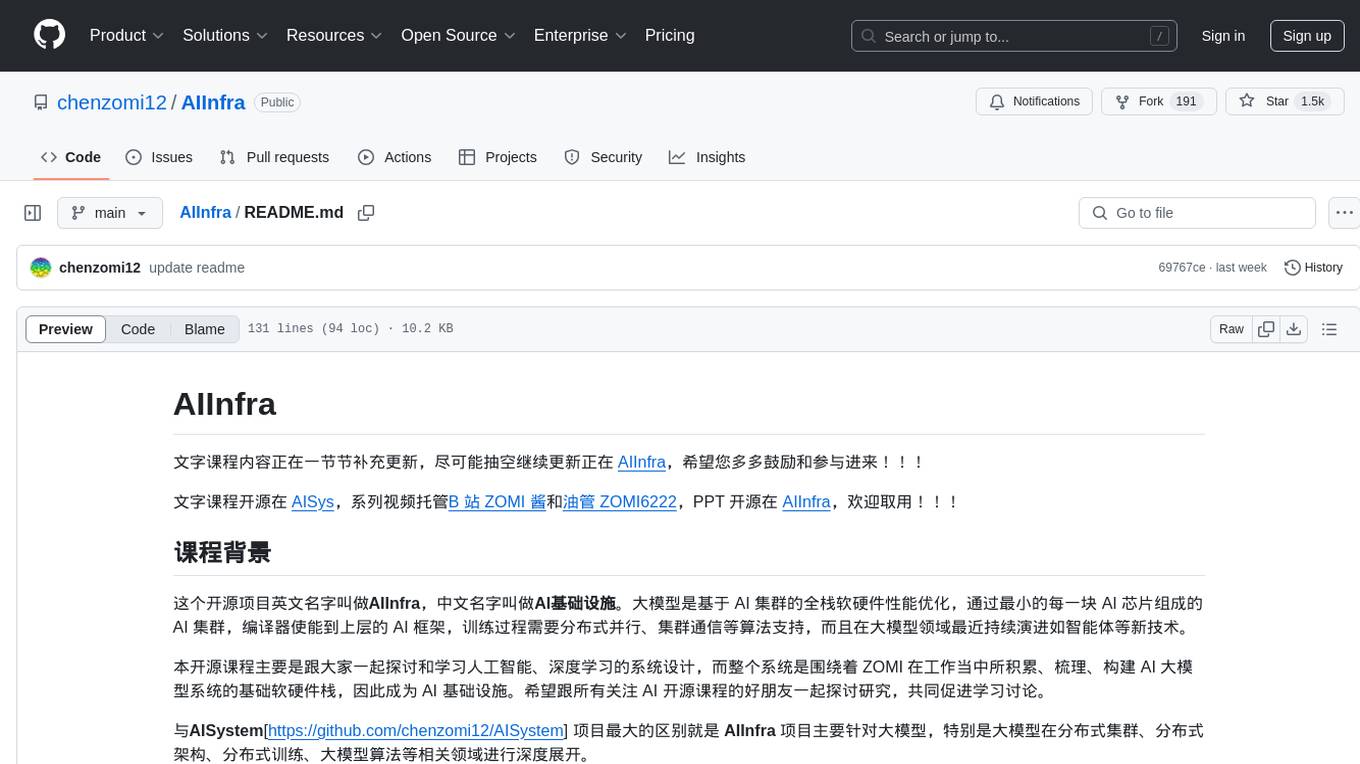
AIInfra
AIInfra is an open-source project focused on AI infrastructure, specifically targeting large models in distributed clusters, distributed architecture, distributed training, and algorithms related to large models. The project aims to explore and study system design in artificial intelligence and deep learning, with a focus on the hardware and software stack for building AI large model systems. It provides a comprehensive curriculum covering topics such as AI chip principles, communication and storage, AI clusters, large model training, and inference, as well as algorithms for large models. The course is designed for undergraduate and graduate students, as well as professionals working with AI large model systems, to gain a deep understanding of AI computer system architecture and design.
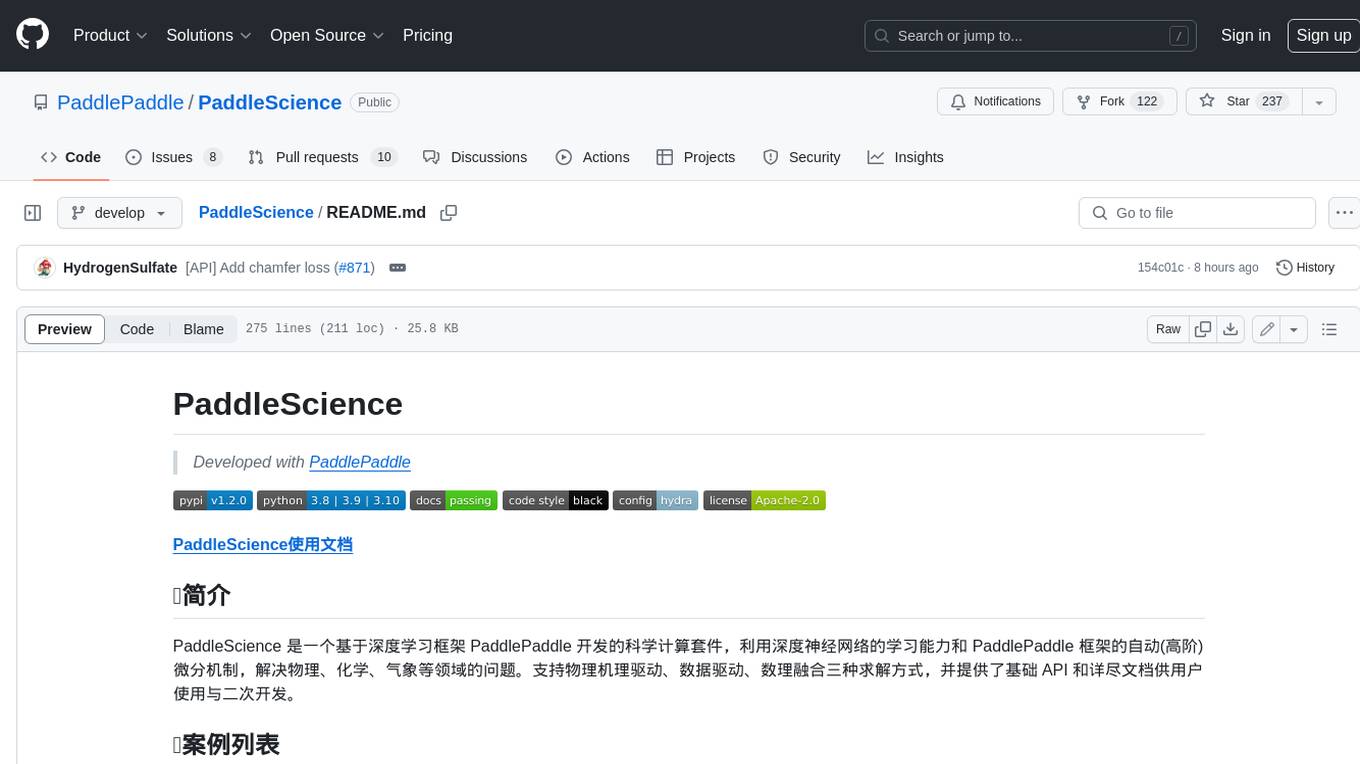
PaddleScience
PaddleScience is a scientific computing suite developed based on the deep learning framework PaddlePaddle. It utilizes the learning ability of deep neural networks and the automatic (higher-order) differentiation mechanism of PaddlePaddle to solve problems in physics, chemistry, meteorology, and other fields. It supports three solving methods: physics mechanism-driven, data-driven, and mathematical fusion, and provides basic APIs and detailed documentation for users to use and further develop.
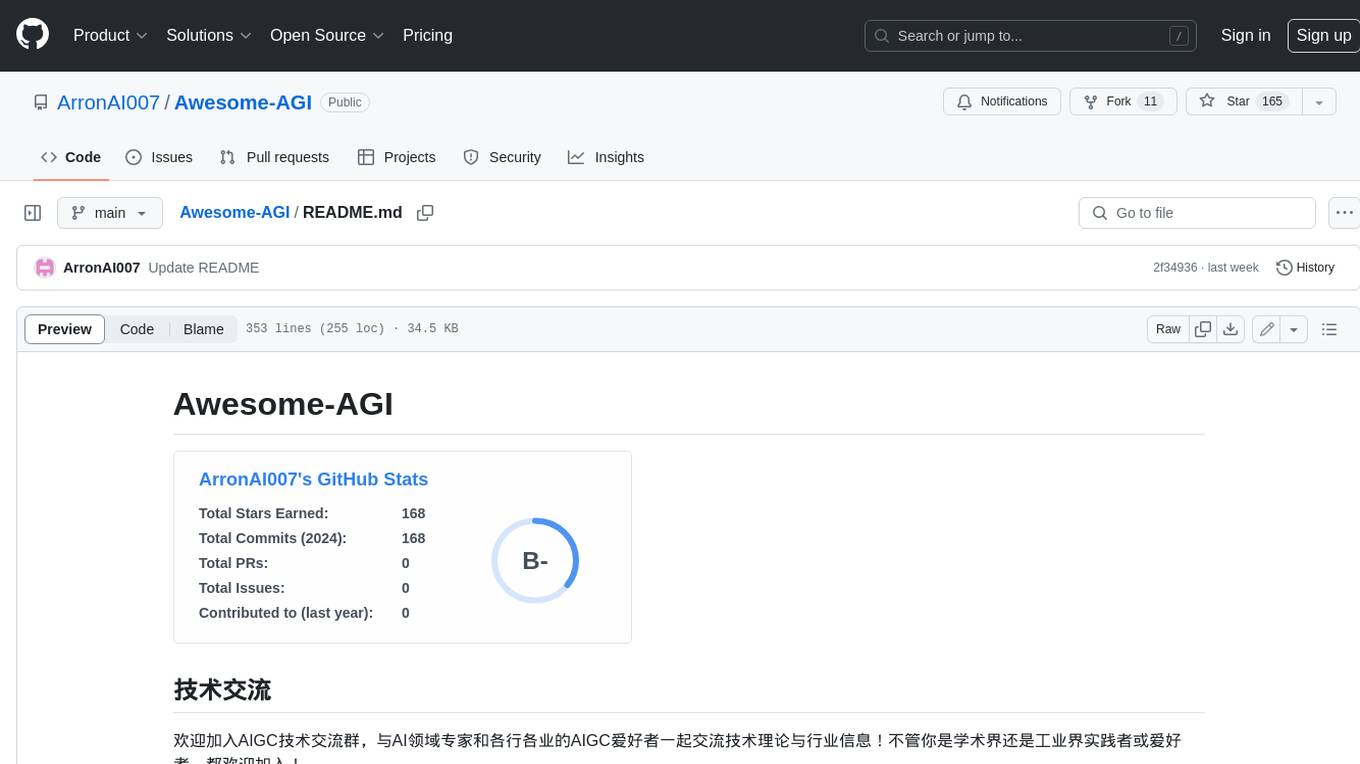
Awesome-AGI
Awesome-AGI is a curated list of resources related to Artificial General Intelligence (AGI), including models, pipelines, applications, and concepts. It provides a comprehensive overview of the current state of AGI research and development, covering various aspects such as model training, fine-tuning, deployment, and applications in different domains. The repository also includes resources on prompt engineering, RLHF, LLM vocabulary expansion, long text generation, hallucination mitigation, controllability and safety, and text detection. It serves as a valuable resource for researchers, practitioners, and anyone interested in the field of AGI.
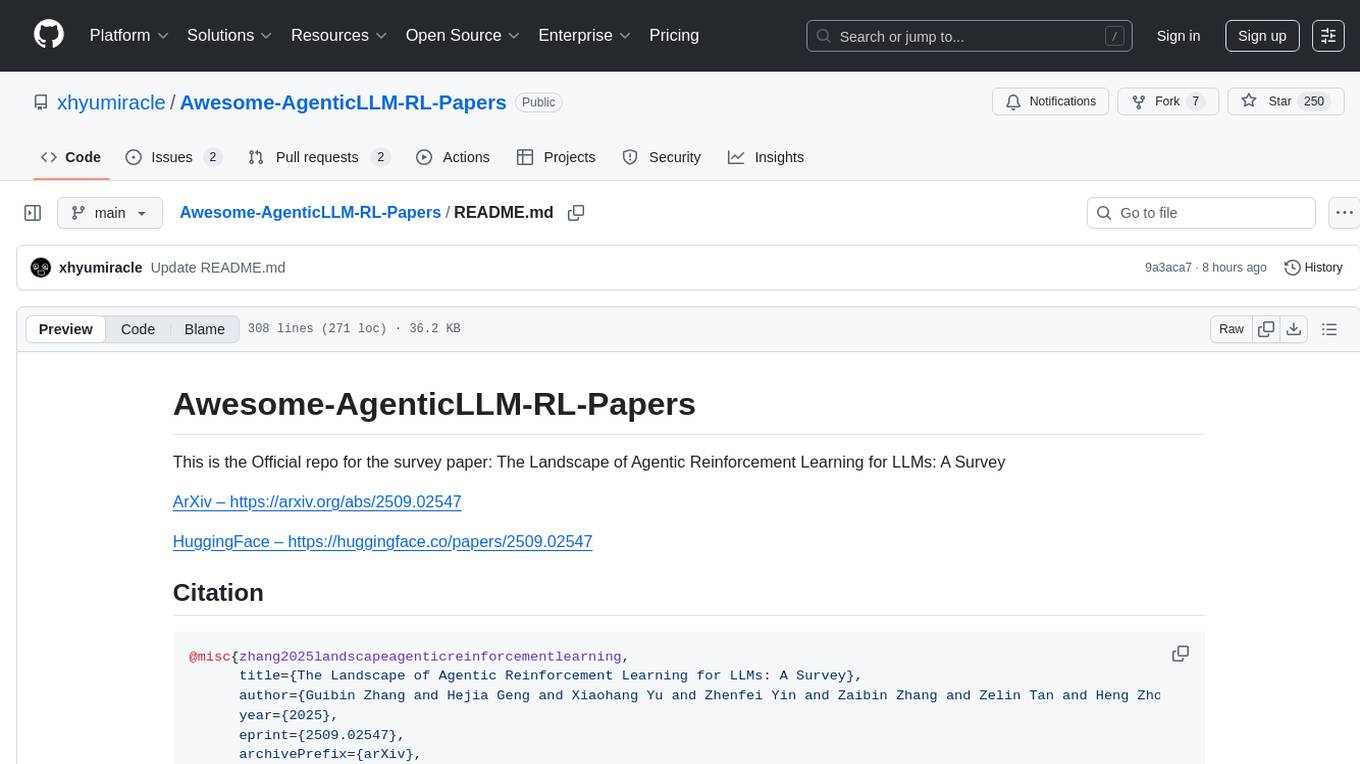
Awesome-AgenticLLM-RL-Papers
This repository serves as the official source for the survey paper 'The Landscape of Agentic Reinforcement Learning for LLMs: A Survey'. It provides an extensive overview of various algorithms, methods, and frameworks related to Agentic RL, including detailed information on different families of algorithms, their key mechanisms, objectives, and links to relevant papers and resources. The repository covers a wide range of tasks such as Search & Research Agent, Code Agent, Mathematical Agent, GUI Agent, RL in Vision Agents, RL in Embodied Agents, and RL in Multi-Agent Systems. Additionally, it includes information on environments, frameworks, and methods suitable for different tasks related to Agentic RL and LLMs.
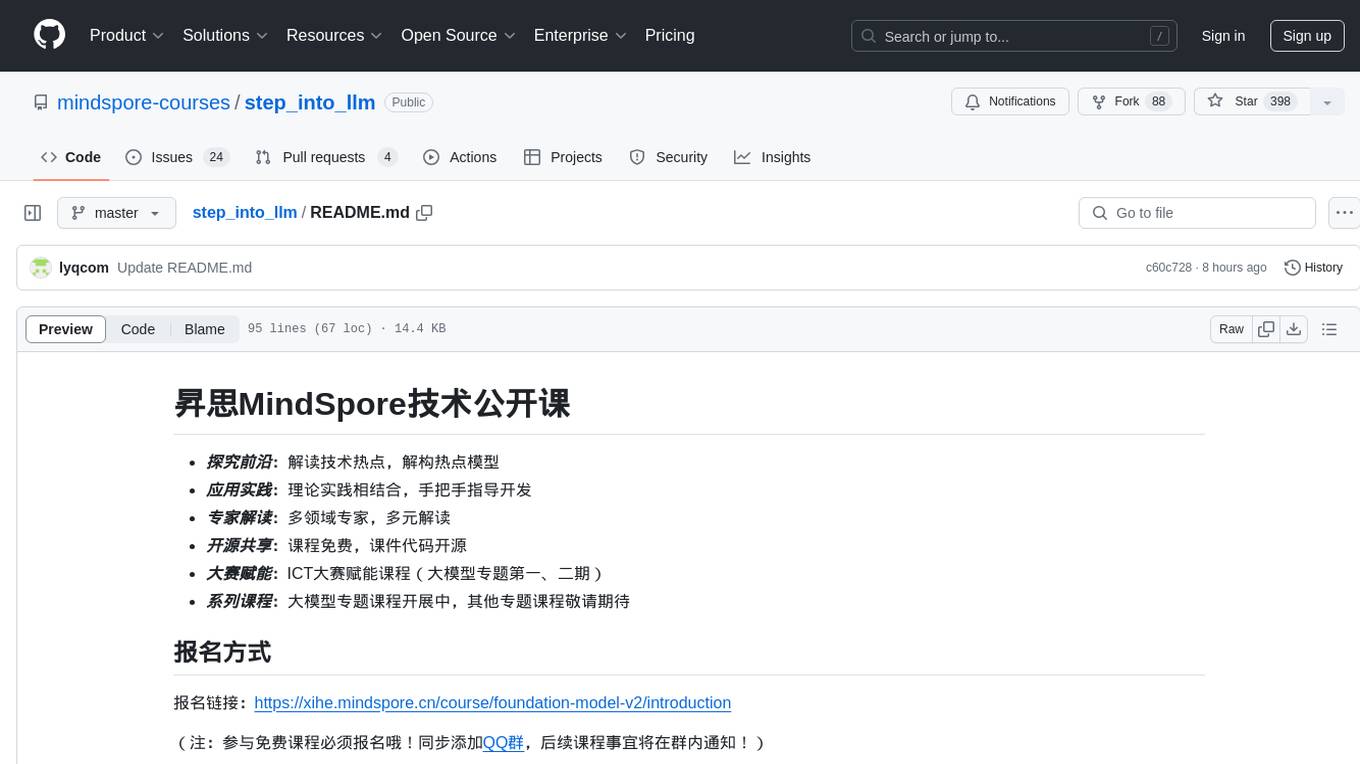
step_into_llm
The 'step_into_llm' repository is dedicated to the 昇思MindSpore technology open class, which focuses on exploring cutting-edge technologies, combining theory with practical applications, expert interpretations, open sharing, and empowering competitions. The repository contains course materials, including slides and code, for the ongoing second phase of the course. It covers various topics related to large language models (LLMs) such as Transformer, BERT, GPT, GPT2, and more. The course aims to guide developers interested in LLMs from theory to practical implementation, with a special emphasis on the development and application of large models.
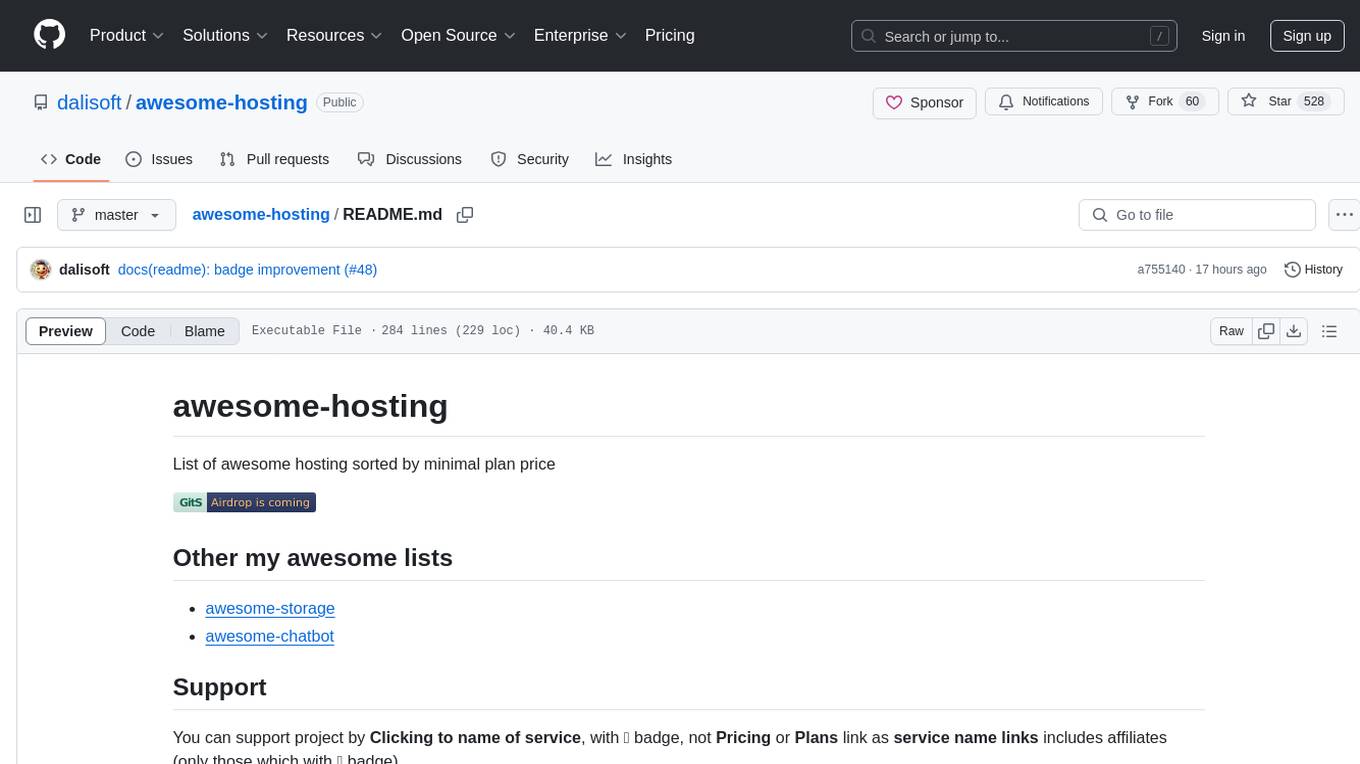
awesome-hosting
awesome-hosting is a curated list of hosting services sorted by minimal plan price. It includes various categories such as Web Services Platform, Backend-as-a-Service, Lambda, Node.js, Static site hosting, WordPress hosting, VPS providers, managed databases, GPU cloud services, and LLM/Inference API providers. Each category lists multiple service providers along with details on their minimal plan, trial options, free tier availability, open-source support, and specific features. The repository aims to help users find suitable hosting solutions based on their budget and requirements.
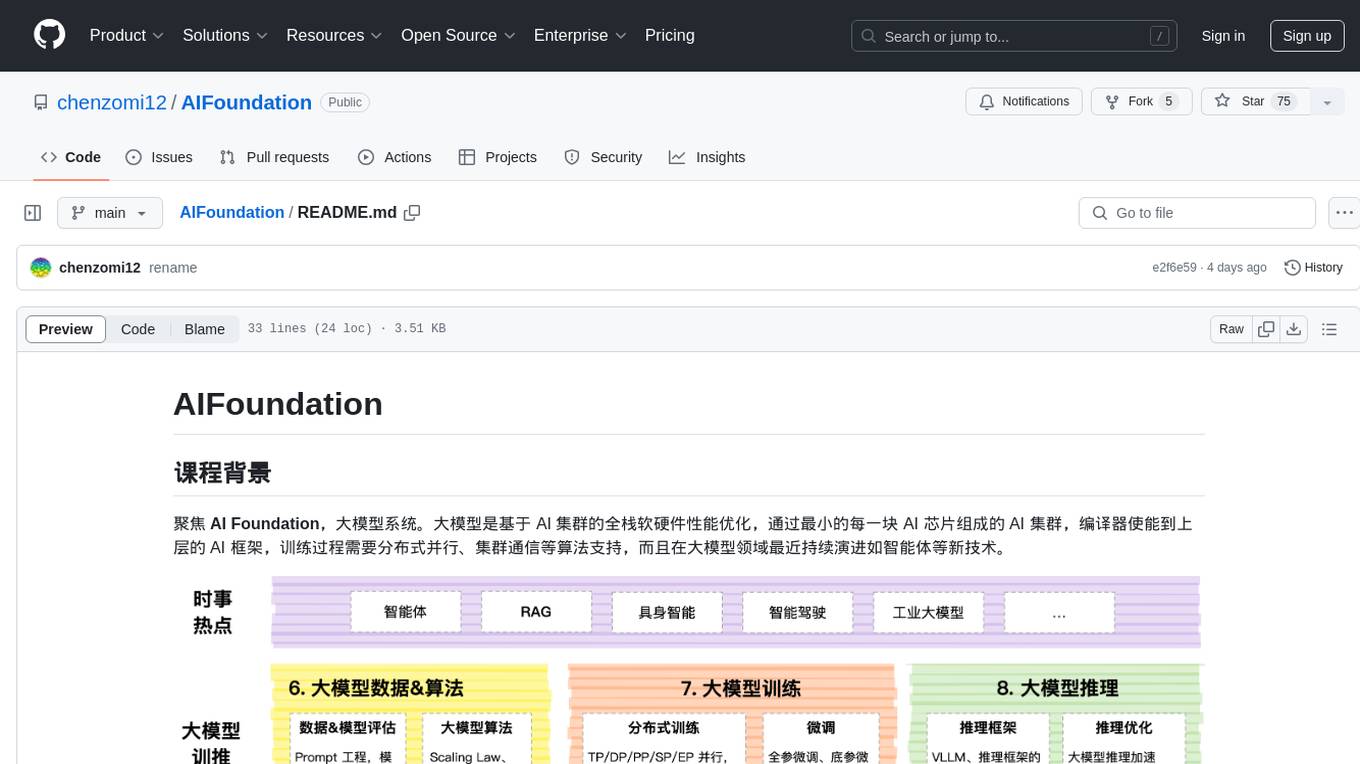
AIFoundation
AIFoundation focuses on AI Foundation, large model systems. Large models optimize the performance of full-stack hardware and software based on AI clusters. The training process requires distributed parallelism, cluster communication algorithms, and continuous evolution in the field of large models such as intelligent agents. The course covers modules like AI chip principles, communication & storage, AI clusters, computing architecture, communication architecture, large model algorithms, training, inference, and analysis of hot technologies in the large model field.
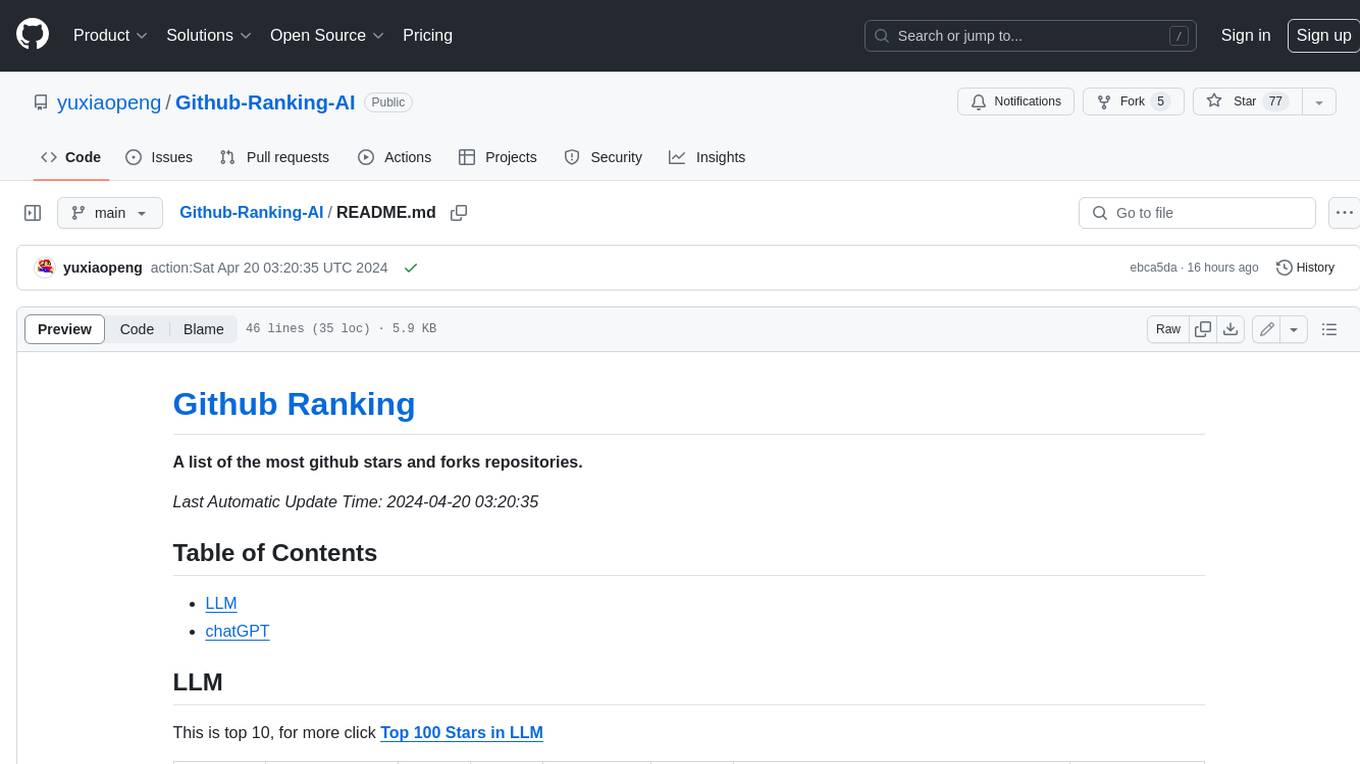
Github-Ranking-AI
This repository provides a list of the most starred and forked repositories on GitHub. It is updated automatically and includes information such as the project name, number of stars, number of forks, language, number of open issues, description, and last commit date. The repository is divided into two sections: LLM and chatGPT. The LLM section includes repositories related to large language models, while the chatGPT section includes repositories related to the chatGPT chatbot.
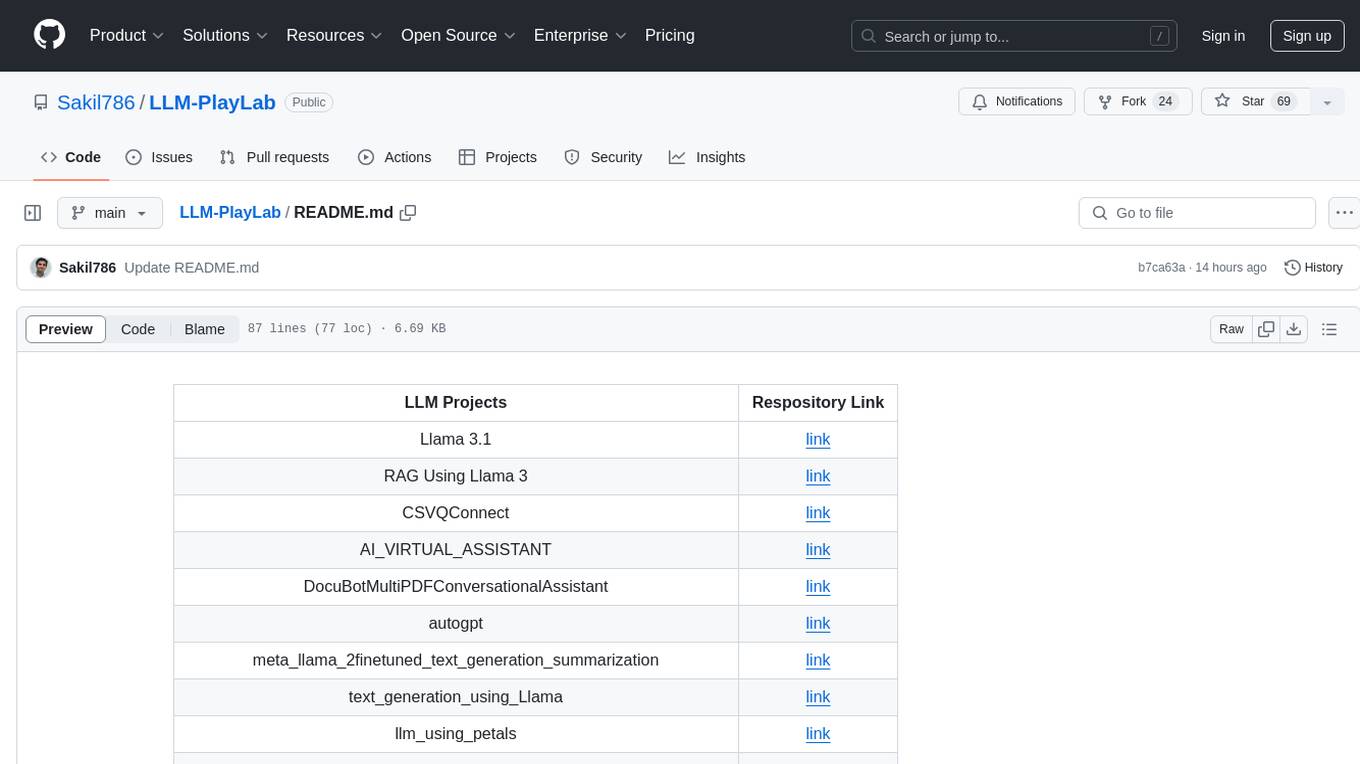
LLM-PlayLab
LLM-PlayLab is a repository containing various projects related to LLM (Large Language Models) fine-tuning, generative AI, time-series forecasting, and crash courses. It includes projects for text generation, sentiment analysis, data analysis, chat assistants, image captioning, and more. The repository offers a wide range of tools and resources for exploring and implementing advanced AI techniques.
ailia-models
The collection of pre-trained, state-of-the-art AI models. ailia SDK is a self-contained, cross-platform, high-speed inference SDK for AI. The ailia SDK provides a consistent C++ API across Windows, Mac, Linux, iOS, Android, Jetson, and Raspberry Pi platforms. It also supports Unity (C#), Python, Rust, Flutter(Dart) and JNI for efficient AI implementation. The ailia SDK makes extensive use of the GPU through Vulkan and Metal to enable accelerated computing. # Supported models 323 models as of April 8th, 2024
For similar tasks
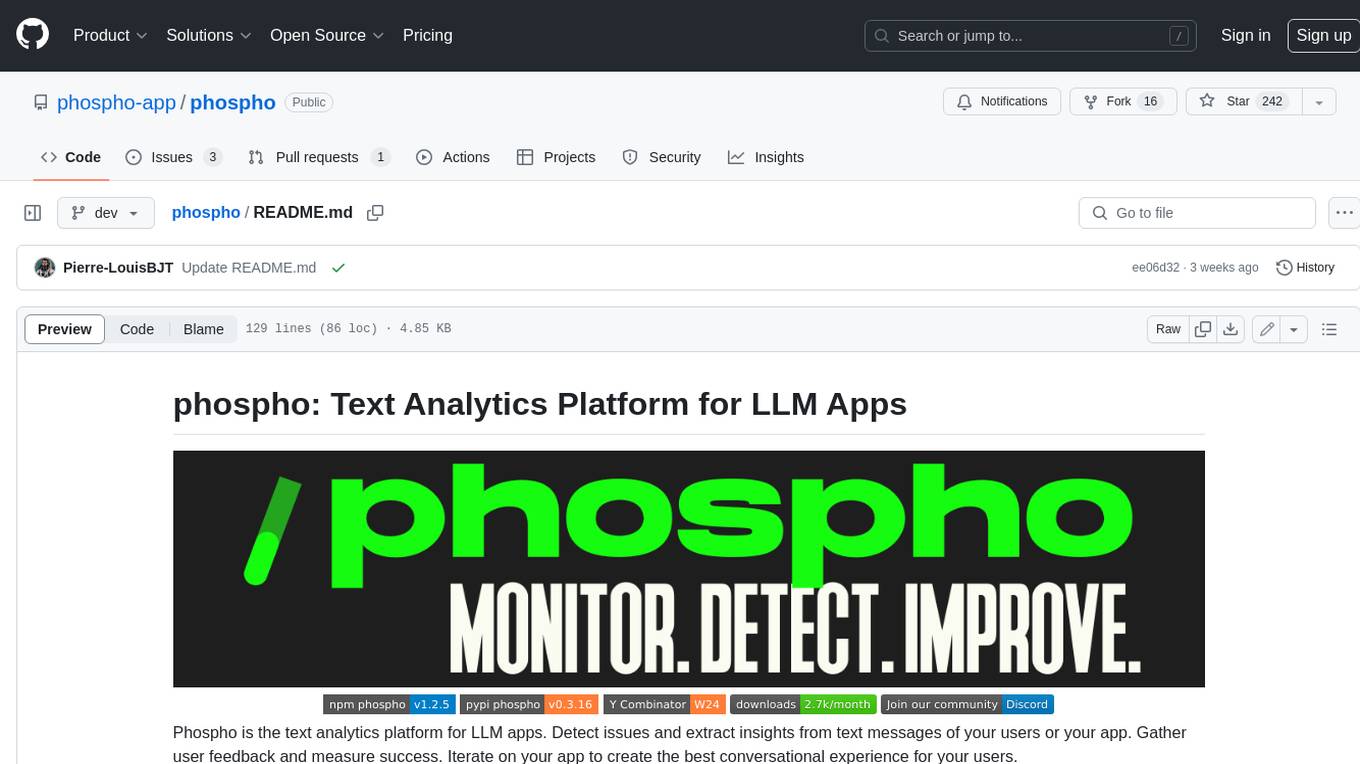
phospho
Phospho is a text analytics platform for LLM apps. It helps you detect issues and extract insights from text messages of your users or your app. You can gather user feedback, measure success, and iterate on your app to create the best conversational experience for your users.
OpenFactVerification
Loki is an open-source tool designed to automate the process of verifying the factuality of information. It provides a comprehensive pipeline for dissecting long texts into individual claims, assessing their worthiness for verification, generating queries for evidence search, crawling for evidence, and ultimately verifying the claims. This tool is especially useful for journalists, researchers, and anyone interested in the factuality of information.
open-parse
Open Parse is a Python library for visually discerning document layouts and chunking them effectively. It is designed to fill the gap in open-source libraries for handling complex documents. Unlike text splitting, which converts a file to raw text and slices it up, Open Parse visually analyzes documents for superior LLM input. It also supports basic markdown for parsing headings, bold, and italics, and has high-precision table support, extracting tables into clean Markdown formats with accuracy that surpasses traditional tools. Open Parse is extensible, allowing users to easily implement their own post-processing steps. It is also intuitive, with great editor support and completion everywhere, making it easy to use and learn.
spaCy
spaCy is an industrial-strength Natural Language Processing (NLP) library in Python and Cython. It incorporates the latest research and is designed for real-world applications. The library offers pretrained pipelines supporting 70+ languages, with advanced neural network models for tasks such as tagging, parsing, named entity recognition, and text classification. It also facilitates multi-task learning with pretrained transformers like BERT, along with a production-ready training system and streamlined model packaging, deployment, and workflow management. spaCy is commercial open-source software released under the MIT license.
NanoLLM
NanoLLM is a tool designed for optimized local inference for Large Language Models (LLMs) using HuggingFace-like APIs. It supports quantization, vision/language models, multimodal agents, speech, vector DB, and RAG. The tool aims to provide efficient and effective processing for LLMs on local devices, enhancing performance and usability for various AI applications.
ontogpt
OntoGPT is a Python package for extracting structured information from text using large language models, instruction prompts, and ontology-based grounding. It provides a command line interface and a minimal web app for easy usage. The tool has been evaluated on test data and is used in related projects like TALISMAN for gene set analysis. OntoGPT enables users to extract information from text by specifying relevant terms and provides the extracted objects as output.
lima
LIMA is a multilingual linguistic analyzer developed by the CEA LIST, LASTI laboratory. It is Free Software available under the MIT license. LIMA has state-of-the-art performance for more than 60 languages using deep learning modules. It also includes a powerful rules-based mechanism called ModEx for extracting information in new domains without annotated data.
liboai
liboai is a simple C++17 library for the OpenAI API, providing developers with access to OpenAI endpoints through a collection of methods and classes. It serves as a spiritual port of OpenAI's Python library, 'openai', with similar structure and features. The library supports various functionalities such as ChatGPT, Audio, Azure, Functions, Image DALL·E, Models, Completions, Edit, Embeddings, Files, Fine-tunes, Moderation, and Asynchronous Support. Users can easily integrate the library into their C++ projects to interact with OpenAI services.
For similar jobs
MaixPy
MaixPy is a Python SDK that enables users to easily create AI vision projects on edge devices. It provides a user-friendly API for accessing NPU, making it suitable for AI Algorithm Engineers, STEM teachers, Makers, Engineers, Students, Enterprises, and Contestants. The tool supports Python programming, MaixVision Workstation, AI vision, video streaming, voice recognition, and peripheral usage. It also offers an online AI training platform called MaixHub. MaixPy is designed for new hardware platforms like MaixCAM, offering improved performance and features compared to older versions. The ecosystem includes hardware, software, tools, documentation, and a cloud platform.
so-vits-models
This repository collects various LLM, AI-related models, applications, and datasets, including LLM-Chat for dialogue models, LLMs for large models, so-vits-svc for sound-related models, stable-diffusion for image-related models, and virtual-digital-person for generating videos. It also provides resources for deep learning courses and overviews, AI competitions, and specific AI tasks such as text, image, voice, and video processing.
LLM-Agent-Survey
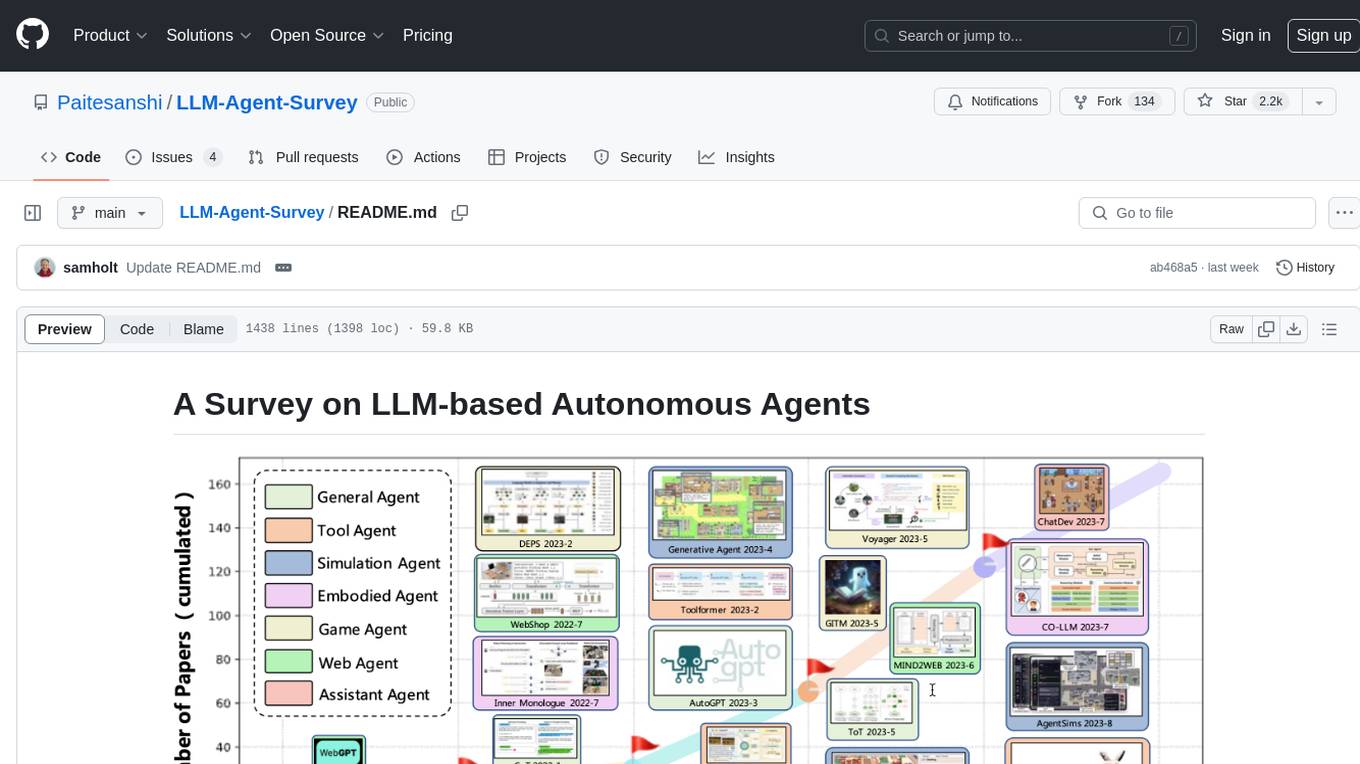
Autonomous agents are designed to achieve specific objectives through self-guided instructions. With the emergence and growth of large language models (LLMs), there is a growing trend in utilizing LLMs as fundamental controllers for these autonomous agents. This repository conducts a comprehensive survey study on the construction, application, and evaluation of LLM-based autonomous agents. It explores essential components of AI agents, application domains in natural sciences, social sciences, and engineering, and evaluation strategies. The survey aims to be a resource for researchers and practitioners in this rapidly evolving field.
AIProductHome
AI Product Home is a repository dedicated to collecting various AI commercial or open-source products. It provides assistance in submitting issues, self-recommendation, correcting resources, and more. The repository also features AI tools like Build Naidia, Autopod, Rytr, Mubert, and a virtual town driven by AI. It includes sections for AI models, chat dialogues, AI assistants, code assistance, artistic creation, content creation, and more. The repository covers a wide range of AI-related tools and resources for users interested in AI products and services.
AI-Catalog
AI-Catalog is a curated list of AI tools, platforms, and resources across various domains. It serves as a comprehensive repository for users to discover and explore a wide range of AI applications. The catalog includes tools for tasks such as text-to-image generation, summarization, prompt generation, writing assistance, code assistance, developer tools, low code/no code tools, audio editing, video generation, 3D modeling, search engines, chatbots, email assistants, fun tools, gaming, music generation, presentation tools, website builders, education assistants, autonomous AI agents, photo editing, AI extensions, deep face/deep fake detection, text-to-speech, startup tools, SQL-related AI tools, education tools, and text-to-video conversion.
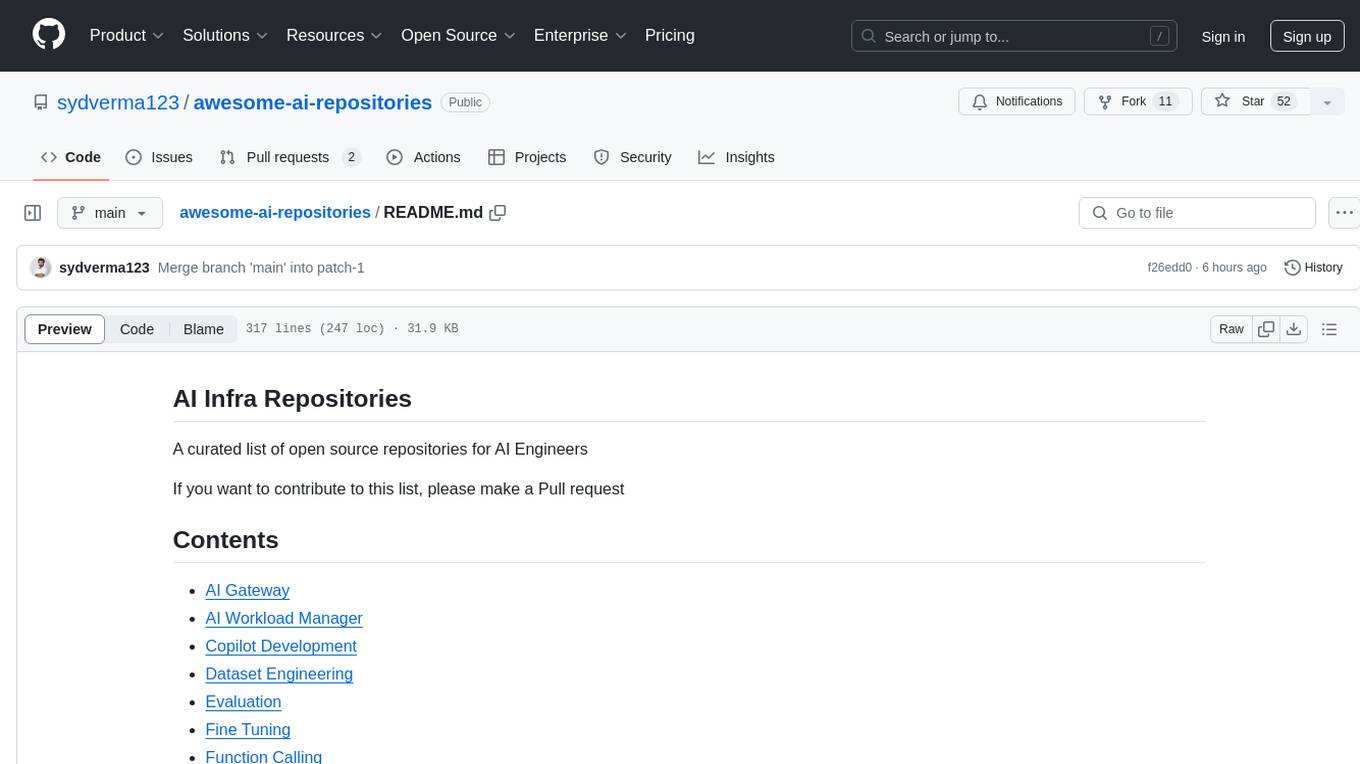
awesome-ai-repositories
A curated list of open source repositories for AI Engineers. The repository provides a comprehensive collection of tools and frameworks for various AI-related tasks such as AI Gateway, AI Workload Manager, Copilot Development, Dataset Engineering, Evaluation, Fine Tuning, Function Calling, Graph RAG, Guardrails, Local Model Inference, LLM Agent Framework, Model Serving, Observability, Pre Training, Prompt Engineering, RAG Framework, Security, Structured Extraction, Structured Generation, Vector DB, and Voice Agent.
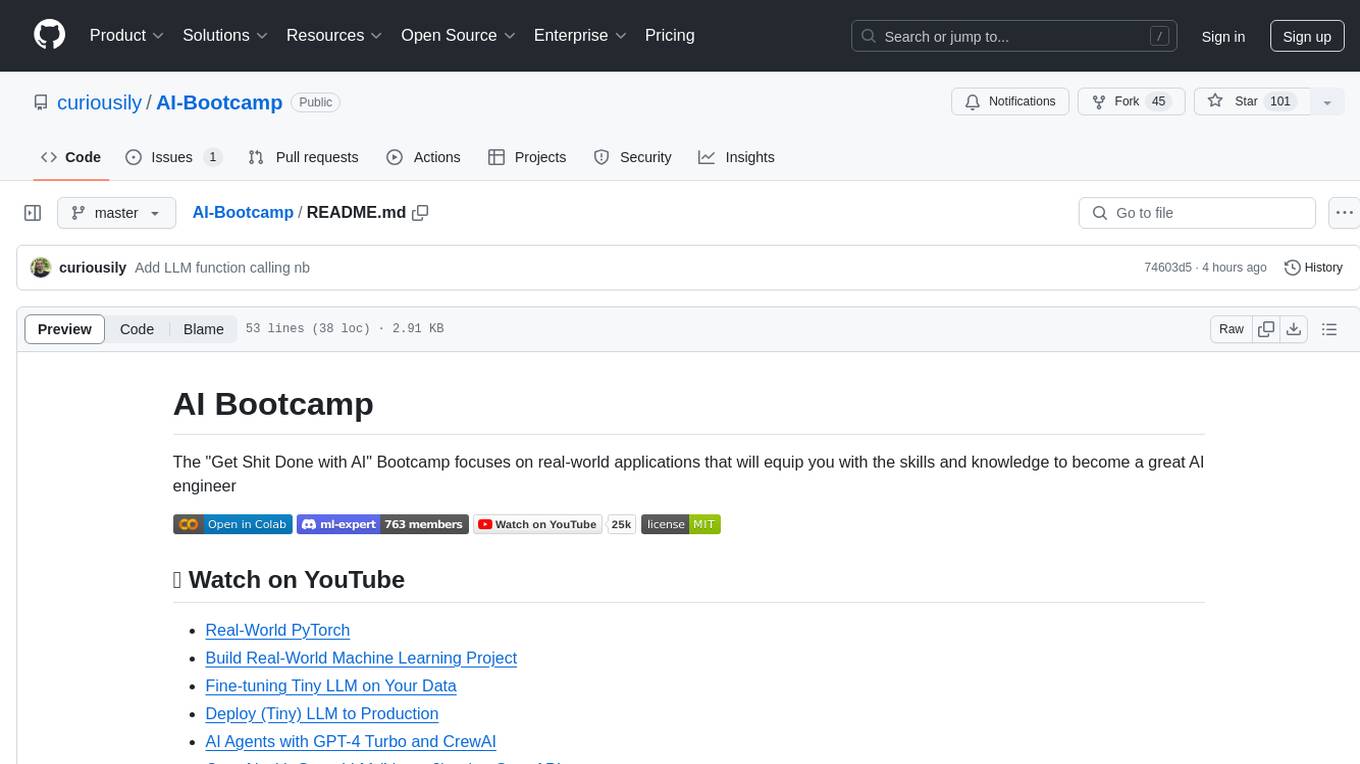
AI-Bootcamp
The AI Bootcamp is a comprehensive training program focusing on real-world applications to equip individuals with the skills and knowledge needed to excel as AI engineers. The bootcamp covers topics such as Real-World PyTorch, Machine Learning Projects, Fine-tuning Tiny LLM, Deployment of LLM to Production, AI Agents with GPT-4 Turbo, CrewAI, Llama 3, and more. Participants will learn foundational skills in Python for AI, ML Pipelines, Large Language Models (LLMs), AI Agents, and work on projects like RagBase for private document chat.
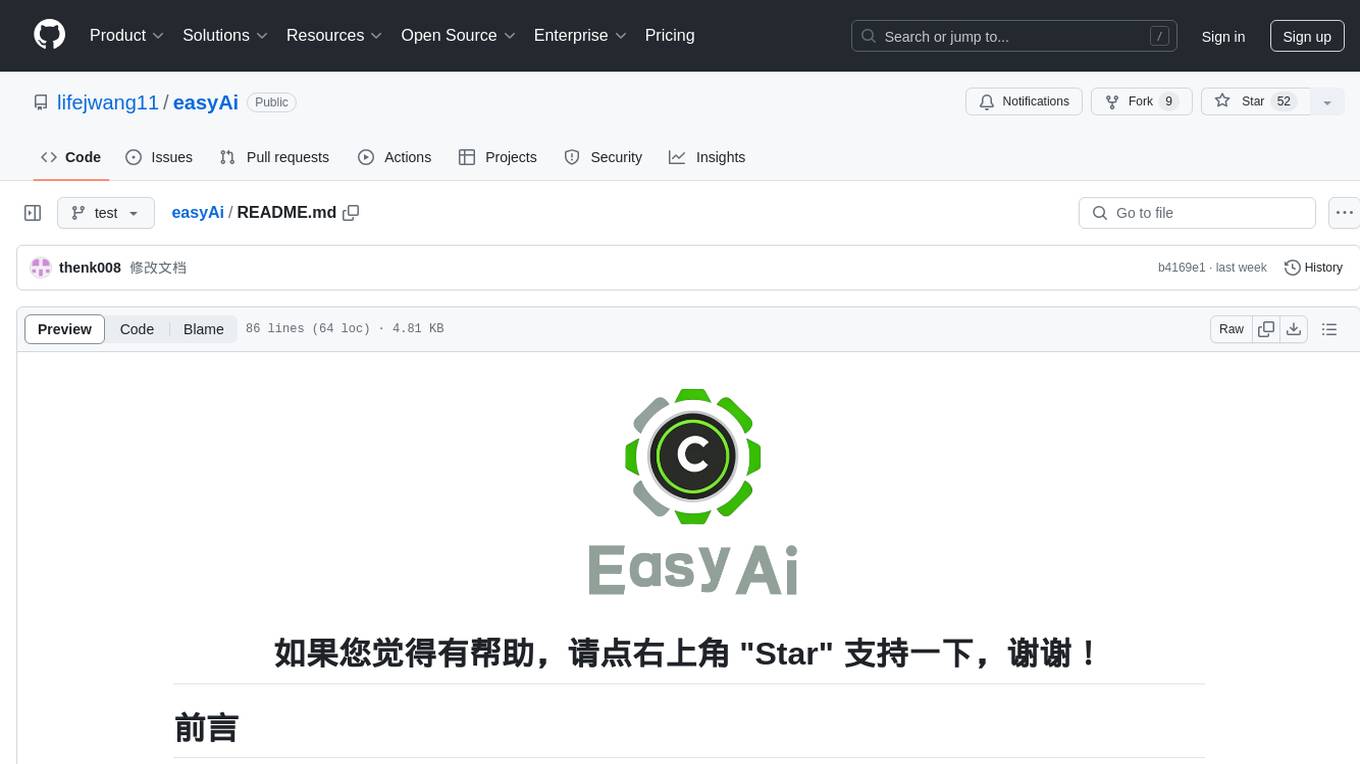
easyAi
EasyAi is a lightweight, beginner-friendly Java artificial intelligence algorithm framework. It can be seamlessly integrated into Java projects with Maven, requiring no additional environment configuration or dependencies. The framework provides pre-packaged modules for image object detection and AI customer service, as well as various low-level algorithm tools for deep learning, machine learning, reinforcement learning, heuristic learning, and matrix operations. Developers can easily develop custom micro-models tailored to their business needs.