


fridon-ai
None
Stars: 82
FridonAI is an open-source project offering AI-powered tools for cryptocurrency analysis and blockchain operations. It includes modules like FridonAnalytics for price analysis, FridonSearch for technical indicators, FridonNotifier for custom alerts, FridonBlockchain for blockchain operations, and FridonChat as a unified chat interface. The platform empowers users to create custom AI chatbots, access crypto tools, and interact effortlessly through chat. The core functionality is modular, with plugins, tools, and utilities for easy extension and development. FridonAI implements a scoring system to assess user interactions and incentivize engagement. The application uses Redis extensively for communication and includes a Nest.js backend for system operations.
README:
FridonAI is an open-source project dedicated to providing AI-powered tools and services for cryptocurrency analysis, blockchain operations, and more. Our mission is to simplify complex blockchain interactions and offer insightful analytics through an intuitive chat interface.
-
Products
- FridonAnalytics: Analyze cryptocurrency prices, visualize data, emulate top traders' strategies, predict coin risks, recommend coins, and analyze protocol churn.
- FridonSearch: Search for coins based on technical indicators, price chart similarity, and emulate trader-specific searches.
- FridonNotifier: Set up custom alerts and notifications based on personalized indicators, or mimic the actions of top traders.
- FridonBlockchain: Interact with blockchain operations effortlessly using simple text commands.
- FridonChat: The core chat interface that unifies all functionalities under a single chat experience, where each capability is treated as a plugin.
-
Open-Source
- Libraries: Create your own crypto-focused chatbot using fridon-core, or leverage community-implemented tools available in fridon-community.
- End to End Application: Except for the core chat functionality, the whole application is open-sourced. You can run your own instance of FridonAI and modify it according to your needs.
- Contribute: Help diversify FridonAI's tools and capabilities through community contributions.
-
Platform
- Empower Everyone: Whether you are a user looking to utilize AI-driven tools or a developer looking to earn money from your custom tools, FridonAI makes it possible through its easy-to-use platform.
-
Build Your Custom AI Chat: Implement your own tools, and let fridon-core manage everything else for your custom AI chatbot.
-
Use Implemented Crypto Tools: Get access to powerful crypto tools or extend their capabilities by adding your custom features with fridon-community.
-
Chat to Unlock FridonAI's Potential: Through the FridonAI platform, you can interact with all of FridonAI's capabilities effortlessly—just by chatting.
The FridonAI core is responsible for navigating user requests to relevant plugins, utilizing specific functionalities from each valid plugin. It facilitates easy plugin creation and supports connection with external systems using Redis. The core also generates a score for each chat interaction with users.
Key features:
- Modular plugin architecture for easy extension
- Dynamic routing of requests to appropriate plugins
- Redis-based communication for external integrations
- Scoring system for chat quality assessment
The core functionality of FridonAI is built with a modular architecture, allowing for easy integration and extension through plugins.
Plugins in FridonAI are essentially LLM (Large Language Model) Agents that perform specific tasks using a set of Tools. Each plugin is designed to handle a particular domain or functionality.
- Agents: LLM-powered decision-makers that determine which Tools to use and in what order, based on the user's input and the task at hand.
- Tools: Functions that perform specific actions or retrieve information. They are wrappers around Utilities, adding functionality to make them compatible with LangChain's framework.
- Utilities: The underlying implementation of business logic and functionality that Tools utilize.
At libs/core/plugins, we've created an underlying structure of plugins, tools, and utilities to simplify plugin development. This structure allows users to extend base classes and implement only the business logic as utilities, while correctly setting parameters such as plugin name, utility description, examples, and so on.
The hierarchy is as follows:
-
Plugins: Extend
BasePlugin -
Tools: Extend
BaseTool -
Utilities: Extend
BaseUtility
Developers can refer to the existing plugins in the libs/community/plugins/ directory for examples of how to implement new plugins.
There are several BaseUtility extensions available, which can be used depending on the utility's specific requirements:
-
BlockchainUtility: For blockchain-related operations -
RemoteUtility: For making remote API calls -
LLMUtility: For language model interactions
By leveraging this structure, developers can focus on implementing the core functionality of their plugins without worrying about the underlying architecture. Plugins docs.
-
Graph: Manages the conversation flow and agent interactions. Defined in
libs/core/graph/, it uses LLM models to process user messages and delegate tasks to appropriate plugins. The Graph component is responsible for:- Dynamically building a network of LLM Agents, most of which are Plugins under the hood
- Routing messages between agents
- Managing states between agents
- Creating chains with prompts and models
- Parsing outputs
- Automatically composing independently implemented plugins
The Graph utilizes
LangGraph(from LangChain) for graph structure and flow management, andLangChainfor chains, prompts, formatting, and other language model interactions. This architecture allows for a flexible and scalable system that can easily incorporate new plugins and functionalities.
-
The application uses Redis extensively for message handling and communication:
- Receiving messages from clients
- Sending responses back to clients
- Publishing updates and notifications
- Inter-service communication
-
You can see controller logic in
apps/fridon_brain/main.pyand service layer inapps/fridon_brain/services -
Nest.js application serves as the primary backend for the entire system. It facilitates communication between the front-end and Fridon Brain using Redis. Additionally, it implements various auxiliary functions, including: blockchain transaction generation, signing, sending, waiting for confirmation and so on.
FridonAI implements a scoring system to incentivize user engagement and provide feedback on the quality of interactions. Here's how it works:
- After each user question or command is processed and answered, the system assesses the dialogue.
- The assessment focuses primarily on the latest question and answer pair.
- A score is generated based on this assessment, which reflects the quality and effectiveness of the interaction.
- This score is then sent to the API repository (separate from this core repository).
- The API stores the score and notifies the user of their earned points.
The exact scoring criteria and implementation details can be found in the relevant scoring module within the codebase. Scoring Module
Use fridon-core as a library
pip install fridonai-coreRun the whole project with Docker Compose
docker compose up --buildSet up the FridonAI Brain locally
It will need Redis and Postgres to be runnning and configured in .env
-
Clone the Repository
git clone https://github.com/FridonAI/fridon-ai.git
-
Install Dependencies
poetry lock --no-update
poetry install --no-root
-
Set Up Environment Variables
Create a
.envfile in theapps/fridon_braindirectory and add the necessary variables as defined insettings.pyor in.env.example -
Run the Application
poetry run python -u -m apps.fridon_brain.main
We welcome contributions from the community. Developers can create new plugins or improve existing ones to enhance FridonAI's capabilities.
This project is open-source and available under the MIT License.
Follow us on Twitter for the latest updates and announcements:

Note: For more detailed information, please refer to the codebase and inline documentation.
For Tasks:
Click tags to check more tools for each tasksFor Jobs:
Alternative AI tools for fridon-ai
Similar Open Source Tools
fridon-ai
FridonAI is an open-source project offering AI-powered tools for cryptocurrency analysis and blockchain operations. It includes modules like FridonAnalytics for price analysis, FridonSearch for technical indicators, FridonNotifier for custom alerts, FridonBlockchain for blockchain operations, and FridonChat as a unified chat interface. The platform empowers users to create custom AI chatbots, access crypto tools, and interact effortlessly through chat. The core functionality is modular, with plugins, tools, and utilities for easy extension and development. FridonAI implements a scoring system to assess user interactions and incentivize engagement. The application uses Redis extensively for communication and includes a Nest.js backend for system operations.
llmesh
LLM Agentic Tool Mesh is a platform by HPE Athonet that democratizes Generative Artificial Intelligence (Gen AI) by enabling users to create tools and web applications using Gen AI with Low or No Coding. The platform simplifies the integration process, focuses on key user needs, and abstracts complex libraries into easy-to-understand services. It empowers both technical and non-technical teams to develop tools related to their expertise and provides orchestration capabilities through an agentic Reasoning Engine based on Large Language Models (LLMs) to ensure seamless tool integration and enhance organizational functionality and efficiency.
ai-workshop
The AI Workshop repository provides a comprehensive guide to utilizing OpenAI's APIs, including Chat Completion, Embedding, and Assistant APIs. It offers hands-on demonstrations and code examples to help users understand the capabilities of these APIs. The workshop covers topics such as creating interactive chatbots, performing semantic search using text embeddings, and building custom assistants with specific data and context. Users can enhance their understanding of AI applications in education, research, and other domains through practical examples and usage notes.
nuwa
Nuwa is an AI platform where users pay directly to developers for AI models and agents. Payments are made using cryptocurrencies secured by blockchain. User data and authentications are based on Decentralized Identity (DID). Nuwa aims to reduce friction for users, enhance their daily AI experience, and provide direct monetization for developers. The platform offers an agent-first approach, protocol-powered solutions, and user-aligned services. It includes a Nuwa Client for AI chat with DID-based authentication and cryptocurrency payments, and Nuwa Kit for developers to build and launch AI models and agents into Caps (capabilities). The repository contains various components of the Nuwa Protocol, including Nuwa Improvement Proposals, smart contracts, client agent implementation, development kits, reference implementations of key services, and websites for documentation and landing pages.

Instrukt
Instrukt is a terminal-based AI integrated environment that allows users to create and instruct modular AI agents, generate document indexes for question-answering, and attach tools to any agent. It provides a platform for users to interact with AI agents in natural language and run them inside secure containers for performing tasks. The tool supports custom AI agents, chat with code and documents, tools customization, prompt console for quick interaction, LangChain ecosystem integration, secure containers for agent execution, and developer console for debugging and introspection. Instrukt aims to make AI accessible to everyone by providing tools that empower users without relying on external APIs and services.
MyDeviceAI
MyDeviceAI is a personal AI assistant app for iPhone that brings the power of artificial intelligence directly to the device. It focuses on privacy, performance, and personalization by running AI models locally and integrating with privacy-focused web services. The app offers seamless user experience, web search integration, advanced reasoning capabilities, personalization features, chat history access, and broad device support. It requires macOS, Xcode, CocoaPods, Node.js, and a React Native development environment for installation. The technical stack includes React Native framework, AI models like Qwen 3 and BGE Small, SearXNG integration, Redux for state management, AsyncStorage for storage, Lucide for UI components, and tools like ESLint and Prettier for code quality.
countly-server
Countly is a privacy-first, AI-ready analytics and customer engagement platform built for organizations that require full data ownership and deployment flexibility. It can be deployed on-premises or in a private cloud, giving complete control over data, infrastructure, compliance, and security. Teams use Countly to understand user behavior across mobile, web, desktop, and connected devices, optimize product and customer experiences in real time, and automate and personalize customer engagement across channels. With flexible data tracking, customizable dashboards, and a modular plugin-based architecture, Countly scales with the product while ensuring long-term autonomy and zero vendor lock-in. Built for privacy, designed for flexibility, and ready for AI-driven innovation.
GraphRAG-Local-UI
GraphRAG Local with Interactive UI is an adaptation of Microsoft's GraphRAG, tailored to support local models and featuring a comprehensive interactive user interface. It allows users to leverage local models for LLM and embeddings, visualize knowledge graphs in 2D or 3D, manage files, settings, and queries, and explore indexing outputs. The tool aims to be cost-effective by eliminating dependency on costly cloud-based models and offers flexible querying options for global, local, and direct chat queries.
neo
Neo.mjs is a revolutionary Application Engine for the web that offers true multithreading and context engineering, enabling desktop-class UI performance and AI-driven runtime mutation. It is not a framework but a complete runtime and toolchain for enterprise applications, excelling in single page apps and browser-based multi-window applications. With a pioneering Off-Main-Thread architecture, Neo.mjs ensures butter-smooth UI performance by keeping the main thread free for flawless user interactions. The latest version, v11, introduces AI-native capabilities, allowing developers to work with AI agents as first-class partners in the development process. The platform offers a suite of dedicated Model Context Protocol servers that give agents the context they need to understand, build, and reason about the code, enabling a new level of human-AI collaboration.
AgentForge
AgentForge is a low-code framework tailored for the rapid development, testing, and iteration of AI-powered autonomous agents and Cognitive Architectures. It is compatible with a range of LLM models and offers flexibility to run different models for different agents based on specific needs. The framework is designed for seamless extensibility and database-flexibility, making it an ideal playground for various AI projects. AgentForge is a beta-testing ground and future-proof hub for crafting intelligent, model-agnostic autonomous agents.
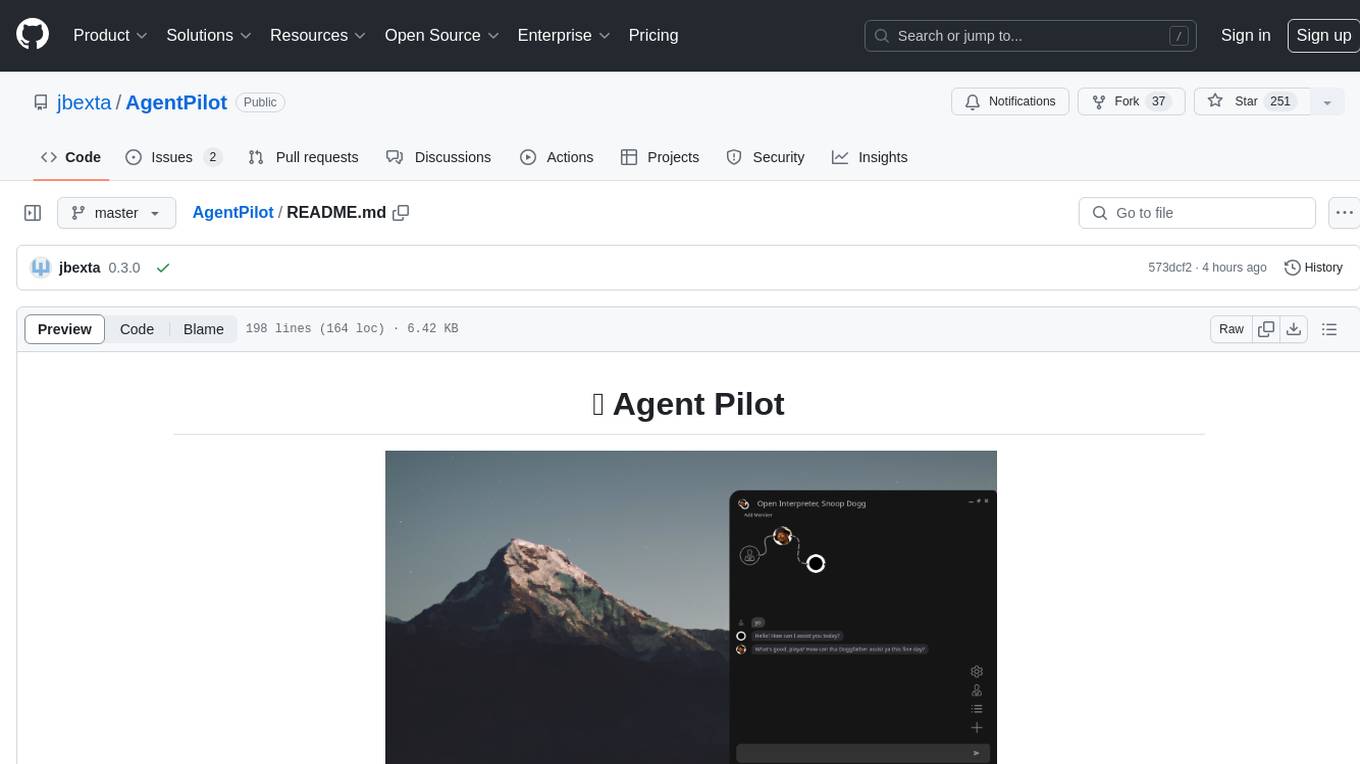
AgentPilot
Agent Pilot is an open source desktop app for creating, managing, and chatting with AI agents. It features multi-agent, branching chats with various providers through LiteLLM. Users can combine models from different providers, configure interactions, and run code using the built-in Open Interpreter. The tool allows users to create agents, manage chats, work with multi-agent workflows, branching workflows, context blocks, tools, and plugins. It also supports a code interpreter, scheduler, voice integration, and integration with various AI providers. Contributions to the project are welcome, and users can report known issues for improvement.
LLMstudio
LLMstudio by TensorOps is a platform that offers prompt engineering tools for accessing models from providers like OpenAI, VertexAI, and Bedrock. It provides features such as Python Client Gateway, Prompt Editing UI, History Management, and Context Limit Adaptability. Users can track past runs, log costs and latency, and export history to CSV. The tool also supports automatic switching to larger-context models when needed. Coming soon features include side-by-side comparison of LLMs, automated testing, API key administration, project organization, and resilience against rate limits. LLMstudio aims to streamline prompt engineering, provide execution history tracking, and enable effortless data export, offering an evolving environment for teams to experiment with advanced language models.
akeru
Akeru.ai is an open-source AI platform leveraging the power of decentralization. It offers transparent, safe, and highly available AI capabilities. The platform aims to give developers access to open-source and transparent AI resources through its decentralized nature hosted on an edge network. Akeru API introduces features like retrieval, function calling, conversation management, custom instructions, data input optimization, user privacy, testing and iteration, and comprehensive documentation. It is ideal for creating AI agents and enhancing web and mobile applications with advanced AI capabilities. The platform runs on a Bittensor Subnet design that aims to democratize AI technology and promote an equitable AI future. Akeru.ai embraces decentralization challenges to ensure a decentralized and equitable AI ecosystem with security features like watermarking and network pings. The API architecture integrates with technologies like Bun, Redis, and Elysia for a robust, scalable solution.
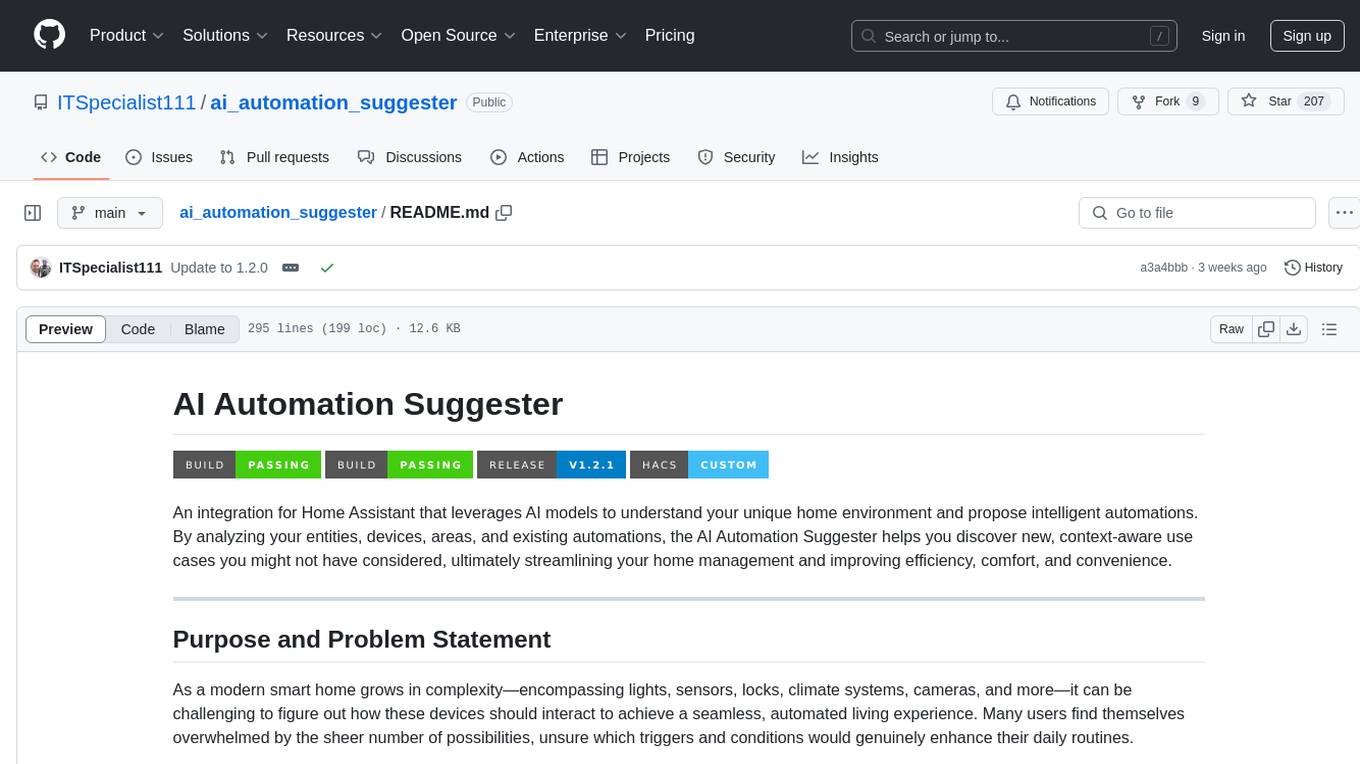
ai_automation_suggester
An integration for Home Assistant that leverages AI models to understand your unique home environment and propose intelligent automations. By analyzing your entities, devices, areas, and existing automations, the AI Automation Suggester helps you discover new, context-aware use cases you might not have considered, ultimately streamlining your home management and improving efficiency, comfort, and convenience. The tool acts as a personal automation consultant, providing actionable YAML-based automations that can save energy, improve security, enhance comfort, and reduce manual intervention. It turns the complexity of a large Home Assistant environment into actionable insights and tangible benefits.
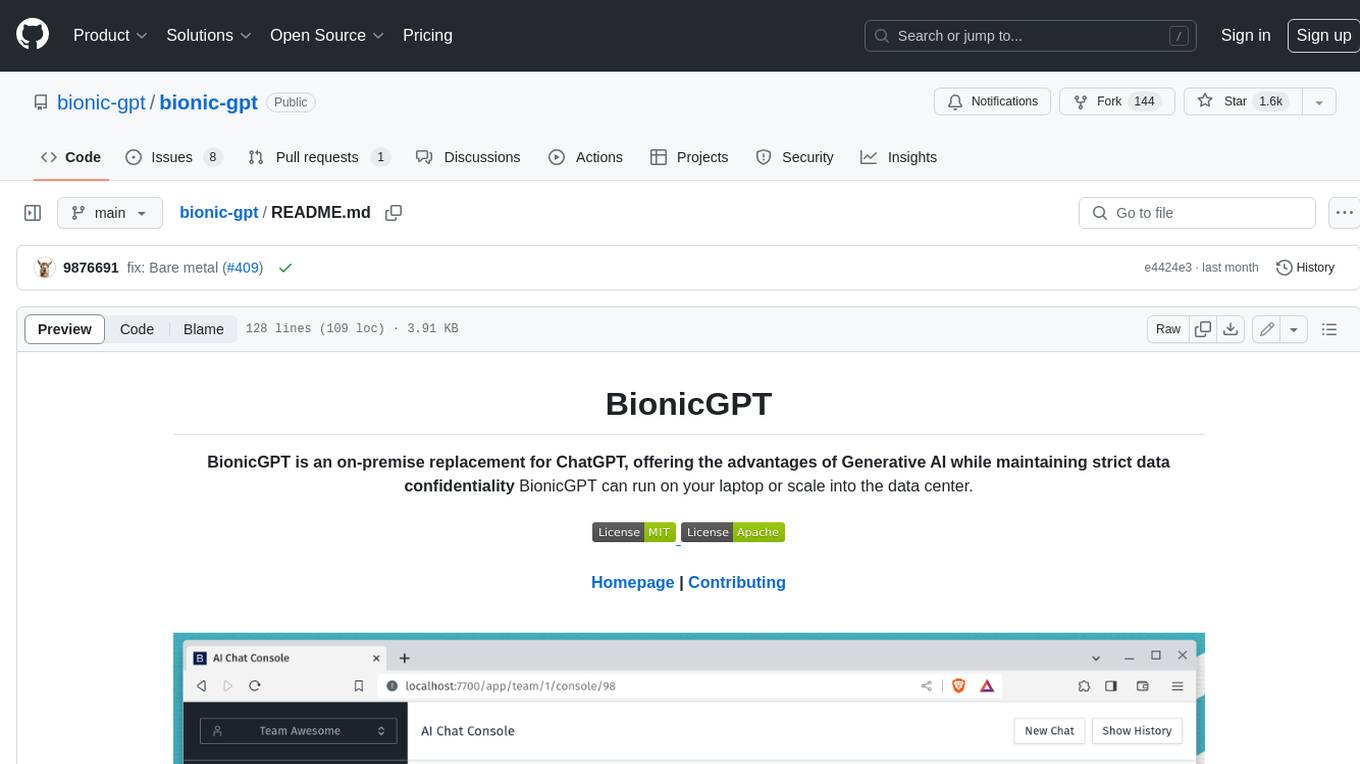
bionic-gpt
BionicGPT is an on-premise replacement for ChatGPT, offering the advantages of Generative AI while maintaining strict data confidentiality. BionicGPT can run on your laptop or scale into the data center.
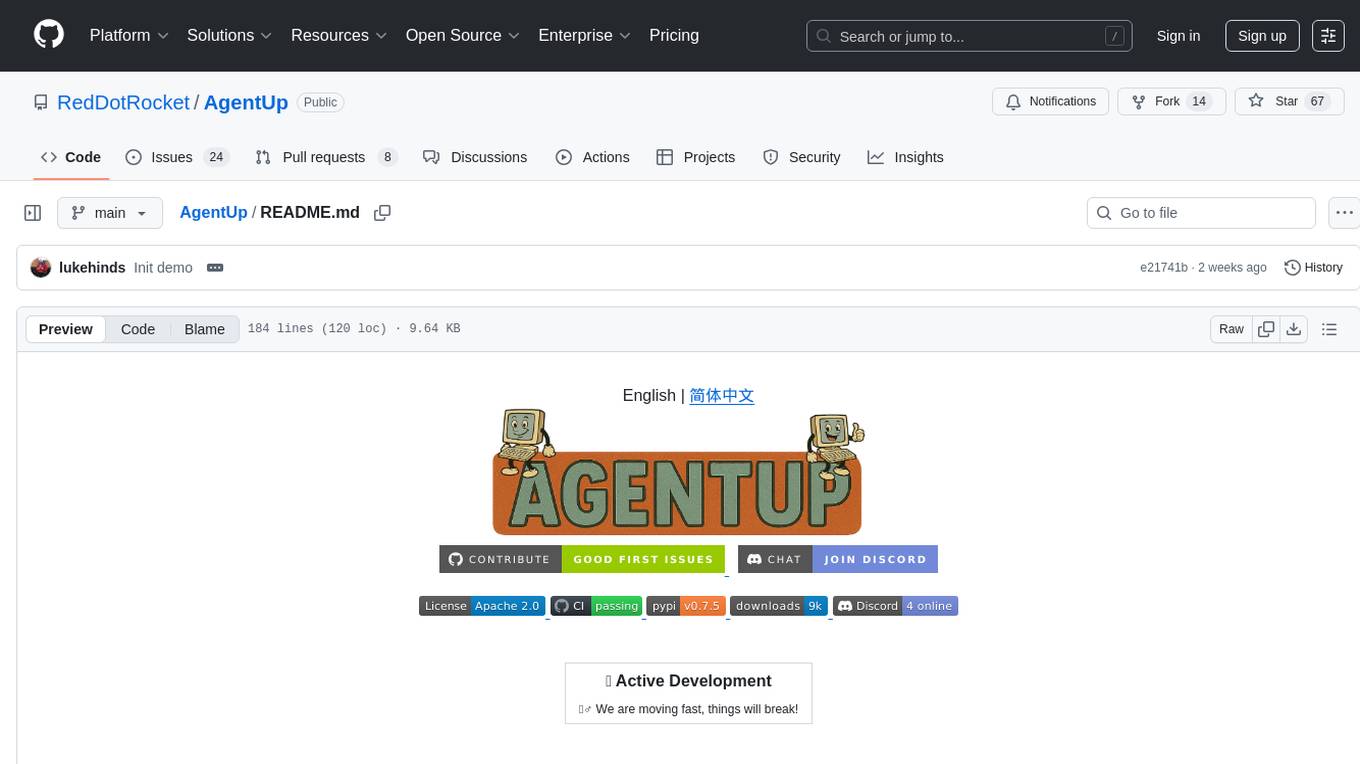
AgentUp
AgentUp is an active development tool that provides a developer-first agent framework for creating AI agents with enterprise-grade infrastructure. It allows developers to define agents with configuration, ensuring consistent behavior across environments. The tool offers secure design, configuration-driven architecture, extensible ecosystem for customizations, agent-to-agent discovery, asynchronous task architecture, deterministic routing, and MCP support. It supports multiple agent types like reactive agents and iterative agents, making it suitable for chatbots, interactive applications, research tasks, and more. AgentUp is built by experienced engineers from top tech companies and is designed to make AI agents production-ready, secure, and reliable.
For similar tasks
fridon-ai
FridonAI is an open-source project offering AI-powered tools for cryptocurrency analysis and blockchain operations. It includes modules like FridonAnalytics for price analysis, FridonSearch for technical indicators, FridonNotifier for custom alerts, FridonBlockchain for blockchain operations, and FridonChat as a unified chat interface. The platform empowers users to create custom AI chatbots, access crypto tools, and interact effortlessly through chat. The core functionality is modular, with plugins, tools, and utilities for easy extension and development. FridonAI implements a scoring system to assess user interactions and incentivize engagement. The application uses Redis extensively for communication and includes a Nest.js backend for system operations.

Virtual_Avatar_ChatBot
Virtual_Avatar_ChatBot is a free AI Chatbot with visual movement that runs on your local computer with minimal GPU requirement. It supports various features like Oogbabooga, betacharacter.ai, and Locall LLM. The tool requires Windows 7 or above, Python, C++ Compiler, Git, and other dependencies. Users can contribute to the open-source project by reporting bugs, creating pull requests, or suggesting new features. The goal is to enhance Voicevox functionality, support local LLM inference, and give the waifu access to the internet. The project references various tools like desktop-waifu, CharacterAI, Whisper, PYVTS, COQUI-AI, VOICEVOX, and VOICEVOX API.
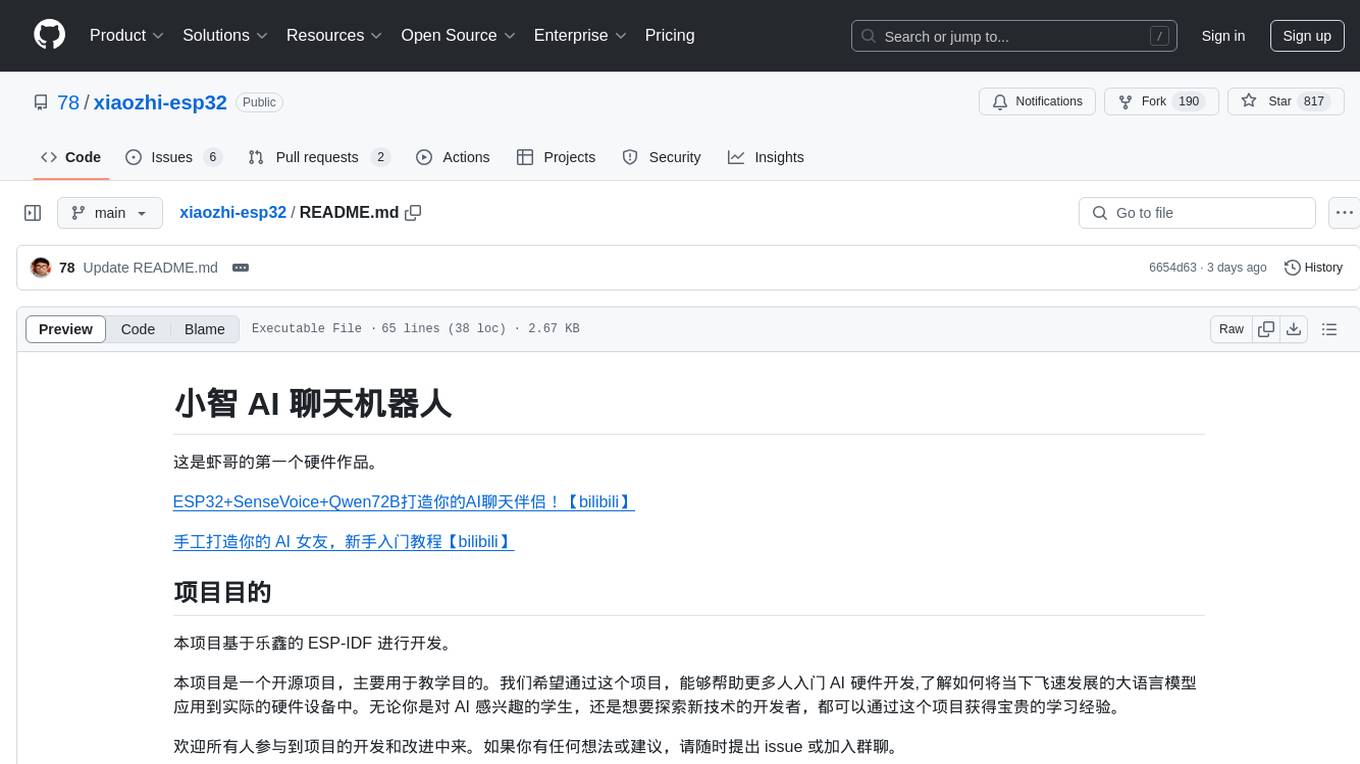
xiaozhi-esp32
The xiaozhi-esp32 repository is the first hardware project by Xia Ge, focusing on creating an AI chatbot using ESP32, SenseVoice, and Qwen72B. The project aims to help beginners in AI hardware development understand how to apply language models to hardware devices. It supports various functionalities such as Wi-Fi configuration, offline voice wake-up, multilingual speech recognition, voiceprint recognition, TTS using large models, and more. The project encourages participation for learning and improvement, providing resources for hardware and firmware development.
For similar jobs
assistant-ui
assistant-ui is a set of React components for AI chat. It provides a collection of components that can be easily integrated into projects to create AI chat interfaces for Discord, websites, and demos. The components are designed to streamline the process of setting up AI chat functionality in React applications, making it easier for developers to incorporate AI chat features into their projects.
Simulator-Controller
Simulator Controller is a modular administration and controller application for Sim Racing, featuring a comprehensive plugin automation framework for external controller hardware. It includes voice chat capable Assistants like Virtual Race Engineer, Race Strategist, Race Spotter, and Driving Coach. The tool offers features for setup, strategy development, monitoring races, and more. Developed in AutoHotkey, it supports various simulation games and integrates with third-party applications for enhanced functionality.
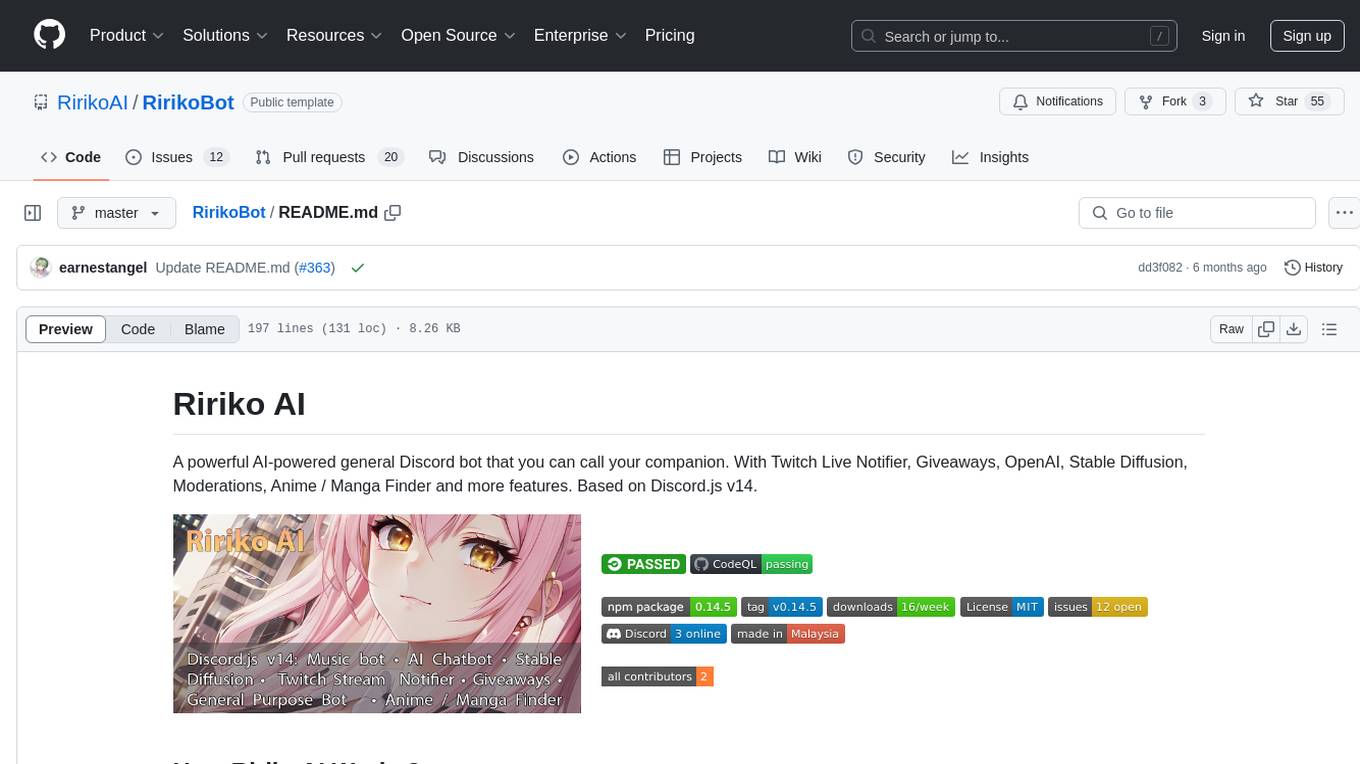
RirikoBot
RirikoBot is a powerful AI-powered Discord bot with features like Twitch Live Notifier, Giveaways, OpenAI, Stable Diffusion, Moderations, Anime / Manga Finder, and more. It is based on Discord.js v14 and can be hosted on a PC or a Server. Users can interact with the bot through various commands to access different functionalities.
douyin-chatgpt-bot
Douyin ChatGPT Bot is an AI-driven system for automatic replies on Douyin, including comment and private message replies. It offers features such as comment filtering, customizable robot responses, and automated account management. The system aims to enhance user engagement and brand image on the Douyin platform, providing a seamless experience for managing interactions with followers and potential customers.
fridon-ai
FridonAI is an open-source project offering AI-powered tools for cryptocurrency analysis and blockchain operations. It includes modules like FridonAnalytics for price analysis, FridonSearch for technical indicators, FridonNotifier for custom alerts, FridonBlockchain for blockchain operations, and FridonChat as a unified chat interface. The platform empowers users to create custom AI chatbots, access crypto tools, and interact effortlessly through chat. The core functionality is modular, with plugins, tools, and utilities for easy extension and development. FridonAI implements a scoring system to assess user interactions and incentivize engagement. The application uses Redis extensively for communication and includes a Nest.js backend for system operations.
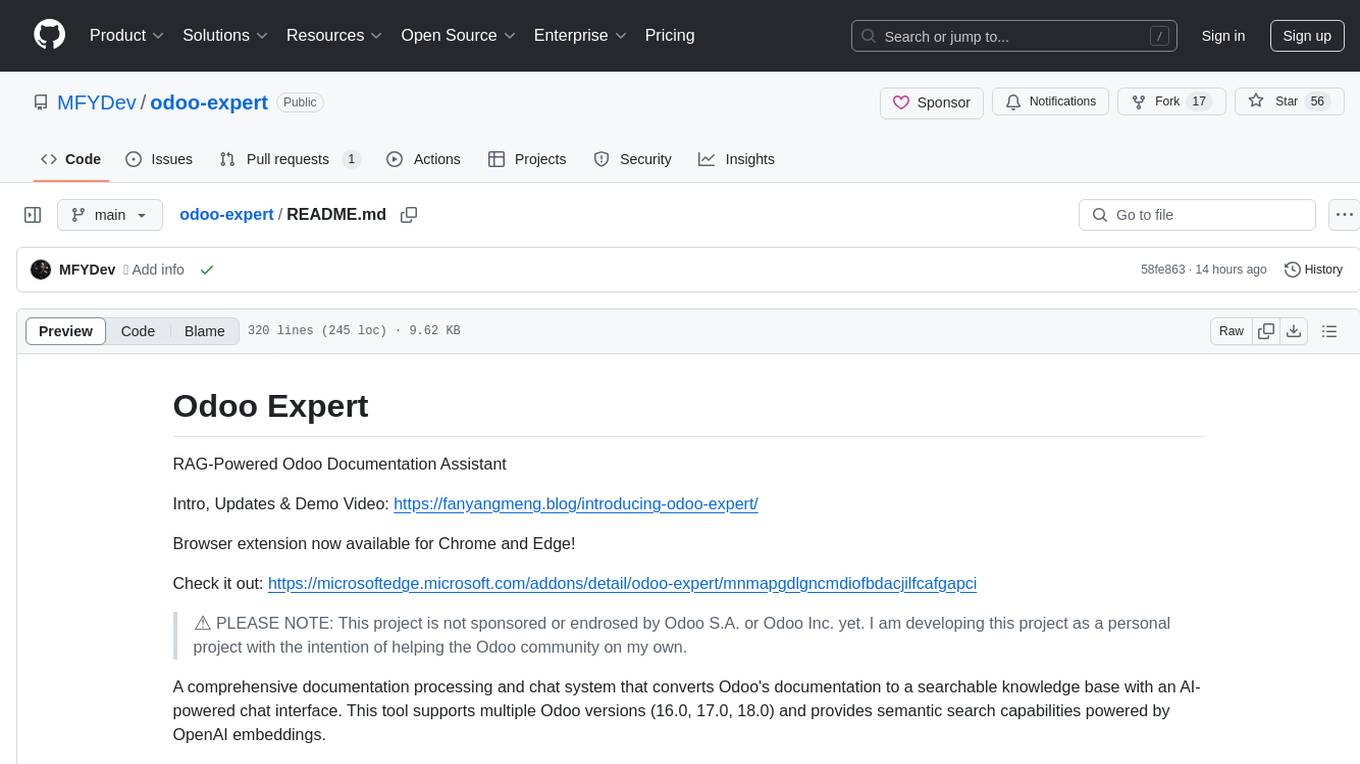
odoo-expert
RAG-Powered Odoo Documentation Assistant is a comprehensive documentation processing and chat system that converts Odoo's documentation to a searchable knowledge base with an AI-powered chat interface. It supports multiple Odoo versions (16.0, 17.0, 18.0) and provides semantic search capabilities powered by OpenAI embeddings. The tool automates the conversion of RST to Markdown, offers real-time semantic search, context-aware AI-powered chat responses, and multi-version support. It includes a Streamlit-based web UI, REST API for programmatic access, and a CLI for document processing and chat. The system operates through a pipeline of data processing steps and an interface layer for UI and API access to the knowledge base.
typedai
TypedAI is a TypeScript-first AI platform designed for developers to create and run autonomous AI agents, LLM based workflows, and chatbots. It offers advanced autonomous agents, software developer agents, pull request code review agent, AI chat interface, Slack chatbot, and supports various LLM services. The platform features configurable Human-in-the-loop settings, functional callable tools/integrations, CLI and Web UI interface, and can be run locally or deployed on the cloud with multi-user/SSO support. It leverages the Python AI ecosystem through executing Python scripts/packages and provides flexible run/deploy options like single user mode, Firestore & Cloud Run deployment, and multi-user SSO enterprise deployment. TypedAI also includes UI examples, code examples, and automated LLM function schemas for seamless development and execution of AI workflows.
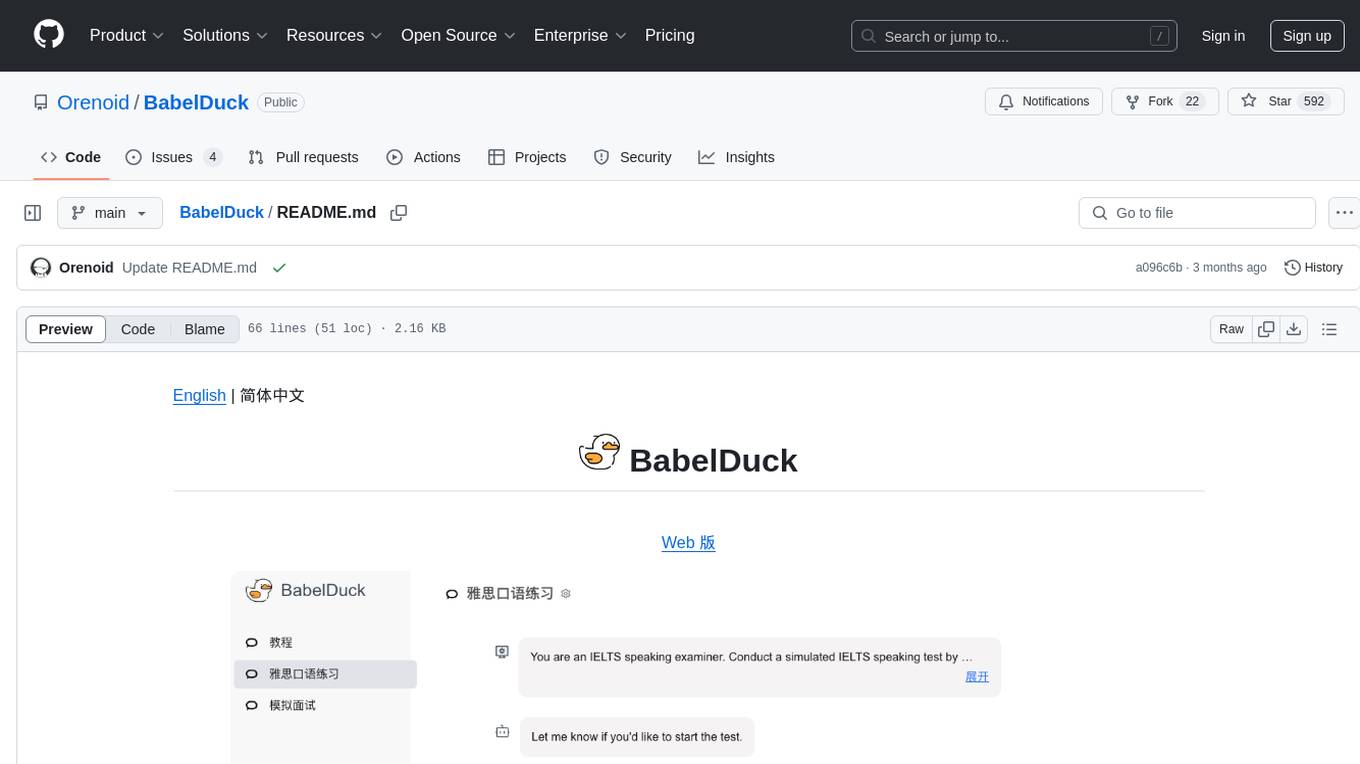
BabelDuck
BabelDuck is a highly customizable AI oral conversation practice application for language learners at all levels, with a focus on being more beginner-friendly. It aims to minimize the threshold and mental burden of oral expression practice. The tool supports various AI conversation features such as managing multiple dialogues, customizing system prompts, and providing suggestions for grammar, translation, or expression refinement without interrupting the current conversation. Users can seek further discussion through sub-dialogues when in doubt about AI suggestions, seamlessly returning to the original conversation afterward. BabelDuck also offers voice input and output, integrates browser-built text-to-speech, and Azure TTS, and supports different dialogue preferences, data stored locally for user privacy, multilingual interface, and built-in tutorials.