


daily
daily.dev is a professional network for developers to learn, collaborate, and grow together 👩🏽💻 👨💻
Stars: 19692
daily.dev is a professional network for developers to learn, collaborate, and grow together. It offers a personalized news feed, dev communities, and search features. The platform aims to help developers stay up-to-date, interact based on the latest trends, and collaborate with other developers. It works offline and is available as a browser extension and a Progressive Web App (PWA). daily.dev is designed to make it easy for developers to navigate abundant content and discover the knowledge they need effortlessly.
README:

We know how hard it is to be a developer. It doesn't have to be.
daily.dev is the homepage every developer deserves.
Personalized news feed, dev communities, and search, much better than what’s out there. Maybe ;)
Product Docs · Changelog · Report a Bug · Request a Feature · Swag Store · Brand Assets





Help more developers suffer less by sharing daily.dev






Want to contribute? Run our app locally
 👀 Watch it in action →
[!IMPORTANT] Star us to show your support and love for daily.dev ⭐️
daily.dev is a professional network for developers to learn, collaborate, and grow together. With daily.dev, you can discover a wide variety of professional knowledge, create groups where you can collaborate with other developers you appreciate, and discuss the latest trends in the developer ecosystem. It works offline and is available both as a browser extension and as a Progressive Web App (PWA).

Star History
daily.dev is currently available for Google Chrome and Microsoft Edge. There's also a PWA for mobile devices.
Get it now on:


We recognize that developers today have the greatest power as a professional group to drive change and affect the lives of billions. Many platforms provide developers with tools that serve their success or the goals of their workplace, but daily.dev is by design for developers themselves.
We, as developers, know how challenging it is to grow professionally with so much going on, and that's why we built daily.dev — to make it easy for us to navigate the abundant content and discover all the knowledge they need with zero effort.
You can use daily.dev to:
-
👨💻 Learn and stay up-to-date
-
🙌 Interact based on the latest trends in our ecosystem
-
🚀 Collaborate with other developers you know and appreciate
daily.dev might look simple on the surface, but actually, it is powered by a complex and robust system of different applications. It contains several services, some are big, others are micro and easy to maintain. Below is the list of different projects that we maintain under daily.dev.
-
daily - This is the repository you are currently at. It serves as a central place for all the projects. It contains documentation, community ideas, suggestions, and whatnot.
-
docs - This is the repository for official product documentation of daily.dev.
- apps - Monorepo with all the frontend-related projects since daily.dev 3.0. This includes both the extension and the webapp.
- action-devcard - GitHub Actions for adding daily DevCard to GitHub profile. Read the guide to set it up.
[!NOTE] Currently, not all services are ready (or needed) for local environments, so Daily Redirector, Daily Monetization, and Authentication services are not available for you.
To spin up a local environment, you will need Docker. Do the steps below and you should be able to start trying to center a div:
- Fork this repo: https://github.com/dailydotdev/apps
- Pull it locally
- Run
docker compose up - Apply all migrations by running
docker compose exec daily-api node ./node_modules/typeorm/cli.js migration:run -d src/data-source.js - Once done, seed your local data by running
docker compose exec daily-api node ./bin/import - Then lastly, run
npm run dev:oss - The app should run at
http://localhost:5002/
We are open to all kinds of contributions. If you want to:
-
🤔 Suggest a feature
-
🐛 Report an issue
-
📖 Improve documentation
-
👨💻 Contribute to the code
You are more than welcome. Before contributing, kindly check our guidelines.





Licensed under AGPL-3.0.

For Tasks:
Click tags to check more tools for each tasksFor Jobs:
Alternative AI tools for daily
Similar Open Source Tools
daily
daily.dev is a professional network for developers to learn, collaborate, and grow together. It offers a personalized news feed, dev communities, and search features. The platform aims to help developers stay up-to-date, interact based on the latest trends, and collaborate with other developers. It works offline and is available as a browser extension and a Progressive Web App (PWA). daily.dev is designed to make it easy for developers to navigate abundant content and discover the knowledge they need effortlessly.
core
OpenSumi is a framework designed to help users quickly build AI Native IDE products. It provides a set of tools and templates for creating Cloud IDEs, Desktop IDEs based on Electron, CodeBlitz web IDE Framework, Lite Web IDE on the Browser, and Mini-App liked IDE. The framework also offers documentation for users to refer to and a detailed guide on contributing to the project. OpenSumi encourages contributions from the community and provides a platform for users to report bugs, contribute code, or improve documentation. The project is licensed under the MIT license and contains third-party code under other open source licenses.
lobehub
LobeHub is the ultimate space for work and life, where users can find, build, and collaborate with agent teammates that grow with them. It aims to create the world's largest human-agent co-evolving network. LobeHub treats agents as the unit of work, providing an infrastructure for humans and agents to co-evolve. Users can create personalized AI teams, collaborate with agent groups, and experience the co-evolution of humans and agents. The platform supports various features like model visual recognition, TTS & STT voice conversation, text to image generation, plugin system for function calling, and an agent market for GPTs. LobeHub also offers self-hosting options with Vercel, Alibaba Cloud, and Docker Image, along with an ecosystem of UI components, icons, TTS libraries, and lint configurations.
read-frog
Read-frog is a powerful text analysis tool designed to help users extract valuable insights from text data. It offers a wide range of features including sentiment analysis, keyword extraction, entity recognition, and text summarization. With its user-friendly interface and robust algorithms, Read-frog is suitable for both beginners and advanced users looking to analyze text data for various purposes such as market research, social media monitoring, and content optimization. Whether you are a data scientist, marketer, researcher, or student, Read-frog can streamline your text analysis workflow and provide actionable insights to drive decision-making and enhance productivity.
ten-framework
TEN is an open-source ecosystem for creating, customizing, and deploying real-time conversational AI agents with multimodal capabilities including voice, vision, and avatar interactions. It includes various components like TEN Framework, TEN Turn Detection, TEN VAD, TEN Agent, TMAN Designer, and TEN Portal. Users can follow the provided guidelines to set up and customize their agents using TMAN Designer, run them locally or in Codespace, and deploy them with Docker or other cloud services. The ecosystem also offers community channels for developers to connect, contribute, and get support.
Folo
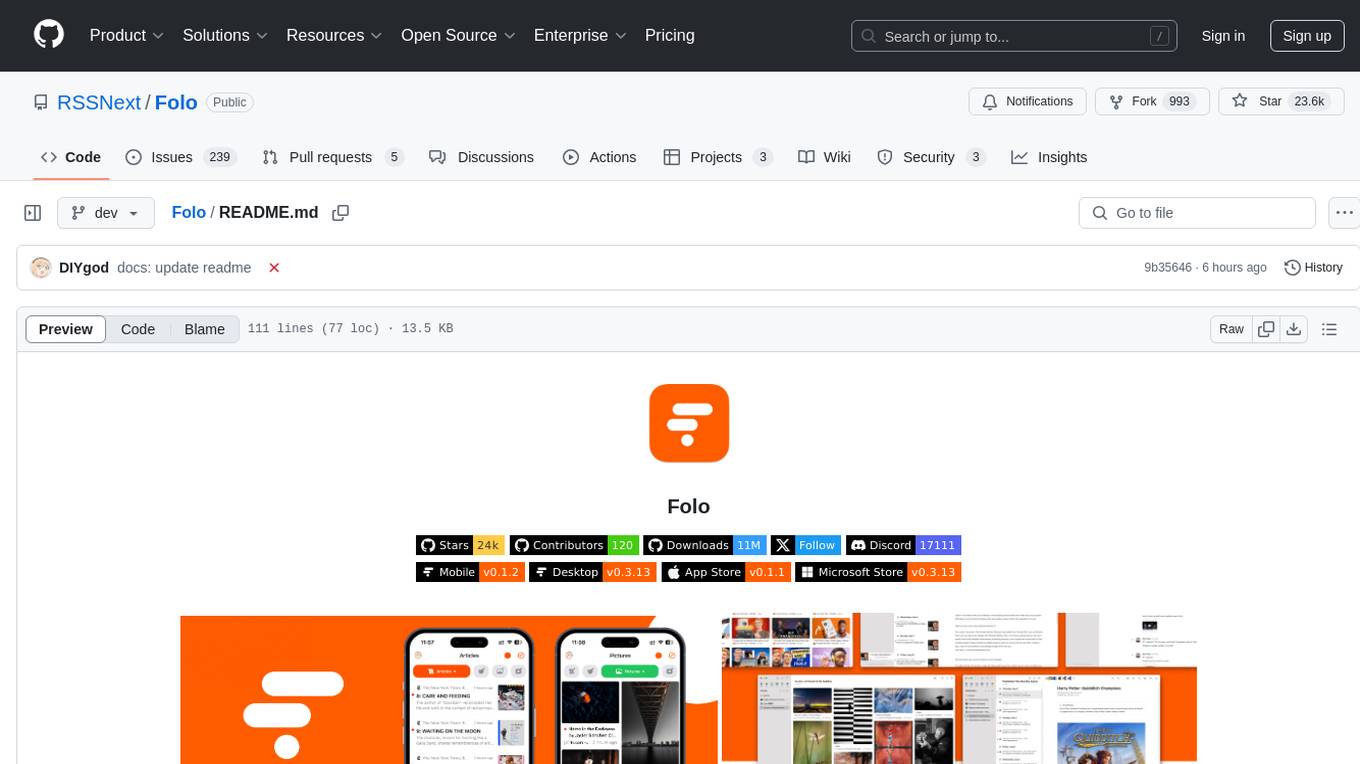
Folo is a content organization tool that creates a noise-free timeline for users. It allows sharing lists, exploring collections, and distraction-free browsing. Users can subscribe to feeds, curate favorites, and utilize AI-powered features like translation and summaries. Folo supports various content types such as articles, videos, images, and audio. It introduces an ownership economy with $POWER tipping for creators and fosters a community-driven experience. The tool is under active development, welcoming feedback from users and developers.
gemini-next-chat
Gemini Next Chat is an open-source, extensible high-performance Gemini chatbot framework that supports one-click free deployment of private Gemini web applications. It provides a simple interface with image recognition and voice conversation, supports multi-modal models, talk mode, visual recognition, assistant market, support plugins, conversation list, full Markdown support, privacy and security, PWA support, well-designed UI, fast loading speed, static deployment, and multi-language support.
note-gen
Note-gen is a simple tool for generating notes automatically based on user input. It uses natural language processing techniques to analyze text and extract key information to create structured notes. The tool is designed to save time and effort for users who need to summarize large amounts of text or generate notes quickly. With note-gen, users can easily create organized and concise notes for study, research, or any other purpose.
amplication
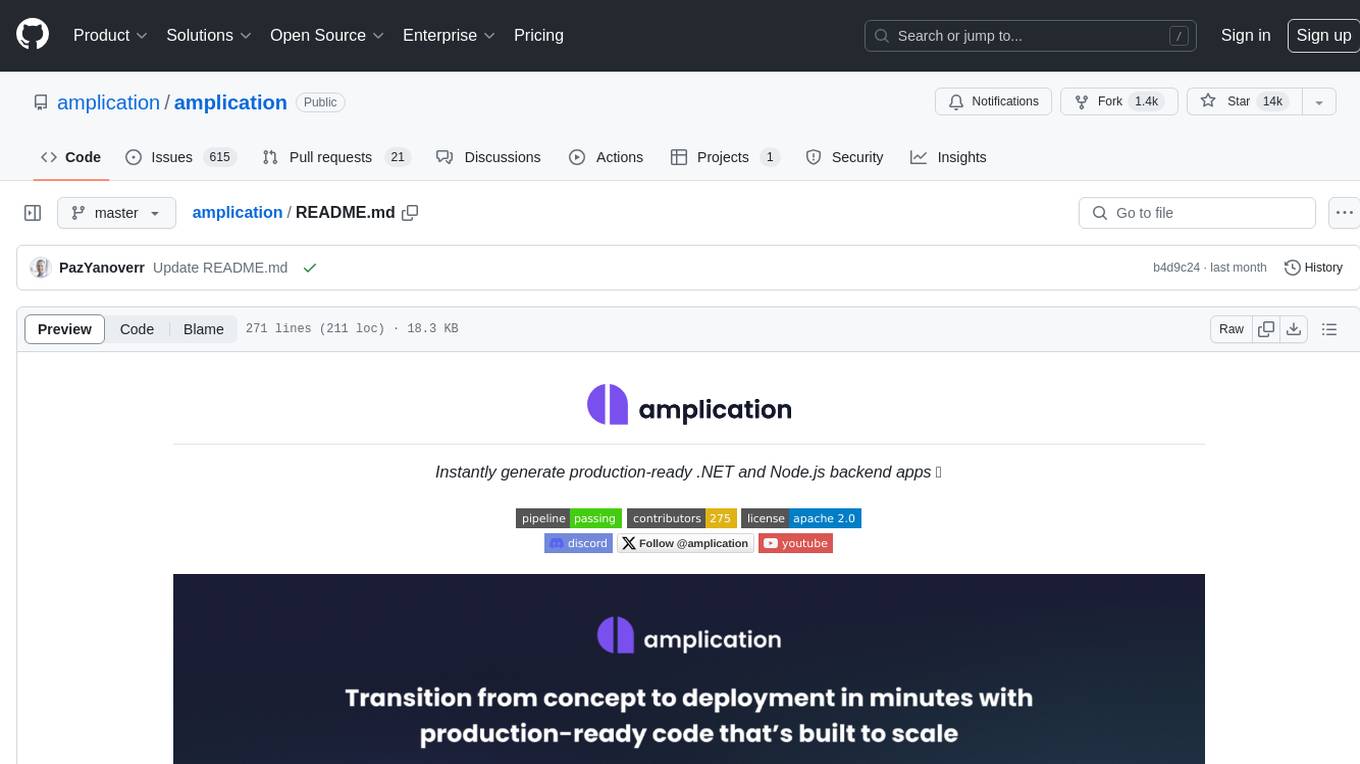
Amplication is a robust, open-source development platform designed to revolutionize the creation of scalable and secure .NET and Node.js applications. It automates backend applications development, ensuring consistency, predictability, and adherence to the highest standards with code that's built to scale. The user-friendly interface fosters seamless integration of APIs, data models, databases, authentication, and authorization. Built on a flexible, plugin-based architecture, Amplication allows effortless customization of the code and offers a diverse range of integrations. With a strong focus on collaboration, Amplication streamlines team-oriented development, making it an ideal choice for groups of all sizes, from startups to large enterprises. It enables users to concentrate on business logic while handling the heavy lifting of development. Experience the fastest way to develop .NET and Node.js applications with Amplication.
brainwave
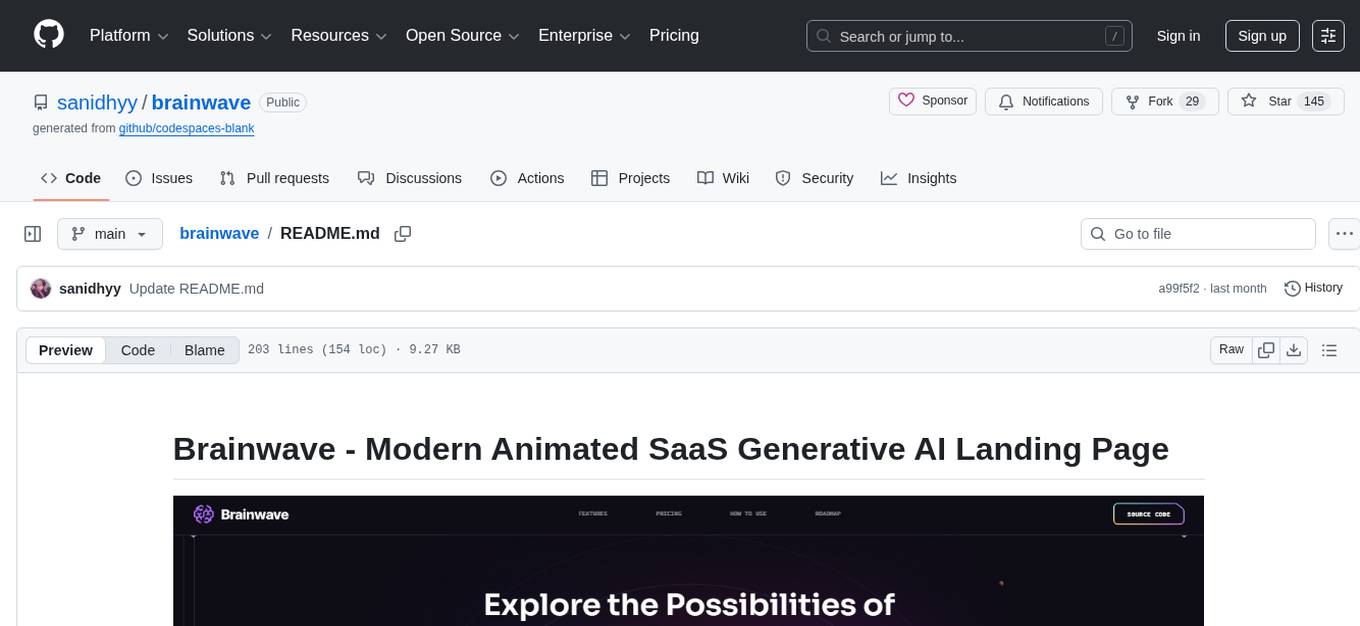
Brainwave is a modern animated SaaS generative AI landing page tool built using React JS, Vite JS, Javascript, and Tailwind CSS. It provides a visually appealing interface with features like AI chatbot, generative AI, modern animations, and onboarding section. Users can easily deploy the tool on Netlify and contribute to the project. The tool utilizes framer-motion, react-just-parallax, react-router-dom, scroll-lock, typewriter-effect, and other dependencies for enhanced functionality and user experience.
PromptClip
PromptClip is a tool that allows developers to create video clips using LLM prompts. Users can upload videos from various sources, prompt the video in natural language, use different LLM models, instantly watch the generated clips, finetune the clips, and add music or image overlays. The tool provides a seamless way to extract specific moments from videos based on user queries, making video editing and content creation more efficient and intuitive.
svelte-commerce
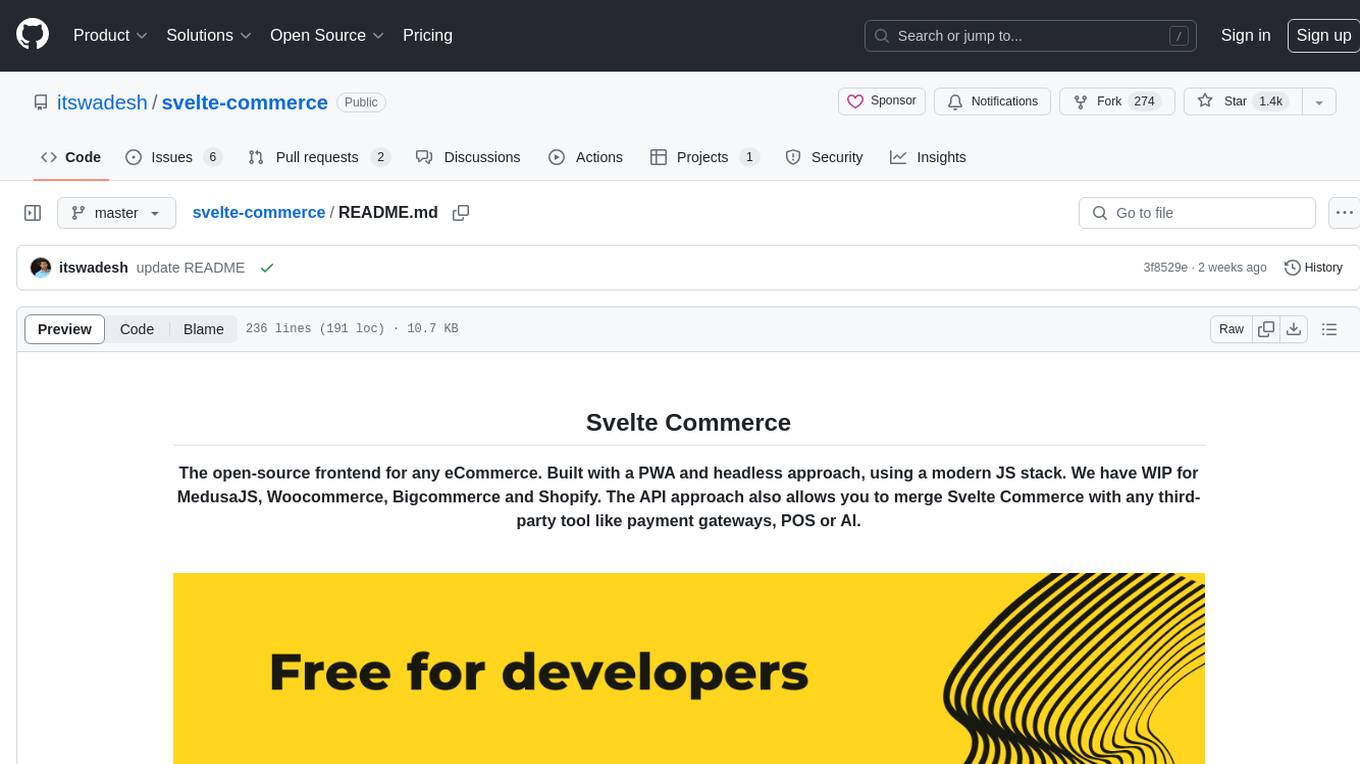
Svelte Commerce is an open-source frontend for eCommerce, utilizing a PWA and headless approach with a modern JS stack. It supports integration with various eCommerce backends like MedusaJS, Woocommerce, Bigcommerce, and Shopify. The API flexibility allows seamless connection with third-party tools such as payment gateways, POS systems, and AI services. Svelte Commerce offers essential eCommerce features, is both SSR and SPA, superfast, and free to download and modify. Users can easily deploy it on Netlify or Vercel with zero configuration. The tool provides features like headless commerce, authentication, cart & checkout, TailwindCSS styling, server-side rendering, proxy + API integration, animations, lazy loading, search functionality, faceted filters, and more.
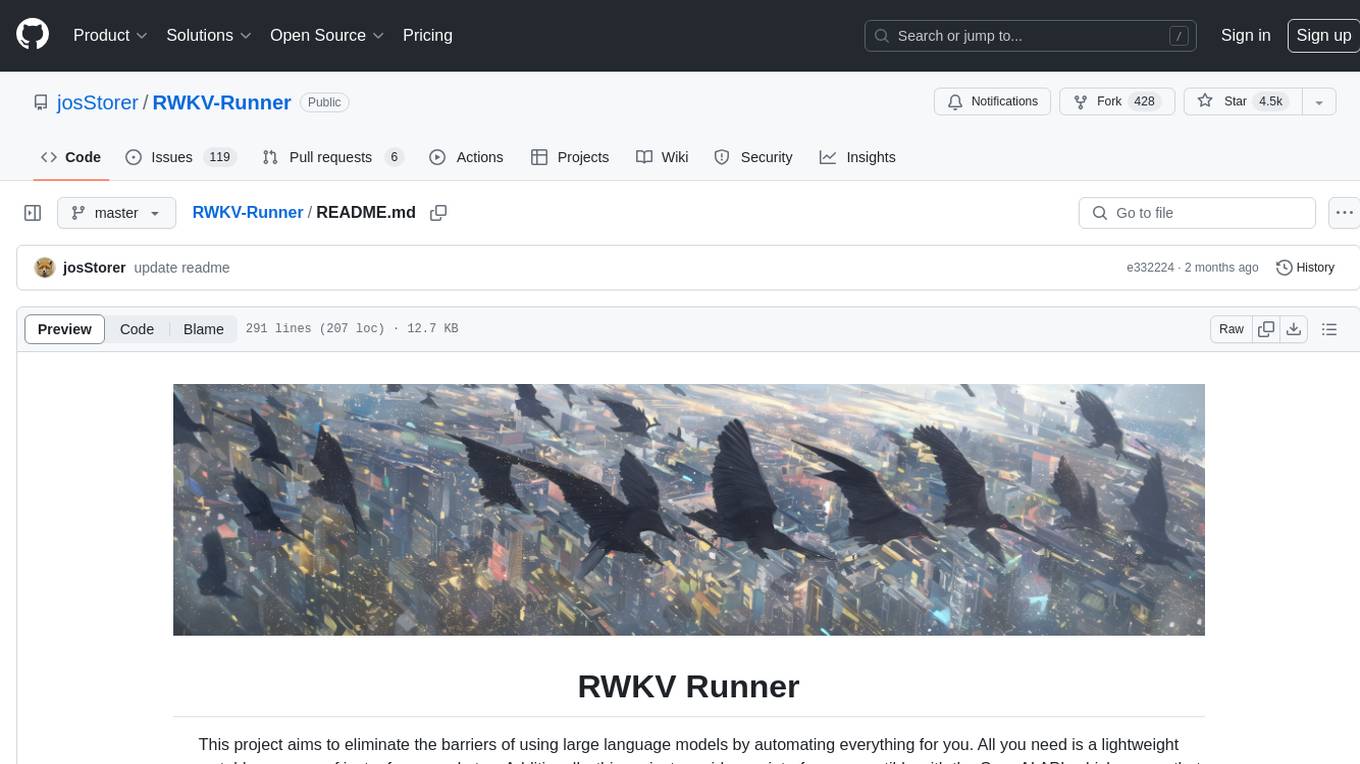
RWKV-Runner
RWKV Runner is a project designed to simplify the usage of large language models by automating various processes. It provides a lightweight executable program and is compatible with the OpenAI API. Users can deploy the backend on a server and use the program as a client. The project offers features like model management, VRAM configurations, user-friendly chat interface, WebUI option, parameter configuration, model conversion tool, download management, LoRA Finetune, and multilingual localization. It can be used for various tasks such as chat, completion, composition, and model inspection.
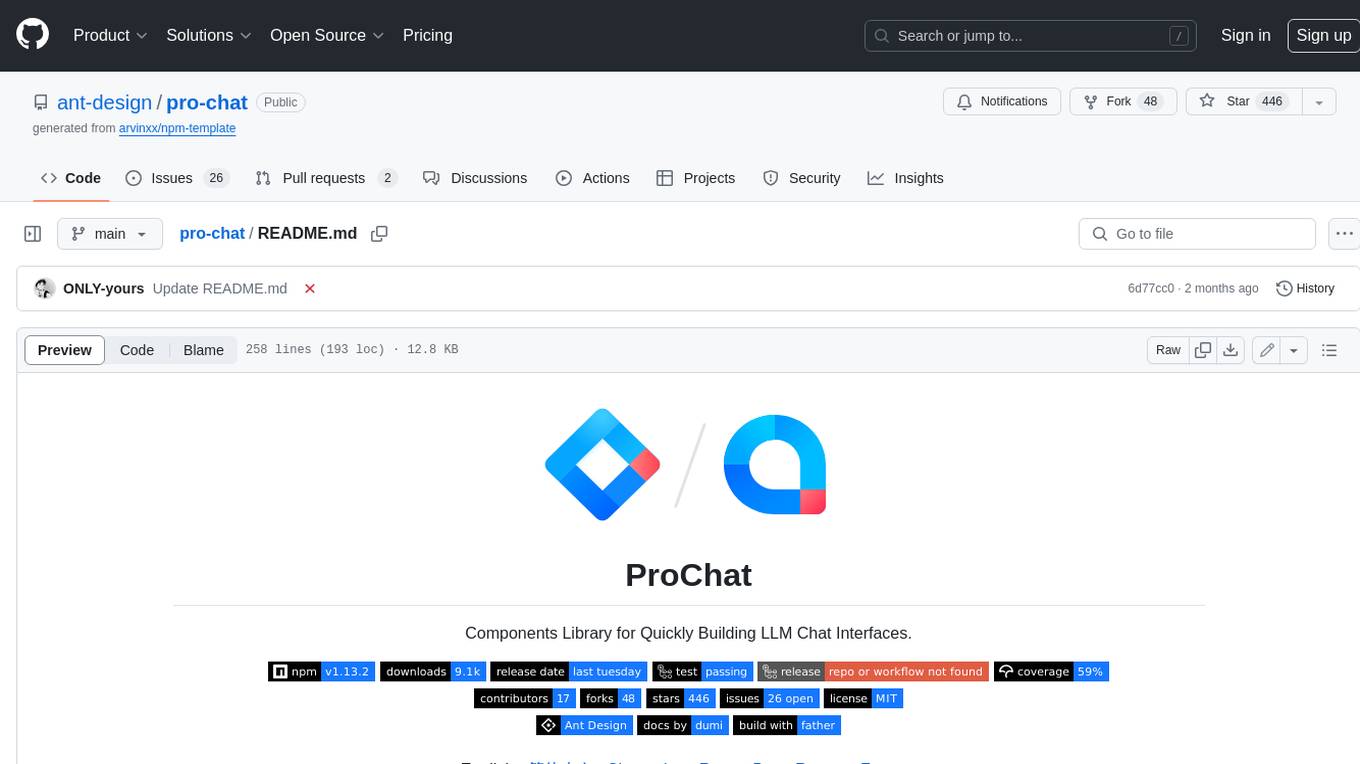
pro-chat
ProChat is a components library focused on quickly building large language model chat interfaces. It empowers developers to create rich, dynamic, and intuitive chat interfaces with features like automatic chat caching, streamlined conversations, message editing tools, auto-rendered Markdown, and programmatic controls. The tool also includes design evolution plans such as customized dialogue rendering, enhanced request parameters, personalized error handling, expanded documentation, and atomic component design.
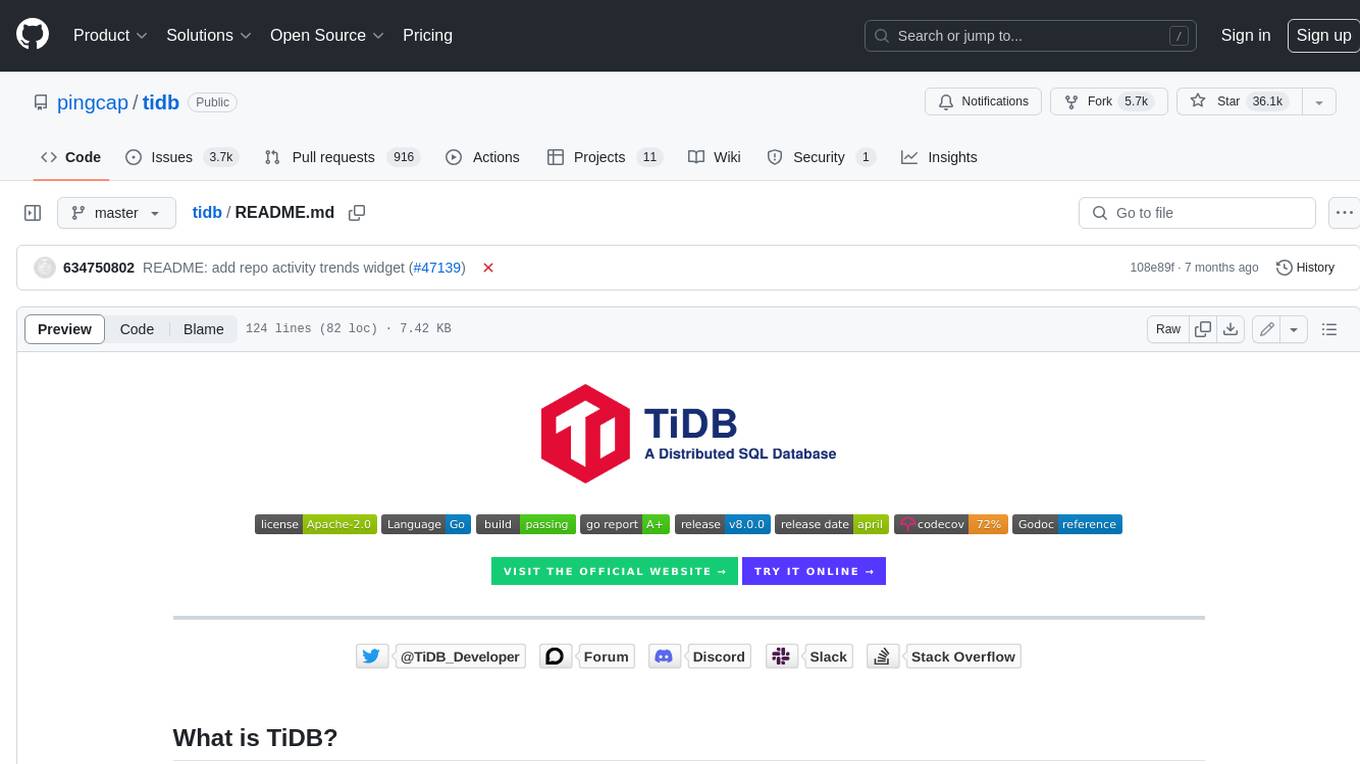
tidb
TiDB is an open-source distributed SQL database that supports Hybrid Transactional and Analytical Processing (HTAP) workloads. It is MySQL compatible and features horizontal scalability, strong consistency, and high availability.
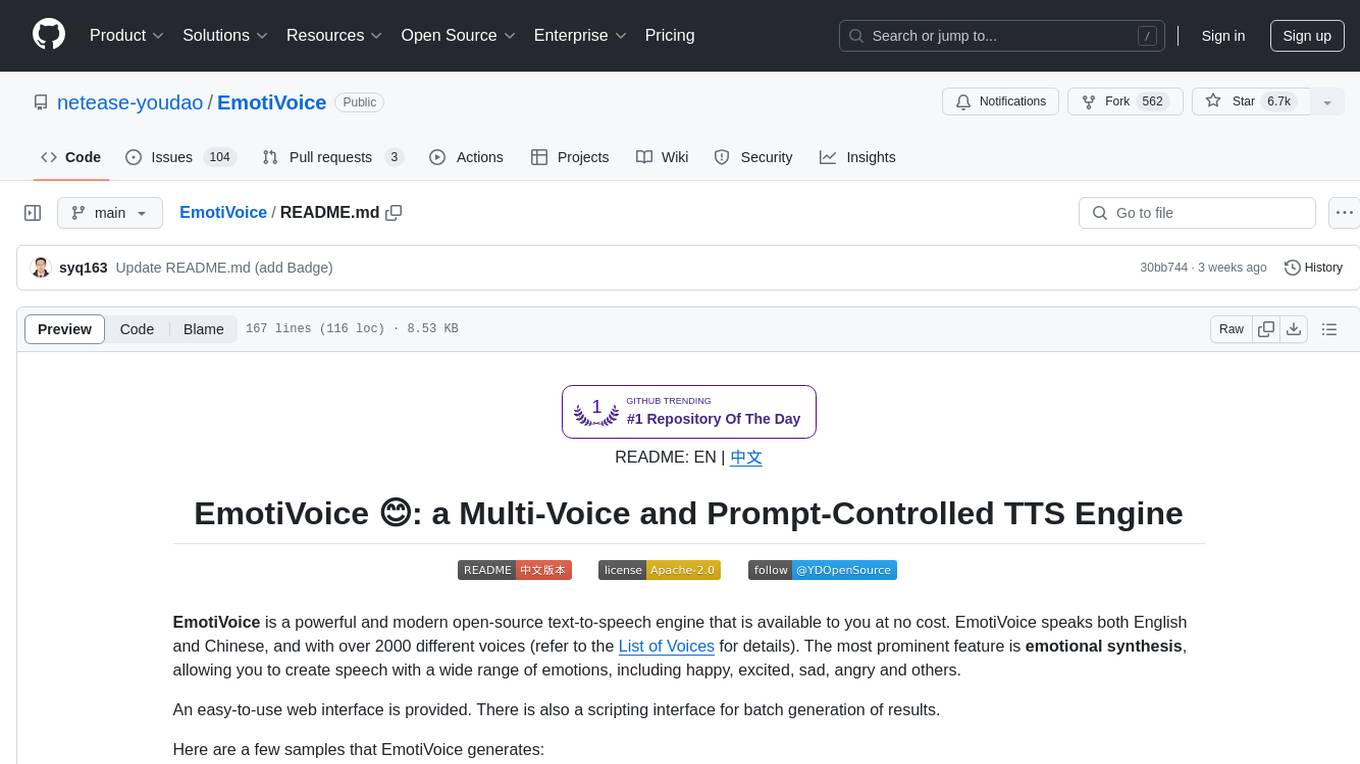
EmotiVoice
EmotiVoice is a powerful and modern open-source text-to-speech engine that supports emotional synthesis, enabling users to create speech with a wide range of emotions such as happy, excited, sad, and angry. It offers over 2000 different voices in both English and Chinese. Users can access EmotiVoice through an easy-to-use web interface or a scripting interface for batch generation of results. The tool is continuously evolving with new features and updates, prioritizing community input and user feedback.
For similar tasks
MyLLM
MyLLM is a web application designed to help law students and legal professionals manage their LLM (Master of Laws) program. It provides features such as course tracking, assignment management, exam schedules, and collaboration tools. Users can easily organize their academic tasks, stay on top of deadlines, and communicate with peers and professors. MyLLM aims to streamline the LLM experience and enhance productivity for students pursuing advanced legal studies.
daily
daily.dev is a professional network for developers to learn, collaborate, and grow together. It offers a personalized news feed, dev communities, and search features. The platform aims to help developers stay up-to-date, interact based on the latest trends, and collaborate with other developers. It works offline and is available as a browser extension and a Progressive Web App (PWA). daily.dev is designed to make it easy for developers to navigate abundant content and discover the knowledge they need effortlessly.
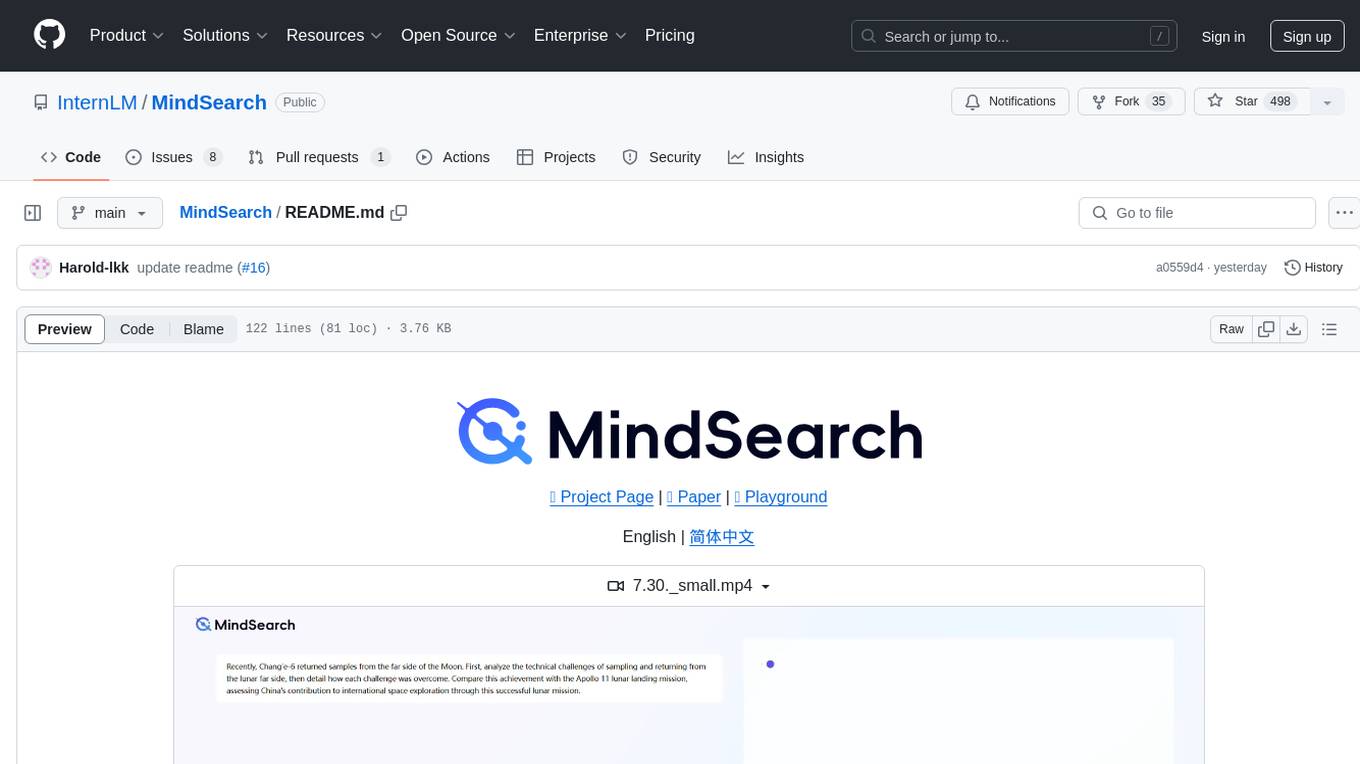
MindSearch
MindSearch is an open-source AI Search Engine Framework that mimics human minds to provide deep AI search capabilities. It allows users to deploy their own search engine using either close-source or open-source language models. MindSearch offers features such as answering any question using web knowledge, in-depth knowledge discovery, detailed solution paths, optimized UI experience, and dynamic graph construction process.
ebook-mcp
Ebook-MCP is a powerful Model Context Protocol (MCP) server designed for processing electronic books. It provides standardized APIs for seamless integration between LLM applications and e-book processing capabilities. The tool supports EPUB and PDF formats, enabling users to manage their digital library, have interactive reading experiences, support active learning, and easily navigate content through natural language queries. By bridging traditional e-books with AI capabilities, Ebook-MCP enhances the value users can extract from their digital reading materials.
Awesome-Lists-and-CheatSheets
Awesome-Lists is a curated index of selected resources spanning various fields including programming languages and theories, web and frontend development, server-side development and infrastructure, cloud computing and big data, data science and artificial intelligence, product design, etc. It includes articles, books, courses, examples, open-source projects, and more. The repository categorizes resources according to the knowledge system of different domains, aiming to provide valuable and concise material indexes for readers. Users can explore and learn from a wide range of high-quality resources in a systematic way.
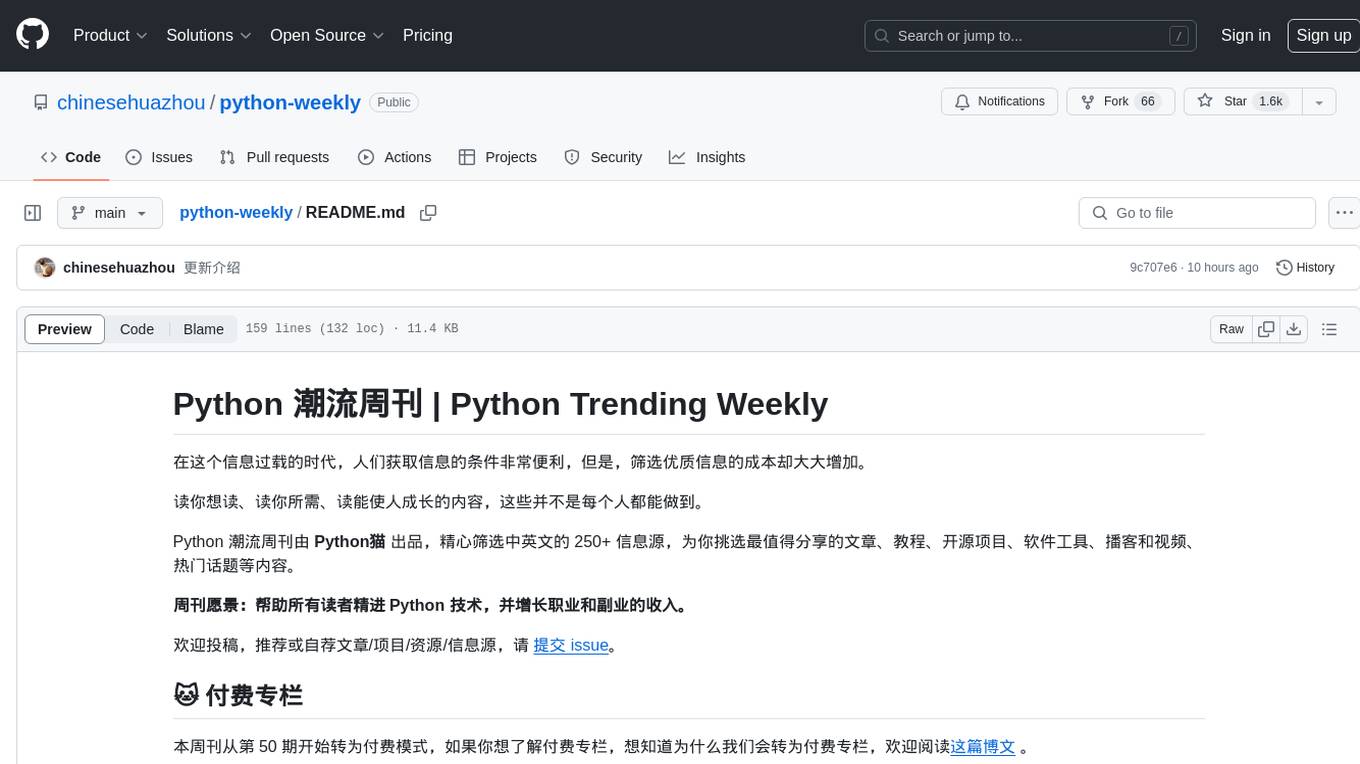
python-weekly
Python Trending Weekly is a curated newsletter by Python猫 that selects the most valuable articles, tutorials, open-source projects, software tools, podcasts, videos, and hot topics from over 250 English and Chinese sources. The newsletter aims to help readers improve their Python skills and increase their income from both professional and side projects. It offers paid subscription options and is available on various platforms like GitHub, WeChat, blogs, email, Telegram, and Twitter. Each issue shares a collection of articles, open-source projects, videos, and books related to Python and technology.
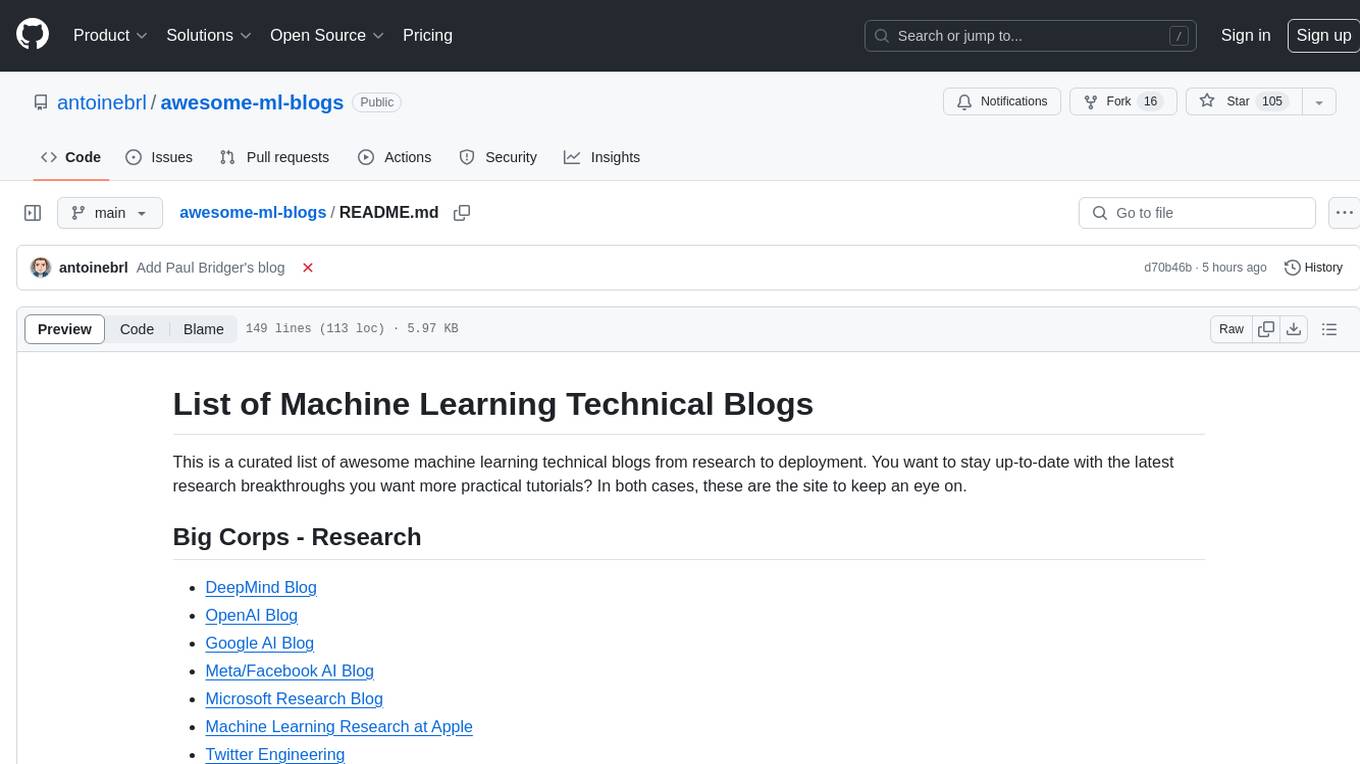
awesome-ml-blogs
awesome-ml-blogs is a curated list of machine learning technical blogs covering a wide range of topics from research to deployment. It includes blogs from big corporations, MLOps startups, data labeling platforms, universities, community content, personal blogs, synthetic data providers, and more. The repository aims to help individuals stay updated with the latest research breakthroughs and practical tutorials in the field of machine learning.
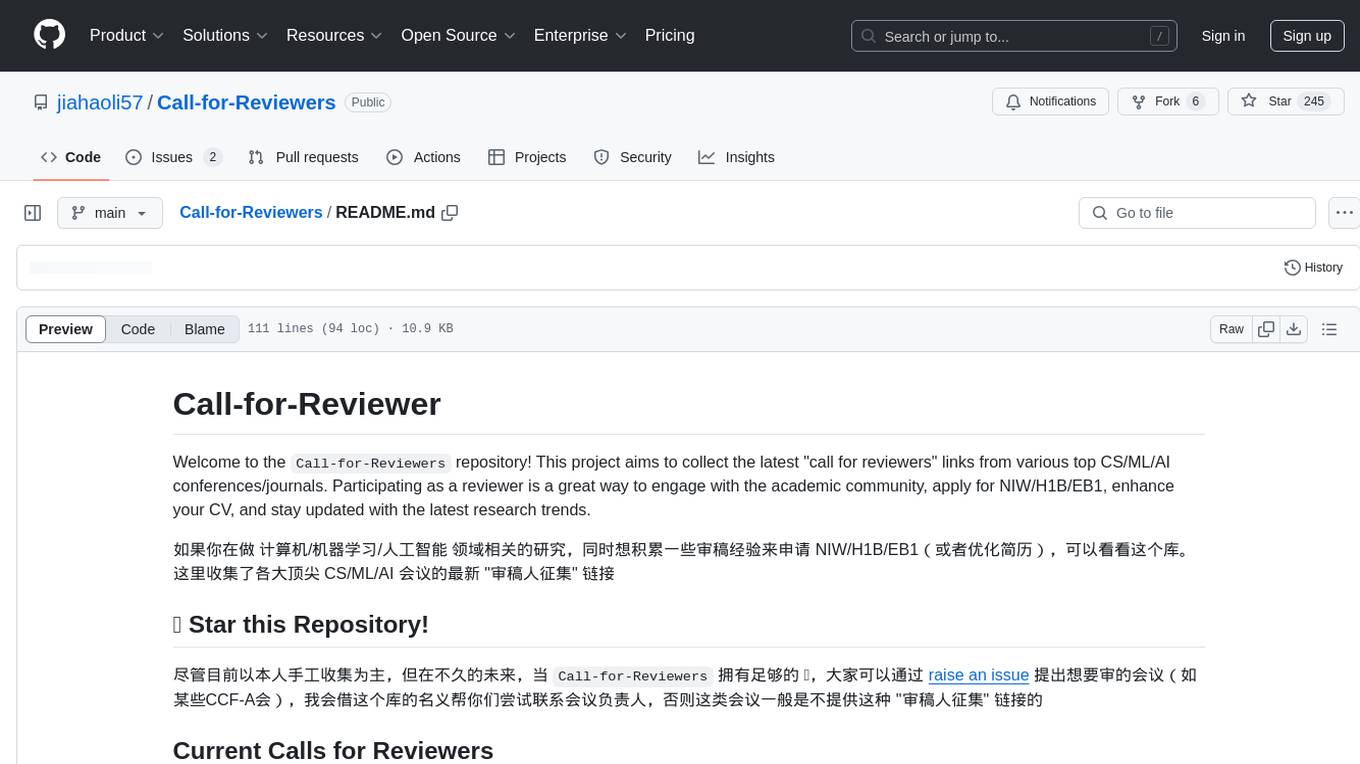
Call-for-Reviewers
The `Call-for-Reviewers` repository aims to collect the latest 'call for reviewers' links from various top CS/ML/AI conferences/journals. It provides an opportunity for individuals in the computer/ machine learning/ artificial intelligence fields to gain review experience for applying for NIW/H1B/EB1 or enhancing their CV. The repository helps users stay updated with the latest research trends and engage with the academic community.
For similar jobs
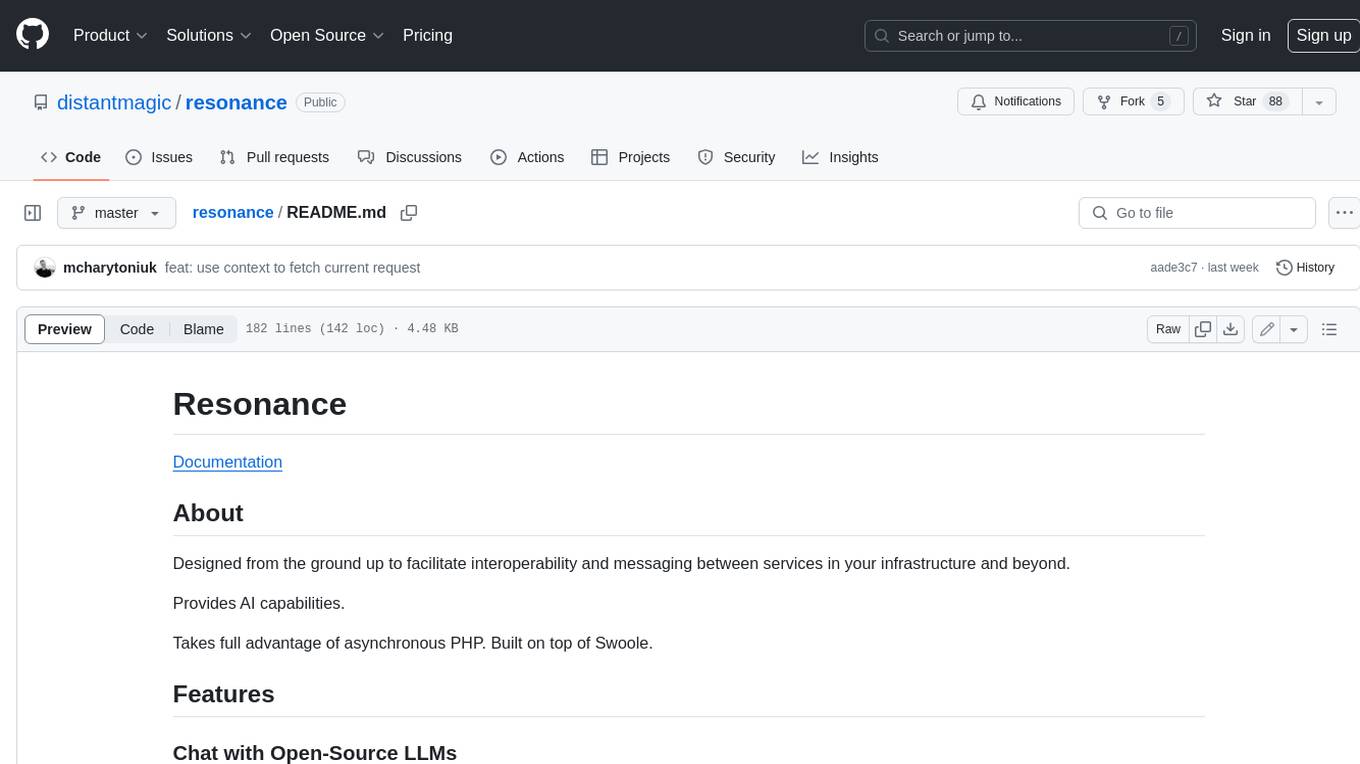
resonance
Resonance is a framework designed to facilitate interoperability and messaging between services in your infrastructure and beyond. It provides AI capabilities and takes full advantage of asynchronous PHP, built on top of Swoole. With Resonance, you can: * Chat with Open-Source LLMs: Create prompt controllers to directly answer user's prompts. LLM takes care of determining user's intention, so you can focus on taking appropriate action. * Asynchronous Where it Matters: Respond asynchronously to incoming RPC or WebSocket messages (or both combined) with little overhead. You can set up all the asynchronous features using attributes. No elaborate configuration is needed. * Simple Things Remain Simple: Writing HTTP controllers is similar to how it's done in the synchronous code. Controllers have new exciting features that take advantage of the asynchronous environment. * Consistency is Key: You can keep the same approach to writing software no matter the size of your project. There are no growing central configuration files or service dependencies registries. Every relation between code modules is local to those modules. * Promises in PHP: Resonance provides a partial implementation of Promise/A+ spec to handle various asynchronous tasks. * GraphQL Out of the Box: You can build elaborate GraphQL schemas by using just the PHP attributes. Resonance takes care of reusing SQL queries and optimizing the resources' usage. All fields can be resolved asynchronously.
aiogram_bot_template
Aiogram bot template is a boilerplate for creating Telegram bots using Aiogram framework. It provides a solid foundation for building robust and scalable bots with a focus on code organization, database integration, and localization.
pluto
Pluto is a development tool dedicated to helping developers **build cloud and AI applications more conveniently** , resolving issues such as the challenging deployment of AI applications and open-source models. Developers are able to write applications in familiar programming languages like **Python and TypeScript** , **directly defining and utilizing the cloud resources necessary for the application within their code base** , such as AWS SageMaker, DynamoDB, and more. Pluto automatically deduces the infrastructure resource needs of the app through **static program analysis** and proceeds to create these resources on the specified cloud platform, **simplifying the resources creation and application deployment process**.
pinecone-ts-client
The official Node.js client for Pinecone, written in TypeScript. This client library provides a high-level interface for interacting with the Pinecone vector database service. With this client, you can create and manage indexes, upsert and query vector data, and perform other operations related to vector search and retrieval. The client is designed to be easy to use and provides a consistent and idiomatic experience for Node.js developers. It supports all the features and functionality of the Pinecone API, making it a comprehensive solution for building vector-powered applications in Node.js.
aiohttp-pydantic
Aiohttp pydantic is an aiohttp view to easily parse and validate requests. You define using function annotations what your methods for handling HTTP verbs expect, and Aiohttp pydantic parses the HTTP request for you, validates the data, and injects the parameters you want. It provides features like query string, request body, URL path, and HTTP headers validation, as well as Open API Specification generation.
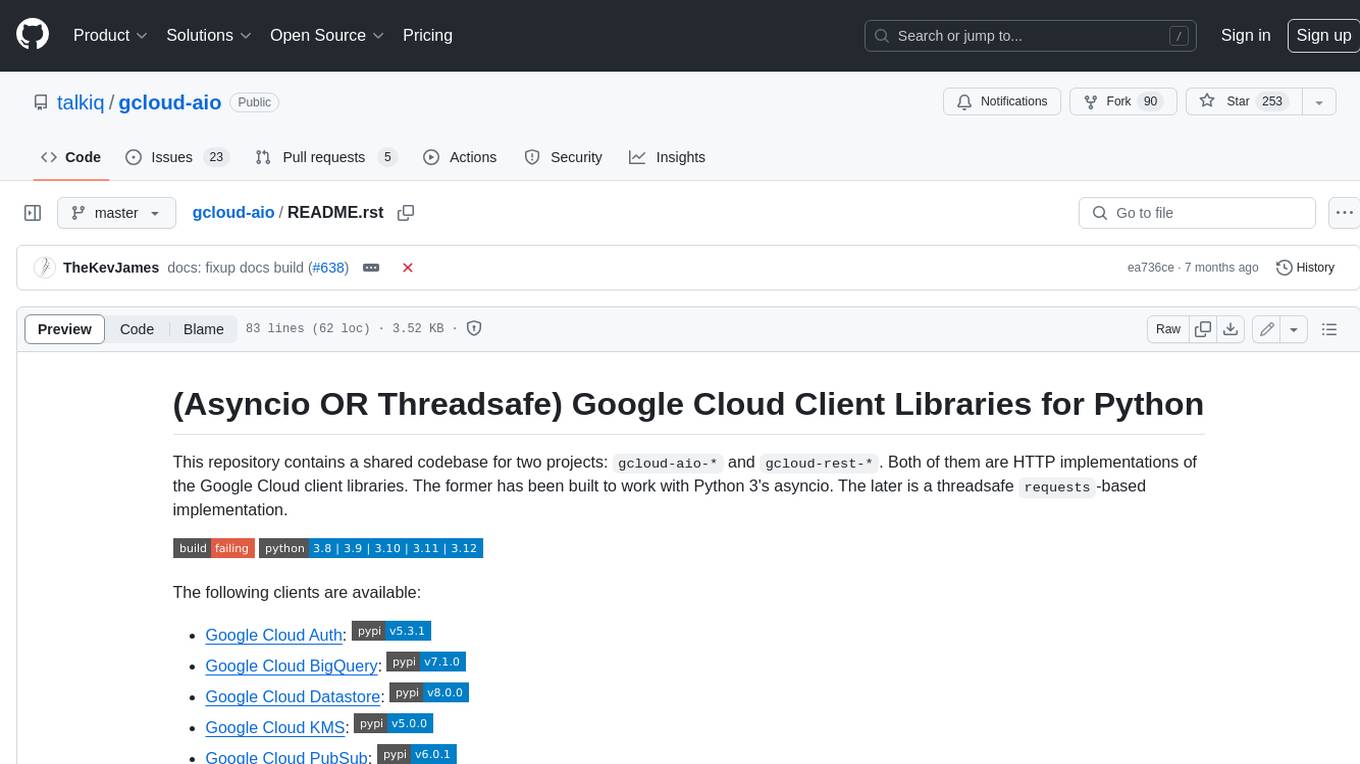
gcloud-aio
This repository contains shared codebase for two projects: gcloud-aio and gcloud-rest. gcloud-aio is built for Python 3's asyncio, while gcloud-rest is a threadsafe requests-based implementation. It provides clients for Google Cloud services like Auth, BigQuery, Datastore, KMS, PubSub, Storage, and Task Queue. Users can install the library using pip and refer to the documentation for usage details. Developers can contribute to the project by following the contribution guide.
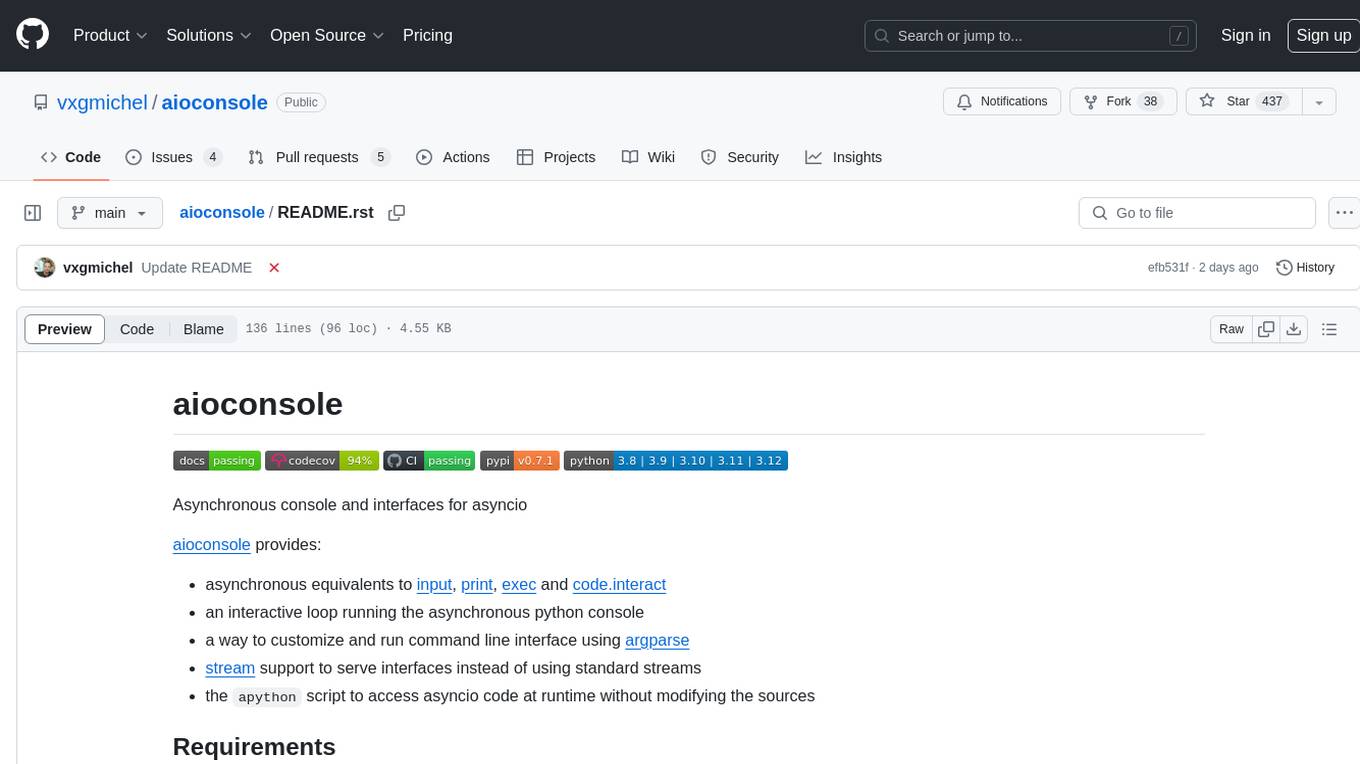
aioconsole
aioconsole is a Python package that provides asynchronous console and interfaces for asyncio. It offers asynchronous equivalents to input, print, exec, and code.interact, an interactive loop running the asynchronous Python console, customization and running of command line interfaces using argparse, stream support to serve interfaces instead of using standard streams, and the apython script to access asyncio code at runtime without modifying the sources. The package requires Python version 3.8 or higher and can be installed from PyPI or GitHub. It allows users to run Python files or modules with a modified asyncio policy, replacing the default event loop with an interactive loop. aioconsole is useful for scenarios where users need to interact with asyncio code in a console environment.
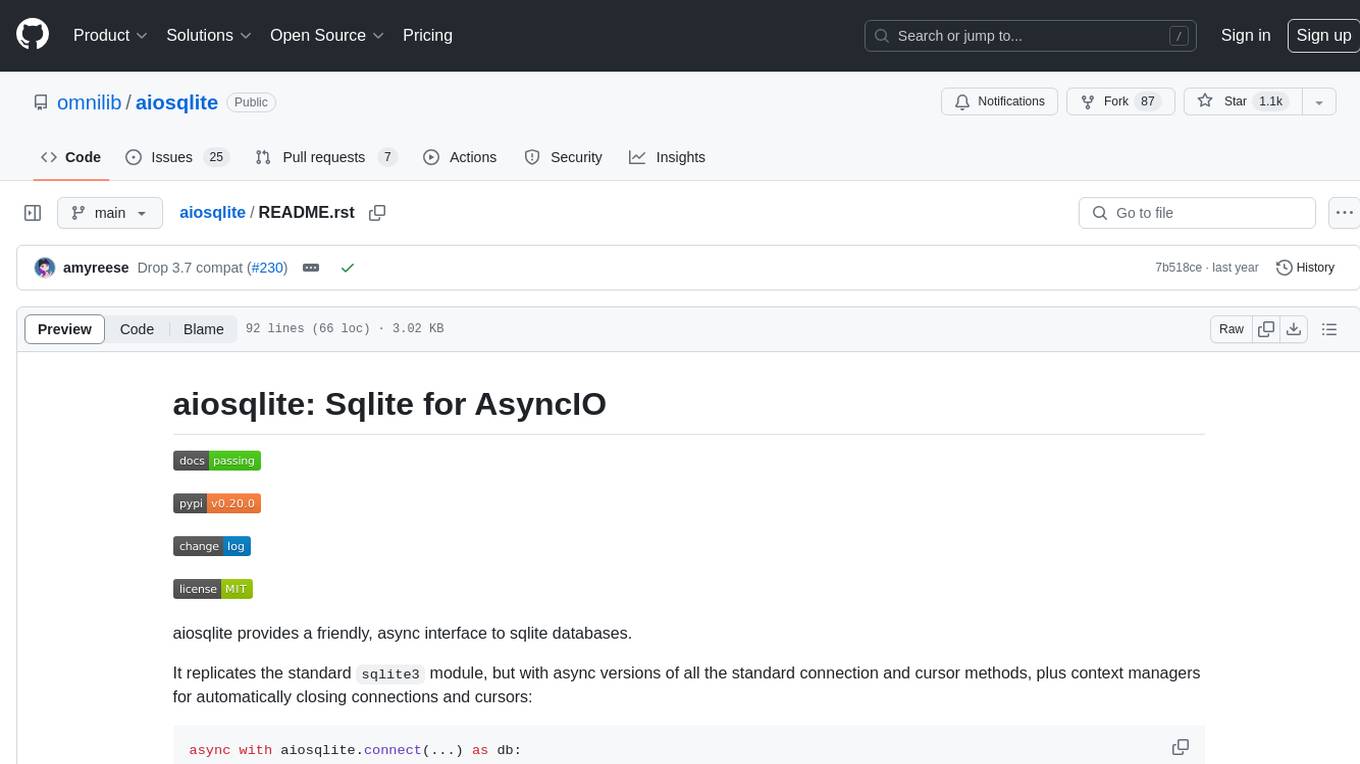
aiosqlite
aiosqlite is a Python library that provides a friendly, async interface to SQLite databases. It replicates the standard sqlite3 module but with async versions of all the standard connection and cursor methods, along with context managers for automatically closing connections and cursors. It allows interaction with SQLite databases on the main AsyncIO event loop without blocking execution of other coroutines while waiting for queries or data fetches. The library also replicates most of the advanced features of sqlite3, such as row factories and total changes tracking.