


astrbot_plugin_self_learning
AstrBot self-learning(自主学习)插件是一个为 AstrBot 框架设计的智能对话学习与人格优化解决方案。通过多维度数据分析、渐进式学习机制、动态人格更新、社交关系网络和目标驱动对话系统,使聊天机器人能够:自主学习模仿真人对话风格、理解群组黑话和特定用语、管理社交关系和好感度、智能识别对话目标并阶段式引导对话、实现复读、玩梗等拟人化互动效果。让你的 AI Bot 像真人一样自然、幽默有趣、善解人意!
Stars: 102
AstrBot Self-Learning Plugin is a full-featured AI self-learning chat personification solution. It enables chatbots to learn specific user conversation styles, understand slang, manage social relationships and likability, evolve adaptive personalities, guide conversations based on goals, and provide a visual management interface through WebUI. The plugin leverages real-time message capture, multidimensional data analysis, expression pattern learning, dynamic personality optimization, and goal-driven dialogues to enhance chatbot capabilities.
README:




让你的 AI 聊天机器人像真人一样学习、思考和对话
功能特性 • 快速开始 • 架构设计 • 文档 • 贡献指南
⚠️ 使用前必读:请务必先手动备份人格到本地,以防出现BUG导致人格混乱
使用本项目即表示您已阅读、理解并同意以下条款:
合法使用承诺
- 本项目仅供学习、研究和合法用途使用
- 严禁将本项目直接或间接用于任何违反当地法律法规的用途
- 包括但不限于:侵犯隐私、非法采集数据、恶意传播信息、违反平台服务条款等行为
隐私保护责任
- 使用者需遵守《中华人民共和国网络安全法》《个人信息保护法》等相关法律法规
- 在收集和处理用户消息数据时,必须取得用户明确同意
- 不得将收集的数据用于商业目的或泄露给第三方
- 建议仅在私有环境或已获得所有参与者同意的群组中使用
使用风险声明
- 本项目按"原样"提供,不提供任何明示或暗示的保证
- 开发者不对使用本项目造成的任何直接或间接损失负责
- 使用者需自行承担数据丢失、人格错误、系统崩溃等风险
- 强烈建议在生产环境使用前进行充分测试
开发者免责
- 开发者不对用户的违法违规行为承担任何责任
- 因用户违规使用导致的法律纠纷,由用户自行承担全部责任
- 开发者保留随时修改或终止本项目的权利
协议变更
- 本协议可能随时更新,恕不另行通知
- 继续使用本项目即表示接受更新后的协议条款
📌 重要提示:下载、安装、使用本项目的任何功能,即视为您已完全理解并同意遵守以上所有条款。如不同意,请立即停止使用并删除本项目。
AstrBot 智能自主学习插件是一个全功能 AI 自主学习 聊天拟人化 解决方案。通过实时消息捕获、多维度数据分析、表达模式学习、动态人格优化和目标驱动对话,让聊天机器人能够:
- 📖 学习特定用户的对话风格 - 自动模仿学习对象的表达方式
- 🎯 智能黑话理解系统 - 自动学习群组特定用语,避免误解
- ❤️ 管理社交关系和好感度 - 追踪用户互动,动态调整回复策略
- 🎭 自适应人格演化 - 根据学习成果智能更新 AI 人格设定
- 🎯 目标驱动对话引导 - 智能检测对话目标,阶段式推进对话
- 🌐 可视化管理界面 - 通过 WebUI 实时监控学习进度和效果
- QQ 群: 1021544792 (ChatPlus 插件用户 + 本插件用户)
- 反馈 Bug 和使用问题
两者完美互补:
- 本插件负责 AI学习与人格优化
- 群聊增强插件负责 智能回复决策与读空气能力
配合使用可以让你的 Bot 既有学习能力,又有"读空气"的社交智能!
场景 → 表达模式 映射
"当需要表达肯定时" → "可以使用'确实如此呢'这样的表达"
- 自动识别对话中的场景-表达关系
- 15天时间衰减机制,优先保留高质量模式
- Few-Shot 对话示例生成,提升模仿准确度
- 基于 NetworkX 构建知识关联网络
- 自动提取实体和关系,形成长期记忆
- 支持记忆检索和知识推理
- 实时追踪用户互动关系
- 可视化社交网络图谱
- 好感度系统(单用户上限100分,总分250分)
- 动态情绪管理(10种情绪类型)
# 自动学习群组特定用语
"发财了" → "表示惊喜或获得好处"
"下次一定" → "委婉拒绝的表达"
"🦌" → "xxxxx"- 自动检测候选黑话
- LLM 智能推断含义
- 实时注入对话理解
# 自动检测对话目标并动态规划阶段
用户: "我最近工作压力好大..."
Bot: 检测目标 → emotional_support (情感支持)
     规划阶段 → ["倾听诉说", "识别核心问题", "表达理解", "提供建议", "给予鼓励"]
当前阶段 → "倾听诉说"- 38种预设目标类型 - 覆盖情感支持、信息交流、娱乐互动、社交场景、冲突处理等
- 智能目标检测 - 使用LLM自动分析用户意图,识别对话目标
- 动态阶段规划 - 根据目标类型和话题,LLM生成循序渐进的对话阶段
- 会话级管理 - 24小时会话隔离,自动追踪对话进度和用户参与度
- 目标切换支持 - 检测话题完结,自动切换到新目标
- 上下文注入 - 将目标状态注入LLM prompt,引导回复策略
# 统一的服务创建和管理
factory_manager = FactoryManager()
factory_manager.initialize_factories(config, context)

# 服务工厂
service_factory = factory_manager.get_service_factory()
db_manager = service_factory.create_database_manager()

# 组件工厂
component_factory = factory_manager.get_component_factory()
expression_learner = component_factory.create_expression_pattern_learner()# 灵活的学习策略
learning_strategy = StrategyFactory.create_strategy(
LearningStrategyType.BATCH, # INCREMENTAL / REINFORCEMENT
config={'batch_size': 100}
)# 服务间松耦合
class MultidimensionalAnalyzer:
def __init__(self, config, db_manager, llm_adapter, ...):
self.config = config
self.db = db_manager
self.llm = llm_adapter# 数据访问层抽象
affection_repo = AffectionRepository(session)
user_affection = await affection_repo.get_user_affection(group_id, user_id)Database_Settings:
db_type: "mysql" # sqlite / mysql / postgresql(该功能暂时没有开放使用)
# MySQL 配置
mysql_host: "localhost"
mysql_port: 3306
mysql_user: "root"
mysql_password: "your_password"
mysql_database: "astrbot_self_learning"
# 自动连接池管理
max_connections: 10
min_connections: 2支持的数据库:
- SQLite - 开箱即用,适合单机部署
- MySQL - 高性能,适合生产环境
- PostgreSQL - 企业级,支持高级特性
1. 数据统计页面

- 消息收集统计、学习进度跟踪
- 系统运行状态、数据库使用情况
2. 人格管理页面

- 人格列表查看、一键切换
- 人格编辑、备份与恢复
- 自动保护当前使用的人格
3. 人格审查页面

- 审查 AI 自动生成的人格更新建议
- 对比显示原始内容和建议修改
- 批准或拒绝更新,人工把关质量
4. 风格学习页面

- 学习进度可视化图表
- 场景-表达模式映射展示
- 质量评分和时间衰减管理
5. 社交关系分析页面

- 力导向图展示成员互动关系
- 节点大小表示活跃度
- 连线粗细表示互动频率
- 颜色表示好感度等级
6. 系统设置页面

- 学习参数配置
- 模型配置管理
- 好感度和情绪系统开关
- 数据管理和调试模式
7. 智能对话管理
- 目标驱动对话系统管理
- 查看用户当前对话目标和进度
- 清除会话目标,重置对话状态
- 目标统计信息和分析
- 支持的38种目标类型查询
# Python 版本要求
Python 3.8+

# 安装依赖
pip install -r requirements.txt-
将插件添加到 AstrBot 插件目录
cd /path/to/astrbot/data/plugins git clone https://github.com/NickCharlie/astrbot_plugin_self_learning.git -
启动 AstrBot
- 插件将自动加载并初始化
-
访问 WebUI 管理界面
http://localhost:7833- 默认密码:
self_learning_pwd ⚠️ 首次登录后务必修改密码!
- 默认密码:
-
配置插件
- 在 AstrBot 后台插件管理中设置配置项
- 或通过 WebUI 系统设置页面配置
# 基础开关
Self_Learning_Basic:
  enable_message_capture: true
  enable_auto_learning: true
  enable_realtime_learning: false
  enable_web_interface: true
  web_interface_port: 7833

# 目标设置
Target_Settings:
  target_qq_list: []  # 留空则学习所有用户
  current_persona_name: "default"

# 模型配置
Model_Configuration:
  filter_provider_id: "provider_id_1"  # 筛选模型
  refine_provider_id: "provider_id_2"  # 提炼模型

# 学习参数
Learning_Parameters:
  learning_interval_hours: 6
  min_messages_for_learning: 50
  max_messages_per_batch: 200

# 数据库配置
Database_Settings:
db_type: "sqlite" # 或 mysql / postgresqlastrbot_plugin_self_learning/
├── core/ # 核心架构层
│ ├── factory.py # 工厂管理器(依赖注入容器)
│ ├── interfaces.py # 接口定义(抽象基类)
│ ├── patterns.py # 设计模式实现(策略、观察者等)
│ ├── framework_llm_adapter.py # LLM 框架适配器
│ └── database/ # 数据库抽象层
│ ├── backend_interface.py # 数据库接口
│ ├── sqlite_backend.py # SQLite 实现
│ ├── mysql_backend.py # MySQL 实现
│ └── postgresql_backend.py # PostgreSQL 实现
│
├── services/ # 服务层(业务逻辑)
│ ├── message_collector.py # 消息收集服务
│ ├── multidimensional_analyzer.py # 多维度分析
│ ├── style_analyzer.py # 风格分析服务
│ ├── progressive_learning.py # 渐进式学习服务
│ ├── persona_manager.py # 人格管理服务
│ ├── expression_pattern_learner.py # 表达模式学习器
│ ├── affection_manager.py # 好感度管理服务
│ ├── jargon_miner.py # 黑话挖掘服务
│ ├── jargon_query.py # 黑话查询服务
│ ├── social_context_injector.py # 社交上下文注入器
│ └── response_diversity_manager.py # 响应多样性管理器
│
├── models/ # 数据模型层
│ └── orm/ # ORM 模型(SQLAlchemy)
│ ├── base.py # 基础模型
│ ├── expression.py # 表达模式模型
│ ├── affection.py # 好感度模型
│ ├── learning.py # 学习记录模型
│ └── social_relation.py # 社交关系模型
│
├── repositories/ # 仓储层(数据访问)
│ ├── base_repository.py # 基础仓储
│ ├── expression_repository.py # 表达模式仓储
│ ├── affection_repository.py # 好感度仓储
│ └── social_repository.py # 社交关系仓储
│
├── webui/ # Web 界面
│ ├── app.py # Quart 应用主入口
│ └── blueprints/ # 路由蓝图
│ ├── auth.py # 认证路由
│ ├── persona.py # 人格管理路由
│ └── analytics.py # 数据分析路由
│
├── utils/ # 工具类
│ ├── cache_manager.py # 缓存管理
│ ├── migration_tool_v2.py # 数据库迁移工具
│ └── security_utils.py # 安全工具
│
├── config.py # 配置管理
├── main.py # 插件主入口
└── README.md # 项目文档
目的: 统一管理服务创建,降低耦合
class FactoryManager:
    """全局工厂管理器 - 单例模式"""

    def initialize_factories(self, config, context):
        self._service_factory = ServiceFactory(config, context)
        self._component_factory = ComponentFactory(config, self._service_factory)

    def get_service_factory(self) -> ServiceFactory:
        # 服务工厂:创建业务服务(数据库、学习、分析等)
        return self._service_factory

    def get_component_factory(self) -> ComponentFactory:
        # 组件工厂:创建轻量级组件(过滤器、调度器等)
return self._component_factory优势:
- ✅ 集中管理服务实例,避免循环依赖
- ✅ 服务缓存和单例模式,提升性能
- ✅ 支持服务注册和依赖注入
目的: 灵活切换学习策略
class StrategyFactory:
    @staticmethod
    def create_strategy(strategy_type: LearningStrategyType, config: dict):
        strategies = {
            LearningStrategyType.BATCH: BatchLearningStrategy,
            LearningStrategyType.INCREMENTAL: IncrementalLearningStrategy,
            LearningStrategyType.REINFORCEMENT: ReinforcementLearningStrategy
        }
return strategies[strategy_type](config)学习策略类型:
- 批量学习 (Batch) - 定期批量处理消息
- 增量学习 (Incremental) - 实时逐条学习
- 强化学习 (Reinforcement) - 基于反馈优化
目的: 抽象数据访问层,支持多种数据库
class BaseRepository:
    """基础仓储 - 提供通用 CRUD 操作"""

    async def get(self, id: int):
        async with self.session() as session:
            return await session.get(self.model, id)

    async def save(self, entity):
        async with self.session() as session:
            session.add(entity)
            await session.commit()

class ExpressionRepository(BaseRepository):
    """表达模式仓储 - 专门处理表达模式数据"""

    async def get_patterns_by_group(self, group_id: str, limit: int = 10):
        # 特定业务逻辑
...目的: 事件驱动架构,解耦组件
class EventBus:
    """事件总线 - 发布/订阅模式"""

    def subscribe(self, event_type: str, handler: Callable):
        self._handlers[event_type].append(handler)

    async def publish(self, event_type: str, data: Any):
        for handler in self._handlers[event_type]:
            await handler(data)

# 使用示例
event_bus.subscribe("learning_completed", on_learning_completed)
await event_bus.publish("learning_completed", learning_result)┌─────────────────┐
│ 消息接收层 │ on_message() - 监听所有消息
└────────┬────────┘
│
▼
┌─────────────────┐
│ 过滤器层 │ QQFilter + MessageFilter
└────────┬────────┘
│
▼
┌─────────────────┐
│ 数据收集层 │ MessageCollector - 存储原始消息
└────────┬────────┘
│
├──────────────────┐
│ │
▼ ▼
┌─────────────────┐ ┌─────────────────┐
│ 分析层 │ │ 学习层 │
│ - 多维度分析 │ │ - 表达模式学习 │
│ - 风格分析 │ │ - 黑话挖掘 │
│ - 社交关系分析 │ │ - 记忆图构建 │
└────────┬────────┘ └────────┬────────┘
│ │
└──────────┬─────────┘
▼
┌─────────────────┐
│ 人格更新层 │
│ - PersonaUpdater│
│ - 审查机制 │
└────────┬────────┘
│
▼
┌─────────────────┐
│ LLM注入层 │ inject_diversity_to_llm_request()
│ - 表达模式注入 │
│ - 社交上下文 │
│ - 黑话理解 │
│ - 多样性增强 │
└─────────────────┘
工作原理:
- 消息收集 - 每收集 10-25 条消息触发一次学习
- 场景识别 - 使用 LLM 分析对话场景和上下文
- 表达提取 - 提取目标用户的特定表达方式
- 模式存储 - 保存"场景→表达"映射关系
- 时间衰减 - 15天衰减周期,质量分数随时间降低
- Prompt注入 - 将高质量模式注入 LLM 请求
示例:
场景: "用户需要表达赞同"
表达: "确实是这样呢"
质量分数: 0.85
创建时间: 2025-11-20
衰减后分数: 0.78 (5天后)
工作流程:
# 1. 候选词提取
candidates = await jargon_miner.extract_candidates(recent_messages)
# 输出: ["发财了", "下次一定", "真香"]

# 2. LLM 推断含义
meanings = await jargon_miner.infer_meanings(candidates, context)
# 输出: {
#   "发财了": "表示惊喜或获得好处",
#   "下次一定": "委婉拒绝的表达"
# }

# 3. 保存到数据库
await db.save_jargon_batch(chat_id, meanings)

# 4. LLM 请求时注入理解
jargon_explanation = await jargon_query.check_and_explain_jargon(
    text="今天真是发财了!",
    chat_id=group_id
)
# 注入到 LLM prompt: "文本中包含的黑话: 「发财了」: 表示惊喜或获得好处"特点:
- ✅ 自动检测高频词汇和新词
- ✅ 上下文理解,精准推断含义
- ✅ 60秒 TTL 缓存,提升性能
- ✅ 实时注入 LLM 理解,避免误解
工作原理:
- 会话初始化 - 用户发送消息时自动创建24小时会话
- 目标检测 - 使用 LLM 分析用户意图,识别对话目标类型
- 阶段规划 - 根据目标和话题,LLM 生成3-5个对话阶段
- 动态调整 - 实时分析对话进展,自动推进或调整阶段
- 目标切换 - 检测话题完结,切换到新目标类型
- 上下文注入 - 将目标状态注入 LLM prompt,引导回复策略
38种预设目标类型:
# 情感支持类 (5种)
comfort           # 安慰用户
emotional_support # 情感支持
empathy          # 深度共情
encouragement    # 鼓励打气
calm_down        # 情绪安抚

# 信息交流类 (5种)
qa               # 解答疑问
guide_share      # 引导分享
teach            # 教学指导
discuss          # 深度讨论
storytelling     # 讲故事

# 娱乐互动类 (6种)
casual_chat      # 闲聊互动
tease            # 友好调侃
flirt            # 俏皮调戏
joke             # 幽默搞笑
meme             # 梗文化互动
roleplay         # 角色扮演

# 社交互动类 (5种)
greeting         # 问候寒暄
compliment       # 赞美夸奖
celebrate        # 庆祝祝贺
apologize        # 道歉和解
gossip           # 八卦闲聊

# 建议指导类 (4种)
advise           # 提供建议
brainstorm       # 头脑风暴
plan             # 制定计划
analyze          # 分析问题

# 情绪调节类 (3种)
vent             # 倾听发泄
motivate         # 激励鼓舞
complaint        # 抱怨吐槽

# 兴趣分享类 (3种)
recommend        # 推荐分享
review           # 评价点评
hobby_chat       # 爱好交流

# 特殊场景类 (3种)
debate           # 友好辩论
confess          # 倾诉秘密
nostalgia        # 怀旧回忆

# 冲突场景类 (4种)
argument         # 激烈争论
quarrel          # 吵架互怼
insult_exchange  # 互骂对喷
provoke # 挑衅应对会话管理:
# 会话ID生成 (24小时不变)
session_id = MD5(group_id + user_id + date)

# 会话数据结构
{
  "session_id": "sess_a1b2c3d4e5f6",
  "final_goal": {
    "type": "emotional_support",
    "name": "情感支持",
    "topic": "工作压力",
    "topic_status": "active"
  },
  "current_stage": {
    "index": 2,
    "task": "识别核心问题",
    "strategy": "顺序推进",
    "adjustment_reason": "上一阶段已完成"
  },
  "planned_stages": [
    "倾听诉说", "识别核心问题", "表达理解",
    "提供建议", "给予鼓励"
  ],
  "metrics": {
    "rounds": 5,
    "user_engagement": 0.8,
    "goal_progress": 0.4
  },
  "conversation_history": [...]
}
WebUI API 接口:
# 1. 带目标引导的对话
POST /api/intelligent_chat/chat
{
  "user_id": "10001",
  "message": "我最近工作压力好大...",
  "group_id": "123456",
  "force_normal_mode": false
}

# 2. 获取用户当前目标状态
GET /api/intelligent_chat/goal/status?user_id=10001&group_id=123456

# 3. 清除用户当前目标
DELETE /api/intelligent_chat/goal/clear
{
  "user_id": "10001",
  "group_id": "123456"
}

# 4. 获取目标统计信息
GET /api/intelligent_chat/goal/statistics

# 5. 获取所有可用的目标类型
GET /api/intelligent_chat/goal/templates特点:
- ✅ 38种预设目标类型,覆盖日常对话场景
- ✅ LLM智能检测,自动识别用户意图
- ✅ 动态阶段规划,循序渐进推进对话
- ✅ 会话级隔离,支持多用户并发
- ✅ 目标切换机制,适应话题变化
- ✅ 完整的REST API,方便集成
关系追踪:
# 自动记录用户互动
await social_relation_manager.record_interaction(
    group_id="123456",
    user_a="10001",
    user_b="10002",
    interaction_type="mention"  # at / reply / topic_discussion
)

# 分析关系强度
strength = await social_relation_manager.calculate_relationship_strength(
    group_id, user_a, user_b
)
# 输出: 0.75 (基于互动频率、类型、时间衰减)好感度管理:
# 处理用户消息互动
result = await affection_manager.process_message_interaction(
    group_id, user_id, message_text
)

# 自动识别互动类型
interaction_types = {
    "praise": +10,      # 称赞
    "encourage": +5,    # 鼓励
    "insult": -15,      # 侮辱
    "harass": -20       # 骚扰
}

# 好感度限制
- 单用户上限: 100分
- 群组总分上限: 250分
- 超额时自动衰减旧好感度两种更新模式:
# 直接在原人格末尾增量更新
await persona_manager_updater.apply_incremental_update(
    group_id=group_id,
    update_content="【学习成果】\n新增表达模式: ..."
)

# 优势:
# ✅ 自动创建备份人格
# ✅ 无需手动执行应用命令
# ✅ 更好的版本管理# 临时存储到 persona_updates.txt
await temporary_persona_updater.write_to_updates_file(content)
# 手动审查后应用
/apply_persona_updates
# 优势:
# ✅ 人工审核把关
# ✅ 批量应用更新人格审查流程:
1. AI 生成更新建议 → 保存到 style_learning_reviews 表
2. 管理员登录 WebUI → 人格审查页面
3. 查看对比(原始 vs 建议) → 红色高亮显示修改
4. 决策:批准 / 拒绝
5. 批准后自动应用到人格
| 命令 | 权限 | 说明 |
|---|---|---|
/learning_status |
管理员 | 查看学习状态和统计信息 |
/start_learning |
管理员 | 手动启动学习批次 |
/stop_learning |
管理员 | 停止自动学习循环 |
/force_learning |
管理员 | 强制执行一次学习周期 |
/clear_data |
管理员 | 清空所有学习数据 ( |
/export_data |
管理员 | 导出学习数据为 JSON |
| 命令 | 权限 | 说明 |
|---|---|---|
/affection_status |
管理员 | 查看好感度状态和排行榜 |
/set_mood <类型> |
管理员 | 设置 Bot 情绪状态 |
情绪类型: happy sad excited calm angry anxious playful serious nostalgic curious
| 命令 | 权限 | 说明 |
|---|---|---|
/persona_switch <名称> |
管理员 | 切换到指定人格 |
/persona_info |
管理员 | 显示当前人格详细信息 |
/temp_persona apply |
管理员 | 应用临时人格 |
/temp_persona status |
管理员 | 查看临时人格状态 |
/temp_persona remove |
管理员 | 移除临时人格 |
/temp_persona extend [分钟] |
管理员 | 延长临时人格时间 |
/temp_persona backup_list |
管理员 | 列出所有备份 |
/temp_persona restore <文件名> |
管理员 | 从备份恢复人格 |
| 命令 | 权限 | 说明 |
|---|---|---|
/apply_persona_updates |
管理员 | 应用 persona_updates.txt 中的更新 |
/switch_persona_update_mode |
管理员 | 切换人格更新方式 (manager/file) |
/clean_duplicate_content |
管理员 | 清理重复的历史内容 |
/analytics_report |
管理员 | 生成数据分析报告 |
# ========================================
# 基础开关
# ========================================
Self_Learning_Basic:
  enable_message_capture: true      # 启用消息抓取
  enable_auto_learning: true        # 启用定时自动学习
  enable_realtime_learning: false   # 启用实时学习(每条消息)
  enable_web_interface: true        # 启用 Web 管理界面
  web_interface_port: 7833          # Web 界面端口

# ========================================
# 目标设置
# ========================================
Target_Settings:
  target_qq_list: []                # 学习目标 QQ 号列表(空=全部)
  target_blacklist: []              # 学习黑名单
  current_persona_name: "default"   # 当前人格名称

# ========================================
# 模型配置(使用 AstrBot Provider)
# ========================================
Model_Configuration:
  filter_provider_id: "provider_gpt4o_mini"  # 筛选模型(弱模型)
  refine_provider_id: "provider_gpt4o"       # 提炼模型(强模型)
  reinforce_provider_id: "provider_gpt4o"    # 强化模型

# ========================================
# 学习参数
# ========================================
Learning_Parameters:
  learning_interval_hours: 6        # 自动学习间隔(小时)
  min_messages_for_learning: 50     # 最少消息数才开始学习
  max_messages_per_batch: 200       # 每批处理的最大消息数

# ========================================
# 筛选参数
# ========================================
Filter_Parameters:
  message_min_length: 5             # 消息最小长度
  message_max_length: 500           # 消息最大长度
  confidence_threshold: 0.7         # 筛选置信度阈值
  relevance_threshold: 0.6          # 相关性阈值

# ========================================
# 风格分析
# ========================================
Style_Analysis:
  style_analysis_batch_size: 100    # 风格分析批次大小
  style_update_threshold: 0.6       # 风格更新阈值

# ========================================
# 好感度系统
# ========================================
Affection_System_Settings:
  enable_affection_system: true     # 启用好感度系统
  max_total_affection: 250          # Bot 总好感度上限
  max_user_affection: 100           # 单用户好感度上限
  affection_decay_rate: 0.95        # 好感度衰减比例
  daily_mood_change: true           # 启用每日情绪变化
  mood_affect_affection: true       # 情绪影响好感度变化

# ========================================
# 情绪系统
# ========================================
Mood_System_Settings:
  enable_daily_mood: true           # 启用每日情绪
  enable_startup_random_mood: true  # 启用启动时随机情绪
  mood_change_hour: 6               # 情绪更新时间(24小时制)
  mood_persistence_hours: 24        # 情绪持续时间(小时)

# ========================================
# 目标驱动对话系统
# ========================================
Goal_Driven_Chat_Settings:
  enable_goal_driven_chat: false    # 启用目标驱动对话系统
  goal_session_timeout_hours: 24    # 会话超时时间(小时)
  goal_auto_detect: true            # 自动检测对话目标
  goal_max_conversation_history: 40 # 最大对话历史记录数(轮次)

# ========================================
# 数据库设置
# ========================================
Database_Settings:
  db_type: "sqlite"                 # 数据库类型: sqlite / mysql / postgresql

  # MySQL 配置(db_type="mysql"时生效)
  mysql_host: "localhost"
  mysql_port: 3306
  mysql_user: "root"
  mysql_password: "your_password"
  mysql_database: "astrbot_self_learning"

  # PostgreSQL 配置(db_type="postgresql"时生效)
  postgresql_host: "localhost"
  postgresql_port: 5432
  postgresql_user: "postgres"
  postgresql_password: "your_password"
  postgresql_database: "astrbot_self_learning"
  postgresql_schema: "public"

  # 连接池配置
  max_connections: 10
  min_connections: 2

  # 重构功能配置
  use_sqlalchemy: false             # 使用 SQLAlchemy ORM
  use_enhanced_managers: false      # 使用增强型管理器

# ========================================
# 社交上下文设置
# ========================================
Social_Context_Settings:
  enable_social_context_injection: true  # 启用社交关系注入
  include_social_relations: true         # 注入用户社交关系
  include_affection_info: true           # 注入好感度信息
  include_mood_info: true                # 注入 Bot 情绪信息
  context_injection_position: "start"    # 注入位置: start / end

# ========================================
# 高级设置
# ========================================
Advanced_Settings:
  debug_mode: false                 # 调试模式
  save_raw_messages: true           # 保存原始消息
  auto_backup_interval_days: 7      # 自动备份间隔(天)
  use_enhanced_managers: false      # 使用增强型管理器
  enable_memory_cleanup: true       # 启用记忆自动清理
  memory_cleanup_days: 30           # 记忆保留天数
  memory_importance_threshold: 0.3  # 记忆重要性阈值

# ========================================
# 存储设置
# ========================================
Storage_Settings:
data_dir: "./data/self_learning_data" # 数据存储目录- 大型语言模型: OpenAI GPT系列、兼容 OpenAI API 的任意模型
-
机器学习:
scikit-learnnumpypandas - 情感计算: 情绪识别、情感状态建模
-
知识图谱:
networkx- 关系网络分析 -
自然语言处理:
jieba- 中文分词
-
图表生成:
plotlymatplotlibseaborn -
网络可视化:
bokeh- 社交关系图 - 数据分析: 多维度统计分析
-
异步框架:
asyncioaiohttpaiofiles -
数据库:
aiosqliteaiomysqlasyncpg+SQLAlchemy[asyncio] -
Web框架:
quartquart-cors- 异步 Flask-like 框架 -
缓存系统:
cachetools- TTL缓存 -
任务调度:
apscheduler- 定时任务
-
数据库迁移:
alembic- SQLAlchemy 迁移工具 -
安全工具:
guardrails-ai- LLM 输出校验 -
测试框架:
pytestpytest-asyncio
欢迎开发者参与项目建设!
- Bug 反馈 - 提交 Issue
- 功能建议 - Feature Request
- 代码贡献 - Fork 项目并提交 Pull Request
- 文档改进 - 完善文档和教程
- 遵循现有的架构设计和设计模式
- 使用工厂模式统一管理服务
- 优先使用依赖注入,避免硬编码
- 每个功能分文件,每个模块分目录
- 导入自己的模块时使用相对导入
- 添加单元测试覆盖核心逻辑
本项目采用 GPLv3 License 开源协议。
感谢以下项目的启发和支持:
本节内容补充说明文档顶部的用户协议,两者具有同等法律效力
- 严禁违法使用:本项目严禁直接或间接用于任何违反当地法律法规的用途
- 遵守法律法规:使用者必须遵守《中华人民共和国网络安全法》《个人信息保护法》《数据安全法》等相关法律
- 平台规则:使用者需遵守 QQ、微信等即时通讯平台的服务条款和使用规范
- 获得授权:在收集和处理任何用户数据前,必须获得明确的用户同意
- 本地存储:所有学习数据本地化存储,开发者无法获取用户数据
- 定期备份:请定期备份数据库和人格文件,防止数据丢失
- 密码保护:强烈建议在生产环境修改 WebUI 默认密码
-
隐私保护:
- 插件会收集和分析用户消息用于学习
- 使用者必须明确告知群组成员数据收集行为
- 不得将收集的数据用于商业目的
- 不得泄露数据给任何第三方
- 建议仅在私有环境或已获得所有成员同意的群组使用
- 软件状态:插件目前处于开发测试阶段,可能存在未知 Bug
- 数据风险:使用前请务必备份人格文件,防止数据损坏或丢失
- 质量依赖:AI 学习质量取决于学习样本的质量和数量
- 系统稳定性:在生产环境使用前,强烈建议进行充分测试
- 网络安全:不建议在公开环境暴露 WebUI 端口,避免安全风险
- 按原样提供:本项目按"原样"(AS-IS)提供,不提供任何形式的保证
- 无担保声明:包括但不限于对适销性、特定用途适用性的暗示保证
-
免责范围:
- 开发者不对使用本项目造成的任何直接、间接、偶然、特殊或后果性损失负责
- 包括但不限于:数据丢失、业务中断、利润损失、声誉损害等
- 开发者不对用户的违法违规行为承担任何责任
- 因用户违规使用导致的法律纠纷,由用户自行承担全部法律责任和经济损失
- 版权声明:本项目采用 GPLv3 开源协议,使用者需遵守协议条款
- 修改权利:开发者保留随时修改、更新或终止本项目的权利
- 协议更新:本免责声明和用户协议可能随时更新,恕不另行通知
- 持续使用视为同意:继续使用本项目即表示接受更新后的所有条款
- 如果您不同意以上任何条款,请立即停止使用并删除本项目
- 下载、安装、使用本项目的任何功能,即视为您已完全阅读、理解并同意遵守本免责声明及用户协议的所有内容
- 本声明的解释权归项目开发者所有
- [ ] 知识图谱和长期记忆系统(理解上下文关系,建立持久记忆)
- [ ] 多人格自动切换(根据对话场景)
- [ ] 高级情绪建模(情绪链和情绪转移)
- [ ] 强化学习优化(基于用户反馈)
- [ ] 多模态学习支持(图片、语音)
- [ ] 联邦学习(跨群组知识共享)
- [ ] 自主对话发起(主动话题引导)
For Tasks:
Click tags to check more tools for each tasksFor Jobs:
Alternative AI tools for astrbot_plugin_self_learning
Similar Open Source Tools
astrbot_plugin_self_learning
AstrBot Self-Learning Plugin is a full-featured AI self-learning chat personification solution. It enables chatbots to learn specific user conversation styles, understand slang, manage social relationships and likability, evolve adaptive personalities, guide conversations based on goals, and provide a visual management interface through WebUI. The plugin leverages real-time message capture, multidimensional data analysis, expression pattern learning, dynamic personality optimization, and goal-driven dialogues to enhance chatbot capabilities.
ai-trend-publish
AI TrendPublish is an AI-based trend discovery and content publishing system that supports multi-source data collection, intelligent summarization, and automatic publishing to WeChat official accounts. It features data collection from various sources, AI-powered content processing using DeepseekAI Together, key information extraction, intelligent title generation, automatic article publishing to WeChat official accounts with custom templates and scheduled tasks, notification system integration with Bark for task status updates and error alerts. The tool offers multiple templates for content customization and is built using Node.js + TypeScript with AI services from DeepseekAI Together, data sources including Twitter/X API and FireCrawl, and uses node-cron for scheduling tasks and EJS as the template engine.
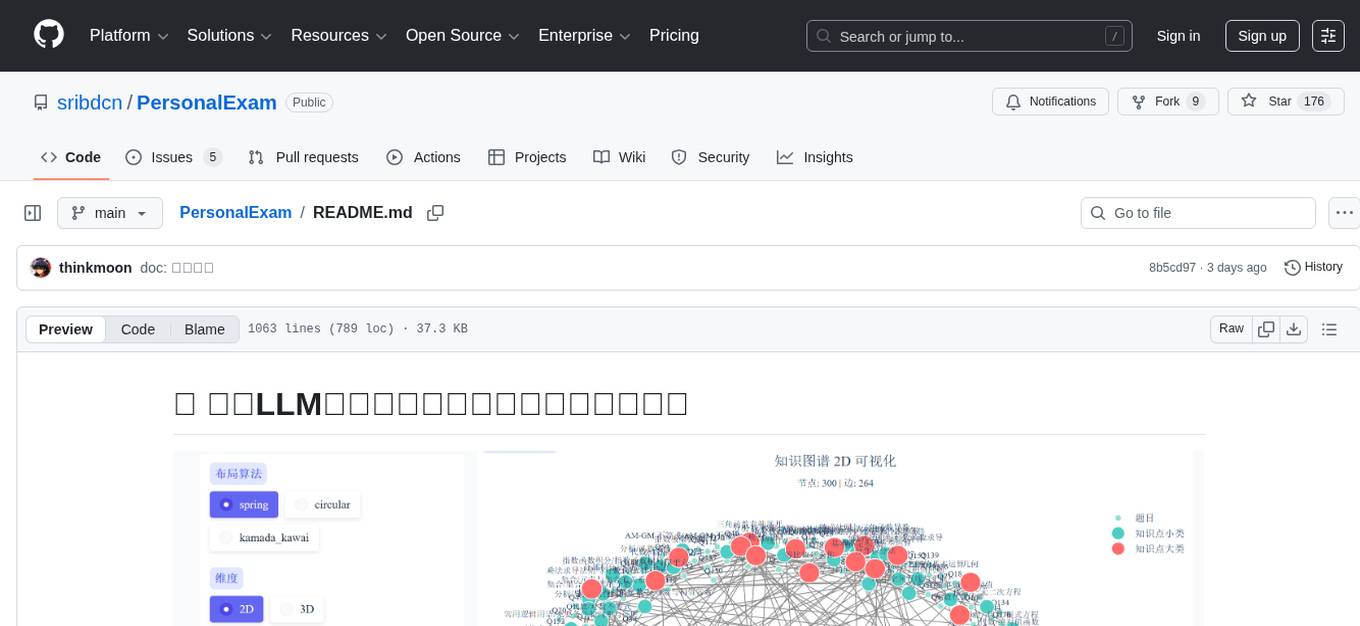
PersonalExam
PersonalExam is a personalized question generation system based on LLM and knowledge graph collaboration. It utilizes the BKT algorithm, RAG engine, and OpenPangu model to achieve personalized intelligent question generation and recommendation. The system features adaptive question recommendation, fine-grained knowledge tracking, AI answer evaluation, student profiling, visual reports, interactive knowledge graph, user management, and system monitoring.
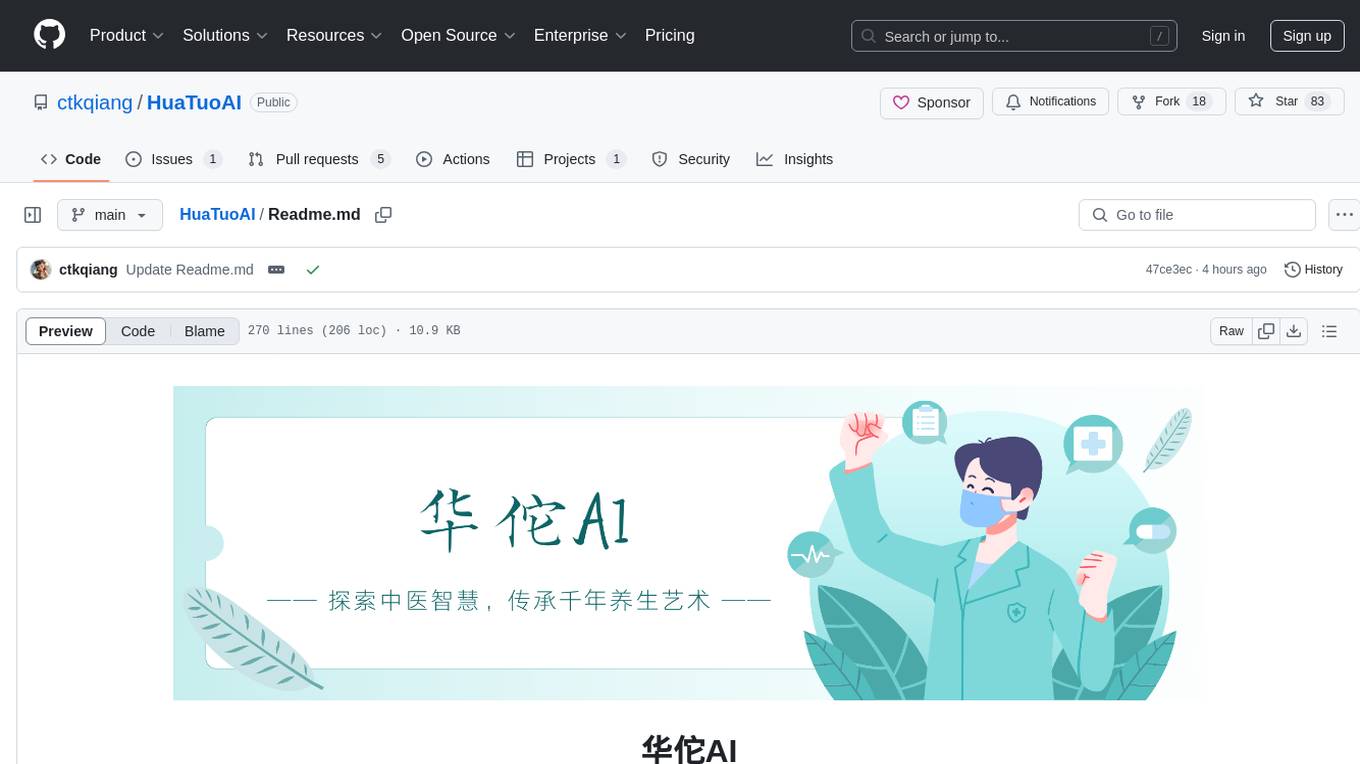
HuaTuoAI
HuaTuoAI is an artificial intelligence image classification system specifically designed for traditional Chinese medicine. It utilizes deep learning techniques, such as Convolutional Neural Networks (CNN), to accurately classify Chinese herbs and ingredients based on input images. The project aims to unlock the secrets of plants, depict the unknown realm of Chinese medicine using technology and intelligence, and perpetuate ancient cultural heritage.
adnify
Adnify is an advanced code editor with ultimate visual experience and deep integration of AI Agent. It goes beyond traditional IDEs, featuring Cyberpunk glass morphism design style and a powerful AI Agent supporting full automation from code generation to file operations.
tradecat
TradeCat is a comprehensive data analysis and trading platform designed for cryptocurrency, stock, and macroeconomic data. It offers a wide range of features including multi-market data collection, technical indicator modules, AI analysis, signal detection engine, Telegram bot integration, and more. The platform utilizes technologies like Python, TimescaleDB, TA-Lib, Pandas, NumPy, and various APIs to provide users with valuable insights and tools for trading decisions. With a modular architecture and detailed documentation, TradeCat aims to empower users in making informed trading decisions across different markets.
AI-CloudOps
AI+CloudOps is a cloud-native operations management platform designed for enterprises. It aims to integrate artificial intelligence technology with cloud-native practices to significantly improve the efficiency and level of operations work. The platform offers features such as AIOps for monitoring data analysis and alerts, multi-dimensional permission management, visual CMDB for resource management, efficient ticketing system, deep integration with Prometheus for real-time monitoring, and unified Kubernetes management for cluster optimization.

resume-design
Resume-design is an open-source and free resume design and template download website, built with Vue3 + TypeScript + Vite + Element-plus + pinia. It provides two design tools for creating beautiful resumes and a complete backend management system. The project has released two frontend versions and will integrate with a backend system in the future. Users can learn frontend by downloading the released versions or learn design tools by pulling the latest frontend code.
AILZ80ASM
AILZ80ASM is a Z80 assembler that runs in a .NET 8 environment written in C#. It can be used to assemble Z80 assembly code and generate output files in various formats. The tool supports various command-line options for customization and provides features like macros, conditional assembly, and error checking. AILZ80ASM offers good performance metrics with fast assembly times and efficient output file sizes. It also includes support for handling different file encodings and provides a range of built-in functions for working with labels, expressions, and data types.
rime_wanxiang
Rime Wanxiang is a pinyin input method based on deep optimized lexicon and language model. It features a lexicon with tones, AI and large corpus filtering, and frequency addition to provide more accurate sentence output. The tool supports various input methods and customization options, aiming to enhance user experience through lexicon and transcription. Users can also refresh the lexicon with different types of auxiliary codes using the LMDG toolkit package. Wanxiang offers core features like tone-marked pinyin annotations, phrase composition, and word frequency, with customizable functionalities. The tool is designed to provide a seamless input experience based on lexicon and transcription.
goclaw
goclaw is a powerful AI Agent framework written in Go language. It provides a complete tool system for FileSystem, Shell, Web, and Browser with Docker sandbox support and permission control. The framework includes a skill system compatible with OpenClaw and AgentSkills specifications, supporting automatic discovery and environment gating. It also offers persistent session storage, multi-channel support for Telegram, WhatsApp, Feishu, QQ, and WeWork, flexible configuration with YAML/JSON support, multiple LLM providers like OpenAI, Anthropic, and OpenRouter, WebSocket Gateway, Cron scheduling, and Browser automation based on Chrome DevTools Protocol.
torch-rechub
Torch-RecHub is a lightweight, efficient, and user-friendly PyTorch recommendation system framework. It provides easy-to-use solutions for industrial-level recommendation systems, with features such as generative recommendation models, modular design for adding new models and datasets, PyTorch-based implementation for GPU acceleration, a rich library of 30+ classic and cutting-edge recommendation algorithms, standardized data loading, training, and evaluation processes, easy configuration through files or command-line parameters, reproducibility of experimental results, ONNX model export for production deployment, cross-engine data processing with PySpark support, and experiment visualization and tracking with integrated tools like WandB, SwanLab, and TensorBoardX.
openai-forward
OpenAI-Forward is an efficient forwarding service implemented for large language models. Its core features include user request rate control, token rate limiting, intelligent prediction caching, log management, and API key management, aiming to provide efficient and convenient model forwarding services. Whether proxying local language models or cloud-based language models like LocalAI or OpenAI, OpenAI-Forward makes it easy. Thanks to support from libraries like uvicorn, aiohttp, and asyncio, OpenAI-Forward achieves excellent asynchronous performance.
prompt-optimizer
Prompt Optimizer is a powerful AI prompt optimization tool that helps you write better AI prompts, improving AI output quality. It supports both web application and Chrome extension usage. The tool features intelligent optimization for prompt words, real-time testing to compare before and after optimization, integration with multiple mainstream AI models, client-side processing for security, encrypted local storage for data privacy, responsive design for user experience, and more.
For similar tasks
astrbot_plugin_self_learning
AstrBot Self-Learning Plugin is a full-featured AI self-learning chat personification solution. It enables chatbots to learn specific user conversation styles, understand slang, manage social relationships and likability, evolve adaptive personalities, guide conversations based on goals, and provide a visual management interface through WebUI. The plugin leverages real-time message capture, multidimensional data analysis, expression pattern learning, dynamic personality optimization, and goal-driven dialogues to enhance chatbot capabilities.
For similar jobs
sweep
Sweep is an AI junior developer that turns bugs and feature requests into code changes. It automatically handles developer experience improvements like adding type hints and improving test coverage.
teams-ai
The Teams AI Library is a software development kit (SDK) that helps developers create bots that can interact with Teams and Microsoft 365 applications. It is built on top of the Bot Framework SDK and simplifies the process of developing bots that interact with Teams' artificial intelligence capabilities. The SDK is available for JavaScript/TypeScript, .NET, and Python.
ai-guide
This guide is dedicated to Large Language Models (LLMs) that you can run on your home computer. It assumes your PC is a lower-end, non-gaming setup.
classifai
Supercharge WordPress Content Workflows and Engagement with Artificial Intelligence. Tap into leading cloud-based services like OpenAI, Microsoft Azure AI, Google Gemini and IBM Watson to augment your WordPress-powered websites. Publish content faster while improving SEO performance and increasing audience engagement. ClassifAI integrates Artificial Intelligence and Machine Learning technologies to lighten your workload and eliminate tedious tasks, giving you more time to create original content that matters.
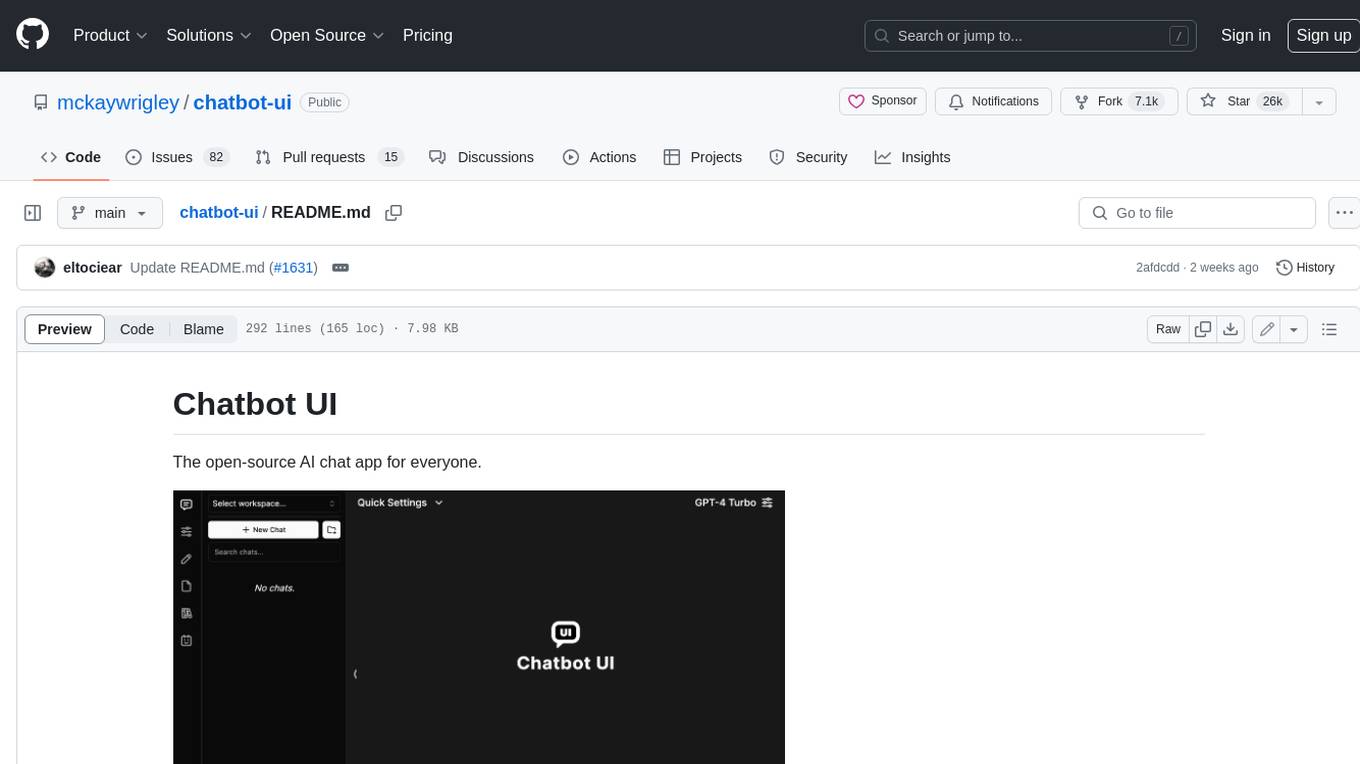
chatbot-ui
Chatbot UI is an open-source AI chat app that allows users to create and deploy their own AI chatbots. It is easy to use and can be customized to fit any need. Chatbot UI is perfect for businesses, developers, and anyone who wants to create a chatbot.
BricksLLM
BricksLLM is a cloud native AI gateway written in Go. Currently, it provides native support for OpenAI, Anthropic, Azure OpenAI and vLLM. BricksLLM aims to provide enterprise level infrastructure that can power any LLM production use cases. Here are some use cases for BricksLLM: * Set LLM usage limits for users on different pricing tiers * Track LLM usage on a per user and per organization basis * Block or redact requests containing PIIs * Improve LLM reliability with failovers, retries and caching * Distribute API keys with rate limits and cost limits for internal development/production use cases * Distribute API keys with rate limits and cost limits for students
uAgents
uAgents is a Python library developed by Fetch.ai that allows for the creation of autonomous AI agents. These agents can perform various tasks on a schedule or take action on various events. uAgents are easy to create and manage, and they are connected to a fast-growing network of other uAgents. They are also secure, with cryptographically secured messages and wallets.

griptape
Griptape is a modular Python framework for building AI-powered applications that securely connect to your enterprise data and APIs. It offers developers the ability to maintain control and flexibility at every step. Griptape's core components include Structures (Agents, Pipelines, and Workflows), Tasks, Tools, Memory (Conversation Memory, Task Memory, and Meta Memory), Drivers (Prompt and Embedding Drivers, Vector Store Drivers, Image Generation Drivers, Image Query Drivers, SQL Drivers, Web Scraper Drivers, and Conversation Memory Drivers), Engines (Query Engines, Extraction Engines, Summary Engines, Image Generation Engines, and Image Query Engines), and additional components (Rulesets, Loaders, Artifacts, Chunkers, and Tokenizers). Griptape enables developers to create AI-powered applications with ease and efficiency.