


vinux
Swiss Army Knife,Dark power (neo)vim config
Stars: 247
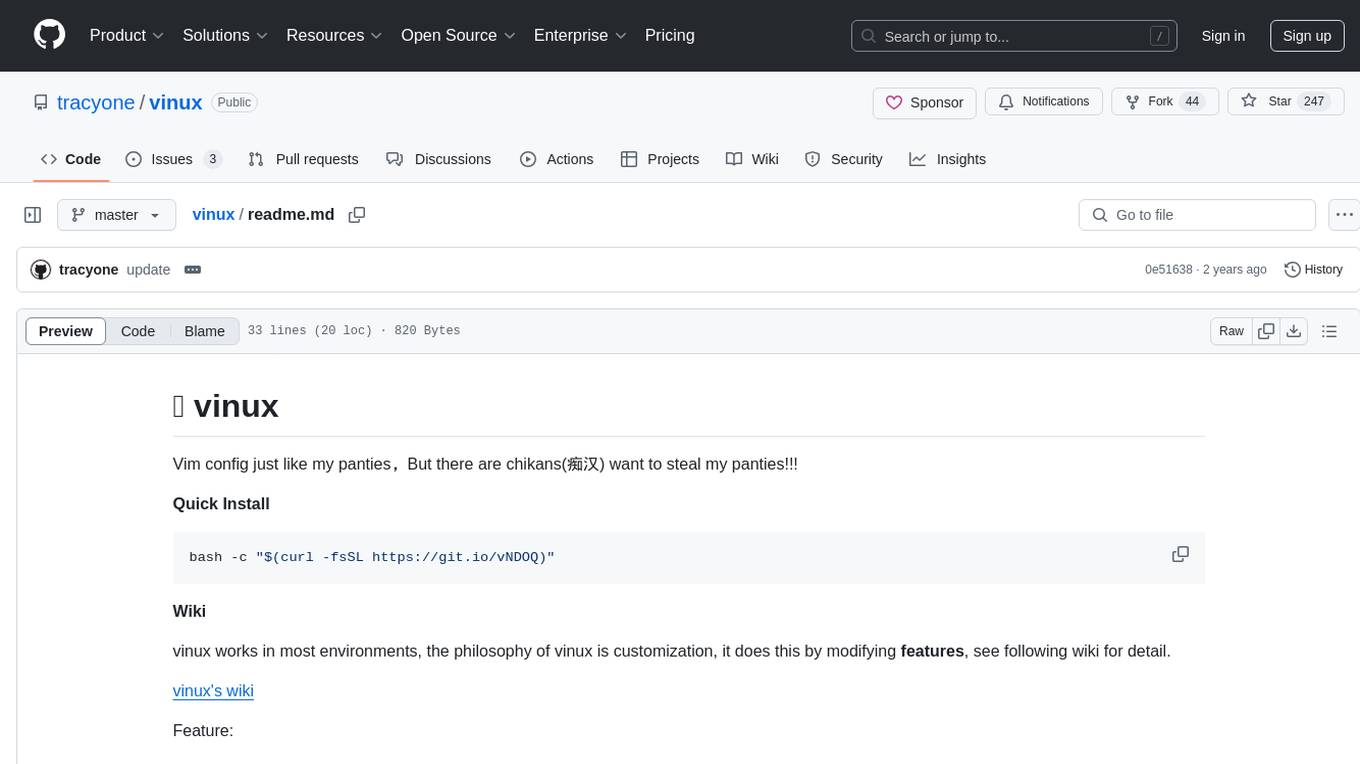
Vinux is a Vim configuration tool designed for customization with over 5000+ lines of code, offering a modular approach, Spacemacs-like keymap, lazy loading, and compatibility with Vim 7.3. It is optimized for Linux kernel and uboot development, aiming to provide a comprehensive and intricate setup for Vim users.
README:
Vim config just like my panties,But there are chikans(痴汉) want to steal my panties!!!
Quick Install
bash -c "$(curl -fsSL https://git.io/vNDOQ)"Wiki
vinux works in most environments, the philosophy of vinux is customization, it does this by modifying features, see following wiki for detail.
Feature:
- More then 5000+ line. More complicate then 99.99% of other vim config.
- Modular.
- Spacemacs-like keymap.
- Lazyload.
- Compatiable with Vim 7.3.
- Optimize for Linux kernel and uboot development.
- [ ] use stable version of plugin instead of newest version

For Tasks:
Click tags to check more tools for each tasksFor Jobs:
Alternative AI tools for vinux
Similar Open Source Tools
vinux
Vinux is a Vim configuration tool designed for customization with over 5000+ lines of code, offering a modular approach, Spacemacs-like keymap, lazy loading, and compatibility with Vim 7.3. It is optimized for Linux kernel and uboot development, aiming to provide a comprehensive and intricate setup for Vim users.
hollama
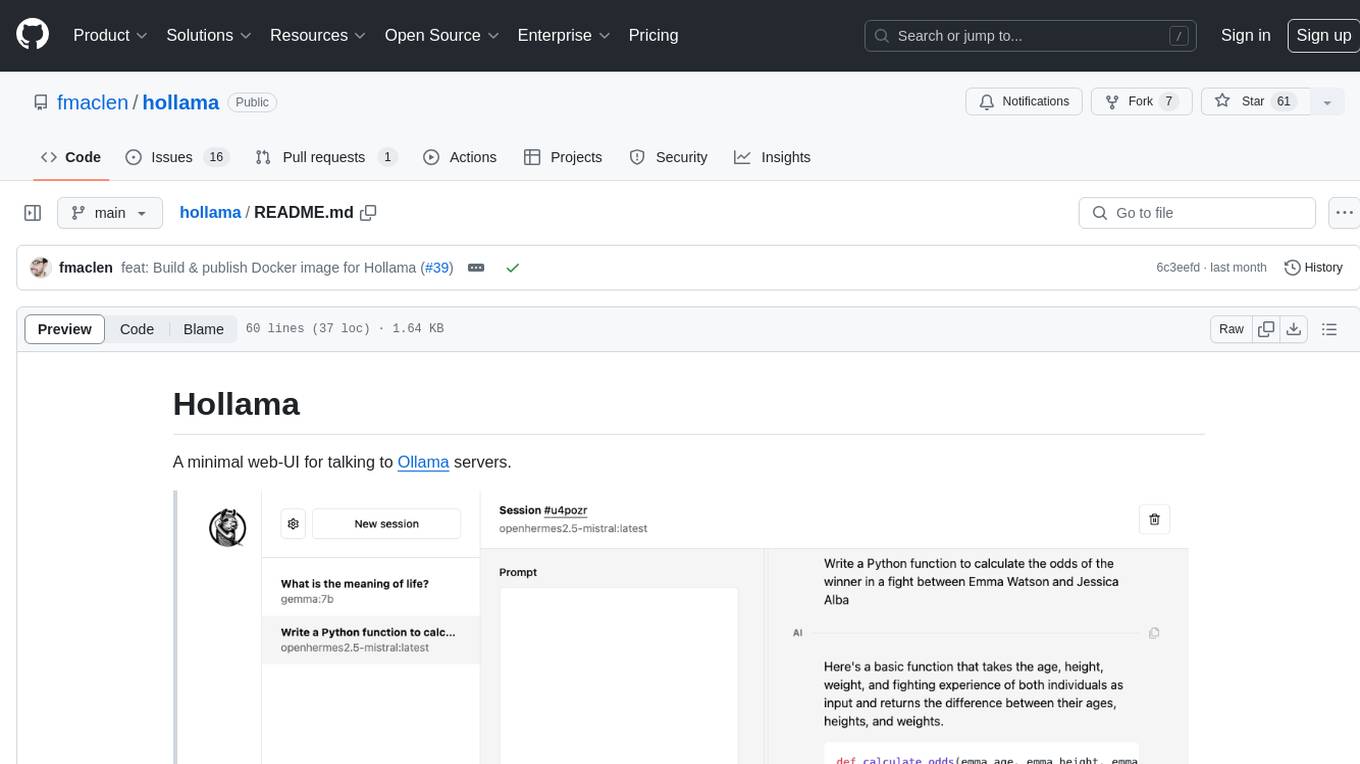
Hollama is a minimal web-UI tool designed for interacting with Ollama servers. It features large prompt fields, streams completions, ability to copy completions as raw text, Markdown parsing with syntax highlighting, and saves sessions/context in the browser's localStorage. Users can access the latest version of Hollama at https://hollama.fernando.is without sign up, and data is stored locally on the browser. The tool can also be run as a Docker image by executing a specific command. Developers can connect to an Ollama server by updating the ORIGIN settings. Hollama facilitates easy development by providing instructions to set up the environment, install dependencies, and start a development server. Building a production version of the app is straightforward with a single command, and deployment may require installing an adapter for the target environment.
code2prompt
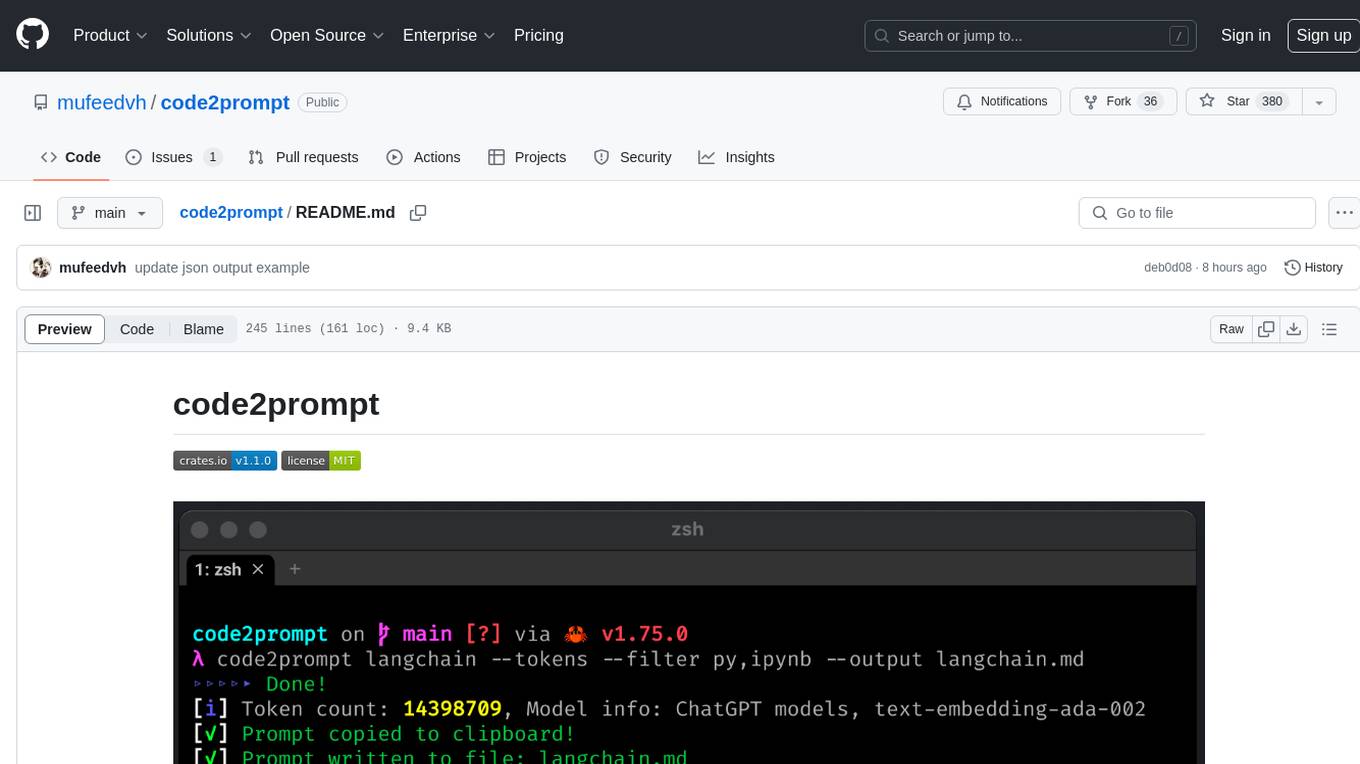
code2prompt is a command-line tool that converts your codebase into a single LLM prompt with a source tree, prompt templating, and token counting. It automates generating LLM prompts from codebases of any size, customizing prompt generation with Handlebars templates, respecting .gitignore, filtering and excluding files using glob patterns, displaying token count, including Git diff output, copying prompt to clipboard, saving prompt to an output file, excluding files and folders, adding line numbers to source code blocks, and more. It helps streamline the process of creating LLM prompts for code analysis, generation, and other tasks.
gitdiagram
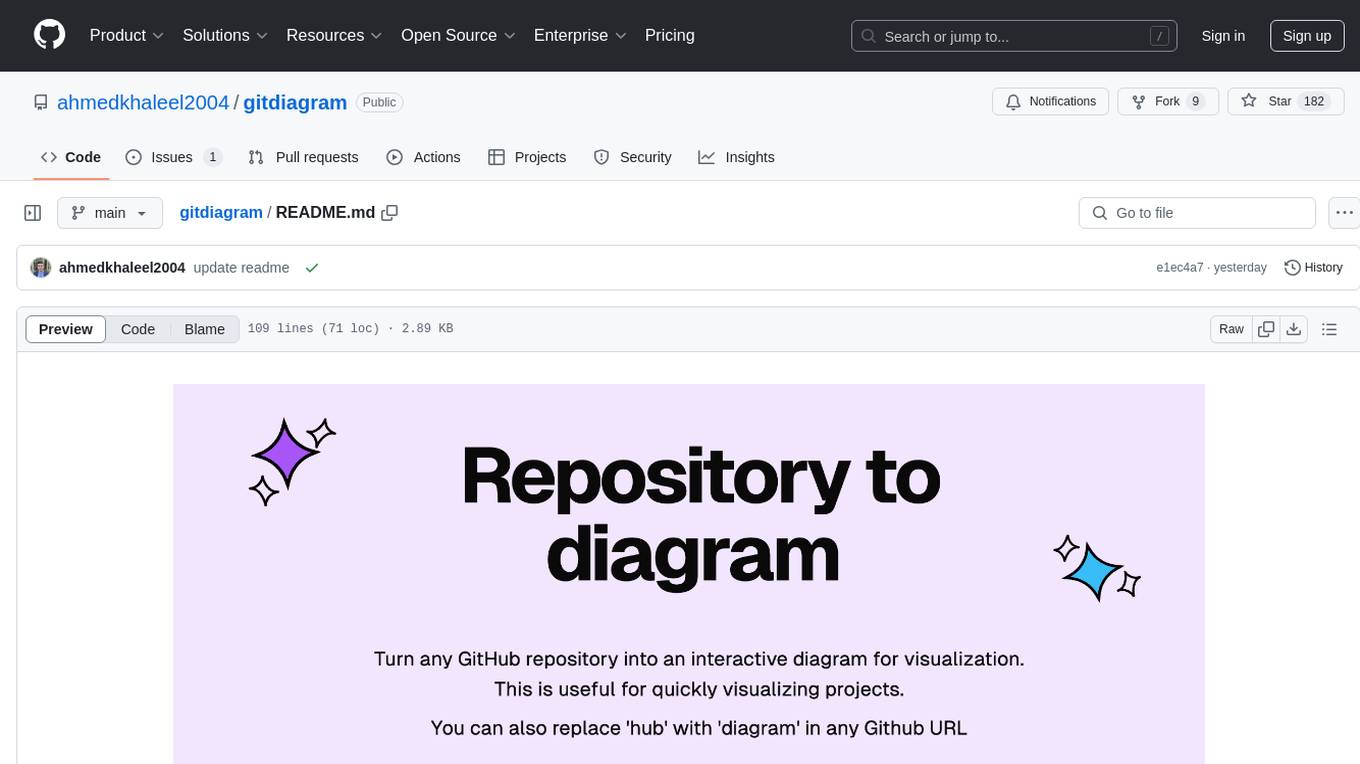
GitDiagram is a tool that turns any GitHub repository into an interactive diagram for visualization in seconds. It offers instant visualization, interactivity, fast generation, customization, and API access. The tool utilizes a tech stack including Next.js, FastAPI, PostgreSQL, Claude 3.5 Sonnet, Vercel, EC2, GitHub Actions, PostHog, and Api-Analytics. Users can self-host the tool for local development and contribute to its development. GitDiagram is inspired by Gitingest and has future plans to use larger context models, allow user API key input, implement RAG with Mermaid.js docs, and include font-awesome icons in diagrams.
reachat
Reachat is a UI library designed for building chat experiences without the need for manual coding of components. Users can customize each component and theme using Tailwind. The library offers features such as console and companion modes, markdown rendering, code highlighting, tables, JSON support, math rendering, YouTube embeds, file uploads, message sources, animations, conversation pagination, keyboard shortcuts, responsive design, and more. Reachat is highly customizable and suitable for creating interactive chat interfaces.
mesop
Mesop is a Python-based UI framework designed for rapid web app development, particularly for demos and internal apps. It allows users to write UI in Python code, offers reactive UI paradigm, ready-to-use components, hot reload feature, rich IDE support, and the ability to build custom UIs without writing Javascript/CSS/HTML. Mesop is intuitive for UI novices, provides frictionless developer workflows, and is flexible for creating delightful demos. It is used at Google for rapid internal app development.
VibeSurf
VibeSurf is an open-source AI agentic browser that combines workflow automation with intelligent AI agents, offering faster, cheaper, and smarter browser automation. It allows users to create revolutionary browser workflows, run multiple AI agents in parallel, perform intelligent AI automation tasks, maintain privacy with local LLM support, and seamlessly integrate as a Chrome extension. Users can save on token costs, achieve efficiency gains, and enjoy deterministic workflows for consistent and accurate results. VibeSurf also provides a Docker image for easy deployment and offers pre-built workflow templates for common tasks.
pyloid
Pyloid is a Python backend version of Electron and Tauri, simplifying desktop application development. Built on QtWebEngine and PySide6, it offers seamless integration with Python features, enabling easy creation of powerful applications. It provides web-based GUI generation, system tray icon support, multi-window management, bridge API between Python and JavaScript, single/multi-instance application support, comprehensive desktop app features, clean code structure, live UI development experience, cross-platform support, integration with frontend libraries, window customization, direct utilization of PySide6 features, and detailed Numpy-style docstrings.
wp-autoplugin
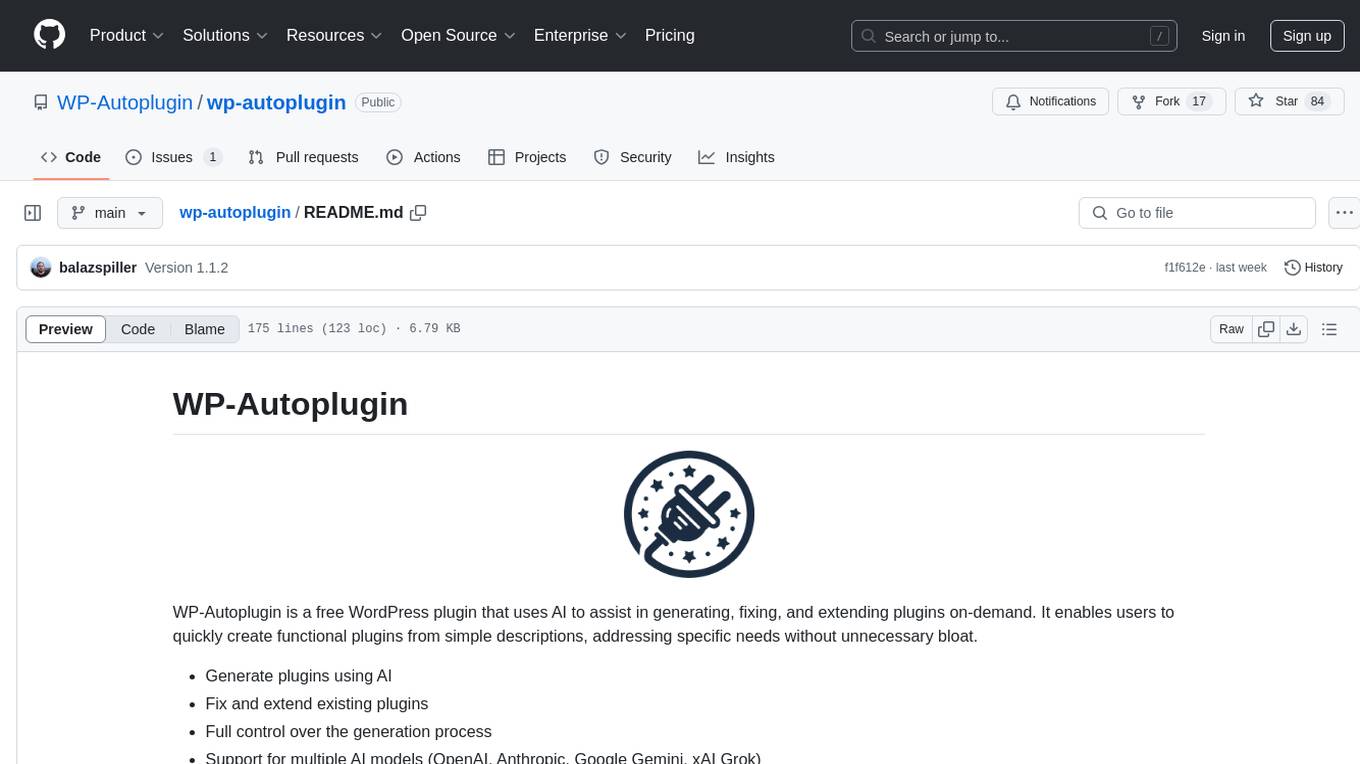
WP-Autoplugin is a free WordPress plugin that uses AI to assist in generating, fixing, and extending plugins on-demand. It enables users to quickly create functional plugins from simple descriptions, addressing specific needs without unnecessary bloat. Users can generate plugins using AI, fix and extend existing plugins, have full control over the generation process, view the list of generated plugins for easy management, and auto-detect fatal errors. The plugin offers practical solutions for creating lightweight alternatives, custom solutions, and developer foundations. It supports various AI models like GPT-3.5 Turbo, GPT-4, Claude 3.5 Sonnet, Google Gemini Flash 2.0, xAI Grok-beta, and more. WP-Autoplugin is completely free, open-source, privacy-focused, and allows users to bring their own API key for AI usage.
mesop
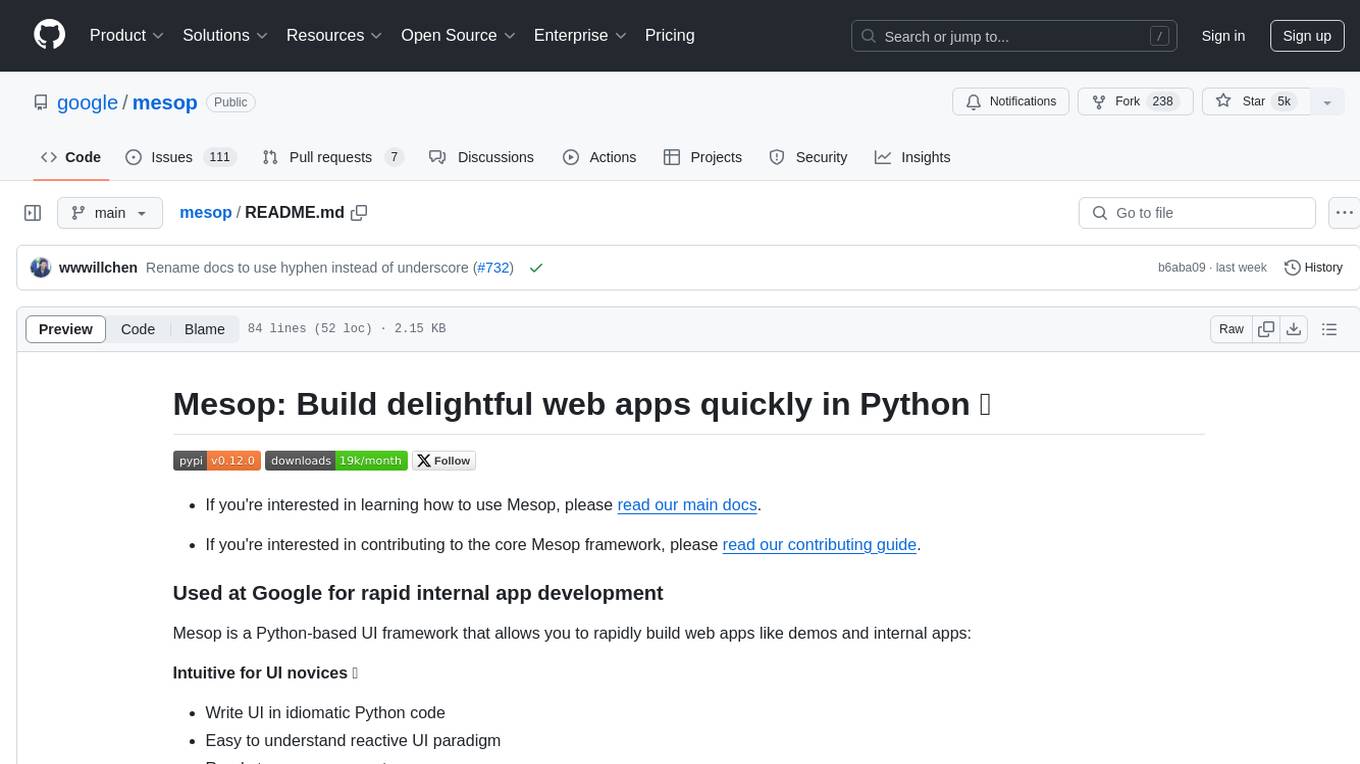
Mesop is a Python-based UI framework designed for rapid web app development, particularly for demos and internal apps. It offers an intuitive interface for UI novices, frictionless developer workflows with hot reload and IDE support, and flexibility to build custom UIs without the need for JavaScript/CSS/HTML. Mesop allows users to write UI in idiomatic Python code and compose UI into components using Python functions. It is used at Google for internal app development and provides a quick way to build delightful web apps in Python.
aiaio
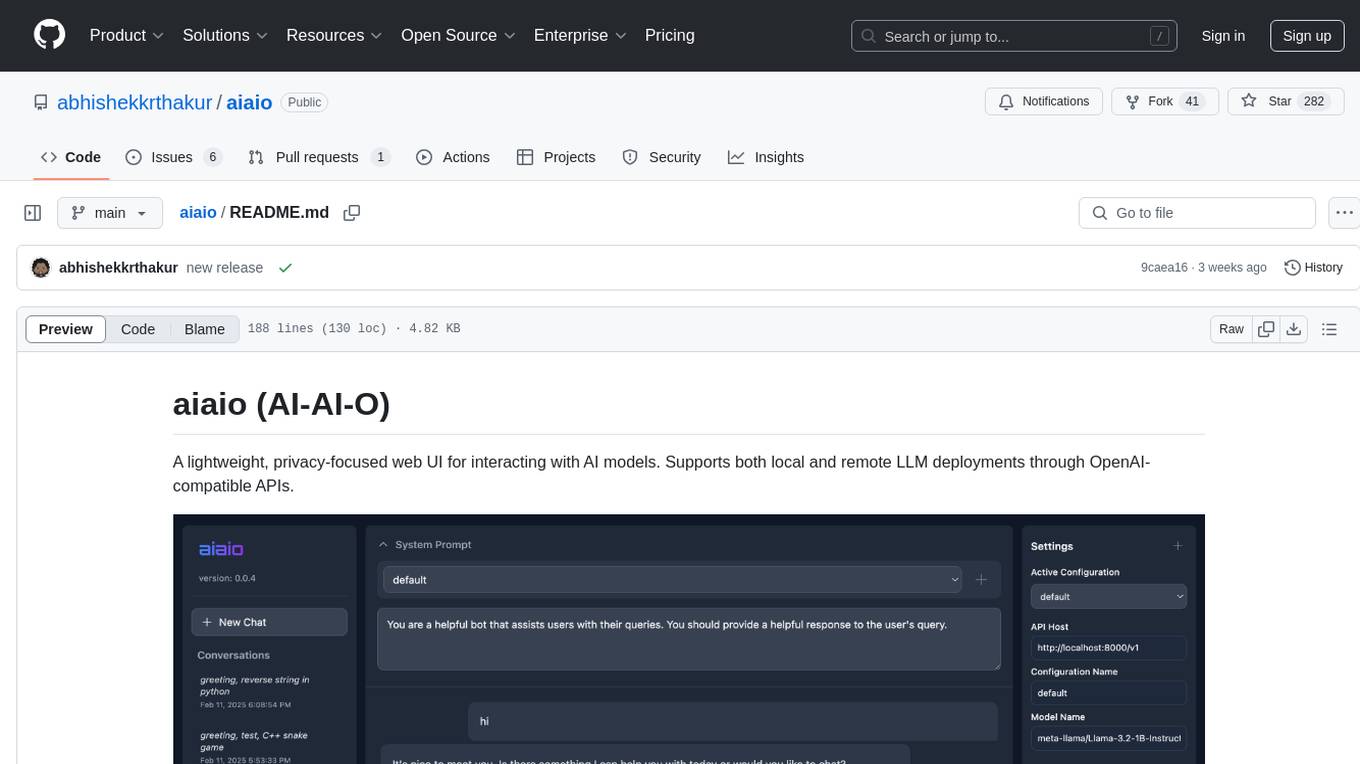
aiaio (AI-AI-O) is a lightweight, privacy-focused web UI for interacting with AI models. It supports both local and remote LLM deployments through OpenAI-compatible APIs. The tool provides features such as dark/light mode support, local SQLite database for conversation storage, file upload and processing, configurable model parameters through UI, privacy-focused design, responsive design for mobile/desktop, syntax highlighting for code blocks, real-time conversation updates, automatic conversation summarization, customizable system prompts, WebSocket support for real-time updates, Docker support for deployment, multiple API endpoint support, and multiple system prompt support. Users can configure model parameters and API settings through the UI, handle file uploads, manage conversations, and use keyboard shortcuts for efficient interaction. The tool uses SQLite for storage with tables for conversations, messages, attachments, and settings. Contributions to the project are welcome under the Apache License 2.0.
BodhiApp
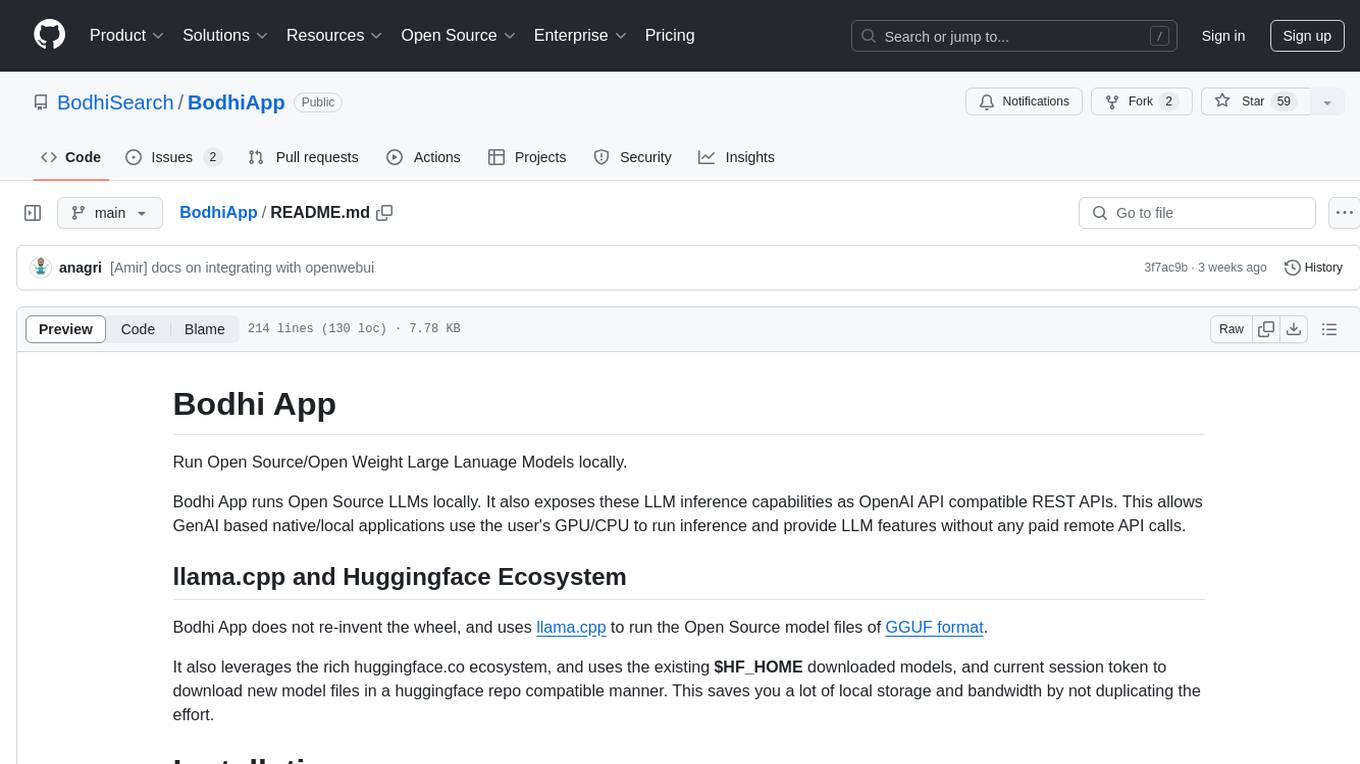
Bodhi App runs Open Source Large Language Models locally, exposing LLM inference capabilities as OpenAI API compatible REST APIs. It leverages llama.cpp for GGUF format models and huggingface.co ecosystem for model downloads. Users can run fine-tuned models for chat completions, create custom aliases, and convert Huggingface models to GGUF format. The CLI offers commands for environment configuration, model management, pulling files, serving API, and more.
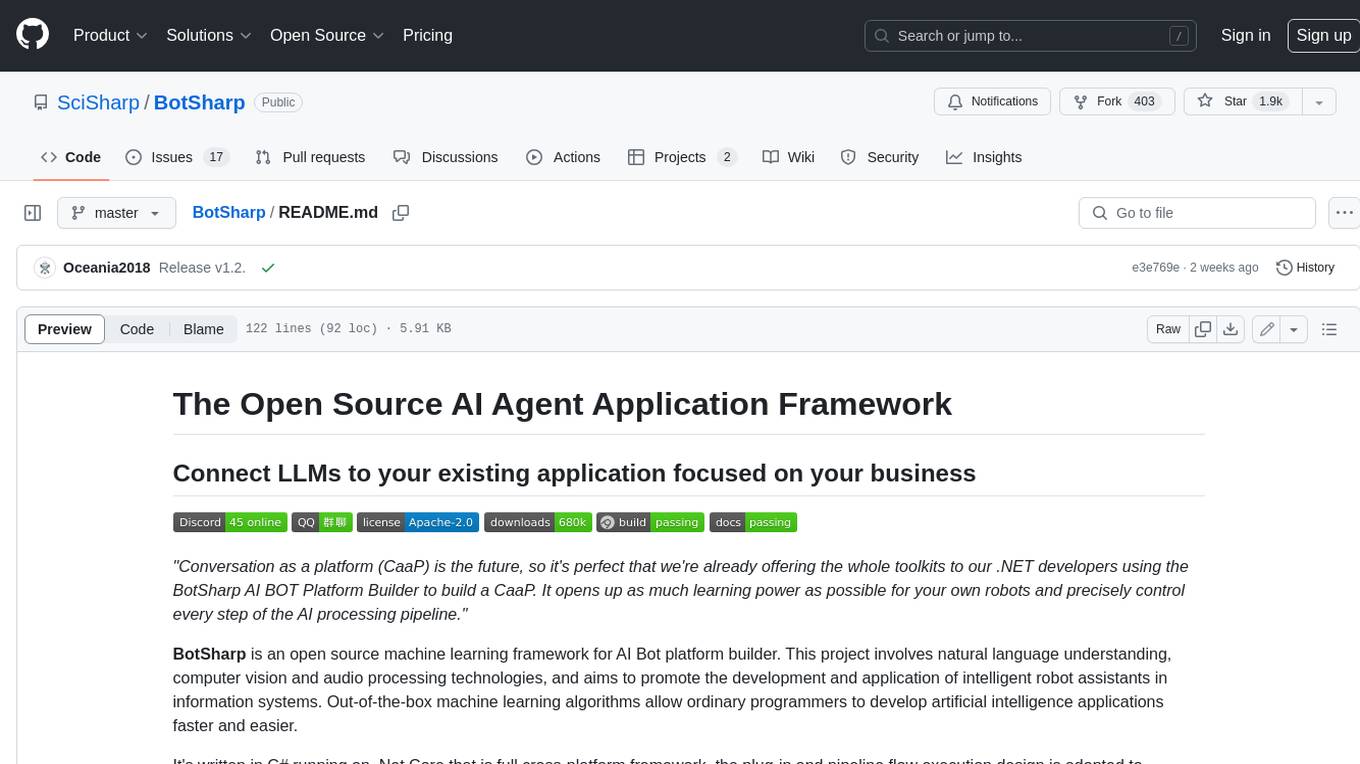
BotSharp
BotSharp is an open-source machine learning framework for building AI bot platforms. It provides a comprehensive set of tools and components for developing and deploying intelligent virtual assistants. BotSharp is designed to be modular and extensible, allowing developers to easily integrate it with their existing systems and applications. With BotSharp, you can quickly and easily create AI-powered chatbots, virtual assistants, and other conversational AI applications.
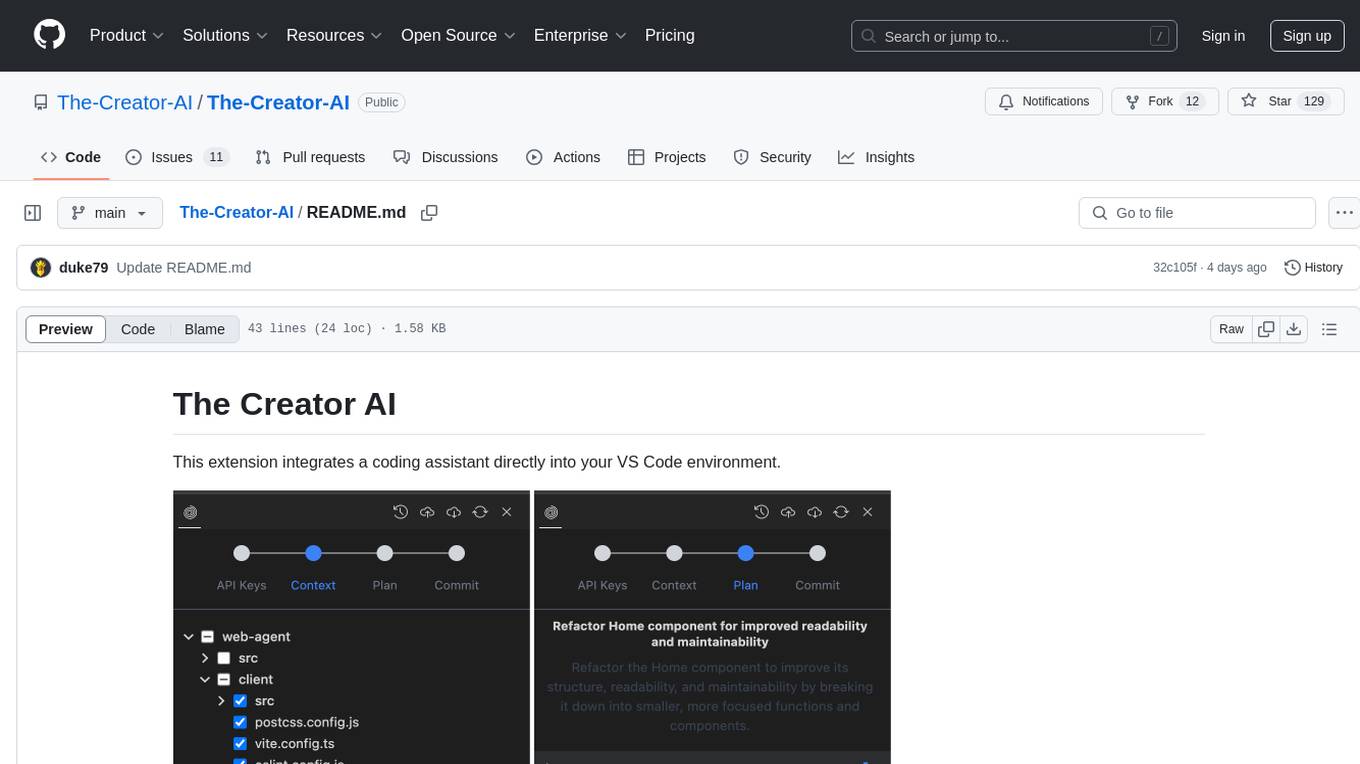
The-Creator-AI
The Creator AI is a VS Code extension that integrates a coding assistant allowing users to choose files/folders through UI and describe code changes for AI-generated implementation plans. It requires an API key for Gemini or OpenAI. The extension follows VS Code guidelines and best practices, providing functionalities like basic chat, change plan, and file explorer. Users can edit the README using Visual Studio Code with useful keyboard shortcuts. Enjoy enhanced coding experience with The Creator AI.
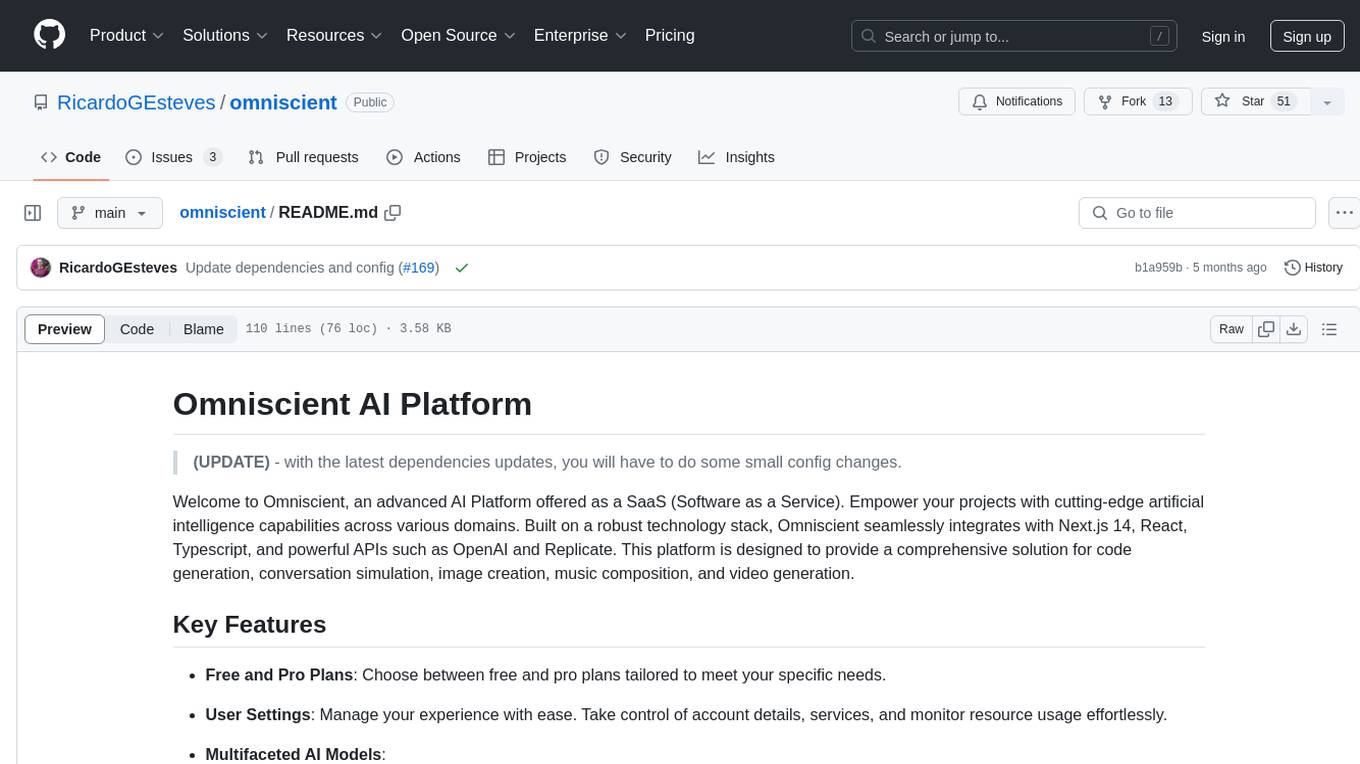
omniscient
Omniscient is an advanced AI Platform offered as a SaaS, empowering projects with cutting-edge artificial intelligence capabilities. Seamlessly integrating with Next.js 14, React, Typescript, and APIs like OpenAI and Replicate, it provides solutions for code generation, conversation simulation, image creation, music composition, and video generation.
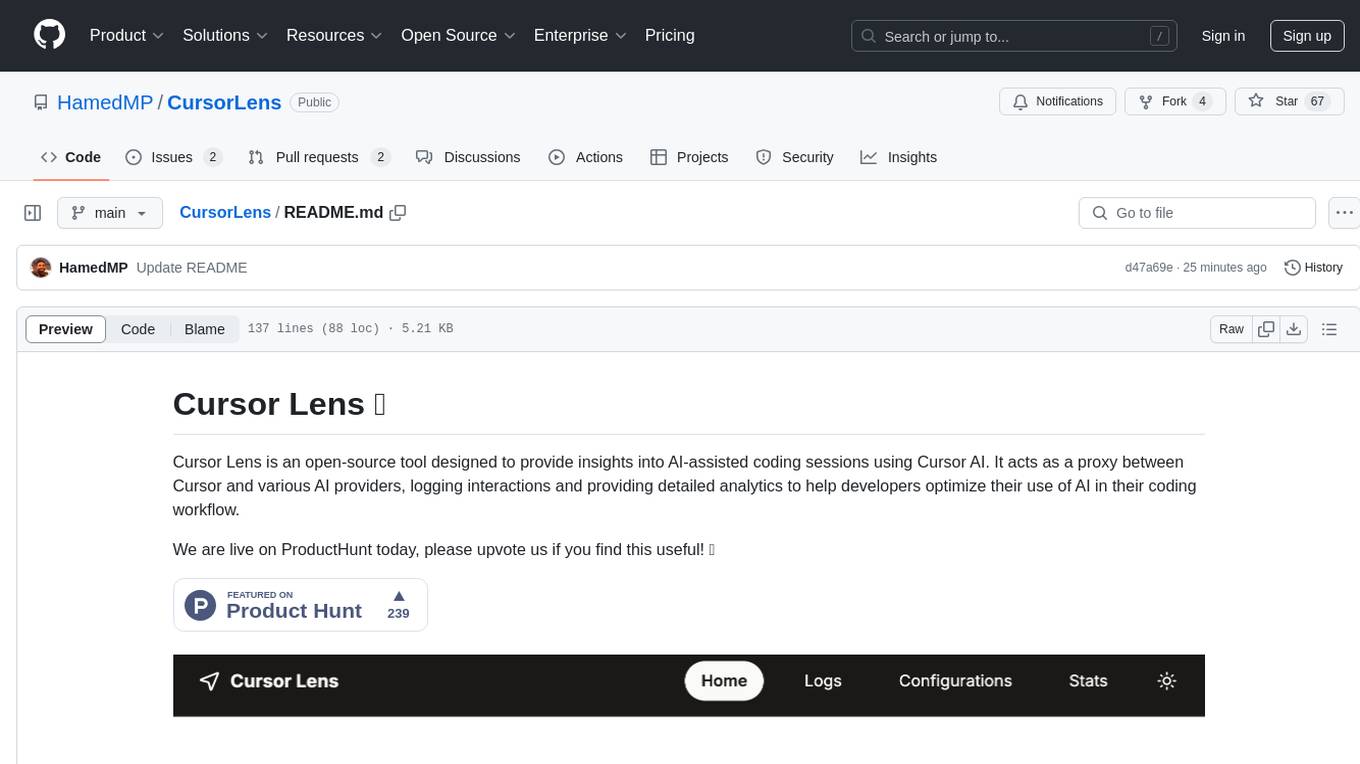
CursorLens
Cursor Lens is an open-source tool that acts as a proxy between Cursor and various AI providers, logging interactions and providing detailed analytics to help developers optimize their use of AI in their coding workflow. It supports multiple AI providers, captures and logs all requests, provides visual analytics on AI usage, allows users to set up and switch between different AI configurations, offers real-time monitoring of AI interactions, tracks token usage, estimates costs based on token usage and model pricing. Built with Next.js, React, PostgreSQL, Prisma ORM, Vercel AI SDK, Tailwind CSS, and shadcn/ui components.
For similar tasks
vinux
Vinux is a Vim configuration tool designed for customization with over 5000+ lines of code, offering a modular approach, Spacemacs-like keymap, lazy loading, and compatibility with Vim 7.3. It is optimized for Linux kernel and uboot development, aiming to provide a comprehensive and intricate setup for Vim users.
blurt
Blurt is a Gnome shell extension that enables accurate speech-to-text input in Linux. It is based on the command line utility NoteWhispers and supports Gnome shell version 48. Users can transcribe speech using a local whisper.cpp installation or a whisper.cpp server. The extension allows for easy setup, start/stop of speech-to-text input with key bindings or icon click, and provides visual indicators during operation. It offers convenience by enabling speech input into any window that allows text input, with the transcribed text sent to the clipboard for easy pasting.
For similar jobs
lollms-webui
LoLLMs WebUI (Lord of Large Language Multimodal Systems: One tool to rule them all) is a user-friendly interface to access and utilize various LLM (Large Language Models) and other AI models for a wide range of tasks. With over 500 AI expert conditionings across diverse domains and more than 2500 fine tuned models over multiple domains, LoLLMs WebUI provides an immediate resource for any problem, from car repair to coding assistance, legal matters, medical diagnosis, entertainment, and more. The easy-to-use UI with light and dark mode options, integration with GitHub repository, support for different personalities, and features like thumb up/down rating, copy, edit, and remove messages, local database storage, search, export, and delete multiple discussions, make LoLLMs WebUI a powerful and versatile tool.
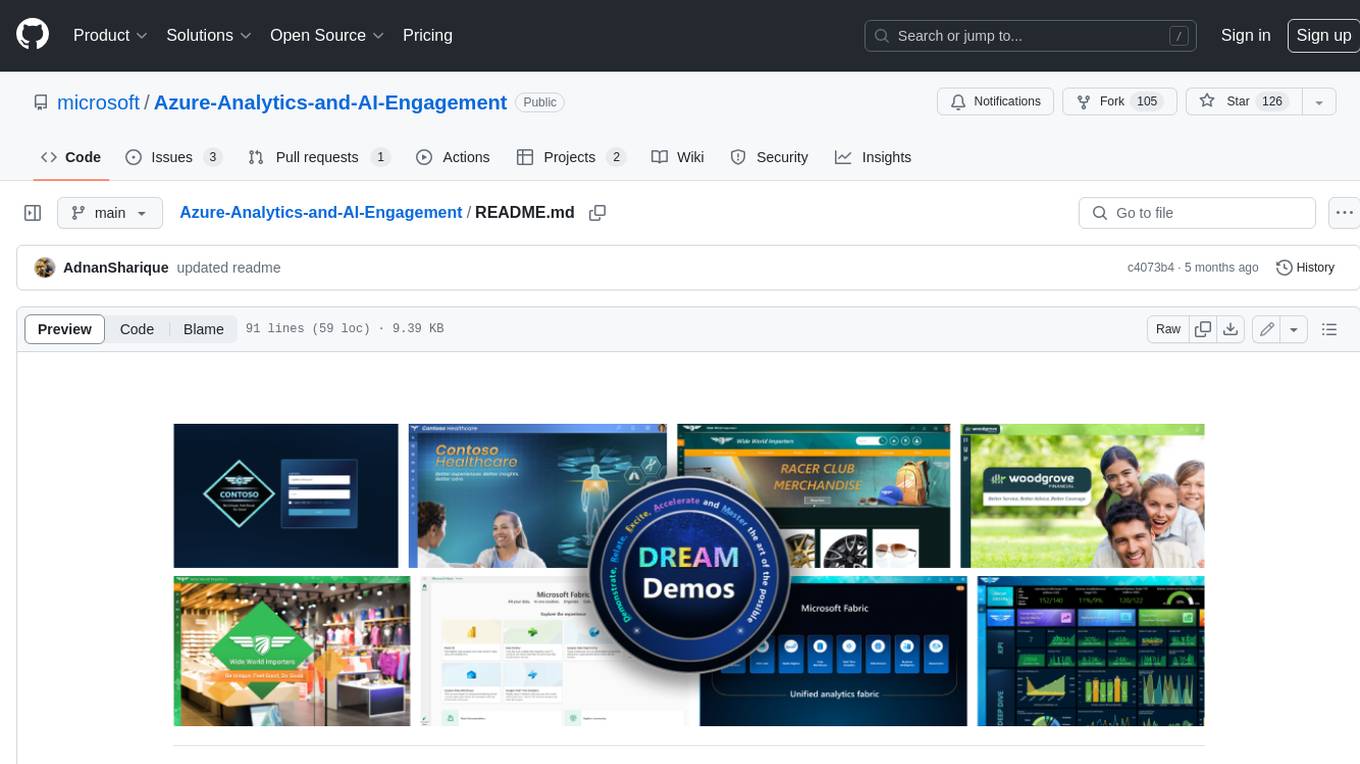
Azure-Analytics-and-AI-Engagement
The Azure-Analytics-and-AI-Engagement repository provides packaged Industry Scenario DREAM Demos with ARM templates (Containing a demo web application, Power BI reports, Synapse resources, AML Notebooks etc.) that can be deployed in a customer’s subscription using the CAPE tool within a matter of few hours. Partners can also deploy DREAM Demos in their own subscriptions using DPoC.
minio
MinIO is a High Performance Object Storage released under GNU Affero General Public License v3.0. It is API compatible with Amazon S3 cloud storage service. Use MinIO to build high performance infrastructure for machine learning, analytics and application data workloads.
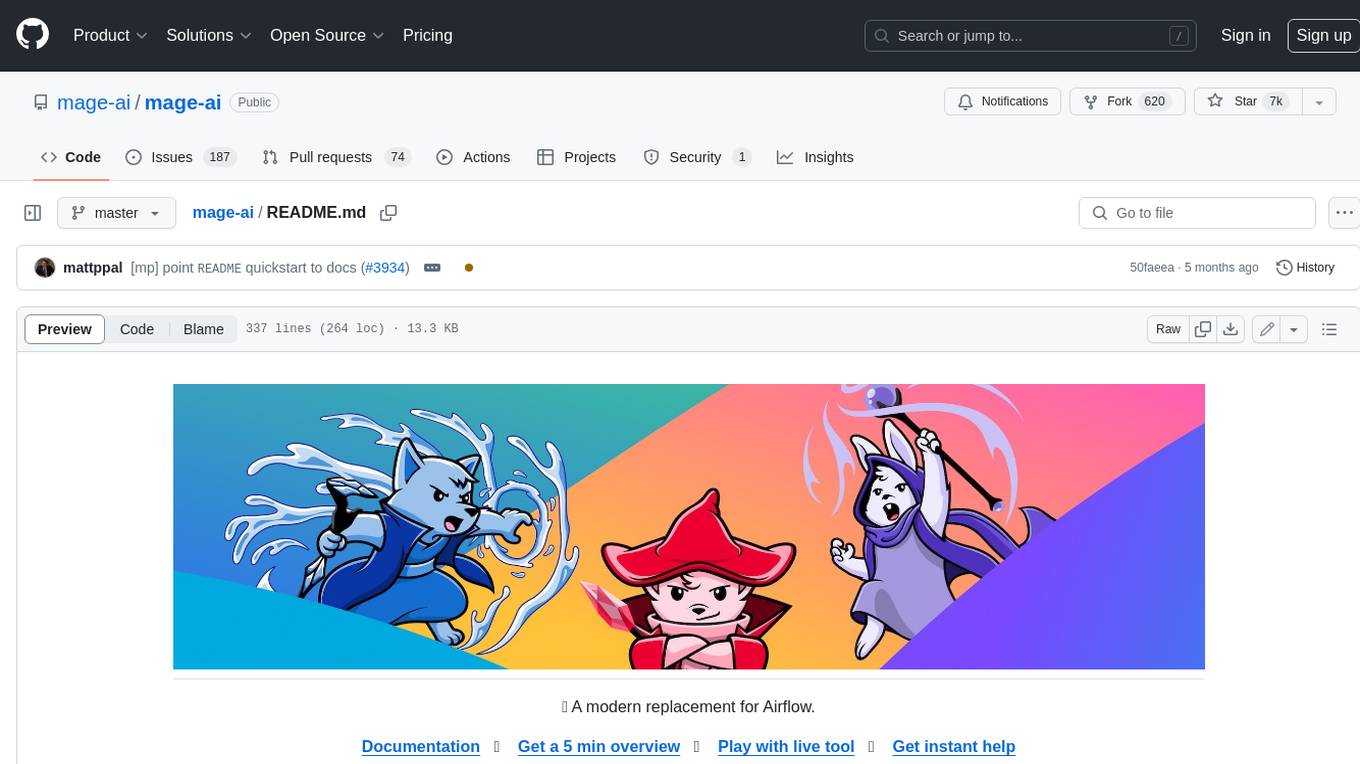
mage-ai
Mage is an open-source data pipeline tool for transforming and integrating data. It offers an easy developer experience, engineering best practices built-in, and data as a first-class citizen. Mage makes it easy to build, preview, and launch data pipelines, and provides observability and scaling capabilities. It supports data integrations, streaming pipelines, and dbt integration.
AiTreasureBox
AiTreasureBox is a versatile AI tool that provides a collection of pre-trained models and algorithms for various machine learning tasks. It simplifies the process of implementing AI solutions by offering ready-to-use components that can be easily integrated into projects. With AiTreasureBox, users can quickly prototype and deploy AI applications without the need for extensive knowledge in machine learning or deep learning. The tool covers a wide range of tasks such as image classification, text generation, sentiment analysis, object detection, and more. It is designed to be user-friendly and accessible to both beginners and experienced developers, making AI development more efficient and accessible to a wider audience.
tidb
TiDB is an open-source distributed SQL database that supports Hybrid Transactional and Analytical Processing (HTAP) workloads. It is MySQL compatible and features horizontal scalability, strong consistency, and high availability.
airbyte
Airbyte is an open-source data integration platform that makes it easy to move data from any source to any destination. With Airbyte, you can build and manage data pipelines without writing any code. Airbyte provides a library of pre-built connectors that make it easy to connect to popular data sources and destinations. You can also create your own connectors using Airbyte's no-code Connector Builder or low-code CDK. Airbyte is used by data engineers and analysts at companies of all sizes to build and manage their data pipelines.
labelbox-python
Labelbox is a data-centric AI platform for enterprises to develop, optimize, and use AI to solve problems and power new products and services. Enterprises use Labelbox to curate data, generate high-quality human feedback data for computer vision and LLMs, evaluate model performance, and automate tasks by combining AI and human-centric workflows. The academic & research community uses Labelbox for cutting-edge AI research.