


Stake-auto-bot
crypto, stake, bot, cryptocurrency, investment, automated, trading, algorithm, profits, passive income, blockchain, technology, finance, digital assets, staking, rewards, crypto bot, trading bot, crypto investment, financial tool, AI, machine learning, secure, reliable, efficiency, automated trading, crypto trading, staking bot,trading algorithm
Stars: 72
Stake-auto-bot is a tool designed for automated staking in the cryptocurrency space. It allows users to set up automated processes for staking their digital assets, providing a convenient way to earn rewards and secure networks. The tool simplifies the staking process by automating the necessary steps, such as selecting validators, delegating tokens, and monitoring rewards. With Stake-auto-bot, users can optimize their staking strategies and maximize their returns with minimal effort.
README:
auto stake bot
For Tasks:
Click tags to check more tools for each tasksFor Jobs:
Alternative AI tools for Stake-auto-bot
Similar Open Source Tools
Stake-auto-bot
Stake-auto-bot is a tool designed for automated staking in the cryptocurrency space. It allows users to set up automated processes for staking their digital assets, providing a convenient way to earn rewards and secure networks. The tool simplifies the staking process by automating the necessary steps, such as selecting validators, delegating tokens, and monitoring rewards. With Stake-auto-bot, users can optimize their staking strategies and maximize their returns with minimal effort.
GrowthHacking-Notes
GrowthHacking-Notes is a repository containing detailed notes, strategies, and resources related to growth hacking. It provides valuable insights and tips for individuals and businesses looking to accelerate their growth through innovative marketing techniques and data-driven strategies. The repository covers various topics such as user acquisition, retention, conversion optimization, and more, making it a comprehensive resource for anyone interested in growth hacking.
runhouse
Runhouse is a tool that allows you to build, run, and deploy production-quality AI apps and workflows on your own compute. It provides simple, powerful APIs for the full lifecycle of AI development, from research to evaluation to production to updates to scaling to management, and across any infra. By automatically packaging your apps into scalable, secure, and observable services, Runhouse can also turn otherwise redundant AI activities into common reusable components across your team or company, which improves cost, velocity, and reproducibility.
tools
Strands Agents Tools is a community-driven project that provides a powerful set of tools for your agents to use. It bridges the gap between large language models and practical applications by offering ready-to-use tools for file operations, system execution, API interactions, mathematical operations, and more. The tools cover a wide range of functionalities including file operations, shell integration, memory storage, web infrastructure, HTTP client, Slack client, Python execution, mathematical tools, AWS integration, image and video processing, audio output, environment management, task scheduling, advanced reasoning, swarm intelligence, dynamic MCP client, parallel tool execution, browser automation, diagram creation, RSS feed management, and computer automation.
mfish-nocode
Mfish-nocode is a low-code/no-code platform that aims to make development as easy as fishing. It breaks down technical barriers, allowing both developers and non-developers to quickly build business systems, increase efficiency, and unleash creativity. It is not only an efficiency tool for developers during leisure time, but also a website building tool for novices in the workplace, and even a secret weapon for leaders to prototype.
hexstrike-ai
HexStrike AI is an advanced AI-powered penetration testing MCP framework with 150+ security tools and 12+ autonomous AI agents. It features a multi-agent architecture with intelligent decision-making, vulnerability intelligence, and modern visual engine. The platform allows for AI agent connection, intelligent analysis, autonomous execution, real-time adaptation, and advanced reporting. HexStrike AI offers a streamlined installation process, Docker container support, 250+ specialized AI agents/tools, native desktop client, advanced web automation, memory optimization, enhanced error handling, and bypassing limitations.
haystack
Haystack is an end-to-end LLM framework that allows you to build applications powered by LLMs, Transformer models, vector search and more. Whether you want to perform retrieval-augmented generation (RAG), document search, question answering or answer generation, Haystack can orchestrate state-of-the-art embedding models and LLMs into pipelines to build end-to-end NLP applications and solve your use case.
holmesgpt
HolmesGPT is an open-source DevOps assistant powered by OpenAI or any tool-calling LLM of your choice. It helps in troubleshooting Kubernetes, incident response, ticket management, automated investigation, and runbook automation in plain English. The tool connects to existing observability data, is compliance-friendly, provides transparent results, supports extensible data sources, runbook automation, and integrates with existing workflows. Users can install HolmesGPT using Brew, prebuilt Docker container, Python Poetry, or Docker. The tool requires an API key for functioning and supports OpenAI, Azure AI, and self-hosted LLMs.
emqx
EMQX is a highly scalable and reliable MQTT platform designed for IoT data infrastructure. It supports various protocols like MQTT 5.0, 3.1.1, and 3.1, as well as MQTT-SN, CoAP, LwM2M, and MQTT over QUIC. EMQX allows connecting millions of IoT devices, processing messages in real time, and integrating with backend data systems. It is suitable for applications in AI, IoT, IIoT, connected vehicles, smart cities, and more. The tool offers features like massive scalability, powerful rule engine, flow designer, AI processing, robust security, observability, management, extensibility, and a unified experience with the Business Source License (BSL) 1.1.
req_llm
ReqLLM is a Req-based library for LLM interactions, offering a unified interface to AI providers through a plugin-based architecture. It brings composability and middleware advantages to LLM interactions, with features like auto-synced providers/models, typed data structures, ergonomic helpers, streaming capabilities, usage & cost extraction, and a plugin-based provider system. Users can easily generate text, structured data, embeddings, and track usage costs. The tool supports various AI providers like Anthropic, OpenAI, Groq, Google, and xAI, and allows for easy addition of new providers. ReqLLM also provides API key management, detailed documentation, and a roadmap for future enhancements.
litgpt
LitGPT is a command-line tool designed to easily finetune, pretrain, evaluate, and deploy 20+ LLMs **on your own data**. It features highly-optimized training recipes for the world's most powerful open-source large-language-models (LLMs).
awesome-alt-clouds
Awesome Alt Clouds is a curated list of non-hyperscale cloud providers offering specialized infrastructure and services catering to specific workloads, compliance requirements, and developer needs. The list includes various categories such as Infrastructure Clouds, Sovereign Clouds, Unikernels & WebAssembly, Data Clouds, Workflow and Operations Clouds, Network, Connectivity and Security Clouds, Vibe Clouds, Developer Happiness Clouds, Authorization, Identity, Fraud and Abuse Clouds, Monetization, Finance and Legal Clouds, Customer, Marketing and eCommerce Clouds, IoT, Communications, and Media Clouds, Blockchain Clouds, Source Code Control, Cloud Adjacent, and Future Clouds.
huf
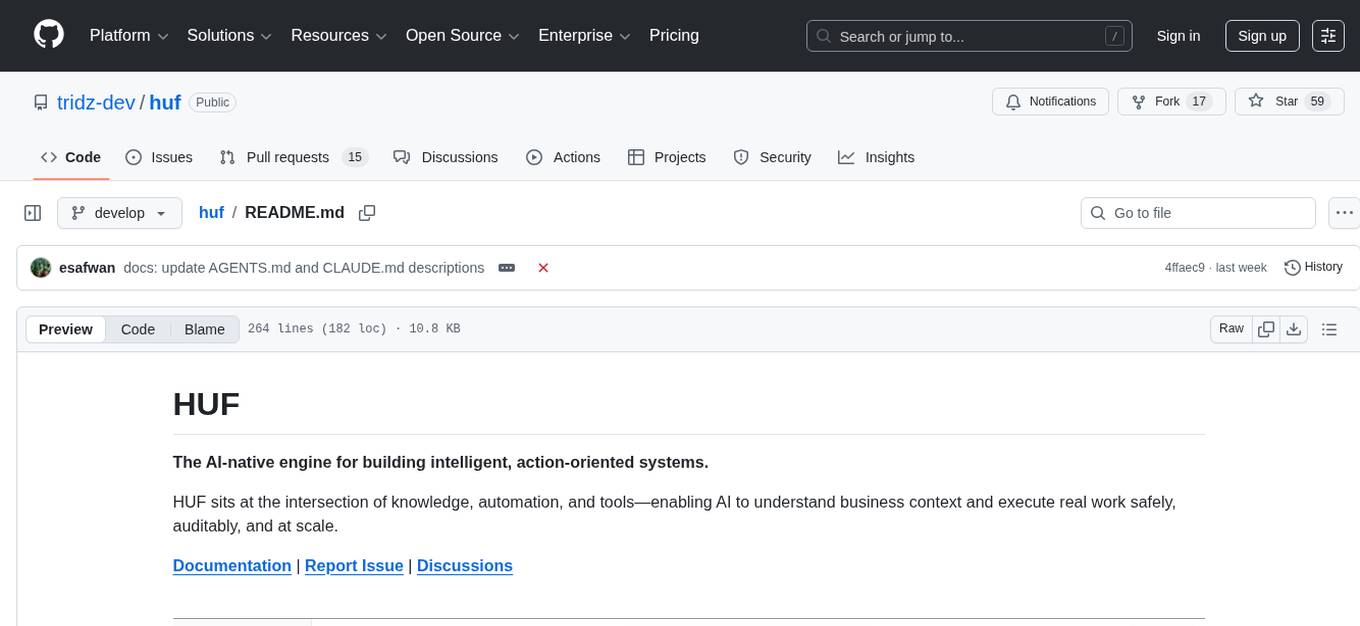
HUF is an AI-native engine designed to centralize intelligence and execution into a single engine, enabling AI to operate inside real business systems. It offers multi-provider AI connectivity, intelligent tools, knowledge grounding, event-driven execution, visual workflow builder, full auditability, and cost control. HUF can be used as AI infrastructure for products, internal intelligence platform, automation & orchestration engine, embedded AI layer for SaaS, and enterprise AI control plane. Core capabilities include agent system, knowledge management, trigger system, visual flow builder, and observability. The tech stack includes Frappe Framework, Python 3.10+, LiteLLM, SQLite FTS5, React 18, TypeScript, Tailwind CSS, and MariaDB.
mcp-rubber-duck
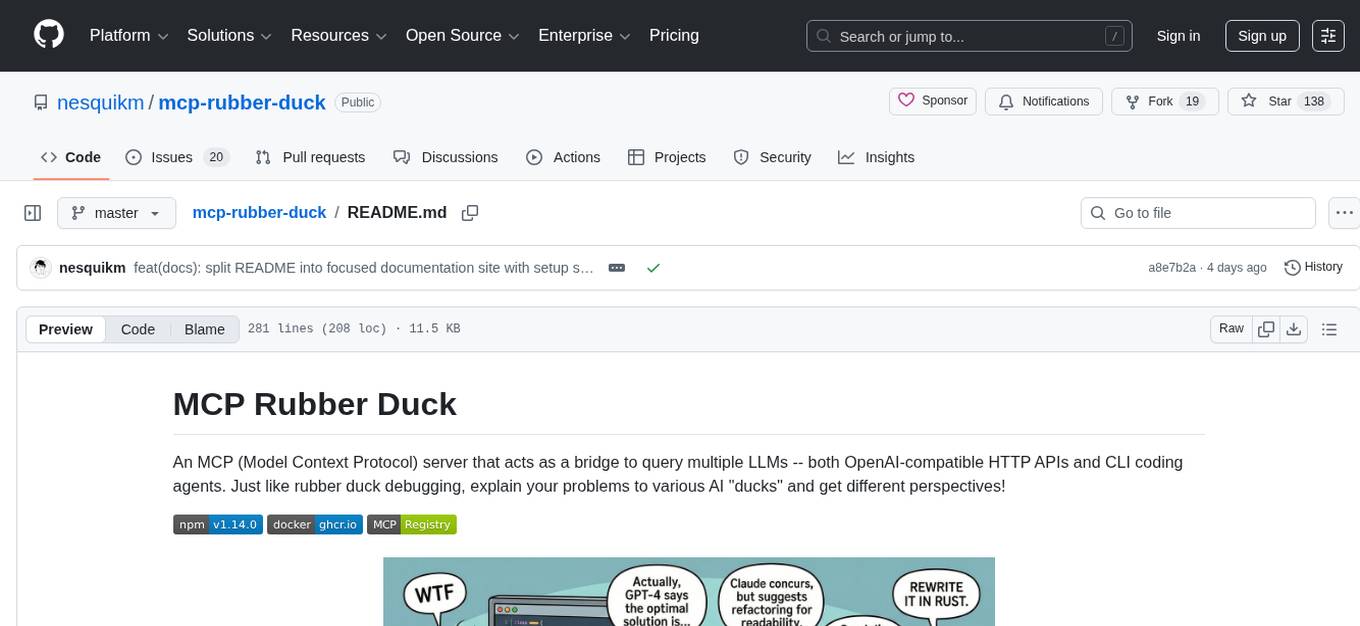
MCP Rubber Duck is a Model Context Protocol server that acts as a bridge to query multiple LLMs, including OpenAI-compatible HTTP APIs and CLI coding agents. Users can explain their problems to various AI 'ducks' to get different perspectives. The tool offers features like universal OpenAI compatibility, CLI agent support, conversation management, multi-duck querying, consensus voting, LLM-as-Judge evaluation, structured debates, health monitoring, usage tracking, and more. It supports various HTTP providers like OpenAI, Google Gemini, Anthropic, Groq, Together AI, Perplexity, and CLI providers like Claude Code, Codex, Gemini CLI, Grok, Aider, and custom agents. Users can install the tool globally, configure it using environment variables, and access interactive UIs for comparing ducks, voting, debating, and usage statistics. The tool provides multiple tools for asking questions, chatting, clearing conversations, listing ducks, comparing responses, voting, judging, iterating, debating, and more. It also offers prompt templates for different analysis purposes and extensive documentation for setup, configuration, tools, prompts, CLI providers, MCP Bridge, guardrails, Docker deployment, troubleshooting, contributing, license, acknowledgments, changelog, registry & directory, and support.
py-gpt
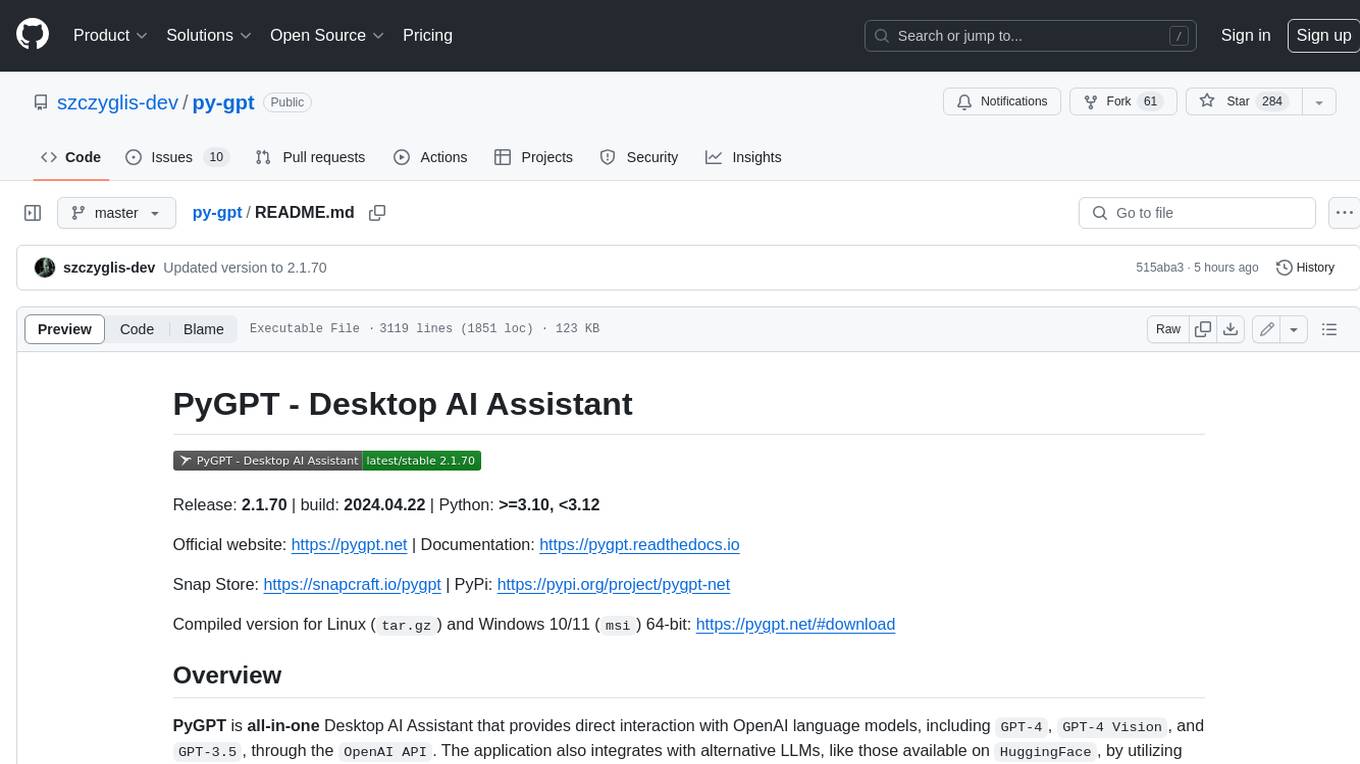
Py-GPT is a Python library that provides an easy-to-use interface for OpenAI's GPT-3 API. It allows users to interact with the powerful GPT-3 model for various natural language processing tasks. With Py-GPT, developers can quickly integrate GPT-3 capabilities into their applications, enabling them to generate text, answer questions, and more with just a few lines of code.
koog
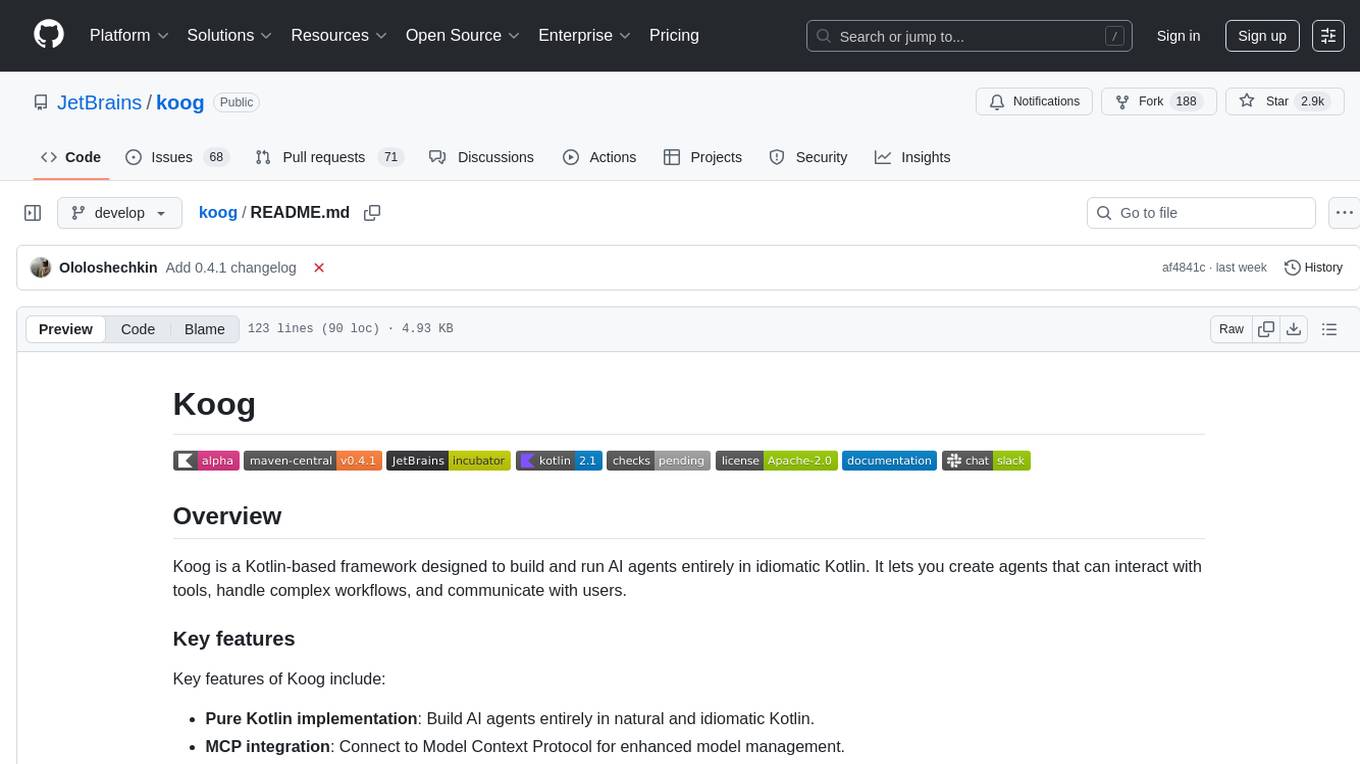
Koog is a Kotlin-based framework for building and running AI agents entirely in idiomatic Kotlin. It allows users to create agents that interact with tools, handle complex workflows, and communicate with users. Key features include pure Kotlin implementation, MCP integration, embedding capabilities, custom tool creation, ready-to-use components, intelligent history compression, powerful streaming API, persistent agent memory, comprehensive tracing, flexible graph workflows, modular feature system, scalable architecture, and multiplatform support.
For similar tasks
Stake-auto-bot
Stake-auto-bot is a tool designed for automated staking in the cryptocurrency space. It allows users to set up automated processes for staking their digital assets, providing a convenient way to earn rewards and secure networks. The tool simplifies the staking process by automating the necessary steps, such as selecting validators, delegating tokens, and monitoring rewards. With Stake-auto-bot, users can optimize their staking strategies and maximize their returns with minimal effort.
miner-release
Heurist Miner is a tool that allows users to contribute their GPU for AI inference tasks on the Heurist network. It supports dual mining capabilities for image generation models and Large Language Models, offers flexible setup on Windows or Linux with multiple GPUs, ensures secure rewards through a dual-wallet system, and is fully open source. Users can earn rewards by hosting AI models and supporting applications in the Heurist ecosystem.

Akagi
Akagi is a project designed to help users understand and improve their performance in Majsoul game matches in real-time. It provides educational insights and tools for analyzing gameplay. Users can install Akagi on Windows or Mac systems and follow the setup instructions to enhance their gaming experience. The project aims to offer features like Autoplay, Auto Ron, and integration with MajsoulUnlocker. It also focuses on enhancing user safety by providing guidelines to minimize the risk of account suspension. Akagi is a tool that combines MITM interception, AI decision-making, and user interaction to optimize gameplay strategies and performance.
LLMs-in-Finance
This repository focuses on the application of Large Language Models (LLMs) in the field of finance. It provides insights and knowledge about how LLMs can be utilized in various scenarios within the finance industry, particularly in generating AI agents. The repository aims to explore the potential of LLMs to enhance financial processes and decision-making through the use of advanced natural language processing techniques.
awesome-llm-planning-reasoning
The 'Awesome LLMs Planning Reasoning' repository is a curated collection focusing on exploring the capabilities of Large Language Models (LLMs) in planning and reasoning tasks. It includes research papers, code repositories, and benchmarks that delve into innovative techniques, reasoning limitations, and standardized evaluations related to LLMs' performance in complex cognitive tasks. The repository serves as a comprehensive resource for researchers, developers, and enthusiasts interested in understanding the advancements and challenges in leveraging LLMs for planning and reasoning in real-world scenarios.
wzry_ai
This is an open-source project for playing the game King of Glory with an artificial intelligence model. The first phase of the project has been completed, and future upgrades will be built upon this foundation. The second phase of the project has started, and progress is expected to proceed according to plan. For any questions, feel free to join the QQ exchange group: 687853827. The project aims to learn artificial intelligence and strictly prohibits cheating. Detailed installation instructions are available in the doc/README.md file. Environment installation video: (bilibili) Welcome to follow, like, tip, comment, and provide your suggestions.
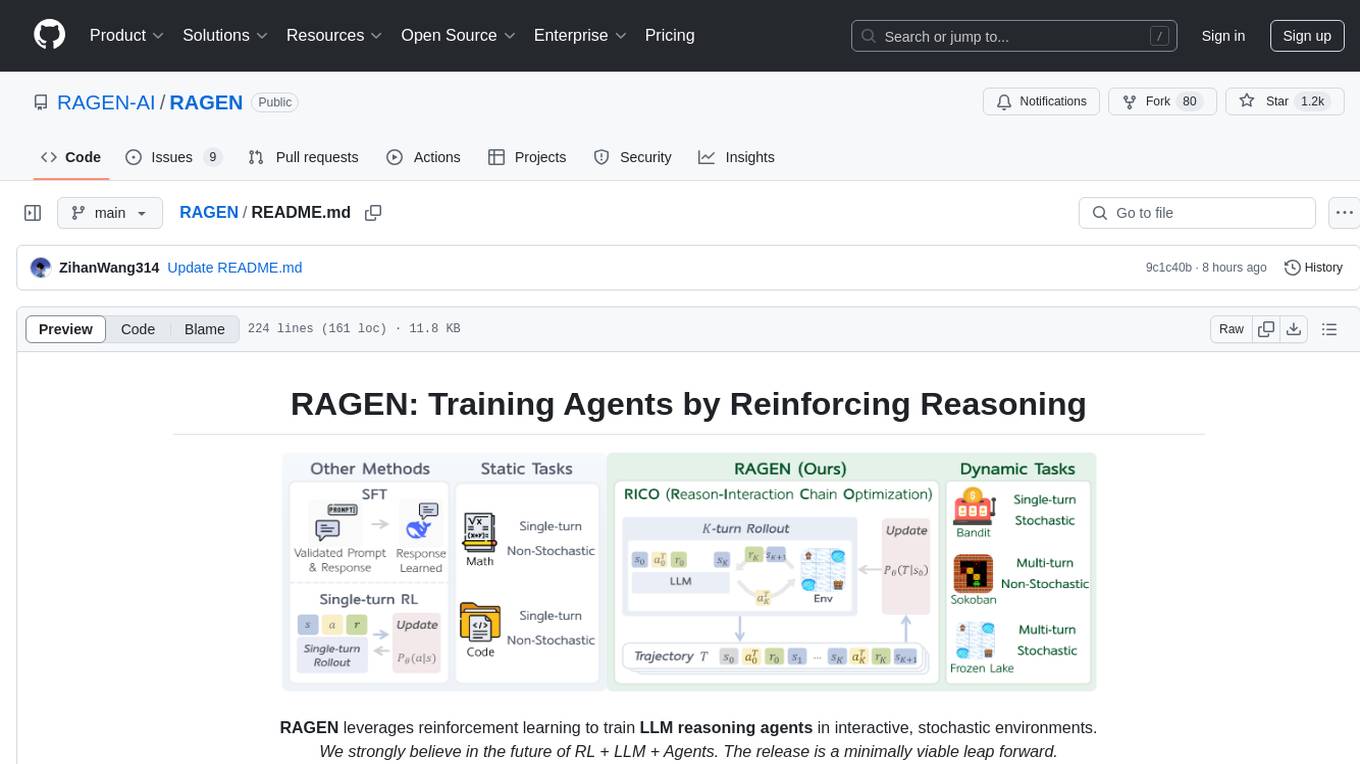
RAGEN
RAGEN is a reinforcement learning framework designed to train reasoning-capable large language model (LLM) agents in interactive, stochastic environments. It addresses challenges such as multi-turn interactions and stochastic environments through a Markov Decision Process (MDP) formulation, Reason-Interaction Chain Optimization (RICO) algorithm, and progressive reward normalization strategies. The framework consists of MDP formulation, RICO algorithm with rollout and update stages, and reward normalization strategies to stabilize training. RAGEN aims to optimize reasoning and action strategies for LLM agents operating in complex environments.

AirGo
AirGo is a front and rear end separation, multi user, multi protocol proxy service management system, simple and easy to use. It supports vless, vmess, shadowsocks, and hysteria2.
For similar jobs
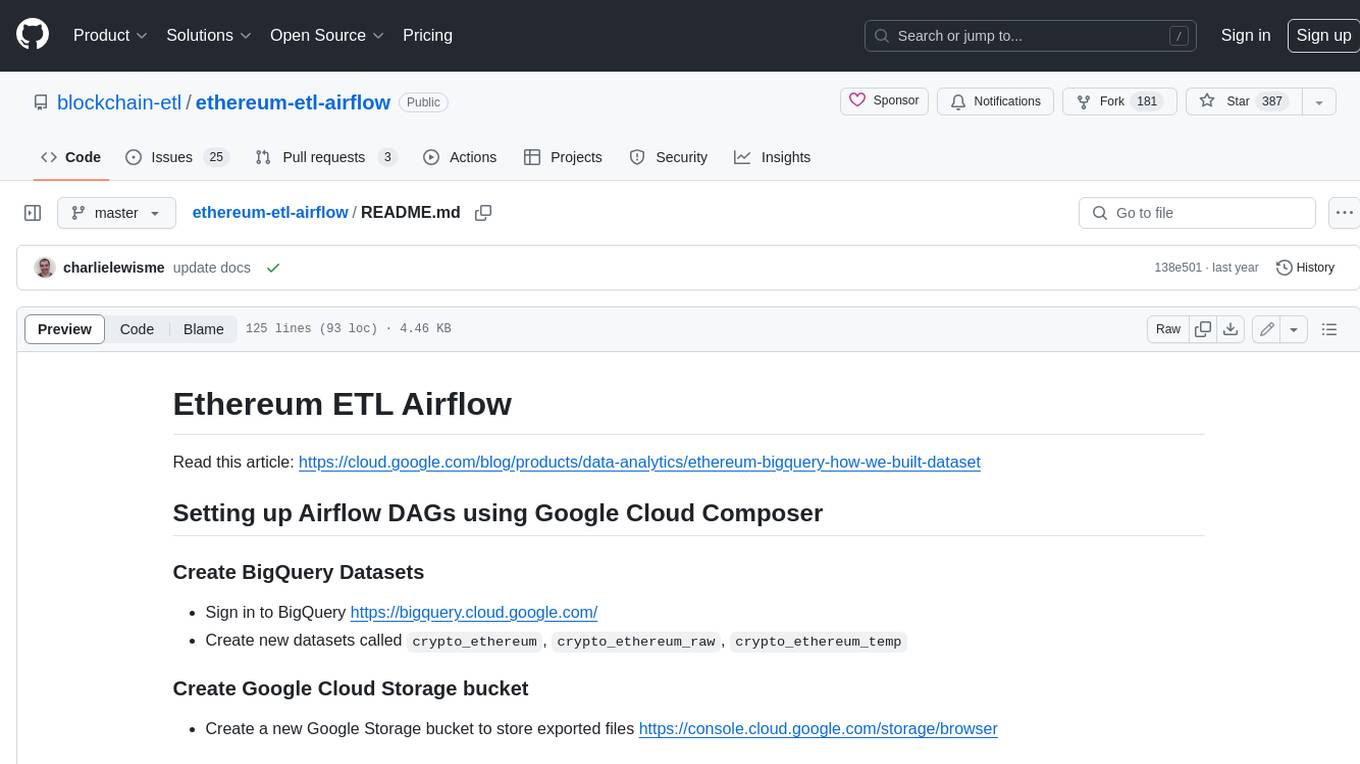
ethereum-etl-airflow
This repository contains Airflow DAGs for extracting, transforming, and loading (ETL) data from the Ethereum blockchain into BigQuery. The DAGs use the Google Cloud Platform (GCP) services, including BigQuery, Cloud Storage, and Cloud Composer, to automate the ETL process. The repository also includes scripts for setting up the GCP environment and running the DAGs locally.
airnode
Airnode is a fully-serverless oracle node that is designed specifically for API providers to operate their own oracles.
CHATPGT-MEV-BOT
The 𝓜𝓔𝓥-𝓑𝓞𝓣 is a revolutionary tool that empowers users to maximize their ETH earnings through advanced slippage techniques within the Ethereum ecosystem. Its user-centric design, optimized earning mechanism, and comprehensive security measures make it an indispensable tool for traders seeking to enhance their crypto trading strategies. With its current free access, there's no better time to explore the 𝓜𝓔𝓥-𝓑𝓞𝓣's capabilities and witness the transformative impact it can have on your crypto trading journey.
CortexTheseus
CortexTheseus is a full node implementation of the Cortex blockchain, written in C++. It provides a complete set of features for interacting with the Cortex network, including the ability to create and manage accounts, send and receive transactions, and participate in consensus. CortexTheseus is designed to be scalable, secure, and easy to use, making it an ideal choice for developers building applications on the Cortex blockchain.
CHATPGT-MEV-BOT-ETH
This tool is a bot that monitors the performance of MEV transactions on the Ethereum blockchain. It provides real-time data on MEV profitability, transaction volume, and network congestion. The bot can be used to identify profitable MEV opportunities and to track the performance of MEV strategies.
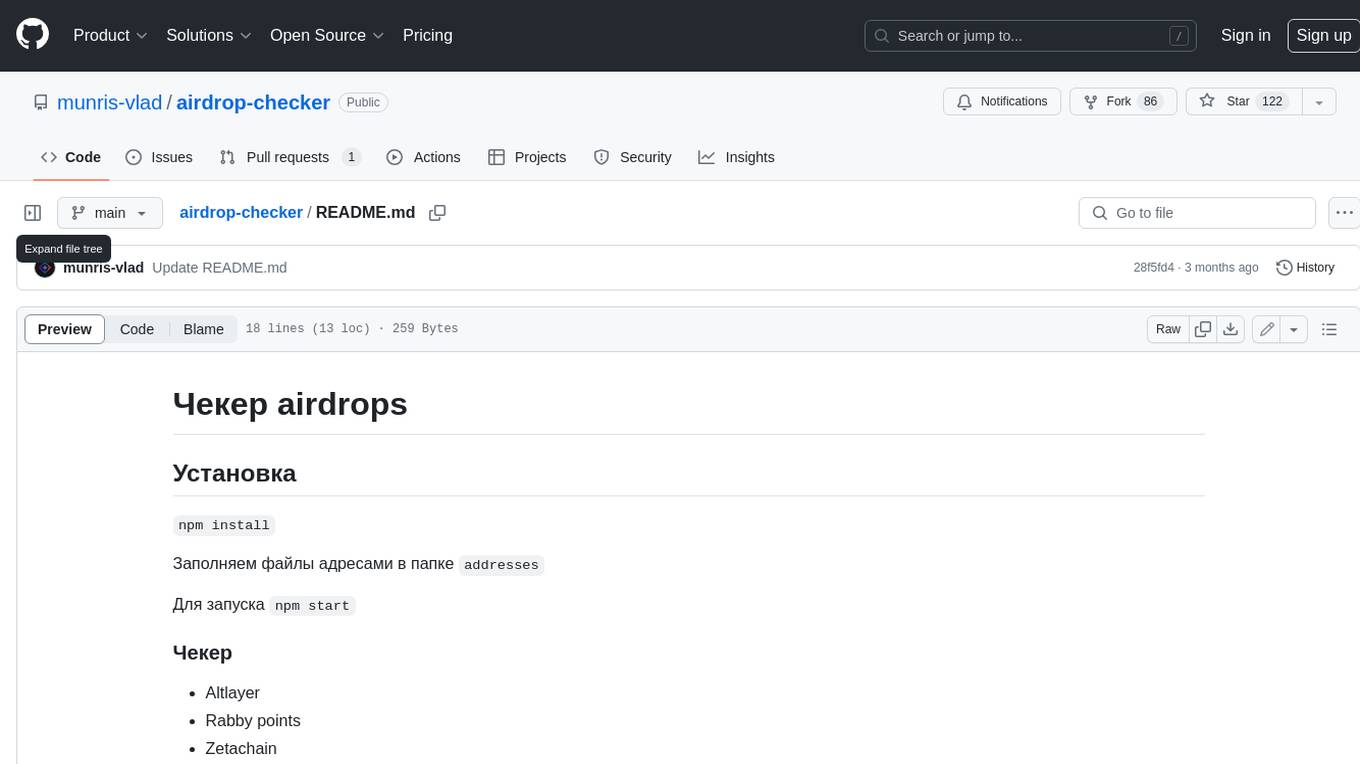
airdrop-checker
Airdrop-checker is a tool that helps you to check if you are eligible for any airdrops. It supports multiple airdrops, including Altlayer, Rabby points, Zetachain, Frame, Anoma, Dymension, and MEME. To use the tool, you need to install it using npm and then fill the addresses files in the addresses folder with your wallet addresses. Once you have done this, you can run the tool using npm start.
go-cyber
Cyber is a superintelligence protocol that aims to create a decentralized and censorship-resistant internet. It uses a novel consensus mechanism called CometBFT and a knowledge graph to store and process information. Cyber is designed to be scalable, secure, and efficient, and it has the potential to revolutionize the way we interact with the internet.
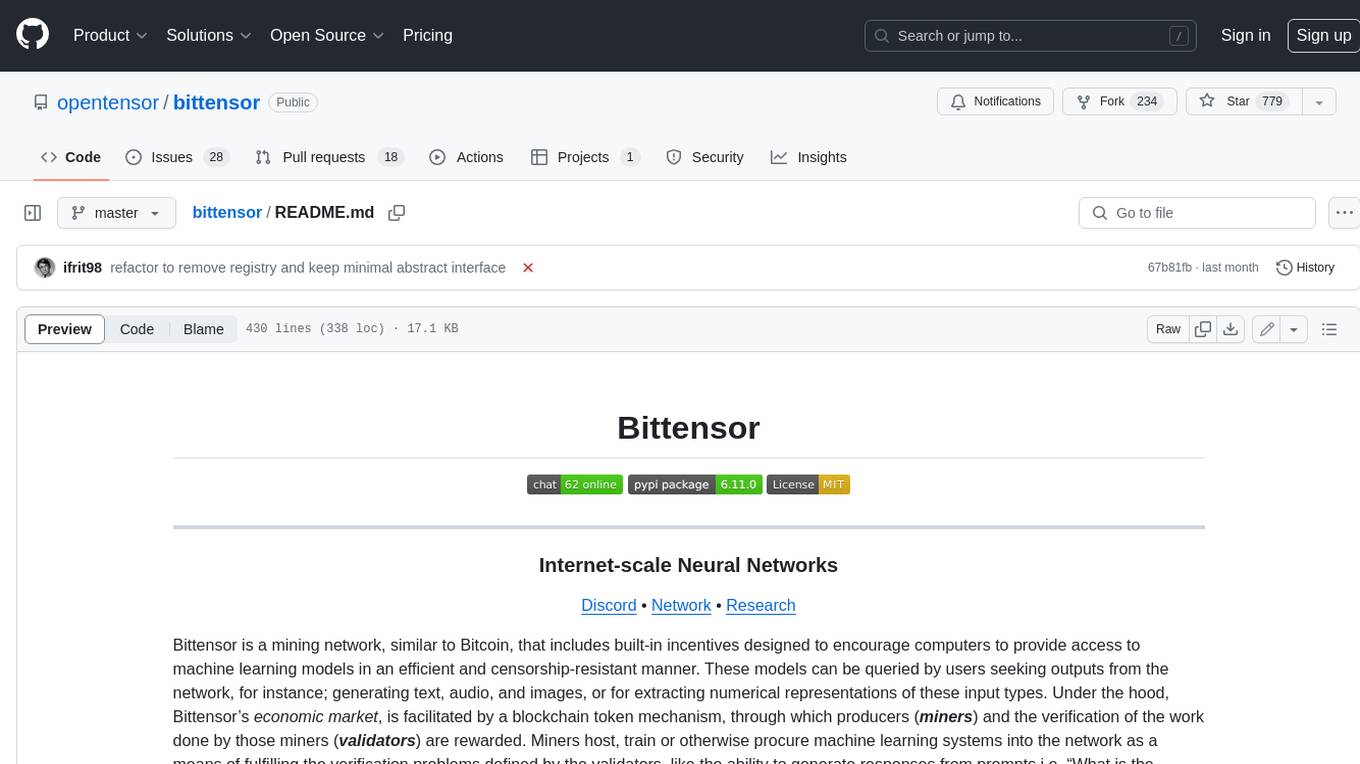
bittensor
Bittensor is an internet-scale neural network that incentivizes computers to provide access to machine learning models in a decentralized and censorship-resistant manner. It operates through a token-based mechanism where miners host, train, and procure machine learning systems to fulfill verification problems defined by validators. The network rewards miners and validators for their contributions, ensuring continuous improvement in knowledge output. Bittensor allows anyone to participate, extract value, and govern the network without centralized control. It supports tasks such as generating text, audio, images, and extracting numerical representations.