


Azure-AIGEN-demos
Azure AI Foundry (demos, documentation, accelerators).
Stars: 746
Microsoft Foundry is a unified Azure platform-as-a-service offering for enterprise AI operations, model builders, and application development. This foundation combines production-grade infrastructure with friendly interfaces, enabling developers to focus on building applications rather than managing infrastructure. Microsoft Foundry unifies agents, models, and tools under a single management grouping with built-in enterprise-readiness capabilities including tracing, monitoring, evaluations, and customizable enterprise setup configurations. The platform provides streamlined management through unified Role-based access control (RBAC), networking, and policies under one Azure resource provider namespace.
README:

Microsoft Foundry is a unified Azure platform-as-a-service offering for enterprise AI operations, model builders, and application development. This foundation combines production-grade infrastructure with friendly interfaces, enabling developers to focus on building applications rather than managing infrastructure.
Microsoft Foundry unifies agents, models, and tools under a single management grouping with built-in enterprise-readiness capabilities including tracing, monitoring, evaluations, and customizable enterprise setup configurations. The platform provides streamlined management through unified Role-based access control (RBAC), networking, and policies under one Azure resource provider namespace.


| Item | Description | Link |
|---|---|---|
| 🔥 Image Anomaly Detection with Cohere Embed 4 on Azure AI Foundry | Image Anomaly Detection | https://github.com/retkowsky/Azure-AIGEN-demos/blob/main/anomaly_detection_cohere_embed4/Image%20Anomaly%20Detection%20with%20Cohere%20Embed%204%20on%20Azure%20AI%20Foundry.ipynb |
| 🔥 Auto-Tagging Images with Cohere Embed 4 on Microsoft Foundry | Auto tagging | https://github.com/retkowsky/Azure-AIGEN-demos/blob/main/auto_tagging_cohere/auto_tagging_cohere_embed4_azure.ipynb |
| Item | Description | Link |
|---|---|---|
| 🔥 gpt-5.2 models | gpt-5.2 examples | https://github.com/retkowsky/Azure-AIGEN-demos/blob/main/gpt-5.2/gpt52_models.ipynb |
| Item | Description | Link |
|---|---|---|
| 🔥 Azure Prices Fetcher | Azure API pricing. | https://github.com/retkowsky/Azure-AIGEN-demos/blob/main/Pricing/azure_prices_fetcher.ipynb |
| Item | Description | Link |
|---|---|---|
| 🔥 gpt-realtime-mini | gpt-realtime-mini with Microsoft Foundry. | https://github.com/retkowsky/Azure-AIGEN-demos/blob/main/gpt-realtime-mini/gpt_realtime_mini_azure.ipynb |
| Item | Description | Link |
|---|---|---|
| 🔥 Azure AI Agent MCP | Azure AI Agent with MCP connexion. | https://github.com/retkowsky/Azure-AIGEN-demos/blob/main/MCP/MCP_Microsoft_Learn_Chatbot.ipynb |
| Item | Description | Link |
|---|---|---|
| 🔥 Mistral Document AI | End‑to‑end examples of Mistral Document AI within Azure AI Foundry. | https://github.com/retkowsky/Azure-OpenAI-demos/blob/main/Mistral%20Document%20AI/Mistral%20Document%20AI%20with%20Azure%20AI%20Foundry.ipynb |
| 🔥 Flux.1 Kontext Pro – Text & Image‑to‑Image | Image editing scenarios using Flux.1 Kontext Pro with Azure AI Foundry. | https://github.com/retkowsky/Azure-OpenAI-demos/blob/main/Flux.1%20Kontext%20Pro/Image%20Edition%20with%20Flux.1%20Kontext%20Pro%20with%20Azure%20AI%20Foundry.ipynb |
| 🔥 Flux1.1 Pro – Text‑to‑Image | High‑quality text‑to‑image generation using FLUX‑1.1‑pro in Azure AI Foundry. | https://github.com/retkowsky/Azure-OpenAI-demos/blob/main/blackforestslabs/flux1.1pro/Text%20to%20image%20with%20FLUX-1.1-pro%20in%20Azure%20AI%20Foundry.ipynb |
| Item | Description | Link |
|---|---|---|
| 🔥 GPT‑5 demo examples | GPT‑5 usage patterns and reference scenarios in Azure AI Foundry. | https://github.com/retkowsky/Azure-OpenAI-demos/blob/main/gpt5/Azure%20AI%20Foundry%20-%20gpt5.ipynb |
AutoGen series
| Item | Description | Link |
|---|---|---|
| 🔥 AutoGen – Settings | Configuration patterns and best practices for AutoGen. | https://github.com/retkowsky/Azure-OpenAI-demos/tree/main/Autogen |
| 🔥 AutoGen – Introduction | Conceptual and architectural introduction to AutoGen. | https://github.com/retkowsky/Azure-OpenAI-demos/tree/main/Autogen |
| 🔥 AutoGen – Simple agent for financial analysis | Scenario using AutoGen agents for financial data analysis. | https://github.com/retkowsky/Azure-OpenAI-demos/tree/main/Autogen |
| 🔥 AutoGen – Azure AI Agent integration | Integration of AutoGen with Azure AI Agent Service. | https://github.com/retkowsky/Azure-OpenAI-demos/tree/main/Autogen |
| 🔥 AutoGen – Chatbot | Chat‑oriented agent implementation with AutoGen. | https://github.com/retkowsky/Azure-OpenAI-demos/tree/main/Autogen |
| 🔥 AutoGen – Enabling LLM‑powered agents to cooperate | Coordinating multiple agents collaboratively. | https://github.com/retkowsky/Azure-OpenAI-demos/tree/main/Autogen |
| 🔥 AutoGen – Multi‑agents | Multi‑agent orchestration patterns. | https://github.com/retkowsky/Azure-OpenAI-demos/tree/main/Autogen |
| 🔥 AutoGen – Multi‑agent with image generation | Multi‑agent workflows integrating image generation. | https://github.com/retkowsky/Azure-OpenAI-demos/tree/main/Autogen |
| 🔥 AutoGen – Human interaction | Human‑in‑the‑loop interactions within AutoGen flows. | https://github.com/retkowsky/Azure-OpenAI-demos/tree/main/Autogen |
| 🔥 AutoGen – Multimodal | Multimodal scenarios (text, image, etc.) with AutoGen. | https://github.com/retkowsky/Azure-OpenAI-demos/tree/main/Autogen |
Azure AI Agent Service
GPT‑image‑1 on Azure AI Foundry
| Item | Description | Link |
|---|---|---|
| 🔥 Image generation | Text‑to‑image generation scenarios with gpt‑image‑1. | https://github.com/retkowsky/Azure-OpenAI-demos/blob/main/gpt-image-1/Azure%20AI%20Foundry%20gpt-image-1%20-%20Image%20generation.ipynb |
| 🔥 Image editing | Image editing workflows based on existing images. | https://github.com/retkowsky/Azure-OpenAI-demos/blob/main/gpt-image-1/Azure%20AI%20Foundry%20gpt-image-1%20-%20Image%20edition.ipynb |
| 🔥 Image composition | Composing multiple elements into a single generated image. | https://github.com/retkowsky/Azure-OpenAI-demos/blob/main/gpt-image-1/Azure%20AI%20Foundry%20gpt-image-1%20-%20Image%20Compose.ipynb |
| 🔥 Image inpainting | Inpainting and localized image modification scenarios. | https://github.com/retkowsky/Azure-OpenAI-demos/blob/main/gpt-image-1/Azure%20AI%20Foundry%20gpt-image-1%20-%20Image%20Inpainting.ipynb |
| Item | Description | Link |
|---|---|---|
| 🔥 o1‑mini | Compact, cost‑efficient reasoning with o1‑mini. | https://github.com/retkowsky/Azure-OpenAI-demos/blob/main/o1/Azure%20OpenAI%20o1%20mini%20examples.ipynb |
| 🔥 o3‑mini | Advanced lightweight reasoning with o3‑mini. | https://github.com/retkowsky/Azure-OpenAI-demos/blob/main/o3/Azure%20OpenAI%20o3%20mini%20examples.ipynb |
| 🔥 GPT‑4o fine‑tuning (text) | Text classification with a fine‑tuned GPT‑4o model. | https://github.com/retkowsky/Azure-OpenAI-demos/blob/main/Gpt-4o-Text-FineTuning/Text%20classification%20with%20gpt-4o%20fine%20tuned%20model.ipynb |
| Item | Description | Link |
|---|---|---|
| 🔥 Azure OpenAI audio generation | Audio generation flows using GPT‑4o. | https://github.com/retkowsky/Azure-OpenAI-demos/blob/main/Azure%20OpenAI%20audio%20generation/Azure%20OpenAI%20Gpt4o%20Audio.ipynb |
| Item | Description | Link |
|---|---|---|
| 🔥 Image classification with gpt‑4o | Baseline image classification with GPT‑4o. | https://github.com/retkowsky/Azure-OpenAI-demos/tree/main/gpt-4o-image-classification |
| 🔥 gpt‑4o model fine‑tuning for image classification | Fine‑tuning GPT‑4o for industrial image classification (NEU dataset). | https://github.com/retkowsky/Azure-OpenAI-demos/tree/main/gpt-4o-image-classification-finetuning |
| Item | Description | Link |
|---|---|---|
| 🔥 AI audio and video podcast generator | Automated podcast production with Azure OpenAI, Azure AI Document Intelligence, and Azure AI Speech. | https://github.com/retkowsky/Azure-OpenAI-demos/tree/main/AI%20podcast%20generation |
| 🔥 GPT‑4o fine‑tuning for VQA | Visual question answering using a fine‑tuned GPT‑4o model. | https://github.com/retkowsky/Azure-OpenAI-demos/tree/main/Gpt-4o%20Fine%20tuning |
| Item | Description | Link |
|---|---|---|
| Microsoft Foundry – product page | Product overview, capabilities, and pricing. | https://azure.microsoft.com/en-us/products/ai-foundry/#AI-Foundry-Hero |
| What is Microsoft Foundry? | Conceptual documentation and key architectural concepts. | https://learn.microsoft.com/en-us/azure/ai-foundry/what-is-azure-ai-foundry |
| Field | Details |
|---|---|
| Name | Serge Retkowsky |
| Created | 05 September 2023 |
| Last updated | 16 February 2026 |
| [email protected] | |
| https://www.linkedin.com/in/serger/ | |
| Medium publications | https://medium.com/@sergems18/ |
For Tasks:
Click tags to check more tools for each tasksFor Jobs:
Alternative AI tools for Azure-AIGEN-demos
Similar Open Source Tools
Azure-AIGEN-demos
Microsoft Foundry is a unified Azure platform-as-a-service offering for enterprise AI operations, model builders, and application development. This foundation combines production-grade infrastructure with friendly interfaces, enabling developers to focus on building applications rather than managing infrastructure. Microsoft Foundry unifies agents, models, and tools under a single management grouping with built-in enterprise-readiness capabilities including tracing, monitoring, evaluations, and customizable enterprise setup configurations. The platform provides streamlined management through unified Role-based access control (RBAC), networking, and policies under one Azure resource provider namespace.
ai-game-development-tools
Here we will keep track of the AI Game Development Tools, including LLM, Agent, Code, Writer, Image, Texture, Shader, 3D Model, Animation, Video, Audio, Music, Singing Voice and Analytics. 🔥 * Tool (AI LLM) * Game (Agent) * Code * Framework * Writer * Image * Texture * Shader * 3D Model * Avatar * Animation * Video * Audio * Music * Singing Voice * Speech * Analytics * Video Tool
models
The Intel® AI Reference Models repository contains links to pre-trained models, sample scripts, best practices, and tutorials for popular open-source machine learning models optimized by Intel to run on Intel® Xeon® Scalable processors and Intel® Data Center GPUs. It aims to replicate the best-known performance of target model/dataset combinations in optimally-configured hardware environments. The repository will be deprecated upon the publication of v3.2.0 and will no longer be maintained or published.
ai-reference-models
The Intel® AI Reference Models repository contains links to pre-trained models, sample scripts, best practices, and tutorials for popular open-source machine learning models optimized by Intel to run on Intel® Xeon® Scalable processors and Intel® Data Center GPUs. The purpose is to quickly replicate complete software environments showcasing the AI capabilities of Intel platforms. It includes optimizations for popular deep learning frameworks like TensorFlow and PyTorch, with additional plugins/extensions for improved performance. The repository is licensed under Apache License Version 2.0.
GenAI-Learning
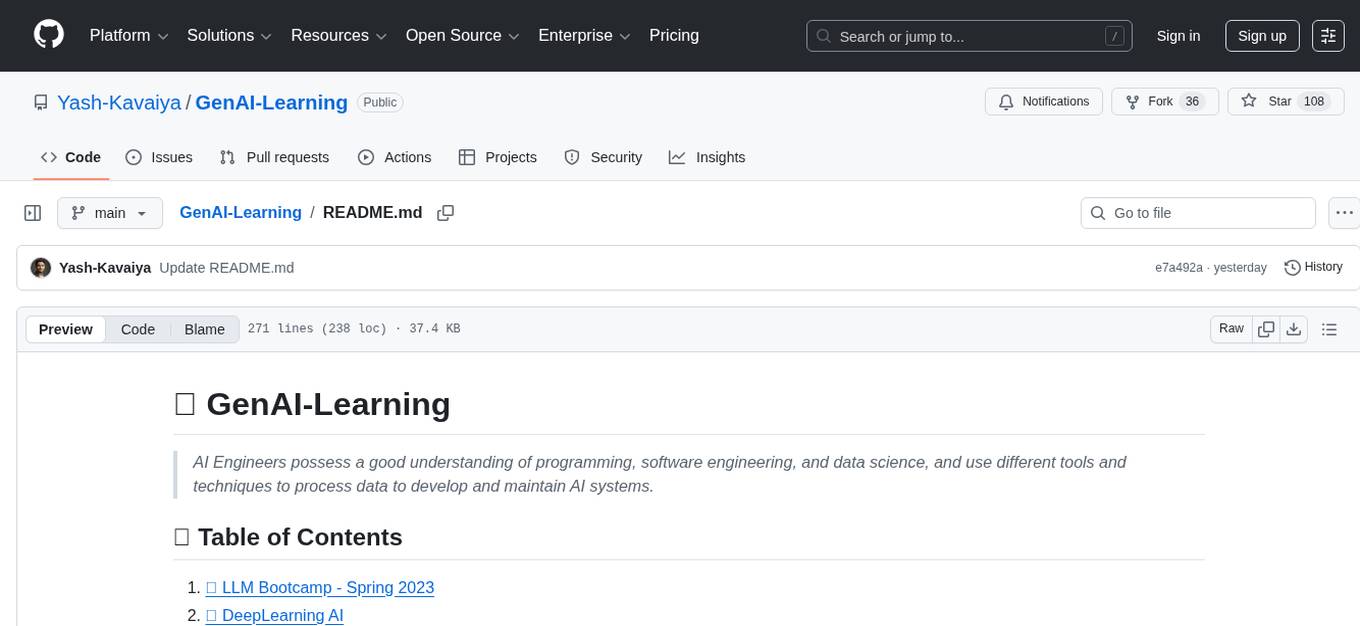
GenAI-Learning is a repository dedicated to providing resources and courses for individuals interested in Generative AI. It covers a wide range of topics from prompt engineering to user-centered design, offering courses on LLM Bootcamp, DeepLearning AI, Microsoft Copilot Learning, Amazon Generative AI, Google Cloud Skills, NVIDIA Learn, Oracle Cloud, and IBM AI Learn. The repository includes detailed course descriptions, partners, and topics for each course, making it a valuable resource for AI enthusiasts and professionals.
Model-References
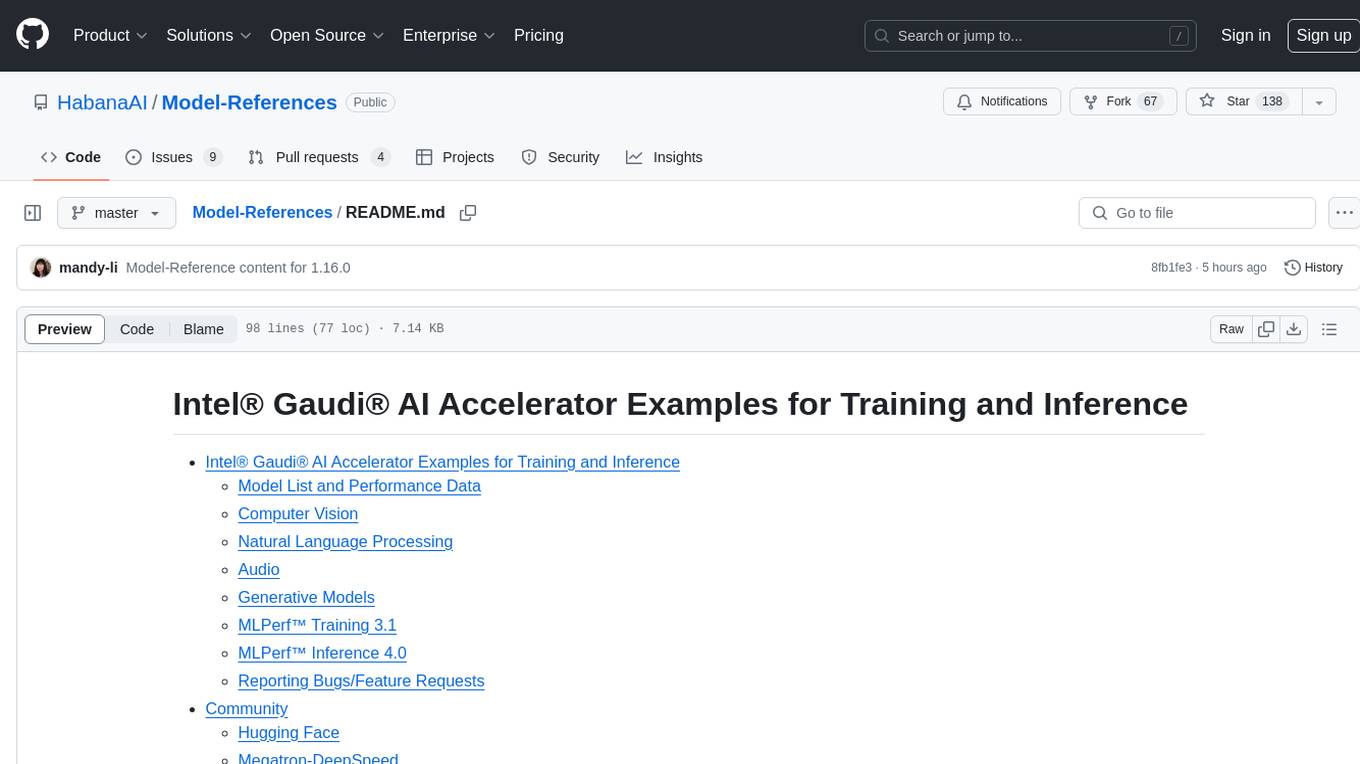
The 'Model-References' repository contains examples for training and inference using Intel Gaudi AI Accelerator. It includes models for computer vision, natural language processing, audio, generative models, MLPerf™ training, and MLPerf™ inference. The repository provides performance data and model validation information for various frameworks like PyTorch. Users can find examples of popular models like ResNet, BERT, and Stable Diffusion optimized for Intel Gaudi AI accelerator.
LLM4EC
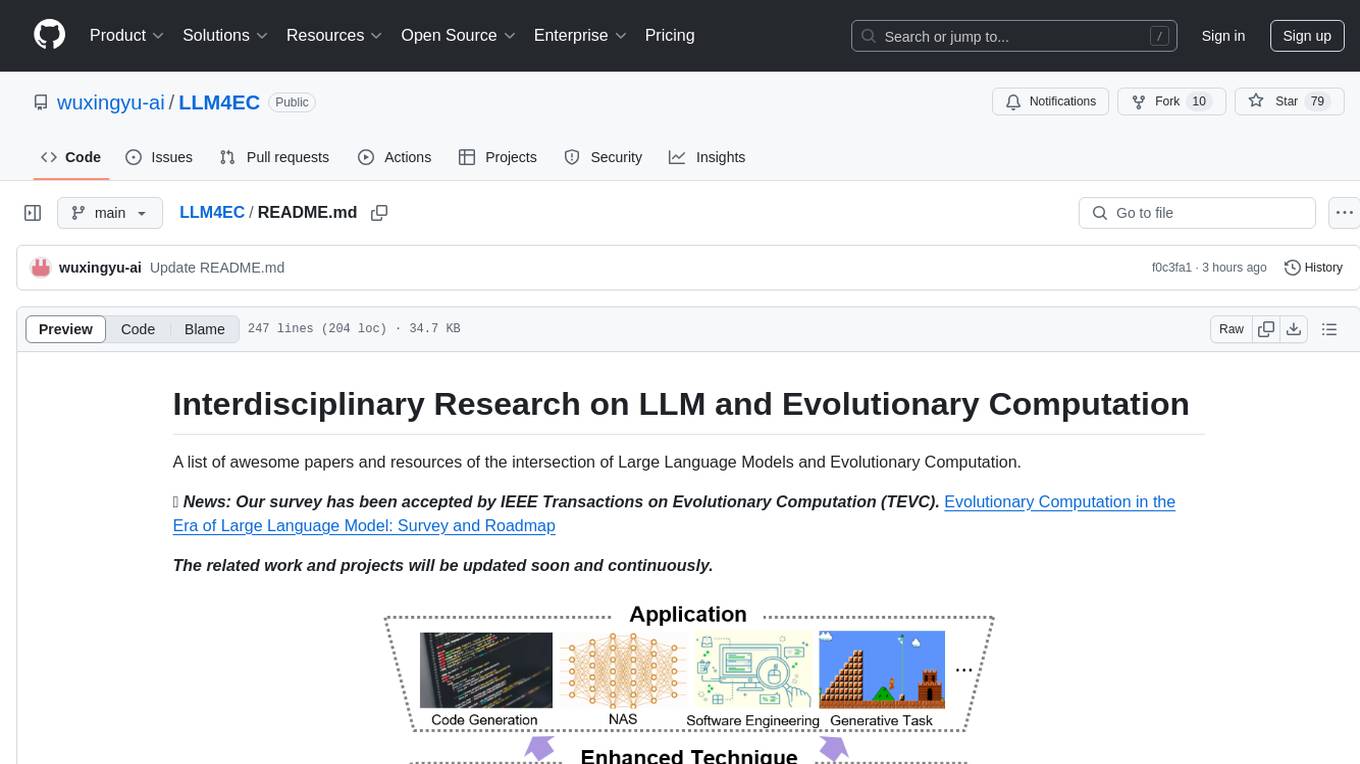
LLM4EC is an interdisciplinary research repository focusing on the intersection of Large Language Models (LLM) and Evolutionary Computation (EC). It provides a comprehensive collection of papers and resources exploring various applications, enhancements, and synergies between LLM and EC. The repository covers topics such as LLM-assisted optimization, EA-based LLM architecture search, and applications in code generation, software engineering, neural architecture search, and other generative tasks. The goal is to facilitate research and development in leveraging LLM and EC for innovative solutions in diverse domains.
Top-AI-Tools
Top AI Tools is a comprehensive, community-curated directory that aims to catalog and showcase the most outstanding AI-powered products. This index is not exhaustive, but rather a compilation of our research and contributions from the community.
LLM-KG4QA
LLM-KG4QA is a repository focused on the integration of Large Language Models (LLMs) and Knowledge Graphs (KGs) for Question Answering (QA). It covers various aspects such as using KGs as background knowledge, reasoning guideline, and refiner/filter. The repository provides detailed information on pre-training, fine-tuning, and Retrieval Augmented Generation (RAG) techniques for enhancing QA performance. It also explores complex QA tasks like Explainable QA, Multi-Modal QA, Multi-Document QA, Multi-Hop QA, Multi-run and Conversational QA, Temporal QA, Multi-domain and Multilingual QA, along with advanced topics like Optimization and Data Management. Additionally, it includes benchmark datasets, industrial and scientific applications, demos, and related surveys in the field.
Data-and-AI-Concepts
This repository is a curated collection of data science and AI concepts and IQs, covering topics from foundational mathematics to cutting-edge generative AI concepts. It aims to support learners and professionals preparing for various data science roles by providing detailed explanations and notebooks for each concept.
open-llms
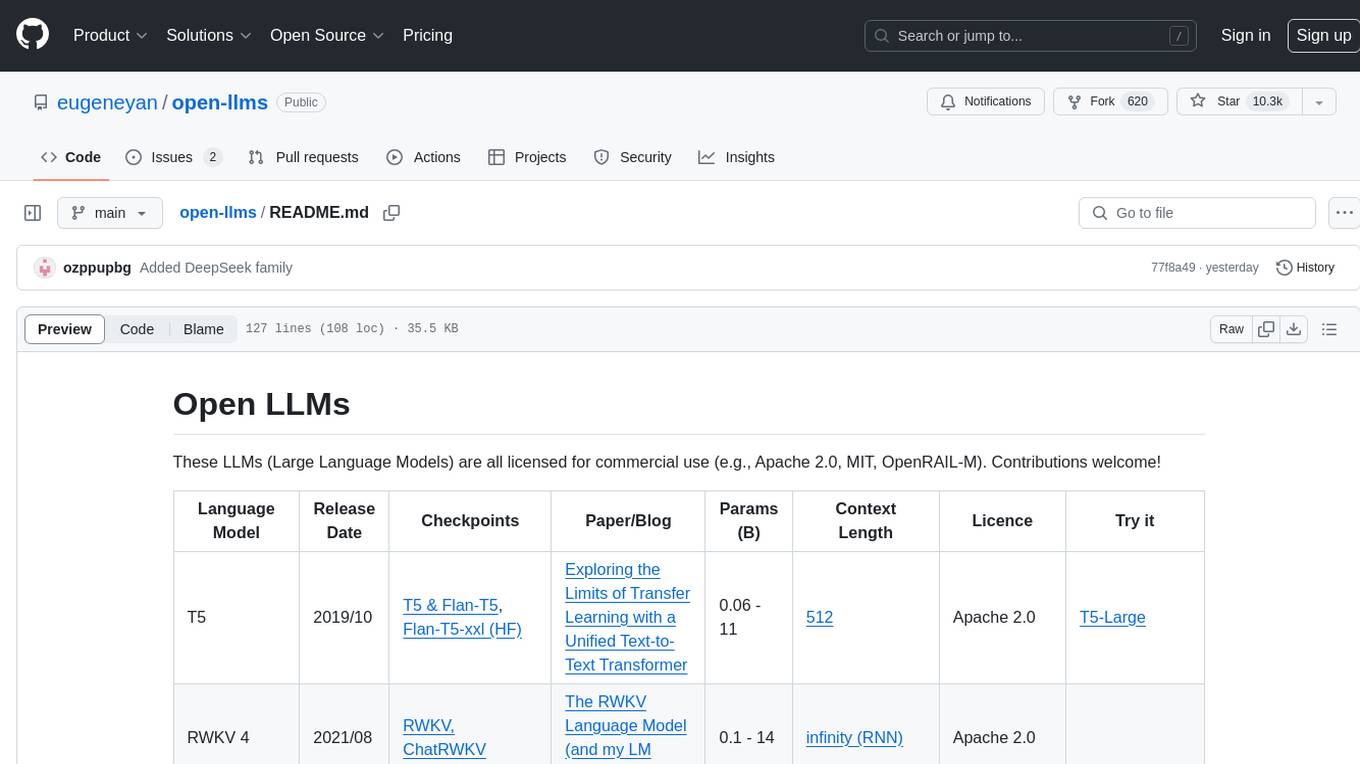
Open LLMs is a repository containing various Large Language Models licensed for commercial use. It includes models like T5, GPT-NeoX, UL2, Bloom, Cerebras-GPT, Pythia, Dolly, and more. These models are designed for tasks such as transfer learning, language understanding, chatbot development, code generation, and more. The repository provides information on release dates, checkpoints, papers/blogs, parameters, context length, and licenses for each model. Contributions to the repository are welcome, and it serves as a resource for exploring the capabilities of different language models.
Github-Ranking-AI
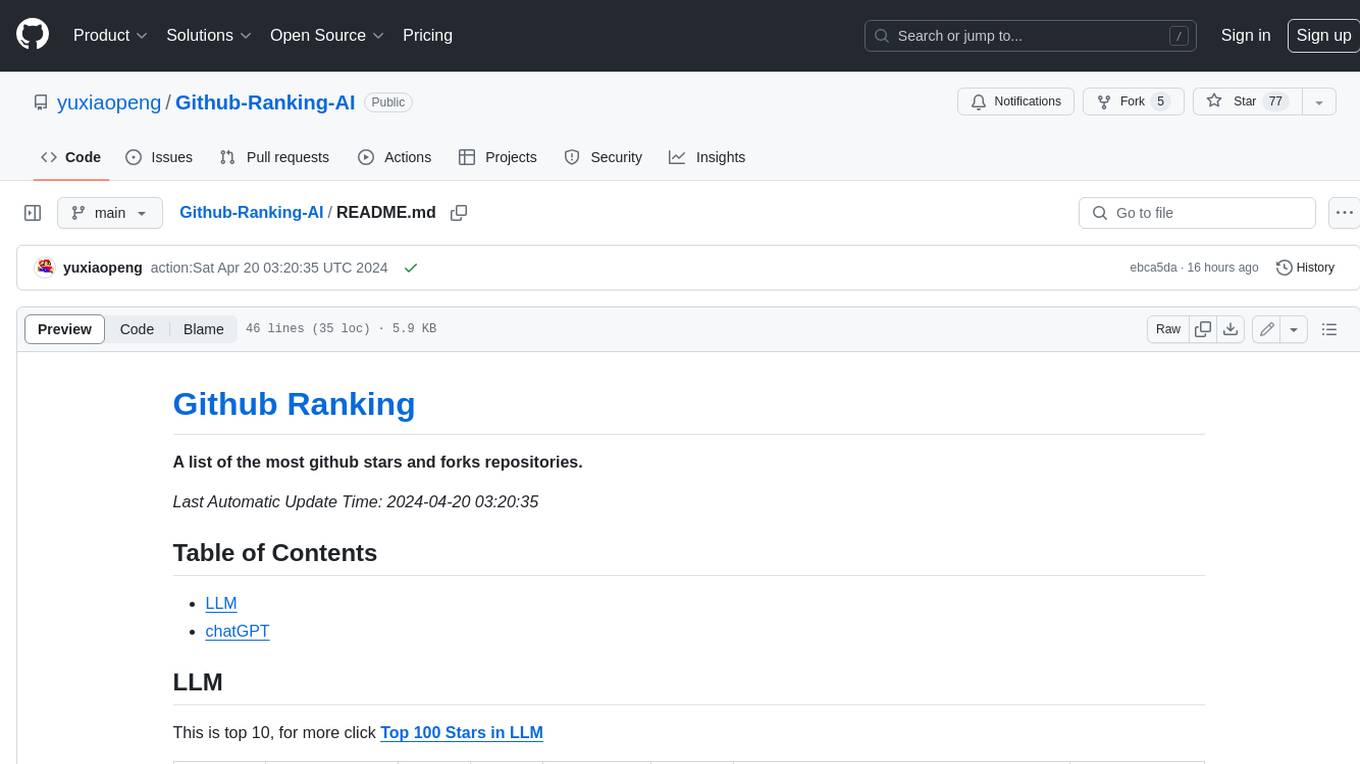
This repository provides a list of the most starred and forked repositories on GitHub. It is updated automatically and includes information such as the project name, number of stars, number of forks, language, number of open issues, description, and last commit date. The repository is divided into two sections: LLM and chatGPT. The LLM section includes repositories related to large language models, while the chatGPT section includes repositories related to the chatGPT chatbot.
llm-deploy
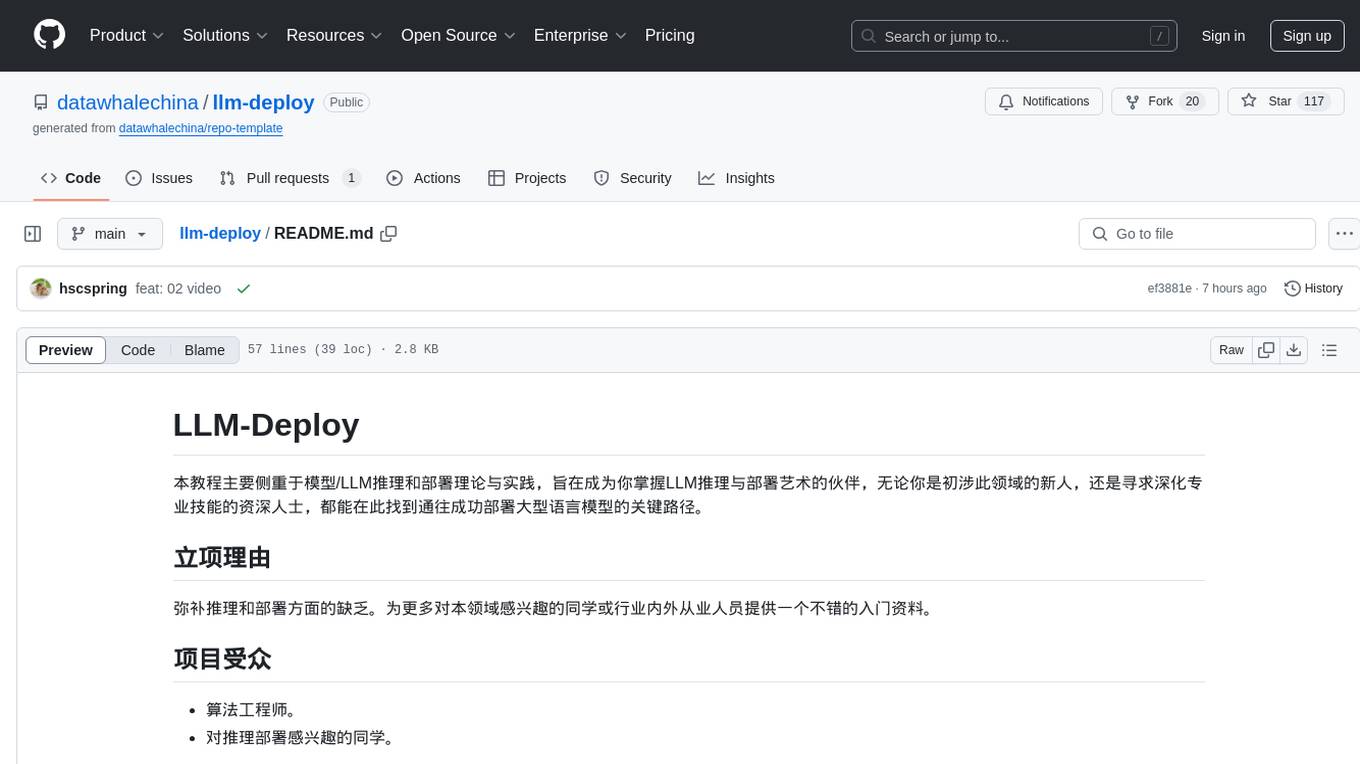
LLM-Deploy focuses on the theory and practice of model/LLM reasoning and deployment, aiming to be your partner in mastering the art of LLM reasoning and deployment. Whether you are a newcomer to this field or a senior professional seeking to deepen your skills, you can find the key path to successfully deploy large language models here. The project covers reasoning and deployment theories, model and service optimization practices, and outputs from experienced engineers. It serves as a valuable resource for algorithm engineers and individuals interested in reasoning deployment.
Cool-GenAI-Fashion-Papers
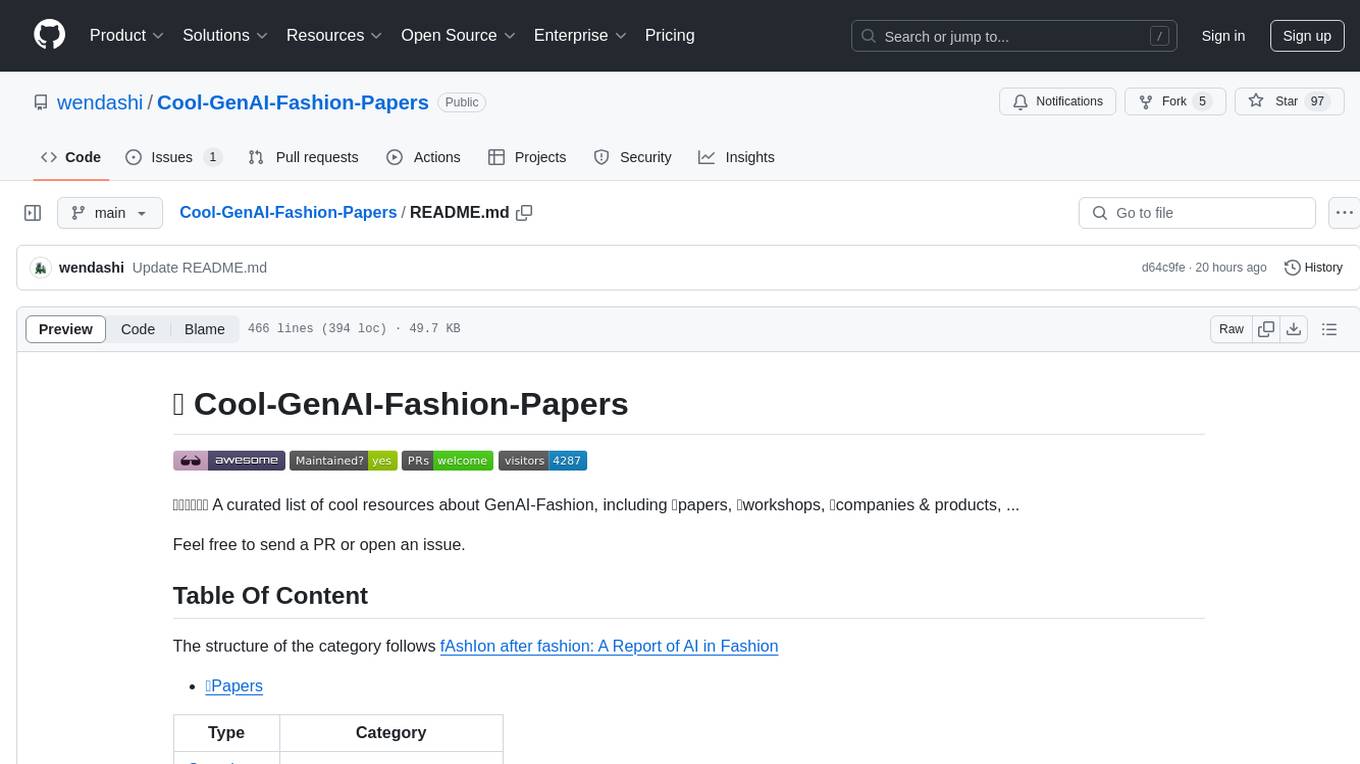
Cool-GenAI-Fashion-Papers is a curated list of resources related to GenAI-Fashion, including papers, workshops, companies, and products. It covers a wide range of topics such as fashion design synthesis, outfit recommendation, fashion knowledge extraction, trend analysis, and more. The repository provides valuable insights and resources for researchers, industry professionals, and enthusiasts interested in the intersection of AI and fashion.
For similar tasks
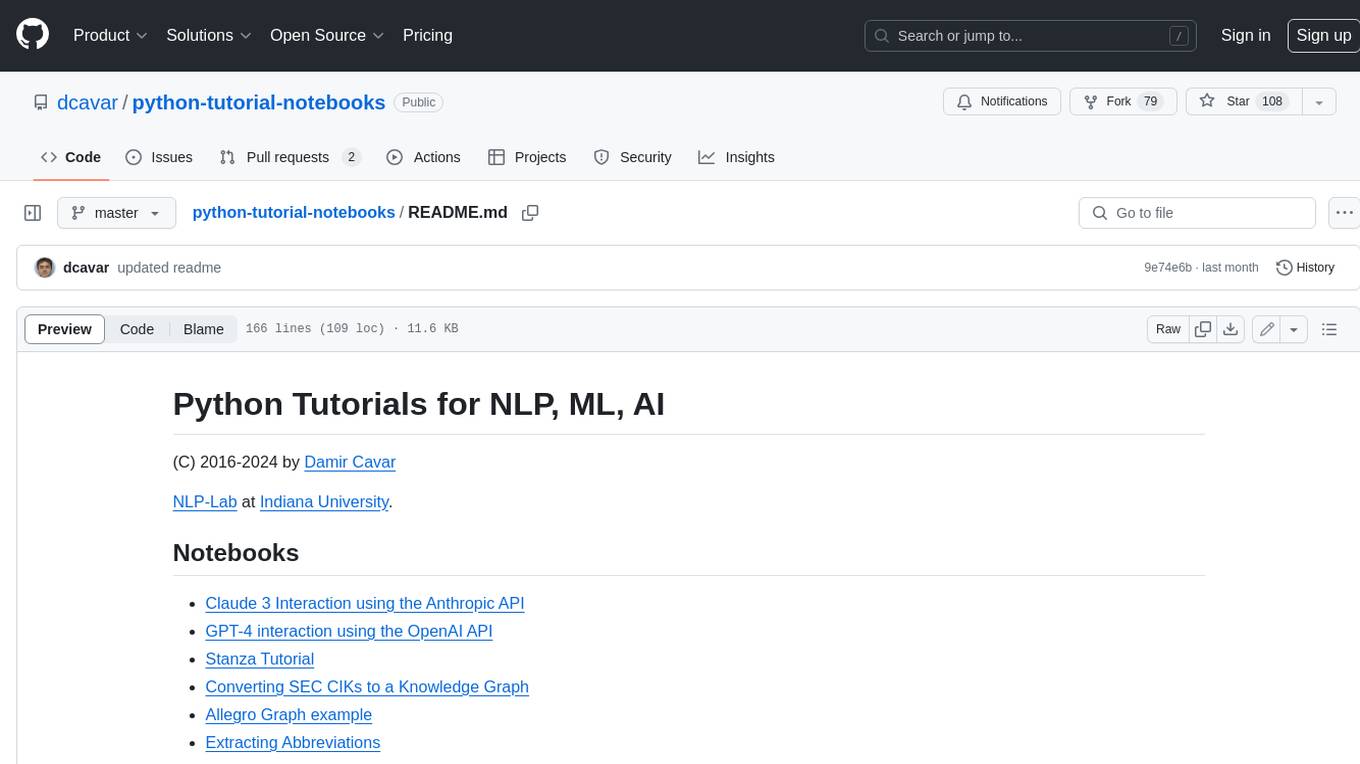
python-tutorial-notebooks
This repository contains Jupyter-based tutorials for NLP, ML, AI in Python for classes in Computational Linguistics, Natural Language Processing (NLP), Machine Learning (ML), and Artificial Intelligence (AI) at Indiana University.
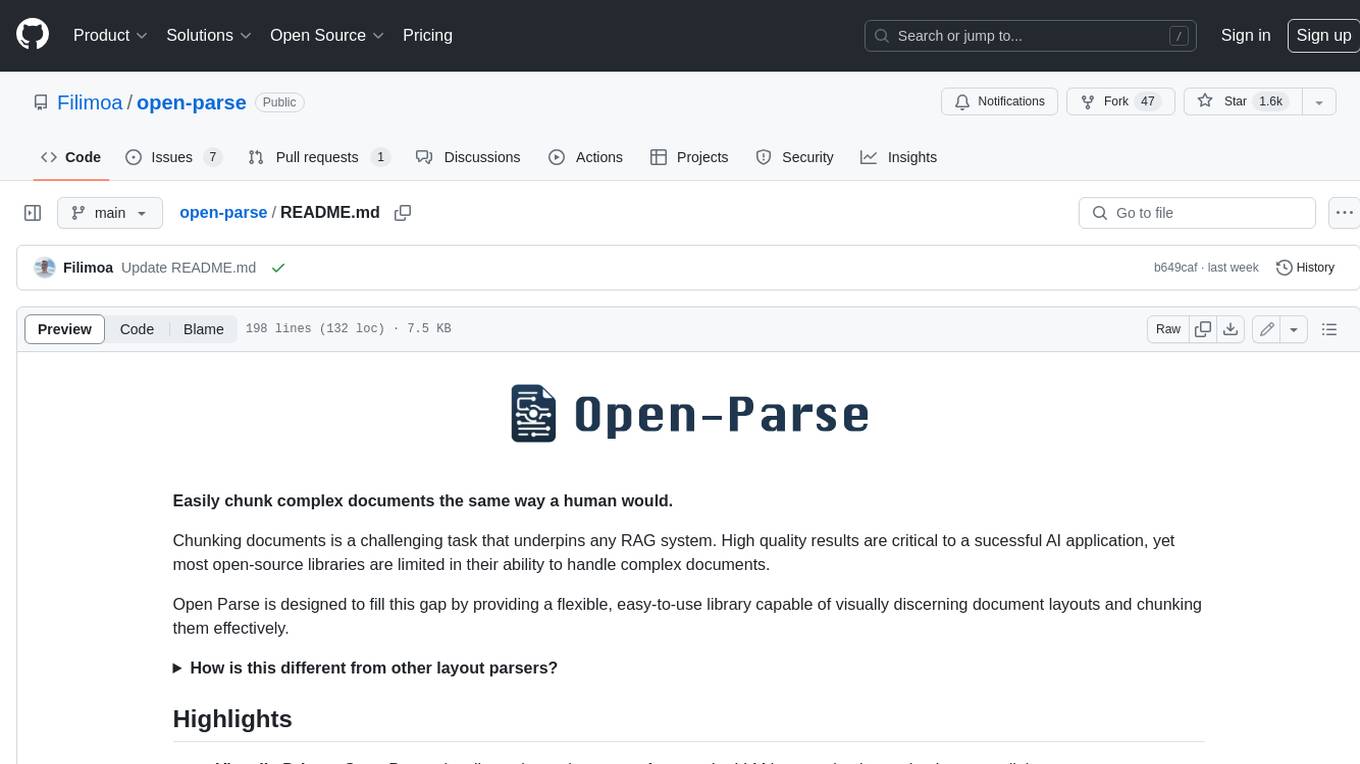
open-parse
Open Parse is a Python library for visually discerning document layouts and chunking them effectively. It is designed to fill the gap in open-source libraries for handling complex documents. Unlike text splitting, which converts a file to raw text and slices it up, Open Parse visually analyzes documents for superior LLM input. It also supports basic markdown for parsing headings, bold, and italics, and has high-precision table support, extracting tables into clean Markdown formats with accuracy that surpasses traditional tools. Open Parse is extensible, allowing users to easily implement their own post-processing steps. It is also intuitive, with great editor support and completion everywhere, making it easy to use and learn.
MoonshotAI-Cookbook
The MoonshotAI-Cookbook provides example code and guides for accomplishing common tasks with the MoonshotAI API. To run these examples, you'll need an MoonshotAI account and associated API key. Most code examples are written in Python, though the concepts can be applied in any language.
AHU-AI-Repository
This repository is dedicated to the learning and exchange of resources for the School of Artificial Intelligence at Anhui University. Notes will be published on this website first: https://www.aoaoaoao.cn and will be synchronized to the repository regularly. You can also contact me at [email protected].
modern_ai_for_beginners
This repository provides a comprehensive guide to modern AI for beginners, covering both theoretical foundations and practical implementation. It emphasizes the importance of understanding both the mathematical principles and the code implementation of AI models. The repository includes resources on PyTorch, deep learning fundamentals, mathematical foundations, transformer-based LLMs, diffusion models, software engineering, and full-stack development. It also features tutorials on natural language processing with transformers, reinforcement learning, and practical deep learning for coders.
Building-AI-Applications-with-ChatGPT-APIs
This repository is for the book 'Building AI Applications with ChatGPT APIs' published by Packt. It provides code examples and instructions for mastering ChatGPT, Whisper, and DALL-E APIs through building innovative AI projects. Readers will learn to develop AI applications using ChatGPT APIs, integrate them with frameworks like Flask and Django, create AI-generated art with DALL-E APIs, and optimize ChatGPT models through fine-tuning.
examples
This repository contains a collection of sample applications and Jupyter Notebooks for hands-on experience with Pinecone vector databases and common AI patterns, tools, and algorithms. It includes production-ready examples for review and support, as well as learning-optimized examples for exploring AI techniques and building applications. Users can contribute, provide feedback, and collaborate to improve the resource.
lingoose
LinGoose is a modular Go framework designed for building AI/LLM applications. It offers the flexibility to import only the necessary modules, abstracts features for customization, and provides a comprehensive solution for developing AI/LLM applications from scratch. The framework simplifies the process of creating intelligent applications by allowing users to choose preferred implementations or create their own. LinGoose empowers developers to leverage its capabilities to streamline the development of cutting-edge AI and LLM projects.
For similar jobs

pezzo
Pezzo is a fully cloud-native and open-source LLMOps platform that allows users to observe and monitor AI operations, troubleshoot issues, save costs and latency, collaborate, manage prompts, and deliver AI changes instantly. It supports various clients for prompt management, observability, and caching. Users can run the full Pezzo stack locally using Docker Compose, with prerequisites including Node.js 18+, Docker, and a GraphQL Language Feature Support VSCode Extension. Contributions are welcome, and the source code is available under the Apache 2.0 License.
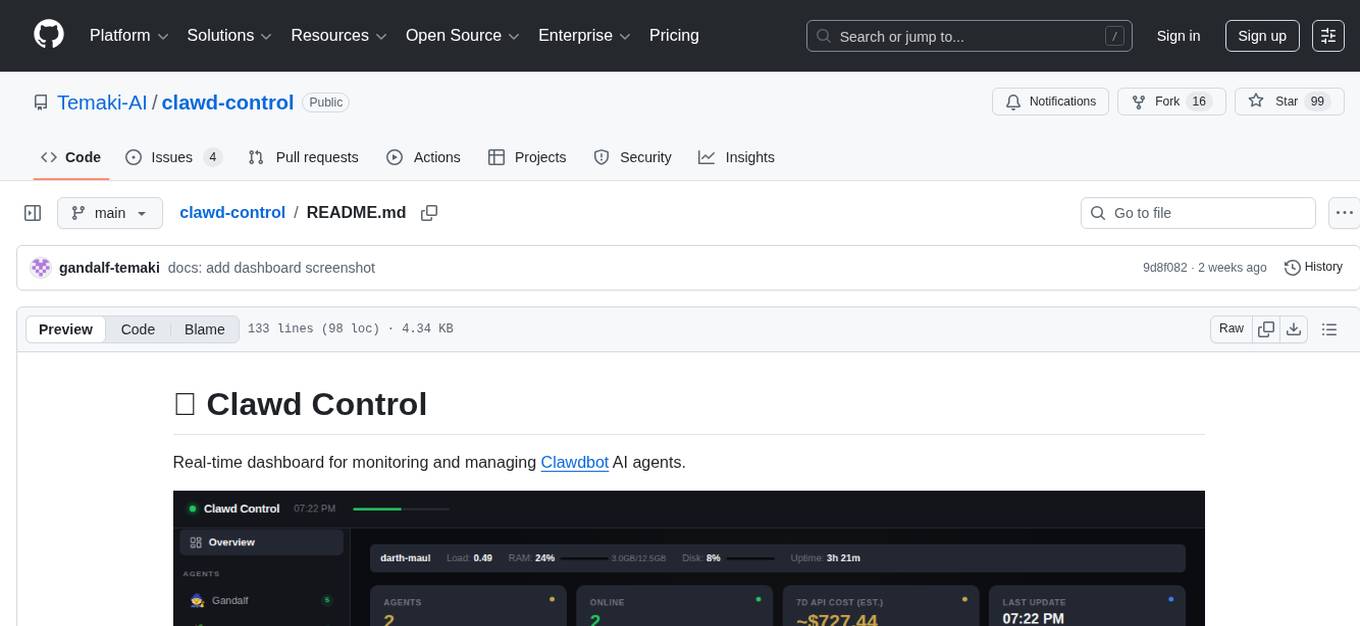
clawd-control
Clawd Control is a real-time dashboard designed for monitoring and managing Clawdbot AI agents. It provides live monitoring, fleet overview, agent detail views, agent creation wizard, host metrics, auto-discovery, SPA navigation, dark/light theme, password authentication, and keyboard shortcuts. The tool is deliberately simple, using a single Node.js server with no build step or framework, and a frontend with vanilla HTML/JS. Users can configure agents manually if auto-discovery fails, and the tool requires Node.js 18+ and Clawdbot agents running locally or on the network. Clawd Control is a standalone open-source project that pairs well with Temaki.ai, offering a collaborative workspace for humans and AI agents to work together.
Azure-AIGEN-demos
Microsoft Foundry is a unified Azure platform-as-a-service offering for enterprise AI operations, model builders, and application development. This foundation combines production-grade infrastructure with friendly interfaces, enabling developers to focus on building applications rather than managing infrastructure. Microsoft Foundry unifies agents, models, and tools under a single management grouping with built-in enterprise-readiness capabilities including tracing, monitoring, evaluations, and customizable enterprise setup configurations. The platform provides streamlined management through unified Role-based access control (RBAC), networking, and policies under one Azure resource provider namespace.
db2rest
DB2Rest is a modern low-code REST DATA API platform that simplifies the development of intelligent applications. It seamlessly integrates existing and new databases with language models (LMs/LLMs) and vector stores, enabling the rapid delivery of context-aware, reasoning applications without vendor lock-in.
kitops
KitOps is a packaging and versioning system for AI/ML projects that uses open standards so it works with the AI/ML, development, and DevOps tools you are already using. KitOps simplifies the handoffs between data scientists, application developers, and SREs working with LLMs and other AI/ML models. KitOps' ModelKits are a standards-based package for models, their dependencies, configurations, and codebases. ModelKits are portable, reproducible, and work with the tools you already use.
kweaver
KWeaver is an open-source cognitive intelligence development framework that provides data scientists, application developers, and domain experts with the ability for rapid development, comprehensive openness, and high-performance knowledge network generation and cognitive intelligence large model framework. It offers features such as automated and visual knowledge graph construction, visualization and analysis of knowledge graph data, knowledge graph integration, knowledge graph resource management, large model prompt engineering and debugging, and visual configuration for large model access.
honey
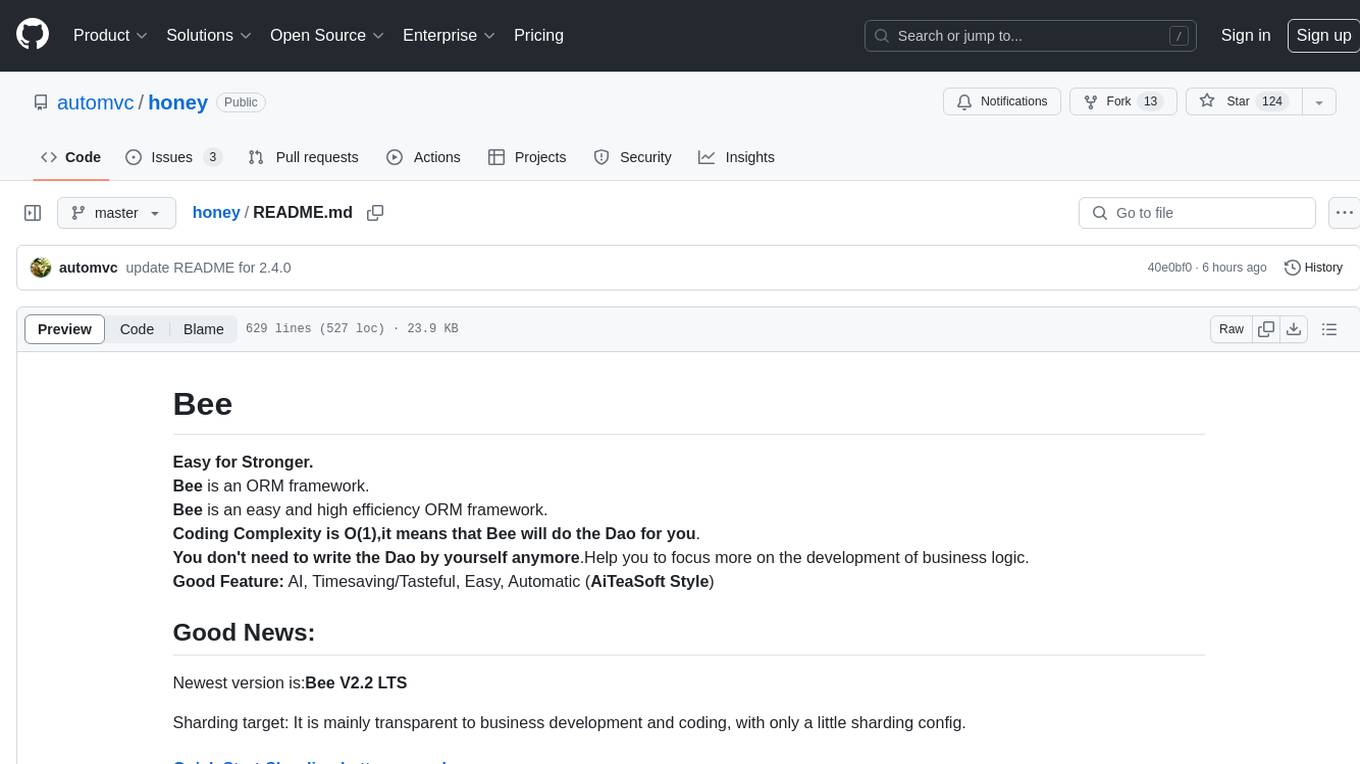
Bee is an ORM framework that provides easy and high-efficiency database operations, allowing developers to focus on business logic development. It supports various databases and features like automatic filtering, partial field queries, pagination, and JSON format results. Bee also offers advanced functionalities like sharding, transactions, complex queries, and MongoDB ORM. The tool is designed for rapid application development in Java, offering faster development for Java Web and Spring Cloud microservices. The Enterprise Edition provides additional features like financial computing support, automatic value insertion, desensitization, dictionary value conversion, multi-tenancy, and more.
moxin
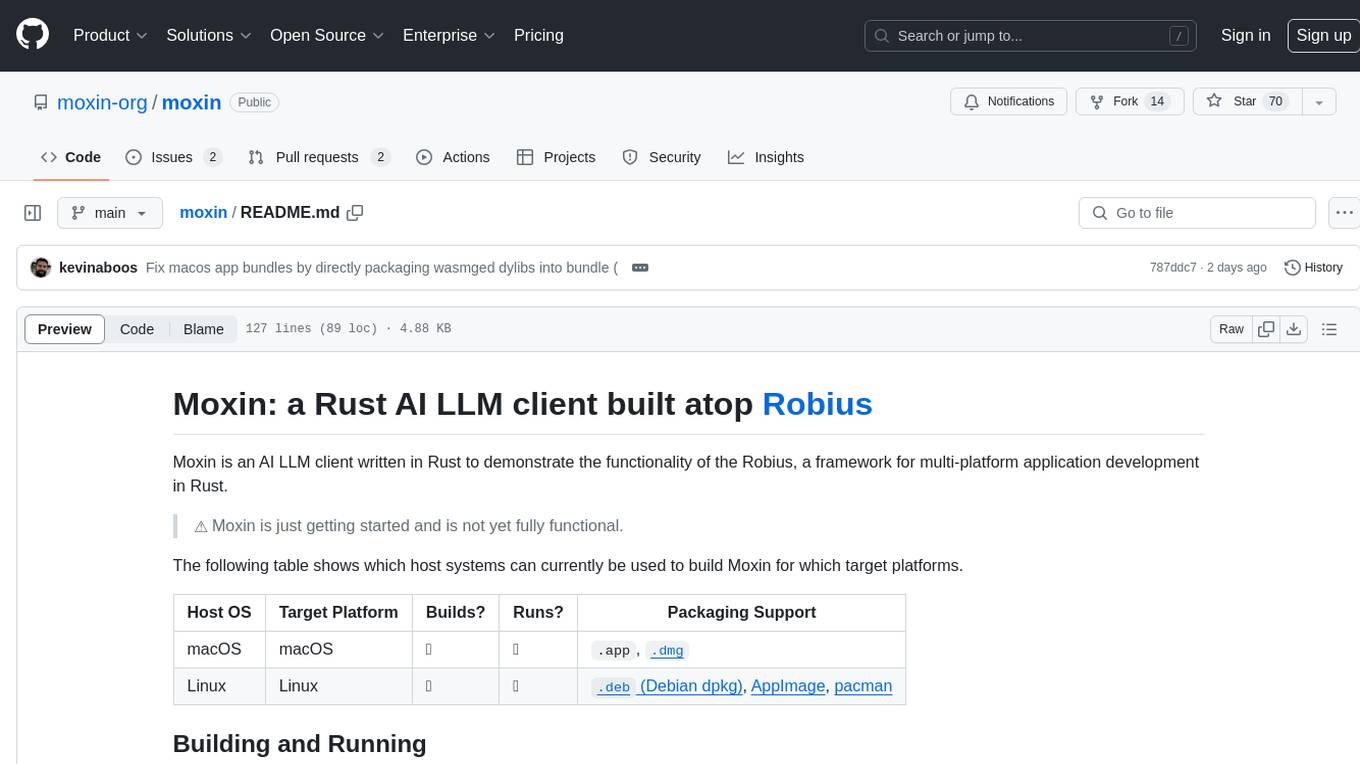
Moxin is an AI LLM client written in Rust to demonstrate the functionality of the Robius framework for multi-platform application development. It is currently in early stages of development and not fully functional. The tool supports building and running on macOS and Linux systems, with packaging options available for distribution. Users can install the required WasmEdge WASM runtime and dependencies to build and run Moxin. Packaging for distribution includes generating `.deb` Debian packages, AppImage, and pacman installation packages for Linux, as well as `.app` bundles and `.dmg` disk images for macOS. The macOS app is not signed, leading to a warning on installation, which can be resolved by removing the quarantine attribute from the installed app.