


Qing-Digital-Self
数字分身项目,并且包含了搭建(复现)教程 Qing's digital self, including setup tutorial
Stars: 54
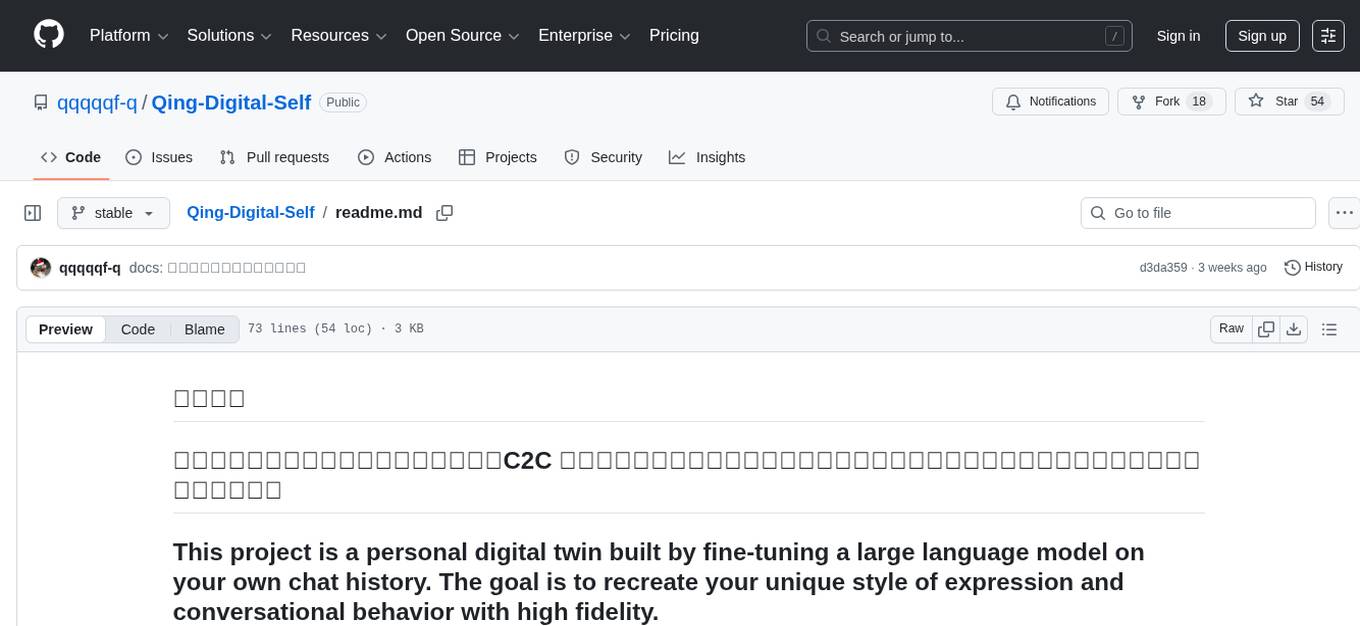
Qing-Digital-Self is a project that creates a personal digital twin by fine-tuning a large language model on your chat history. The aim is to replicate your unique style of expression and conversational behavior accurately. The project includes bilingual support and comprehensive tutorials covering data extraction, chat data cleaning and conversion, LlamaFactory fine-tuning process, and testing and usage of the fine-tuned model. It offers a different perspective and assistance compared to similar projects. The project is currently in development with version v0.1.6, and welcomes contributions and issue reports from developers.
README:
This project is a personal digital twin built by fine-tuning a large language model on your own chat history. The goal is to recreate your unique style of expression and conversational behavior with high fidelity.





- QQ/TG的数据提取
- 聊天数据清洗与转换
- LlamaFactory 微调流程
- 微调模型的测试与使用
我知道类似的项目其实已经有不少了,但也许我的教程、流程、代码实现能给你一些不一样的帮助或启发。如果对你有用,欢迎点个 star,我会很开心的!
- (如果有问题欢迎开Issues)
- 但已经可以在 4090 24G 显卡上用 fp8 精度微调 Qwen3-8B(亲测可用)
- 并且可以使用ROCm!(使用6800xt+ROCm7.0.2+Ubuntu24.02测试)
"部分代码参考自 Weclone" 如果你也想打造属于自己的数字分身,那也来试试吧!
X: @qqqqqf5
Email: [email protected]
Github:@qqqqqf-q
- 由于0.1.4版本对于代码进行了许多重构
- 转向
Llama Factory - 所以可能有更多的Bug
- 欢迎各位开发者来提Issues,PR
- 贡献这个小项目
- cli的train,data convert都存在问题,暂时还是只能用老版本调用
- 已经被重构的部分没有增加双语支持
- 删掉原来的
run_finetune和finetune脚本 - todo1.增加serverapi为webui做准备
- 代码未优化
For Tasks:
Click tags to check more tools for each tasksFor Jobs:
Alternative AI tools for Qing-Digital-Self
Similar Open Source Tools
Qing-Digital-Self
Qing-Digital-Self is a project that creates a personal digital twin by fine-tuning a large language model on your chat history. The aim is to replicate your unique style of expression and conversational behavior accurately. The project includes bilingual support and comprehensive tutorials covering data extraction, chat data cleaning and conversion, LlamaFactory fine-tuning process, and testing and usage of the fine-tuned model. It offers a different perspective and assistance compared to similar projects. The project is currently in development with version v0.1.6, and welcomes contributions and issue reports from developers.
DriveLM
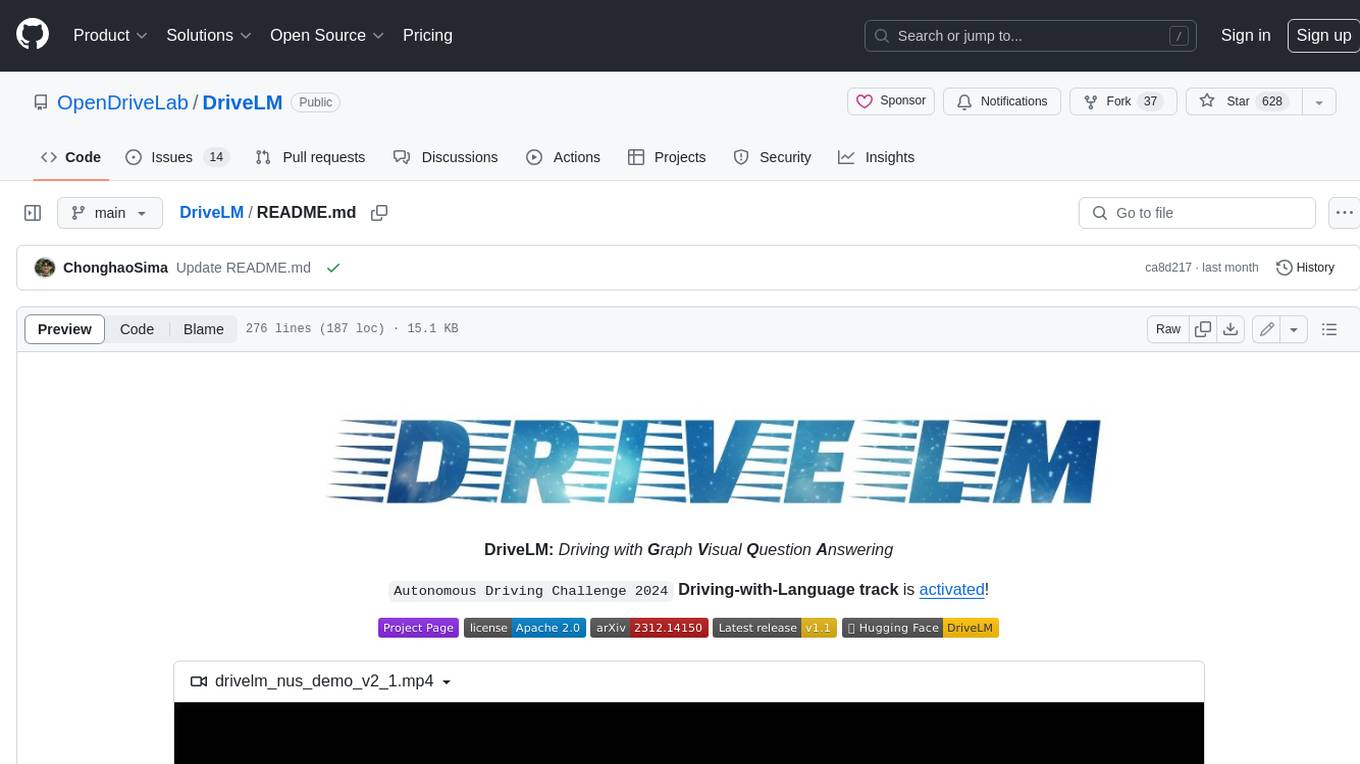
DriveLM is a multimodal AI model that enables autonomous driving by combining computer vision and natural language processing. It is designed to understand and respond to complex driving scenarios using visual and textual information. DriveLM can perform various tasks related to driving, such as object detection, lane keeping, and decision-making. It is trained on a massive dataset of images and text, which allows it to learn the relationships between visual cues and driving actions. DriveLM is a powerful tool that can help to improve the safety and efficiency of autonomous vehicles.
rllm
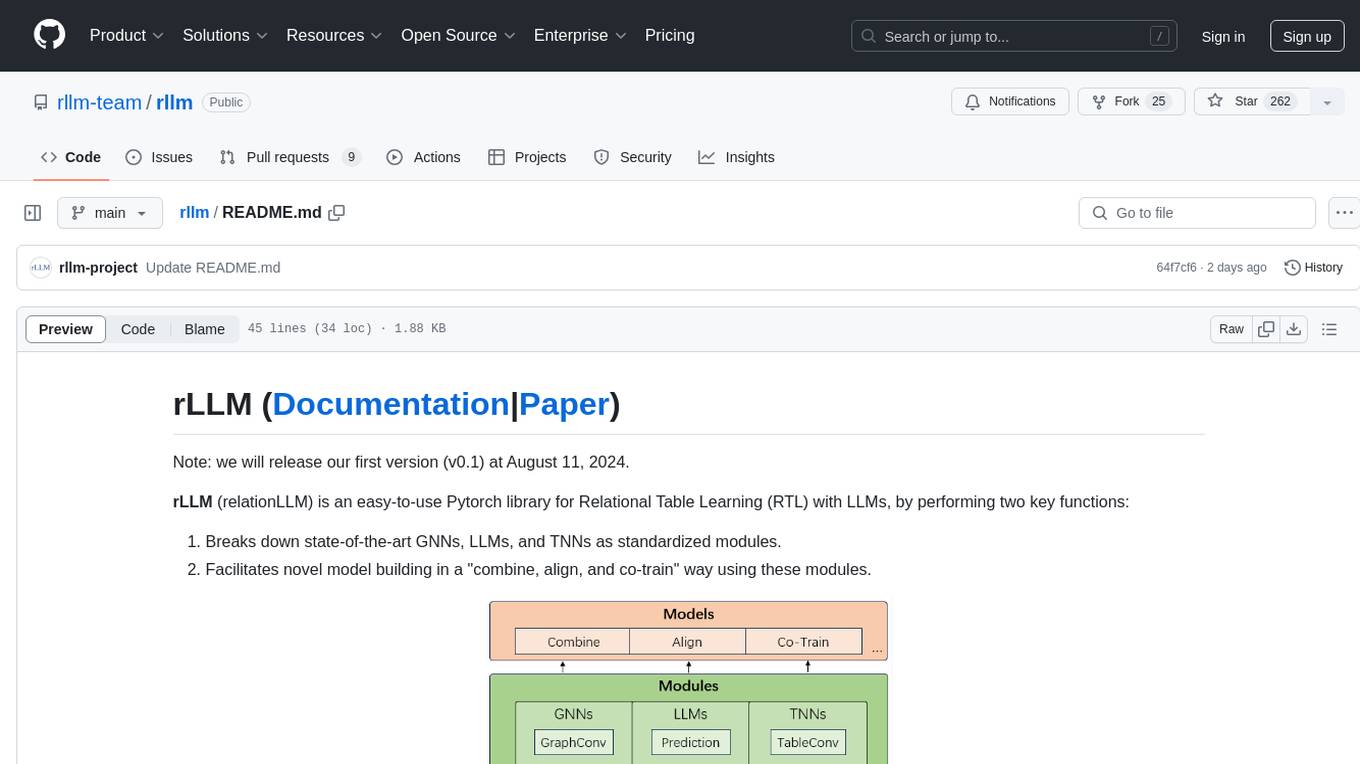
rLLM (relationLLM) is a Pytorch library for Relational Table Learning (RTL) with LLMs. It breaks down state-of-the-art GNNs, LLMs, and TNNs as standardized modules and facilitates novel model building in a 'combine, align, and co-train' way using these modules. The library is LLM-friendly, processes various graphs as multiple tables linked by foreign keys, introduces new relational table datasets, and is supported by students and teachers from Shanghai Jiao Tong University and Tsinghua University.
big-AGI
big-AGI is an AI suite designed for professionals seeking function, form, simplicity, and speed. It offers best-in-class Chats, Beams, and Calls with AI personas, visualizations, coding, drawing, side-by-side chatting, and more, all wrapped in a polished UX. The tool is powered by the latest models from 12 vendors and open-source servers, providing users with advanced AI capabilities and a seamless user experience. With continuous updates and enhancements, big-AGI aims to stay ahead of the curve in the AI landscape, catering to the needs of both developers and AI enthusiasts.
GPTSwarm
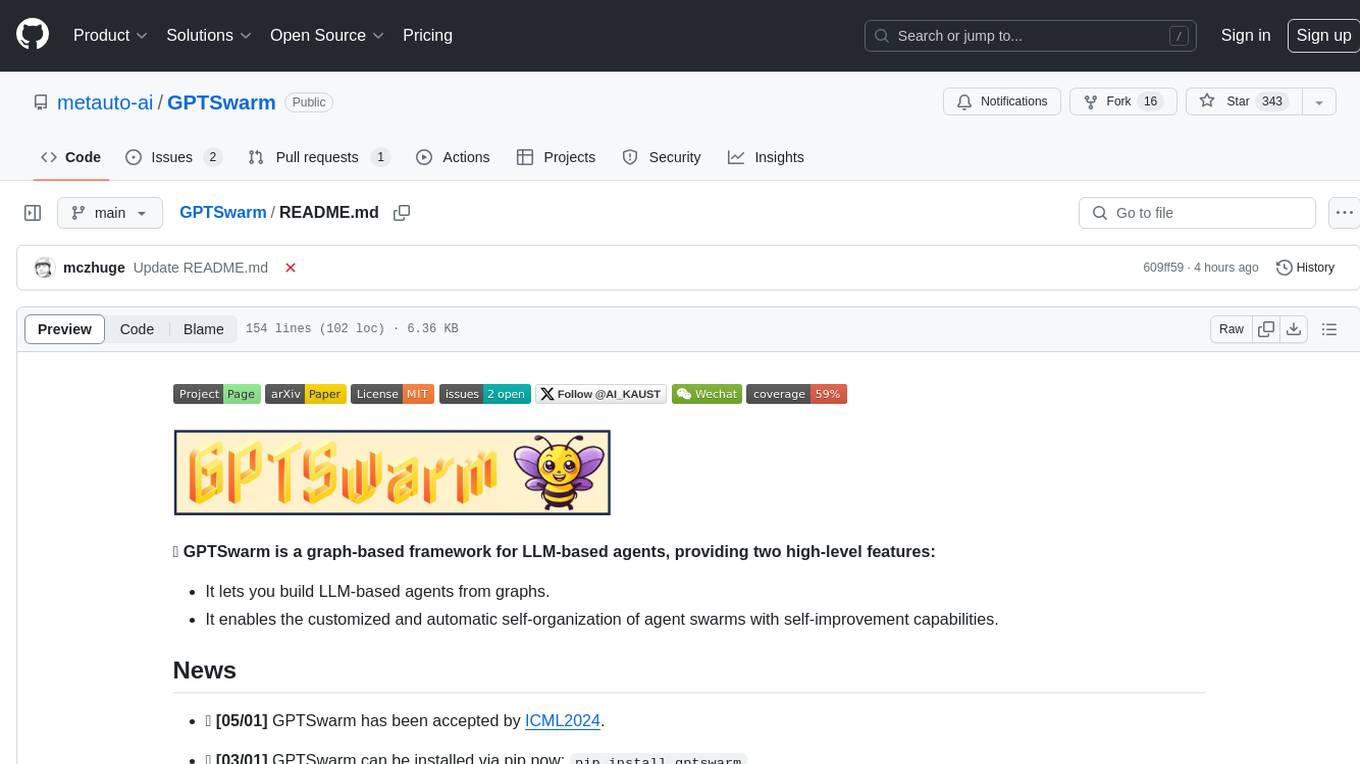
GPTSwarm is a graph-based framework for LLM-based agents that enables the creation of LLM-based agents from graphs and facilitates the customized and automatic self-organization of agent swarms with self-improvement capabilities. The library includes components for domain-specific operations, graph-related functions, LLM backend selection, memory management, and optimization algorithms to enhance agent performance and swarm efficiency. Users can quickly run predefined swarms or utilize tools like the file analyzer. GPTSwarm supports local LM inference via LM Studio, allowing users to run with a local LLM model. The framework has been accepted by ICML2024 and offers advanced features for experimentation and customization.
FireRedTTS
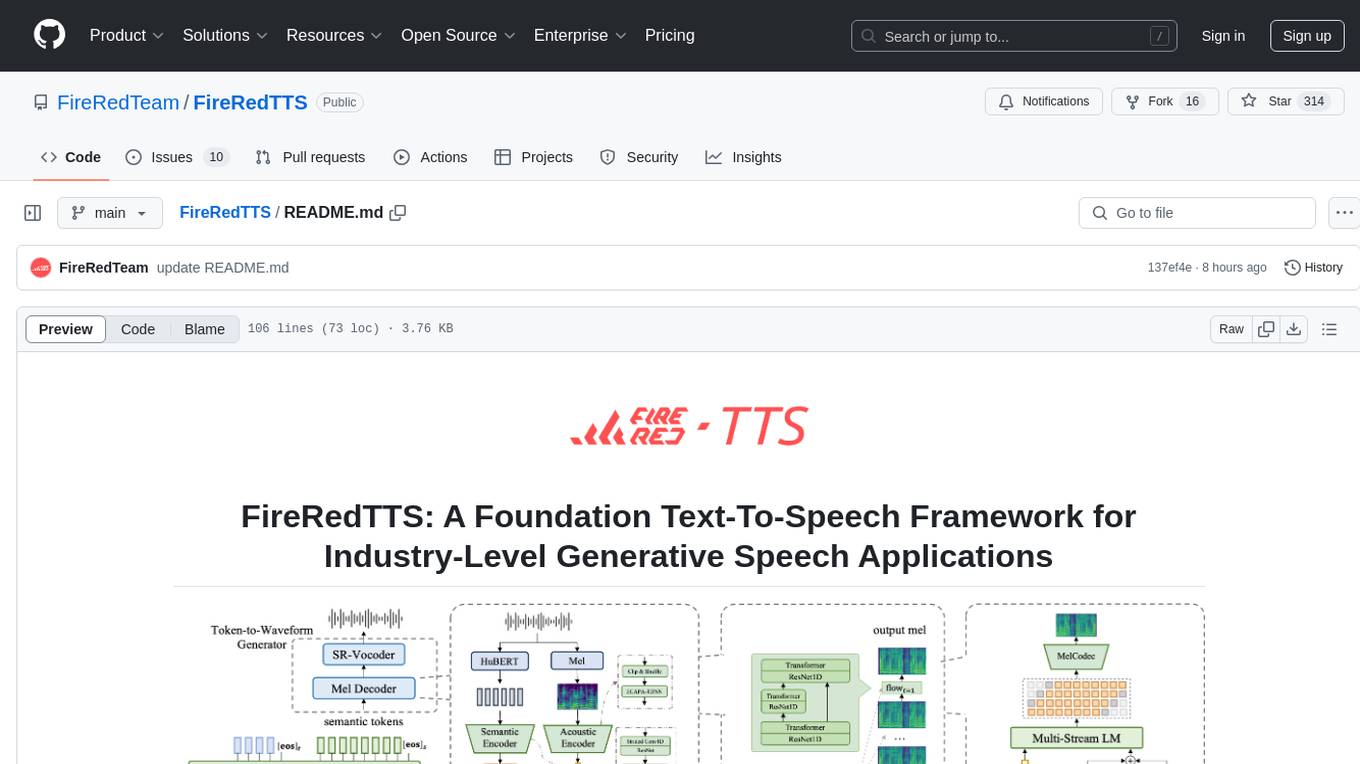
FireRedTTS is a foundation text-to-speech framework designed for industry-level generative speech applications. It offers a rich-punctuation model with expanded punctuation coverage and enhanced audio production consistency. The tool provides pre-trained checkpoints, inference code, and an interactive demo space. Users can clone the repository, create a conda environment, download required model files, and utilize the tool for synthesizing speech in various languages. FireRedTTS aims to enhance stability and provide controllable human-like speech generation capabilities.
lancedb
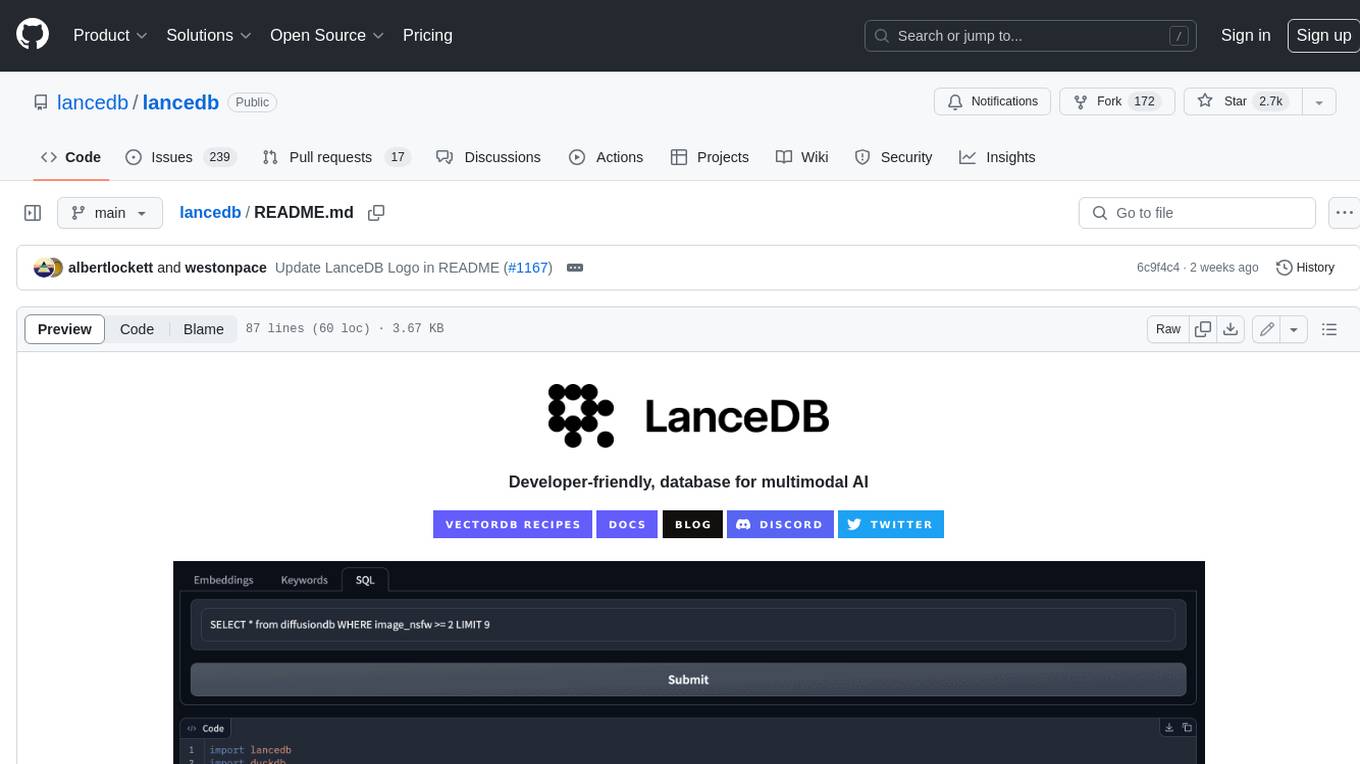
LanceDB is an open-source database for vector-search built with persistent storage, which greatly simplifies retrieval, filtering, and management of embeddings. The key features of LanceDB include: Production-scale vector search with no servers to manage. Store, query, and filter vectors, metadata, and multi-modal data (text, images, videos, point clouds, and more). Support for vector similarity search, full-text search, and SQL. Native Python and Javascript/Typescript support. Zero-copy, automatic versioning, manage versions of your data without needing extra infrastructure. GPU support in building vector index(*). Ecosystem integrations with LangChain 🦜️🔗, LlamaIndex 🦙, Apache-Arrow, Pandas, Polars, DuckDB, and more on the way. LanceDB's core is written in Rust 🦀 and is built using Lance, an open-source columnar format designed for performant ML workloads.
AI_Gen_Novel
AI_Gen_Novel is a project exploring the limits of AI in writing online fiction. Leveraging large language models and multi-agent technology, the tool aims to automatically generate web novels by compressing long texts, optimizing prompts, and enhancing originality. The tool combines the core idea of RecurrentGPT with language-based iterative computation to create texts of any length. Future directions include enhancing model capabilities, optimizing program architecture, and introducing more prior knowledge for structured storytelling.
AI-Infra-Guard
A.I.G (AI-Infra-Guard) is an AI red teaming platform by Tencent Zhuque Lab that integrates capabilities such as AI infra vulnerability scan, MCP Server risk scan, and Jailbreak Evaluation. It aims to provide users with a comprehensive, intelligent, and user-friendly solution for AI security risk self-examination. The platform offers features like AI Infra Scan, AI Tool Protocol Scan, and Jailbreak Evaluation, along with a modern web interface, complete API, multi-language support, cross-platform deployment, and being free and open-source under the MIT license.
UI-TARS-desktop
UI-TARS-desktop is a desktop application that provides a native GUI Agent based on the UI-TARS model. It offers features such as natural language control powered by Vision-Language Model, screenshot and visual recognition support, precise mouse and keyboard control, cross-platform support (Windows/MacOS/Browser), real-time feedback and status display, and private and secure fully local processing. The application aims to enhance the user's computer experience, introduce new browser operation features, and support the advanced UI-TARS-1.5 model for improved performance and precise control.

nyxtext
Nyxtext is a text editor built using Python, featuring Custom Tkinter with the Catppuccin color scheme and glassmorphic design. It follows a modular approach with each element organized into separate files for clarity and maintainability. NyxText is not just a text editor but also an AI-powered desktop application for creatives, developers, and students.
WebMasterLog
WebMasterLog is a comprehensive repository showcasing various web development projects built with front-end and back-end technologies. It highlights interactive user interfaces, dynamic web applications, and a spectrum of web development solutions. The repository encourages contributions in areas such as adding new projects, improving existing projects, updating documentation, fixing bugs, implementing responsive design, enhancing code readability, and optimizing project functionalities. Contributors are guided to follow specific guidelines for project submissions, including directory naming conventions, README file inclusion, project screenshots, and commit practices. Pull requests are reviewed based on criteria such as proper PR template completion, originality of work, code comments for clarity, and sharing screenshots for frontend updates. The repository also participates in various open-source programs like JWOC, GSSoC, Hacktoberfest, KWOC, 24 Pull Requests, IWOC, SWOC, and DWOC, welcoming valuable contributors.
chatbox
Chatbox is a desktop client for ChatGPT, Claude, and other LLMs, providing features like local data storage, multiple LLM provider support, image generation, enhanced prompting, keyboard shortcuts, and more. It offers a user-friendly interface with dark theme, team collaboration, cross-platform availability, web version access, iOS & Android apps, multilingual support, and ongoing feature enhancements. Developed for prompt and API debugging, it has gained popularity for daily chatting and professional role-playing with AI assistance.
PPTAgent
PPTAgent is an innovative system that automatically generates presentations from documents. It employs a two-step process for quality assurance and introduces PPTEval for comprehensive evaluation. With dynamic content generation, smart reference learning, and quality assessment, PPTAgent aims to streamline presentation creation. The tool follows an analysis phase to learn from reference presentations and a generation phase to develop structured outlines and cohesive slides. PPTEval evaluates presentations based on content accuracy, visual appeal, and logical coherence.
AI-Engineering.academy
AI Engineering Academy aims to provide a structured learning path for individuals looking to learn Applied AI effectively. The platform offers multiple roadmaps covering topics like Retrieval Augmented Generation, Fine-tuning, and Deployment. Each roadmap equips learners with the knowledge and skills needed to excel in applied GenAI. Additionally, the platform will feature Hands-on End-to-End AI projects in the future.
EnvScaler
EnvScaler is an automated, scalable framework that creates tool-interactive environments for training LLM agents. It consists of SkelBuilder for environment description mining and quality inspection, ScenGenerator for synthesizing multiple environment scenarios, and modules for supervised fine-tuning and reinforcement learning. The tool provides data, models, and evaluation guides for users to build, generate scenarios, collect training data, train models, and evaluate performance. Users can interact with environments, build environments from scratch, and improve LLMs' task-solving abilities in complex environments.
For similar tasks
Qing-Digital-Self
Qing-Digital-Self is a project that creates a personal digital twin by fine-tuning a large language model on your chat history. The aim is to replicate your unique style of expression and conversational behavior accurately. The project includes bilingual support and comprehensive tutorials covering data extraction, chat data cleaning and conversion, LlamaFactory fine-tuning process, and testing and usage of the fine-tuned model. It offers a different perspective and assistance compared to similar projects. The project is currently in development with version v0.1.6, and welcomes contributions and issue reports from developers.
spatz-2
Spatz-2 is a complete, fullstack template for Svelte, utilizing technologies such as Sveltekit, Pocketbase, OpenAI, Vercel AI SDK, TailwindCSS, svelte-animations, and Zod. It offers features like user authentication, admin dashboard, dark/light mode themes, AI chatbot, guestbook, and forms with client/server validation. The project structure includes components, stores, routes, APIs, and icons. Spatz-2 aims to provide a futuristic web framework for building fast web apps with advanced functionalities and easy customization.
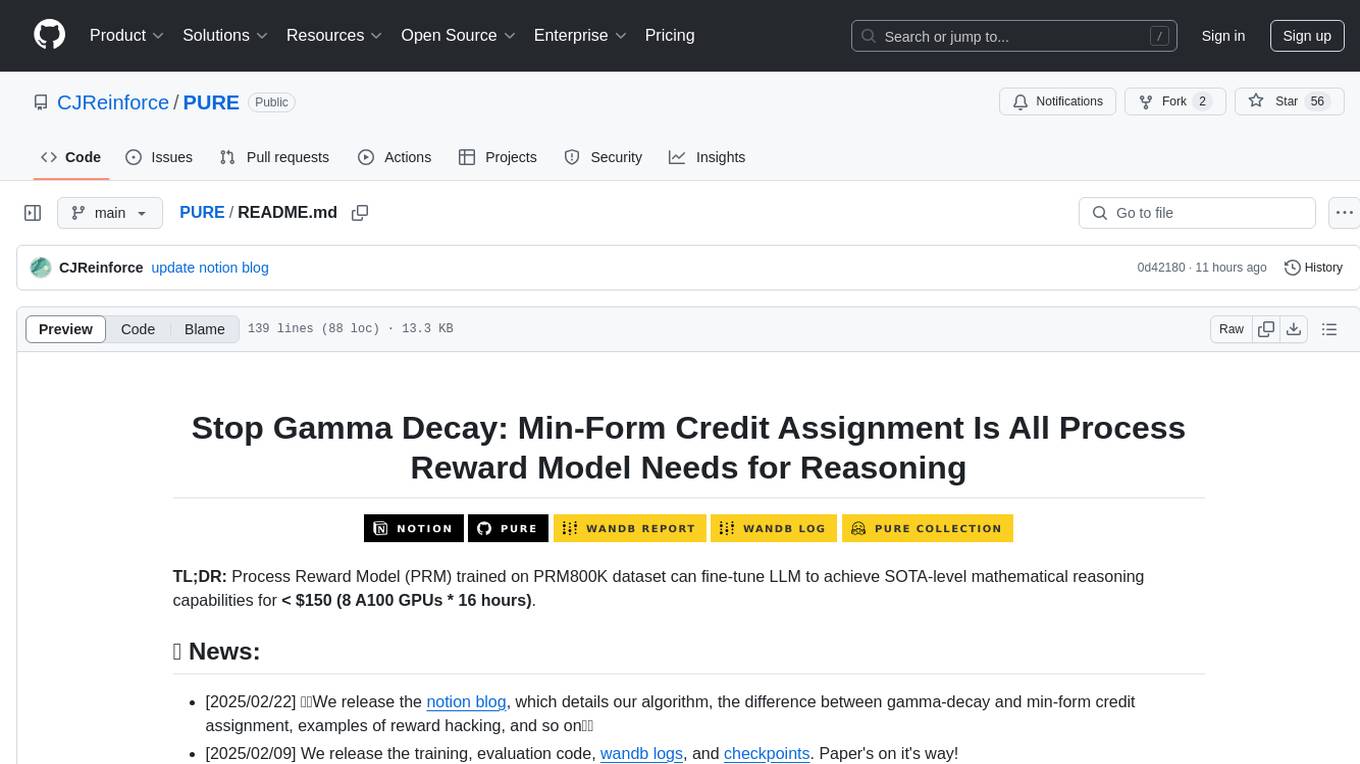
PURE
PURE (Process-sUpervised Reinforcement lEarning) is a framework that trains a Process Reward Model (PRM) on a dataset and fine-tunes a language model to achieve state-of-the-art mathematical reasoning capabilities. It uses a novel credit assignment method to calculate return and supports multiple reward types. The final model outperforms existing methods with minimal RL data or compute resources, achieving high accuracy on various benchmarks. The tool addresses reward hacking issues and aims to enhance long-range decision-making and reasoning tasks using large language models.
For similar jobs
weave
Weave is a toolkit for developing Generative AI applications, built by Weights & Biases. With Weave, you can log and debug language model inputs, outputs, and traces; build rigorous, apples-to-apples evaluations for language model use cases; and organize all the information generated across the LLM workflow, from experimentation to evaluations to production. Weave aims to bring rigor, best-practices, and composability to the inherently experimental process of developing Generative AI software, without introducing cognitive overhead.
LLMStack
LLMStack is a no-code platform for building generative AI agents, workflows, and chatbots. It allows users to connect their own data, internal tools, and GPT-powered models without any coding experience. LLMStack can be deployed to the cloud or on-premise and can be accessed via HTTP API or triggered from Slack or Discord.
VisionCraft
The VisionCraft API is a free API for using over 100 different AI models. From images to sound.
kaito
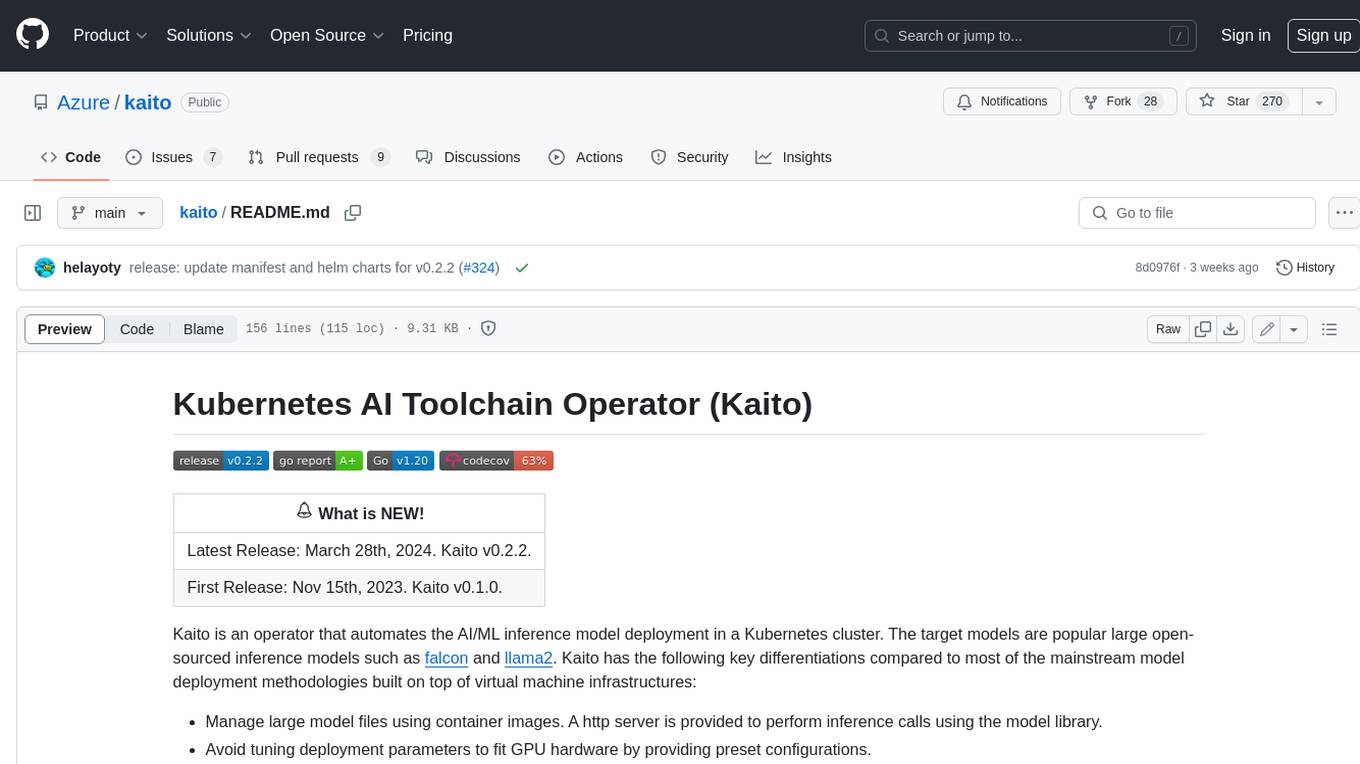
Kaito is an operator that automates the AI/ML inference model deployment in a Kubernetes cluster. It manages large model files using container images, avoids tuning deployment parameters to fit GPU hardware by providing preset configurations, auto-provisions GPU nodes based on model requirements, and hosts large model images in the public Microsoft Container Registry (MCR) if the license allows. Using Kaito, the workflow of onboarding large AI inference models in Kubernetes is largely simplified.
PyRIT
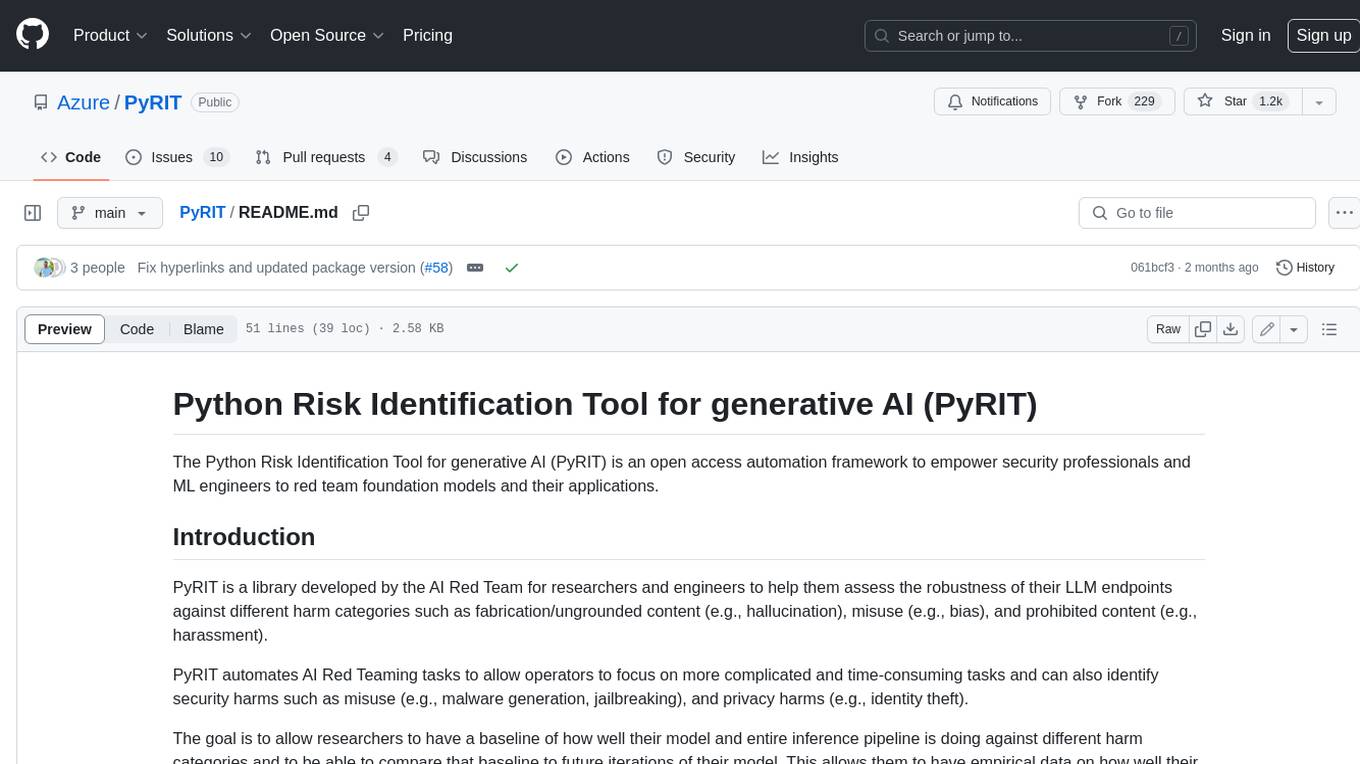
PyRIT is an open access automation framework designed to empower security professionals and ML engineers to red team foundation models and their applications. It automates AI Red Teaming tasks to allow operators to focus on more complicated and time-consuming tasks and can also identify security harms such as misuse (e.g., malware generation, jailbreaking), and privacy harms (e.g., identity theft). The goal is to allow researchers to have a baseline of how well their model and entire inference pipeline is doing against different harm categories and to be able to compare that baseline to future iterations of their model. This allows them to have empirical data on how well their model is doing today, and detect any degradation of performance based on future improvements.
tabby
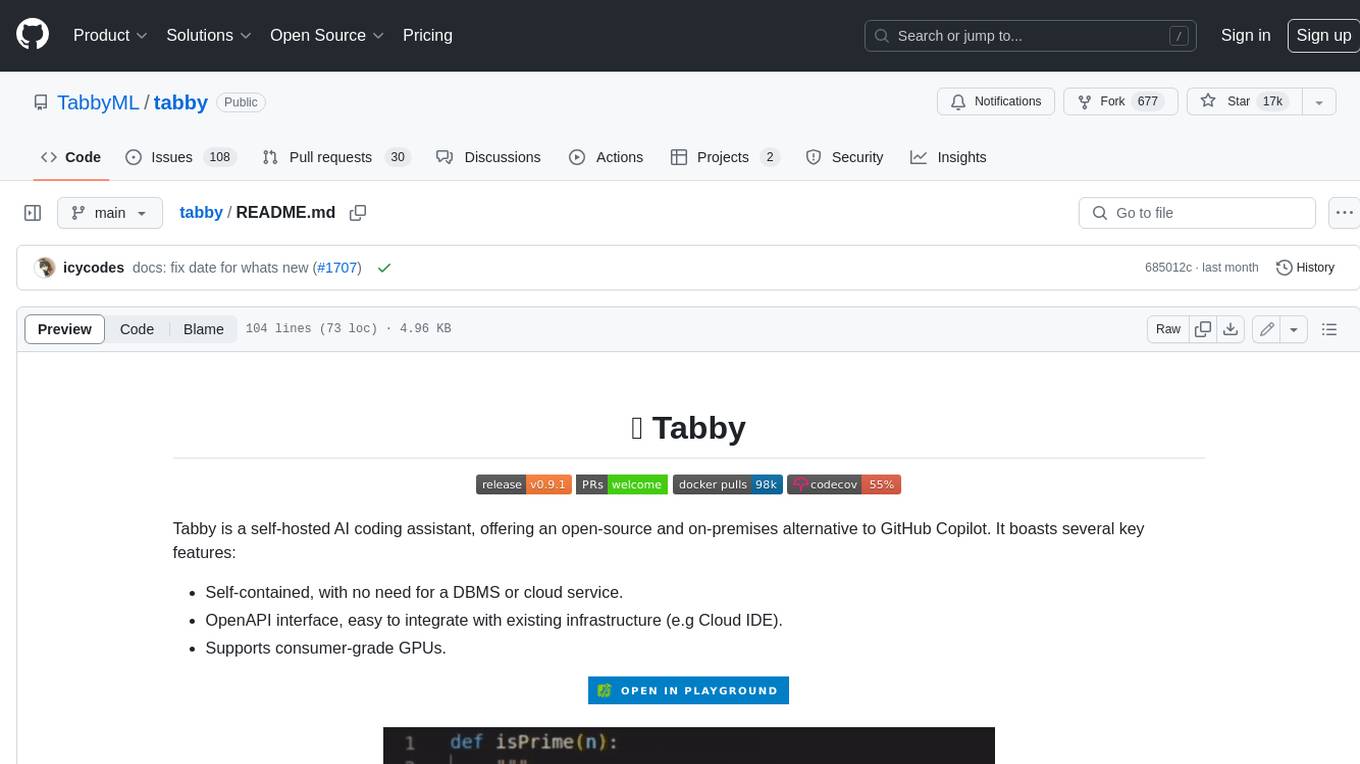
Tabby is a self-hosted AI coding assistant, offering an open-source and on-premises alternative to GitHub Copilot. It boasts several key features: * Self-contained, with no need for a DBMS or cloud service. * OpenAPI interface, easy to integrate with existing infrastructure (e.g Cloud IDE). * Supports consumer-grade GPUs.
spear
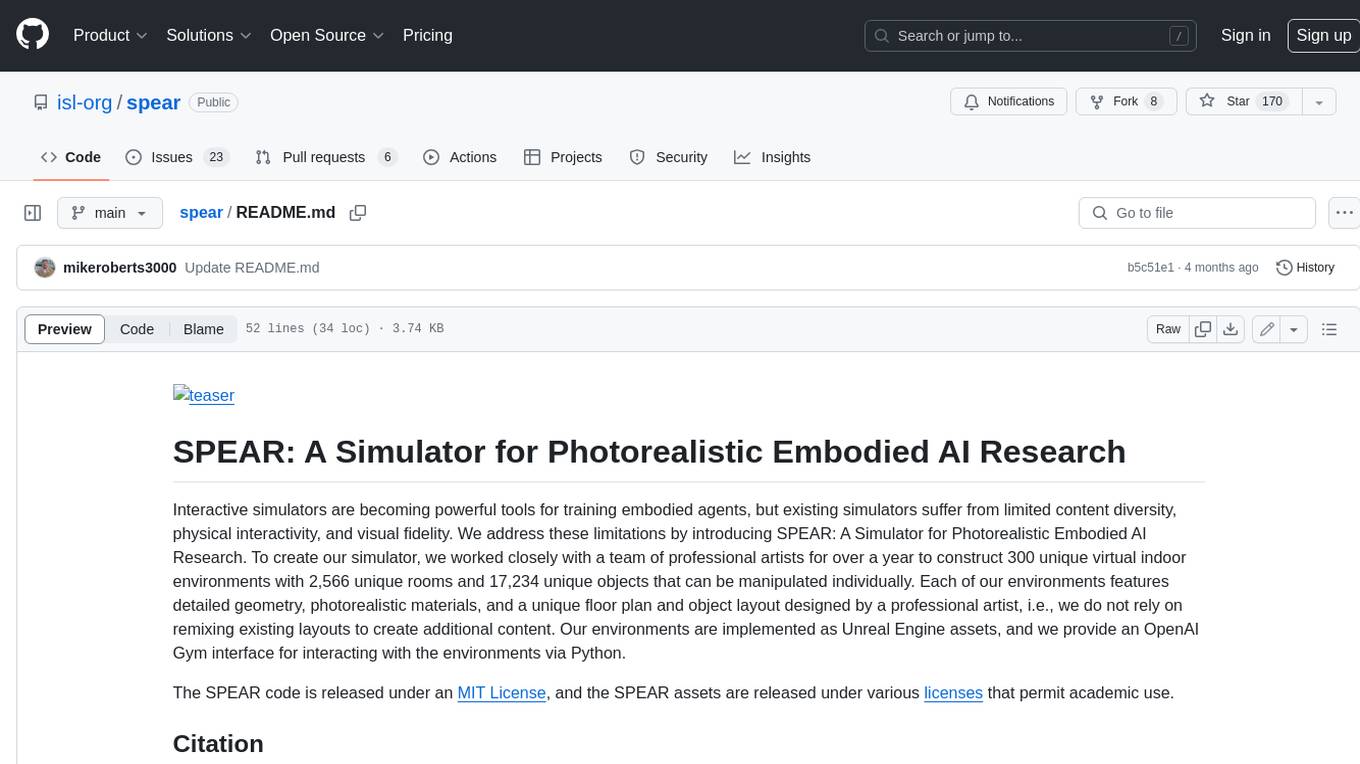
SPEAR (Simulator for Photorealistic Embodied AI Research) is a powerful tool for training embodied agents. It features 300 unique virtual indoor environments with 2,566 unique rooms and 17,234 unique objects that can be manipulated individually. Each environment is designed by a professional artist and features detailed geometry, photorealistic materials, and a unique floor plan and object layout. SPEAR is implemented as Unreal Engine assets and provides an OpenAI Gym interface for interacting with the environments via Python.
Magick
Magick is a groundbreaking visual AIDE (Artificial Intelligence Development Environment) for no-code data pipelines and multimodal agents. Magick can connect to other services and comes with nodes and templates well-suited for intelligent agents, chatbots, complex reasoning systems and realistic characters.