


adk-js
An open-source, code-first Typescript toolkit for building, evaluating, and deploying sophisticated AI agents with flexibility and control.
Stars: 787
Agent Development Kit (ADK) for TypeScript is an open-source toolkit designed for developers to build, evaluate, and deploy sophisticated AI agents with flexibility and control. It allows defining agent behavior, orchestration, and tool use directly in code for robust debugging, versioning, and deployment. With rich tool ecosystem, code-first development, and modular multi-agent systems, ADK offers tight integration with the Google ecosystem and enables the creation of scalable applications by composing multiple specialized agents into flexible hierarchies.
README:



An open-source, code-first TypeScript toolkit for building, evaluating, and deploying sophisticated AI agents with flexibility and control.
Agent Development Kit (ADK) is designed for developers seeking fine-grained control and flexibility when building advanced AI agents that are tightly integrated with services in Google Cloud. It allows you to define agent behavior, orchestration, and tool use directly in code, enabling robust debugging, versioning, and deployment anywhere – from your laptop to the cloud.
-
Rich Tool Ecosystem: Utilize pre-built tools, custom functions, OpenAPI specs, or integrate existing tools to give agents diverse capabilities, all for tight integration with the Google ecosystem.
-
Code-First Development: Define agent logic, tools, and orchestration directly in TypeScript for ultimate flexibility, testability, and versioning.
-
Modular Multi-Agent Systems: Design scalable applications by composing multiple specialized agents into flexible hierarchies.
If you're using npm, add the following to your dependencies:
npm install @google/adkOr with yarn:
yarn add @google/adkFor building, evaluating, and deploying agents by follow the TypeScript documentation & samples:
import { LlmAgent, GOOGLE_SEARCH } from '@google/adk';

const rootAgent = new LlmAgent({
    name: 'search_assistant',
    description: 'An assistant that can search the web.',
    model: 'gemini-2.5-flash', // Or your preferred models
    instruction: 'You are a helpful assistant. Answer user questions using Google Search when needed.',
    tools: [GOOGLE_SEARCH],
});Same as the Python Development UI.
A built-in development UI to help you test, evaluate, debug, and showcase your agent(s).
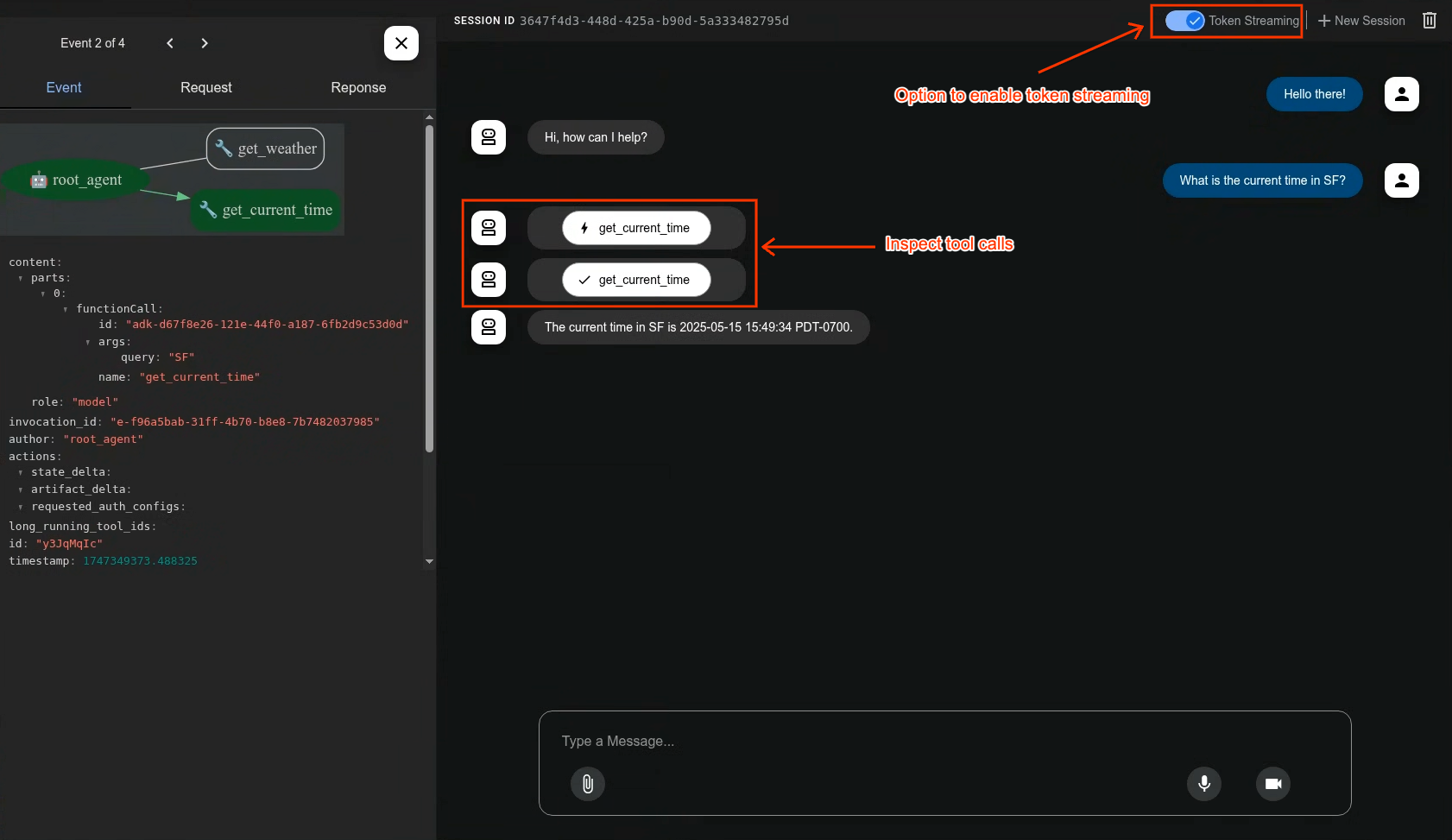
Coming soon...
For remote agent-to-agent communication, ADK integrates with the A2A protocol. Examples coming soon...
This project uses esbuild to compile and bundle the TypeScript source code.
You can build the project using the following npm scripts:
-
npm run build: Compiles the TypeScript code into CommonJS, ESM, and Web formats in thedistdirectory. -
npm run build:bundle: Creates bundled versions of the output for easier distribution or use in environments that don't support tree-shaking well. -
npm run build:watch: Watches for changes in the source files and automatically rebuilds the project for ESM format only.
We welcome contributions from the community! Whether it's bug reports, feature requests, documentation improvements, or code contributions, please see our
- General contribution guideline and flow.
- Then if you want to contribute code, please read Code Contributing Guidelines to get started.
This project is licensed under the Apache 2.0 License - see the LICENSE file for details.
This feature is subject to the "Pre-GA Offerings Terms" in the General Service Terms section of the Service Specific Terms. Pre-GA features are available "as is" and might have limited support. For more information, see the launch stage descriptions.
Happy Agent Building!
For Tasks:
Click tags to check more tools for each tasksFor Jobs:
Alternative AI tools for adk-js
Similar Open Source Tools
adk-js
Agent Development Kit (ADK) for TypeScript is an open-source toolkit designed for developers to build, evaluate, and deploy sophisticated AI agents with flexibility and control. It allows defining agent behavior, orchestration, and tool use directly in code for robust debugging, versioning, and deployment. With rich tool ecosystem, code-first development, and modular multi-agent systems, ADK offers tight integration with the Google ecosystem and enables the creation of scalable applications by composing multiple specialized agents into flexible hierarchies.
adk-python
Agent Development Kit (ADK) is an open-source, code-first Python toolkit for building, evaluating, and deploying sophisticated AI agents with flexibility and control. It is a flexible and modular framework optimized for Gemini and the Google ecosystem, but also compatible with other frameworks. ADK aims to make agent development feel more like software development, enabling developers to create, deploy, and orchestrate agentic architectures ranging from simple tasks to complex workflows.
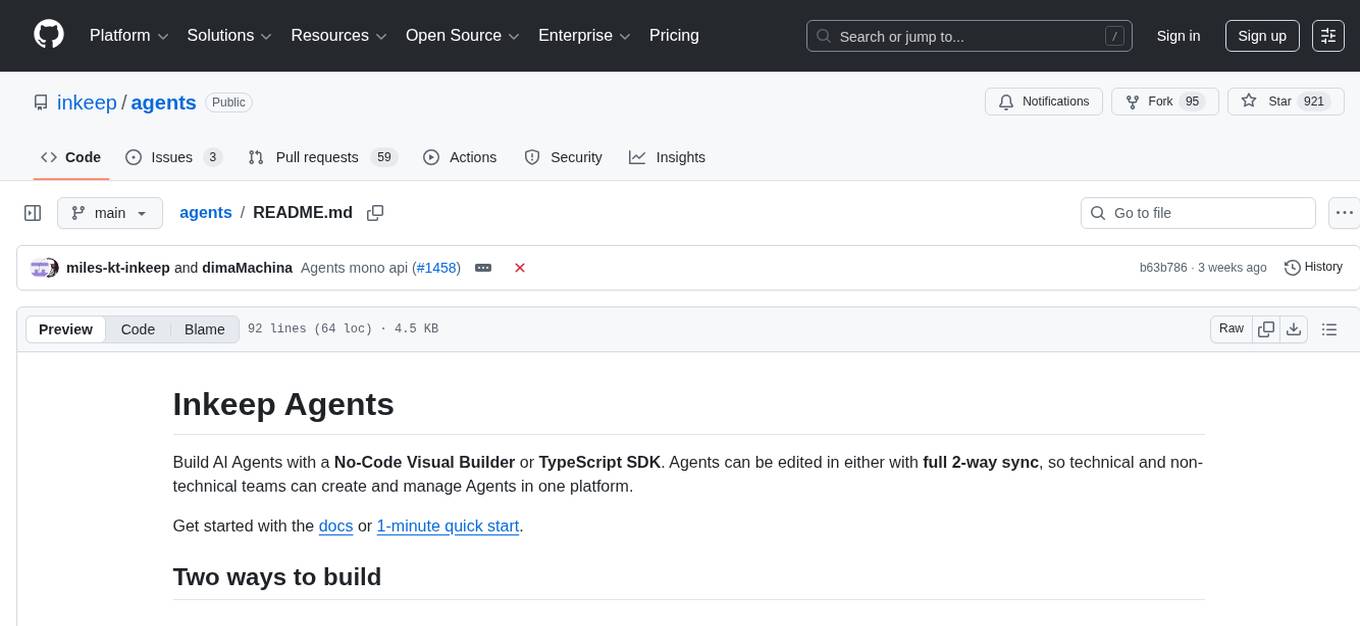
agents
Inkeep Agents is a platform for building AI agents using a No-Code Visual Builder or TypeScript SDK. It allows technical and non-technical teams to create and manage agents collaboratively. The platform supports real-time AI chat assistants and AI workflow automation, with features like multi-agent architecture, MCP tools, UI component library, and observability via Traces UI & OpenTelemetry. Inkeep Agents is interoperable, allowing seamless editing and management of agents in both visual and code formats.
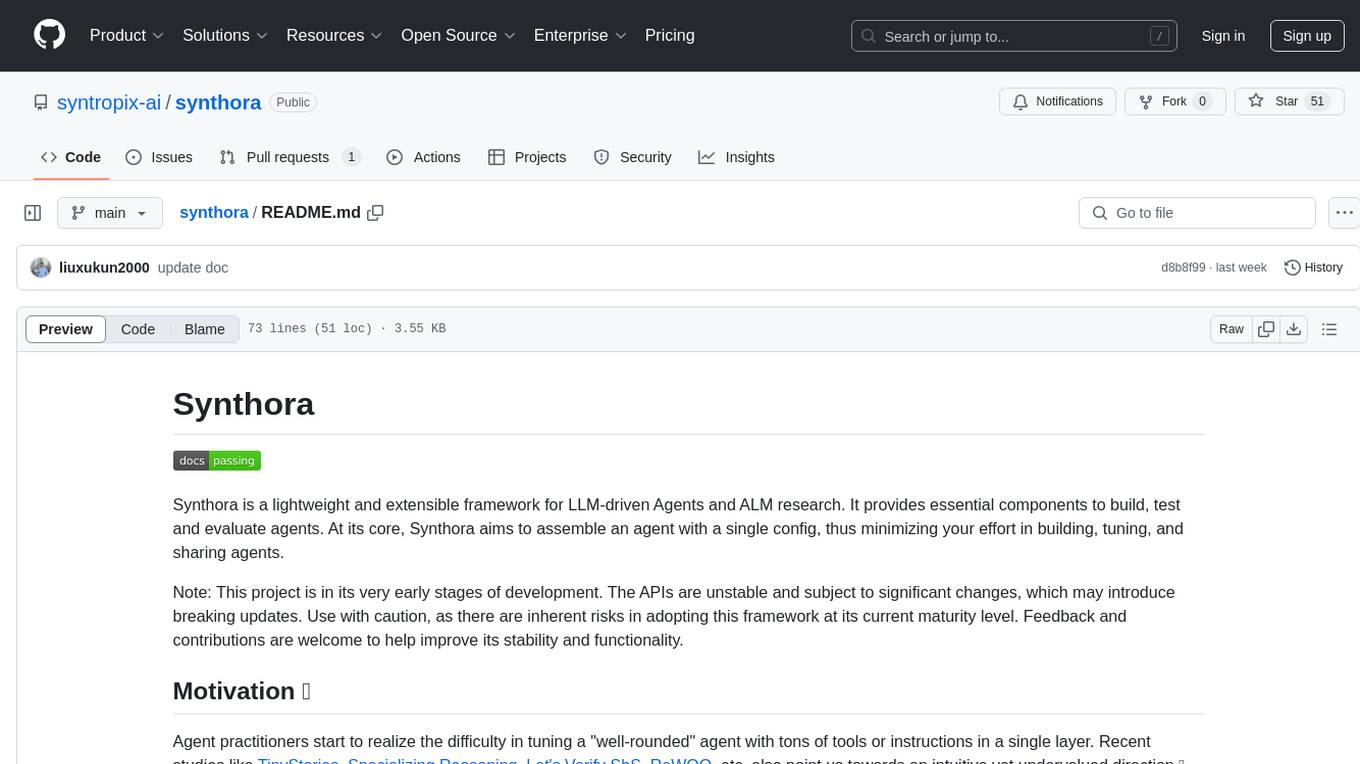
synthora
Synthora is a lightweight and extensible framework for LLM-driven Agents and ALM research. It aims to simplify the process of building, testing, and evaluating agents by providing essential components. The framework allows for easy agent assembly with a single config, reducing the effort required for tuning and sharing agents. Although in early development stages with unstable APIs, Synthora welcomes feedback and contributions to enhance its stability and functionality.

DocsGPT
DocsGPT is an open-source documentation assistant powered by GPT models. It simplifies the process of searching for information in project documentation by allowing developers to ask questions and receive accurate answers. With DocsGPT, users can say goodbye to manual searches and quickly find the information they need. The tool aims to revolutionize project documentation experiences and offers features like live previews, Discord community, guides, and contribution opportunities. It consists of a Flask app, Chrome extension, similarity search index creation script, and a frontend built with Vite and React. Users can quickly get started with DocsGPT by following the provided setup instructions and can contribute to its development by following the guidelines in the CONTRIBUTING.md file. The project follows a Code of Conduct to ensure a harassment-free community environment for all participants. DocsGPT is licensed under MIT and is built with LangChain.
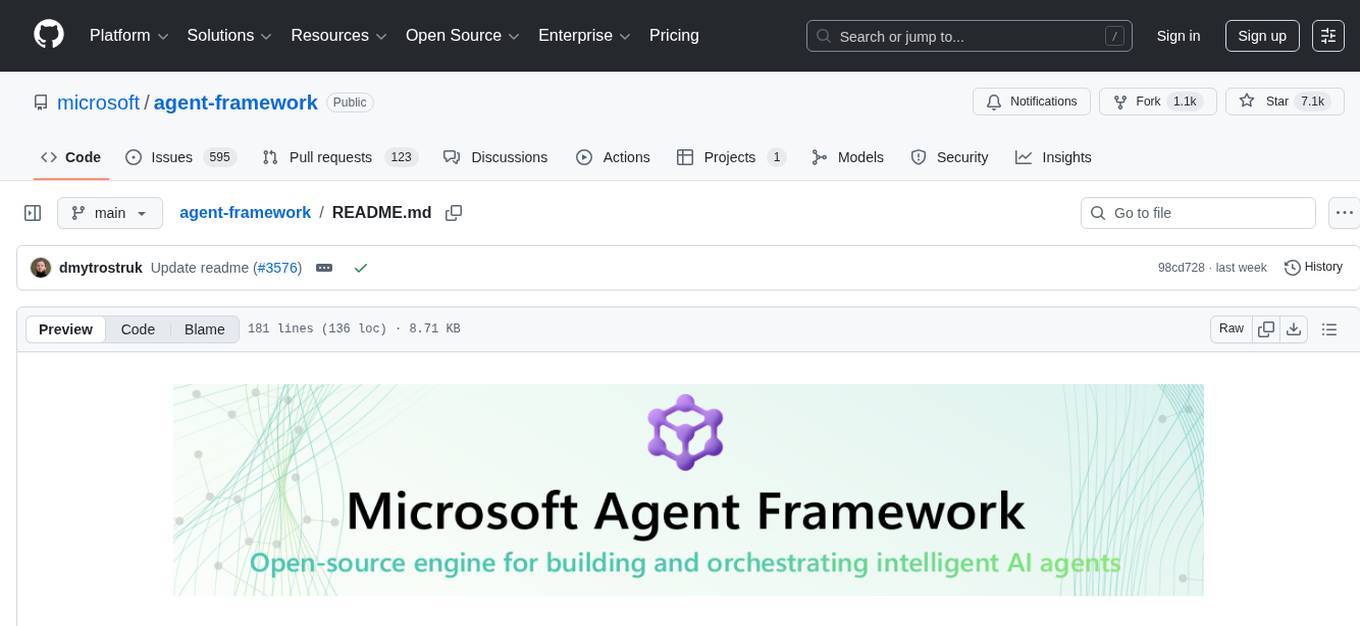
agent-framework
Microsoft Agent Framework is a comprehensive multi-language framework for building, orchestrating, and deploying AI agents with support for both .NET and Python implementations. It provides everything from simple chat agents to complex multi-agent workflows with graph-based orchestration. The framework offers features like graph-based workflows, AF Labs for experimental packages, DevUI for interactive developer UI, support for Python and C#/.NET, observability with OpenTelemetry integration, multiple agent provider support, and flexible middleware system. Users can find documentation, tutorials, and user guides to get started with building agents and workflows. The framework also supports various LLM providers and offers contributor resources like a contributing guide, Python development guide, design documents, and architectural decision records.
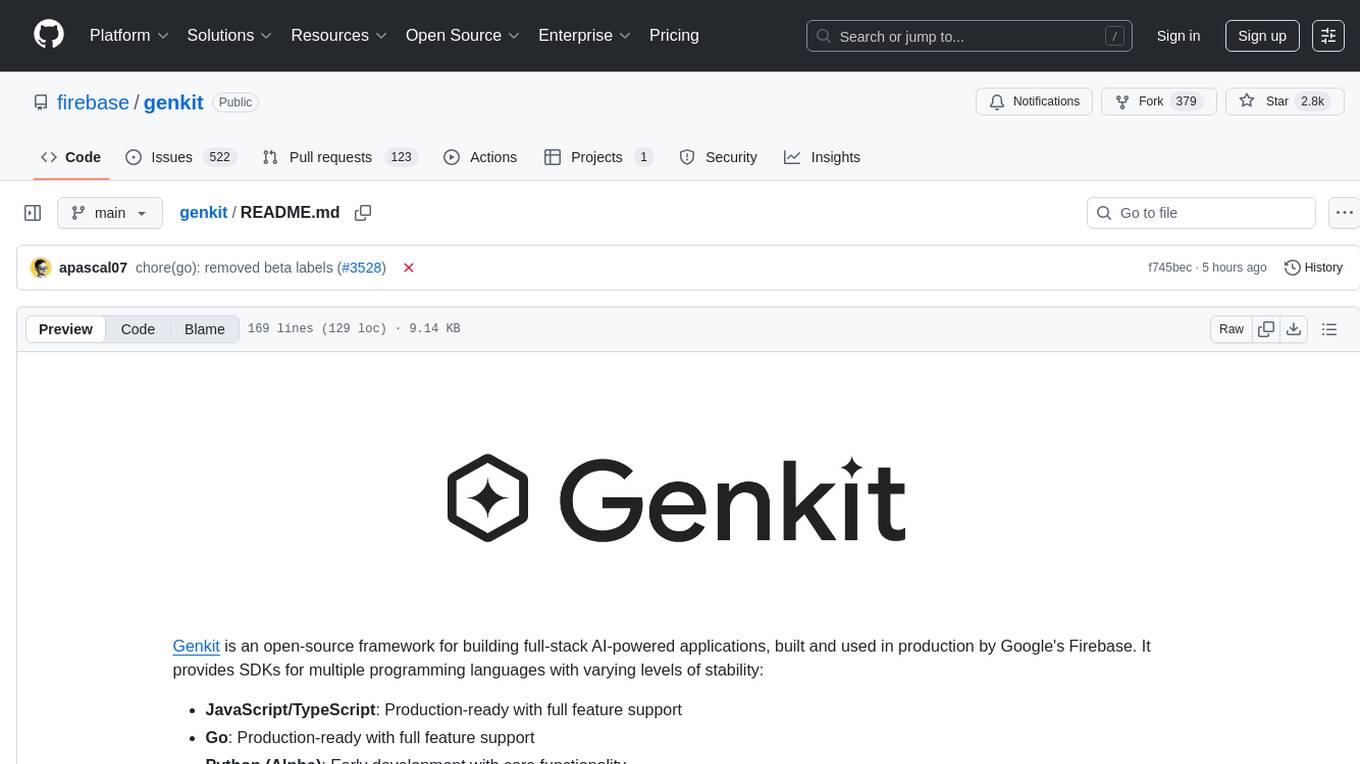
Genkit
Genkit is an open-source framework for building full-stack AI-powered applications, used in production by Google's Firebase. It provides SDKs for JavaScript/TypeScript (Stable), Go (Beta), and Python (Alpha) with unified interface for integrating AI models from providers like Google, OpenAI, Anthropic, Ollama. Rapidly build chatbots, automations, and recommendation systems using streamlined APIs for multimodal content, structured outputs, tool calling, and agentic workflows. Genkit simplifies AI integration with open-source SDK, unified APIs, and offers text and image generation, structured data generation, tool calling, prompt templating, persisted chat interfaces, AI workflows, and AI-powered data retrieval (RAG).
beeai
BeeAI is an open platform that helps users discover, run, and compose AI agents from any framework and language. It offers a framework-agnostic approach, allowing seamless integration of AI agents regardless of the language or platform. Users can build complex workflows using simple building blocks, explore a catalog of powerful agents with integrated search, and benefit from the BeeAI ecosystem with first-class support for Python and TypeScript agent developers.
adk-ts
ADK-TS is a comprehensive TypeScript framework for building sophisticated AI agents with multi-LLM support, advanced tools, and flexible conversation flows. It is production-ready and enables developers to create intelligent, autonomous systems that can handle complex multi-step tasks. The framework provides features such as multi-provider LLM support, extensible tool system, advanced agent reasoning, real-time streaming, flexible authentication, persistent memory systems, multi-agent orchestration, built-in telemetry, and prebuilt MCP servers for easy deployment and management of agents.
adk-go
An open-source, code-first Go toolkit for building, evaluating, and deploying sophisticated AI agents with flexibility and control. Agent Development Kit (ADK) is a flexible and modular framework that simplifies building, deploying, and orchestrating agent workflows, optimized for cloud-native agent applications. It offers idiomatic Go design, rich tool ecosystem, code-first development, modular multi-agent systems, and easy deployment in cloud-native environments like Google Cloud Run.
buildel
Buildel is an AI automation platform that empowers users to create versatile workflows without writing code. It supports multiple providers and interfaces, offers pre-built use cases, and allows users to bring their own API keys. Ideal for AI-powered document retrieval, conversational interfaces, and data integration. Users can get started at app.buildel.ai or run Buildel locally with Node.js, Elixir/Erlang, Docker, Git, and JQ installed. Join the community on Discord for support and discussions.
refly
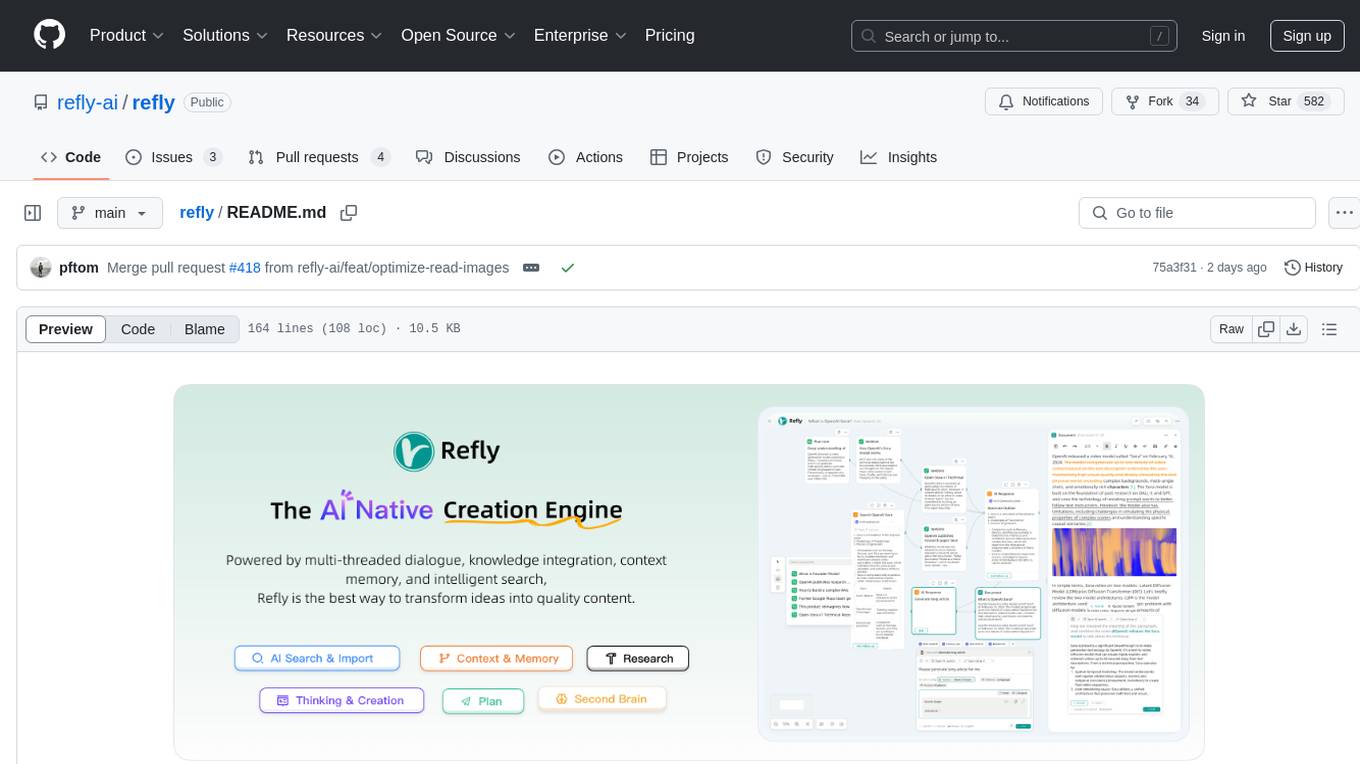
Refly.AI is an open-source AI-native creation engine that empowers users to transform ideas into production-ready content. It features a free-form canvas interface with multi-threaded conversations, knowledge base integration, contextual memory, intelligent search, WYSIWYG AI editor, and more. Users can leverage AI-powered capabilities, context memory, knowledge base integration, quotes, and AI document editing to enhance their content creation process. Refly offers both cloud and self-hosting options, making it suitable for individuals, enterprises, and organizations. The tool is designed to facilitate human-AI collaboration and streamline content creation workflows.
taipy
Taipy is an open-source Python library for easy, end-to-end application development, featuring what-if analyses, smart pipeline execution, built-in scheduling, and deployment tools.
UltraRAG
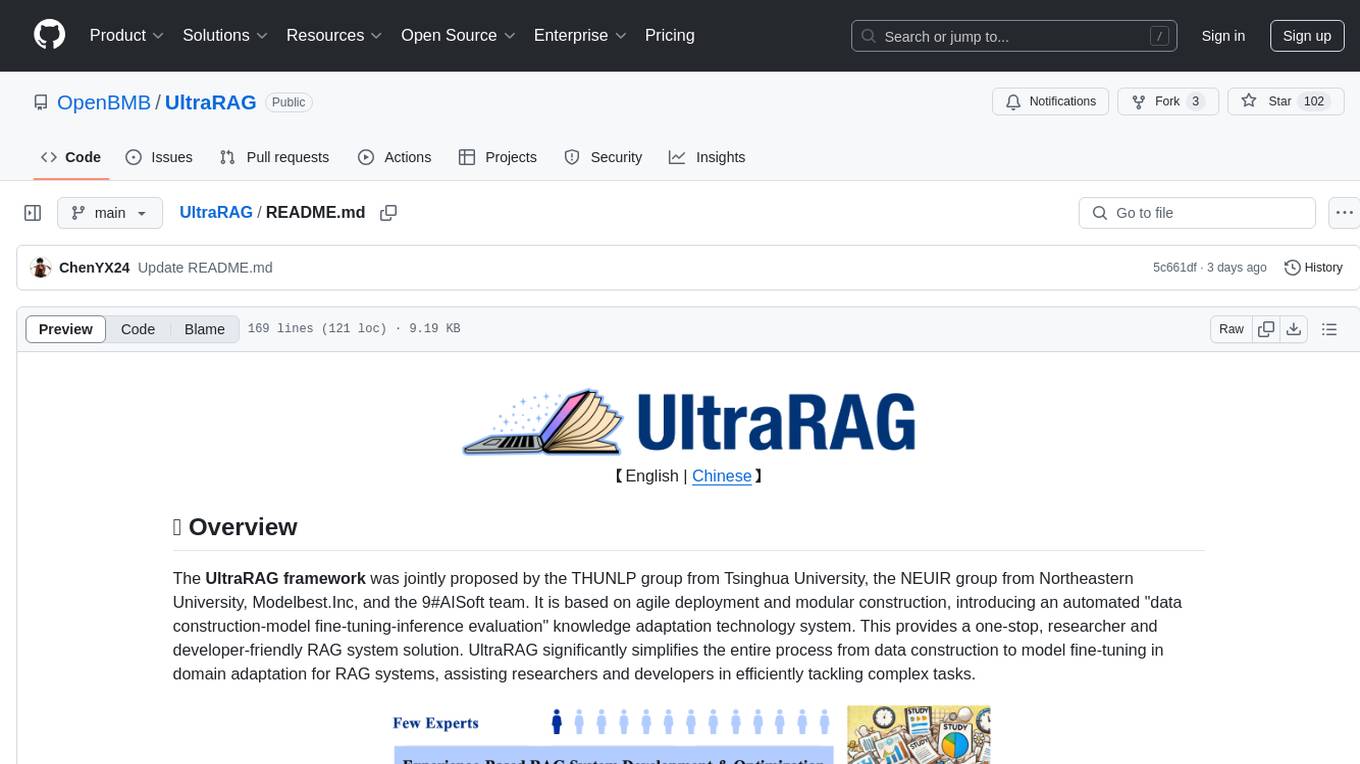
The UltraRAG framework is a researcher and developer-friendly RAG system solution that simplifies the process from data construction to model fine-tuning in domain adaptation. It introduces an automated knowledge adaptation technology system, supporting no-code programming, one-click synthesis and fine-tuning, multidimensional evaluation, and research-friendly exploration work integration. The architecture consists of Frontend, Service, and Backend components, offering flexibility in customization and optimization. Performance evaluation in the legal field shows improved results compared to VanillaRAG, with specific metrics provided. The repository is licensed under Apache-2.0 and encourages citation for support.
baserow
Baserow is a secure, open-source platform that allows users to build databases, applications, automations, and AI agents without writing any code. With enterprise-grade security compliance and both cloud and self-hosted deployment options, Baserow empowers teams to structure data, automate processes, create internal tools, and build custom dashboards. It features a spreadsheet database hybrid, AI Assistant for natural language database creation, GDPR, HIPAA, and SOC 2 Type II compliance, and seamless integration with existing tools. Baserow is API-first, extensible, and uses frameworks like Django, Vue.js, and PostgreSQL.
neuro-san-studio
Neuro SAN Studio is an open-source library for building agent networks across various industries. It simplifies the development of collaborative AI systems by enabling users to create sophisticated multi-agent applications using declarative configuration files. The tool offers features like data-driven configuration, adaptive communication protocols, safe data handling, dynamic agent network designer, flexible tool integration, robust traceability, and cloud-agnostic deployment. It has been used in various use-cases such as automated generation of multi-agent configurations, airline policy assistance, banking operations, market analysis in consumer packaged goods, insurance claims processing, intranet knowledge management, retail operations, telco network support, therapy vignette supervision, and more.
For similar tasks
OpenAGI
OpenAGI is an AI agent creation package designed for researchers and developers to create intelligent agents using advanced machine learning techniques. The package provides tools and resources for building and training AI models, enabling users to develop sophisticated AI applications. With a focus on collaboration and community engagement, OpenAGI aims to facilitate the integration of AI technologies into various domains, fostering innovation and knowledge sharing among experts and enthusiasts.
GPTSwarm
GPTSwarm is a graph-based framework for LLM-based agents that enables the creation of LLM-based agents from graphs and facilitates the customized and automatic self-organization of agent swarms with self-improvement capabilities. The library includes components for domain-specific operations, graph-related functions, LLM backend selection, memory management, and optimization algorithms to enhance agent performance and swarm efficiency. Users can quickly run predefined swarms or utilize tools like the file analyzer. GPTSwarm supports local LM inference via LM Studio, allowing users to run with a local LLM model. The framework has been accepted by ICML2024 and offers advanced features for experimentation and customization.
AgentForge
AgentForge is a low-code framework tailored for the rapid development, testing, and iteration of AI-powered autonomous agents and Cognitive Architectures. It is compatible with a range of LLM models and offers flexibility to run different models for different agents based on specific needs. The framework is designed for seamless extensibility and database-flexibility, making it an ideal playground for various AI projects. AgentForge is a beta-testing ground and future-proof hub for crafting intelligent, model-agnostic autonomous agents.
atomic_agents
Atomic Agents is a modular and extensible framework designed for creating powerful applications. It follows the principles of Atomic Design, emphasizing small and single-purpose components. Leveraging Pydantic for data validation and serialization, the framework offers a set of tools and agents that can be combined to build AI applications. It depends on the Instructor package and supports various APIs like OpenAI, Cohere, Anthropic, and Gemini. Atomic Agents is suitable for developers looking to create AI agents with a focus on modularity and flexibility.
LongRoPE
LongRoPE is a method to extend the context window of large language models (LLMs) beyond 2 million tokens. It identifies and exploits non-uniformities in positional embeddings to enable 8x context extension without fine-tuning. The method utilizes a progressive extension strategy with 256k fine-tuning to reach a 2048k context. It adjusts embeddings for shorter contexts to maintain performance within the original window size. LongRoPE has been shown to be effective in maintaining performance across various tasks from 4k to 2048k context lengths.
ax
Ax is a Typescript library that allows users to build intelligent agents inspired by agentic workflows and the Stanford DSP paper. It seamlessly integrates with multiple Large Language Models (LLMs) and VectorDBs to create RAG pipelines or collaborative agents capable of solving complex problems. The library offers advanced features such as streaming validation, multi-modal DSP, and automatic prompt tuning using optimizers. Users can easily convert documents of any format to text, perform smart chunking, embedding, and querying, and ensure output validation while streaming. Ax is production-ready, written in Typescript, and has zero dependencies.
Awesome-AI-Agents
Awesome-AI-Agents is a curated list of projects, frameworks, benchmarks, platforms, and related resources focused on autonomous AI agents powered by Large Language Models (LLMs). The repository showcases a wide range of applications, multi-agent task solver projects, agent society simulations, and advanced components for building and customizing AI agents. It also includes frameworks for orchestrating role-playing, evaluating LLM-as-Agent performance, and connecting LLMs with real-world applications through platforms and APIs. Additionally, the repository features surveys, paper lists, and blogs related to LLM-based autonomous agents, making it a valuable resource for researchers, developers, and enthusiasts in the field of AI.
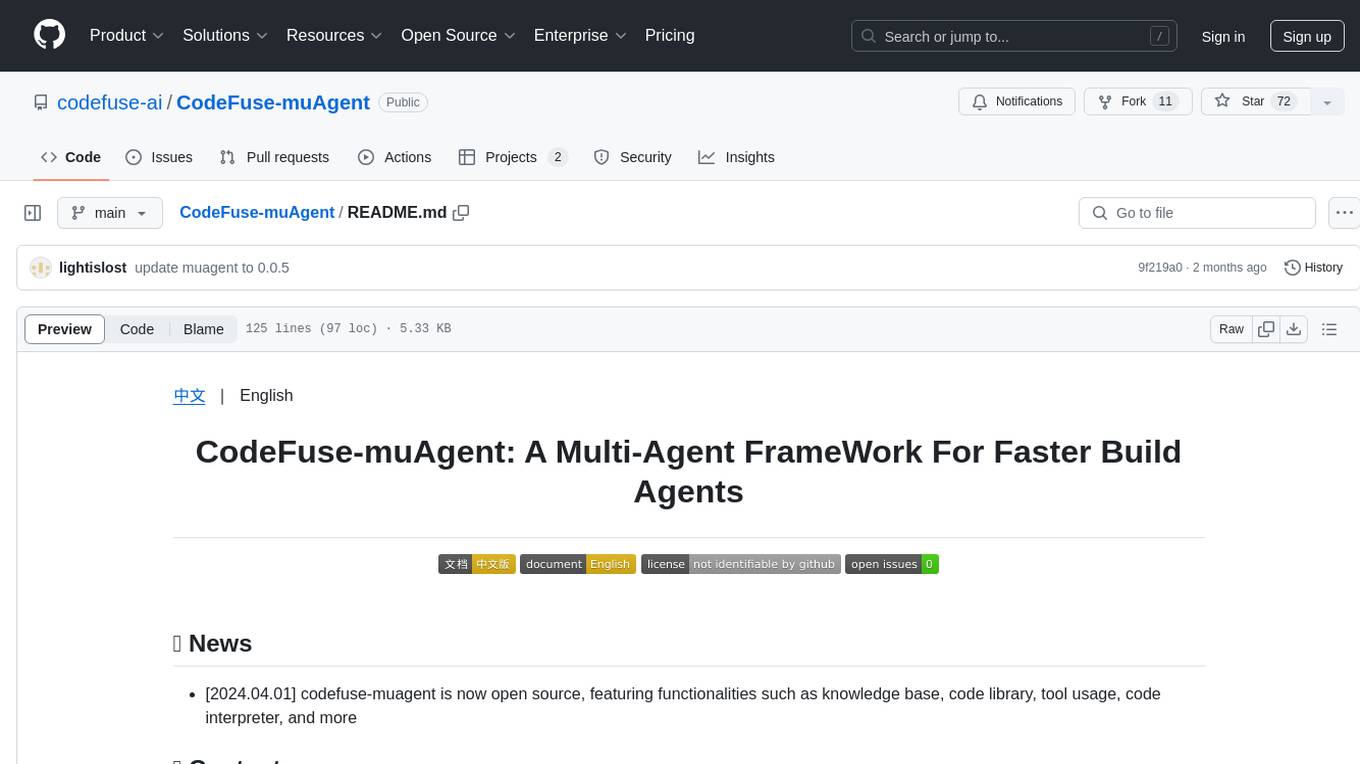
CodeFuse-muAgent
CodeFuse-muAgent is a Multi-Agent framework designed to streamline Standard Operating Procedure (SOP) orchestration for agents. It integrates toolkits, code libraries, knowledge bases, and sandbox environments for rapid construction of complex Multi-Agent interactive applications. The framework enables efficient execution and handling of multi-layered and multi-dimensional tasks.
For similar jobs
sweep
Sweep is an AI junior developer that turns bugs and feature requests into code changes. It automatically handles developer experience improvements like adding type hints and improving test coverage.
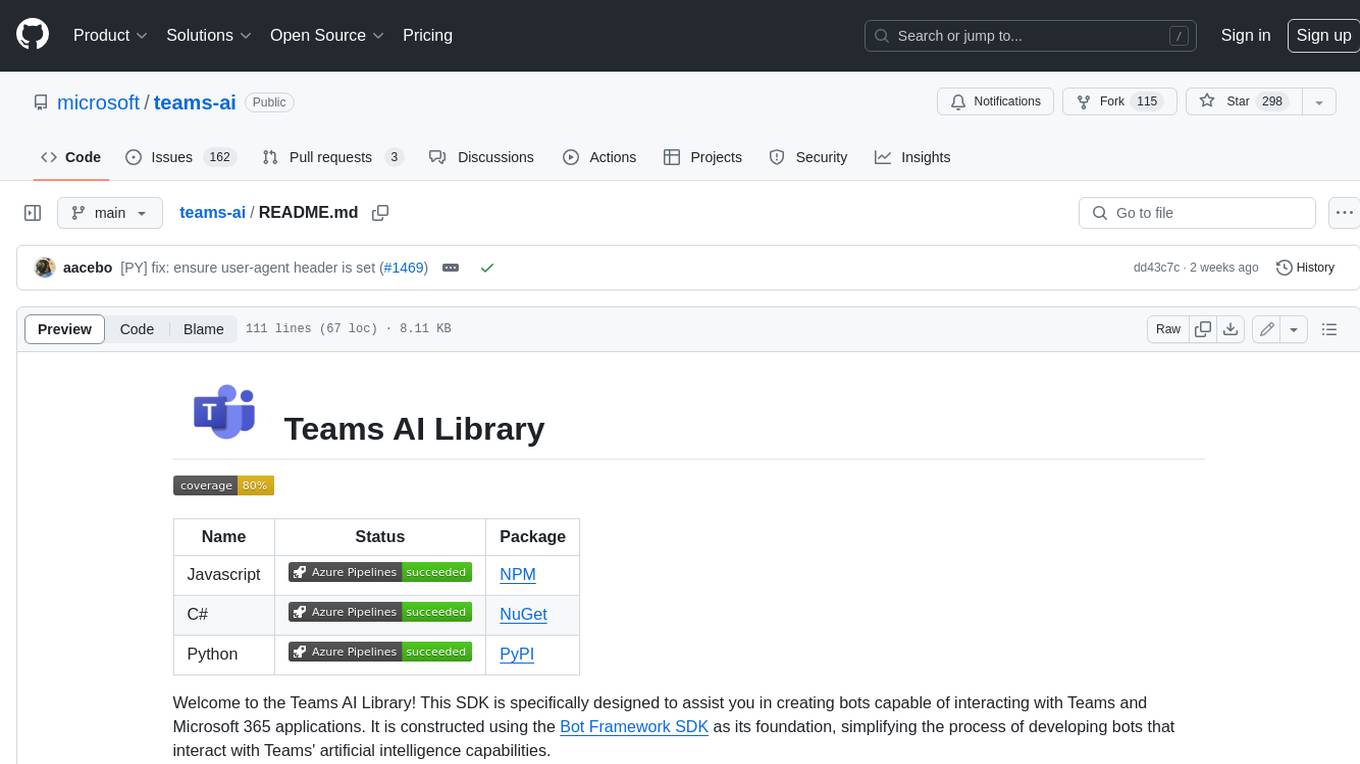
teams-ai
The Teams AI Library is a software development kit (SDK) that helps developers create bots that can interact with Teams and Microsoft 365 applications. It is built on top of the Bot Framework SDK and simplifies the process of developing bots that interact with Teams' artificial intelligence capabilities. The SDK is available for JavaScript/TypeScript, .NET, and Python.
ai-guide
This guide is dedicated to Large Language Models (LLMs) that you can run on your home computer. It assumes your PC is a lower-end, non-gaming setup.
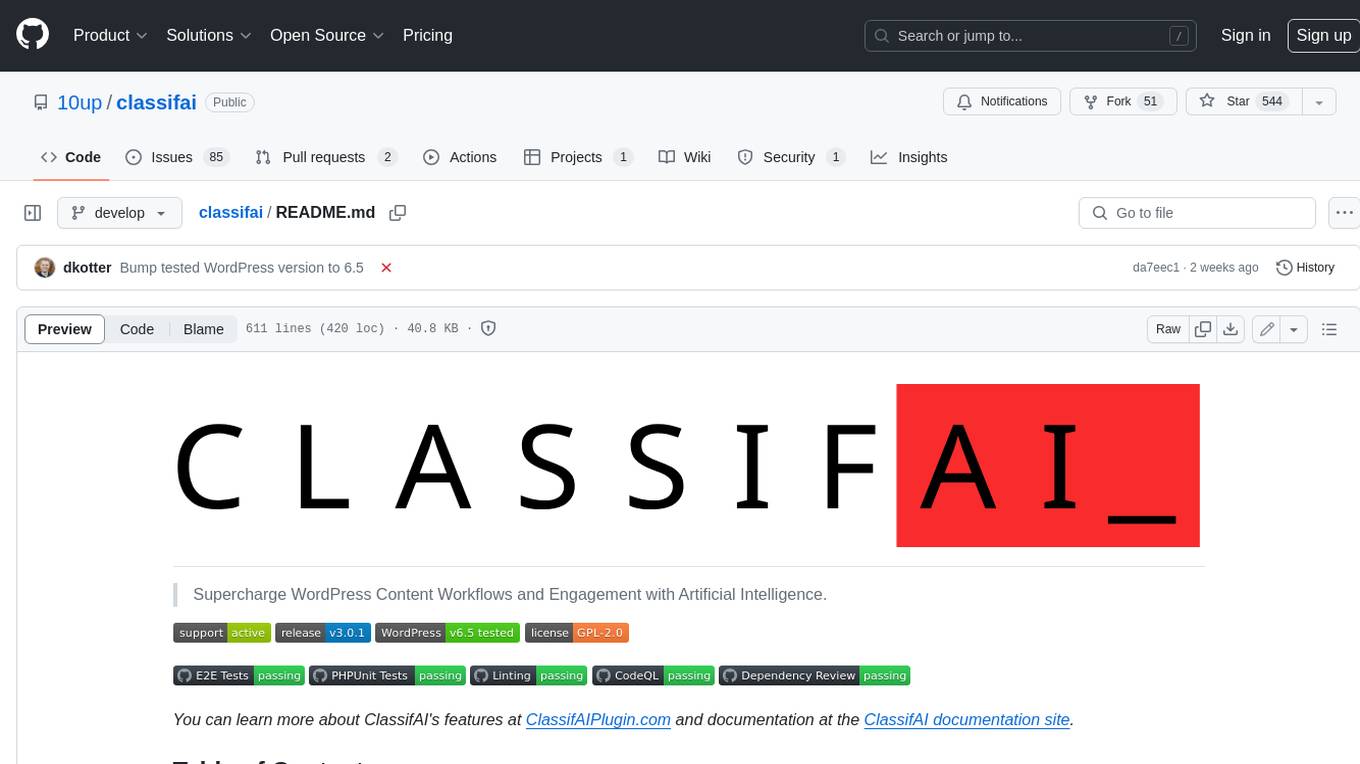
classifai
Supercharge WordPress Content Workflows and Engagement with Artificial Intelligence. Tap into leading cloud-based services like OpenAI, Microsoft Azure AI, Google Gemini and IBM Watson to augment your WordPress-powered websites. Publish content faster while improving SEO performance and increasing audience engagement. ClassifAI integrates Artificial Intelligence and Machine Learning technologies to lighten your workload and eliminate tedious tasks, giving you more time to create original content that matters.
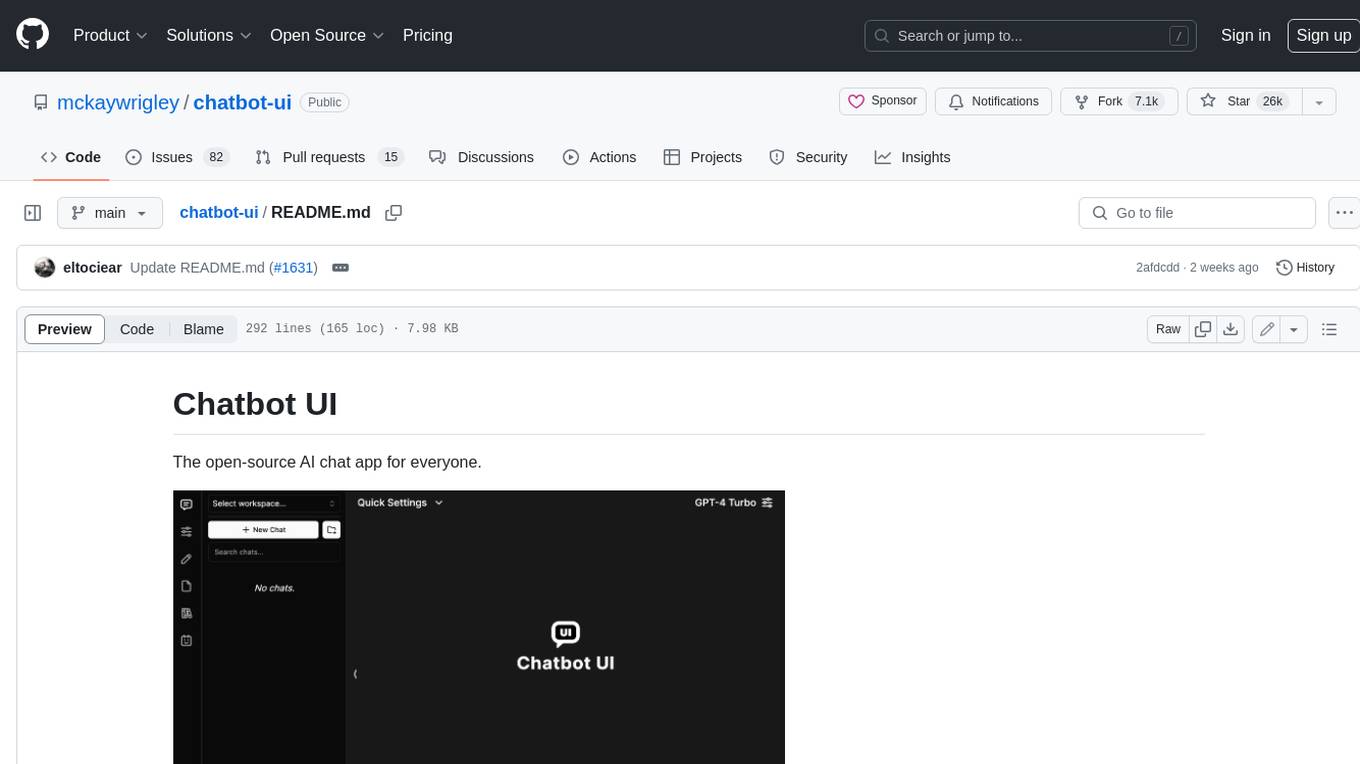
chatbot-ui
Chatbot UI is an open-source AI chat app that allows users to create and deploy their own AI chatbots. It is easy to use and can be customized to fit any need. Chatbot UI is perfect for businesses, developers, and anyone who wants to create a chatbot.
BricksLLM
BricksLLM is a cloud native AI gateway written in Go. Currently, it provides native support for OpenAI, Anthropic, Azure OpenAI and vLLM. BricksLLM aims to provide enterprise level infrastructure that can power any LLM production use cases. Here are some use cases for BricksLLM: * Set LLM usage limits for users on different pricing tiers * Track LLM usage on a per user and per organization basis * Block or redact requests containing PIIs * Improve LLM reliability with failovers, retries and caching * Distribute API keys with rate limits and cost limits for internal development/production use cases * Distribute API keys with rate limits and cost limits for students
uAgents
uAgents is a Python library developed by Fetch.ai that allows for the creation of autonomous AI agents. These agents can perform various tasks on a schedule or take action on various events. uAgents are easy to create and manage, and they are connected to a fast-growing network of other uAgents. They are also secure, with cryptographically secured messages and wallets.
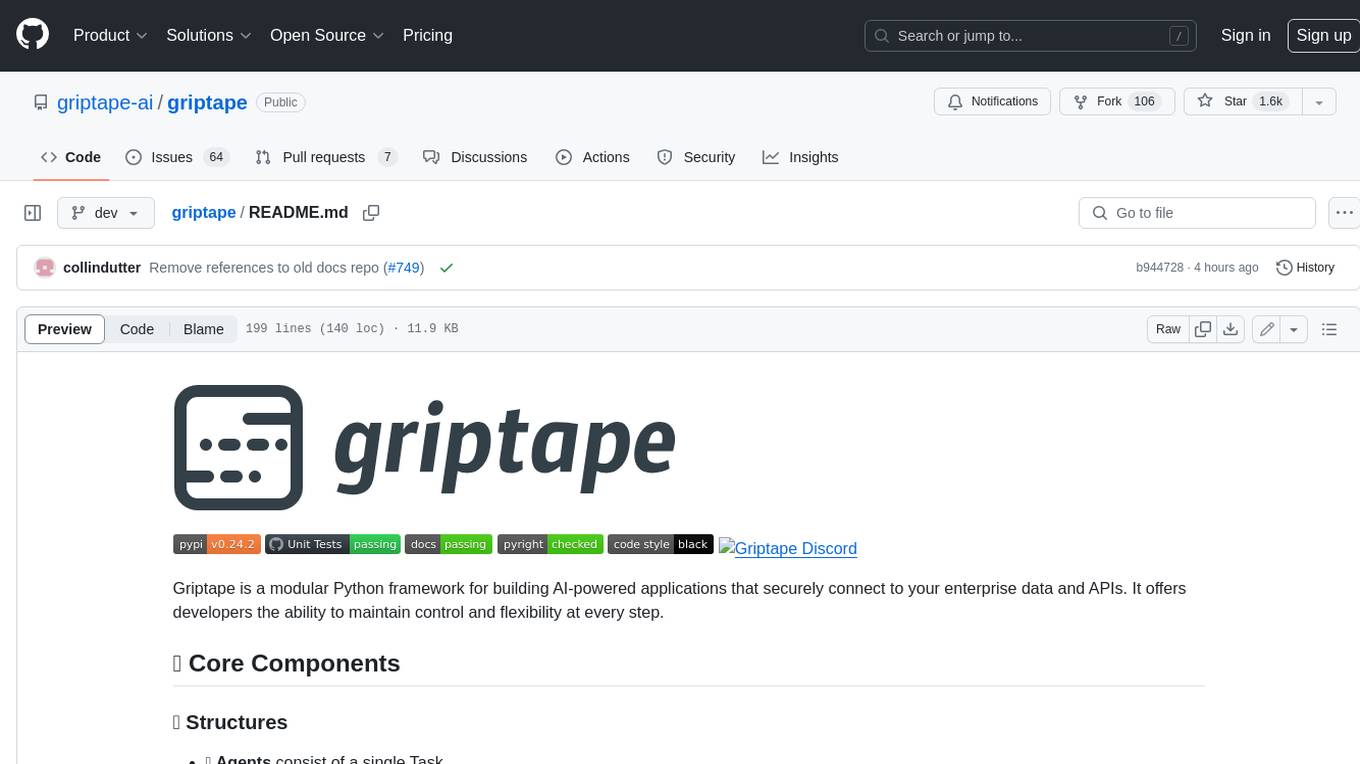
griptape
Griptape is a modular Python framework for building AI-powered applications that securely connect to your enterprise data and APIs. It offers developers the ability to maintain control and flexibility at every step. Griptape's core components include Structures (Agents, Pipelines, and Workflows), Tasks, Tools, Memory (Conversation Memory, Task Memory, and Meta Memory), Drivers (Prompt and Embedding Drivers, Vector Store Drivers, Image Generation Drivers, Image Query Drivers, SQL Drivers, Web Scraper Drivers, and Conversation Memory Drivers), Engines (Query Engines, Extraction Engines, Summary Engines, Image Generation Engines, and Image Query Engines), and additional components (Rulesets, Loaders, Artifacts, Chunkers, and Tokenizers). Griptape enables developers to create AI-powered applications with ease and efficiency.