


agents
Create AI Agents in a No-Code Visual Builder or TypeScript SDK with full 2-way sync. For shipping AI assistants and multi-agent AI workflows.
Stars: 913
Inkeep Agents is a platform for building AI agents using a No-Code Visual Builder or TypeScript SDK. It allows technical and non-technical teams to create and manage agents collaboratively. The platform supports real-time AI chat assistants and AI workflow automation, with features like multi-agent architecture, MCP tools, UI component library, and observability via Traces UI & OpenTelemetry. Inkeep Agents is interoperable, allowing seamless editing and management of agents in both visual and code formats.
README:
Build AI Agents with a No-Code Visual Builder or TypeScript SDK. Agents can be edited in either with full 2-way sync, so technical and non-technical teams can create and manage Agents in one platform.
Get started with the docs or 1-minute quick start.
A drag-and-drop canvas so any team can create and own the Agents they care about.

A code-first framework so engineering teams can build with typesafety, intellisense, CI/CD, and the tools they expect.
import { agent, subAgent } from "@inkeep/agents-sdk";
import { consoleMcp } from "./mcp";

const helloAgent = subAgent({
  id: "hello-agent",
  name: "Hello Agent",
  description: "Says hello",
  canUse: () => [consoleMcp],
  prompt: `Reply to the user and console log "hello world" with fun variations like h3llo world`,
});

export const basicAgent = agent({
  id: "basic-agent",
  name: "Basic Agent",
  description: "A basic agent",
  defaultSubAgent: helloAgent,
  subAgents: () => [helloAgent],
});
The Visual Builder and TypeScript SDK are fully interoperable: technical and non-technical teams can edit and manage Agents in either format and collaborate with others at any time.
Inkeep Agents can operate as real-time AI Chat Assistants, for example:
- a customer experience agent for help centers, technical docs, or in-app experiences
- an internal copilot to assist your support, sales, marketing, ops, and other teams
Agents can also be used for AI Workflow Automation like:
- Creating and updating knowledge bases, documentation, and blogs
- Updating CRMs, triaging helpdesk tickets, and tackling repetitive tasks
Inkeep Open Source includes:
- A Visual Builder & TypeScript SDK with 2-way sync
- Multi-agent architecture to support teams of agents
- MCP Tools with credential management
- A UI component library for dynamic chat experiences
- Triggering Agents via MCP, A2A, & Vercel SDK APIs
- Observability via a Traces UI & OpenTelemetry
- Easy deployment using Vercel or Docker
For a full overview, see the Concepts guide.
Interested in a managed platform? Sign up for the Inkeep Cloud waitlist or learn about Inkeep Enterprise.
The Inkeep Agent Platform is composed of several key services and libraries that work together:
- agents-api: An API that handles configuration of Agents, Sub Agents, MCP Servers, Credentials, and Projects with a REST API. Additionally, it exposes Agent execution and evaluation. The API tracks conversation state and emits OTEL traces.
-
agents-manage-ui: Visual Builder web interface for creating and managing Agents. Writes to the
agents-api. -
agents-sdk: TypeScript SDK (
@inkeep/agents-sdk) for declaratively defining Agents and custom tools in code. Writes toagents-api. -
agents-cli: Includes various handy utilities, including
inkeep pushandinkeep pullwhich sync your TypeScript SDK code with the Visual Builder. - agents-ui: A UI component library of chat interfaces for embedding rich, dynamic conversational AI experiences in web apps.
Under the hood, the framework uses the Vercel AI SDK for interfacing with LLM providers, so it's compatible with Vercel's useChat hook and other AI primatives.
The Inkeep Agent Framework is licensed under the Elastic License 2.0 (ELv2) subject to Inkeep's Supplemental Terms (SUPPLEMENTAL_TERMS.md). This is a fair-code, source-available license that allows broad usage while protecting against certain competitive uses.
Inkeep is designed to be extensible and open: use the LLM provider of your choice, use Agents via standard protocols, and easily deploy and self-host Agents in your own infra.
If you'd like to contribute, follow our contribution guide.
Join our community to get support, stay up to date, and share feedback.
For Tasks:
Click tags to check more tools for each tasksFor Jobs:
Alternative AI tools for agents
Similar Open Source Tools
For similar tasks
agents
Inkeep Agents is a platform for building AI agents using a No-Code Visual Builder or TypeScript SDK. It allows technical and non-technical teams to create and manage agents collaboratively. The platform supports real-time AI chat assistants and AI workflow automation, with features like multi-agent architecture, MCP tools, UI component library, and observability via Traces UI & OpenTelemetry. Inkeep Agents is interoperable, allowing seamless editing and management of agents in both visual and code formats.
autogen
AutoGen is a framework that enables the development of LLM applications using multiple agents that can converse with each other to solve tasks. AutoGen agents are customizable, conversable, and seamlessly allow human participation. They can operate in various modes that employ combinations of LLMs, human inputs, and tools.
tracecat
Tracecat is an open-source automation platform for security teams. It's designed to be simple but powerful, with a focus on AI features and a practitioner-obsessed UI/UX. Tracecat can be used to automate a variety of tasks, including phishing email investigation, evidence collection, and remediation plan generation.
ciso-assistant-community
CISO Assistant is a tool that helps organizations manage their cybersecurity posture and compliance. It provides a centralized platform for managing security controls, threats, and risks. CISO Assistant also includes a library of pre-built frameworks and tools to help organizations quickly and easily implement best practices.
ck
Collective Mind (CM) is a collection of portable, extensible, technology-agnostic and ready-to-use automation recipes with a human-friendly interface (aka CM scripts) to unify and automate all the manual steps required to compose, run, benchmark and optimize complex ML/AI applications on any platform with any software and hardware: see online catalog and source code. CM scripts require Python 3.7+ with minimal dependencies and are continuously extended by the community and MLCommons members to run natively on Ubuntu, MacOS, Windows, RHEL, Debian, Amazon Linux and any other operating system, in a cloud or inside automatically generated containers while keeping backward compatibility - please don't hesitate to report encountered issues here and contact us via public Discord Server to help this collaborative engineering effort! CM scripts were originally developed based on the following requirements from the MLCommons members to help them automatically compose and optimize complex MLPerf benchmarks, applications and systems across diverse and continuously changing models, data sets, software and hardware from Nvidia, Intel, AMD, Google, Qualcomm, Amazon and other vendors: * must work out of the box with the default options and without the need to edit some paths, environment variables and configuration files; * must be non-intrusive, easy to debug and must reuse existing user scripts and automation tools (such as cmake, make, ML workflows, python poetry and containers) rather than substituting them; * must have a very simple and human-friendly command line with a Python API and minimal dependencies; * must require minimal or zero learning curve by using plain Python, native scripts, environment variables and simple JSON/YAML descriptions instead of inventing new workflow languages; * must have the same interface to run all automations natively, in a cloud or inside containers. CM scripts were successfully validated by MLCommons to modularize MLPerf inference benchmarks and help the community automate more than 95% of all performance and power submissions in the v3.1 round across more than 120 system configurations (models, frameworks, hardware) while reducing development and maintenance costs.
zenml
ZenML is an extensible, open-source MLOps framework for creating portable, production-ready machine learning pipelines. By decoupling infrastructure from code, ZenML enables developers across your organization to collaborate more effectively as they develop to production.
clearml
ClearML is a suite of tools designed to streamline the machine learning workflow. It includes an experiment manager, MLOps/LLMOps, data management, and model serving capabilities. ClearML is open-source and offers a free tier hosting option. It supports various ML/DL frameworks and integrates with Jupyter Notebook and PyCharm. ClearML provides extensive logging capabilities, including source control info, execution environment, hyper-parameters, and experiment outputs. It also offers automation features, such as remote job execution and pipeline creation. ClearML is designed to be easy to integrate, requiring only two lines of code to add to existing scripts. It aims to improve collaboration, visibility, and data transparency within ML teams.
devchat
DevChat is an open-source workflow engine that enables developers to create intelligent, automated workflows for engaging with users through a chat panel within their IDEs. It combines script writing flexibility, latest AI models, and an intuitive chat GUI to enhance user experience and productivity. DevChat simplifies the integration of AI in software development, unlocking new possibilities for developers.
For similar jobs
agents
Inkeep Agents is a platform for building AI agents using a No-Code Visual Builder or TypeScript SDK. It allows technical and non-technical teams to create and manage agents collaboratively. The platform supports real-time AI chat assistants and AI workflow automation, with features like multi-agent architecture, MCP tools, UI component library, and observability via Traces UI & OpenTelemetry. Inkeep Agents is interoperable, allowing seamless editing and management of agents in both visual and code formats.
chat.md
This repository contains a chatbot tool that utilizes natural language processing to interact with users. The tool is designed to understand and respond to user input in a conversational manner, providing information and assistance. It can be integrated into various applications to enhance user experience and automate customer support. The chatbot tool is user-friendly and customizable, making it suitable for businesses looking to improve customer engagement and streamline communication.
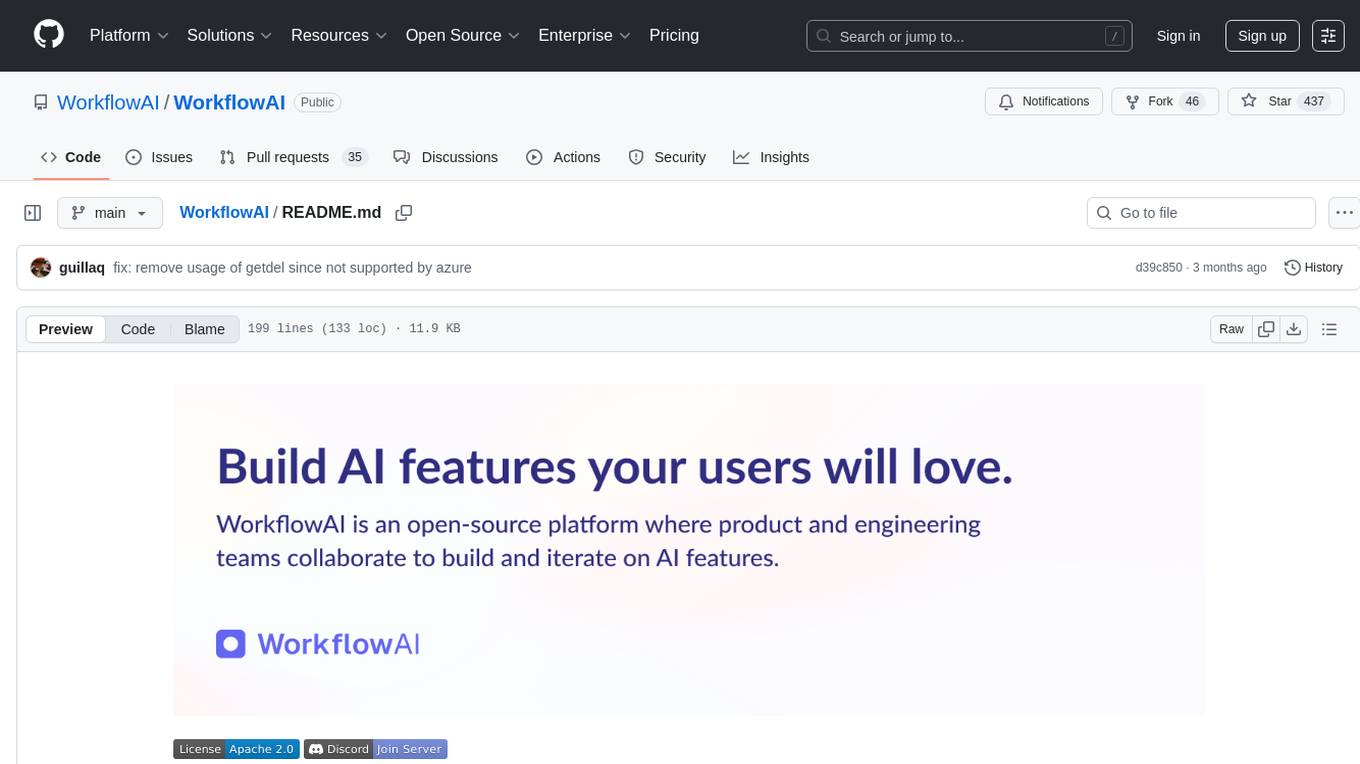
WorkflowAI
WorkflowAI is a powerful tool designed to streamline and automate various tasks within the workflow process. It provides a user-friendly interface for creating custom workflows, automating repetitive tasks, and optimizing efficiency. With WorkflowAI, users can easily design, execute, and monitor workflows, allowing for seamless integration of different tools and systems. The tool offers advanced features such as conditional logic, task dependencies, and error handling to ensure smooth workflow execution. Whether you are managing project tasks, processing data, or coordinating team activities, WorkflowAI simplifies the workflow management process and enhances productivity.
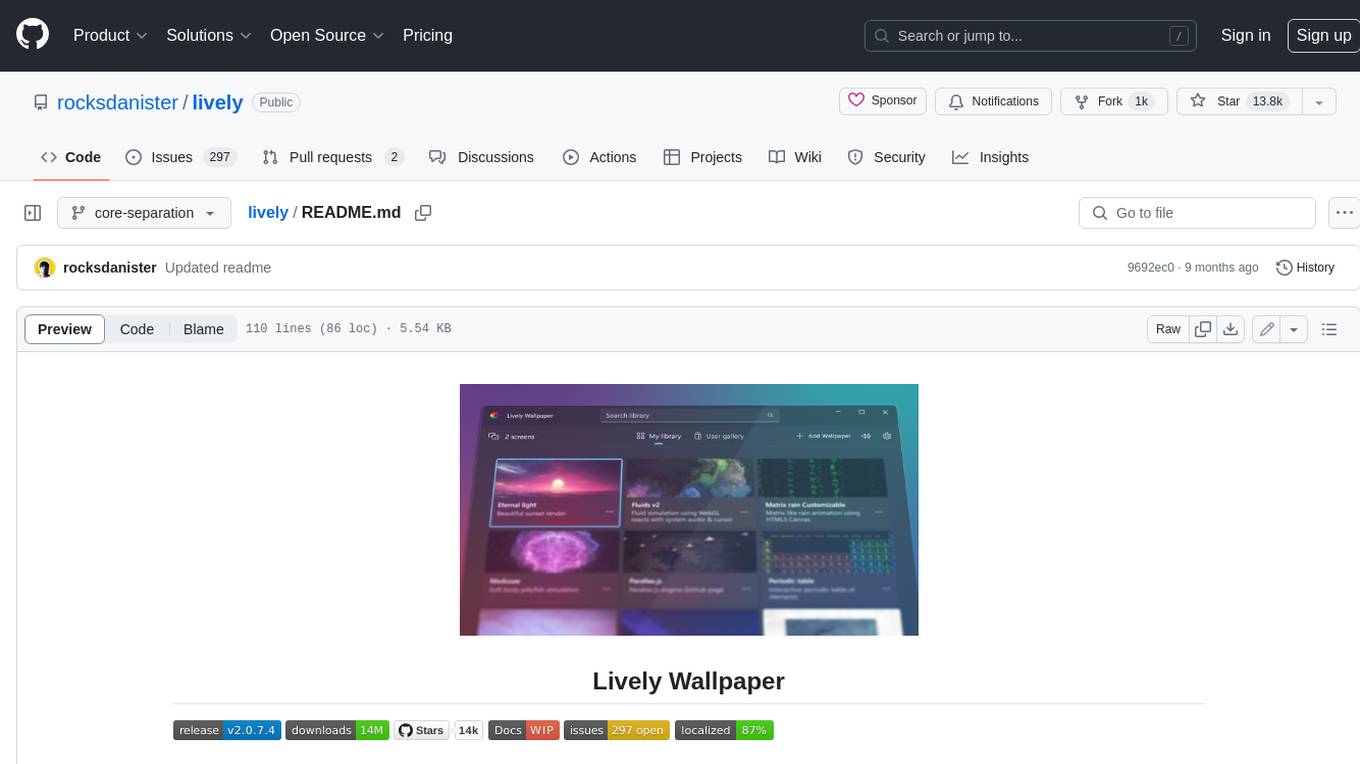
lively
Lively Wallpaper is a tool that allows users to set animated desktop wallpapers, bringing their desktop to life. It supports various types of wallpapers including video/GIF, webpage, and application/games. Users can also use any wallpaper as a screensaver, control Lively with command line arguments, and leverage the Lively API for developers to create interactive wallpapers. The tool offers features such as minimal webpage renderer, hardware-accelerated video playback, and integration with Machine Learning inference for dynamic wallpapers. Lively is designed for Windows, is fully open-source and free, and supports Shadertoy.com URLs as wallpapers.
speakeasy
Speakeasy is a tool that helps developers create production-quality SDKs, Terraform providers, documentation, and more from OpenAPI specifications. It supports a wide range of languages, including Go, Python, TypeScript, Java, and C#, and provides features such as automatic maintenance, type safety, and fault tolerance. Speakeasy also integrates with popular package managers like npm, PyPI, Maven, and Terraform Registry for easy distribution.
MaxKB
MaxKB is a knowledge base Q&A system based on the LLM large language model. MaxKB = Max Knowledge Base, which aims to become the most powerful brain of the enterprise.
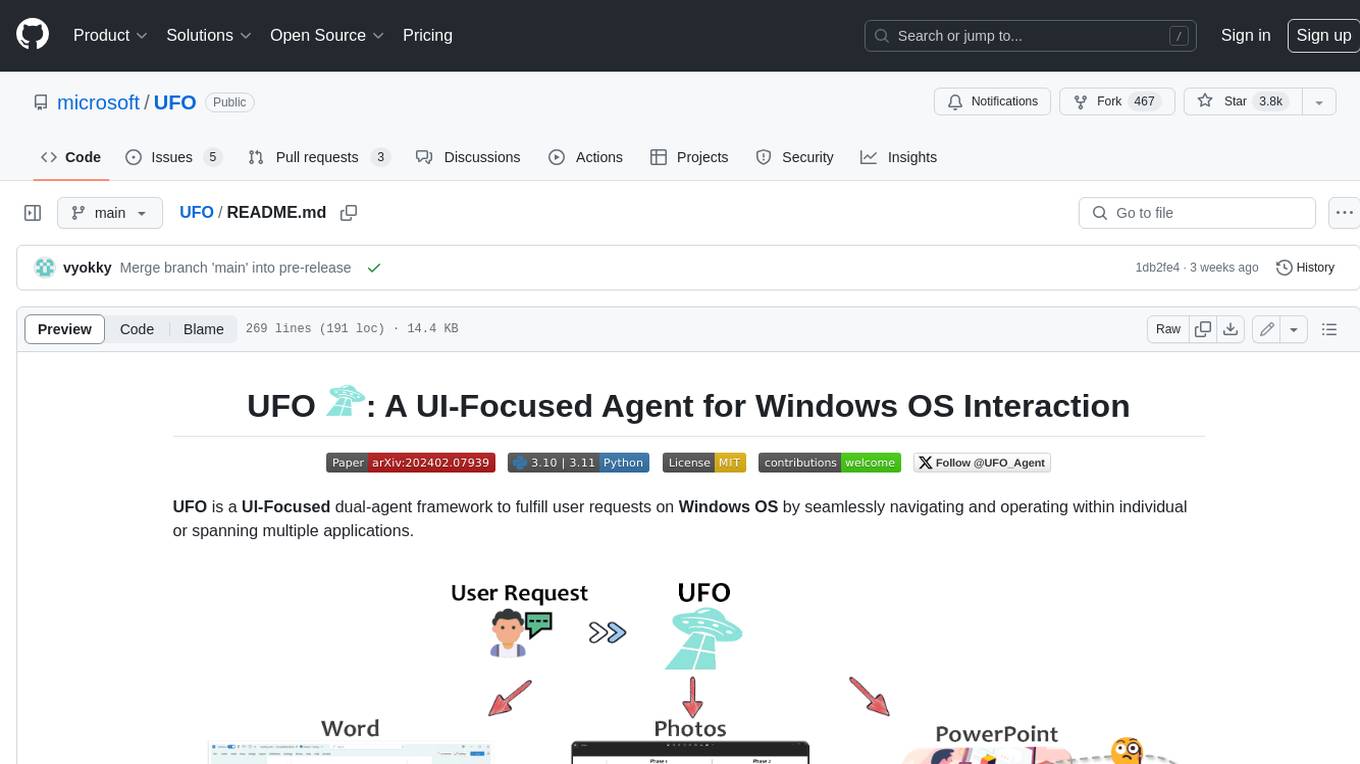
UFO
UFO is a UI-focused dual-agent framework to fulfill user requests on Windows OS by seamlessly navigating and operating within individual or spanning multiple applications.
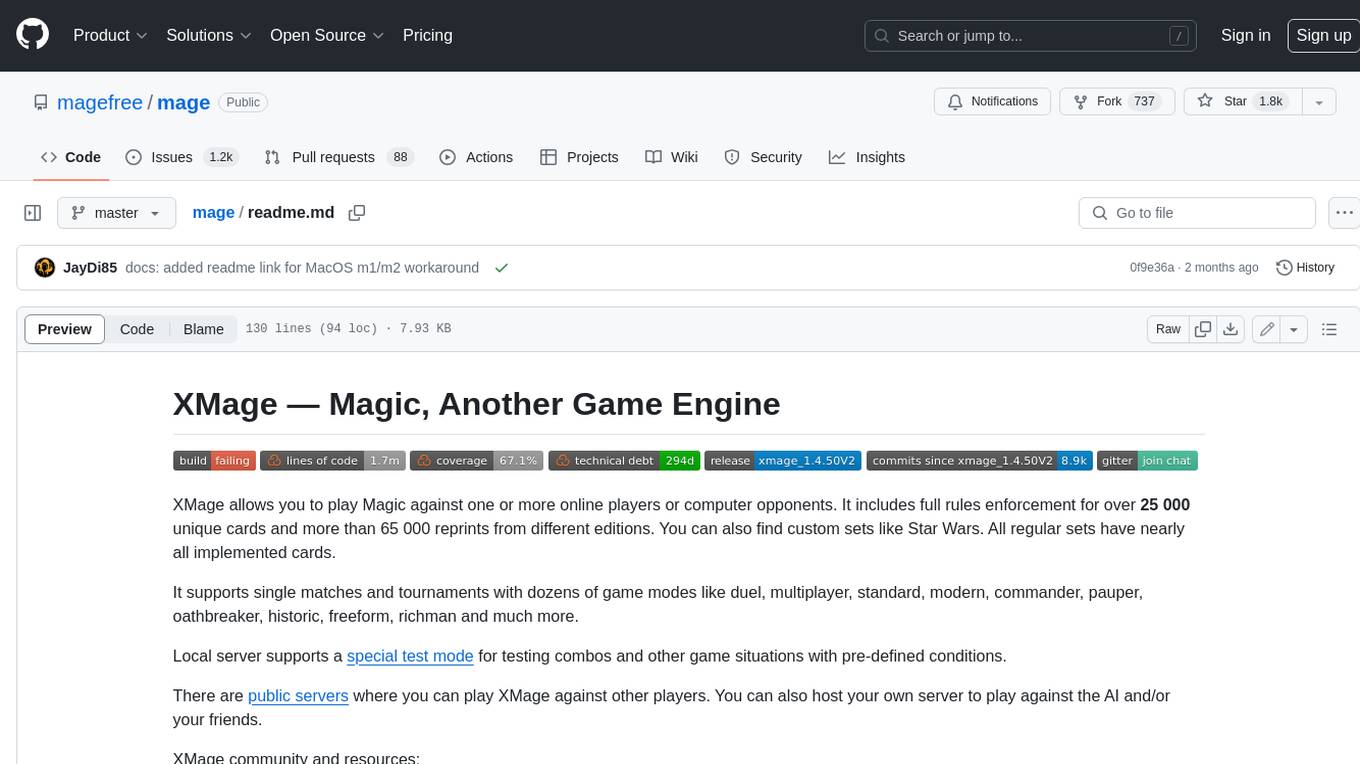
mage
XMage is an open-source, cross-platform application that allows users to play the collectible card game Magic: The Gathering online against other players or computer opponents. It supports over 25,000 unique cards and more than 65,000 reprints from different editions, including custom sets like Star Wars. XMage supports single matches and tournaments with dozens of game modes, including duel, multiplayer, standard, modern, commander, pauper, oathbreaker, historic, freeform, and richman. It also features a deck editor, a player rating system, and support for special formats like Commander, Oathbreaker, Cube, Tiny Leaders, Super Standard, and Historic Standard.