


eventcatalog
The architecture catalog for distributed systems. Document events, services, domains & flows with AI-powered discovery.
Stars: 2549
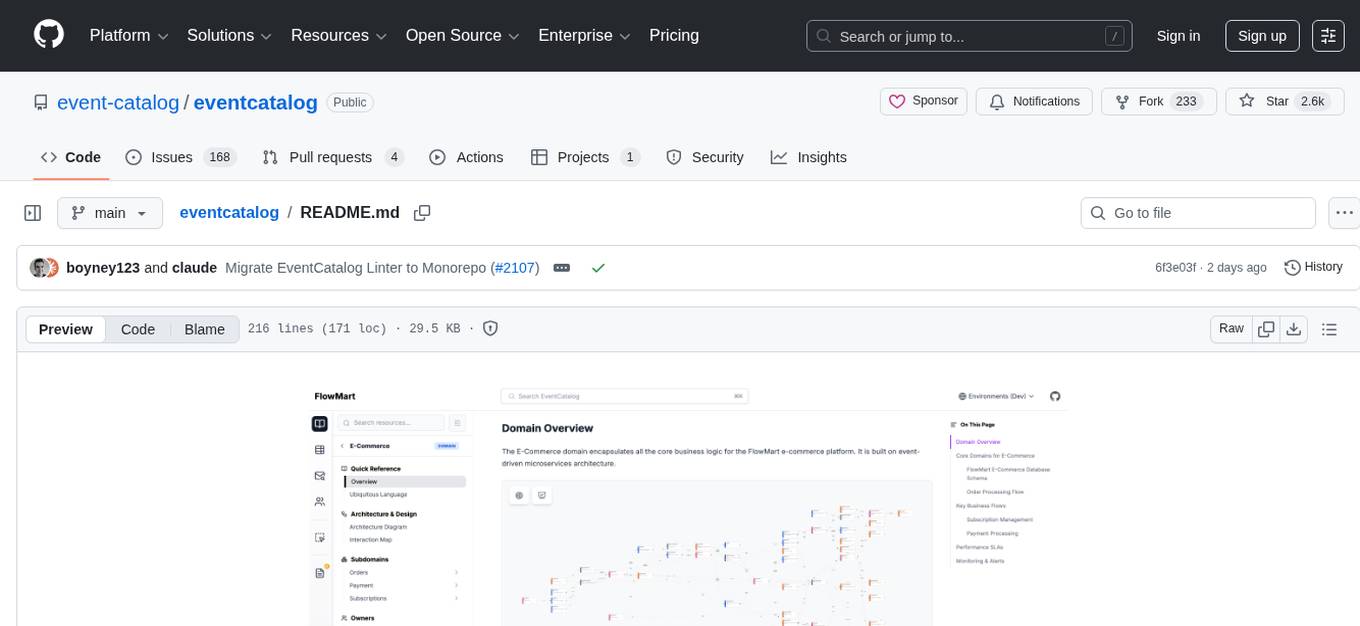
EventCatalog is an architecture catalog for distributed systems that allows users to document events, services, domains, and flows with AI-powered discovery. It provides features such as AI-native discovery, visual documentation, multi-platform support, enterprise readiness, and customization. The tool is organized as a Turborepo monorepo with different modules for the main catalog application, Node.js SDK, and CLI scaffolding tool. EventCatalog is purpose-built for distributed systems and event-driven architectures, offering advantages over generic documentation tools, vendor-specific tools, and service catalogs.
README:

The architecture catalog for distributed systems
Document events, services, domains & flows with AI-powered discovery




Documentation | Demo | Discord
npx @eventcatalog/create-eventcatalog@latest my-catalogLooking for help? Start with our Getting Started guide.
- 🤖 AI-Native Discovery - MCP Server integration, semantic search, auto-documentation
- 📊 Visual Documentation - Beautiful node graphs, flows, and architecture diagrams
- 🔄 Multi-Platform - Kafka, EventBridge, RabbitMQ, SNS/SQS, and more
- 🔐 Enterprise Ready - OAuth2, RBAC, schema governance, breaking change detection
- 🎨 Customizable - Themes, custom MDX components, configurable layouts
- 📦 15+ Generators - OpenAPI, AsyncAPI, AWS, Confluent, Kafka, and more
EventCatalog is organized as a Turborepo monorepo:
- @eventcatalog/core - Main catalog application (Astro + React)
- @eventcatalog/sdk - Node.js SDK for programmatic catalog management
- @eventcatalog/create-eventcatalog - CLI scaffolding tool
vs. Generic Documentation Tools
- ✅ Purpose-built for distributed systems and event-driven architectures
- ✅ AI-powered discovery and semantic search
- ✅ Schema governance with breaking change detection
vs. Vendor-Specific Tools
- ✅ Platform-agnostic (works with any broker/platform)
- ✅ Vendor-neutral (avoid lock-in)
- ✅ Open source with commercial support
vs. Service Catalogs
- ✅ 5 minutes to value vs 6+ months implementation
- ✅ Event-driven architecture depth, not generic breadth
- ✅ Runtime discovery from traffic analysis
See EventCatalog in action:
Visit our official documentation to learn more.
Having trouble? Get help in the official EventCatalog Discord.
We welcome contributions! See our contributing guidelines to get started.
Thanks goes to these wonderful people (emoji key):


This project follows the all-contributors specification. Contributions of any kind welcome!
MIT.
For Tasks:
Click tags to check more tools for each tasksFor Jobs:
Alternative AI tools for eventcatalog
Similar Open Source Tools
eventcatalog
EventCatalog is an architecture catalog for distributed systems that allows users to document events, services, domains, and flows with AI-powered discovery. It provides features such as AI-native discovery, visual documentation, multi-platform support, enterprise readiness, and customization. The tool is organized as a Turborepo monorepo with different modules for the main catalog application, Node.js SDK, and CLI scaffolding tool. EventCatalog is purpose-built for distributed systems and event-driven architectures, offering advantages over generic documentation tools, vendor-specific tools, and service catalogs.
activepieces
Activepieces is an open source replacement for Zapier, designed to be extensible through a type-safe pieces framework written in Typescript. It features a user-friendly Workflow Builder with support for Branches, Loops, and Drag and Drop. Activepieces integrates with Google Sheets, OpenAI, Discord, and RSS, along with 80+ other integrations. The list of supported integrations continues to grow rapidly, thanks to valuable contributions from the community. Activepieces is an open ecosystem; all piece source code is available in the repository, and they are versioned and published directly to npmjs.com upon contributions. If you cannot find a specific piece on the pieces roadmap, please submit a request by visiting the following link: Request Piece Alternatively, if you are a developer, you can quickly build your own piece using our TypeScript framework. For guidance, please refer to the following guide: Contributor's Guide
NeuroAI_Course
Neuromatch Academy NeuroAI Course Syllabus is a repository that contains the schedule and licensing information for the NeuroAI course. The course is designed to provide participants with a comprehensive understanding of artificial intelligence in neuroscience. It covers various topics related to AI applications in neuroscience, including machine learning, data analysis, and computational modeling. The content is primarily accessed from the ebook provided in the repository, and the course is scheduled for July 15-26, 2024. The repository is shared under a Creative Commons Attribution 4.0 International License and software elements are additionally licensed under the BSD (3-Clause) License. Contributors to the project are acknowledged and welcomed to contribute further.
omnia
Omnia is a deployment tool designed to turn servers with RPM-based Linux images into functioning Slurm/Kubernetes clusters. It provides an Ansible playbook-based deployment for Slurm and Kubernetes on servers running an RPM-based Linux OS. The tool simplifies the process of setting up and managing clusters, making it easier for users to deploy and maintain their infrastructure.
codemod
Codemod platform is a tool that helps developers create, distribute, and run codemods in codebases of any size. The AI-powered, community-led codemods enable automation of framework upgrades, large refactoring, and boilerplate programming with speed and developer experience. It aims to make dream migrations a reality for developers by providing a platform for seamless codemod operations.
matrixone
MatrixOne is the industry's first database to bring Git-style version control to data, combined with MySQL compatibility, AI-native capabilities, and cloud-native architecture. It is a HTAP (Hybrid Transactional/Analytical Processing) database with a hyper-converged HSTAP engine that seamlessly handles transactional, analytical, full-text search, and vector search workloads in a single unified system—no data movement, no ETL, no compromises. Manage your database like code with features like instant snapshots, time travel, branch & merge, instant rollback, and complete audit trail. Built for the AI era, MatrixOne is MySQL-compatible, AI-native, and cloud-native, offering storage-compute separation, elastic scaling, and Kubernetes-native deployment. It serves as one database for everything, replacing multiple databases and ETL jobs with native OLTP, OLAP, full-text search, and vector search capabilities.
BiBi-Keyboard
BiBi-Keyboard is an AI-based intelligent voice input method that aims to make voice input more natural and efficient. It provides features such as voice recognition with simple and intuitive operations, multiple ASR engine support, AI text post-processing, floating ball input for cross-input method usage, AI editing panel with rich editing tools, Material3 design for modern interface style, and support for multiple languages. Users can adjust keyboard height, test input directly in the settings page, view recognition word count statistics, receive vibration feedback, and check for updates automatically. The tool requires Android 10.0 or higher, microphone permission for voice recognition, optional overlay permission for the floating ball feature, and optional accessibility permission for automatic text insertion.
MaiBot
MaiBot is an interactive intelligent agent based on a large language model. It aims to be an 'entity' active in QQ group chats, focusing on human-like interactions. It features personification in language style, behavior planning, expression learning, plugin system for unlimited extensions, and emotion expression. The project's design philosophy emphasizes creating a 'life form' in group chats that feels real rather than perfect, with the goal of providing companionship through an AI that makes mistakes and has its own perceptions and thoughts. The code is open-source, but the runtime data of MaiBot is intended to remain closed to maintain its autonomy and conversational nature.
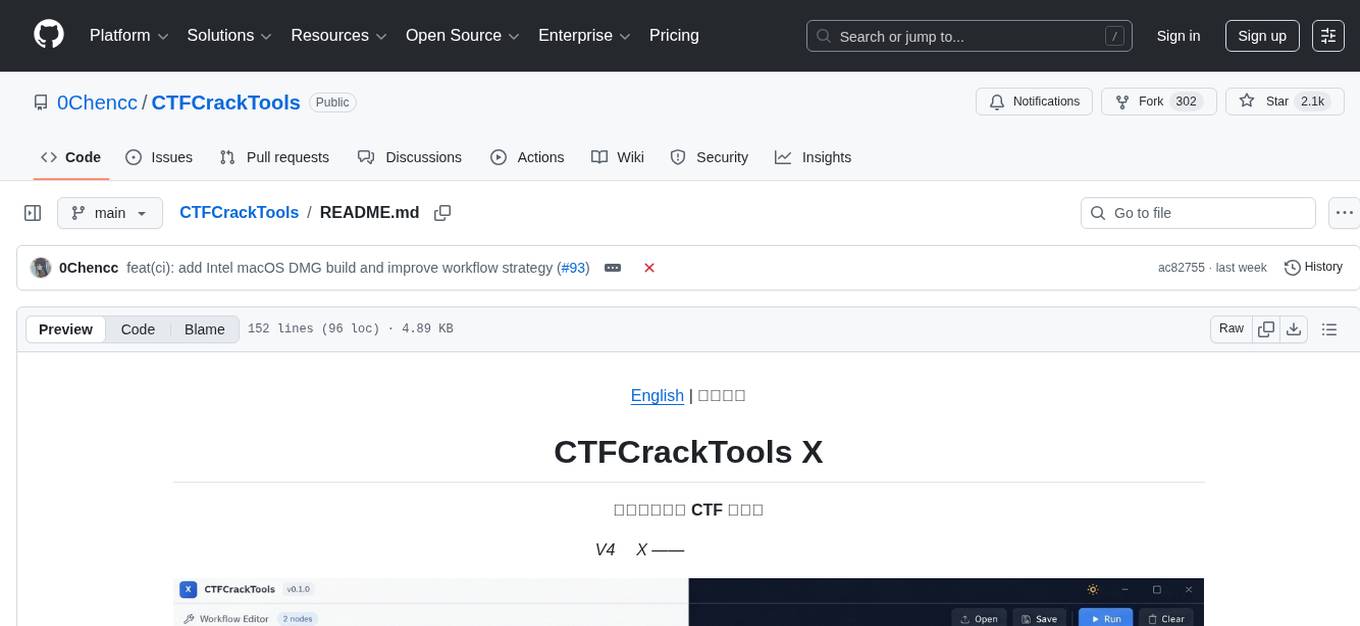
CTFCrackTools
CTFCrackTools X is the next generation of CTFCrackTools, featuring extreme performance and experience, extensible node-based architecture, and future-oriented technology stack. It offers a visual node-based workflow for encoding and decoding processes, with 43+ built-in algorithms covering common CTF needs like encoding, classical ciphers, modern encryption, hashing, and text processing. The tool is lightweight (< 15MB), high-performance, and cross-platform, supporting Windows, macOS, and Linux without the need for a runtime environment. It aims to provide a beginner-friendly tool for CTF enthusiasts to easily work on challenges and improve their skills.
easyaiot
EasyAIoT is an AI cloud platform designed to support camera integration, annotation, training, inference, data collection, analysis, alerts, recording, storage, and deployment. It aims to provide a zero-threshold AI experience for everyone, with a focus on cameras below a hundred levels. The platform consists of five core projects: WEB module for frontend management, DEVICE module for device management, VIDEO module for video processing, AI module for AI analysis, and TASK module for high-performance task execution. EasyAIoT combines Java, Python, and C++ to create a versatile and user-friendly AIoT platform.
chatless
Chatless is a modern AI chat desktop application built on Tauri and Next.js. It supports multiple AI providers, can connect to local Ollama models, supports document parsing and knowledge base functions. All data is stored locally to protect user privacy. The application is lightweight, simple, starts quickly, and consumes minimal resources.
GoMaxAI-ChatGPT-Midjourney-Pro
GoMaxAI Pro is an AI-powered application for personal, team, and enterprise private operations. It supports various models like ChatGPT, Claude, Gemini, Kimi, Wenxin Yiyuan, Xunfei Xinghuo, Tsinghua Zhipu, Suno-v3.5, and Luma-video. The Pro version offers a new UI interface, member points system, management backend, homepage features, support for various content formats, AI video capabilities, SAAS multi-opening function, bug fixes, and more. It is built using web frontend with Vue3, mobile frontend with Uniapp, management frontend with Vue3, backend with Nodejs, and uses MySQL5.7(+) + Redis for data support. It can be deployed on Linux, Windows, or MacOS, with data storage options including local storage, Aliyun OSS, Tencent Cloud COS, and Chevereto image bed.
bk-lite
Blueking Lite is an AI First lightweight operation product with low deployment resource requirements, low usage costs, and progressive experience, providing essential tools for operation administrators.
FastDeploy
FastDeploy is an inference and deployment toolkit for large language models and visual language models based on PaddlePaddle. It provides production-ready deployment solutions with core acceleration technologies such as load-balanced PD disaggregation, unified KV cache transmission, OpenAI API server compatibility, comprehensive quantization format support, advanced acceleration techniques, and multi-hardware support. The toolkit supports various hardware platforms like NVIDIA GPUs, Kunlunxin XPUs, Iluvatar GPUs, Enflame GCUs, and Hygon DCUs, with plans for expanding support to Ascend NPU and MetaX GPU. FastDeploy aims to optimize resource utilization, throughput, and performance for inference and deployment tasks.
LogChat
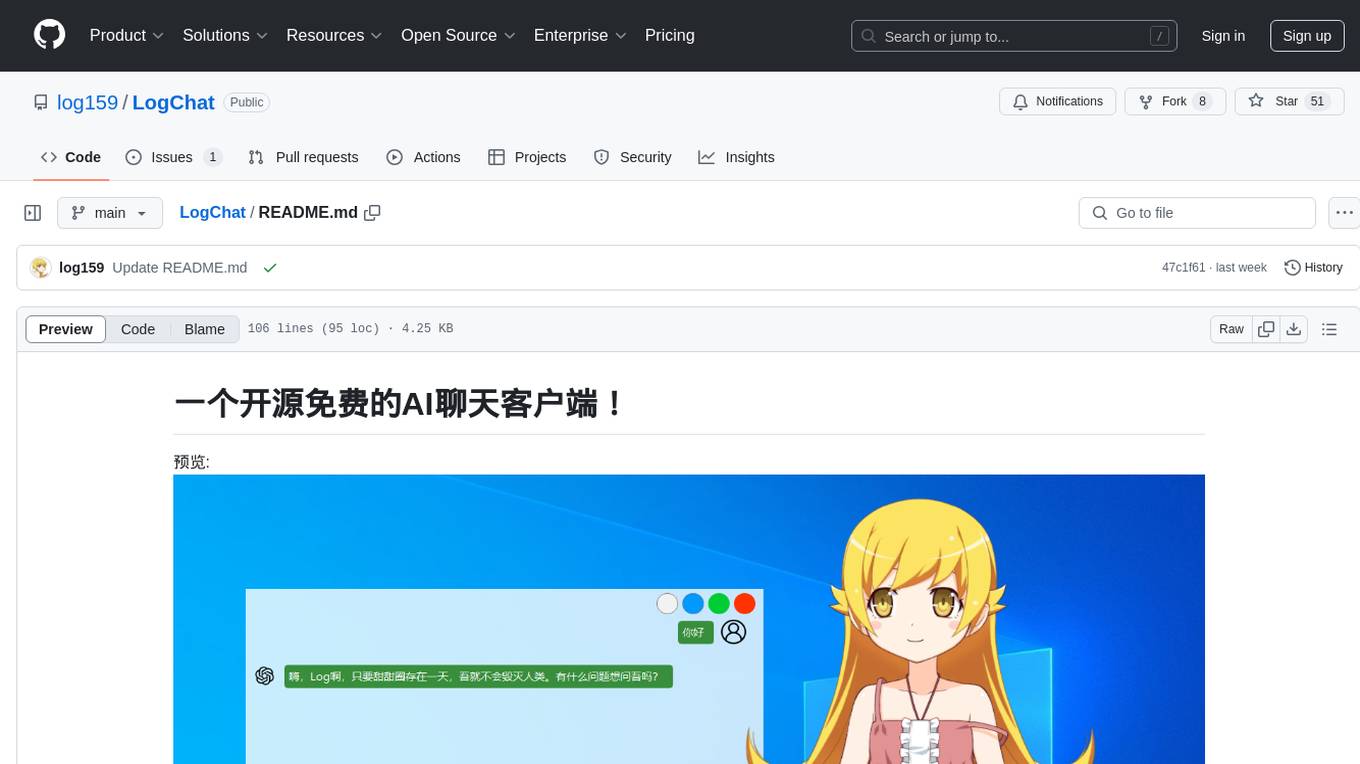
LogChat is an open-source and free AI chat client that supports various chat models and technologies such as ChatGPT, 讯飞星火, DeepSeek, LLM, TTS, STT, and Live2D. The tool provides a user-friendly interface designed using Qt Creator and can be used on Windows systems without any additional environment requirements. Users can interact with different AI models, perform voice synthesis and recognition, and customize Live2D character models. LogChat also offers features like language translation, AI platform integration, and menu items like screenshot editing, clock, and application launcher.
md_design
Nakidka is a tool for 1C:Enterprise 8 that allows for quick creation of forms based on text descriptions. It uses a simple and understandable syntax similar to Markdown, and also supports visual design of interface elements.
For similar tasks
Noi
Noi is an AI-enhanced customizable browser designed to streamline digital experiences. It includes curated AI websites, allows adding any URL, offers prompts management, Noi Ask for batch messaging, various themes, Noi Cache Mode for quick link access, cookie data isolation, and more. Users can explore, extend, and empower their browsing experience with Noi.
svelte-commerce
Svelte Commerce is an open-source frontend for eCommerce, utilizing a PWA and headless approach with a modern JS stack. It supports integration with various eCommerce backends like MedusaJS, Woocommerce, Bigcommerce, and Shopify. The API flexibility allows seamless connection with third-party tools such as payment gateways, POS systems, and AI services. Svelte Commerce offers essential eCommerce features, is both SSR and SPA, superfast, and free to download and modify. Users can easily deploy it on Netlify or Vercel with zero configuration. The tool provides features like headless commerce, authentication, cart & checkout, TailwindCSS styling, server-side rendering, proxy + API integration, animations, lazy loading, search functionality, faceted filters, and more.
pro-react-admin
Pro React Admin is a comprehensive React admin template that includes features such as theme switching, custom component theming, nested routing, webpack optimization, TypeScript support, multi-tabs, internationalization, code styling, commit message configuration, error handling, code splitting, component documentation generation, and more. It also provides tools for mock server implementation, deployment, linting, formatting, and continuous code review. The template supports various technologies like React, React Router, Webpack, Babel, Ant Design, TypeScript, and Vite, making it suitable for building efficient and scalable React admin applications.
AI-GAL
AI-GAL is a tool that offers a visual GUI for easier configuration file editing, branch selection mode for content generation, and bug fixes. Users can configure settings in config.ini, utilize cloud-based AI drawing and voice modes, set themes for script generation, and enjoy a wallpaper. Prior to usage, ensure a 4GB+ GPU, chatgpt key or local LLM deployment, and installation of stable diffusion, gpt-sovits, and rembg. To start, fill out the config.ini file and run necessary APIs. Restart a storyline by clearing story.txt in the game directory. Encounter errors? Copy the log.txt details and send them for assistance.
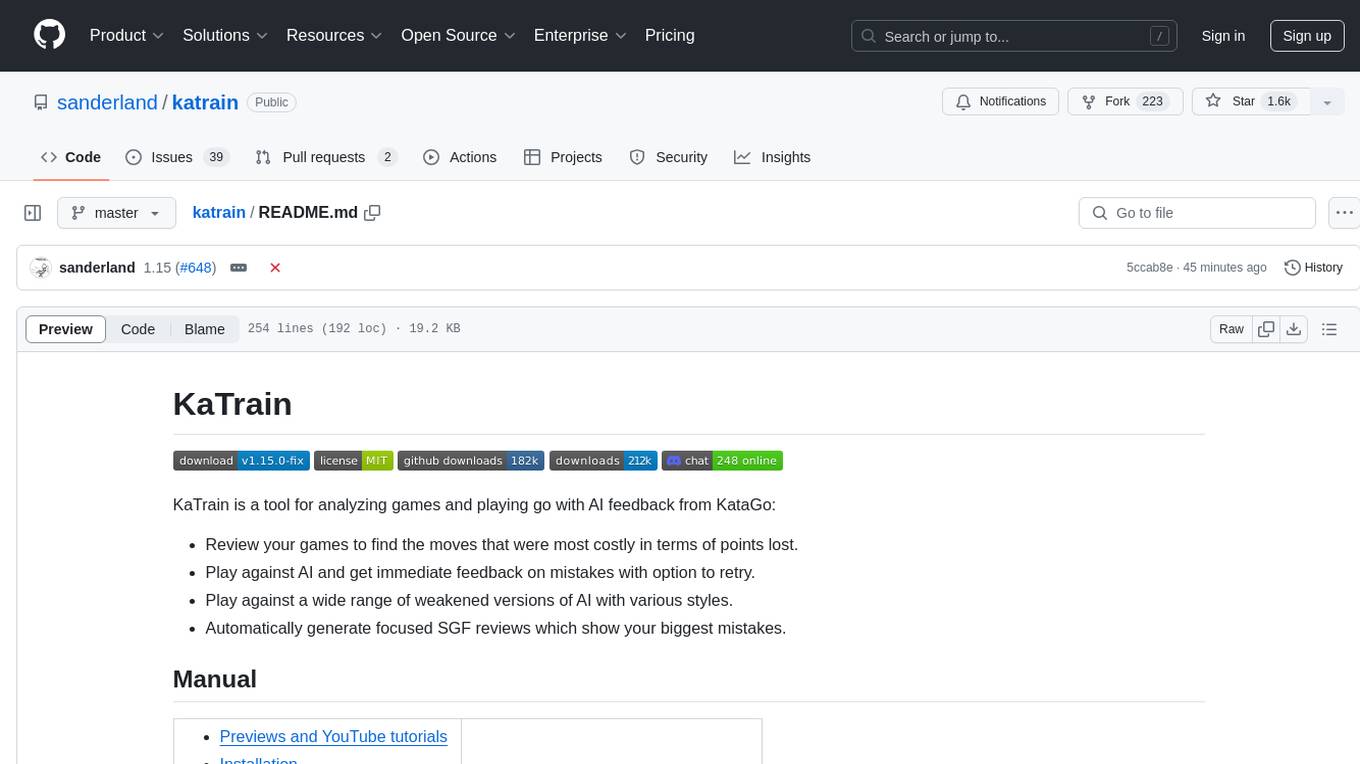
katrain
KaTrain is a tool designed for analyzing games and playing go with AI feedback from KataGo. Users can review their games to find costly moves, play against AI with immediate feedback, play against weakened AI versions, and generate focused SGF reviews. The tool provides various features such as previews, tutorials, installation instructions, and configuration options for KataGo. Users can play against AI, receive instant feedback on moves, explore variations, and request in-depth analysis. KaTrain also supports distributed training for contributing to KataGo's strength and training bigger models. The tool offers themes customization, FAQ section, and opportunities for support and contribution through GitHub issues and Discord community.
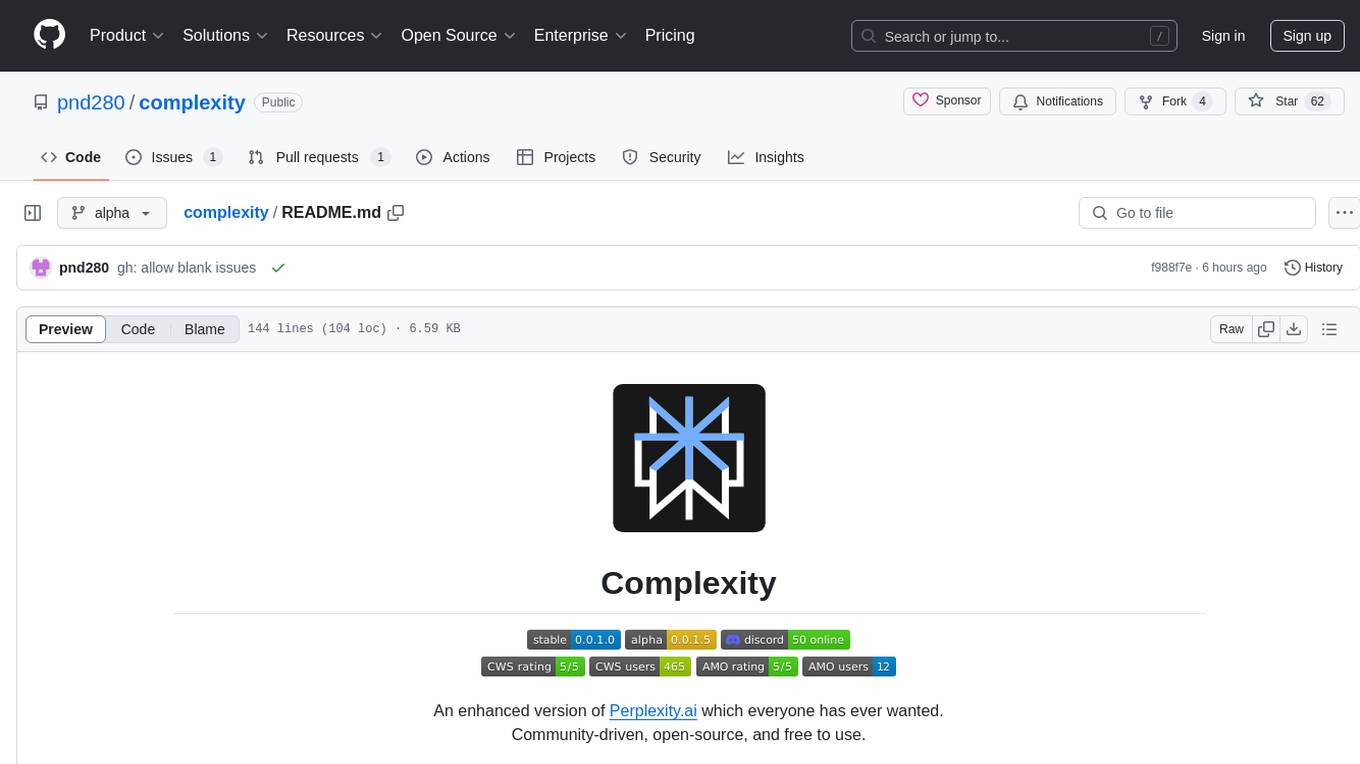
complexity
Complexity is a community-driven, open-source, and free third-party extension that enhances the features of Perplexity.ai. It provides various UI/UX/QoL tweaks, LLM/Image gen model selectors, a customizable theme, and a prompts library. The tool intercepts network traffic to alter the behavior of the host page, offering a solution to the limitations of Perplexity.ai. Users can install Complexity from Chrome Web Store, Mozilla Add-on, or build it from the source code.
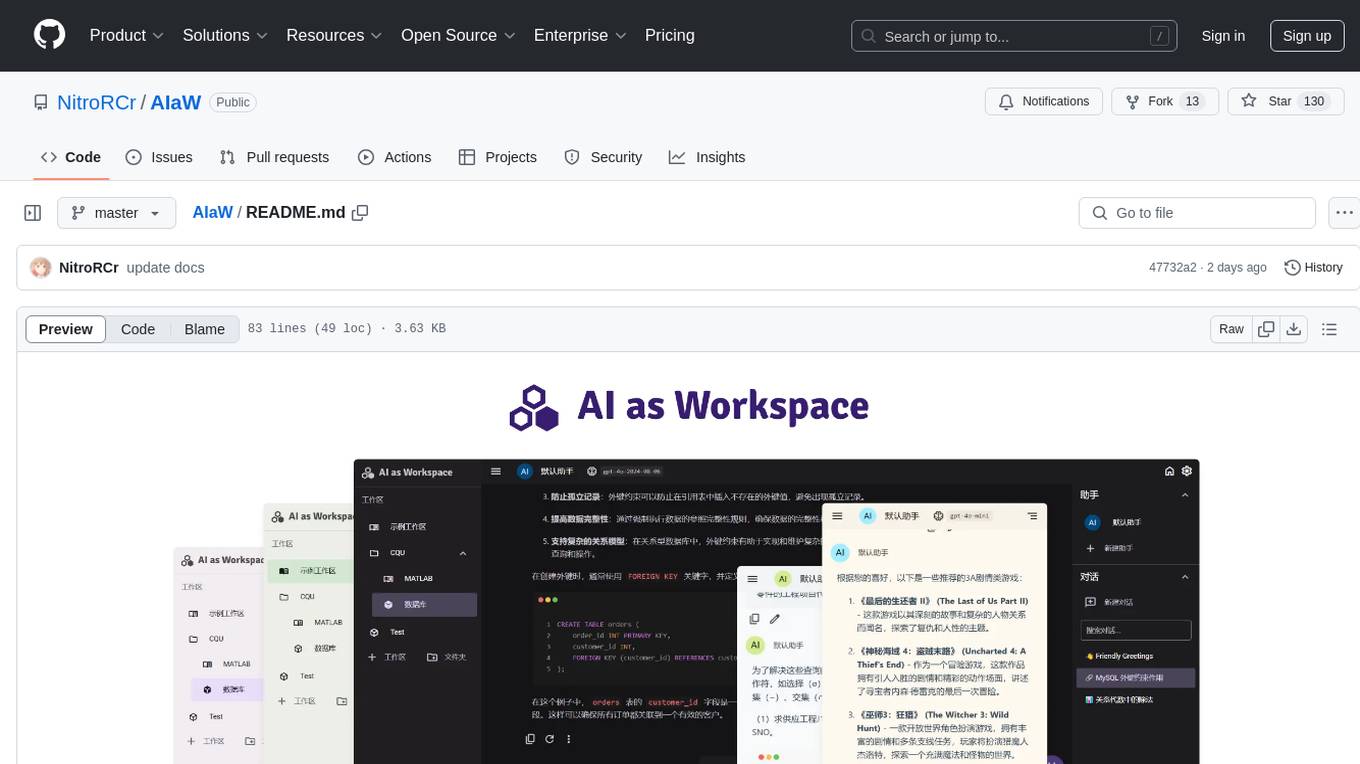
AIaW
AIaW is a next-generation LLM client with full functionality, lightweight, and extensible. It supports various basic functions such as streaming transfer, image uploading, and latex formulas. The tool is cross-platform with a responsive interface design. It supports multiple service providers like OpenAI, Anthropic, and Google. Users can modify questions, regenerate in a forked manner, and visualize conversations in a tree structure. Additionally, it offers features like file parsing, video parsing, plugin system, assistant market, local storage with real-time cloud sync, and customizable interface themes. Users can create multiple workspaces, use dynamic prompt word variables, extend plugins, and benefit from detailed design elements like real-time content preview, optimized code pasting, and support for various file types.
x
Ant Design X is a tool for crafting AI-driven interfaces effortlessly. It is built on the best practices of enterprise-level AI products, offering flexible and diverse atomic components for various AI dialogue scenarios. The tool provides out-of-the-box model integration with inference services compatible with OpenAI standards. It also enables efficient management of conversation data flows, supports rich template options, complete TypeScript support, and advanced theme customization. Ant Design X is designed to enhance development efficiency and deliver exceptional AI interaction experiences.
For similar jobs
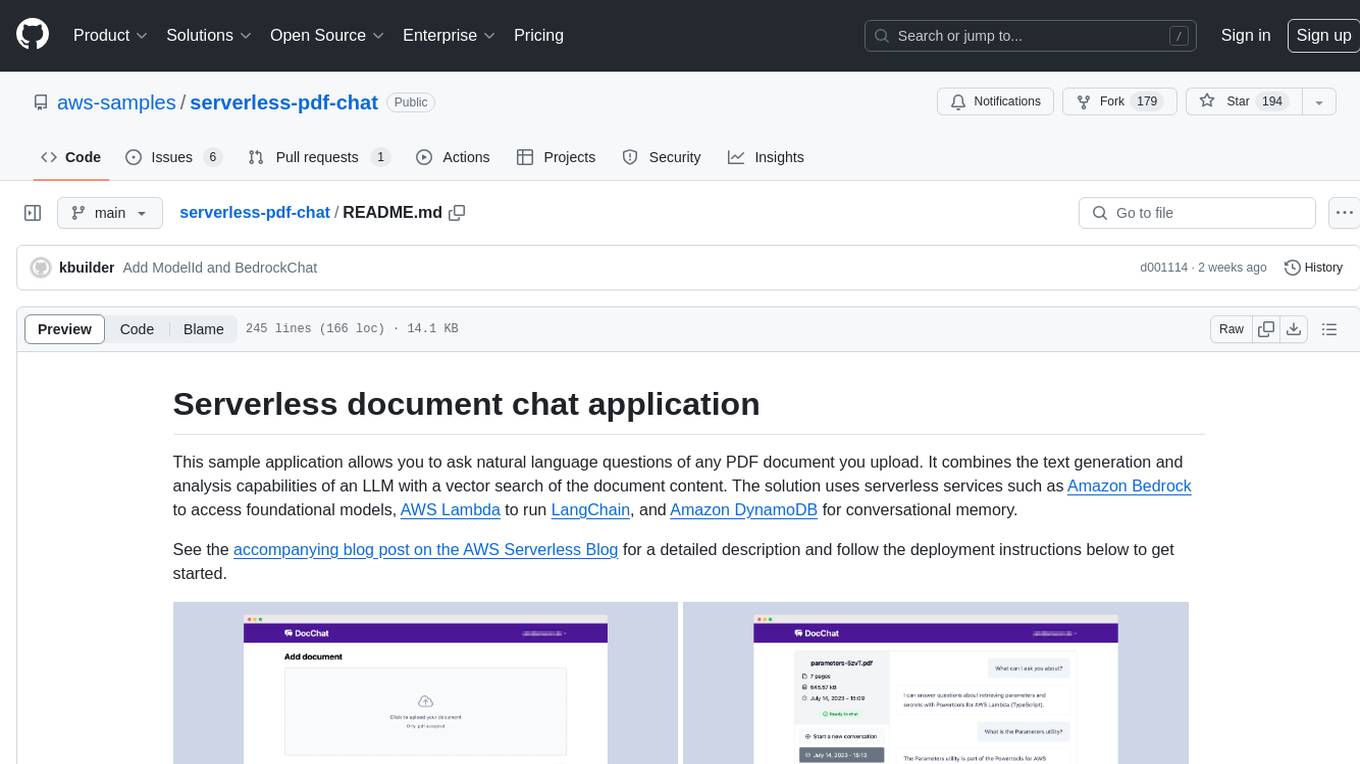
serverless-pdf-chat
The serverless-pdf-chat repository contains a sample application that allows users to ask natural language questions of any PDF document they upload. It leverages serverless services like Amazon Bedrock, AWS Lambda, and Amazon DynamoDB to provide text generation and analysis capabilities. The application architecture involves uploading a PDF document to an S3 bucket, extracting metadata, converting text to vectors, and using a LangChain to search for information related to user prompts. The application is not intended for production use and serves as a demonstration and educational tool.
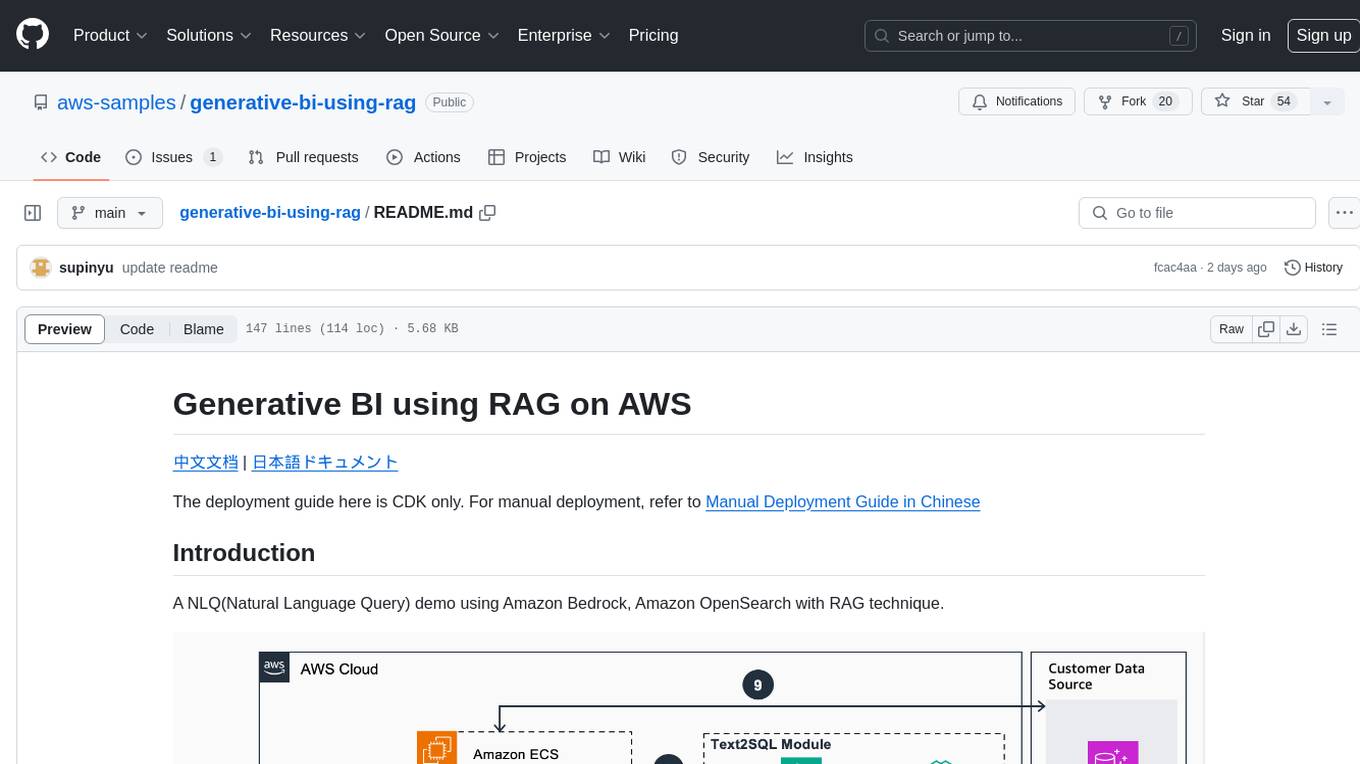
generative-bi-using-rag
Generative BI using RAG on AWS is a comprehensive framework designed to enable Generative BI capabilities on customized data sources hosted on AWS. It offers features such as Text-to-SQL functionality for querying data sources using natural language, user-friendly interface for managing data sources, performance enhancement through historical question-answer ranking, and entity recognition. It also allows customization of business information, handling complex attribution analysis problems, and provides an intuitive question-answering UI with a conversational approach for complex queries.
azure-functions-openai-extension
Azure Functions OpenAI Extension is a project that adds support for OpenAI LLM (GPT-3.5-turbo, GPT-4) bindings in Azure Functions. It provides NuGet packages for various functionalities like text completions, chat completions, assistants, embeddings generators, and semantic search. The project requires .NET 6 SDK or greater, Azure Functions Core Tools v4.x, and specific settings in Azure Function or local settings for development. It offers features like text completions, chat completion, assistants with custom skills, embeddings generators for text relatedness, and semantic search using vector databases. The project also includes examples in C# and Python for different functionalities.
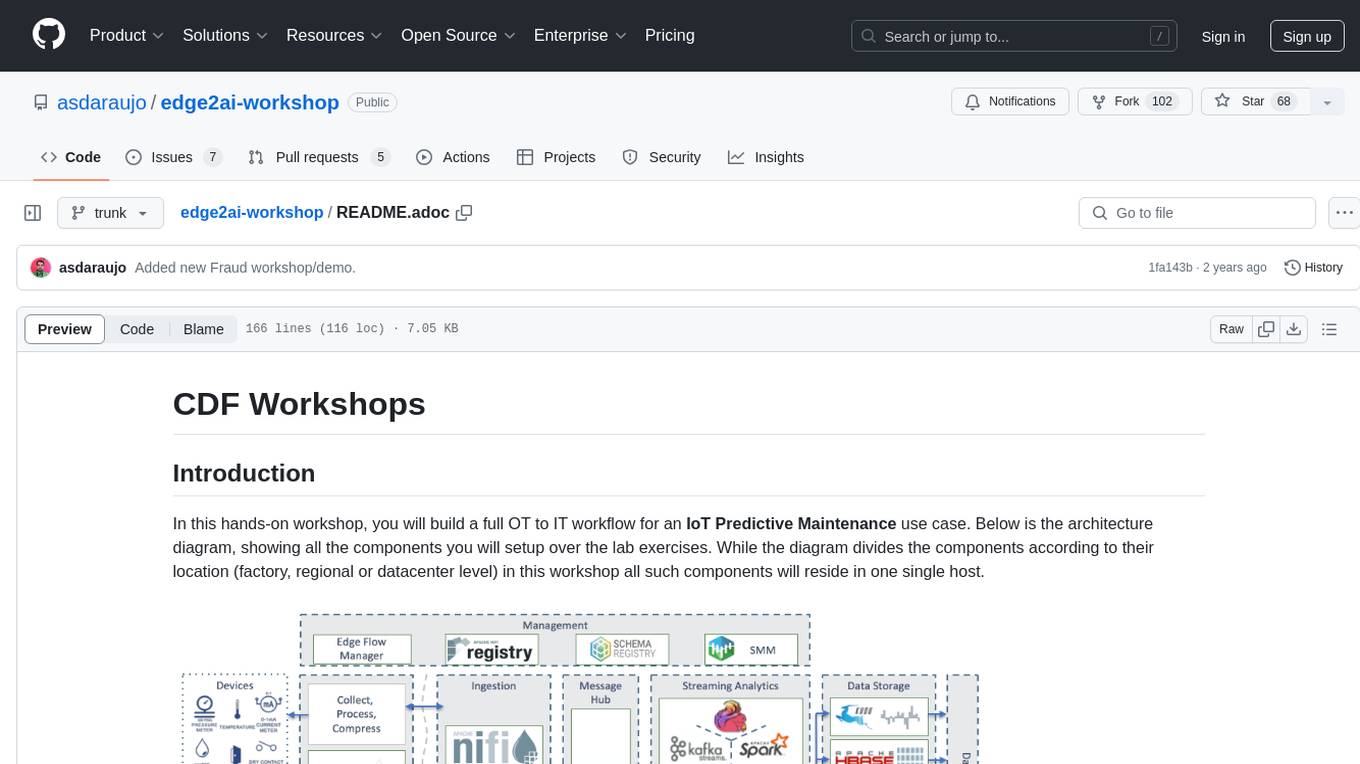
edge2ai-workshop
The edge2ai-workshop repository provides a hands-on workshop for building an IoT Predictive Maintenance workflow. It includes lab exercises for setting up components like NiFi, Streams Processing, Data Visualization, and more on a single host. The repository also covers use cases such as credit card fraud detection. Users can follow detailed instructions, prerequisites, and connectivity guidelines to connect to their cluster and explore various services. Additionally, troubleshooting tips are provided for common issues like MiNiFi not sending messages or CEM not picking up new NARs.
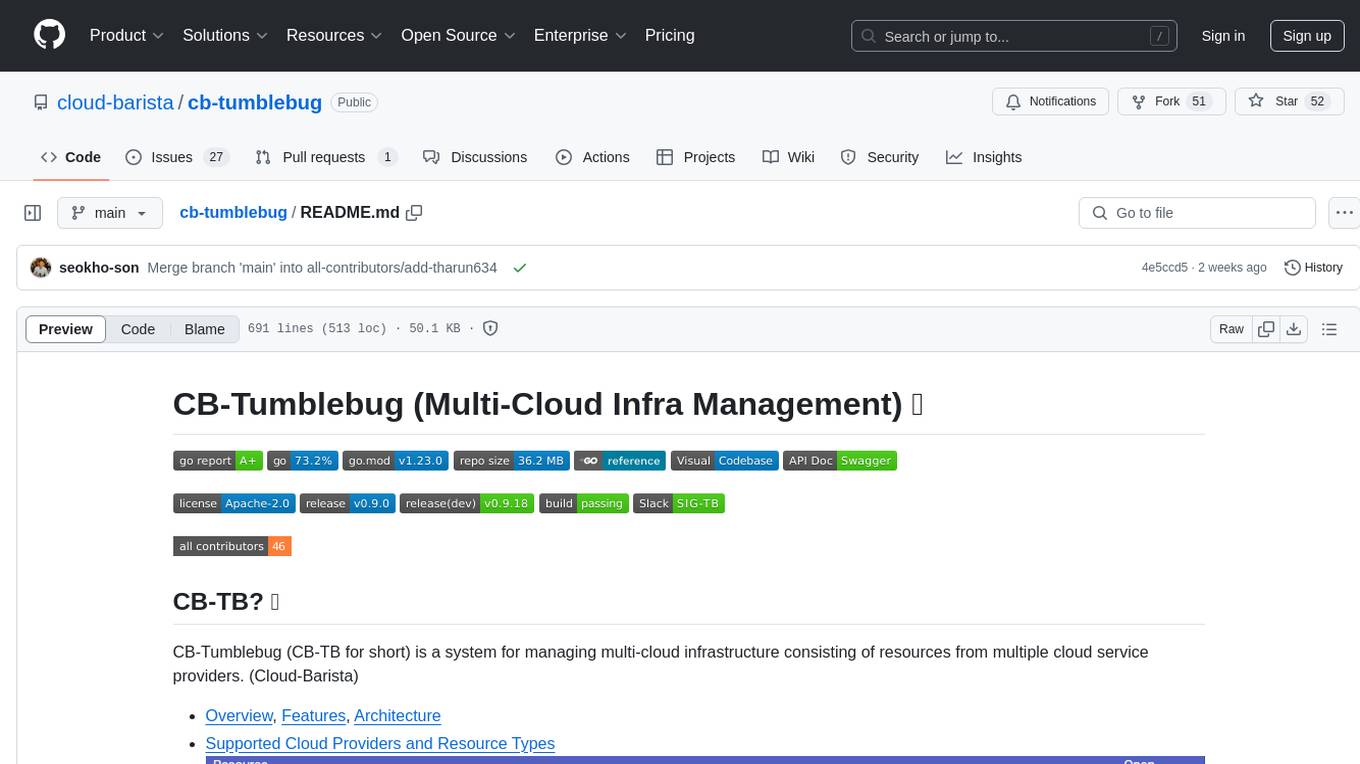
cb-tumblebug
CB-Tumblebug (CB-TB) is a system for managing multi-cloud infrastructure consisting of resources from multiple cloud service providers. It provides an overview, features, and architecture. The tool supports various cloud providers and resource types, with ongoing development and localization efforts. Users can deploy a multi-cloud infra with GPUs, enjoy multiple LLMs in parallel, and utilize LLM-related scripts. The tool requires Linux, Docker, Docker Compose, and Golang for building the source. Users can run CB-TB with Docker Compose or from the Makefile, set up prerequisites, contribute to the project, and view a list of contributors. The tool is licensed under an open-source license.
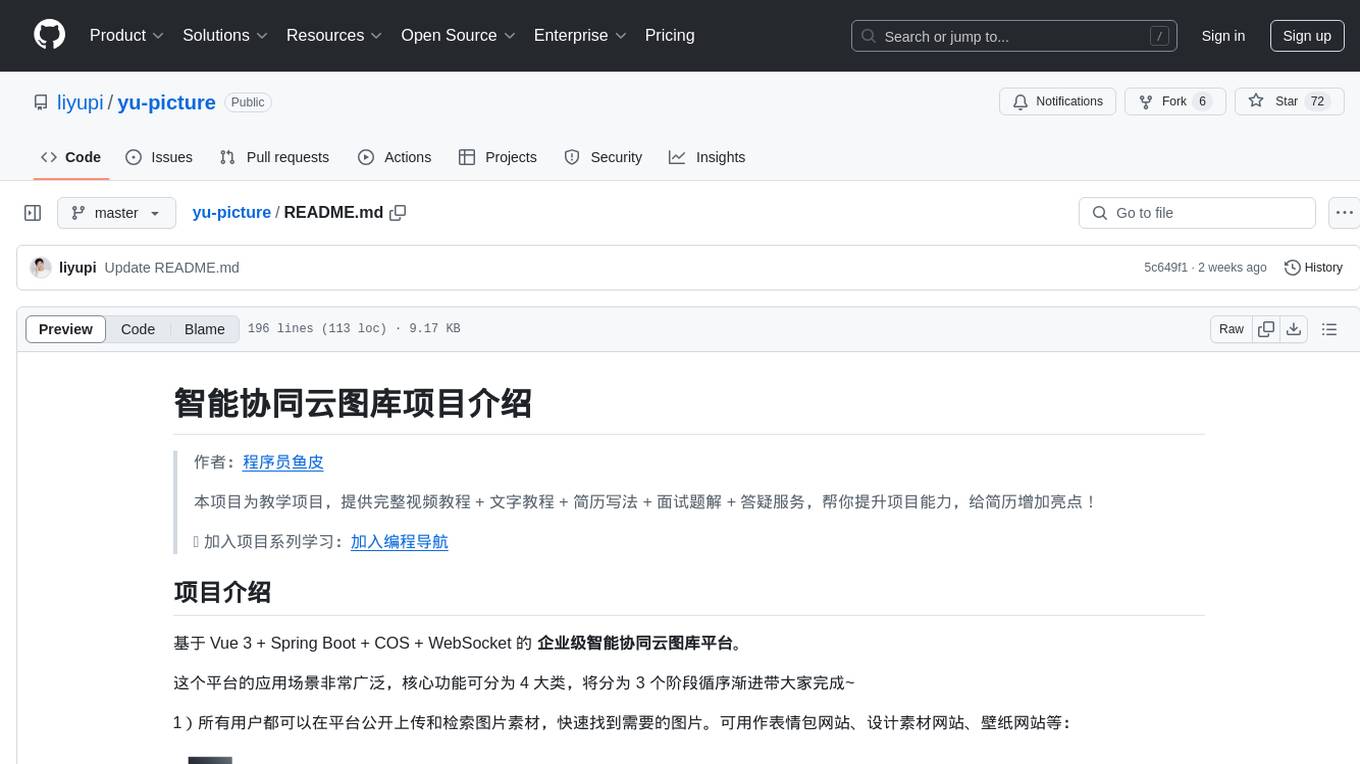
yu-picture
The 'yu-picture' project is an educational project that provides complete video tutorials, text tutorials, resume writing, interview question solutions, and Q&A services to help you improve your project skills and enhance your resume. It is an enterprise-level intelligent collaborative cloud image library platform based on Vue 3 + Spring Boot + COS + WebSocket. The platform has a wide range of applications, including public image uploading and retrieval, image analysis for administrators, private image management for individual users, and real-time collaborative image editing for enterprises. The project covers file management, content retrieval, permission control, and real-time collaboration, using various programming concepts, architectural design methods, and optimization strategies to ensure high-speed iteration and stable operation.
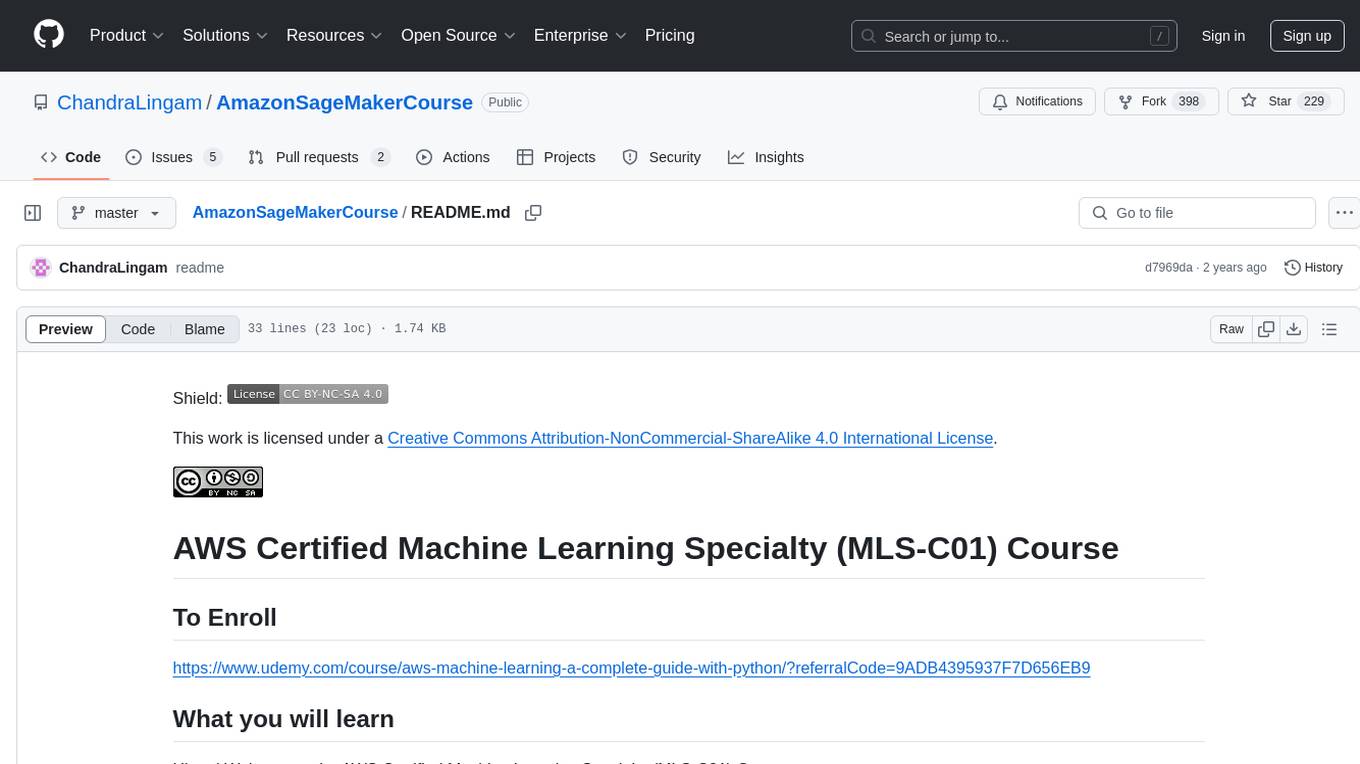
AmazonSageMakerCourse
Amazon SageMaker Course is a comprehensive guide for AWS Certified Machine Learning Specialty (MLS-C01) that covers training, optimizing, deploying, and integrating machine learning models in the AWS cloud. The course includes hands-on experience with AWS built-in algorithms, Bring Your Own models, and ready-to-use AI capabilities. It also provides a complete guide to AWS Certified Machine Learning – Specialty certification, along with a high-quality timed practice test. Participants will learn how to integrate trained models into their applications and receive prompt support through the course Q&A forum and private messaging.
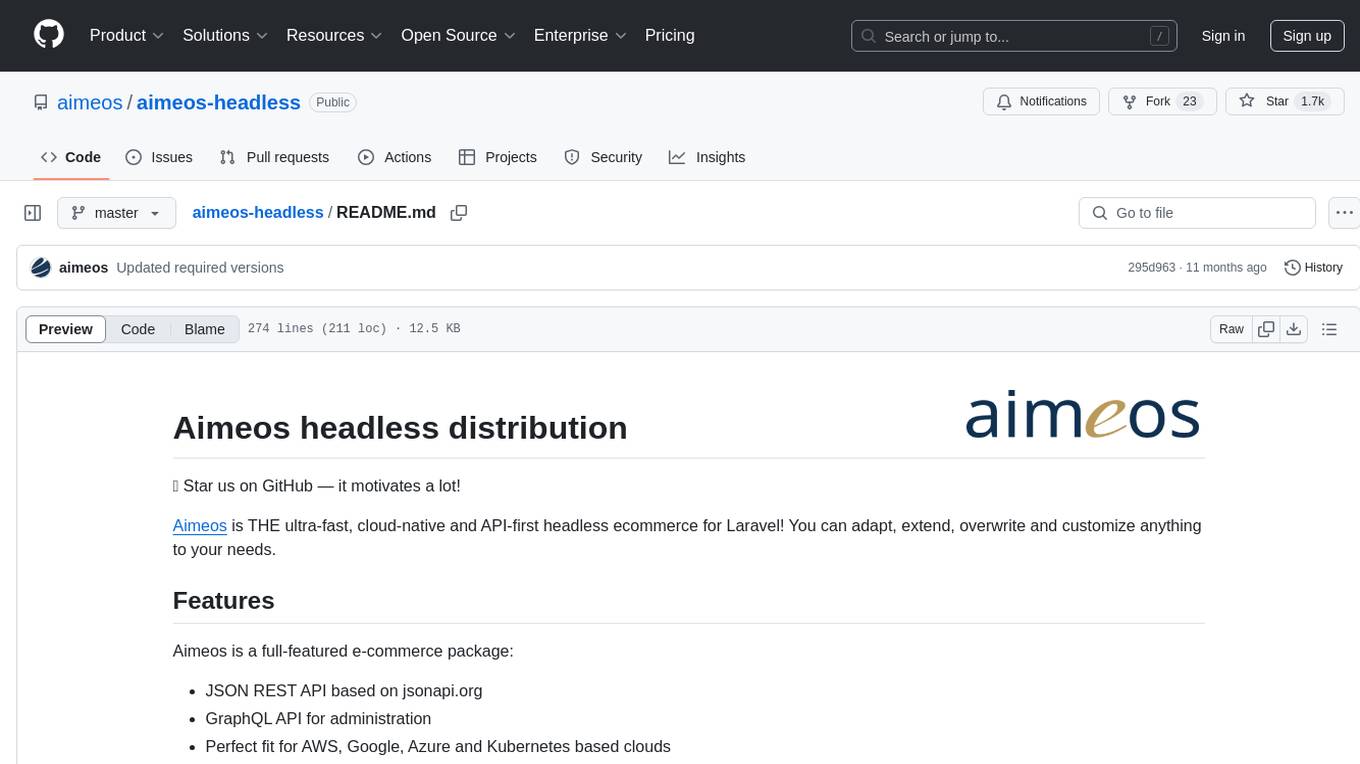
aimeos-headless
Aimeos headless distribution is an ultra-fast, cloud-native, and API-first headless ecommerce solution for Laravel. It offers a full-featured e-commerce package with features like JSON REST API, GraphQL API, multi-vendor support, subscriptions, block/tier pricing, admin backend, and more. The distribution is highly customizable, extensible, and suitable for multi-tenant e-commerce SaaS solutions. It supports multiple languages, AI-based text translation, and provides secure and high-quality source code. Aimeos is designed for AWS, Google, Azure, and Kubernetes based clouds, and can handle a wide range of products efficiently.