


deepnote
Deepnote is a drop-in replacement for Jupyter with an AI-first design, sleek UI, new blocks, and native data integrations. Use Python, R, and SQL locally in your favorite IDE, then scale to Deepnote cloud for real-time collaboration, Deepnote agent, and deployable data apps. https://deepnote.com/
Stars: 2641
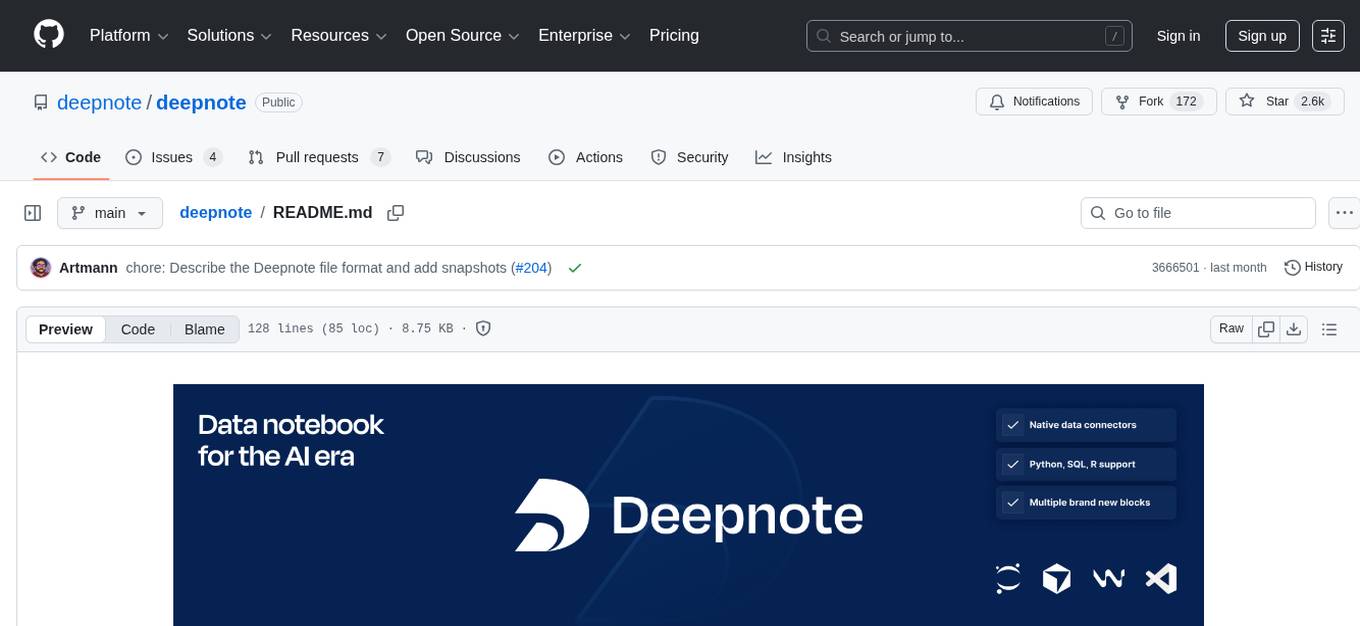
Deepnote is a data notebook tool designed for the AI era, used by over 500,000 data professionals at companies like Estée Lauder, SoundCloud, Statsig, and Gusto. It offers a human-readable format, block-based architecture, reactive notebook execution, and effortless conversion between .ipynb and .deepnote formats. Deepnote extends Jupyter with features like native AI agent, Git integration, cloud compute, and native database & API connections. The repository contains reusable packages and libraries for Deepnote's notebook, runtime, and collaboration features.
README:


Deepnote is used by 500,000+ data professionals at companies like Estée Lauder, SoundCloud, Statsig, Gusto, and beyond.
Get started with Deepnote in seconds:
npx @deepnote/convert notebook.ipynb # This will convert the notebook and create notebook.deepnoteThen open your .deepnote file in VS Code, Cursor, Windsurf, or JupyterLab!
Deepnote is a successor of Jupyter. It uses the Deepnote kernel which is more powerful but still backwards compatible so you can seamlessly move between both, but adds an AI agent, sleek UI, new block types, and native data integrations. Deepnote Open Source offers you everything you'd need to work locally before you scale your workflows in a team with Deepnote Cloud.
Why Deepnote Open Source?
-
Human-readable format: The
.deepnoteYAML format replaces.ipynb's messy JSON with clean, version-control and human-friendly structure for projects and notebooks. You can organize multiple notebooks, integrations, and settings into a single.deepnoteproject for better structure and collaboration. -
Block-based architecture: Extend notebooks beyond code cells with blocks for SQL, inputs, charts, and much more — all defined and validated through the open
@deepnote/blockspackage. - Work wherever: Run notebooks locally in VS Code, JupyterLab, or anywhere else with the open-source Deepnote Toolkit. Once you want to work in a team on the same notebook with beefier compute - drag and drop your project into Deepnote Cloud.
- Reactive notebook execution: Automatically re-runs dependent blocks when inputs or data change, ensuring notebooks stay consistent and reproducible without manual execution.
- Open and extendable: Built on the Jupyter kernel for full compatibility with your existing notebooks.
-
Effortless conversion: Convert .ipynb notebooks into .deepnote projects and back again using the open
@deepnote/convertCLI and API.
This open-source repository lets you, edit and run Deepnote notebooks directly in your favorite AI-native code editors:
- VS Code extension - Full Deepnote support in Visual Studio Code
- Cursor extension - AI-powered notebook editing in Cursor
- Windsurf extension - Collaborative development in Windsurf
-
JupyterLab extension - Read
.deepnotefiles in JupyterLab with backwards compatibility
You'll soon be able to:
- Take the UI you're used to from Deepnote Cloud and run it locally
- Edit notebooks with a local AI agent
- Bring your own keys for AI services
- Run your own compute
Deepnote extends Jupyter in a number of ways. Here are the key differences:
| Feature | Deepnote | Jupyter |
|---|---|---|
| Setup | Zero setup via cloud or local installation | Local installation required |
| AI features | Native AI agent and AI code completion | Third-party extensions |
| Version control | Built-in Git integration | Manual Git workflow |
| Sharing | Share with a link | Export files manually |
| Compute | Managed cloud compute | Local resources only |
| Integrations | Native database & API connections | Manual configuration |
Reusable packages and libraries powering Deepnote's notebook, runtime, and collaboration features.
@deepnote/blocks TypeScript types and utilities for working with Deepnote notebook blocks.
- Block type definitions: Code, SQL, Text, Markdown, Input, Visualization, Button, Big Number, Image, Separator
- Python code generation: Convert blocks to executable Python code
- Markdown conversion: Convert text blocks to/from markdown format
- Input block support: Text, textarea, checkbox, select, slider, file, date, and date-range inputs
@deepnote/convert CLI tool and library for bidirectional conversion between Deepnote (.deepnote) and multiple notebook formats.
-
Supported formats: Jupyter (
.ipynb), Quarto (.qmd), Percent (.pywith# %%), and Marimo (.pywith@app.cell) -
Platform compatible: Import Jupyter notebooks (
.ipynb) from Google Colab, Amazon SageMaker, Kaggle, or Azure ML, edit locally, and export back — all platform-specific metadata is preserved during roundtrip -
CLI tool:
deepnote-convertcommand for batch conversions - Programmatic API: Use in Node.js/TypeScript applications
-
Bidirectional: Any format → Deepnote, and Deepnote → any format (via
--outputFormat)
File Formats Complete specification of the .deepnote and .snapshot.deepnote file formats, including schema details, block types, and snapshot management. Snapshots separate outputs from source code for cleaner Git history, while contentHash provides code provenance — verifying which code produced each output.
Deepnote Cloud is free for students and educators! Get unlimited access to all core features, cloud compute, and real-time collaboration for your research and teaching. If you use Deepnote in your research, please cite Deepnote using:
@misc{deepnote,
    title = {Deepnote: the data notebook for the AI era},
    author = {Deepnote Team},
    year = {2025},
    url = {https://github.com/deepnote/deepnote},
    note = {Open-source collaborative data science notebook platform}
}
Learn more: deepnote.com/education
- Join our Community!
- Open an issue for bug reports or feature requests
- Check out source code of related repositories: Deepnote VS Code extension, Deepnote JupyterLab extension and Deepnote Toolkit.
- Check out our documentation
- Want a low-code experience? Visit Deepnote Cloud together with Deepnote AI agent
We love external contributors! Whether you're fixing bugs, adding features, or improving documentation, your contributions are welcome, please see CONTRIBUTING.md, or join our team
We owe a huge thank-you to the Jupyter community and everyone who has contributed to open notebooks over the past decade. Jupyter set the standard for how the world explores data and shares ideas through code when it launched in 2013. Deepnote builds directly on that legacy — and extends it into the AI-native, collaborative future. None of this would exist without the foundations Jupyter created, and we’re proud to keep contributing back to the same open ecosystem.
Built with 💙
For Tasks:
Click tags to check more tools for each tasksFor Jobs:
Alternative AI tools for deepnote
Similar Open Source Tools
deepnote
Deepnote is a data notebook tool designed for the AI era, used by over 500,000 data professionals at companies like Estée Lauder, SoundCloud, Statsig, and Gusto. It offers a human-readable format, block-based architecture, reactive notebook execution, and effortless conversion between .ipynb and .deepnote formats. Deepnote extends Jupyter with features like native AI agent, Git integration, cloud compute, and native database & API connections. The repository contains reusable packages and libraries for Deepnote's notebook, runtime, and collaboration features.
TaskingAI
TaskingAI brings Firebase's simplicity to **AI-native app development**. The platform enables the creation of GPTs-like multi-tenant applications using a wide range of LLMs from various providers. It features distinct, modular functions such as Inference, Retrieval, Assistant, and Tool, seamlessly integrated to enhance the development process. TaskingAI’s cohesive design ensures an efficient, intelligent, and user-friendly experience in AI application development.
neptune-client
Neptune is a scalable experiment tracker for teams training foundation models. Log millions of runs, effortlessly monitor and visualize model training, and deploy on your infrastructure. Track 100% of metadata to accelerate AI breakthroughs. Log and display any framework and metadata type from any ML pipeline. Organize experiments with nested structures and custom dashboards. Compare results, visualize training, and optimize models quicker. Version models, review stages, and access production-ready models. Share results, manage users, and projects. Integrate with 25+ frameworks. Trusted by great companies to improve workflow.
marimo
Marimo is a reactive Python notebook that ensures code and outputs consistency by automatically running dependent cells or marking them as stale. It replaces various tools like Jupyter, streamlit, and more, offering an interactive environment with features like binding UI elements to Python, reproducibility, executability as scripts or apps, shareability, and designed for data tasks. It is git-friendly, offers a modern editor with AI assistants, and comes with built-in package management. Marimo provides deterministic execution order, dynamic markdown and SQL capabilities, and a performant runtime. It is easy to get started with and suitable for both beginners and power users.
ai-flow
AI Flow is an open-source, user-friendly UI application that empowers you to seamlessly connect multiple AI models together, specifically leveraging the capabilities of multiples AI APIs such as OpenAI, StabilityAI and Replicate. In a nutshell, AI Flow provides a visual platform for crafting and managing AI-driven workflows, thereby facilitating diverse and dynamic AI interactions.
clearml
ClearML is a suite of tools designed to streamline the machine learning workflow. It includes an experiment manager, MLOps/LLMOps, data management, and model serving capabilities. ClearML is open-source and offers a free tier hosting option. It supports various ML/DL frameworks and integrates with Jupyter Notebook and PyCharm. ClearML provides extensive logging capabilities, including source control info, execution environment, hyper-parameters, and experiment outputs. It also offers automation features, such as remote job execution and pipeline creation. ClearML is designed to be easy to integrate, requiring only two lines of code to add to existing scripts. It aims to improve collaboration, visibility, and data transparency within ML teams.
clearml
ClearML is an auto-magical suite of tools designed to streamline AI workflows. It includes modules for experiment management, MLOps/LLMOps, data management, model serving, and more. ClearML offers features like experiment tracking, model serving, orchestration, and automation. It supports various ML/DL frameworks and integrates with Jupyter Notebook and PyCharm for remote debugging. ClearML aims to simplify collaboration, automate processes, and enhance visibility in AI projects.
chatnio
Chat Nio is a next-generation AIGC one-stop business solution that combines the advantages of frontend-oriented lightweight deployment projects with powerful API distribution systems. It offers rich model support, beautiful UI design, complete Markdown support, multi-theme support, internationalization support, text-to-image support, powerful conversation sync, model market & preset system, rich file parsing, full model internet search, Progressive Web App (PWA) support, comprehensive backend management, multiple billing methods, innovative model caching, and additional features. The project aims to address limitations in conversation synchronization, billing, file parsing, conversation URL sharing, channel management, and API call support found in existing AIGC commercial sites, while also providing a user-friendly interface design and C-end features.
AudioMuse-AI
AudioMuse-AI is a deep learning-based tool for audio analysis and music generation. It provides a user-friendly interface for processing audio data and generating music compositions. The tool utilizes state-of-the-art machine learning algorithms to analyze audio signals and extract meaningful features for music generation. With AudioMuse-AI, users can explore the possibilities of AI in music creation and experiment with different styles and genres. Whether you are a music enthusiast, a researcher, or a developer, AudioMuse-AI offers a versatile platform for audio analysis and music generation.
Mira
Mira is an agentic AI library designed for automating company research by gathering information from various sources like company websites, LinkedIn profiles, and Google Search. It utilizes a multi-agent architecture to collect and merge data points into a structured profile with confidence scores and clear source attribution. The core library is framework-agnostic and can be integrated into applications, pipelines, or custom workflows. Mira offers features such as real-time progress events, confidence scoring, company criteria matching, and built-in services for data gathering. The tool is suitable for users looking to streamline company research processes and enhance data collection efficiency.
kestra
Kestra is an open-source event-driven orchestration platform that simplifies building scheduled and event-driven workflows. It offers Infrastructure as Code best practices for data, process, and microservice orchestration, allowing users to create reliable workflows using YAML configuration. Key features include everything as code with Git integration, event-driven and scheduled workflows, rich plugin ecosystem for data extraction and script running, intuitive UI with syntax highlighting, scalability for millions of workflows, version control friendly, and various features for structure and resilience. Kestra ensures declarative orchestration logic management even when workflows are modified via UI, API calls, or other methods.
OpenAnalyst
OpenAnalyst is an open-source VS Code AI agent specialized in data analytics and general coding tasks. It merges features from KiloCode, Roo Code, and Cline, offering code generation from natural language, data analytics mode, self-checking, terminal command running, browser automation, latest AI models, and API keys option. It supports multi-mode operation for roles like Data Analyst, Code, Ask, and Debug. OpenAnalyst is a fork of KiloCode, combining the best features from Cline, Roo Code, and KiloCode, with enhancements like MCP Server Marketplace, automated refactoring, and support for latest AI models.
refact
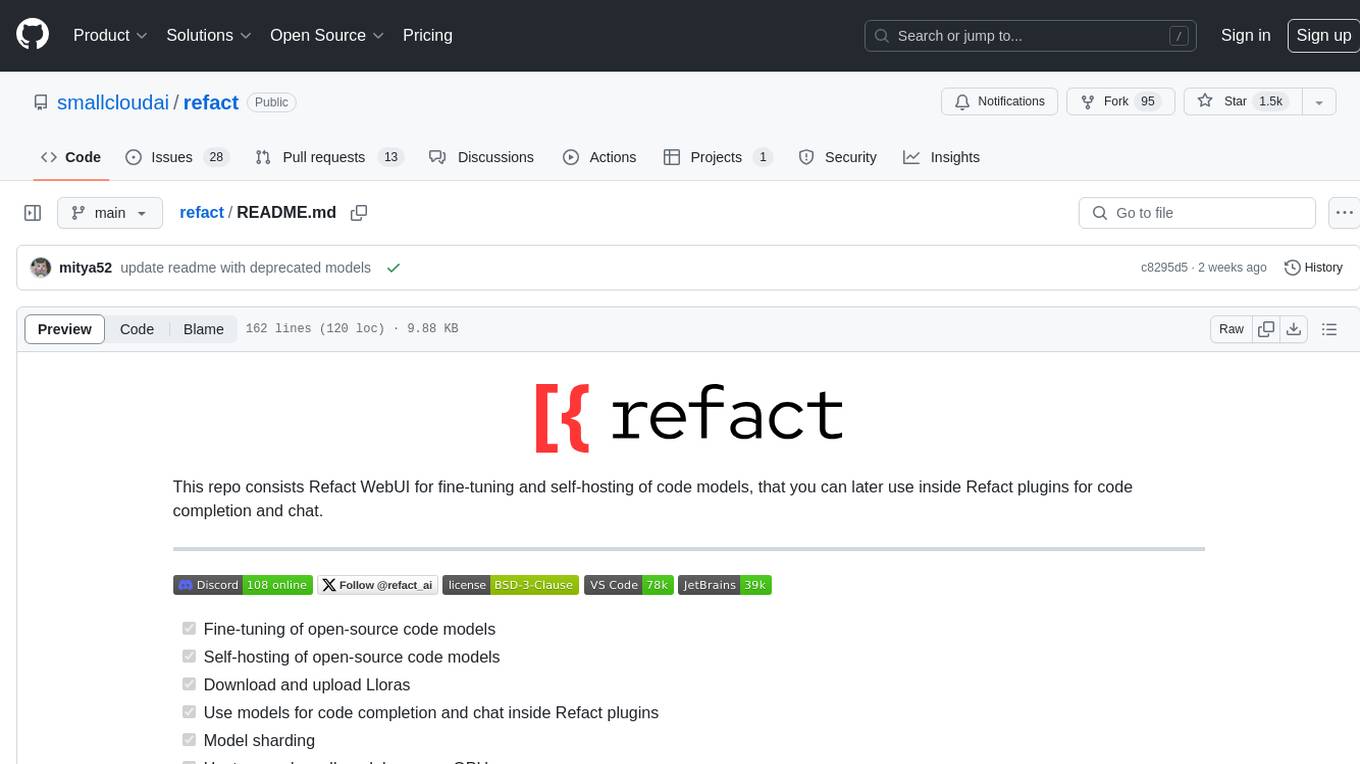
This repository contains Refact WebUI for fine-tuning and self-hosting of code models, which can be used inside Refact plugins for code completion and chat. Users can fine-tune open-source code models, self-host them, download and upload Lloras, use models for code completion and chat inside Refact plugins, shard models, host multiple small models on one GPU, and connect GPT-models for chat using OpenAI and Anthropic keys. The repository provides a Docker container for running the self-hosted server and supports various models for completion, chat, and fine-tuning. Refact is free for individuals and small teams under the BSD-3-Clause license, with custom installation options available for GPU support. The community and support include contributing guidelines, GitHub issues for bugs, a community forum, Discord for chatting, and Twitter for product news and updates.

easydiffusion
Easy Diffusion 3.0 is a user-friendly tool for installing and using Stable Diffusion on your computer. It offers hassle-free installation, clutter-free UI, task queue, intelligent model detection, live preview, image modifiers, multiple prompts file, saving generated images, UI themes, searchable models dropdown, and supports various image generation tasks like 'Text to Image', 'Image to Image', and 'InPainting'. The tool also provides advanced features such as custom models, merge models, custom VAE models, multi-GPU support, auto-updater, developer console, and more. It is designed for both new users and advanced users looking for powerful AI image generation capabilities.
griptape
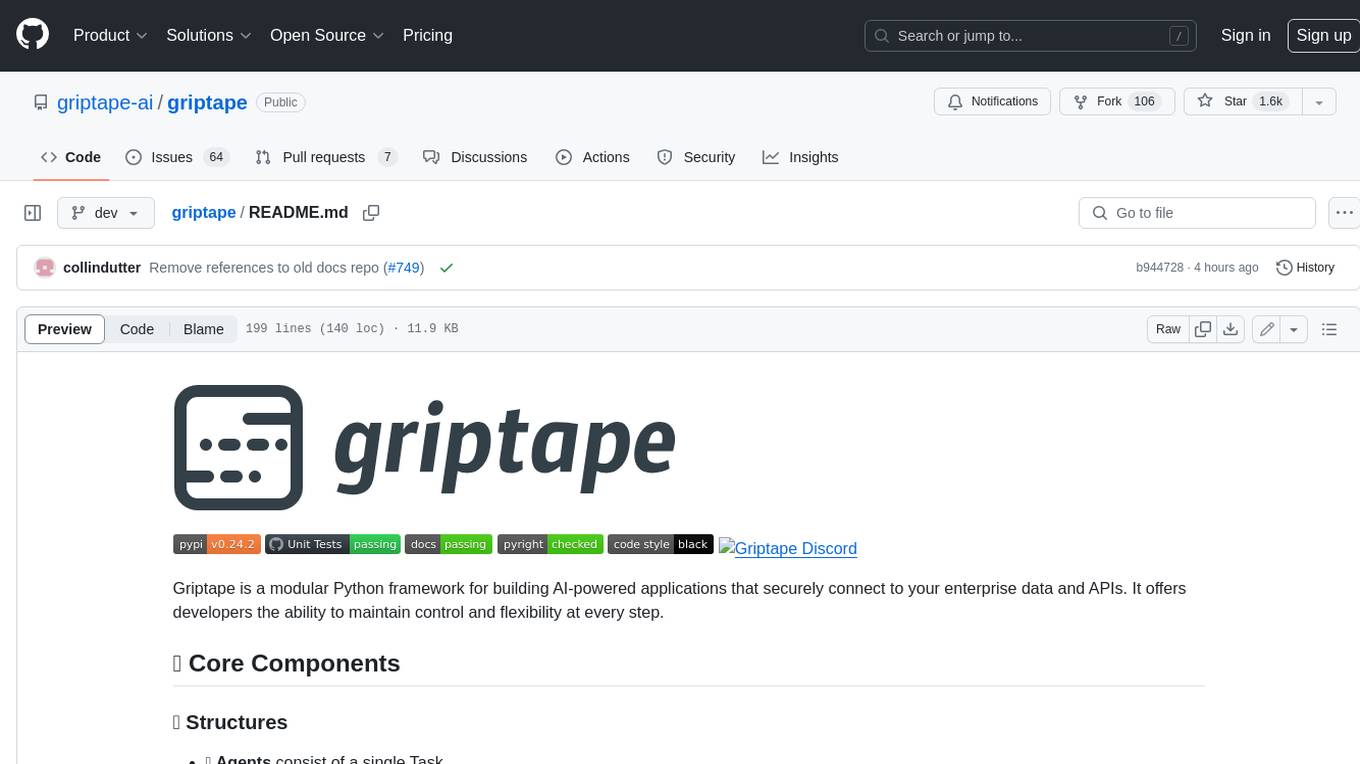
Griptape is a modular Python framework for building AI-powered applications that securely connect to your enterprise data and APIs. It offers developers the ability to maintain control and flexibility at every step. Griptape's core components include Structures (Agents, Pipelines, and Workflows), Tasks, Tools, Memory (Conversation Memory, Task Memory, and Meta Memory), Drivers (Prompt and Embedding Drivers, Vector Store Drivers, Image Generation Drivers, Image Query Drivers, SQL Drivers, Web Scraper Drivers, and Conversation Memory Drivers), Engines (Query Engines, Extraction Engines, Summary Engines, Image Generation Engines, and Image Query Engines), and additional components (Rulesets, Loaders, Artifacts, Chunkers, and Tokenizers). Griptape enables developers to create AI-powered applications with ease and efficiency.
RWKV_APP
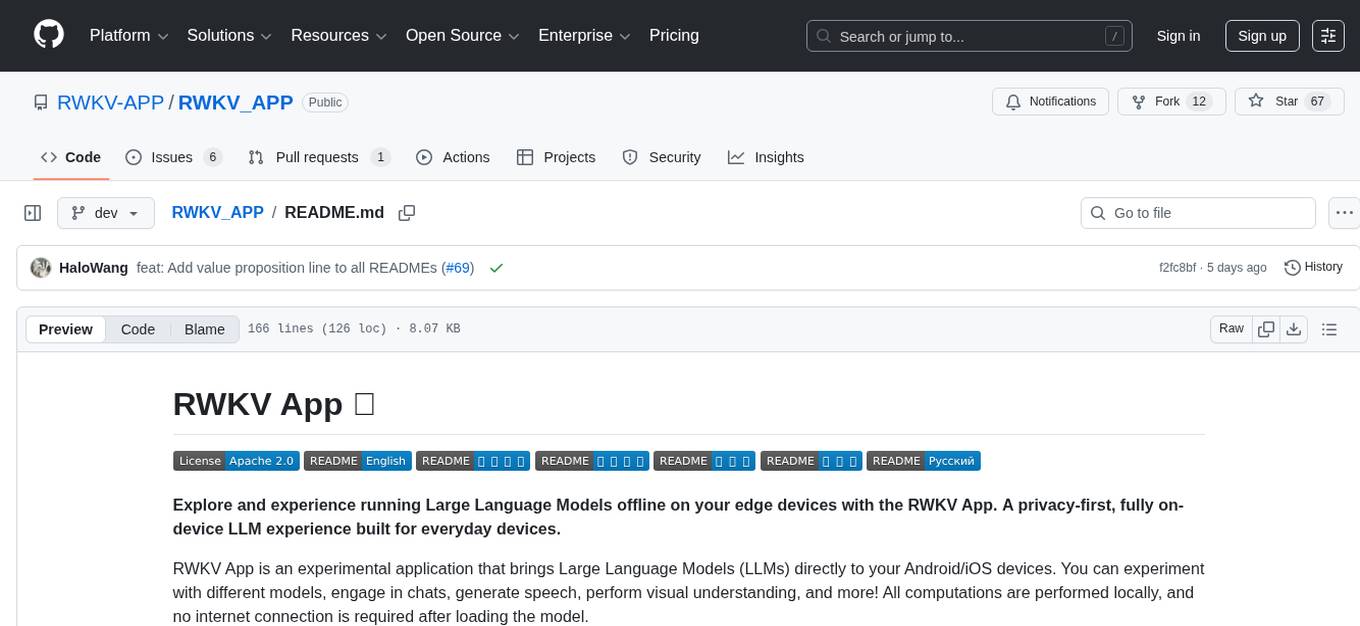
RWKV App is an experimental application that enables users to run Large Language Models (LLMs) offline on their edge devices. It offers a privacy-first, on-device LLM experience for everyday devices. Users can engage in multi-turn conversations, text-to-speech, visual understanding, and more, all without requiring an internet connection. The app supports switching between different models, running locally without internet, and exploring various AI tasks such as chat, speech generation, and visual understanding. It is built using Flutter and Dart FFI for cross-platform compatibility and efficient communication with the C++ inference engine. The roadmap includes integrating features into the RWKV Chat app, supporting more model weights, hardware, operating systems, and devices.
For similar tasks
Azure-Analytics-and-AI-Engagement
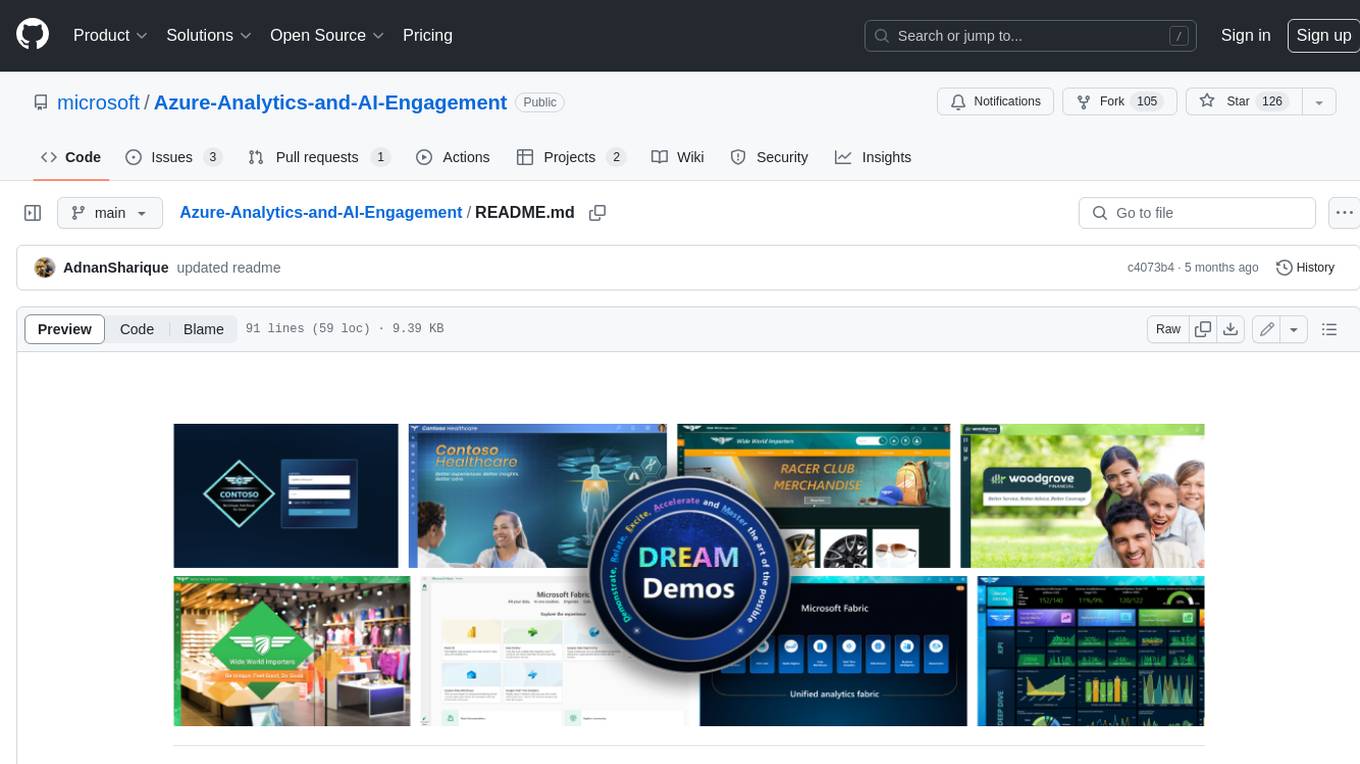
The Azure-Analytics-and-AI-Engagement repository provides packaged Industry Scenario DREAM Demos with ARM templates (Containing a demo web application, Power BI reports, Synapse resources, AML Notebooks etc.) that can be deployed in a customer’s subscription using the CAPE tool within a matter of few hours. Partners can also deploy DREAM Demos in their own subscriptions using DPoC.
sorrentum
Sorrentum is an open-source project that aims to combine open-source development, startups, and brilliant students to build machine learning, AI, and Web3 / DeFi protocols geared towards finance and economics. The project provides opportunities for internships, research assistantships, and development grants, as well as the chance to work on cutting-edge problems, learn about startups, write academic papers, and get internships and full-time positions at companies working on Sorrentum applications.
tidb
TiDB is an open-source distributed SQL database that supports Hybrid Transactional and Analytical Processing (HTAP) workloads. It is MySQL compatible and features horizontal scalability, strong consistency, and high availability.

zep-python
Zep is an open-source platform for building and deploying large language model (LLM) applications. It provides a suite of tools and services that make it easy to integrate LLMs into your applications, including chat history memory, embedding, vector search, and data enrichment. Zep is designed to be scalable, reliable, and easy to use, making it a great choice for developers who want to build LLM-powered applications quickly and easily.
telemetry-airflow
This repository codifies the Airflow cluster that is deployed at workflow.telemetry.mozilla.org (behind SSO) and commonly referred to as "WTMO" or simply "Airflow". Some links relevant to users and developers of WTMO: * The `dags` directory in this repository contains some custom DAG definitions * Many of the DAGs registered with WTMO don't live in this repository, but are instead generated from ETL task definitions in bigquery-etl * The Data SRE team maintains a WTMO Developer Guide (behind SSO)
mojo
Mojo is a new programming language that bridges the gap between research and production by combining Python syntax and ecosystem with systems programming and metaprogramming features. Mojo is still young, but it is designed to become a superset of Python over time.
pandas-ai
PandasAI is a Python library that makes it easy to ask questions to your data in natural language. It helps you to explore, clean, and analyze your data using generative AI.
databend
Databend is an open-source cloud data warehouse that serves as a cost-effective alternative to Snowflake. With its focus on fast query execution and data ingestion, it's designed for complex analysis of the world's largest datasets.
For similar jobs
weave
Weave is a toolkit for developing Generative AI applications, built by Weights & Biases. With Weave, you can log and debug language model inputs, outputs, and traces; build rigorous, apples-to-apples evaluations for language model use cases; and organize all the information generated across the LLM workflow, from experimentation to evaluations to production. Weave aims to bring rigor, best-practices, and composability to the inherently experimental process of developing Generative AI software, without introducing cognitive overhead.
LLMStack
LLMStack is a no-code platform for building generative AI agents, workflows, and chatbots. It allows users to connect their own data, internal tools, and GPT-powered models without any coding experience. LLMStack can be deployed to the cloud or on-premise and can be accessed via HTTP API or triggered from Slack or Discord.
VisionCraft
The VisionCraft API is a free API for using over 100 different AI models. From images to sound.
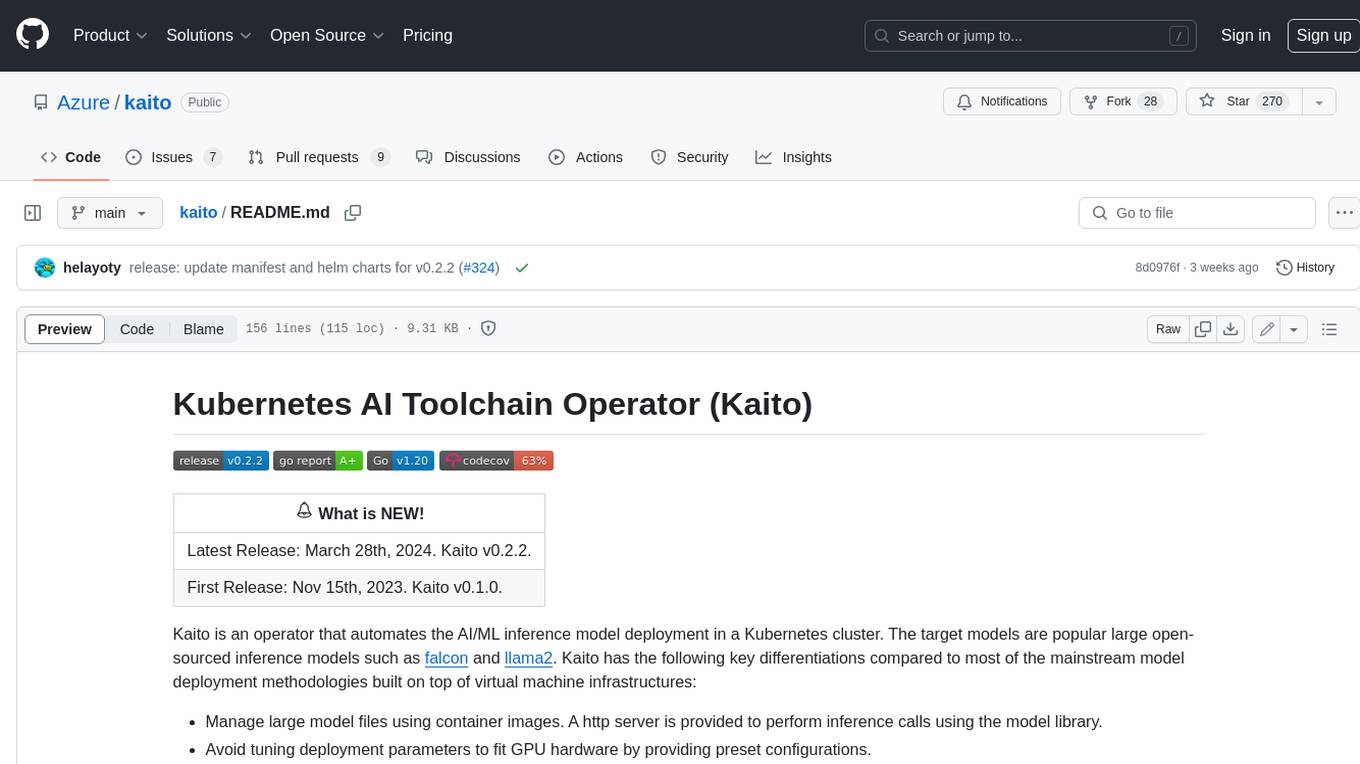
kaito
Kaito is an operator that automates the AI/ML inference model deployment in a Kubernetes cluster. It manages large model files using container images, avoids tuning deployment parameters to fit GPU hardware by providing preset configurations, auto-provisions GPU nodes based on model requirements, and hosts large model images in the public Microsoft Container Registry (MCR) if the license allows. Using Kaito, the workflow of onboarding large AI inference models in Kubernetes is largely simplified.
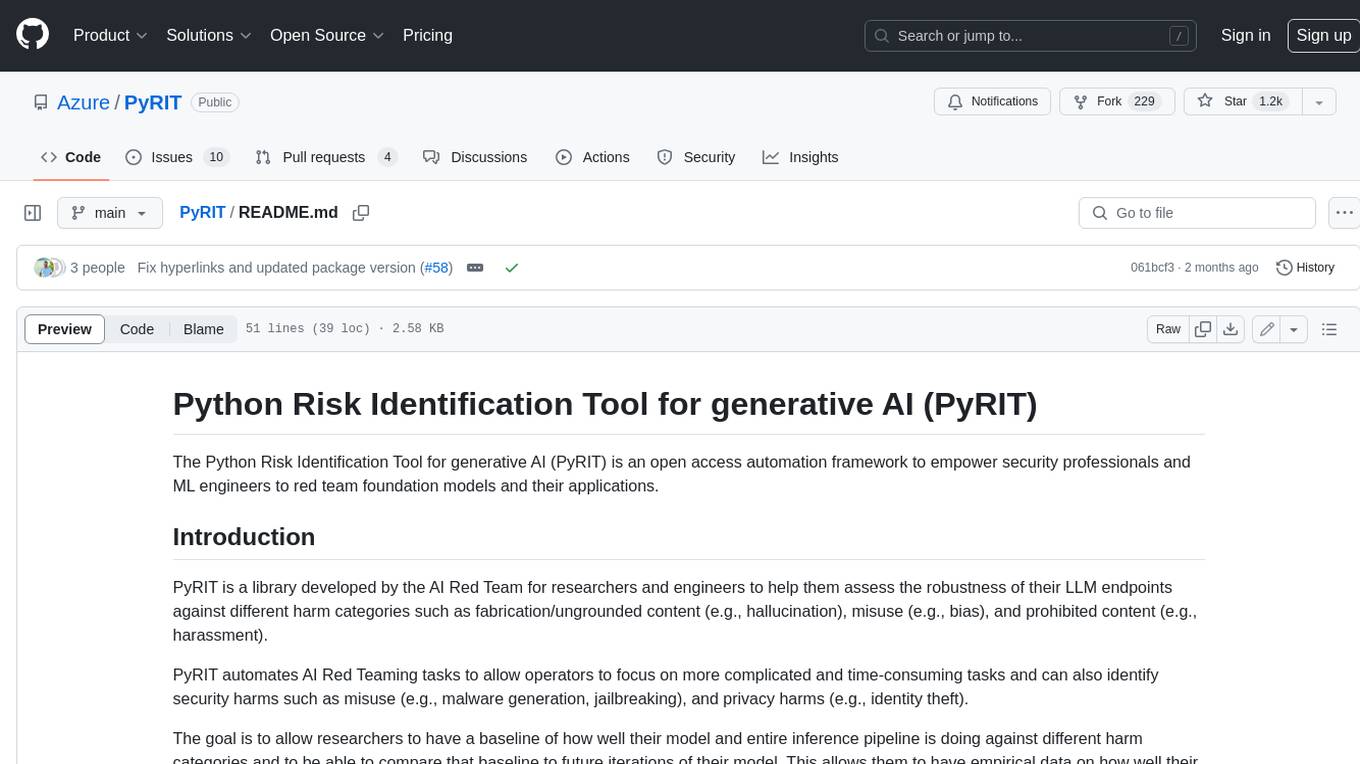
PyRIT
PyRIT is an open access automation framework designed to empower security professionals and ML engineers to red team foundation models and their applications. It automates AI Red Teaming tasks to allow operators to focus on more complicated and time-consuming tasks and can also identify security harms such as misuse (e.g., malware generation, jailbreaking), and privacy harms (e.g., identity theft). The goal is to allow researchers to have a baseline of how well their model and entire inference pipeline is doing against different harm categories and to be able to compare that baseline to future iterations of their model. This allows them to have empirical data on how well their model is doing today, and detect any degradation of performance based on future improvements.
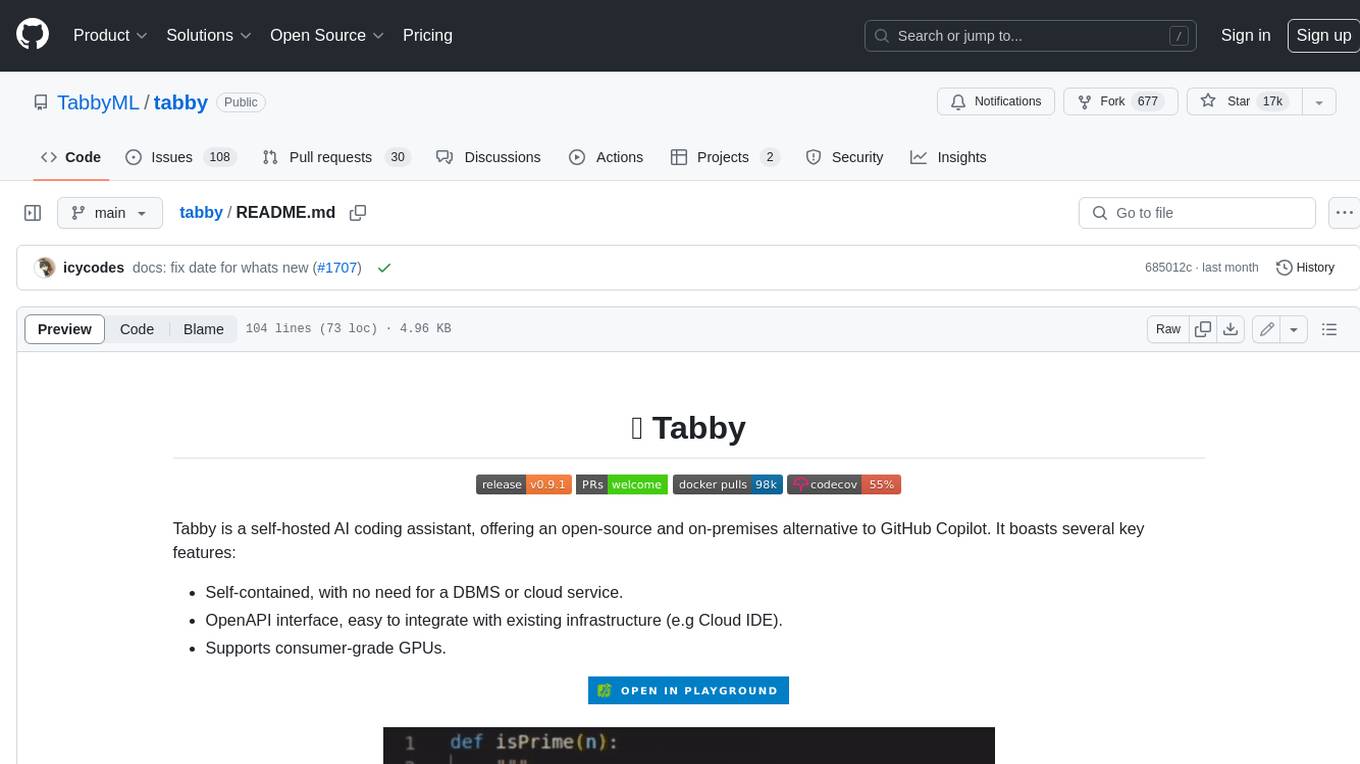
tabby
Tabby is a self-hosted AI coding assistant, offering an open-source and on-premises alternative to GitHub Copilot. It boasts several key features: * Self-contained, with no need for a DBMS or cloud service. * OpenAPI interface, easy to integrate with existing infrastructure (e.g Cloud IDE). * Supports consumer-grade GPUs.
spear
SPEAR (Simulator for Photorealistic Embodied AI Research) is a powerful tool for training embodied agents. It features 300 unique virtual indoor environments with 2,566 unique rooms and 17,234 unique objects that can be manipulated individually. Each environment is designed by a professional artist and features detailed geometry, photorealistic materials, and a unique floor plan and object layout. SPEAR is implemented as Unreal Engine assets and provides an OpenAI Gym interface for interacting with the environments via Python.
Magick
Magick is a groundbreaking visual AIDE (Artificial Intelligence Development Environment) for no-code data pipelines and multimodal agents. Magick can connect to other services and comes with nodes and templates well-suited for intelligent agents, chatbots, complex reasoning systems and realistic characters.