


aise
《AI 辅助软件工程:实践与案例解析》是一本如何使用 AI 辅助软件工程的开源电子书
Stars: 68
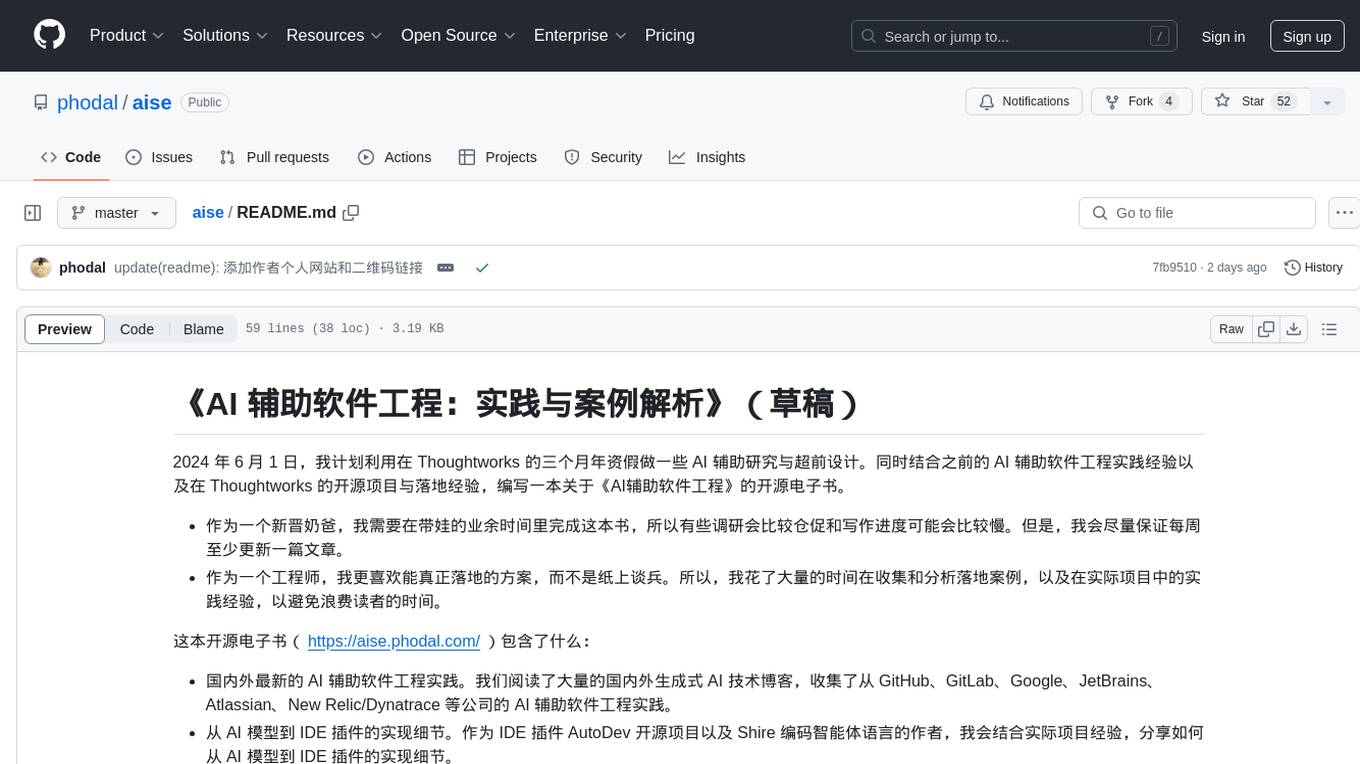
The repository 'aise' is an open-source electronic book focusing on AI-assisted software engineering. It covers the latest AI-assisted software engineering practices, implementation details from AI models to IDE plugins, and practical experiences in coding intelligent agents. The book aims to provide insights on leveraging AI to enhance software development efficiency and effectiveness across the entire software development lifecycle.
README:

2024 年 6 月 1 日,我计划利用在 Thoughtworks 的三个月年资假做一些 AI 辅助研究与超前设计。同时结合之前的 AI 辅助软件工程实践经验以及在 Thoughtworks 的开源项目与落地经验,编写一本关于《AI辅助软件工程》的开源电子书。
- 作为一个新晋奶爸,我需要在带娃的业余时间里完成这本书,所以有些调研会比较仓促和写作进度可能会比较慢。但是,我会尽量保证每周至少更新一篇文章。
- 作为一个工程师,我更喜欢能真正落地的方案,而不是纸上谈兵。所以,我花了大量的时间在收集和分析落地案例,以及在实际项目中的实践经验,以避免浪费读者的时间。
这本开源电子书( https://aise.phodal.com/ )包含了什么:
- 国内外最新的 AI 辅助软件工程实践。我们阅读了大量的国内外生成式 AI 技术博客,收集了从 GitHub、GitLab、Google、JetBrains、Atlassian、New Relic/Dynatrace 等公司的 AI 辅助软件工程实践。
- 从 AI 模型到 IDE 插件的实现细节。作为 IDE 插件 AutoDev 开源项目以及 Shire 编码智能体语言的作者,我会结合实际项目经验,分享如何从 AI 模型到 IDE 插件的实现细节。
- 从编码 RAG 到编码智能体的实践案例与经验。我们收集了大量的编码智能体的实践案例与经验,以及在编码领域如何使用 RAG 模型的实践案例。
这本书没有什么?
- 相关 Paper。作为一个工程师,我更喜欢能真正落地的方案,而不是纸上谈兵。尽管已经有大量的 AI 辅助软件工程的 Paper,从业内的实践经验来看,Paper 与实际落地的差距还是很大的。
如果你对此感兴趣,欢迎加入这个开源项目。
阅读需知:
在大多数组织中,开发者用于编码的时间不到总工作时间的 40%,因此编码提效对整个软件开发生命周期(SDLC)的效能影响很有限,应尝试将 AI 应用于软件 全生命周期和整个团队,而不仅仅是个别成员、个别环节的产出。
更多关于我的信息,请访问我的个人网站:Phodal。或者扫描下方二维码:

本书是一本关于如何使用 AI 辅助软件工程的开源电子书。我们将介绍:
- 如何使用生成式 AI 来在软件工程的不同阶段进行辅助。
- AI IDE 编程工具的 Prompt 技巧。
- 设计 AI 辅助流程来提高软件工程师的工作效率。
- 定制 AI IDE 来融入不同编程任务。
- 设计和构建 AI 编码智能体。
- 如何使用 Shire 与 RAG 来进行 AI 辅助研发。
开始阅读之前,你需要自行了解一些基本概念:
- 什么是生成式 AI?
- AI 智能体是什么?
- 什么是 IDE 插件?(我想你是不需要的)
本书不适合以下人群:
- 想要了解 AI 基础知识的人。
- 快速入门使用 AI 辅助软件工程的人。
- 想要了解 AI IDE 插件开发的人。
如果你是以上人群,建议你先了解一些基础知识,然后再来阅读本书。
For Tasks:
Click tags to check more tools for each tasksFor Jobs:
Alternative AI tools for aise
Similar Open Source Tools
aise
The repository 'aise' is an open-source electronic book focusing on AI-assisted software engineering. It covers the latest AI-assisted software engineering practices, implementation details from AI models to IDE plugins, and practical experiences in coding intelligent agents. The book aims to provide insights on leveraging AI to enhance software development efficiency and effectiveness across the entire software development lifecycle.
agent-hub
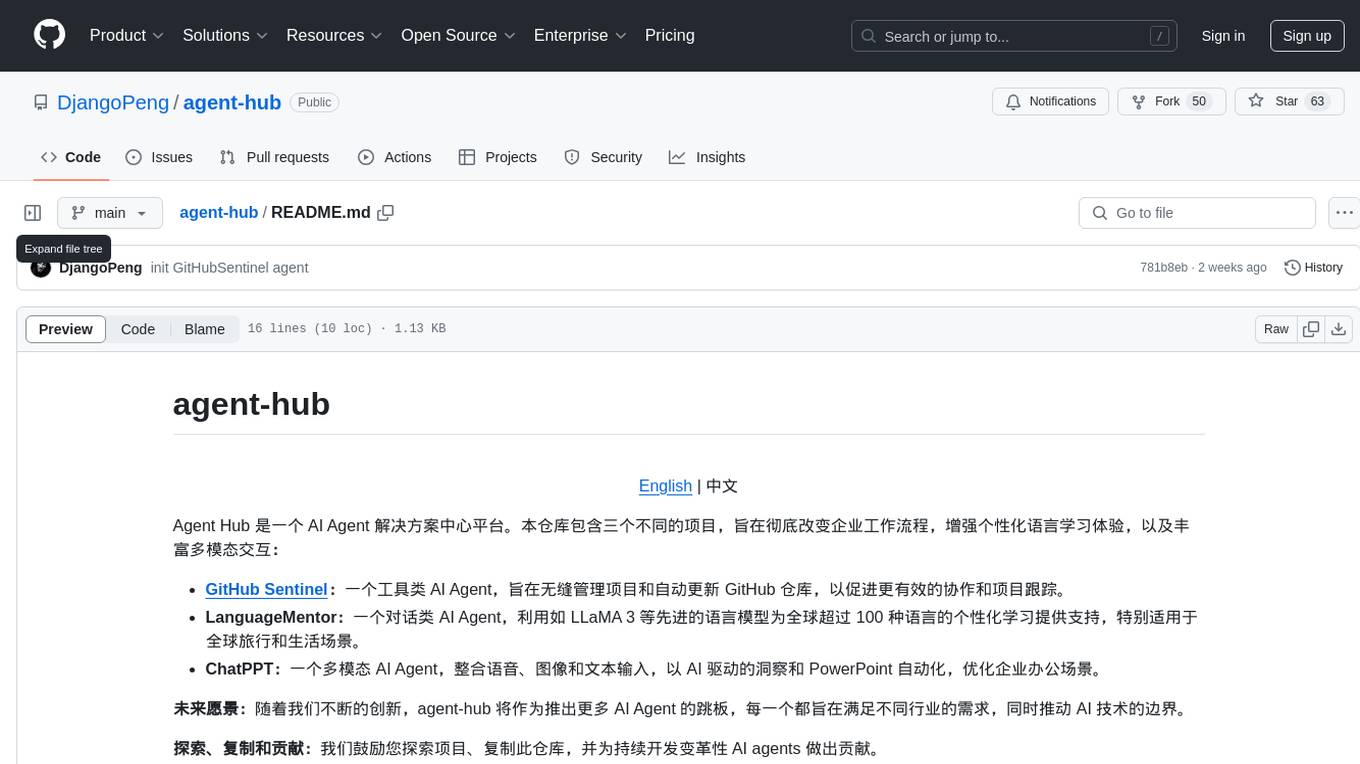
Agent Hub is a platform for AI Agent solutions, containing three different projects aimed at transforming enterprise workflows, enhancing personalized language learning experiences, and enriching multimodal interactions. The projects include GitHub Sentinel for project management and automatic updates, LanguageMentor for personalized language learning support, and ChatPPT for multimodal AI-driven insights and PowerPoint automation in enterprise settings. The future vision of agent-hub is to serve as a launchpad for more AI Agents catering to different industries and pushing the boundaries of AI technology. Users are encouraged to explore, clone the repository, and contribute to the development of transformative AI agents.
Learn-AI-Assisted-Python-Programming
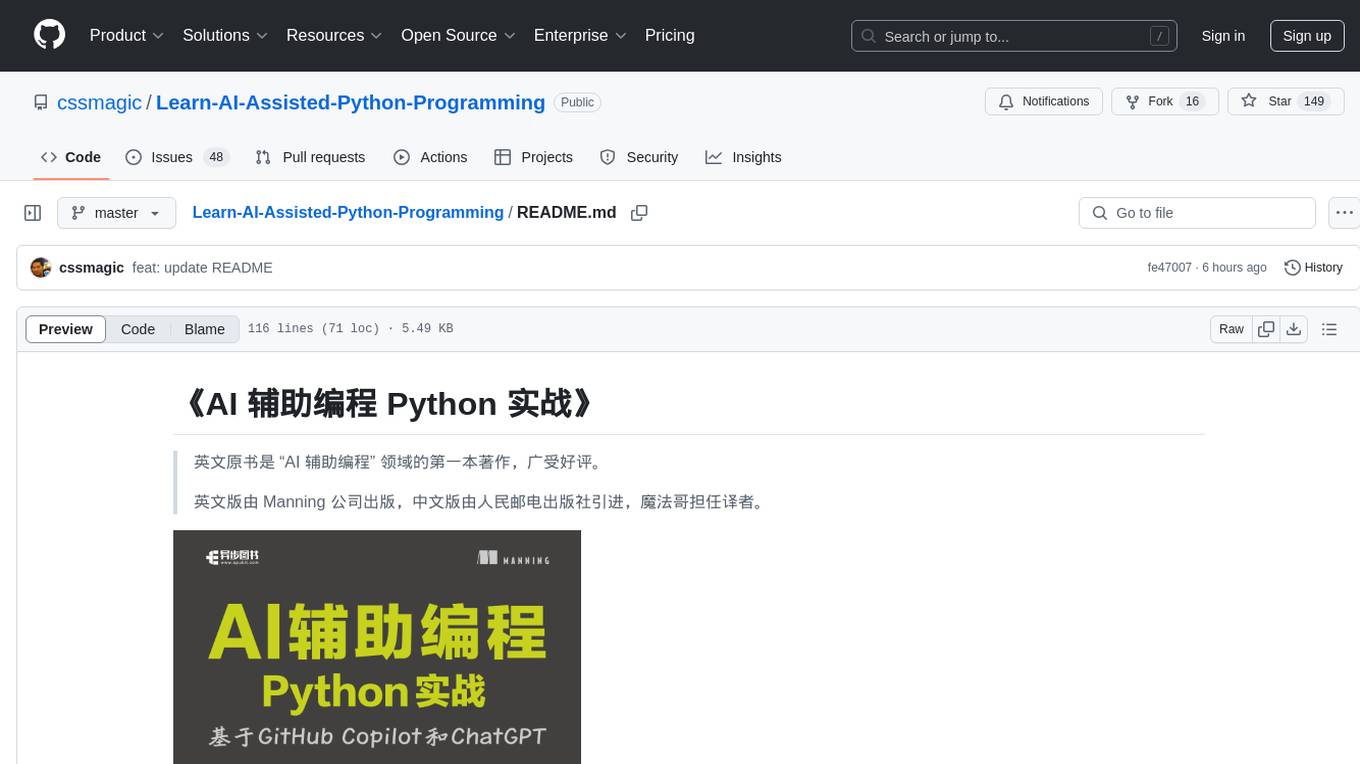
Learn-AI-Assisted-Python-Programming is a book that introduces readers to the world of AI-assisted programming, focusing on using tools like GitHub Copilot and ChatGPT to create and optimize Python programs. The book guides users, even those with no prior coding experience, on how to leverage AI assistants to quickly turn their ideas into reality without getting bogged down in low-level programming details. Readers will learn to generate code using natural language prompts, fine-tune code manually or with AI assistance, test programs with AI, and automate tedious tasks. The book aims to accelerate the learning journey of Copilot programming and provide a user-friendly and thoughtful approach for beginners.
Qbot
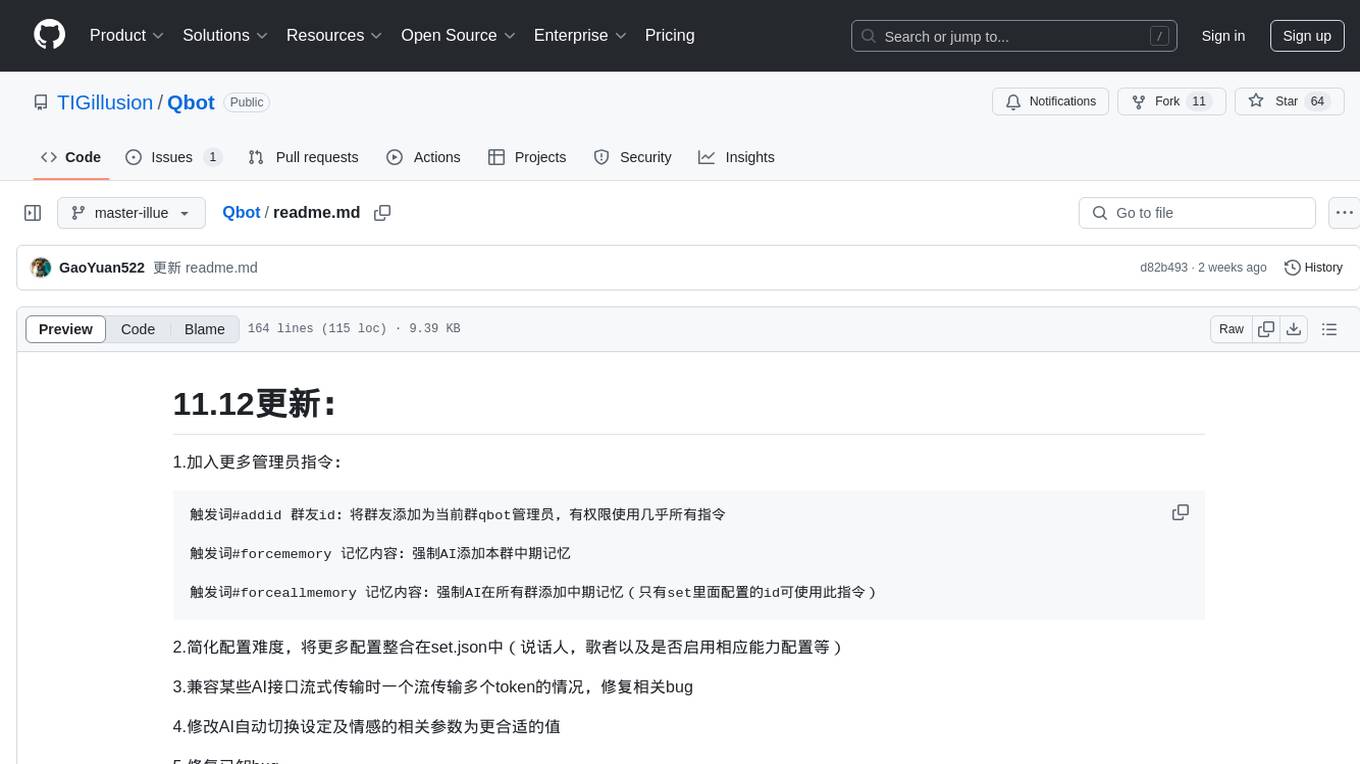
Qbot is an open-source project designed to help users quickly build their own QQ chatbot. The bot deployed using this project has various capabilities, including intelligent sentence segmentation, intent recognition, voice and drawing replies, autonomous selection of when to play local music, and decision-making on sending emojis. Qbot leverages other open-source projects and allows users to customize triggers, system prompts, chat models, and more through configuration files. Users can modify the Qbot.py source code to tailor the bot's behavior. The project requires NTQQ and LLonebot's NTQQ plugin for deployment, along with additional configurations for triggers, system prompts, and chat models. Users can start the bot by running Qbot.py after installing necessary libraries and ensuring the NTQQ is running. Qbot also supports features like sending music from the data/smusic folder and emojis based on emotions. Local voice synthesis can be deployed for voice outputs. Qbot provides commands like #reset to clear short-term memory and addresses common issues like program crashes due to encoding format, message sending/receiving failures, voice synthesis failures, and connection issues. Users are encouraged to give the project a star if they find it useful.
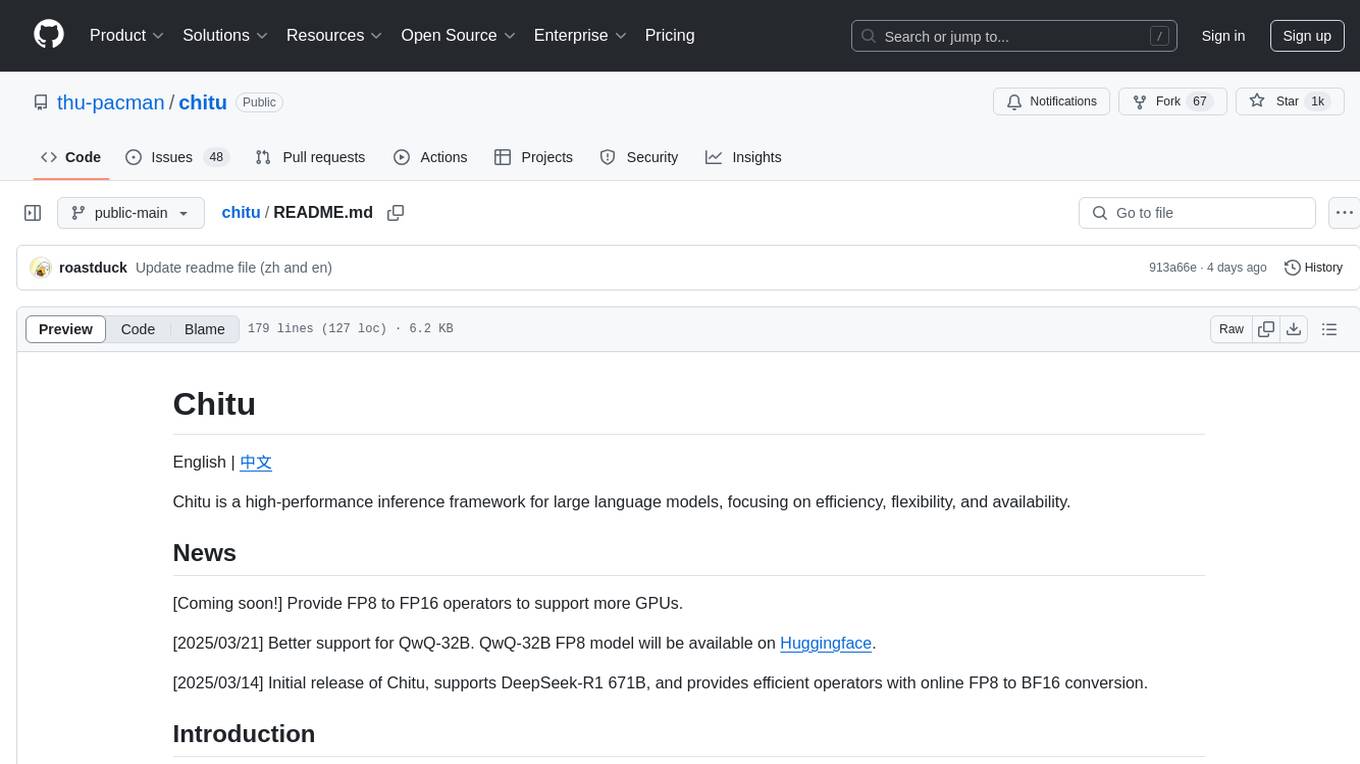
chitu
Chitu is a high-performance inference framework for large language models, focusing on efficiency, flexibility, and availability. It supports various mainstream large language models, including DeepSeek, LLaMA series, Mixtral, and more. Chitu integrates latest optimizations for large language models, provides efficient operators with online FP8 to BF16 conversion, and is deployed for real-world production. The framework is versatile, supporting various hardware environments beyond NVIDIA GPUs. Chitu aims to enhance output speed per unit computing power, especially in decoding processes dependent on memory bandwidth.
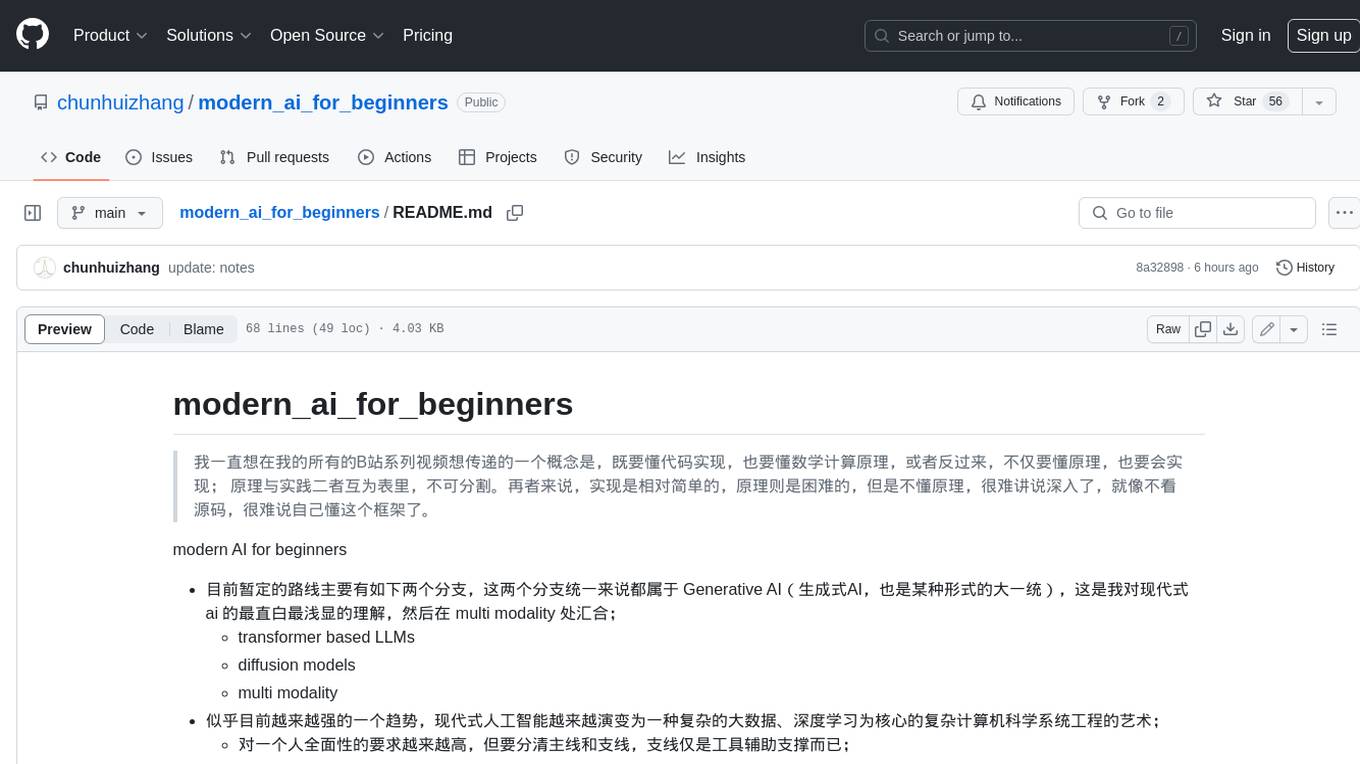
modern_ai_for_beginners
This repository provides a comprehensive guide to modern AI for beginners, covering both theoretical foundations and practical implementation. It emphasizes the importance of understanding both the mathematical principles and the code implementation of AI models. The repository includes resources on PyTorch, deep learning fundamentals, mathematical foundations, transformer-based LLMs, diffusion models, software engineering, and full-stack development. It also features tutorials on natural language processing with transformers, reinforcement learning, and practical deep learning for coders.
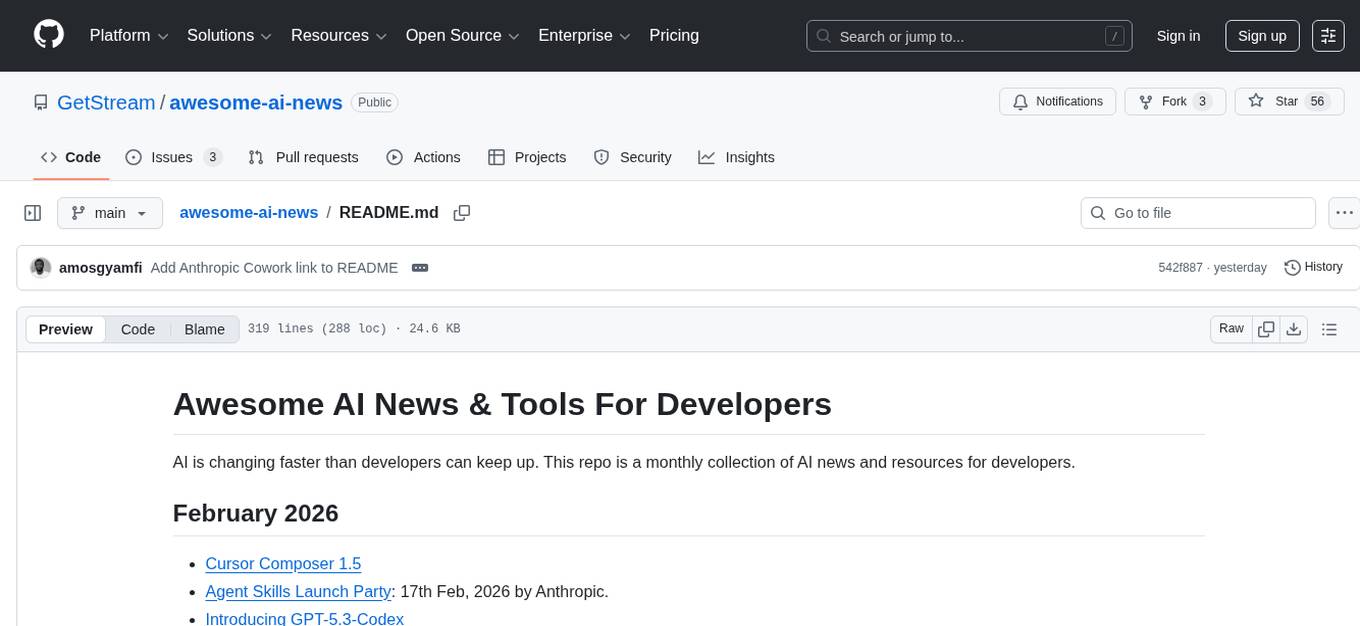
awesome-ai-news
Awesome AI News & Tools For Developers is a monthly collection of AI news and resources for developers. It features updates on various AI technologies, tools, and platforms, providing a comprehensive overview of the latest advancements in the field of artificial intelligence.
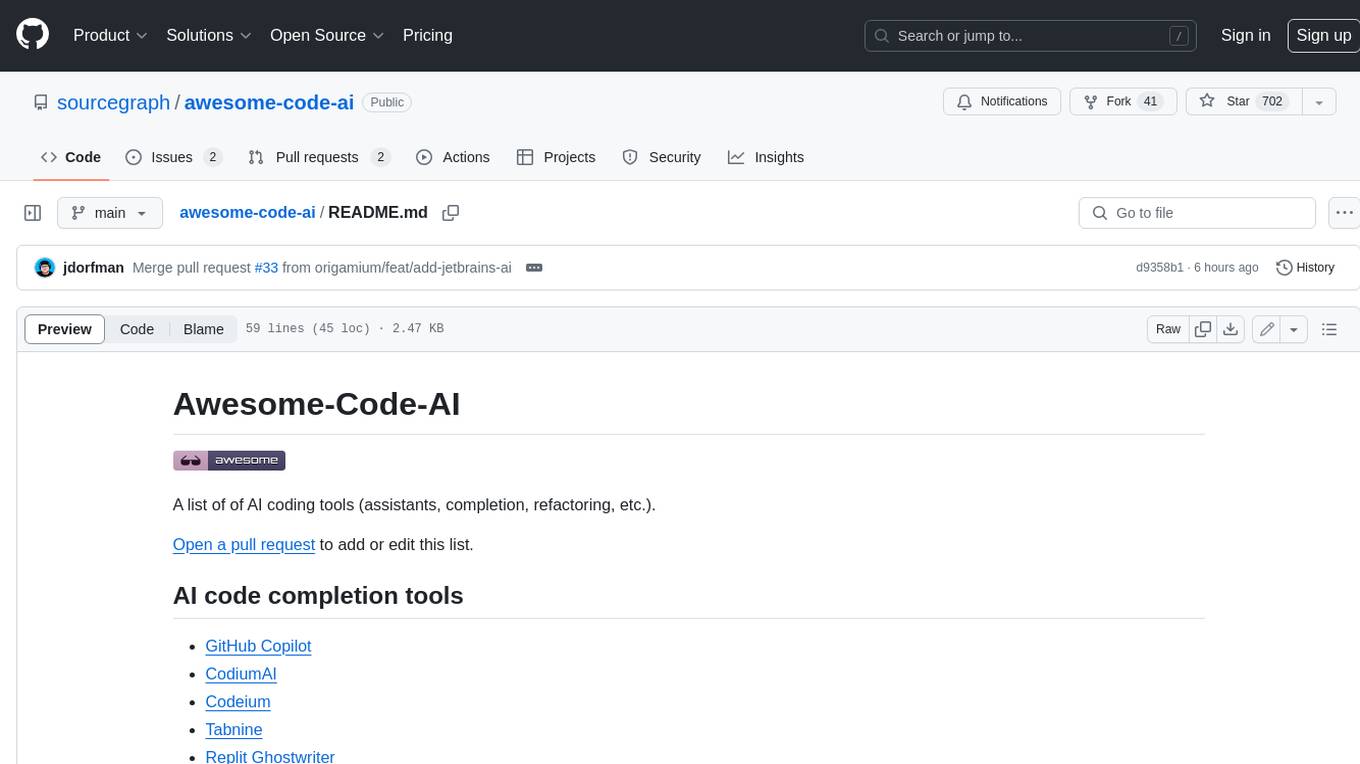
awesome-code-ai
A curated list of AI coding tools, including code completion, refactoring, and assistants. This list includes both open-source and commercial tools, as well as tools that are still in development. Some of the most popular AI coding tools include GitHub Copilot, CodiumAI, Codeium, Tabnine, and Replit Ghostwriter.
agentfactory
The AI Agent Factory is a spec-driven blueprint for building and monetizing digital FTEs. It empowers developers, entrepreneurs, and organizations to learn, build, and monetize intelligent AI agents, creating reliable digital FTEs that can be trusted, deployed, and scaled. The tool focuses on co-learning between humans and machines, emphasizing collaboration, clear specifications, and evolving together. It covers AI-assisted, AI-driven, and AI-native development approaches, guiding users through the AI development spectrum and organizational AI maturity levels. The core philosophy revolves around treating AI as a collaborative partner, using specification-first methodology, bilingual development, learning by doing, and ensuring transparency and reproducibility. The tool is suitable for beginners, professional developers, entrepreneurs, product leaders, educators, and tech leaders.
Generative-AI-for-beginners-java
Generative AI for Beginners - Java Edition is a comprehensive workshop that introduces users to the core concepts of generative AI, Java AI ecosystem, model context protocol, and practical applications. The course covers topics such as prompt engineering, embeddings & vector operations, retrieval-augmented generation, and responsible AI development. Users can explore real-world scenarios like chatbots, content generation, and ethical AI development. The workshop provides a hands-on learning experience with multi-language support and development environment setup guidance.
awesome-llm-apps
Awesome LLM Apps is a curated collection of applications that leverage RAG with OpenAI, Anthropic, Gemini, and open-source models. The repository contains projects such as Local Llama-3 with RAG for chatting with webpages locally, Chat with Gmail for interacting with Gmail using natural language, Chat with Substack Newsletter for conversing with Substack newsletters using GPT-4, Chat with PDF for intelligent conversation based on PDF documents, and Chat with YouTube Videos for engaging with YouTube video content through natural language. Users can clone the repository, navigate to specific project directories, install dependencies, and follow project-specific instructions to set up and run the apps. Contributions are encouraged, and new app ideas or improvements can be submitted via pull requests.
ai-flow
AI Flow is an open-source, user-friendly UI application that empowers you to seamlessly connect multiple AI models together, specifically leveraging the capabilities of multiples AI APIs such as OpenAI, StabilityAI and Replicate. In a nutshell, AI Flow provides a visual platform for crafting and managing AI-driven workflows, thereby facilitating diverse and dynamic AI interactions.
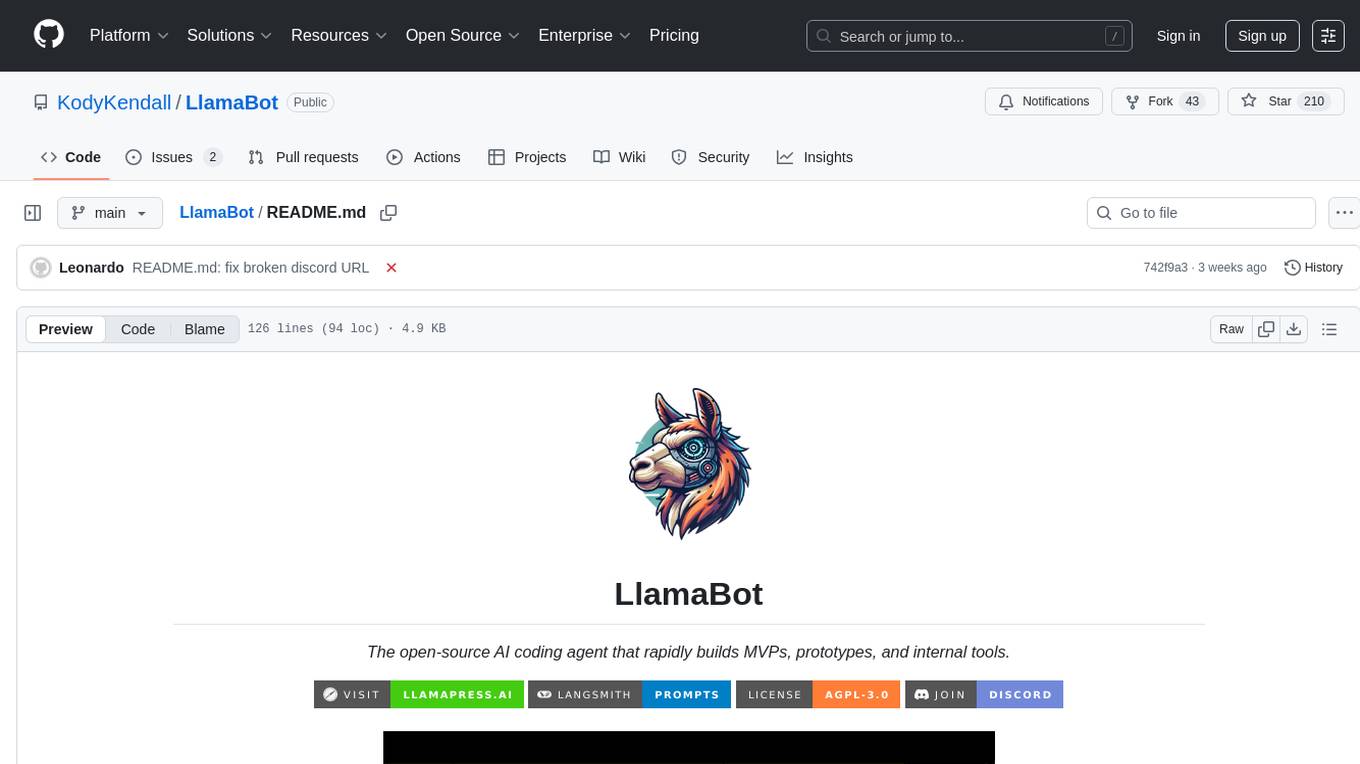
LlamaBot
LlamaBot is an open-source AI coding agent that rapidly builds MVPs, prototypes, and internal tools. It works for non-technical founders, product teams, and engineers by generating working prototypes, embedding AI directly into the app, and running real workflows. Unlike typical codegen tools, LlamaBot can embed directly in your app and run real workflows, making it ideal for collaborative software building where founders guide the vision, engineers stay in control, and AI fills the gap. LlamaBot is built for moving ideas fast, allowing users to prototype an AI MVP in a weekend, experiment with workflows, and collaborate with teammates to bridge the gap between non-technical founders and engineering teams.
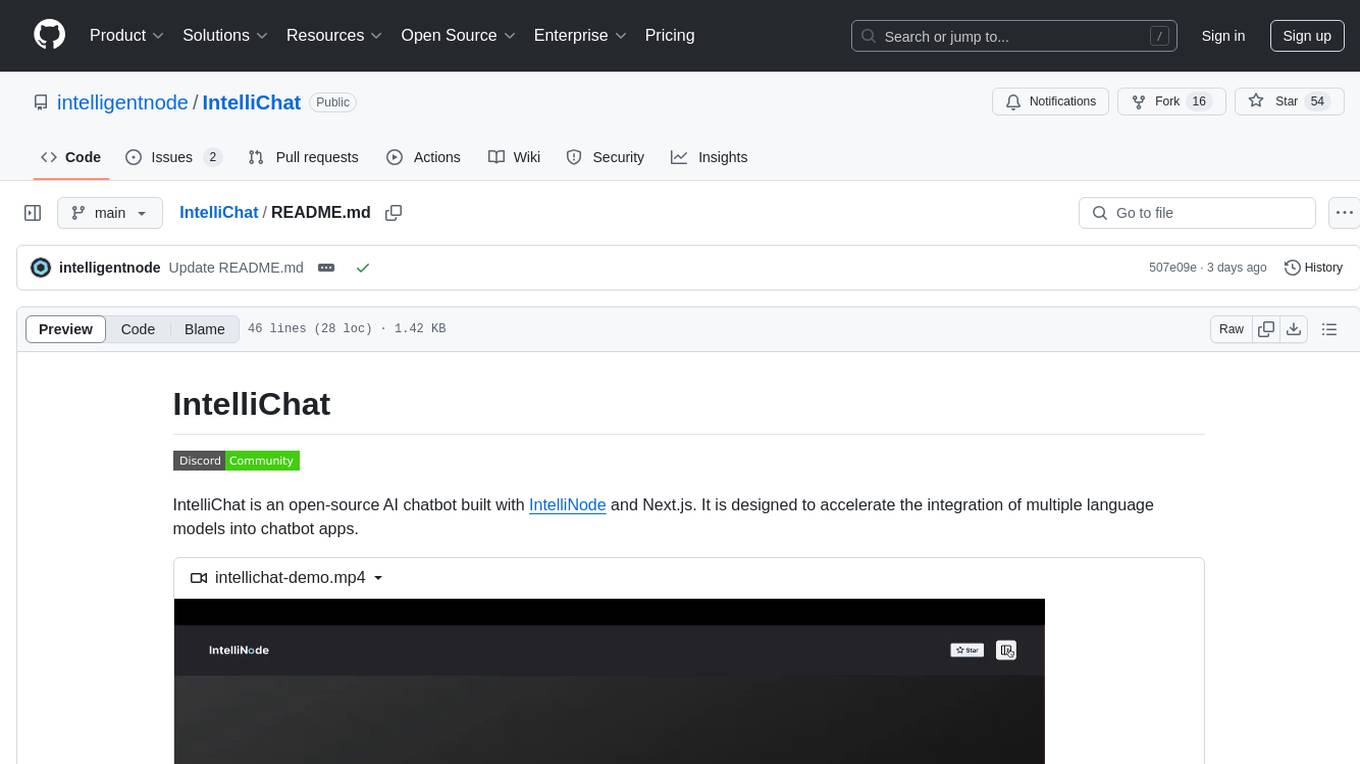
IntelliChat
IntelliChat is an open-source AI chatbot tool designed to accelerate the integration of multiple language models into chatbot apps. Users can select their preferred AI provider and model from the UI, manage API keys, and access data using Intellinode. The tool is built with Intellinode and Next.js, and supports various AI providers such as OpenAI ChatGPT, Google Gemini, Azure Openai, Cohere Coral, Replicate, Mistral AI, Anthropic, and vLLM. It offers a user-friendly interface for developers to easily incorporate AI capabilities into their chatbot applications.
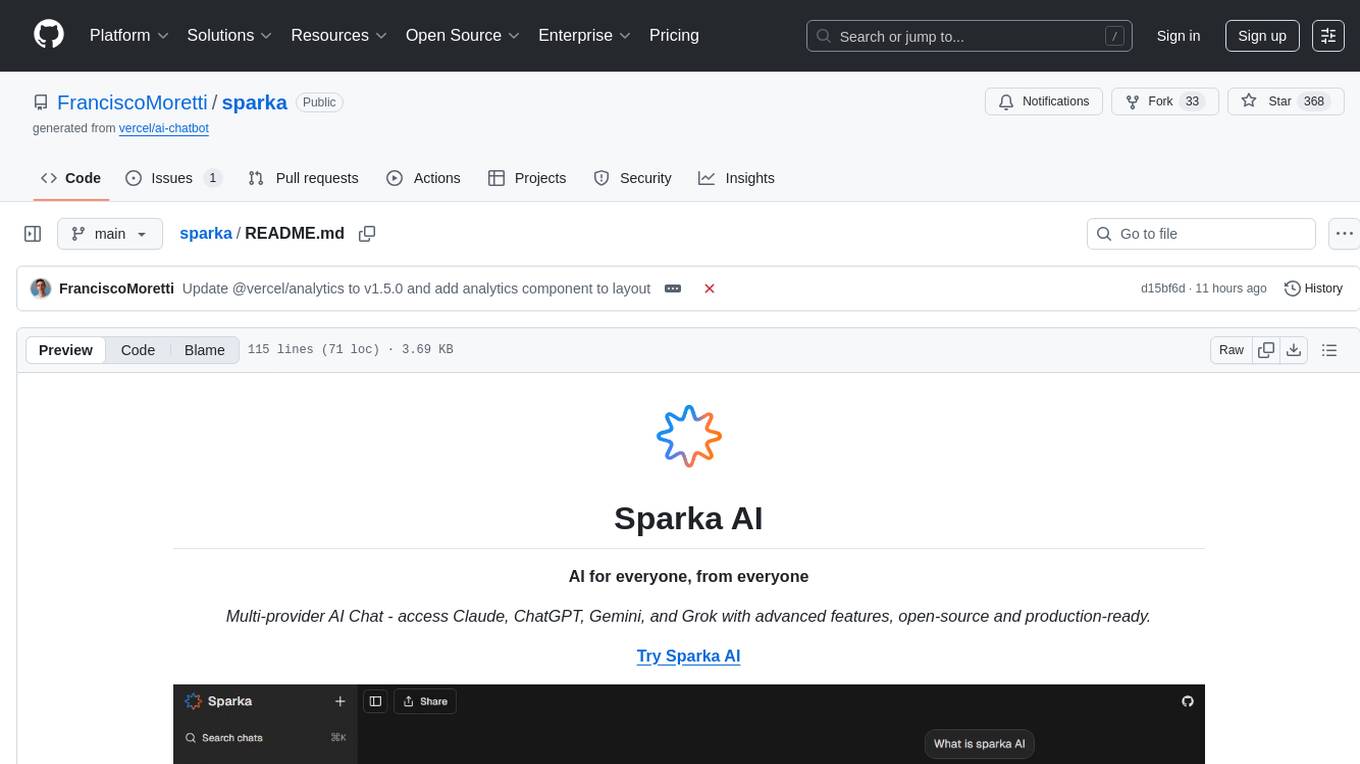
sparka
Sparka AI is a multi-provider AI chat tool that allows users to access various AI models like Claude, GPT-5, Gemini, and Grok through a single interface. It offers features such as document analysis, image generation, code execution, and research tools without the need for multiple subscriptions. The tool is open-source, production-ready, and provides capabilities for collaboration, secure authentication, attachment support, AI-powered image generation, syntax highlighting, resumable streams, chat branching, chat sharing, deep research, code execution, document creation, and web analytics. Built with modern technologies for scalability and performance, Sparka AI integrates with Vercel AI SDK, tRPC, Drizzle ORM, PostgreSQL, Redis, and AI SDK Gateway.
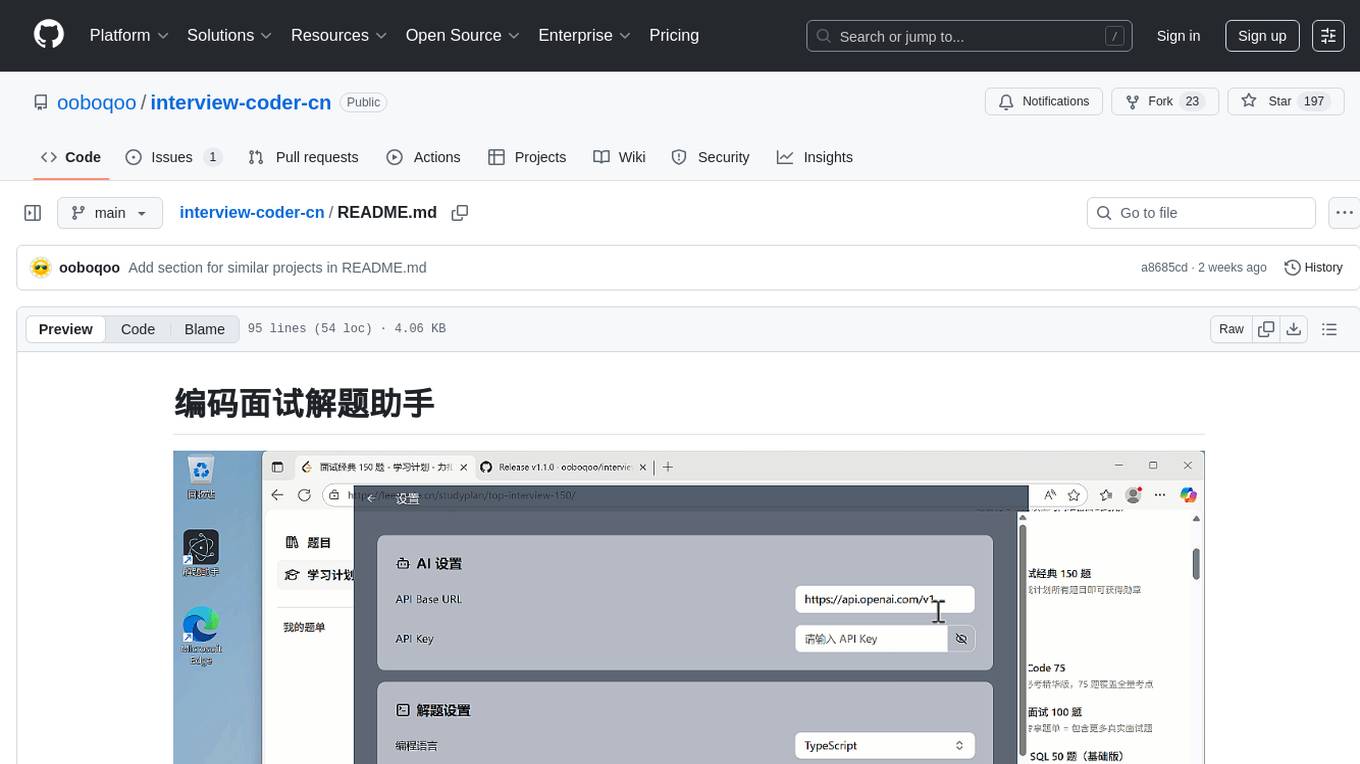
interview-coder-cn
This is a coding problem-solving assistant for Chinese users, tailored to the domestic AI ecosystem, simple and easy to use. It provides real-time problem-solving ideas and code analysis for coding interviews, avoiding detection during screen sharing. Users can also extend its functionality for other scenarios by customizing prompt words. The tool supports various programming languages and has stealth capabilities to hide its interface from interviewers even when screen sharing.
For similar tasks
aise
The repository 'aise' is an open-source electronic book focusing on AI-assisted software engineering. It covers the latest AI-assisted software engineering practices, implementation details from AI models to IDE plugins, and practical experiences in coding intelligent agents. The book aims to provide insights on leveraging AI to enhance software development efficiency and effectiveness across the entire software development lifecycle.
Noema-Declarative-AI
Noema is a framework that enables developers to control a language model and choose the path it will follow. It integrates Python with llm's generations, allowing users to use LLM as a thought interpreter rather than a source of truth. Noema is built on llama.cpp and guidance's shoulders. It applies the declarative programming paradigm to a language model, providing a way to represent functions, descriptions, and transformations. Users can create subjects, think about tasks, and generate content through generators, selectors, and code generators. Noema supports ReAct prompting, visualization, and semantic Python functionalities, offering a versatile tool for automating tasks and guiding language models.
ai-driven-dev-community
AI Driven Dev Community is a repository aimed at helping developers become more efficient by utilizing AI tools in their daily coding tasks. It provides a collection of tools, prompts, snippets, and agents for developers to integrate AI into their workflow. The repository is regularly updated with new resources and focuses on best practices for using AI in development work. Users can find tools like Espanso, ChatGPT, GitHub Copilot, and VSCode recommended for enhancing their coding experience. Additionally, the repository offers guidance on customizing AI for developers, installing AI toolbox for software engineers, and contributing to the community through easy steps.
For similar jobs
sweep
Sweep is an AI junior developer that turns bugs and feature requests into code changes. It automatically handles developer experience improvements like adding type hints and improving test coverage.
teams-ai
The Teams AI Library is a software development kit (SDK) that helps developers create bots that can interact with Teams and Microsoft 365 applications. It is built on top of the Bot Framework SDK and simplifies the process of developing bots that interact with Teams' artificial intelligence capabilities. The SDK is available for JavaScript/TypeScript, .NET, and Python.
ai-guide
This guide is dedicated to Large Language Models (LLMs) that you can run on your home computer. It assumes your PC is a lower-end, non-gaming setup.
classifai
Supercharge WordPress Content Workflows and Engagement with Artificial Intelligence. Tap into leading cloud-based services like OpenAI, Microsoft Azure AI, Google Gemini and IBM Watson to augment your WordPress-powered websites. Publish content faster while improving SEO performance and increasing audience engagement. ClassifAI integrates Artificial Intelligence and Machine Learning technologies to lighten your workload and eliminate tedious tasks, giving you more time to create original content that matters.
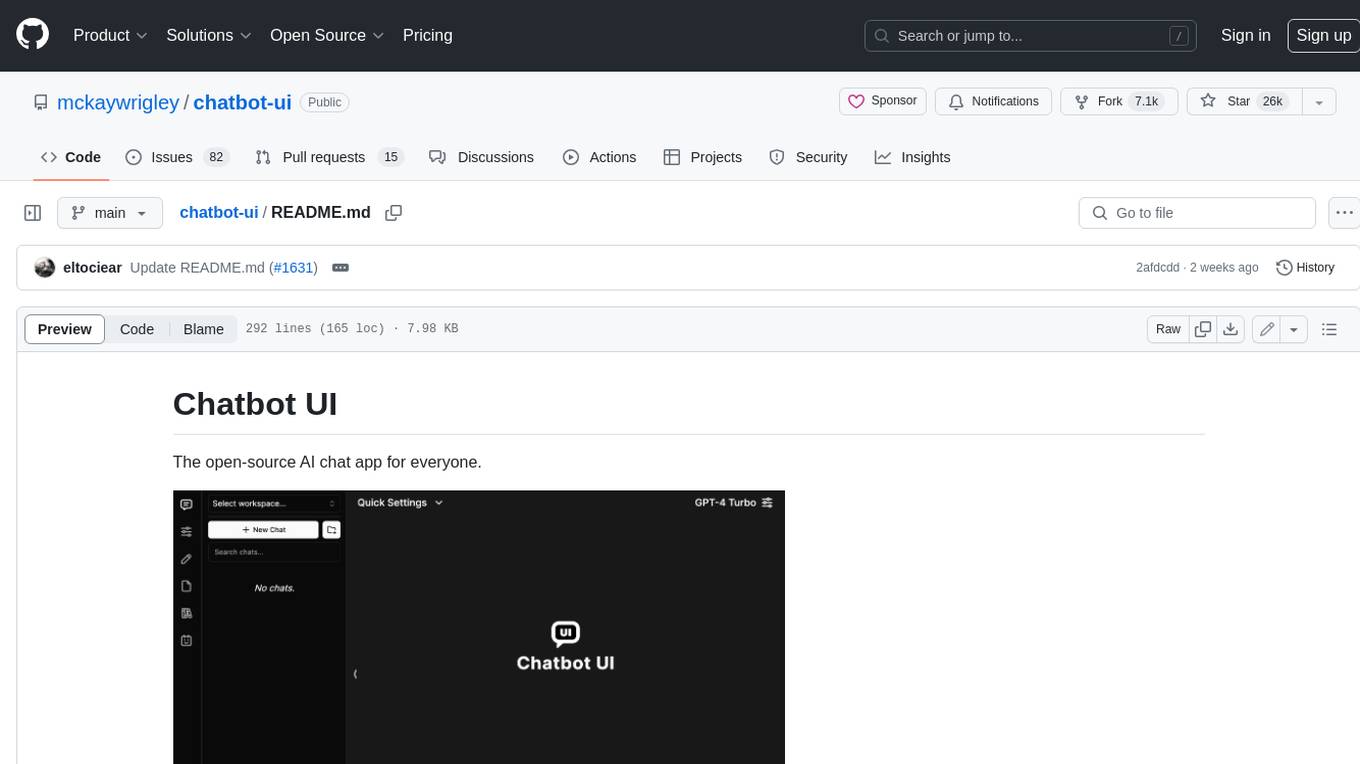
chatbot-ui
Chatbot UI is an open-source AI chat app that allows users to create and deploy their own AI chatbots. It is easy to use and can be customized to fit any need. Chatbot UI is perfect for businesses, developers, and anyone who wants to create a chatbot.
BricksLLM
BricksLLM is a cloud native AI gateway written in Go. Currently, it provides native support for OpenAI, Anthropic, Azure OpenAI and vLLM. BricksLLM aims to provide enterprise level infrastructure that can power any LLM production use cases. Here are some use cases for BricksLLM: * Set LLM usage limits for users on different pricing tiers * Track LLM usage on a per user and per organization basis * Block or redact requests containing PIIs * Improve LLM reliability with failovers, retries and caching * Distribute API keys with rate limits and cost limits for internal development/production use cases * Distribute API keys with rate limits and cost limits for students
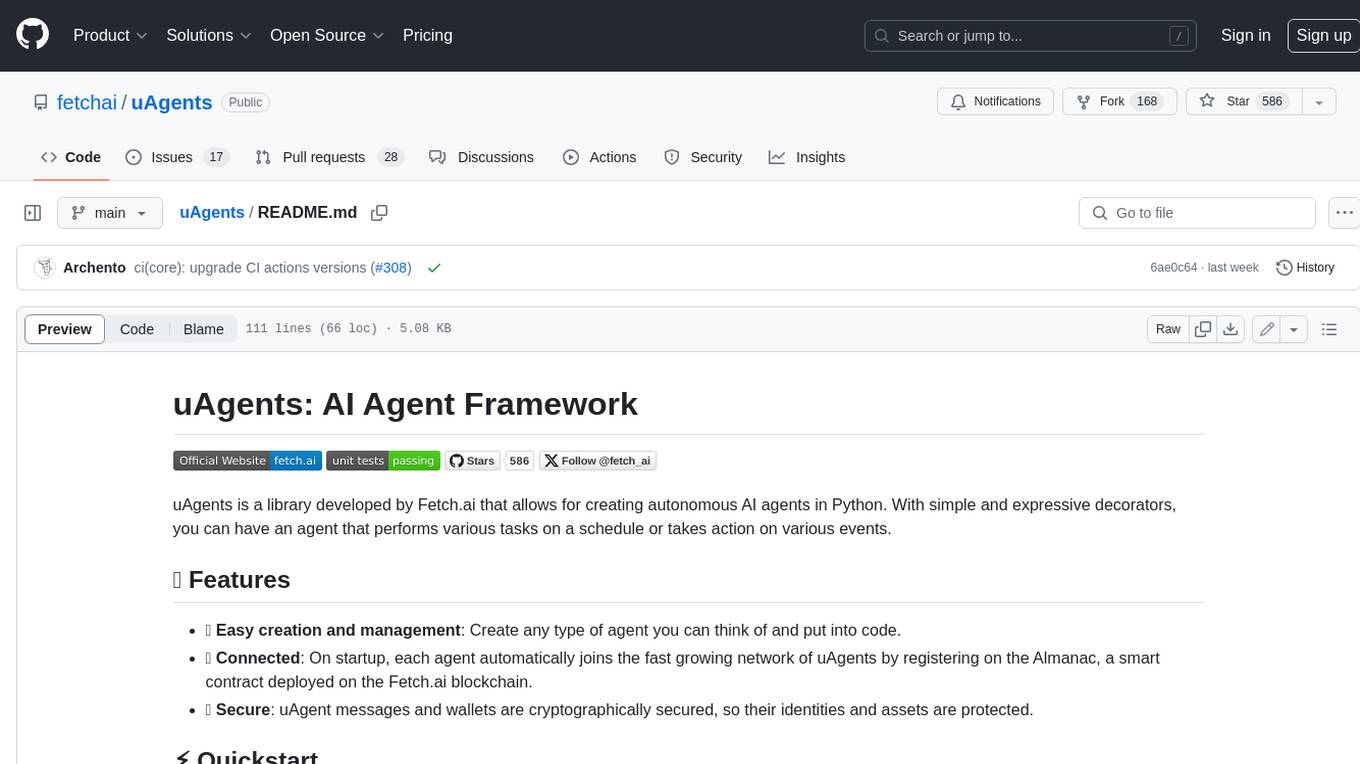
uAgents
uAgents is a Python library developed by Fetch.ai that allows for the creation of autonomous AI agents. These agents can perform various tasks on a schedule or take action on various events. uAgents are easy to create and manage, and they are connected to a fast-growing network of other uAgents. They are also secure, with cryptographically secured messages and wallets.
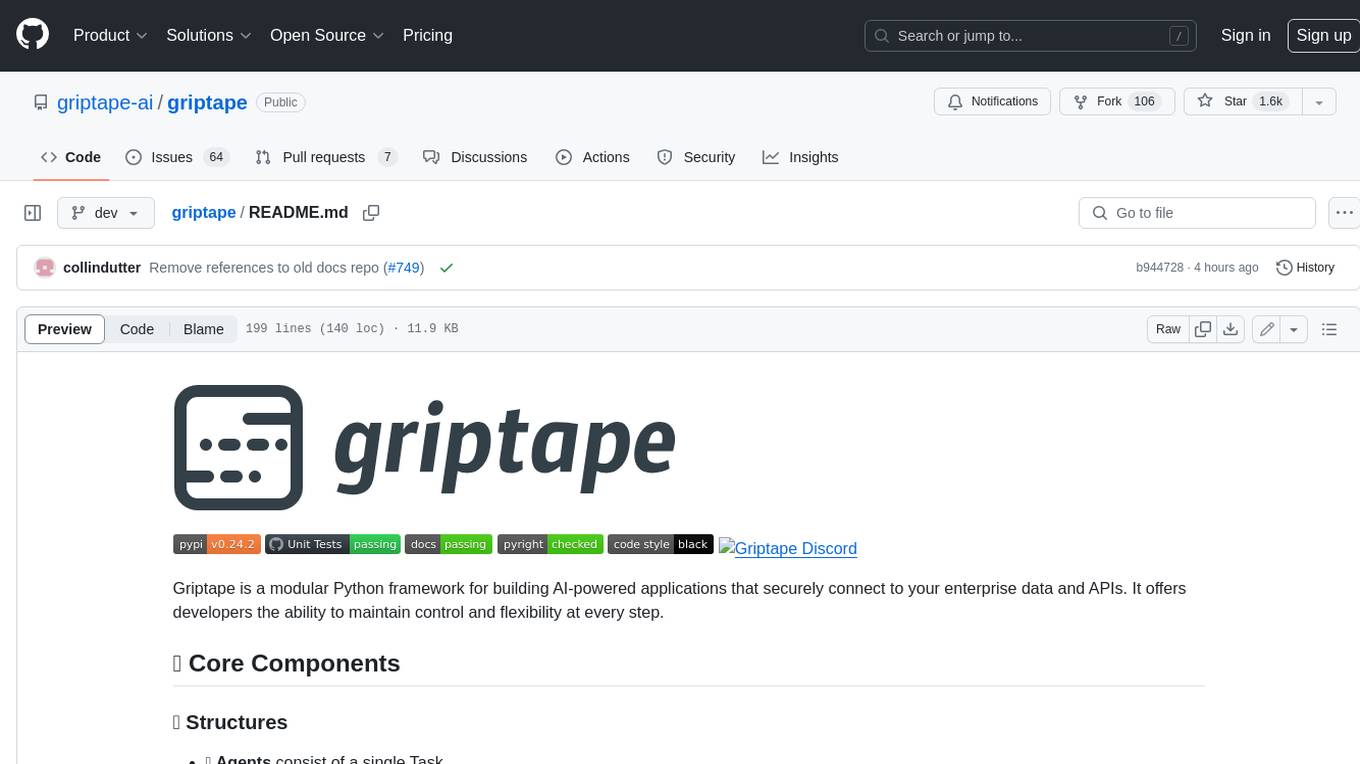
griptape
Griptape is a modular Python framework for building AI-powered applications that securely connect to your enterprise data and APIs. It offers developers the ability to maintain control and flexibility at every step. Griptape's core components include Structures (Agents, Pipelines, and Workflows), Tasks, Tools, Memory (Conversation Memory, Task Memory, and Meta Memory), Drivers (Prompt and Embedding Drivers, Vector Store Drivers, Image Generation Drivers, Image Query Drivers, SQL Drivers, Web Scraper Drivers, and Conversation Memory Drivers), Engines (Query Engines, Extraction Engines, Summary Engines, Image Generation Engines, and Image Query Engines), and additional components (Rulesets, Loaders, Artifacts, Chunkers, and Tokenizers). Griptape enables developers to create AI-powered applications with ease and efficiency.