


intlayer
Per-component Internationalisation solution for JS application. Type-Safe. Translate with AI. Edit Visually.
Stars: 585
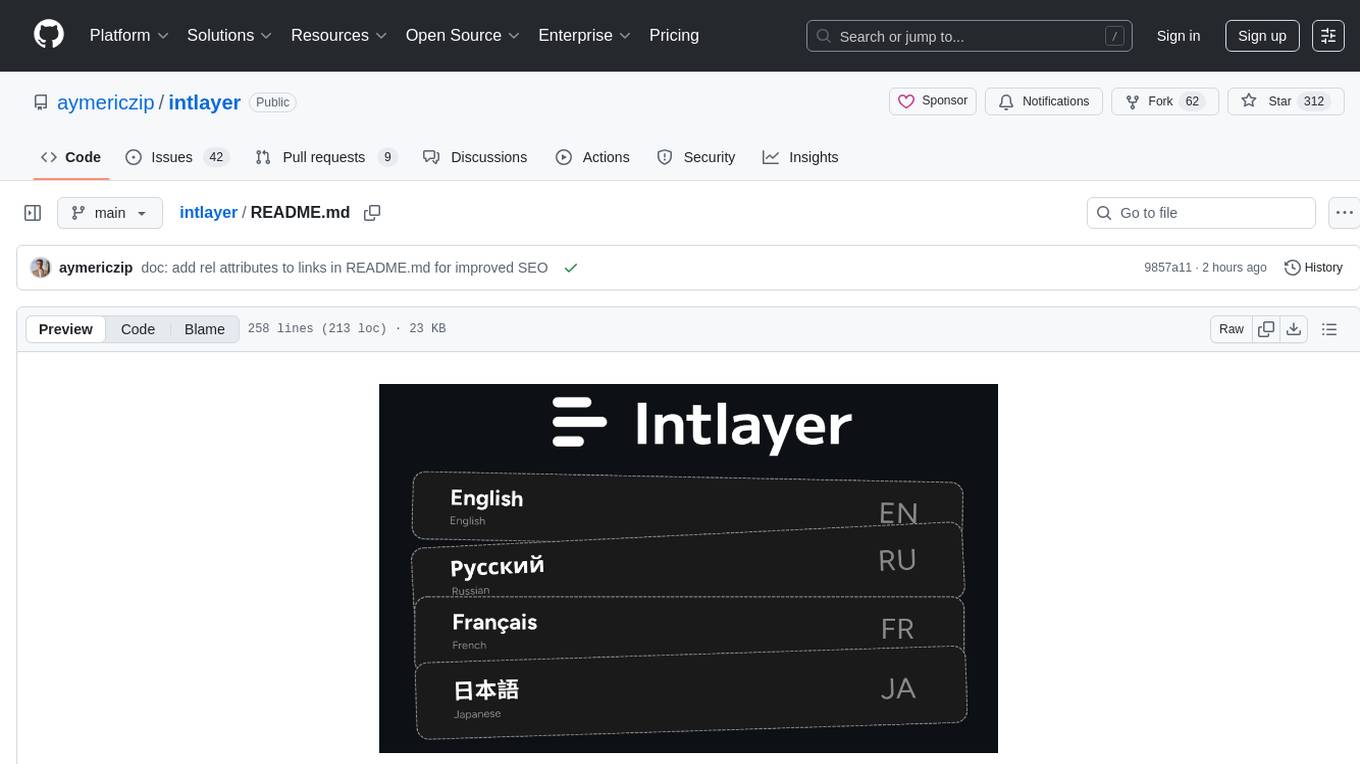
Intlayer is an open-source, flexible i18n toolkit with AI-powered translation and CMS capabilities. It is a modern i18n solution for web and mobile apps, framework-agnostic, and includes features like per-locale content files, TypeScript autocompletion, tree-shakable dictionaries, and CI/CD integration. With Intlayer, internationalization becomes faster, cleaner, and smarter, offering benefits such as cross-framework support, JavaScript-powered content management, simplified setup, enhanced routing, AI-powered translation, and more.
README:
Docs • Next.js • React + Vite • CMS • Discord



Most i18n libraries are either too complex, too rigid, or not built for modern frameworks.
Intlayer is a modern i18n solution for web and mobile apps.
It’s framework-agnostic, AI-powered, and includes a free CMS & visual editor.
With per-locale content files, TypeScript autocompletion, tree-shakable dictionaries, and CI/CD integration, Intlayer makes internationalization faster, cleaner, and smarter.
| Feature | Description |
|---|---|
 |
Cross-Frameworks Support Intlayer is compatible with all major frameworks and libraries, including Next.js, React, Vite, Vue.js, Nuxt, Preact, Express, and more. |
 |
JavaScript-Powered Content Management Harness the flexibility of JavaScript to define and manage your content efficiently. - Content declaration |
 |
Per-Locale Content Declaration File Speed up your development by declaring your content once, before auto generation. - Per-Locale Content Declaration File |
 |
Compiler The Intlayer Compiler extract automatically the content from the components and generate the dictionary files. - Compiler |
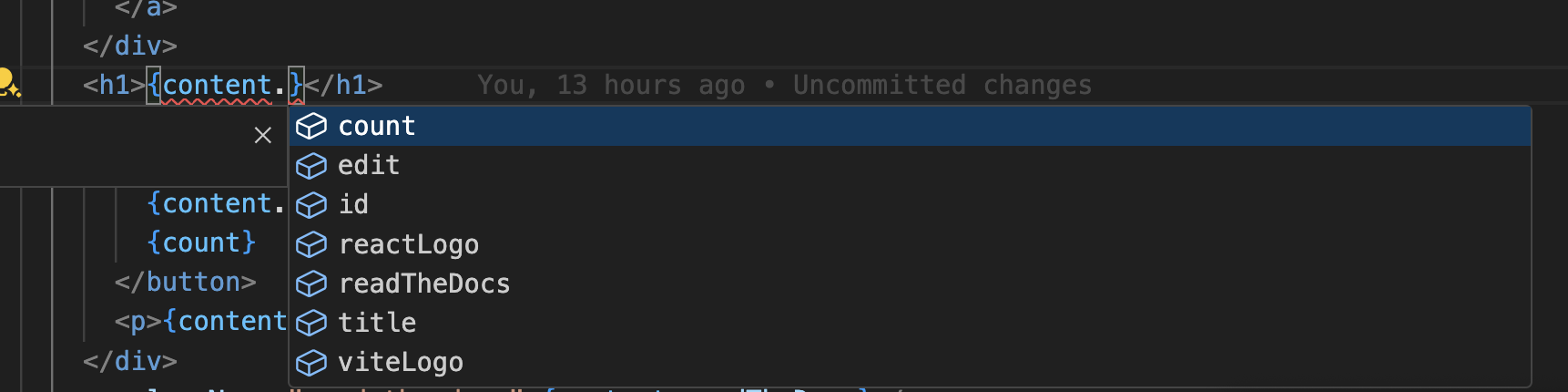 |
Type-Safe Environment Leverage TypeScript to ensure your content definitions and code are error-free, while also benefiting from IDE autocompletion. - TypeScript configuration |
 |
Simplified Setup Get up and running quickly with minimal configuration. Adjust settings for internationalization, routing, AI, build, and content handling with ease. - Explore Next.js integration |
 |
Simplified Content Retrieval No need to call your t function for each piece of content. Retrieve all your content directly using a single hook.- React integration |
 |
Consistent Server Component Implementation Perfectly suited for Next.js server components, use the same implementation for both client and server components, no need to pass your t function across each server component. - Server Components |
 |
Organized Codebase Keep your codebase more organized: 1 component = 1 dictionary in the same folder. Translations close to their respective components, enhance maintainability and clarity. - How Intlayer works |
 |
Enhanced Routing Full support of app routing, adapting seamlessly to complex application structures, for Next.js, React, Vite, Vue.js, etc. - Explore Next.js integration |
 |
Markdown Support Import and interpret, locale files and remote Markdown for multilingual content like privacy policies, documentation, etc. Interpret and make Markdown metadata accessible in your code. - Content files |
 |
Free Visual Editor & CMS A free visual editor and CMS are available for content writers, removing the need for a localization platform. Keep your content synchronized using Git, or externalize it totally or partially with the CMS. - Intlayer Editor - Intlayer CMS |
 |
Tree-shakable Content Tree-shakable content, reducing the size of the final bundle. Loads content per component, excluding any unused content from your bundle. Supports lazy loading to enhance app loading efficiency. - App build optimization |
 |
Static Rendering Doesn't block Static Rendering. - Next.js integration |
 |
AI-Powered Translation Transform your website into 231 languages with just one click using Intlayer's advanced AI-powered translation tools using your own AI provider / API key. - CI/CD integration - Intlayer CLI - Auto fill |
 |
MCP Server Integration Provides an MCP (Model Context Protocol) server for IDE automation, enabling seamless content management and i18n workflows directly within your development environment. - MCP Server |
 |
VSCode Extension Intlayer provides a VSCode extension to help you manage your content and translations, building your dictionaries, translating your content, and more. - VSCode Extension |
 |
Interoperability Allow interoperability with react-i18next, next-i18next, next-intl, react-intl, vue-i18n. - Intlayer and react-intl - Intlayer and next-intl - Intlayer and next-i18next - Intlayer and vue-i18n |
Start your journey with Intlayer today and experience a smoother, more powerful approach to internationalization.
npm install intlayer react-intlayer⚡ Quick Start (Next.js)
// intlayer.config.ts
import { Locales, type IntlayerConfig } from "intlayer";

const config: IntlayerConfig = {
  internationalization: {
    locales: [Locales.ENGLISH, Locales.FRENCH, Locales.SPANISH],
    defaultLocale: Locales.ENGLISH,
  },
};

export default config;
// app/home.content.ts
import { t, type Dictionary } from "intlayer";
const content = {
key: "home",
content: {
title: t({
en: "Home",
fr: "Accueil",
es: "Inicio",
}),
},
} satisfies Dictionary;
export default content;// app/page.tsx
import { useIntlayer } from "react-intlayer";
const HomePage = () => {
const { title } = useIntlayer("home");
return <h1>{title}</h1>;
};
Explore our comprehensive documentation to get started with Intlayer and learn how to integrate it into your projects.
📘 Get Started
⚙️ Concept
🌐 Environment
📰 Blog
English • 简体中文 • Русский • 日本語 • Français • 한국어 • Español • Deutsch • العربية • Italiano • English (UK) • Português • हिन्दी • Türkçe
Intlayer is built with and for the community and we’d love your input!
- Have a suggestion? Open an issue
- Found a bug or improvement? Submit a PR
- Need help or want to connect? Join our Discord
You can also follow us on :






For more detailed guidelines on contributing to this project, please refer to the CONTRIBUTING.md file. It contains essential information on our development process, commit message conventions, and release procedures. Your contributions are valuable to us, and we appreciate your efforts in making this project better!
Contribute on GitHub, GitLab, or Bitbucket.
If you like Intlayer, give us a ⭐ on GitHub. It helps others discover the project! See why GitHub Stars matter.
For Tasks:
Click tags to check more tools for each tasksFor Jobs:
Alternative AI tools for intlayer
Similar Open Source Tools
intlayer
Intlayer is an open-source, flexible i18n toolkit with AI-powered translation and CMS capabilities. It is a modern i18n solution for web and mobile apps, framework-agnostic, and includes features like per-locale content files, TypeScript autocompletion, tree-shakable dictionaries, and CI/CD integration. With Intlayer, internationalization becomes faster, cleaner, and smarter, offering benefits such as cross-framework support, JavaScript-powered content management, simplified setup, enhanced routing, AI-powered translation, and more.
L3AGI
L3AGI is an open-source tool that enables AI Assistants to collaborate together as effectively as human teams. It provides a robust set of functionalities that empower users to design, supervise, and execute both autonomous AI Assistants and Teams of Assistants. Key features include the ability to create and manage Teams of AI Assistants, design and oversee standalone AI Assistants, equip AI Assistants with the ability to retain and recall information, connect AI Assistants to an array of data sources for efficient information retrieval and processing, and employ curated sets of tools for specific tasks. L3AGI also offers a user-friendly interface, APIs for integration with other systems, and a vibrant community for support and collaboration.
GraphGen
GraphGen is a framework for synthetic data generation guided by knowledge graphs. It enhances supervised fine-tuning for large language models (LLMs) by generating synthetic data based on a fine-grained knowledge graph. The tool identifies knowledge gaps in LLMs, prioritizes generating QA pairs targeting high-value knowledge, incorporates multi-hop neighborhood sampling, and employs style-controlled generation to diversify QA data. Users can use LLaMA-Factory and xtuner for fine-tuning LLMs after data generation.
SuperAGI
SuperAGI is an open-source framework designed to build, manage, and run autonomous AI agents. It enables developers to create production-ready and scalable agents, extend agent capabilities with toolkits, and interact with agents through a graphical user interface. The framework allows users to connect to multiple Vector DBs, optimize token usage, store agent memory, utilize custom fine-tuned models, and automate tasks with predefined steps. SuperAGI also provides a marketplace for toolkits that enable agents to interact with external systems and third-party plugins.
smriti-ai
Smriti AI is an intelligent learning assistant that helps users organize, understand, and retain study materials. It transforms passive content into active learning tools by capturing resources, converting them into summaries and quizzes, providing spaced revision with reminders, tracking progress, and offering a multimodal interface. Suitable for students, self-learners, professionals, educators, and coaching institutes.
gemini-voyager
Gemini Voyager is a browser extension designed to enhance the user experience of Google Gemini by providing features such as folder organization, prompt vault, cloud sync, timeline navigation, chat export, Mermaid rendering, markdown fixing, and various power tools. It aims to help users keep their AI conversations organized, accessible, and productive. The extension is available on multiple browsers and supports manual installation and development builds. Users can also support the project by buying the developer a coffee or sponsoring via different platforms.
sfdx-hardis
sfdx-hardis is a toolbox for Salesforce DX, developed by Cloudity, that simplifies tasks which would otherwise take minutes or hours to complete manually. It enables users to define complete CI/CD pipelines for Salesforce projects, backup metadata, and monitor any Salesforce org. The tool offers a wide range of commands that can be accessed via the command line interface or through a Visual Studio Code extension. Additionally, sfdx-hardis provides Docker images for easy integration into CI workflows. The tool is designed to be natively compliant with various platforms and tools, making it a versatile solution for Salesforce developers.
monoscope
Monoscope is an open-source monitoring and observability platform that uses artificial intelligence to understand and monitor systems automatically. It allows users to ingest and explore logs, traces, and metrics in S3 buckets, query in natural language via LLMs, and create AI agents to detect anomalies. Key capabilities include universal data ingestion, AI-powered understanding, natural language interface, cost-effective storage, and zero configuration. Monoscope is designed to reduce alert fatigue, catch issues before they impact users, and provide visibility across complex systems.
mindnlp
MindNLP is an open-source NLP library based on MindSpore. It provides a platform for solving natural language processing tasks, containing many common approaches in NLP. It can help researchers and developers to construct and train models more conveniently and rapidly. Key features of MindNLP include: * Comprehensive data processing: Several classical NLP datasets are packaged into a friendly module for easy use, such as Multi30k, SQuAD, CoNLL, etc. * Friendly NLP model toolset: MindNLP provides various configurable components. It is friendly to customize models using MindNLP. * Easy-to-use engine: MindNLP simplified complicated training process in MindSpore. It supports Trainer and Evaluator interfaces to train and evaluate models easily. MindNLP supports a wide range of NLP tasks, including: * Language modeling * Machine translation * Question answering * Sentiment analysis * Sequence labeling * Summarization MindNLP also supports industry-leading Large Language Models (LLMs), including Llama, GLM, RWKV, etc. For support related to large language models, including pre-training, fine-tuning, and inference demo examples, you can find them in the "llm" directory. To install MindNLP, you can either install it from Pypi, download the daily build wheel, or install it from source. The installation instructions are provided in the documentation. MindNLP is released under the Apache 2.0 license. If you find this project useful in your research, please consider citing the following paper: @misc{mindnlp2022, title={{MindNLP}: a MindSpore NLP library}, author={MindNLP Contributors}, howpublished = {\url{https://github.com/mindlab-ai/mindnlp}}, year={2022} }
ASTRA.ai
ASTRA is an open-source platform designed for developing applications utilizing large language models. It merges the ideas of Backend-as-a-Service and LLM operations, allowing developers to swiftly create production-ready generative AI applications. Additionally, it empowers non-technical users to engage in defining and managing data operations for AI applications. With ASTRA, you can easily create real-time, multi-modal AI applications with low latency, even without any coding knowledge.
local-cocoa
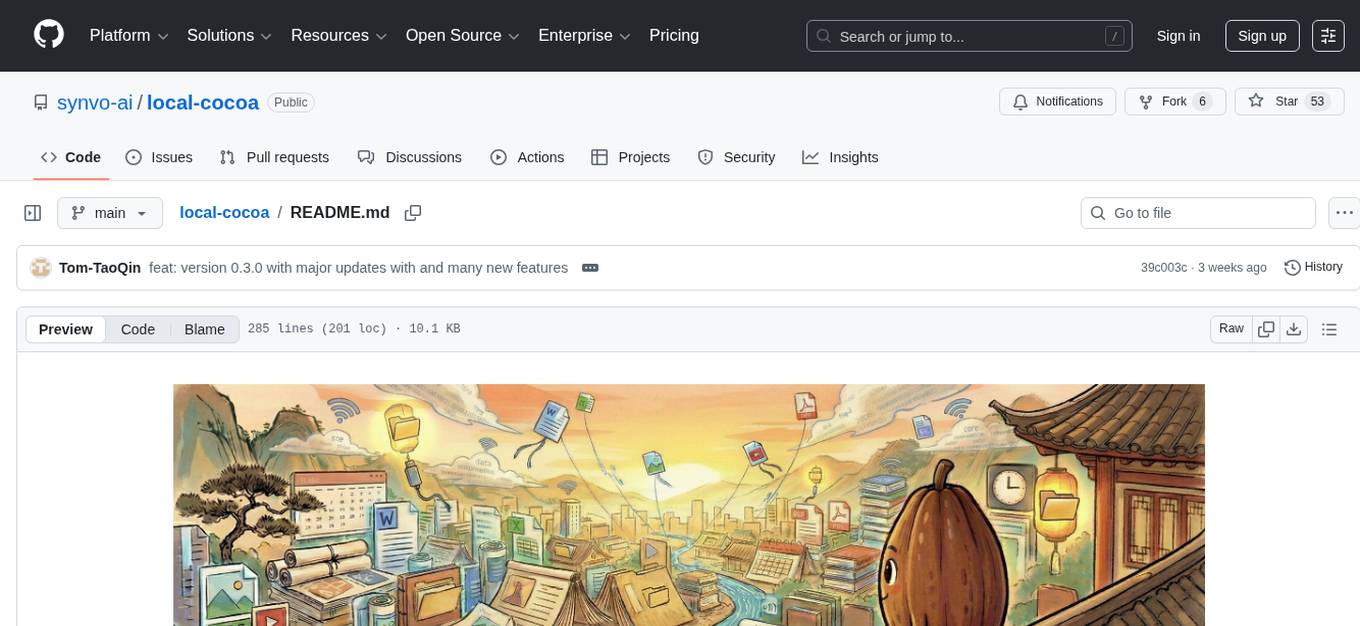
Local Cocoa is a privacy-focused tool that runs entirely on your device, turning files into memory to spark insights and power actions. It offers features like fully local privacy, multimodal memory, vector-powered retrieval, intelligent indexing, vision understanding, hardware acceleration, focused user experience, integrated notes, and auto-sync. The tool combines file ingestion, intelligent chunking, and local retrieval to build a private on-device knowledge system. The ultimate goal includes more connectors like Google Drive integration, voice mode for local speech-to-text interaction, and a plugin ecosystem for community tools and agents. Local Cocoa is built using Electron, React, TypeScript, FastAPI, llama.cpp, and Qdrant.
Lumina-Note
Lumina Note is a local-first AI note-taking app designed to help users write, connect, and evolve knowledge with AI capabilities while ensuring data ownership. It offers a knowledge-centered workflow with features like Markdown editor, WikiLinks, and graph view. The app includes AI workspace modes such as Chat, Agent, Deep Research, and Codex, along with support for multiple model providers. Users can benefit from bidirectional links, LaTeX support, graph visualization, PDF reader with annotations, real-time voice input, and plugin ecosystem for extended functionalities. Lumina Note is built on Tauri v2 framework with a tech stack including React 18, TypeScript, Tailwind CSS, and SQLite for vector storage.
gitmesh
GitMesh is an AI-powered Git collaboration network designed to address contributor dropout in open source projects. It offers real-time branch-level insights, intelligent contributor-task matching, and automated workflows. The platform transforms complex codebases into clear contribution journeys, fostering engagement through gamified rewards and integration with open source support programs. GitMesh's mascot, Meshy/Mesh Wolf, symbolizes agility, resilience, and teamwork, reflecting the platform's ethos of efficiency and power through collaboration.
AIPex
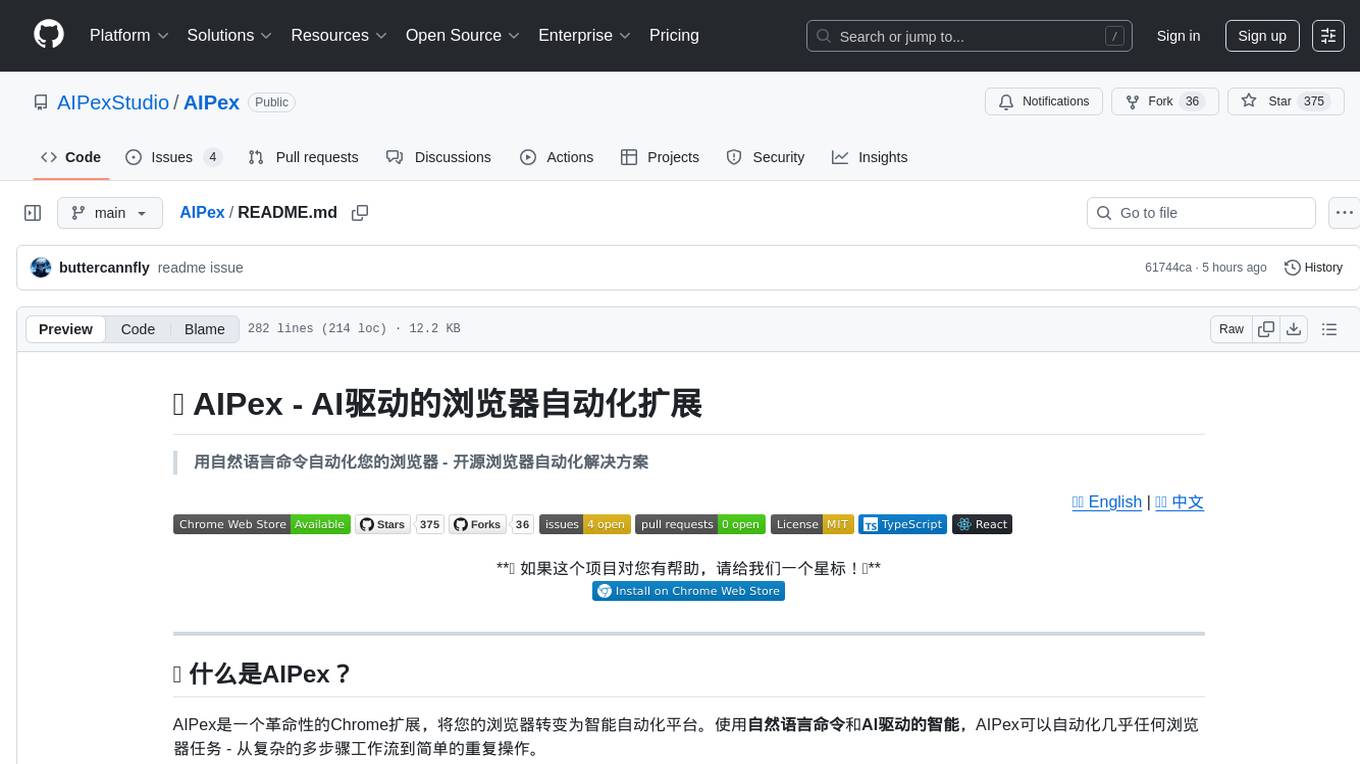
AIPex is a revolutionary Chrome extension that transforms your browser into an intelligent automation platform. Using natural language commands and AI-powered intelligence, AIPex can automate virtually any browser task - from complex multi-step workflows to simple repetitive actions. It offers features like natural language control, AI-powered intelligence, multi-step automation, universal compatibility, smart data extraction, precision actions, form automation, visual understanding, developer-friendly with extensive API, and lightning-fast execution of automation tasks.
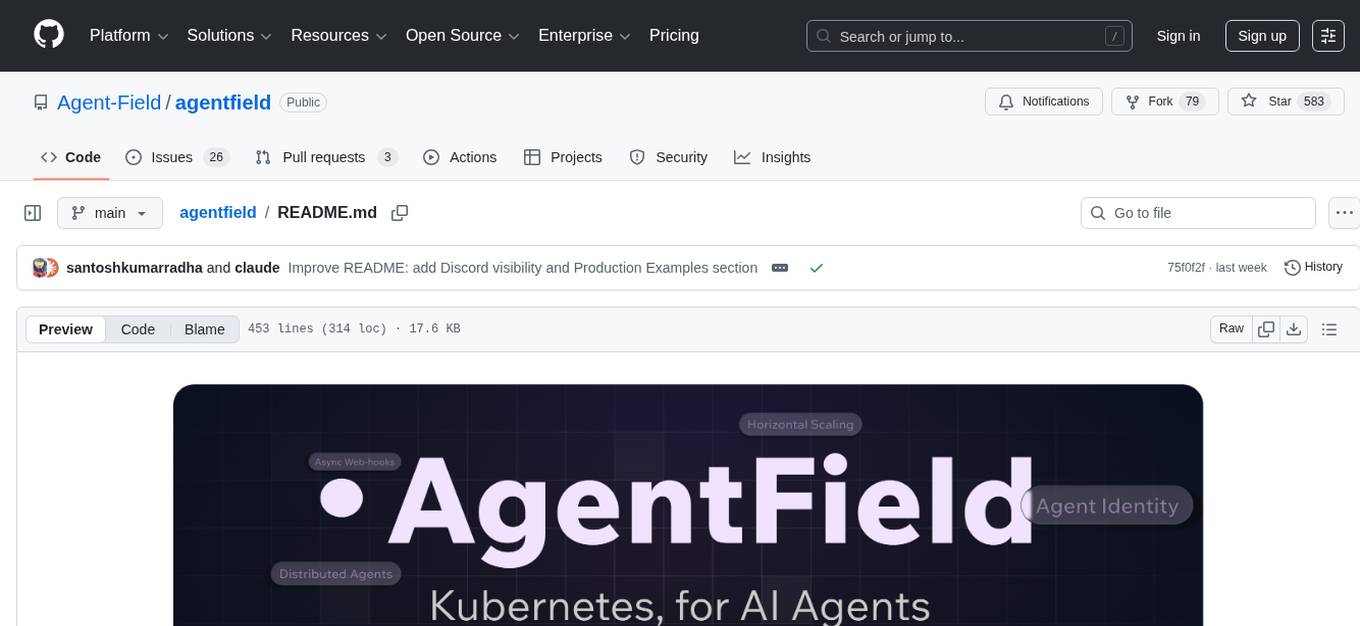
agentfield
AgentField is an open-source control plane designed for autonomous AI agents, providing infrastructure for agents to make decisions beyond chatbots. It offers features like scaling infrastructure, routing & discovery, async execution, durable state, observability, trust infrastructure with cryptographic identity, verifiable credentials, and policy enforcement. Users can write agents in Python, Go, TypeScript, or interact via REST APIs. The tool enables the creation of AI backends that reason autonomously within defined boundaries, offering predictability and flexibility. AgentField aims to bridge the gap between AI frameworks and production-ready infrastructure for AI agents.
OpenResearcher
OpenResearcher is a fully open agentic large language model designed for long-horizon deep research scenarios. It achieves an impressive 54.8% accuracy on BrowseComp-Plus, surpassing performance of GPT-4.1, Claude-Opus-4, Gemini-2.5-Pro, DeepSeek-R1, and Tongyi-DeepResearch. The tool is fully open-source, providing the training and evaluation recipe—including data, model, training methodology, and evaluation framework for everyone to progress deep research. It offers features like a fully open-source recipe, highly scalable and low-cost generation of deep research trajectories, and remarkable performance on deep research benchmarks.
For similar tasks
intlayer
Intlayer is an open-source, flexible i18n toolkit with AI-powered translation and CMS capabilities. It is a modern i18n solution for web and mobile apps, framework-agnostic, and includes features like per-locale content files, TypeScript autocompletion, tree-shakable dictionaries, and CI/CD integration. With Intlayer, internationalization becomes faster, cleaner, and smarter, offering benefits such as cross-framework support, JavaScript-powered content management, simplified setup, enhanced routing, AI-powered translation, and more.
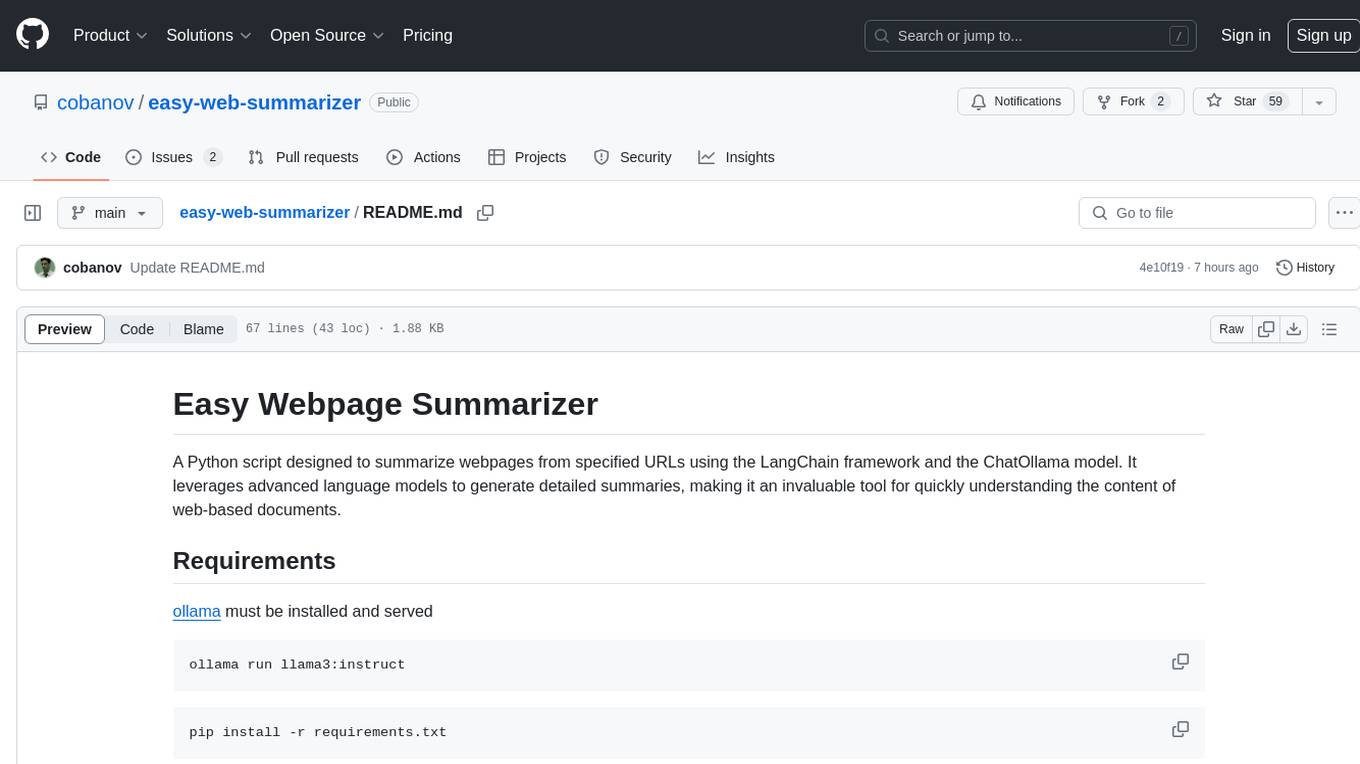
easy-web-summarizer
A Python script leveraging advanced language models to summarize webpages and youtube videos directly from URLs. It integrates with LangChain and ChatOllama for state-of-the-art summarization, providing detailed summaries for quick understanding of web-based documents. The tool offers a command-line interface for easy use and integration into workflows, with plans to add support for translating to different languages and streaming text output on gradio. It can also be used via a web UI using the gradio app. The script is dockerized for easy deployment and is open for contributions to enhance functionality and capabilities.
Flare
Flare is an open-source AI-powered decentralized social network client for Android/iOS/macOS, consolidating multiple social networks into one platform. It allows cross-posting content, ensures privacy, and plans to implement features like mixed timeline, AI-powered functions, and support for various platforms. The project is in active development and aims to provide a seamless social networking experience for users.
RSS-Translator
RSS-Translator is an open-source, simple, and self-deployable tool that allows users to translate titles or content, display in bilingual, subscribe to translated RSS/JSON feeds, support multiple translation engines, control update frequency of translation sources, view translation status, cache all translated content to reduce translation costs, view token/character usage for each source, provide AI content summarization, and retrieve full text. It currently supports various translation engines such as Free Translators, DeepL, OpenAI, ClaudeAI, Azure OpenAI, Google Gemini, Google Translate, Microsoft Translate API, Caiyun API, Moonshot AI, Together AI, OpenRouter AI, Groq, Doubao, OpenL, and Kagi API, with more being added continuously.
aimeos
Aimeos is a full-featured e-commerce platform that is ultra-fast, cloud-native, and API-first. It offers a wide range of features including JSON REST API, GraphQL API, multi-vendor support, various product types, subscriptions, multiple payment gateways, admin backend, modular structure, SEO optimization, multi-language support, AI-based text translation, mobile optimization, and high-quality source code. It is highly configurable and extensible, making it suitable for e-commerce SaaS solutions, marketplaces, and various cloud environments. Aimeos is designed for scalability, security, and performance, catering to a diverse range of e-commerce needs.
nodetool
NodeTool is a platform designed for AI enthusiasts, developers, and creators, providing a visual interface to access a variety of AI tools and models. It simplifies access to advanced AI technologies, offering resources for content creation, data analysis, automation, and more. With features like a visual editor, seamless integration with leading AI platforms, model manager, and API integration, NodeTool caters to both newcomers and experienced users in the AI field.

collections
Collections is a multilingual headless CMS with AI-powered editing and SEO optimization. It supports automatic translation into +30 languages, making websites more accessible and reaching a broader audience. The platform offers features like multilingual content, Notion-like editor, and post versioning. It is built on a tech stack consisting of PostgreSQL for the database, Node.js and Express for the backend, and React with MUI for the frontend. Collections aims to simplify the process of creating and managing multilingual websites with the help of AI technology.
lingo.dev
Replexica AI automates software localization end-to-end, producing authentic translations instantly across 60+ languages. Teams can do localization 100x faster with state-of-the-art quality, reaching more paying customers worldwide. The tool offers a GitHub Action for CI/CD automation and supports various formats like JSON, YAML, CSV, and Markdown. With lightning-fast AI localization, auto-updates, native quality translations, developer-friendly CLI, and scalability for startups and enterprise teams, Replexica is a top choice for efficient and effective software localization.
For similar jobs
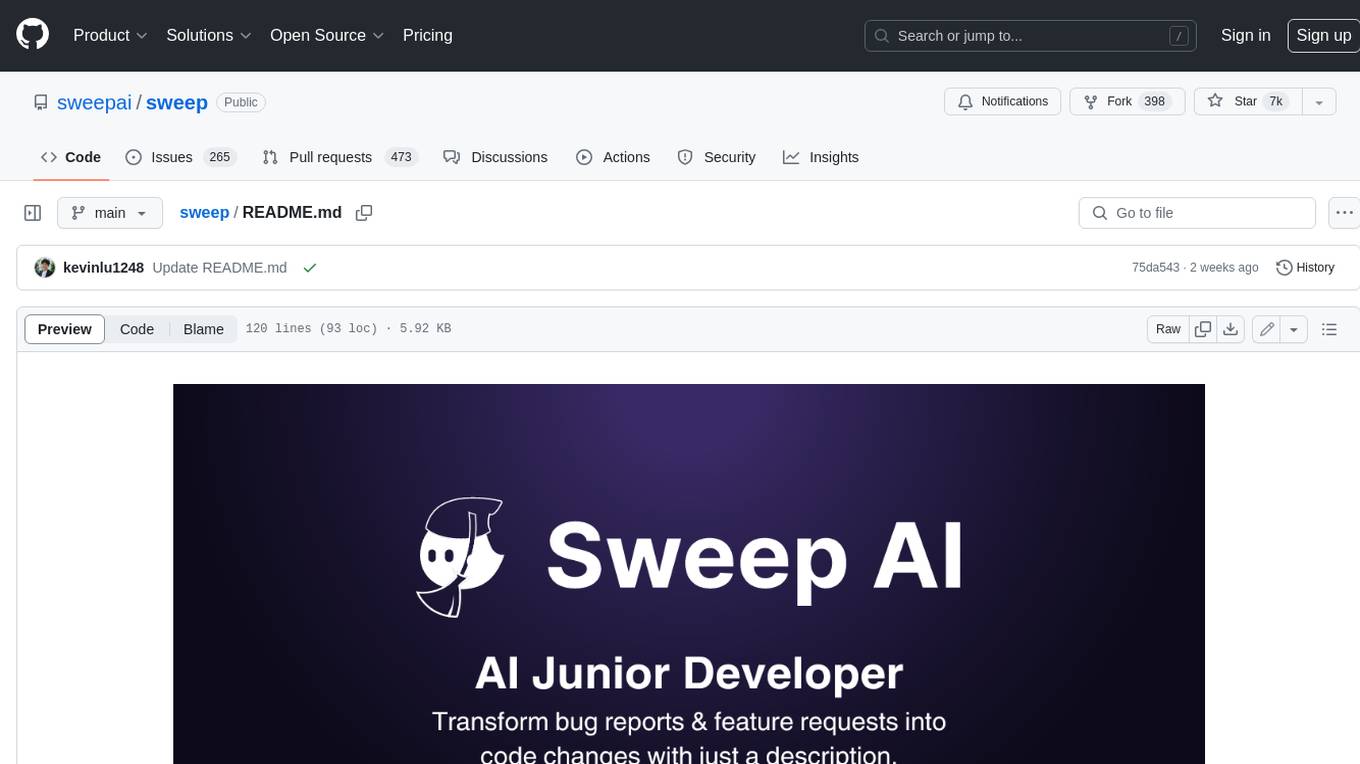
sweep
Sweep is an AI junior developer that turns bugs and feature requests into code changes. It automatically handles developer experience improvements like adding type hints and improving test coverage.
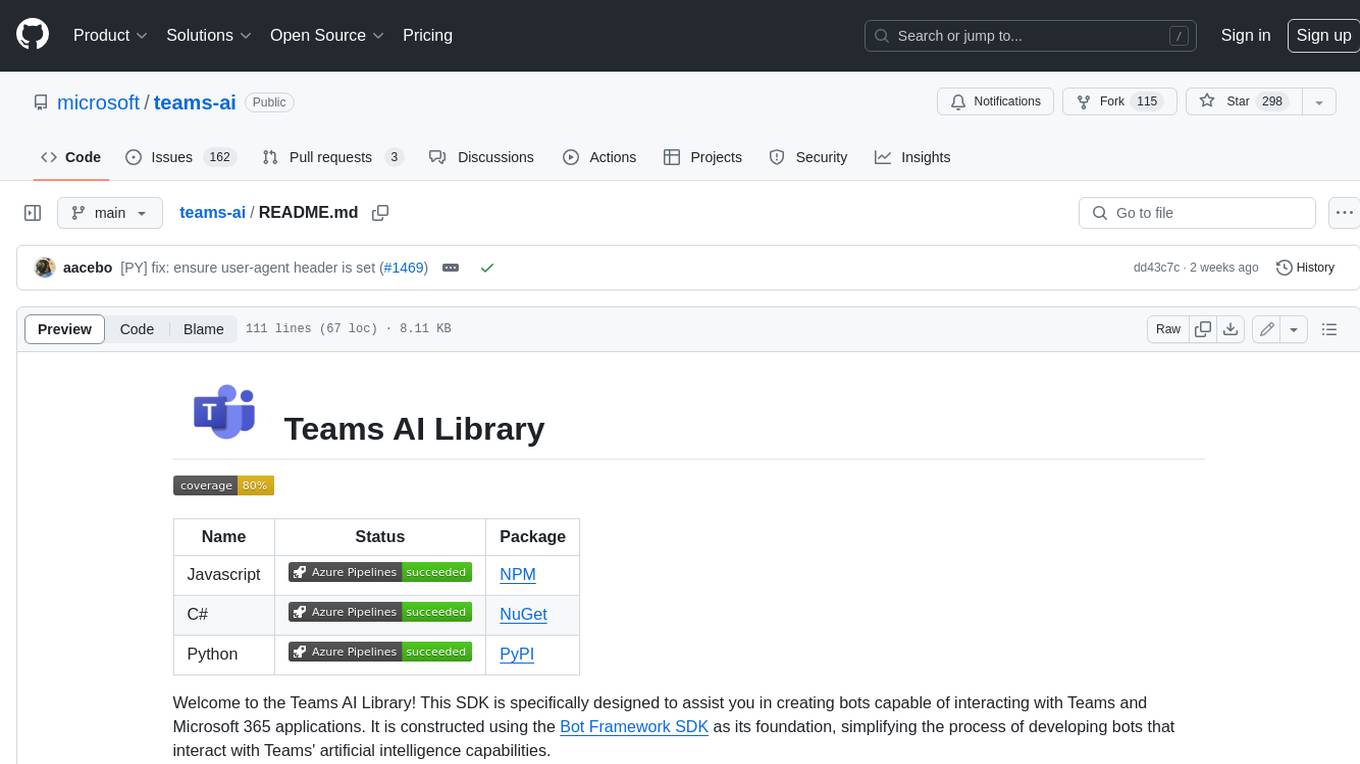
teams-ai
The Teams AI Library is a software development kit (SDK) that helps developers create bots that can interact with Teams and Microsoft 365 applications. It is built on top of the Bot Framework SDK and simplifies the process of developing bots that interact with Teams' artificial intelligence capabilities. The SDK is available for JavaScript/TypeScript, .NET, and Python.
ai-guide
This guide is dedicated to Large Language Models (LLMs) that you can run on your home computer. It assumes your PC is a lower-end, non-gaming setup.
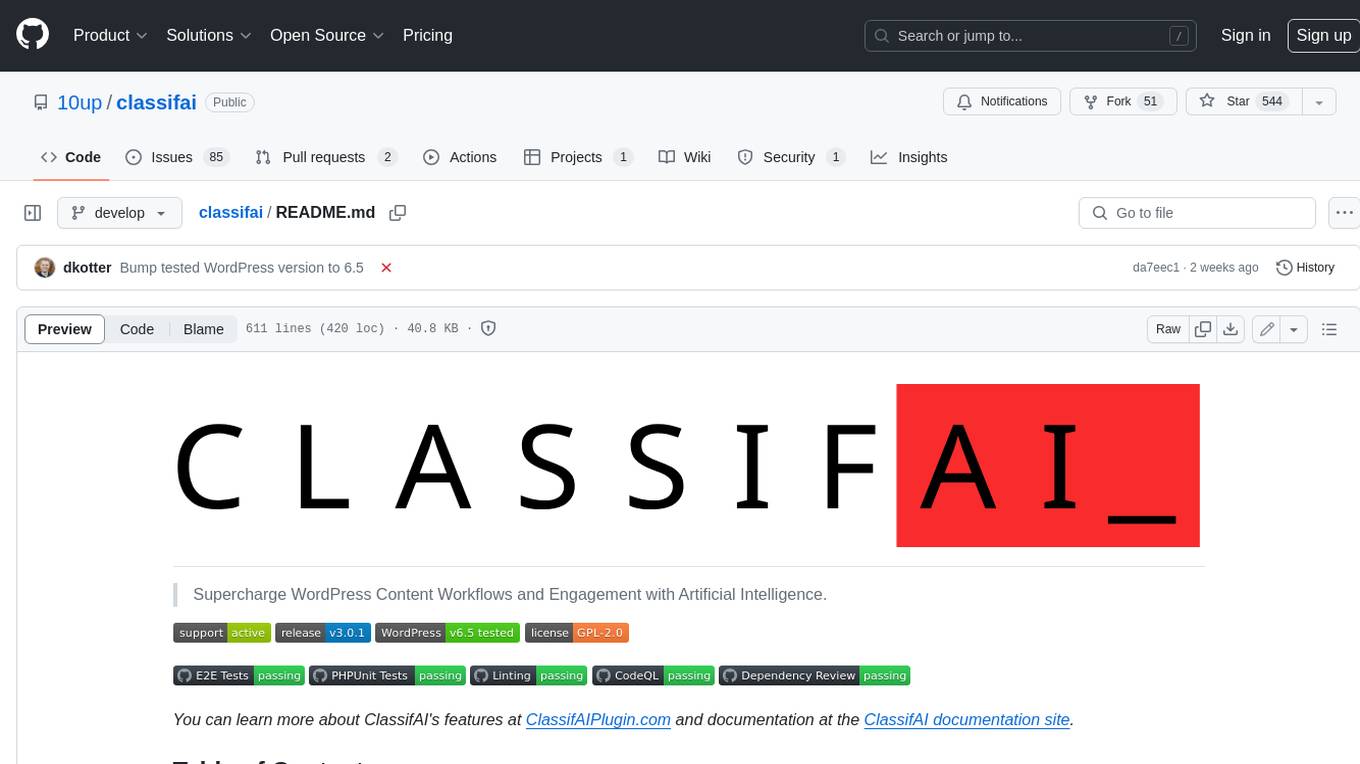
classifai
Supercharge WordPress Content Workflows and Engagement with Artificial Intelligence. Tap into leading cloud-based services like OpenAI, Microsoft Azure AI, Google Gemini and IBM Watson to augment your WordPress-powered websites. Publish content faster while improving SEO performance and increasing audience engagement. ClassifAI integrates Artificial Intelligence and Machine Learning technologies to lighten your workload and eliminate tedious tasks, giving you more time to create original content that matters.
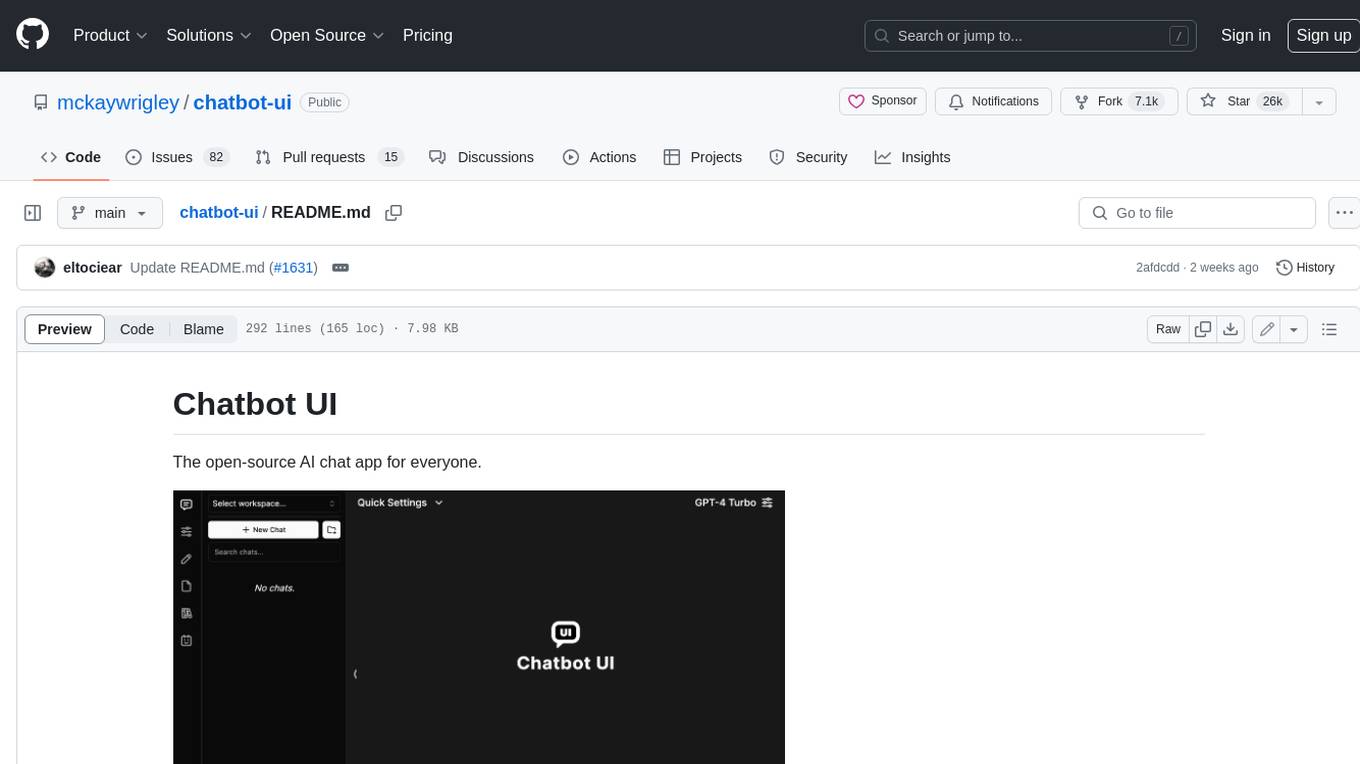
chatbot-ui
Chatbot UI is an open-source AI chat app that allows users to create and deploy their own AI chatbots. It is easy to use and can be customized to fit any need. Chatbot UI is perfect for businesses, developers, and anyone who wants to create a chatbot.
BricksLLM
BricksLLM is a cloud native AI gateway written in Go. Currently, it provides native support for OpenAI, Anthropic, Azure OpenAI and vLLM. BricksLLM aims to provide enterprise level infrastructure that can power any LLM production use cases. Here are some use cases for BricksLLM: * Set LLM usage limits for users on different pricing tiers * Track LLM usage on a per user and per organization basis * Block or redact requests containing PIIs * Improve LLM reliability with failovers, retries and caching * Distribute API keys with rate limits and cost limits for internal development/production use cases * Distribute API keys with rate limits and cost limits for students
uAgents
uAgents is a Python library developed by Fetch.ai that allows for the creation of autonomous AI agents. These agents can perform various tasks on a schedule or take action on various events. uAgents are easy to create and manage, and they are connected to a fast-growing network of other uAgents. They are also secure, with cryptographically secured messages and wallets.
griptape
Griptape is a modular Python framework for building AI-powered applications that securely connect to your enterprise data and APIs. It offers developers the ability to maintain control and flexibility at every step. Griptape's core components include Structures (Agents, Pipelines, and Workflows), Tasks, Tools, Memory (Conversation Memory, Task Memory, and Meta Memory), Drivers (Prompt and Embedding Drivers, Vector Store Drivers, Image Generation Drivers, Image Query Drivers, SQL Drivers, Web Scraper Drivers, and Conversation Memory Drivers), Engines (Query Engines, Extraction Engines, Summary Engines, Image Generation Engines, and Image Query Engines), and additional components (Rulesets, Loaders, Artifacts, Chunkers, and Tokenizers). Griptape enables developers to create AI-powered applications with ease and efficiency.