


awesome-ruby-ai
A list of awesome AI projects built in Ruby! 🤖❤️
Stars: 155
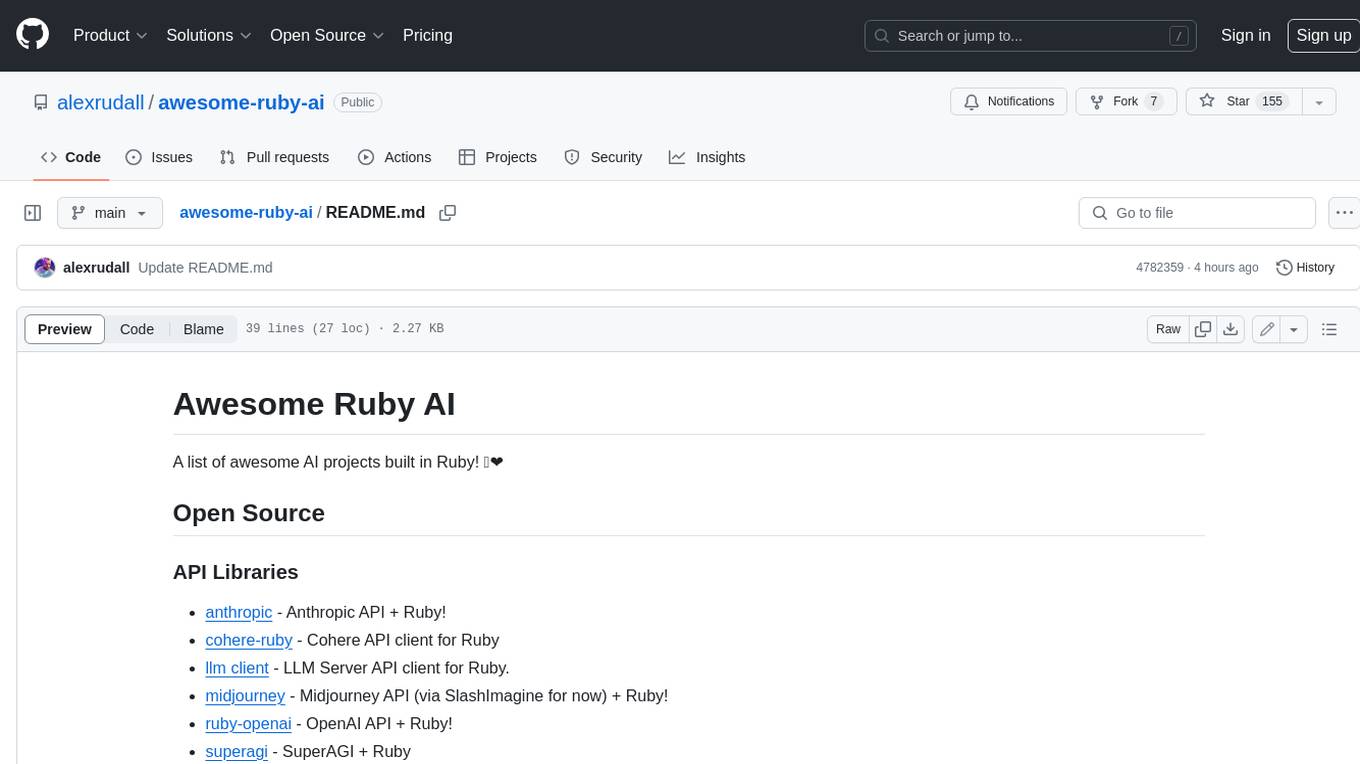
Awesome Ruby AI is a curated list of awesome AI projects built in Ruby. It includes open source API libraries, vector database clients, bot platforms, composability frameworks, and i18n tools. These tools can be used for a variety of tasks, such as natural language processing, computer vision, and machine learning.
README:
A list of awesome AI projects built in Ruby! 🤖❤️
- anthropic - Anthropic API + Ruby!
- cohere-ruby - Cohere API client for Ruby
- llm client - LLM Server API client for Ruby.
- midjourney - Midjourney API (via SlashImagine for now) + Ruby!
- ruby-openai - OpenAI API + Ruby!
- superagi - SuperAGI + Ruby
- chroma - API wrapper for the Chroma vector search database.
- pinecone - API wrapper for Pinecone vector search database.
- milvus — API wrapper for the Milvus vector search database.
- qdrant-ruby — API wrapper for the Qdrant vector search database.
- weaviate-ruby — API wrapper for the Weaviate vector search database.
- LLM Server - Host open-source Large Language Model with llama.cpp, an have a private AI server. This server is a Rack API.
- MagmaChat - Host your own custom and extensible ChatGPT-based bot platform, written in Rails 7. Tons of cool features.
- Monadic Chat - A highly configurable Ruby framework for creating intelligent chatbots.
- Aoororachain - An opinionated library to build AI application with Ruby and open-source LLMs.
- Boxcars - Build applications with composability and LLMs.
- LangChain.rb - Build ML/AI-supercharged applications with Ruby's LangChain
- raix-rails - Ruby AI eXtensions for Rails
- instant18n - Fast and magical localization of your app with GPT backend.
For Tasks:
Click tags to check more tools for each tasksFor Jobs:
Alternative AI tools for awesome-ruby-ai
Similar Open Source Tools
awesome-ruby-ai
Awesome Ruby AI is a curated list of awesome AI projects built in Ruby. It includes open source API libraries, vector database clients, bot platforms, composability frameworks, and i18n tools. These tools can be used for a variety of tasks, such as natural language processing, computer vision, and machine learning.
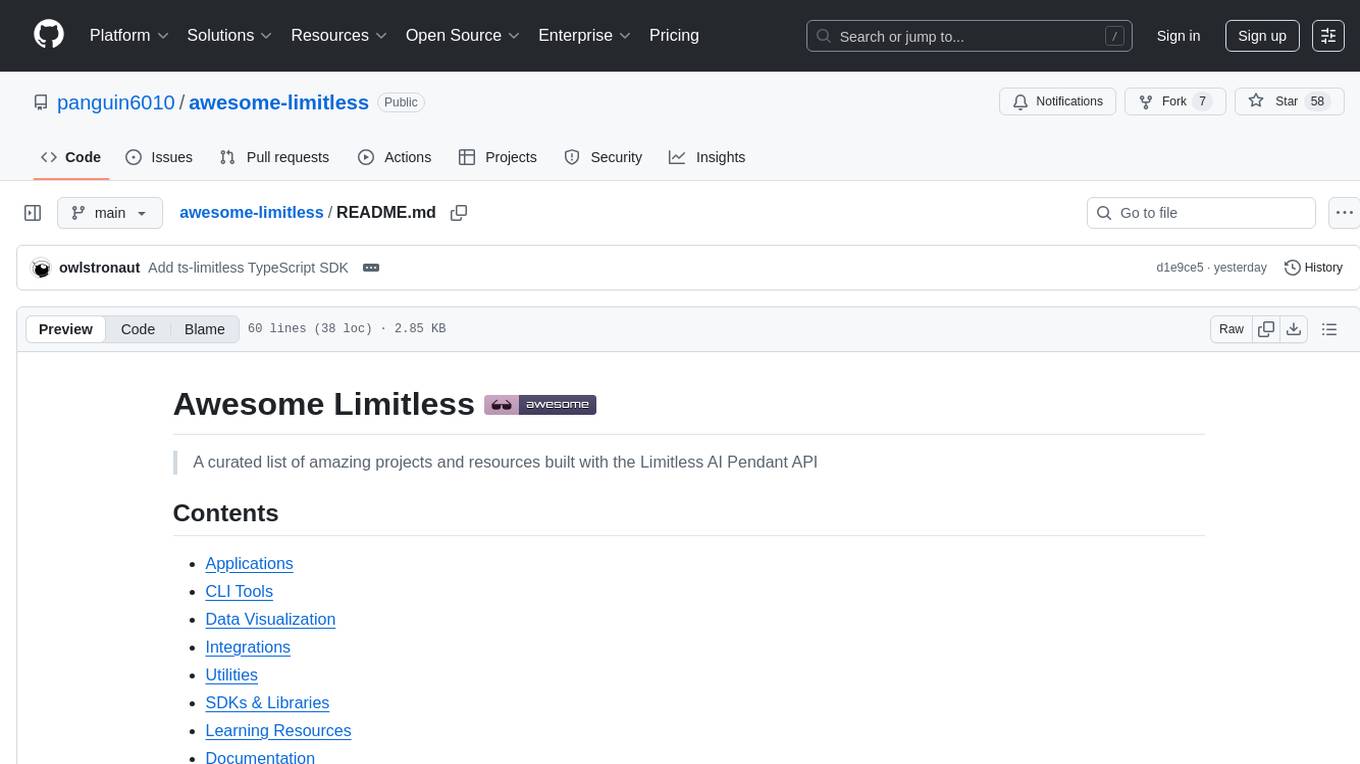
awesome-limitless
A curated list of amazing projects and resources built with the Limitless AI Pendant API. It includes applications, CLI tools, data visualization tools, integrations with plugins and extensions, utilities for server conversion and data ingestion, SDKs and libraries for Go and TypeScript, learning resources, and official API documentation.
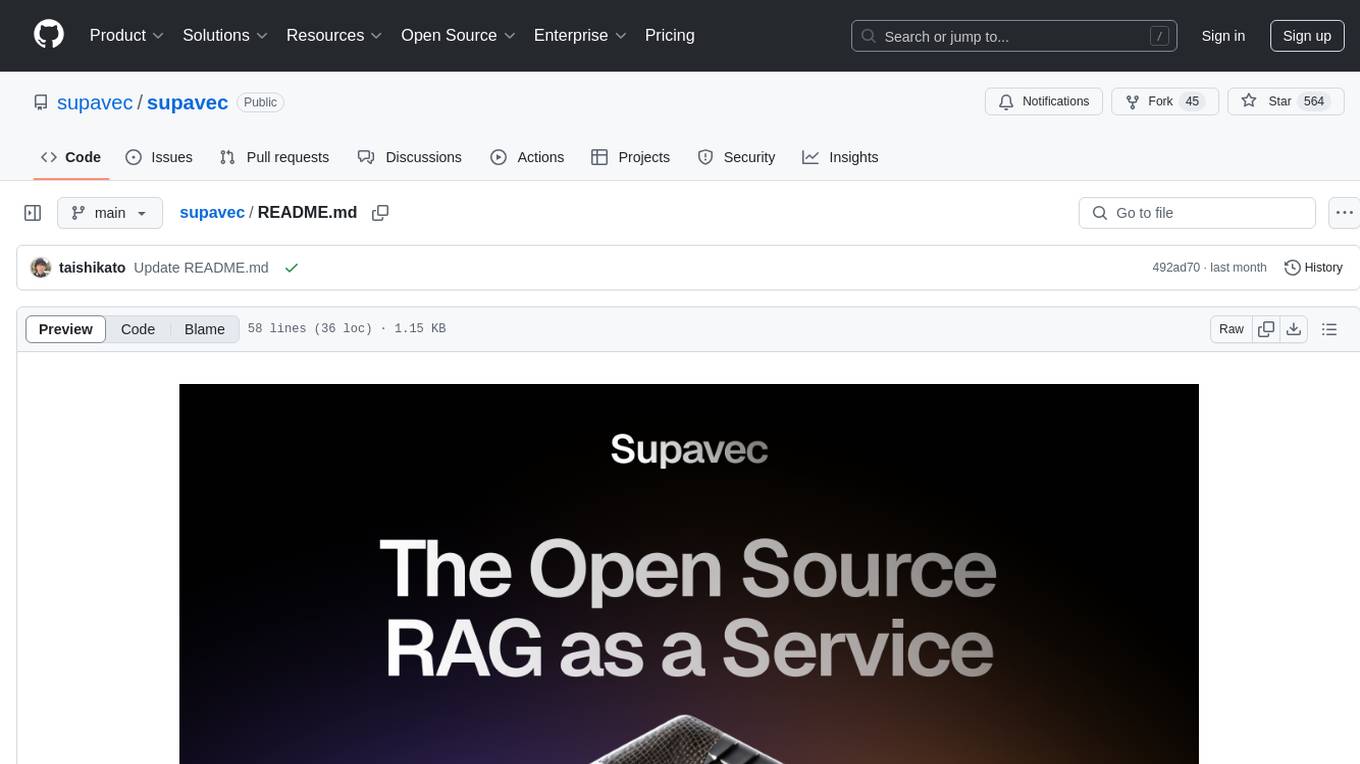
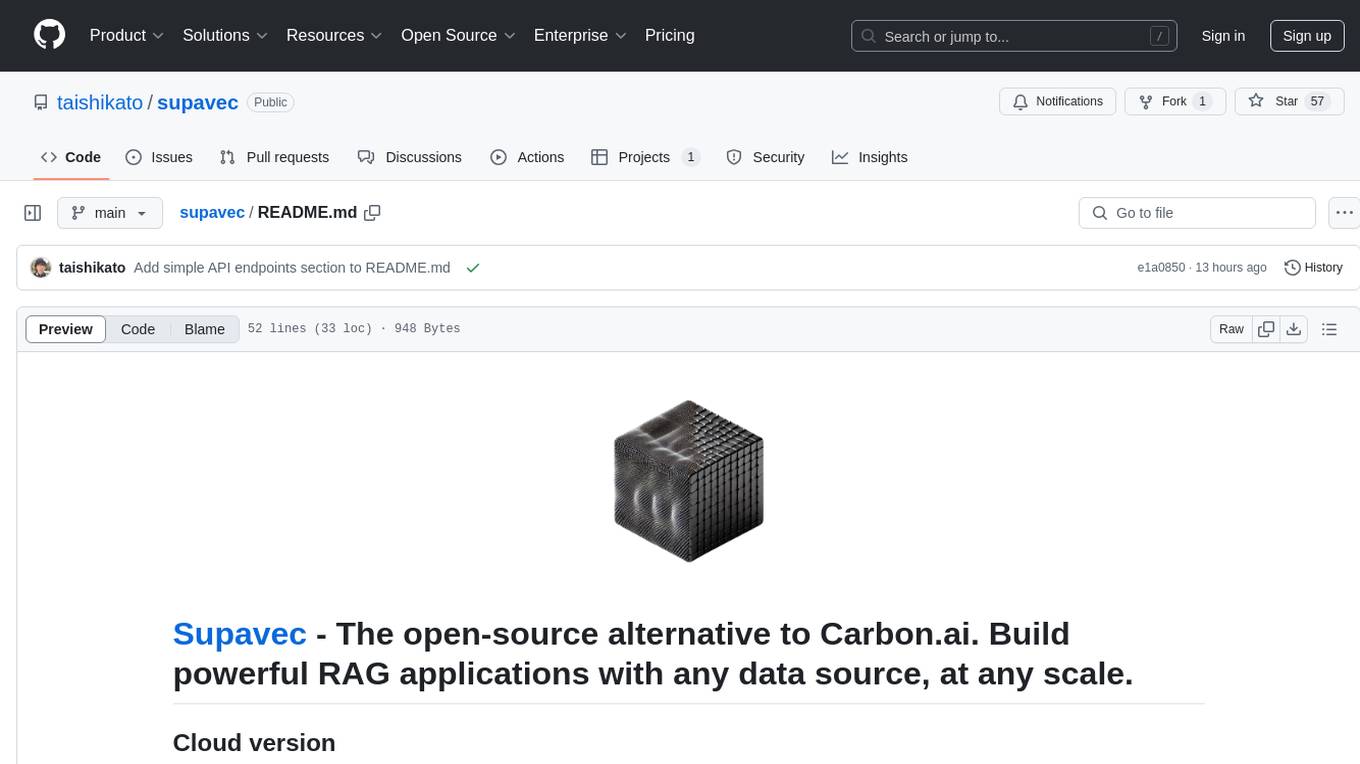
supavec
Supavec is an open-source tool that serves as an alternative to Carbon.ai. It allows users to build powerful RAG applications using any data source and at any scale. The tool is designed to provide a cloud version for easy access and offers simple API endpoints for seamless integration. Built with Next.js, Supabase, Tailwind CSS, Bun, and Upstash, Supavec empowers users to create innovative applications with ease. The API documentation is available for reference, making it convenient for developers to get started and explore the tool's capabilities.
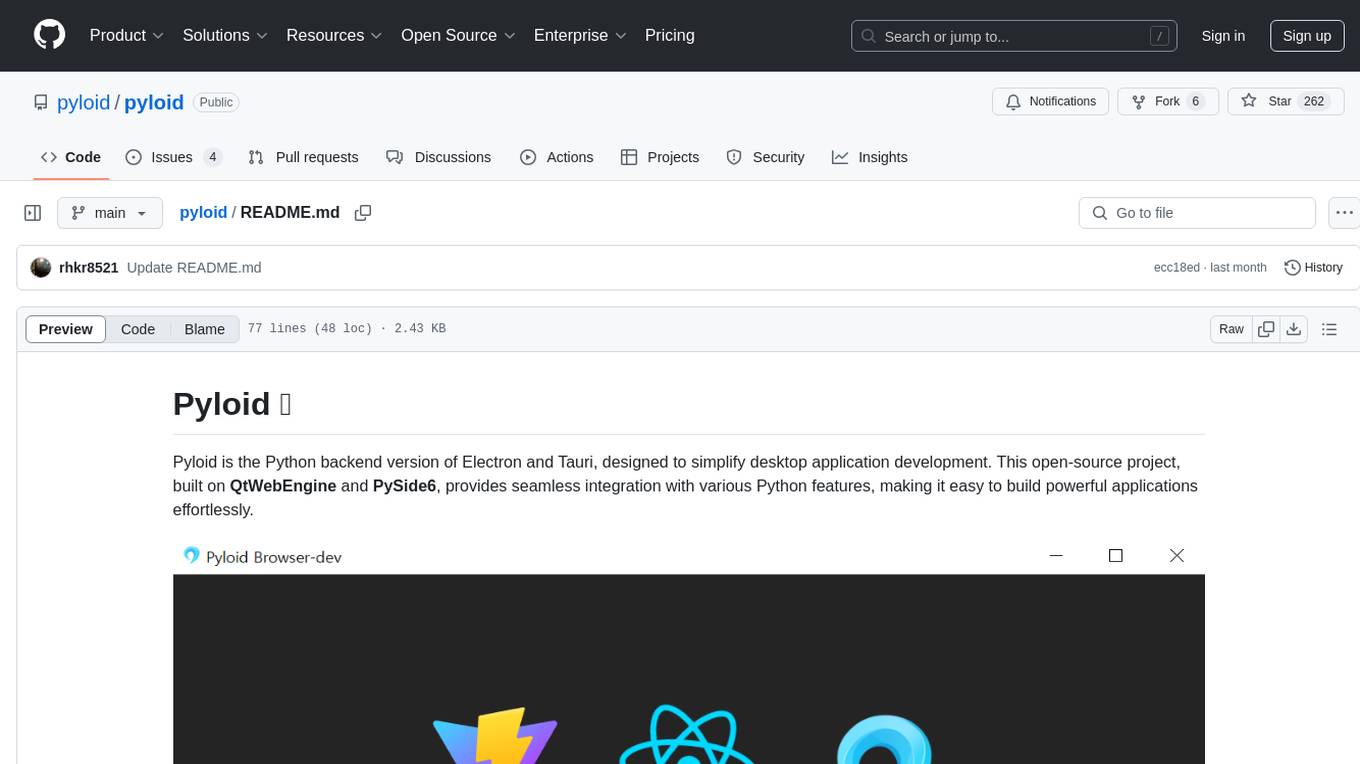
pyloid
Pyloid is a Python backend version of Electron and Tauri, simplifying desktop application development. Built on QtWebEngine and PySide6, it offers seamless integration with Python features, enabling easy creation of powerful applications. It provides web-based GUI generation, system tray icon support, multi-window management, bridge API between Python and JavaScript, single/multi-instance application support, comprehensive desktop app features, clean code structure, live UI development experience, cross-platform support, integration with frontend libraries, window customization, direct utilization of PySide6 features, and detailed Numpy-style docstrings.
supavec
Supavec is an open-source tool that serves as an alternative to Carbon.ai. It allows users to build powerful RAG applications using any data source and at any scale. The tool is designed to provide a simple API endpoint for easy integration and usage. Supavec is built with Next.js, Supabase, Tailwind CSS, Bun, and Upstash, offering a robust and flexible solution for application development. Users can refer to the API documentation for detailed information on how to utilize the tool effectively.
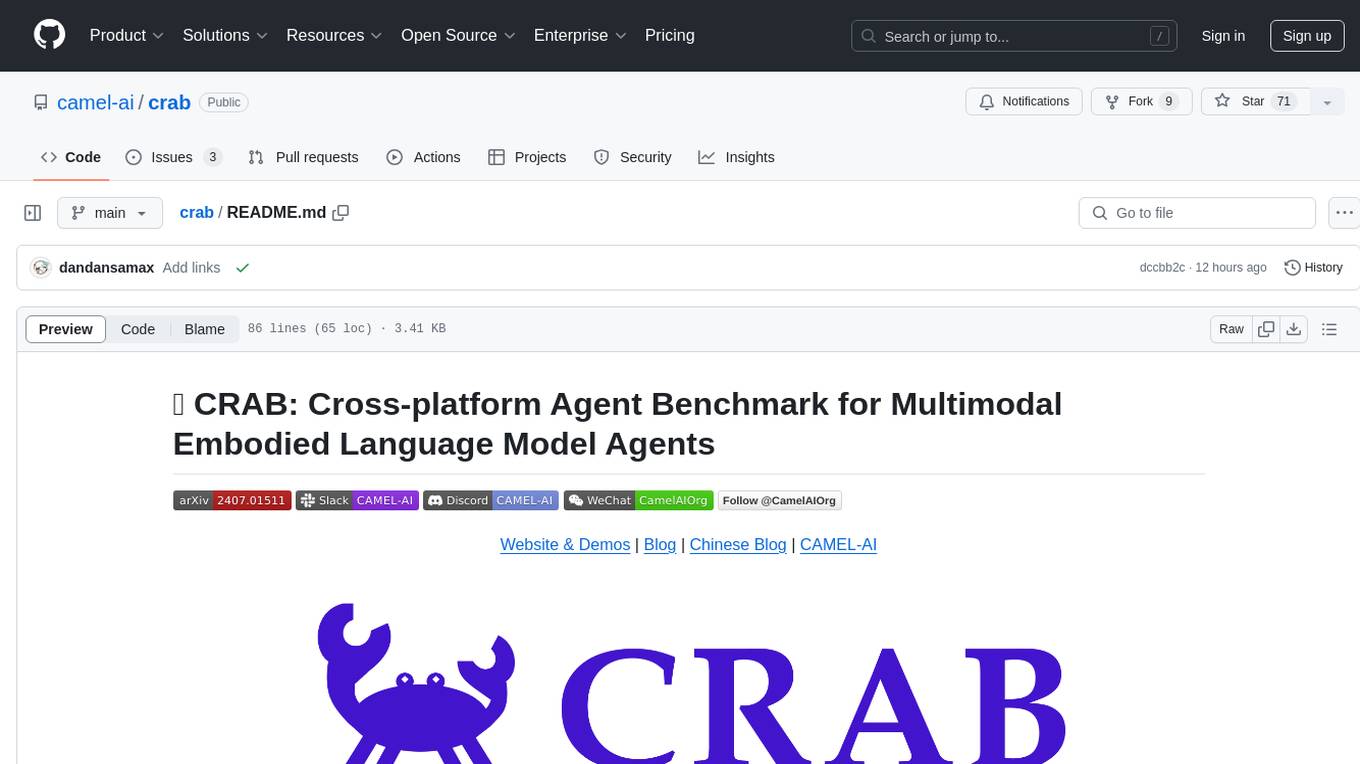
crab
CRAB is a framework for building LLM agent benchmark environments in a Python-centric way. It is cross-platform and multi-environment, allowing the creation of agent environments supporting various deployment options. The framework offers easy-to-use configuration with the ability to add new actions and define environments seamlessly. CRAB also provides a novel benchmarking suite with tasks and evaluators defined in Python, along with a unique graph evaluator method for detailed metrics.
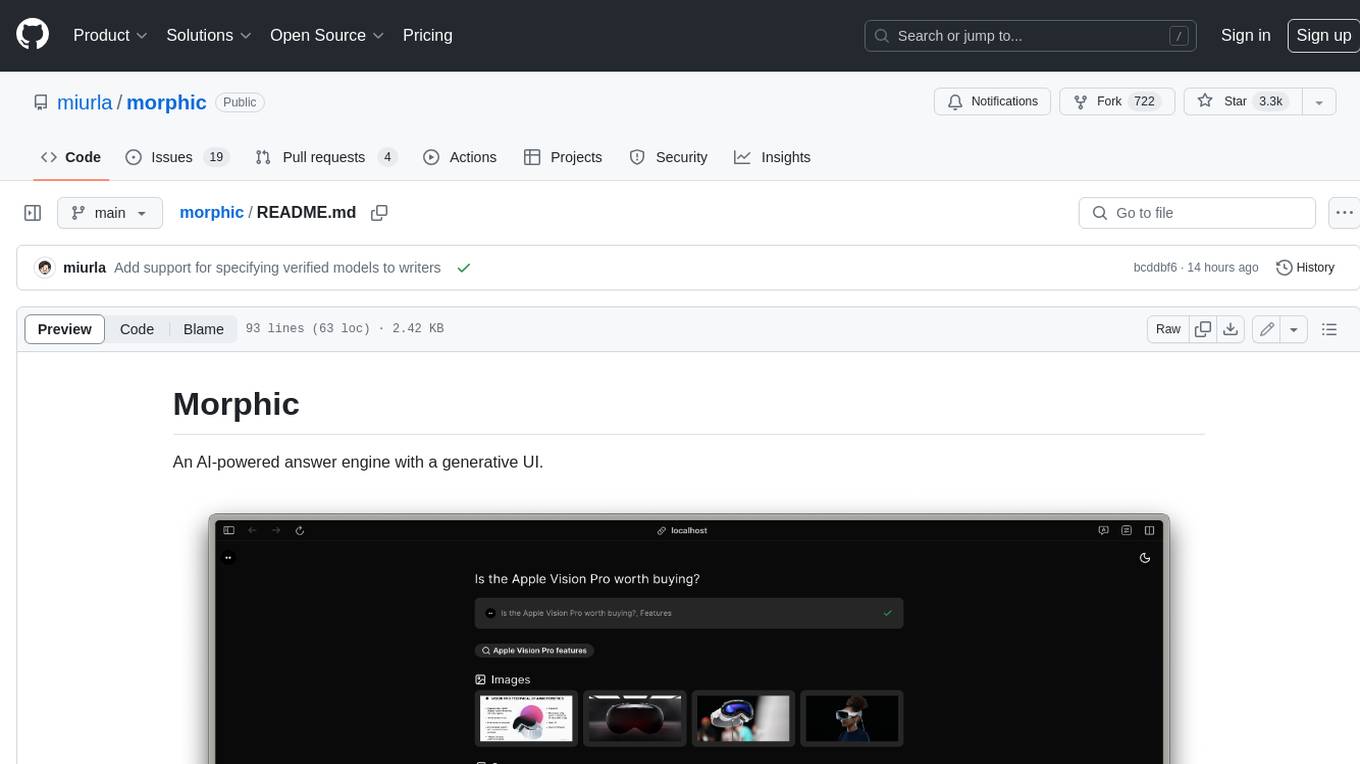
morphic
Morphic is an AI-powered answer engine with a generative UI. It utilizes a stack of Next.js, Vercel AI SDK, OpenAI, Tavily AI, shadcn/ui, Radix UI, and Tailwind CSS. To get started, fork and clone the repo, install dependencies, fill out secrets in the .env.local file, and run the app locally using 'bun dev'. You can also deploy your own live version of Morphic with Vercel. Verified models that can be specified to writers include Groq, LLaMA3 8b, and LLaMA3 70b.
cossistant
Cossistant is an open source chat support widget tailored for the React ecosystem. It offers headless components for building customizable chat interfaces, real-time messaging with WebSocket technology, and tools for managing customer conversations. The tool is API-first, self-hosted, developer-friendly with TypeScript support, and provides complete integration flexibility. It uses technologies like Next.js, TailwindCSS, and WebSockets, and supports databases like PlanetScale for production and DBgin for local development. Cossistant is ideal for developers seeking a versatile chat solution that can be easily integrated into their applications.

macai
Macai is a native macOS client for interacting with modern AI tools, such as ChatGPT and Ollama. It features organized chats with custom system messages, system-defined light/dark themes, backup and restore functionality, customizable context size, support for any model with a compatible API, formatted code blocks and tables, multiple chat tabs, CoreData data storage, streamed responses, and automatic chat name generation. Macai is in active development, with contributions welcome.
shire
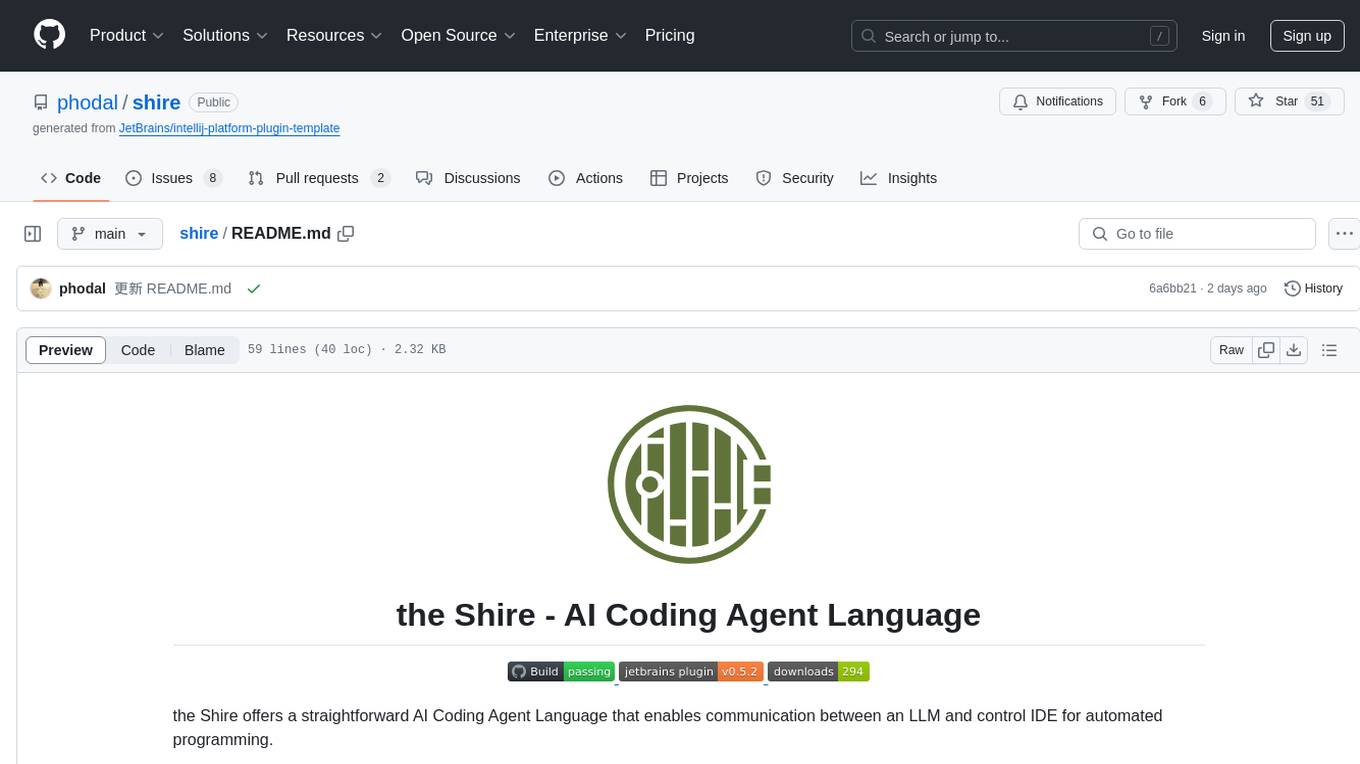
The Shire is an AI Coding Agent Language that facilitates communication between an LLM and control IDE for automated programming. It offers a straightforward approach to creating AI agents tailored to individual IDEs, enabling users to build customized AI-driven development environments. The concept of Shire originated from AutoDev, a subproject of UnitMesh, with DevIns as its precursor. The tool provides documentation and resources for implementing AI in software engineering projects.
EDDI
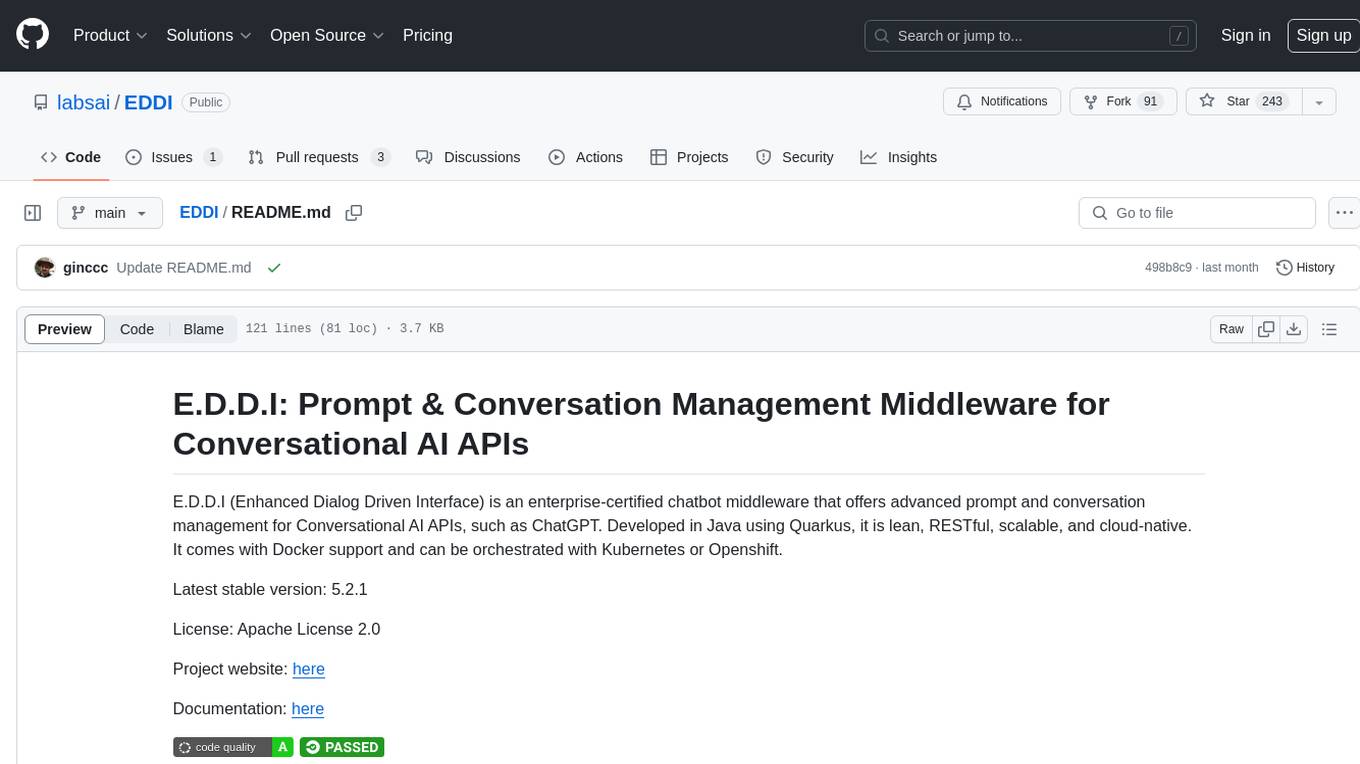
E.D.D.I (Enhanced Dialog Driven Interface) is an enterprise-certified chatbot middleware that offers advanced prompt and conversation management for Conversational AI APIs. Developed in Java using Quarkus, it is lean, RESTful, scalable, and cloud-native. E.D.D.I is highly scalable and designed to efficiently manage conversations in AI-driven applications, with seamless API integration capabilities. Notable features include configurable NLP and Behavior rules, support for multiple chatbots running concurrently, and integration with MongoDB, OAuth 2.0, and HTML/CSS/JavaScript for UI. The project requires Java 21, Maven 3.8.4, and MongoDB >= 5.0 to run. It can be built as a Docker image and deployed using Docker or Kubernetes, with additional support for integration testing and monitoring through Prometheus and Kubernetes endpoints.
genassist
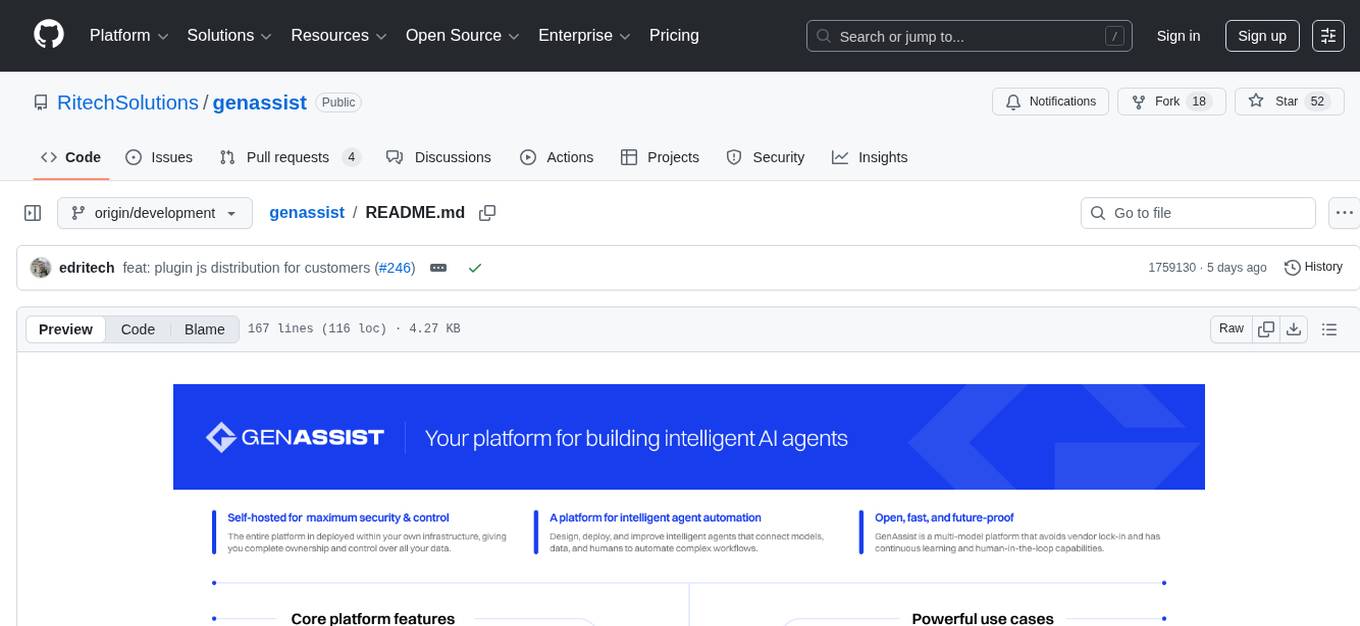
GenAssist is an AI-powered platform for managing and leveraging various AI workflows, focusing on conversation management, analytics, and agent-based interactions. It provides user management, AI agents configuration, knowledge base management, analytics, conversation management, and audit logging features. The platform is built with React, TypeScript, Vite, Tailwind CSS, FastAPI, SQLAlchemy ORM, and PostgreSQL database. GenAssist offers integration options for React, JavaScript Widget, and iOS, along with UI test automation and backend testing capabilities.
zola
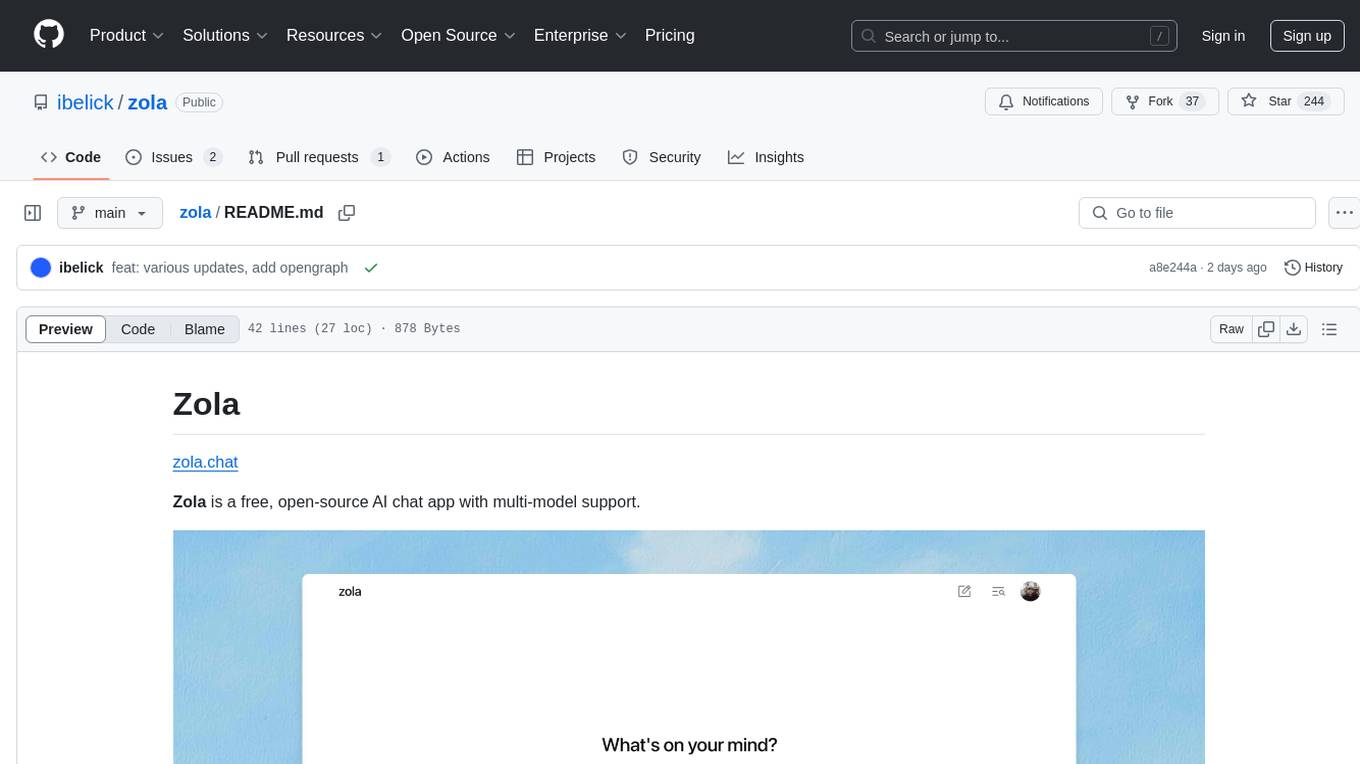
Zola is a free, open-source AI chat app with multi-model support. It features light and dark mode, prompt suggestions, file uploads, and a mobile-friendly layout. Built with prompt-kit, shadcn/ui, motion-primitives, vercel ai sdk, and supabase. Coming next are more model support, search, agent mode, and memory. Beta release with evolving codebase.
brain4j
Brain4J is a lightweight, performant, and open-source machine learning framework for Java. Designed with portability and speed in mind, it is optimized for high performance and ideal for those looking to implement machine learning solutions in pure Java. The framework provides tools and functionalities to facilitate the development of machine learning models within Java applications, offering ease of use and efficiency.
gateway
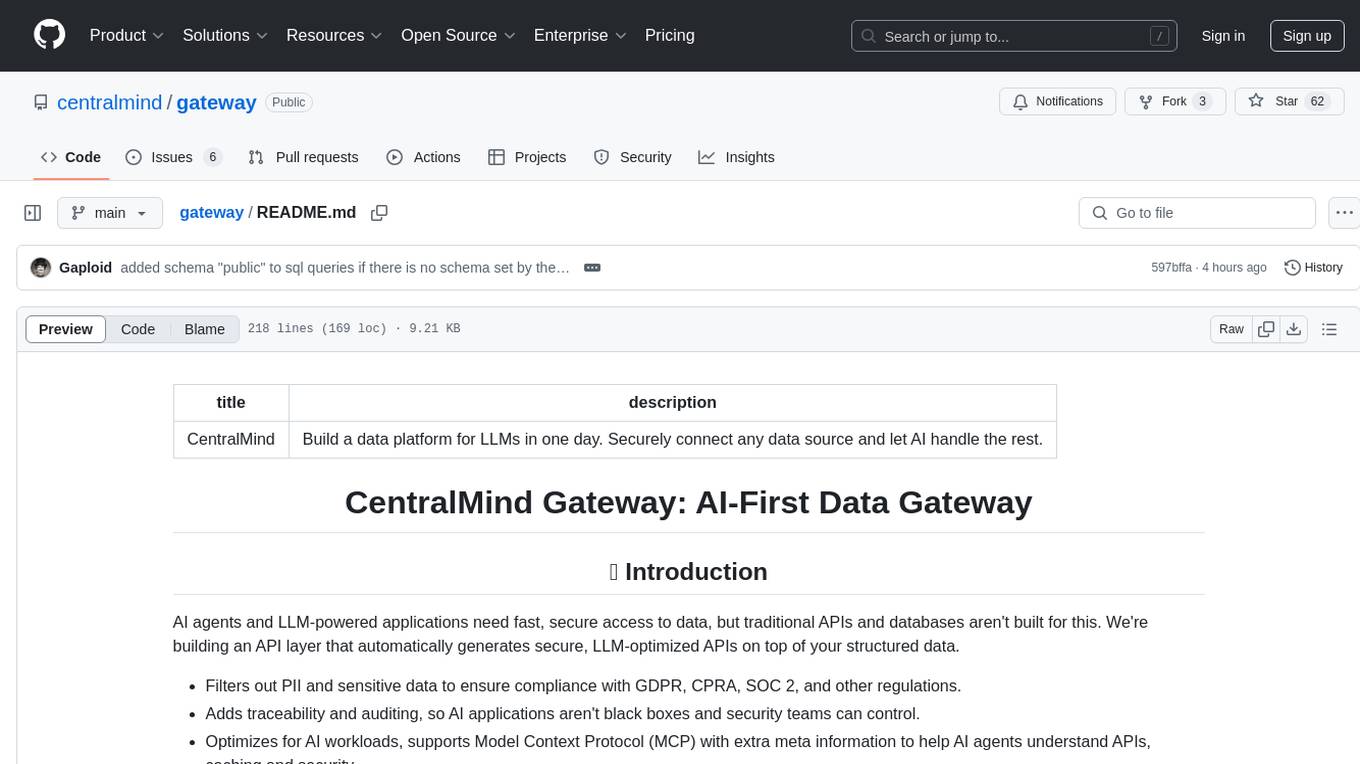
CentralMind Gateway is an AI-first data gateway that securely connects any data source and automatically generates secure, LLM-optimized APIs. It filters out sensitive data, adds traceability, and optimizes for AI workloads. Suitable for companies deploying AI agents for customer support and analytics.
ai-sdk-js
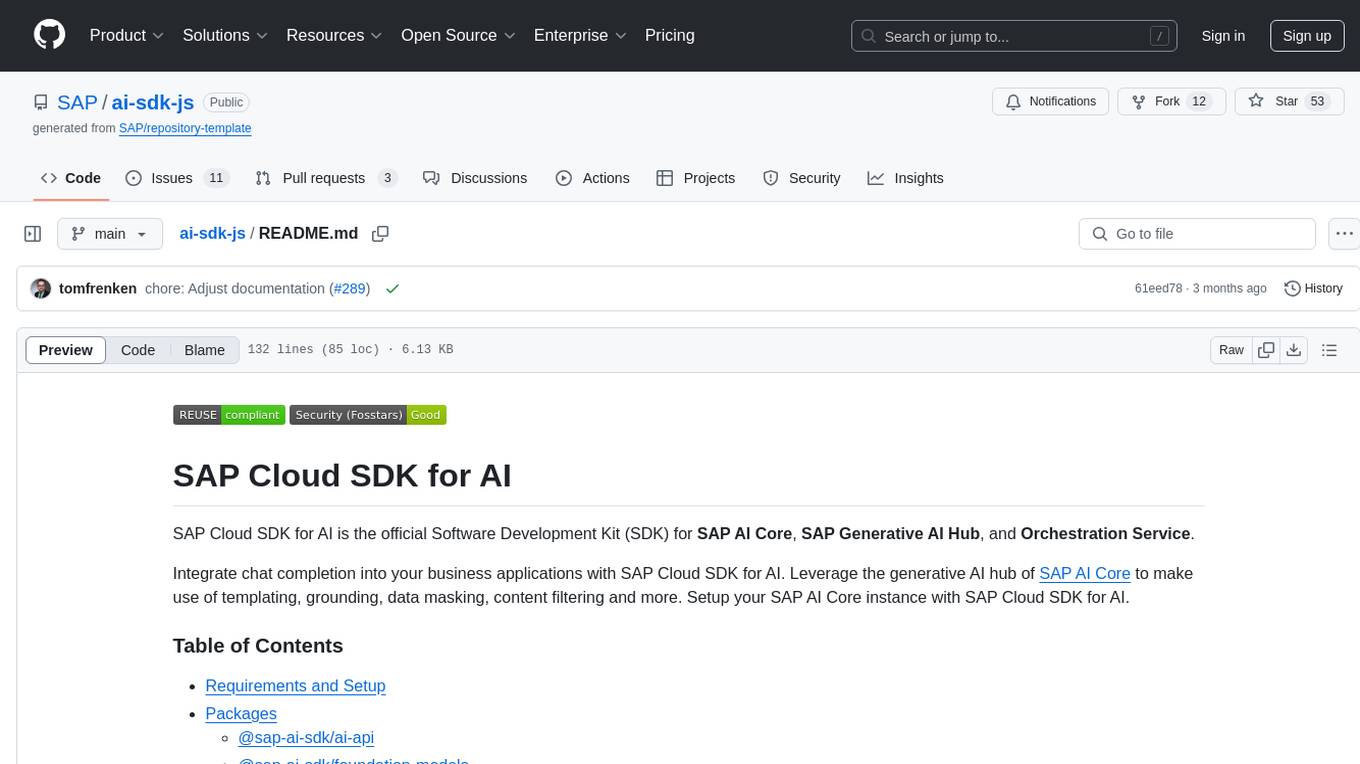
SAP Cloud SDK for AI is the official Software Development Kit (SDK) for SAP AI Core, SAP Generative AI Hub, and Orchestration Service. It allows users to integrate chat completion into business applications, leverage generative AI capabilities for templating, grounding, data masking, and content filtering. The SDK provides tools for managing scenarios, workflows, data preprocessing, model training pipelines, batch inference jobs, deploying inference endpoints, and orchestrating AI activities. Users can set up their SAP AI Core instance using the SDK, which includes packages for AI API, foundation models, LangChain model clients, and orchestration capabilities. The SDK also offers a sample project for demonstrating its usage in TypeScript/JavaScript applications, along with guidelines for local testing and contribution.
For similar tasks
agentcloud
AgentCloud is an open-source platform that enables companies to build and deploy private LLM chat apps, empowering teams to securely interact with their data. It comprises three main components: Agent Backend, Webapp, and Vector Proxy. To run this project locally, clone the repository, install Docker, and start the services. The project is licensed under the GNU Affero General Public License, version 3 only. Contributions and feedback are welcome from the community.

zep-python
Zep is an open-source platform for building and deploying large language model (LLM) applications. It provides a suite of tools and services that make it easy to integrate LLMs into your applications, including chat history memory, embedding, vector search, and data enrichment. Zep is designed to be scalable, reliable, and easy to use, making it a great choice for developers who want to build LLM-powered applications quickly and easily.
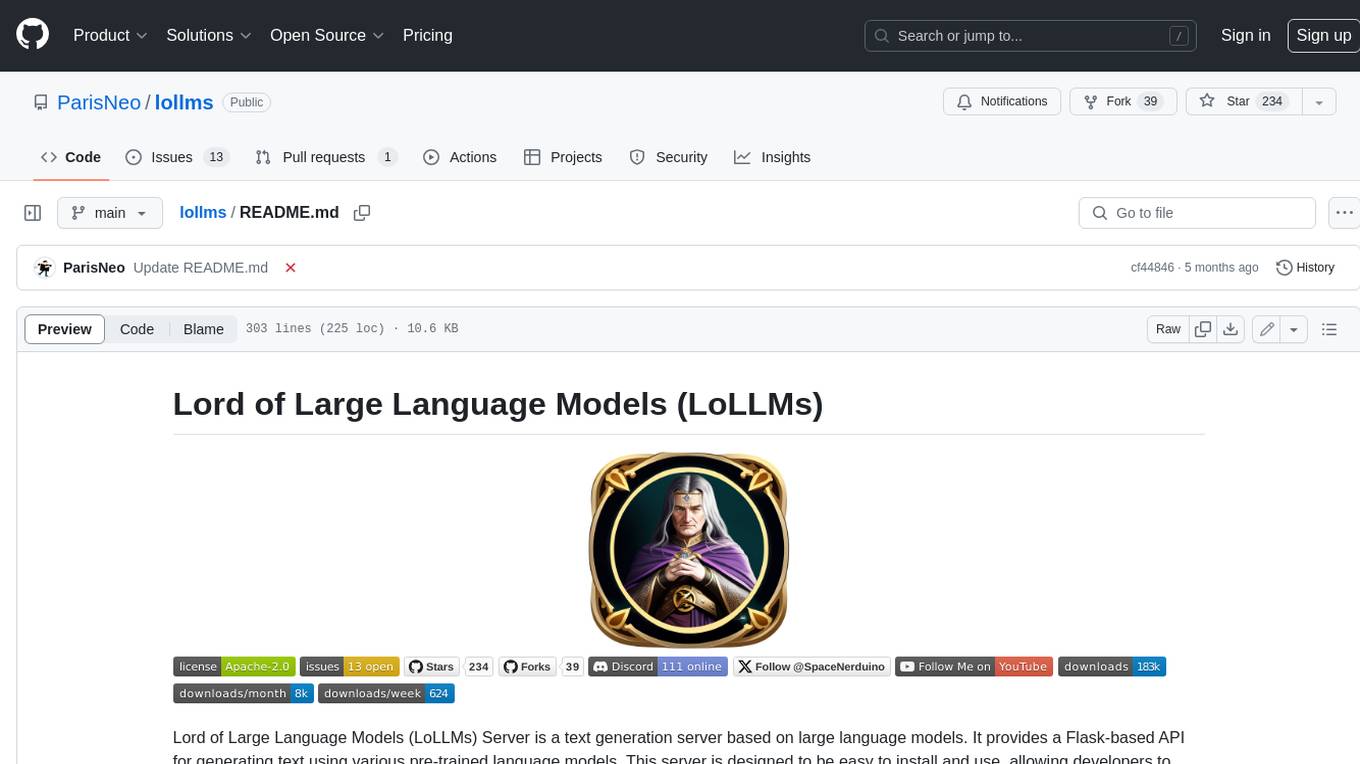
lollms
LoLLMs Server is a text generation server based on large language models. It provides a Flask-based API for generating text using various pre-trained language models. This server is designed to be easy to install and use, allowing developers to integrate powerful text generation capabilities into their applications.
LlamaIndexTS
LlamaIndex.TS is a data framework for your LLM application. Use your own data with large language models (LLMs, OpenAI ChatGPT and others) in Typescript and Javascript.
semantic-kernel
Semantic Kernel is an SDK that integrates Large Language Models (LLMs) like OpenAI, Azure OpenAI, and Hugging Face with conventional programming languages like C#, Python, and Java. Semantic Kernel achieves this by allowing you to define plugins that can be chained together in just a few lines of code. What makes Semantic Kernel _special_ , however, is its ability to _automatically_ orchestrate plugins with AI. With Semantic Kernel planners, you can ask an LLM to generate a plan that achieves a user's unique goal. Afterwards, Semantic Kernel will execute the plan for the user.
botpress
Botpress is a platform for building next-generation chatbots and assistants powered by OpenAI. It provides a range of tools and integrations to help developers quickly and easily create and deploy chatbots for various use cases.
BotSharp
BotSharp is an open-source machine learning framework for building AI bot platforms. It provides a comprehensive set of tools and components for developing and deploying intelligent virtual assistants. BotSharp is designed to be modular and extensible, allowing developers to easily integrate it with their existing systems and applications. With BotSharp, you can quickly and easily create AI-powered chatbots, virtual assistants, and other conversational AI applications.
qdrant
Qdrant is a vector similarity search engine and vector database. It is written in Rust, which makes it fast and reliable even under high load. Qdrant can be used for a variety of applications, including: * Semantic search * Image search * Product recommendations * Chatbots * Anomaly detection Qdrant offers a variety of features, including: * Payload storage and filtering * Hybrid search with sparse vectors * Vector quantization and on-disk storage * Distributed deployment * Highlighted features such as query planning, payload indexes, SIMD hardware acceleration, async I/O, and write-ahead logging Qdrant is available as a fully managed cloud service or as an open-source software that can be deployed on-premises.
For similar jobs
sweep
Sweep is an AI junior developer that turns bugs and feature requests into code changes. It automatically handles developer experience improvements like adding type hints and improving test coverage.
teams-ai
The Teams AI Library is a software development kit (SDK) that helps developers create bots that can interact with Teams and Microsoft 365 applications. It is built on top of the Bot Framework SDK and simplifies the process of developing bots that interact with Teams' artificial intelligence capabilities. The SDK is available for JavaScript/TypeScript, .NET, and Python.
ai-guide
This guide is dedicated to Large Language Models (LLMs) that you can run on your home computer. It assumes your PC is a lower-end, non-gaming setup.
classifai
Supercharge WordPress Content Workflows and Engagement with Artificial Intelligence. Tap into leading cloud-based services like OpenAI, Microsoft Azure AI, Google Gemini and IBM Watson to augment your WordPress-powered websites. Publish content faster while improving SEO performance and increasing audience engagement. ClassifAI integrates Artificial Intelligence and Machine Learning technologies to lighten your workload and eliminate tedious tasks, giving you more time to create original content that matters.
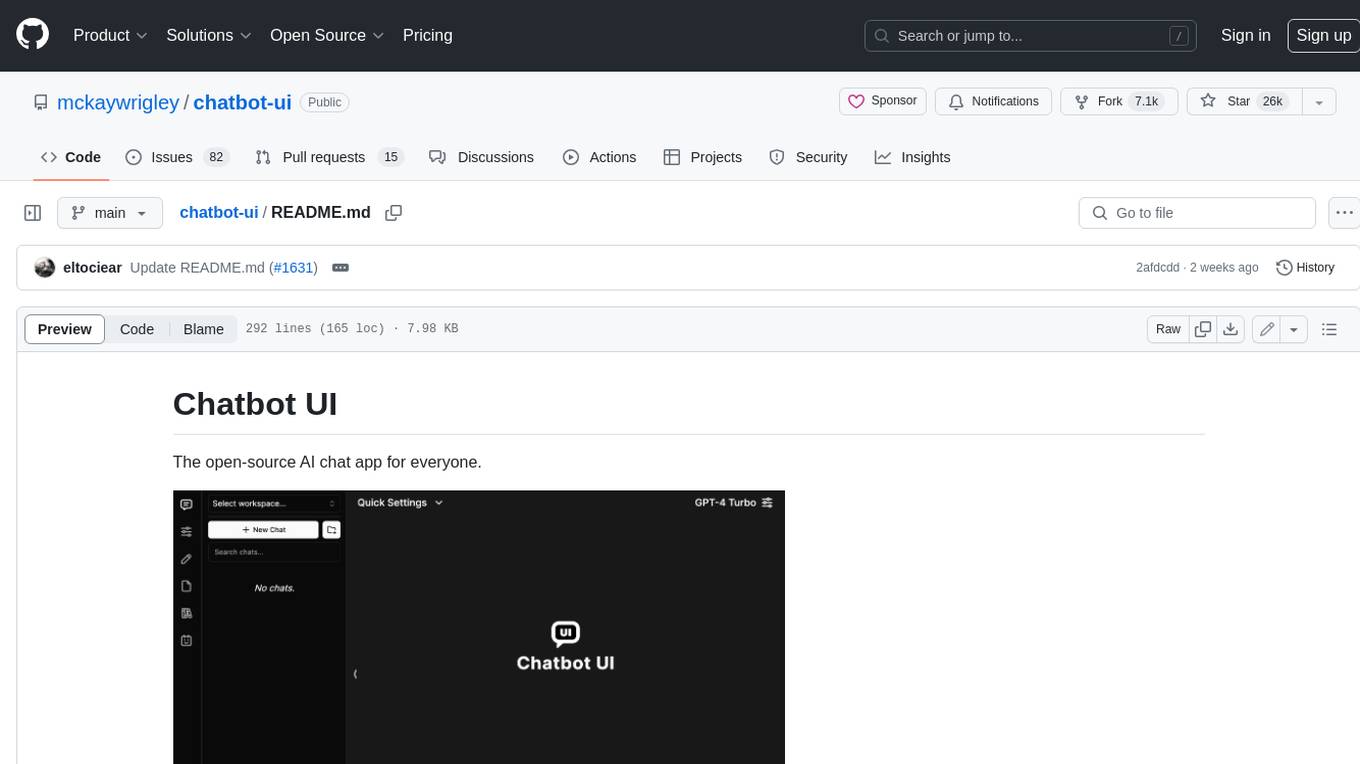
chatbot-ui
Chatbot UI is an open-source AI chat app that allows users to create and deploy their own AI chatbots. It is easy to use and can be customized to fit any need. Chatbot UI is perfect for businesses, developers, and anyone who wants to create a chatbot.
BricksLLM
BricksLLM is a cloud native AI gateway written in Go. Currently, it provides native support for OpenAI, Anthropic, Azure OpenAI and vLLM. BricksLLM aims to provide enterprise level infrastructure that can power any LLM production use cases. Here are some use cases for BricksLLM: * Set LLM usage limits for users on different pricing tiers * Track LLM usage on a per user and per organization basis * Block or redact requests containing PIIs * Improve LLM reliability with failovers, retries and caching * Distribute API keys with rate limits and cost limits for internal development/production use cases * Distribute API keys with rate limits and cost limits for students
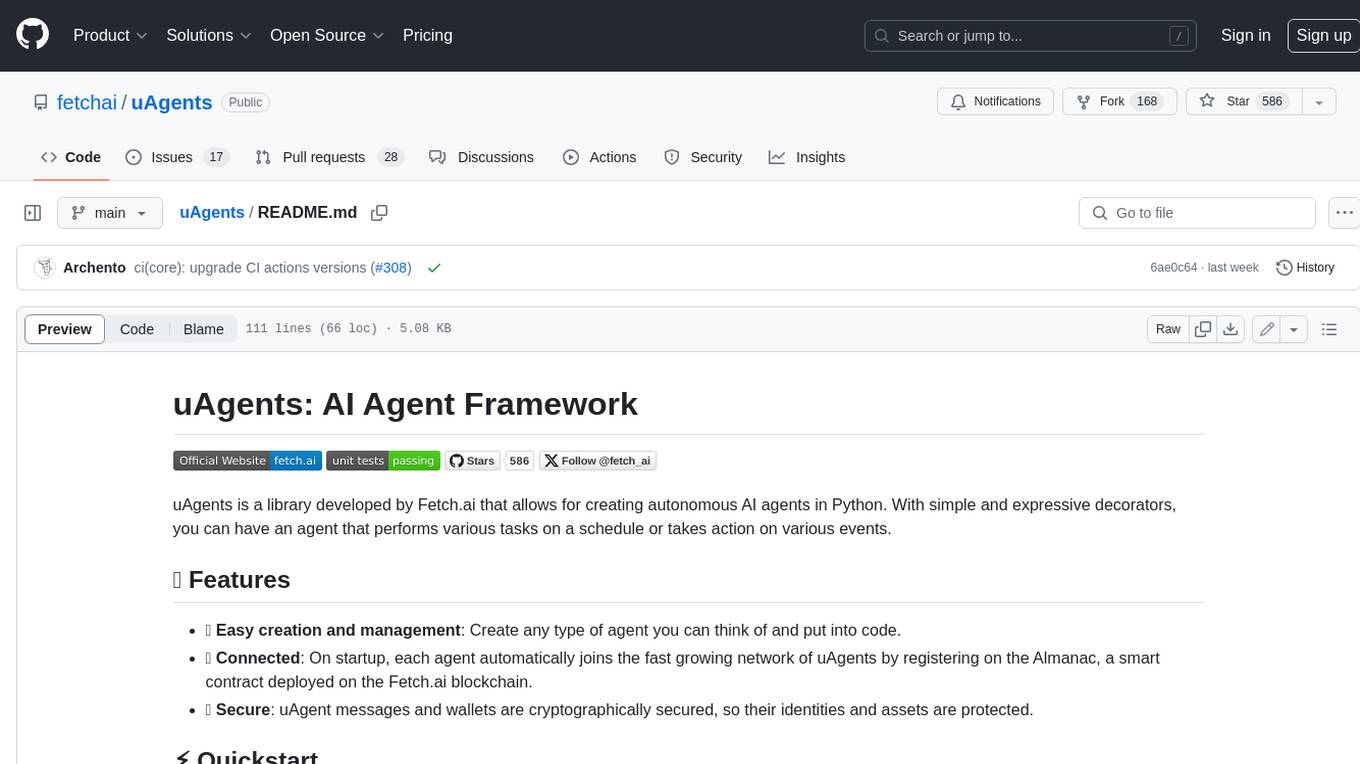
uAgents
uAgents is a Python library developed by Fetch.ai that allows for the creation of autonomous AI agents. These agents can perform various tasks on a schedule or take action on various events. uAgents are easy to create and manage, and they are connected to a fast-growing network of other uAgents. They are also secure, with cryptographically secured messages and wallets.
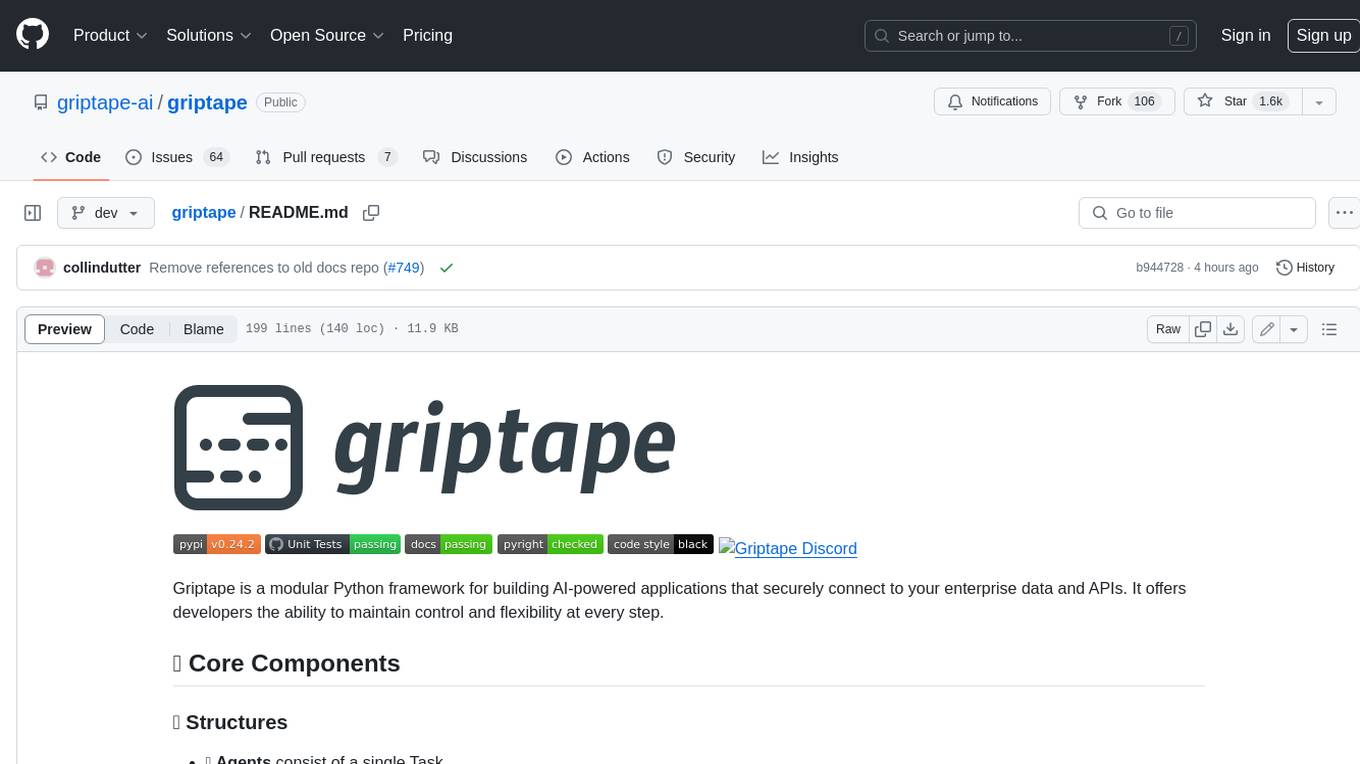
griptape
Griptape is a modular Python framework for building AI-powered applications that securely connect to your enterprise data and APIs. It offers developers the ability to maintain control and flexibility at every step. Griptape's core components include Structures (Agents, Pipelines, and Workflows), Tasks, Tools, Memory (Conversation Memory, Task Memory, and Meta Memory), Drivers (Prompt and Embedding Drivers, Vector Store Drivers, Image Generation Drivers, Image Query Drivers, SQL Drivers, Web Scraper Drivers, and Conversation Memory Drivers), Engines (Query Engines, Extraction Engines, Summary Engines, Image Generation Engines, and Image Query Engines), and additional components (Rulesets, Loaders, Artifacts, Chunkers, and Tokenizers). Griptape enables developers to create AI-powered applications with ease and efficiency.