


musegpt
A VST3 plugin that connects your DAW to any LLM inference backend.
Stars: 89
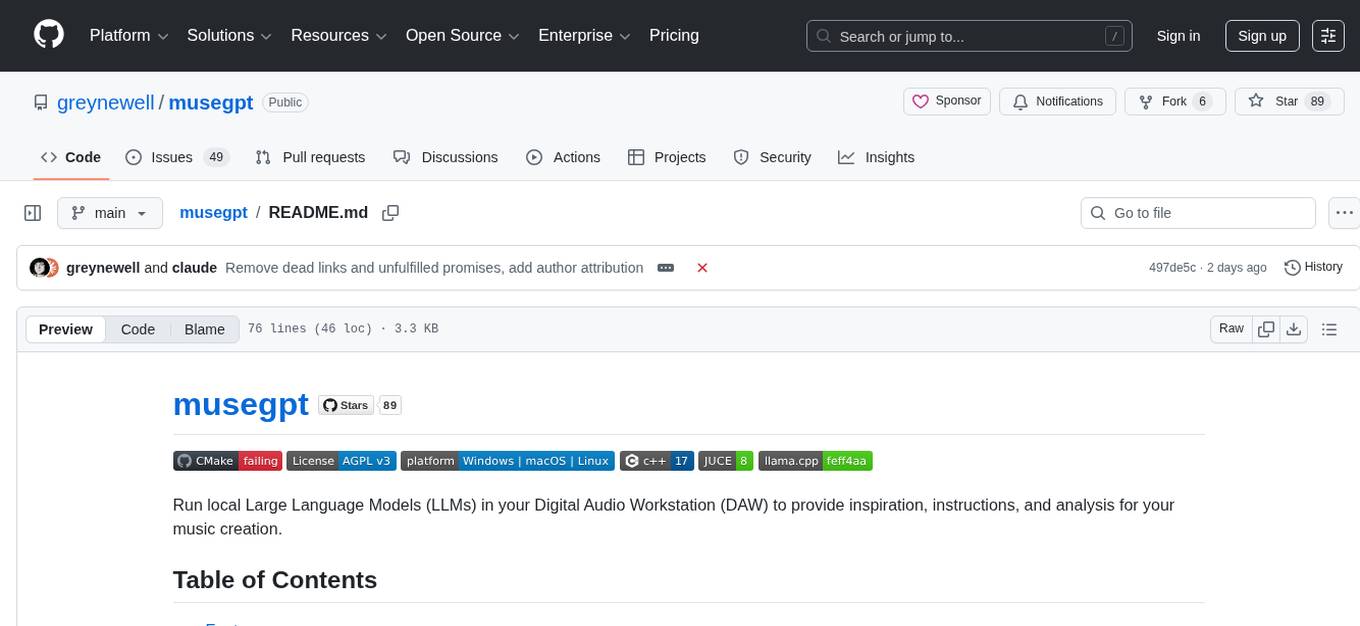
Run local Large Language Models (LLMs) in your Digital Audio Workstation (DAW) to provide inspiration, instructions, and analysis for your music creation. Currently supported features include LLM chat, VST3 plugin, MIDI input, and Audio input. Requires C++17 compatible compiler, CMake, and Python 3.10 or later. Licensed under AGPL v3. Built by Grey Newell.
README:







Run local Large Language Models (LLMs) in your Digital Audio Workstation (DAW) to provide inspiration, instructions, and analysis for your music creation.
Currently supported features include:
- ✅ LLM chat
- ✅ VST3 plugin
- ✅ MIDI input
- ✅ Audio input
See Features for the full feature list.

Click the image above to watch a demo of musegpt in action.
You'll need a C++17 compatible compiler, CMake, and Python 3.10 or later. See Requirements for more details on supported Operating Systems, models, DAWs, and more.
To install musegpt, you can download the latest binaries from Releases.
If you want to build from source, follow the Installation instructions.
Please refer to the Usage section of the documentation.

For more information, see Technical Approach.
We welcome contributions from the community!
- Bug Reports & Feature Requests: Use the issue tracker to report bugs or suggest new features.
- Pull Requests: Feel free to submit pull requests to fix issues or implement new features.
- Guidelines: Please read our Contributing Guidelines before contributing.
This project is licensed under the AGPL v3.
- JUCE: For the powerful audio application framework.
- llama.cpp: For enabling efficient LLM inference.
-
Community Contributors: Thanks to everyone who has contributed to open-source projects that make
musegptpossible.
Built by Grey Newell
For Tasks:
Click tags to check more tools for each tasksFor Jobs:
Alternative AI tools for musegpt
Similar Open Source Tools
musegpt
Run local Large Language Models (LLMs) in your Digital Audio Workstation (DAW) to provide inspiration, instructions, and analysis for your music creation. Currently supported features include LLM chat, VST3 plugin, MIDI input, and Audio input. Requires C++17 compatible compiler, CMake, and Python 3.10 or later. Licensed under AGPL v3. Built by Grey Newell.
TaskingAI
TaskingAI brings Firebase's simplicity to **AI-native app development**. The platform enables the creation of GPTs-like multi-tenant applications using a wide range of LLMs from various providers. It features distinct, modular functions such as Inference, Retrieval, Assistant, and Tool, seamlessly integrated to enhance the development process. TaskingAI’s cohesive design ensures an efficient, intelligent, and user-friendly experience in AI application development.
Kori
Kori is a unified note-taking app with AI capabilities, providing a consistent experience across Android, iOS, Windows, macOS, and Linux. It supports various formats like Drawing, Markdown, TXT, LaTeX, Mermaid diagrams, and Todo.txt lists. Users can benefit from AI co-writing features, note outline generation, find and replace, note templates, local media support, and export options. The app follows Material Design 3 guidelines, offers comprehensive mouse and keyboard support, and is optimized for different screen sizes and orientations.
chatbox
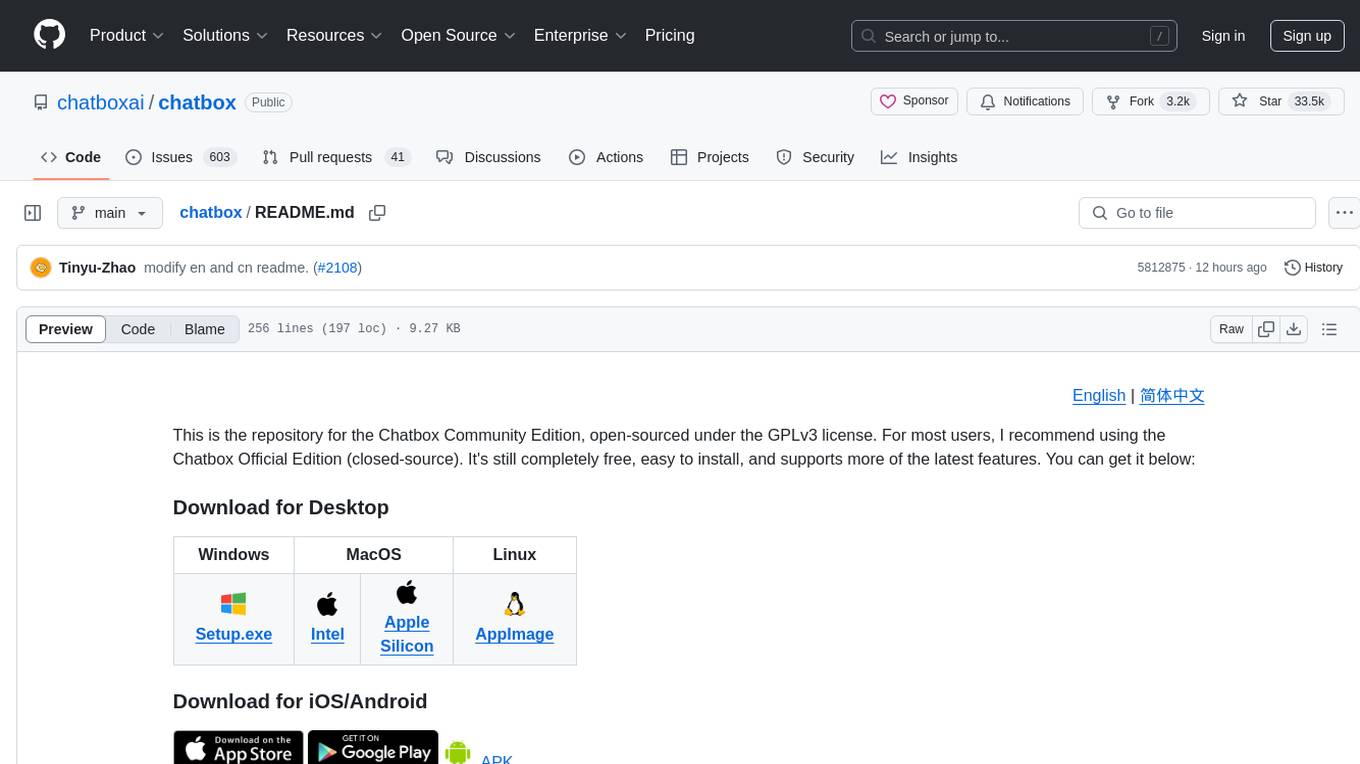
Chatbox is a desktop client for ChatGPT, Claude, and other LLMs, providing a user-friendly interface for AI copilot assistance on Windows, Mac, and Linux. It offers features like local data storage, multiple LLM provider support, image generation with Dall-E-3, enhanced prompting, keyboard shortcuts, and more. Users can collaborate, access the tool on various platforms, and enjoy multilingual support. Chatbox is constantly evolving with new features to enhance the user experience.
chatbox
Chatbox is a desktop client for ChatGPT, Claude, and other LLMs, providing features like local data storage, multiple LLM provider support, image generation, enhanced prompting, keyboard shortcuts, and more. It offers a user-friendly interface with dark theme, team collaboration, cross-platform availability, web version access, iOS & Android apps, multilingual support, and ongoing feature enhancements. Developed for prompt and API debugging, it has gained popularity for daily chatting and professional role-playing with AI assistance.
Easy-Voice-Toolkit
Easy Voice Toolkit is a toolkit based on open source voice projects, providing automated audio tools including speech model training. Users can seamlessly integrate functions like audio processing, voice recognition, voice transcription, dataset creation, model training, and voice conversion to transform raw audio files into ideal speech models. The toolkit supports multiple languages and is currently only compatible with Windows systems. It acknowledges the contributions of various projects and offers local deployment options for both users and developers. Additionally, cloud deployment on Google Colab is available. The toolkit has been tested on Windows OS devices and includes a FAQ section and terms of use for academic exchange purposes.
RWKV_APP
RWKV App is an experimental application that enables users to run Large Language Models (LLMs) offline on their edge devices. It offers a privacy-first, on-device LLM experience for everyday devices. Users can engage in multi-turn conversations, text-to-speech, visual understanding, and more, all without requiring an internet connection. The app supports switching between different models, running locally without internet, and exploring various AI tasks such as chat, speech generation, and visual understanding. It is built using Flutter and Dart FFI for cross-platform compatibility and efficient communication with the C++ inference engine. The roadmap includes integrating features into the RWKV Chat app, supporting more model weights, hardware, operating systems, and devices.
SillyTavern
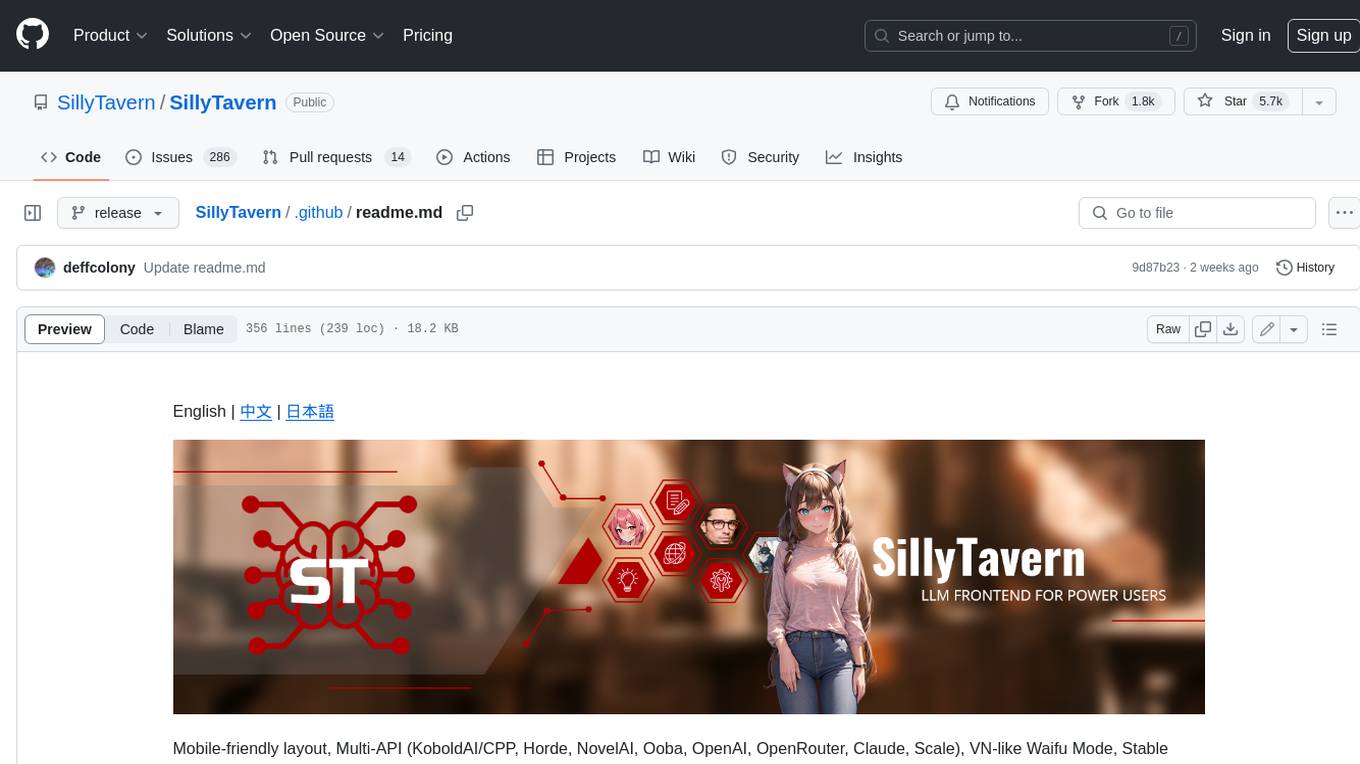
SillyTavern is a user interface you can install on your computer (and Android phones) that allows you to interact with text generation AIs and chat/roleplay with characters you or the community create. SillyTavern is a fork of TavernAI 1.2.8 which is under more active development and has added many major features. At this point, they can be thought of as completely independent programs.
ClaudeSync
ClaudeSync is a powerful tool designed to seamlessly synchronize local files with Claude.ai projects. It bridges the gap between local development environment and Claude.ai's knowledge base, offering real-time synchronization, CLI for easy management, support for multiple organizations and projects, intelligent file filtering, configurable sync interval, two-way synchronization, and more. It ensures data privacy, open source transparency, and comes with disclaimers for use at own risk. Users can quickly start syncing by installing, logging in, selecting organization and project, and running sync. Advanced features include API, organization, project, file, chat management, configuration, synchronization modes, scheduled sync, providers, custom ignore file, and troubleshooting. Contributions are welcome, and communication channels include GitHub Issues and Discord. Licensed under MIT License.
cherry-studio
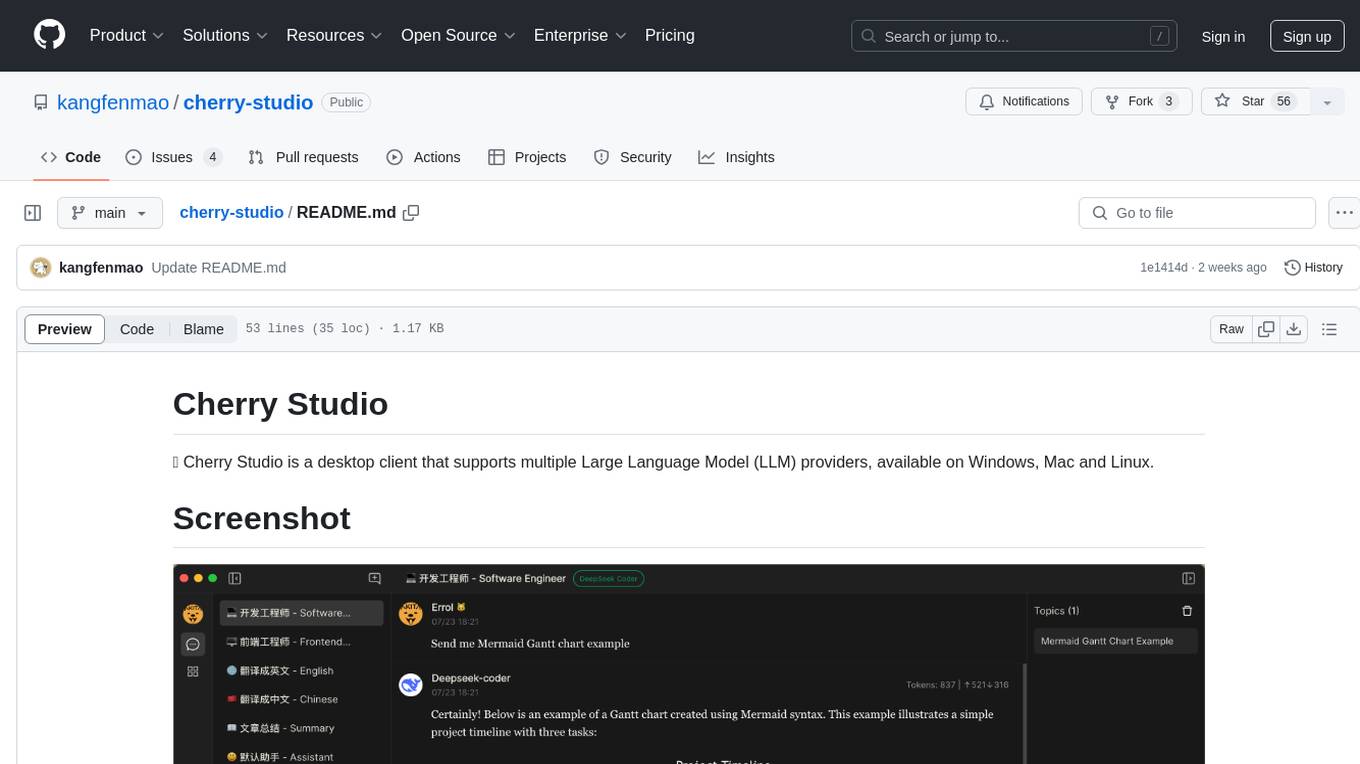
Cherry Studio is a desktop client that supports multiple Large Language Model (LLM) providers, available on Windows, Mac, and Linux. It allows users to create multiple Assistants and topics, use multiple models to answer questions in the same conversation, and supports drag-and-drop sorting, code highlighting, and Mermaid chart. The tool is designed to enhance productivity and streamline the process of interacting with various language models.
eca
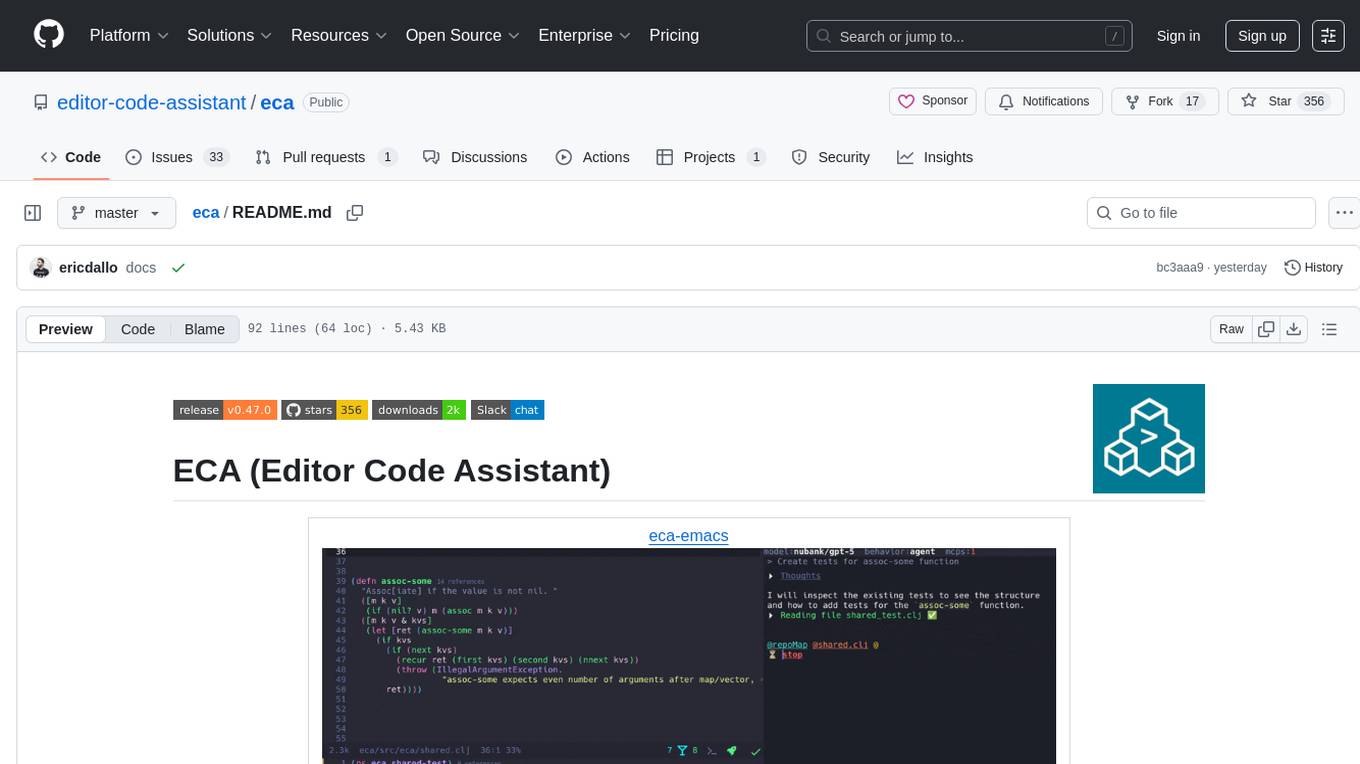
ECA (Editor Code Assistant) is a free and open-source editor-agnostic tool designed to link Language Model Machines (LLMs) with editors for AI pair programming. It provides a protocol for any editor to integrate, offering a seamless user experience. The tool allows for single configuration across different editors, features a chat interface for collaboration, supports multiple LLM models, and enhances code editing with context details. ECA aims to simplify the integration of LLMs with editors, focusing on improving the user experience and productivity in coding tasks.
tuff
Tuff is a local-first, AI-native, and infinitely extensible desktop command center designed to enhance workflow efficiency. It offers a seamless integration of core utilities, AI-powered search, contextual intelligence, and extensibility through custom plugins. With a beautiful UI design, rich functionality, simple operations, and a focus on security and reliability, Tuff provides users with a cross-platform desktop software that is easy to use and offers a good user experience.
Roo-Code
Roo Code is an AI-powered development tool that integrates with your code editor to help you generate code from natural language descriptions and specifications, refactor and debug existing code, write and update documentation, answer questions about your codebase, automate repetitive tasks, and utilize MCP servers. It offers different modes such as Code, Architect, Ask, Debug, and Custom Modes to adapt to various tasks and workflows. Roo Code provides tutorial and feature videos, documentation, a YouTube channel, a Discord server, a Reddit community, GitHub issues tracking, and a feature request platform. Users can set up and develop Roo Code locally by cloning the repository, installing dependencies, and running the extension in development mode or by automated/manual VSIX installation. The tool uses changesets for versioning and publishing. Please note that Roo Code, Inc. does not make any representations or warranties regarding the tools provided, and users assume all risks associated with their use.
kelivo
Kelivo is a Flutter LLM Chat Client with modern design, dark mode, multi-language support, multi-provider support, custom assistants, multimodal input, markdown rendering, voice functionality, MCP support, web search integration, prompt variables, QR code sharing, data backup, and custom requests. It is built with Flutter and Dart, utilizes Provider for state management, Hive for local data storage, and supports dynamic theming and Markdown rendering. Kelivo is a versatile tool for creating and managing personalized AI assistants, supporting various input formats, and integrating with multiple search engines and AI providers.
panko-gpt
PankoGPT is an AI companion platform that allows users to easily create and deploy custom AI companions on messaging platforms like WhatsApp, Discord, and Telegram. Users can customize companion behavior, configure settings, and equip companions with various tools without the need for coding. The platform aims to provide contextual understanding and user-friendly interface for creating companions that respond based on context and offer configurable tools for enhanced capabilities. Planned features include expanded functionality, pre-built skills, and optimization for better performance.
gptme
Personal AI assistant/agent in your terminal, with tools for using the terminal, running code, editing files, browsing the web, using vision, and more. A great coding agent that is general-purpose to assist in all kinds of knowledge work, from a simple but powerful CLI. An unconstrained local alternative to ChatGPT with 'Code Interpreter', Cursor Agent, etc. Not limited by lack of software, internet access, timeouts, or privacy concerns if using local models.
For similar tasks
musegpt
Run local Large Language Models (LLMs) in your Digital Audio Workstation (DAW) to provide inspiration, instructions, and analysis for your music creation. Currently supported features include LLM chat, VST3 plugin, MIDI input, and Audio input. Requires C++17 compatible compiler, CMake, and Python 3.10 or later. Licensed under AGPL v3. Built by Grey Newell.
suno-api
Suno AI API is an open-source project that allows developers to integrate the music generation capabilities of Suno.ai into their own applications. The API provides a simple and convenient way to generate music, lyrics, and other audio content using Suno.ai's powerful AI models. With Suno AI API, developers can easily add music generation functionality to their apps, websites, and other projects.
chat-with-code
Chat-with-code is a codebase chatbot that enables users to interact with their codebase using the OpenAI Language Model. It provides a user-friendly chat interface where users can ask questions and interact with their code. The tool clones, chunks, and embeds the codebase, allowing for natural language interactions. It is designed to assist users in exploring and understanding their codebase more intuitively.
Lumi-AI
Lumi AI is a friendly AI sidekick with a human-like personality that offers features like file upload and analysis, web search, local chat storage, custom instructions, changeable conversational style, enhanced context retention, voice query input, and various tools. The project has been developed with contributions from a team of developers, designers, and testers, and is licensed under Apache 2.0 and MIT licenses.
For similar jobs
addon-airsonos
AirSonos is a Home Assistant Community Add-on that provides AirPlay capabilities for Sonos (and UPnP) players. It bridges the compatibility gap between Apple devices using AirPlay and Sonos players by creating virtual AirPlay devices for Sonos players in the network. The add-on may also work for other UPnP players like newer Samsung televisions. It is based on the AirConnect project, offering a solution for streaming audio to Sonos devices.
musegpt
Run local Large Language Models (LLMs) in your Digital Audio Workstation (DAW) to provide inspiration, instructions, and analysis for your music creation. Currently supported features include LLM chat, VST3 plugin, MIDI input, and Audio input. Requires C++17 compatible compiler, CMake, and Python 3.10 or later. Licensed under AGPL v3. Built by Grey Newell.
chord-seq-ai-app
ChordSeqAI Web App is a user-friendly interface for composing chord progressions using deep learning models. The app allows users to interact with suggestions, customize signatures, specify durations, select models and styles, transpose, import, export, and utilize chord variants. It supports keyboard shortcuts, automatic local saving, and playback features. The app is designed for desktop use and offers features for both beginners and advanced users in music composition.
ai-dj
OBSIDIAN-Neural is a real-time AI music generation VST3 plugin designed for live performance. It allows users to type words and instantly receive musical loops, enhancing creative flow. The plugin features an 8-track sampler with MIDI triggering, 4 pages per track for easy variation switching, perfect DAW sync, real-time generation without pre-recorded samples, and stems separation for isolated drums, bass, and vocals. Users can generate music by typing specific keywords and trigger loops with MIDI while jamming. The tool offers different setups for server + GPU, local models for offline use, and a free API option with no setup required. OBSIDIAN-Neural is actively developed and has received over 110 GitHub stars, with ongoing updates and bug fixes. It is dual licensed under GNU Affero General Public License v3.0 and offers a commercial license option for interested parties.
suno-api
Suno AI API is an open-source project that allows developers to integrate the music generation capabilities of Suno.ai into their own applications. The API provides a simple and convenient way to generate music, lyrics, and other audio content using Suno.ai's powerful AI models. With Suno AI API, developers can easily add music generation functionality to their apps, websites, and other projects.
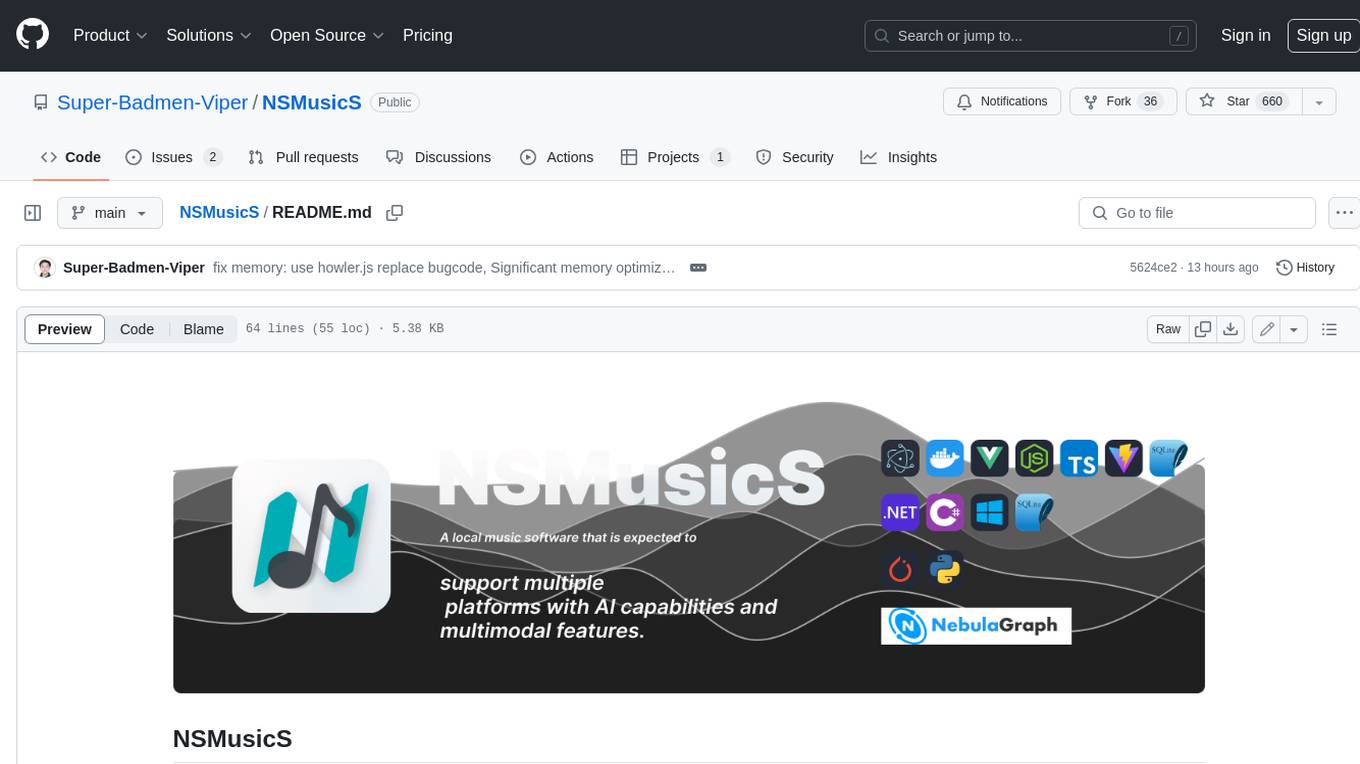
NSMusicS
NSMusicS is a local music software that is expected to support multiple platforms with AI capabilities and multimodal features. The goal of NSMusicS is to integrate various functions (such as artificial intelligence, streaming, music library management, cross platform, etc.), which can be understood as similar to Navidrome but with more features than Navidrome. It wants to become a plugin integrated application that can almost have all music functions.
RVC_CLI
**RVC_CLI: Retrieval-based Voice Conversion Command Line Interface** This command-line interface (CLI) provides a comprehensive set of tools for voice conversion, enabling you to modify the pitch, timbre, and other characteristics of audio recordings. It leverages advanced machine learning models to achieve realistic and high-quality voice conversions. **Key Features:** * **Inference:** Convert the pitch and timbre of audio in real-time or process audio files in batch mode. * **TTS Inference:** Synthesize speech from text using a variety of voices and apply voice conversion techniques. * **Training:** Train custom voice conversion models to meet specific requirements. * **Model Management:** Extract, blend, and analyze models to fine-tune and optimize performance. * **Audio Analysis:** Inspect audio files to gain insights into their characteristics. * **API:** Integrate the CLI's functionality into your own applications or workflows. **Applications:** The RVC_CLI finds applications in various domains, including: * **Music Production:** Create unique vocal effects, harmonies, and backing vocals. * **Voiceovers:** Generate voiceovers with different accents, emotions, and styles. * **Audio Editing:** Enhance or modify audio recordings for podcasts, audiobooks, and other content. * **Research and Development:** Explore and advance the field of voice conversion technology. **For Jobs:** * Audio Engineer * Music Producer * Voiceover Artist * Audio Editor * Machine Learning Engineer **AI Keywords:** * Voice Conversion * Pitch Shifting * Timbre Modification * Machine Learning * Audio Processing **For Tasks:** * Convert Pitch * Change Timbre * Synthesize Speech * Train Model * Analyze Audio
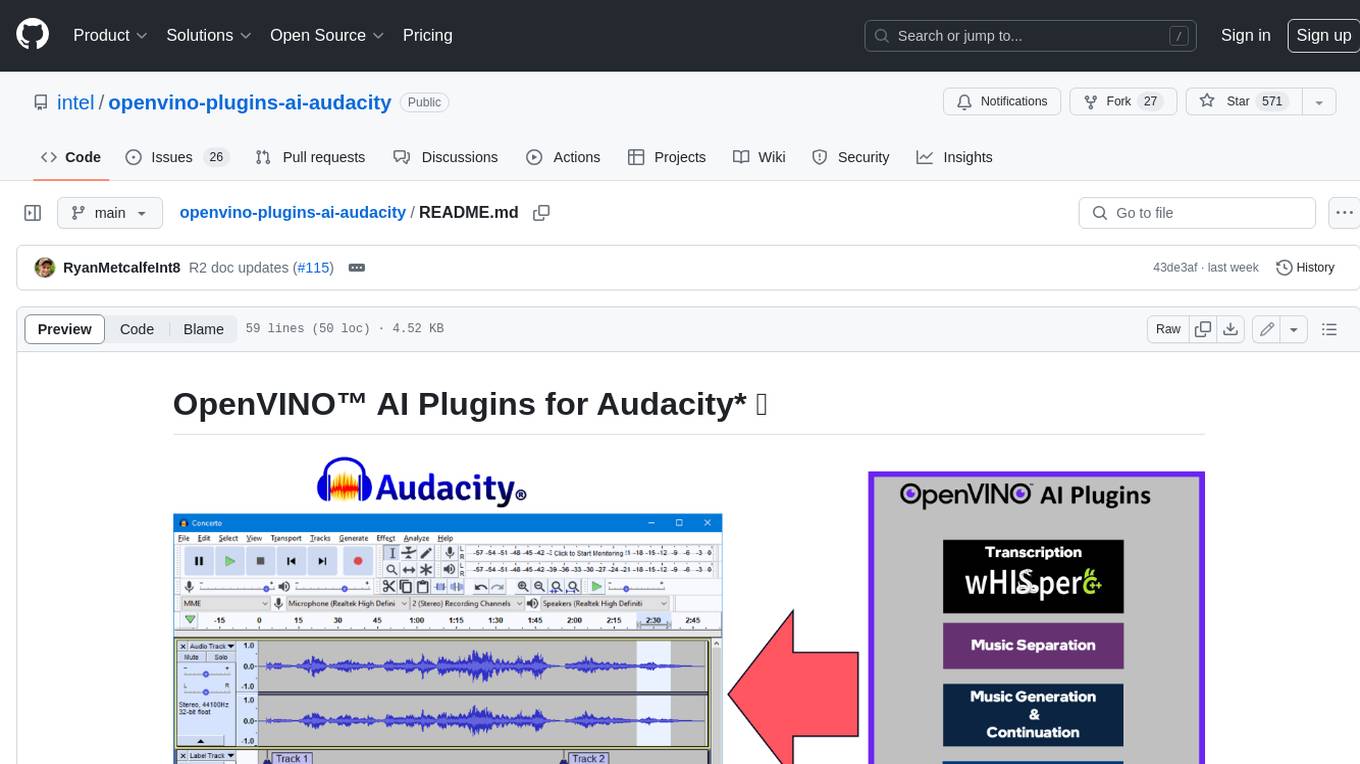
openvino-plugins-ai-audacity
OpenVINO™ AI Plugins for Audacity* are a set of AI-enabled effects, generators, and analyzers for Audacity®. These AI features run 100% locally on your PC -- no internet connection necessary! OpenVINO™ is used to run AI models on supported accelerators found on the user's system such as CPU, GPU, and NPU. * **Music Separation**: Separate a mono or stereo track into individual stems -- Drums, Bass, Vocals, & Other Instruments. * **Noise Suppression**: Removes background noise from an audio sample. * **Music Generation & Continuation**: Uses MusicGen LLM to generate snippets of music, or to generate a continuation of an existing snippet of music. * **Whisper Transcription**: Uses whisper.cpp to generate a label track containing the transcription or translation for a given selection of spoken audio or vocals.