


amazon-bedrock-agentcore-samples
Amazon Bedrock Agentcore accelerates AI agents into production with the scale, reliability, and security, critical to real-world deployment.
Stars: 2307
Amazon Bedrock AgentCore Samples repository provides examples and tutorials to deploy and operate AI agents securely at scale using any framework and model. It is framework-agnostic and model-agnostic, allowing flexibility in deployment. The repository includes tutorials, end-to-end applications, integration guides, deployment automation, and full-stack reference applications for developers to understand and implement Amazon Bedrock AgentCore capabilities into their applications.
README:




Welcome to the Amazon Bedrock AgentCore Samples repository!
Amazon Bedrock AgentCore is both framework-agnostic and model-agnostic, giving you the flexibility to deploy and operate advanced AI agents securely and at scale. Whether you’re building with Strands Agents, CrewAI, LangGraph, LlamaIndex, or any other framework—and running them on any Large Language Model (LLM)—Amazon Bedrock AgentCore provides the infrastructure to support them. By eliminating the undifferentiated heavy lifting of building and managing specialized agent infrastructure, Amazon Bedrock AgentCore lets you bring your preferred framework and model, and deploy without rewriting code.
This collection provides examples and tutorials to help you understand, implement, and integrate Amazon Bedrock AgentCore capabilities into your applications.
Build your first production-ready AI agent with Amazon Bedrock AgentCore. We’ll take you beyond prototyping and show you how to productionize your first agentic AI application using Amazon Bedrock AgentCore.
Interactive Learning & Foundation
This folder contains notebook-based tutorials that teach you the fundamentals of Amazon Bedrock AgentCore capabilities through hands-on examples.
The structure is divided by AgentCore component:
-
Runtime: Amazon Bedrock AgentCore Runtime is a secure, serverless runtime capability that empowers organizations to deploy and scale both AI agents and tools, regardless of framework, protocol, or model choice—enabling rapid prototyping, seamless scaling, and accelerated time to market
-
Gateway: AI agents need tools to perform real-world tasks—from searching databases to sending messages. Amazon Bedrock AgentCore Gateway automatically converts APIs, Lambda functions, and existing services into MCP-compatible tools so developers can quickly make these essential capabilities available to agents without managing integrations.
-
Memory: Amazon Bedrock AgentCore Memory makes it easy for developer to build rich, personalized agent experiences with fully-manged memory infrastructure and the ability to customize memory for your needs.
-
Identity: Amazon Bedrock AgentCore Identity provides seamless agent identity and access management across AWS services and third-party applications such as Slack and Zoom while supporting any standard identity providers such as Okta, Entra, and Amazon Cognito.
-
Tools: Amazon Bedrock AgentCore provides two built-in tools to simplify your agentic AI application development: Amazon Bedrock AgentCore Code Interpreter tool enables AI agents to write and execute code securely, enhancing their accuracy and expanding their ability to solve complex end-to-end tasks. Amazon Bedrock AgentCore Browser Tool is an enterprise-grade capability that enables AI agents to navigate websites, complete multi-step forms, and perform complex web-based tasks with human-like precision within a fully managed, secure sandbox environment with low latency
-
Observability: Amazon Bedrock AgentCore Observability helps developers trace, debug, and monitor agent performance through unified operational dashboards. With support for OpenTelemetry compatible telemetry and detailed visualizations of each step of the agent workflow, Amazon Bedrock AgentCore Observability enables developers to easily gain visibility into agent behavior and maintain quality standards at scale.
-
Evaluation: Amazon Bedrock AgentCore Evaluations helps you optimize your agent's quality based on real-world interactions. It provides built-in and custom evaluators with both on-demand and online evaluation capabilities, enabling you to test agents during development and monitor production agents with continuous performance assessment across critical dimensions like correctness, helpfulness, and safety.
-
Policy: Amazon Bedrock AgentCore Policy enables fine-grained access control for AI agents using Cedar policies. It evaluates requests in real-time to determine whether tool invocations should be allowed or denied based on identity attributes, input parameters, and custom business rules, helping you enforce governance and compliance requirements at scale.
-
AgentCore end-to-end: In this tutorial we will move a customer support agent from prototype to production using Amazon Bedrock AgentCore services.
The examples provided as perfect for beginners and those looking to understand the underlying concepts before building AI Agents applications.
End-to-end Applications
Explore practical use case implementations that demonstrate how to apply Amazon Bedrock AgentCore capabilities to solve real business problems.
Each use case includes complete implementation focused on the AgentCore components with detailed explanations.
Framework & Protocol Integration
Learn how to integrate Amazon Bedrock AgentCore capabilities with popular Agentic frameworks such as Strands Agents, LangChain and CrewAI.
Set agent-to-agent communication with A2A and different multi-agent collaboration patterns. Integrate agentic interfaces and learn how to use Amazon Bedrock AgentCore with different entry points.
Deployment Automation & Infrastructure
Deploy Amazon Bedrock AgentCore resources Infrastructure as code. We are providing examples using CloudFormation, AWS CDK, or Terraform.
Automate infrastructure provisioning with production-ready templates for basic runtimes, MCP servers, multi-agent systems, and complete agent solutions with tools and memory.
Full-Stack Reference Applications
Jump-start your development with complete, deployment-ready agentic applications built on Amazon Bedrock AgentCore.
Each blueprint provides a comprehensive foundation with integrated services, authentication, and business logic that you can customize and deploy for your use case.
- Create and activate a virtual environment
python -m venv .venv
source .venv/bin/activate- Install dependencies
pip install -r requirements.txt-
Export/Activate required AWS Credentials for the notebook to run
-
Register your virtual environment as a kernel for Jupyter notebook to use
python -m ipykernel install --user --name=notebook-venv --display-name="Python (notebook-venv)"You can list your kernels using:
jupyter kernelspec list- Run the notebook and ensure the correct kernel is selected
jupyter notebook path/to/your/notebook.ipynbImportant: After opening the notebook in Jupyter, make sure to select the correct kernel by going to Kernel → Change kernel → select "Python (notebook-venv)" to ensure your virtual environment packages are available.
Quick Start - Amazon Bedrock AgentCore Runtime
- An AWS account with credentials configured (
aws configure) - Python 3.10 or later
- Docker or Finch installed and running - only for local development
- Model Access: Anthropic Claude 4.0 enabled in Amazon Bedrock console
- AWS Permissions:
-
BedrockAgentCoreFullAccessmanaged policy -
AmazonBedrockFullAccessmanaged policy -
Caller permissions: See detailed policy here
-
# Install both packages
pip install bedrock-agentcore strands-agents bedrock-agentcore-starter-toolkit
Create my_agent.py:
from bedrock_agentcore import BedrockAgentCoreApp
from strands import Agent

app = BedrockAgentCoreApp()
agent = Agent()

@app.entrypoint
def invoke(payload):
    """Your AI agent function"""
    user_message = payload.get("prompt", "Hello! How can I help you today?")
    result = agent(user_message)
    return {"result": result.message}

if __name__ == "__main__":
    app.run()
Create requirements.txt:
cat > requirements.txt << EOF
bedrock-agentcore
strands-agents
EOF# Start your agent
python my_agent.py
# Test it (in another terminal)
curl -X POST http://localhost:8080/invocations \
-H "Content-Type: application/json" \
-d '{"prompt": "Hello!"}'Success: You should see a response like {"result": "Hello! I'm here to help..."}
# Configure and deploy (auto-creates all required resources)
agentcore configure -e my_agent.py
agentcore launch

# Test your deployed agent
agentcore invoke '{"prompt": "tell me a joke"}'
Congratulations! Your agent is now running on Amazon Bedrock AgentCore Runtime!
Follow quickstart guides for Gateway, Identity, Memory, Observability, and builtin-tools.
- Getting started with Amazon Bedrock AgentCore - Workshop
- Diving Deep into Bedrock AgentCore - Workshop
- Amazon Bedrock AgentCore pricing
- Amazon Bedrock AgentCore FAQs
We welcome contributions! Please see our Contributing Guidelines for details on:
- Adding new samples
- Improving existing examples
- Reporting issues
- Suggesting enhancements
This project is licensed under the Apache License 2.0 - see the LICENSE file for details.
For Tasks:
Click tags to check more tools for each tasksFor Jobs:
Alternative AI tools for amazon-bedrock-agentcore-samples
Similar Open Source Tools
amazon-bedrock-agentcore-samples
Amazon Bedrock AgentCore Samples repository provides examples and tutorials to deploy and operate AI agents securely at scale using any framework and model. It is framework-agnostic and model-agnostic, allowing flexibility in deployment. The repository includes tutorials, end-to-end applications, integration guides, deployment automation, and full-stack reference applications for developers to understand and implement Amazon Bedrock AgentCore capabilities into their applications.
crewAI
CrewAI is a cutting-edge framework designed to orchestrate role-playing autonomous AI agents. By fostering collaborative intelligence, CrewAI empowers agents to work together seamlessly, tackling complex tasks. It enables AI agents to assume roles, share goals, and operate in a cohesive unit, much like a well-oiled crew. Whether you're building a smart assistant platform, an automated customer service ensemble, or a multi-agent research team, CrewAI provides the backbone for sophisticated multi-agent interactions. With features like role-based agent design, autonomous inter-agent delegation, flexible task management, and support for various LLMs, CrewAI offers a dynamic and adaptable solution for both development and production workflows.
synthora
Synthora is a lightweight and extensible framework for LLM-driven Agents and ALM research. It aims to simplify the process of building, testing, and evaluating agents by providing essential components. The framework allows for easy agent assembly with a single config, reducing the effort required for tuning and sharing agents. Although in early development stages with unstable APIs, Synthora welcomes feedback and contributions to enhance its stability and functionality.

langwatch
LangWatch is a monitoring and analytics platform designed to track, visualize, and analyze interactions with Large Language Models (LLMs). It offers real-time telemetry to optimize LLM cost and latency, a user-friendly interface for deep insights into LLM behavior, user analytics for engagement metrics, detailed debugging capabilities, and guardrails to monitor LLM outputs for issues like PII leaks and toxic language. The platform supports OpenAI and LangChain integrations, simplifying the process of tracing LLM calls and generating API keys for usage. LangWatch also provides documentation for easy integration and self-hosting options for interested users.
adk-python
Agent Development Kit (ADK) is an open-source, code-first Python toolkit for building, evaluating, and deploying sophisticated AI agents with flexibility and control. It is a flexible and modular framework optimized for Gemini and the Google ecosystem, but also compatible with other frameworks. ADK aims to make agent development feel more like software development, enabling developers to create, deploy, and orchestrate agentic architectures ranging from simple tasks to complex workflows.
neuro-san-studio
Neuro SAN Studio is an open-source library for building agent networks across various industries. It simplifies the development of collaborative AI systems by enabling users to create sophisticated multi-agent applications using declarative configuration files. The tool offers features like data-driven configuration, adaptive communication protocols, safe data handling, dynamic agent network designer, flexible tool integration, robust traceability, and cloud-agnostic deployment. It has been used in various use-cases such as automated generation of multi-agent configurations, airline policy assistance, banking operations, market analysis in consumer packaged goods, insurance claims processing, intranet knowledge management, retail operations, telco network support, therapy vignette supervision, and more.
adk-ts
ADK-TS is a comprehensive TypeScript framework for building sophisticated AI agents with multi-LLM support, advanced tools, and flexible conversation flows. It is production-ready and enables developers to create intelligent, autonomous systems that can handle complex multi-step tasks. The framework provides features such as multi-provider LLM support, extensible tool system, advanced agent reasoning, real-time streaming, flexible authentication, persistent memory systems, multi-agent orchestration, built-in telemetry, and prebuilt MCP servers for easy deployment and management of agents.
ai-platform-engineering
The AI Platform Engineering repository provides a collection of tools and resources for building and deploying AI models. It includes libraries for data preprocessing, model training, and model serving. The repository also contains example code and tutorials to help users get started with AI development. Whether you are a beginner or an experienced AI engineer, this repository offers valuable insights and best practices to streamline your AI projects.
draive
draive is an open-source Python library designed to simplify and accelerate the development of LLM-based applications. It offers abstract building blocks for connecting functionalities with large language models, flexible integration with various AI solutions, and a user-friendly framework for building scalable data processing pipelines. The library follows a function-oriented design, allowing users to represent complex programs as simple functions. It also provides tools for measuring and debugging functionalities, ensuring type safety and efficient asynchronous operations for modern Python apps.
genkit
Firebase Genkit (beta) is a framework with powerful tooling to help app developers build, test, deploy, and monitor AI-powered features with confidence. Genkit is cloud optimized and code-centric, integrating with many services that have free tiers to get started. It provides unified API for generation, context-aware AI features, evaluation of AI workflow, extensibility with plugins, easy deployment to Firebase or Google Cloud, observability and monitoring with OpenTelemetry, and a developer UI for prototyping and testing AI features locally. Genkit works seamlessly with Firebase or Google Cloud projects through official plugins and templates.
nexent
Nexent is a powerful tool for analyzing and visualizing network traffic data. It provides comprehensive insights into network behavior, helping users to identify patterns, anomalies, and potential security threats. With its user-friendly interface and advanced features, Nexent is suitable for network administrators, cybersecurity professionals, and anyone looking to gain a deeper understanding of their network infrastructure.
adk-java
Agent Development Kit (ADK) for Java is an open-source toolkit designed for developers to build, evaluate, and deploy sophisticated AI agents with flexibility and control. It allows defining agent behavior, orchestration, and tool use directly in code, enabling robust debugging, versioning, and deployment anywhere. The toolkit offers a rich tool ecosystem, code-first development approach, and support for modular multi-agent systems, making it ideal for creating advanced AI agents integrated with Google Cloud services.
countly-server
Countly is a privacy-first, AI-ready analytics and customer engagement platform built for organizations that require full data ownership and deployment flexibility. It can be deployed on-premises or in a private cloud, giving complete control over data, infrastructure, compliance, and security. Teams use Countly to understand user behavior across mobile, web, desktop, and connected devices, optimize product and customer experiences in real time, and automate and personalize customer engagement across channels. With flexible data tracking, customizable dashboards, and a modular plugin-based architecture, Countly scales with the product while ensuring long-term autonomy and zero vendor lock-in. Built for privacy, designed for flexibility, and ready for AI-driven innovation.
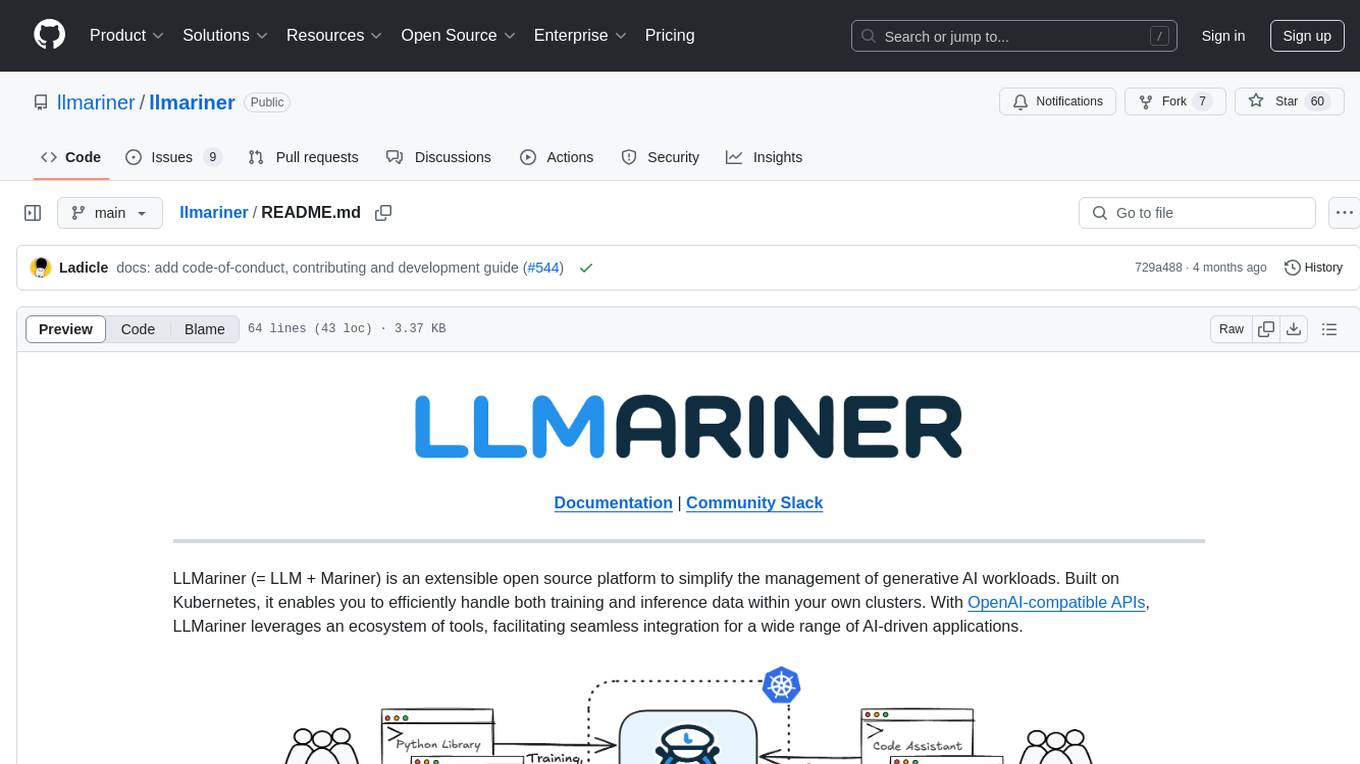
llmariner
LLMariner is an extensible open source platform built on Kubernetes to simplify the management of generative AI workloads. It enables efficient handling of training and inference data within clusters, with OpenAI-compatible APIs for seamless integration with a wide range of AI-driven applications.
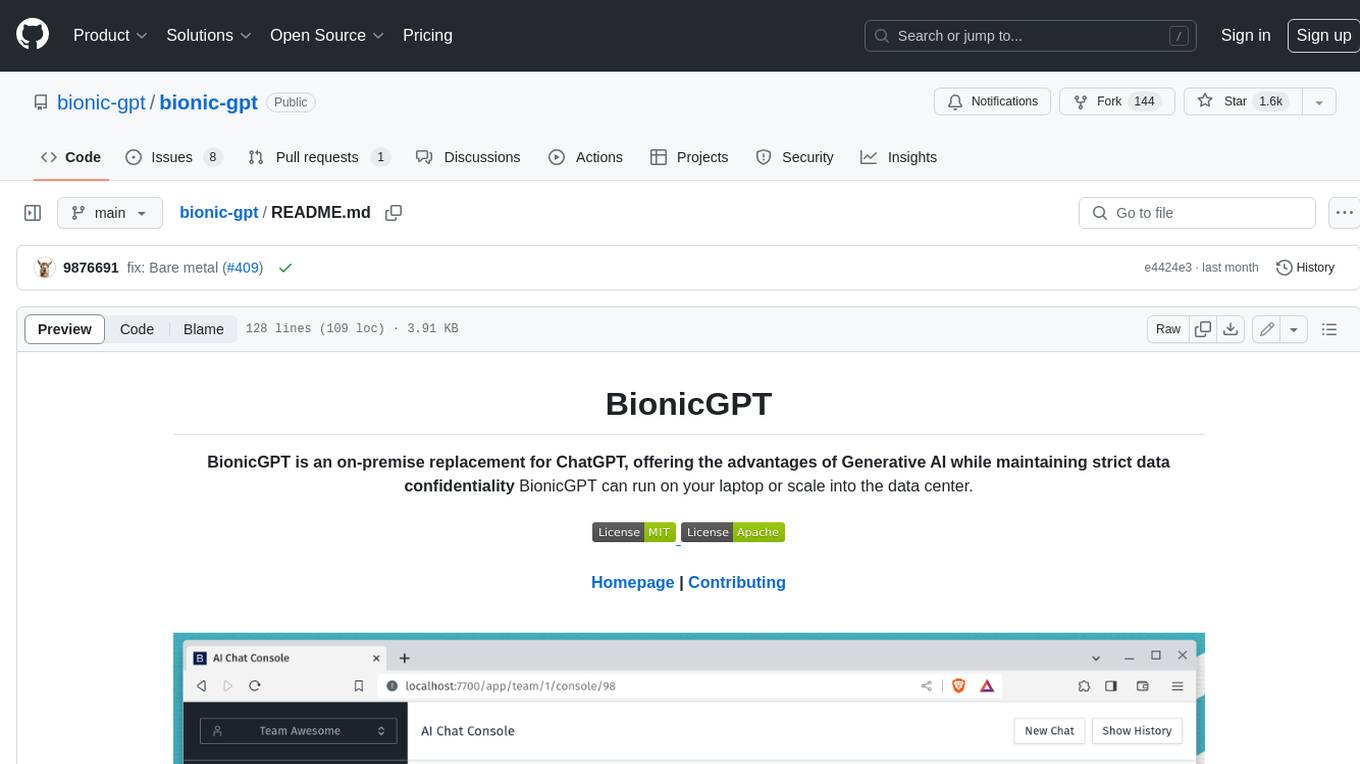
bionic-gpt
BionicGPT is an on-premise replacement for ChatGPT, offering the advantages of Generative AI while maintaining strict data confidentiality. BionicGPT can run on your laptop or scale into the data center.
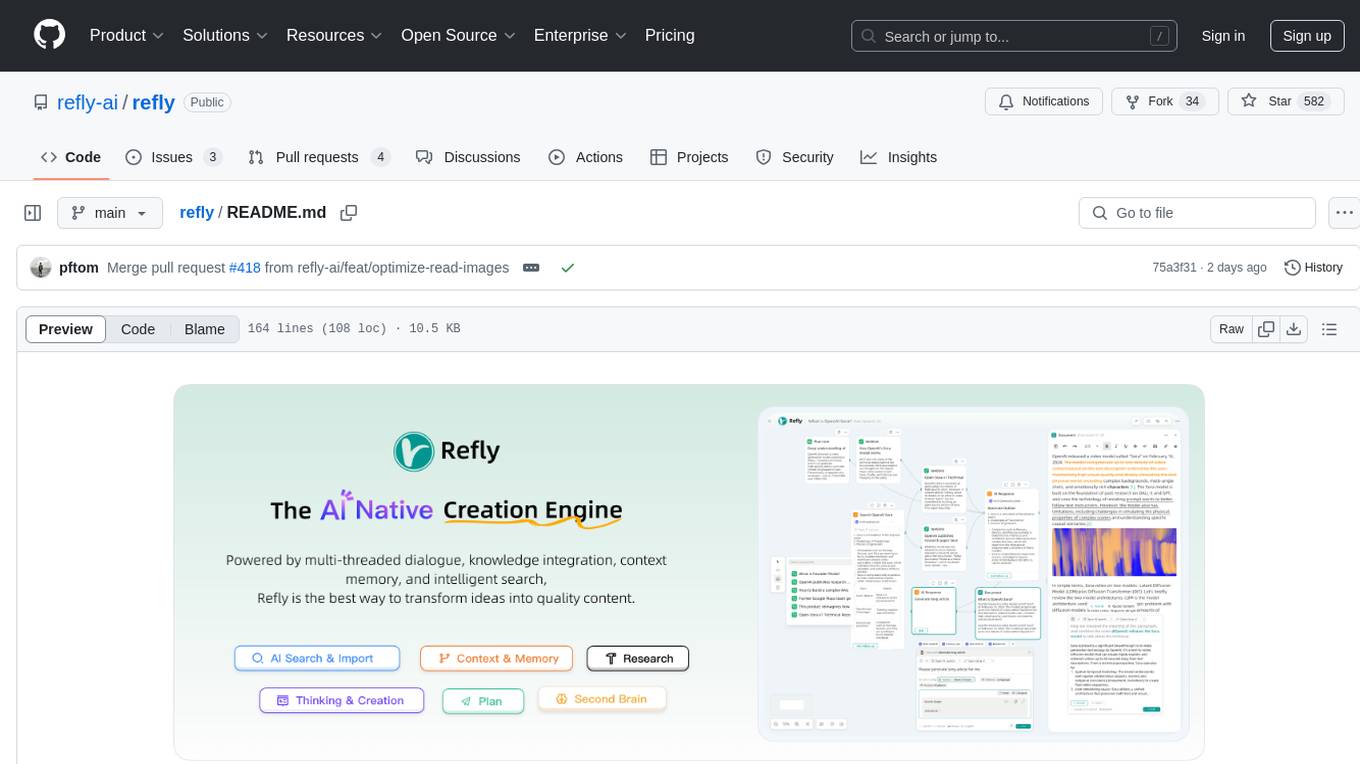
refly
Refly.AI is an open-source AI-native creation engine that empowers users to transform ideas into production-ready content. It features a free-form canvas interface with multi-threaded conversations, knowledge base integration, contextual memory, intelligent search, WYSIWYG AI editor, and more. Users can leverage AI-powered capabilities, context memory, knowledge base integration, quotes, and AI document editing to enhance their content creation process. Refly offers both cloud and self-hosting options, making it suitable for individuals, enterprises, and organizations. The tool is designed to facilitate human-AI collaboration and streamline content creation workflows.
For similar tasks
SuperCoder
SuperCoder is an open-source autonomous software development system that leverages advanced AI tools and agents to streamline and automate coding, testing, and deployment tasks, enhancing efficiency and reliability. It supports a variety of languages and frameworks for diverse development needs. Users can set up the environment variables, build and run the Go server, Asynq worker, and Postgres using Docker and Docker Compose. The project is under active development and may still have issues, but users can seek help and support from the Discord community or by creating new issues on GitHub.
aiconfigurator
The `aiconfigurator` tool assists in finding a strong starting configuration for disaggregated serving in AI deployments. It helps optimize throughput at a given latency by evaluating thousands of configurations based on model, GPU count, and GPU type. The tool models LLM inference using collected data for a target machine and framework, running via CLI and web app. It generates configuration files for deployment with Dynamo, offering features like customized configuration, all-in-one automation, and tuning with advanced features. The tool estimates performance by breaking down LLM inference into operations, collecting operation execution times, and searching for strong configurations. Supported features include models like GPT and operations like attention, KV cache, GEMM, AllReduce, embedding, P2P, element-wise, MoE, MLA BMM, TRTLLM versions, and parallel modes like tensor-parallel and pipeline-parallel.
ai-toolbox
AI-Toolbox is a collection of automation scripts and tools designed to streamline AI workflows. It simplifies the installation process of various AI applications, making software deployment effortless for data scientists, researchers, and developers. The toolbox offers automated installation of multiple applications, customization for specific workflows, easy-to-use scripts, and receives regular updates and contributions from the community.
amazon-bedrock-agentcore-samples
Amazon Bedrock AgentCore Samples repository provides examples and tutorials to deploy and operate AI agents securely at scale using any framework and model. It is framework-agnostic and model-agnostic, allowing flexibility in deployment. The repository includes tutorials, end-to-end applications, integration guides, deployment automation, and full-stack reference applications for developers to understand and implement Amazon Bedrock AgentCore capabilities into their applications.
AutoGPT
AutoGPT is a revolutionary tool that empowers everyone to harness the power of AI. With AutoGPT, you can effortlessly build, test, and delegate tasks to AI agents, unlocking a world of possibilities. Our mission is to provide the tools you need to focus on what truly matters: innovation and creativity.
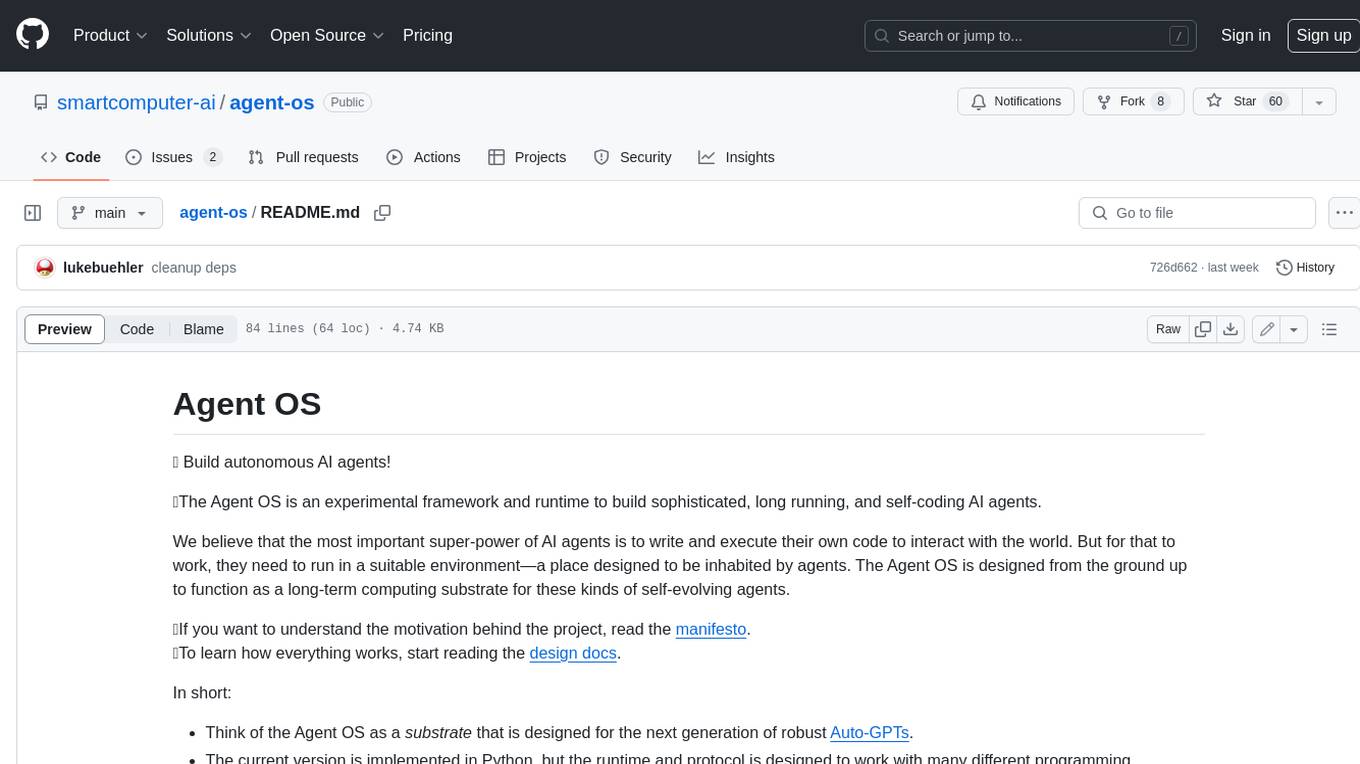
agent-os
The Agent OS is an experimental framework and runtime to build sophisticated, long running, and self-coding AI agents. We believe that the most important super-power of AI agents is to write and execute their own code to interact with the world. But for that to work, they need to run in a suitable environment—a place designed to be inhabited by agents. The Agent OS is designed from the ground up to function as a long-term computing substrate for these kinds of self-evolving agents.
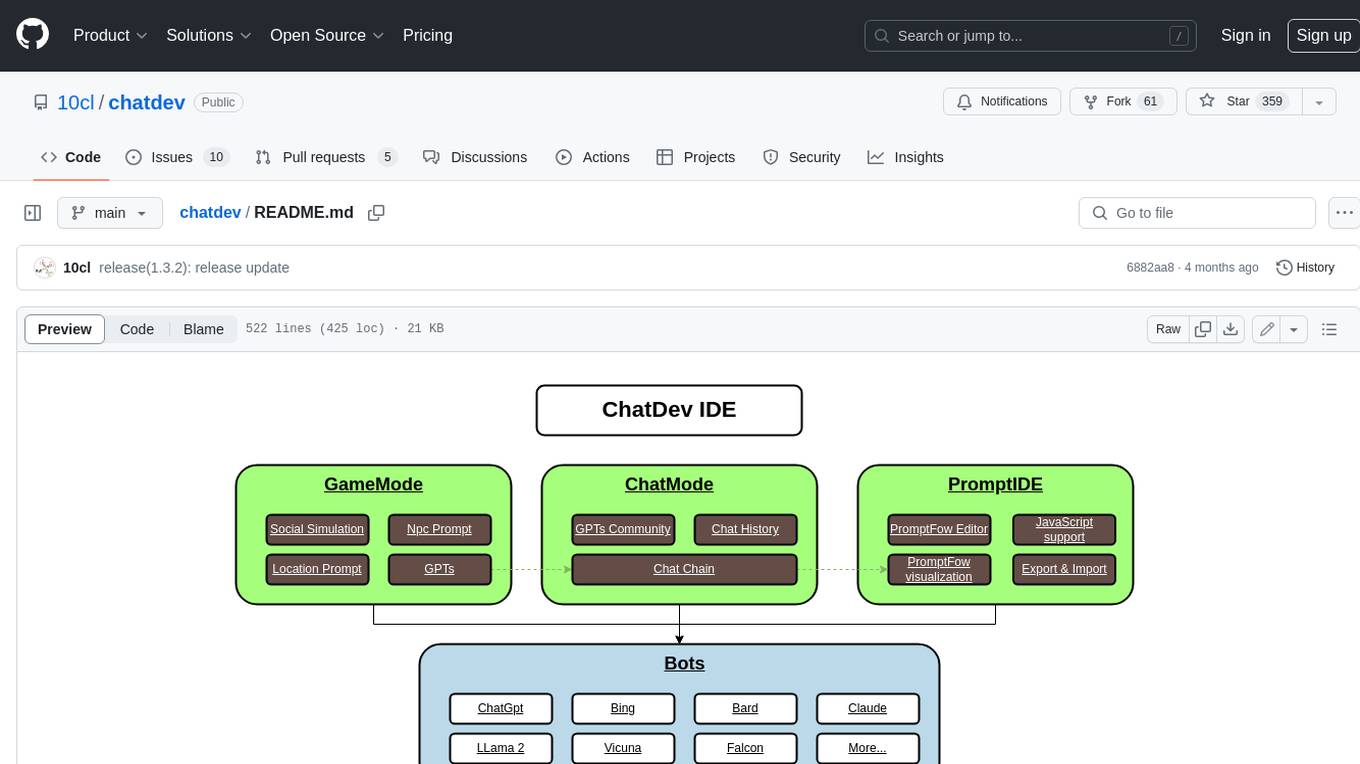
chatdev
ChatDev IDE is a tool for building your AI agent, Whether it's NPCs in games or powerful agent tools, you can design what you want for this platform. It accelerates prompt engineering through **JavaScript Support** that allows implementing complex prompting techniques.
module-ballerinax-ai.agent
This library provides functionality required to build ReAct Agent using Large Language Models (LLMs).
For similar jobs
sweep
Sweep is an AI junior developer that turns bugs and feature requests into code changes. It automatically handles developer experience improvements like adding type hints and improving test coverage.
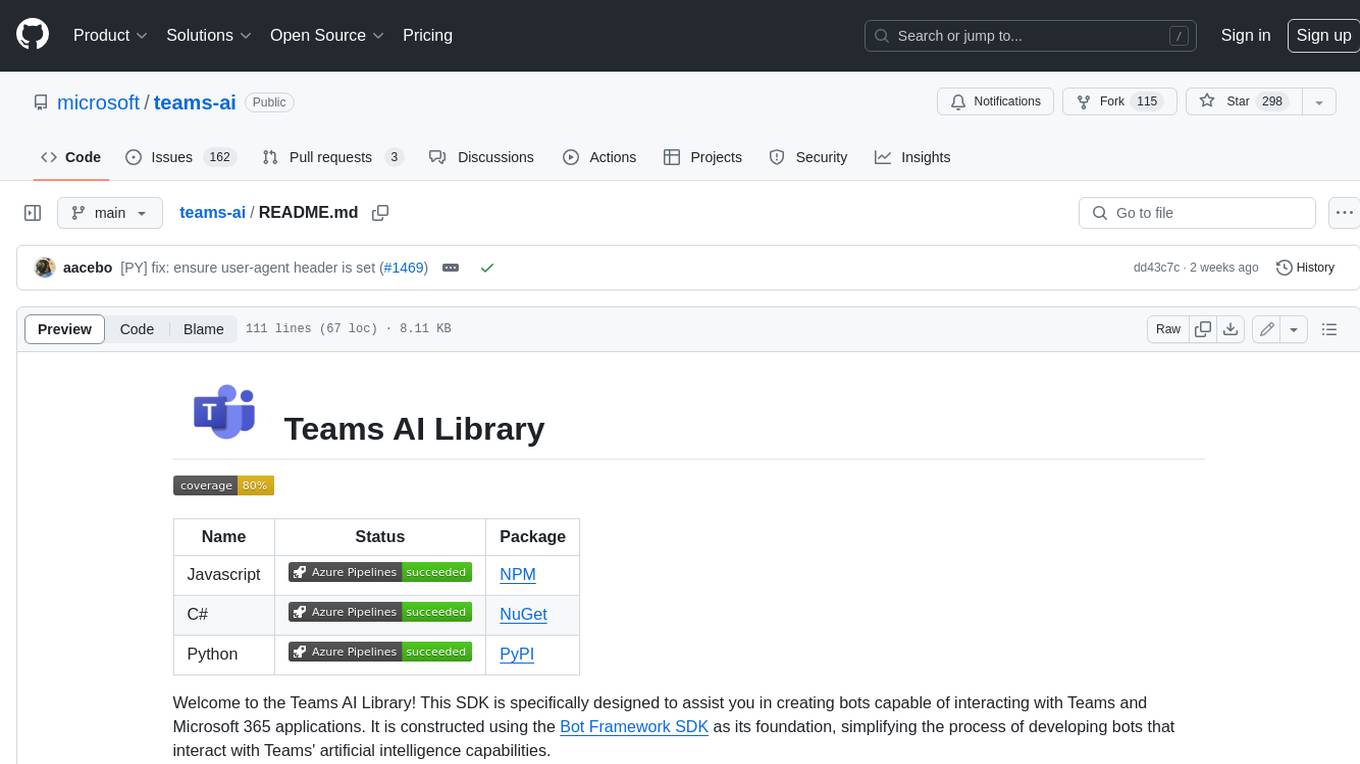
teams-ai
The Teams AI Library is a software development kit (SDK) that helps developers create bots that can interact with Teams and Microsoft 365 applications. It is built on top of the Bot Framework SDK and simplifies the process of developing bots that interact with Teams' artificial intelligence capabilities. The SDK is available for JavaScript/TypeScript, .NET, and Python.
ai-guide
This guide is dedicated to Large Language Models (LLMs) that you can run on your home computer. It assumes your PC is a lower-end, non-gaming setup.
classifai
Supercharge WordPress Content Workflows and Engagement with Artificial Intelligence. Tap into leading cloud-based services like OpenAI, Microsoft Azure AI, Google Gemini and IBM Watson to augment your WordPress-powered websites. Publish content faster while improving SEO performance and increasing audience engagement. ClassifAI integrates Artificial Intelligence and Machine Learning technologies to lighten your workload and eliminate tedious tasks, giving you more time to create original content that matters.
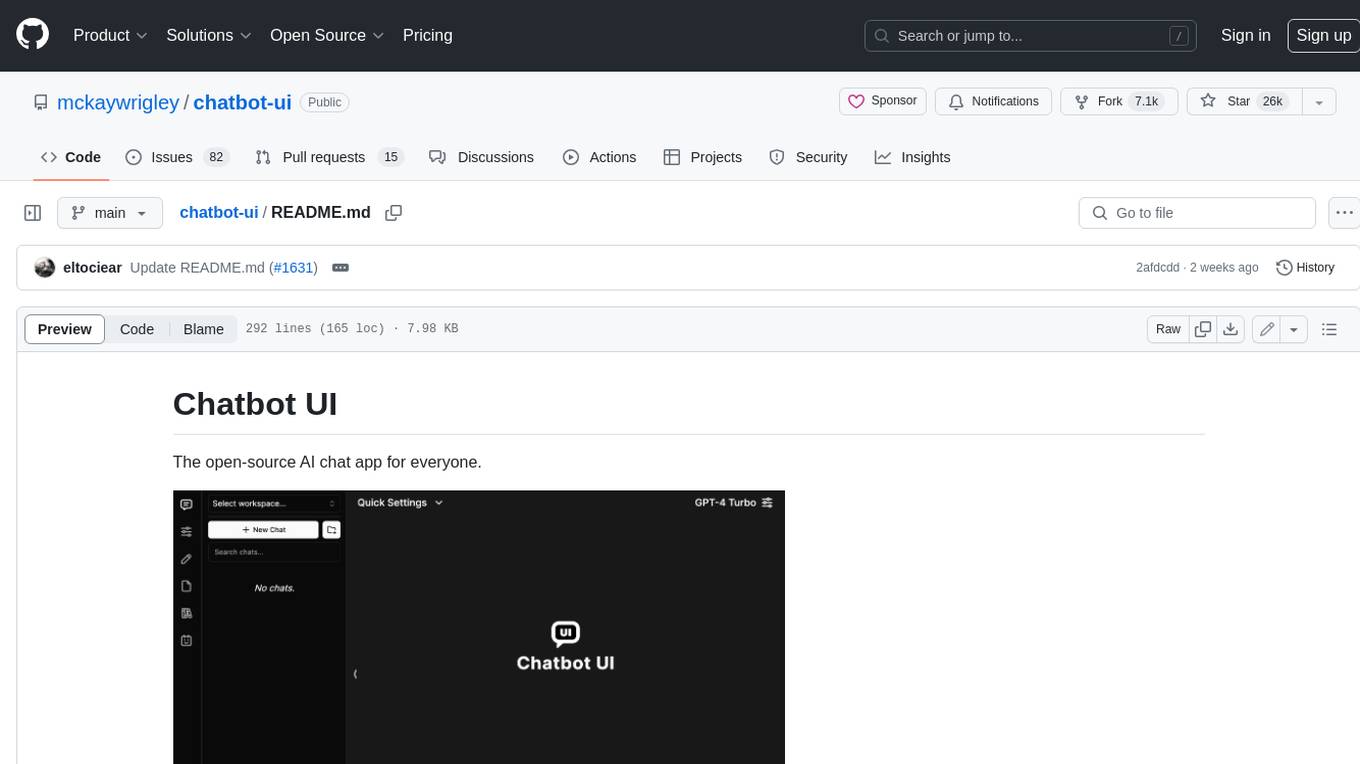
chatbot-ui
Chatbot UI is an open-source AI chat app that allows users to create and deploy their own AI chatbots. It is easy to use and can be customized to fit any need. Chatbot UI is perfect for businesses, developers, and anyone who wants to create a chatbot.
BricksLLM
BricksLLM is a cloud native AI gateway written in Go. Currently, it provides native support for OpenAI, Anthropic, Azure OpenAI and vLLM. BricksLLM aims to provide enterprise level infrastructure that can power any LLM production use cases. Here are some use cases for BricksLLM: * Set LLM usage limits for users on different pricing tiers * Track LLM usage on a per user and per organization basis * Block or redact requests containing PIIs * Improve LLM reliability with failovers, retries and caching * Distribute API keys with rate limits and cost limits for internal development/production use cases * Distribute API keys with rate limits and cost limits for students
uAgents
uAgents is a Python library developed by Fetch.ai that allows for the creation of autonomous AI agents. These agents can perform various tasks on a schedule or take action on various events. uAgents are easy to create and manage, and they are connected to a fast-growing network of other uAgents. They are also secure, with cryptographically secured messages and wallets.
griptape
Griptape is a modular Python framework for building AI-powered applications that securely connect to your enterprise data and APIs. It offers developers the ability to maintain control and flexibility at every step. Griptape's core components include Structures (Agents, Pipelines, and Workflows), Tasks, Tools, Memory (Conversation Memory, Task Memory, and Meta Memory), Drivers (Prompt and Embedding Drivers, Vector Store Drivers, Image Generation Drivers, Image Query Drivers, SQL Drivers, Web Scraper Drivers, and Conversation Memory Drivers), Engines (Query Engines, Extraction Engines, Summary Engines, Image Generation Engines, and Image Query Engines), and additional components (Rulesets, Loaders, Artifacts, Chunkers, and Tokenizers). Griptape enables developers to create AI-powered applications with ease and efficiency.