


mslearn-ai-studio
Practical exercises for Azure AI Foundry training
Stars: 144
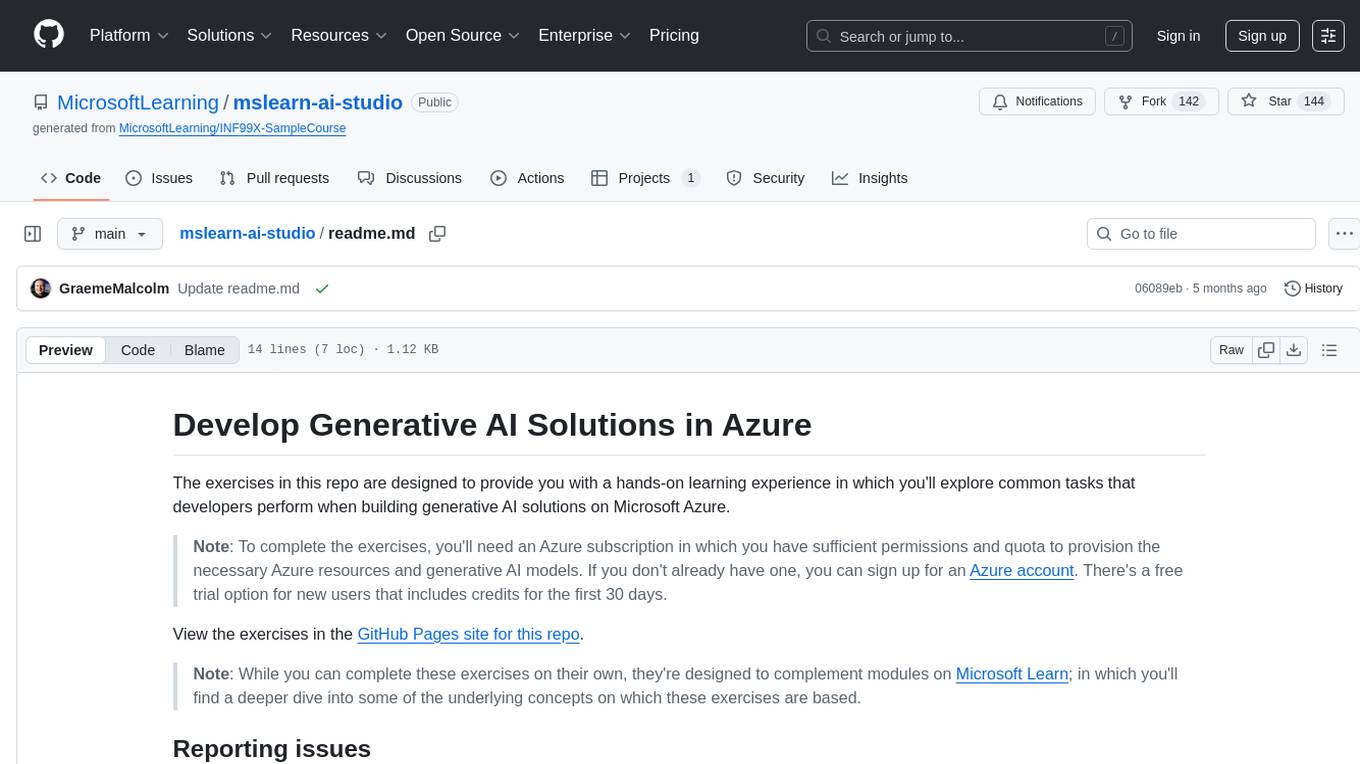
The mslearn-ai-studio repository provides hands-on exercises for building generative AI solutions on Microsoft Azure. Users can explore common tasks related to generative AI models and Azure resources. The exercises are designed to complement Microsoft Learn modules and require an Azure subscription for completion.
README:
The exercises in this repo are designed to provide you with a hands-on learning experience in which you'll explore common tasks that developers perform when building generative AI solutions on Microsoft Azure.
Note: To complete the exercises, you'll need an Azure subscription in which you have sufficient permissions and quota to provision the necessary Azure resources and generative AI models. If you don't already have one, you can sign up for an Azure account. There's a free trial option for new users that includes credits for the first 30 days.
View the exercises in the GitHub Pages site for this repo.
Note: While you can complete these exercises on their own, they're designed to complement modules on Microsoft Learn; in which you'll find a deeper dive into some of the underlying concepts on which these exercises are based.
If you encounter any problems in the exercises, please report them as issues in this repo.
For Tasks:
Click tags to check more tools for each tasksFor Jobs:
Alternative AI tools for mslearn-ai-studio
Similar Open Source Tools
mslearn-ai-studio
The mslearn-ai-studio repository provides hands-on exercises for building generative AI solutions on Microsoft Azure. Users can explore common tasks related to generative AI models and Azure resources. The exercises are designed to complement Microsoft Learn modules and require an Azure subscription for completion.
intro-to-intelligent-apps
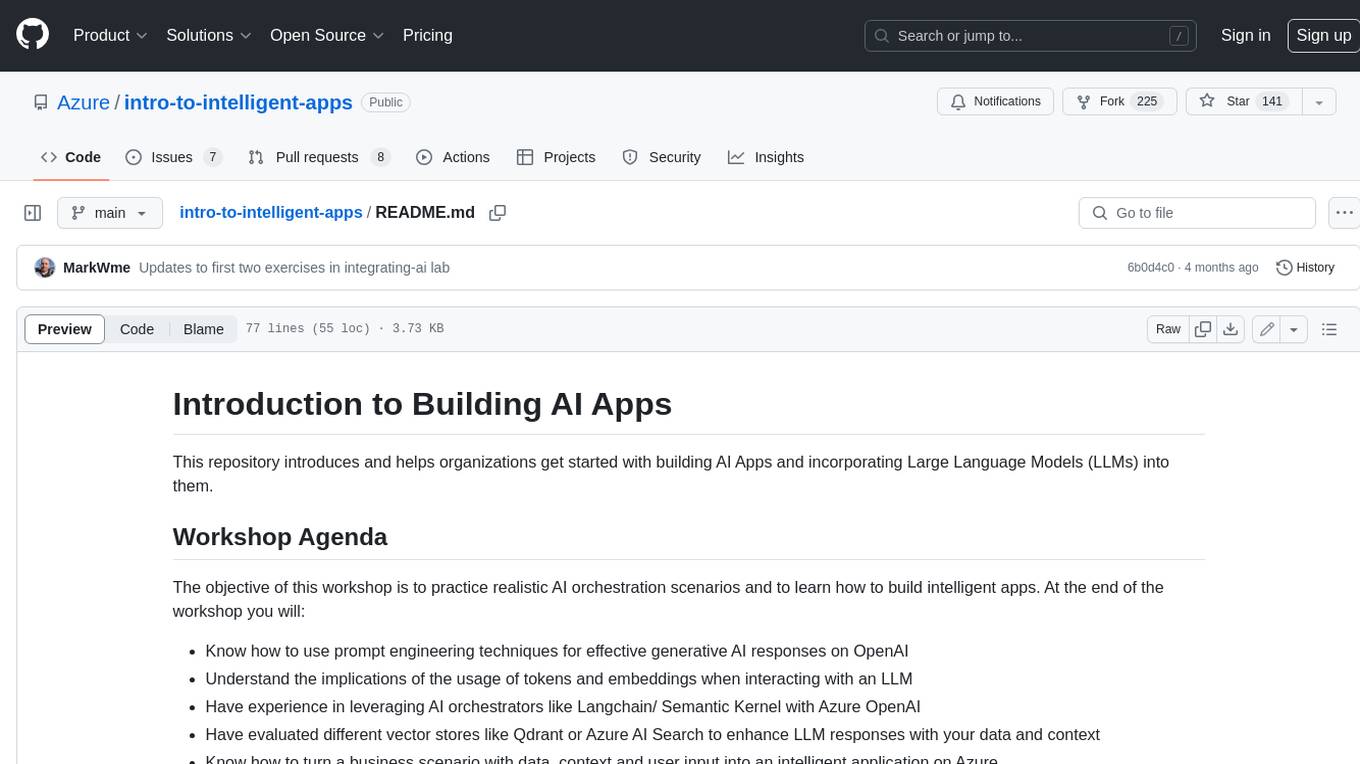
This repository introduces and helps organizations get started with building AI Apps and incorporating Large Language Models (LLMs) into them. The workshop covers topics such as prompt engineering, AI orchestration, and deploying AI apps. Participants will learn how to use Azure OpenAI, Langchain/ Semantic Kernel, Qdrant, and Azure AI Search to build intelligent applications.
MediaAI
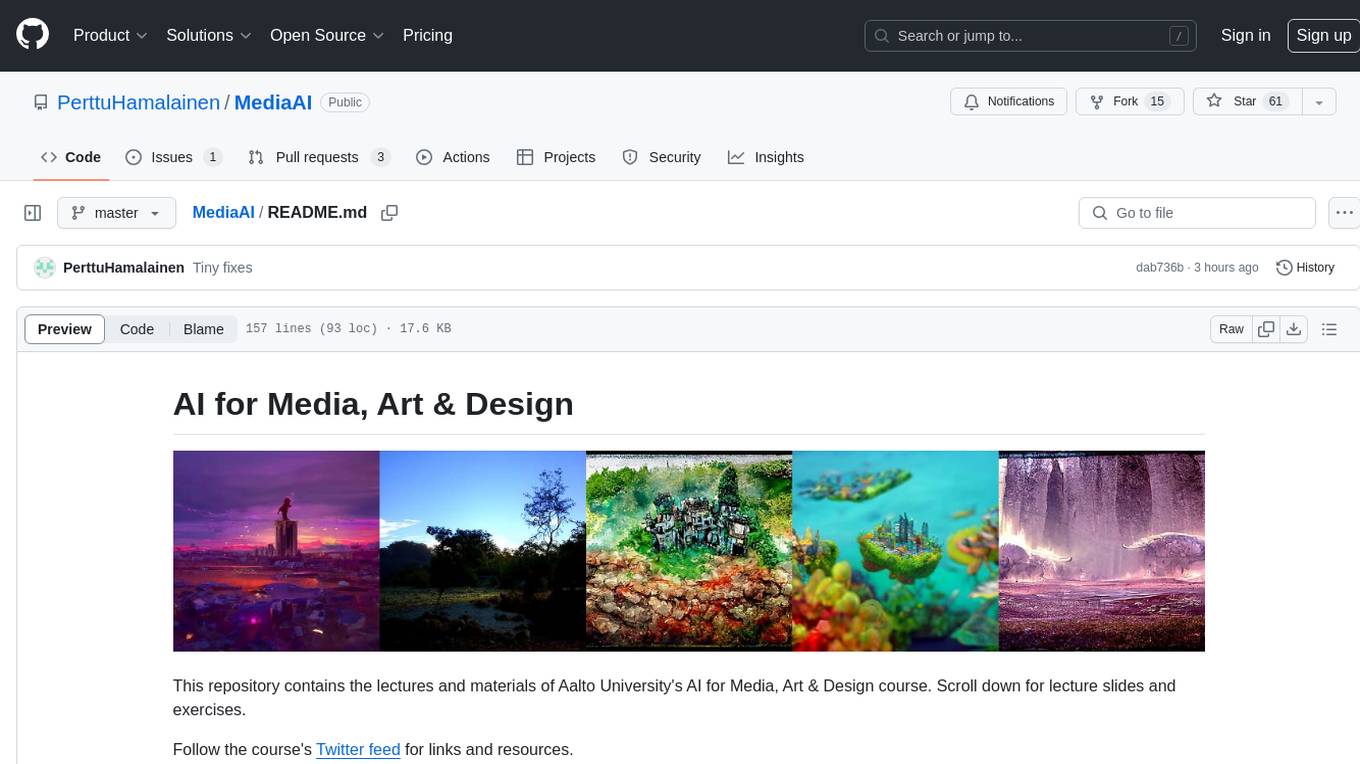
MediaAI is a repository containing lectures and materials for Aalto University's AI for Media, Art & Design course. The course is a hands-on, project-based crash course focusing on deep learning and AI techniques for artists and designers. It covers common AI algorithms & tools, their applications in art, media, and design, and provides hands-on practice in designing, implementing, and using these tools. The course includes lectures, exercises, and a final project based on students' interests. Students can complete the course without programming by creatively utilizing existing tools like ChatGPT and DALL-E. The course emphasizes collaboration, peer-to-peer tutoring, and project-based learning. It covers topics such as text generation, image generation, optimization, and game AI.
examples
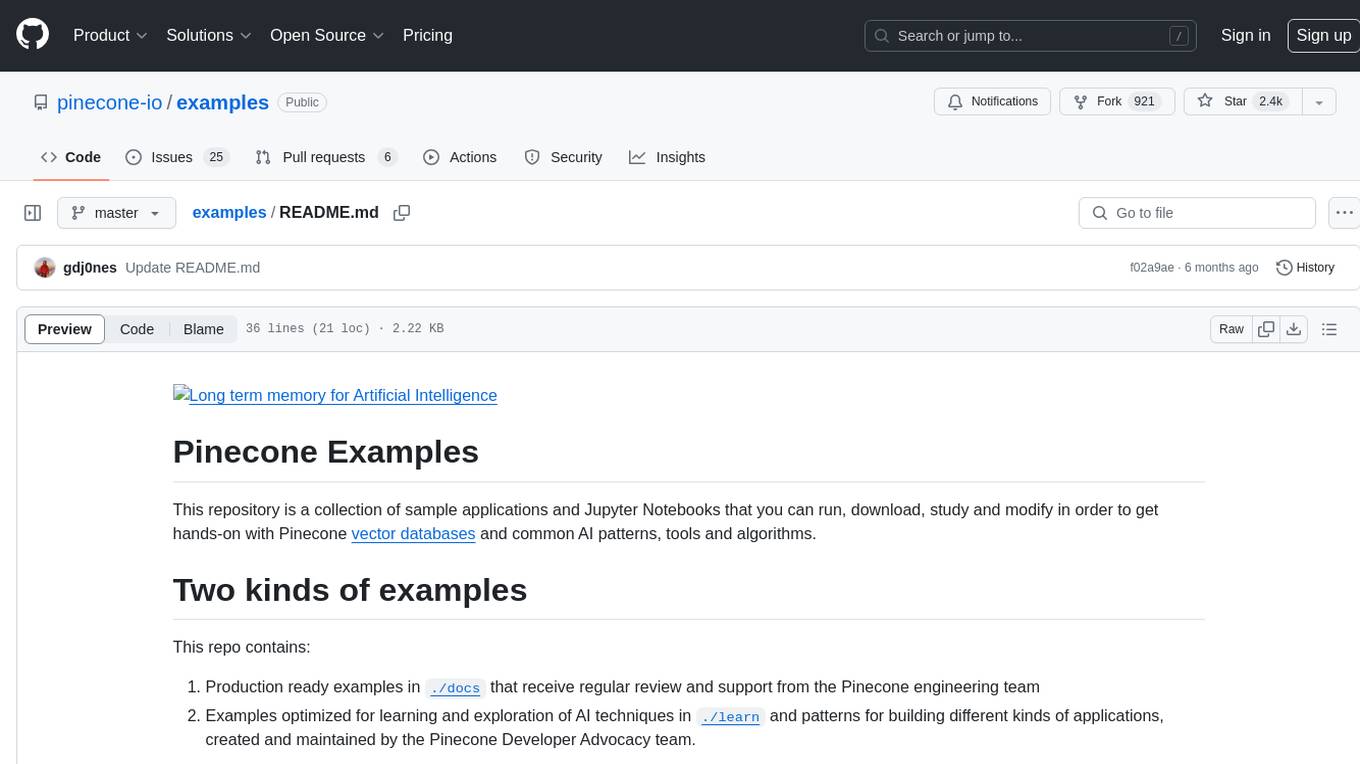
This repository contains a collection of sample applications and Jupyter Notebooks for hands-on experience with Pinecone vector databases and common AI patterns, tools, and algorithms. It includes production-ready examples for review and support, as well as learning-optimized examples for exploring AI techniques and building applications. Users can contribute, provide feedback, and collaborate to improve the resource.
PythonDataScienceFullThrottle
PythonDataScienceFullThrottle is a comprehensive repository containing various Python scripts, libraries, and tools for data science enthusiasts. It includes a wide range of functionalities such as data preprocessing, visualization, machine learning algorithms, and statistical analysis. The repository aims to provide a one-stop solution for individuals looking to dive deep into the world of data science using Python.
mslearn-ai-fundamentals
This repository contains materials for the Microsoft Learn AI Fundamentals module. It covers the basics of artificial intelligence, machine learning, and data science. The content includes hands-on labs, interactive learning modules, and assessments to help learners understand key concepts and techniques in AI. Whether you are new to AI or looking to expand your knowledge, this module provides a comprehensive introduction to the fundamentals of AI.
autoMate
autoMate is an AI-powered local automation tool designed to help users automate repetitive tasks and reclaim their time. It leverages AI and RPA technology to operate computer interfaces, understand screen content, make autonomous decisions, and support local deployment for data security. With natural language task descriptions, users can easily automate complex workflows without the need for programming knowledge. The tool aims to transform work by freeing users from mundane activities and allowing them to focus on tasks that truly create value, enhancing efficiency and liberating creativity.
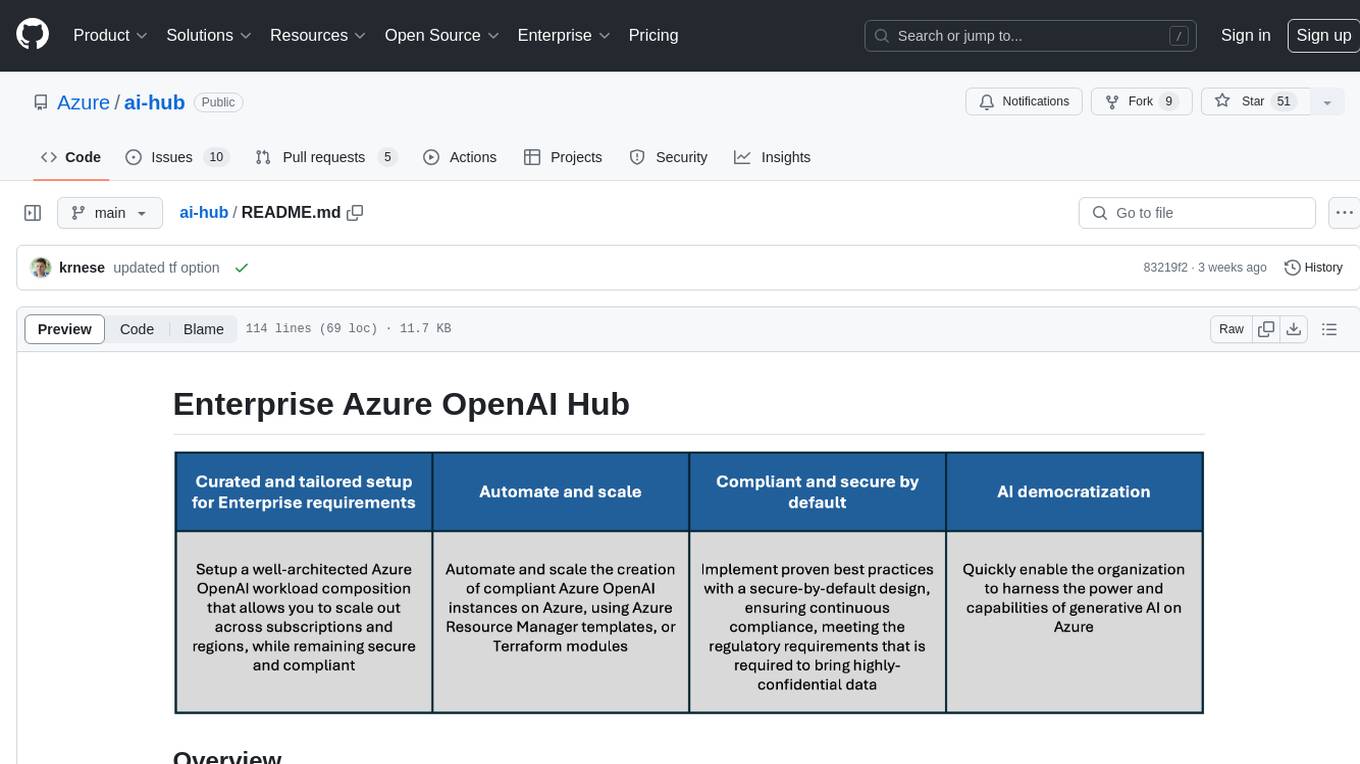
ai-hub
The Enterprise Azure OpenAI Hub is a comprehensive repository designed to guide users through the world of Generative AI on the Azure platform. It offers a structured learning experience to accelerate the transition from concept to production in an Enterprise context. The hub empowers users to explore various use cases with Azure services, ensuring security and compliance. It provides real-world examples and playbooks for practical insights into solving complex problems and developing cutting-edge AI solutions. The repository also serves as a library of proven patterns, aligning with industry standards and promoting best practices for secure and compliant AI development.
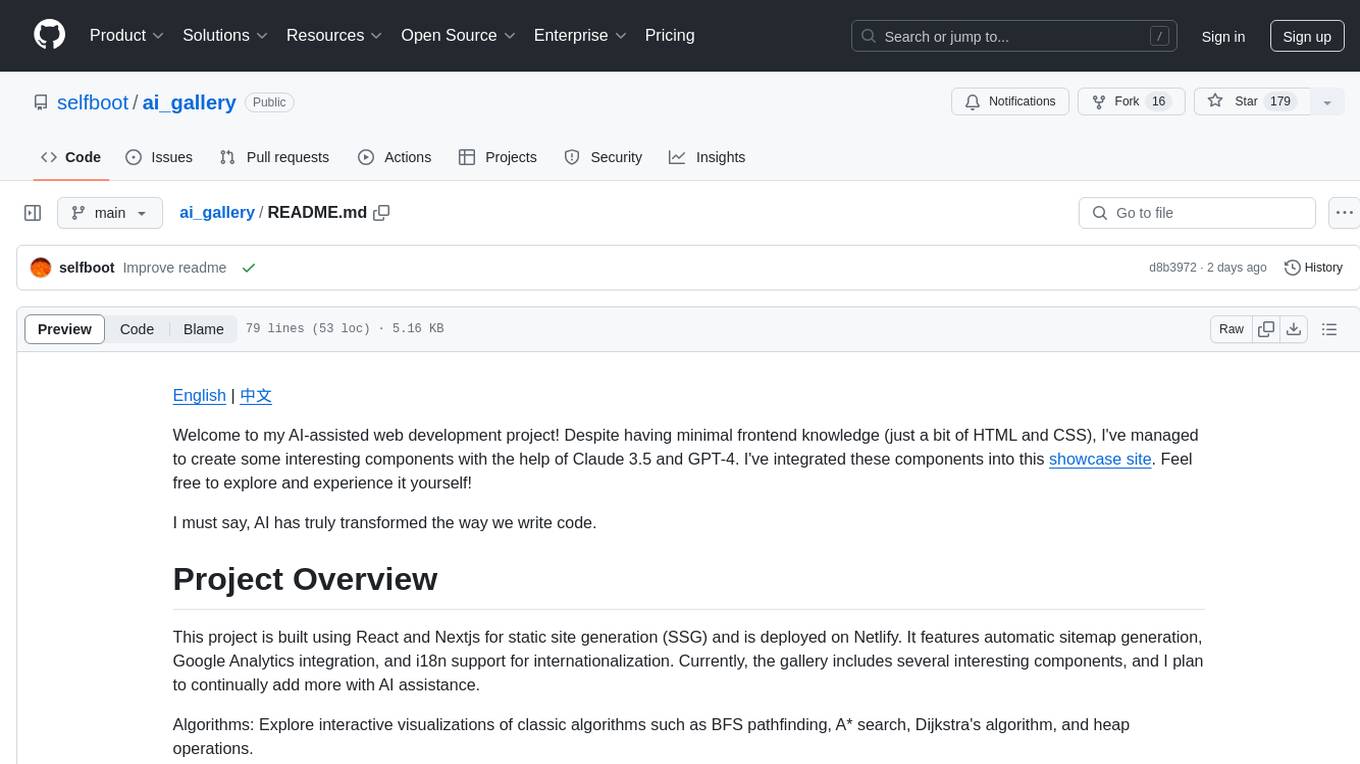
ai_gallery
AI Gallery is a showcase site built using React and Nextjs for static site generation, featuring interactive visualizations of classic algorithms, classic games implementation, and various interesting widgets. The project utilizes AI assistance from Claude 3.5 and GPT-4 to create components and enhance the development process. It aims to continually add more components with AI assistance, providing a platform for contributors to leverage AI in frontend development.
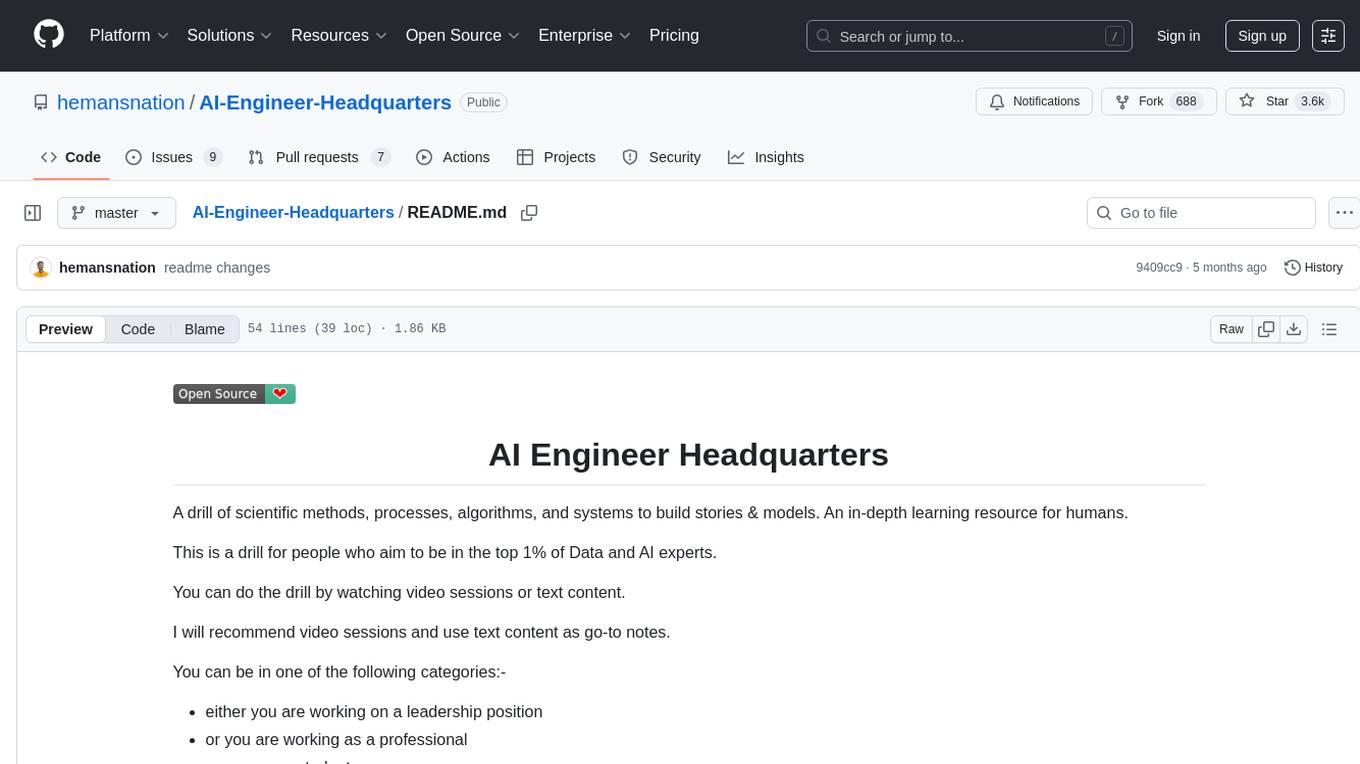
AI-Engineer-Headquarters
AI Engineer Headquarters is a comprehensive learning resource designed to help individuals master scientific methods, processes, algorithms, and systems to build stories and models in the field of Data and AI. The repository provides in-depth content through video sessions and text materials, catering to individuals aspiring to be in the top 1% of Data and AI experts. It covers various topics such as AI engineering foundations, large language models, retrieval-augmented generation, fine-tuning LLMs, reinforcement learning, ethical AI, agentic workflows, and career acceleration. The learning approach emphasizes action-oriented drills and routines, encouraging consistent effort and dedication to excel in the AI field.
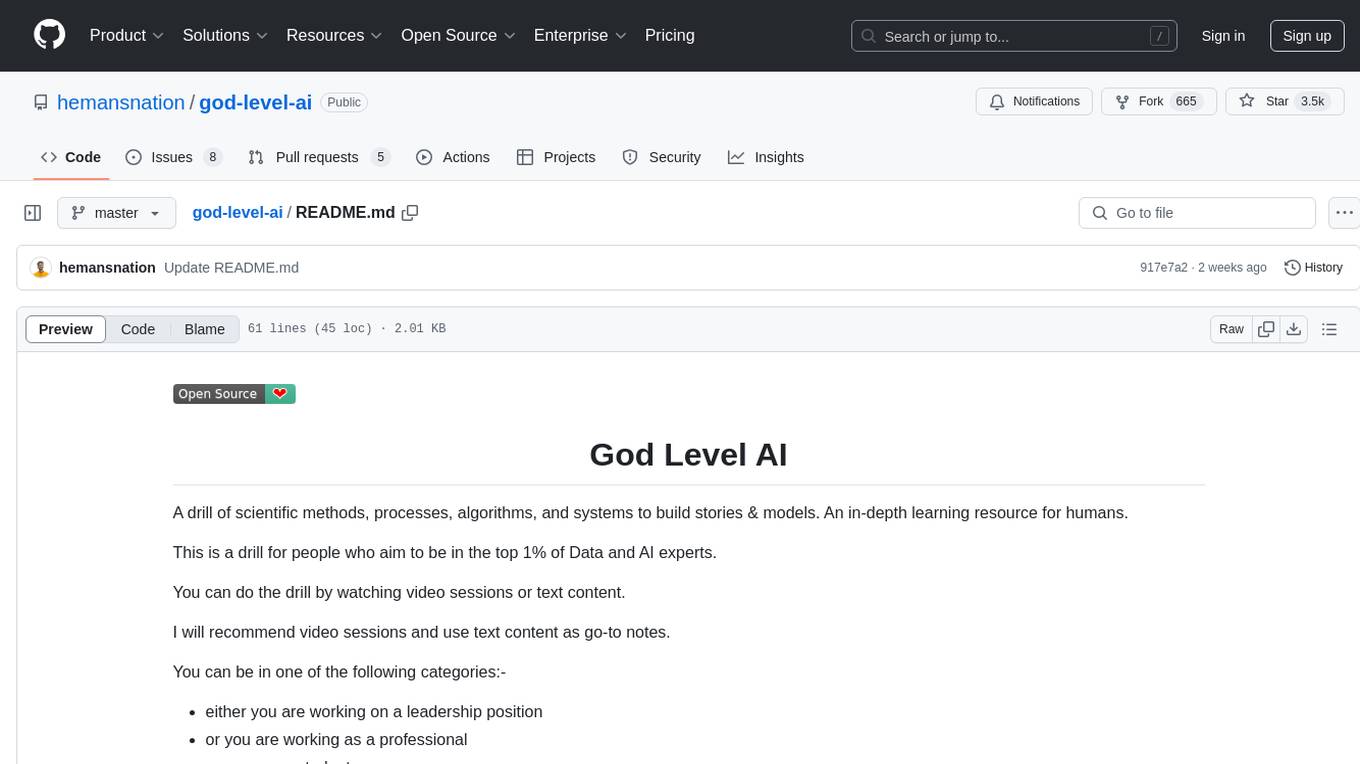
god-level-ai
A drill of scientific methods, processes, algorithms, and systems to build stories & models. An in-depth learning resource for humans. This is a drill for people who aim to be in the top 1% of Data and AI experts. The repository provides a routine for deep and shallow work sessions, covering topics from Python to AI/ML System Design and Personal Branding & Portfolio. It emphasizes the importance of continuous effort and action in the tech field.
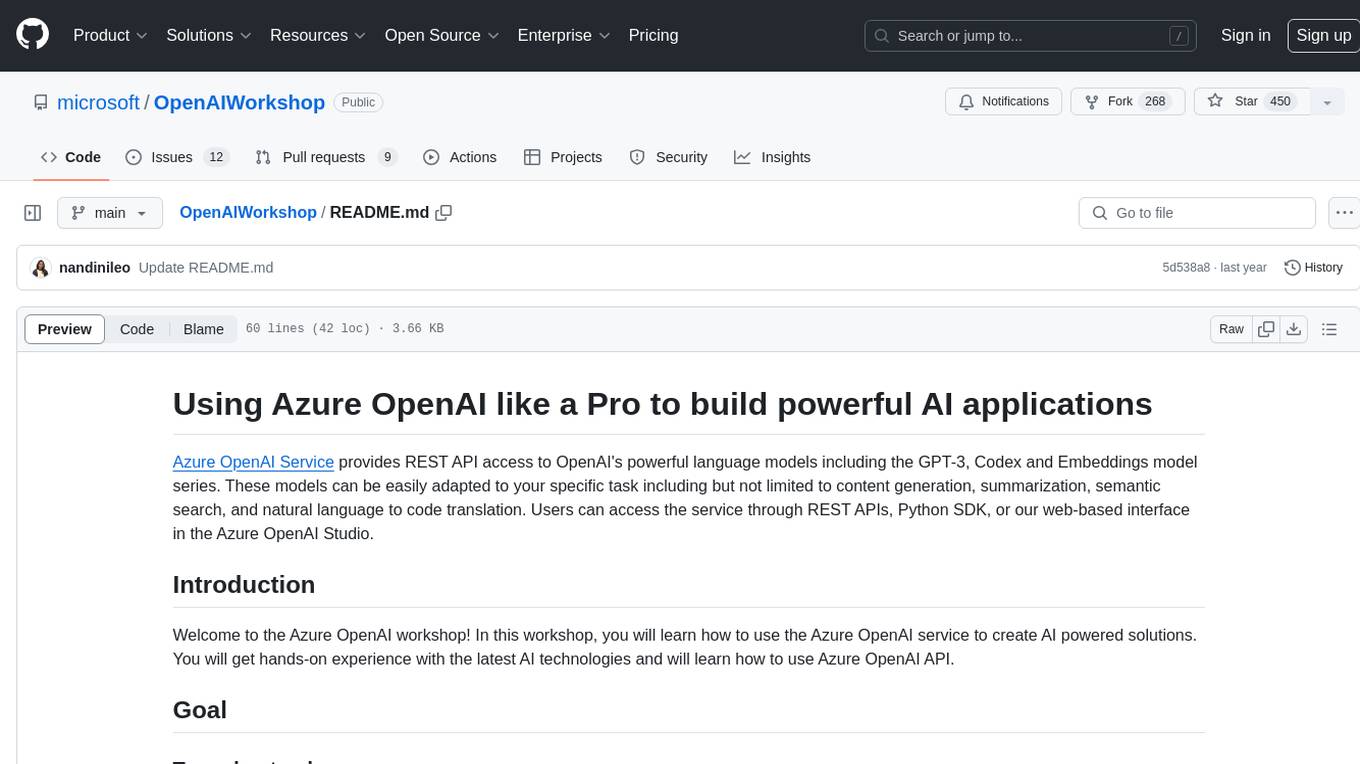
OpenAIWorkshop
Azure OpenAI Service provides REST API access to OpenAI's powerful language models including GPT-3, Codex and Embeddings. Users can easily adapt models for content generation, summarization, semantic search, and natural language to code translation. The workshop covers basics, prompt engineering, common NLP tasks, generative tasks, conversational dialog, and learning methods. It guides users to build applications with PowerApp, query SQL data, create data pipelines, and work with proprietary datasets. Target audience includes Power Users, Software Engineers, Data Scientists, and AI architects and Managers.

aitour-interact-with-llms
This repository is for the AI Tour workshop: Interacting with Multimodal models in Azure AI Foundry. The workshop provides a hands-on introduction to core concepts and best practices for interacting with OpenAI models in Azure AI Foundry portal. Participants can innovate with Azure OpenAI's GPT-4o multimodal model to generate text, sound, and images using GPT-4o-mini, DALL-E, and GPT-4o-realtime. The workshop also covers creating AI Agents to enhance user experiences and drive innovation. It includes instructions, resources for continued learning, and information on responsible AI practices.
chat-with-your-data-solution-accelerator
Chat with your data using OpenAI and AI Search. This solution accelerator uses an Azure OpenAI GPT model and an Azure AI Search index generated from your data, which is integrated into a web application to provide a natural language interface, including speech-to-text functionality, for search queries. Users can drag and drop files, point to storage, and take care of technical setup to transform documents. There is a web app that users can create in their own subscription with security and authentication.
claudine
Claudine is an AI agent designed to reason and act autonomously, leveraging the Anthropic API, Unix command line tools, HTTP, local hard drive data, and internet data. It can administer computers, analyze files, implement features in source code, create new tools, and gather contextual information from the internet. Users can easily add specialized tools. Claudine serves as a blueprint for implementing complex autonomous systems, with potential for customization based on organization-specific needs. The tool is based on the anthropic-kotlin-sdk and aims to evolve into a versatile command line tool similar to 'git', enabling branching sessions for different tasks.
start-llms
This repository is a comprehensive guide for individuals looking to start and improve their skills in Large Language Models (LLMs) without an advanced background in the field. It provides free resources, online courses, books, articles, and practical tips to become an expert in machine learning. The guide covers topics such as terminology, transformers, prompting, retrieval augmented generation (RAG), and more. It also includes recommendations for podcasts, YouTube videos, and communities to stay updated with the latest news in AI and LLMs.
For similar tasks

arc
The Arc project aims to leverage Kotlin DSL and Kotlin Scripting to create a language optimized for developing LLM powered solutions. It provides a framework for building projects using Kotlin and offers documentation for guidance. The project follows the Contributor Covenant code of conduct and is licensed under Apache License, Version 2.0 by Deutsche Telekom AG. It adheres to the REUSE standard for software licensing, ensuring proper copyright and license information in each file.
arc
The Arc project aims to leverage Kotlin DSL and Kotlin Scripting to create a language optimized for developing LLM powered solutions. It provides a framework for building projects using Kotlin and offers documentation and examples for implementation. The project follows the Contributor Covenant code of conduct and is licensed under Apache License 2.0 by Deutsche Telekom AG, adhering to the REUSE standard for software licensing.
mslearn-ai-studio
The mslearn-ai-studio repository provides hands-on exercises for building generative AI solutions on Microsoft Azure. Users can explore common tasks related to generative AI models and Azure resources. The exercises are designed to complement Microsoft Learn modules and require an Azure subscription for completion.
awesome-slash
Automate the entire development workflow beyond coding. awesome-slash provides production-ready skills, agents, and commands for managing tasks, branches, reviews, CI, and deployments. It automates the entire workflow, including task exploration, planning, implementation, review, and shipping. The tool includes 11 plugins, 40 agents, 26 skills, and 26k lines of lib code, with 3,357 tests and support for 3 platforms. It works with Claude Code, OpenCode, and Codex CLI, offering specialized capabilities through skills and agents.
enterprise-azureai
Azure OpenAI Service is a central capability with Azure API Management, providing guidance and tools for organizations to implement Azure OpenAI in a production environment with an emphasis on cost control, secure access, and usage monitoring. It includes infrastructure-as-code templates, CI/CD pipelines, secure access management, usage monitoring, load balancing, streaming requests, and end-to-end samples like ChatApp and Azure Dashboards.
devopness
Devopness is a tool that simplifies the management of cloud applications and multi-cloud infrastructure for both AI agents and humans. It provides role-based access control, permission management, cost control, and visibility into DevOps and CI/CD workflows. The tool allows provisioning and deployment to major cloud providers like AWS, Azure, DigitalOcean, and GCP. Devopness aims to make software deployment and cloud infrastructure management accessible and affordable to all involved in software projects.
kaito
KAITO is an operator that automates the AI/ML model inference or tuning workload in a Kubernetes cluster. It manages large model files using container images, provides preset configurations to avoid adjusting workload parameters based on GPU hardware, supports popular open-sourced inference runtimes, auto-provisions GPU nodes based on model requirements, and hosts large model images in the public Microsoft Container Registry. Using KAITO simplifies the workflow of onboarding large AI inference models in Kubernetes.
shadcn-nextjs-boilerplate
Horizon AI Boilerplate is an open-source Admin Dashboard template designed for Shadcn UI, NextJS, and Tailwind CSS. It provides over 30 dark/light frontend elements for creating Chat AI SaaS Apps quickly. The documentation is detailed and complex, guiding users through installation and usage. Users can start their local server with simple commands. The tool requires a valid OpenAI API key for ChatGPT functionality. Additionally, a Figma version is available for design purposes. The PRO version offers more components and pages. Users can report issues on GitHub and connect with the community via Discord. The tool credits open-source resources like Shadcn UI Library, NextJS Subscription Payments, and ChatBot UI by mckaywrigley.
For similar jobs
sweep
Sweep is an AI junior developer that turns bugs and feature requests into code changes. It automatically handles developer experience improvements like adding type hints and improving test coverage.
teams-ai
The Teams AI Library is a software development kit (SDK) that helps developers create bots that can interact with Teams and Microsoft 365 applications. It is built on top of the Bot Framework SDK and simplifies the process of developing bots that interact with Teams' artificial intelligence capabilities. The SDK is available for JavaScript/TypeScript, .NET, and Python.
ai-guide
This guide is dedicated to Large Language Models (LLMs) that you can run on your home computer. It assumes your PC is a lower-end, non-gaming setup.
classifai
Supercharge WordPress Content Workflows and Engagement with Artificial Intelligence. Tap into leading cloud-based services like OpenAI, Microsoft Azure AI, Google Gemini and IBM Watson to augment your WordPress-powered websites. Publish content faster while improving SEO performance and increasing audience engagement. ClassifAI integrates Artificial Intelligence and Machine Learning technologies to lighten your workload and eliminate tedious tasks, giving you more time to create original content that matters.
chatbot-ui
Chatbot UI is an open-source AI chat app that allows users to create and deploy their own AI chatbots. It is easy to use and can be customized to fit any need. Chatbot UI is perfect for businesses, developers, and anyone who wants to create a chatbot.
BricksLLM
BricksLLM is a cloud native AI gateway written in Go. Currently, it provides native support for OpenAI, Anthropic, Azure OpenAI and vLLM. BricksLLM aims to provide enterprise level infrastructure that can power any LLM production use cases. Here are some use cases for BricksLLM: * Set LLM usage limits for users on different pricing tiers * Track LLM usage on a per user and per organization basis * Block or redact requests containing PIIs * Improve LLM reliability with failovers, retries and caching * Distribute API keys with rate limits and cost limits for internal development/production use cases * Distribute API keys with rate limits and cost limits for students
uAgents
uAgents is a Python library developed by Fetch.ai that allows for the creation of autonomous AI agents. These agents can perform various tasks on a schedule or take action on various events. uAgents are easy to create and manage, and they are connected to a fast-growing network of other uAgents. They are also secure, with cryptographically secured messages and wallets.
griptape
Griptape is a modular Python framework for building AI-powered applications that securely connect to your enterprise data and APIs. It offers developers the ability to maintain control and flexibility at every step. Griptape's core components include Structures (Agents, Pipelines, and Workflows), Tasks, Tools, Memory (Conversation Memory, Task Memory, and Meta Memory), Drivers (Prompt and Embedding Drivers, Vector Store Drivers, Image Generation Drivers, Image Query Drivers, SQL Drivers, Web Scraper Drivers, and Conversation Memory Drivers), Engines (Query Engines, Extraction Engines, Summary Engines, Image Generation Engines, and Image Query Engines), and additional components (Rulesets, Loaders, Artifacts, Chunkers, and Tokenizers). Griptape enables developers to create AI-powered applications with ease and efficiency.