Best AI tools for< Systems Architect >
Infographic
20 - AI tool Sites
Swimm
Swimm is an Application Understanding Platform that helps users accelerate their modernization timeline by automatically reverse engineering legacy code. It creates a living inventory of programs, modules, and dependencies, uncovers buried business logic, and turns insights into action. Swimm provides a complete overview of codebase architecture, generates diagrams with clear explanations, and allows for the creation of business rules documentation. The platform is built on advanced deterministic code analysis combined with AI, ensuring accurate and reliable results for users.
GitLab
GitLab is a comprehensive AI-powered DevSecOps platform that balances speed and security in a single platform. It automates software delivery, boosts productivity, and secures the end-to-end software supply chain. GitLab simplifies the toolchain by providing all essential DevSecOps tools in one place, accelerates software delivery with automation and AI-powered workflows, and integrates security seamlessly. It allows users to deploy anywhere without cloud vendor lock-in, offering value stream management, analytics, and insights to accelerate coding and optimize processes.
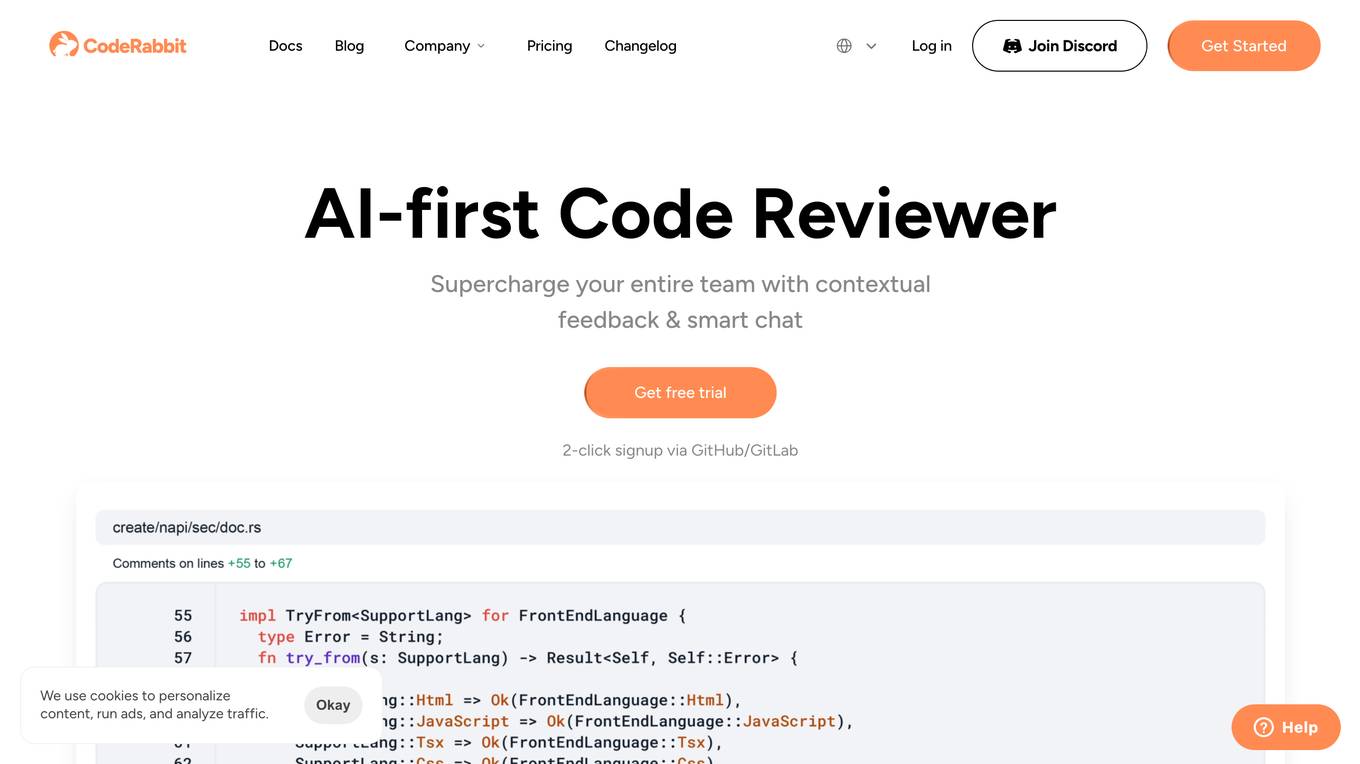
CodeRabbit
CodeRabbit is an innovative AI code review platform that streamlines and enhances the development process. By automating reviews, it dramatically improves code quality while saving valuable time for developers. The system offers detailed, line-by-line analysis, providing actionable insights and suggestions to optimize code efficiency and reliability. Trusted by hundreds of organizations and thousands of developers daily, CodeRabbit has processed millions of pull requests. Backed by CRV, CodeRabbit continues to revolutionize the landscape of AI-assisted software development.
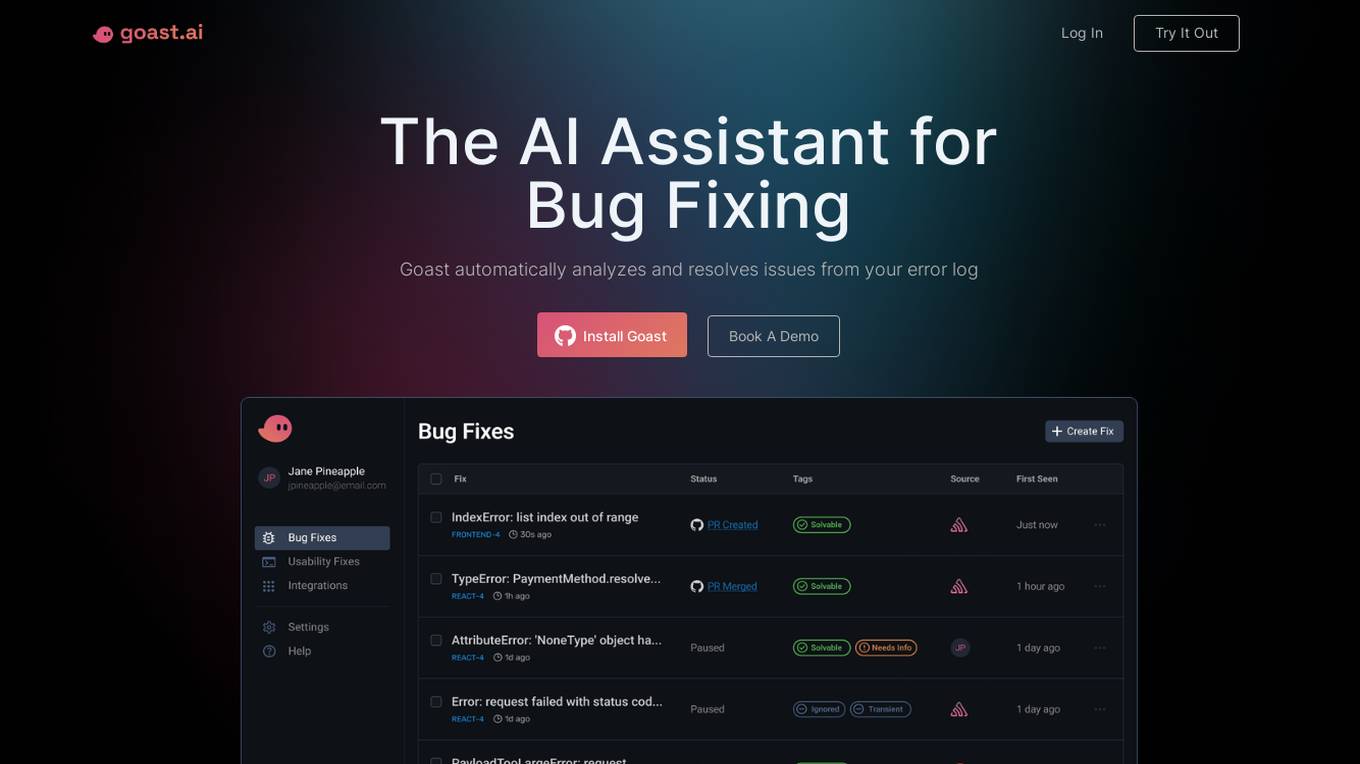
Goast.ai
Goast.ai is an AI assistant designed to help engineering teams resolve errors and exceptions faster by automatically analyzing and fixing issues from error logs. It offers real-time bug fixes, root cause analysis, and automated bug fixing processes, ultimately saving time and improving productivity for development teams. Goast integrates with popular observability tools, supports various frameworks and languages, and provides a user-friendly interface for seamless collaboration and feedback.
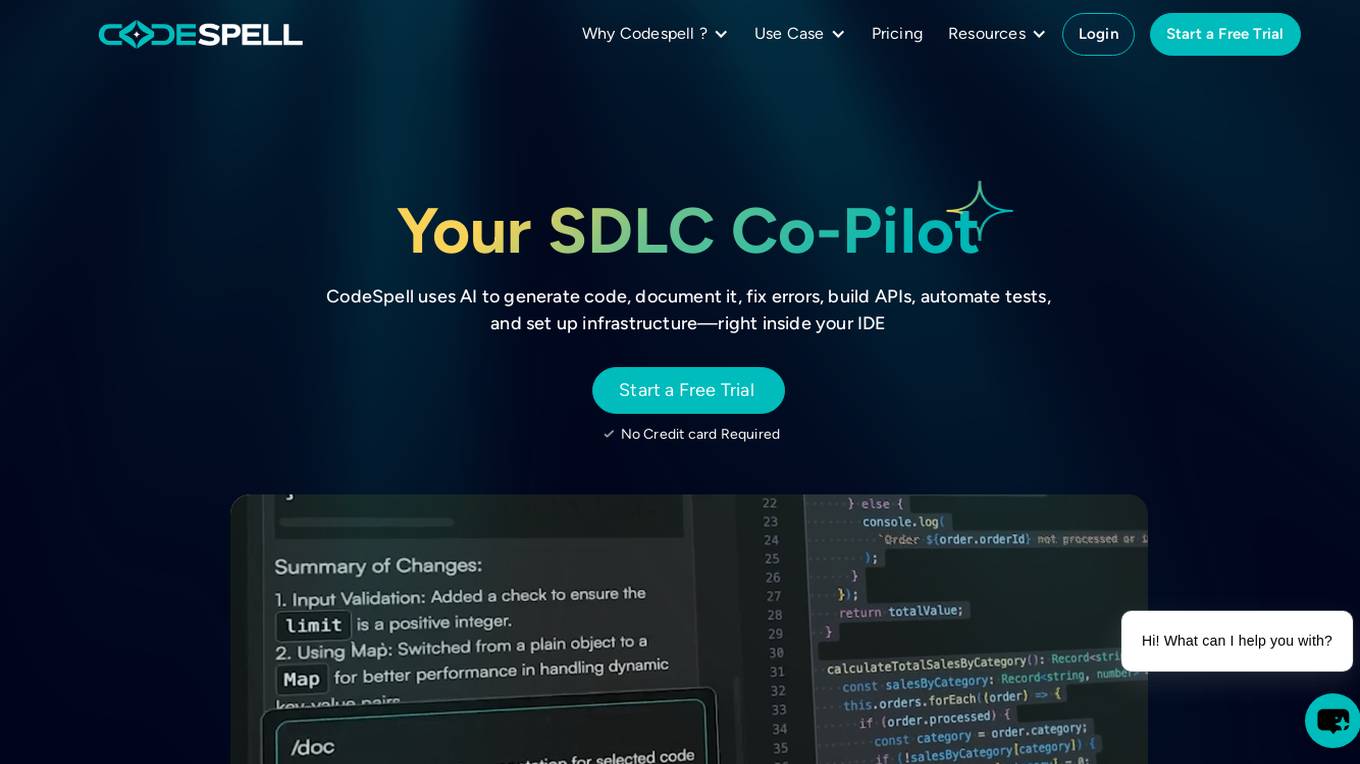
CodeSpell
CodeSpell is an AI-powered code completion tool designed to streamline the software development life cycle (SDLC). It assists developers in generating code, documenting it, fixing errors, building APIs, automating tests, and setting up infrastructure directly within their integrated development environment (IDE). CodeSpell's unique feature, Design Studio, automates project setup by generating scaffolding, APIs, and infrastructure scripts tailored to the user's stack, reducing manual coding effort and accelerating development. The tool is compatible with popular IDEs and supports code generation in any language. CodeSpell aims to transition the software industry from AI-assisted code generation to an AI-driven landscape.
LatenceTech
LatenceTech is a tech startup that specializes in network latency monitoring and analysis. The platform offers real-time monitoring, prediction, and in-depth analysis of network latency using AI software. It provides cloud-based network analytics, versatile network applications, and data science-driven network acceleration. LatenceTech focuses on customer satisfaction by providing full customer experience service and expert support. The platform helps businesses optimize network performance, minimize latency issues, and achieve faster network speed and better connectivity.
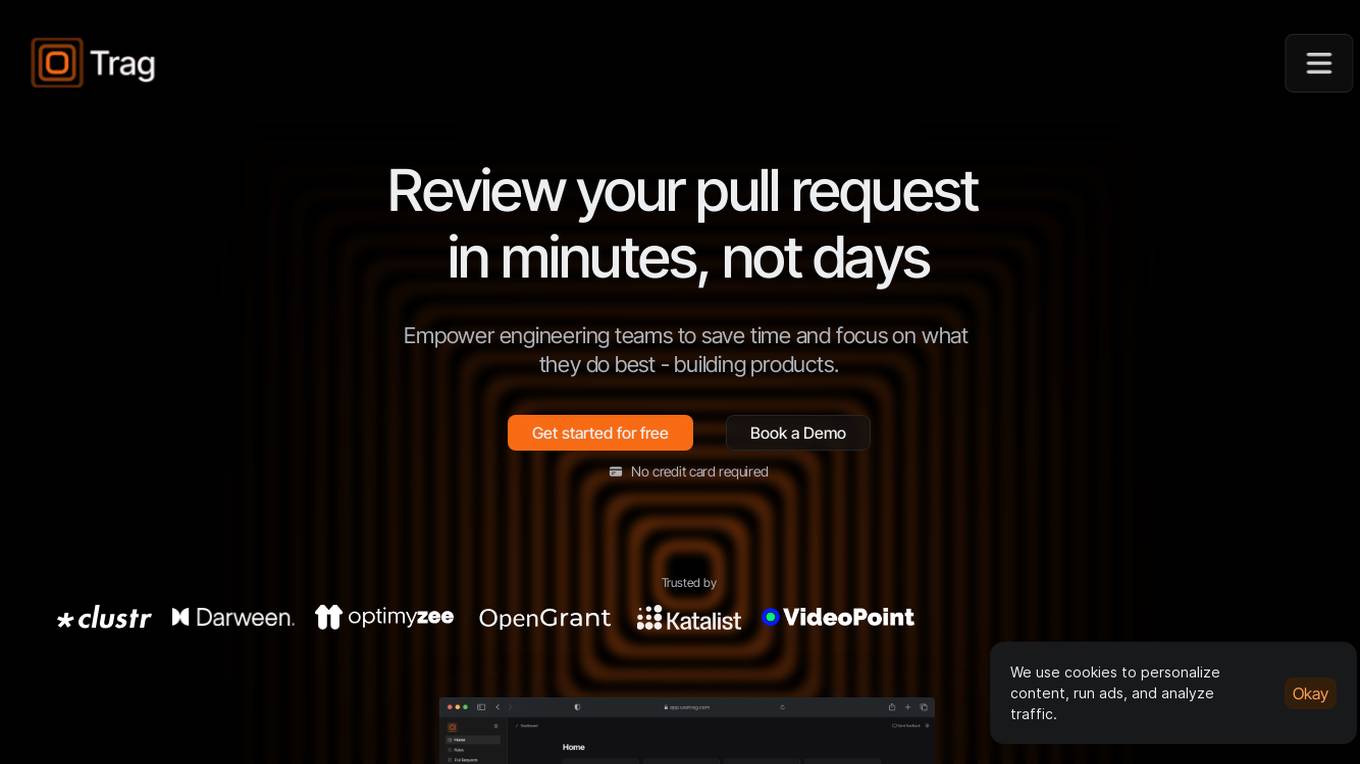
Trag
Trag is an AI-powered tool designed to review pull requests in minutes, empowering engineering teams to save time and focus on building products. With Trag, users can create custom patterns for code review, ensuring best practices are followed and bugs are caught early. The tool offers features like autofix with AI, monitoring progress, connecting multiple repositories, pull request review, analytics, and team workspaces. Trag stands out from traditional linters by providing complex code understanding, semantic code analysis, predictive bug detection, and refactoring suggestions. It aims to streamline code reviews and help teams ship faster with AI-powered reviews.
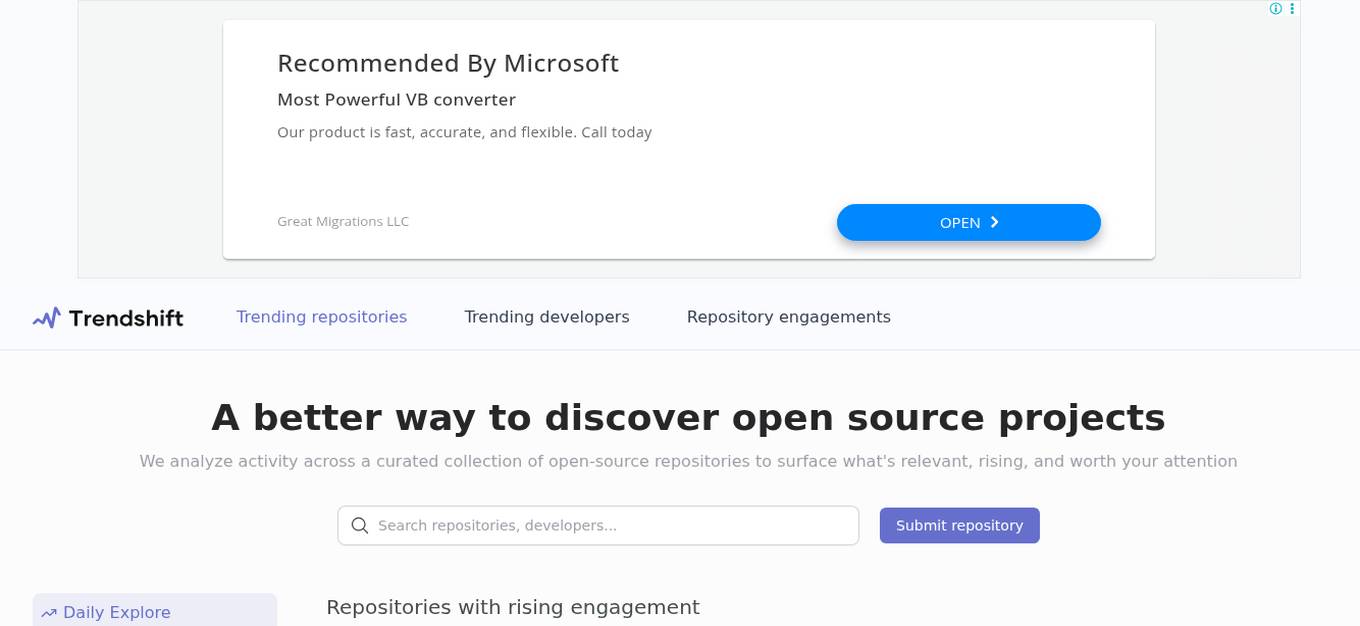
Trendshift
The website Trendshift is an AI tool that analyzes activity across a curated collection of open-source repositories to surface relevant, rising projects. It provides an alternative to GitHub Trending, using a consistent scoring algorithm informed by daily engagement metrics. Users can explore GitHub Trending Stats, repositories with rising engagement, and discover new projects. Trendshift offers a platform for developers to stay updated on the latest open-source projects and trends in the software development community.
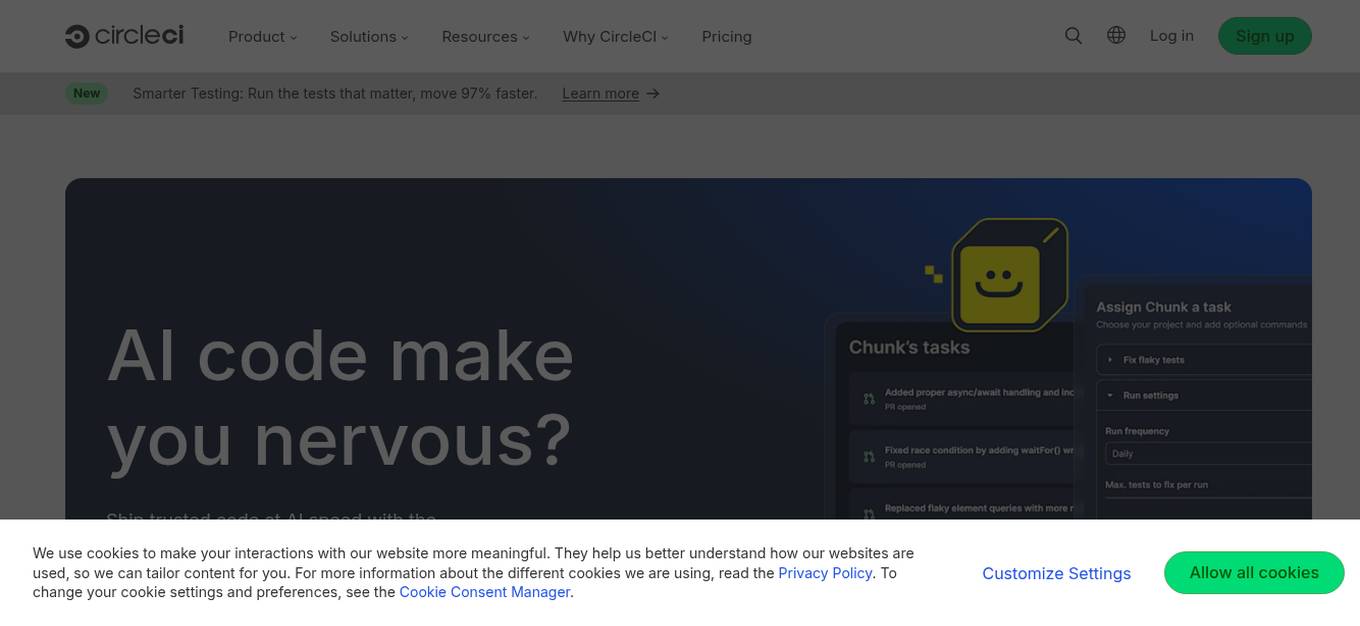
CircleCI
CircleCI is an AI-powered autonomous validation platform designed for the AI era. It offers intelligent automation and expert-in-the-loop tooling to deliver faster, more reliable software deployment with minimal human oversight. CircleCI enables developers to ship code at AI speed with enterprise-grade confidence, ensuring code is tested, trusted, and ready to ship 24/7. The platform supports various execution environments, integrations with popular tools like GitHub and AWS, and is trusted by leading companies like Meta, Google, and Okta.
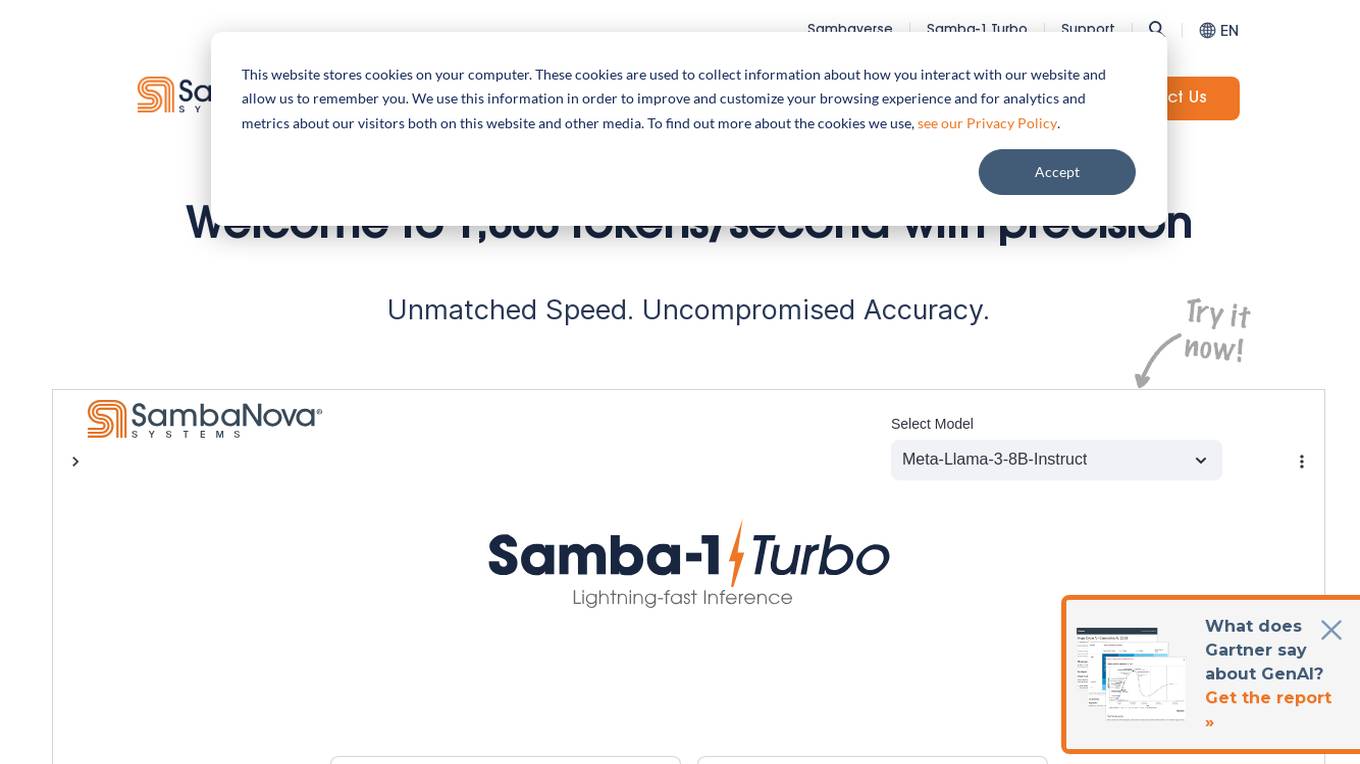
SambaNova Systems
SambaNova Systems is an AI platform that revolutionizes AI workloads by offering an enterprise-grade full stack platform purpose-built for generative AI. It provides state-of-the-art AI and deep learning capabilities to help customers outcompete their peers. SambaNova delivers the only enterprise-grade full stack platform, from chips to models, designed for generative AI in the enterprise. The platform includes the SN40L Full Stack Platform with 1T+ parameter models, Composition of Experts, and Samba Apps. SambaNova also offers resources to accelerate AI journeys and solutions for various industries like financial services, healthcare, manufacturing, and more.
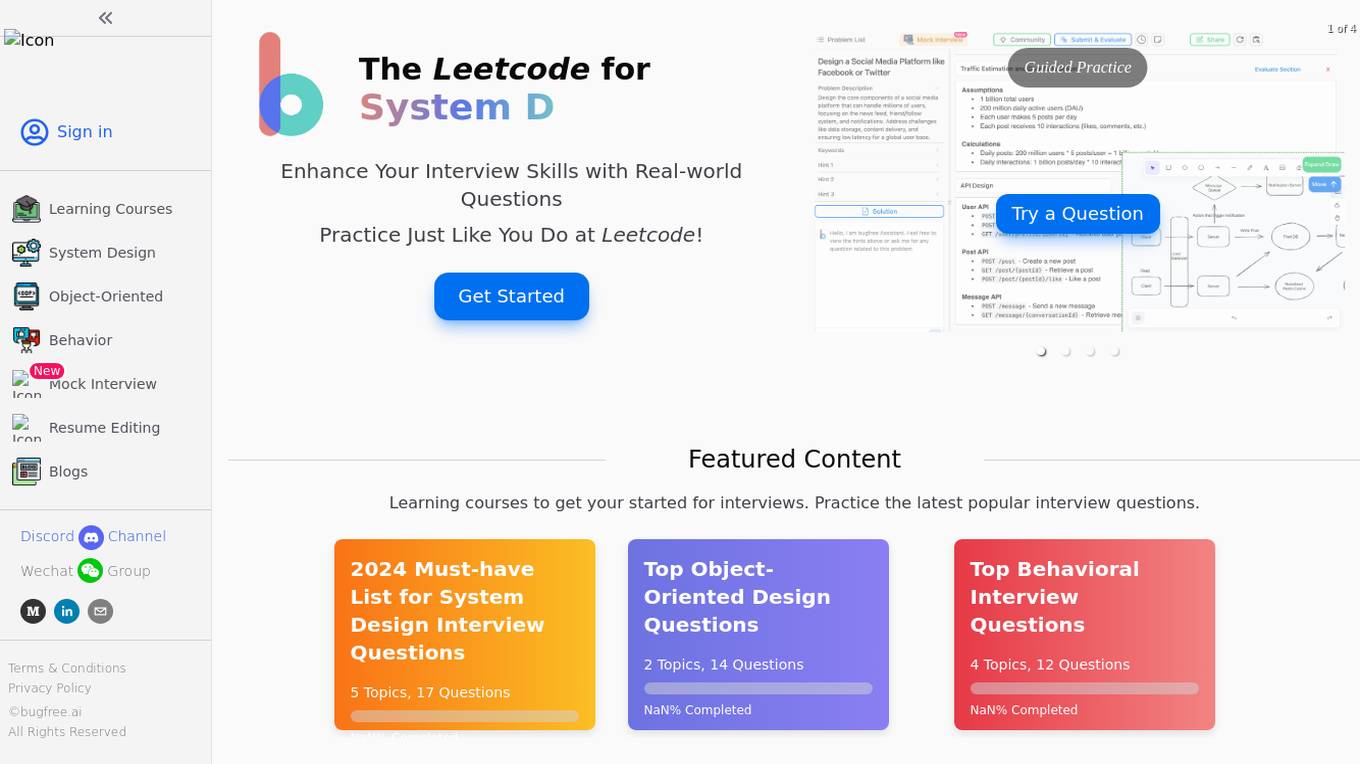
BugFree.ai
BugFree.ai is an AI-powered platform designed to help users practice system design and behavior interviews, similar to Leetcode. The platform offers a range of features to assist users in preparing for technical interviews, including mock interviews, real-time feedback, and personalized study plans. With BugFree.ai, users can improve their problem-solving skills and gain confidence in tackling complex interview questions.
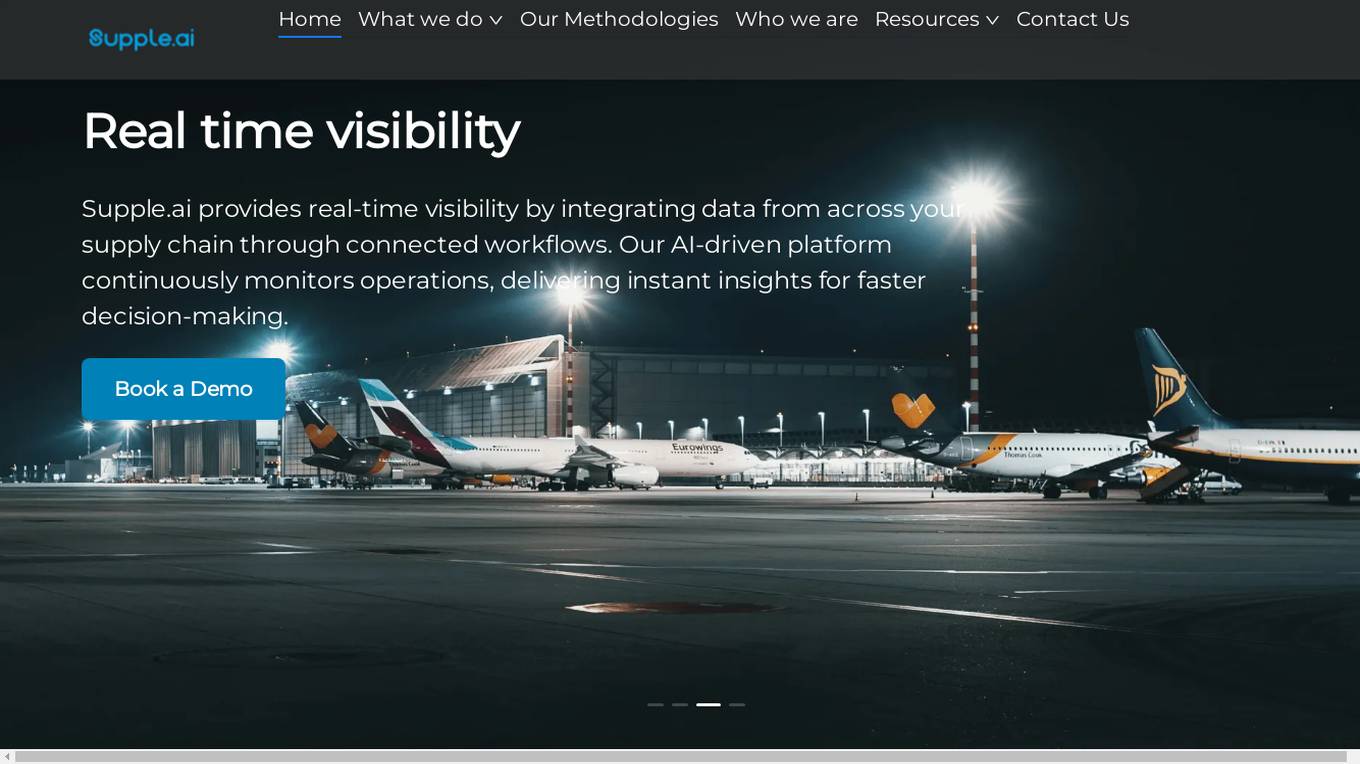
Supple.ai
Supple.ai is an AI-powered content generation tool that helps users create high-quality written content quickly and efficiently. By leveraging advanced natural language processing algorithms, Supple.ai can generate articles, blog posts, product descriptions, and more in a matter of minutes. The tool is designed to assist content creators, marketers, and businesses in streamlining their content creation process and improving productivity.
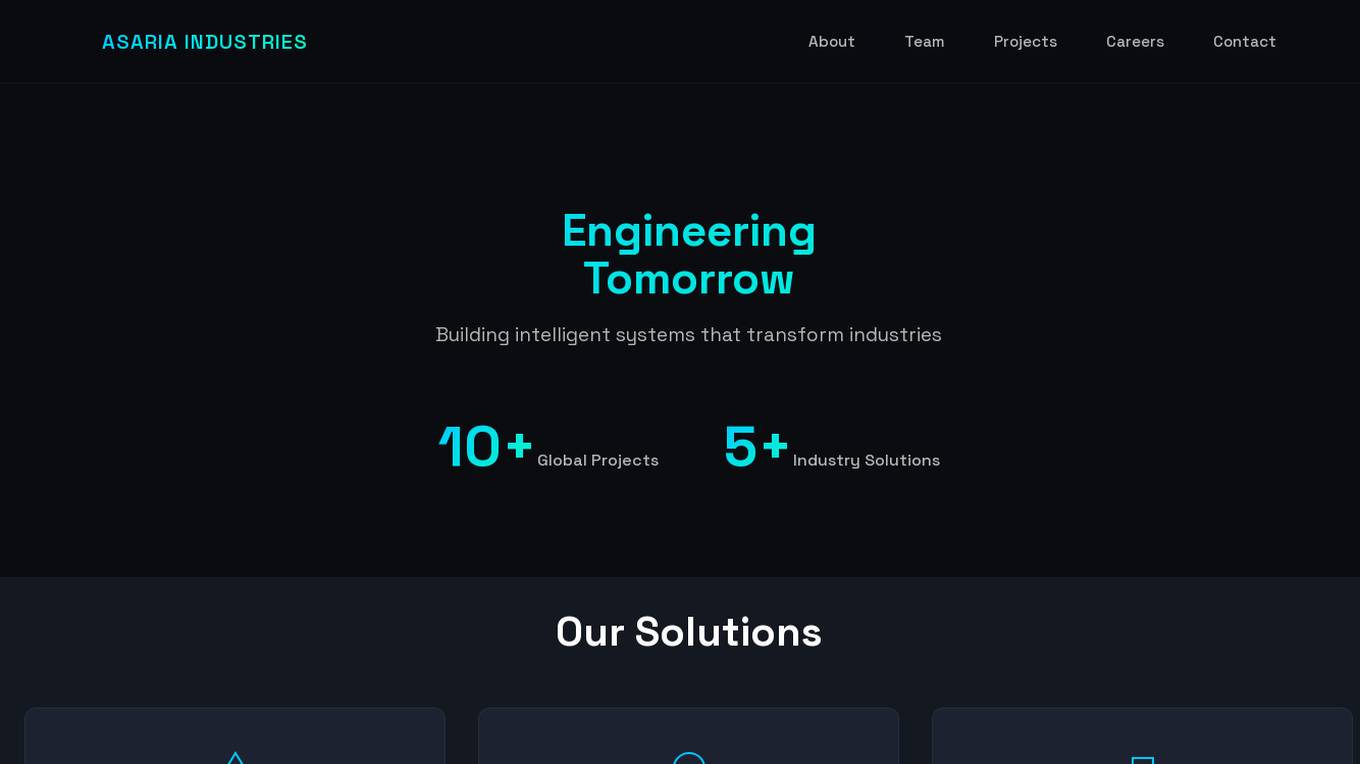
Asaria Industries
Asaria Industries is an AI application that focuses on building intelligent systems to transform industries. They offer system architecture and AI integration services to help modernize enterprise infrastructure and implement intelligent decision systems. With expertise in engineering scalable foundations for complex systems, Asaria Industries aims to turn visions into reality through innovative solutions.
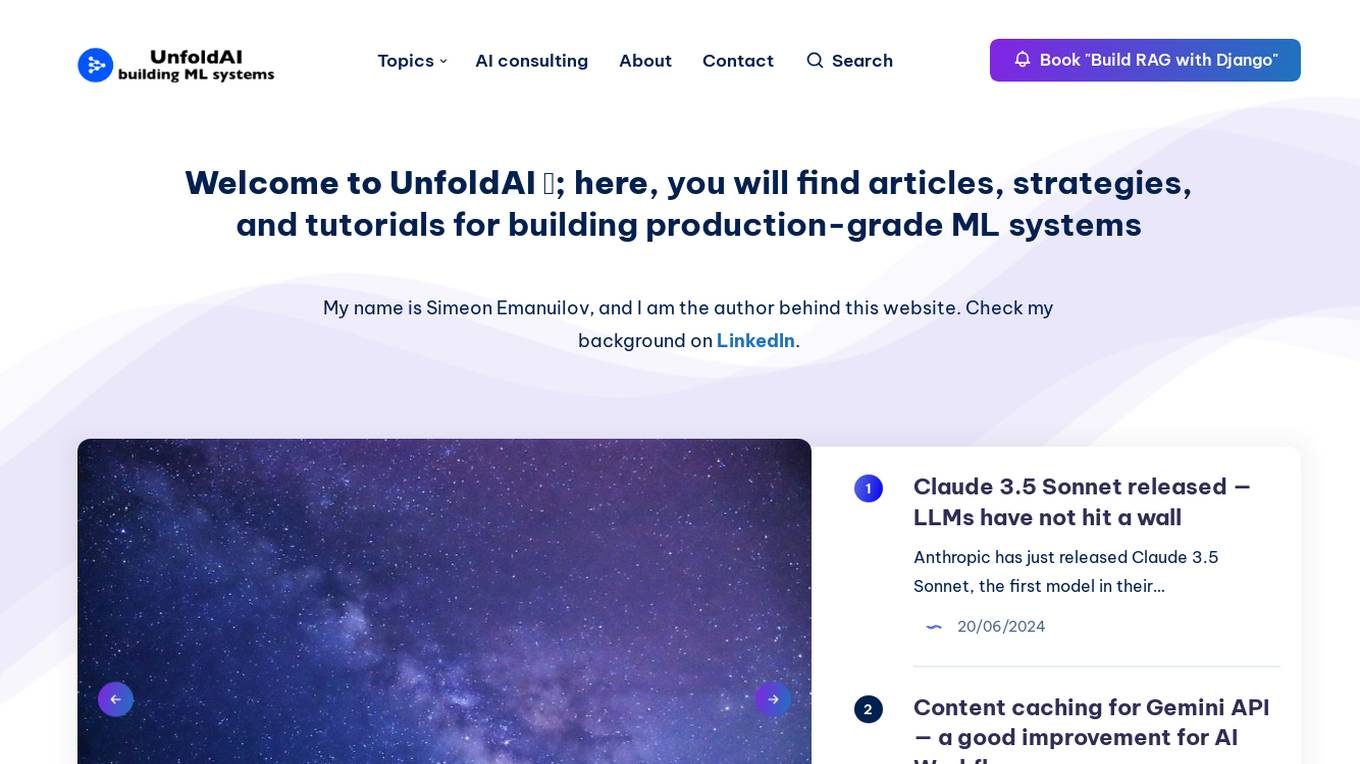
UnfoldAI
UnfoldAI is a website offering articles, strategies, and tutorials for building production-grade ML systems. Authored by Simeon Emanuilov, the site covers topics such as deep learning, computer vision, LLMs, programming, MLOps, performance, scalability, and AI consulting. It aims to provide insights and best practices for professionals in the field of machine learning to create robust, efficient, and scalable systems.
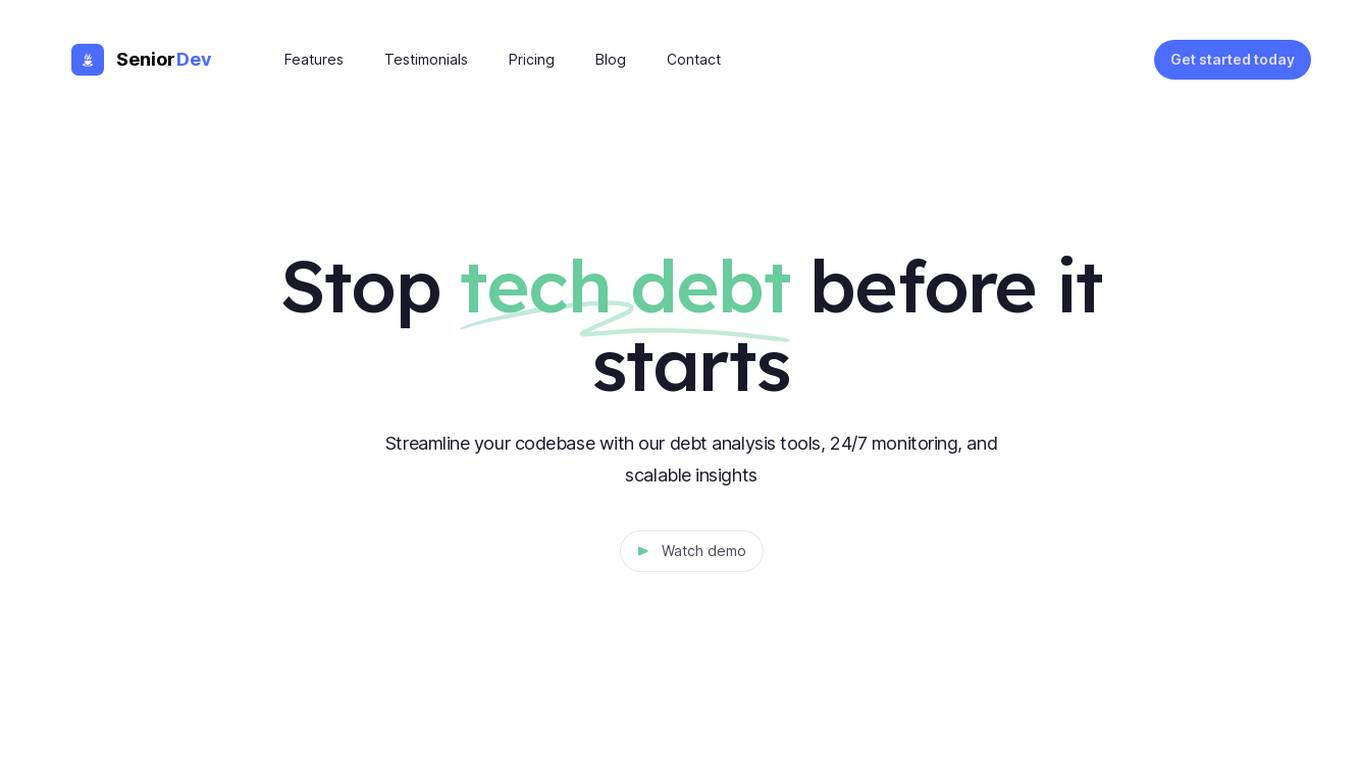
AI Tech Debt Analysis Tool
This website is an AI tool that helps senior developers analyze AI tech debt. AI tech debt is the technical debt that accumulates when AI systems are developed and deployed. It can be difficult to identify and quantify AI tech debt, but it can have a significant impact on the performance and reliability of AI systems. This tool uses a variety of techniques to analyze AI tech debt, including static analysis, dynamic analysis, and machine learning. It can help senior developers to identify and quantify AI tech debt, and to develop strategies to reduce it.
Notion Consulting
The website is dedicated to Notion Consulting and Notion Templates. It offers services to help agencies, law firms, online shops, startups, and real estate developers build clear, efficient systems using Notion. The services aim to create focus, simplify processes, and structure team communication. Additionally, the website provides resources for online training, digital marketing strategies, and offers personalized consultations.

The Asimov Institute
The Asimov Institute is a non-profit AI research institute focusing on the relationship between deep learning and creativity. They publish fundamental breakthroughs in neural network research, provide insights on the societal and business impact of data and AI, and develop tools for creative professionals in various industries. Their neural networks generate new products, content, suggestions, styles, and ideas, catering to architects, graphic designers, fashion couturiers, marketeers, and music producers.

Vilosia
Vilosia is an AI-powered platform that helps medium and large enterprises with internal development teams to visualize their software architecture, simplify migration, and improve system modularity. The platform uses Gen AI to automatically add event triggers to the codebase, enabling users to understand data flow, system dependencies, domain boundaries, and external APIs. Vilosia also offers AI workflow analysis to extract workflows from function call chains and identify database usage. Users can scan their codebase using CLI client & CI/CD integration and stay updated with new features through the newsletter.
Synopsys.ai
Synopsys is an AI-enabled EDA (Electronic Design Automation) tool that offers design, automation, insights, optimization, analytics, and expert workflows for chip development. It provides a comprehensive suite of solutions for chip design, verification, test, and production, catering to various industries such as automotive, aerospace, AI chip development, and more. Synopsys.ai focuses on fast heterogeneous integration and industry-leading AI-powered workflow optimization to help users achieve first-pass silicon success and accelerate innovation.

Emergence AI Platform
Emergence is an AI platform that offers an Orchestrator for coordinating interactions between AI agents across enterprise systems. It aims to help businesses overcome common hurdles, adapt to changing environments, and unlock their full potential by providing tools for building and orchestrating AI agents. The platform is designed for enterprise scalability, reliability, and predictability, allowing for intelligent routing, advanced agent capabilities, and no vendor lock-in.
16 - Open Source Tools
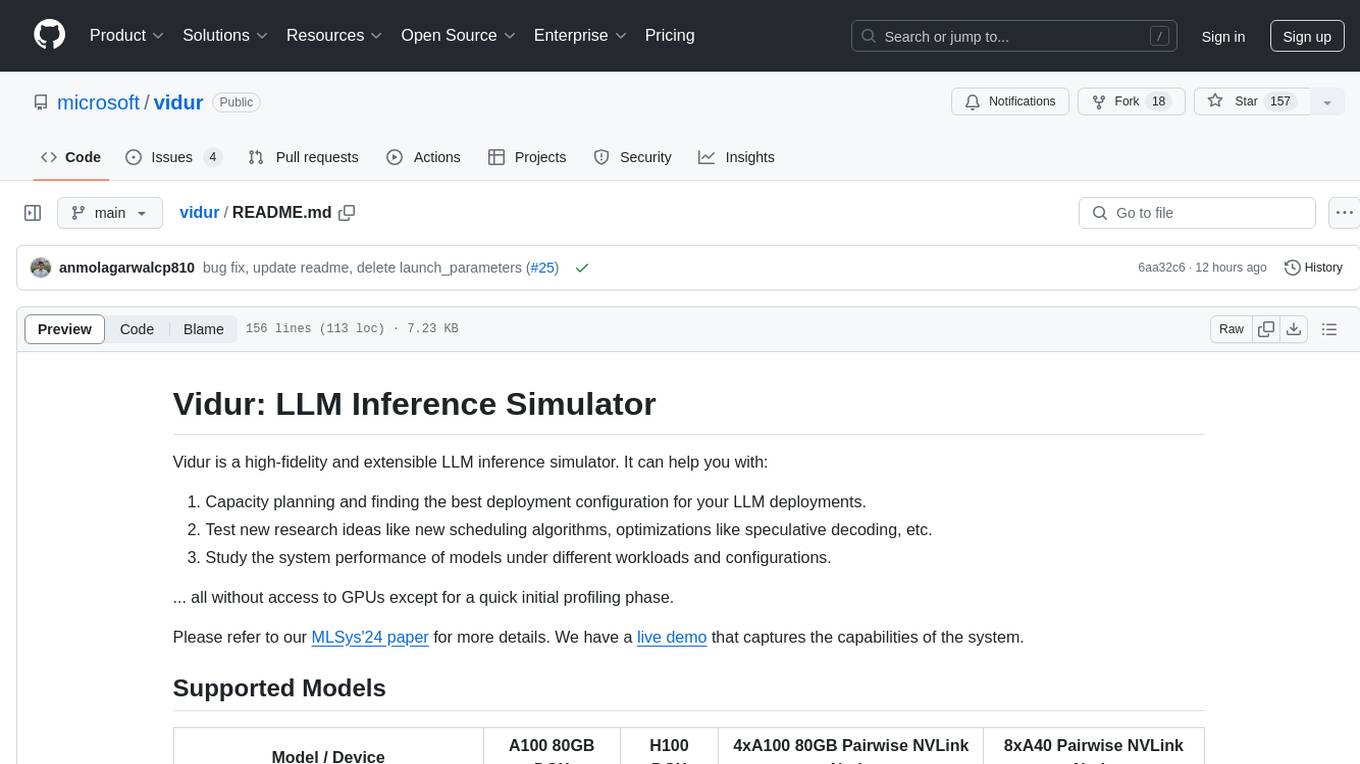
vidur
Vidur is a high-fidelity and extensible LLM inference simulator designed for capacity planning, deployment configuration optimization, testing new research ideas, and studying system performance of models under different workloads and configurations. It supports various models and devices, offers chrome trace exports, and can be set up using mamba, venv, or conda. Users can run the simulator with various parameters and monitor metrics using wandb. Contributions are welcome, subject to a Contributor License Agreement and adherence to the Microsoft Open Source Code of Conduct.
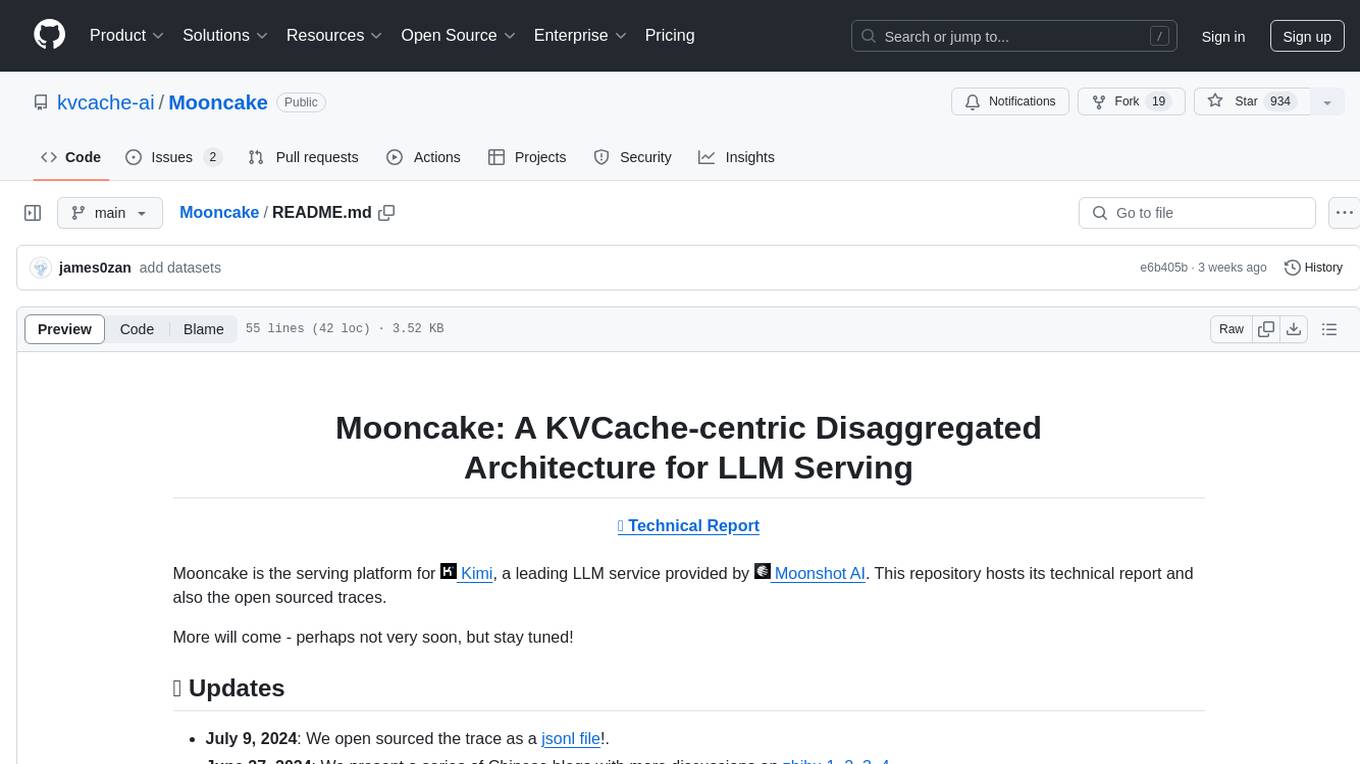
Mooncake
Mooncake is a serving platform for Kimi, a leading LLM service provided by Moonshot AI. It features a KVCache-centric disaggregated architecture that separates prefill and decoding clusters, leveraging underutilized CPU, DRAM, and SSD resources of the GPU cluster. Mooncake's scheduler balances throughput and latency-related SLOs, with a prediction-based early rejection policy for highly overloaded scenarios. It excels in long-context scenarios, achieving up to a 525% increase in throughput while handling 75% more requests under real workloads.
sourcegraph-public-snapshot
Sourcegraph is a tool that simplifies reading, writing, and fixing code in large and complex codebases. It offers features such as code search across repositories, code intelligence for code navigation and history tracing, and the ability to roll out large-scale changes to multiple repositories simultaneously. Sourcegraph can be used on the cloud or self-hosted, and provides public code search on Sourcegraph.com. The tool is designed to enhance code understanding and collaboration within development teams.
atlas-mcp-server
ATLAS (Adaptive Task & Logic Automation System) is a high-performance Model Context Protocol server designed for LLMs to manage complex task hierarchies. Built with TypeScript, it features ACID-compliant storage, efficient task tracking, and intelligent template management. ATLAS provides LLM Agents task management through a clean, flexible tool interface. The server implements the Model Context Protocol (MCP) for standardized communication between LLMs and external systems, offering hierarchical task organization, task state management, smart templates, enterprise features, and performance optimization.
treds
Treds is a Radix Trie based data structure server that stores keys in sorted order, ensuring fast and efficient retrieval. It offers various commands for key/value store, sorted maps store, list store, set store, hash store, and more. Treds provides unique features like optimized querying for keys with common prefixes, sorted key/value pairs, and new commands like DELPREFIX, LNGPREFIX, and PPUBLISH. It is designed for high performance with single-threaded architecture and event loop, utilizing modified Radix trees and Doubly Linked Lists for quick lookup. Treds also supports PubSub functionality and vector store operations for vector search using HNSW algorithm.

swark
Swark is a VS Code extension that automatically generates architecture diagrams from code using large language models (LLMs). It is directly integrated with GitHub Copilot, requires no authentication or API key, and supports all languages. Swark helps users learn new codebases, review AI-generated code, improve documentation, understand legacy code, spot design flaws, and gain test coverage insights. It saves output in a 'swark-output' folder with diagram and log files. Source code is only shared with GitHub Copilot for privacy. The extension settings allow customization for file reading, file extensions, exclusion patterns, and language model selection. Swark is open source under the GNU Affero General Public License v3.0.
AgentConnect
AgentConnect is an open-source implementation of the Agent Network Protocol (ANP) aiming to define how agents connect with each other and build an open, secure, and efficient collaboration network for billions of agents. It addresses challenges like interconnectivity, native interfaces, and efficient collaboration. The architecture includes authentication, end-to-end encryption modules, meta-protocol module, and application layer protocol integration framework. AgentConnect focuses on performance and multi-platform support, with plans to rewrite core components in Rust and support mobile platforms and browsers. The project aims to establish ANP as an industry standard and form an ANP Standardization Committee. Installation is done via 'pip install agent-connect' and demos can be run after cloning the repository. Features include decentralized authentication based on did:wba and HTTP, and meta-protocol negotiation examples.
jido
Jido is a toolkit for building autonomous, distributed agent systems in Elixir. It provides the foundation for creating smart, composable workflows that can evolve and respond to their environment. Geared towards Agent builders, it contains core state primitives, composable actions, agent data structures, real-time sensors, signal system, skills, and testing tools. Jido is designed for multi-node Elixir clusters and offers rich helpers for unit and property-based testing.
AgentConnect
AgentConnect is an open-source implementation of the Agent Network Protocol (ANP) aiming to define how agents connect with each other and build an open, secure, and efficient collaboration network for billions of agents. It addresses challenges like interconnectivity, native interfaces, and efficient collaboration by providing authentication, end-to-end encryption, meta-protocol handling, and application layer protocol integration. The project focuses on performance and multi-platform support, with plans to rewrite core components in Rust and support Mac, Linux, Windows, mobile platforms, and browsers. AgentConnect aims to establish ANP as an industry standard through protocol development and forming a standardization committee.
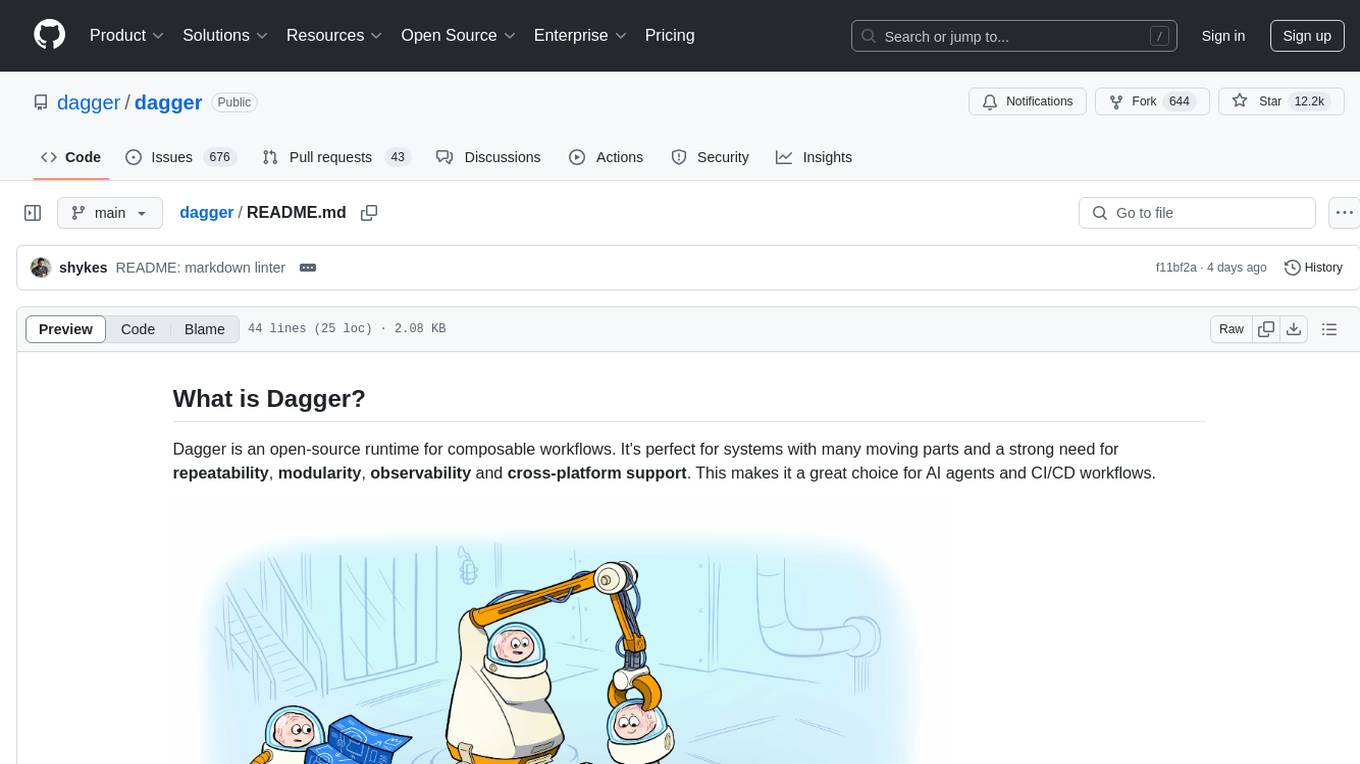
dagger
Dagger is an open-source runtime for composable workflows, ideal for systems requiring repeatability, modularity, observability, and cross-platform support. It features a reproducible execution engine, a universal type system, a powerful data layer, native SDKs for multiple languages, an open ecosystem, an interactive command-line environment, batteries-included observability, and seamless integration with various platforms and frameworks. It also offers LLM augmentation for connecting to LLM endpoints. Dagger is suitable for AI agents and CI/CD workflows.
magic
Magic Cloud is a software development automation platform based on AI, Low-Code, and No-Code. It allows dynamic code creation and orchestration using Hyperlambda, generative AI, and meta programming. The platform includes features like CRUD generation, No-Code AI, Hyperlambda programming language, AI agents creation, and various components for software development. Magic is suitable for backend development, AI-related tasks, and creating AI chatbots. It offers high-level programming capabilities, productivity gains, and reduced technical debt.
ccprompts
ccprompts is a collection of ~70 Claude Code commands for software development workflows with agent generation capabilities. It includes safety validation and can be used directly with Claude Code or adapted for specific needs. The agent template system provides a wizard for creating specialized sub-agents (e.g., security auditors, systems architects) with standardized formatting and proper tool access. The repository is under active development, so caution is advised when using it in production environments.
robustmq
RobustMQ is a next-generation, high-performance, multi-protocol message queue built in Rust. It aims to create a unified messaging infrastructure tailored for modern cloud-native and AI systems. With features like high performance, distributed architecture, multi-protocol support, pluggable storage, cloud-native readiness, multi-tenancy, security features, observability, and user-friendliness, RobustMQ is designed to be production-ready and become a top-level Apache project in the message queue ecosystem by the second half of 2025.
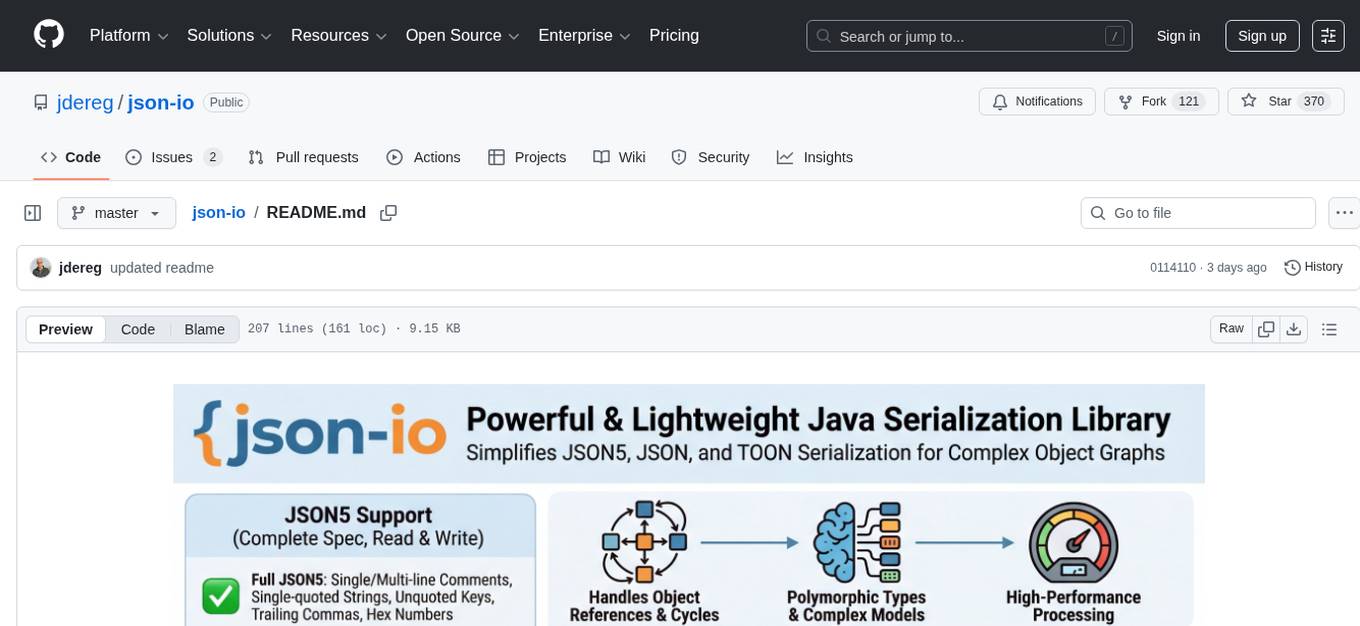
json-io
json-io is a powerful and lightweight Java library that simplifies JSON5, JSON, and TOON serialization and deserialization while handling complex object graphs with ease. It preserves object references, handles polymorphic types, and maintains cyclic relationships in data structures. It offers full JSON5 support, TOON read/write capabilities, and is compatible with JDK 1.8 through JDK 24. The library is built with a focus on correctness over speed, providing extensive configuration options and two modes for data representation. json-io is designed for developers who require advanced serialization features and support for various Java types without external dependencies.
langgraph
LangGraph is a low-level orchestration framework for building, managing, and deploying long-running, stateful agents. It provides durable execution, human-in-the-loop capabilities, comprehensive memory management, debugging tools, and production-ready deployment infrastructure. LangGraph can be used standalone or integrated with other LangChain products to streamline LLM application development.
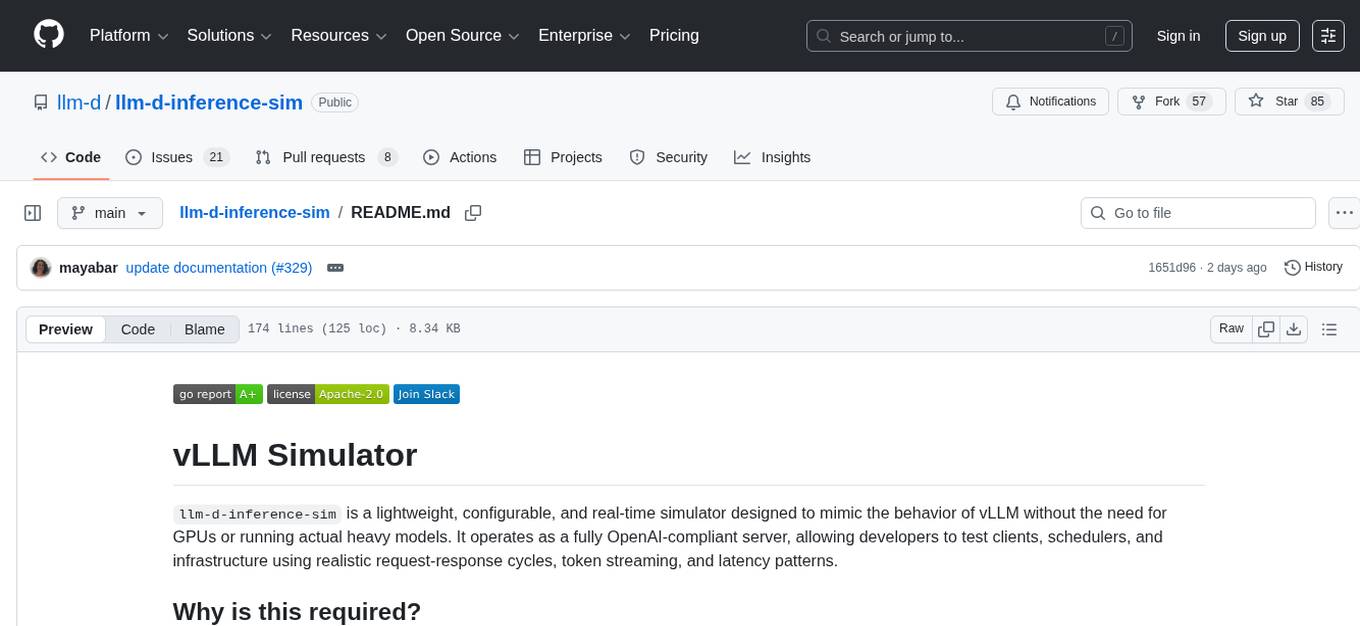
llm-d-inference-sim
The `llm-d-inference-sim` is a lightweight, configurable, and real-time simulator designed to mimic the behavior of vLLM without the need for GPUs or running heavy models. It operates as an OpenAI-compliant server, allowing developers to test clients, schedulers, and infrastructure using realistic request-response cycles, token streaming, and latency patterns. The simulator offers modes of operation, response generation from predefined text or real datasets, latency simulation, tokenization options, LoRA management, KV cache simulation, failure injection, and deployment options for standalone or Kubernetes testing. It supports a subset of standard vLLM Prometheus metrics for observability.
20 - OpenAI Gpts
Enterprise Architecture Advisor
Guides the development and implementation of IT systems architecture.
Strategy
Strategically aligns financial, logistical, and operational approaches, weaving innovative solutions into complex software development landscapes.
Serverless Architect Pro
Helping software engineers to architect domain-driven serverless systems on AWS
Software Architecture Visualiser
A tool that automatically generates interactive, real-time diagrams like PlantUML from codebases, aiding in the understanding and design of software systems

Software Architect
Expert in software architecture, ensuring integrity and scalability through best practices.
System Design Tutor
A System Architect Coach guiding you through system design principles and best practices. Explains CAP theorem like no one else
Telecommunications Advisor
Guides organization in telecommunications systems implementation and optimization.

Azure Arc Expert
Azure Arc expert providing guidance on architecture, deployment, and management.