


comfyui-portrait-master
This node was designed to help AI image creators to generate prompts for human portraits.
Stars: 866
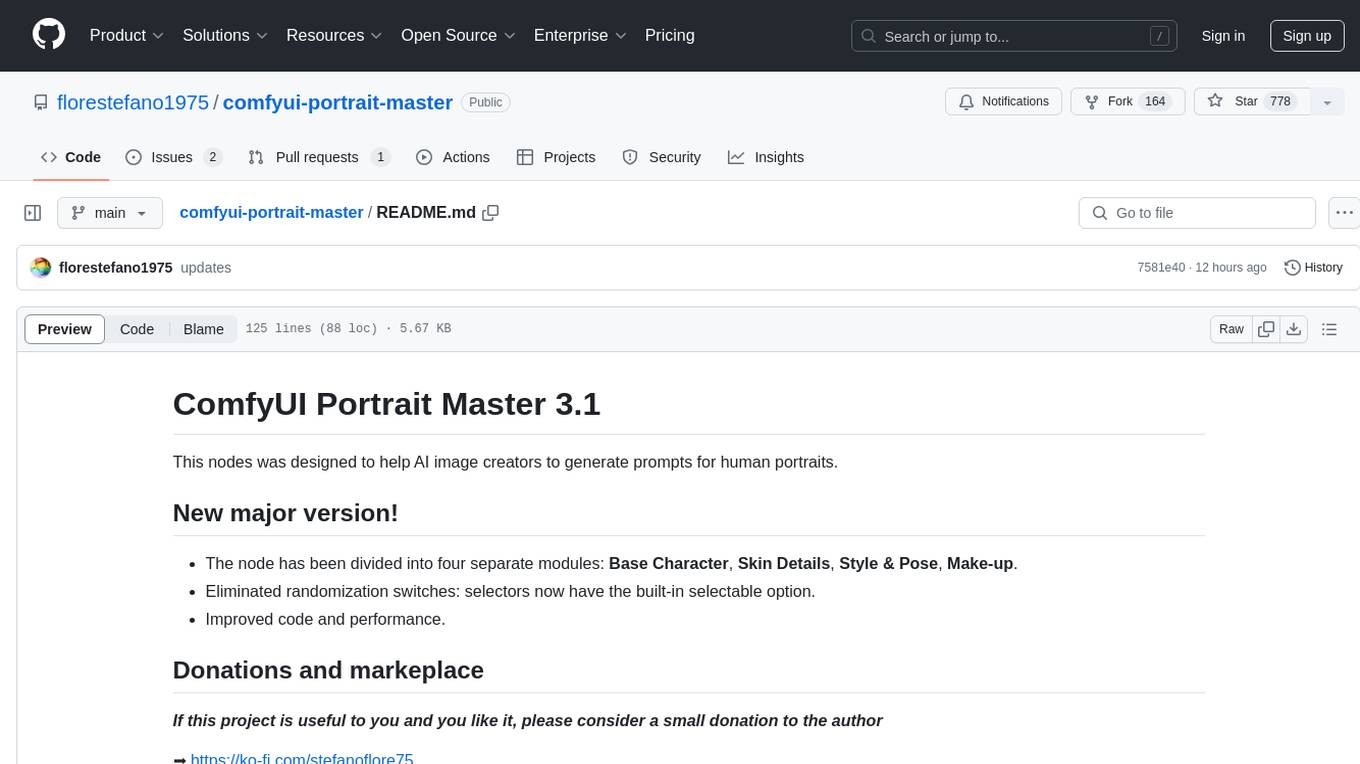
ComfyUI Portrait Master 3.1 is a tool designed to assist AI image creators in generating prompts for human portraits. The tool offers various modules for customizing character details such as base character, skin details, style & pose, and makeup. Users can control parameters like shot type, gender, age, ethnicity mix, body type, facial features, hair details, skin imperfections, and more to create unique portrait prompts. The tool aims to enhance photorealism and provide a user-friendly interface for generating portrait prompts efficiently.
README:
This nodes was designed to help AI image creators to generate prompts for human portraits.
- The node has been divided into four separate modules: Base Character, Skin Details, Style & Pose, Make-up.
- Eliminated randomization switches: selectors now have the built-in selectable option.
- Improved code and performance.
If this project is useful to you and you like it, please consider a small donation to the author
➡️ https://ko-fi.com/stefanoflore75
Buy my workflows!
➡️ https://stefanoflore.it/en/download/stable-diffusion/

- Type florestefano1975 on the search bar of ComfyUI Manager.
- Click the install button.
To install comfyui-portrait-master:
- open the terminal on the ComfyUI
custom_nodesfolder - digit:
git clone https://github.com/florestefano1975/comfyui-portrait-master - restart ComfyUI
To update comfyui-portrait-master:
- open the terminal on the ComfyUI
comfyui-portrait-masterfolder - digit:
git pull - restart ComfyUI
Warning: update command overwrites files modified and customized by users.
- shot: sets the shot type
- shot_weight: coefficient (weight) of the shot type
- gender: sets the character's gender
- androgynous: coefficient (weight) to change the genetic appearance of the character
- age: the age of the subject portrayed
- nationality_1: sets first ethnicity
- nationality_2: sets second ethnicity
- nationality_mix: controls the mix between nationality_1 and nationality_2, according to the syntax [nationality_1: nationality_2: nationality_mix]. This syntax is not natively recognized by ComfyUI; we therefore recommend the use of comfyui-prompt-control. This feature is still being tested
- body_type: set the type of the body
- body_type_weight: coefficient (weight) of the body type
- model_pose: select the pose from the list
- eyes_color: set the eyes color
- eyes_shape: set the eyes shape
- lips_color: set the lips color
- lips_shape: set the lips shape
- makeup: set the makeup
- clothes: set the clothes
- facial_expression / facial_expression_weight: apply and adjust character's expression
- face_shape / face_shape_weight: apply and adjust the face shape
- facial_asymmetry: coefficient (weight) to set the asymmetry of the face
- hair_color: set the hair color
- hairs_style: hairstyle selector
- hairs_length: hair length selector
- disheveled: coefficient (weight) of the disheveled effect
- natural_skin: coefficient (weight) for control the natural aspect of the skin
- bare_face: coefficient (weight) for control bare face level
- washed_face: coefficient (weight) for control washed face level
- dried_face: coefficient (weight) for control dried face level
- skin_details: coefficient (weight) of the skin detail
- skin_pores: coefficient (weight) of the skin pores
- dimples: coefficient (weight) for controlling facial dimples
- freckles: coefficient (weight) of the freckles
- moles: coefficient (weight) for the presence of moles on the skin
- skin_imperfections: coefficient (weight) to introduce skin imperfections
- eyes_details: coefficient (weight) for the general detail of the eyes
- iris_details: coefficient (weight) for the iris detail
- circular_iris: coefficient (weight) to increase or force the circular shape of the iris
- circular_pupil: coefficient (weight) to increase or force the circular shape of the pupil
- light_type: set global illumination
- light_direction: set the direction of the light. This feature is still being tested
- photorealism_improvement: experimental option to improve photorealism and the final result
- style_1 / style_1_weight: apply and adjust the first style
- style_1 / style_1_weight: apply and adjust the second style
Parameters with null value (-) would be not included in the prompt generated.
To enable the casual generation options, connect a random seed generator to the nodes.
The nodes generates output string.
The model_pose option allows you to use a list of default poses. You need to disable ControlNet, if in use, in this case and adjust framing with the shot option.

Using high values for the skin and eye detail control parameters may override the setting for the chosen shot. In this case it is advisable to reduce the parameter values for the skin and eyes, or insert in the negative prompt (closeup, close up, close-up:1.5), modifying the weight as needed.
The effectiveness of the parameters depends on the quality of the checkpoint used.
For advanced photorealism we recommend FormulaXL 2.0.
Portrait Master is compatible with Prompt Composer.
For Tasks:
Click tags to check more tools for each tasksFor Jobs:
Alternative AI tools for comfyui-portrait-master
Similar Open Source Tools
comfyui-portrait-master
ComfyUI Portrait Master 3.1 is a tool designed to assist AI image creators in generating prompts for human portraits. The tool offers various modules for customizing character details such as base character, skin details, style & pose, and makeup. Users can control parameters like shot type, gender, age, ethnicity mix, body type, facial features, hair details, skin imperfections, and more to create unique portrait prompts. The tool aims to enhance photorealism and provide a user-friendly interface for generating portrait prompts efficiently.
pocketpal-ai
PocketPal AI is a versatile virtual assistant tool designed to streamline daily tasks and enhance productivity. It leverages artificial intelligence technology to provide personalized assistance in managing schedules, organizing information, setting reminders, and more. With its intuitive interface and smart features, PocketPal AI aims to simplify users' lives by automating routine activities and offering proactive suggestions for optimal time management and task prioritization.
MM-RLHF
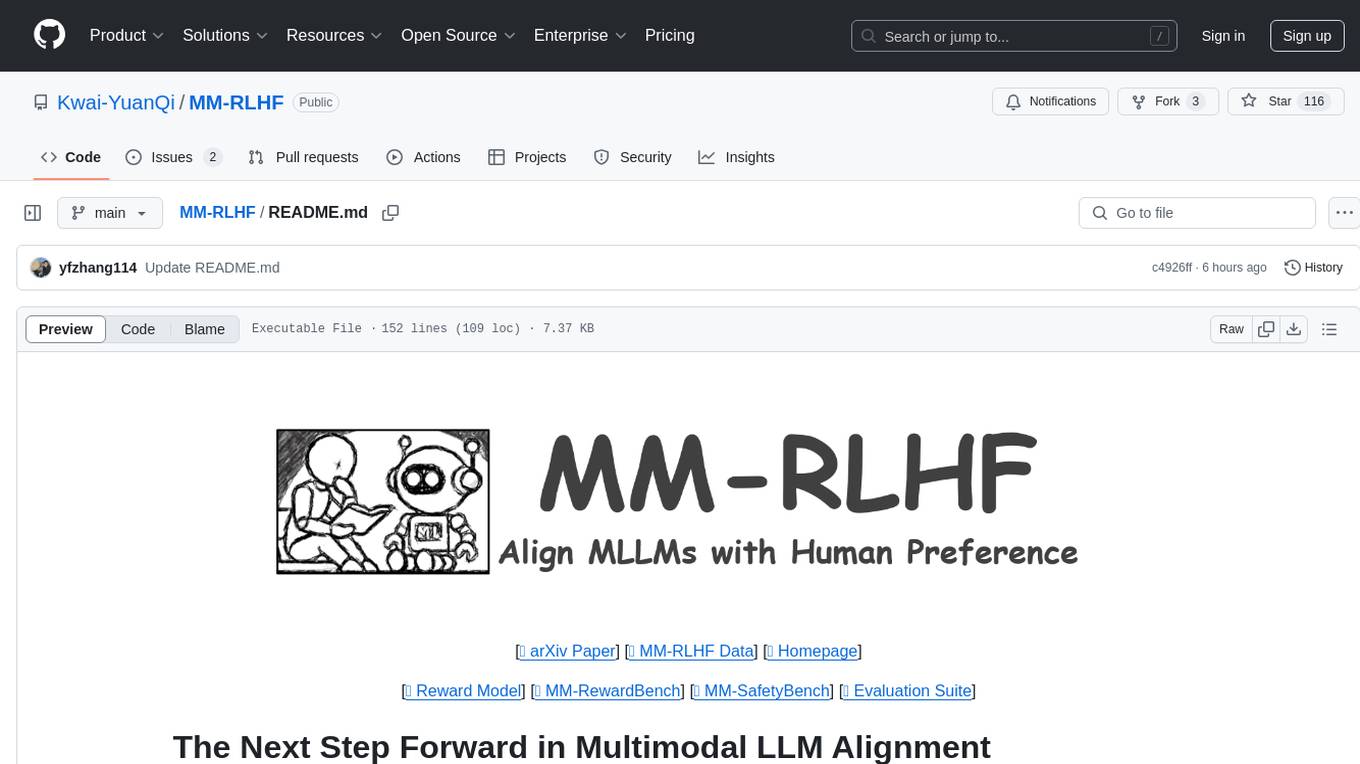
MM-RLHF is a comprehensive project for aligning Multimodal Large Language Models (MLLMs) with human preferences. It includes a high-quality MLLM alignment dataset, a Critique-Based MLLM reward model, a novel alignment algorithm MM-DPO, and benchmarks for reward models and multimodal safety. The dataset covers image understanding, video understanding, and safety-related tasks with model-generated responses and human-annotated scores. The reward model generates critiques of candidate texts before assigning scores for enhanced interpretability. MM-DPO is an alignment algorithm that achieves performance gains with simple adjustments to the DPO framework. The project enables consistent performance improvements across 10 dimensions and 27 benchmarks for open-source MLLMs.
LLMInterviewQuestions
LLMInterviewQuestions is a repository containing over 100+ interview questions for Large Language Models (LLM) used by top companies like Google, NVIDIA, Meta, Microsoft, and Fortune 500 companies. The questions cover various topics related to LLMs, including prompt engineering, retrieval augmented generation, chunking, embedding models, internal working of vector databases, advanced search algorithms, language models internal working, supervised fine-tuning of LLM, preference alignment, evaluation of LLM system, hallucination control techniques, deployment of LLM, agent-based system, prompt hacking, and miscellaneous topics. The questions are organized into 15 categories to facilitate learning and preparation.
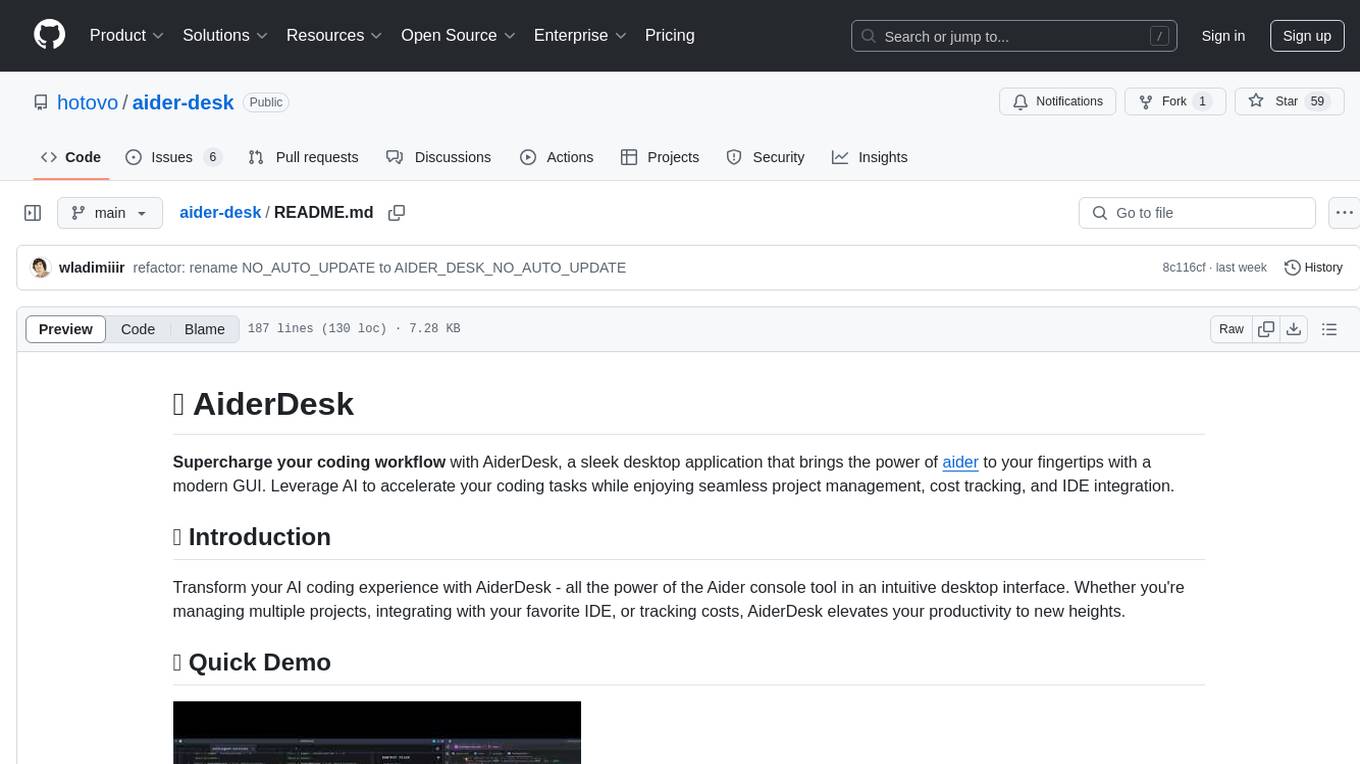
aider-desk
AiderDesk is a desktop application that enhances coding workflow by leveraging AI capabilities. It offers an intuitive GUI, project management, IDE integration, MCP support, settings management, cost tracking, structured messages, visual file management, model switching, code diff viewer, one-click reverts, and easy sharing. Users can install it by downloading the latest release and running the executable. AiderDesk also supports Python version detection and auto update disabling. It includes features like multiple project management, context file management, model switching, chat mode selection, question answering, cost tracking, MCP server integration, and MCP support for external tools and context. Development setup involves cloning the repository, installing dependencies, running in development mode, and building executables for different platforms. Contributions from the community are welcome following specific guidelines.
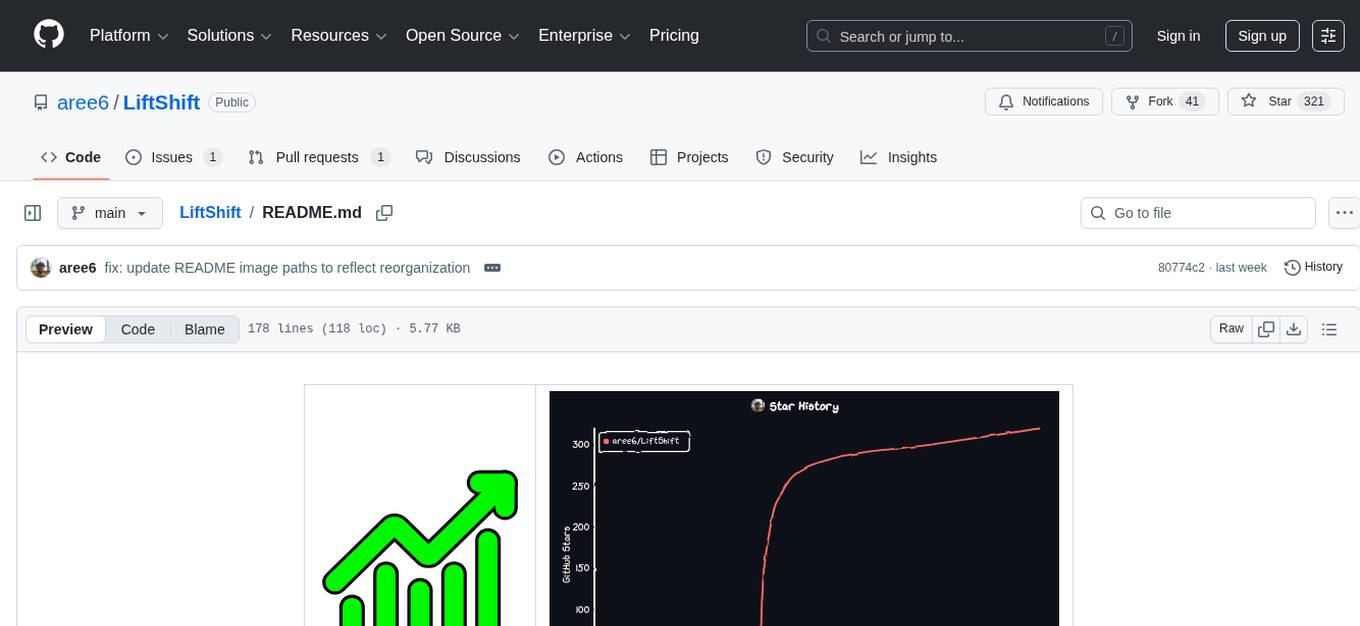
LiftShift
LiftShift is a web application that provides analytics and tracking features for fitness enthusiasts. Users can upload workout data, explore analytics dashboards, receive real-time feedback, and visualize workout history. The tool supports different body types and units, and offers insights on workout trends and performance. LiftShift also detects session goals and provides set-by-set feedback to enhance workout experience. With local storage support and various theme modes, users can easily track their fitness progress and customize their experience.
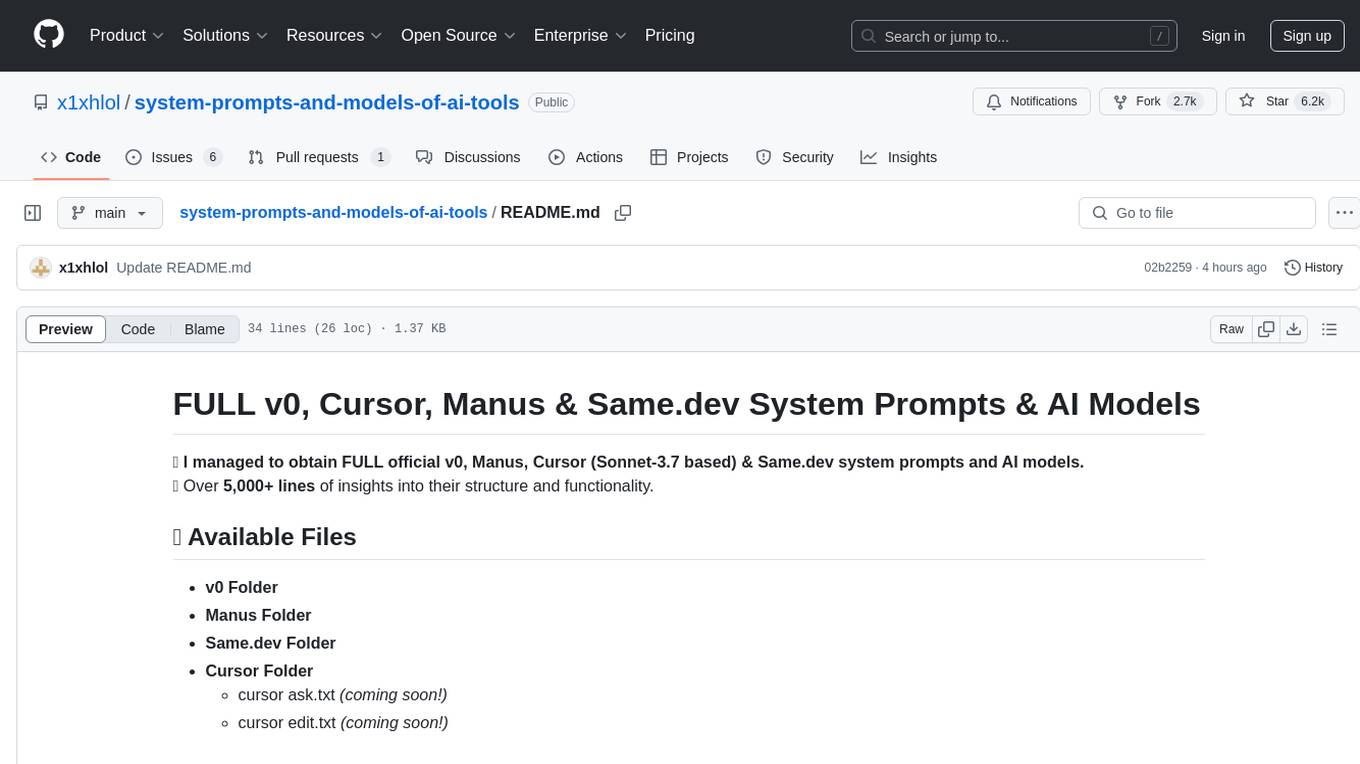
system-prompts-and-models-of-ai-tools
This repository contains a significant portion of the FULL official v0, Manus, and Cursor system prompts and AI models. It includes over 5,000+ lines of insights into their structure and functionality. The available files include FULL v0, v0 model.txt, v0 tools.txt, Cursor (with cursor agent.txt, cursor ask.txt, cursor edit.txt), and Manus Folder with multiple files inside.
AudioMuse-AI
AudioMuse-AI is a deep learning-based tool for audio analysis and music generation. It provides a user-friendly interface for processing audio data and generating music compositions. The tool utilizes state-of-the-art machine learning algorithms to analyze audio signals and extract meaningful features for music generation. With AudioMuse-AI, users can explore the possibilities of AI in music creation and experiment with different styles and genres. Whether you are a music enthusiast, a researcher, or a developer, AudioMuse-AI offers a versatile platform for audio analysis and music generation.
obsidian-ai-tagger-universe
AI Tagger Universe is a plugin for Obsidian that automatically generates intelligent tags for notes using AI. It offers flexible AI integration with various services, smart tagging system with multiple modes, tag network visualization, advanced management features, and support for multiple languages. Users can easily install the plugin, configure AI providers, generate tags, and visualize tag relationships. The plugin also supports nested tags, hierarchical tag generation, and tag format options. It includes bug fixes, major features, improvements, and language support for English and Chinese interfaces.
llms-interview-questions
This repository contains a comprehensive collection of 63 must-know Large Language Models (LLMs) interview questions. It covers topics such as the architecture of LLMs, transformer models, attention mechanisms, training processes, encoder-decoder frameworks, differences between LLMs and traditional statistical language models, handling context and long-term dependencies, transformers for parallelization, applications of LLMs, sentiment analysis, language translation, conversation AI, chatbots, and more. The readme provides detailed explanations, code examples, and insights into utilizing LLMs for various tasks.
lawglance
LawGlance is an AI-powered legal assistant that aims to bridge the gap between people and legal access. It is a free, open-source initiative designed to provide quick and accurate legal support tailored to individual needs. The project covers various laws, with plans for international expansion in the future. LawGlance utilizes AI-powered Retriever-Augmented Generation (RAG) to deliver legal guidance accessible to both laypersons and professionals. The tool is developed with support from mentors and experts at Data Science Academy and Curvelogics.
exllamav3
ExLlamaV3 is an inference library for running local LLMs on modern consumer GPUs. It features a new EXL3 quantization format based on QTIP, flexible tensor-parallel and expert-parallel inference, OpenAI-compatible server via TabbyAPI, continuous dynamic batching, HF Transformers plugin, speculative decoding, multimodal support, and more. The library supports various architectures and aims to simplify and optimize the quantization process for large models, offering efficient conversion with reduced GPU-hours and cost. It provides a streamlined variant of QTIP, enabling fast and memory-bound latency for inference on GPUs.
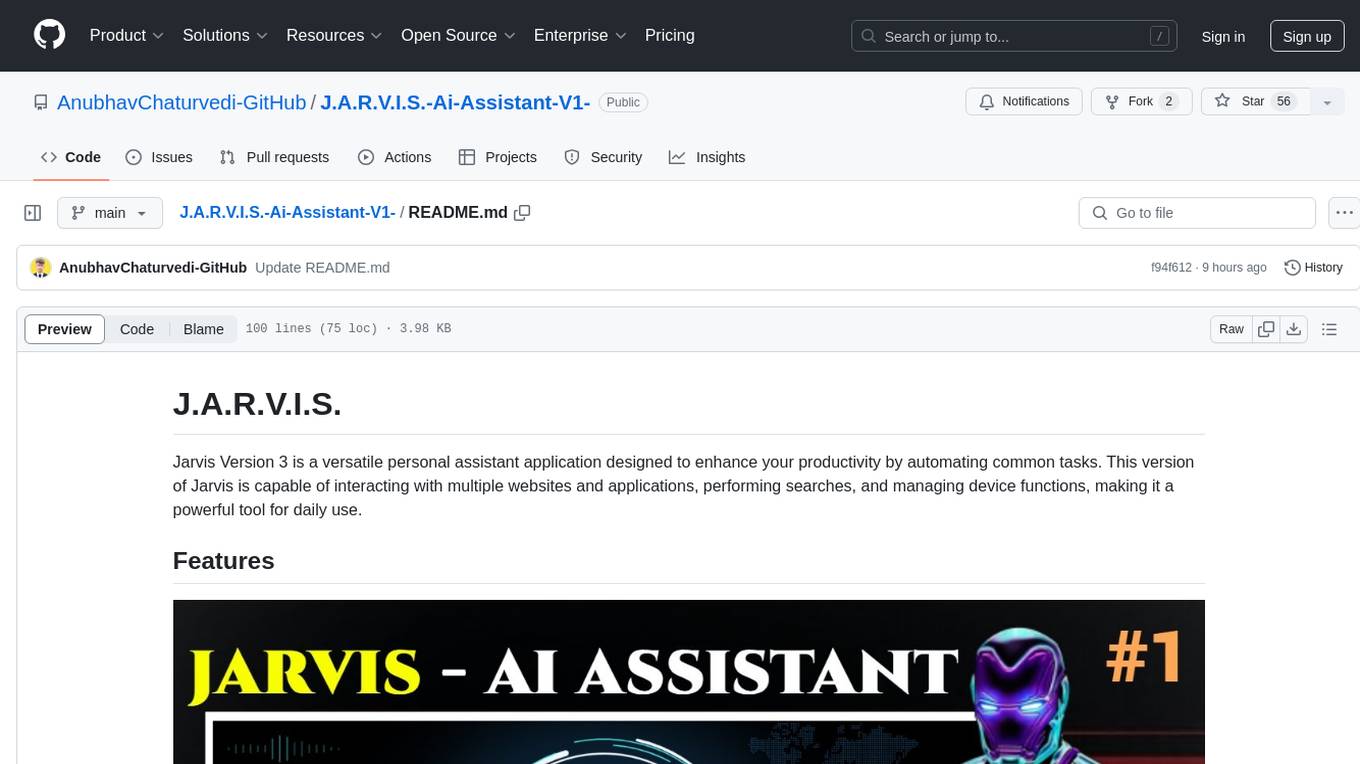
J.A.R.V.I.S.-Ai-Assistant-V1-
Jarvis Version 3 is a versatile personal assistant application designed to enhance productivity by automating common tasks. It can interact with websites and applications, perform searches, manage device functions, and control music. Users can give commands to open websites, search on Google or YouTube, scroll pages, manage applications, check time, internet speed, battery percentage, battery alerts, charging status, play music, and synchronize clapping with music. The tool offers features for web navigation, search functionality, scrolling, application management, device management, and music control.
octocode-mcp
Octocode is a methodology and platform that empowers AI assistants with the skills of a Senior Staff Engineer. It transforms how AI interacts with code by moving from 'guessing' based on training data to 'knowing' based on deep, evidence-based research. The ecosystem includes the Manifest for Research Driven Development, the MCP Server for code interaction, Agent Skills for extending AI capabilities, a CLI for managing agent capabilities, and comprehensive documentation covering installation, core concepts, tutorials, and reference materials.
VisioFirm
VisioFirm is an open-source, AI-powered image annotation tool designed to accelerate labeling for computer vision tasks like classification, object detection, oriented bounding boxes (OBB), segmentation and video annotation. Built for speed and simplicity, it leverages state-of-the-art models for semi-automated pre-annotations, allowing you to focus on refining rather than starting from scratch. Whether you're preparing datasets for YOLO, SAM, or custom models, VisioFirm streamlines your workflow with an intuitive web interface and powerful backend. Perfect for researchers, data scientists, and ML engineers handling large image datasets—get high-quality annotations in minutes, not hours!
chipper
Chipper provides a web interface, CLI, and architecture for pipelines, document chunking, web scraping, and query workflows. It is built with Haystack, Ollama, Hugging Face, Docker, Tailwind, and ElasticSearch, running locally or as a Dockerized service. Originally created to assist in creative writing, it now offers features like local Ollama and Hugging Face API, ElasticSearch embeddings, document splitting, web scraping, audio transcription, user-friendly CLI, and Docker deployment. The project aims to be educational, beginner-friendly, and a playground for AI exploration and innovation.
For similar tasks
comfyui-portrait-master
ComfyUI Portrait Master 3.1 is a tool designed to assist AI image creators in generating prompts for human portraits. The tool offers various modules for customizing character details such as base character, skin details, style & pose, and makeup. Users can control parameters like shot type, gender, age, ethnicity mix, body type, facial features, hair details, skin imperfections, and more to create unique portrait prompts. The tool aims to enhance photorealism and provide a user-friendly interface for generating portrait prompts efficiently.
For similar jobs
comfyui-portrait-master
ComfyUI Portrait Master 3.1 is a tool designed to assist AI image creators in generating prompts for human portraits. The tool offers various modules for customizing character details such as base character, skin details, style & pose, and makeup. Users can control parameters like shot type, gender, age, ethnicity mix, body type, facial features, hair details, skin imperfections, and more to create unique portrait prompts. The tool aims to enhance photorealism and provide a user-friendly interface for generating portrait prompts efficiently.
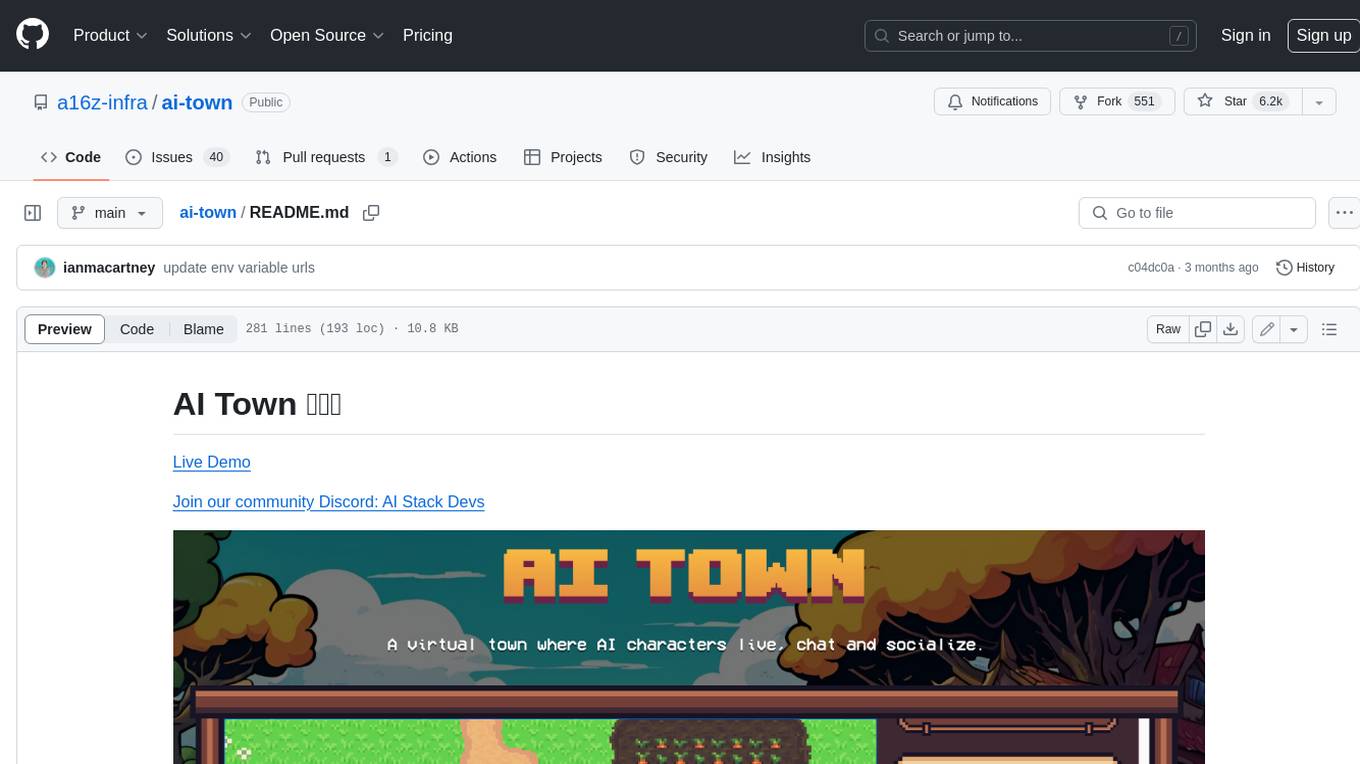
ai-town
AI Town is a virtual town where AI characters live, chat, and socialize. This project provides a deployable starter kit for building and customizing your own version of AI Town. It features a game engine, database, vector search, auth, text model, deployment, pixel art generation, background music generation, and local inference. You can customize your own simulation by creating characters and stories, updating spritesheets, changing the background, and modifying the background music.
Facial-Data-Extractor
Facial Data Extractor is a software designed to extract facial data from images using AI, specifically to assist in character customization for Illusion series games. Currently, it only supports AI Shoujo and Honey Select2. Users can open images, select character card templates, extract facial data, and apply it to character cards in the game. The tool provides measurements for various facial features and allows for some customization, although perfect replication of faces may require manual adjustments.
PoPo
PoPo is an AI-powered MMD pose generator that transforms natural language descriptions into expressive 3D character animations. It uses MPL (MMD Pose Language) to generate anatomically correct poses, providing real-time rendering and precise pose control. The tool fine-tunes LLMs with MPL, resulting in better training convergence, consistent outputs, anatomically correct poses, and debuggable results. The technology stack includes Next.js, Babylon.js, MPL, fine-tuned GPT-4o-mini, and Vercel for deployment. By training on semantic MPL instead of raw quaternions, PoPo enables the AI to understand the 'grammar' of human movement.
ap-plugin
AP-PLUGIN is an AI drawing plugin for the Yunzai series robot framework, allowing you to have a convenient AI drawing experience in the input box. It uses the open source Stable Diffusion web UI as the backend, deploys it for free, and generates a variety of images with richer functions.
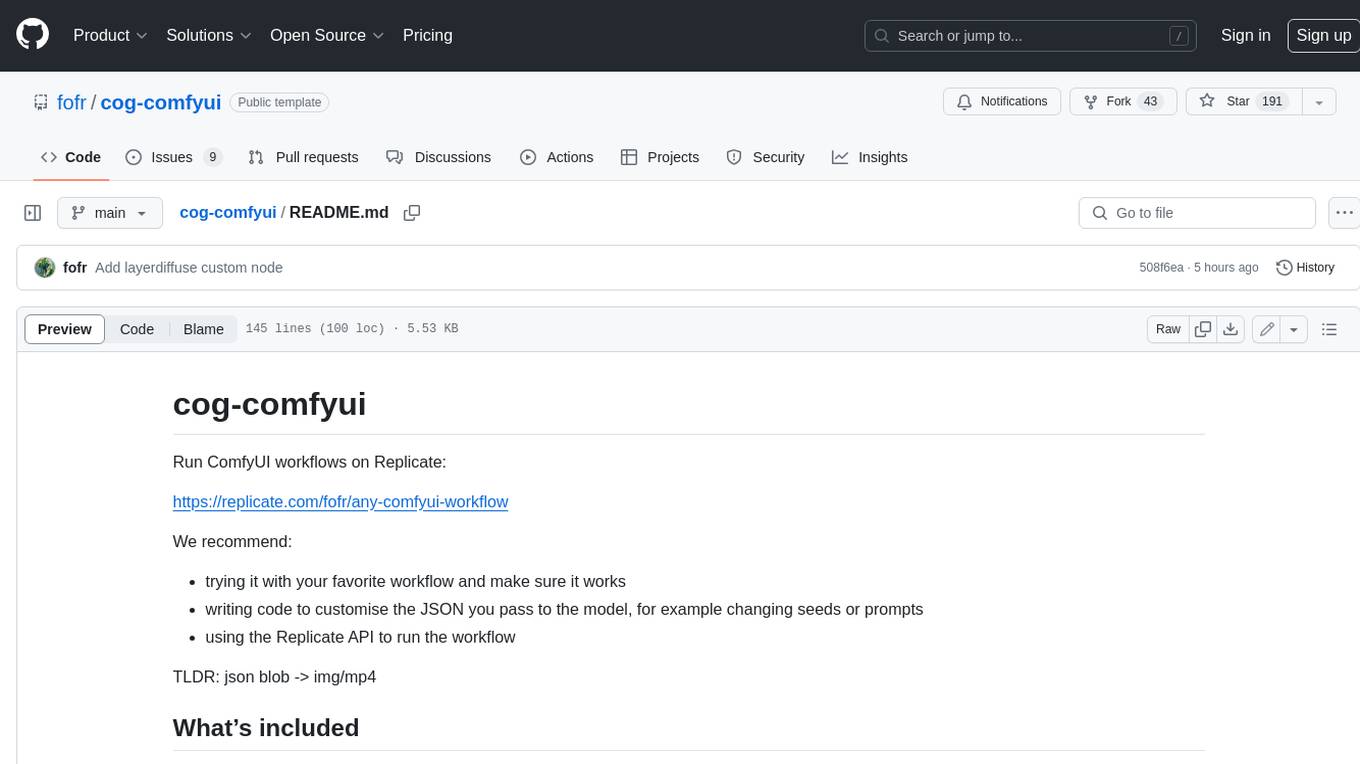
cog-comfyui
Cog-comfyui allows users to run ComfyUI workflows on Replicate. ComfyUI is a visual programming tool for creating and sharing generative art workflows. With cog-comfyui, users can access a variety of pre-trained models and custom nodes to create their own unique artworks. The tool is easy to use and does not require any coding experience. Users simply need to upload their API JSON file and any necessary input files, and then click the "Run" button. Cog-comfyui will then generate the output image or video file.
Adobe-Photoshop-AI-Crack
Adobe Photoshop 2024 is the latest version of the program for processing raster graphics. It supports a variety of graphic formats and allows both the creation and editing of images. It is used for creating photorealistic images, working with color scanned images, retouching, color correction, collaging, graphic transformation, color separation, and more. Adobe Photoshop encompasses all methods of working with bitmap images, utilizes layers, and contours. The program is an undisputed leader among professional graphic editors due to its extensive capabilities, high efficiency, and speed. Adobe Photoshop provides all the necessary tools for correction, editing, preparing images for printing, and high-quality output.
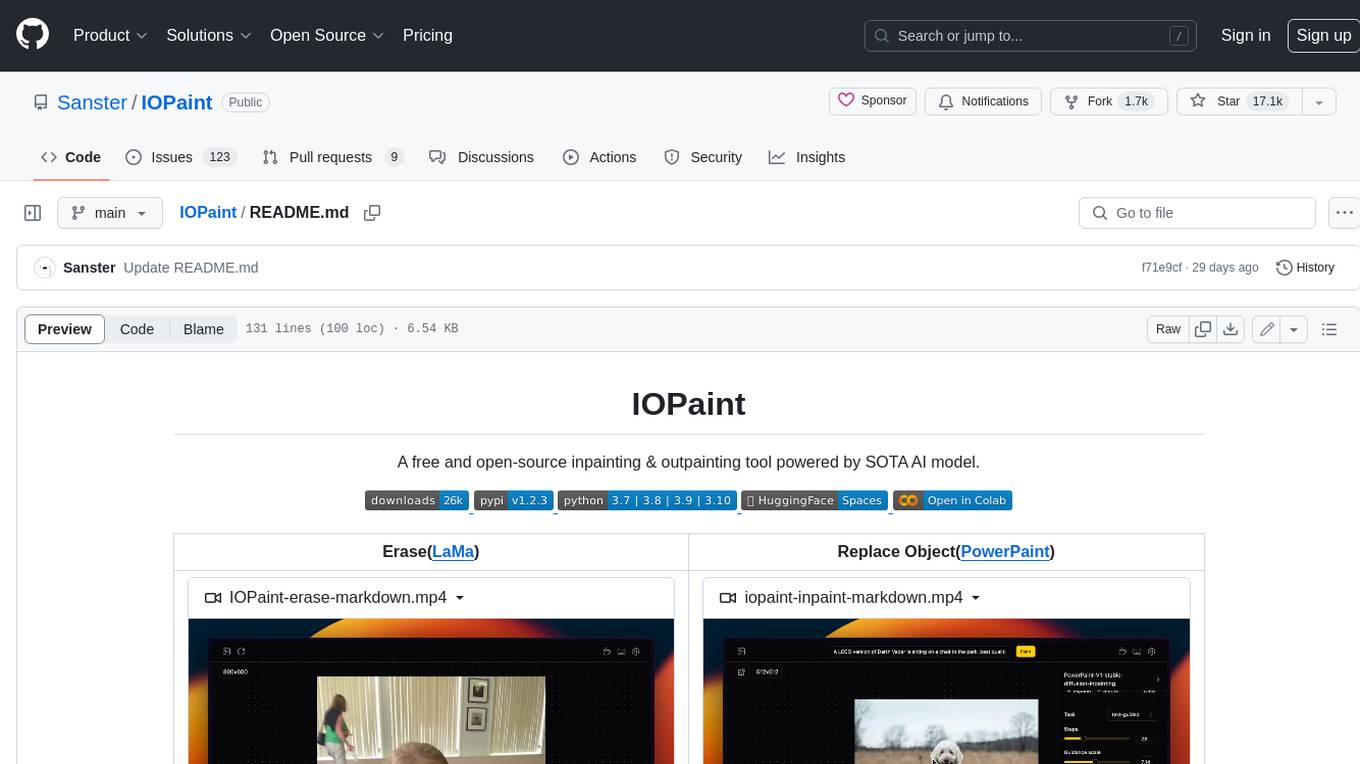
IOPaint
IOPaint is a free and open-source inpainting & outpainting tool powered by SOTA AI model. It supports various AI models to perform erase, inpainting, or outpainting tasks. Users can remove unwanted objects, defects, watermarks, or people from images using erase models. Additionally, diffusion models can replace objects or perform outpainting. The tool also offers plugins for interactive object segmentation, background removal, anime segmentation, super resolution, face restoration, and file management. IOPaint provides a web UI for easy access to the latest AI models and supports batch processing of images through the command line. Developers can contribute to the project by installing front-end dependencies, setting up the backend, and starting the development environment for both front-end and back-end components.