


open-source-ai-weekly
优质AI开源项目周刊, 每周一更新
Stars: 643
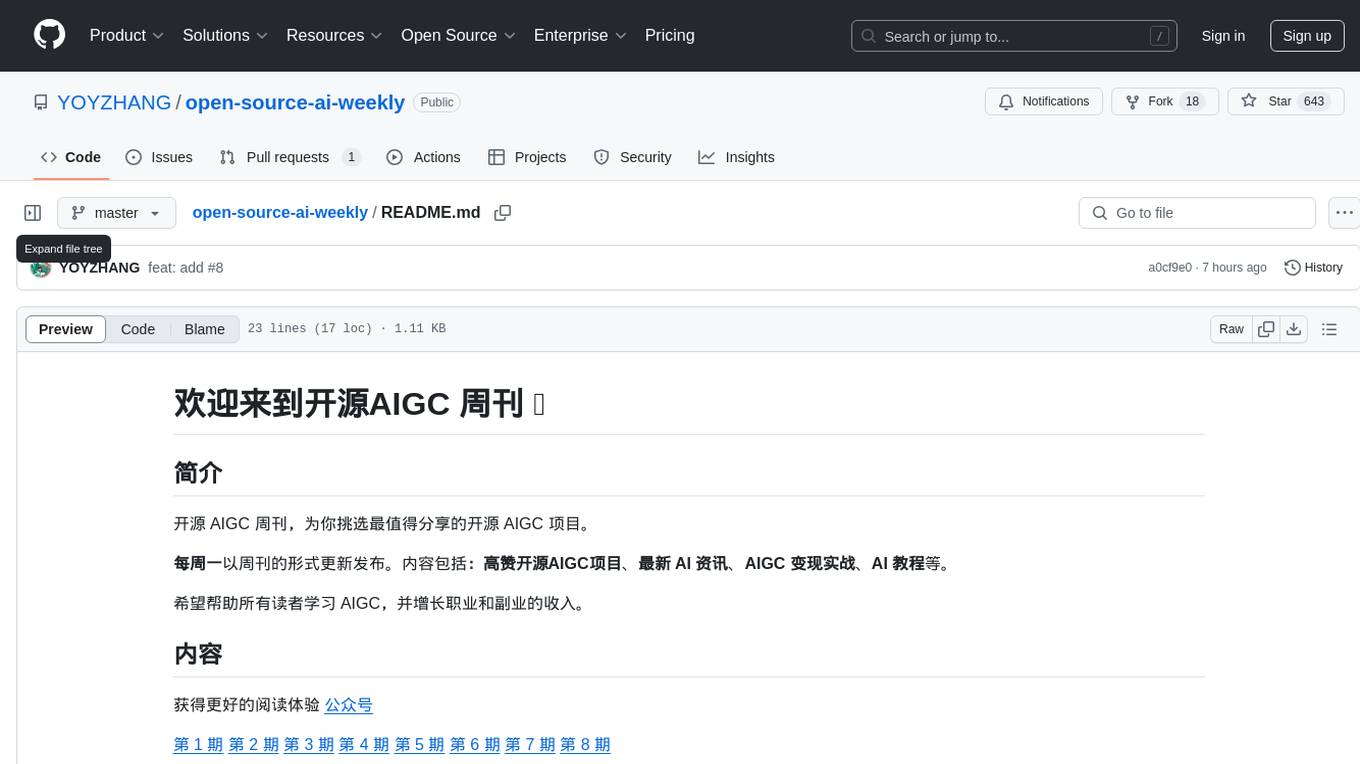
Open-source AIGC Weekly is a curated publication that selects the most valuable open-source AIGC projects. It is updated weekly with content including top-rated open-source AIGC projects, latest AI news, AIGC monetization strategies, and AI tutorials. The goal is to help readers learn AIGC, enhance their career, and increase their income through both primary and side ventures.
README:
开源 AIGC 周刊,为你挑选最值得分享的开源 AIGC 项目。
每周一以周刊的形式更新发布。内容包括:高赞开源AIGC项目、最新 AI 资讯、AIGC 变现实战、AI 教程等。
希望帮助所有读者学习 AIGC,并增长职业和副业的收入。
获得更好的阅读体验 公众号
第 1 期 第 2 期 第 3 期 第 4 期 第 5 期 第 6 期 第 7 期 第 8 期
本作品采用 署名-非商业性使用-禁止演绎 4.0 国际 进行许可。


For Tasks:
Click tags to check more tools for each tasksFor Jobs:
Alternative AI tools for open-source-ai-weekly
Similar Open Source Tools
open-source-ai-weekly
Open-source AIGC Weekly is a curated publication that selects the most valuable open-source AIGC projects. It is updated weekly with content including top-rated open-source AIGC projects, latest AI news, AIGC monetization strategies, and AI tutorials. The goal is to help readers learn AIGC, enhance their career, and increase their income through both primary and side ventures.
ai-self-coding-book
The 'ai-self-coding-book' repository is a guidebook that aims to teach how to create complex applications with commercial value using natural language and AI, rather than simple toy projects. It provides insights on AI programming concepts and practical applications, emphasizing real-world use cases and best practices for development.
Learn_Prompting
Learn Prompting is a platform offering free resources, courses, and webinars to master prompt engineering and generative AI. It provides a Prompt Engineering Guide, courses on Generative AI, workshops, and the HackAPrompt competition. The platform also offers AI Red Teaming and AI Safety courses, research reports on prompting techniques, and welcomes contributions in various forms such as content suggestions, translations, artwork, and typo fixes. Users can locally develop the website using Visual Studio Code, Git, and Node.js, and run it in development mode to preview changes.
go2coding.github.io
The go2coding.github.io repository is a collection of resources for AI enthusiasts, providing information on AI products, open-source projects, AI learning websites, and AI learning frameworks. It aims to help users stay updated on industry trends, learn from community projects, access learning resources, and understand and choose AI frameworks. The repository also includes instructions for local and external deployment of the project as a static website, with details on domain registration, hosting services, uploading static web pages, configuring domain resolution, and a visual guide to the AI tool navigation website. Additionally, it offers a platform for AI knowledge exchange through a QQ group and promotes AI tools through a WeChat public account.
agentfactory
The AI Agent Factory is a spec-driven blueprint for building and monetizing digital FTEs. It empowers developers, entrepreneurs, and organizations to learn, build, and monetize intelligent AI agents, creating reliable digital FTEs that can be trusted, deployed, and scaled. The tool focuses on co-learning between humans and machines, emphasizing collaboration, clear specifications, and evolving together. It covers AI-assisted, AI-driven, and AI-native development approaches, guiding users through the AI development spectrum and organizational AI maturity levels. The core philosophy revolves around treating AI as a collaborative partner, using specification-first methodology, bilingual development, learning by doing, and ensuring transparency and reproducibility. The tool is suitable for beginners, professional developers, entrepreneurs, product leaders, educators, and tech leaders.
AI-Engineering.academy
AI Engineering Academy aims to provide a structured learning path for individuals looking to learn Applied AI effectively. The platform offers multiple roadmaps covering topics like Retrieval Augmented Generation, Fine-tuning, and Deployment. Each roadmap equips learners with the knowledge and skills needed to excel in applied GenAI. Additionally, the platform will feature Hands-on End-to-End AI projects in the future.
pipecat
Pipecat is an open-source framework designed for building generative AI voice bots and multimodal assistants. It provides code building blocks for interacting with AI services, creating low-latency data pipelines, and transporting audio, video, and events over the Internet. Pipecat supports various AI services like speech-to-text, text-to-speech, image generation, and vision models. Users can implement new services and contribute to the framework. Pipecat aims to simplify the development of applications like personal coaches, meeting assistants, customer support bots, and more by providing a complete framework for integrating AI services.
machine-learning
Ocademy is an AI learning community dedicated to Python, Data Science, Machine Learning, Deep Learning, and MLOps. They promote equal opportunities for everyone to access AI through open-source educational resources. The repository contains curated AI courses, tutorials, books, tools, and resources for learning and creating Generative AI. It also offers an interactive book to help adults transition into AI. Contributors are welcome to join and contribute to the community by following guidelines. The project follows a code of conduct to ensure inclusivity and welcomes contributions from those passionate about Data Science and AI.
cherry-studio
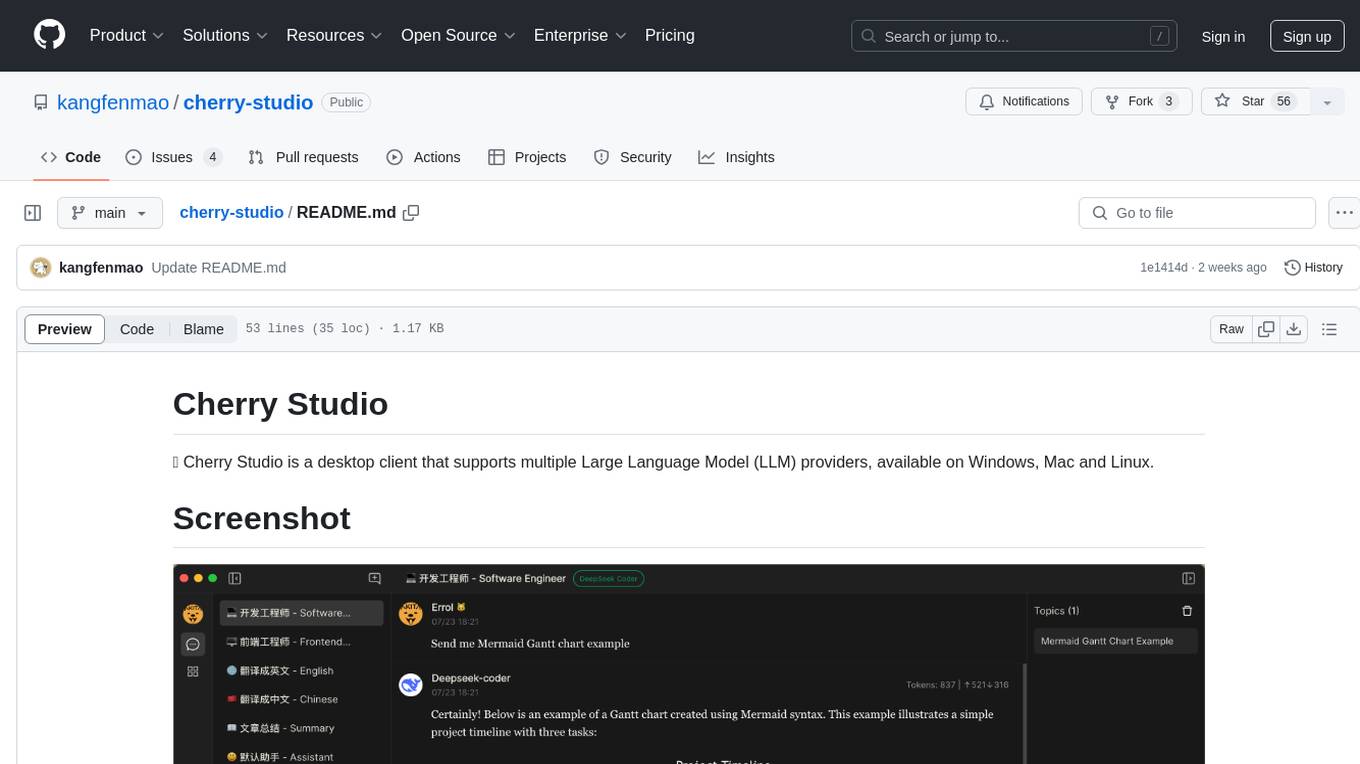
Cherry Studio is a desktop client that supports multiple Large Language Model (LLM) providers, available on Windows, Mac, and Linux. It allows users to create multiple Assistants and topics, use multiple models to answer questions in the same conversation, and supports drag-and-drop sorting, code highlighting, and Mermaid chart. The tool is designed to enhance productivity and streamline the process of interacting with various language models.
pollinations
pollinations.ai is an open-source generative AI platform based in Berlin, empowering community projects with accessible text, image, video, and audio generation APIs. It offers a unified API endpoint for various AI generation needs, including text, images, audio, and video. The platform provides features like image generation using models such as Flux, GPT Image, Seedream, and Kontext, video generation with Seedance and Veo, and audio generation with text-to-speech and speech-to-text capabilities. Users can access the platform through a web interface or API, and authentication is managed through API keys. The platform is community-driven, transparent, and ethical, aiming to make AI technology open, accessible, and interconnected while fostering innovation and responsible development.
cherry-studio
Cherry Studio is a desktop client that supports multiple LLM providers on Windows, Mac, and Linux. It offers diverse LLM provider support, AI assistants & conversations, document & data processing, practical tools integration, and enhanced user experience. The tool includes features like support for major LLM cloud services, AI web service integration, local model support, pre-configured AI assistants, document processing for text, images, and more, global search functionality, topic management system, AI-powered translation, and cross-platform support with ready-to-use features and themes for a better user experience.
BMAD-METHOD
BMAD-METHOD™ is a universal AI agent framework that revolutionizes Agile AI-Driven Development. It offers specialized AI expertise across various domains, including software development, entertainment, creative writing, business strategy, and personal wellness. The framework introduces two key innovations: Agentic Planning, where dedicated agents collaborate to create detailed specifications, and Context-Engineered Development, which ensures complete understanding and guidance for developers. BMAD-METHOD™ simplifies the development process by eliminating planning inconsistency and context loss, providing a seamless workflow for creating AI agents and expanding functionality through expansion packs.
MarkFlowy
MarkFlowy is a lightweight and feature-rich Markdown editor with built-in AI capabilities. It supports one-click export of conversations, translation of articles, and obtaining article abstracts. Users can leverage large AI models like DeepSeek and Chatgpt as intelligent assistants. The editor provides high availability with multiple editing modes and custom themes. Available for Linux, macOS, and Windows, MarkFlowy aims to offer an efficient, beautiful, and data-safe Markdown editing experience for users.
skypilot
SkyPilot is a framework for running LLMs, AI, and batch jobs on any cloud, offering maximum cost savings, highest GPU availability, and managed execution. SkyPilot abstracts away cloud infra burdens: - Launch jobs & clusters on any cloud - Easy scale-out: queue and run many jobs, automatically managed - Easy access to object stores (S3, GCS, R2) SkyPilot maximizes GPU availability for your jobs: * Provision in all zones/regions/clouds you have access to (the _Sky_), with automatic failover SkyPilot cuts your cloud costs: * Managed Spot: 3-6x cost savings using spot VMs, with auto-recovery from preemptions * Optimizer: 2x cost savings by auto-picking the cheapest VM/zone/region/cloud * Autostop: hands-free cleanup of idle clusters SkyPilot supports your existing GPU, TPU, and CPU workloads, with no code changes.
llm-zoomcamp
LLM Zoomcamp is a free online course focusing on real-life applications of Large Language Models (LLMs). Over 10 weeks, participants will learn to build an AI bot capable of answering questions based on a knowledge base. The course covers topics such as LLMs, RAG, open-source LLMs, vector databases, orchestration, monitoring, and advanced RAG systems. Pre-requisites include comfort with programming, Python, and the command line, with no prior exposure to AI or ML required. The course features a pre-course workshop and is led by instructors Alexey Grigorev and Magdalena Kuhn, with support from sponsors and partners.
AI-Infra-Guard
A.I.G (AI-Infra-Guard) is an AI red teaming platform by Tencent Zhuque Lab that integrates capabilities such as AI infra vulnerability scan, MCP Server risk scan, and Jailbreak Evaluation. It aims to provide users with a comprehensive, intelligent, and user-friendly solution for AI security risk self-examination. The platform offers features like AI Infra Scan, AI Tool Protocol Scan, and Jailbreak Evaluation, along with a modern web interface, complete API, multi-language support, cross-platform deployment, and being free and open-source under the MIT license.
For similar tasks
open-source-ai-weekly
Open-source AIGC Weekly is a curated publication that selects the most valuable open-source AIGC projects. It is updated weekly with content including top-rated open-source AIGC projects, latest AI news, AIGC monetization strategies, and AI tutorials. The goal is to help readers learn AIGC, enhance their career, and increase their income through both primary and side ventures.
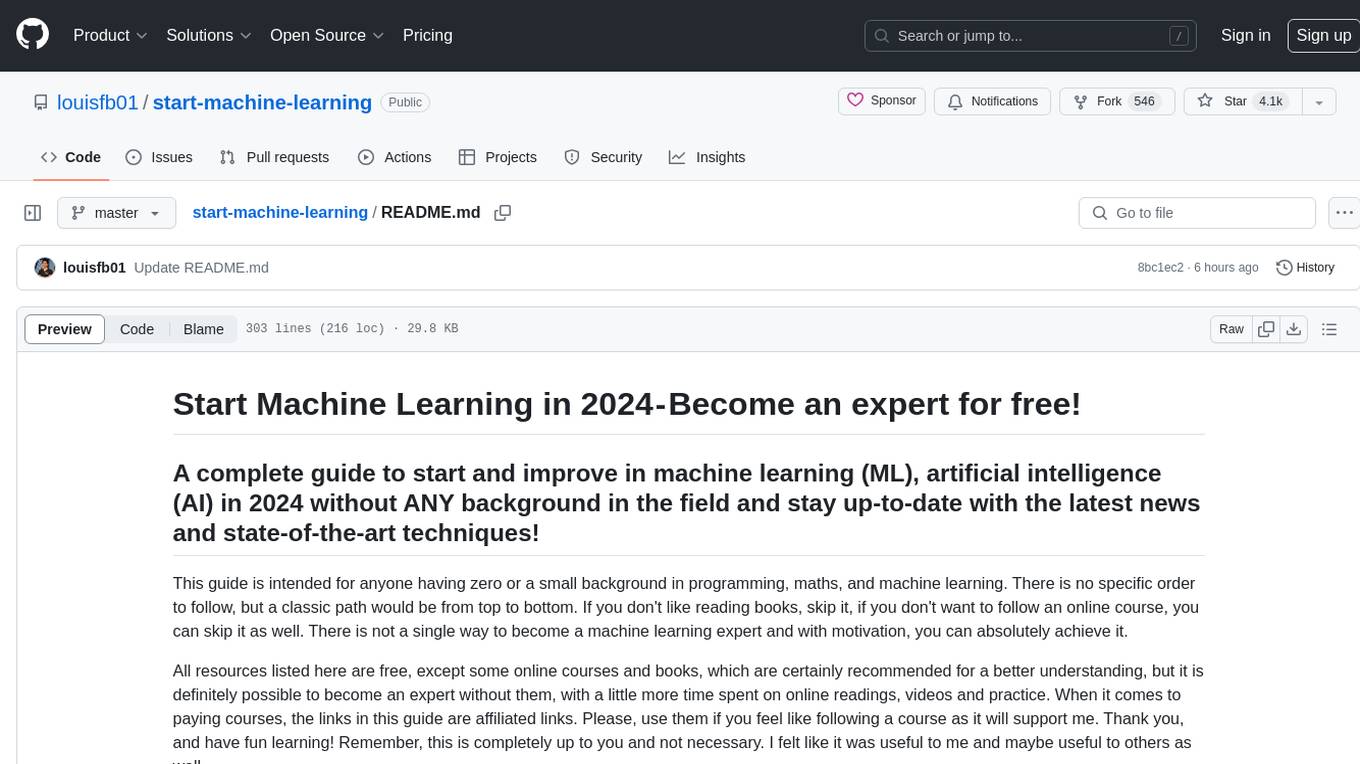
start-machine-learning
Start Machine Learning in 2024 is a comprehensive guide for beginners to advance in machine learning and artificial intelligence without any prior background. The guide covers various resources such as free online courses, articles, books, and practical tips to become an expert in the field. It emphasizes self-paced learning and provides recommendations for learning paths, including videos, podcasts, and online communities. The guide also includes information on building language models and applications, practicing through Kaggle competitions, and staying updated with the latest news and developments in AI. The goal is to empower individuals with the knowledge and resources to excel in machine learning and AI.
For similar jobs
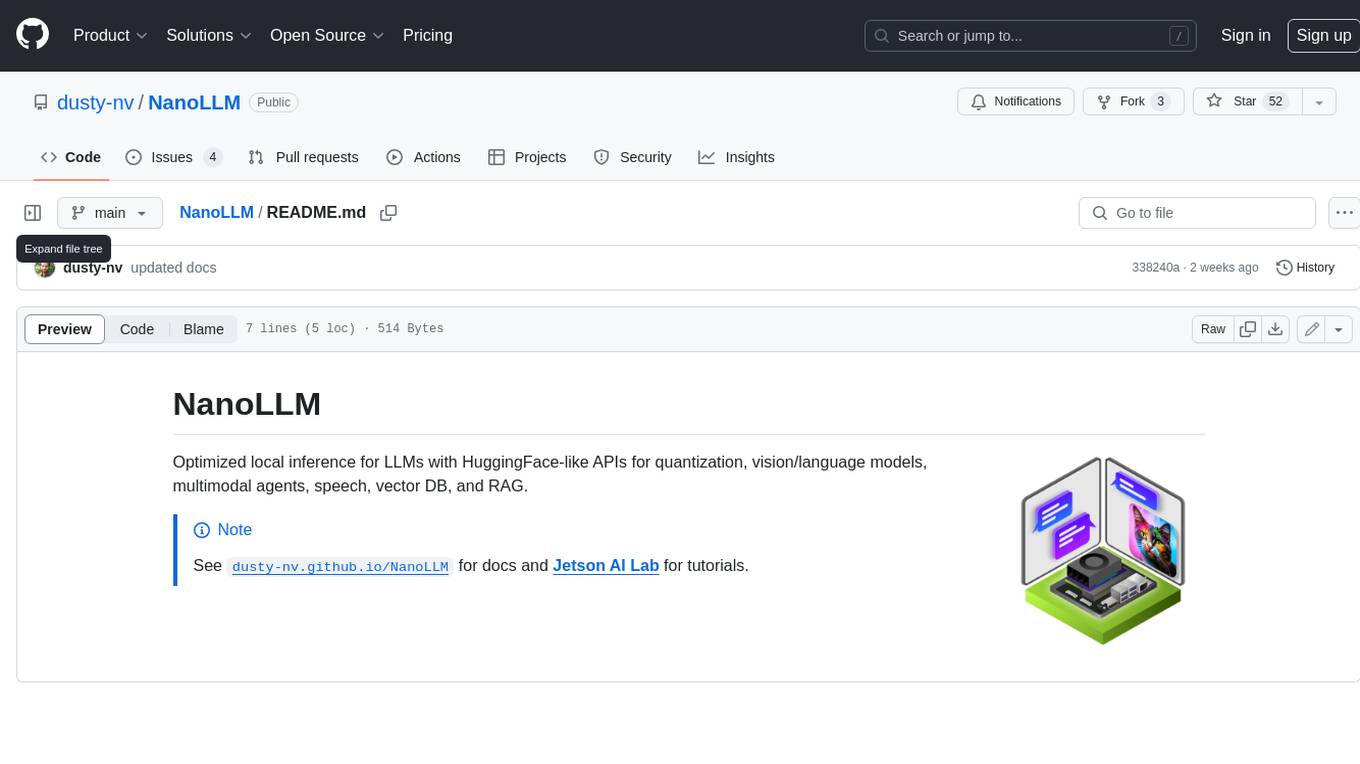
NanoLLM
NanoLLM is a tool designed for optimized local inference for Large Language Models (LLMs) using HuggingFace-like APIs. It supports quantization, vision/language models, multimodal agents, speech, vector DB, and RAG. The tool aims to provide efficient and effective processing for LLMs on local devices, enhancing performance and usability for various AI applications.
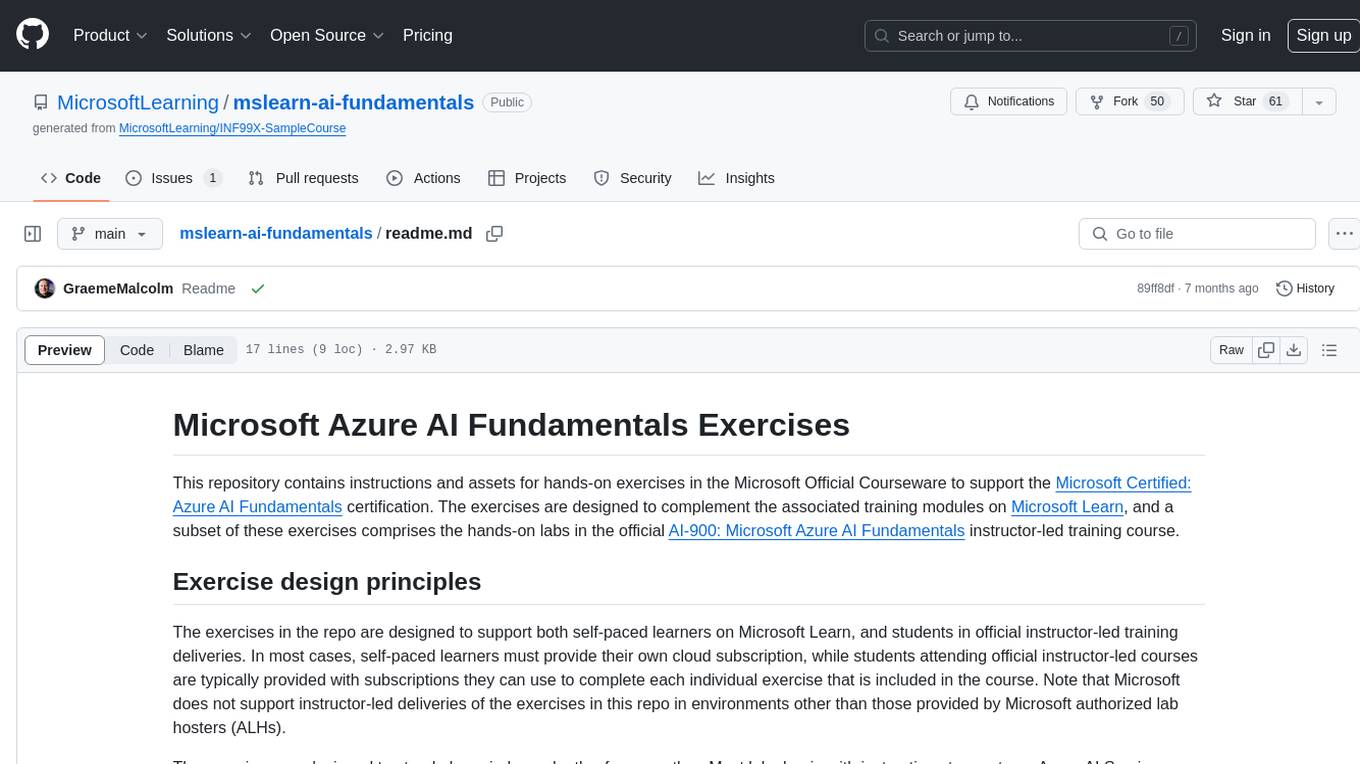
mslearn-ai-fundamentals
This repository contains materials for the Microsoft Learn AI Fundamentals module. It covers the basics of artificial intelligence, machine learning, and data science. The content includes hands-on labs, interactive learning modules, and assessments to help learners understand key concepts and techniques in AI. Whether you are new to AI or looking to expand your knowledge, this module provides a comprehensive introduction to the fundamentals of AI.

awesome-ai-tools
Awesome AI Tools is a curated list of popular tools and resources for artificial intelligence enthusiasts. It includes a wide range of tools such as machine learning libraries, deep learning frameworks, data visualization tools, and natural language processing resources. Whether you are a beginner or an experienced AI practitioner, this repository aims to provide you with a comprehensive collection of tools to enhance your AI projects and research. Explore the list to discover new tools, stay updated with the latest advancements in AI technology, and find the right resources to support your AI endeavors.
go2coding.github.io
The go2coding.github.io repository is a collection of resources for AI enthusiasts, providing information on AI products, open-source projects, AI learning websites, and AI learning frameworks. It aims to help users stay updated on industry trends, learn from community projects, access learning resources, and understand and choose AI frameworks. The repository also includes instructions for local and external deployment of the project as a static website, with details on domain registration, hosting services, uploading static web pages, configuring domain resolution, and a visual guide to the AI tool navigation website. Additionally, it offers a platform for AI knowledge exchange through a QQ group and promotes AI tools through a WeChat public account.
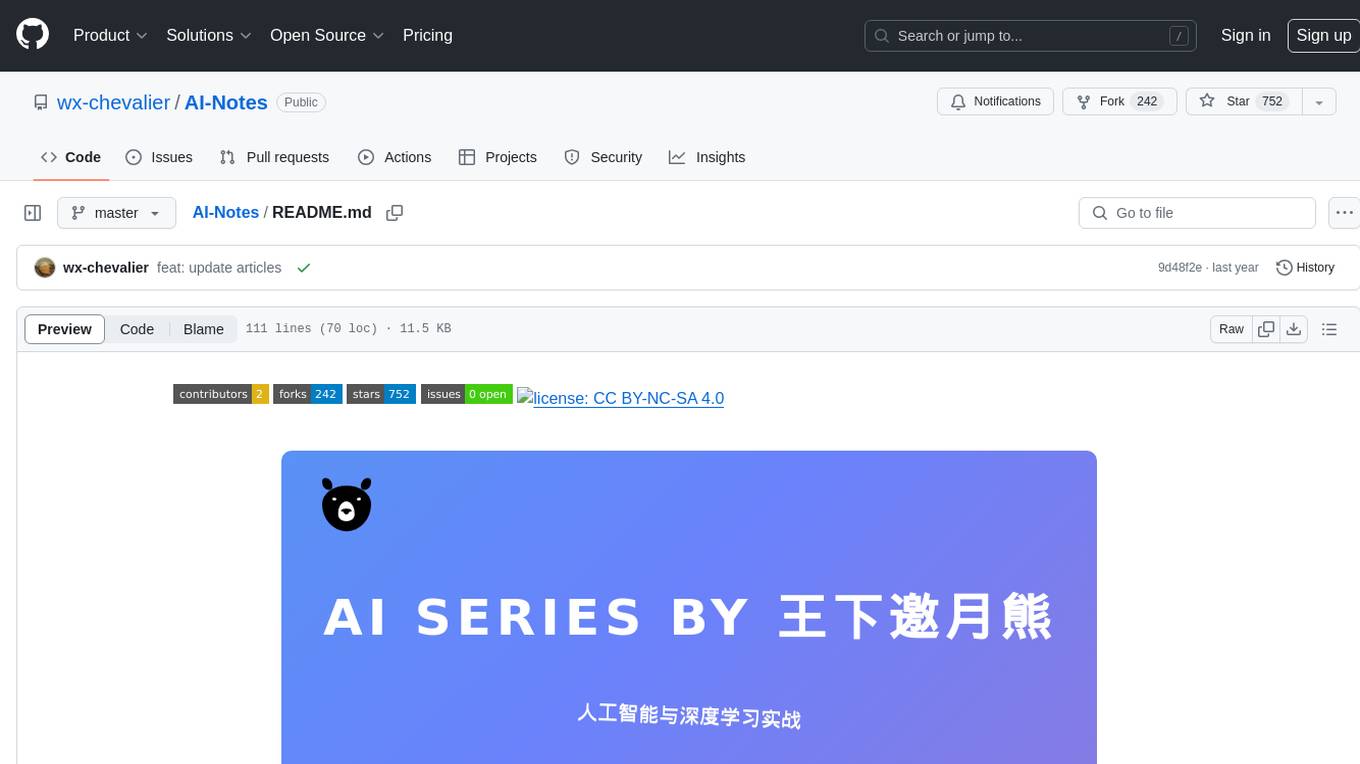
AI-Notes
AI-Notes is a repository dedicated to practical applications of artificial intelligence and deep learning. It covers concepts such as data mining, machine learning, natural language processing, and AI. The repository contains Jupyter Notebook examples for hands-on learning and experimentation. It explores the development stages of AI, from narrow artificial intelligence to general artificial intelligence and superintelligence. The content delves into machine learning algorithms, deep learning techniques, and the impact of AI on various industries like autonomous driving and healthcare. The repository aims to provide a comprehensive understanding of AI technologies and their real-world applications.
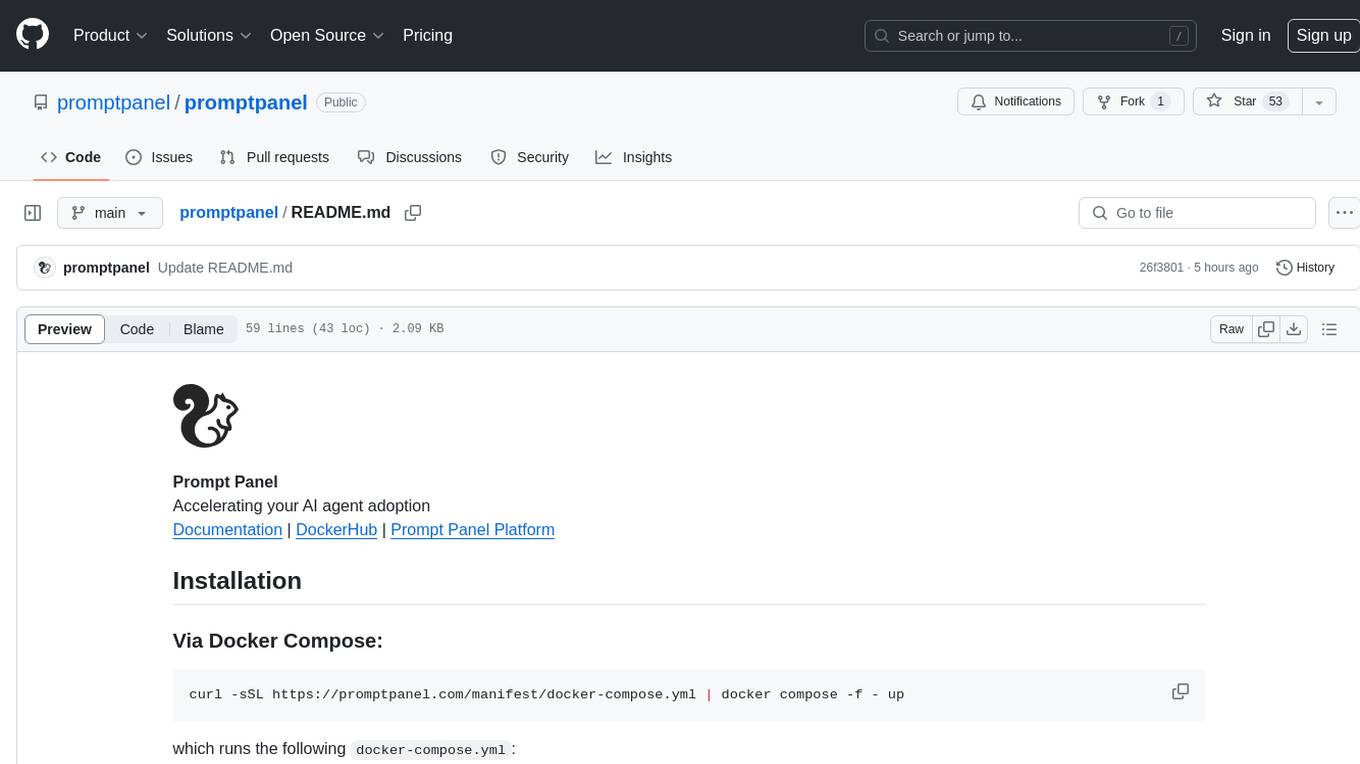
promptpanel
Prompt Panel is a tool designed to accelerate the adoption of AI agents by providing a platform where users can run large language models across any inference provider, create custom agent plugins, and use their own data safely. The tool allows users to break free from walled-gardens and have full control over their models, conversations, and logic. With Prompt Panel, users can pair their data with any language model, online or offline, and customize the system to meet their unique business needs without any restrictions.
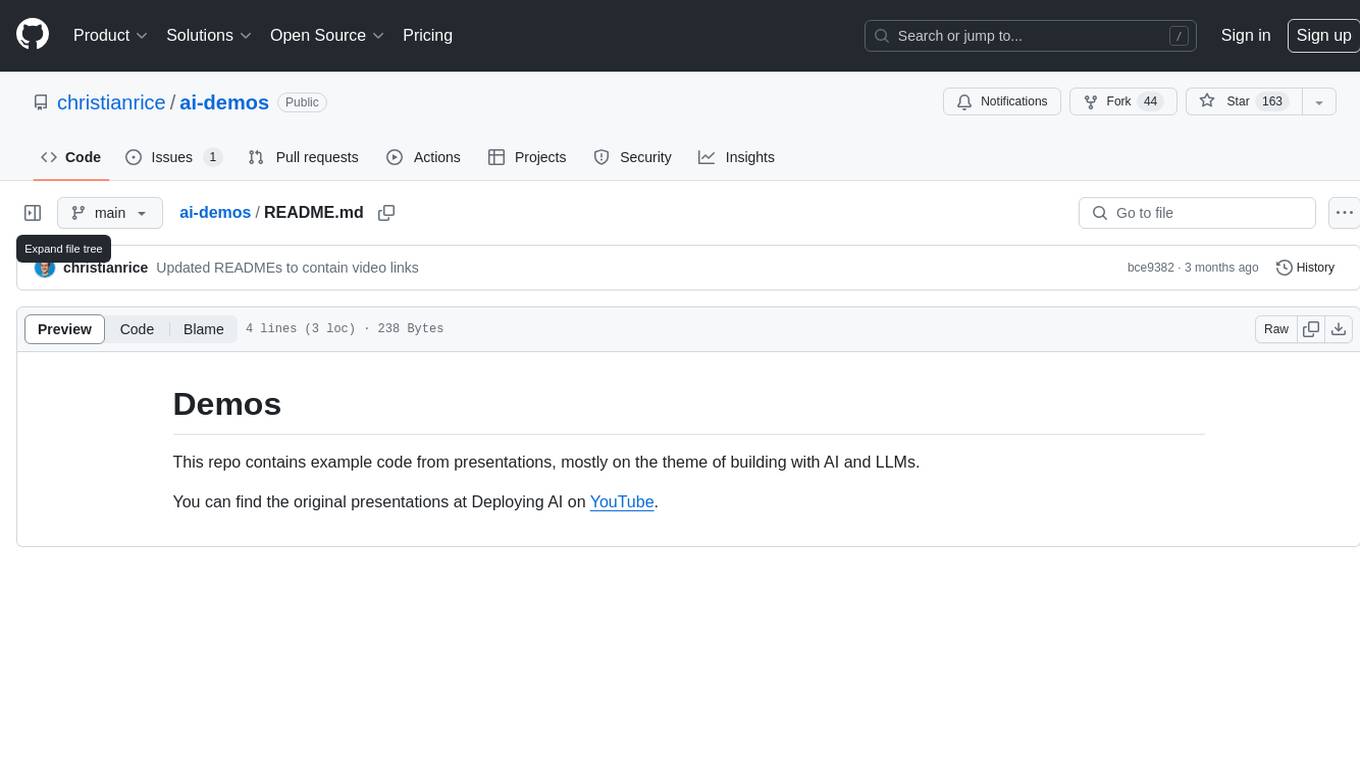
ai-demos
The 'ai-demos' repository is a collection of example code from presentations focusing on building with AI and LLMs. It serves as a resource for developers looking to explore practical applications of artificial intelligence in their projects. The code snippets showcase various techniques and approaches to leverage AI technologies effectively. The repository aims to inspire and educate developers on integrating AI solutions into their applications.
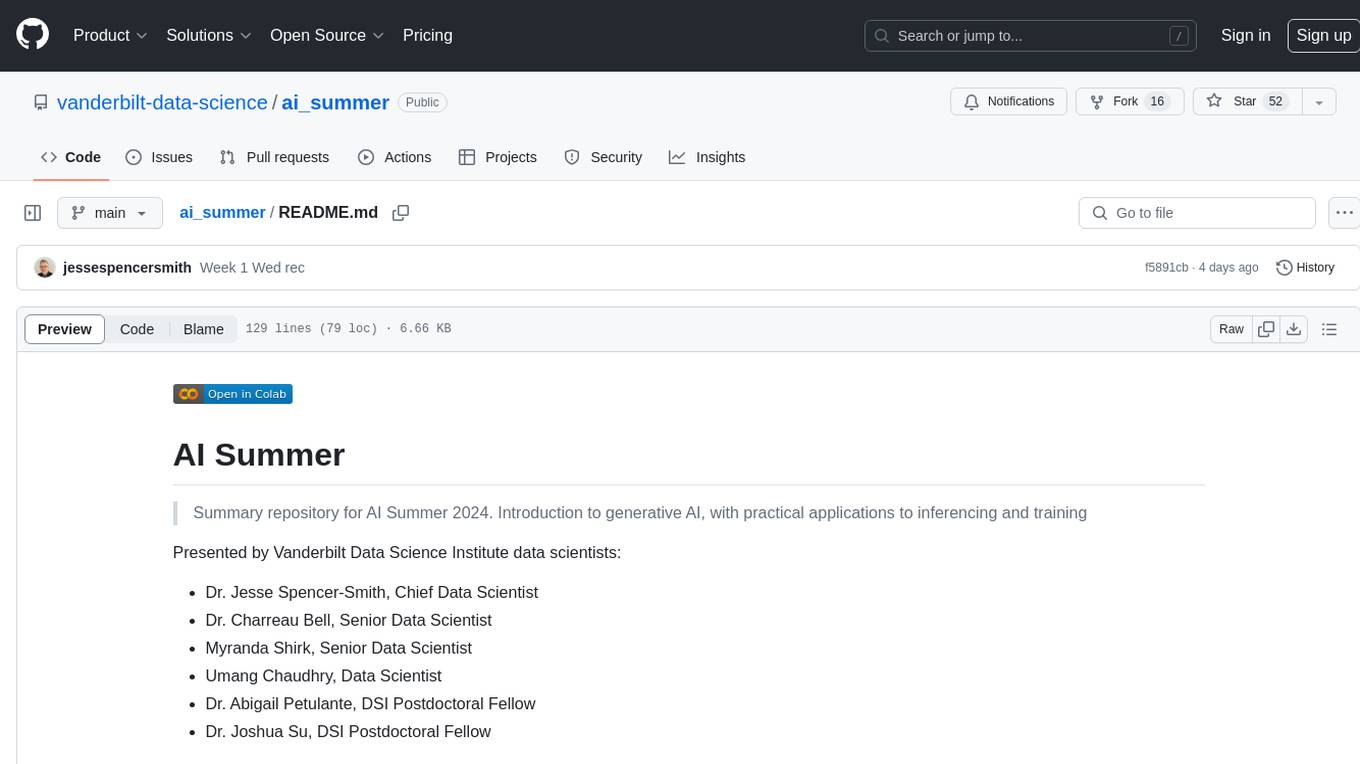
ai_summer
AI Summer is a repository focused on providing workshops and resources for developing foundational skills in generative AI models and transformer models. The repository offers practical applications for inferencing and training, with a specific emphasis on understanding and utilizing advanced AI chat models like BingGPT. Participants are encouraged to engage in interactive programming environments, decide on projects to work on, and actively participate in discussions and breakout rooms. The workshops cover topics such as generative AI models, retrieval-augmented generation, building AI solutions, and fine-tuning models. The goal is to equip individuals with the necessary skills to work with AI technologies effectively and securely, both locally and in the cloud.