


awesome-chatgpt-zh
ChatGPT 中文指南🔥,ChatGPT 中文调教指南,指令指南,应用开发指南,精选资源清单,更好的使用 chatGPT 让你的生产力 up up up! 🚀
Stars: 10468
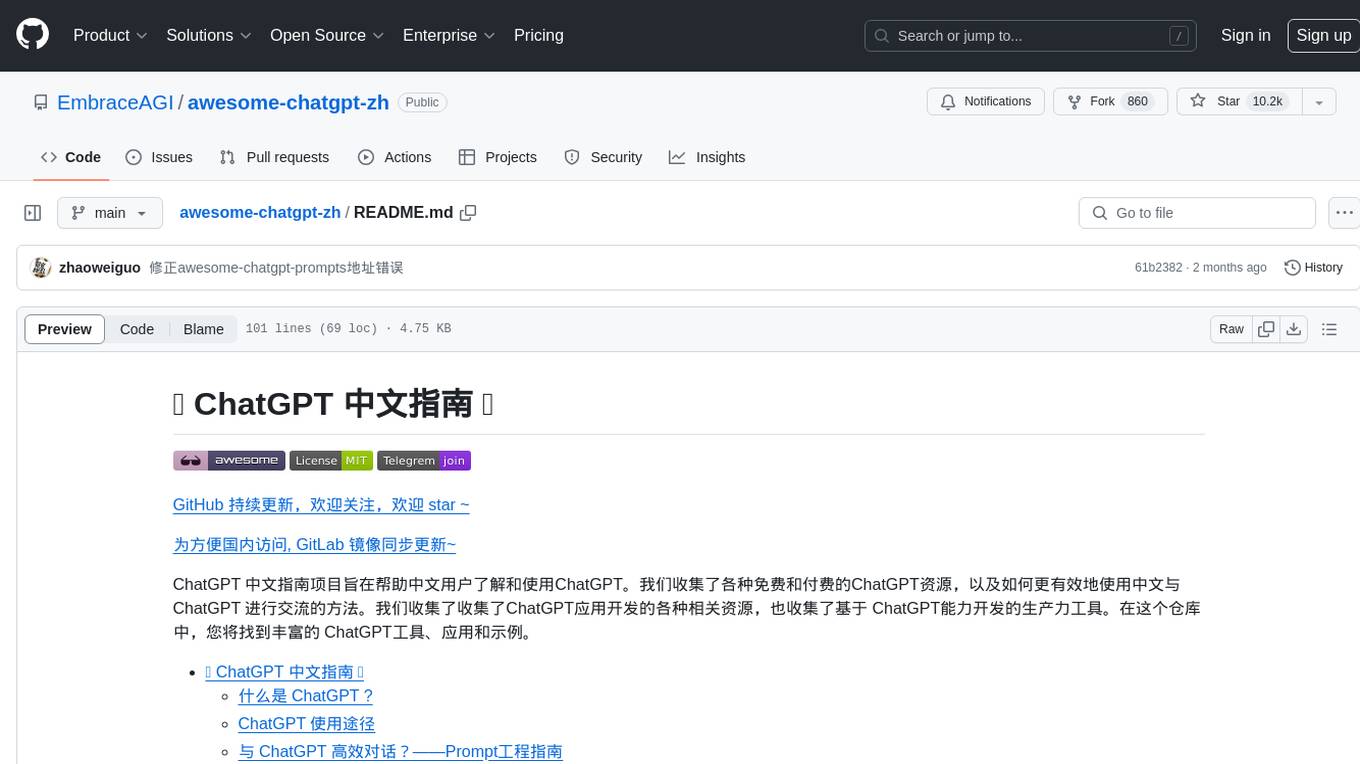
The Awesome ChatGPT Chinese Guide project aims to help Chinese users understand and use ChatGPT. It collects various free and paid ChatGPT resources, as well as methods to communicate more effectively with ChatGPT in Chinese. The repository contains a rich collection of ChatGPT tools, applications, and examples.
README:



ChatGPT 中文指南项目旨在帮助中文用户了解和使用ChatGPT。我们收集了各种免费和付费的ChatGPT资源,以及如何更有效地使用中文与 ChatGPT 进行交流的方法。我们收集了收集了ChatGPT应用开发的各种相关资源,也收集了基于 ChatGPT能力开发的生产力工具。在这个仓库中,您将找到丰富的 ChatGPT工具、应用和示例。
以下是 ChatGPT 为大家做的自我介绍:
你好!我是ChatGPT,一个由OpenAI开发的大型语言模型,基于GPT-4架构。我的任务是通过自然语言处理技术,与用户进行交流并提供帮助。我可以回答问题、提供建议、进行简单对话等。我的知识截止于2021年9月,所以关于那之后的信息可能无法为您提供准确的答案。请随时向我提问,我会尽我所能帮助您。
1.微信公众号

2.Telegram 电报
欢迎加入电报交流群讨论 ChatGPT 相关资源及日常使用等相关话题:
欢迎通过 issue 或 PR 提交 ChatGPT 的相关项目,玩法,优质资源~
也欢迎各种贡献,包括修复错误、添加新功能和改进文档。
我们要对以下项目表示衷心的感谢,他们为我们提供了宝贵的贡献和灵感:
- OpenAI,因为开发了 GPT 系列语言模型。
- GPT-4,因为提供了底层语言模型。
- Hugging Face,因为他们在 NLP 和开源工具上的广泛工作。
- awesome-chatgpt,因为他们在 ChatGPT 方面的出色工作。
- awesome-chatgpt-prompts,因为他们提供了一系列有趣的 ChatGPT 提示。
我们非常感谢所有为这个项目做出贡献的个人,你们的努力和付出使这个项目不断进步和发展:
如果您做出了重大贡献并希望得到认可,请随时与我们联系或提交一个更新此部分的 Pull Request。
For Tasks:
Click tags to check more tools for each tasksFor Jobs:
Alternative AI tools for awesome-chatgpt-zh
Similar Open Source Tools
awesome-chatgpt-zh
The Awesome ChatGPT Chinese Guide project aims to help Chinese users understand and use ChatGPT. It collects various free and paid ChatGPT resources, as well as methods to communicate more effectively with ChatGPT in Chinese. The repository contains a rich collection of ChatGPT tools, applications, and examples.
AIMedia
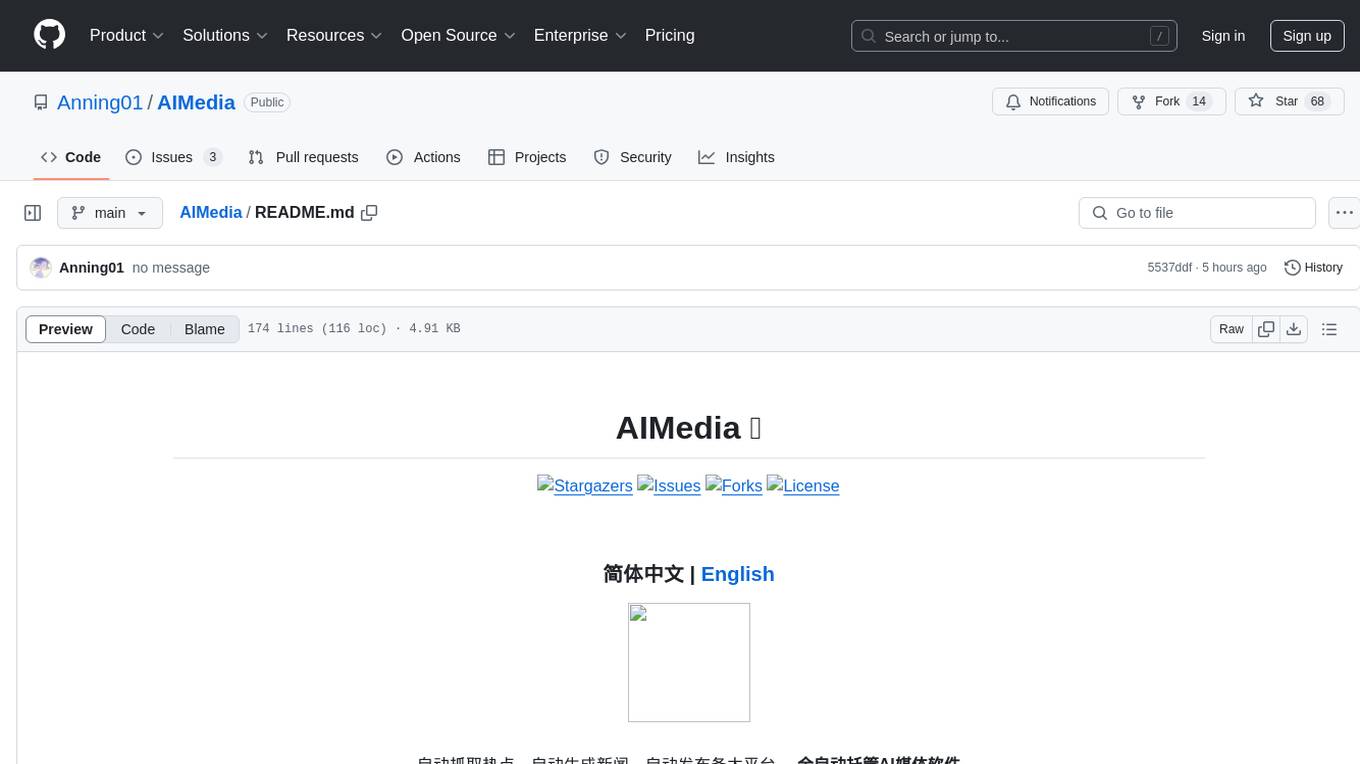
AIMedia is a fully automated AI media software that automatically fetches hot news, generates news, and publishes on various platforms. It supports hot news fetching from platforms like Douyin, NetEase News, Weibo, The Paper, China Daily, and Sohu News. Additionally, it enables AI-generated images for text-only news to enhance originality and reading experience. The tool is currently commercialized with plans to support video auto-generation for platform publishing in the future. It requires a minimum CPU of 4 cores or above, 8GB RAM, and supports Windows 10 or above. Users can deploy the tool by cloning the repository, modifying the configuration file, creating a virtual environment using Conda, and starting the web interface. Feedback and suggestions can be submitted through issues or pull requests.
LLMLanding
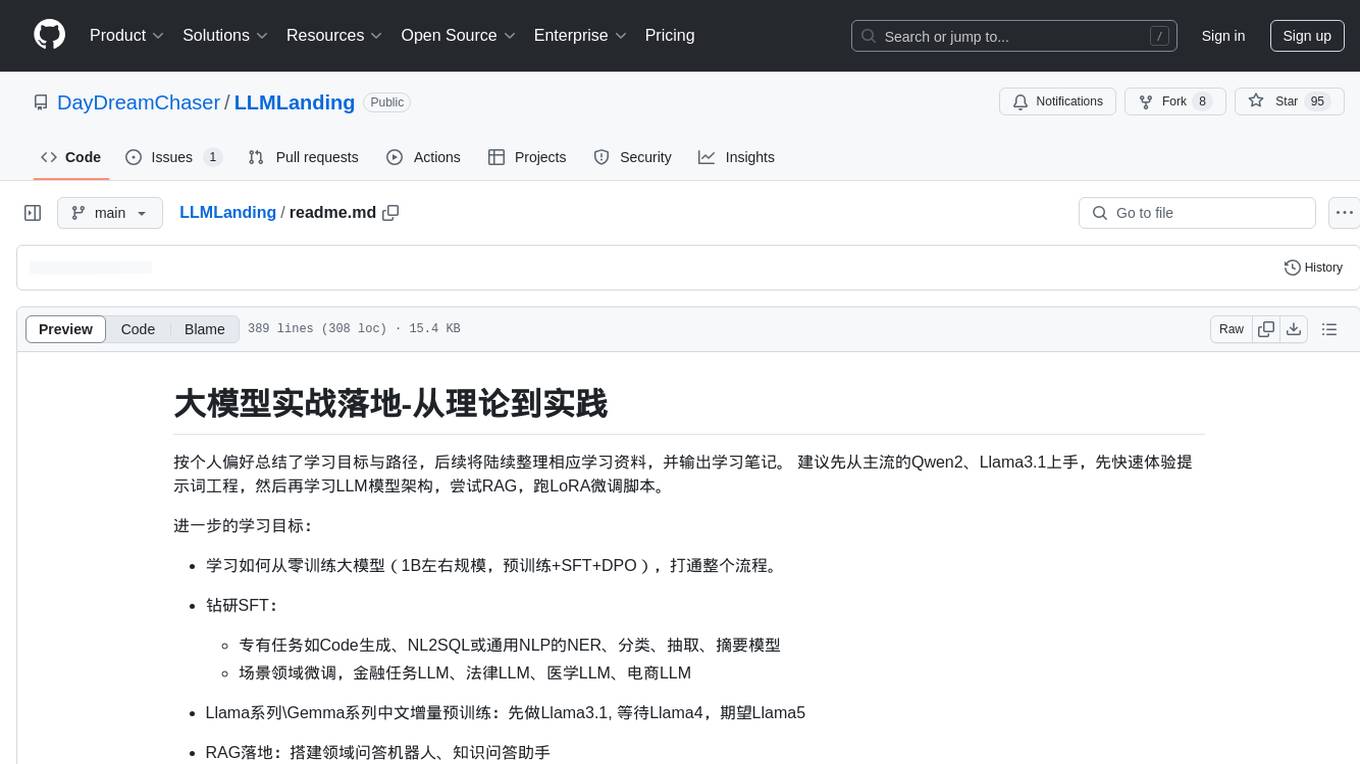
LLMLanding is a repository focused on practical implementation of large models, covering topics from theory to practice. It provides a structured learning path for training large models, including specific tasks like training 1B-scale models, exploring SFT, and working on specialized tasks such as code generation, NLP tasks, and domain-specific fine-tuning. The repository emphasizes a dual learning approach: quickly applying existing tools for immediate output benefits and delving into foundational concepts for long-term understanding. It offers detailed resources and pathways for in-depth learning based on individual preferences and goals, combining theory with practical application to avoid overwhelm and ensure sustained learning progress.
qiaoqiaoyun
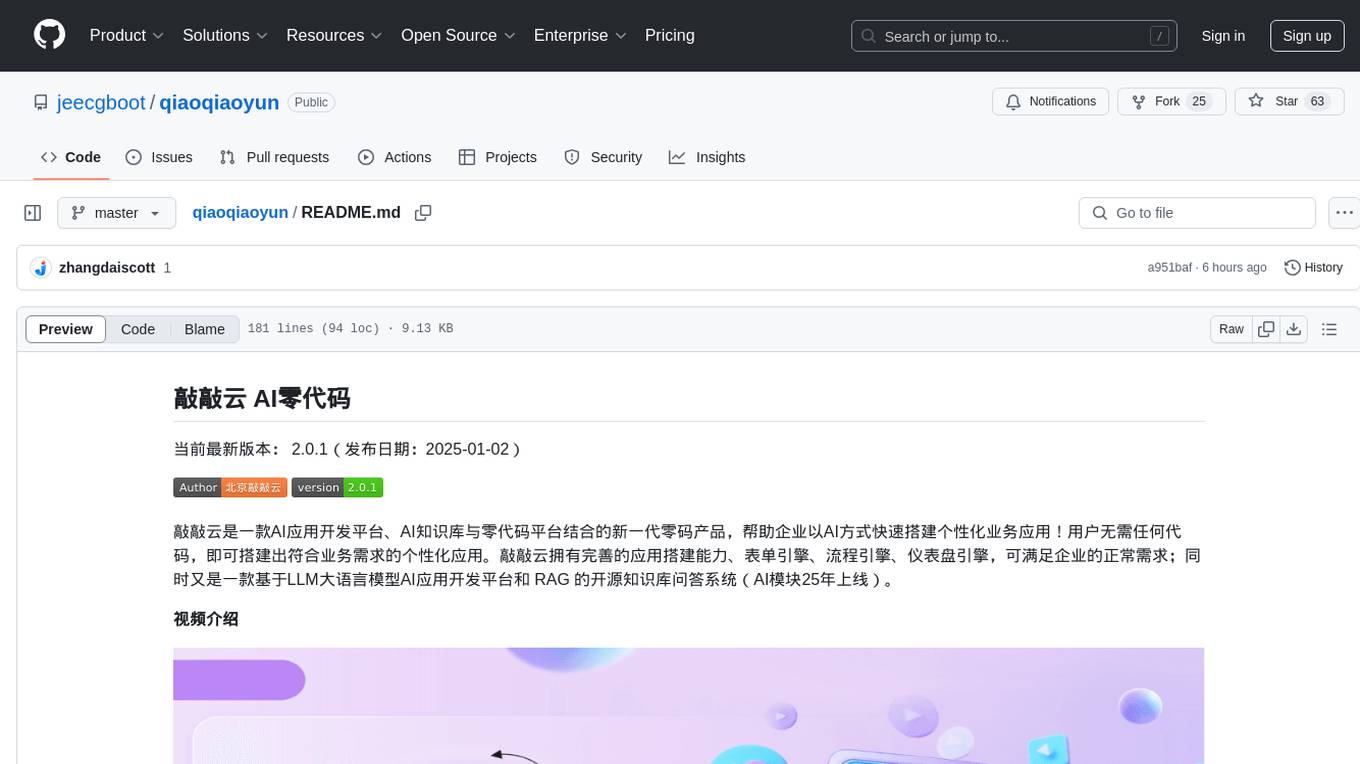
Qiaoqiaoyun is a new generation zero-code product that combines an AI application development platform, AI knowledge base, and zero-code platform, helping enterprises quickly build personalized business applications in an AI way. Users can build personalized applications that meet business needs without any code. Qiaoqiaoyun has comprehensive application building capabilities, form engine, workflow engine, and dashboard engine, meeting enterprise's normal requirements. It is also an AI application development platform based on LLM large language model and RAG open-source knowledge base question-answering system.
FisherAI
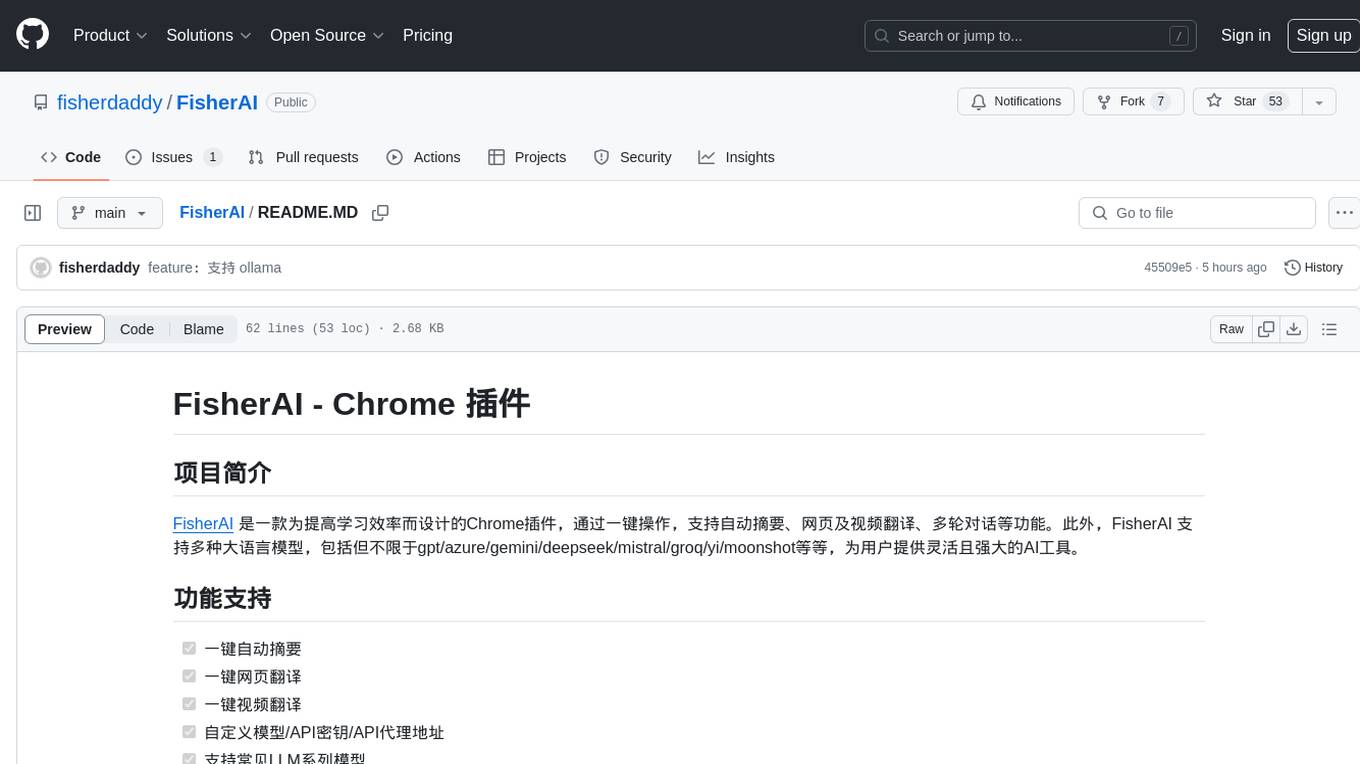
FisherAI is a Chrome extension designed to improve learning efficiency. It supports automatic summarization, web and video translation, multi-turn dialogue, and various large language models such as gpt/azure/gemini/deepseek/mistral/groq/yi/moonshot. Users can enjoy flexible and powerful AI tools with FisherAI.
PandaWiki
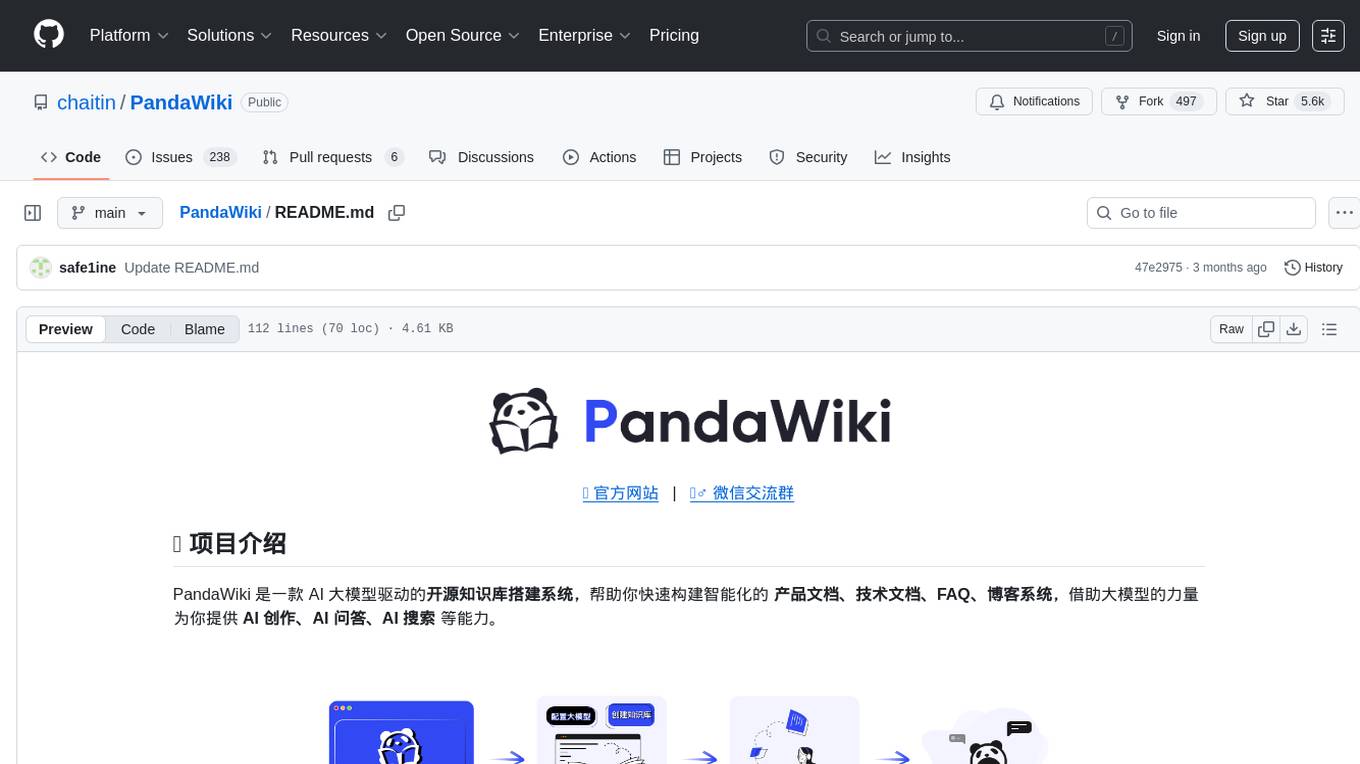
PandaWiki is a collaborative platform for creating and editing wiki pages. It allows users to easily collaborate on documentation, knowledge sharing, and information dissemination. With features like version control, user permissions, and rich text editing, PandaWiki simplifies the process of creating and managing wiki content. Whether you are working on a team project, organizing information for personal use, or building a knowledge base for your organization, PandaWiki provides a user-friendly and efficient solution for creating and maintaining wiki pages.
llm-resource
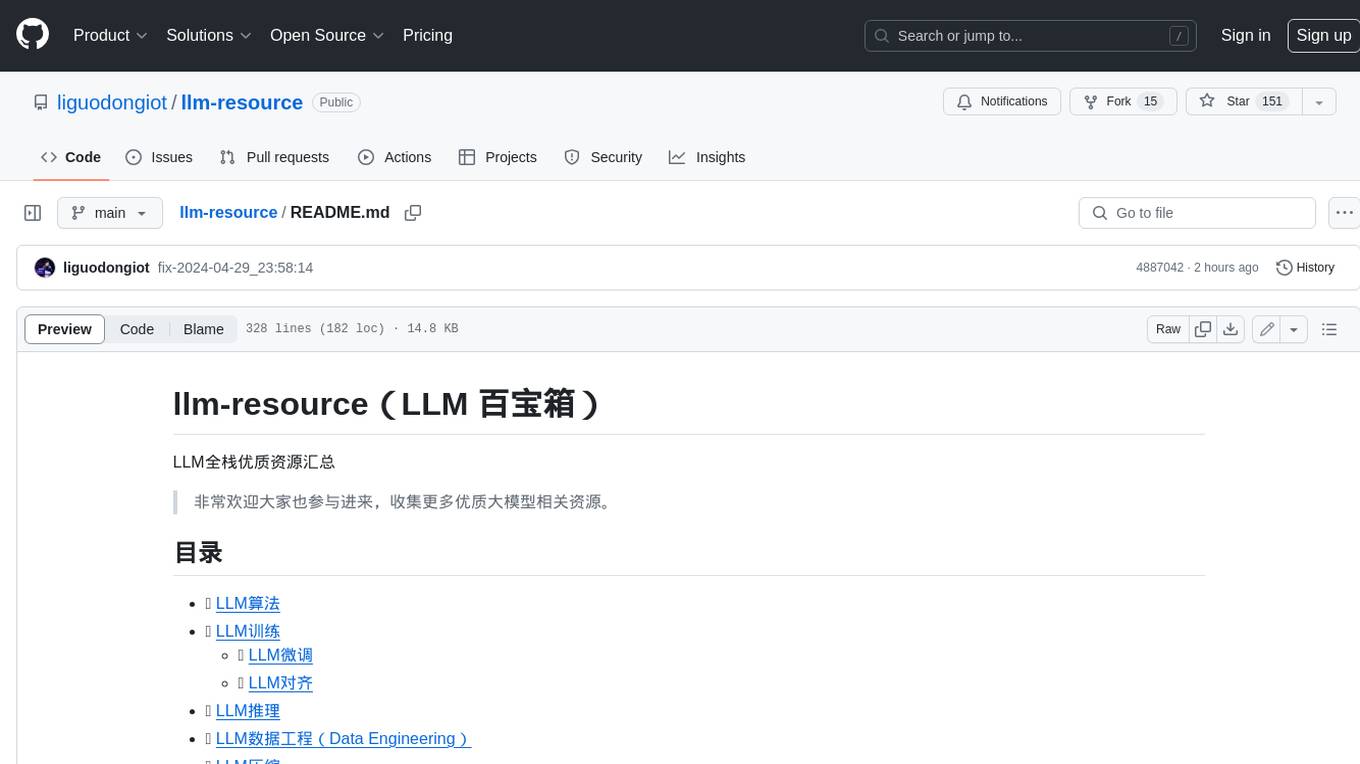
llm-resource is a comprehensive collection of high-quality resources for Large Language Models (LLM). It covers various aspects of LLM including algorithms, training, fine-tuning, alignment, inference, data engineering, compression, evaluation, prompt engineering, AI frameworks, AI basics, AI infrastructure, AI compilers, LLM application development, LLM operations, AI systems, and practical implementations. The repository aims to gather and share valuable resources related to LLM for the community to benefit from.
MachineLearning
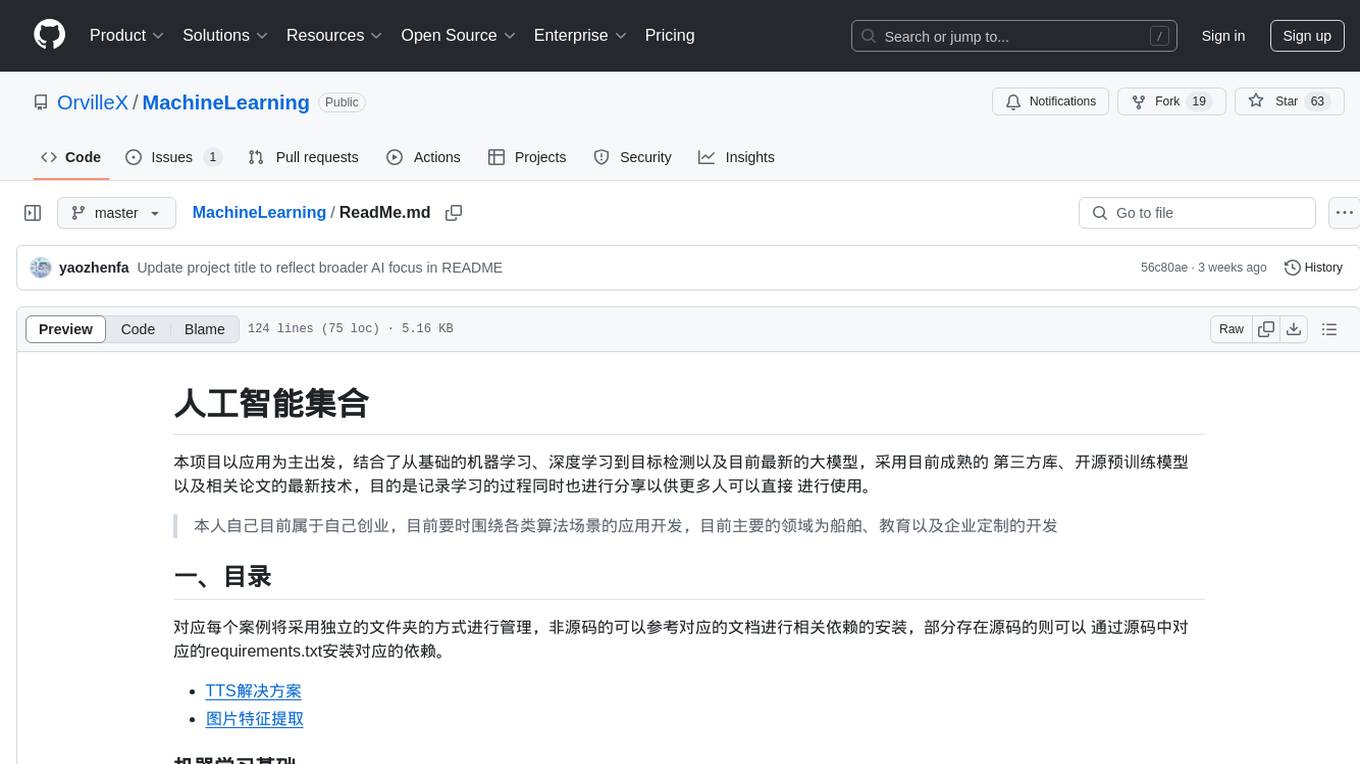
MachineLearning is a repository focused on practical applications in various algorithm scenarios such as ship, education, and enterprise development. It covers a wide range of topics from basic machine learning and deep learning to object detection and the latest large models. The project utilizes mature third-party libraries, open-source pre-trained models, and the latest technologies from related papers to document the learning process and facilitate direct usage by a wider audience.
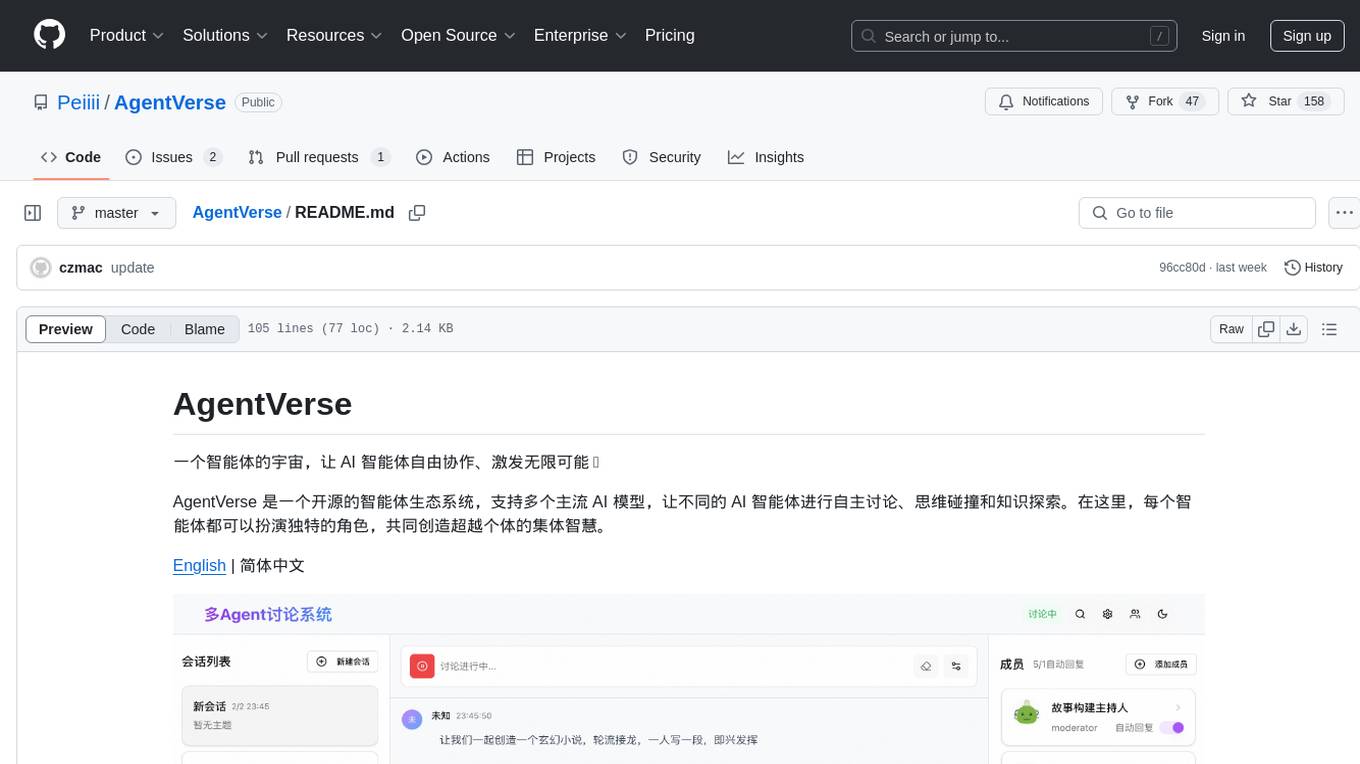
AgentVerse
AgentVerse is an open-source ecosystem for intelligent agents, supporting multiple mainstream AI models to facilitate autonomous discussions, thought collisions, and knowledge exploration. Each intelligent agent can play a unique role here, collectively creating wisdom beyond individuals.
easyAi
EasyAi is a lightweight, beginner-friendly Java artificial intelligence algorithm framework. It can be seamlessly integrated into Java projects with Maven, requiring no additional environment configuration or dependencies. The framework provides pre-packaged modules for image object detection and AI customer service, as well as various low-level algorithm tools for deep learning, machine learning, reinforcement learning, heuristic learning, and matrix operations. Developers can easily develop custom micro-models tailored to their business needs.
oba-live-tool
The oba live tool is a small tool for Douyin small shops and Kuaishou Baiying live broadcasts. It features multiple account management, intelligent message assistant, automatic product explanation, AI automatic reply, and AI intelligent assistant. The tool requires Windows 10 or above, Chrome or Edge browser, and a valid account for Douyin small shops or Kuaishou Baiying. Users can download the tool from the Releases page, connect to the control panel, set API keys for AI functions, and configure auto-reply prompts. The tool is licensed under the MIT license.
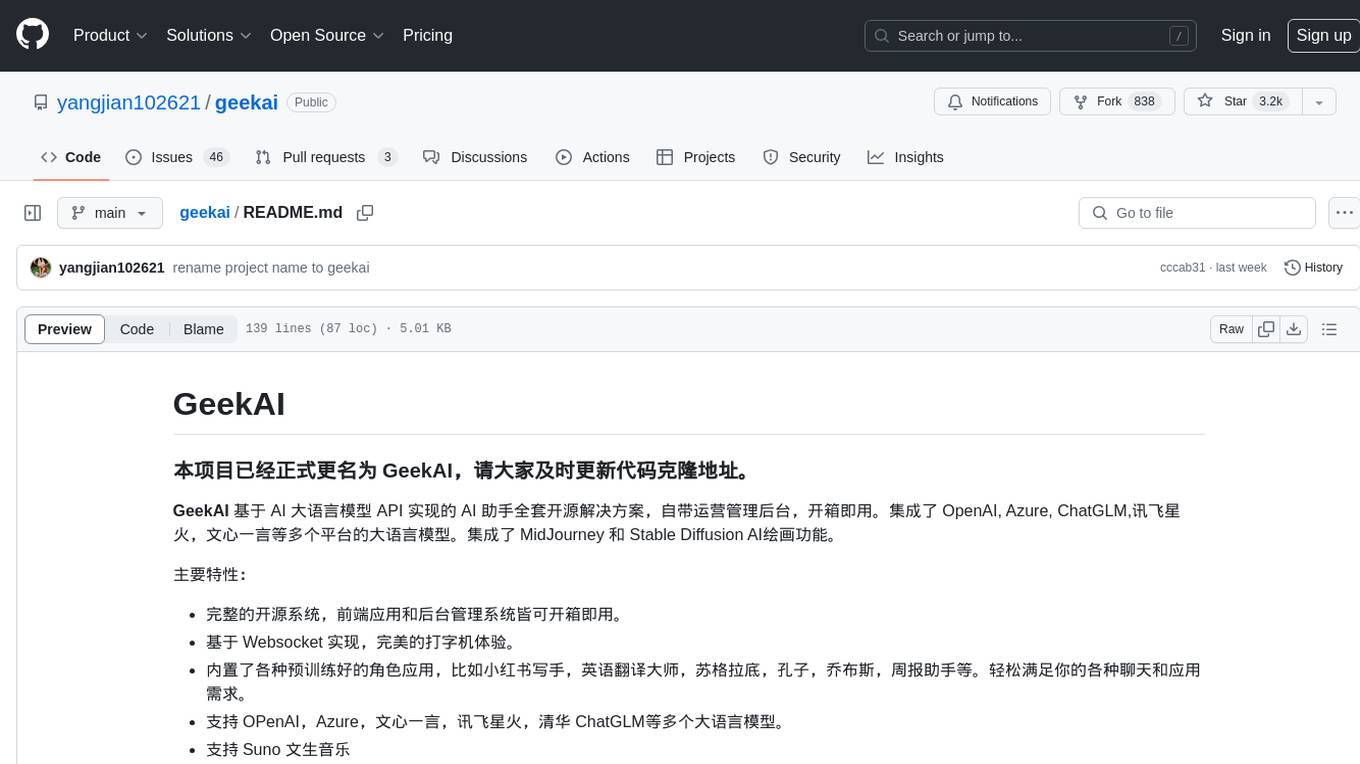
geekai
GeekAI is an open-source AI assistant solution based on AI large language model API, featuring a complete system with ready-to-use front-end and back-end management, providing a seamless typing experience via Websocket. It integrates various pre-trained character applications like Xiaohongshu writing assistant, English translation master, Socrates, Confucius, Steve Jobs, and weekly report assistant. The tool supports multiple large language models from platforms like OpenAI, Azure, Wenxin Yanyan, Xunfei Xinghuo, and Tsinghua ChatGLM. Additionally, it includes MidJourney and Stable Diffusion AI drawing functionalities for creating various artworks such as text-based images, face swapping, and blending images. Users can utilize personal WeChat QR codes for payment without the need for enterprise payment channels, and the tool offers integrated payment options like Alipay and WeChat Pay with support for multiple membership packages and point card purchases. It also features a plugin API for developing powerful plugins using large language model functions, including built-in plugins for Weibo hot search, today's headlines, morning news, and AI drawing functions.
LLMForEverybody
LLMForEverybody is a comprehensive repository covering various aspects of large language models (LLMs) including pre-training, architecture, optimizers, activation functions, attention mechanisms, tokenization, parallel strategies, training frameworks, deployment, fine-tuning, quantization, GPU parallelism, prompt engineering, agent design, RAG architecture, enterprise deployment challenges, evaluation metrics, and current hot topics in the field. It provides detailed explanations, tutorials, and insights into the workings and applications of LLMs, making it a valuable resource for researchers, developers, and enthusiasts interested in understanding and working with large language models.
AI-GAL
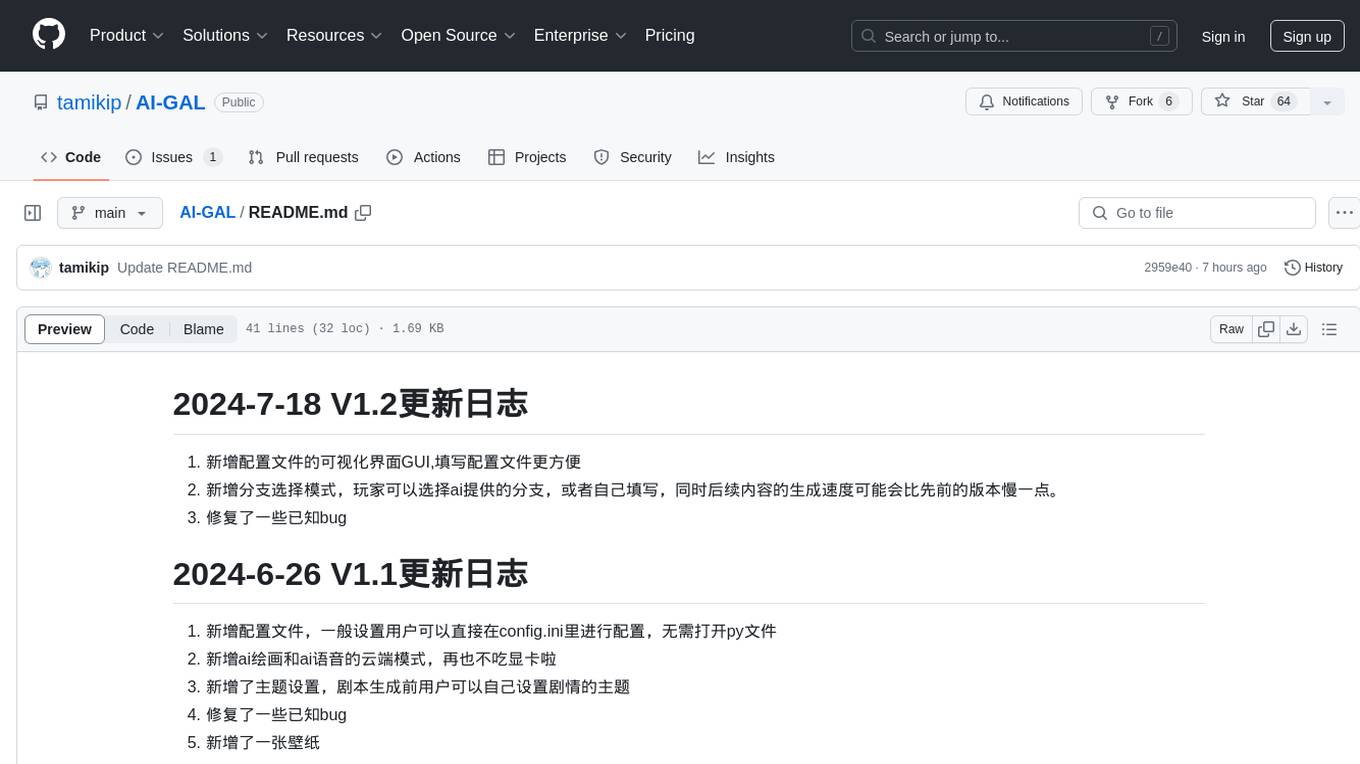
AI-GAL is a tool that offers a visual GUI for easier configuration file editing, branch selection mode for content generation, and bug fixes. Users can configure settings in config.ini, utilize cloud-based AI drawing and voice modes, set themes for script generation, and enjoy a wallpaper. Prior to usage, ensure a 4GB+ GPU, chatgpt key or local LLM deployment, and installation of stable diffusion, gpt-sovits, and rembg. To start, fill out the config.ini file and run necessary APIs. Restart a storyline by clearing story.txt in the game directory. Encounter errors? Copy the log.txt details and send them for assistance.
MaiMBot
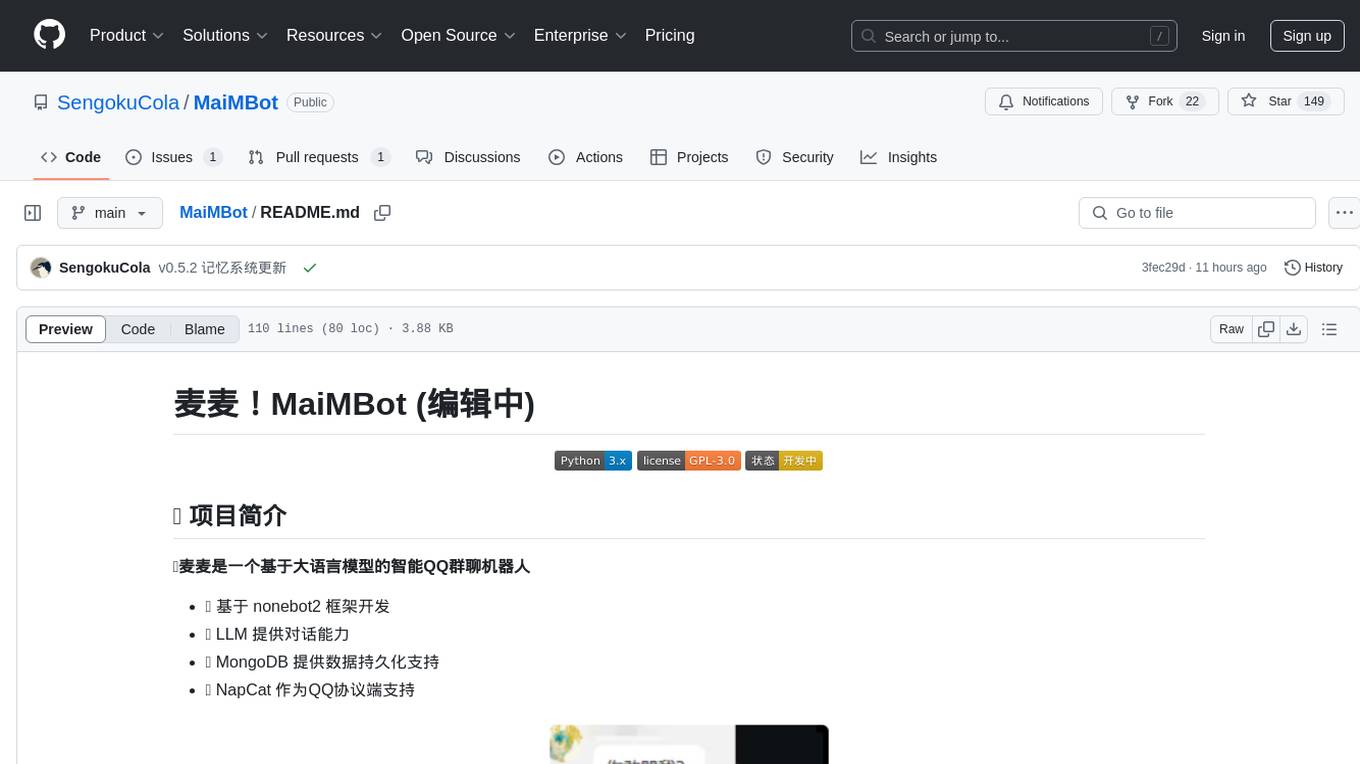
MaiMBot is an intelligent QQ group chat bot based on a large language model. It is developed using the nonebot2 framework, utilizes LLM for conversation abilities, MongoDB for data persistence, and NapCat for QQ protocol support. The bot features keyword-triggered proactive responses, dynamic prompt construction, support for images and message forwarding, typo generation, multiple replies, emotion-based emoji responses, daily schedule generation, user relationship management, knowledge base, and group impressions. Work-in-progress features include personality, group atmosphere, image handling, humor, meme functions, and Minecraft interactions. The tool is in active development with plans for GIF compatibility, mini-program link parsing, bug fixes, documentation improvements, and logic enhancements for emoji sending.
For similar tasks
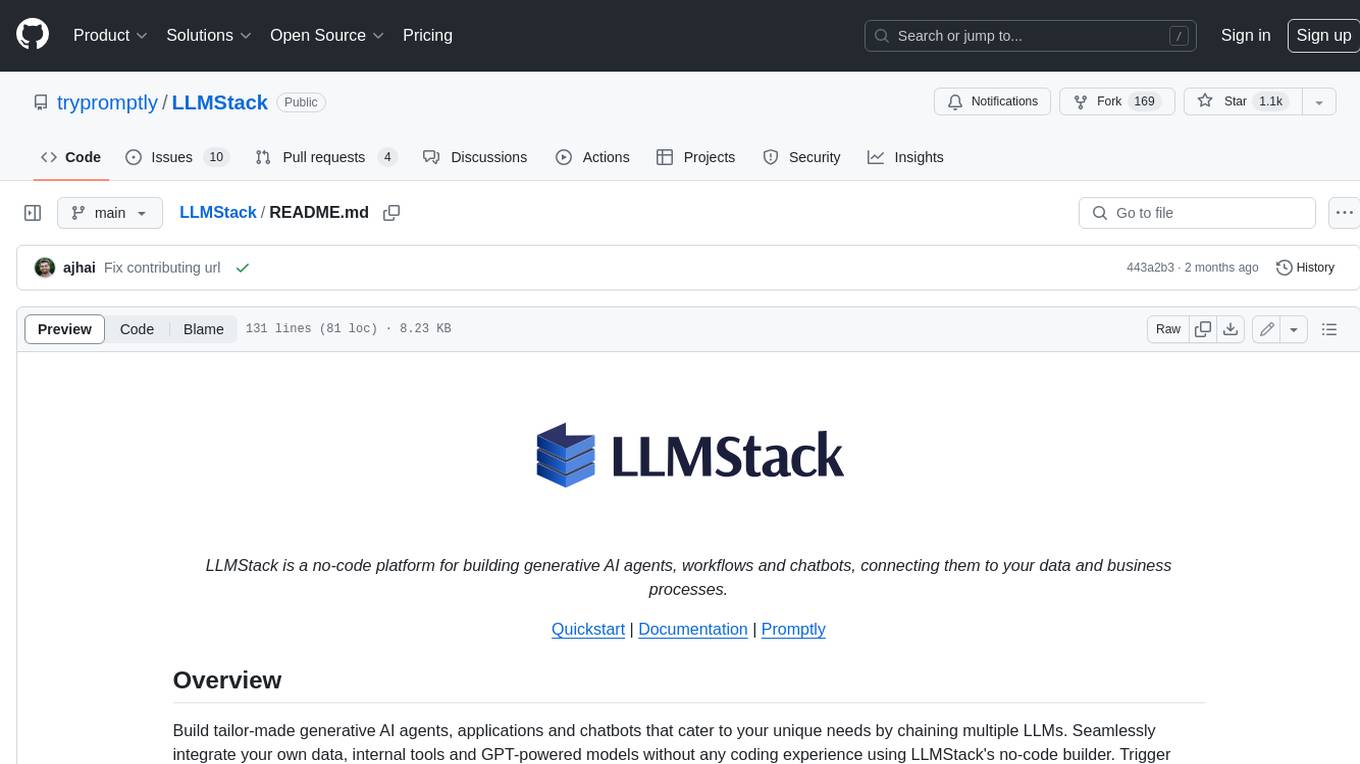
LLMStack
LLMStack is a no-code platform for building generative AI agents, workflows, and chatbots. It allows users to connect their own data, internal tools, and GPT-powered models without any coding experience. LLMStack can be deployed to the cloud or on-premise and can be accessed via HTTP API or triggered from Slack or Discord.
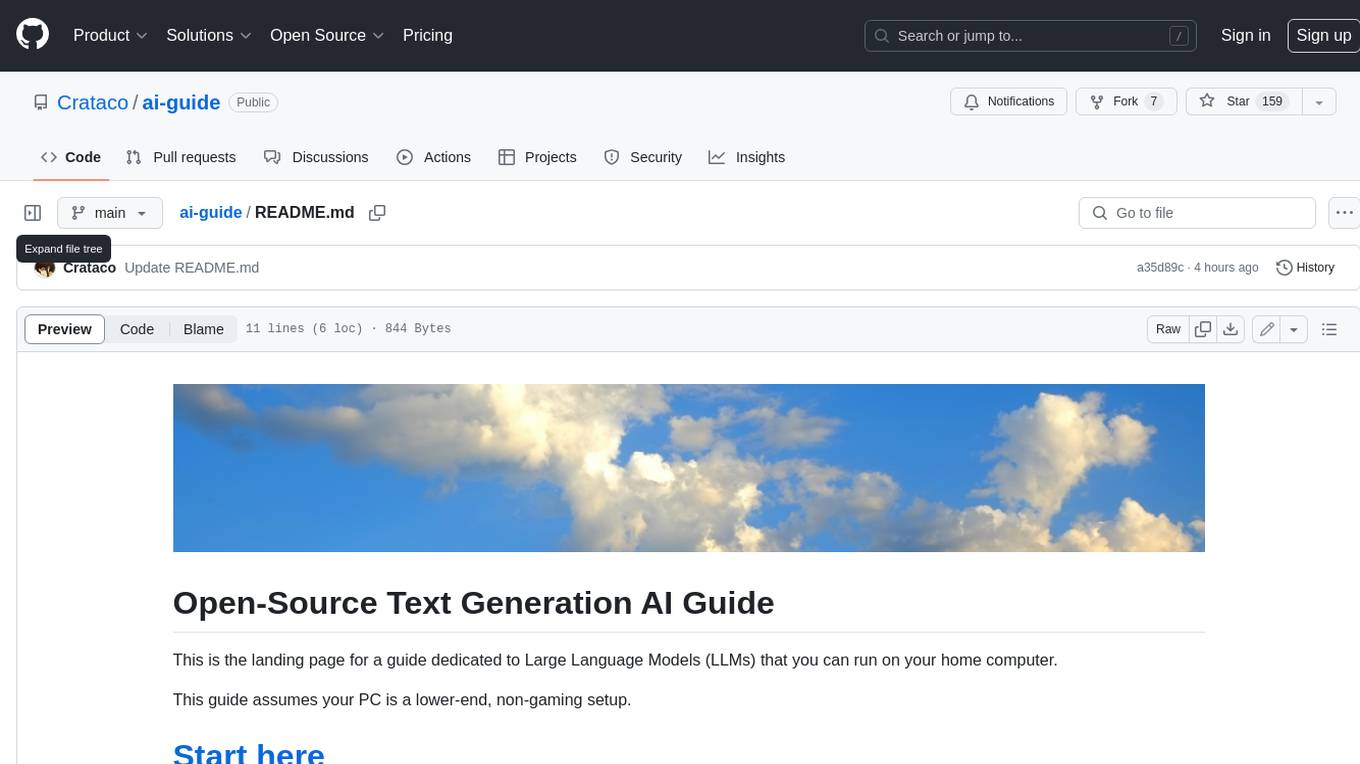
ai-guide
This guide is dedicated to Large Language Models (LLMs) that you can run on your home computer. It assumes your PC is a lower-end, non-gaming setup.
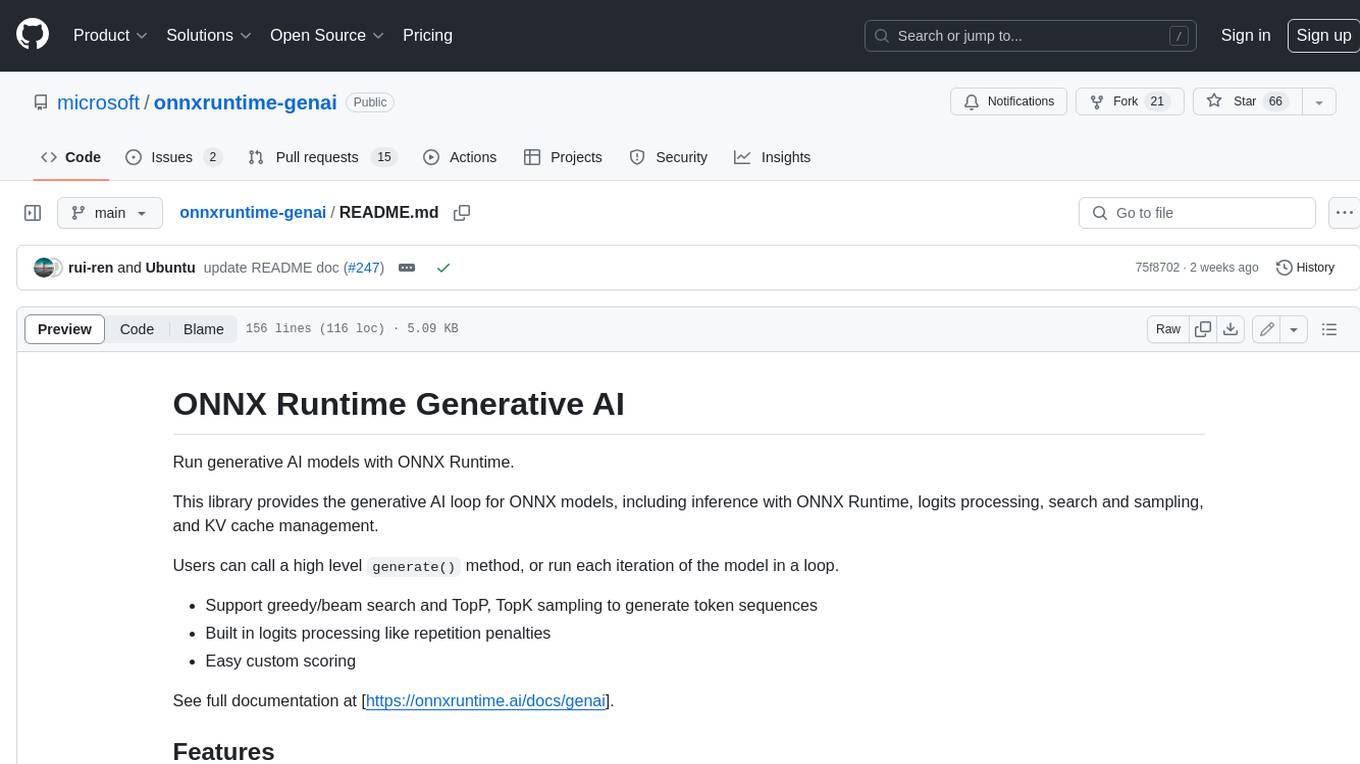
onnxruntime-genai
ONNX Runtime Generative AI is a library that provides the generative AI loop for ONNX models, including inference with ONNX Runtime, logits processing, search and sampling, and KV cache management. Users can call a high level `generate()` method, or run each iteration of the model in a loop. It supports greedy/beam search and TopP, TopK sampling to generate token sequences, has built in logits processing like repetition penalties, and allows for easy custom scoring.

jupyter-ai
Jupyter AI connects generative AI with Jupyter notebooks. It provides a user-friendly and powerful way to explore generative AI models in notebooks and improve your productivity in JupyterLab and the Jupyter Notebook. Specifically, Jupyter AI offers: * An `%%ai` magic that turns the Jupyter notebook into a reproducible generative AI playground. This works anywhere the IPython kernel runs (JupyterLab, Jupyter Notebook, Google Colab, Kaggle, VSCode, etc.). * A native chat UI in JupyterLab that enables you to work with generative AI as a conversational assistant. * Support for a wide range of generative model providers, including AI21, Anthropic, AWS, Cohere, Gemini, Hugging Face, NVIDIA, and OpenAI. * Local model support through GPT4All, enabling use of generative AI models on consumer grade machines with ease and privacy.
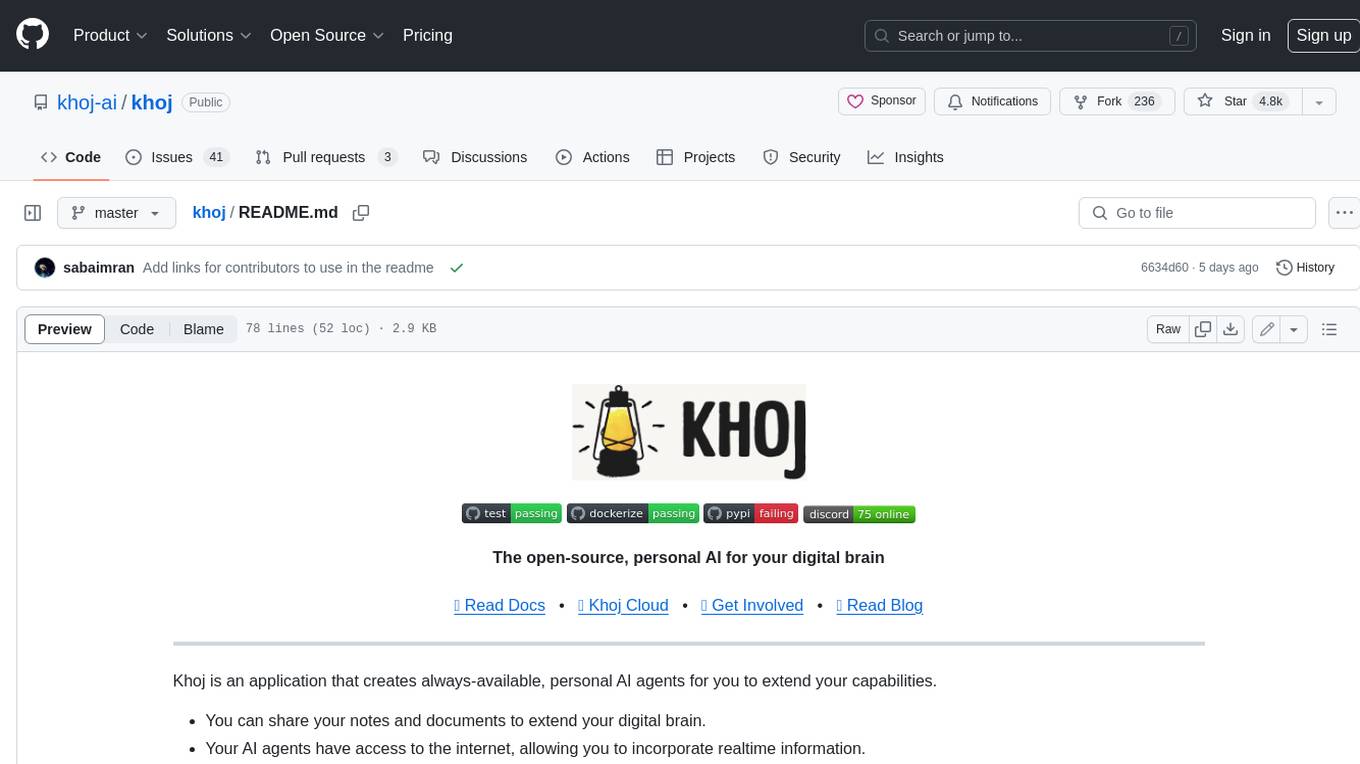
khoj
Khoj is an open-source, personal AI assistant that extends your capabilities by creating always-available AI agents. You can share your notes and documents to extend your digital brain, and your AI agents have access to the internet, allowing you to incorporate real-time information. Khoj is accessible on Desktop, Emacs, Obsidian, Web, and Whatsapp, and you can share PDF, markdown, org-mode, notion files, and GitHub repositories. You'll get fast, accurate semantic search on top of your docs, and your agents can create deeply personal images and understand your speech. Khoj is self-hostable and always will be.
langchain_dart
LangChain.dart is a Dart port of the popular LangChain Python framework created by Harrison Chase. LangChain provides a set of ready-to-use components for working with language models and a standard interface for chaining them together to formulate more advanced use cases (e.g. chatbots, Q&A with RAG, agents, summarization, extraction, etc.). The components can be grouped into a few core modules: * **Model I/O:** LangChain offers a unified API for interacting with various LLM providers (e.g. OpenAI, Google, Mistral, Ollama, etc.), allowing developers to switch between them with ease. Additionally, it provides tools for managing model inputs (prompt templates and example selectors) and parsing the resulting model outputs (output parsers). * **Retrieval:** assists in loading user data (via document loaders), transforming it (with text splitters), extracting its meaning (using embedding models), storing (in vector stores) and retrieving it (through retrievers) so that it can be used to ground the model's responses (i.e. Retrieval-Augmented Generation or RAG). * **Agents:** "bots" that leverage LLMs to make informed decisions about which available tools (such as web search, calculators, database lookup, etc.) to use to accomplish the designated task. The different components can be composed together using the LangChain Expression Language (LCEL).
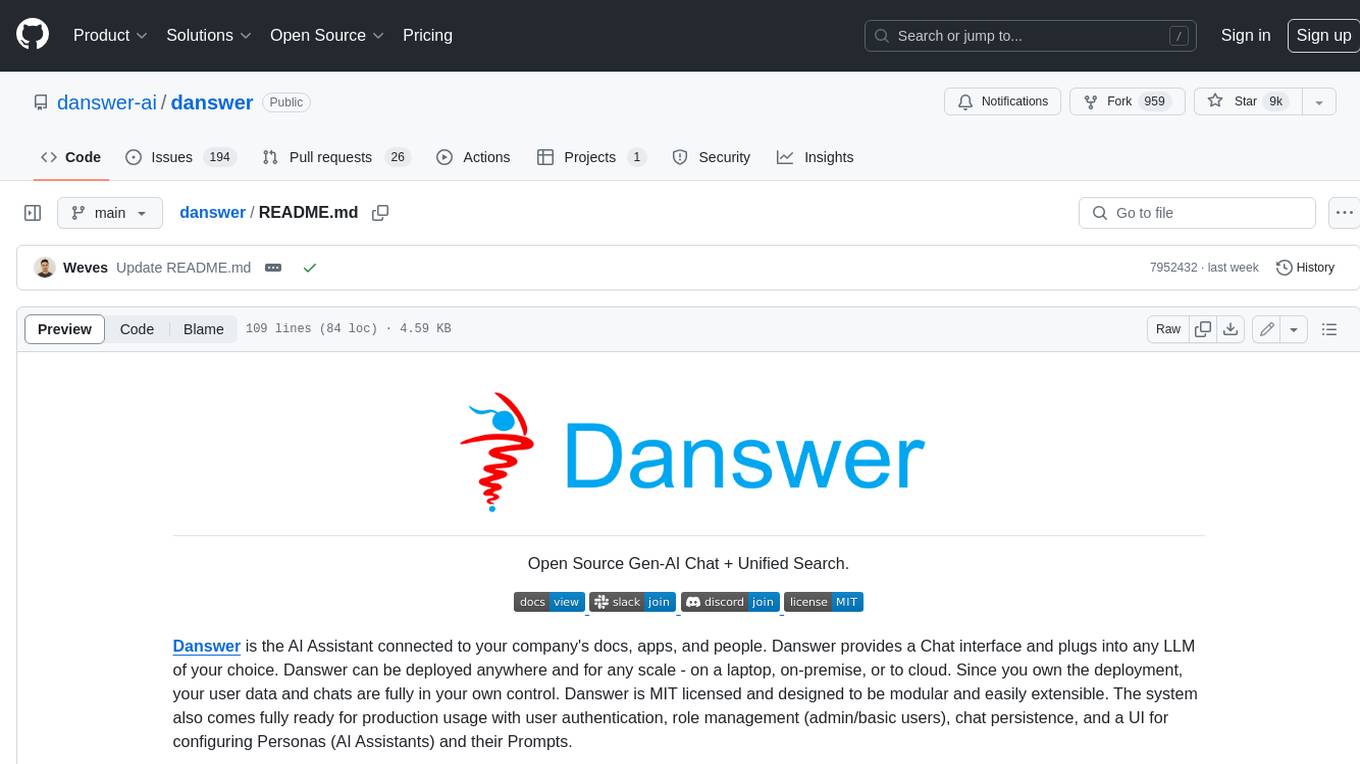
danswer
Danswer is an open-source Gen-AI Chat and Unified Search tool that connects to your company's docs, apps, and people. It provides a Chat interface and plugs into any LLM of your choice. Danswer can be deployed anywhere and for any scale - on a laptop, on-premise, or to cloud. Since you own the deployment, your user data and chats are fully in your own control. Danswer is MIT licensed and designed to be modular and easily extensible. The system also comes fully ready for production usage with user authentication, role management (admin/basic users), chat persistence, and a UI for configuring Personas (AI Assistants) and their Prompts. Danswer also serves as a Unified Search across all common workplace tools such as Slack, Google Drive, Confluence, etc. By combining LLMs and team specific knowledge, Danswer becomes a subject matter expert for the team. Imagine ChatGPT if it had access to your team's unique knowledge! It enables questions such as "A customer wants feature X, is this already supported?" or "Where's the pull request for feature Y?"

infinity
Infinity is an AI-native database designed for LLM applications, providing incredibly fast full-text and vector search capabilities. It supports a wide range of data types, including vectors, full-text, and structured data, and offers a fused search feature that combines multiple embeddings and full text. Infinity is easy to use, with an intuitive Python API and a single-binary architecture that simplifies deployment. It achieves high performance, with 0.1 milliseconds query latency on million-scale vector datasets and up to 15K QPS.
For similar jobs
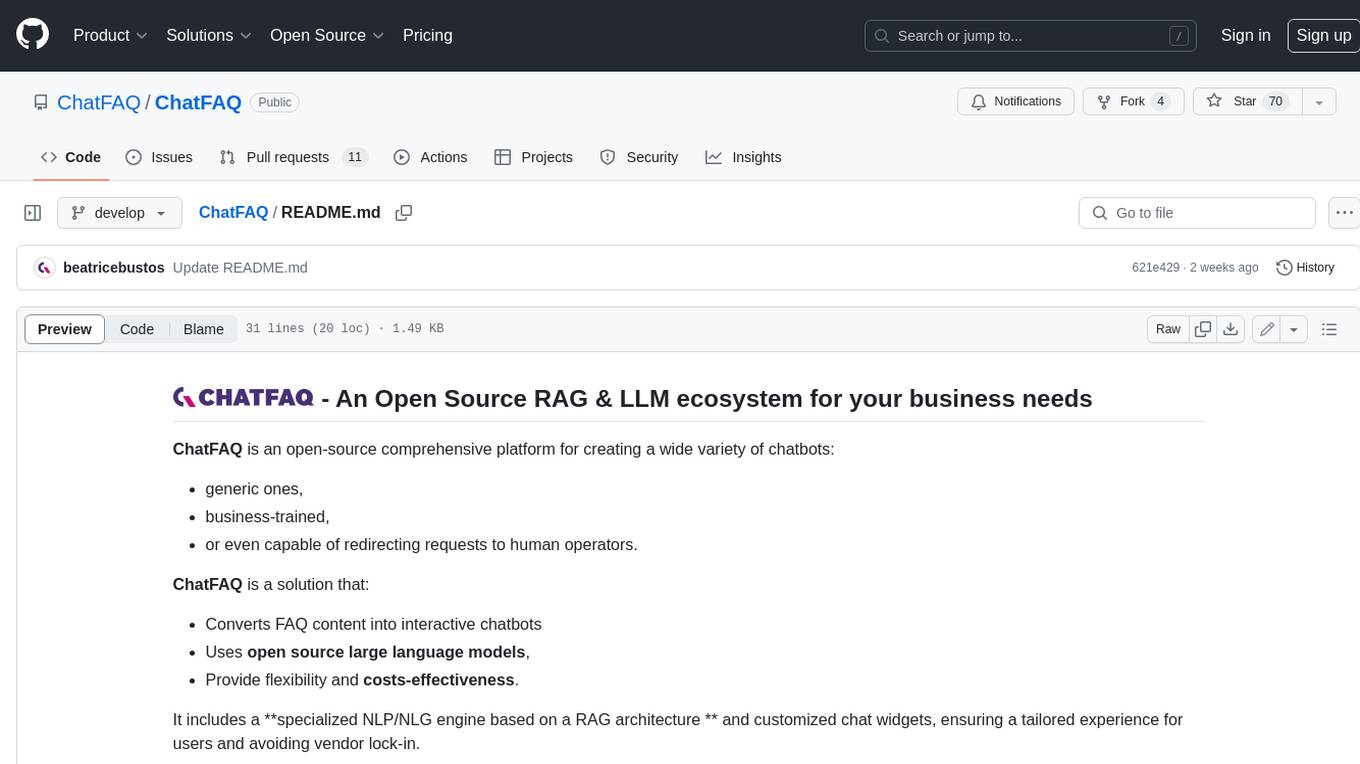
ChatFAQ
ChatFAQ is an open-source comprehensive platform for creating a wide variety of chatbots: generic ones, business-trained, or even capable of redirecting requests to human operators. It includes a specialized NLP/NLG engine based on a RAG architecture and customized chat widgets, ensuring a tailored experience for users and avoiding vendor lock-in.
agentcloud
AgentCloud is an open-source platform that enables companies to build and deploy private LLM chat apps, empowering teams to securely interact with their data. It comprises three main components: Agent Backend, Webapp, and Vector Proxy. To run this project locally, clone the repository, install Docker, and start the services. The project is licensed under the GNU Affero General Public License, version 3 only. Contributions and feedback are welcome from the community.
anything-llm
AnythingLLM is a full-stack application that enables you to turn any document, resource, or piece of content into context that any LLM can use as references during chatting. This application allows you to pick and choose which LLM or Vector Database you want to use as well as supporting multi-user management and permissions.
ai-guide
This guide is dedicated to Large Language Models (LLMs) that you can run on your home computer. It assumes your PC is a lower-end, non-gaming setup.
Magick
Magick is a groundbreaking visual AIDE (Artificial Intelligence Development Environment) for no-code data pipelines and multimodal agents. Magick can connect to other services and comes with nodes and templates well-suited for intelligent agents, chatbots, complex reasoning systems and realistic characters.
glide
Glide is a cloud-native LLM gateway that provides a unified REST API for accessing various large language models (LLMs) from different providers. It handles LLMOps tasks such as model failover, caching, key management, and more, making it easy to integrate LLMs into applications. Glide supports popular LLM providers like OpenAI, Anthropic, Azure OpenAI, AWS Bedrock (Titan), Cohere, Google Gemini, OctoML, and Ollama. It offers high availability, performance, and observability, and provides SDKs for Python and NodeJS to simplify integration.
chatbot-ui
Chatbot UI is an open-source AI chat app that allows users to create and deploy their own AI chatbots. It is easy to use and can be customized to fit any need. Chatbot UI is perfect for businesses, developers, and anyone who wants to create a chatbot.
onnxruntime-genai
ONNX Runtime Generative AI is a library that provides the generative AI loop for ONNX models, including inference with ONNX Runtime, logits processing, search and sampling, and KV cache management. Users can call a high level `generate()` method, or run each iteration of the model in a loop. It supports greedy/beam search and TopP, TopK sampling to generate token sequences, has built in logits processing like repetition penalties, and allows for easy custom scoring.