


Ai-with-Chucky-Colab-Notebooks
None
Stars: 61
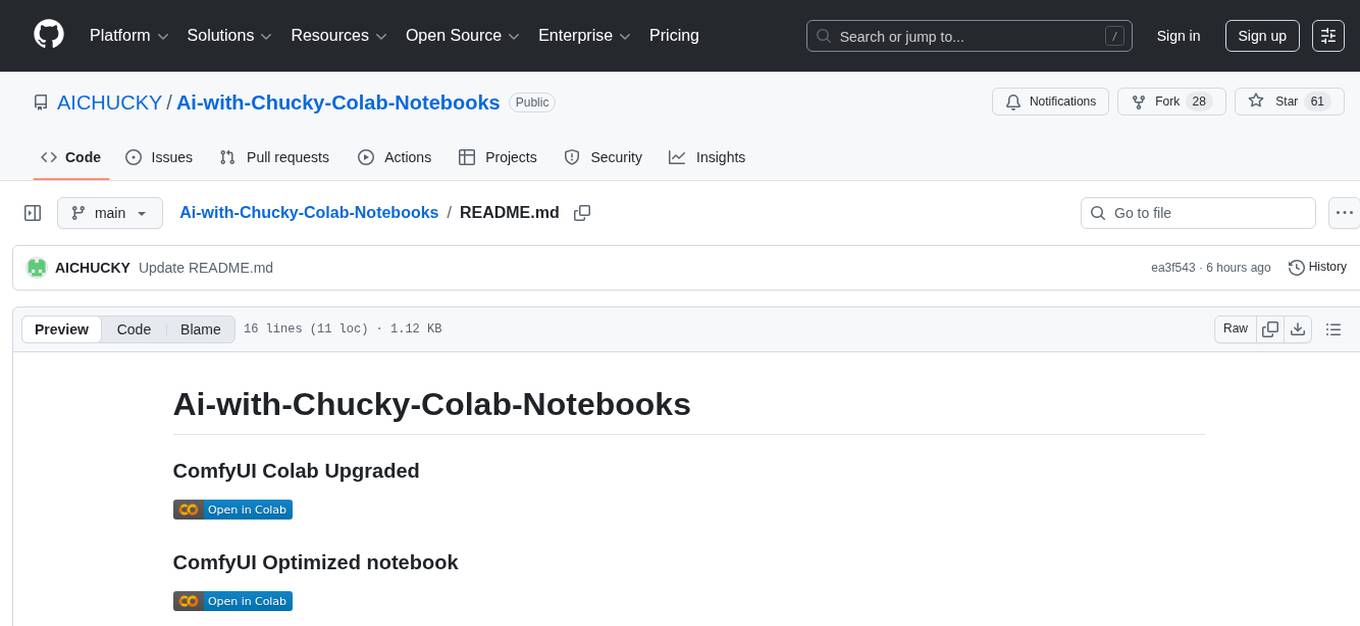
Ai-with-Chucky-Colab-Notebooks is a collection of Colab notebooks optimized for various AI tasks. The notebooks provide a comfortable user interface and are designed to enhance the efficiency of AI experiments. The repository includes tools like Z-Image Turbo Pro and Kani TTS-2 for English text-to-speech synthesis. Users can easily access and run these notebooks in Google Colab, making it convenient for AI enthusiasts and researchers to experiment with different AI models and techniques.
README:

For Tasks:
Click tags to check more tools for each tasksFor Jobs:
Alternative AI tools for Ai-with-Chucky-Colab-Notebooks
Similar Open Source Tools
Ai-with-Chucky-Colab-Notebooks
Ai-with-Chucky-Colab-Notebooks is a collection of Colab notebooks optimized for various AI tasks. The notebooks provide a comfortable user interface and are designed to enhance the efficiency of AI experiments. The repository includes tools like Z-Image Turbo Pro and Kani TTS-2 for English text-to-speech synthesis. Users can easily access and run these notebooks in Google Colab, making it convenient for AI enthusiasts and researchers to experiment with different AI models and techniques.
AI-Song-Cover-RVC
AI-Song-Cover-RVC is an all-in-one repository that provides tools for downloading YouTube WAV files, separating vocals, splitting audio, training models, and performing inference using Google Colab or Kaggle. The repository offers tutorials in Indonesian for training and inference tasks. Users can access various tools and resources for processing audio data and generating song covers. The repository aims to simplify the process of working with audio data for music-related projects.
ragstack-ai
RAGStack is an out-of-the-box solution simplifying Retrieval Augmented Generation (RAG) in GenAI apps. RAGStack includes the best open-source for implementing RAG, giving developers a comprehensive Gen AI Stack leveraging LangChain, CassIO, and more. RAGStack leverages the LangChain ecosystem and is fully compatible with LangSmith for monitoring your AI deployments.
suaveui
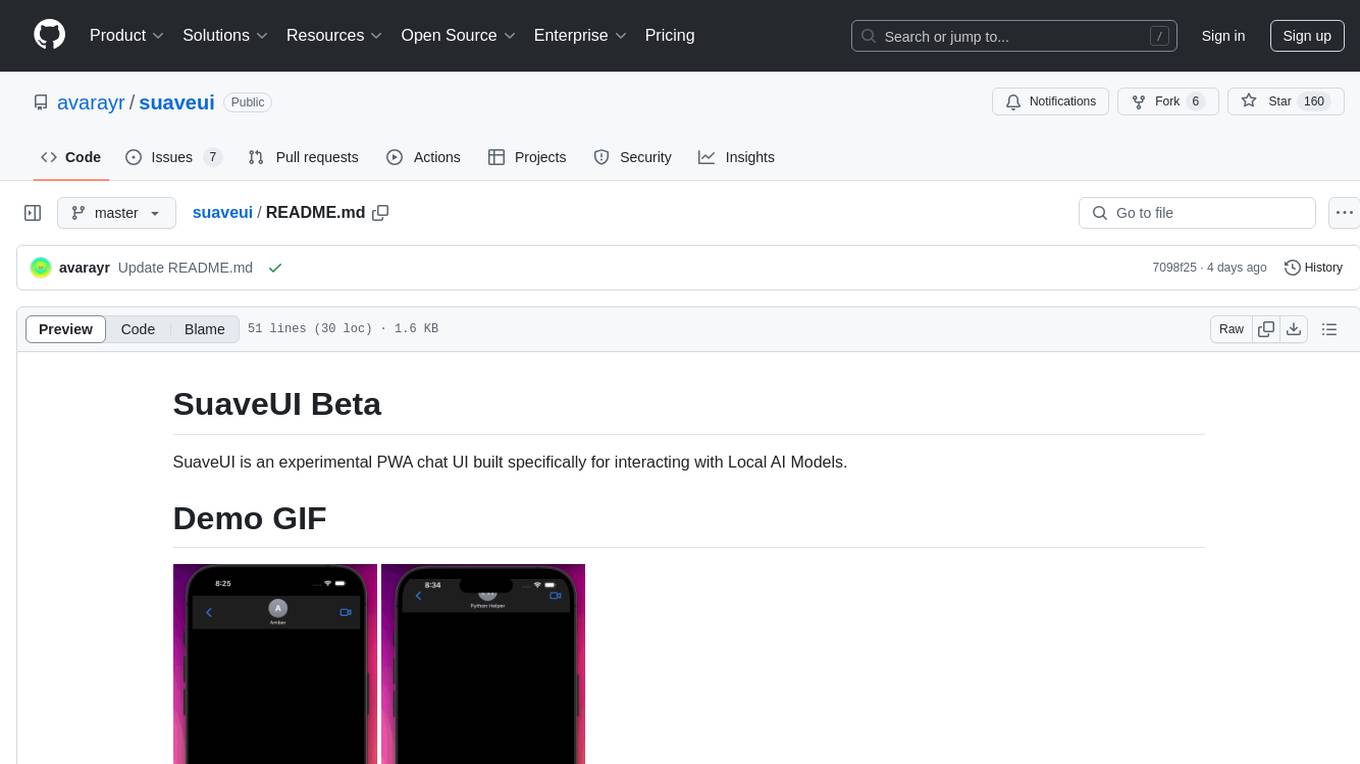
SuaveUI is an experimental Progressive Web App chat user interface designed for interacting with local AI models. It provides a platform for users to easily communicate with AI models in a chat-like environment. The tool is built using React for the user interface and Node.js for the backend. Users can run SuaveUI using Docker or by cloning the repository and running a server. The project is still in the early alpha stage and is being actively developed to enhance its functionality and features.
amazon-bedrock-client-for-mac
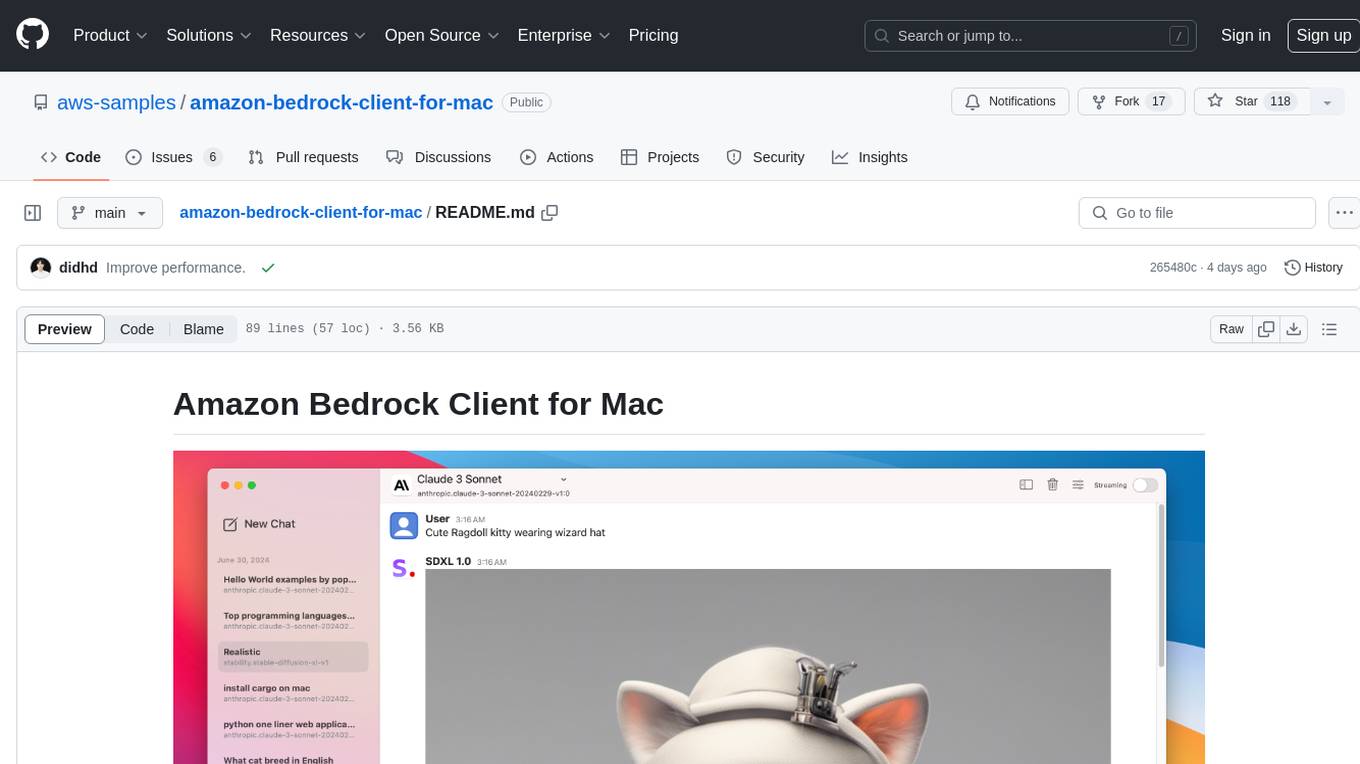
A sleek and powerful macOS client for Amazon Bedrock, bringing AI models to your desktop. It provides seamless interaction with multiple Amazon Bedrock models, real-time chat interface, easy model switching, support for various AI tasks, and native Dark Mode support. Built with SwiftUI for optimal performance and modern UI.
J.A.R.V.I.S
J.A.R.V.I.S (Just A Rather Very Intelligent System) is an advanced AI assistant inspired by Iron Man's Jarvis, designed to assist with various tasks, from navigating websites to controlling your PC with natural language commands.
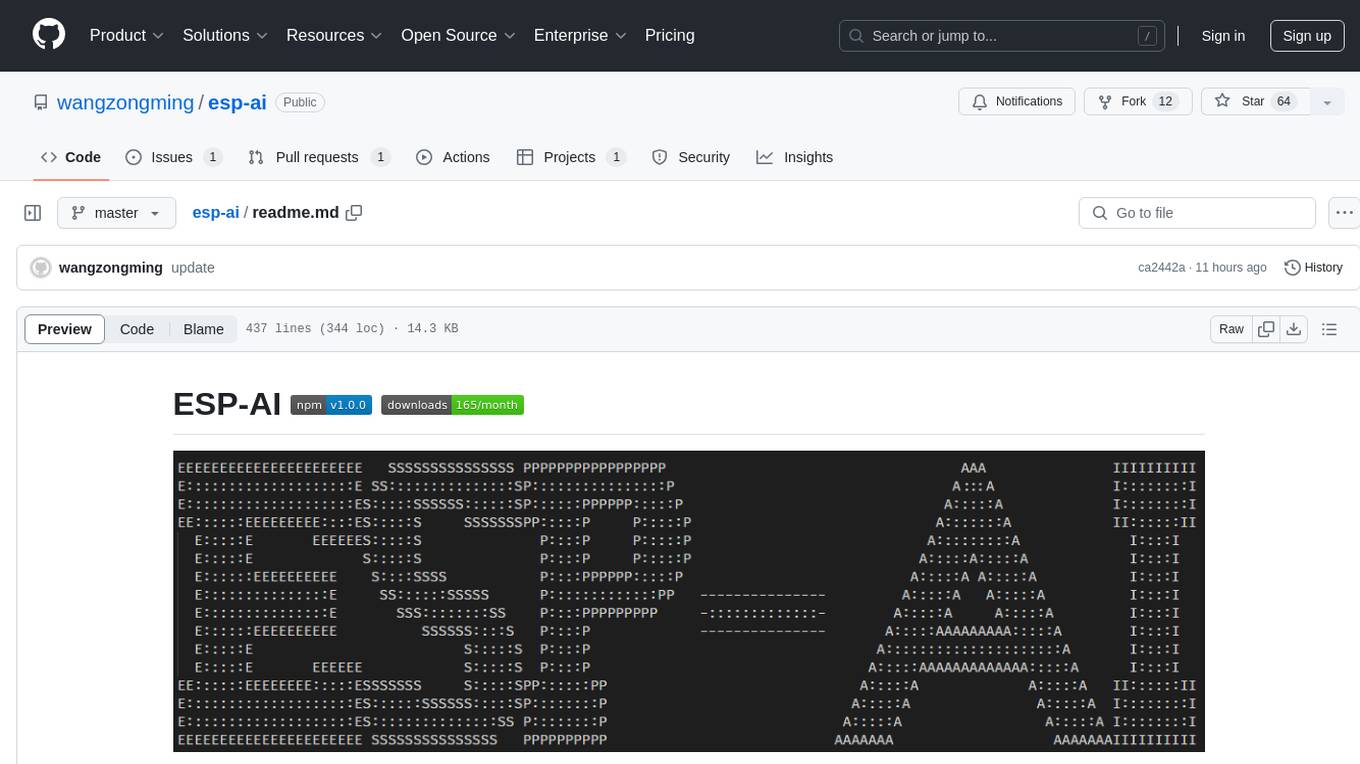
esp-ai
ESP-AI provides a complete AI conversation solution for your development board, including IAT+LLM+TTS integration solutions for ESP32 series development boards. It can be injected into projects without affecting existing ones. By providing keys from platforms like iFlytek, Jiling, and local services, you can run the services without worrying about interactions between services or between development boards and services. The project's server-side code is based on Node.js, and the hardware code is based on Arduino IDE.
ai-self-coding-book
The 'ai-self-coding-book' repository is a guidebook that aims to teach how to create complex applications with commercial value using natural language and AI, rather than simple toy projects. It provides insights on AI programming concepts and practical applications, emphasizing real-world use cases and best practices for development.
CuMo
CuMo is a project focused on scaling multimodal Large Language Models (LLMs) with Co-Upcycled Mixture-of-Experts. It introduces CuMo, which incorporates Co-upcycled Top-K sparsely-gated Mixture-of-experts blocks into the vision encoder and the MLP connector, enhancing the capabilities of multimodal LLMs. The project adopts a three-stage training approach with auxiliary losses to stabilize the training process and maintain a balanced loading of experts. CuMo achieves comparable performance to other state-of-the-art multimodal LLMs on various Visual Question Answering (VQA) and visual-instruction-following benchmarks.
enchanted
Enchanted is an open-source, Ollama-compatible app for macOS and iOS that allows users to work with privately hosted models such as Llama 2, Mistral, Vicuna, Starling, and more. It provides a user-friendly interface for interacting with these models, making it easy to generate text, translate languages, write different kinds of creative content, and more. The app is designed to be secure and private, ensuring that user data is protected. It also offers a range of features such as dark/light mode, conversation history, markdown support, voice prompts, and image attachments.
agents-towards-production
Agents Towards Production is an open-source playbook for building production-ready GenAI agents that scale from prototype to enterprise. Tutorials cover stateful workflows, vector memory, real-time web search APIs, Docker deployment, FastAPI endpoints, security guardrails, GPU scaling, browser automation, fine-tuning, multi-agent coordination, observability, evaluation, and UI development.
AceCoder
AceCoder is a tool that introduces a fully automated pipeline for synthesizing large-scale reliable tests used for reward model training and reinforcement learning in the coding scenario. It curates datasets, trains reward models, and performs RL training to improve coding abilities of language models. The tool aims to unlock the potential of RL training for code generation models and push the boundaries of LLM's coding abilities.
inference
Xorbits Inference (Xinference) is a powerful and versatile library designed to serve language, speech recognition, and multimodal models. With Xorbits Inference, you can effortlessly deploy and serve your or state-of-the-art built-in models using just a single command. Whether you are a researcher, developer, or data scientist, Xorbits Inference empowers you to unleash the full potential of cutting-edge AI models.
rai
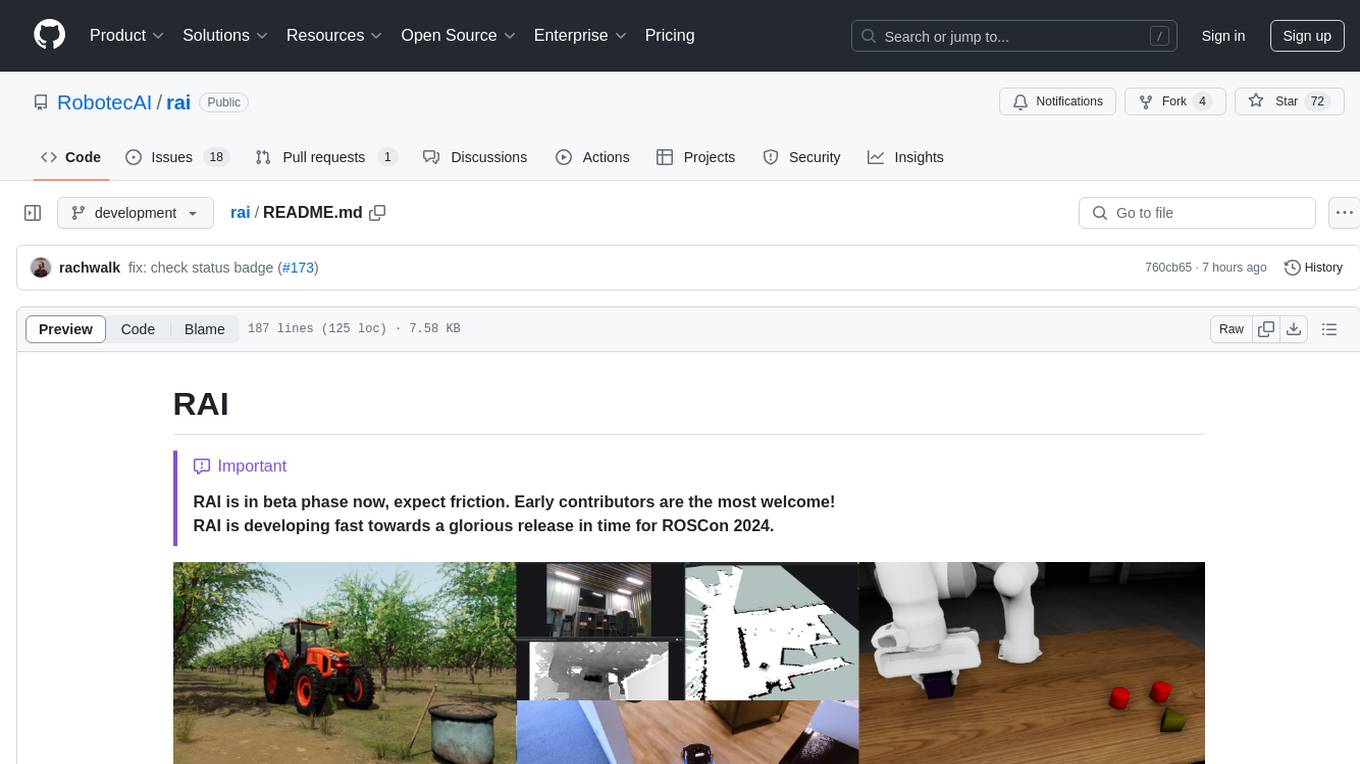
RAI is a framework designed to bring general multi-agent system capabilities to robots, enhancing human interactivity, flexibility in problem-solving, and out-of-the-box AI features. It supports multi-modalities, incorporates an advanced database for agent memory, provides ROS 2-oriented tooling, and offers a comprehensive task/mission orchestrator. The framework includes features such as voice interaction, customizable robot identity, camera sensor access, reasoning through ROS logs, and integration with LangChain for AI tools. RAI aims to support various AI vendors, improve human-robot interaction, provide an SDK for developers, and offer a user interface for configuration.
For similar tasks
Ai-with-Chucky-Colab-Notebooks
Ai-with-Chucky-Colab-Notebooks is a collection of Colab notebooks optimized for various AI tasks. The notebooks provide a comfortable user interface and are designed to enhance the efficiency of AI experiments. The repository includes tools like Z-Image Turbo Pro and Kani TTS-2 for English text-to-speech synthesis. Users can easily access and run these notebooks in Google Colab, making it convenient for AI enthusiasts and researchers to experiment with different AI models and techniques.
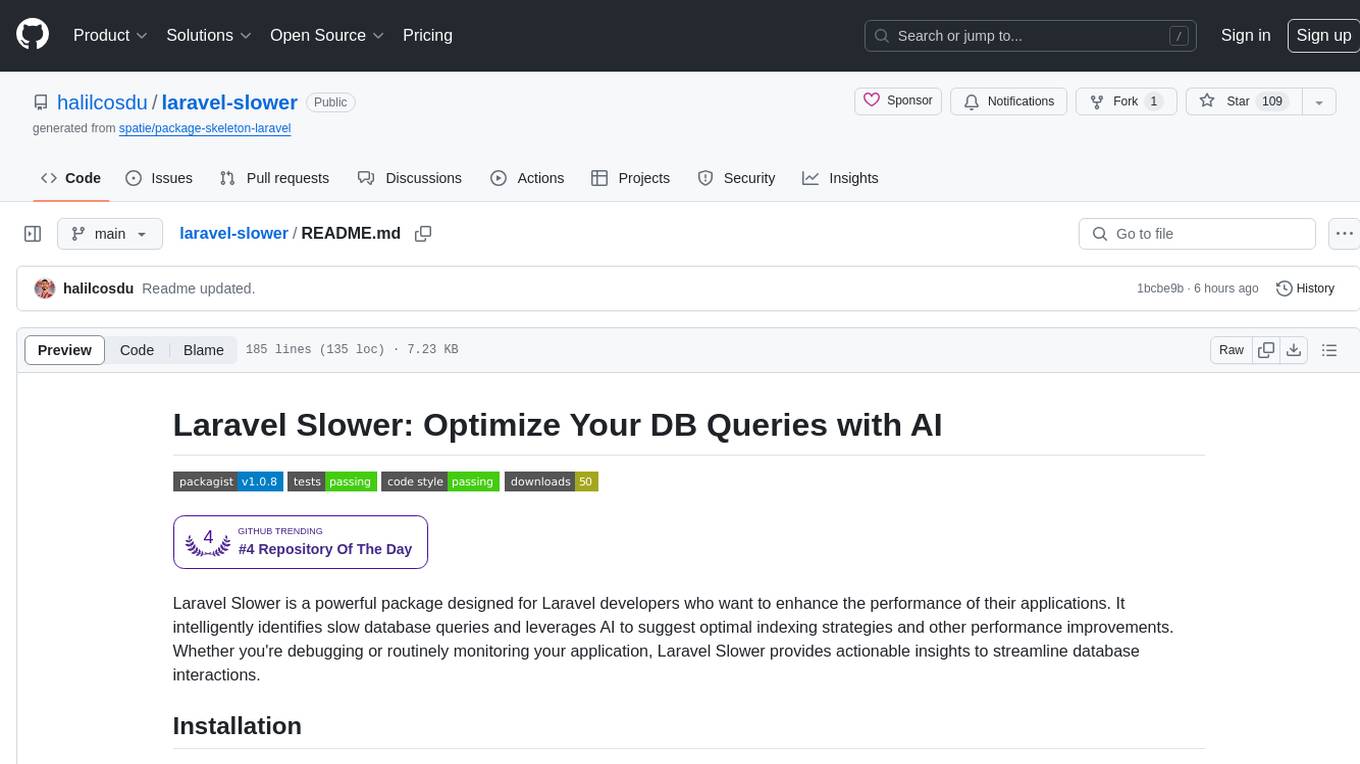
laravel-slower
Laravel Slower is a powerful package designed for Laravel developers to optimize the performance of their applications by identifying slow database queries and providing AI-driven suggestions for optimal indexing strategies and performance improvements. It offers actionable insights for debugging and monitoring database interactions, enhancing efficiency and scalability.
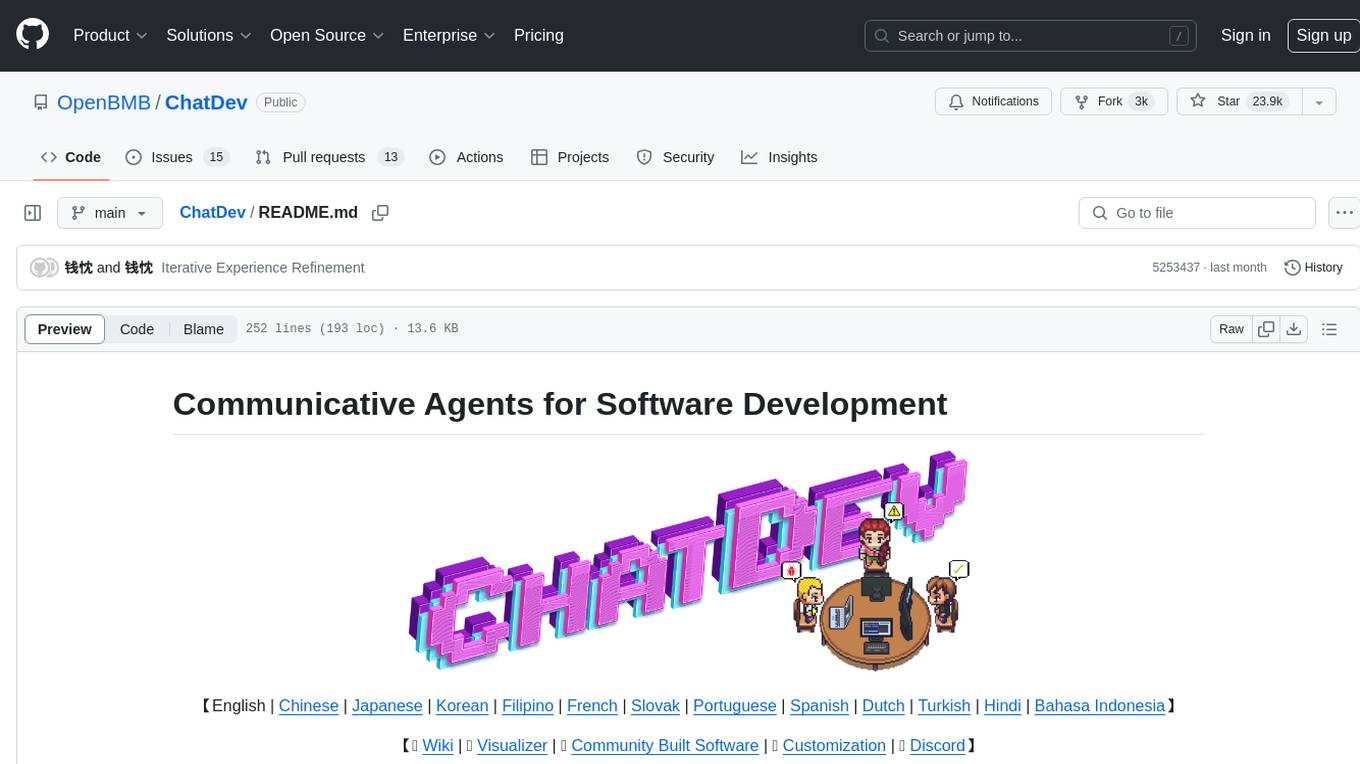
ChatDev
ChatDev is a virtual software company powered by intelligent agents like CEO, CPO, CTO, programmer, reviewer, tester, and art designer. These agents collaborate to revolutionize the digital world through programming. The platform offers an easy-to-use, highly customizable, and extendable framework based on large language models, ideal for studying collective intelligence. ChatDev introduces innovative methods like Iterative Experience Refinement and Experiential Co-Learning to enhance software development efficiency. It supports features like incremental development, Docker integration, Git mode, and Human-Agent-Interaction mode. Users can customize ChatChain, Phase, and Role settings, and share their software creations easily. The project is open-source under the Apache 2.0 License and utilizes data licensed under CC BY-NC 4.0.
THE-SANDBOX-AutoClicker
The Sandbox AutoClicker is a bot designed for the crypto game The Sandbox, allowing users to automate various processes within the game. The tool offers features such as auto tuning, multi-account auto clicker, multi-threading, a convenient menu, and free proxies. It provides full optimization through a simple menu and is guaranteed to be safe for Windows systems, supporting versions 7/8/8.1/10/11 (x32/64).
Awesome-LLM-Prune
This repository is dedicated to the pruning of large language models (LLMs). It aims to serve as a comprehensive resource for researchers and practitioners interested in the efficient reduction of model size while maintaining or enhancing performance. The repository contains various papers, summaries, and links related to different pruning approaches for LLMs, along with author information and publication details. It covers a wide range of topics such as structured pruning, unstructured pruning, semi-structured pruning, and benchmarking methods. Researchers and practitioners can explore different pruning techniques, understand their implications, and access relevant resources for further study and implementation.
SuperCoder
SuperCoder is an open-source autonomous software development system that leverages advanced AI tools and agents to streamline and automate coding, testing, and deployment tasks, enhancing efficiency and reliability. It supports a variety of languages and frameworks for diverse development needs. Users can set up the environment variables, build and run the Go server, Asynq worker, and Postgres using Docker and Docker Compose. The project is under active development and may still have issues, but users can seek help and support from the Discord community or by creating new issues on GitHub.

MoBA
MoBA (Mixture of Block Attention) is an innovative approach for long-context language models, enabling efficient processing of long sequences by dividing the full context into blocks and introducing a parameter-less gating mechanism. It allows seamless transitions between full and sparse attention modes, enhancing efficiency without compromising performance. MoBA has been deployed to support long-context requests and demonstrates significant advancements in efficient attention computation for large language models.
tapes
Tapes is an agentic telemetry system designed for content-addressable LLM interactions. It offers durable storage of agent sessions, plug-and-play OpenTelemetry instrumentation, and deterministic replay of past agent messages. The tool facilitates seamless communication and interaction tracking in a transparent manner, enhancing the efficiency of content-addressable interactions.
For similar jobs
weave
Weave is a toolkit for developing Generative AI applications, built by Weights & Biases. With Weave, you can log and debug language model inputs, outputs, and traces; build rigorous, apples-to-apples evaluations for language model use cases; and organize all the information generated across the LLM workflow, from experimentation to evaluations to production. Weave aims to bring rigor, best-practices, and composability to the inherently experimental process of developing Generative AI software, without introducing cognitive overhead.
LLMStack
LLMStack is a no-code platform for building generative AI agents, workflows, and chatbots. It allows users to connect their own data, internal tools, and GPT-powered models without any coding experience. LLMStack can be deployed to the cloud or on-premise and can be accessed via HTTP API or triggered from Slack or Discord.
VisionCraft
The VisionCraft API is a free API for using over 100 different AI models. From images to sound.
kaito
Kaito is an operator that automates the AI/ML inference model deployment in a Kubernetes cluster. It manages large model files using container images, avoids tuning deployment parameters to fit GPU hardware by providing preset configurations, auto-provisions GPU nodes based on model requirements, and hosts large model images in the public Microsoft Container Registry (MCR) if the license allows. Using Kaito, the workflow of onboarding large AI inference models in Kubernetes is largely simplified.
PyRIT
PyRIT is an open access automation framework designed to empower security professionals and ML engineers to red team foundation models and their applications. It automates AI Red Teaming tasks to allow operators to focus on more complicated and time-consuming tasks and can also identify security harms such as misuse (e.g., malware generation, jailbreaking), and privacy harms (e.g., identity theft). The goal is to allow researchers to have a baseline of how well their model and entire inference pipeline is doing against different harm categories and to be able to compare that baseline to future iterations of their model. This allows them to have empirical data on how well their model is doing today, and detect any degradation of performance based on future improvements.
tabby
Tabby is a self-hosted AI coding assistant, offering an open-source and on-premises alternative to GitHub Copilot. It boasts several key features: * Self-contained, with no need for a DBMS or cloud service. * OpenAPI interface, easy to integrate with existing infrastructure (e.g Cloud IDE). * Supports consumer-grade GPUs.
spear
SPEAR (Simulator for Photorealistic Embodied AI Research) is a powerful tool for training embodied agents. It features 300 unique virtual indoor environments with 2,566 unique rooms and 17,234 unique objects that can be manipulated individually. Each environment is designed by a professional artist and features detailed geometry, photorealistic materials, and a unique floor plan and object layout. SPEAR is implemented as Unreal Engine assets and provides an OpenAI Gym interface for interacting with the environments via Python.
Magick
Magick is a groundbreaking visual AIDE (Artificial Intelligence Development Environment) for no-code data pipelines and multimodal agents. Magick can connect to other services and comes with nodes and templates well-suited for intelligent agents, chatbots, complex reasoning systems and realistic characters.