


AI-Tutorial-Codes-Included
Codes/Notebooks for AI Projects
Stars: 2054
AI-Tutorial-Codes-Included is a comprehensive repository containing tutorials and coding implementations for various AI topics such as Agentic AI, Machine Learning, Data Science, MCPs Guides, LLMs, Voice AI, RAG, Computer Vision, and Security. The repository covers a wide range of topics from designing AI agents to building production-grade AI systems, voice AI assistants, and advanced machine learning pipelines. It includes detailed tutorials with coding implementations to help users understand and implement AI concepts effectively.
README:
🤝 Show your support - give a ⭐️ if you liked the content
- Agentic AI and Agents
- ML & Data Science
- MCPs Guides
- LLMs and Other AI Section
- Voice AI
- RAG
- Computer Vision
- Security
▶ How to Design a Swiss Army Knife Research Agent with Tool-Using AI, Web Search, PDF Analysis, Vision, and Automated Reporting Codes Tutorial
▶ How to Design an Agentic Workflow for Tool-Driven Route Optimization with Deterministic Computation and Structured Outputs Codes Tutorial
▶ A Coding Implementation to Build Bulletproof Agentic Workflows with PydanticAI Using Strict Schemas, Tool Injection, and Model-Agnostic Execution Codes Tutorial
▶ A Coding Implementation to Design a Stateful Tutor Agent with Long-Term Memory, Semantic Recall, and Adaptive Practice Generation Codes Tutorial
▶ How to Build a Self-Organizing Agent Memory System for Long-Term AI Reasoning Codes Tutorial
▶ How to Build an Atomic-Agents RAG Pipeline with Typed Schemas, Dynamic Context Injection, and Agent Chaining Codes Tutorial
▶ How to Build a Production-Grade Agentic AI System with Hybrid Retrieval, Provenance-First Citations, Repair Loops, and Episodic Memory Codes Tutorial
▶ How to Build Efficient Agentic Reasoning Systems by Dynamically Pruning Multiple Chain-of-Thought Paths Without Losing Accuracy Codes Tutorial
▶ A Coding Implementation to Train Safety-Critical Reinforcement Learning Agents Offline Using Conservative Q-Learning with d3rlpy and Fixed Historical Data Codes Tutorial
▶ How to Build Memory-Driven AI Agents with Short-Term, Long-Term, and Episodic Memory Codes Tutorial
▶ How to Design Self-Reflective Dual-Agent Governance Systems with Constitutional AI for Secure and Compliant Financial Operations Codes Tutorial
▶ How a Haystack-Powered Multi-Agent System Detects Incidents, Investigates Metrics and Logs, and Produces Production-Grade Incident Reviews End-to-End Codes Tutorial
▶ How an AI Agent Chooses What to Do Under Tokens, Latency, and Tool-Call Budget Constraints? Codes Tutorial
▶ A Coding Guide to Anemoi-Style Semi-Centralized Agentic Systems Using Peer-to-Peer Critic Loops in LangGraph Codes Tutorial
▶ How to Build a Self-Evaluating Agentic AI System with LlamaIndex and OpenAI Using Retrieval, Tool Use, and Automated Quality Checks Codes Tutorial
▶ How to Build a Safe, Autonomous Prior Authorization Agent for Healthcare Revenue Cycle Management with Human-in-the-Loop Controls Codes Tutorial
▶ How to Design an Agentic AI Architecture with LangGraph and OpenAI Using Adaptive Deliberation, Memory Graphs, and Reflexion Loops Codes Tutorial
▶ A Coding Guide to Design and Orchestrate Advanced ReAct-Based Multi-Agent Workflows with AgentScope and OpenAI Codes Tutorial
▶ How to Build a Production-Ready Multi-Agent Incident Response System Using OpenAI Swarm and Tool-Augmented Agents Codes Tutorial
▶ A Coding Implementation to Build a Self-Testing Agentic AI System Using Strands to Red-Team Tool-Using Agents and Enforce Safety at Runtime Codes Tutorial
▶ How to Design Transactional Agentic AI Systems with LangGraph Using Two-Phase Commit, Human Interrupts, and Safe Rollbacks Codes Tutorial
▶ How to Build a Robust Multi-Agent Pipeline Using CAMEL with Planning, Web-Augmented Reasoning, Critique, and Persistent Memory Codes Tutorial
▶ How to Build Contract-First Agentic Decision Systems with PydanticAI for Risk-Aware, Policy-Compliant Enterprise AI Codes Tutorial
▶ How to Build Production-Grade Agentic Workflows with GraphBit Using Deterministic Tools, Validated Execution Graphs, and Optional LLM Orchestration Codes Tutorial
▶ A Coding Guide to Build an Autonomous Multi-Agent Logistics System with Route Planning, Dynamic Auctions, and Real-Time Visualization Using Graph-Based Simulation Codes Tutorial
▶ How to Build a Fully Autonomous Local Fleet-Maintenance Analysis Agent Using SmolAgents and Qwen Model Codes Tutorial
▶ How to Build a Proactive Pre-Emptive Churn Prevention Agent with Intelligent Observation and Strategy Formation Codes Tutorial
▶ A Coding Guide to Design a Complete Agentic Workflow in Gemini for Automated Medical Evidence Gathering and Prior Authorization Submission Codes Tutorial
▶ How to Orchestrate a Fully Autonomous Multi-Agent Research and Writing Pipeline Using CrewAI and Gemini for Real-Time Intelligent Collaboration Codes Tutorial
▶ A Complete Workflow for Automated Prompt Optimization Using Gemini Flash, Few-Shot Selection, and Evolutionary Instruction Search Codes Tutorial
▶ How to Design a Gemini-Powered Self-Correcting Multi-Agent AI System with Semantic Routing, Symbolic Guardrails, and Reflexive Orchestration Codes Tutorial
▶ How to Design a Fully Local Agentic Storytelling Pipeline Using Griptape Workflows, Hugging Face Models, and Modular Creative Task Orchestration Codes Tutorial
▶ A Coding Guide to Build a Procedural Memory Agent That Learns, Stores, Retrieves, and Reuses Skills as Neural Modules Over Time Codes Tutorial
▶ How to Build an Adaptive Meta-Reasoning Agent That Dynamically Chooses Between Fast, Deep, and Tool-Based Thinking Strategies Codes Tutorial
▶ How to Design a Fully Local Multi-Agent Orchestration System Using TinyLlama for Intelligent Task Decomposition and Autonomous Collaboration Codes Tutorial
▶ How to Build a Meta-Cognitive AI Agent That Dynamically Adjusts Its Own Reasoning Depth for Efficient Problem Solving Codes Tutorial
▶ A Coding Guide to Design an Agentic AI System Using a Control-Plane Architecture for Safe, Modular, and Scalable Tool-Driven Reasoning Workflows Codes Tutorial
▶ A Coding Implementation for an Agentic AI Framework that Performs Literature Analysis, Hypothesis Generation, Experimental Planning, Simulation, and Scientific Reporting Codes Tutorial
▶ How to Build a Neuro-Symbolic Hybrid Agent that Combines Logical Planning with Neural Perception for Robust Autonomous Decision-Making Codes Tutorial
▶ How to Design a Mini Reinforcement Learning Environment-Acting Agent with Intelligent Local Feedback, Adaptive Decision-Making, and Multi-Agent Coordination Codes Tutorial
▶ How to Build a Fully Offline Multi-Tool Reasoning Agent with Dynamic Planning, Error Recovery, and Intelligent Function Routing Codes Tutorial
▶ An Implementation of a Comprehensive Empirical Framework for Benchmarking Reasoning Strategies in Modern Agentic AI Systems Codes Tutorial
▶ How to Build an Agentic Deep Reinforcement Learning System with Curriculum Progression, Adaptive Exploration, and Meta-Level UCB Planning Codes Tutorial
▶ How to Build Memory-Powered Agentic AI That Learns Continuously Through Episodic Experiences and Semantic Patterns for Long-Term Autonomy Codes Tutorial
▶ How to Design an Advanced Multi-Agent Reasoning System with spaCy Featuring Planning, Reflection, Memory, and Knowledge Graphs Codes Tutorial
▶ How to Build a Fully Self-Verifying Data Operations AI Agent Using Local Hugging Face Models for Automated Planning, Execution, and Testing Codes Tutorial
▶ A Coding Implementation to Build Neural Memory Agents with Differentiable Memory, Meta-Learning, and Experience Replay for Continual Adaptation in Dynamic Environments Codes Tutorial
▶ How to Build an Agentic Voice AI Assistant that Understands, Reasons, Plans, and Responds through Autonomous Multi-Step Intelligence Codes Tutorial
▶ Build a Multi-Agent System for Integrated Transcriptomic, Proteomic, and Metabolomic Data Interpretation with Pathway Reasoning Codes Tutorial
▶ How to Build a Model-Native Agent That Learns Internal Planning, Memory, and Multi-Tool Reasoning Through End-to-End Reinforcement Learning Codes Tutorial
▶ Build an Autonomous Wet-Lab Protocol Planner and Validator Using Salesforce CodeGen for Agentic Experiment Design and Safety Optimization Codes Tutorial
▶ How to Design a Persistent Memory and Personalized Agentic AI System with Decay and Self-Evaluation? Codes Tutorial
▶ How to Design an Autonomous Multi-Agent Data and Infrastructure Strategy System Using Lightweight Qwen Models for Efficient Pipeline Intelligence? Codes Tutorial
▶ How to Build a Fully Functional Computer-Use Agent that Thinks, Plans, and Executes Virtual Actions Using Local AI Models Codes Tutorial
▶ A Coding Implementation of a Comprehensive Enterprise AI Benchmarking Framework to Evaluate Rule-Based LLM, and Hybrid Agentic AI Systems Across Real-World Tasks Codes Tutorial
▶ How to Build Ethically Aligned Autonomous Agents through Value-Guided Reasoning and Self-Correcting Decision-Making Using Open-Source Models Codes Tutorial
▶ How to Build, Train, and Compare Multiple Reinforcement Learning Agents in a Custom Trading Environment Using Stable-Baselines3 Codes Tutorial
▶ How I Built an Intelligent Multi-Agent Systems with AutoGen, LangChain, and Hugging Face to Demonstrate Practical Agentic AI Workflows Codes Tutorial
▶ A Coding Guide to Build a Fully Functional Multi-Agent Marketplace Using uAgent Codes Tutorial
▶ A Coding Implementation of Secure AI Agent with Self-Auditing Guardrails, PII Redaction, and Safe Tool Access in Python Codes Tutorial
▶ Meet LangChain’s DeepAgents Library and a Practical Example to See How DeepAgents Actually Work in Action Codes Tutorial
▶ An Intelligent Conversational Machine Learning Pipeline Integrating LangChain Agents and XGBoost for Automated Data Science Workflows Codes Tutorial
▶ A Coding Guide to Build an AI-Powered Cryptographic Agent System with Hybrid Encryption, Digital Signatures, and Adaptive Security Intelligence Codes Tutorial
▶ How to Build an Advanced Agentic Retrieval-Augmented Generation (RAG) System with Dynamic Strategy and Smart Retrieval? Codes Tutorial
▶ A Coding Guide to Build a Hierarchical Supervisor Agent Framework with CrewAI and Google Gemini for Coordinated Multi-Agent Workflows Codes Tutorial
▶ How to Build an Intelligent AI Desktop Automation Agent with Natural Language Commands and Interactive Simulation? Codes Tutorial
▶ How to Build an Advanced End-to-End Voice AI Agent Using Hugging Face Pipelines? Codes Tutorial
▶ How to Create Reliable Conversational AI Agents Using Parlant? Codes Tutorial
▶ How to Build a Multilingual OCR AI Agent in Python with EasyOCR and OpenCV Codes Tutorial
▶ How to Build a Robust Advanced Neural AI Agent with Stable Training, Adaptive Learning, and Intelligent Decision-Making? Codes Tutorial
▶ Building Advanced MCP (Model Context Protocol) Agents with Multi-Agent Coordination, Context Awareness, and Gemini Integration Codes Tutorial
▶ How to Build a Complete Multi-Domain AI Web Agent Using Notte and Gemini Codes Tutorial
▶ How to Create a Bioinformatics AI Agent Using Biopython for DNA and Protein Analysis Codes Tutorial
▶ Step-by-Step Guide to AI Agent Development Using Microsoft Agent-Lightning Codes Tutorial
▶ How to Build an Advanced AI Agent with Summarized Short-Term and Vector-Based Long-Term Memory Codes Tutorial
▶ How to Build a Conversational Research AI Agent with LangGraph: Step Replay and Time-Travel Checkpoints Codes Tutorial
▶ How to Build a Multi-Round Deep Research Agent with Gemini, DuckDuckGo API, and Automated Reporting? Codes Tutorial
▶ A Coding Guide to Building a Brain-Inspired Hierarchical Reasoning AI Agent with Hugging Face Models Codes Tutorial
▶ A Full Code Implementation to Design a Graph-Structured AI Agent with Gemini for Task Planning, Retrieval, Computation, and Self-Critique Codes Tutorial
▶ Building a Reliable End-to-End Machine Learning Pipeline Using MLE-Agent and Ollama Locally Codes Tutorial
▶ An Implementation Guide to Build a Modular Conversational AI Agent with Pipecat and HuggingFace Codes Tutorial
▶ Building a Secure and Memory-Enabled Cipher Workflow for AI Agents with Dynamic LLM Selection and API Integration Codes Tutorial
▶ A Developer’s Guide to OpenAI’s GPT-5 Model Capabilities Codes Tutorial
▶ Building an Advanced PaperQA2 Research Agent with Google Gemini for Scientific Literature Analysis Codes Tutorial
▶ A Code Implementation to Build a Multi-Agent Research System with OpenAI Agents, Function Tools, Handoffs, and Session Memory Codes Tutorial
▶ A Coding Implementation to Build a Self-Adaptive Goal-Oriented AI Agent Using Google Gemini and the SAGE Framework Codes Tutorial
▶ Building a Multi-Agent Conversational AI Framework with Microsoft AutoGen and Gemini API Codes Tutorial
▶ A Coding Guide to Build an Intelligent Conversational AI Agent with Agent Memory Using Cognee and Free Hugging Face Models Codes Tutorial
▶ A Coding Guide to Build a Scalable Multi-Agent System with Google ADK Codes Tutorial
▶ A Coding Guide to Build a Tool-Calling ReAct Agent Fusing Prolog Logic with Gemini and LangGraph Codes Tutorial
▶ A Coding Guide to Build an AI Code-Analysis Agent with Griffe Codes Tutorial
▶ A Code Implementation for Designing Intelligent Multi-Agent Workflows with the BeeAI Framework Codes Tutorial
▶ Implementing a Tool-Enabled Multi-Agent Workflow with Python, OpenAI API, and PrimisAI Nexus Codes Tutorial
▶ Getting Started with Agent Communication Protocol (ACP): Build a Weather Agent with Python Codes Tutorial
▶ Build a Powerful Multi-Tool AI Agent Using Nebius with Llama 3 and Real-Time Reasoning Tools Codes Tutorial
▶ Building Production-Ready Custom AI Agents for Enterprise Workflows with Monitoring, Orchestration, and Scalability Codes Tutorial
▶ Building an A2A-Compliant Random Number Agent: A Step-by-Step Guide to Implementing the Low-Level Executor Pattern with Python Codes Tutorial
▶ Build a Low-Footprint AI Coding Assistant with Mistral Devstral Codes Tutorial
▶ How to Build an Advanced BrightData Web Scraper with Google Gemini for AI-Powered Data Extraction Notebook Tutorial
▶ Build an Intelligent Multi-Tool AI Agent Interface Using Streamlit for Seamless Real-Time Interaction Notebook Tutorial
▶ How to Use python-A2A to Create and Connect Financial Agents with Google’s Agent-to-Agent (A2A) Protocol Notebook-inflation_agent.py Notebook-network.ipynb Notebook-emi_agent.py Tutorial
▶ Develop a Multi-Tool AI Agent with Secure Python Execution using Riza and Gemini Notebook Tutorial
▶ Build a Gemini-Powered DataFrame Agent for Natural Language Data Analysis with Pandas and LangChain Notebook Tutorial
▶ How to Build an Asynchronous AI Agent Network Using Gemini for Research, Analysis, and Validation Tasks Notebook Tutorial
▶ How to Create Smart Multi-Agent Workflows Using the Mistral Agents API’s Handoffs Feature Notebook Tutorial
▶ How to Enable Function Calling in Mistral Agents Using the Standard JSON Schema Format Notebook Tutorial
▶ A Step-by-Step Coding Guide to Building an Iterative AI Workflow Agent Using LangGraph and Gemini Notebook Tutorial
▶ A Coding Implementation to Build an Advanced Web Intelligence Agent with Tavily and Gemini AI Notebook Tutorial
▶ Hands-On Guide: Getting started with Mistral Agents API Notebook Tutorial
▶ A Coding Guide to Building a Scalable Multi-Agent Communication Systems Using Agent Communication Protocol (ACP) Notebook Tutorial
▶ A Coding Guide for Building a Self-Improving AI Agent Using Google’s Gemini API with Intelligent Adaptation Features Notebook Tutorial
▶ A Step-by-Step Coding Implementation of an Agent2Agent Framework for Collaborative and Critique-Driven AI Problem Solving with Consensus-Building Notebook Tutorial
▶ A Coding Guide to Building a Customizable Multi-Tool AI Agent with LangGraph and Claude for Dynamic Agent Creation Notebook Tutorial
▶ A Coding Implementation to Build an AI Agent with Live Python Execution and Automated Validation Notebook Tutorial
▶ A Comprehensive Coding Guide to Crafting Advanced Round-Robin Multi-Agent Workflows with Microsoft AutoGen Notebook Tutorial
▶ A Coding Implementation of an Intelligent AI Assistant with Jina Search, LangChain, and Gemini for Real-Time Information Retrieval Notebook Tutorial
▶ How to Build an Advanced, Interactive Exploratory Data Analysis Workflow Using PyGWalker and Feature-Engineered Data Codes Tutorial
▶ [In-Depth Guide] The Complete CTGAN + SDV Pipeline for High-Fidelity Synthetic Data Codes Tutorial
▶ How to Build a Privacy-Preserving Federated Pipeline to Fine-Tune Large Language Models with LoRA Using Flower and PEFT Codes Tutorial
▶ How to Design Production-Grade Mock Data Pipelines Using Polyfactory with Dataclasses, Pydantic, Attrs, and Nested Models Codes Tutorial
▶ A Coding, Data-Driven Guide to Measuring, Visualizing, and Enforcing Cognitive Complexity in Python Projects Using complexipy Codes Tutorial
▶ How to Build Advanced Quantum Algorithms Using Qrisp with Grover Search, Quantum Phase Estimation, and QAOA Codes Tutorial
▶ A Coding and Experimental Analysis of Decentralized Federated Learning with Gossip Protocols and Differential Privacy Codes Tutorial
▶ A Coding Implementation to Training, Optimizing, Evaluating, and Interpreting Knowledge Graph Embeddings with PyKEENs Codes Tutorial
▶ A Coding Deep Dive into Differentiable Computer Vision with Kornia Using Geometry Optimization, LoFTR Matching, and GPU Augmentations Codes Tutorial
▶ How Machine Learning and Semantic Embeddings Reorder CVE Vulnerabilities Beyond Raw CVSS Scores Codes Tutorial
▶ How AutoGluon Enables Modern AutoML Pipelines for Production-Grade Tabular Models with Ensembling and Distillation Codes Tutorial
▶ A Coding Guide to Understanding How Retries Trigger Failure Cascades in RPC and Event-Driven Architectures Codes Tutorial
▶ How to Build Portable, In-Database Feature Engineering Pipelines with Ibis Using Lazy Python APIs and DuckDB Execution Codes Tutorial
▶ A Coding Implementation to Build a Unified Apache Beam Pipeline Demonstrating Batch and Stream Processing with Event-Time Windowing Using DirectRunner Codes Tutorial
▶ Implementing Softmax From Scratch: Avoiding the Numerical Stability Trap Codes Tutorial
▶ A Coding Implementation of an OpenAI-Assisted Privacy-Preserving Federated Fraud Detection System from Scratch Using Lightweight PyTorch Simulations Codes Tutorial
▶ A Coding Implementation on Building Self-Organizing Zettelkasten Knowledge Graphs and Sleep-Consolidation Mechanisms Codes Tutorial
▶ How to Build a High-Performance Distributed Task Routing System Using Kombu with Topic Exchanges and Concurrent Workers Codes Tutorial
▶ A Coding Implementation of a Complete Hierarchical Bayesian Regression Workflow in NumPyro Using JAX-Powered Inference and Posterior Predictive Analysis Codes Tutorial
▶ How to Design an Advanced Multi-Page Interactive Analytics Dashboard with Dynamic Filtering, Live KPIs, and Rich Visual Exploration Using Panel Codes Tutorial
▶ How We Learn Step-Level Rewards from Preferences to Solve Sparse-Reward Environments Using Online Process Reward Learning Codes Tutorial
▶ How to Build an End-to-End Interactive Analytics Dashboard Using PyGWalker Features for Insightful Data Exploration Codes Tutorial
▶ How to Design a Fully Interactive, Reactive, and Dynamic Terminal-Based Data Dashboard Using Textual? Codes Tutorial
▶ A Coding Implementation to Build and Train Advanced Architectures with Residual Connections, Self-Attention, and Adaptive Optimization Using JAX, Flax, and Optax Codes Tutorial
▶ How Can We Build Scalable and Reproducible Machine Learning Experiment Pipelines Using Meta Research Hydra? Codes Tutorial
▶ How to Build an Advanced Multi-Page Reflex Web Application with Real-Time Database, Dynamic State Management, and Reactive UI Codes Tutorial
▶ How to Build an End-to-End Data Engineering and Machine Learning Pipeline with Apache Spark and PySpark Codes Tutorial
▶ How to Build Supervised AI Models When You Don’t Have Annotated Data Codes Tutorial
▶ How to Build a Stateless, Secure, and Asynchronous MCP-Style Protocol for Scalable Agent Workflows Codes Tutorial
▶ An Implementation to Build Dynamic AI Systems with the Model Context Protocol (MCP) for Real-Time Resource and Tool Integration Codes Tutorial
▶ Implementing OAuth 2.1 for MCP Servers with Scalekit: A Step-by-Step Coding Tutorial Codes Tutorial
▶ Building an MCP-Powered AI Agent with Gemini and mcp-agent Framework: A Step-by-Step Implementation Guide Notebook Tutorial
▶ Creating Dashboards Using Vizro MCP: Vizro is an Open-Source Python Toolkit by McKinsey Tutorial
▶ A Step-by-Step Coding Guide to Defining Custom Model Context Protocol (MCP) Server and Client Tools with FastMCP and Integrating Them into Google Gemini 2.0’s Function‑Calling Workflow Notebook Tutorial
▶ A Code Implementation to Building a Context-Aware AI Assistant in Google Colab Using LangChain, LangGraph, Gemini Pro, and Model Context Protocol (MCP) Principles with Tool Integration Support Notebook Tutorial
▶ Guide to Using the Desktop Commander MCP Server Tutorial
▶ How to Align Large Language Models with Human Preferences Using Direct Preference Optimization, QLoRA, and Ultra-Feedback Codes Tutorial
▶ How to Build a Matryoshka-Optimized Sentence Embedding Model for Ultra-Fast Retrieval with 64-Dimension Truncation Codes Tutorial
▶ A Coding Implementation to Establish Rigorous Prompt Versioning and Regression Testing Workflows for Large Language Models using MLflow Codes Tutorial
▶ A Coding Implementation to Automating LLM Quality Assurance with DeepEval, Custom Retrievers, and LLM-as-a-Judge Metrics Codes Tutorial
▶ How to Implement Functional Components of Transformer and Mini-GPT Model from Scratch Using Tinygrad to Understand Deep Learning Internals Codes Tutorial
▶ An Implementation of Fully Traced and Evaluated Local LLM Pipeline Using Opik for Transparent, Measurable, and Reproducible AI Workflows Codes Tutorial
▶ A Coding Implementation to Build a Transformer-Based Regression Language Model to Predict Continuous Values from Text Codes Tutorial
▶ An Implementation on Building Advanced Multi-Endpoint Machine Learning APIs with LitServe: Batching, Streaming, Caching, and Local Inference Codes Tutorial
▶ Ivy Framework Agnostic Machine Learning Build, Transpile, and Benchmark Across All Major Backends Codes Tutorial
▶ A Coding Guide to Master Self-Supervised Learning with Lightly AI for Efficient Data Curation and Active Learning Codes Tutorial
▶ Building and Optimizing Intelligent Machine Learning Pipelines with TPOT for Complete Automation and Performance Enhancement Notebook Tutorial
▶ A Coding Implementation to Build a Complete Self-Hosted LLM Workflow with Ollama, REST API, and Gradio Chat Interface Notebook Tutorial
▶ How to Test an OpenAI Model Against Single-Turn Adversarial Attacks Using deepteam Notebook Tutorial
▶ Using RouteLLM to Optimize LLM Usage Notebook Tutorial
▶ Tutorial: Exploring SHAP-IQ VisualizationsNotebook Tutorial
▶ Building an End-to-End Object Tracking and Analytics System with Roboflow Supervision Notebook Tutorial
▶ Getting Started with Microsoft’s Presidio: A Step-by-Step Guide to Detecting and Anonymizing Personally Identifiable Information PII in Text Notebook Tutorial
▶ Build a Groundedness Verification Tool Using Upstage API and LangChain Notebook Tutorial
▶ A Coding Guide to Build a Production-Ready Asynchronous Python SDK with Rate Limiting, In-Memory Caching, and Authentication Notebook Tutorial
▶ Building High-Performance Financial Analytics Pipelines with Polars: Lazy Evaluation, Advanced Expressions, and SQL Integration Notebook Tutorial
▶ Building AI-Powered Applications Using the Plan → Files → Code Workflow in TinyDev Notebook Tutorial
▶ A Comprehensive Coding Tutorial for Advanced SerpAPI Integration with Google Gemini-1.5-Flash for Advanced Analytics Notebook Tutorial
▶ Build a Secure AI Code Execution Workflow Using Daytona SDK Notebook Tutorial
▶ A Coding Guide Implementing ScrapeGraph and Gemini AI for an Automated, Scalable, Insight-Driven Competitive Intelligence and Market Analysis Workflow Notebook Tutorial
▶ A Coding Implementation to Build an Interactive Transcript and PDF Analysis with Lyzr Chatbot Framework Notebook Tutorial
▶ Step-by-Step Guide to Creating Synthetic Data Using the Synthetic Data Vault (SDV) Notebook Tutorial
▶ Creating a Knowledge Graph Using an LLM Codes Tutorial
▶ How to Design a Fully Streaming Voice Agent with End-to-End Latency Budgets, Incremental ASR, LLM Streaming, and Real-Time TTS Codes Tutorial
▶ How to Build an Agentic Voice AI Assistant that Understands, Reasons, Plans, and Responds through Autonomous Multi-Step Intelligence Codes Tutorial
▶ How to Build an Advanced Voice AI Pipeline with WhisperX for Transcription, Alignment, Analysis, and Export? Codes Tutorial
▶ Building a Speech Enhancement and Automatic Speech Recognition (ASR) Pipeline in Python Using SpeechBrain Codes Tutorial
▶ How to Build an Advanced End-to-End Voice AI Agent Using Hugging Face Pipelines? Codes Tutorial
▶ How Tree-KG Enables Hierarchical Knowledge Graphs for Contextual Navigation and Explainable Multi-Hop Reasoning Beyond Traditional RAG Codes Tutorial
▶ How to Reduce Cost and Latency of Your RAG Application Using Semantic LLM Caching Codes Tutorial
▶ How to Build an Agentic Decision-Tree RAG System with Intelligent Query Routing, Self-Checking, and Iterative Refinement? Codes Tutorial
▶ How to Design a Fully Functional Enterprise AI Assistant with Retrieval Augmentation and Policy Guardrails Using Open Source AI Models Codes Tutorial
▶ How to Evaluate Your RAG Pipeline with Synthetic Data? Codes Tutorial
▶ [Tutorial] Building a Visual Document Retrieval Pipeline with ColPali and Late Interaction Scoring Codes Tutorial
▶ A Coding Guide to Implement Advanced Hyperparameter Optimization with Optuna using Pruning Multi-Objective Search, Early Stopping, and Deep Visual Analysis Codes Tutorial
▶ How to Build Multi-Layered LLM Safety Filters to Defend Against Adaptive, Paraphrased, and Adversarial Prompt Attacks Codes Tutorial
▶ A Coding Guide to Demonstrate Targeted Data Poisoning Attacks in Deep Learning by Label Flipping on CIFAR-10 with PyTorch Codes Tutorial
▶ How to Build a Multi-Turn Crescendo Red-Teaming Pipeline to Evaluate and Stress-Test LLM Safety Using Garak Codes Tutorial
For Tasks:
Click tags to check more tools for each tasksFor Jobs:
Alternative AI tools for AI-Tutorial-Codes-Included
Similar Open Source Tools
AI-Tutorial-Codes-Included
AI-Tutorial-Codes-Included is a comprehensive repository containing tutorials and coding implementations for various AI topics such as Agentic AI, Machine Learning, Data Science, MCPs Guides, LLMs, Voice AI, RAG, Computer Vision, and Security. The repository covers a wide range of topics from designing AI agents to building production-grade AI systems, voice AI assistants, and advanced machine learning pipelines. It includes detailed tutorials with coding implementations to help users understand and implement AI concepts effectively.
lemonai
LemonAI is a versatile machine learning library designed to simplify the process of building and deploying AI models. It provides a wide range of tools and algorithms for data preprocessing, model training, and evaluation. With LemonAI, users can easily experiment with different machine learning techniques and optimize their models for various tasks. The library is well-documented and beginner-friendly, making it suitable for both novice and experienced data scientists. LemonAI aims to streamline the development of AI applications and empower users to create innovative solutions using state-of-the-art machine learning methods.
edge-ai-libraries
The Edge AI Libraries project is a collection of libraries, microservices, and tools for Edge application development. It includes sample applications showcasing generic AI use cases. Key components include Anomalib, Dataset Management Framework, Deep Learning Streamer, ECAT EnableKit, EtherCAT Masterstack, FLANN, OpenVINO toolkit, Audio Analyzer, ORB Extractor, PCL, PLCopen Servo, Real-time Data Agent, RTmotion, Audio Intelligence, Deep Learning Streamer Pipeline Server, Document Ingestion, Model Registry, Multimodal Embedding Serving, Time Series Analytics, Vector Retriever, Visual-Data Preparation, VLM Inference Serving, Intel Geti, Intel SceneScape, Visual Pipeline and Platform Evaluation Tool, Chat Question and Answer, Document Summarization, PLCopen Benchmark, PLCopen Databus, Video Search and Summarization, Isolation Forest Classifier, Random Forest Microservices. Visit sub-directories for instructions and guides.
sdk-python
Strands Agents is a lightweight and flexible SDK that takes a model-driven approach to building and running AI agents. It supports various model providers, offers advanced capabilities like multi-agent systems and streaming support, and comes with built-in MCP server support. Users can easily create tools using Python decorators, integrate MCP servers seamlessly, and leverage multiple model providers for different AI tasks. The SDK is designed to scale from simple conversational assistants to complex autonomous workflows, making it suitable for a wide range of AI development needs.
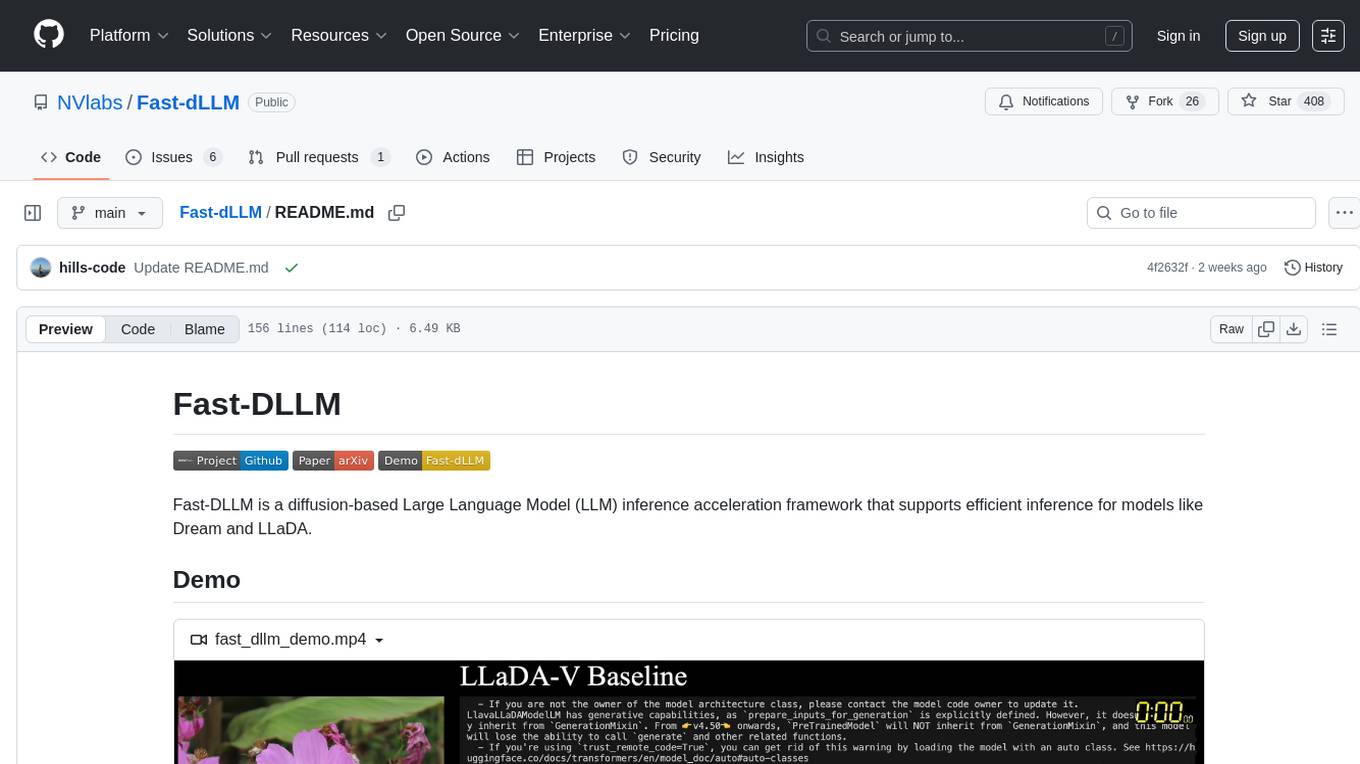
Fast-dLLM
Fast-DLLM is a diffusion-based Large Language Model (LLM) inference acceleration framework that supports efficient inference for models like Dream and LLaDA. It offers fast inference support, multiple optimization strategies, code generation, evaluation capabilities, and an interactive chat interface. Key features include Key-Value Cache for Block-Wise Decoding, Confidence-Aware Parallel Decoding, and overall performance improvements. The project structure includes directories for Dream and LLaDA model-related code, with installation and usage instructions provided for using the LLaDA and Dream models.
build-your-own-x-machine-learning
This repository provides a step-by-step guide for building your own machine learning models from scratch. It covers various machine learning algorithms and techniques, including linear regression, logistic regression, decision trees, and neural networks. The code examples are written in Python and include detailed explanations to help beginners understand the concepts behind machine learning. By following the tutorials in this repository, you can gain a deeper understanding of how machine learning works and develop your own models for different applications.
MeeseeksAI
MeeseeksAI is a framework designed to orchestrate AI agents using a mermaid graph and networkx. It provides a structured approach to managing and coordinating multiple AI agents within a system. The framework allows users to define the interactions and dependencies between agents through a visual representation, making it easier to understand and modify the behavior of the AI system. By leveraging the power of networkx, MeeseeksAI enables efficient graph-based computations and optimizations, enhancing the overall performance of AI workflows. With its intuitive design and flexible architecture, MeeseeksAI simplifies the process of building and deploying complex AI systems, empowering users to create sophisticated agent interactions with ease.
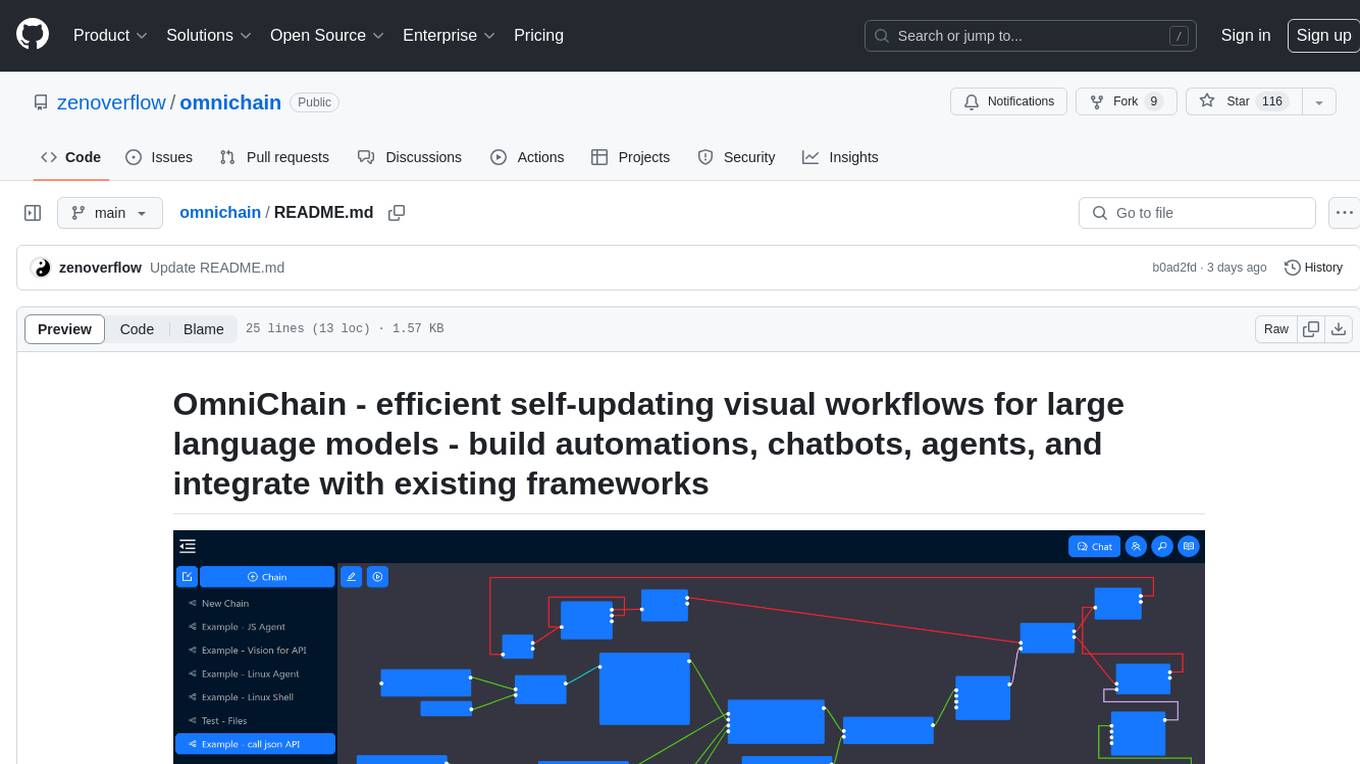
omnichain
OmniChain is a tool for building efficient self-updating visual workflows using AI language models, enabling users to automate tasks, create chatbots, agents, and integrate with existing frameworks. It allows users to create custom workflows guided by logic processes, store and recall information, and make decisions based on that information. The tool enables users to create tireless robot employees that operate 24/7, access the underlying operating system, generate and run NodeJS code snippets, and create custom agents and logic chains. OmniChain is self-hosted, open-source, and available for commercial use under the MIT license, with no coding skills required.
Awesome-LLM4EDA
LLM4EDA is a repository dedicated to showcasing the emerging progress in utilizing Large Language Models for Electronic Design Automation. The repository includes resources, papers, and tools that leverage LLMs to solve problems in EDA. It covers a wide range of applications such as knowledge acquisition, code generation, code analysis, verification, and large circuit models. The goal is to provide a comprehensive understanding of how LLMs can revolutionize the EDA industry by offering innovative solutions and new interaction paradigms.
learn-applied-generative-ai-fundamentals
This repository is part of the Certified Cloud Native Applied Generative AI Engineer program, focusing on Applied Generative AI Fundamentals. It covers prompt engineering, developing custom GPTs, and Multi AI Agent Systems. The course helps in building a strong understanding of generative AI, applying Large Language Models (LLMs) and diffusion models practically. It introduces principles of prompt engineering to work efficiently with AI, creating custom AI models and GPTs using OpenAI, Azure, and Google technologies. It also utilizes open source libraries like LangChain, CrewAI, and LangGraph to automate tasks and business processes.
BentoVLLM
BentoVLLM is an example project demonstrating how to serve and deploy open-source Large Language Models using vLLM, a high-throughput and memory-efficient inference engine. It provides a basis for advanced code customization, such as custom models, inference logic, or vLLM options. The project allows for simple LLM hosting with OpenAI compatible endpoints without the need to write any code. Users can interact with the server using Swagger UI or other methods, and the service can be deployed to BentoCloud for better management and scalability. Additionally, the repository includes integration examples for different LLM models and tools.
ultracontext
UltraContext is a context API for AI agents that simplifies controlling what agents see by allowing users to replace messages, compact or offload context, replay decisions, and roll back mistakes with a single API call. It provides versioned context out of the box with full history and zero complexity. The tool aims to address the issue of context rot in large language models by providing a simple API with automatic versioning, time-travel capabilities, schema-free data storage, framework-agnostic compatibility, and fast performance. UltraContext is designed to streamline the process of managing context for AI agents, enabling users to focus on solving interesting problems rather than spending time gluing context together.
simple-ai
Simple AI is a lightweight Python library for implementing basic artificial intelligence algorithms. It provides easy-to-use functions and classes for tasks such as machine learning, natural language processing, and computer vision. With Simple AI, users can quickly prototype and deploy AI solutions without the complexity of larger frameworks.
ai
This repository contains a collection of AI algorithms and models for various machine learning tasks. It provides implementations of popular algorithms such as neural networks, decision trees, and support vector machines. The code is well-documented and easy to understand, making it suitable for both beginners and experienced developers. The repository also includes example datasets and tutorials to help users get started with building and training AI models. Whether you are a student learning about AI or a professional working on machine learning projects, this repository can be a valuable resource for your development journey.
learn-claude-code
Learn Claude Code is an educational project by shareAI Lab that aims to help users understand how modern AI agents work by building one from scratch. The repository provides original educational material on various topics such as the agent loop, tool design, explicit planning, context management, knowledge injection, task systems, parallel execution, team messaging, and autonomous teams. Users can follow a learning path through different versions of the project, each introducing new concepts and mechanisms. The repository also includes technical tutorials, articles, and example skills for users to explore and learn from. The project emphasizes the philosophy that the model is crucial in agent development, with code playing a supporting role.
model-mondays
Model Mondays is a repository dedicated to providing a collection of machine learning models implemented in Python. It aims to serve as a resource for individuals looking to explore and experiment with various machine learning algorithms and techniques. The repository includes a wide range of models, from simple linear regression to complex deep learning architectures, along with detailed documentation and examples to facilitate learning and understanding. Whether you are a beginner looking to get started with machine learning or an experienced practitioner seeking reference implementations, Model Mondays offers a valuable repository of models to study and leverage in your projects.
For similar tasks
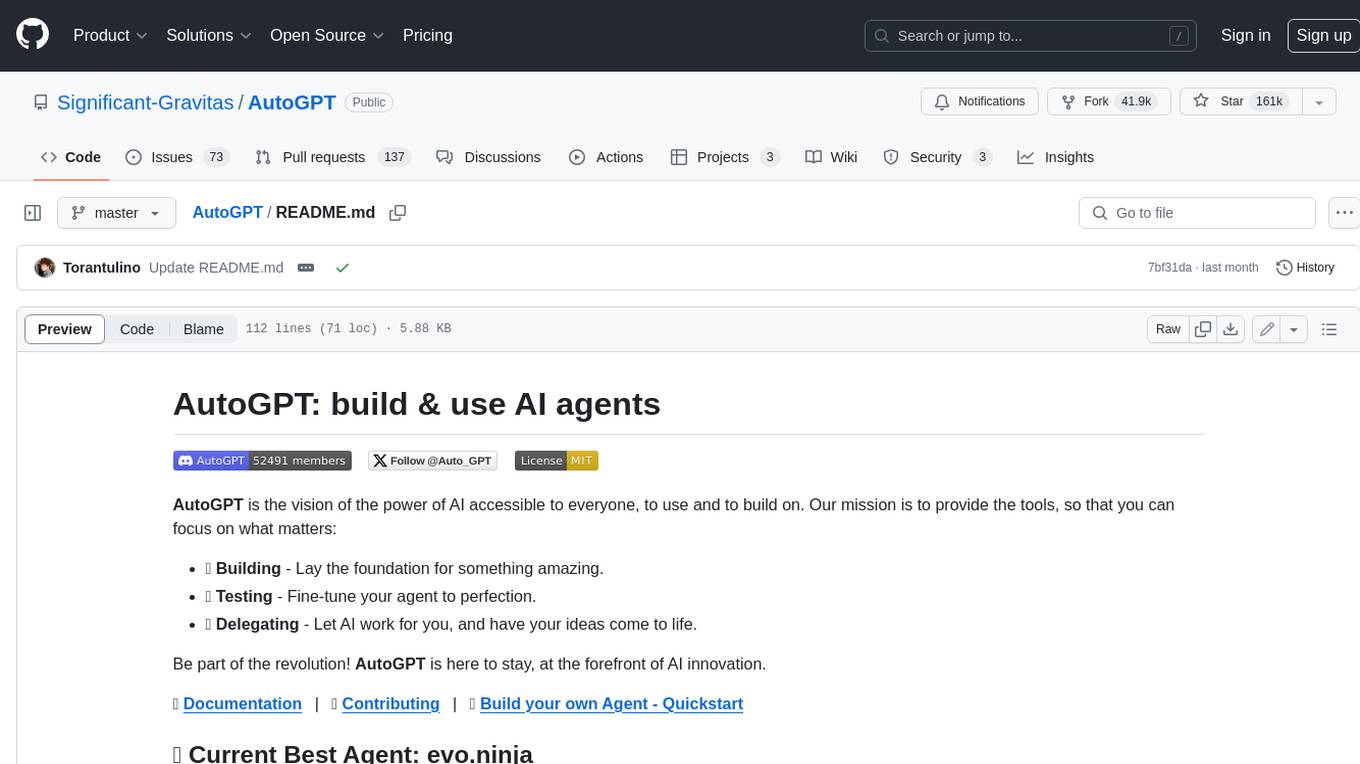
AutoGPT
AutoGPT is a revolutionary tool that empowers everyone to harness the power of AI. With AutoGPT, you can effortlessly build, test, and delegate tasks to AI agents, unlocking a world of possibilities. Our mission is to provide the tools you need to focus on what truly matters: innovation and creativity.
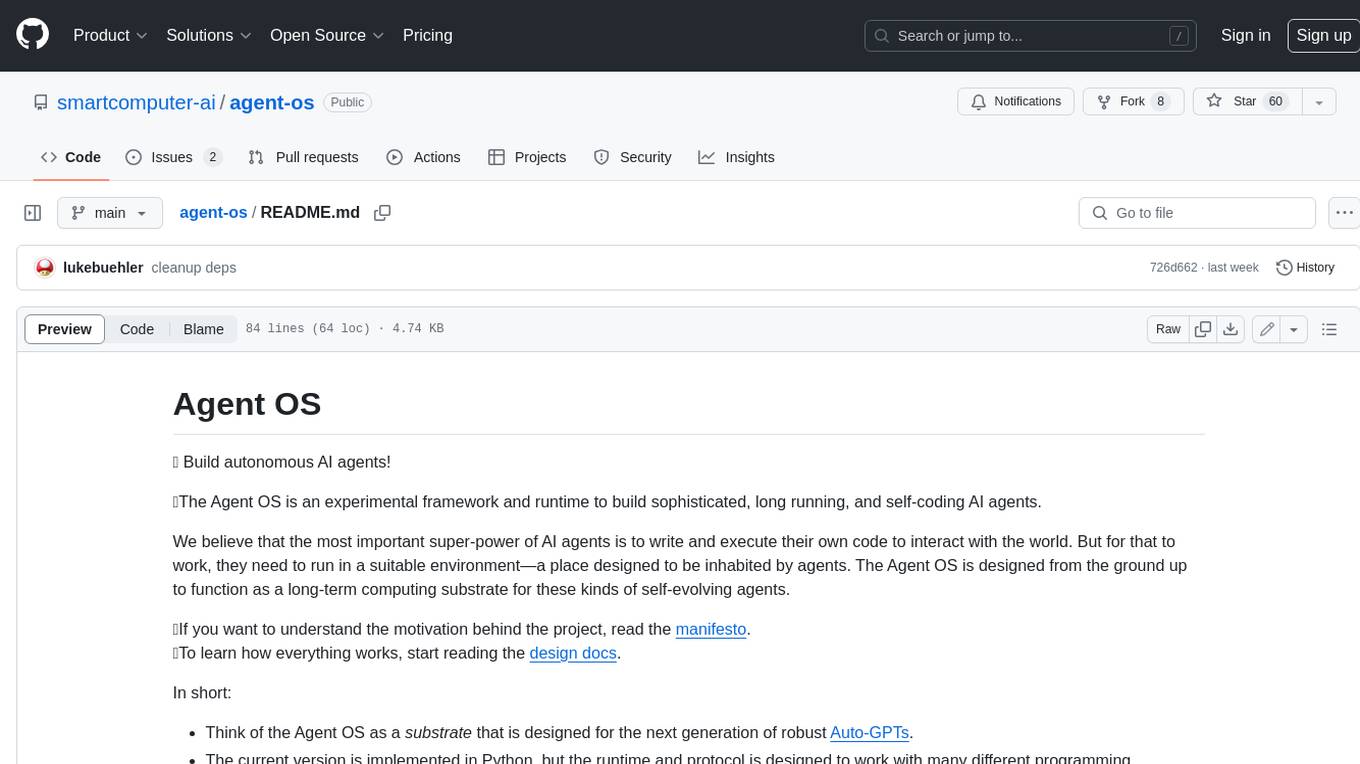
agent-os
The Agent OS is an experimental framework and runtime to build sophisticated, long running, and self-coding AI agents. We believe that the most important super-power of AI agents is to write and execute their own code to interact with the world. But for that to work, they need to run in a suitable environment—a place designed to be inhabited by agents. The Agent OS is designed from the ground up to function as a long-term computing substrate for these kinds of self-evolving agents.
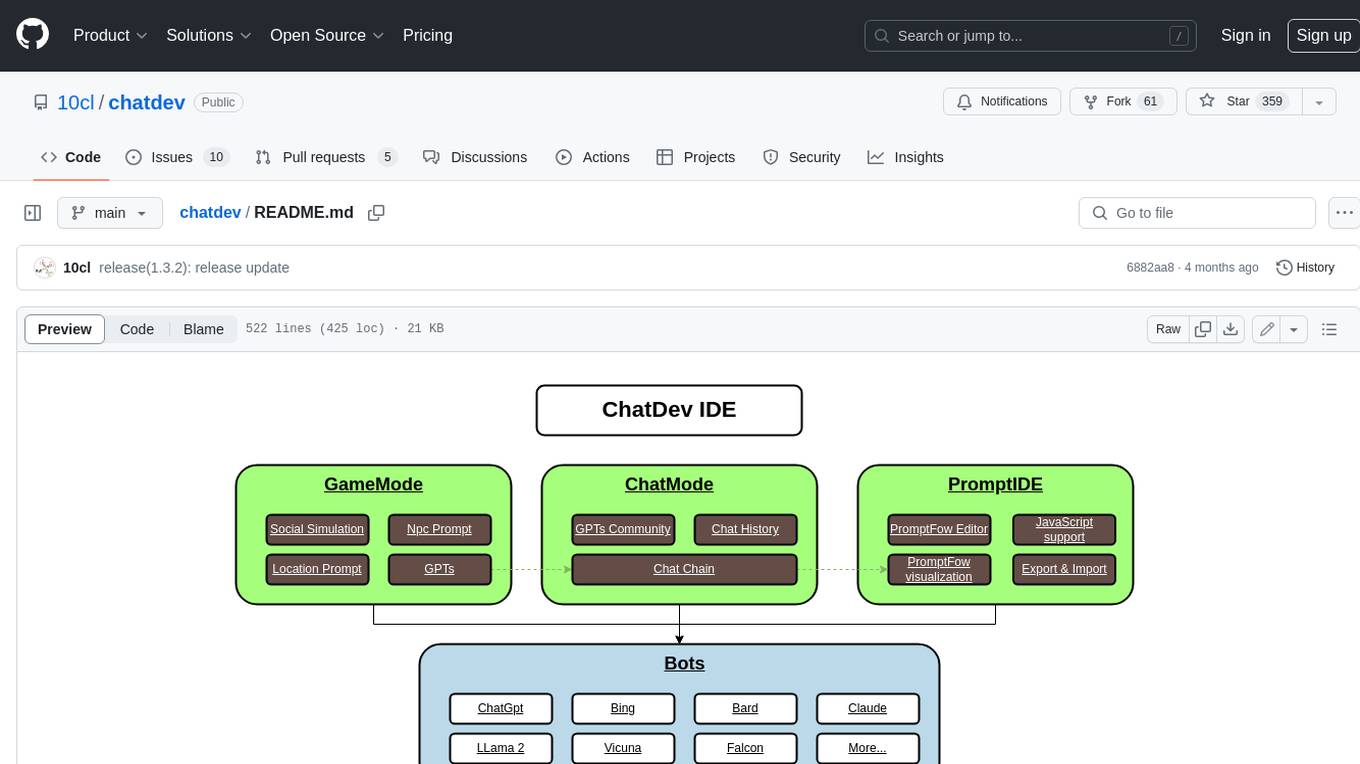
chatdev
ChatDev IDE is a tool for building your AI agent, Whether it's NPCs in games or powerful agent tools, you can design what you want for this platform. It accelerates prompt engineering through **JavaScript Support** that allows implementing complex prompting techniques.
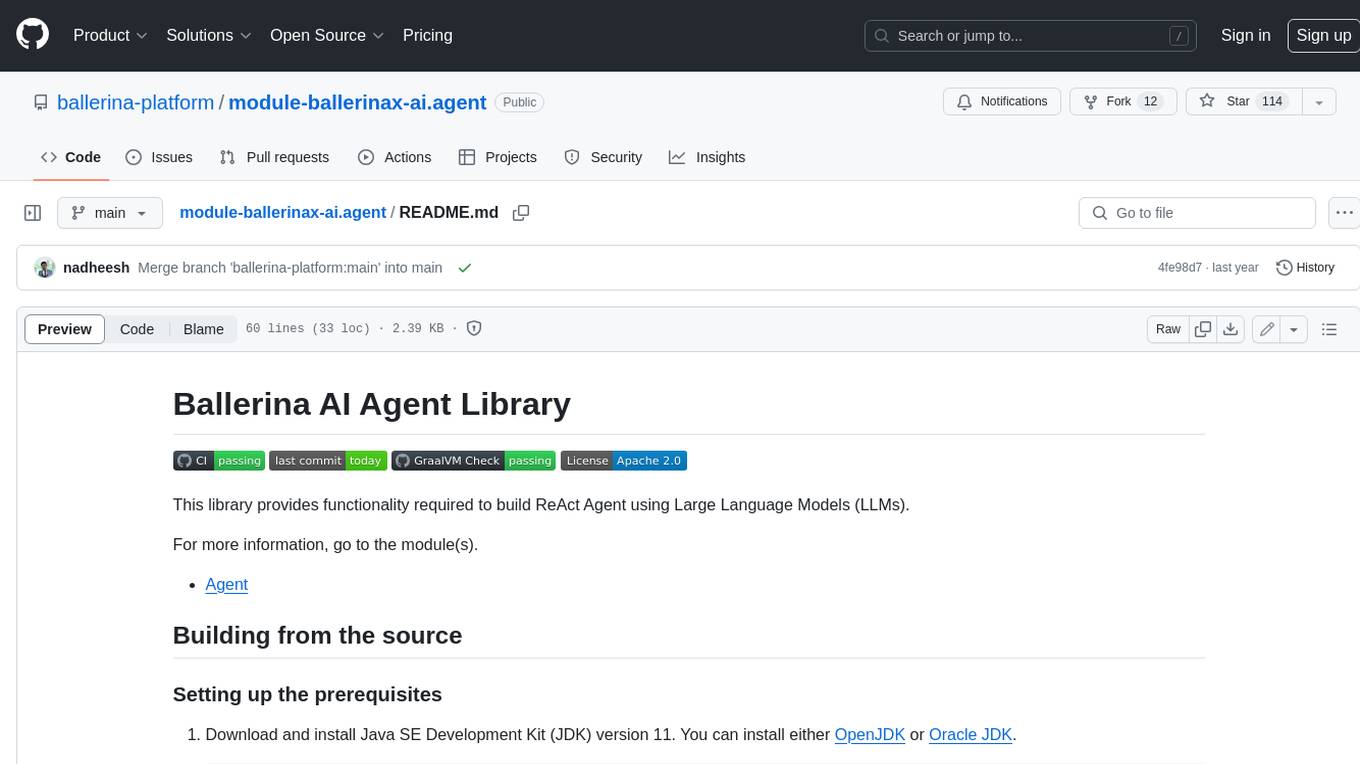
module-ballerinax-ai.agent
This library provides functionality required to build ReAct Agent using Large Language Models (LLMs).
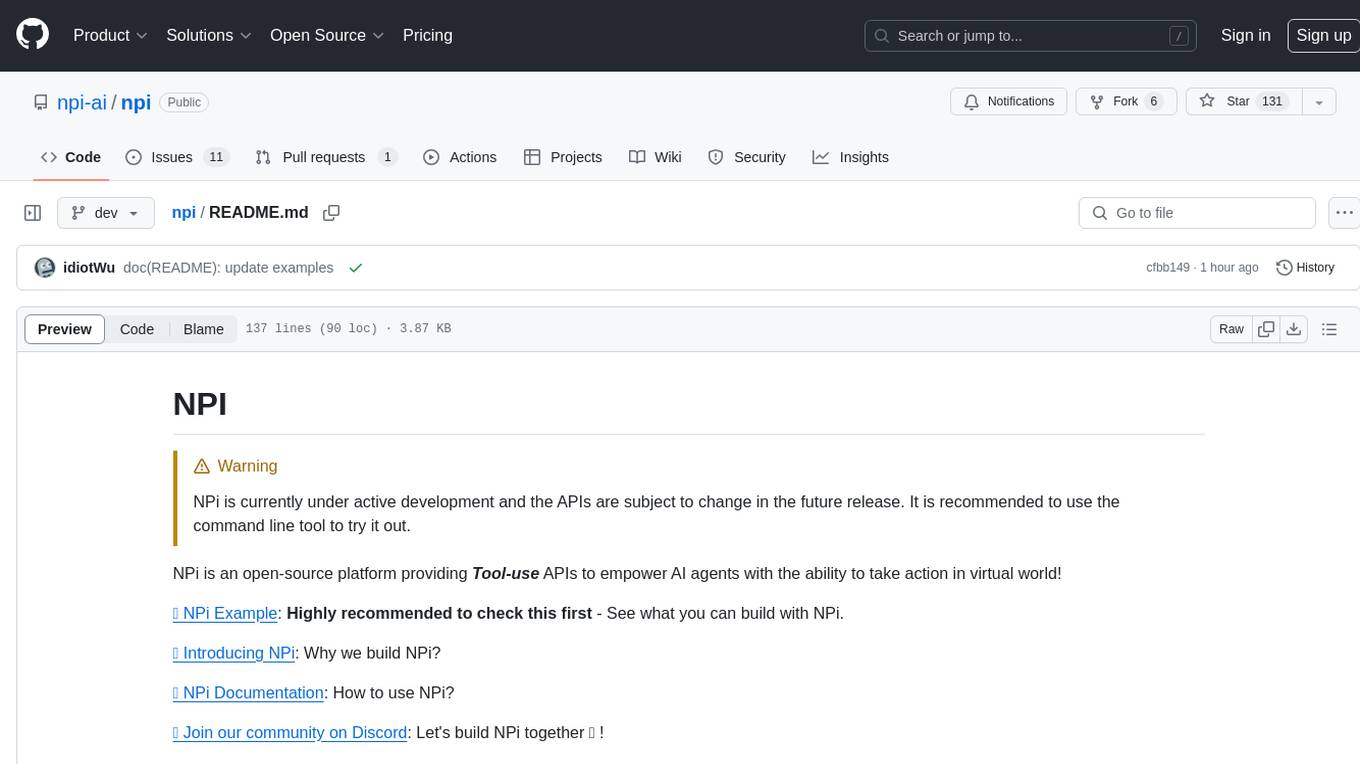
npi
NPi is an open-source platform providing Tool-use APIs to empower AI agents with the ability to take action in the virtual world. It is currently under active development, and the APIs are subject to change in future releases. NPi offers a command line tool for installation and setup, along with a GitHub app for easy access to repositories. The platform also includes a Python SDK and examples like Calendar Negotiator and Twitter Crawler. Join the NPi community on Discord to contribute to the development and explore the roadmap for future enhancements.
ai-agents
The 'ai-agents' repository is a collection of books and resources focused on developing AI agents, including topics such as GPT models, building AI agents from scratch, machine learning theory and practice, and basic methods and tools for data analysis. The repository provides detailed explanations and guidance for individuals interested in learning about and working with AI agents.
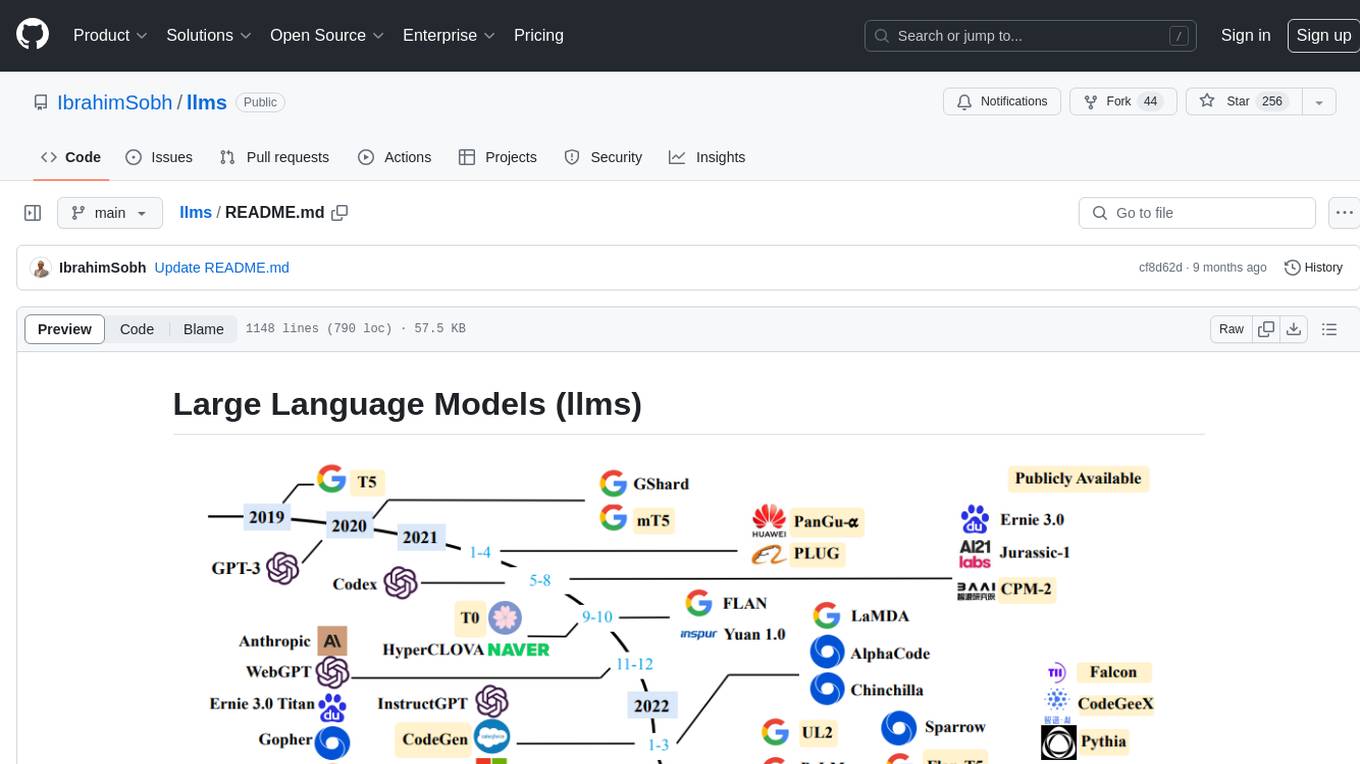
llms
The 'llms' repository is a comprehensive guide on Large Language Models (LLMs), covering topics such as language modeling, applications of LLMs, statistical language modeling, neural language models, conditional language models, evaluation methods, transformer-based language models, practical LLMs like GPT and BERT, prompt engineering, fine-tuning LLMs, retrieval augmented generation, AI agents, and LLMs for computer vision. The repository provides detailed explanations, examples, and tools for working with LLMs.
ai-app
The 'ai-app' repository is a comprehensive collection of tools and resources related to artificial intelligence, focusing on topics such as server environment setup, PyCharm and Anaconda installation, large model deployment and training, Transformer principles, RAG technology, vector databases, AI image, voice, and music generation, and AI Agent frameworks. It also includes practical guides and tutorials on implementing various AI applications. The repository serves as a valuable resource for individuals interested in exploring different aspects of AI technology.
For similar jobs
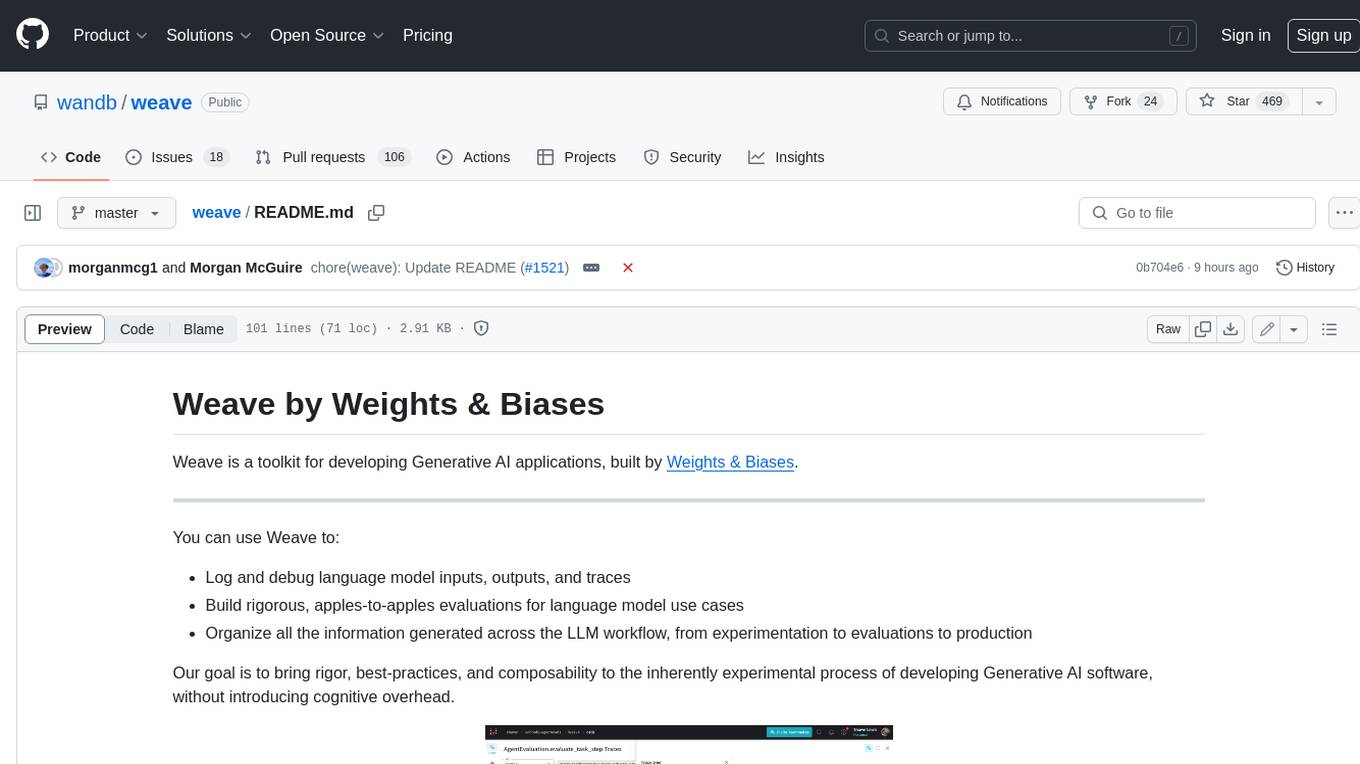
weave
Weave is a toolkit for developing Generative AI applications, built by Weights & Biases. With Weave, you can log and debug language model inputs, outputs, and traces; build rigorous, apples-to-apples evaluations for language model use cases; and organize all the information generated across the LLM workflow, from experimentation to evaluations to production. Weave aims to bring rigor, best-practices, and composability to the inherently experimental process of developing Generative AI software, without introducing cognitive overhead.
LLMStack
LLMStack is a no-code platform for building generative AI agents, workflows, and chatbots. It allows users to connect their own data, internal tools, and GPT-powered models without any coding experience. LLMStack can be deployed to the cloud or on-premise and can be accessed via HTTP API or triggered from Slack or Discord.
VisionCraft
The VisionCraft API is a free API for using over 100 different AI models. From images to sound.
kaito
Kaito is an operator that automates the AI/ML inference model deployment in a Kubernetes cluster. It manages large model files using container images, avoids tuning deployment parameters to fit GPU hardware by providing preset configurations, auto-provisions GPU nodes based on model requirements, and hosts large model images in the public Microsoft Container Registry (MCR) if the license allows. Using Kaito, the workflow of onboarding large AI inference models in Kubernetes is largely simplified.
PyRIT
PyRIT is an open access automation framework designed to empower security professionals and ML engineers to red team foundation models and their applications. It automates AI Red Teaming tasks to allow operators to focus on more complicated and time-consuming tasks and can also identify security harms such as misuse (e.g., malware generation, jailbreaking), and privacy harms (e.g., identity theft). The goal is to allow researchers to have a baseline of how well their model and entire inference pipeline is doing against different harm categories and to be able to compare that baseline to future iterations of their model. This allows them to have empirical data on how well their model is doing today, and detect any degradation of performance based on future improvements.
tabby
Tabby is a self-hosted AI coding assistant, offering an open-source and on-premises alternative to GitHub Copilot. It boasts several key features: * Self-contained, with no need for a DBMS or cloud service. * OpenAPI interface, easy to integrate with existing infrastructure (e.g Cloud IDE). * Supports consumer-grade GPUs.
spear
SPEAR (Simulator for Photorealistic Embodied AI Research) is a powerful tool for training embodied agents. It features 300 unique virtual indoor environments with 2,566 unique rooms and 17,234 unique objects that can be manipulated individually. Each environment is designed by a professional artist and features detailed geometry, photorealistic materials, and a unique floor plan and object layout. SPEAR is implemented as Unreal Engine assets and provides an OpenAI Gym interface for interacting with the environments via Python.
Magick
Magick is a groundbreaking visual AIDE (Artificial Intelligence Development Environment) for no-code data pipelines and multimodal agents. Magick can connect to other services and comes with nodes and templates well-suited for intelligent agents, chatbots, complex reasoning systems and realistic characters.