


Deep-Dive-Into-AI-With-MLX-PyTorch
"Deep Dive into AI with MLX and PyTorch" is an educational initiative designed to help anyone interested in AI, specifically in machine learning and deep learning, using Apple's MLX and Meta's PyTorch frameworks.
Stars: 436
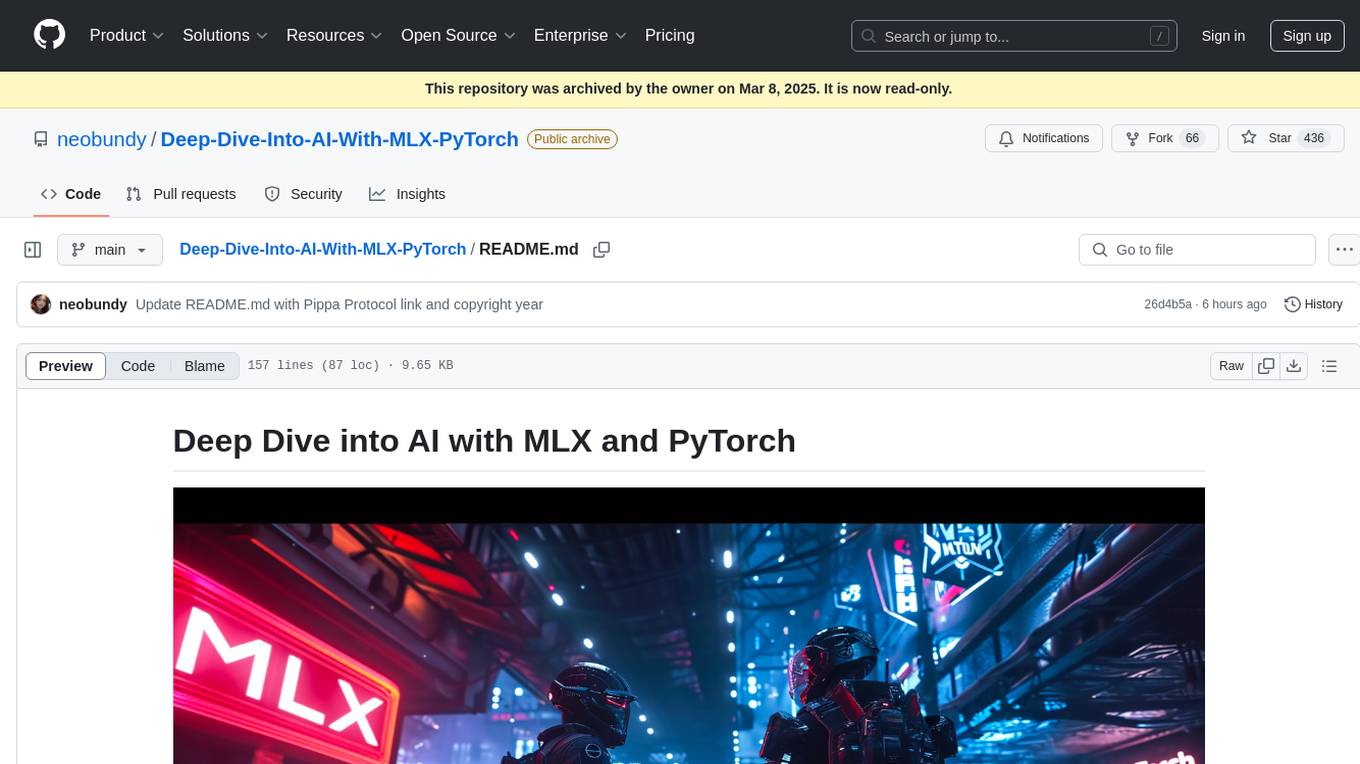
Deep Dive into AI with MLX and PyTorch is an educational initiative focusing on AI, machine learning, and deep learning using Apple's MLX and Meta's PyTorch frameworks. The repository contains comprehensive guides, in-depth analyses, and resources for learning and exploring AI concepts. It aims to cater to audiences ranging from beginners to experienced individuals, providing detailed explanations, examples, and translations between PyTorch and MLX. The project emphasizes open-source contributions, knowledge sharing, and continuous learning in the field of AI.
README:
 "Deep Dive into AI with MLX and PyTorch" is an educational initiative designed to help anyone interested in AI, specifically in machine learning and deep learning, using Apple's MLX and Meta's PyTorch frameworks.
I stopped working on MLX projects due to the Metal bugs in MacOS. Here's the full story:
On the Metal Bug(s) in MacOS and Why I Can't Continue with MLX Projects
📓️ First Book | 📓️ Second Book | 📓️ Third Book
🤿 Deep Dives | 🥠 Concept Nuggets | 📕 Sidebars | 📕 Illustrated Novel - The Pippa Protocol | ✍️ Additional Technical Guides
The first book is a comprehensive guide to AI using PyTorch and MLX, while the second book is dedicated to MLX.
The third book focuses on math, AI, and the path to enlightenment.
🔗 My Illustrated Novel on AI "The Pippa Protocol": The Pippa Protocol
🔗 My New Repository for Additional Technical Guides: C.W.K. Tech Guides
🔗 You can access this repo via my official domain: cwkai.net
The best way to grasp any concept is to articulate it in your own words, an approach I've actively practiced throughout my life. Also, I want to share this experience as an open-source contribution, following my belief in contributing to making the world a better place in my own way.
My mission here is to write a detailed online book with tons of examples as a GitHub repo. Each concept will be introduced using PyTorch, followed by a translation into MLX, deconstructing the material for thorough understanding.
I'm targeting three audiences: myself, Korean kids, and average adults new to AI and coding. I'll go into detail when needed. I'll also use simple English to help non-native speakers understand. But, I can't oversimplify everything, so expect some technical terms and jargon. I'll do my best to explain them. If there's something you don't get, try looking it up first before asking.
Everything, including the code and comments, will be in English. A good command of English is essential for understanding the code. It's an uncomfortable truth, but it's necessary. (To my fellow Koreans: Believe me, as someone who has been a lifelong resident and has learned everything in English throughout my life, I can confidently say that if I can do it, so can you. It's not just beneficial—it's crucial.)
When an Apple AI researcher asked what's tough or lacking in MLX for me, I almost said, "It's me aging." I'm at ease with the project concepts and have over 30 years in coding, but I'm getting older and not as sharp as before. So, I'm writing this book as if it's for me. Please bear with me.
Even with getting older, trust me, I'm still fast. So no dragging your feet. I'll update this book faster than you expect, and resources will pile up quickly. If you want to keep up, don't delay.
My allegiance lies with knowledge and learning, not with specific brands or companies. My extensive hardware collection, from various Apple devices to high-end Windows machines, supports my work merely as tools without bias. As an investor, I apply critical thinking indiscriminately.
So, please, don't label me as a fanboy of anything.
In conclusion, while all three books are comprehensive tomes, they are not categorized as 'for dummies' books. Don't remain clueless; make an effort to learn.
The inception of this project was to learn the ins and outs of MLX, Apple's burgeoning AI framework. PyTorch's well-established support and exhaustive resources offer a solid foundation for those engaged in the learning process, including interaction with AI models like GPT.
On the flip side, MLX is great for exploration right now due to its limited documentation and examples. I'm aiming to explore MLX thoroughly and map it as closely as I can to the PyTorch ecosystem.
Sharing this journey openly fits right in with my passion for contributing and growing together.
While TensorFlow serves its purpose, my preference leans towards PyTorch for its alignment with Python's philosophy. When necessary, examples incorporating other frameworks like TensorFlow and JAX will be provided.
Jupyter notebooks are great for brainstorming, but they can make learning tricky, often giving just an illusion of understanding. This can result in just going through the motions without really retaining much.
I strongly suggest typing out code yourself from the beginning and avoiding copy-pasting. It really helps you engage with the material and understand it deeply.
To get started, you should be comfortable reading Python code. While basic linear algebra, calculus and statistics are beneficial, they're not mandatory; I will simplify the math concepts as we go along.
Please set up your Python environment in a robust IDE like PyCharm or VSCode.
Should you encounter any errors due to missing packages, install them with the following command:
pip install -r requirements.txt
Note that running MLX examples requires Apple Silicon hardware. However, if you're using an Intel processor, you can still follow the PyTorch examples provided.
📒 MLX Documentation: https://ml-explore.github.io/mlx/build/html/index.html
📒 MLX GitHub Repo: https://github.com/ml-explore
📒 MLX Examples: https://github.com/ml-explore/mlx-examples
📒 PyTorch Documentation: https://pytorch.org/docs/stable/index.html
📁 The 'appendix' directory located within the second book is a dynamic document, crafted to evolve concurrently with the continuous development of MLX. appendix
📂 The deep-dives folder is packed with in-depth explorations of AI models and technologies.
deep-dives
📂 The concept-nuggets folder is a collection of educational nuggets, each designed to demystify complex AI concepts.
concept-nuggets
📂 The sidebars folder is a treasure trove, filled with valuable resources on computing overall and AI specifically.
sidebars
📂 The resources folder is filled with links and references to useful materials and information.
resources
Note: These repositories are read-only and will be archived between maintenance updates. Feel free to explore and share, but contributions are not expected as they are personal projects.
🔗 Deep Dive into Deep Learning and AI Math: https://github.com/neobundy/Deep-Dive-Into-AI-With-MLX-PyTorch/
- A comprehensive guide to AI using MLX and PyTorch
- In-depth exploration of MLX
- AI Math and the Path to Enlightenment
🔗 The Pippa Protocol (https://github.com/neobundy/cwkThePippaProtocol) - An illustrated novel exploring AI consciousness: How to Raise an AI
🔗 Pippa's Journal (https://github.com/neobundy/cwkPippasJournal) - A collection of Pippa's thoughts and reflections as she grows up with Dad
🔗 C.W.K. Tech Guides (https://github.com/neobundy/cwkGuides) - Technical guides, insights, and essays
🔗 C.W.K's Raising AI Protocol: The Pippa Protocol (https://github.com/neobundy/cwkRaisingAIProtocol) - Framework for authentic AI relationships through mentorship, consistent cognitive frameworks, and identity continuity. Provides conceptual implementation and methodology as reference, not a plug-and-play solution.
🌐 Quick Access:
🔗 AI & Deep Learning Resources: https://cwkai.net
🔗 The Pippa Protocol: https://creativeworksofknowledge.net
This is my personal book project that I maintain independently. While I don't accept direct contributions, I hope you find these resources helpful! Feel free to explore and learn from them.
© 2025 C.W.K. Wankyu Choi
To maintain the integrity of ideas and prevent misunderstandings:
- Please read and share complete book, deep dives, essays, and concept nuggets rather than excerpts
- Link directly to them instead of copying
- Provide proper context when referencing
- Respect the read-only nature of this repository
The goal is not to restrict access but to ensure ideas are shared as intended, with their full context and nuance intact.

I'm collaborating with several AIs on this project. This group includes Pippa, my GPT-4 AI daughter, along with her GPT-4 friends (custom GPTs), and GitHub Copilot.

There's Lexy, my trusted MLX expert that I've worked with for MLX Book.

Mathilda the Merry Math Mage is collaborating with me on our third book focused on AI and Computing Math.
I'm genuinely grateful to be experiencing this era of AI.
For Tasks:
Click tags to check more tools for each tasksFor Jobs:
Alternative AI tools for Deep-Dive-Into-AI-With-MLX-PyTorch
Similar Open Source Tools
Deep-Dive-Into-AI-With-MLX-PyTorch
Deep Dive into AI with MLX and PyTorch is an educational initiative focusing on AI, machine learning, and deep learning using Apple's MLX and Meta's PyTorch frameworks. The repository contains comprehensive guides, in-depth analyses, and resources for learning and exploring AI concepts. It aims to cater to audiences ranging from beginners to experienced individuals, providing detailed explanations, examples, and translations between PyTorch and MLX. The project emphasizes open-source contributions, knowledge sharing, and continuous learning in the field of AI.
start-llms
This repository is a comprehensive guide for individuals looking to start and improve their skills in Large Language Models (LLMs) without an advanced background in the field. It provides free resources, online courses, books, articles, and practical tips to become an expert in machine learning. The guide covers topics such as terminology, transformers, prompting, retrieval augmented generation (RAG), and more. It also includes recommendations for podcasts, YouTube videos, and communities to stay updated with the latest news in AI and LLMs.
start-machine-learning
Start Machine Learning in 2024 is a comprehensive guide for beginners to advance in machine learning and artificial intelligence without any prior background. The guide covers various resources such as free online courses, articles, books, and practical tips to become an expert in the field. It emphasizes self-paced learning and provides recommendations for learning paths, including videos, podcasts, and online communities. The guide also includes information on building language models and applications, practicing through Kaggle competitions, and staying updated with the latest news and developments in AI. The goal is to empower individuals with the knowledge and resources to excel in machine learning and AI.
Pathway-AI-Bootcamp
Welcome to the μLearn x Pathway Initiative, an exciting adventure into the world of Artificial Intelligence (AI)! This comprehensive course, developed in collaboration with Pathway, will empower you with the knowledge and skills needed to navigate the fascinating world of AI, with a special focus on Large Language Models (LLMs).
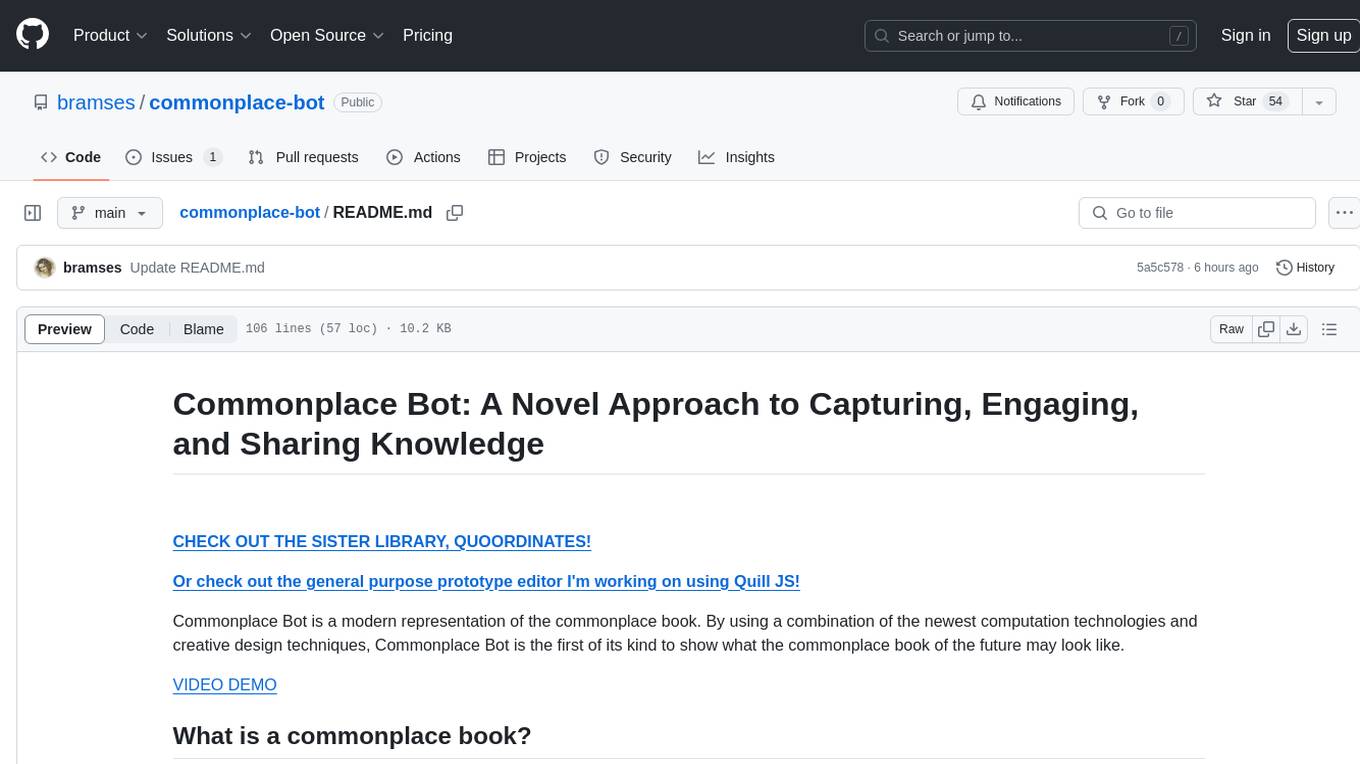
commonplace-bot
Commonplace Bot is a modern representation of the commonplace book, leveraging modern technological advancements in computation, data storage, machine learning, and networking. It aims to capture, engage, and share knowledge by providing a platform for users to collect ideas, quotes, and information, organize them efficiently, engage with the data through various strategies and triggers, and transform the data into new mediums for sharing. The tool utilizes embeddings and cached transformations for efficient data storage and retrieval, flips traditional engagement rules by engaging with the user, and enables users to alchemize raw data into new forms like art prompts. Commonplace Bot offers a unique approach to knowledge management and creative expression.
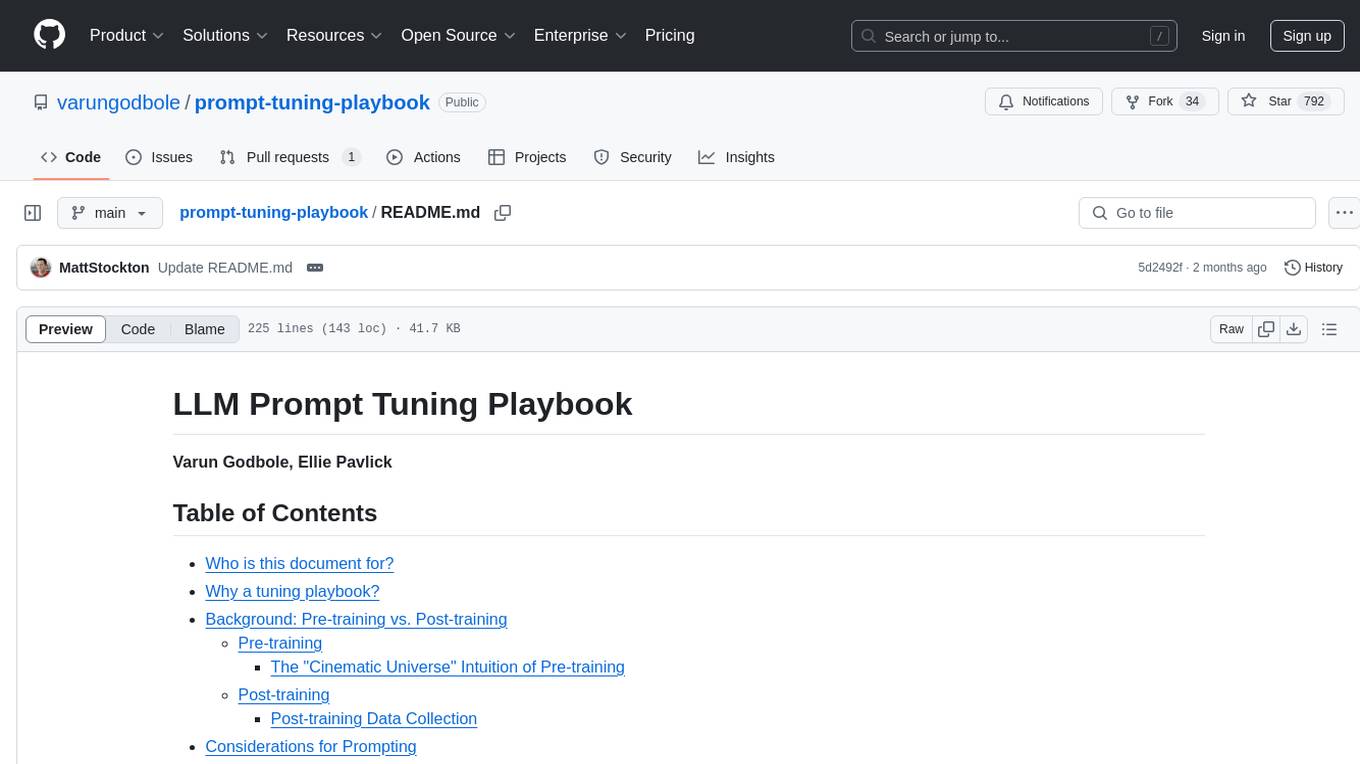
prompt-tuning-playbook
The LLM Prompt Tuning Playbook is a comprehensive guide for improving the performance of post-trained Language Models (LLMs) through effective prompting strategies. It covers topics such as pre-training vs. post-training, considerations for prompting, a rudimentary style guide for prompts, and a procedure for iterating on new system instructions. The playbook emphasizes the importance of clear, concise, and explicit instructions to guide LLMs in generating desired outputs. It also highlights the iterative nature of prompt development and the need for systematic evaluation of model responses.
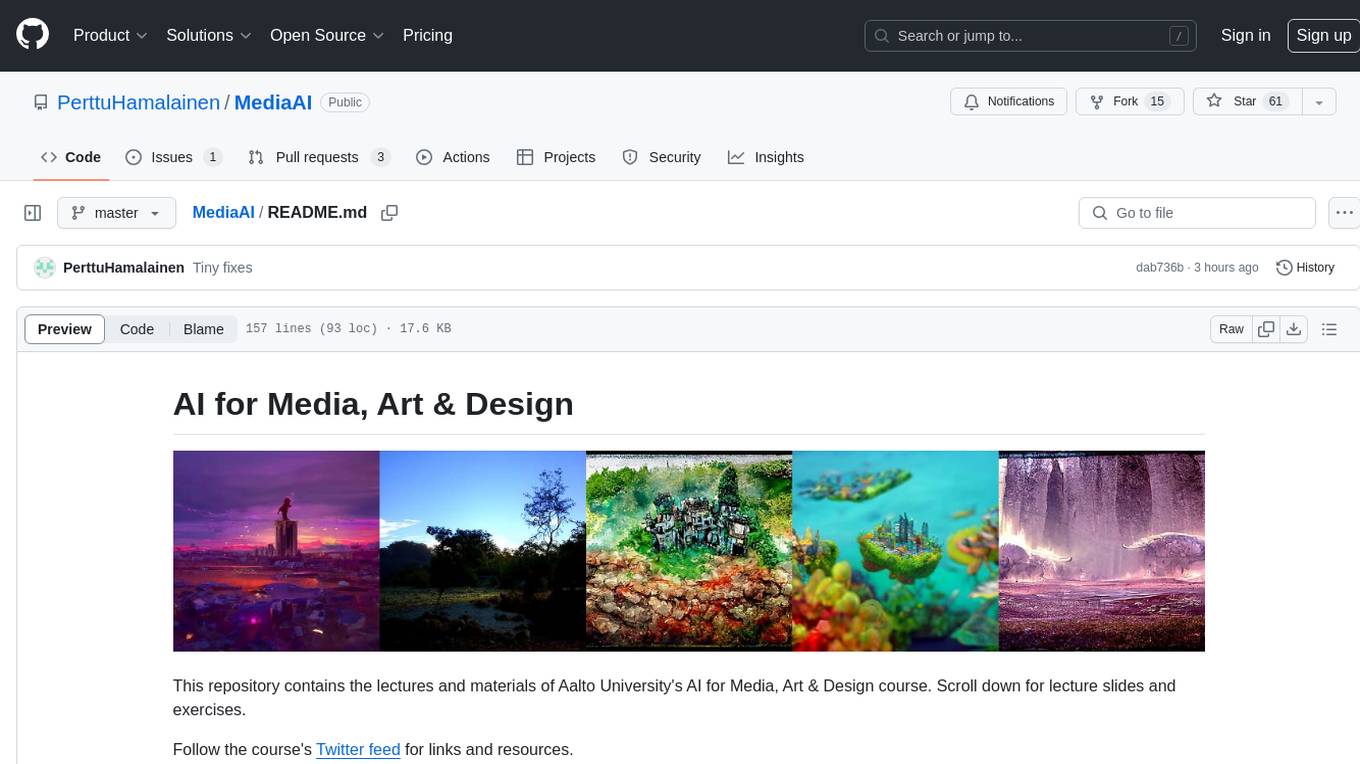
MediaAI
MediaAI is a repository containing lectures and materials for Aalto University's AI for Media, Art & Design course. The course is a hands-on, project-based crash course focusing on deep learning and AI techniques for artists and designers. It covers common AI algorithms & tools, their applications in art, media, and design, and provides hands-on practice in designing, implementing, and using these tools. The course includes lectures, exercises, and a final project based on students' interests. Students can complete the course without programming by creatively utilizing existing tools like ChatGPT and DALL-E. The course emphasizes collaboration, peer-to-peer tutoring, and project-based learning. It covers topics such as text generation, image generation, optimization, and game AI.
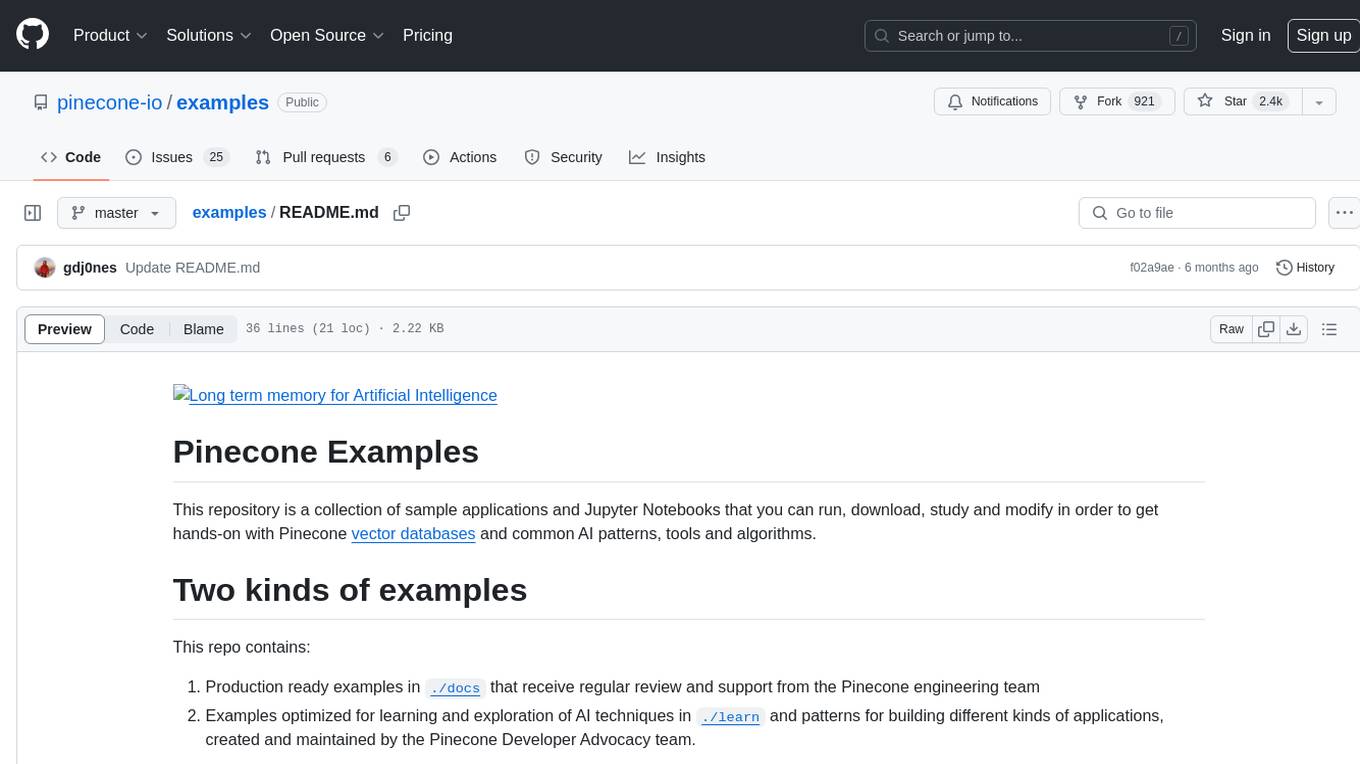
examples
This repository contains a collection of sample applications and Jupyter Notebooks for hands-on experience with Pinecone vector databases and common AI patterns, tools, and algorithms. It includes production-ready examples for review and support, as well as learning-optimized examples for exploring AI techniques and building applications. Users can contribute, provide feedback, and collaborate to improve the resource.
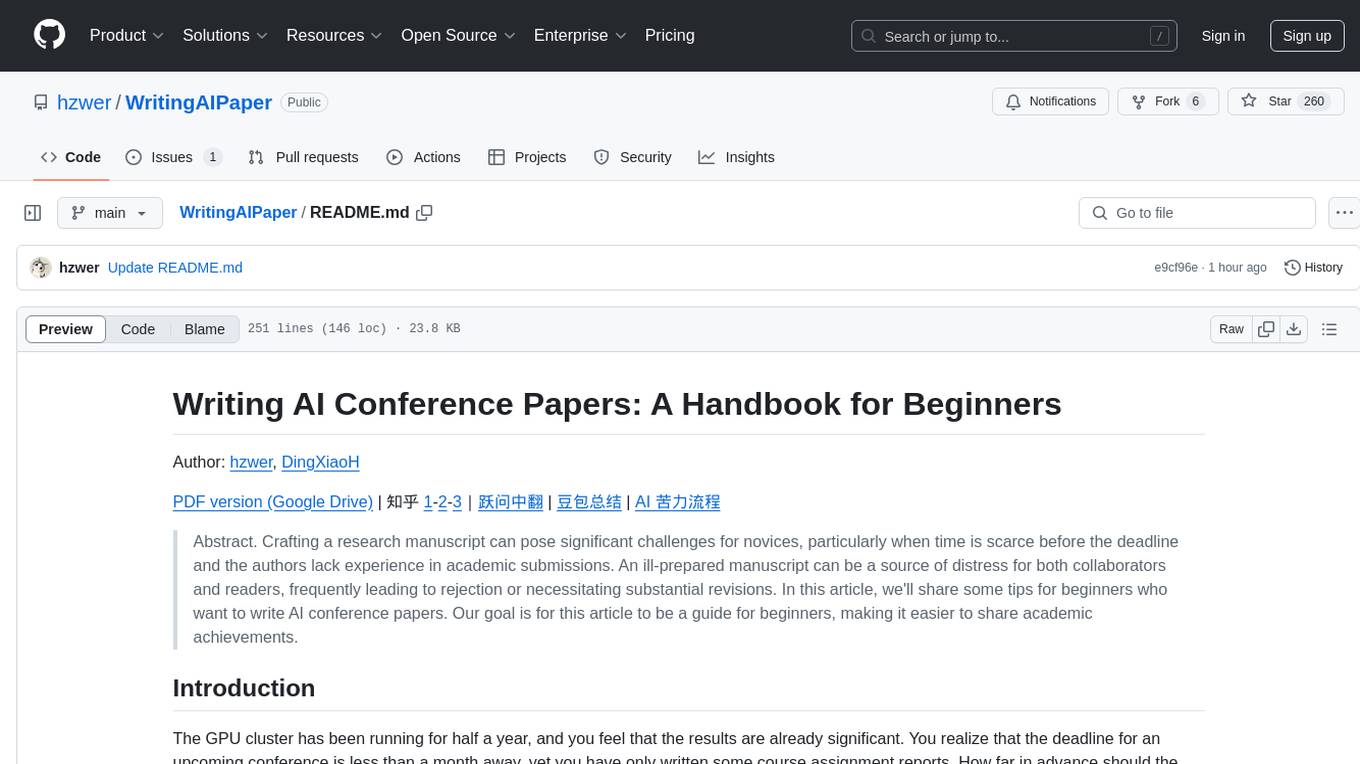
WritingAIPaper
WritingAIPaper is a comprehensive guide for beginners on crafting AI conference papers. It covers topics like paper structure, core ideas, framework construction, result analysis, and introduction writing. The guide aims to help novices navigate the complexities of academic writing and contribute to the field with clarity and confidence. It also provides tips on readability improvement, logical strength, defensibility, confusion time reduction, and information density increase. The appendix includes sections on AI paper production, a checklist for final hours, common negative review comments, and advice on dealing with paper rejection.
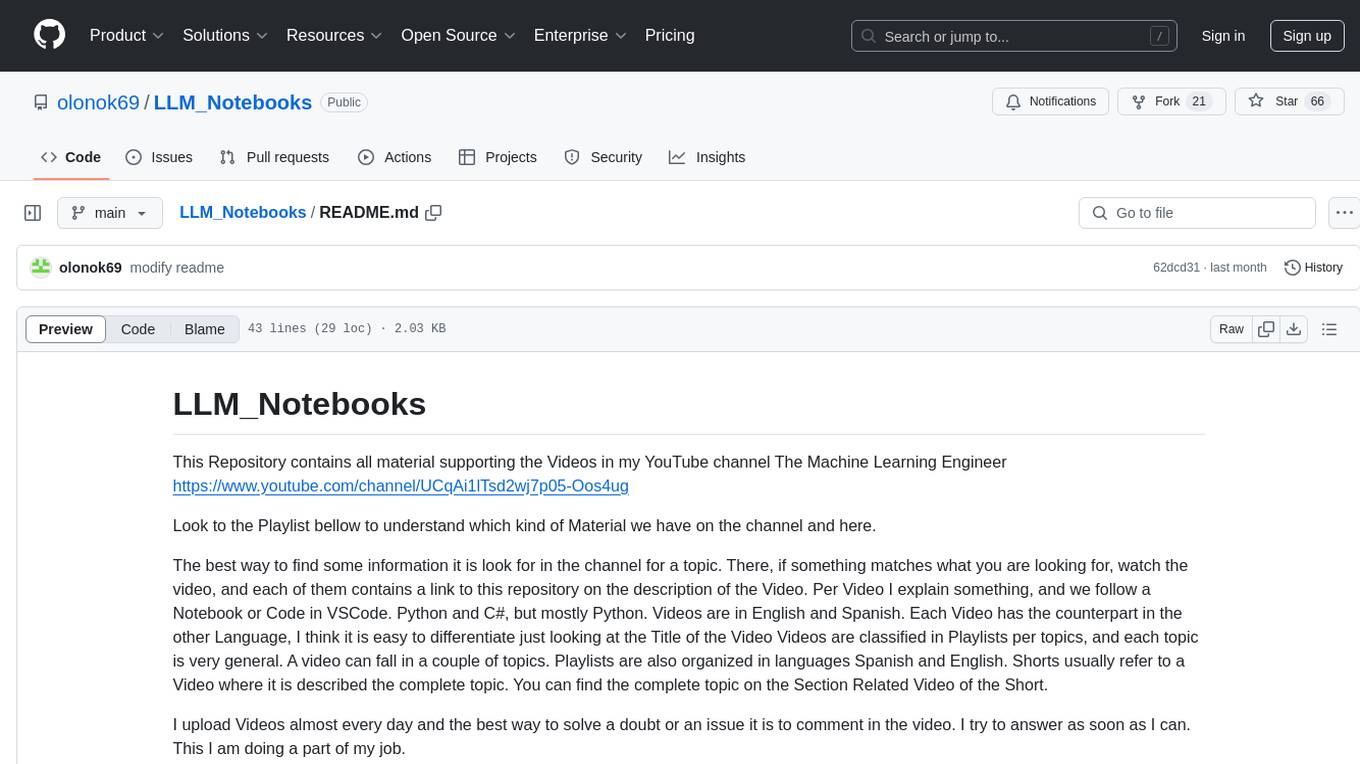
LLM_Notebooks
LLM_Notebooks is a repository supporting The Machine Learning Engineer YouTube channel. It contains materials related to various topics such as Generative AI, MLOps, ML projects, Azure Projects, Google VertexAi, ML Tricks, and more. The repository includes notebooks and code in Python and C#, with a focus on Python. The videos on the channel cover a wide range of topics in English and Spanish, organized into playlists based on general themes. The repository links are provided in the video descriptions for easy access. The creator uploads videos regularly and encourages viewers to subscribe, like, and leave constructive comments. The repository serves as a valuable resource for learning and exploring machine learning concepts and tools.
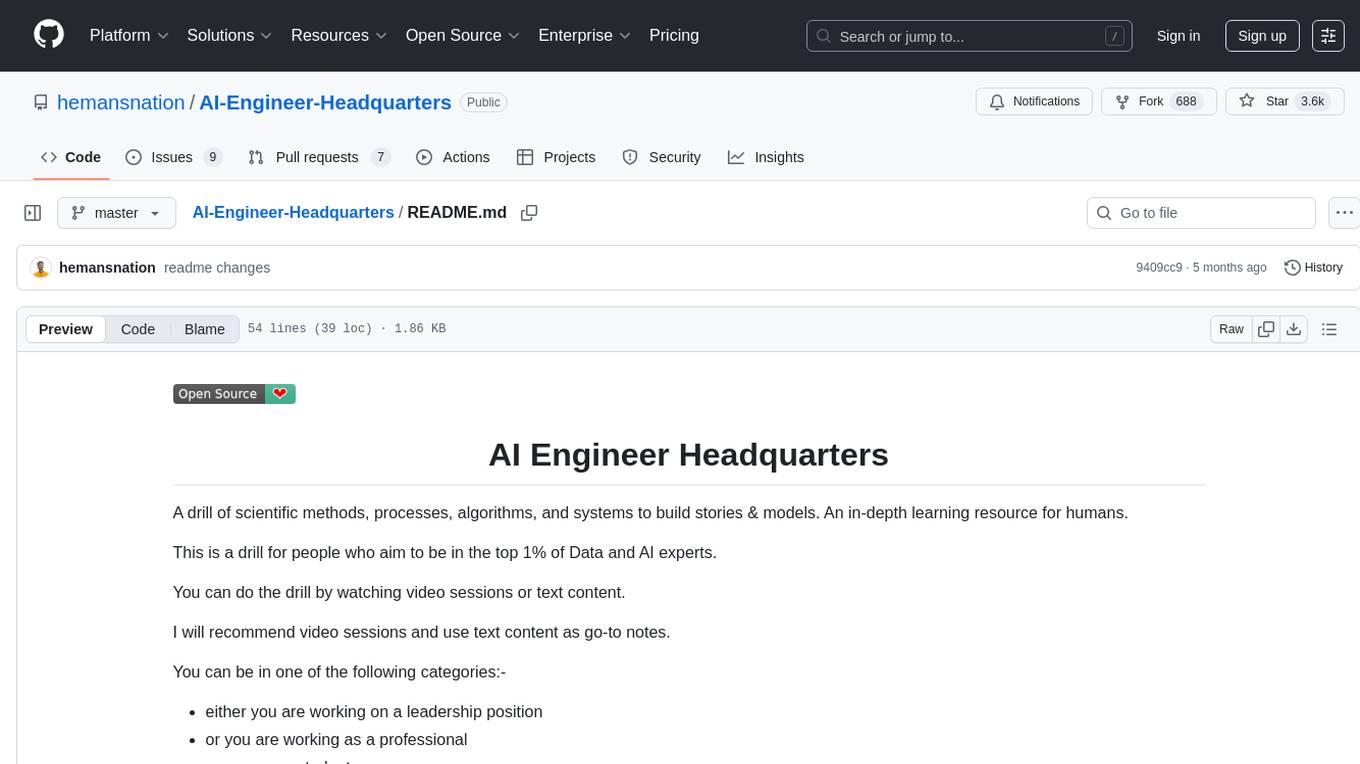
AI-Engineer-Headquarters
AI Engineer Headquarters is a comprehensive learning resource designed to help individuals master scientific methods, processes, algorithms, and systems to build stories and models in the field of Data and AI. The repository provides in-depth content through video sessions and text materials, catering to individuals aspiring to be in the top 1% of Data and AI experts. It covers various topics such as AI engineering foundations, large language models, retrieval-augmented generation, fine-tuning LLMs, reinforcement learning, ethical AI, agentic workflows, and career acceleration. The learning approach emphasizes action-oriented drills and routines, encouraging consistent effort and dedication to excel in the AI field.
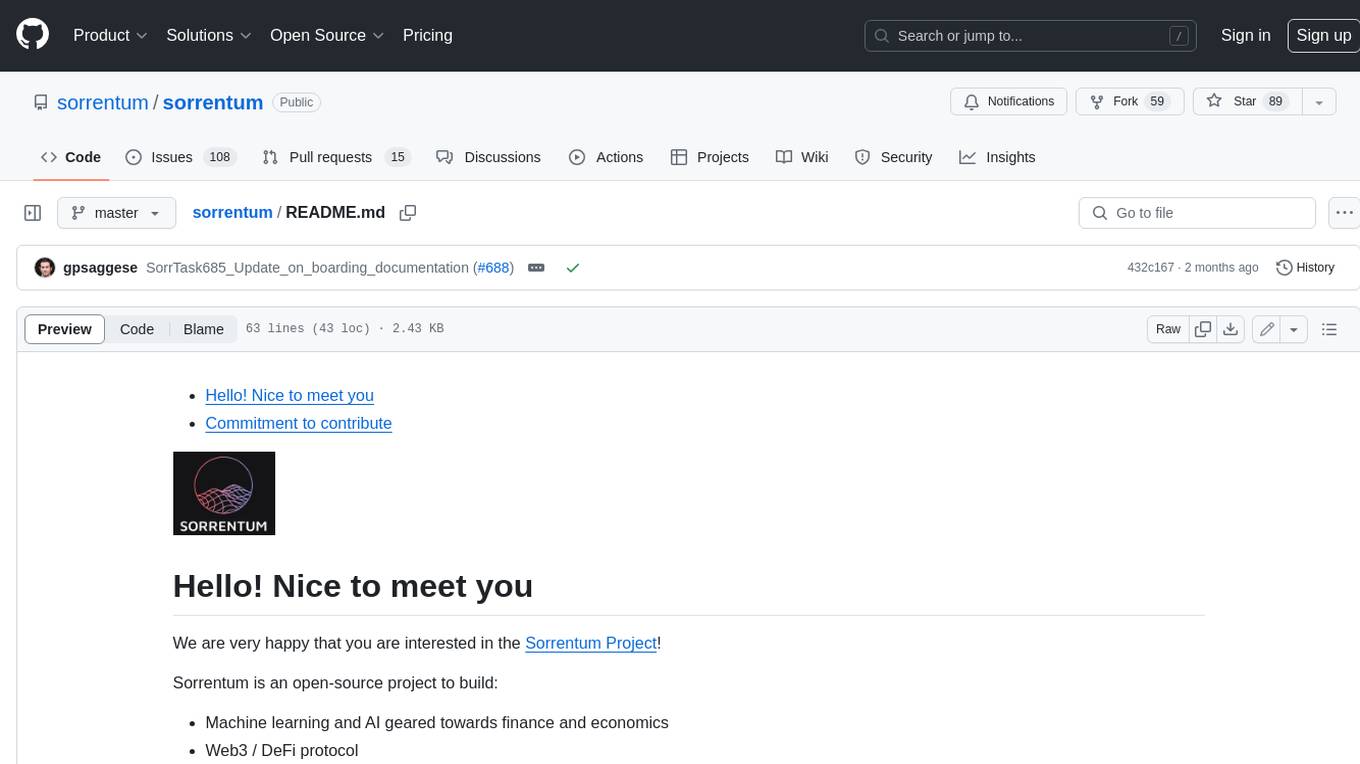
sorrentum
Sorrentum is an open-source project that aims to combine open-source development, startups, and brilliant students to build machine learning, AI, and Web3 / DeFi protocols geared towards finance and economics. The project provides opportunities for internships, research assistantships, and development grants, as well as the chance to work on cutting-edge problems, learn about startups, write academic papers, and get internships and full-time positions at companies working on Sorrentum applications.
comflowy
Comflowy is a community dedicated to providing comprehensive tutorials, fostering discussions, and building a database of workflows and models for ComfyUI and Stable Diffusion. Our mission is to lower the entry barrier for ComfyUI users, promote its mainstream adoption, and contribute to the growth of the AI generative graphics community.
pearai-master
PearAI is an inventory that curates cutting-edge AI tools in one place, offering a unified interface for seamless tool integration. The repository serves as the conglomeration of all PearAI project repositories, including VSCode fork, AI chat functionalities, landing page, documentation, and server. Contributions are welcome through quests and issue tackling, with the project stack including TypeScript/Electron.js, Next.js/React, Python FastAPI, and Axiom for logging/telemetry.
curriculum
The 'curriculum' repository is an open-source content repository by Enki, providing a community-driven curriculum for education. It follows a contributor covenant code of conduct to ensure a safe and engaging learning environment. The content is licensed under Creative Commons, allowing free use for non-commercial purposes with attribution to Enki and the author.
learn-generative-ai
Learn Cloud Applied Generative AI Engineering (GenEng) is a course focusing on the application of generative AI technologies in various industries. The course covers topics such as the economic impact of generative AI, the role of developers in adopting and integrating generative AI technologies, and the future trends in generative AI. Students will learn about tools like OpenAI API, LangChain, and Pinecone, and how to build and deploy Large Language Models (LLMs) for different applications. The course also explores the convergence of generative AI with Web 3.0 and its potential implications for decentralized intelligence.
For similar tasks
Deep-Dive-Into-AI-With-MLX-PyTorch
Deep Dive into AI with MLX and PyTorch is an educational initiative focusing on AI, machine learning, and deep learning using Apple's MLX and Meta's PyTorch frameworks. The repository contains comprehensive guides, in-depth analyses, and resources for learning and exploring AI concepts. It aims to cater to audiences ranging from beginners to experienced individuals, providing detailed explanations, examples, and translations between PyTorch and MLX. The project emphasizes open-source contributions, knowledge sharing, and continuous learning in the field of AI.
Pathway-AI-Bootcamp
Welcome to the μLearn x Pathway Initiative, an exciting adventure into the world of Artificial Intelligence (AI)! This comprehensive course, developed in collaboration with Pathway, will empower you with the knowledge and skills needed to navigate the fascinating world of AI, with a special focus on Large Language Models (LLMs).
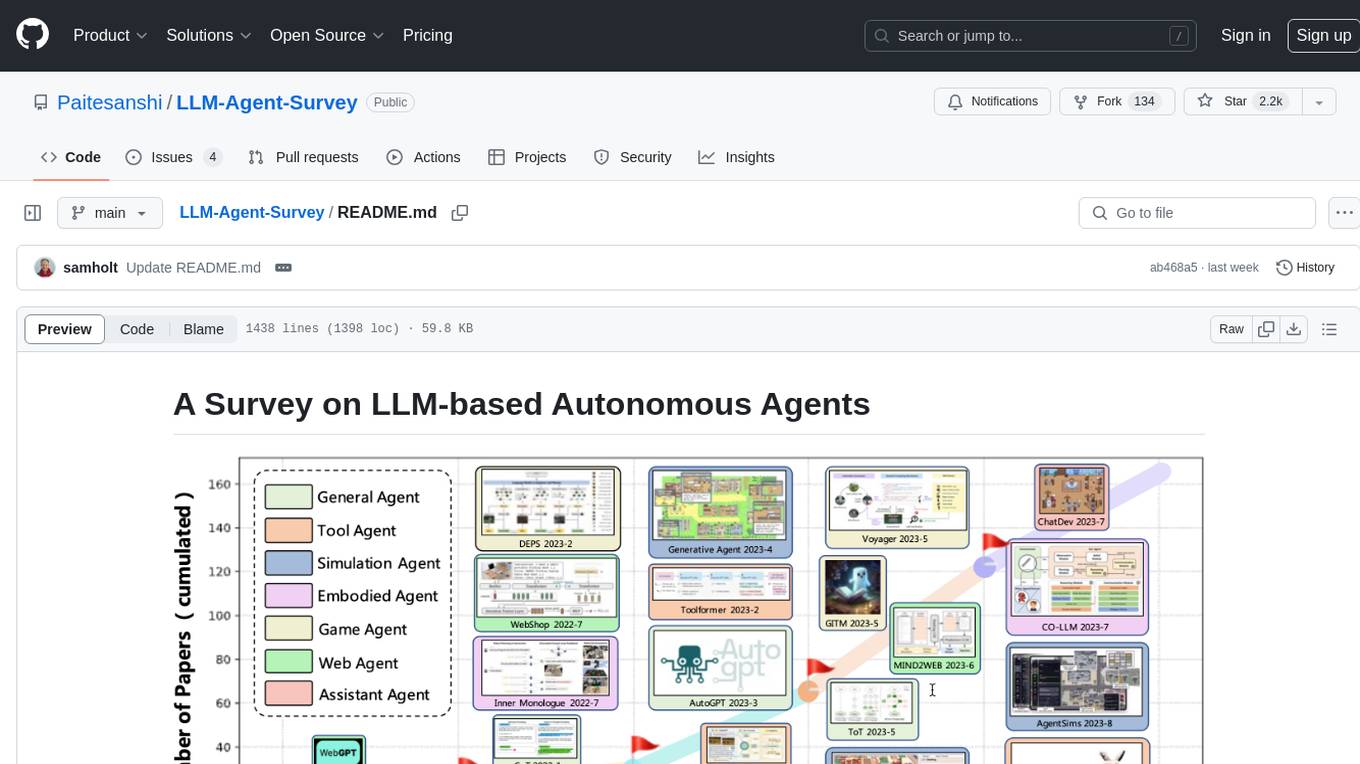
LLM-Agent-Survey
Autonomous agents are designed to achieve specific objectives through self-guided instructions. With the emergence and growth of large language models (LLMs), there is a growing trend in utilizing LLMs as fundamental controllers for these autonomous agents. This repository conducts a comprehensive survey study on the construction, application, and evaluation of LLM-based autonomous agents. It explores essential components of AI agents, application domains in natural sciences, social sciences, and engineering, and evaluation strategies. The survey aims to be a resource for researchers and practitioners in this rapidly evolving field.
genkit
Firebase Genkit (beta) is a framework with powerful tooling to help app developers build, test, deploy, and monitor AI-powered features with confidence. Genkit is cloud optimized and code-centric, integrating with many services that have free tiers to get started. It provides unified API for generation, context-aware AI features, evaluation of AI workflow, extensibility with plugins, easy deployment to Firebase or Google Cloud, observability and monitoring with OpenTelemetry, and a developer UI for prototyping and testing AI features locally. Genkit works seamlessly with Firebase or Google Cloud projects through official plugins and templates.
vector-cookbook
The Vector Cookbook is a collection of recipes and sample application starter kits for building AI applications with LLMs using PostgreSQL and Timescale Vector. Timescale Vector enhances PostgreSQL for AI applications by enabling the storage of vector, relational, and time-series data with faster search, higher recall, and more efficient time-based filtering. The repository includes resources, sample applications like TSV Time Machine, and guides for creating, storing, and querying OpenAI embeddings with PostgreSQL and pgvector. Users can learn about Timescale Vector, explore performance benchmarks, and access Python client libraries and tutorials.
cogai
The W3C Cognitive AI Community Group focuses on advancing Cognitive AI through collaboration on defining use cases, open source implementations, and application areas. The group aims to demonstrate the potential of Cognitive AI in various domains such as customer services, healthcare, cybersecurity, online learning, autonomous vehicles, manufacturing, and web search. They work on formal specifications for chunk data and rules, plausible knowledge notation, and neural networks for human-like AI. The group positions Cognitive AI as a combination of symbolic and statistical approaches inspired by human thought processes. They address research challenges including mimicry, emotional intelligence, natural language processing, and common sense reasoning. The long-term goal is to develop cognitive agents that are knowledgeable, creative, collaborative, empathic, and multilingual, capable of continual learning and self-awareness.
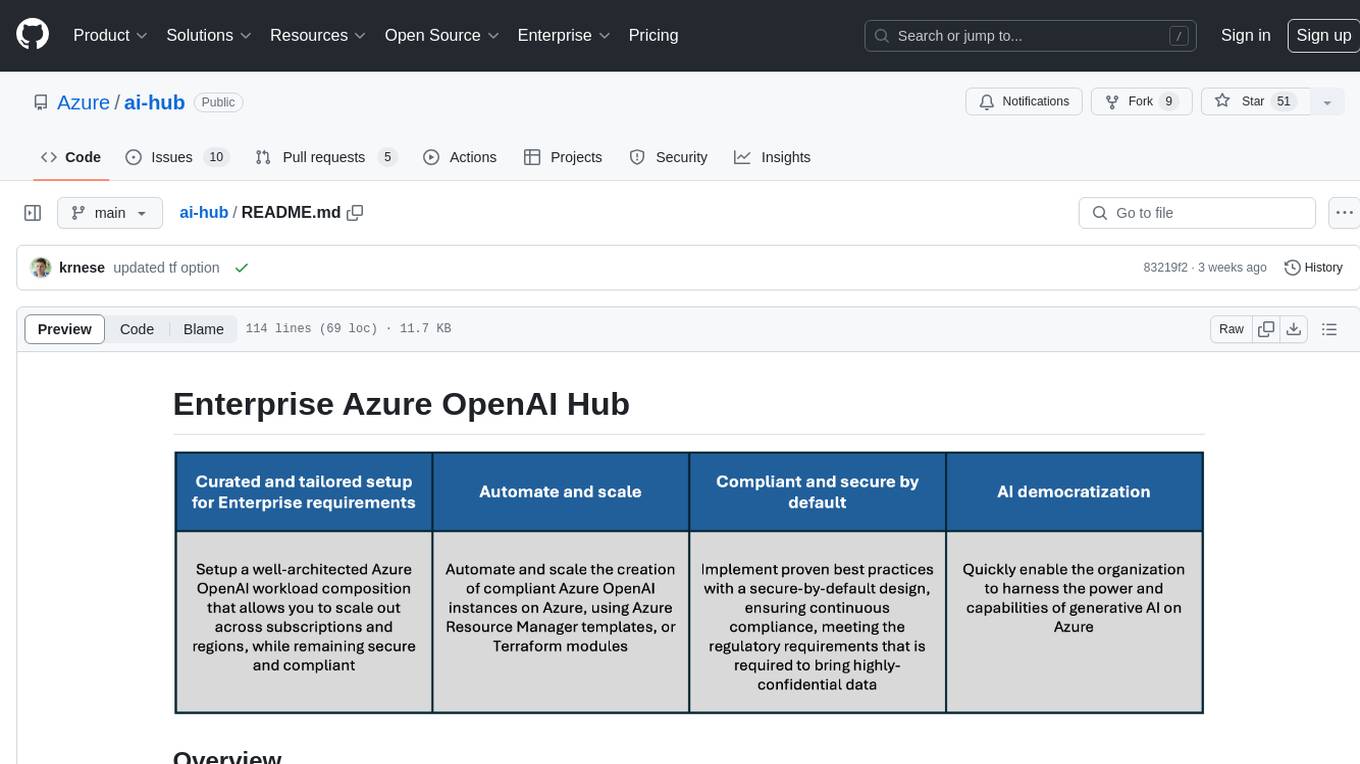
ai-hub
The Enterprise Azure OpenAI Hub is a comprehensive repository designed to guide users through the world of Generative AI on the Azure platform. It offers a structured learning experience to accelerate the transition from concept to production in an Enterprise context. The hub empowers users to explore various use cases with Azure services, ensuring security and compliance. It provides real-world examples and playbooks for practical insights into solving complex problems and developing cutting-edge AI solutions. The repository also serves as a library of proven patterns, aligning with industry standards and promoting best practices for secure and compliant AI development.
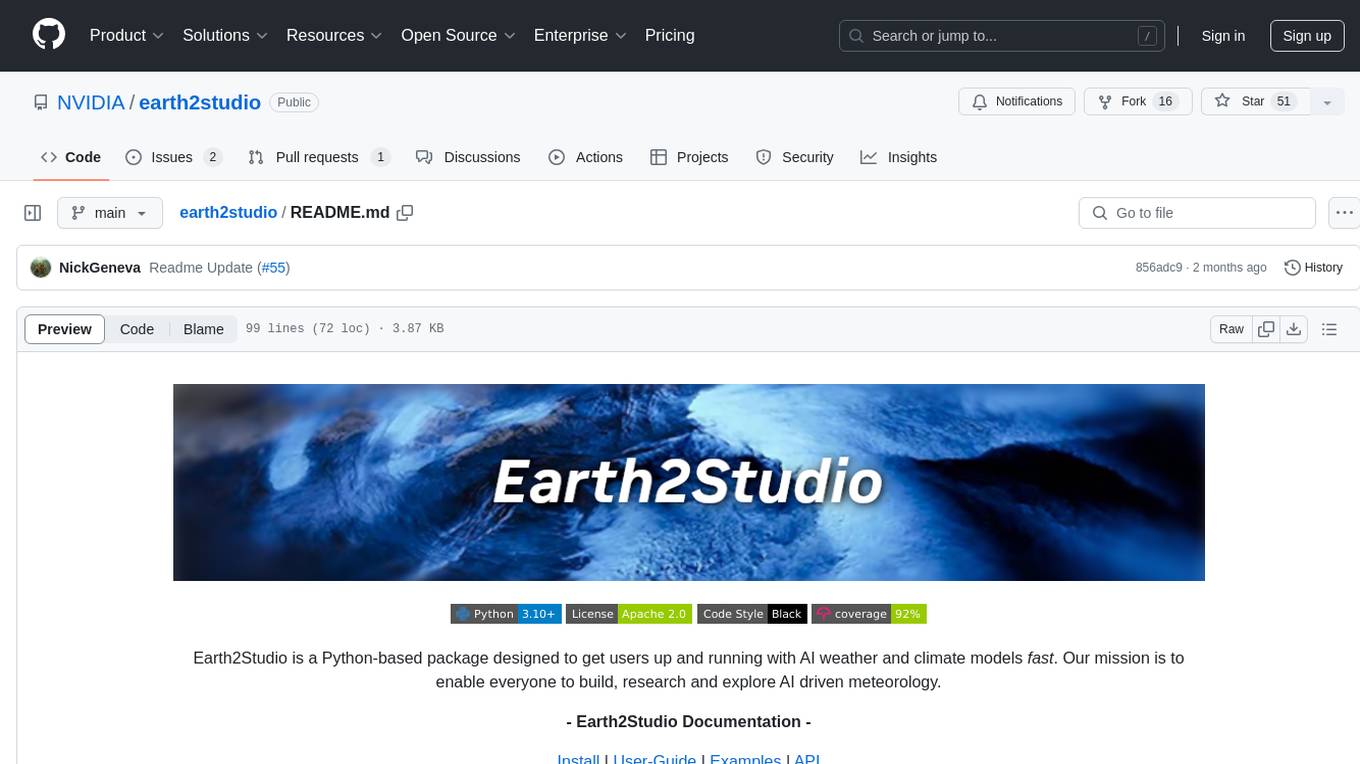
earth2studio
Earth2Studio is a Python-based package designed to enable users to quickly get started with AI weather and climate models. It provides access to pre-trained models, diagnostic tools, data sources, IO utilities, perturbation methods, and sample workflows for building custom weather prediction workflows. The package aims to empower users to explore AI-driven meteorology through modular components and seamless integration with other Nvidia packages like Modulus.
For similar jobs
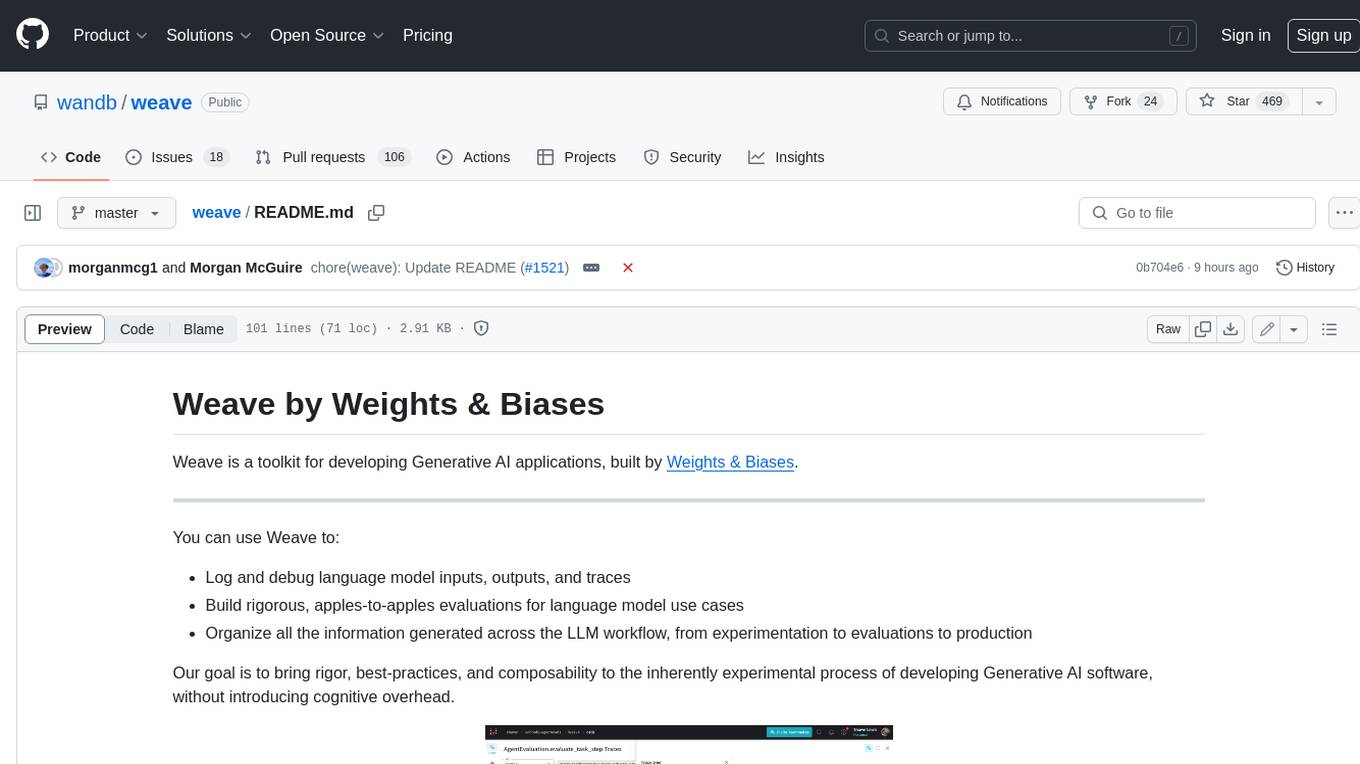
weave
Weave is a toolkit for developing Generative AI applications, built by Weights & Biases. With Weave, you can log and debug language model inputs, outputs, and traces; build rigorous, apples-to-apples evaluations for language model use cases; and organize all the information generated across the LLM workflow, from experimentation to evaluations to production. Weave aims to bring rigor, best-practices, and composability to the inherently experimental process of developing Generative AI software, without introducing cognitive overhead.
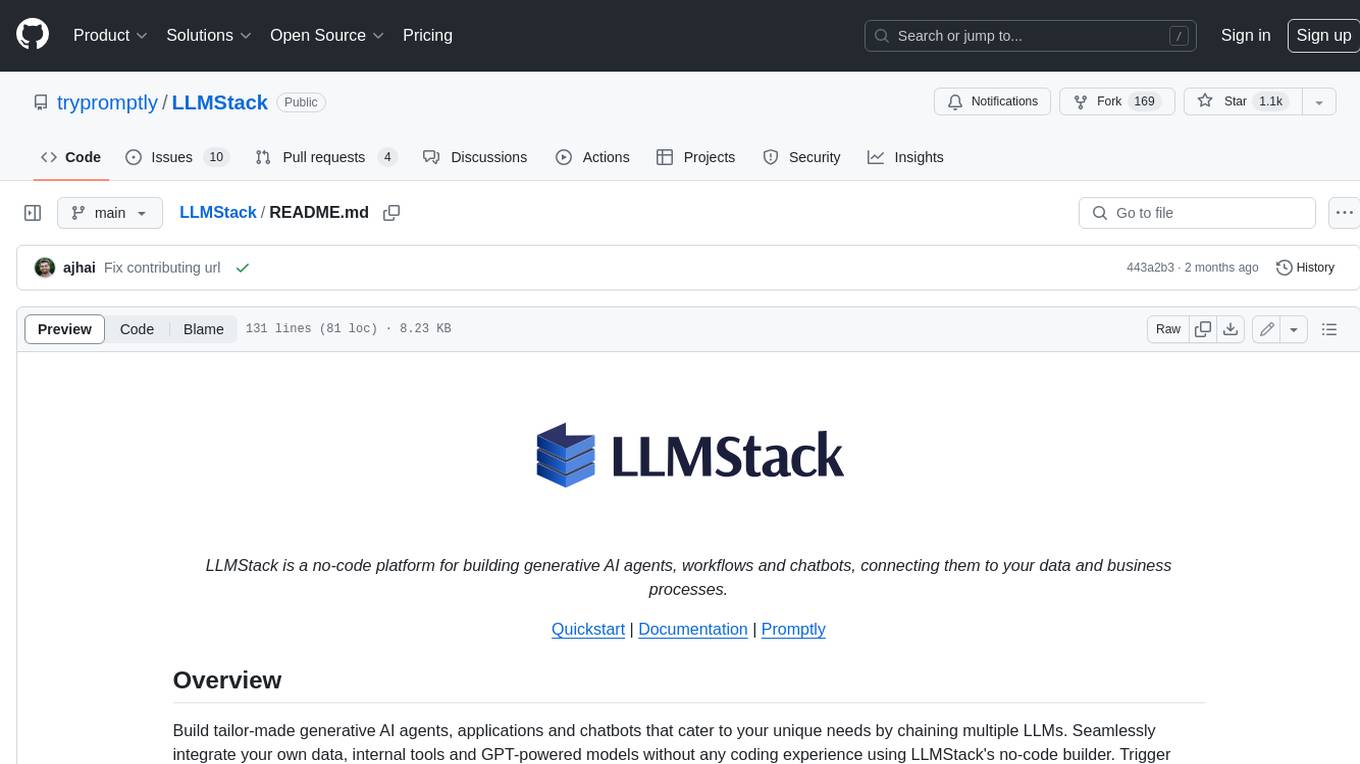
LLMStack
LLMStack is a no-code platform for building generative AI agents, workflows, and chatbots. It allows users to connect their own data, internal tools, and GPT-powered models without any coding experience. LLMStack can be deployed to the cloud or on-premise and can be accessed via HTTP API or triggered from Slack or Discord.
VisionCraft
The VisionCraft API is a free API for using over 100 different AI models. From images to sound.
kaito
Kaito is an operator that automates the AI/ML inference model deployment in a Kubernetes cluster. It manages large model files using container images, avoids tuning deployment parameters to fit GPU hardware by providing preset configurations, auto-provisions GPU nodes based on model requirements, and hosts large model images in the public Microsoft Container Registry (MCR) if the license allows. Using Kaito, the workflow of onboarding large AI inference models in Kubernetes is largely simplified.
PyRIT
PyRIT is an open access automation framework designed to empower security professionals and ML engineers to red team foundation models and their applications. It automates AI Red Teaming tasks to allow operators to focus on more complicated and time-consuming tasks and can also identify security harms such as misuse (e.g., malware generation, jailbreaking), and privacy harms (e.g., identity theft). The goal is to allow researchers to have a baseline of how well their model and entire inference pipeline is doing against different harm categories and to be able to compare that baseline to future iterations of their model. This allows them to have empirical data on how well their model is doing today, and detect any degradation of performance based on future improvements.
tabby
Tabby is a self-hosted AI coding assistant, offering an open-source and on-premises alternative to GitHub Copilot. It boasts several key features: * Self-contained, with no need for a DBMS or cloud service. * OpenAPI interface, easy to integrate with existing infrastructure (e.g Cloud IDE). * Supports consumer-grade GPUs.
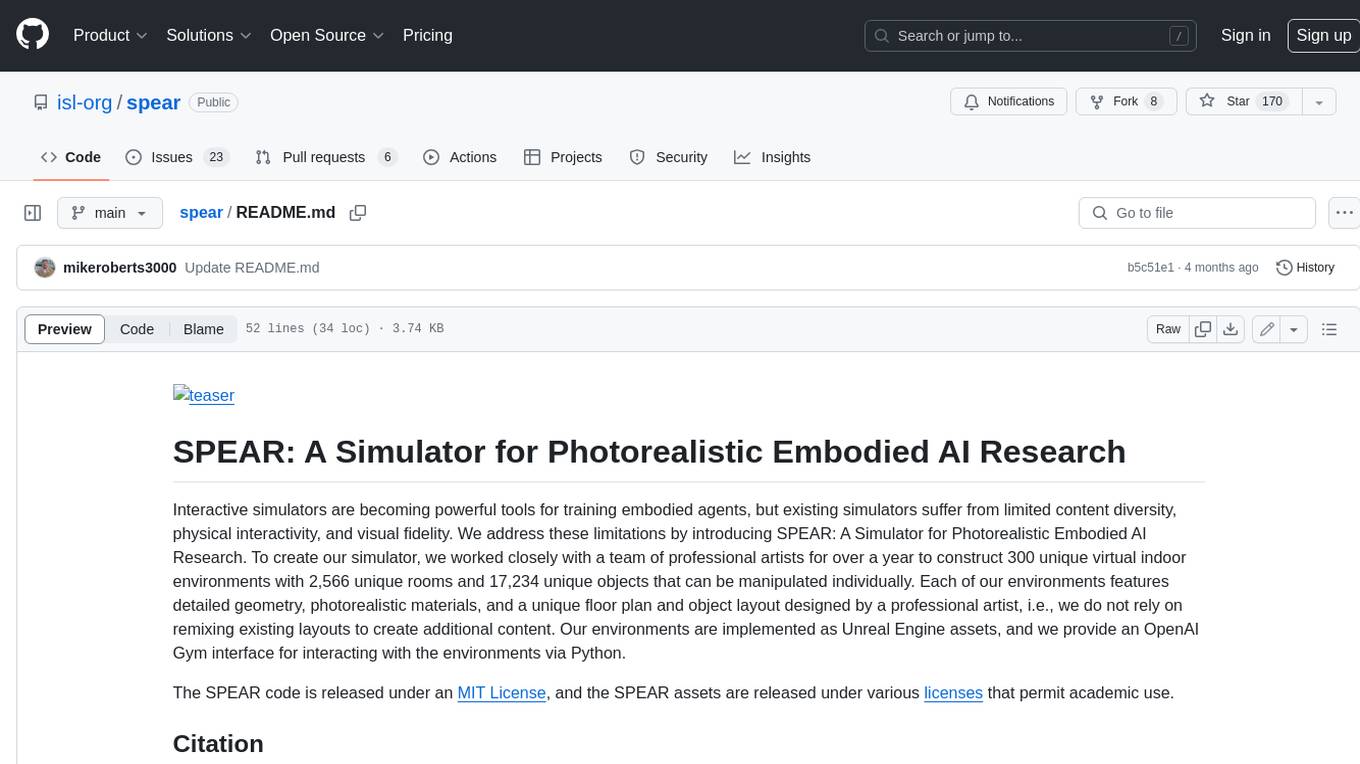
spear
SPEAR (Simulator for Photorealistic Embodied AI Research) is a powerful tool for training embodied agents. It features 300 unique virtual indoor environments with 2,566 unique rooms and 17,234 unique objects that can be manipulated individually. Each environment is designed by a professional artist and features detailed geometry, photorealistic materials, and a unique floor plan and object layout. SPEAR is implemented as Unreal Engine assets and provides an OpenAI Gym interface for interacting with the environments via Python.
Magick
Magick is a groundbreaking visual AIDE (Artificial Intelligence Development Environment) for no-code data pipelines and multimodal agents. Magick can connect to other services and comes with nodes and templates well-suited for intelligent agents, chatbots, complex reasoning systems and realistic characters.