


AI-LLM-ML-CS-Quant-Overview
Overview of AI/LLM, Machine Learning, Computer Science, and Quantitative Finance industry trends.
Stars: 52
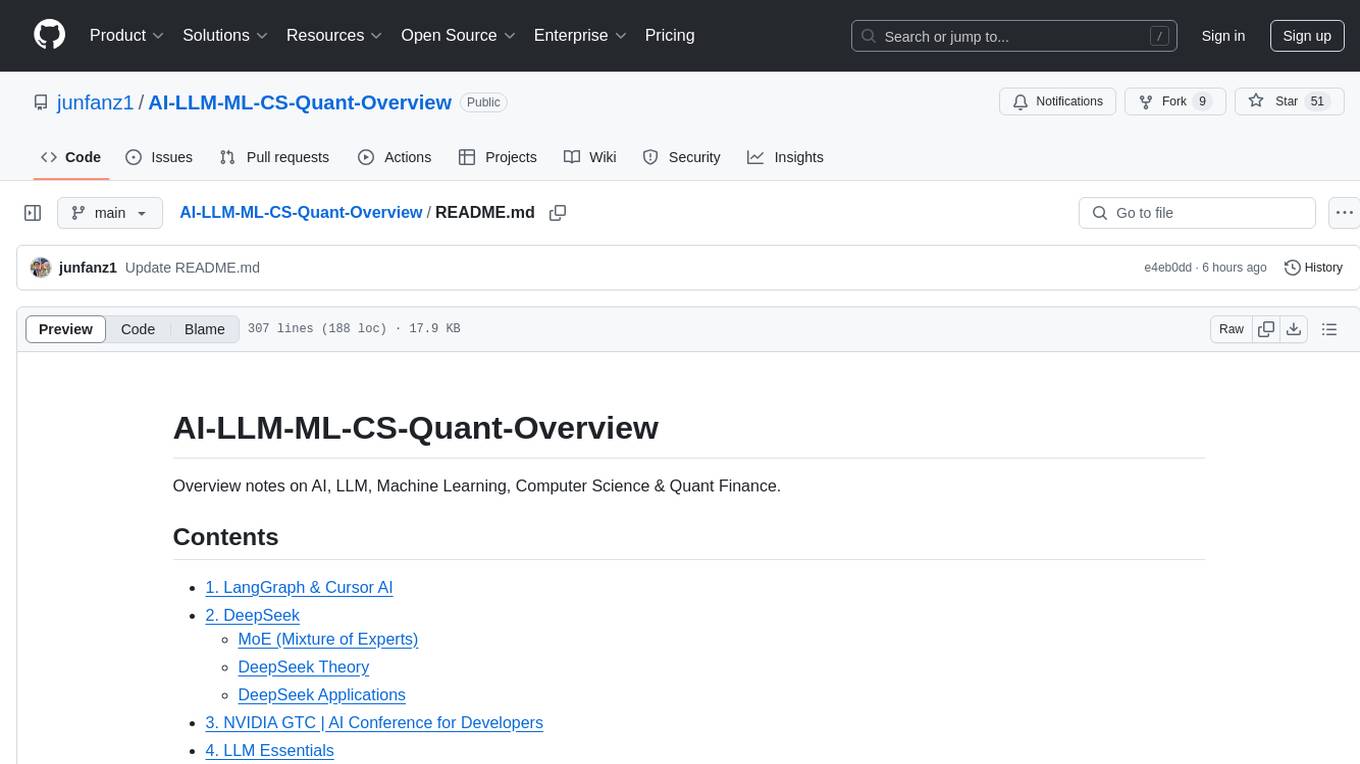
AI-LLM-ML-CS-Quant-Overview is a repository providing overview notes on AI, Large Language Models (LLM), Machine Learning (ML), Computer Science (CS), and Quantitative Finance. It covers various topics such as LangGraph & Cursor AI, DeepSeek, MoE (Mixture of Experts), NVIDIA GTC, LLM Essentials, System Design, Computer Systems, Big Data and AI in Finance, Econometrics and Statistics Conference, C++ Design Patterns and Derivatives Pricing, High-Frequency Finance, Machine Learning for Algorithmic Trading, Stochastic Volatility Modeling, Quant Job Interview Questions, Distributed Systems, Language Models, Designing Machine Learning Systems, Designing Data-Intensive Applications (DDIA), Distributed Machine Learning, and The Elements of Quantitative Investing.
README:
Overview notes on AI, LLM, Machine Learning, Computer Science & Quant Finance.
- 1. NVIDIA GTC | AI Conference for Developers
- 2. DeepSeek
- 3. LangGraph & Cursor AI
- 4. LLM Essentials
- 5. LLM Foundations
- 6. System Design
- 7. Computer Systems
- 8. Big Data and AI in Finance, Econometrics and Statistics Conference, UChicago 2024
- 9. C++ Design Patterns and Derivatives Pricing
- 10. High-Frequency Finance
- 11. Machine Learning for Algorithmic Trading
- 12. Stochastic Volatility Modeling
- 13. Quant Job Interview Questions

|
|
| Project integrating Generative AI, Humanoid Robotics (RLHF), and Low-Altitude Economy. |
Educative: Everything You Need to Know About DeepSeek | Notes
- Ed Donner: LLM Engineering: Master AI, Large Language Models & Agents
- Eden Marco: LangChain-Develop LLM powered applications with LangChain
- Eden Marco: LangGraph-Develop LLM powered AI agents with LangGraph
- Eden Marco: Cursor Course: FullStack development with Cursor AI Copilot
GitHub Projects
- Code-Interpreter-ReAct-LangChain-Agent
- LLM-Documentation-Chatbot
- Cognito-LangGraph-RAG
- LangGraph-Reflection-Researcher
- Cursor-FullStack-AI-App
Educative: Advanced RAG Techniques - Choosing the Right Approach | Notes
Educative: Build AI Agents and Multi-Agent Systems with CrewAI | Notes
大模型基础,毛玉仁等 - 2024,浙大
System Design Interview, An Insider's Guide, Second Edition - by Alex Xu 2020
Educative - Grokking System Design Interview | PDF Notes | Markdown Notes
Educative - Grokking the Modern System Design Interview | Markdown Notes
计算机底层的秘密,陆小风 - 2023,电子工业出版社
BDAI Conference, 2024 Oct 3-5, UChicago
C++ Design Patterns and Derivatives Pricing (Mathematics, Finance and Risk, Series Number 2) 2nd Edition, by M. S. Joshi
An Introduction to High-Frequency Finance, by Ramazan Gençay, et al.
Machine Learning for Algorithmic Trading: Predictive models to extract signals from market and alternative data for systematic trading strategies with Python, 2nd Edition Paperback – by Stefan Jansen 2020
Stochastic Volatility Modeling (Chapman and Hall/CRC Financial Mathematics Series) 1st Edition, by Lorenzo Bergomi
Quant Job Interview Questions and Answers (Second Edition) – by Mark Joshi 2013
Connect me: LinkedIn
Leave a message to me: [email protected]
For Tasks:
Click tags to check more tools for each tasksFor Jobs:
Alternative AI tools for AI-LLM-ML-CS-Quant-Overview
Similar Open Source Tools
AI-LLM-ML-CS-Quant-Overview
AI-LLM-ML-CS-Quant-Overview is a repository providing overview notes on AI, Large Language Models (LLM), Machine Learning (ML), Computer Science (CS), and Quantitative Finance. It covers various topics such as LangGraph & Cursor AI, DeepSeek, MoE (Mixture of Experts), NVIDIA GTC, LLM Essentials, System Design, Computer Systems, Big Data and AI in Finance, Econometrics and Statistics Conference, C++ Design Patterns and Derivatives Pricing, High-Frequency Finance, Machine Learning for Algorithmic Trading, Stochastic Volatility Modeling, Quant Job Interview Questions, Distributed Systems, Language Models, Designing Machine Learning Systems, Designing Data-Intensive Applications (DDIA), Distributed Machine Learning, and The Elements of Quantitative Investing.

AI-LLM-ML-CS-Quant-Readings
AI-LLM-ML-CS-Quant-Readings is a repository dedicated to taking notes on Artificial Intelligence, Large Language Models, Machine Learning, Computer Science, and Quantitative Finance. It contains a wide range of resources, including theory, applications, conferences, essentials, foundations, system design, computer systems, finance, and job interview questions. The repository covers topics such as AI systems, multi-agent systems, deep learning theory and applications, system design interviews, C++ design patterns, high-frequency finance, algorithmic trading, stochastic volatility modeling, and quantitative investing. It is a comprehensive collection of materials for individuals interested in these fields.
AI-LLM-ML-CS-Quant-Review
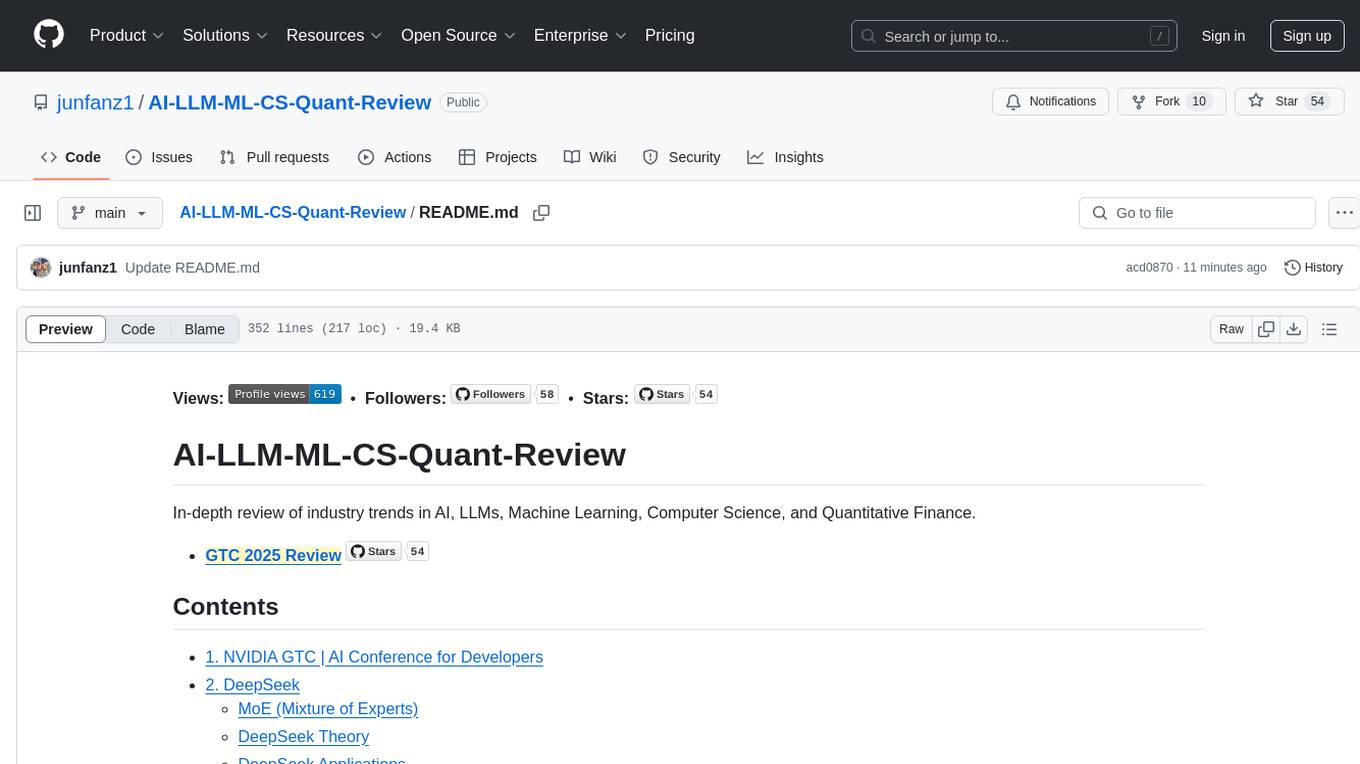
This repository provides an in-depth review of industry trends in AI, Large Language Models (LLMs), Machine Learning, Computer Science, and Quantitative Finance. It covers various topics such as NVIDIA GTC conferences, DeepSeek theory and applications, LangGraph & Cursor AI, LLM essentials, system design, computer systems, big data and AI in finance, C++ design patterns, high-frequency finance, machine learning for algorithmic trading, stochastic volatility modeling, and quant job interview questions.
claude-code-ultimate-guide
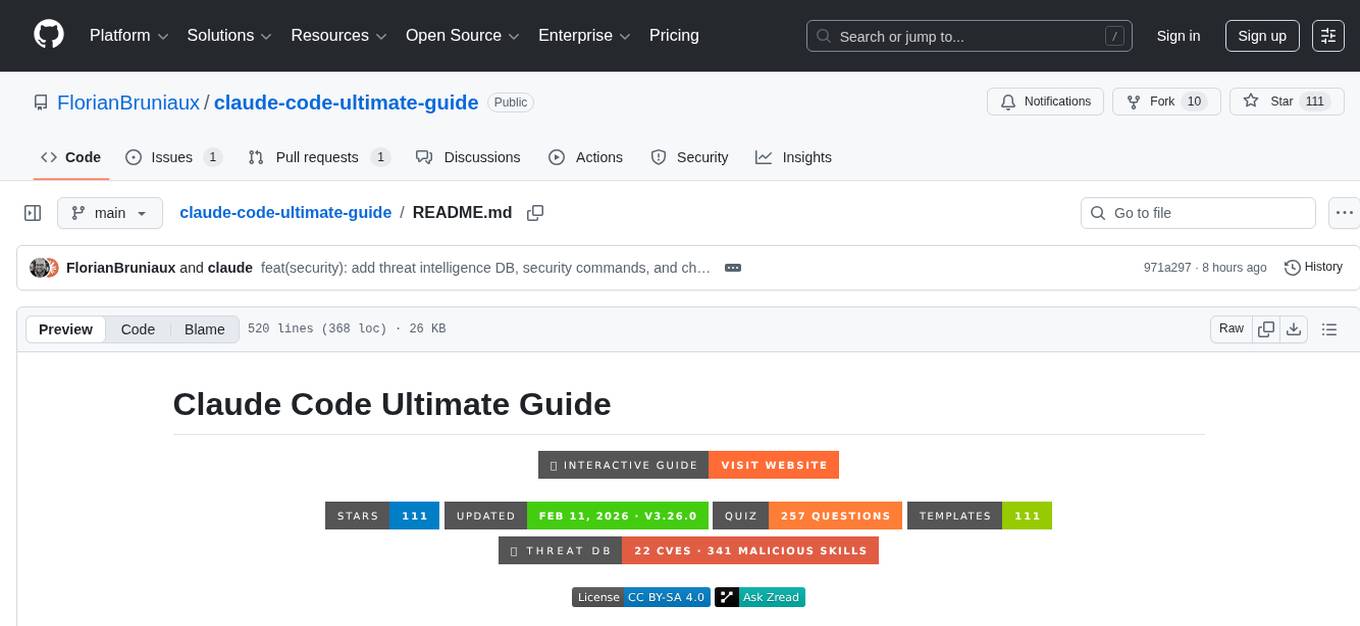
The Claude Code Ultimate Guide is an exhaustive documentation resource that takes users from beginner to power user in using Claude Code. It includes production-ready templates, workflow guides, a quiz, and a cheatsheet for daily use. The guide covers educational depth, methodologies, and practical examples to help users understand concepts and workflows. It also provides interactive onboarding, a repository structure overview, and learning paths for different user levels. The guide is regularly updated and offers a unique 257-question quiz for comprehensive assessment. Users can also find information on agent teams coverage, methodologies, annotated templates, resource evaluations, and learning paths for different roles like junior developer, senior developer, power user, and product manager/devops/designer.
Awesome-Lists-and-CheatSheets
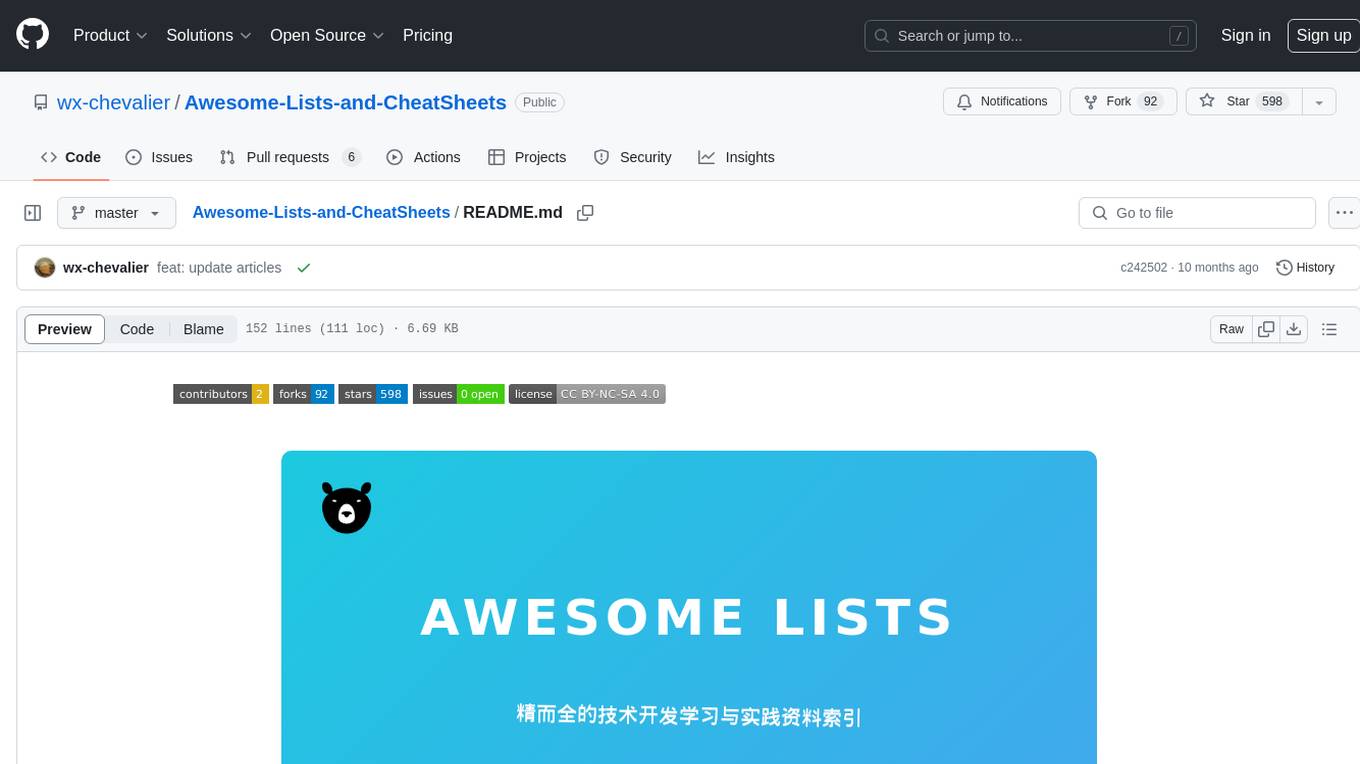
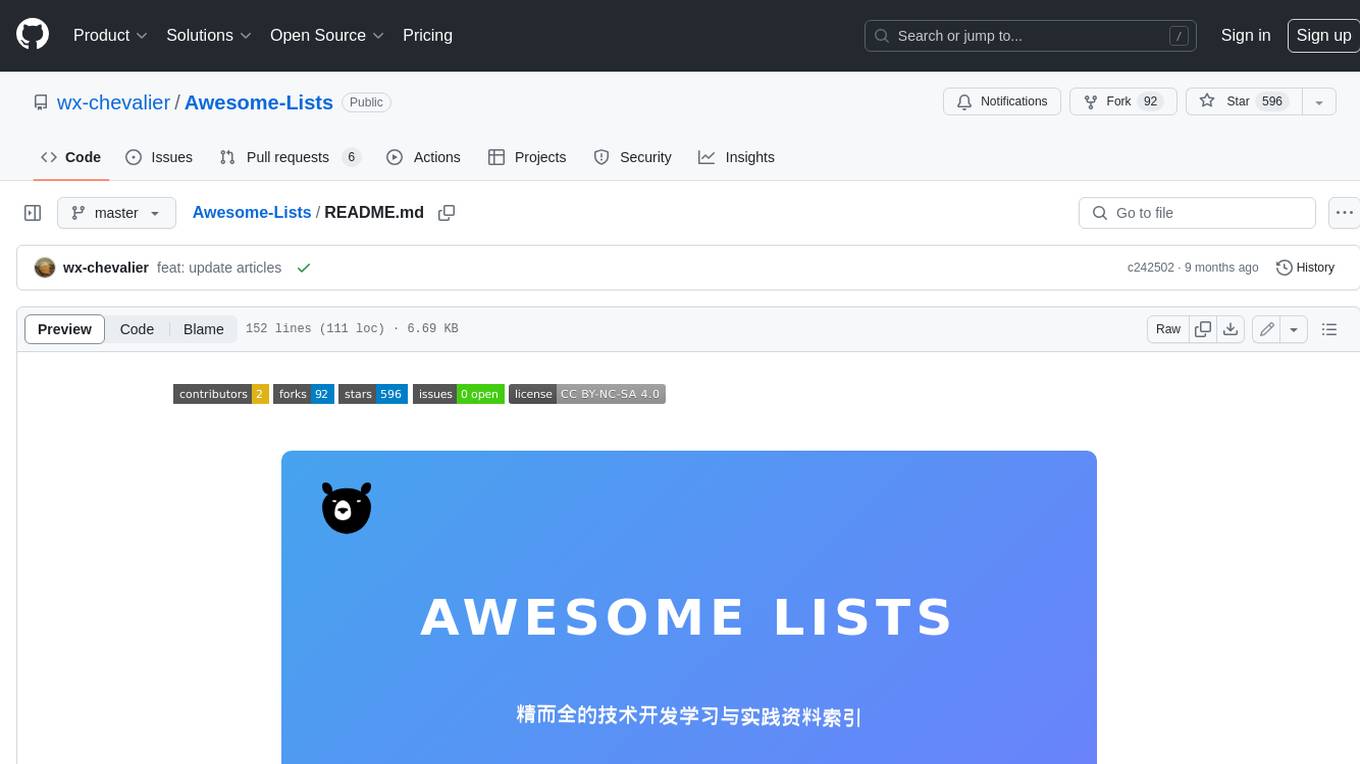
Awesome-Lists is a curated index of selected resources spanning various fields including programming languages and theories, web and frontend development, server-side development and infrastructure, cloud computing and big data, data science and artificial intelligence, product design, etc. It includes articles, books, courses, examples, open-source projects, and more. The repository categorizes resources according to the knowledge system of different domains, aiming to provide valuable and concise material indexes for readers. Users can explore and learn from a wide range of high-quality resources in a systematic way.
Awesome-Lists
Awesome-Lists is a curated list of awesome lists across various domains of computer science and beyond, including programming languages, web development, data science, and more. It provides a comprehensive index of articles, books, courses, open source projects, and other resources. The lists are organized by topic and subtopic, making it easy to find the information you need. Awesome-Lists is a valuable resource for anyone looking to learn more about a particular topic or to stay up-to-date on the latest developments in the field.
Embodied-AI-Guide
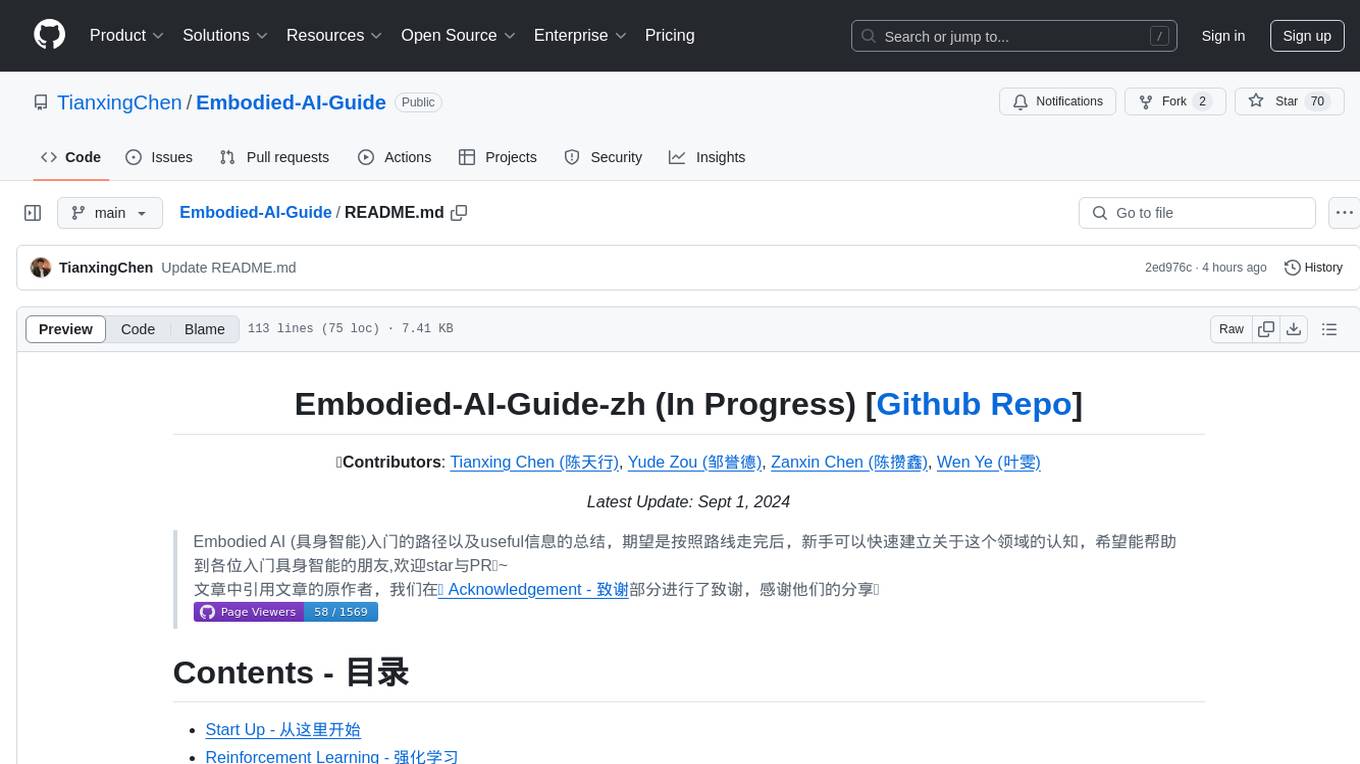
Embodied-AI-Guide is a comprehensive guide for beginners to understand Embodied AI, focusing on the path of entry and useful information in the field. It covers topics such as Reinforcement Learning, Imitation Learning, Large Language Model for Robotics, 3D Vision, Control, Benchmarks, and provides resources for building cognitive understanding. The repository aims to help newcomers quickly establish knowledge in the field of Embodied AI.
cia
CIA is a powerful open-source tool designed for data analysis and visualization. It provides a user-friendly interface for processing large datasets and generating insightful reports. With CIA, users can easily explore data, perform statistical analysis, and create interactive visualizations to communicate findings effectively. Whether you are a data scientist, analyst, or researcher, CIA offers a comprehensive set of features to streamline your data analysis workflow and uncover valuable insights.
Wegent
Wegent is an open-source AI-native operating system designed to define, organize, and run intelligent agent teams. It offers various core features such as a chat agent with multi-model support, conversation history, group chat, attachment parsing, follow-up mode, error correction mode, long-term memory, sandbox execution, and extensions. Additionally, Wegent includes a code agent for cloud-based code execution, AI feed for task triggers, AI knowledge for document management, and AI device for running tasks locally. The platform is highly extensible, allowing for custom agents, agent creation wizard, organization management, collaboration modes, skill support, MCP tools, execution engines, YAML config, and an API for easy integration with other systems.
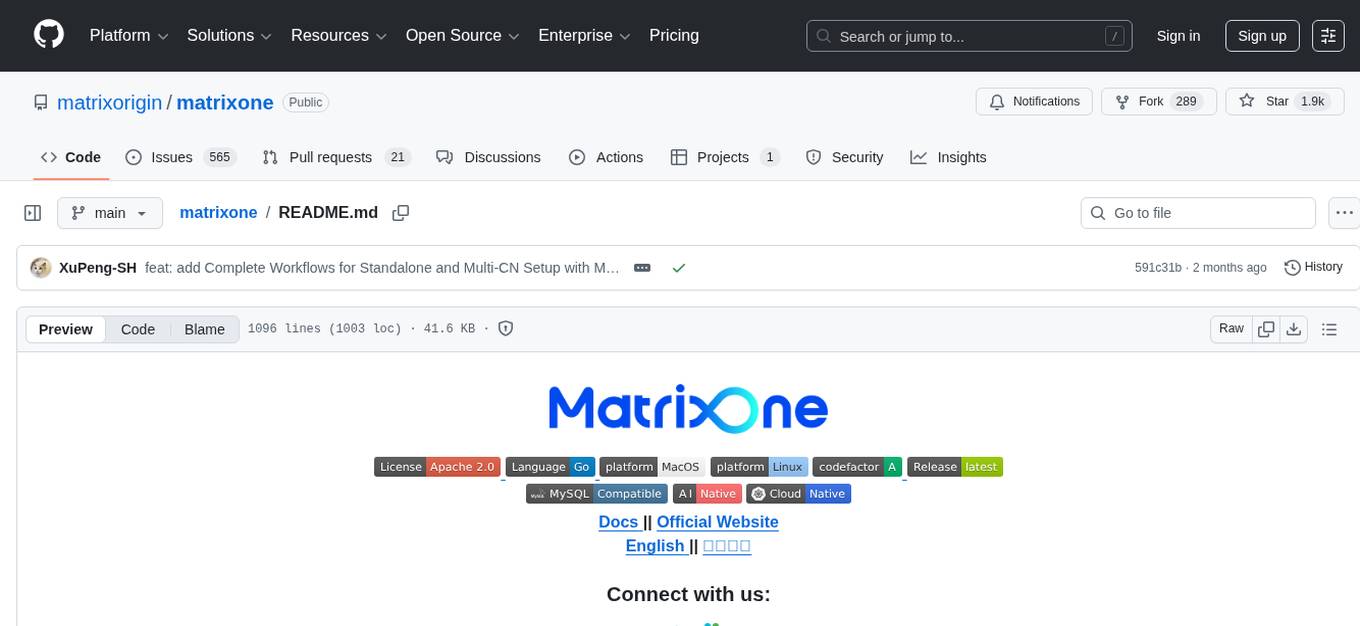
matrixone
MatrixOne is the industry's first database to bring Git-style version control to data, combined with MySQL compatibility, AI-native capabilities, and cloud-native architecture. It is a HTAP (Hybrid Transactional/Analytical Processing) database with a hyper-converged HSTAP engine that seamlessly handles transactional, analytical, full-text search, and vector search workloads in a single unified system—no data movement, no ETL, no compromises. Manage your database like code with features like instant snapshots, time travel, branch & merge, instant rollback, and complete audit trail. Built for the AI era, MatrixOne is MySQL-compatible, AI-native, and cloud-native, offering storage-compute separation, elastic scaling, and Kubernetes-native deployment. It serves as one database for everything, replacing multiple databases and ETL jobs with native OLTP, OLAP, full-text search, and vector search capabilities.
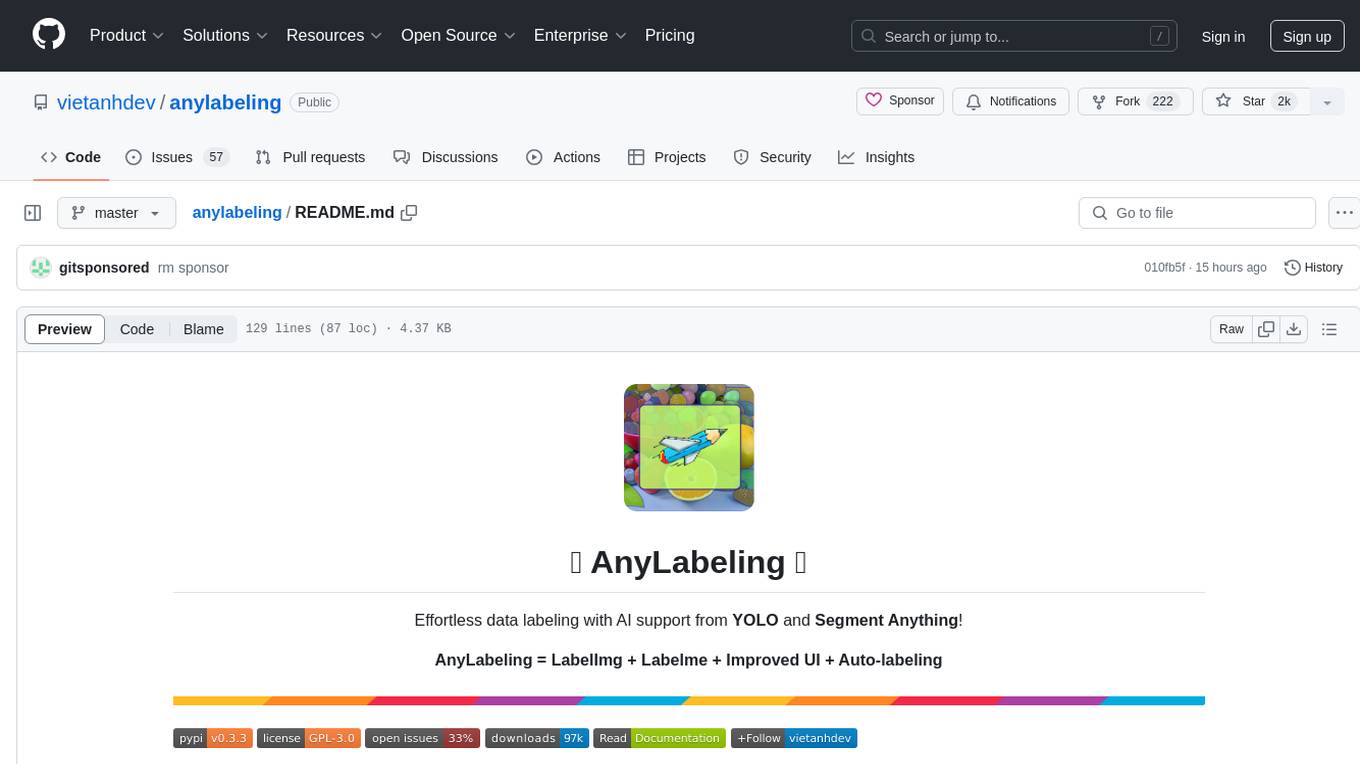
anylabeling
AnyLabeling is a tool for effortless data labeling with AI support from YOLO and Segment Anything. It combines features from LabelImg and Labelme with an improved UI and auto-labeling capabilities. Users can annotate images with polygons, rectangles, circles, lines, and points, as well as perform auto-labeling using YOLOv5 and Segment Anything. The tool also supports text detection, recognition, and Key Information Extraction (KIE) labeling, with multiple language options available such as English, Vietnamese, and Chinese.
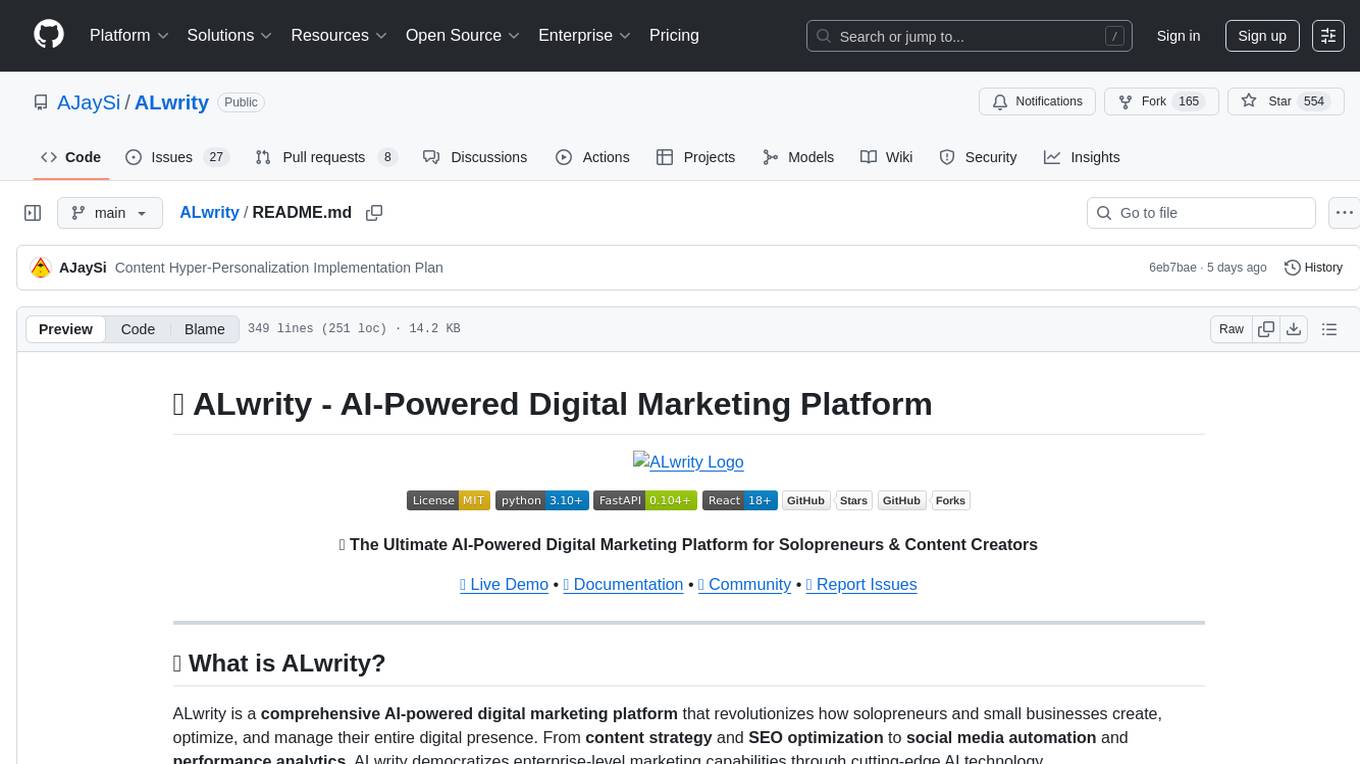
ALwrity
ALwrity is a lightweight and user-friendly text analysis tool designed for developers and data scientists. It provides various functionalities for analyzing and processing text data, including sentiment analysis, keyword extraction, and text summarization. With ALwrity, users can easily gain insights from their text data and make informed decisions based on the analysis results. The tool is highly customizable and can be integrated into existing workflows seamlessly, making it a valuable asset for anyone working with text data in their projects.
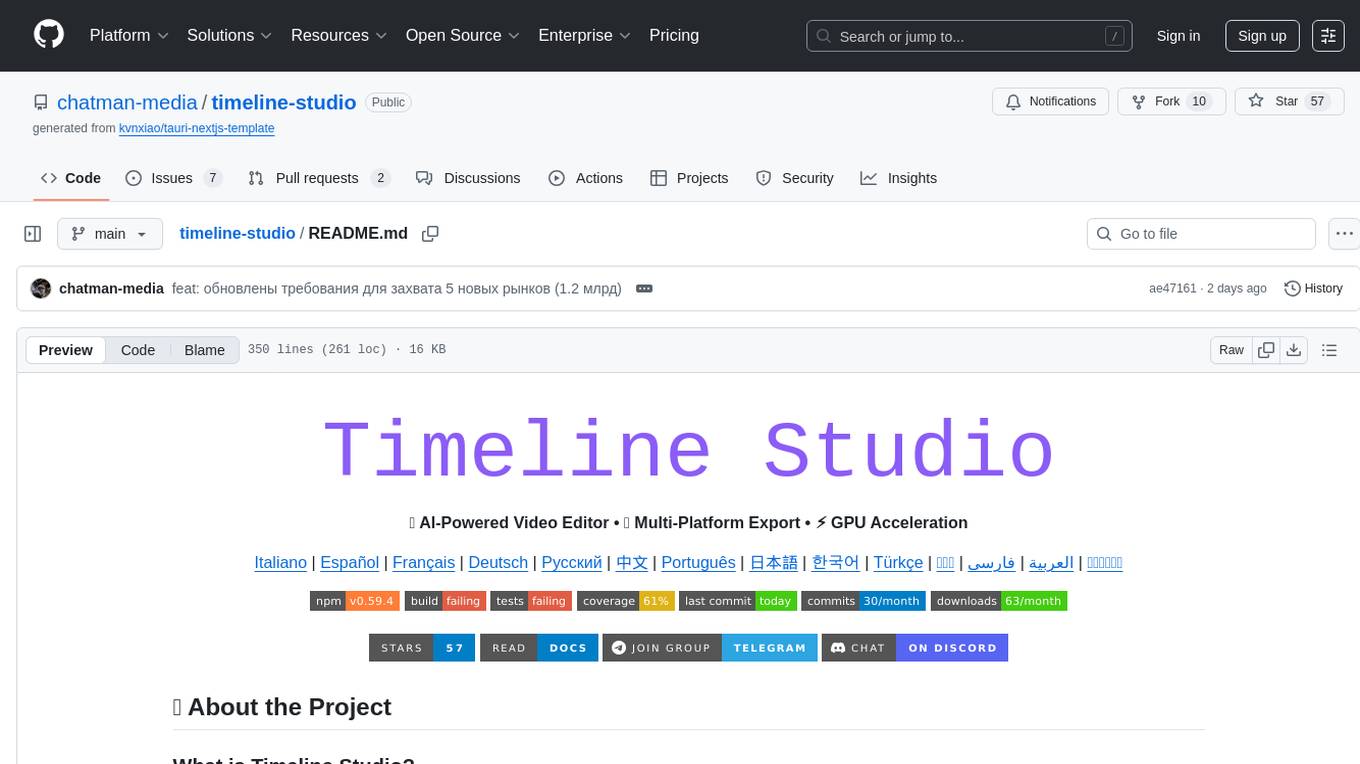
timeline-studio
Timeline Studio is a next-generation professional video editor with AI integration that automates content creation for social media. It combines the power of desktop applications with the convenience of web interfaces. With 257 AI tools, GPU acceleration, plugin system, multi-language interface, and local processing, Timeline Studio offers complete video production automation. Users can create videos for various social media platforms like TikTok, YouTube, Vimeo, Telegram, and Instagram with optimized versions. The tool saves time, understands trends, provides professional quality, and allows for easy feature extension through plugins. Timeline Studio is open source, transparent, and offers significant time savings and quality improvements for video editing tasks.
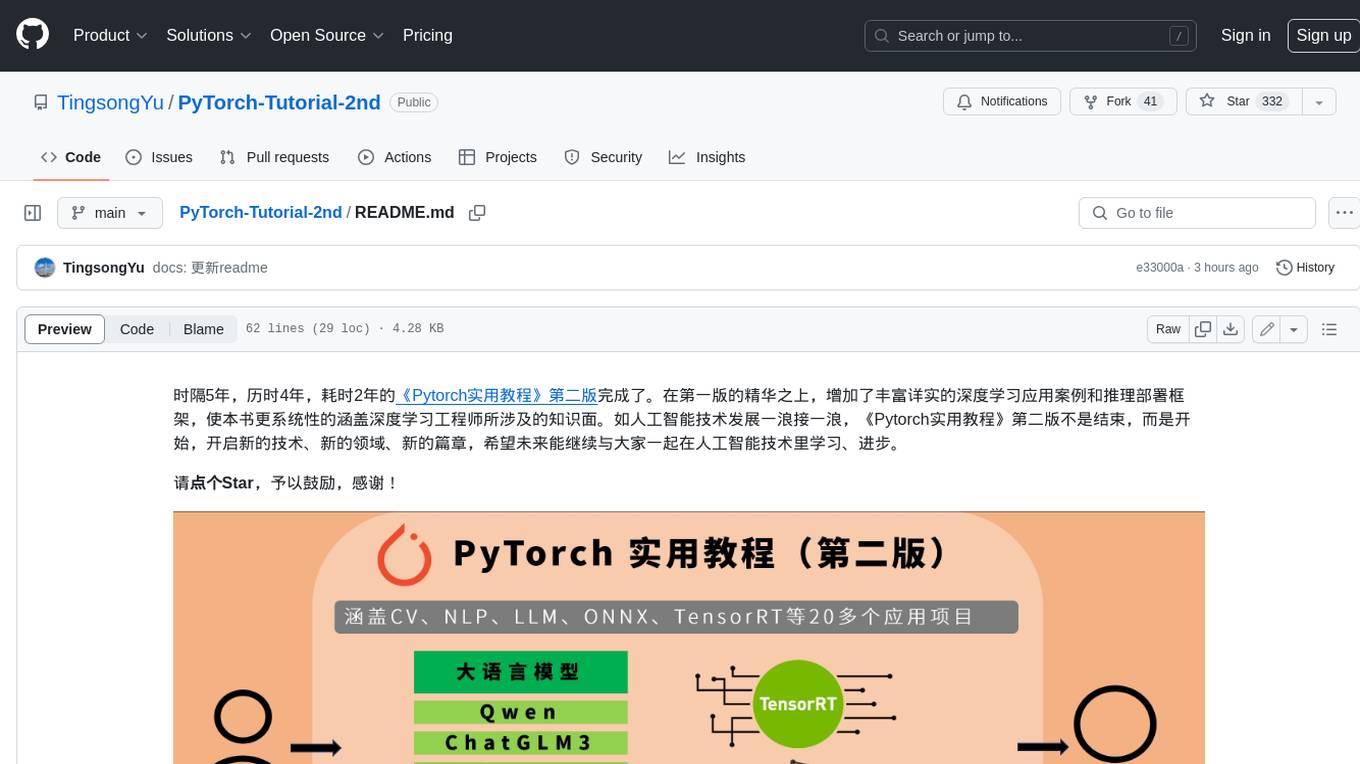
PyTorch-Tutorial-2nd
The second edition of "PyTorch Practical Tutorial" was completed after 5 years, 4 years, and 2 years. On the basis of the essence of the first edition, rich and detailed deep learning application cases and reasoning deployment frameworks have been added, so that this book can more systematically cover the knowledge involved in deep learning engineers. As the development of artificial intelligence technology continues to emerge, the second edition of "PyTorch Practical Tutorial" is not the end, but the beginning, opening up new technologies, new fields, and new chapters. I hope to continue learning and making progress in artificial intelligence technology with you in the future.
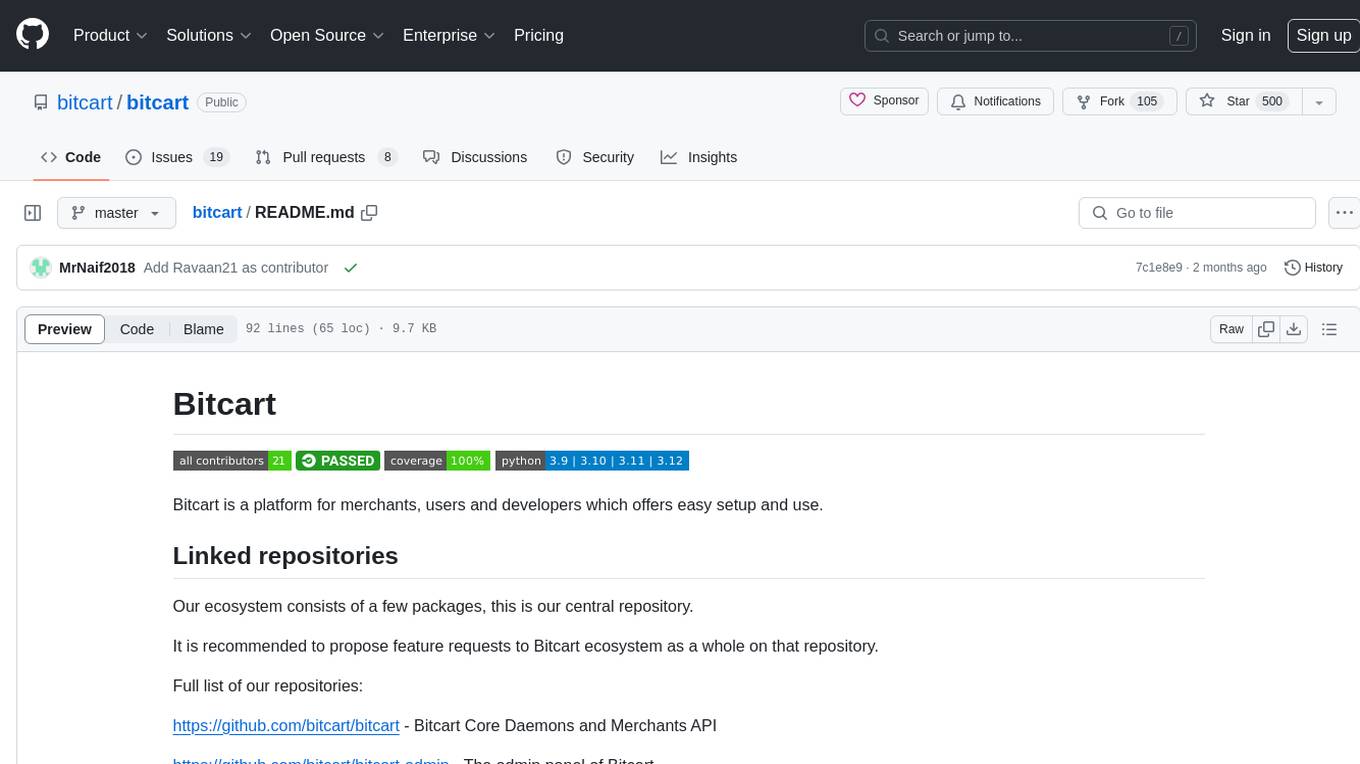
bitcart
Bitcart is a platform designed for merchants, users, and developers, providing easy setup and usage. It includes various linked repositories for core daemons, admin panel, ready store, Docker packaging, Python library for coins connection, BitCCL scripting language, documentation, and official site. The platform aims to simplify the process for merchants and developers to interact and transact with cryptocurrencies, offering a comprehensive ecosystem for managing transactions and payments.
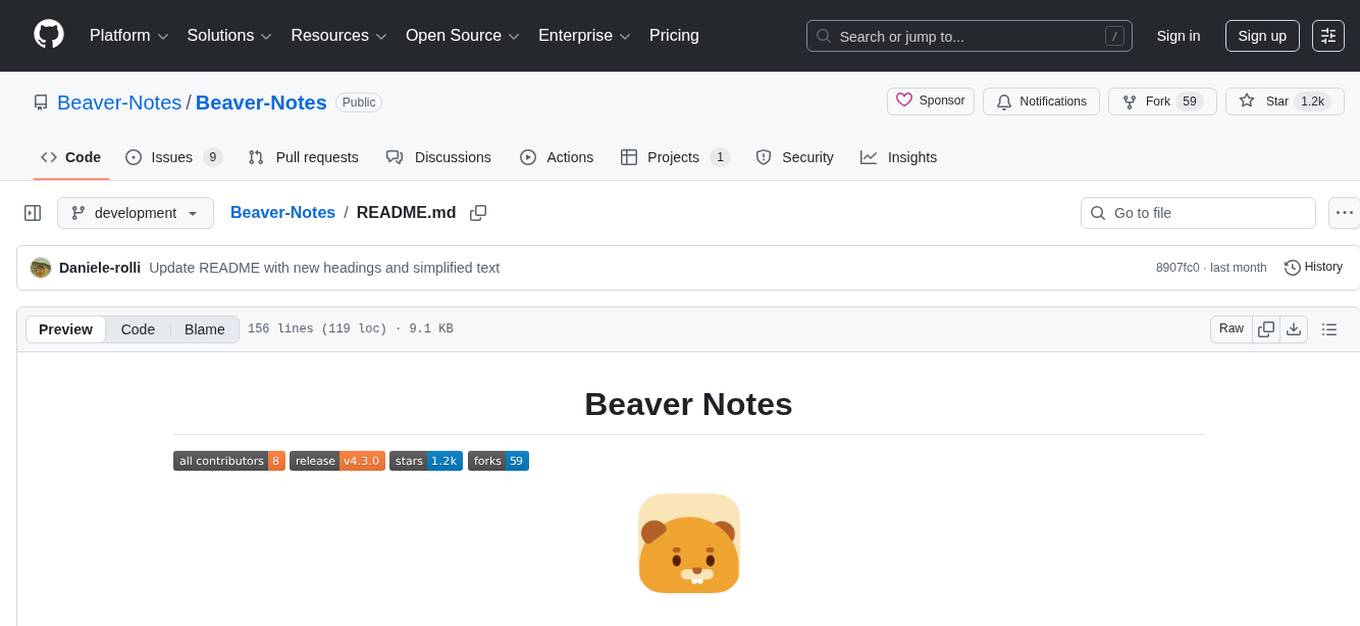
Beaver-Notes
Beaver Notes is a privacy-first, local-first note-taking app designed to help users capture ideas, organize knowledge, and connect notes without sending data to the cloud by default. It offers cross-platform support, secure data storage, markdown support, community-driven development, and various features like tags, folders, note linking, locked notes, flexible sync options, and open-source collaboration. The tool prioritizes privacy, simplicity, and user control over their data, making it a reliable choice for individuals seeking a secure and efficient note-taking solution.
For similar tasks
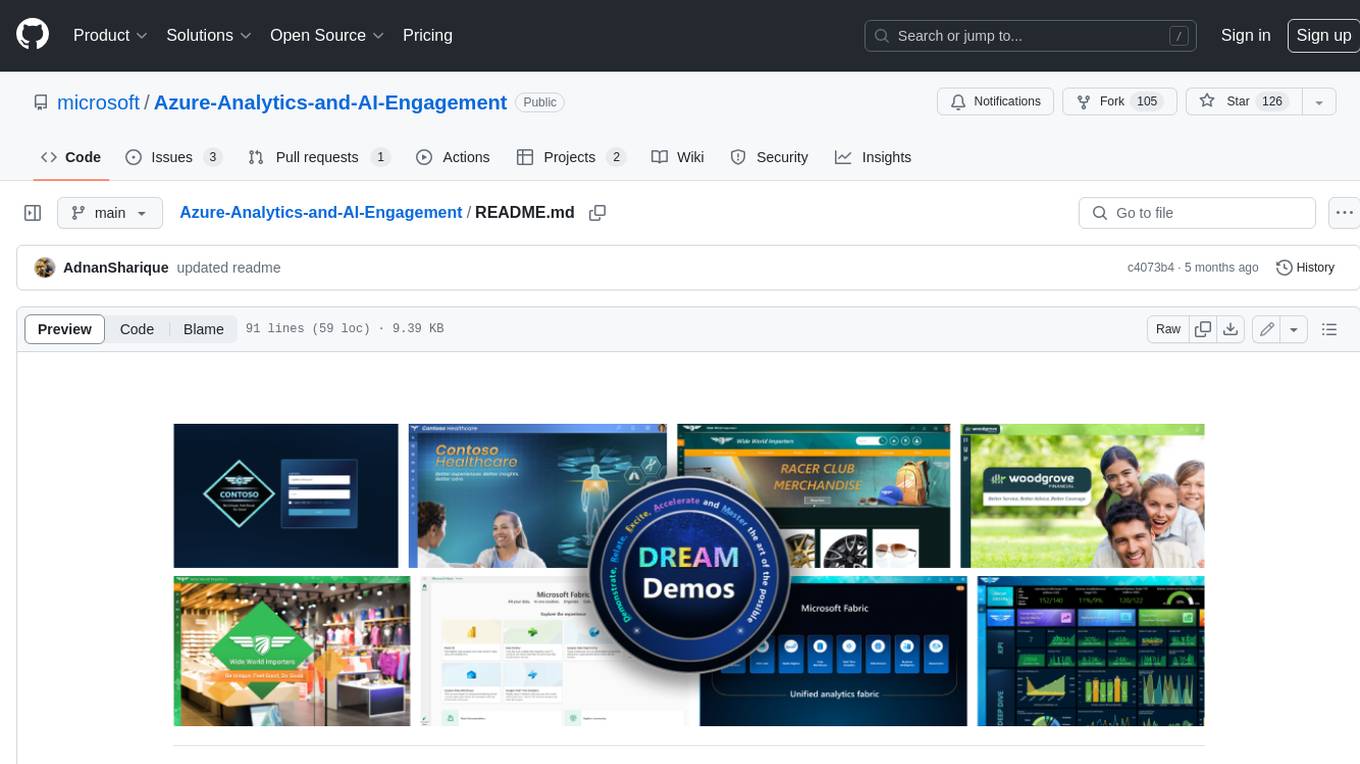
Azure-Analytics-and-AI-Engagement
The Azure-Analytics-and-AI-Engagement repository provides packaged Industry Scenario DREAM Demos with ARM templates (Containing a demo web application, Power BI reports, Synapse resources, AML Notebooks etc.) that can be deployed in a customer’s subscription using the CAPE tool within a matter of few hours. Partners can also deploy DREAM Demos in their own subscriptions using DPoC.
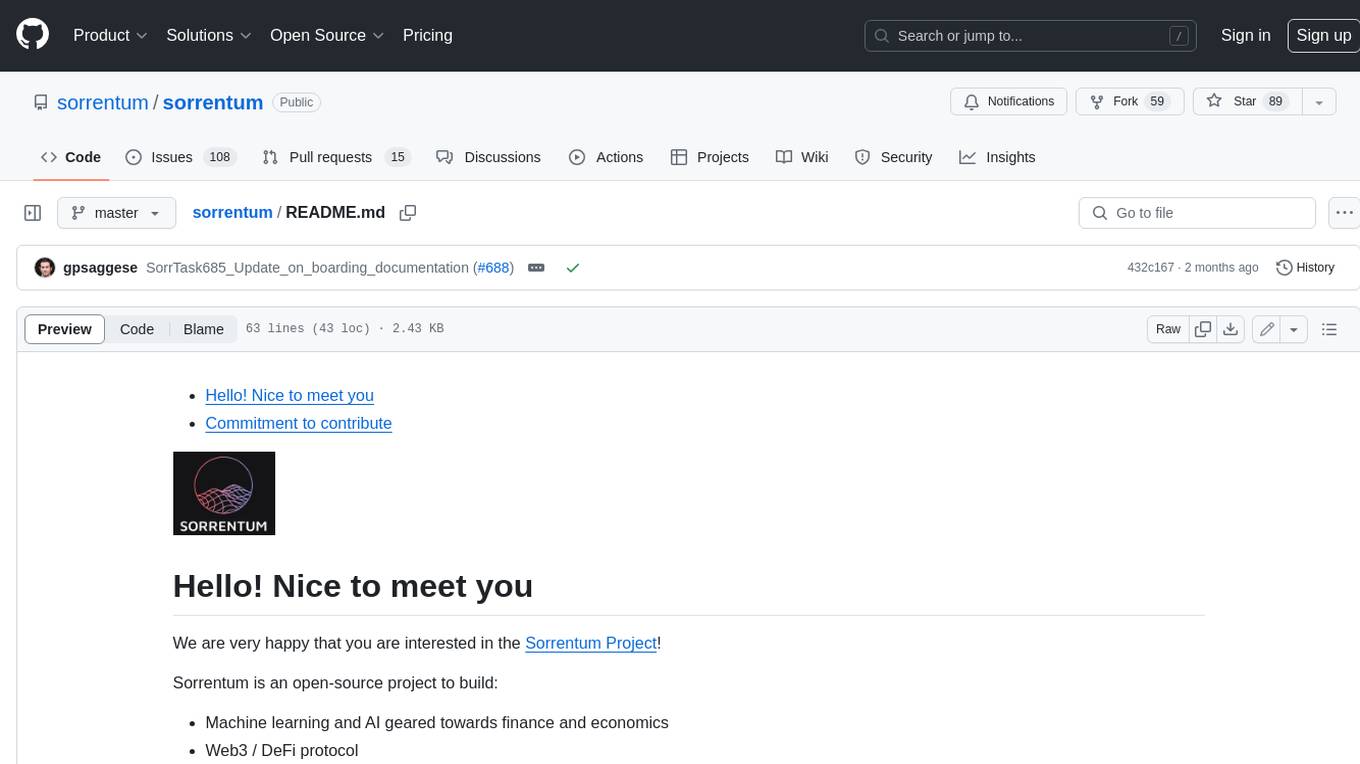
sorrentum
Sorrentum is an open-source project that aims to combine open-source development, startups, and brilliant students to build machine learning, AI, and Web3 / DeFi protocols geared towards finance and economics. The project provides opportunities for internships, research assistantships, and development grants, as well as the chance to work on cutting-edge problems, learn about startups, write academic papers, and get internships and full-time positions at companies working on Sorrentum applications.
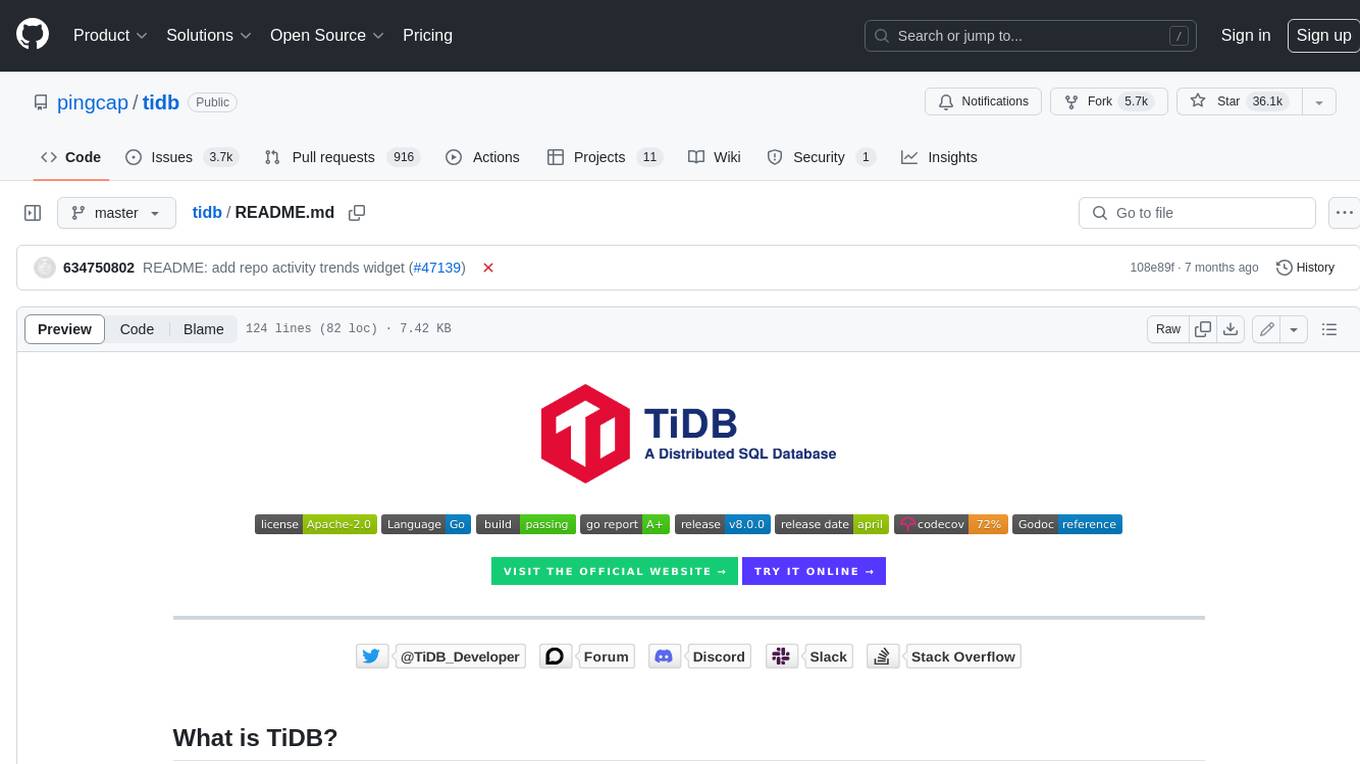
tidb
TiDB is an open-source distributed SQL database that supports Hybrid Transactional and Analytical Processing (HTAP) workloads. It is MySQL compatible and features horizontal scalability, strong consistency, and high availability.

zep-python
Zep is an open-source platform for building and deploying large language model (LLM) applications. It provides a suite of tools and services that make it easy to integrate LLMs into your applications, including chat history memory, embedding, vector search, and data enrichment. Zep is designed to be scalable, reliable, and easy to use, making it a great choice for developers who want to build LLM-powered applications quickly and easily.
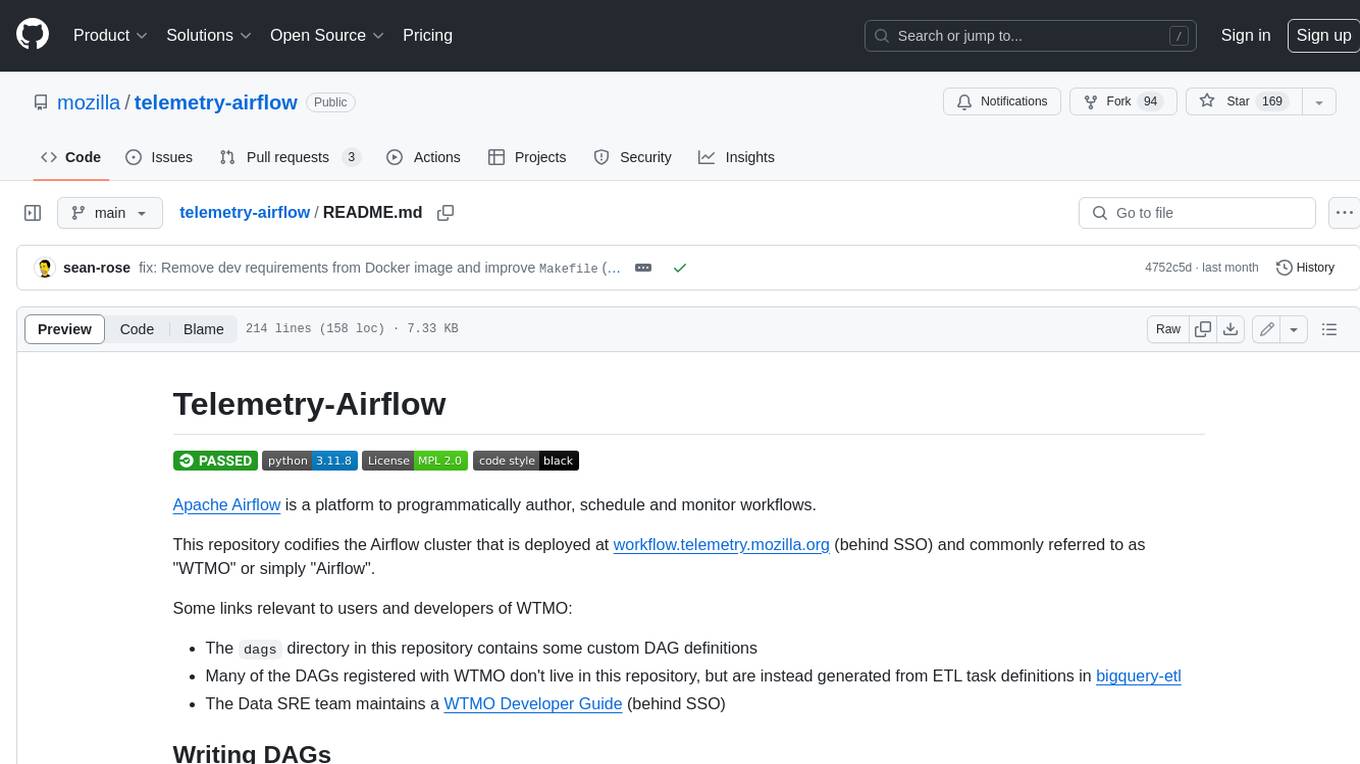
telemetry-airflow
This repository codifies the Airflow cluster that is deployed at workflow.telemetry.mozilla.org (behind SSO) and commonly referred to as "WTMO" or simply "Airflow". Some links relevant to users and developers of WTMO: * The `dags` directory in this repository contains some custom DAG definitions * Many of the DAGs registered with WTMO don't live in this repository, but are instead generated from ETL task definitions in bigquery-etl * The Data SRE team maintains a WTMO Developer Guide (behind SSO)
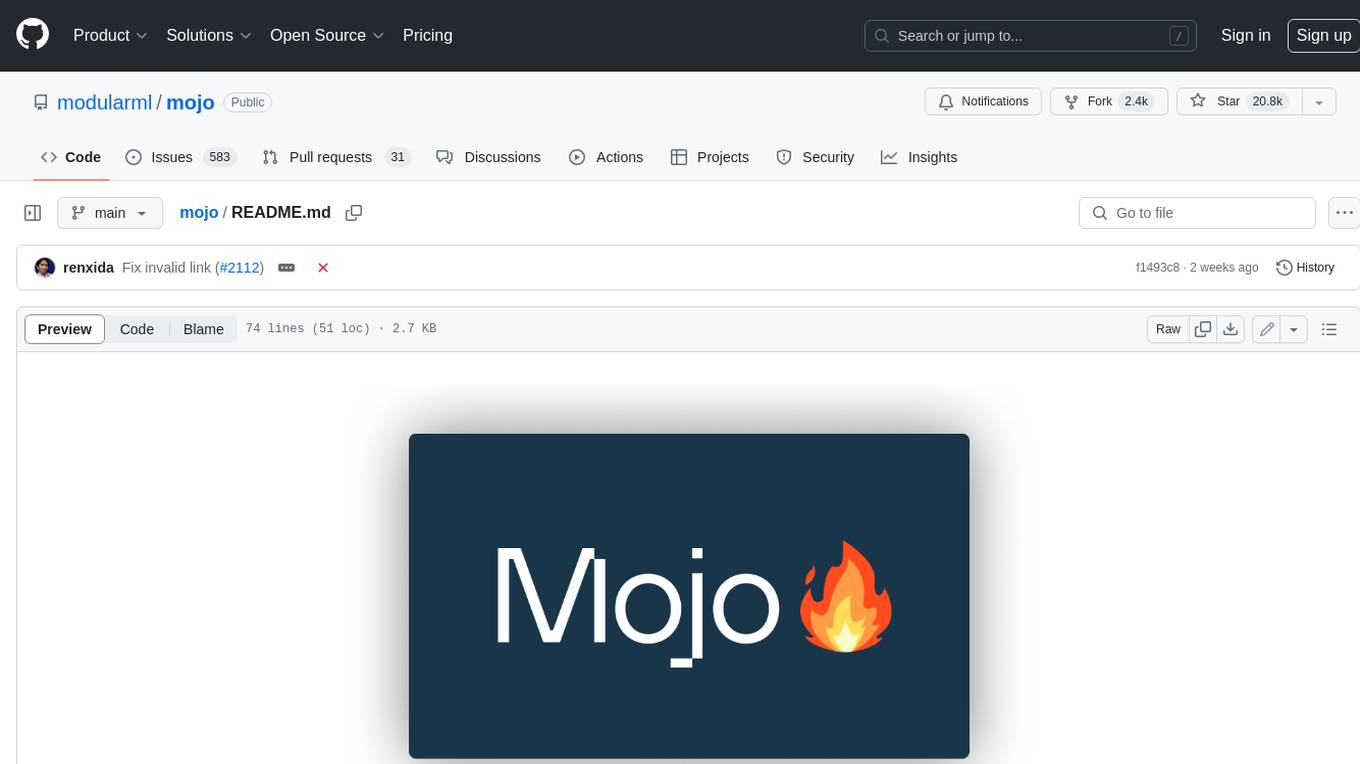
mojo
Mojo is a new programming language that bridges the gap between research and production by combining Python syntax and ecosystem with systems programming and metaprogramming features. Mojo is still young, but it is designed to become a superset of Python over time.
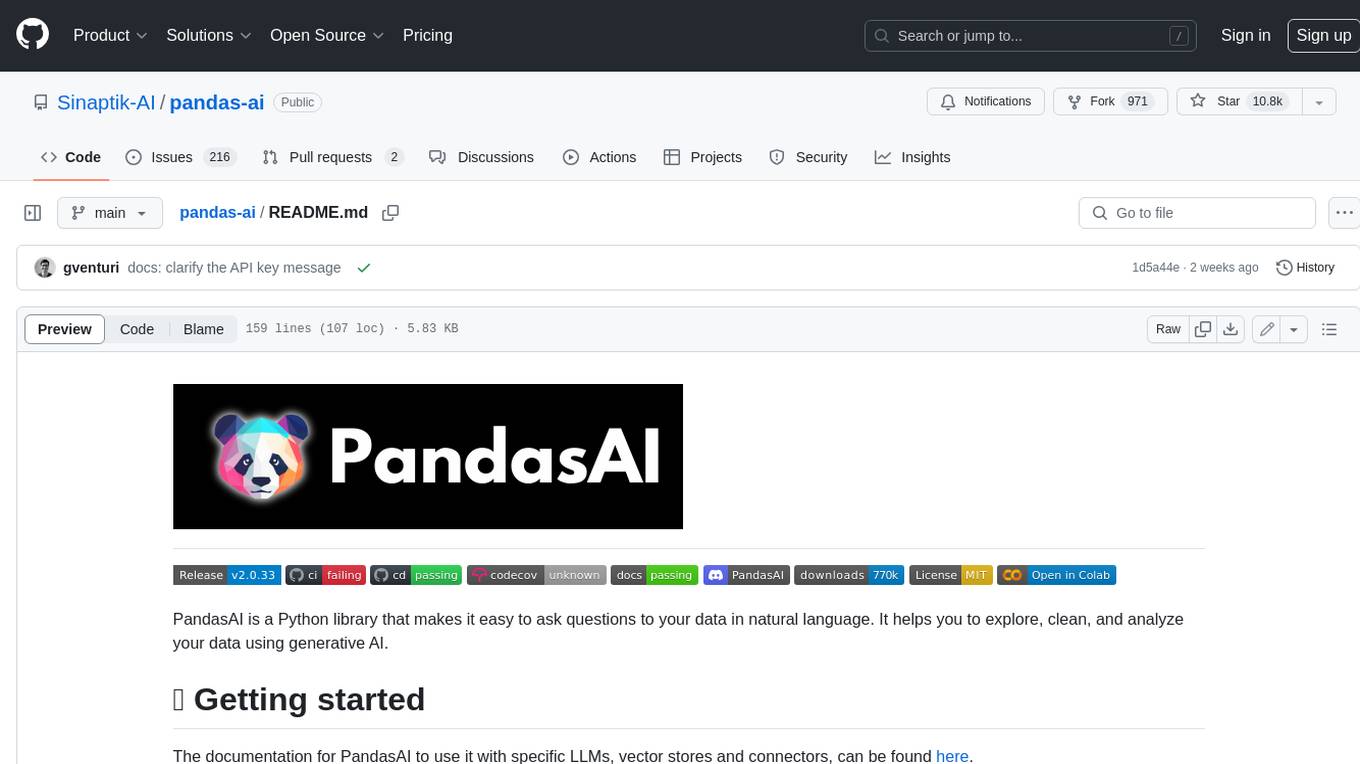
pandas-ai
PandasAI is a Python library that makes it easy to ask questions to your data in natural language. It helps you to explore, clean, and analyze your data using generative AI.
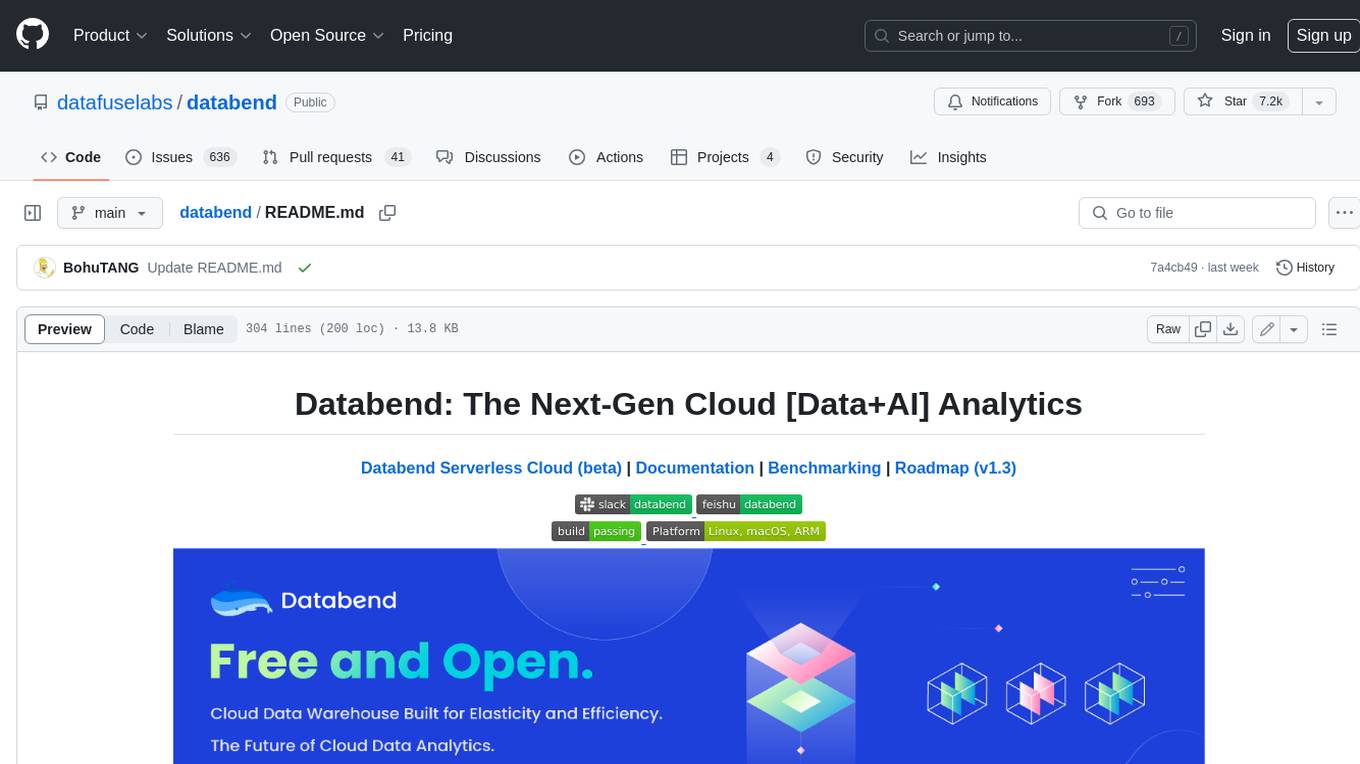
databend
Databend is an open-source cloud data warehouse that serves as a cost-effective alternative to Snowflake. With its focus on fast query execution and data ingestion, it's designed for complex analysis of the world's largest datasets.
For similar jobs
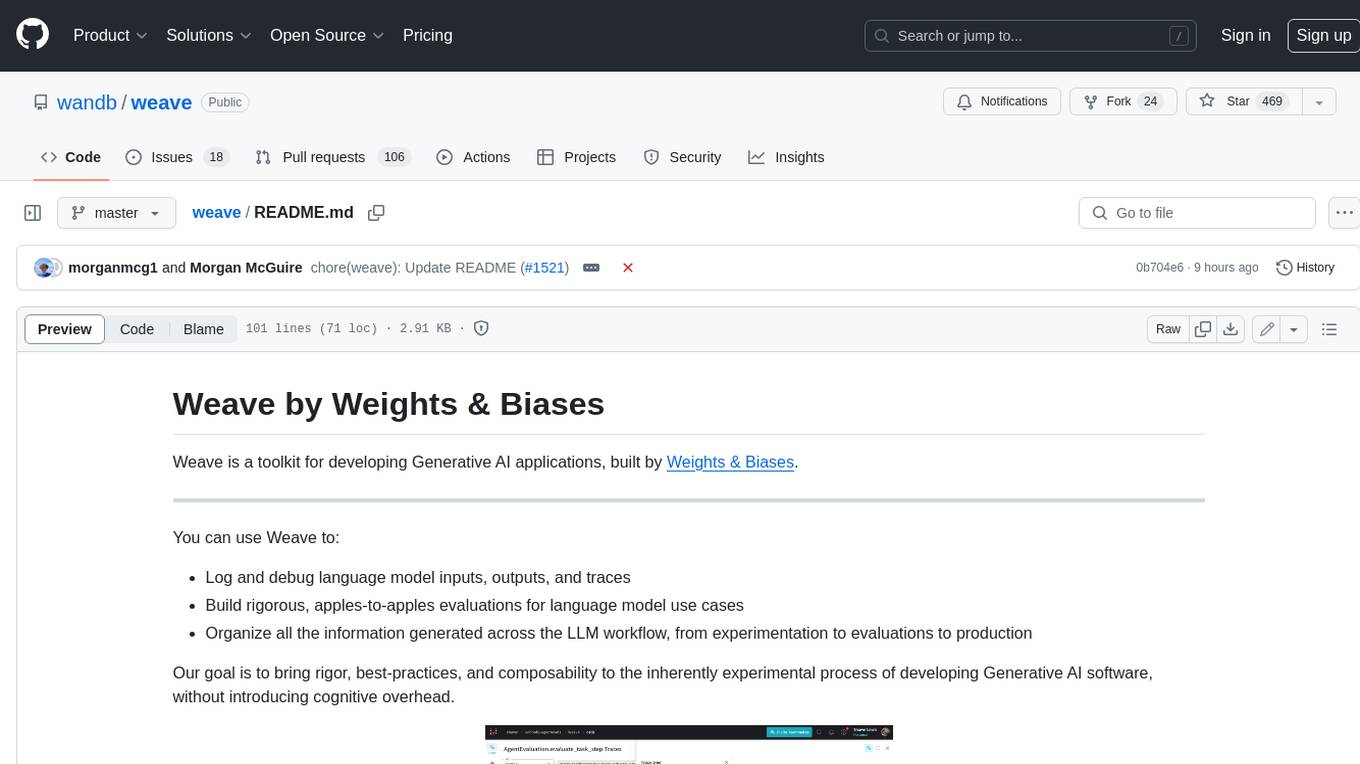
weave
Weave is a toolkit for developing Generative AI applications, built by Weights & Biases. With Weave, you can log and debug language model inputs, outputs, and traces; build rigorous, apples-to-apples evaluations for language model use cases; and organize all the information generated across the LLM workflow, from experimentation to evaluations to production. Weave aims to bring rigor, best-practices, and composability to the inherently experimental process of developing Generative AI software, without introducing cognitive overhead.
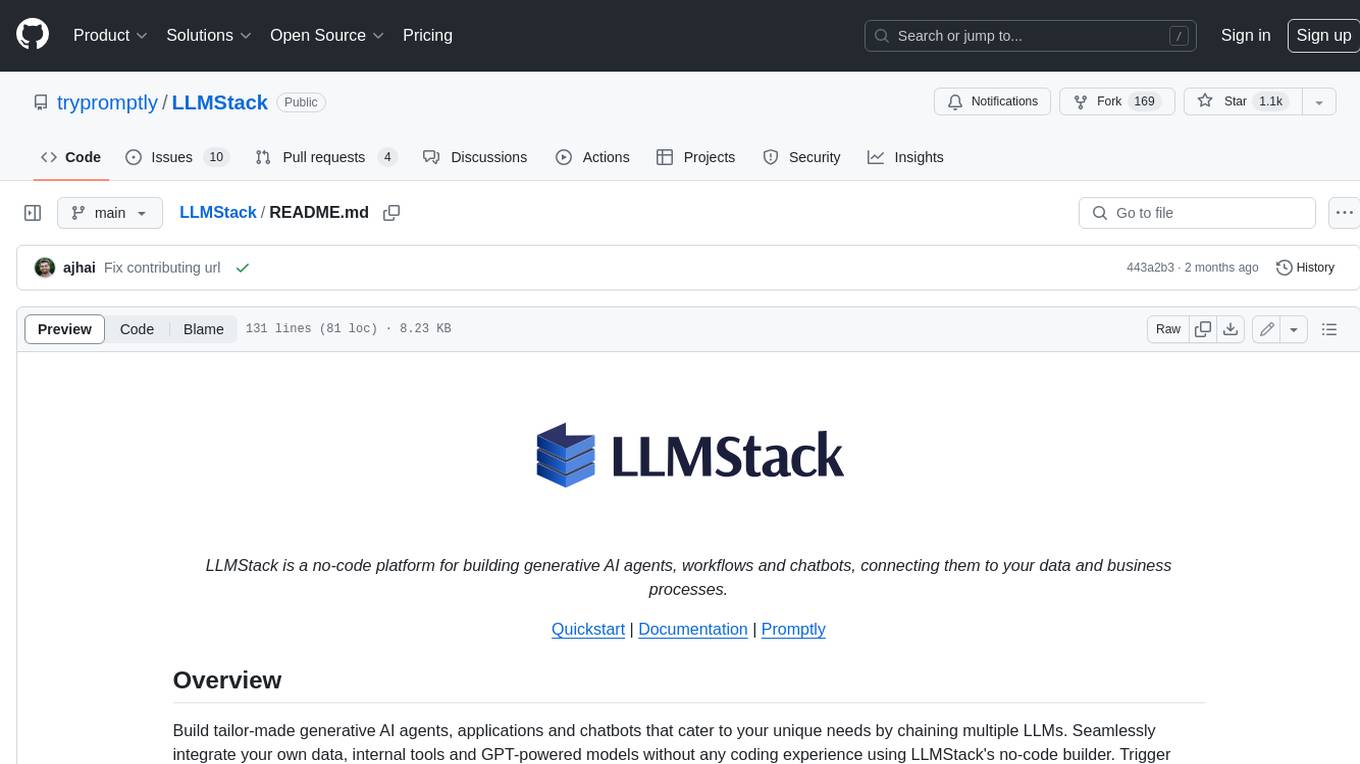
LLMStack
LLMStack is a no-code platform for building generative AI agents, workflows, and chatbots. It allows users to connect their own data, internal tools, and GPT-powered models without any coding experience. LLMStack can be deployed to the cloud or on-premise and can be accessed via HTTP API or triggered from Slack or Discord.
VisionCraft
The VisionCraft API is a free API for using over 100 different AI models. From images to sound.
kaito
Kaito is an operator that automates the AI/ML inference model deployment in a Kubernetes cluster. It manages large model files using container images, avoids tuning deployment parameters to fit GPU hardware by providing preset configurations, auto-provisions GPU nodes based on model requirements, and hosts large model images in the public Microsoft Container Registry (MCR) if the license allows. Using Kaito, the workflow of onboarding large AI inference models in Kubernetes is largely simplified.
PyRIT
PyRIT is an open access automation framework designed to empower security professionals and ML engineers to red team foundation models and their applications. It automates AI Red Teaming tasks to allow operators to focus on more complicated and time-consuming tasks and can also identify security harms such as misuse (e.g., malware generation, jailbreaking), and privacy harms (e.g., identity theft). The goal is to allow researchers to have a baseline of how well their model and entire inference pipeline is doing against different harm categories and to be able to compare that baseline to future iterations of their model. This allows them to have empirical data on how well their model is doing today, and detect any degradation of performance based on future improvements.
tabby
Tabby is a self-hosted AI coding assistant, offering an open-source and on-premises alternative to GitHub Copilot. It boasts several key features: * Self-contained, with no need for a DBMS or cloud service. * OpenAPI interface, easy to integrate with existing infrastructure (e.g Cloud IDE). * Supports consumer-grade GPUs.
spear
SPEAR (Simulator for Photorealistic Embodied AI Research) is a powerful tool for training embodied agents. It features 300 unique virtual indoor environments with 2,566 unique rooms and 17,234 unique objects that can be manipulated individually. Each environment is designed by a professional artist and features detailed geometry, photorealistic materials, and a unique floor plan and object layout. SPEAR is implemented as Unreal Engine assets and provides an OpenAI Gym interface for interacting with the environments via Python.
Magick
Magick is a groundbreaking visual AIDE (Artificial Intelligence Development Environment) for no-code data pipelines and multimodal agents. Magick can connect to other services and comes with nodes and templates well-suited for intelligent agents, chatbots, complex reasoning systems and realistic characters.