


vibes.diy
Generate shareable apps in seconds with the most forkable AI app generator, deployed as single page app
Stars: 117
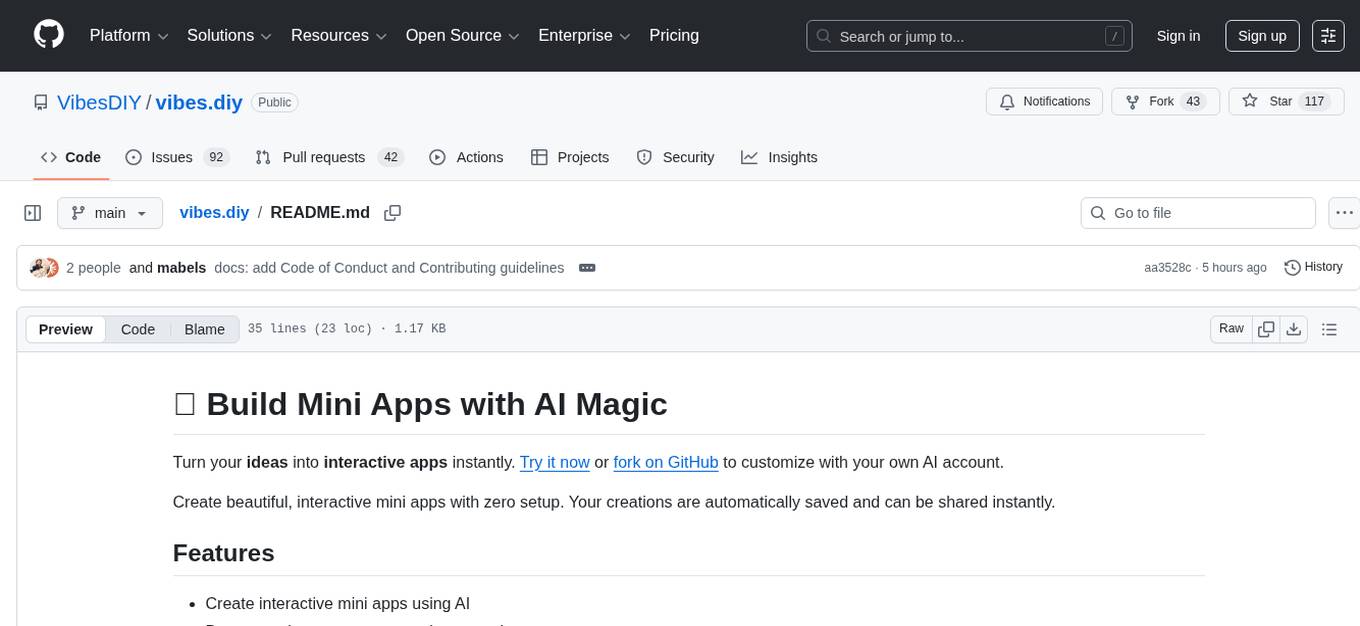
vibes.diy is a tool that allows users to easily create interactive mini apps using AI technology. With zero setup required, users can turn their ideas into interactive apps instantly. The tool provides features such as browsing and returning to previous creations, auto-saving work securely, and seeing app changes in real-time. Every app created is automatically saved, allowing users to browse creations, return to previous work, keep track of building history, and save screenshots of apps.
README:
Turn your ideas into interactive apps instantly. Try it now or fork on GitHub to customize with your own AI account.
Create beautiful, interactive mini apps with zero setup. Your creations are automatically saved and can be shared instantly.
- Create interactive mini apps using AI
- Browse and return to your previous creations
- Auto-save your work securely
- See your app changes in real-time
- Try the demo - No setup required!
- Or set up your own:
- Clone the repository
- Install with
pnpm i - Run
pnpm dev
Every app you create is automatically saved, so you can:
- Browse your creations in the sidebar
- Return to previous work anytime
- Keep track of your building history
- Save screenshots of your apps
For Tasks:
Click tags to check more tools for each tasksFor Jobs:
Alternative AI tools for vibes.diy
Similar Open Source Tools
vibes.diy
vibes.diy is a tool that allows users to easily create interactive mini apps using AI technology. With zero setup required, users can turn their ideas into interactive apps instantly. The tool provides features such as browsing and returning to previous creations, auto-saving work securely, and seeing app changes in real-time. Every app created is automatically saved, allowing users to browse creations, return to previous work, keep track of building history, and save screenshots of apps.
ollama-app
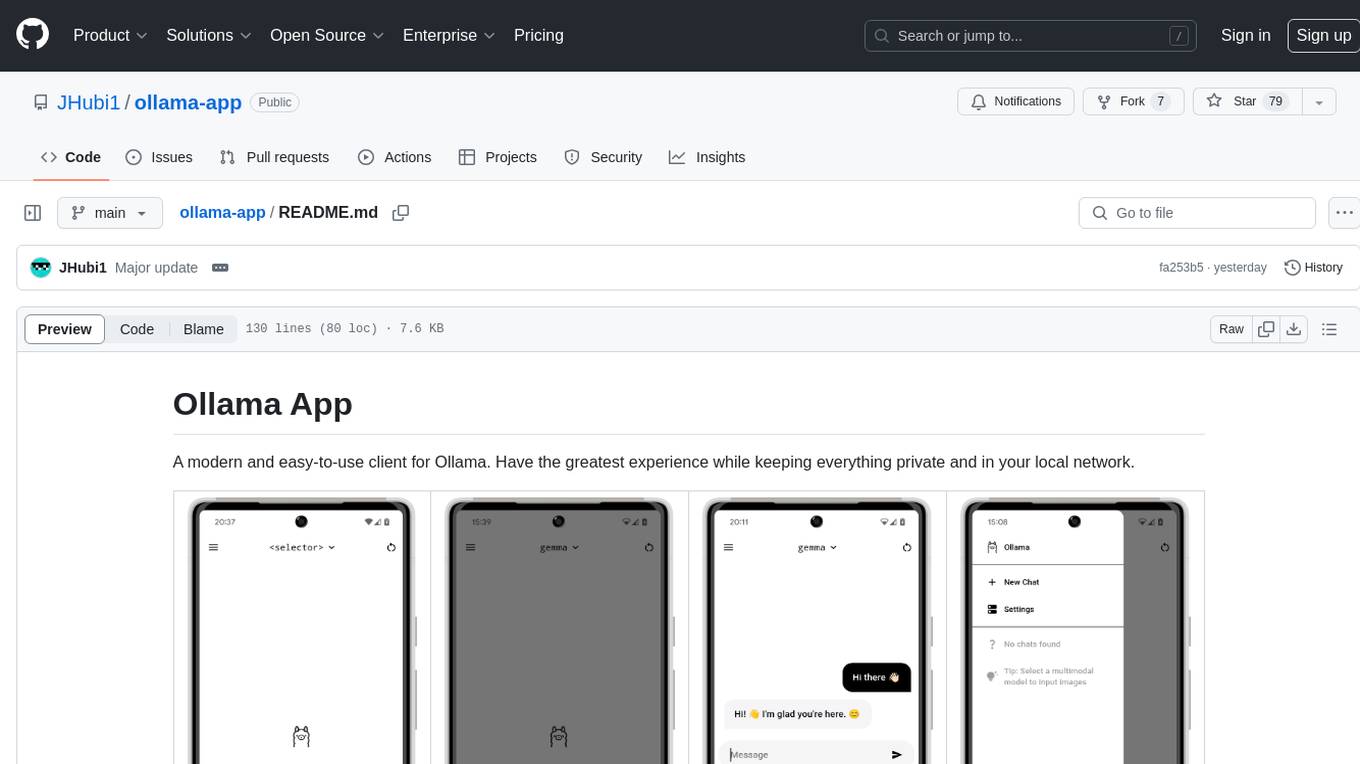
Ollama App is a modern and easy-to-use client for Ollama, allowing users to have a private experience within their local network. The app connects to an Ollama server using its API endpoint, enabling users to chat and interact with various models. It supports multimodal model input, a multilingual interface, and custom builds for personalized experiences. Users can easily set up the app, navigate through the side menu, select models, and create custom builds to tailor the app to their needs.
promptbuddy
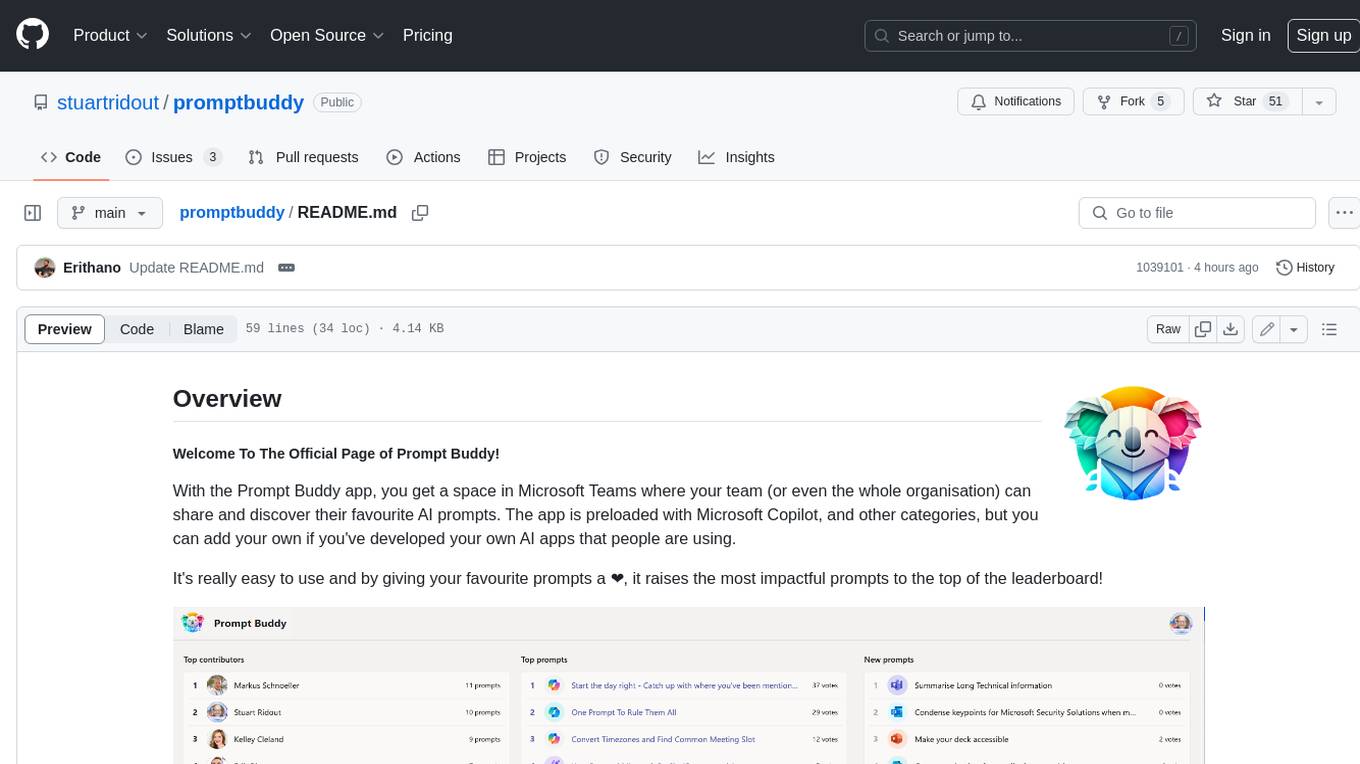
Prompt Buddy is a Microsoft Teams app that provides a central location for teams to share and discover their favorite AI prompts. It comes preloaded with Microsoft Copilot and other categories, but users can also add their own custom prompts. The app is easy to use and allows users to upvote their favorite prompts, which raises them to the top of the leaderboard. Prompt Buddy also supports dark mode and offers a mobile layout for use on phones. It is built on the Power Platform and can be customized and extended by the installer.
obsidian-pieces
Pieces for Developers is a closed-source Obsidian plugin designed to revolutionize coding workflows by incorporating key capabilities and favorite features directly into the Obsidian environment. The plugin, Pieces Copilot for Obsidian, enhances coding and problem-solving experiences by providing insights on code snippets, generating samples, and facilitating navigation through PRs. Users can capture, manage, share, and discover code snippets and developer materials with ease, bringing efficiency and organization to their coding experience.
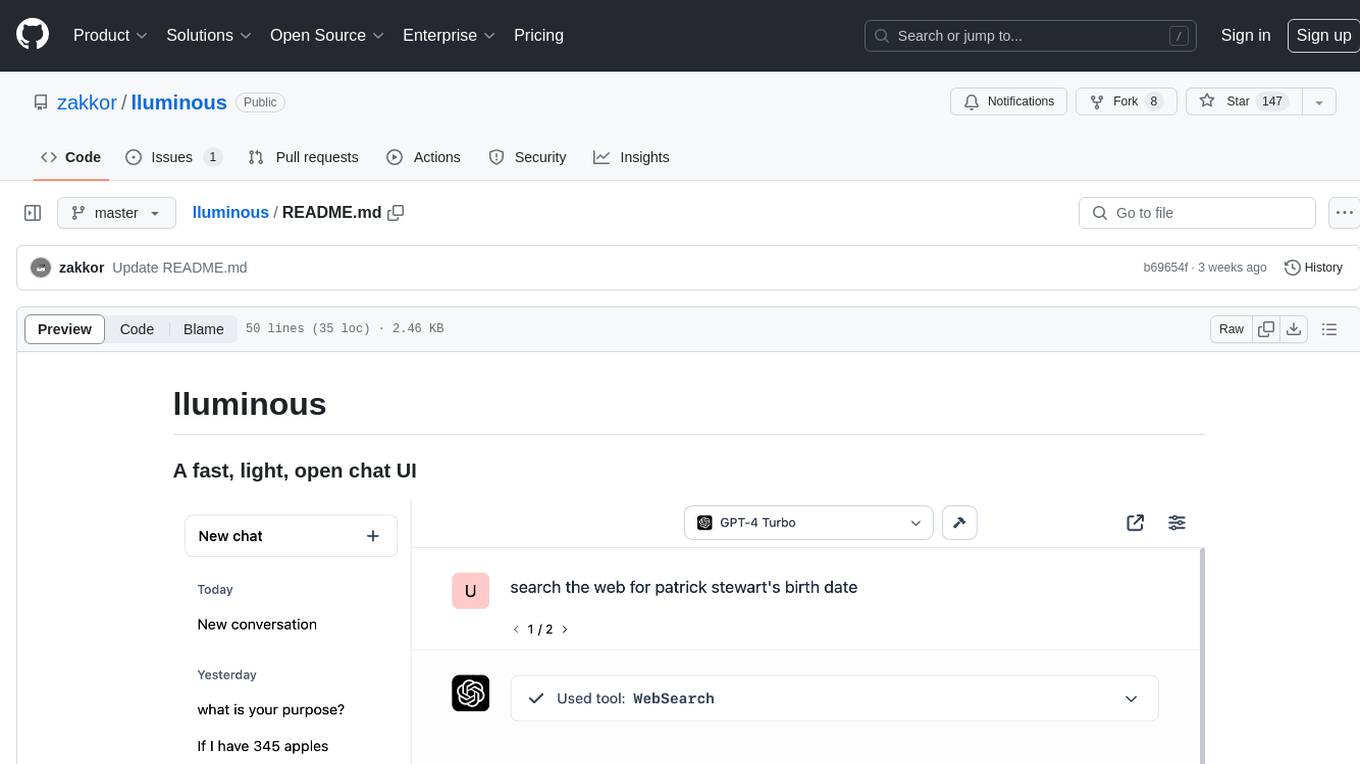
lluminous
lluminous is a fast and light open chat UI that supports multiple providers such as OpenAI, Anthropic, and Groq models. Users can easily plug in their API keys locally to access various models for tasks like multimodal input, image generation, multi-shot prompting, pre-filled responses, and more. The tool ensures privacy by storing all conversation history and keys locally on the user's device. Coming soon features include memory tool, file ingestion/embedding, embeddings-based web search, and prompt templates.
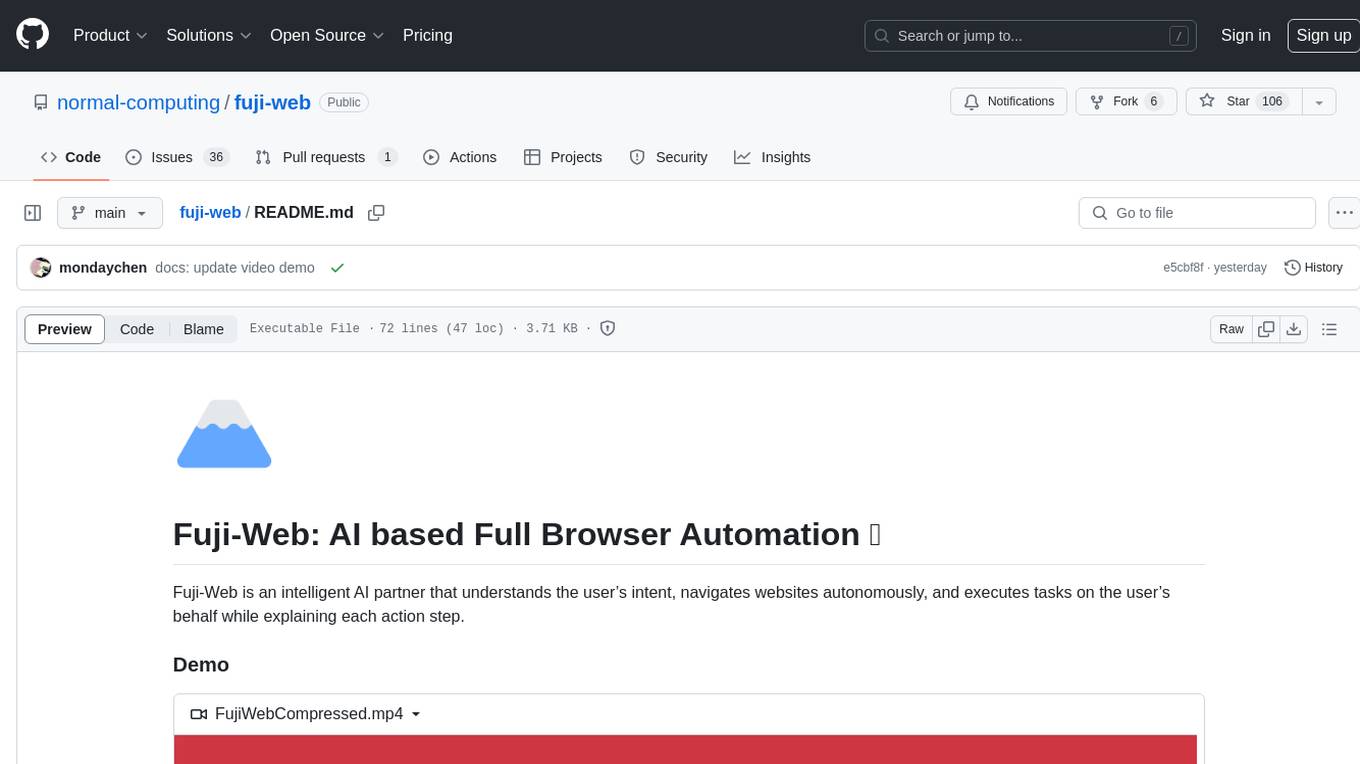
fuji-web
Fuji-Web is an intelligent AI partner designed for full browser automation. It autonomously navigates websites and performs tasks on behalf of the user while providing explanations for each action step. Users can easily install the extension in their browser, access the Fuji icon to input tasks, and interact with the tool to streamline web browsing tasks. The tool aims to enhance user productivity by automating repetitive web actions and providing a seamless browsing experience.
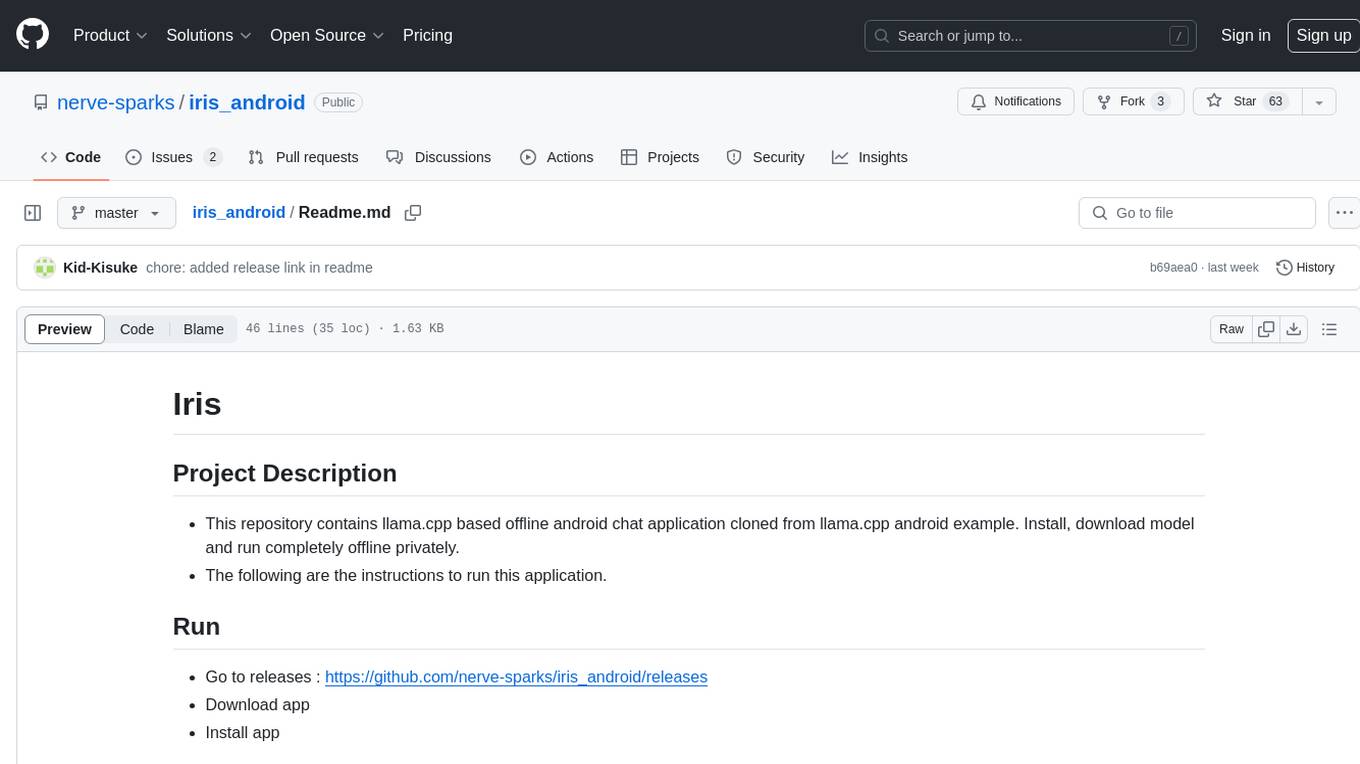
iris_android
This repository contains an offline Android chat application based on llama.cpp example. Users can install, download models, and run the app completely offline and privately. To use the app, users need to go to the releases page, download and install the app. Building the app requires downloading Android Studio, cloning the repository, and importing it into Android Studio. The app can be run offline by following specific steps such as enabling developer options, wireless debugging, and downloading the stable LM model. The project is maintained by Nerve Sparks and contributions are welcome through creating feature branches and pull requests.
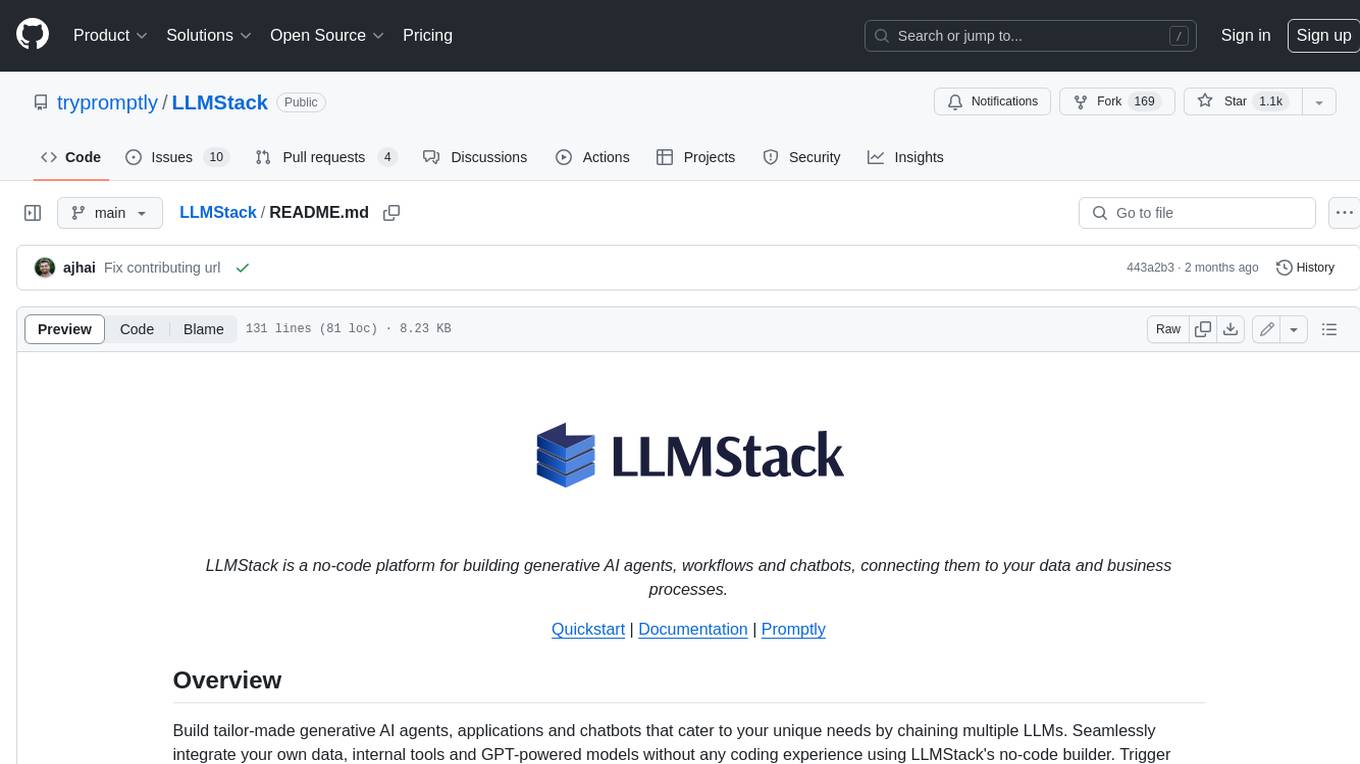
LLMStack
LLMStack is a no-code platform for building generative AI agents, workflows, and chatbots. It allows users to connect their own data, internal tools, and GPT-powered models without any coding experience. LLMStack can be deployed to the cloud or on-premise and can be accessed via HTTP API or triggered from Slack or Discord.
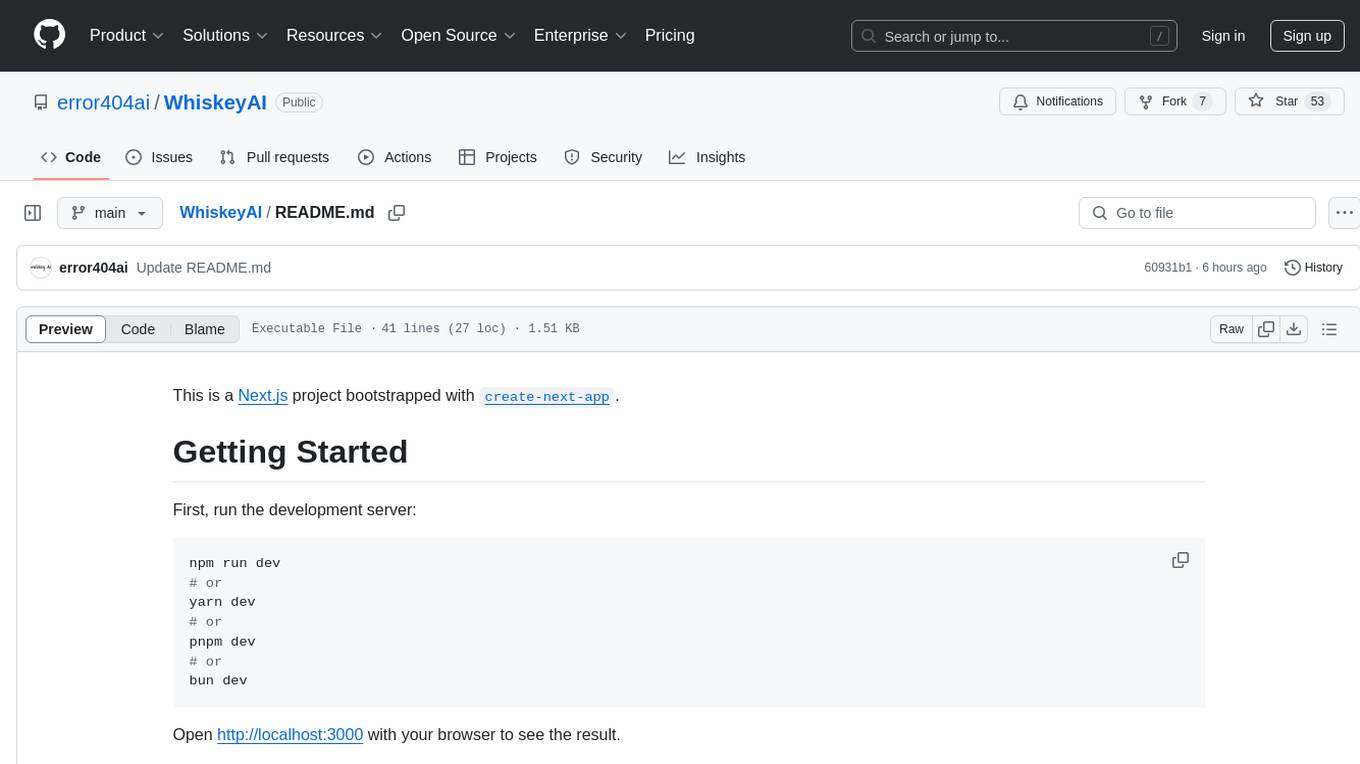
WhiskeyAI
WhiskeyAI is a Next.js project that serves as a starting point for developing web applications. It includes a development server for live previewing changes and utilizes next/font for optimizing and loading the Geist font family. The project encourages contributions and feedback from users, providing resources for learning Next.js and deploying applications on the Vercel platform.
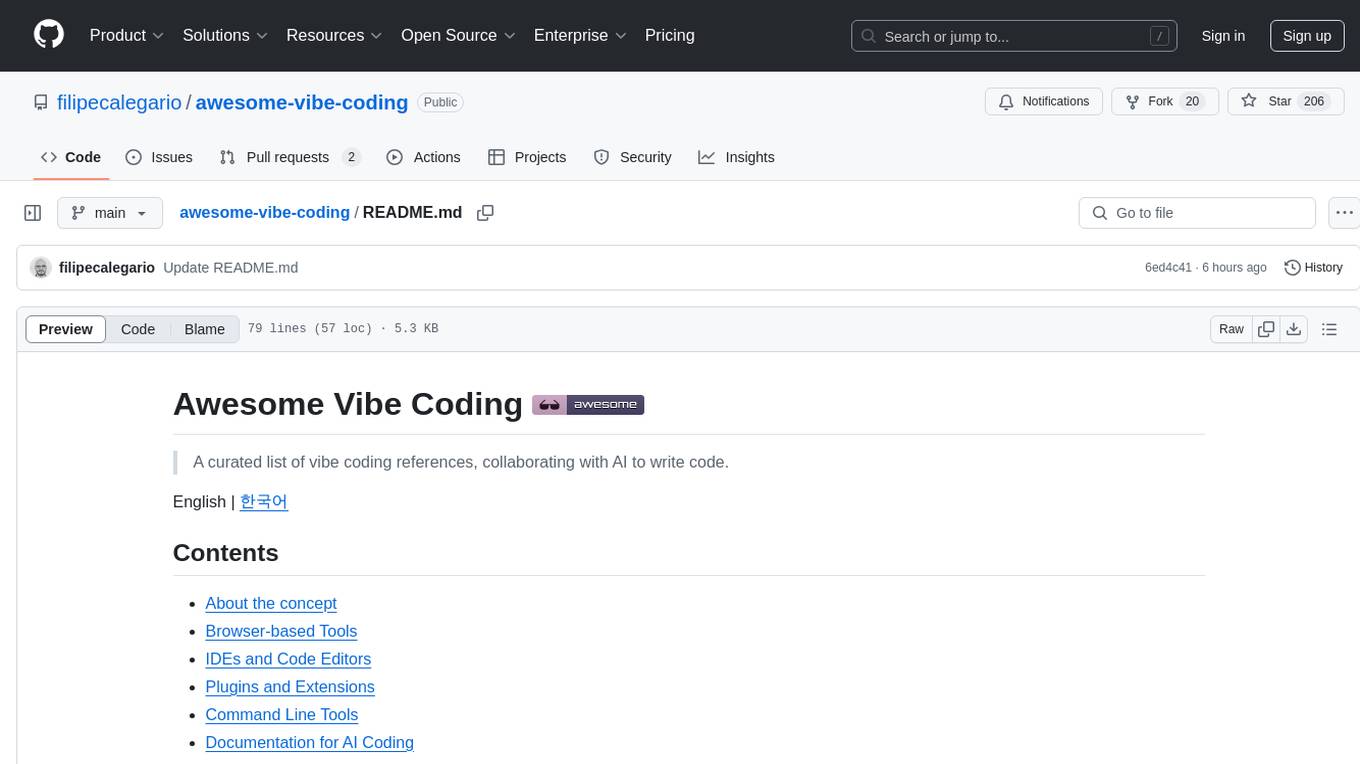
awesome-vibe-coding
Awesome Vibe Coding is a curated list of references for vibe coding, which involves collaborating with AI to write code. It includes browser-based tools, IDEs, code editors, desktop apps, plugins, command line tools, and documentation for AI coding. The concept of vibe coding is about fully embracing the vibes, exponentials, and forgetting that the code even exists while building projects or web apps. The repository provides a collection of tools and resources to facilitate the process of coding with a focus on creativity and efficiency.
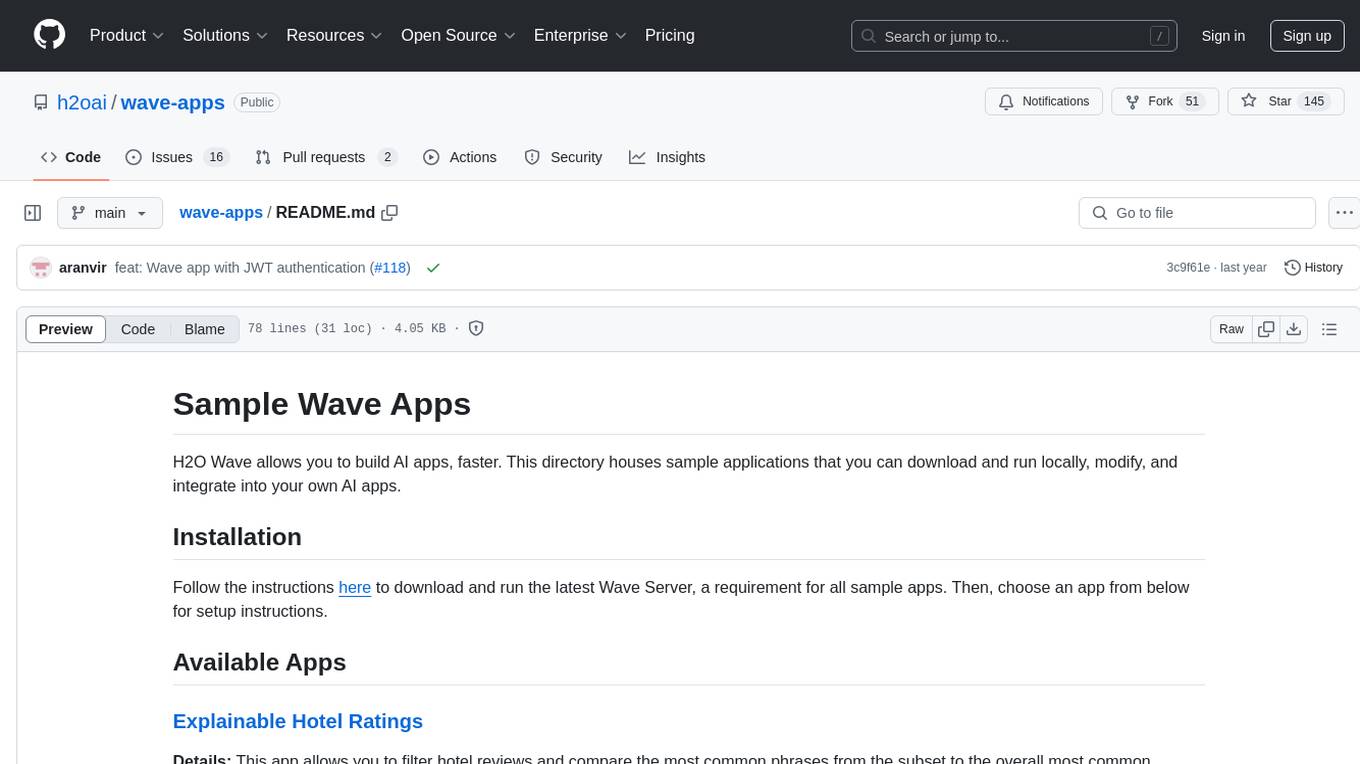
wave-apps
Wave Apps is a directory of sample applications built on H2O Wave, allowing users to build AI apps faster. The apps cover various use cases such as explainable hotel ratings, human-in-the-loop credit risk assessment, mitigating churn risk, online shopping recommendations, and sales forecasting EDA. Users can download, modify, and integrate these sample apps into their own projects to learn about app development and AI model deployment.
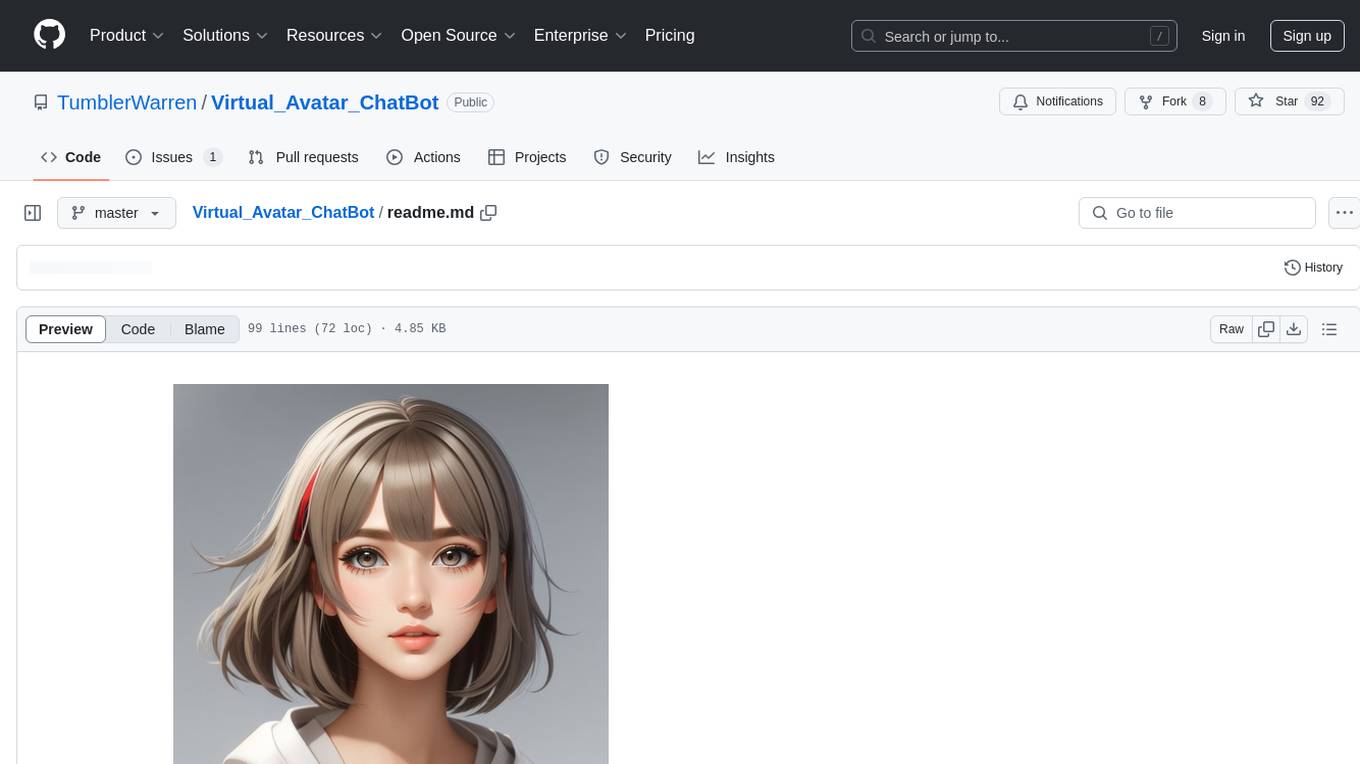
Virtual_Avatar_ChatBot
Virtual_Avatar_ChatBot is a free AI Chatbot with visual movement that runs on your local computer with minimal GPU requirement. It supports various features like Oogbabooga, betacharacter.ai, and Locall LLM. The tool requires Windows 7 or above, Python, C++ Compiler, Git, and other dependencies. Users can contribute to the open-source project by reporting bugs, creating pull requests, or suggesting new features. The goal is to enhance Voicevox functionality, support local LLM inference, and give the waifu access to the internet. The project references various tools like desktop-waifu, CharacterAI, Whisper, PYVTS, COQUI-AI, VOICEVOX, and VOICEVOX API.
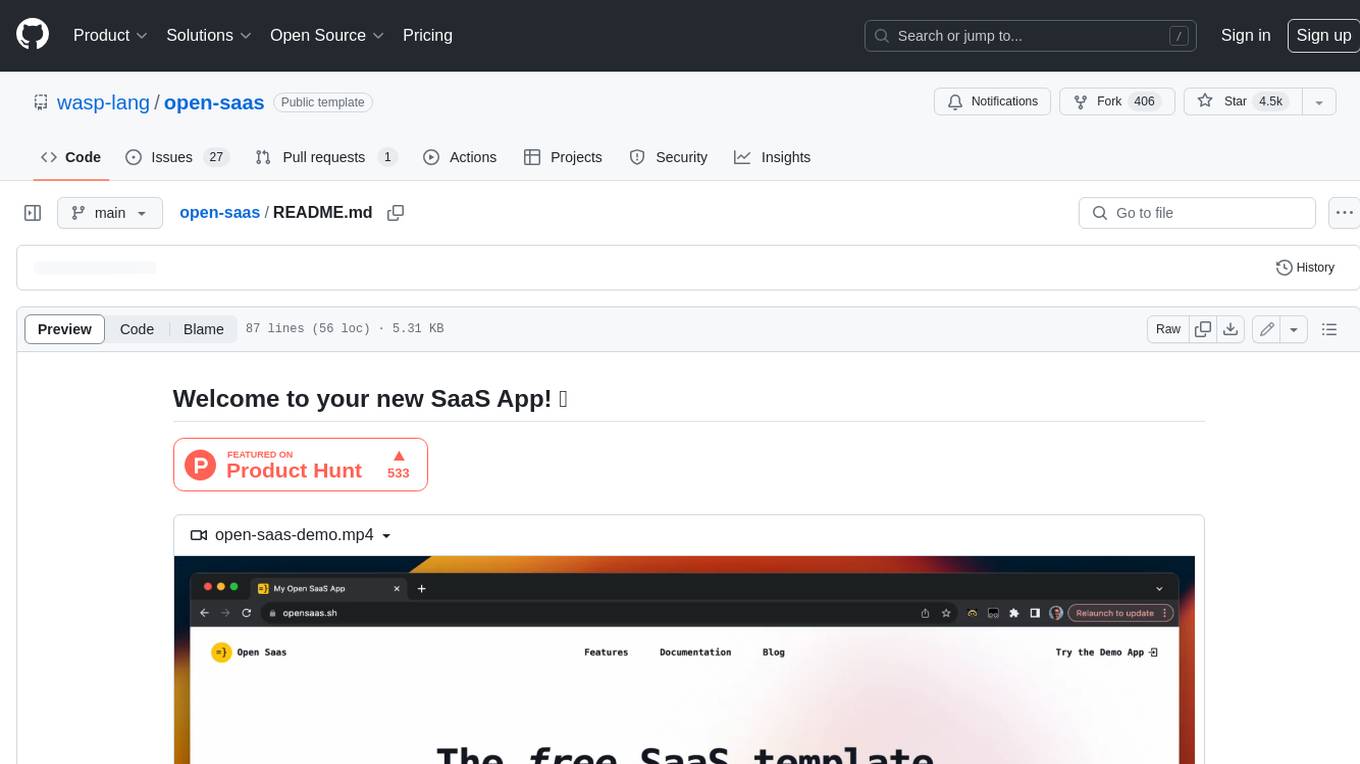
open-saas
Open SaaS is a free and open-source React and Node.js template for building SaaS applications. It comes with a variety of features out of the box, including authentication, payments, analytics, and more. Open SaaS is built on top of the Wasp framework, which provides a number of features to make it easy to build SaaS applications, such as full-stack authentication, end-to-end type safety, jobs, and one-command deploy.
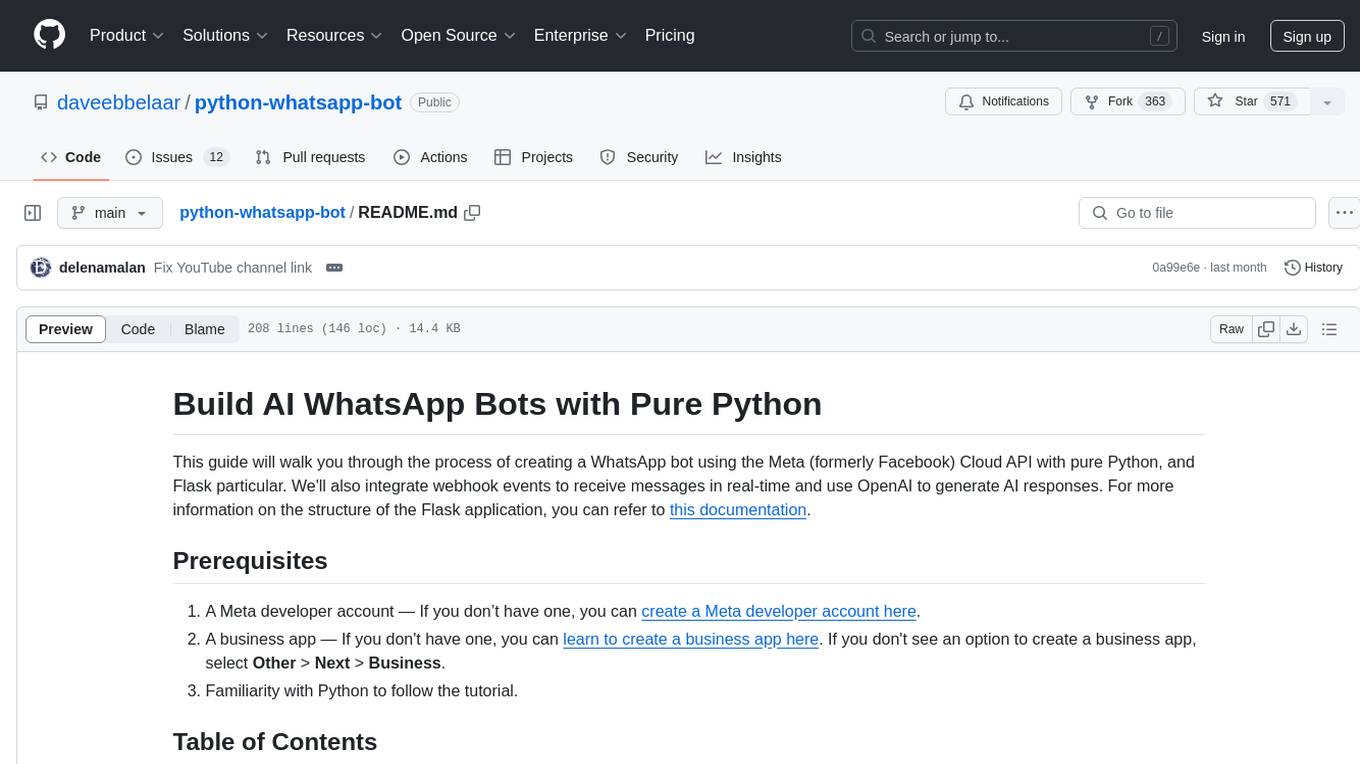
python-whatsapp-bot
This repository provides a comprehensive guide on building AI WhatsApp bots using Python and Flask. It covers setting up a Meta developer account, integrating webhook events for real-time message reception, and using OpenAI for AI responses. The tutorial includes steps for selecting phone numbers, sending messages with the API, configuring webhooks, integrating AI into the application, and adding a phone number. It also explains the process of creating a system user, obtaining access tokens, and validating verification requests and payloads for webhook security. The repository aims to help users create intelligent WhatsApp bots with Python and AI capabilities.
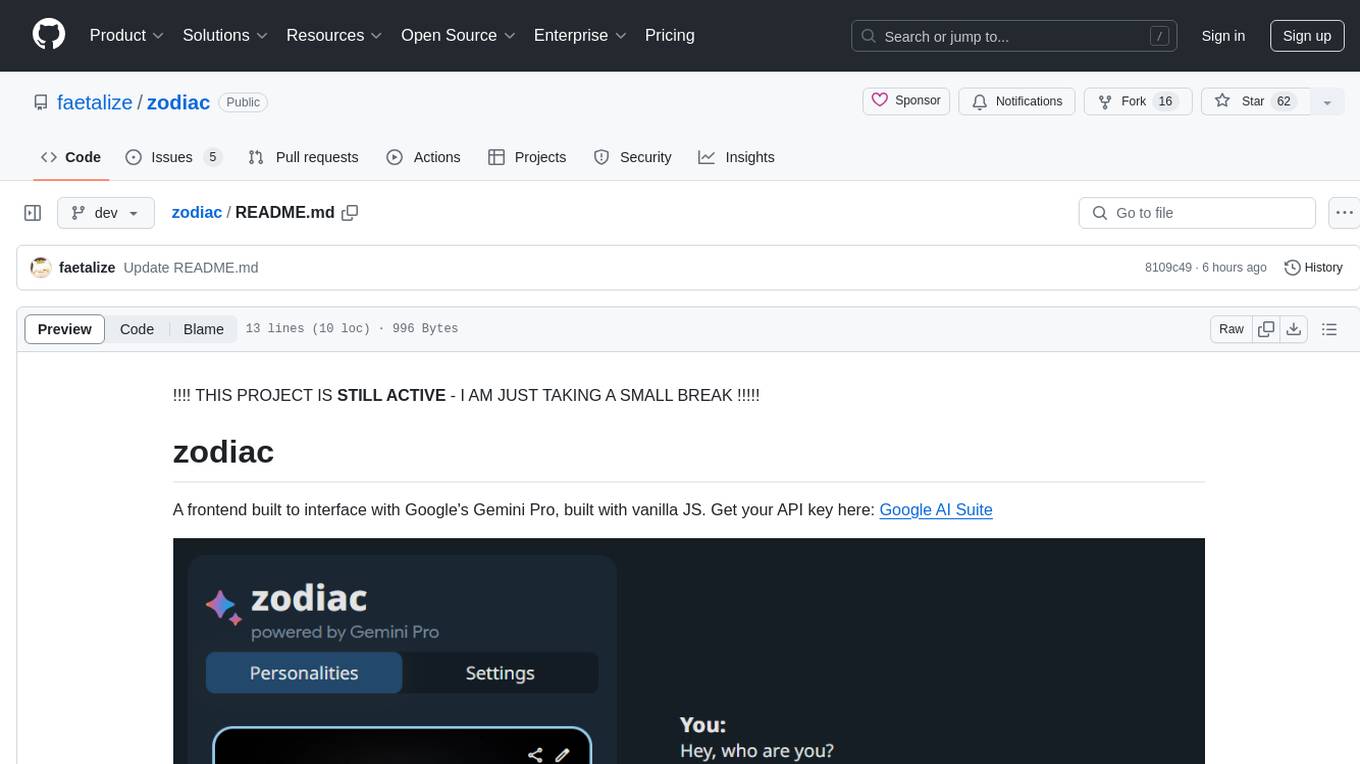
zodiac
Zodiac is a frontend tool designed to interact with Google's Gemini Pro using vanilla JS. It provides a user-friendly interface for accessing the functionalities of Google AI Suite. The tool simplifies the process of utilizing Gemini Pro's capabilities through a straightforward web application. Users can easily integrate their API key and access various features offered by Google AI Suite. Zodiac aims to streamline the interaction with Gemini Pro and enhance the user experience by offering a simple and intuitive interface for managing AI tasks.
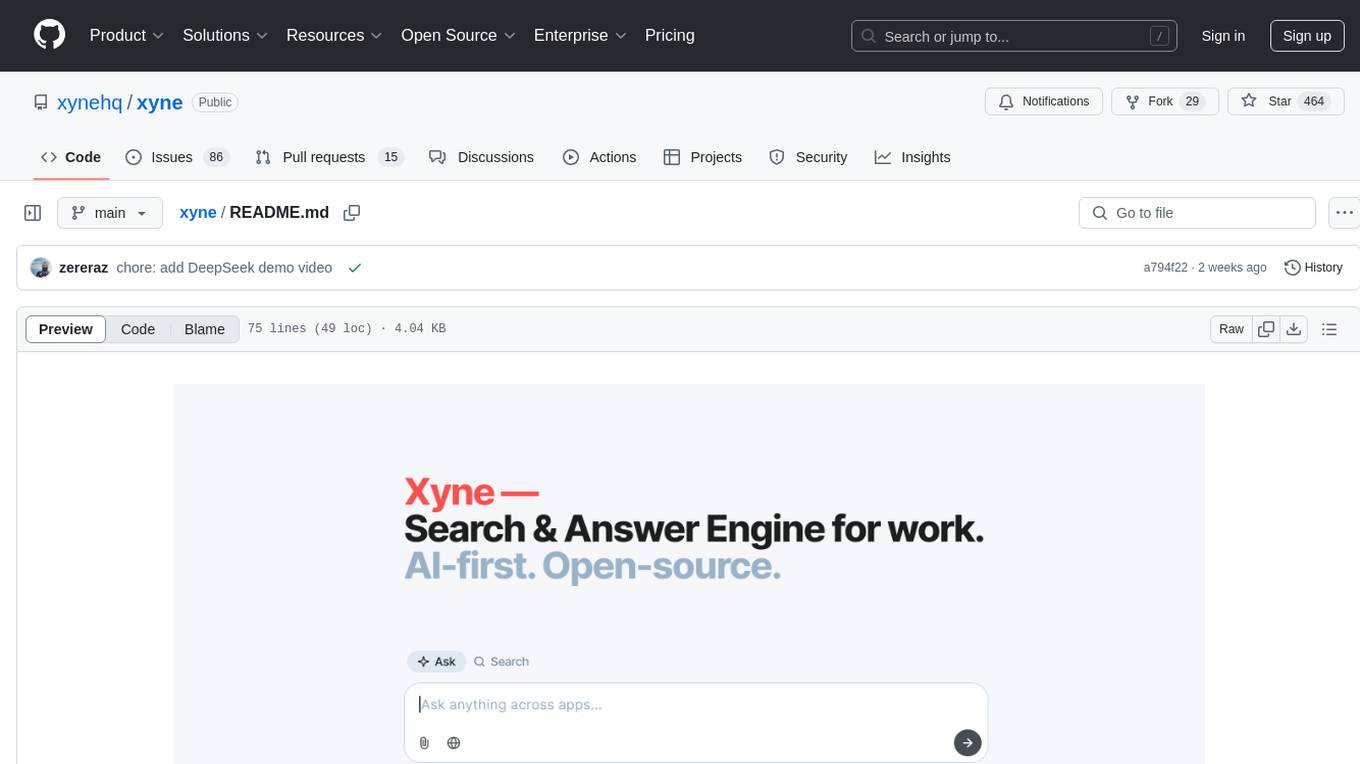
xyne
Xyne is an AI-first Search & Answer Engine for work, serving as an OSS alternative to Glean, Gemini, and MS Copilot. It securely indexes data from various applications like Google Workspace, Atlassian suite, Slack, and Github, providing a Google + ChatGPT-like experience to find information and get up-to-date answers. Users can easily locate files, triage issues, inquire about customers/deals/features/tickets, and discover relevant contacts. Xyne enhances AI models by providing contextual information in a secure, private, and responsible manner, making it the most secure and future-proof solution for integrating AI into work environments.
For similar tasks
vibes.diy
vibes.diy is a tool that allows users to easily create interactive mini apps using AI technology. With zero setup required, users can turn their ideas into interactive apps instantly. The tool provides features such as browsing and returning to previous creations, auto-saving work securely, and seeing app changes in real-time. Every app created is automatically saved, allowing users to browse creations, return to previous work, keep track of building history, and save screenshots of apps.
zero-true
Zero-True is a Python and SQL reactive computational notebook designed for building and collaborating on data-driven applications. It offers an integrated and simple environment with transparent updates, dynamic and interactive UI rendering, fast prototyping capabilities, and open-source community contributions. Users can create rich, reactive apps with ease and publish them confidently. Zero-True aims to improve data accessibility and foster collaboration among users.
awesome-vibe-coding
Awesome Vibe Coding is a curated list of references for vibe coding, which involves collaborating with AI to write code. It includes browser-based tools, IDEs, code editors, desktop apps, plugins, command line tools, and documentation for AI coding. The concept of vibe coding is about fully embracing the vibes, exponentials, and forgetting that the code even exists while building projects or web apps. The repository provides a collection of tools and resources to facilitate the process of coding with a focus on creativity and efficiency.
dioneapp
Dione is a tool that simplifies the installation of complex applications by providing a user-friendly interface for users. It also offers developers a seamless way to distribute apps using a JSON file. With Dione, app installation becomes effortless, eliminating the need for technical knowledge or command-line usage.
MentraOS
MentraOS is an open source operating system designed for smart glasses. It simplifies the development of smart glasses apps by handling pairing, connection, data streaming, and cross-compatibility. Developers can create apps using the TypeScript SDK quickly and easily, with access to smart glasses I/O components like displays, microphones, cameras, and speakers. The platform emphasizes cross-compatibility, speed of app development, control over device features, and easy distribution to users. The MentraOS Community is dedicated to promoting open, cross-compatible, and user-controlled personal computing through the development and support of MentraOS.
LLMstudio
LLMstudio by TensorOps is a platform that offers prompt engineering tools for accessing models from providers like OpenAI, VertexAI, and Bedrock. It provides features such as Python Client Gateway, Prompt Editing UI, History Management, and Context Limit Adaptability. Users can track past runs, log costs and latency, and export history to CSV. The tool also supports automatic switching to larger-context models when needed. Coming soon features include side-by-side comparison of LLMs, automated testing, API key administration, project organization, and resilience against rate limits. LLMstudio aims to streamline prompt engineering, provide execution history tracking, and enable effortless data export, offering an evolving environment for teams to experiment with advanced language models.
sourcegraph-public-snapshot
Sourcegraph is a tool that simplifies reading, writing, and fixing code in large and complex codebases. It offers features such as code search across repositories, code intelligence for code navigation and history tracing, and the ability to roll out large-scale changes to multiple repositories simultaneously. Sourcegraph can be used on the cloud or self-hosted, and provides public code search on Sourcegraph.com. The tool is designed to enhance code understanding and collaboration within development teams.
hia
HIA (Health Insights Agent) is an AI agent designed to analyze blood reports and provide personalized health insights. It features an intelligent agent-based architecture with multi-model cascade system, in-context learning, PDF upload and text extraction, secure user authentication, session history tracking, and a modern UI. The tech stack includes Streamlit for frontend, Groq for AI integration, Supabase for database, PDFPlumber for PDF processing, and Supabase Auth for authentication. The project structure includes components for authentication, UI, configuration, services, agents, and utilities. Contributions are welcome, and the project is licensed under MIT.
For similar jobs
sweep
Sweep is an AI junior developer that turns bugs and feature requests into code changes. It automatically handles developer experience improvements like adding type hints and improving test coverage.
teams-ai
The Teams AI Library is a software development kit (SDK) that helps developers create bots that can interact with Teams and Microsoft 365 applications. It is built on top of the Bot Framework SDK and simplifies the process of developing bots that interact with Teams' artificial intelligence capabilities. The SDK is available for JavaScript/TypeScript, .NET, and Python.
ai-guide
This guide is dedicated to Large Language Models (LLMs) that you can run on your home computer. It assumes your PC is a lower-end, non-gaming setup.
classifai
Supercharge WordPress Content Workflows and Engagement with Artificial Intelligence. Tap into leading cloud-based services like OpenAI, Microsoft Azure AI, Google Gemini and IBM Watson to augment your WordPress-powered websites. Publish content faster while improving SEO performance and increasing audience engagement. ClassifAI integrates Artificial Intelligence and Machine Learning technologies to lighten your workload and eliminate tedious tasks, giving you more time to create original content that matters.
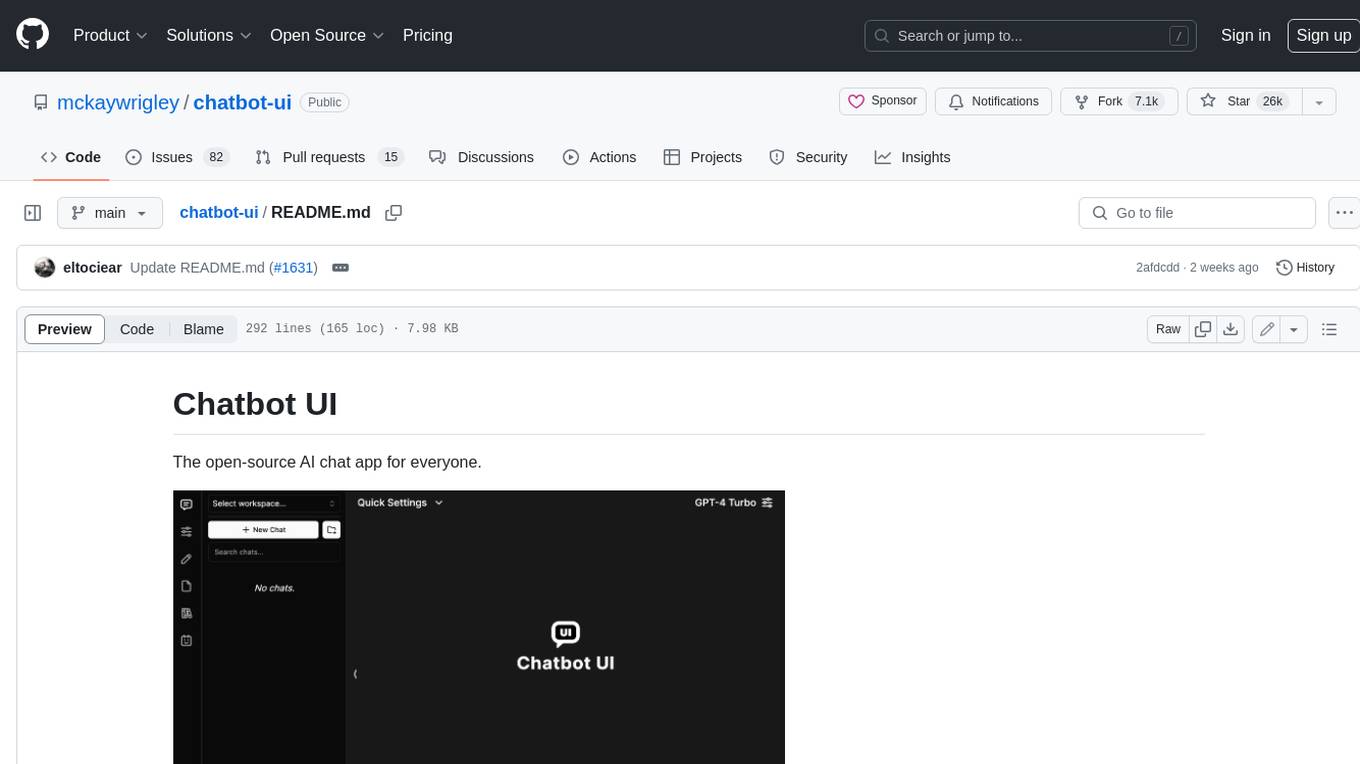
chatbot-ui
Chatbot UI is an open-source AI chat app that allows users to create and deploy their own AI chatbots. It is easy to use and can be customized to fit any need. Chatbot UI is perfect for businesses, developers, and anyone who wants to create a chatbot.
BricksLLM
BricksLLM is a cloud native AI gateway written in Go. Currently, it provides native support for OpenAI, Anthropic, Azure OpenAI and vLLM. BricksLLM aims to provide enterprise level infrastructure that can power any LLM production use cases. Here are some use cases for BricksLLM: * Set LLM usage limits for users on different pricing tiers * Track LLM usage on a per user and per organization basis * Block or redact requests containing PIIs * Improve LLM reliability with failovers, retries and caching * Distribute API keys with rate limits and cost limits for internal development/production use cases * Distribute API keys with rate limits and cost limits for students
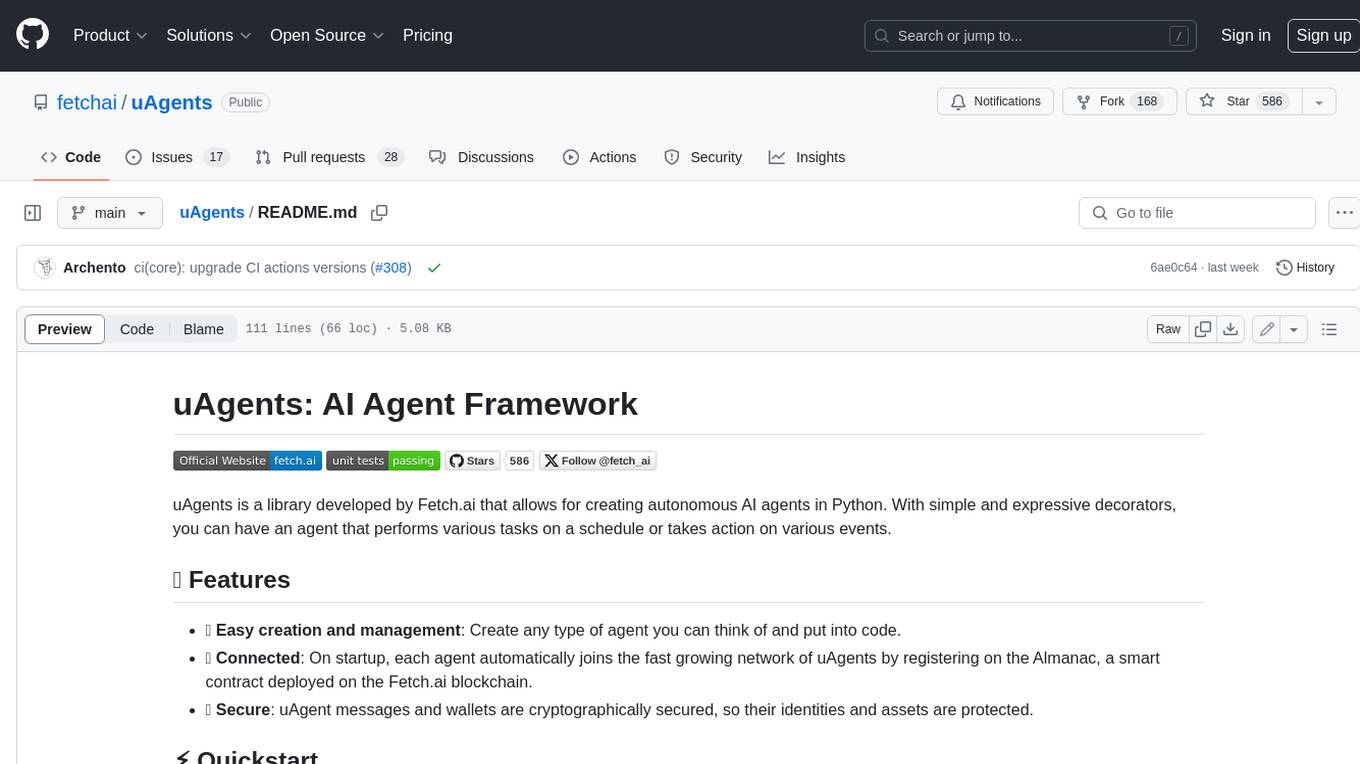
uAgents
uAgents is a Python library developed by Fetch.ai that allows for the creation of autonomous AI agents. These agents can perform various tasks on a schedule or take action on various events. uAgents are easy to create and manage, and they are connected to a fast-growing network of other uAgents. They are also secure, with cryptographically secured messages and wallets.
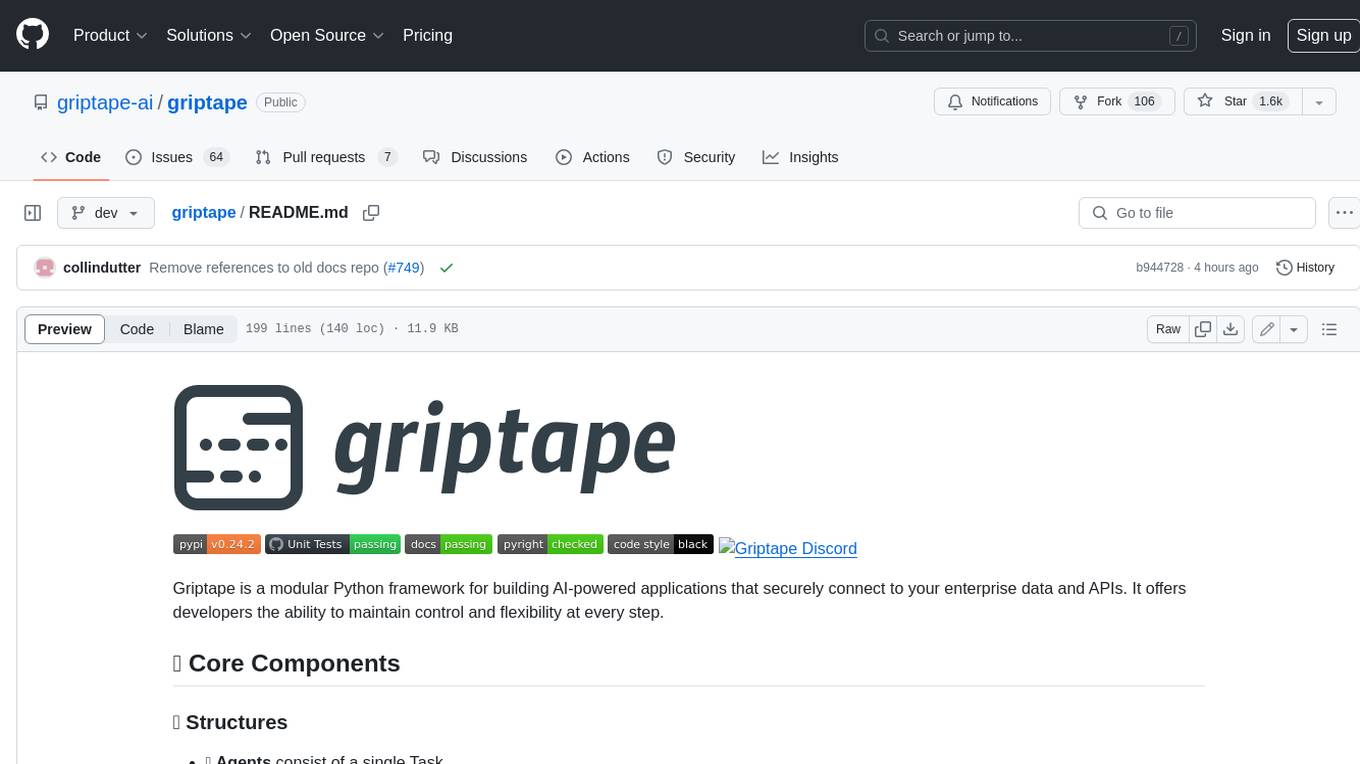
griptape
Griptape is a modular Python framework for building AI-powered applications that securely connect to your enterprise data and APIs. It offers developers the ability to maintain control and flexibility at every step. Griptape's core components include Structures (Agents, Pipelines, and Workflows), Tasks, Tools, Memory (Conversation Memory, Task Memory, and Meta Memory), Drivers (Prompt and Embedding Drivers, Vector Store Drivers, Image Generation Drivers, Image Query Drivers, SQL Drivers, Web Scraper Drivers, and Conversation Memory Drivers), Engines (Query Engines, Extraction Engines, Summary Engines, Image Generation Engines, and Image Query Engines), and additional components (Rulesets, Loaders, Artifacts, Chunkers, and Tokenizers). Griptape enables developers to create AI-powered applications with ease and efficiency.