


ai-client-jsonapi
Aimeos frontend JSON API
Stars: 344
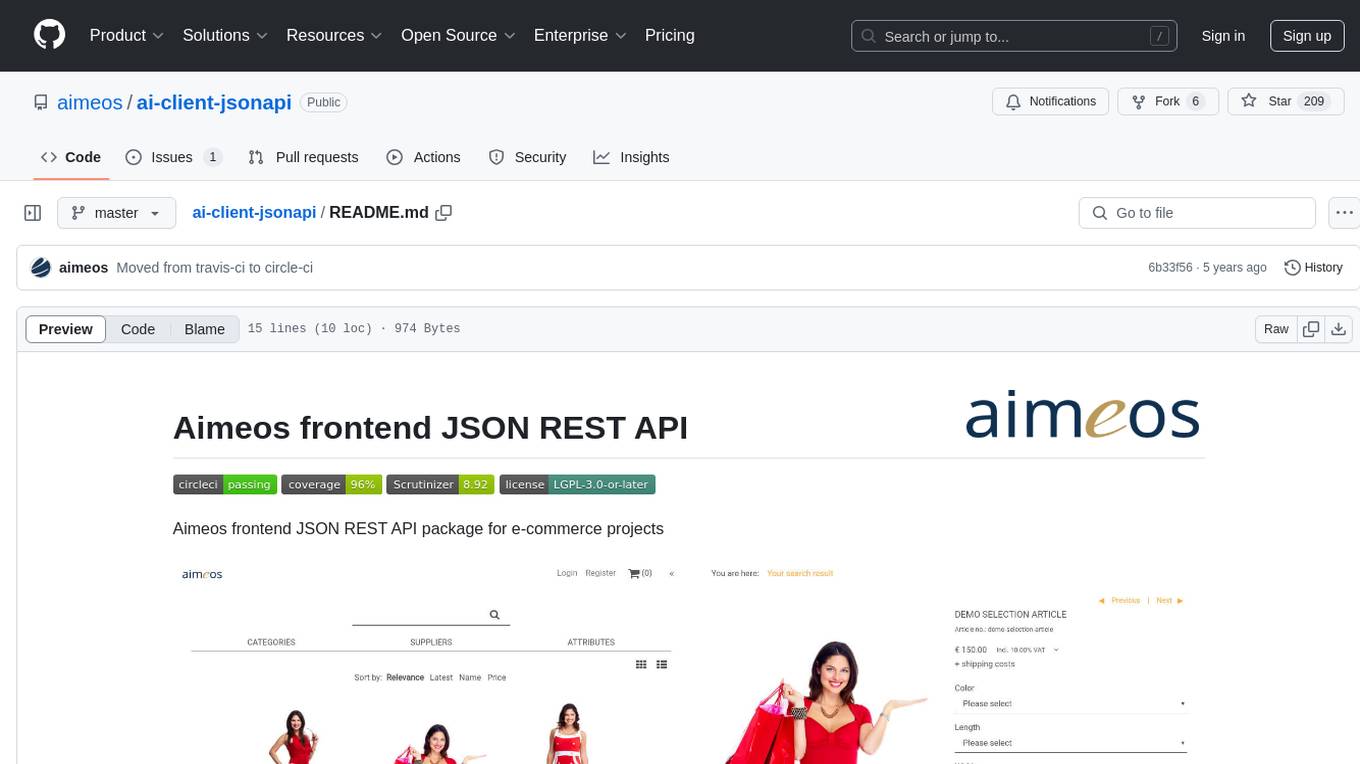
Aimeos frontend JSON REST API is a package designed for e-commerce projects, providing a convenient way to interact with the backend server through JSON format. It offers a set of endpoints that allow users to perform various operations such as retrieving product information, managing shopping carts, and processing orders. The API is built with a focus on performance, scalability, and ease of use, making it suitable for both small and large e-commerce applications.
README:






For Tasks:
Click tags to check more tools for each tasksFor Jobs:
Alternative AI tools for ai-client-jsonapi
Similar Open Source Tools
ai-client-jsonapi
Aimeos frontend JSON REST API is a package designed for e-commerce projects, providing a convenient way to interact with the backend server through JSON format. It offers a set of endpoints that allow users to perform various operations such as retrieving product information, managing shopping carts, and processing orders. The API is built with a focus on performance, scalability, and ease of use, making it suitable for both small and large e-commerce applications.
ai-controller-frontend
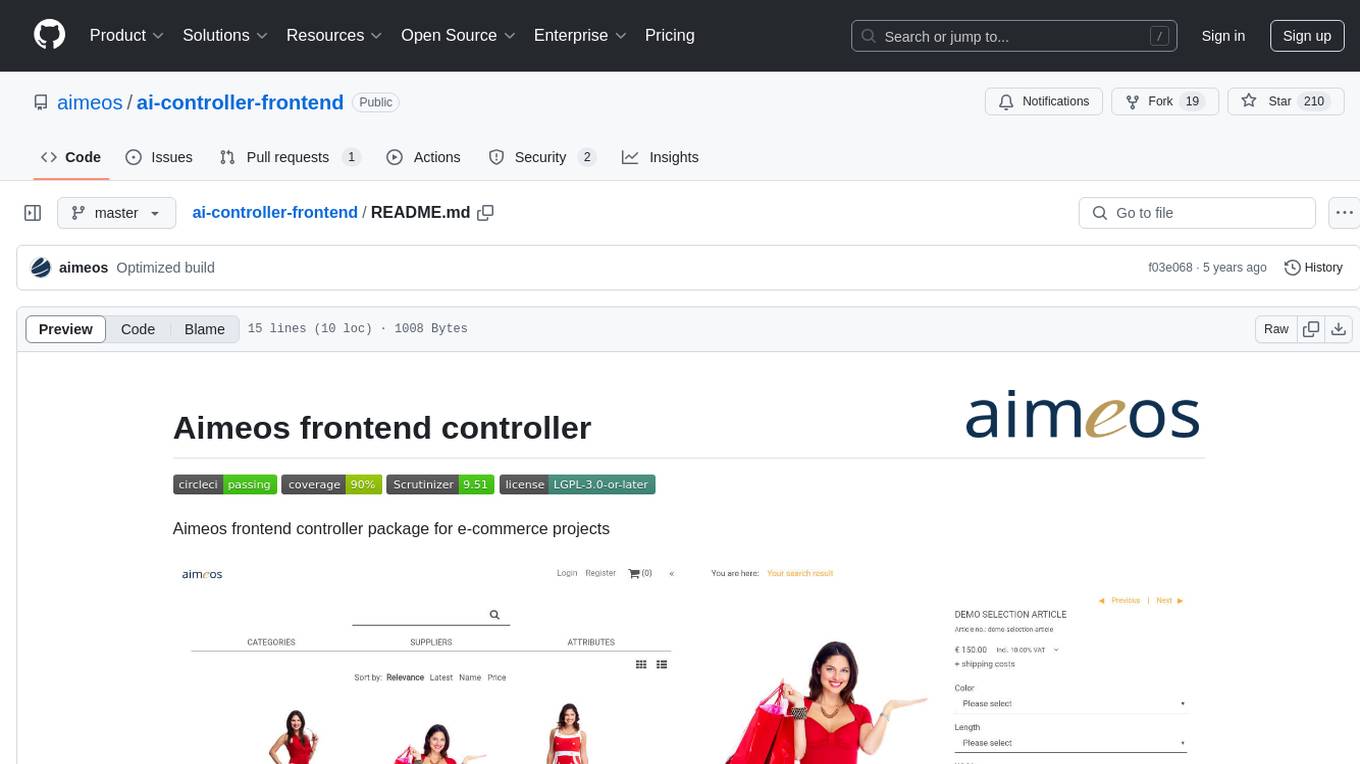
Aimeos frontend controller is a package designed for e-commerce projects. It provides functionality to control the frontend of the project, allowing for easy management and customization of the user interface. The package includes features such as build status monitoring, coverage status tracking, code quality assessment, and licensing information. With Aimeos frontend controller, users can enhance their e-commerce websites with a modern and efficient frontend design.
ai-client-html
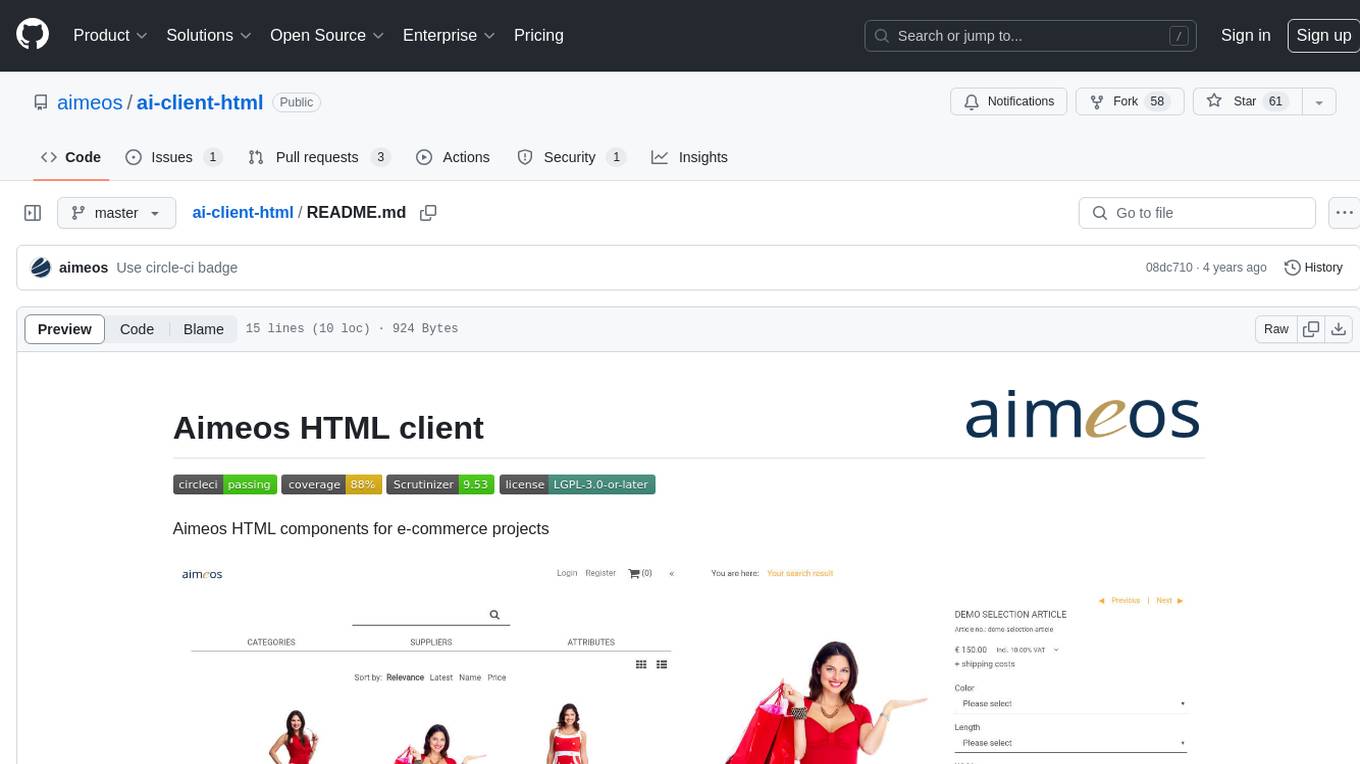
The ai-client-html repository contains HTML components for e-commerce projects. It provides a set of tools and functionalities that can be used to build user interfaces for online stores. The components are designed to be customizable and easy to integrate into various web applications, making it suitable for developers working on e-commerce projects.
ai-admin-jqadm
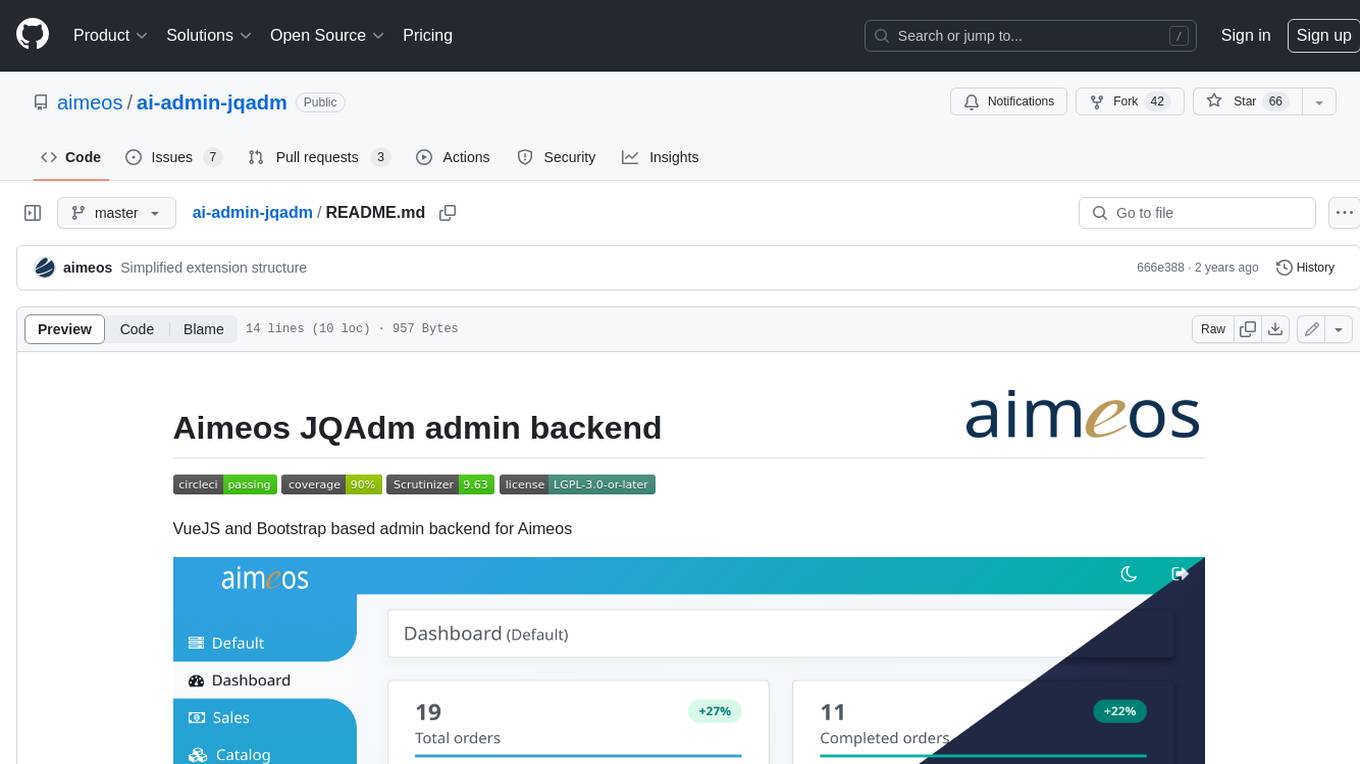
Aimeos JQAdm is a VueJS and Bootstrap based admin backend for Aimeos. It provides a user-friendly interface for managing your Aimeos e-commerce website. With Aimeos JQAdm, you can easily add, edit, and delete products, categories, orders, and customers. You can also manage your website's settings, such as payment methods, shipping methods, and taxes. Aimeos JQAdm is a powerful and easy-to-use tool that can help you manage your Aimeos website more efficiently.
commandkit
Commandkit is a discord.js meta-framework designed for building powerful, modular, and extensible Discord bots with ease. It provides a range of packages for various functionalities such as AI, caching, devtools, i18n, legacy support, queuing, Redis integration, and task management. The framework aims to simplify the process of creating and managing Discord bots by offering a structured and versatile solution.
ai-laravel
The Aimeos Laravel adapter allows integration of Aimeos web shop components into Laravel framework, leveraging native Laravel components for content caching, logging messages, session handling, generating URLs, and accessing the user table. Users of Laravel can quickly set up a web shop using the Aimeos Laravel package, saving time and effort in installation and configuration. The adapter is licensed under LGPLv3 and offers seamless integration with Laravel infrastructure for various functionalities like URL building, caching, logging, session management, email sending, and translations.
commandkit
Commandkit is a discord.js meta-framework designed for building powerful, modular, and extensible Discord bots with ease. It provides a range of packages for various functionalities like AI, caching, devtools, i18n, queue, redis, and tasks. The framework simplifies the process of creating and managing Discord bots by offering a structured and organized approach to development. With Commandkit, developers can easily create sophisticated bots with advanced features and functionalities.
ToolJet
ToolJet is an open-source platform for building and deploying internal tools, workflows, and AI agents. It offers a visual builder with drag-and-drop UI, integrations with databases, APIs, SaaS apps, and object storage. The community edition includes features like a visual app builder, ToolJet database, multi-page apps, collaboration tools, extensibility with plugins, code execution, and security measures. ToolJet AI, the enterprise version, adds AI capabilities for app generation, query building, debugging, agent creation, security compliance, user management, environment management, GitSync, branding, access control, embedded apps, and enterprise support.
autoflow
AutoFlow is an open source graph rag based knowledge base tool built on top of TiDB Vector and LlamaIndex and DSPy. It features a Perplexity-style Conversational Search page and an Embeddable JavaScript Snippet for easy integration into websites. The tool allows for comprehensive coverage and streamlined search processes through sitemap URL scraping.
tock
Tock is an open conversational AI platform for building bots. It offers a natural language processing open source stack compatible with various tools, a user interface for building stories and analytics, a conversational DSL for different programming languages, built-in connectors for text/voice channels, toolkits for custom web/mobile integration, and the ability to deploy anywhere in the cloud or on-premise with Docker.
pipeshub-ai
Pipeshub-ai is a versatile tool for automating data pipelines in AI projects. It provides a user-friendly interface to design, deploy, and monitor complex data workflows, enabling seamless integration of various AI models and data sources. With Pipeshub-ai, users can easily create end-to-end pipelines for tasks such as data preprocessing, model training, and inference, streamlining the AI development process and improving productivity. The tool supports integration with popular AI frameworks and cloud services, making it suitable for both beginners and experienced AI practitioners.
complexity
Complexity is a community-driven, open-source, and free third-party extension that enhances the features of Perplexity.ai. It provides various UI/UX/QoL tweaks, LLM/Image gen model selectors, a customizable theme, and a prompts library. The tool intercepts network traffic to alter the behavior of the host page, offering a solution to the limitations of Perplexity.ai. Users can install Complexity from Chrome Web Store, Mozilla Add-on, or build it from the source code.
bigtop-manager
Apache Bigtop Manager is a modern, AI-driven web application designed to simplify the complexity of bigdata cluster management. It provides an easy deployment solution not only for Apache Bigtop components, but also other community version bigdata components. The platform aims to streamline the management of bigdata clusters by leveraging AI technology and user-friendly interfaces.
dxos
DXOS is an open-source platform that offers Composer, an extensible app platform for developers to organize and sync their knowledge across devices. It enables real-time or offline collaboration with others, emphasizing a local-first and private approach. The DXOS SDK facilitates peer-to-peer collaboration for local-first apps without relying on central sync servers.
MaixCDK
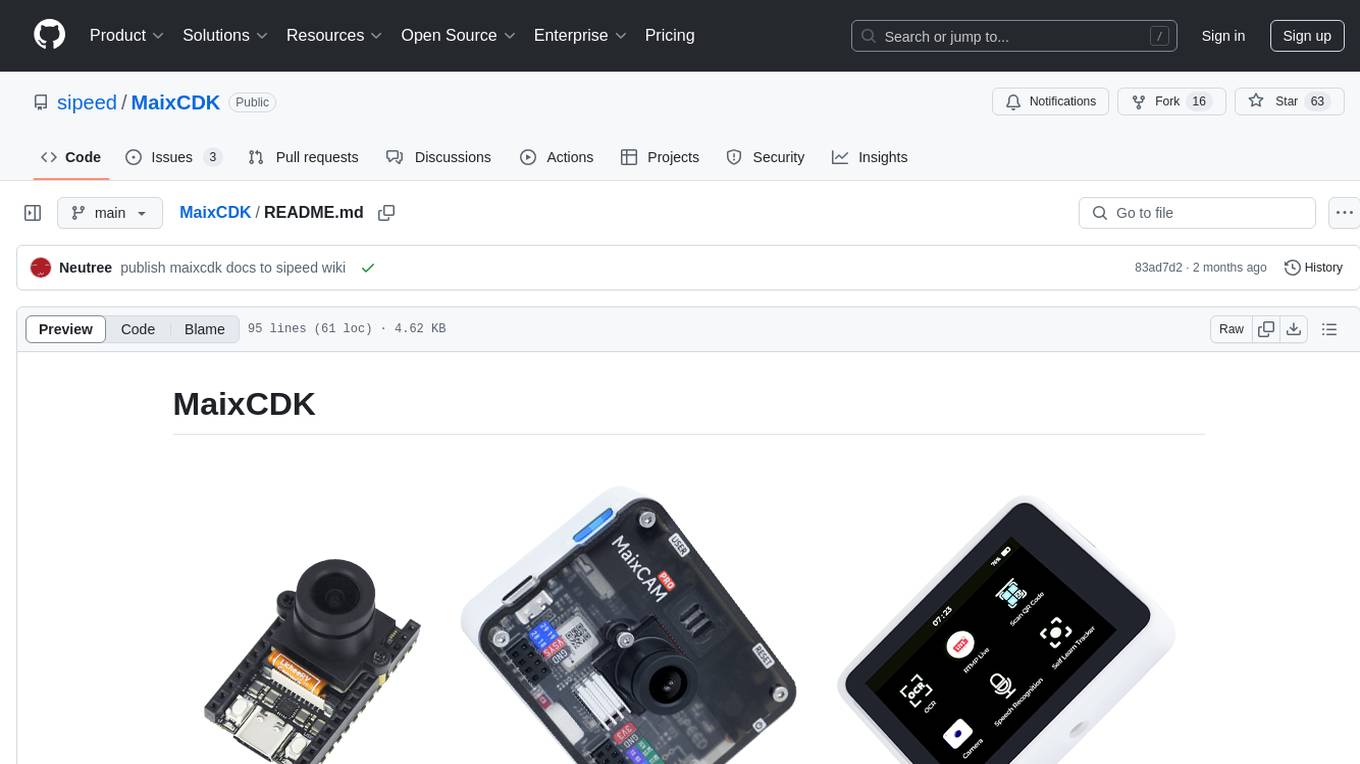
MaixCDK (Maix C/CPP Development Kit) is a C/C++ development kit that integrates practical functions such as AI, machine vision, and IoT. It provides easy-to-use encapsulation for quickly building projects in vision, artificial intelligence, IoT, robotics, industrial cameras, and more. It supports hardware-accelerated execution of AI models, common vision algorithms, OpenCV, and interfaces for peripheral operations. MaixCDK offers cross-platform support, easy-to-use API, simple environment setup, online debugging, and a complete ecosystem including MaixPy and MaixVision. Supported devices include Sipeed MaixCAM, Sipeed MaixCAM-Pro, and partial support for Common Linux.
For similar tasks
ai-client-jsonapi
Aimeos frontend JSON REST API is a package designed for e-commerce projects, providing a convenient way to interact with the backend server through JSON format. It offers a set of endpoints that allow users to perform various operations such as retrieving product information, managing shopping carts, and processing orders. The API is built with a focus on performance, scalability, and ease of use, making it suitable for both small and large e-commerce applications.
aimeos-typo3
Aimeos is a professional, full-featured, and high-performance e-commerce extension for TYPO3. It can be installed in an existing TYPO3 website within 5 minutes and can be adapted, extended, overwritten, and customized to meet specific needs.
AIBotPublic
AIBotPublic is an open-source version of AIBotPro, a comprehensive AI tool that provides various features such as knowledge base construction, AI drawing, API hosting, and more. It supports custom plugins and parallel processing of multiple files. The tool is built using bootstrap4 for the frontend, .NET6.0 for the backend, and utilizes technologies like SqlServer, Redis, and Milvus for database and vector database functionalities. It integrates third-party dependencies like Baidu AI OCR, Milvus C# SDK, Google Search, and more to enhance its capabilities.
svelte-commerce
Svelte Commerce is an open-source frontend for eCommerce, utilizing a PWA and headless approach with a modern JS stack. It supports integration with various eCommerce backends like MedusaJS, Woocommerce, Bigcommerce, and Shopify. The API flexibility allows seamless connection with third-party tools such as payment gateways, POS systems, and AI services. Svelte Commerce offers essential eCommerce features, is both SSR and SPA, superfast, and free to download and modify. Users can easily deploy it on Netlify or Vercel with zero configuration. The tool provides features like headless commerce, authentication, cart & checkout, TailwindCSS styling, server-side rendering, proxy + API integration, animations, lazy loading, search functionality, faceted filters, and more.
aimeos-base
Aimeos Base abstraction layer is a tool designed to provide a solid foundation for building e-commerce applications. It offers a comprehensive set of functionalities and features that simplify the development process and enhance the performance of online stores. The abstraction layer abstracts common e-commerce functionalities, such as product management, order processing, and customer management, allowing developers to focus on business logic implementation rather than low-level technical details. With a strong emphasis on modularity and extensibility, Aimeos Base enables developers to create scalable and customizable e-commerce solutions that meet specific business requirements. The tool is well-documented and actively maintained by the Aimeos community, ensuring reliability and continuous improvement.
chatgpt-api
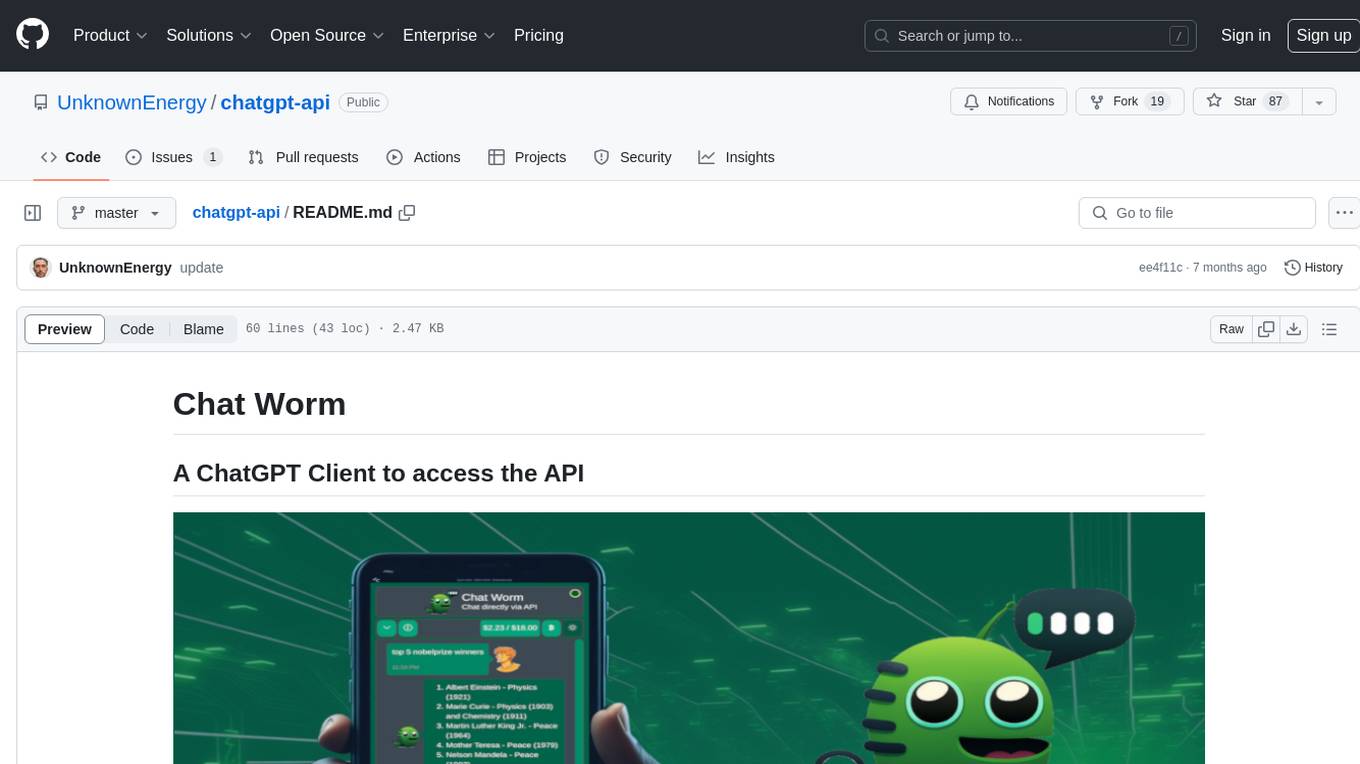
Chat Worm is a ChatGPT client that provides access to the API for generating text using OpenAI's GPT models. It works as a single-page application directly communicating with the API, allowing users to interact with the latest GPT-4 model if they have access. The project includes web, Android, and Windows apps for easy access. Users can set up local development, contribute improvements via pull requests, report bugs or request features on GitHub, deploy to production servers, and release on different app stores. The project is licensed under the MIT License.
semantic-kernel-docs
The Microsoft Semantic Kernel Documentation GitHub repository contains technical product documentation for Semantic Kernel. It serves as the home of technical content for Microsoft products and services. Contributors can learn how to make contributions by following the Docs contributor guide. The project follows the Microsoft Open Source Code of Conduct.
aimeos
Aimeos is a full-featured e-commerce platform that is ultra-fast, cloud-native, and API-first. It offers a wide range of features including JSON REST API, GraphQL API, multi-vendor support, various product types, subscriptions, multiple payment gateways, admin backend, modular structure, SEO optimization, multi-language support, AI-based text translation, mobile optimization, and high-quality source code. It is highly configurable and extensible, making it suitable for e-commerce SaaS solutions, marketplaces, and various cloud environments. Aimeos is designed for scalability, security, and performance, catering to a diverse range of e-commerce needs.
For similar jobs
google.aip.dev
API Improvement Proposals (AIPs) are design documents that provide high-level, concise documentation for API development at Google. The goal of AIPs is to serve as the source of truth for API-related documentation and to facilitate discussion and consensus among API teams. AIPs are similar to Python's enhancement proposals (PEPs) and are organized into different areas within Google to accommodate historical differences in customs, styles, and guidance.
kong
Kong, or Kong API Gateway, is a cloud-native, platform-agnostic, scalable API Gateway distinguished for its high performance and extensibility via plugins. It also provides advanced AI capabilities with multi-LLM support. By providing functionality for proxying, routing, load balancing, health checking, authentication (and more), Kong serves as the central layer for orchestrating microservices or conventional API traffic with ease. Kong runs natively on Kubernetes thanks to its official Kubernetes Ingress Controller.
speakeasy
Speakeasy is a tool that helps developers create production-quality SDKs, Terraform providers, documentation, and more from OpenAPI specifications. It supports a wide range of languages, including Go, Python, TypeScript, Java, and C#, and provides features such as automatic maintenance, type safety, and fault tolerance. Speakeasy also integrates with popular package managers like npm, PyPI, Maven, and Terraform Registry for easy distribution.
apicat
ApiCat is an API documentation management tool that is fully compatible with the OpenAPI specification. With ApiCat, you can freely and efficiently manage your APIs. It integrates the capabilities of LLM, which not only helps you automatically generate API documentation and data models but also creates corresponding test cases based on the API content. Using ApiCat, you can quickly accomplish anything outside of coding, allowing you to focus your energy on the code itself.
aiohttp-pydantic
Aiohttp pydantic is an aiohttp view to easily parse and validate requests. You define using function annotations what your methods for handling HTTP verbs expect, and Aiohttp pydantic parses the HTTP request for you, validates the data, and injects the parameters you want. It provides features like query string, request body, URL path, and HTTP headers validation, as well as Open API Specification generation.
ain
Ain is a terminal HTTP API client designed for scripting input and processing output via pipes. It allows flexible organization of APIs using files and folders, supports shell-scripts and executables for common tasks, handles url-encoding, and enables sharing the resulting curl, wget, or httpie command-line. Users can put things that change in environment variables or .env-files, and pipe the API output for further processing. Ain targets users who work with many APIs using a simple file format and uses curl, wget, or httpie to make the actual calls.
OllamaKit
OllamaKit is a Swift library designed to simplify interactions with the Ollama API. It handles network communication and data processing, offering an efficient interface for Swift applications to communicate with the Ollama API. The library is optimized for use within Ollamac, a macOS app for interacting with Ollama models.
ollama4j
Ollama4j is a Java library that serves as a wrapper or binding for the Ollama server. It facilitates communication with the Ollama server and provides models for deployment. The tool requires Java 11 or higher and can be installed locally or via Docker. Users can integrate Ollama4j into Maven projects by adding the specified dependency. The tool offers API specifications and supports various development tasks such as building, running unit tests, and integration tests. Releases are automated through GitHub Actions CI workflow. Areas of improvement include adhering to Java naming conventions, updating deprecated code, implementing logging, using lombok, and enhancing request body creation. Contributions to the project are encouraged, whether reporting bugs, suggesting enhancements, or contributing code.