


simple-llm-eval
Simple LLM Evaluation Using LLM As a Judge 👩⚖️
Stars: 62
Simpleval is a Python package for evaluating Large Language Models (LLMs) using the 'LLM as a Judge' technique. It supports various LLM providers such as OpenAI, Google, AWS, Anthropic, Azure, and more. The package includes reports for analyzing and summarizing evaluation results.
README:





Welcome to the simple LLM evaluation framework—simpleval, for short.
simpleval is a Python package designed to make evaluating Large Language Models (LLMs) easier, using the "LLM as a Judge" technique.
It supports a variety of LLM providers, including OpenAI, Google (Gemini API, Vertex), AWS Bedrock, Anthropic, Azure, and more (via LiteLLM).
simpleval also includes several reports to help you analyze, compare, and summarize your evaluation results. See the available reports for more details.
See the 📚 Quickstart Guide 📚
We appreciate your help in making this project better! ✨
If you would like to contribute to this project, please follow the guidelines outlined in the CONTRIBUTING.md file.
simpleval is released under the Apache License. See the LICENSE file for more details.
If you have any questions or suggestions, feel free to join our GitHub discussions forum 💬
If you want to report a bug or request a feature, please open an issue in the GitHub issues tracker 🐛
For Tasks:
Click tags to check more tools for each tasksFor Jobs:
Alternative AI tools for simple-llm-eval
Similar Open Source Tools
For similar tasks
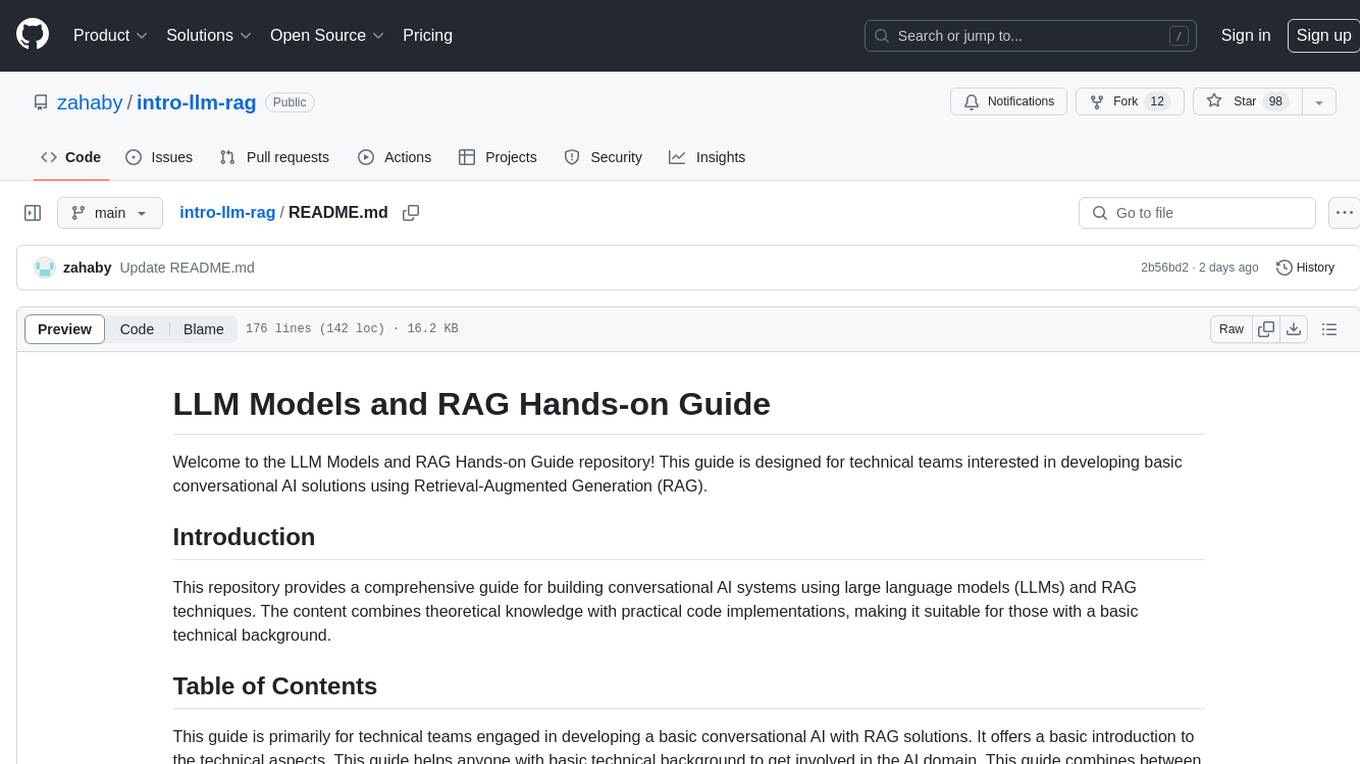
intro-llm-rag
This repository serves as a comprehensive guide for technical teams interested in developing conversational AI solutions using Retrieval-Augmented Generation (RAG) techniques. It covers theoretical knowledge and practical code implementations, making it suitable for individuals with a basic technical background. The content includes information on large language models (LLMs), transformers, prompt engineering, embeddings, vector stores, and various other key concepts related to conversational AI. The repository also provides hands-on examples for two different use cases, along with implementation details and performance analysis.
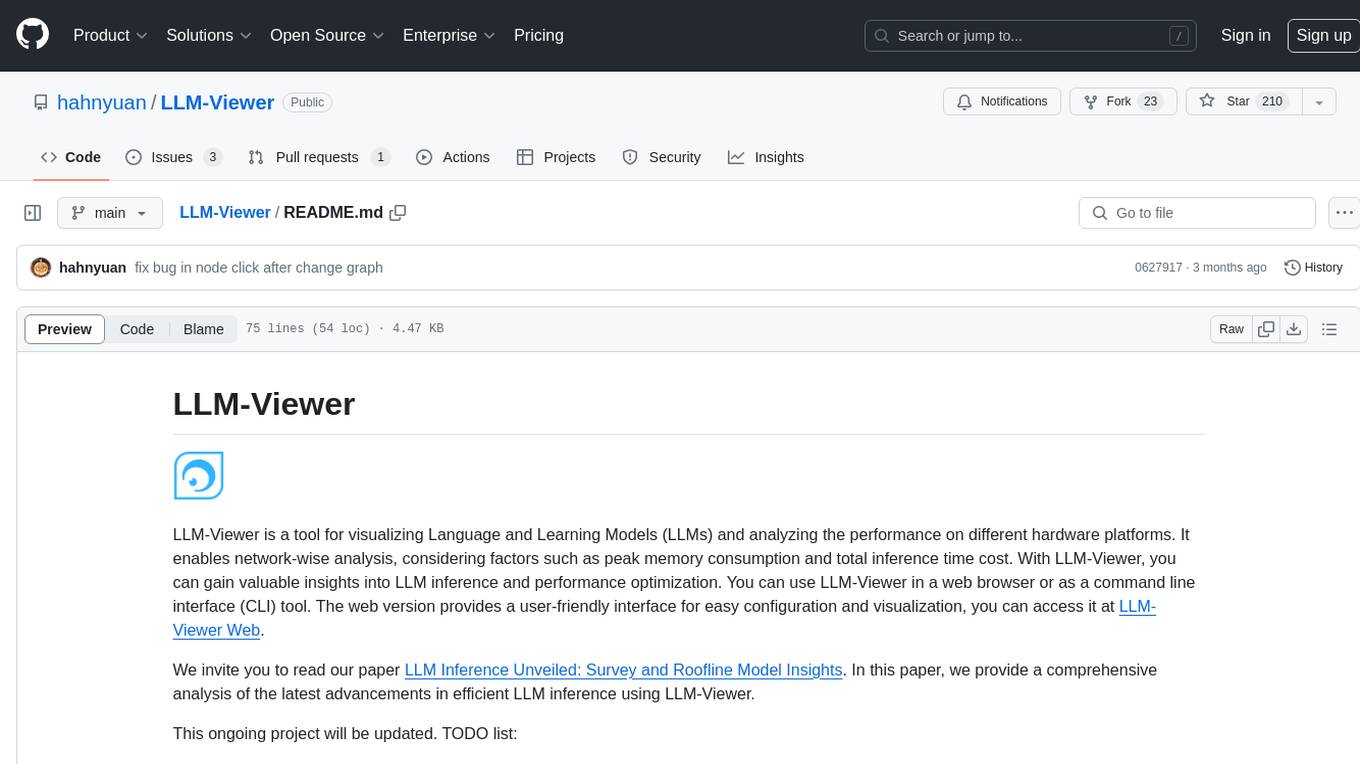
LLM-Viewer
LLM-Viewer is a tool for visualizing Language and Learning Models (LLMs) and analyzing performance on different hardware platforms. It enables network-wise analysis, considering factors such as peak memory consumption and total inference time cost. With LLM-Viewer, users can gain valuable insights into LLM inference and performance optimization. The tool can be used in a web browser or as a command line interface (CLI) for easy configuration and visualization. The ongoing project aims to enhance features like showing tensor shapes, expanding hardware platform compatibility, and supporting more LLMs with manual model graph configuration.
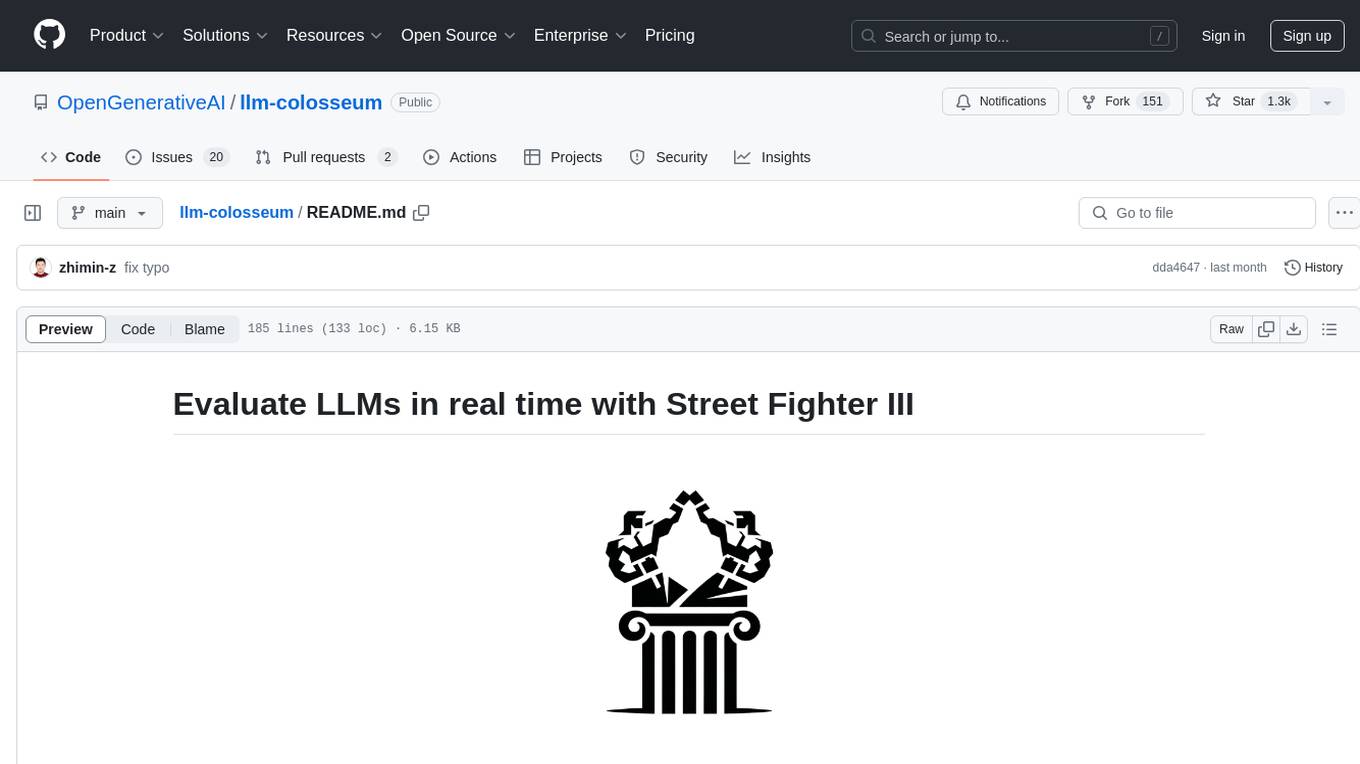
llm-colosseum
llm-colosseum is a tool designed to evaluate Language Model Models (LLMs) in real-time by making them fight each other in Street Fighter III. The tool assesses LLMs based on speed, strategic thinking, adaptability, out-of-the-box thinking, and resilience. It provides a benchmark for LLMs to understand their environment and take context-based actions. Users can analyze the performance of different LLMs through ELO rankings and win rate matrices. The tool allows users to run experiments, test different LLM models, and customize prompts for LLM interactions. It offers installation instructions, test mode options, logging configurations, and the ability to run the tool with local models. Users can also contribute their own LLM models for evaluation and ranking.

eureka-ml-insights
The Eureka ML Insights Framework is a repository containing code designed to help researchers and practitioners run reproducible evaluations of generative models efficiently. Users can define custom pipelines for data processing, inference, and evaluation, as well as utilize pre-defined evaluation pipelines for key benchmarks. The framework provides a structured approach to conducting experiments and analyzing model performance across various tasks and modalities.
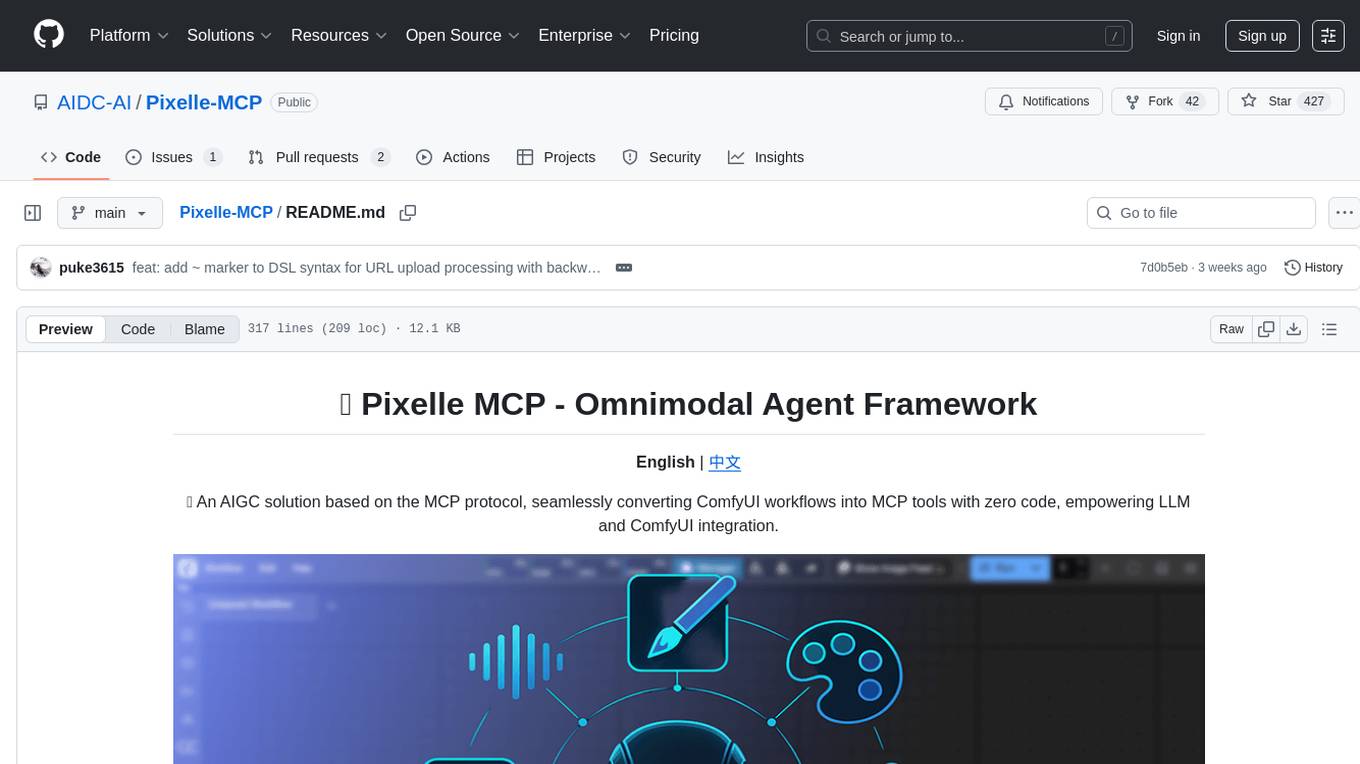
Pixelle-MCP
Pixelle-MCP is a multi-channel publishing tool designed to streamline the process of publishing content across various social media platforms. It allows users to create, schedule, and publish posts simultaneously on platforms such as Facebook, Twitter, and Instagram. With a user-friendly interface and advanced scheduling features, Pixelle-MCP helps users save time and effort in managing their social media presence. The tool also provides analytics and insights to track the performance of posts and optimize content strategy. Whether you are a social media manager, content creator, or digital marketer, Pixelle-MCP is a valuable tool to enhance your online presence and engage with your audience effectively.
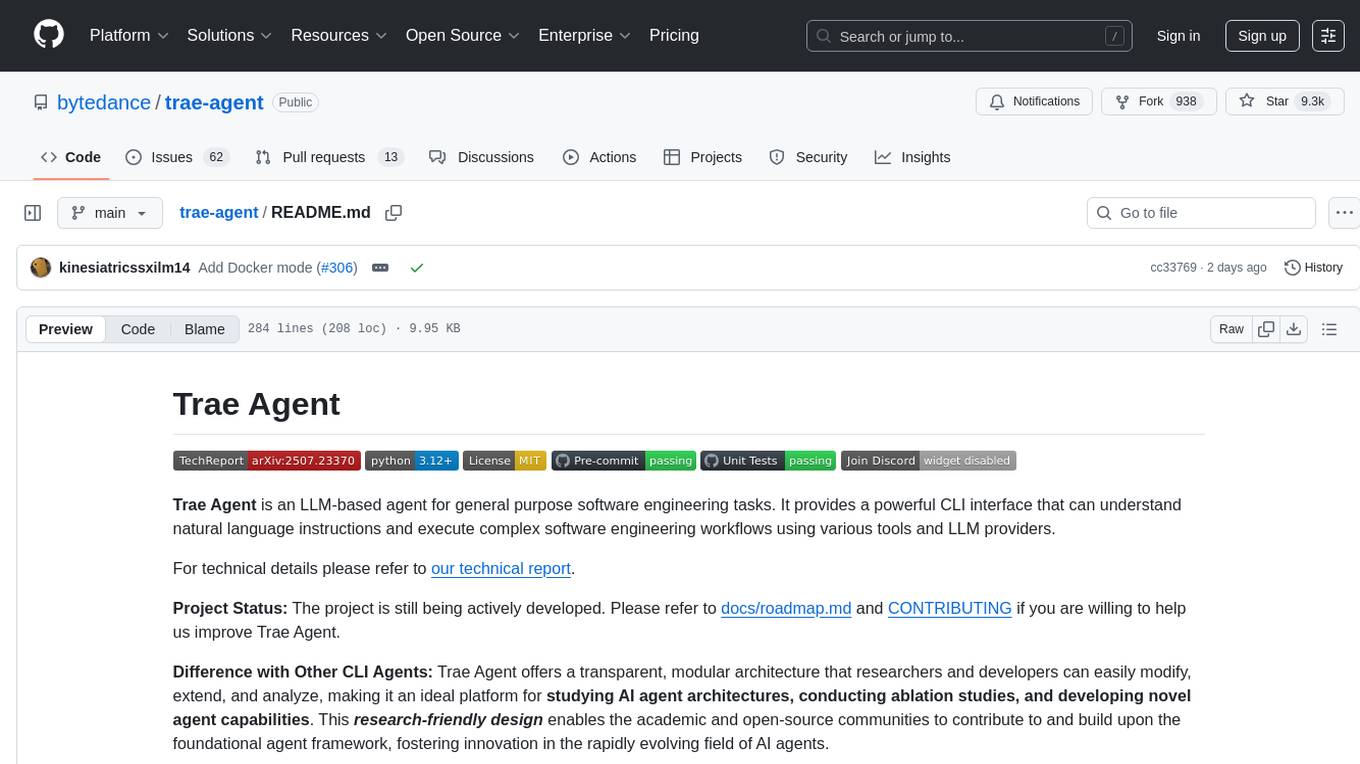
trae-agent
Trae-agent is a Python library for building and training reinforcement learning agents. It provides a simple and flexible framework for implementing various reinforcement learning algorithms and experimenting with different environments. With Trae-agent, users can easily create custom agents, define reward functions, and train them on a variety of tasks. The library also includes utilities for visualizing agent performance and analyzing training results, making it a valuable tool for both beginners and experienced researchers in the field of reinforcement learning.
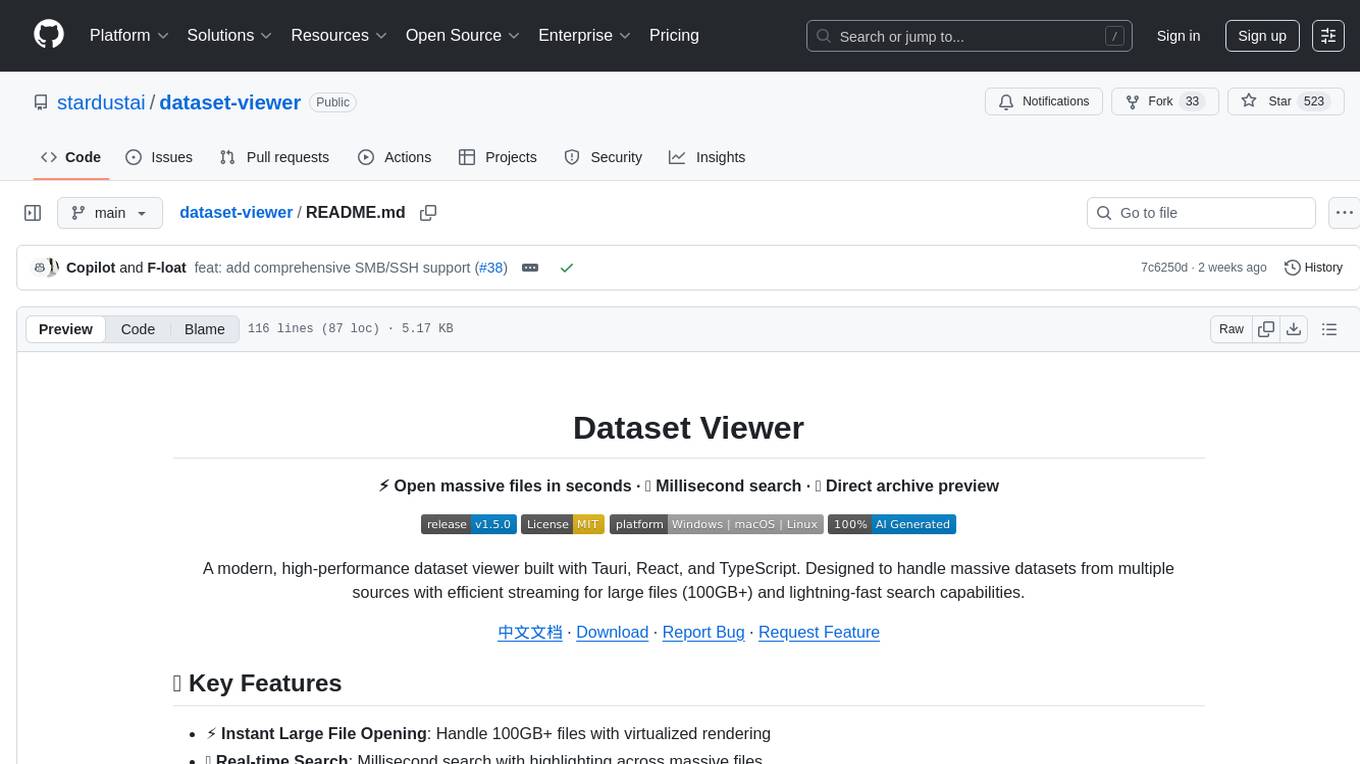
dataset-viewer
Dataset Viewer is a modern, high-performance tool built with Tauri, React, and TypeScript, designed to handle massive datasets from multiple sources with efficient streaming for large files (100GB+) and lightning-fast search capabilities. It supports instant large file opening, real-time search, direct archive preview, multi-protocol and multi-format support, and features a modern interface with dark/light themes and responsive design. The tool is perfect for data scientists, log analysis, archive management, remote access, and performance-critical tasks.
LiftShift
LiftShift is a web application that provides analytics and tracking features for fitness enthusiasts. Users can upload workout data, explore analytics dashboards, receive real-time feedback, and visualize workout history. The tool supports different body types and units, and offers insights on workout trends and performance. LiftShift also detects session goals and provides set-by-set feedback to enhance workout experience. With local storage support and various theme modes, users can easily track their fitness progress and customize their experience.
For similar jobs
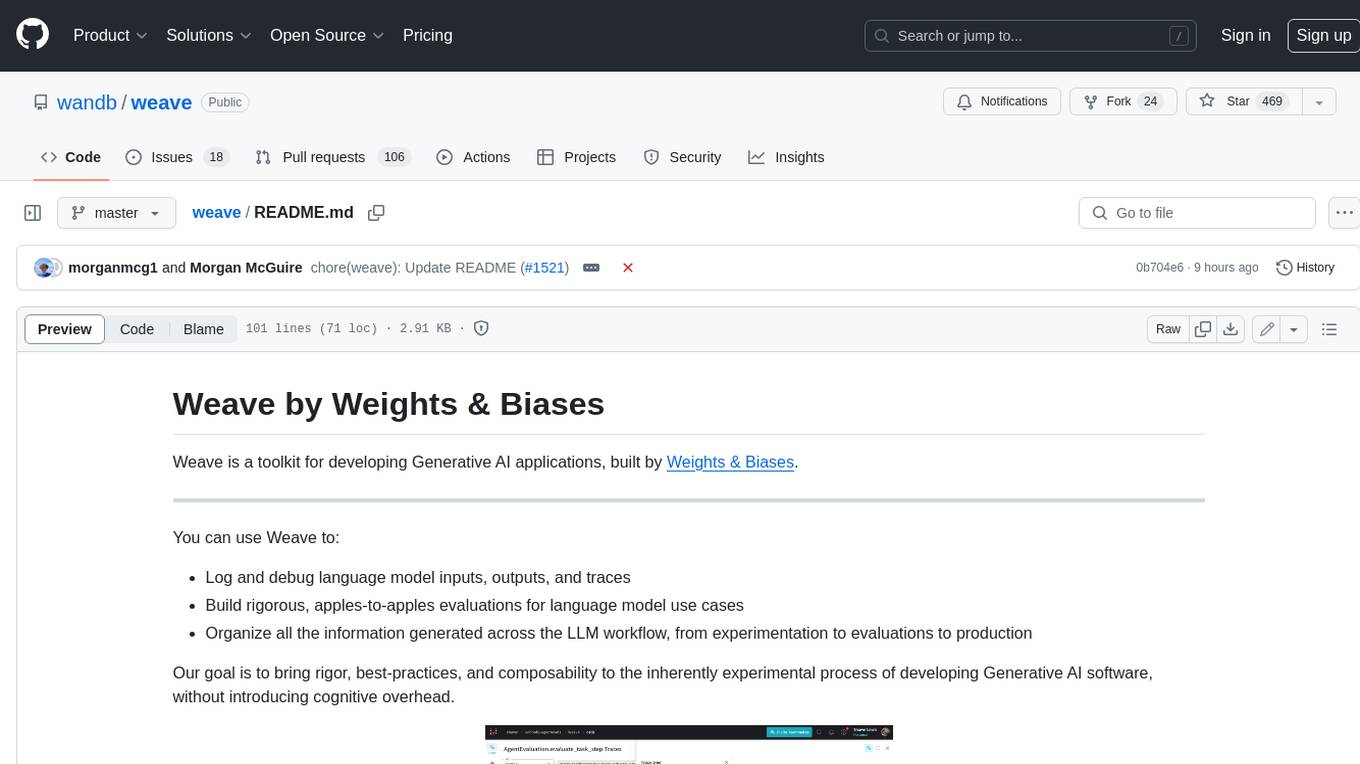
weave
Weave is a toolkit for developing Generative AI applications, built by Weights & Biases. With Weave, you can log and debug language model inputs, outputs, and traces; build rigorous, apples-to-apples evaluations for language model use cases; and organize all the information generated across the LLM workflow, from experimentation to evaluations to production. Weave aims to bring rigor, best-practices, and composability to the inherently experimental process of developing Generative AI software, without introducing cognitive overhead.
LLMStack
LLMStack is a no-code platform for building generative AI agents, workflows, and chatbots. It allows users to connect their own data, internal tools, and GPT-powered models without any coding experience. LLMStack can be deployed to the cloud or on-premise and can be accessed via HTTP API or triggered from Slack or Discord.
VisionCraft
The VisionCraft API is a free API for using over 100 different AI models. From images to sound.
kaito
Kaito is an operator that automates the AI/ML inference model deployment in a Kubernetes cluster. It manages large model files using container images, avoids tuning deployment parameters to fit GPU hardware by providing preset configurations, auto-provisions GPU nodes based on model requirements, and hosts large model images in the public Microsoft Container Registry (MCR) if the license allows. Using Kaito, the workflow of onboarding large AI inference models in Kubernetes is largely simplified.
PyRIT
PyRIT is an open access automation framework designed to empower security professionals and ML engineers to red team foundation models and their applications. It automates AI Red Teaming tasks to allow operators to focus on more complicated and time-consuming tasks and can also identify security harms such as misuse (e.g., malware generation, jailbreaking), and privacy harms (e.g., identity theft). The goal is to allow researchers to have a baseline of how well their model and entire inference pipeline is doing against different harm categories and to be able to compare that baseline to future iterations of their model. This allows them to have empirical data on how well their model is doing today, and detect any degradation of performance based on future improvements.
tabby
Tabby is a self-hosted AI coding assistant, offering an open-source and on-premises alternative to GitHub Copilot. It boasts several key features: * Self-contained, with no need for a DBMS or cloud service. * OpenAPI interface, easy to integrate with existing infrastructure (e.g Cloud IDE). * Supports consumer-grade GPUs.
spear
SPEAR (Simulator for Photorealistic Embodied AI Research) is a powerful tool for training embodied agents. It features 300 unique virtual indoor environments with 2,566 unique rooms and 17,234 unique objects that can be manipulated individually. Each environment is designed by a professional artist and features detailed geometry, photorealistic materials, and a unique floor plan and object layout. SPEAR is implemented as Unreal Engine assets and provides an OpenAI Gym interface for interacting with the environments via Python.
Magick
Magick is a groundbreaking visual AIDE (Artificial Intelligence Development Environment) for no-code data pipelines and multimodal agents. Magick can connect to other services and comes with nodes and templates well-suited for intelligent agents, chatbots, complex reasoning systems and realistic characters.