


LLM
LLM & Generative AI
Stars: 64
LLM is a repository focused on providing educational courses on artificial intelligence models, specifically focusing on language and image understanding. The courses are taught by Alireza Akhavan Pour and cover topics such as generative AI models and language-image understanding. The repository also includes information on how to contact the team through Telegram channels for course updates and Q&A sessions. Participants are encouraged to add their LLM or VLM course certificates to their LinkedIn profiles and tag Alireza Akhavan Pour for recognition and resume enhancement.
README:
شارژ دلاری با پرداخت ریالی - IraniCard

مدرس: علیرضا اخوان پور

مدرس: علیرضا اخوان پور
- کانال تلگرام دورهها: t.me/llm_huggingface
- گروه تلگرامی پرسش و پاسخ: t.me/llm_group
اگر مدرک دورههای LLM یا VLM را دریافت کردید، حتماً آن را در پروفایل LinkedIn خود اضافه کنید و من علیرضا اخوان پور را تگ کنید.
این کار هم به تقویت رزومه شخصی شما کمک میکند و هم باعث دلگرمی و دیده شدن تلاشهای جمعی ما میشود. 🚀
For Tasks:
Click tags to check more tools for each tasksFor Jobs:
Alternative AI tools for LLM
Similar Open Source Tools
For similar tasks
GenAiGuidebook
GenAiGuidebook is a comprehensive resource for individuals looking to begin their journey in GenAI. It serves as a detailed guide providing insights, tips, and information on various aspects of GenAI technology. The guidebook covers a wide range of topics, including introductory concepts, practical applications, and best practices in the field of GenAI. Whether you are a beginner or an experienced professional, this resource aims to enhance your understanding and proficiency in GenAI.
Awesome-Books-Notes
Awesome CS Books is a repository that archives excellent books related to computer science and technology, named in the format of {year}-{author}-{title}-{version}. It includes reading notes for each book, with PDF links provided at the beginning of the notes. The repository focuses on IT CS-related books, valuable open courses, and aims to provide a systematic way of learning to alleviate fragmented skills and one-sidedness. It respects the original authors by linking to official/copyright websites and emphasizes non-commercial use of the documents.
rustcrab
Rustcrab is a repository for Rust developers, offering resources, tools, and guides to enhance Rust programming skills. It is a Next.js application with Tailwind CSS and TypeScript, featuring real-time display of GitHub stars, light/dark mode toggling, integration with daily.dev, and social media links. Users can clone the repository, install dependencies, run the development server, build for production, and deploy to various platforms. Contributions are encouraged through opening issues or submitting pull requests.
awesome-ai-newsletters
Awesome AI Newsletters is a curated list of AI-related newsletters that provide the latest news, trends, tools, and insights in the field of Artificial Intelligence. It includes a variety of newsletters covering general AI news, prompts for marketing and productivity, AI job opportunities, and newsletters tailored for professionals in the AI industry. Whether you are a beginner looking to stay updated on AI advancements or a professional seeking to enhance your knowledge and skills, this repository offers a collection of valuable resources to help you navigate the world of AI.
learn-agentic-ai
Learn Agentic AI is a repository that is part of the Panaversity Certified Agentic and Robotic AI Engineer program. It covers AI-201 and AI-202 courses, providing fundamentals and advanced knowledge in Agentic AI. The repository includes video playlists, projects, and project submission guidelines for students to enhance their understanding and skills in the field of AI engineering.
Roadmap-Docs
This repository provides comprehensive roadmaps for various roles in the Data Analytics, Data Science, and Artificial Intelligence industry. It aims to guide individuals, whether students or professionals, in understanding the required skills and timeline for different roles, helping them focus on learning the necessary skills to secure a job. The repository includes detailed guides for roles such as Data Analyst, Data Engineer, Data Scientist, AI Engineer, Computer Vision Engineer, Generative AI Engineer, Machine Learning Engineer, NLP Engineer, and Domain-Specific ML Topics for Researchers.
LLM
LLM is a repository focused on providing educational courses on artificial intelligence models, specifically focusing on language and image understanding. The courses are taught by Alireza Akhavan Pour and cover topics such as generative AI models and language-image understanding. The repository also includes information on how to contact the team through Telegram channels for course updates and Q&A sessions. Participants are encouraged to add their LLM or VLM course certificates to their LinkedIn profiles and tag Alireza Akhavan Pour for recognition and resume enhancement.
ResuLLMe
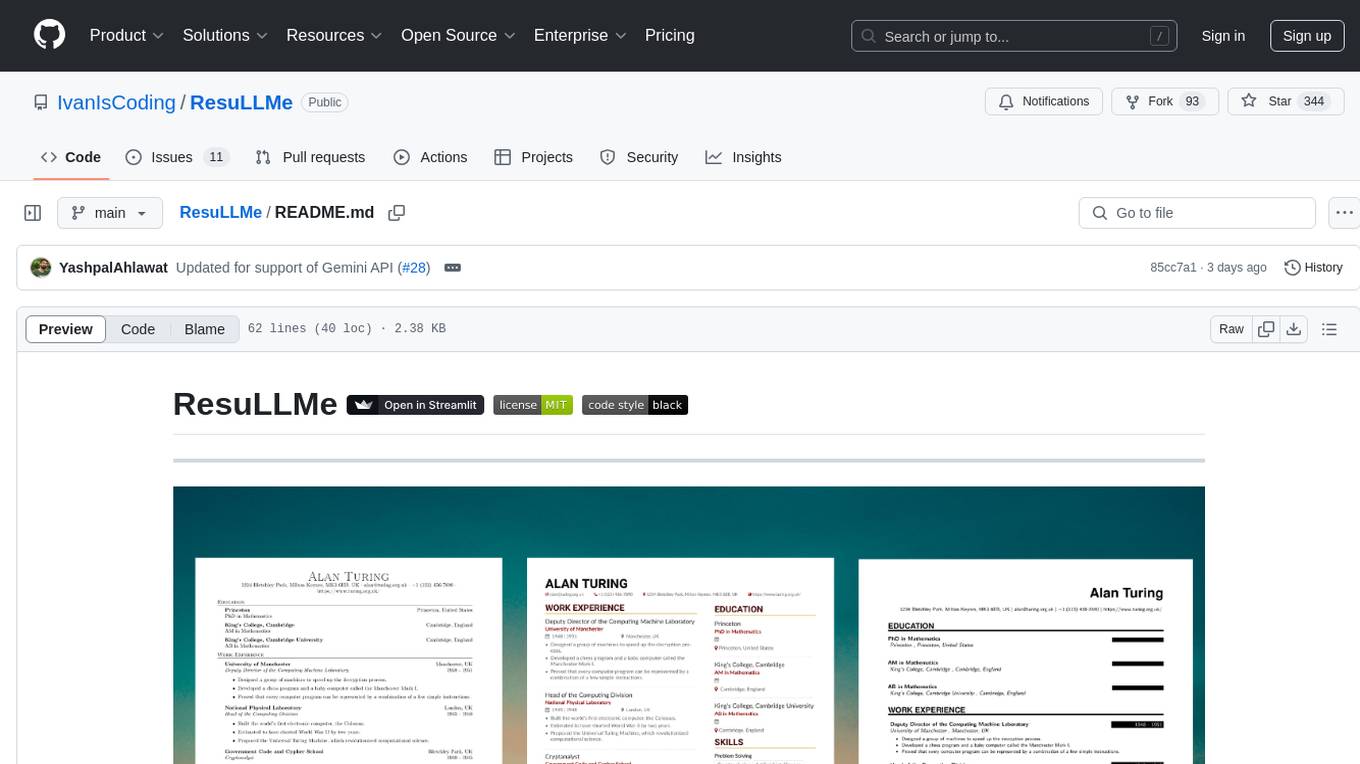
ResuLLMe is a prototype tool that uses Large Language Models (LLMs) to enhance résumés by tailoring them to help candidates avoid common mistakes while applying for jobs. It acts as a smart career advisor to check and improve résumés. The tool supports both OpenAI and Gemini, providing users with smarter, more accurate career guidance. Users can upload their CV as a PDF or Word Document, and ResuLLMe uses LLMs to improve the résumé following published guidelines, convert it to a JSON Resume format, and render it using LaTeX to generate an enhanced PDF resume.
For similar jobs
weave
Weave is a toolkit for developing Generative AI applications, built by Weights & Biases. With Weave, you can log and debug language model inputs, outputs, and traces; build rigorous, apples-to-apples evaluations for language model use cases; and organize all the information generated across the LLM workflow, from experimentation to evaluations to production. Weave aims to bring rigor, best-practices, and composability to the inherently experimental process of developing Generative AI software, without introducing cognitive overhead.
LLMStack
LLMStack is a no-code platform for building generative AI agents, workflows, and chatbots. It allows users to connect their own data, internal tools, and GPT-powered models without any coding experience. LLMStack can be deployed to the cloud or on-premise and can be accessed via HTTP API or triggered from Slack or Discord.
VisionCraft
The VisionCraft API is a free API for using over 100 different AI models. From images to sound.
kaito
Kaito is an operator that automates the AI/ML inference model deployment in a Kubernetes cluster. It manages large model files using container images, avoids tuning deployment parameters to fit GPU hardware by providing preset configurations, auto-provisions GPU nodes based on model requirements, and hosts large model images in the public Microsoft Container Registry (MCR) if the license allows. Using Kaito, the workflow of onboarding large AI inference models in Kubernetes is largely simplified.
PyRIT
PyRIT is an open access automation framework designed to empower security professionals and ML engineers to red team foundation models and their applications. It automates AI Red Teaming tasks to allow operators to focus on more complicated and time-consuming tasks and can also identify security harms such as misuse (e.g., malware generation, jailbreaking), and privacy harms (e.g., identity theft). The goal is to allow researchers to have a baseline of how well their model and entire inference pipeline is doing against different harm categories and to be able to compare that baseline to future iterations of their model. This allows them to have empirical data on how well their model is doing today, and detect any degradation of performance based on future improvements.
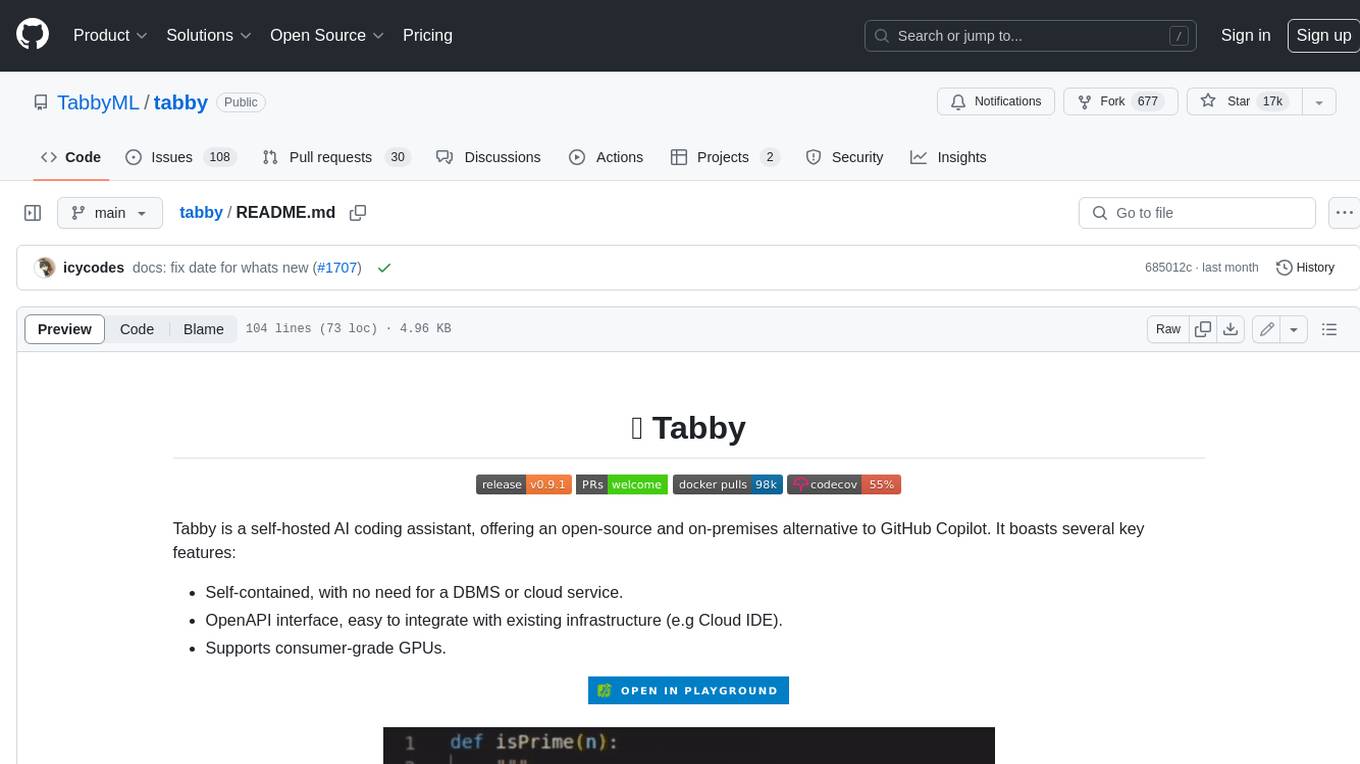
tabby
Tabby is a self-hosted AI coding assistant, offering an open-source and on-premises alternative to GitHub Copilot. It boasts several key features: * Self-contained, with no need for a DBMS or cloud service. * OpenAPI interface, easy to integrate with existing infrastructure (e.g Cloud IDE). * Supports consumer-grade GPUs.
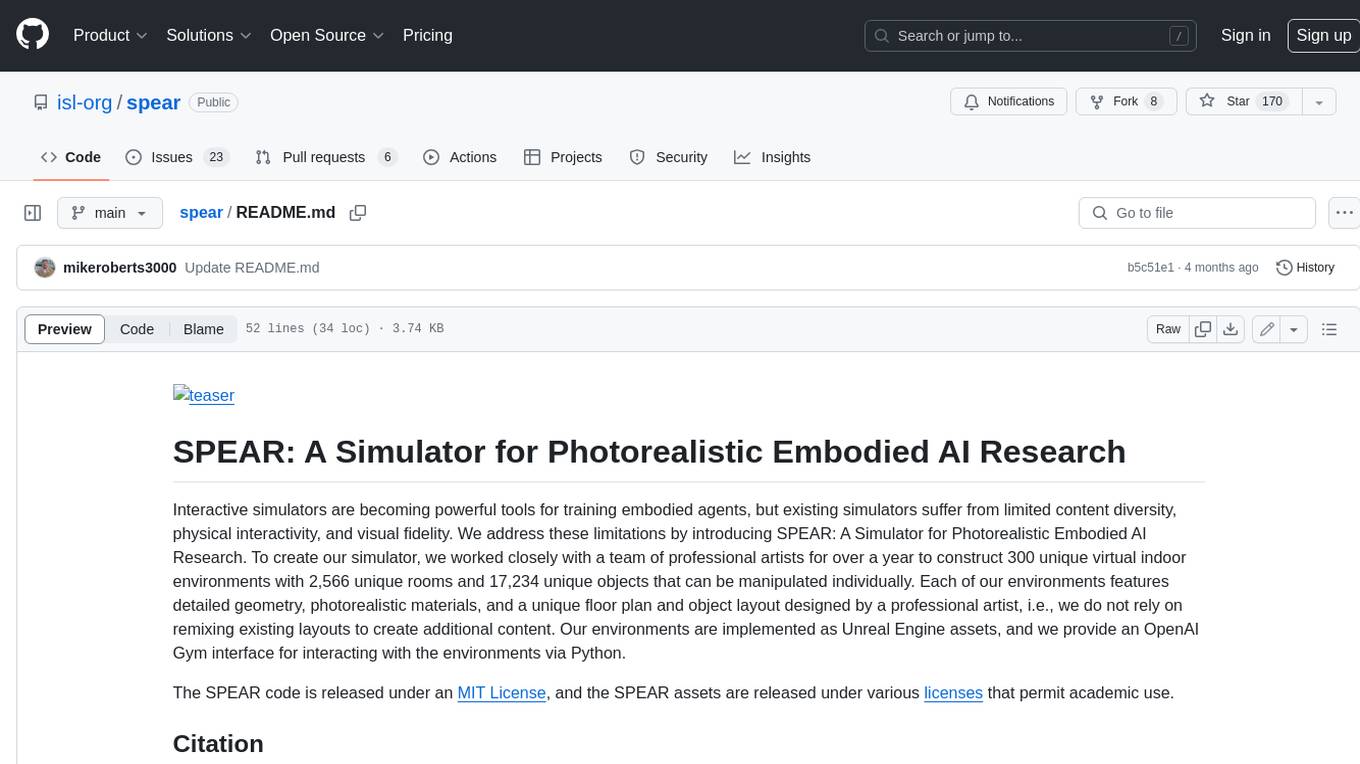
spear
SPEAR (Simulator for Photorealistic Embodied AI Research) is a powerful tool for training embodied agents. It features 300 unique virtual indoor environments with 2,566 unique rooms and 17,234 unique objects that can be manipulated individually. Each environment is designed by a professional artist and features detailed geometry, photorealistic materials, and a unique floor plan and object layout. SPEAR is implemented as Unreal Engine assets and provides an OpenAI Gym interface for interacting with the environments via Python.
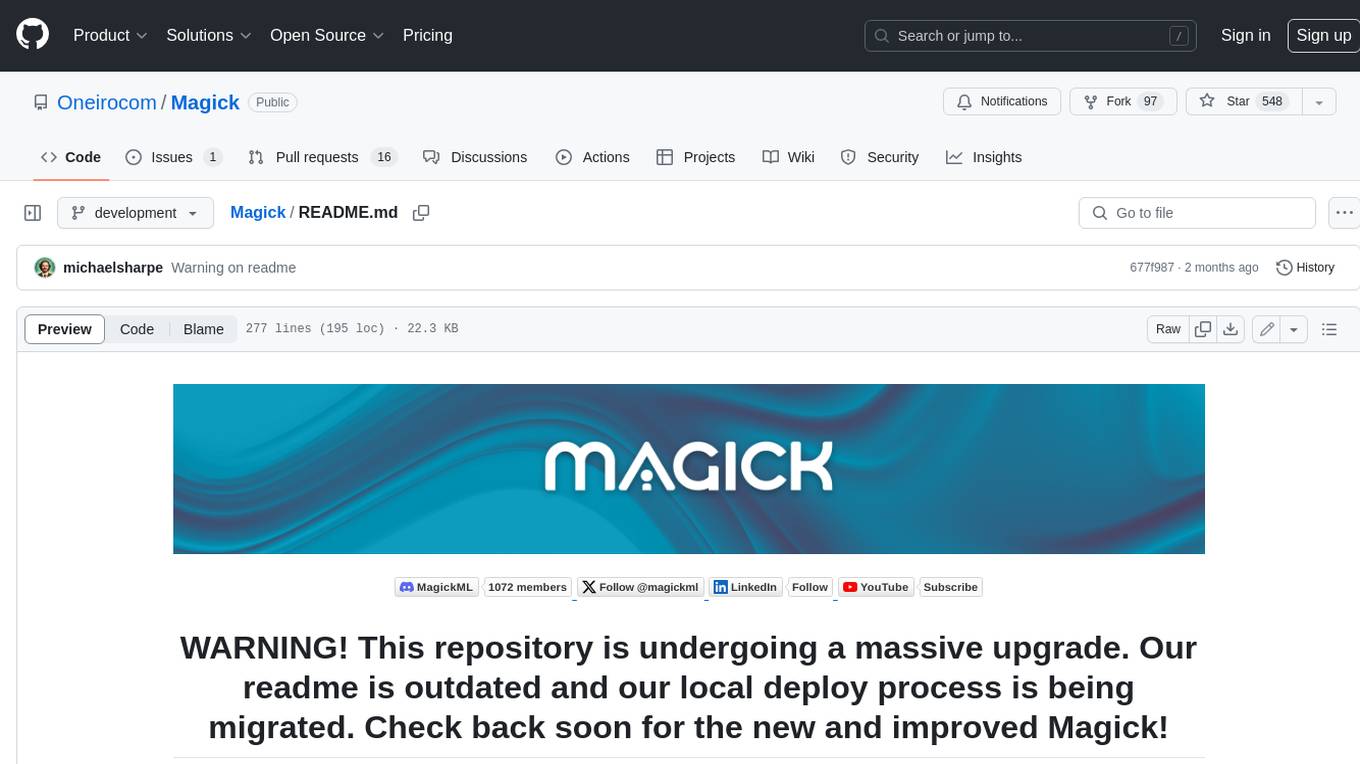
Magick
Magick is a groundbreaking visual AIDE (Artificial Intelligence Development Environment) for no-code data pipelines and multimodal agents. Magick can connect to other services and comes with nodes and templates well-suited for intelligent agents, chatbots, complex reasoning systems and realistic characters.