


HuixiangDou2
HuixiangDou2: A Robustly Optimized GraphRAG Approach
Stars: 78
HuixiangDou2 is a robustly optimized GraphRAG approach that integrates multiple open-source projects to improve performance in graph-based augmented generation. It conducts comparative experiments and achieves a significant score increase, leading to a GraphRAG implementation with recognized performance. The repository provides code improvements, dense retrieval for querying entities and relationships, real domain knowledge testing, and impact analysis on accuracy.
README:
English | Simplified Chinese
GraphRAG has many tuning spots, making it hard to discern whether performance gains stem from parameter adjustments or pipeline optimizations. Moreover, RAG test data is embedded in LLM training sets. LLM input tokens impact generation probabilities (background: phi-4 technical report). It's unclear if precision improvements originate from key token searches or retrievals.
Thus, HuixiangDou2 didn't introduce new methods but integrated multiple open-source projects (HuixiangDou, KAG, LightRAG, and DB-GPT, totaling 18k lines of code) and conducted comparative experiments on a test set where Qwen2.5-7B-Instruct underperformed. The score rose from 60 to 74.5. Ultimately, a GraphRAG implementation with performance recognized by human domain experts was developed. Here is the report.
Note: The impact of open-source on different fields/industries varies. Since licensing restriction, we can only give the code and test conclusions, and the test data cannot be provided.
Compared to HuixiangDou1, this repo improves accuracy and async refactor:
-
Graph Schema. Dense retrieval is only for querying similar entities and relationships.
-
Ported/merged multiple open-source implementations, with code differences of nearly 18k lines:
- Data. Organized a set of real domain knowledge that LLM has not fully seen for testing (gpt accuracy < 0.6)
- Ablation. Confirmed the impact of different stages and parameters on accuracy
-
Improvement. As shown below.
-
API remains compatible
If it is useful to you, please star it ⭐
- 1. How to Run (CMD / Swagger API / Gradio mode)
- 2. Directory Structure and Function
- FAQ about environment and error
- SiliconCloud Abundant LLM API, some models are free
- KAG Graph retrieval based on reasoning
- DB-GPT LLM tool collection
- LightRAG Simple and efficient graph retrieval solution
@misc{huixiangdou2,
  author = {Huanjun Kong},
  title = {HuixiangDou2: A Graph-based Augmented Generation Approach},
  howpublished = {\url{https://github.com/tpoisonooo/HuixiangDou2}},
  year = {2025}
}
For Tasks:
Click tags to check more tools for each tasksFor Jobs:
Alternative AI tools for HuixiangDou2
Similar Open Source Tools
HuixiangDou2
HuixiangDou2 is a robustly optimized GraphRAG approach that integrates multiple open-source projects to improve performance in graph-based augmented generation. It conducts comparative experiments and achieves a significant score increase, leading to a GraphRAG implementation with recognized performance. The repository provides code improvements, dense retrieval for querying entities and relationships, real domain knowledge testing, and impact analysis on accuracy.
fuse-med-ml
FuseMedML is a Python framework designed to accelerate machine learning-based discovery in the medical field by promoting code reuse. It provides a flexible design concept where data is stored in a nested dictionary, allowing easy handling of multi-modality information. The framework includes components for creating custom models, loss functions, metrics, and data processing operators. Additionally, FuseMedML offers 'batteries included' key components such as fuse.data for data processing, fuse.eval for model evaluation, and fuse.dl for reusable deep learning components. It supports PyTorch and PyTorch Lightning libraries and encourages the creation of domain extensions for specific medical domains.
oat
Oat is a simple and efficient framework for running online LLM alignment algorithms. It implements a distributed Actor-Learner-Oracle architecture, with components optimized using state-of-the-art tools. Oat simplifies the experimental pipeline of LLM alignment by serving an Oracle online for preference data labeling and model evaluation. It provides a variety of oracles for simulating feedback and supports verifiable rewards. Oat's modular structure allows for easy inheritance and modification of classes, enabling rapid prototyping and experimentation with new algorithms. The framework implements cutting-edge online algorithms like PPO for math reasoning and various online exploration algorithms.
MME-RealWorld
MME-RealWorld is a benchmark designed to address real-world applications with practical relevance, featuring 13,366 high-resolution images and 29,429 annotations across 43 tasks. It aims to provide substantial recognition challenges and overcome common barriers in existing Multimodal Large Language Model benchmarks, such as small data scale, restricted data quality, and insufficient task difficulty. The dataset offers advantages in data scale, data quality, task difficulty, and real-world utility compared to existing benchmarks. It also includes a Chinese version with additional images and QA pairs focused on Chinese scenarios.
eino
Eino is an ultimate LLM application development framework in Golang, emphasizing simplicity, scalability, reliability, and effectiveness. It provides a curated list of component abstractions, a powerful composition framework, meticulously designed APIs, best practices, and tools covering the entire development cycle. Eino standardizes and improves efficiency in AI application development by offering rich components, powerful orchestration, complete stream processing, highly extensible aspects, and a comprehensive framework structure.
ollama-grid-search
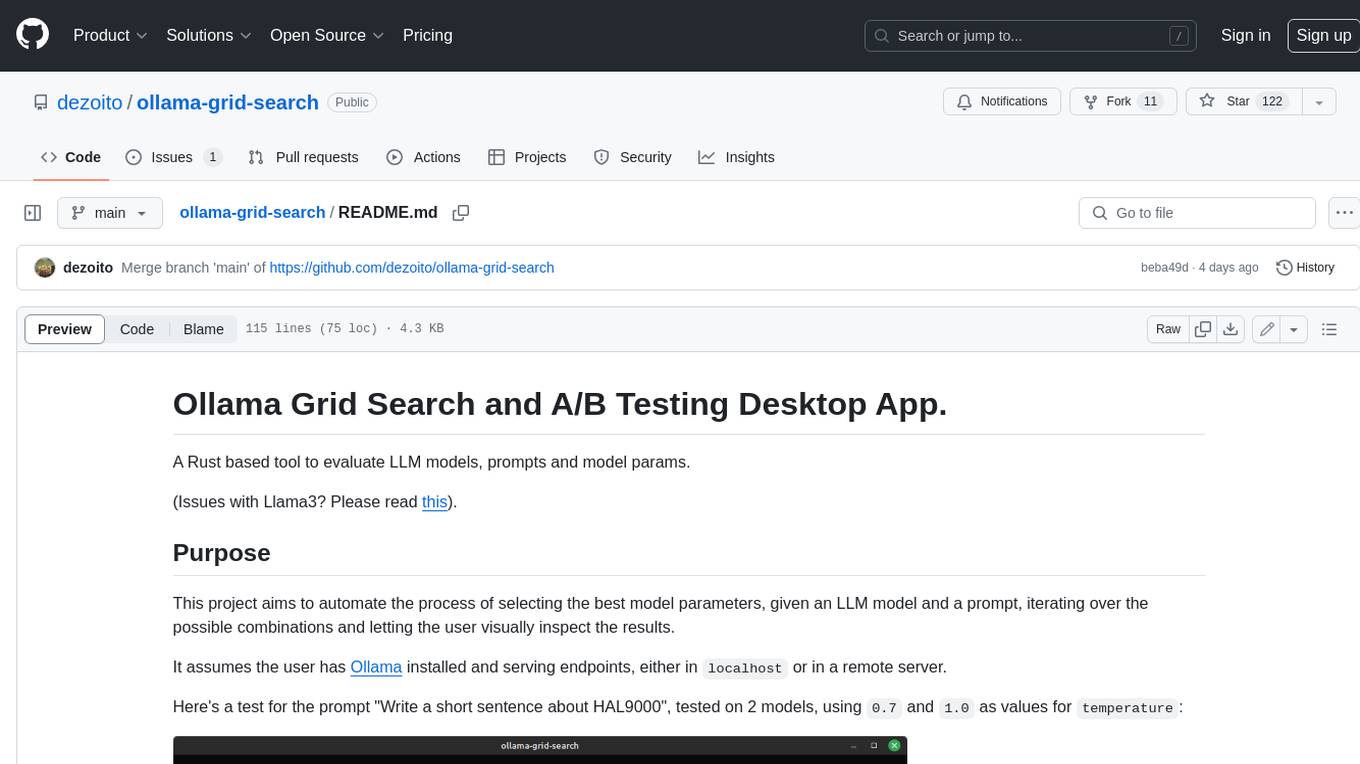
A Rust based tool to evaluate LLM models, prompts and model params. It automates the process of selecting the best model parameters, given an LLM model and a prompt, iterating over the possible combinations and letting the user visually inspect the results. The tool assumes the user has Ollama installed and serving endpoints, either in `localhost` or in a remote server. Key features include: * Automatically fetches models from local or remote Ollama servers * Iterates over different models and params to generate inferences * A/B test prompts on different models simultaneously * Allows multiple iterations for each combination of parameters * Makes synchronous inference calls to avoid spamming servers * Optionally outputs inference parameters and response metadata (inference time, tokens and tokens/s) * Refetching of individual inference calls * Model selection can be filtered by name * List experiments which can be downloaded in JSON format * Configurable inference timeout * Custom default parameters and system prompts can be defined in settings
CogVideo
CogVideo is an open-source repository that provides pretrained text-to-video models for generating videos based on input text. It includes models like CogVideoX-2B and CogVideo, offering powerful video generation capabilities. The repository offers tools for inference, fine-tuning, and model conversion, along with demos showcasing the model's capabilities through CLI, web UI, and online experiences. CogVideo aims to facilitate the creation of high-quality videos from textual descriptions, catering to a wide range of applications.
ktransformers
KTransformers is a flexible Python-centric framework designed to enhance the user's experience with advanced kernel optimizations and placement/parallelism strategies for Transformers. It provides a Transformers-compatible interface, RESTful APIs compliant with OpenAI and Ollama, and a simplified ChatGPT-like web UI. The framework aims to serve as a platform for experimenting with innovative LLM inference optimizations, focusing on local deployments constrained by limited resources and supporting heterogeneous computing opportunities like GPU/CPU offloading of quantized models.
EDA-GPT
EDA GPT is an open-source data analysis companion that offers a comprehensive solution for structured and unstructured data analysis. It streamlines the data analysis process, empowering users to explore, visualize, and gain insights from their data. EDA GPT supports analyzing structured data in various formats like CSV, XLSX, and SQLite, generating graphs, and conducting in-depth analysis of unstructured data such as PDFs and images. It provides a user-friendly interface, powerful features, and capabilities like comparing performance with other tools, analyzing large language models, multimodal search, data cleaning, and editing. The tool is optimized for maximal parallel processing, searching internet and documents, and creating analysis reports from structured and unstructured data.
Controllable-RAG-Agent
This repository contains a sophisticated deterministic graph-based solution for answering complex questions using a controllable autonomous agent. The solution is designed to ensure that answers are solely based on the provided data, avoiding hallucinations. It involves various steps such as PDF loading, text preprocessing, summarization, database creation, encoding, and utilizing large language models. The algorithm follows a detailed workflow involving planning, retrieval, answering, replanning, content distillation, and performance evaluation. Heuristics and techniques implemented focus on content encoding, anonymizing questions, task breakdown, content distillation, chain of thought answering, verification, and model performance evaluation.
Slow_Thinking_with_LLMs
STILL is an open-source project exploring slow-thinking reasoning systems, focusing on o1-like reasoning systems. The project has released technical reports on enhancing LLM reasoning with reward-guided tree search algorithms and implementing slow-thinking reasoning systems using an imitate, explore, and self-improve framework. The project aims to replicate the capabilities of industry-level reasoning systems by fine-tuning reasoning models with long-form thought data and iteratively refining training datasets.
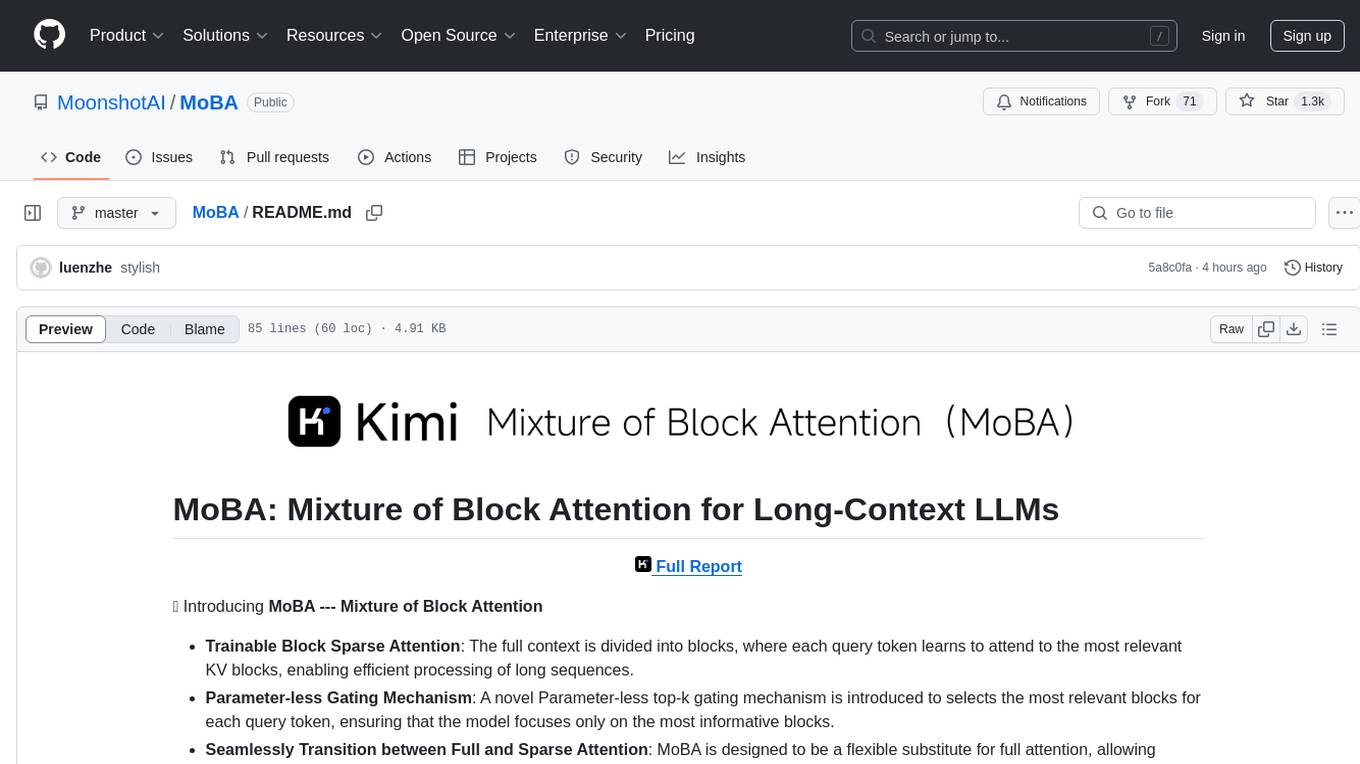
MoBA
MoBA (Mixture of Block Attention) is an innovative approach for long-context language models, enabling efficient processing of long sequences by dividing the full context into blocks and introducing a parameter-less gating mechanism. It allows seamless transitions between full and sparse attention modes, enhancing efficiency without compromising performance. MoBA has been deployed to support long-context requests and demonstrates significant advancements in efficient attention computation for large language models.
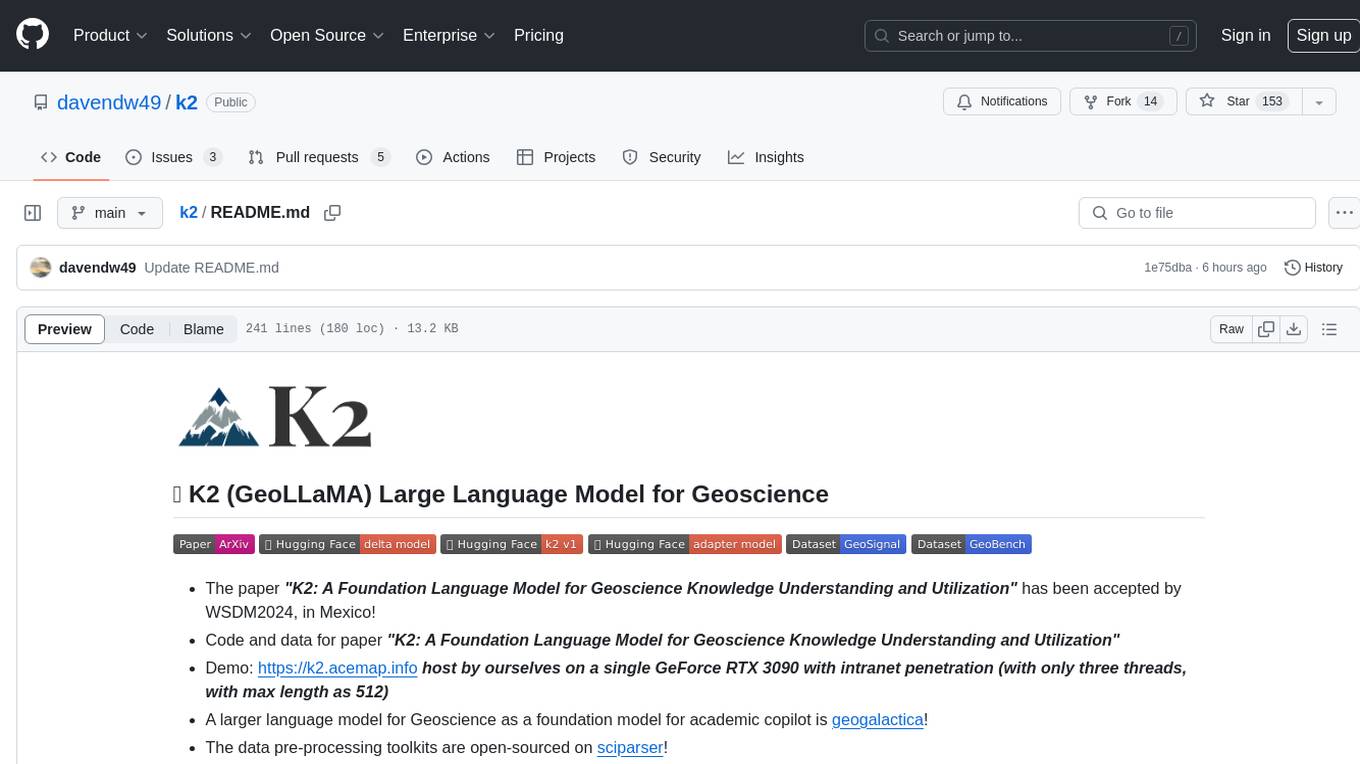
k2
K2 (GeoLLaMA) is a large language model for geoscience, trained on geoscience literature and fine-tuned with knowledge-intensive instruction data. It outperforms baseline models on objective and subjective tasks. The repository provides K2 weights, core data of GeoSignal, GeoBench benchmark, and code for further pretraining and instruction tuning. The model is available on Hugging Face for use. The project aims to create larger and more powerful geoscience language models in the future.
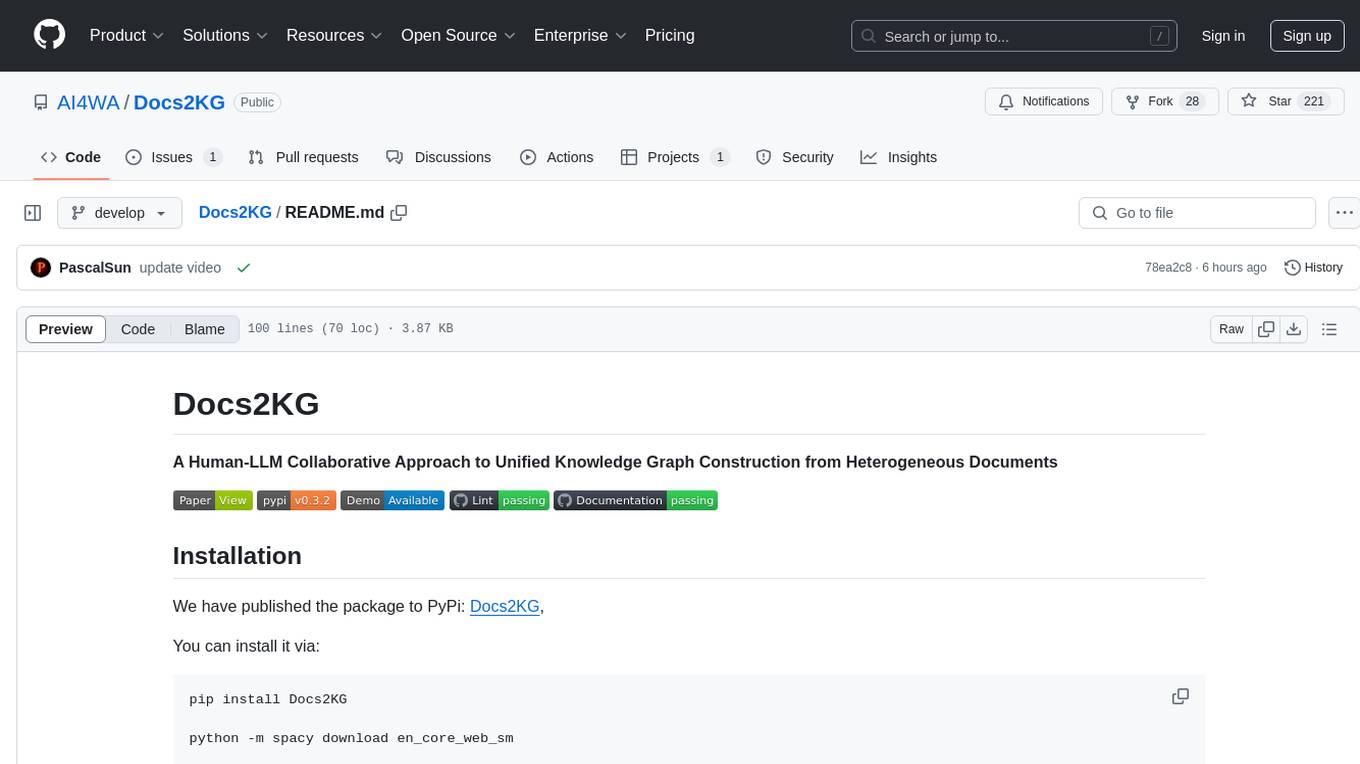
Docs2KG
Docs2KG is a tool designed for constructing a unified knowledge graph from heterogeneous documents. It addresses the challenges of digitizing diverse unstructured documents and constructing a high-quality knowledge graph with less effort. The tool combines bottom-up and top-down approaches, utilizing a human-LLM collaborative interface to enhance the generated knowledge graph. It organizes the knowledge graph into MetaKG, LayoutKG, and SemanticKG, providing a comprehensive view of document content. Docs2KG aims to streamline the process of knowledge graph construction and offers metrics for evaluating the quality of automatic construction.
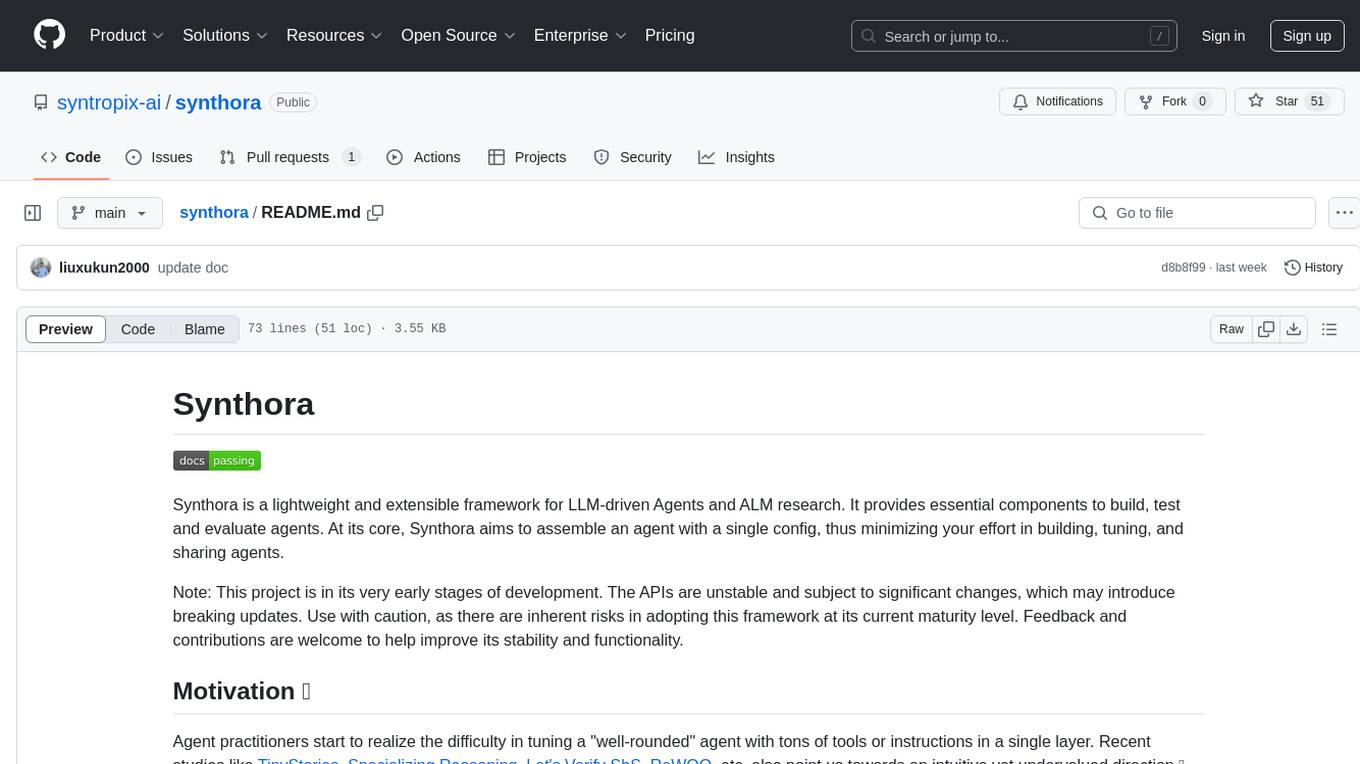
synthora
Synthora is a lightweight and extensible framework for LLM-driven Agents and ALM research. It aims to simplify the process of building, testing, and evaluating agents by providing essential components. The framework allows for easy agent assembly with a single config, reducing the effort required for tuning and sharing agents. Although in early development stages with unstable APIs, Synthora welcomes feedback and contributions to enhance its stability and functionality.
For similar tasks
HuixiangDou2
HuixiangDou2 is a robustly optimized GraphRAG approach that integrates multiple open-source projects to improve performance in graph-based augmented generation. It conducts comparative experiments and achieves a significant score increase, leading to a GraphRAG implementation with recognized performance. The repository provides code improvements, dense retrieval for querying entities and relationships, real domain knowledge testing, and impact analysis on accuracy.
tt-metal
TT-NN is a python & C++ Neural Network OP library. It provides a low-level programming model, TT-Metalium, enabling kernel development for Tenstorrent hardware.
mscclpp
MSCCL++ is a GPU-driven communication stack for scalable AI applications. It provides a highly efficient and customizable communication stack for distributed GPU applications. MSCCL++ redefines inter-GPU communication interfaces, delivering a highly efficient and customizable communication stack for distributed GPU applications. Its design is specifically tailored to accommodate diverse performance optimization scenarios often encountered in state-of-the-art AI applications. MSCCL++ provides communication abstractions at the lowest level close to hardware and at the highest level close to application API. The lowest level of abstraction is ultra light weight which enables a user to implement logics of data movement for a collective operation such as AllReduce inside a GPU kernel extremely efficiently without worrying about memory ordering of different ops. The modularity of MSCCL++ enables a user to construct the building blocks of MSCCL++ in a high level abstraction in Python and feed them to a CUDA kernel in order to facilitate the user's productivity. MSCCL++ provides fine-grained synchronous and asynchronous 0-copy 1-sided abstracts for communication primitives such as `put()`, `get()`, `signal()`, `flush()`, and `wait()`. The 1-sided abstractions allows a user to asynchronously `put()` their data on the remote GPU as soon as it is ready without requiring the remote side to issue any receive instruction. This enables users to easily implement flexible communication logics, such as overlapping communication with computation, or implementing customized collective communication algorithms without worrying about potential deadlocks. Additionally, the 0-copy capability enables MSCCL++ to directly transfer data between user's buffers without using intermediate internal buffers which saves GPU bandwidth and memory capacity. MSCCL++ provides consistent abstractions regardless of the location of the remote GPU (either on the local node or on a remote node) or the underlying link (either NVLink/xGMI or InfiniBand). This simplifies the code for inter-GPU communication, which is often complex due to memory ordering of GPU/CPU read/writes and therefore, is error-prone.
mlir-air
This repository contains tools and libraries for building AIR platforms, runtimes and compilers.

free-for-life
A massive list including a huge amount of products and services that are completely free! ⭐ Star on GitHub • 🤝 Contribute # Table of Contents * APIs, Data & ML * Artificial Intelligence * BaaS * Code Editors * Code Generation * DNS * Databases * Design & UI * Domains * Email * Font * For Students * Forms * Linux Distributions * Messaging & Streaming * PaaS * Payments & Billing * SSL
AIMr
AIMr is an AI aimbot tool written in Python that leverages modern technologies to achieve an undetected system with a pleasing appearance. It works on any game that uses human-shaped models. To optimize its performance, users should build OpenCV with CUDA. For Valorant, additional perks in the Discord and an Arduino Leonardo R3 are required.
aika
AIKA (Artificial Intelligence for Knowledge Acquisition) is a new type of artificial neural network designed to mimic the behavior of a biological brain more closely and bridge the gap to classical AI. The network conceptually separates activations from neurons, creating two separate graphs to represent acquired knowledge and inferred information. It uses different types of neurons and synapses to propagate activation values, binding signals, causal relations, and training gradients. The network structure allows for flexible topology and supports the gradual population of neurons and synapses during training.
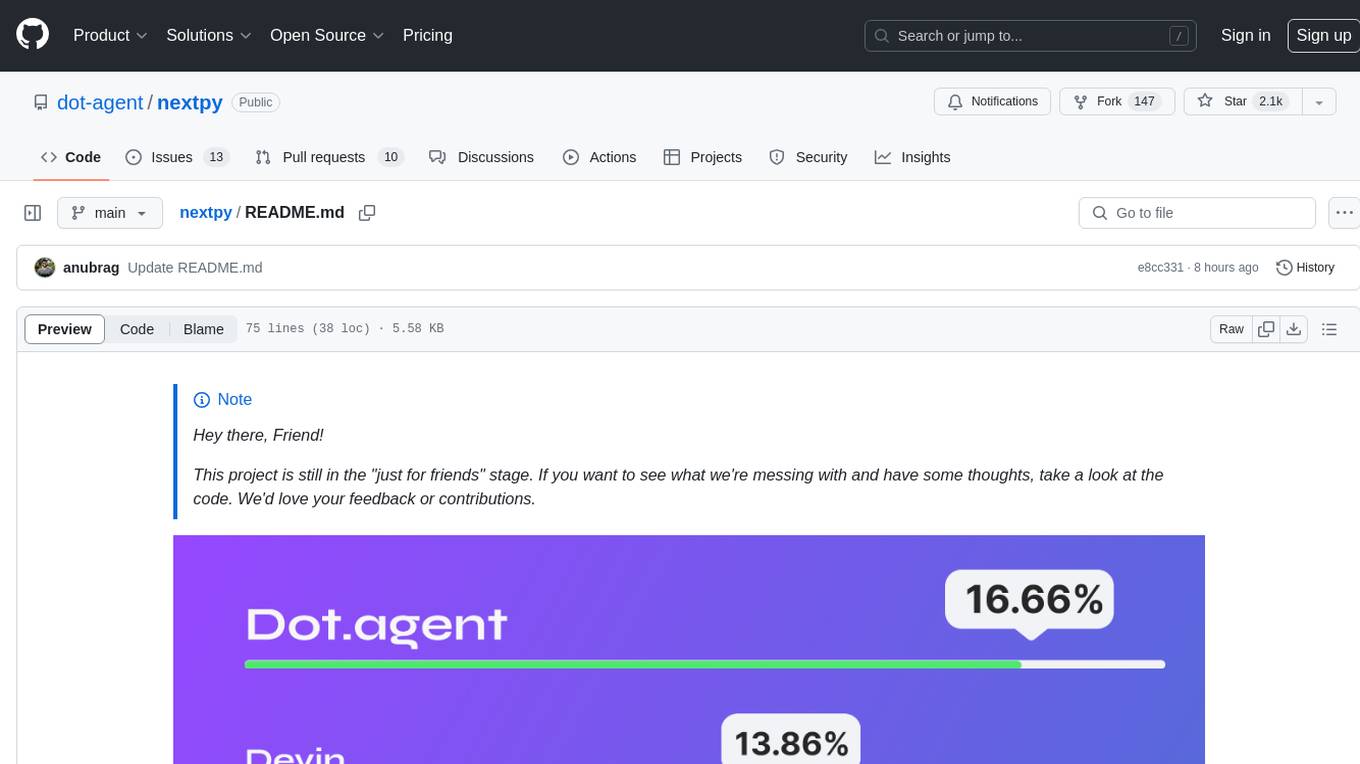
nextpy
Nextpy is a cutting-edge software development framework optimized for AI-based code generation. It provides guardrails for defining AI system boundaries, structured outputs for prompt engineering, a powerful prompt engine for efficient processing, better AI generations with precise output control, modularity for multiplatform and extensible usage, developer-first approach for transferable knowledge, and containerized & scalable deployment options. It offers 4-10x faster performance compared to Streamlit apps, with a focus on cooperation within the open-source community and integration of key components from various projects.
For similar jobs
sweep
Sweep is an AI junior developer that turns bugs and feature requests into code changes. It automatically handles developer experience improvements like adding type hints and improving test coverage.
teams-ai
The Teams AI Library is a software development kit (SDK) that helps developers create bots that can interact with Teams and Microsoft 365 applications. It is built on top of the Bot Framework SDK and simplifies the process of developing bots that interact with Teams' artificial intelligence capabilities. The SDK is available for JavaScript/TypeScript, .NET, and Python.
ai-guide
This guide is dedicated to Large Language Models (LLMs) that you can run on your home computer. It assumes your PC is a lower-end, non-gaming setup.
classifai
Supercharge WordPress Content Workflows and Engagement with Artificial Intelligence. Tap into leading cloud-based services like OpenAI, Microsoft Azure AI, Google Gemini and IBM Watson to augment your WordPress-powered websites. Publish content faster while improving SEO performance and increasing audience engagement. ClassifAI integrates Artificial Intelligence and Machine Learning technologies to lighten your workload and eliminate tedious tasks, giving you more time to create original content that matters.
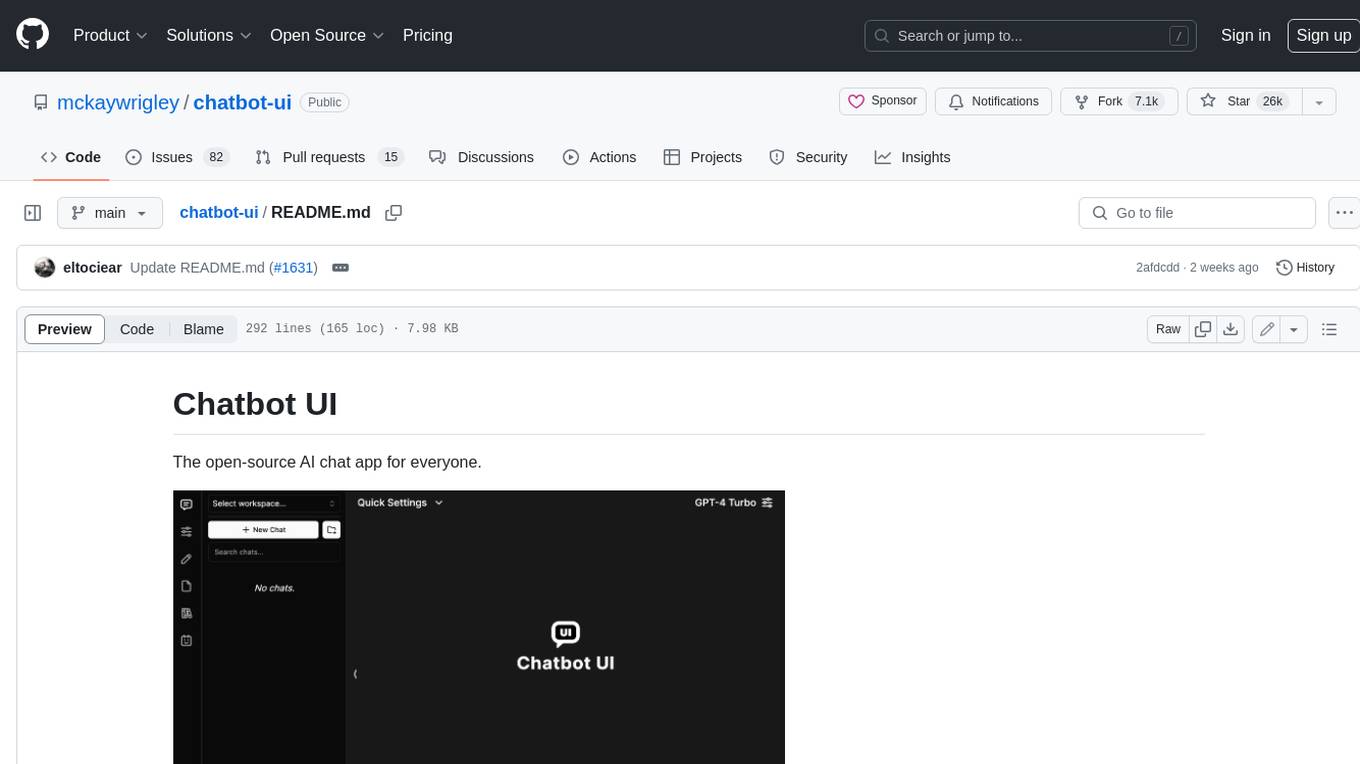
chatbot-ui
Chatbot UI is an open-source AI chat app that allows users to create and deploy their own AI chatbots. It is easy to use and can be customized to fit any need. Chatbot UI is perfect for businesses, developers, and anyone who wants to create a chatbot.
BricksLLM
BricksLLM is a cloud native AI gateway written in Go. Currently, it provides native support for OpenAI, Anthropic, Azure OpenAI and vLLM. BricksLLM aims to provide enterprise level infrastructure that can power any LLM production use cases. Here are some use cases for BricksLLM: * Set LLM usage limits for users on different pricing tiers * Track LLM usage on a per user and per organization basis * Block or redact requests containing PIIs * Improve LLM reliability with failovers, retries and caching * Distribute API keys with rate limits and cost limits for internal development/production use cases * Distribute API keys with rate limits and cost limits for students
uAgents
uAgents is a Python library developed by Fetch.ai that allows for the creation of autonomous AI agents. These agents can perform various tasks on a schedule or take action on various events. uAgents are easy to create and manage, and they are connected to a fast-growing network of other uAgents. They are also secure, with cryptographically secured messages and wallets.
griptape
Griptape is a modular Python framework for building AI-powered applications that securely connect to your enterprise data and APIs. It offers developers the ability to maintain control and flexibility at every step. Griptape's core components include Structures (Agents, Pipelines, and Workflows), Tasks, Tools, Memory (Conversation Memory, Task Memory, and Meta Memory), Drivers (Prompt and Embedding Drivers, Vector Store Drivers, Image Generation Drivers, Image Query Drivers, SQL Drivers, Web Scraper Drivers, and Conversation Memory Drivers), Engines (Query Engines, Extraction Engines, Summary Engines, Image Generation Engines, and Image Query Engines), and additional components (Rulesets, Loaders, Artifacts, Chunkers, and Tokenizers). Griptape enables developers to create AI-powered applications with ease and efficiency.