


model_server
A scalable inference server for models optimized with OpenVINO™
Stars: 764
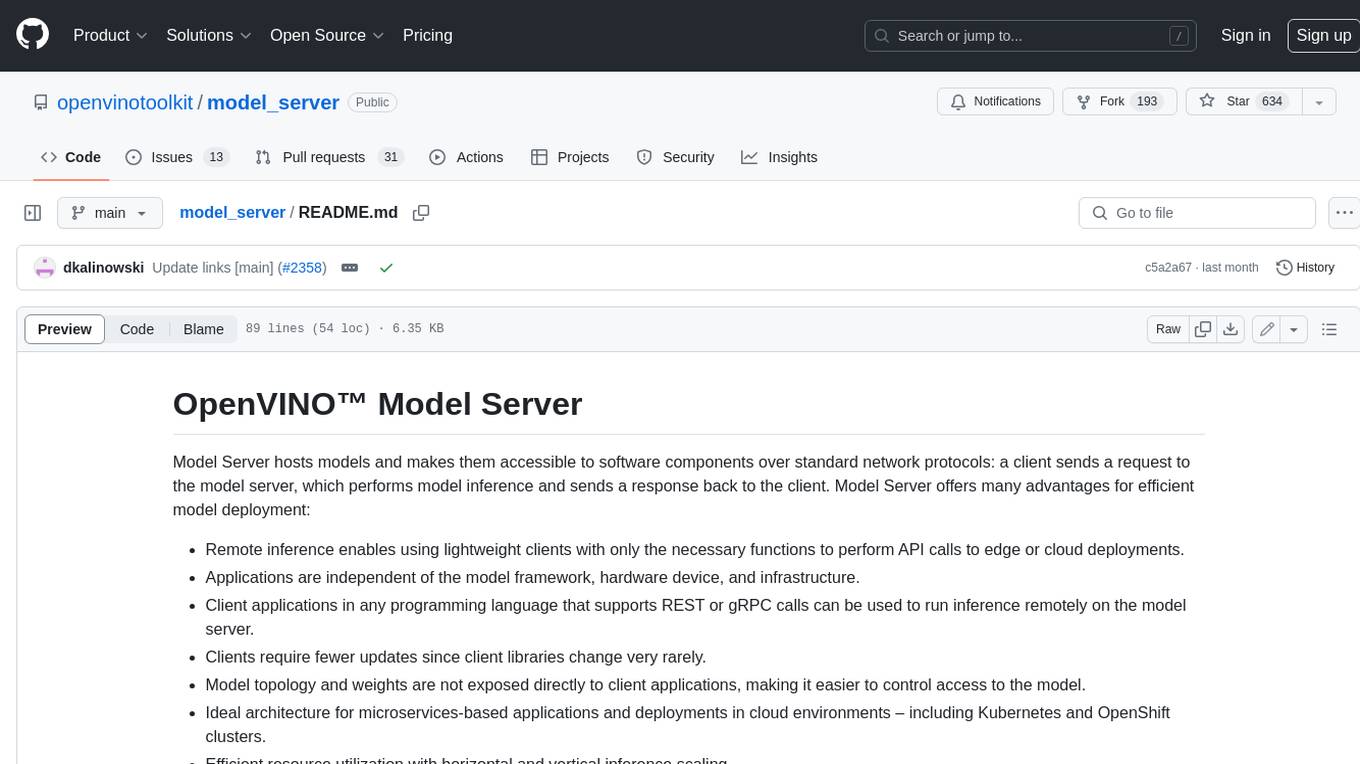
OpenVINO™ Model Server (OVMS) is a high-performance system for serving models. Implemented in C++ for scalability and optimized for deployment on Intel architectures, the model server uses the same architecture and API as TensorFlow Serving and KServe while applying OpenVINO for inference execution. Inference service is provided via gRPC or REST API, making deploying new algorithms and AI experiments easy.
README:
Model Server hosts models and makes them accessible to software components over standard network protocols: a client sends a request to the model server, which performs model inference and sends a response back to the client. Model Server offers many advantages for efficient model deployment:
- Remote inference enables using lightweight clients with only the necessary functions to perform API calls to edge or cloud deployments.
- Applications are independent of the model framework, hardware device, and infrastructure.
- Client applications in any programming language that supports REST or gRPC calls can be used to run inference remotely on the model server.
- Clients require fewer updates since client libraries change very rarely.
- Model topology and weights are not exposed directly to client applications, making it easier to control access to the model.
- Ideal architecture for microservices-based applications and deployments in cloud environments – including Kubernetes and OpenShift clusters.
- Efficient resource utilization with horizontal and vertical inference scaling.

OpenVINO™ Model Server (OVMS) is a high-performance system for serving models. Implemented in C++ for scalability and optimized for deployment on Intel architectures. It uses the generative API like OpenAI and Cohere, KServe and TensorFlow Serving and while applying OpenVINO for inference execution. Inference service is provided via gRPC or REST API, making deploying new algorithms and AI experiments easy.

The models used by the server can be stored locally, hosted remotely by object storage services or pulled from HuggingFace Hub. For more details, refer to Preparing Model Repository and Deployment documentation. Model server works inside Docker containers, Bare Metal and in Kubernetes environment.
Start using OpenVINO Model Server with a fast-forward serving example from the QuickStart guide or LLM QuickStart guide.
Read release notes to find out what’s new.
- [NEW] Support for AI agents
- [NEW] Image generation compatible with OpenAI API
- [NEW] Native Windows support. Check updated deployment guide
- [NEW] Text Embeddings compatible with OpenAI API
- [NEW] Reranking compatible with Cohere API
- [NEW] Efficient Text Generation via OpenAI API
- Python code execution
- gRPC streaming
- MediaPipe graphs serving
- Model management - including model versioning and model updates in runtime
- Dynamic model inputs
- Directed Acyclic Graph Scheduler along with custom nodes in DAG pipelines
- Metrics - metrics compatible with Prometheus standard
- Support for multiple frameworks, such as TensorFlow, PaddlePaddle and ONNX
- Support for AI accelerators
Check full list of features
Note: OVMS has been tested on RedHat, Ubuntu and Windows. Public docker images are stored in:
- Dockerhub
- RedHat Ecosystem Catalog Binary packages for Linux and Windows are on Github
A demonstration on how to use OpenVINO Model Server can be found in our quick-start guide for vision use case and LLM text generation.
Check also other instructions:
-
RAG building blocks made easy and affordable with OpenVINO Model Server
-
Simplified Deployments with OpenVINO™ Model Server and TensorFlow Serving
-
Inference Scaling with OpenVINO™ Model Server in Kubernetes and OpenShift Clusters
If you have a question, a feature request, or a bug report, feel free to submit a Github issue.
* Other names and brands may be claimed as the property of others.
For Tasks:
Click tags to check more tools for each tasksFor Jobs:
Alternative AI tools for model_server
Similar Open Source Tools
model_server
OpenVINO™ Model Server (OVMS) is a high-performance system for serving models. Implemented in C++ for scalability and optimized for deployment on Intel architectures, the model server uses the same architecture and API as TensorFlow Serving and KServe while applying OpenVINO for inference execution. Inference service is provided via gRPC or REST API, making deploying new algorithms and AI experiments easy.
CSGHub
CSGHub is an open source, trustworthy large model asset management platform that can assist users in governing the assets involved in the lifecycle of LLM and LLM applications (datasets, model files, codes, etc). With CSGHub, users can perform operations on LLM assets, including uploading, downloading, storing, verifying, and distributing, through Web interface, Git command line, or natural language Chatbot. Meanwhile, the platform provides microservice submodules and standardized OpenAPIs, which could be easily integrated with users' own systems. CSGHub is committed to bringing users an asset management platform that is natively designed for large models and can be deployed On-Premise for fully offline operation. CSGHub offers functionalities similar to a privatized Huggingface(on-premise Huggingface), managing LLM assets in a manner akin to how OpenStack Glance manages virtual machine images, Harbor manages container images, and Sonatype Nexus manages artifacts.
awesome-openvino
Awesome OpenVINO is a curated list of AI projects based on the OpenVINO toolkit, offering a rich assortment of projects, libraries, and tutorials covering various topics like model optimization, deployment, and real-world applications across industries. It serves as a valuable resource continuously updated to maximize the potential of OpenVINO in projects, featuring projects like Stable Diffusion web UI, Visioncom, FastSD CPU, OpenVINO AI Plugins for GIMP, and more.
awesome-mlops
Awesome MLOps is a curated list of tools related to Machine Learning Operations, covering areas such as AutoML, CI/CD for Machine Learning, Data Cataloging, Data Enrichment, Data Exploration, Data Management, Data Processing, Data Validation, Data Visualization, Drift Detection, Feature Engineering, Feature Store, Hyperparameter Tuning, Knowledge Sharing, Machine Learning Platforms, Model Fairness and Privacy, Model Interpretability, Model Lifecycle, Model Serving, Model Testing & Validation, Optimization Tools, Simplification Tools, Visual Analysis and Debugging, and Workflow Tools. The repository provides a comprehensive collection of tools and resources for individuals and teams working in the field of MLOps.
cube
Cube is a semantic layer for building data applications, helping data engineers and application developers access data from modern data stores, organize it into consistent definitions, and deliver it to every application. It works with SQL-enabled data sources, providing sub-second latency and high concurrency for API requests. Cube addresses SQL code organization, performance, and access control issues in data applications, enabling efficient data modeling, access control, and performance optimizations for various tools like embedded analytics, dashboarding, reporting, and data notebooks.
ai-accelerator
The AI Accelerator project source code is designed to initialize an OpenShift cluster with a recommended set of operators and components for training, deploying, serving, and monitoring Machine Learning models. It provides core OpenShift features for Data Science environments and can be customized for specific scenarios. The project automates IT infrastructure using GitOps practices, including Git, code review, and CI/CD. ArgoCD Application objects are used to manage the installation of operators on the cluster.
akeru
Akeru.ai is an open-source AI platform leveraging the power of decentralization. It offers transparent, safe, and highly available AI capabilities. The platform aims to give developers access to open-source and transparent AI resources through its decentralized nature hosted on an edge network. Akeru API introduces features like retrieval, function calling, conversation management, custom instructions, data input optimization, user privacy, testing and iteration, and comprehensive documentation. It is ideal for creating AI agents and enhancing web and mobile applications with advanced AI capabilities. The platform runs on a Bittensor Subnet design that aims to democratize AI technology and promote an equitable AI future. Akeru.ai embraces decentralization challenges to ensure a decentralized and equitable AI ecosystem with security features like watermarking and network pings. The API architecture integrates with technologies like Bun, Redis, and Elysia for a robust, scalable solution.
psychic
Finic is an open source python-based integration platform designed to simplify integration workflows for both business users and developers. It offers a drag-and-drop UI, a dedicated Python environment for each workflow, and generative AI features to streamline transformation tasks. With a focus on decoupling integration from product code, Finic aims to provide faster and more flexible integrations by supporting custom connectors. The tool is open source and allows deployment to users' own cloud environments with minimal legal friction.
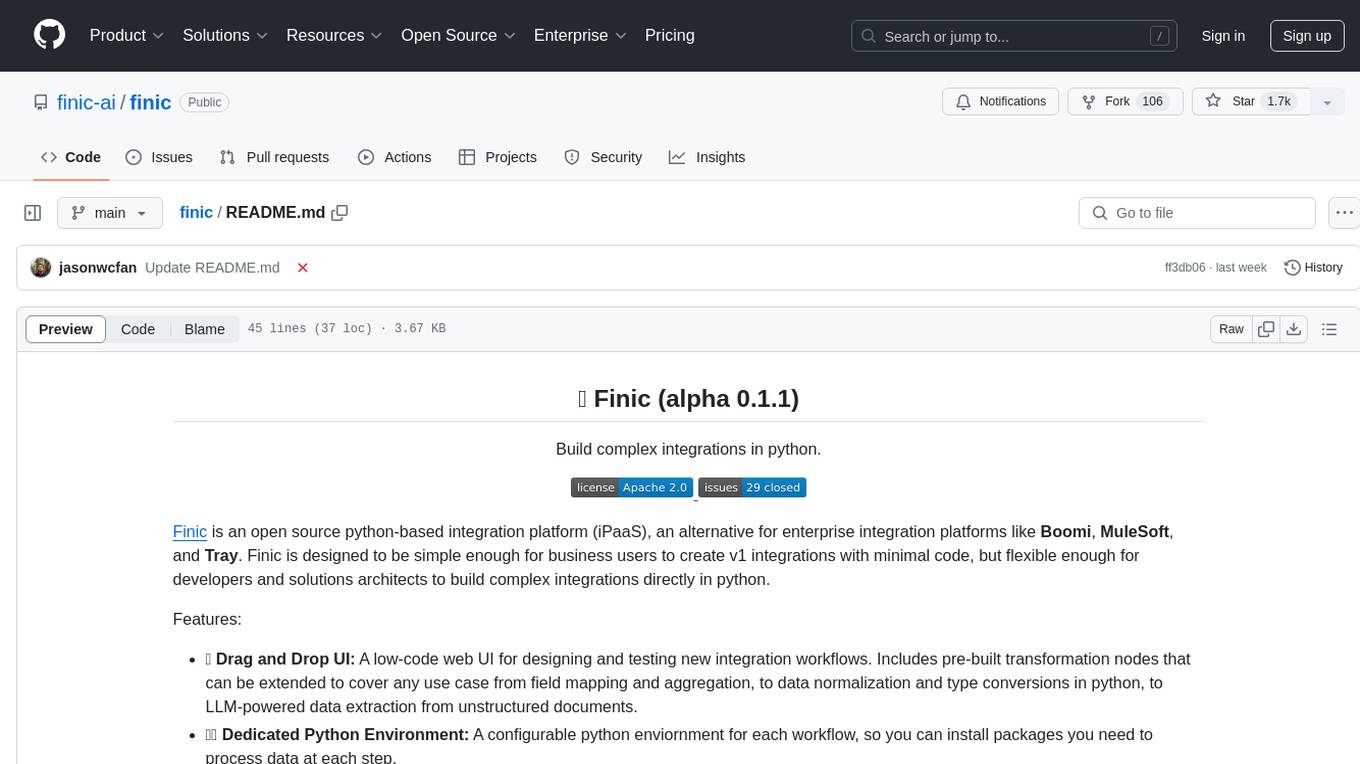
finic
Finic is an open source python-based integration platform designed for business users to create v1 integrations with minimal code, while also being flexible for developers to build complex integrations directly in python. It offers a low-code web UI, a dedicated Python environment for each workflow, and generative AI features. Finic decouples integration from product code, supports custom connectors, and is open source. It is not an ETL tool but focuses on integrating functionality between applications via APIs or SFTP, and it is not a workflow automation tool optimized for complex use cases.
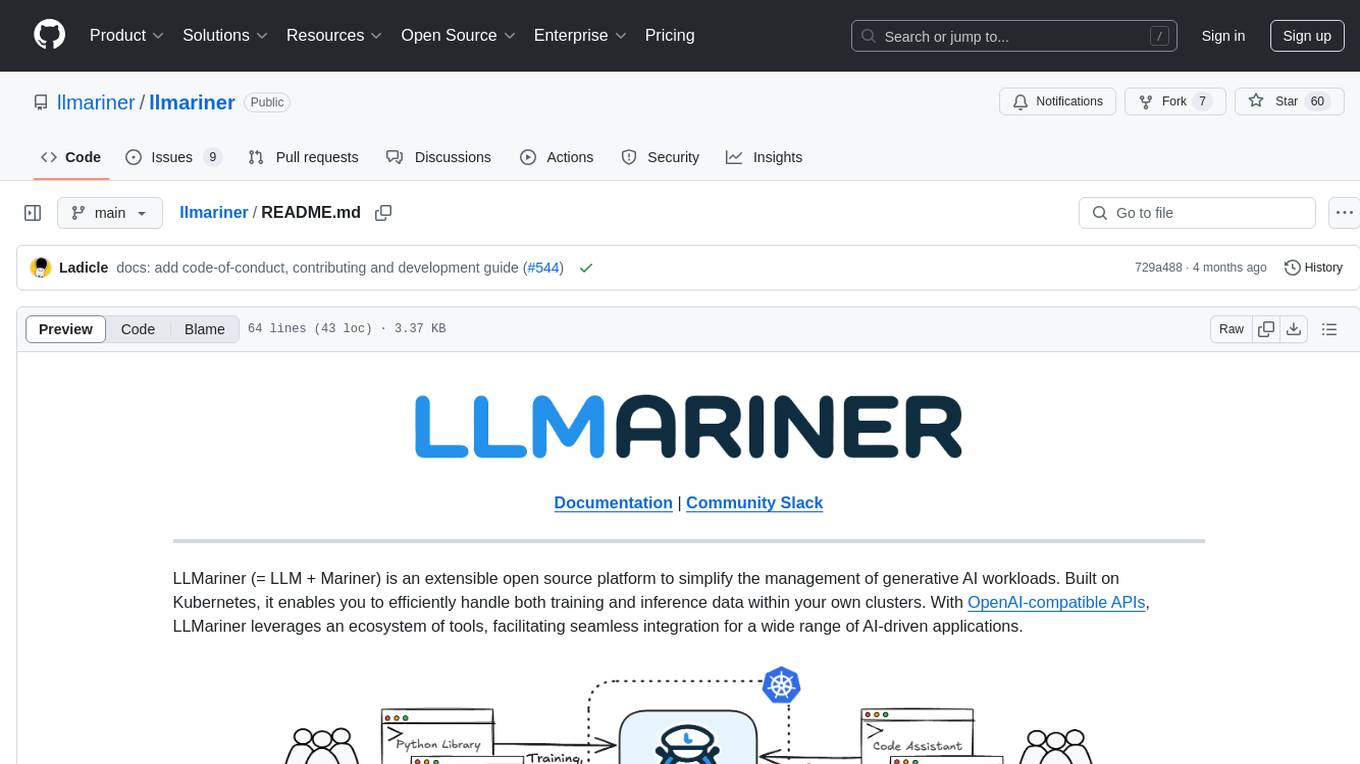
llmariner
LLMariner is an extensible open source platform built on Kubernetes to simplify the management of generative AI workloads. It enables efficient handling of training and inference data within clusters, with OpenAI-compatible APIs for seamless integration with a wide range of AI-driven applications.
doris
Doris is a lightweight and user-friendly data visualization tool designed for quick and easy exploration of datasets. It provides a simple interface for users to upload their data and generate interactive visualizations without the need for coding. With Doris, users can easily create charts, graphs, and dashboards to analyze and present their data in a visually appealing way. The tool supports various data formats and offers customization options to tailor visualizations to specific needs. Whether you are a data analyst, researcher, or student, Doris simplifies the process of data exploration and presentation.
unified-cache-management
Unified Cache Manager (UCM) is a tool designed to persist the LLM KVCache and replace redundant computations through various retrieval mechanisms. It supports prefix caching and offers training-free sparse attention retrieval methods, enhancing performance for long sequence inference tasks. UCM also provides a PD disaggregation solution based on a storage-compute separation architecture, enabling easier management of heterogeneous computing resources. When integrated with vLLM, UCM significantly reduces inference latency in scenarios like multi-turn dialogue and long-context reasoning tasks.
psychic
Psychic is a tool that provides a platform for users to access psychic readings and services. It offers a range of features such as tarot card readings, astrology consultations, and spiritual guidance. Users can connect with experienced psychics and receive personalized insights and advice on various aspects of their lives. The platform is designed to be user-friendly and intuitive, making it easy for users to navigate and explore the different services available. Whether you're looking for guidance on love, career, or personal growth, Psychic has you covered.
knavigator
Knavigator is a project designed to analyze, optimize, and compare scheduling systems, with a focus on AI/ML workloads. It addresses various needs, including testing, troubleshooting, benchmarking, chaos engineering, performance analysis, and optimization. Knavigator interfaces with Kubernetes clusters to manage tasks such as manipulating with Kubernetes objects, evaluating PromQL queries, as well as executing specific operations. It can operate both outside and inside a Kubernetes cluster, leveraging the Kubernetes API for task management. To facilitate large-scale experiments without the overhead of running actual user workloads, Knavigator utilizes KWOK for creating virtual nodes in extensive clusters.
NeMo
NeMo Framework is a generative AI framework built for researchers and pytorch developers working on large language models (LLMs), multimodal models (MM), automatic speech recognition (ASR), and text-to-speech synthesis (TTS). The primary objective of NeMo is to provide a scalable framework for researchers and developers from industry and academia to more easily implement and design new generative AI models by being able to leverage existing code and pretrained models.
kdbai-samples
KDB.AI is a time-based vector database that allows developers to build scalable, reliable, and real-time applications by providing advanced search, recommendation, and personalization for Generative AI applications. It supports multiple index types, distance metrics, top-N and metadata filtered retrieval, as well as Python and REST interfaces. The repository contains samples demonstrating various use-cases such as temporal similarity search, document search, image search, recommendation systems, sentiment analysis, and more. KDB.AI integrates with platforms like ChatGPT, Langchain, and LlamaIndex. The setup steps require Unix terminal, Python 3.8+, and pip installed. Users can install necessary Python packages and run Jupyter notebooks to interact with the samples.
For similar tasks
ai-on-gke
This repository contains assets related to AI/ML workloads on Google Kubernetes Engine (GKE). Run optimized AI/ML workloads with Google Kubernetes Engine (GKE) platform orchestration capabilities. A robust AI/ML platform considers the following layers: Infrastructure orchestration that support GPUs and TPUs for training and serving workloads at scale Flexible integration with distributed computing and data processing frameworks Support for multiple teams on the same infrastructure to maximize utilization of resources
ray
Ray is a unified framework for scaling AI and Python applications. It consists of a core distributed runtime and a set of AI libraries for simplifying ML compute, including Data, Train, Tune, RLlib, and Serve. Ray runs on any machine, cluster, cloud provider, and Kubernetes, and features a growing ecosystem of community integrations. With Ray, you can seamlessly scale the same code from a laptop to a cluster, making it easy to meet the compute-intensive demands of modern ML workloads.
labelbox-python
Labelbox is a data-centric AI platform for enterprises to develop, optimize, and use AI to solve problems and power new products and services. Enterprises use Labelbox to curate data, generate high-quality human feedback data for computer vision and LLMs, evaluate model performance, and automate tasks by combining AI and human-centric workflows. The academic & research community uses Labelbox for cutting-edge AI research.
djl
Deep Java Library (DJL) is an open-source, high-level, engine-agnostic Java framework for deep learning. It is designed to be easy to get started with and simple to use for Java developers. DJL provides a native Java development experience and allows users to integrate machine learning and deep learning models with their Java applications. The framework is deep learning engine agnostic, enabling users to switch engines at any point for optimal performance. DJL's ergonomic API interface guides users with best practices to accomplish deep learning tasks, such as running inference and training neural networks.
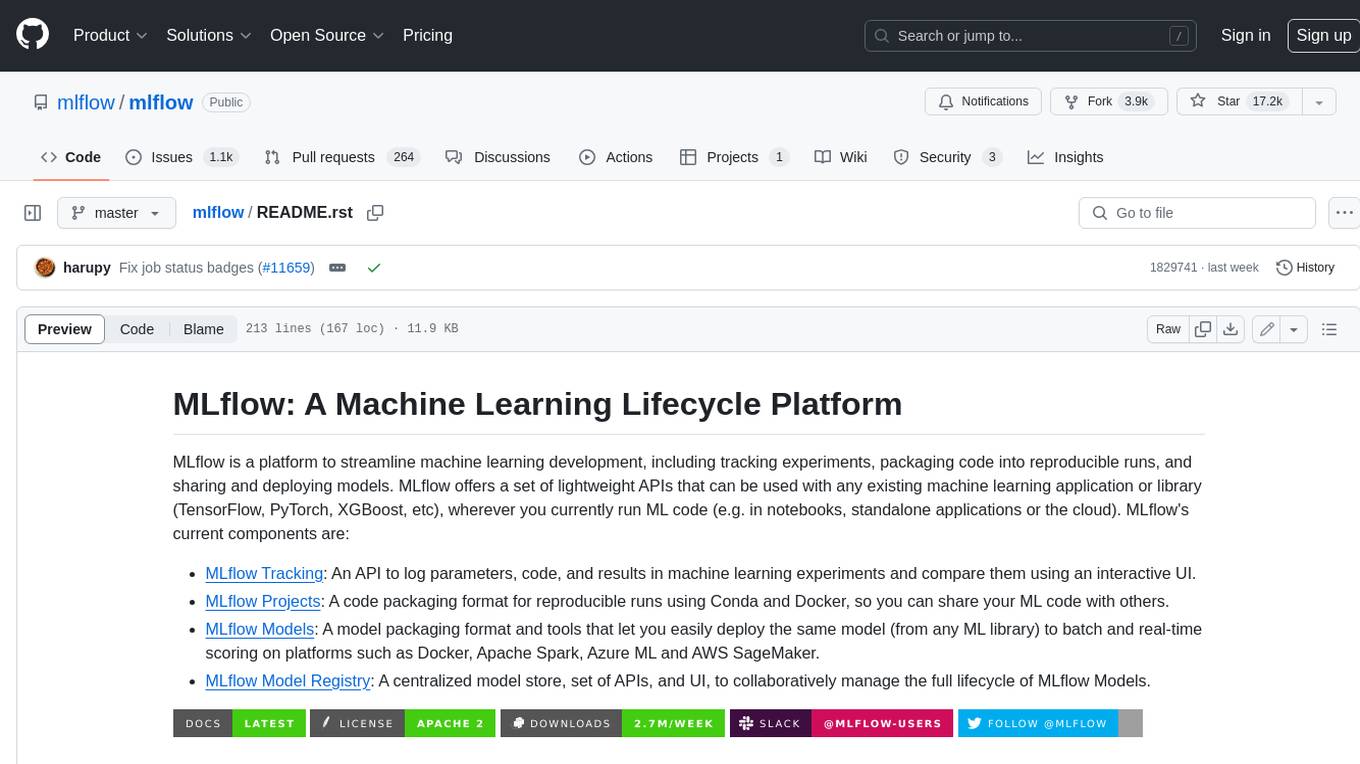
mlflow
MLflow is a platform to streamline machine learning development, including tracking experiments, packaging code into reproducible runs, and sharing and deploying models. MLflow offers a set of lightweight APIs that can be used with any existing machine learning application or library (TensorFlow, PyTorch, XGBoost, etc), wherever you currently run ML code (e.g. in notebooks, standalone applications or the cloud). MLflow's current components are:
* `MLflow Tracking
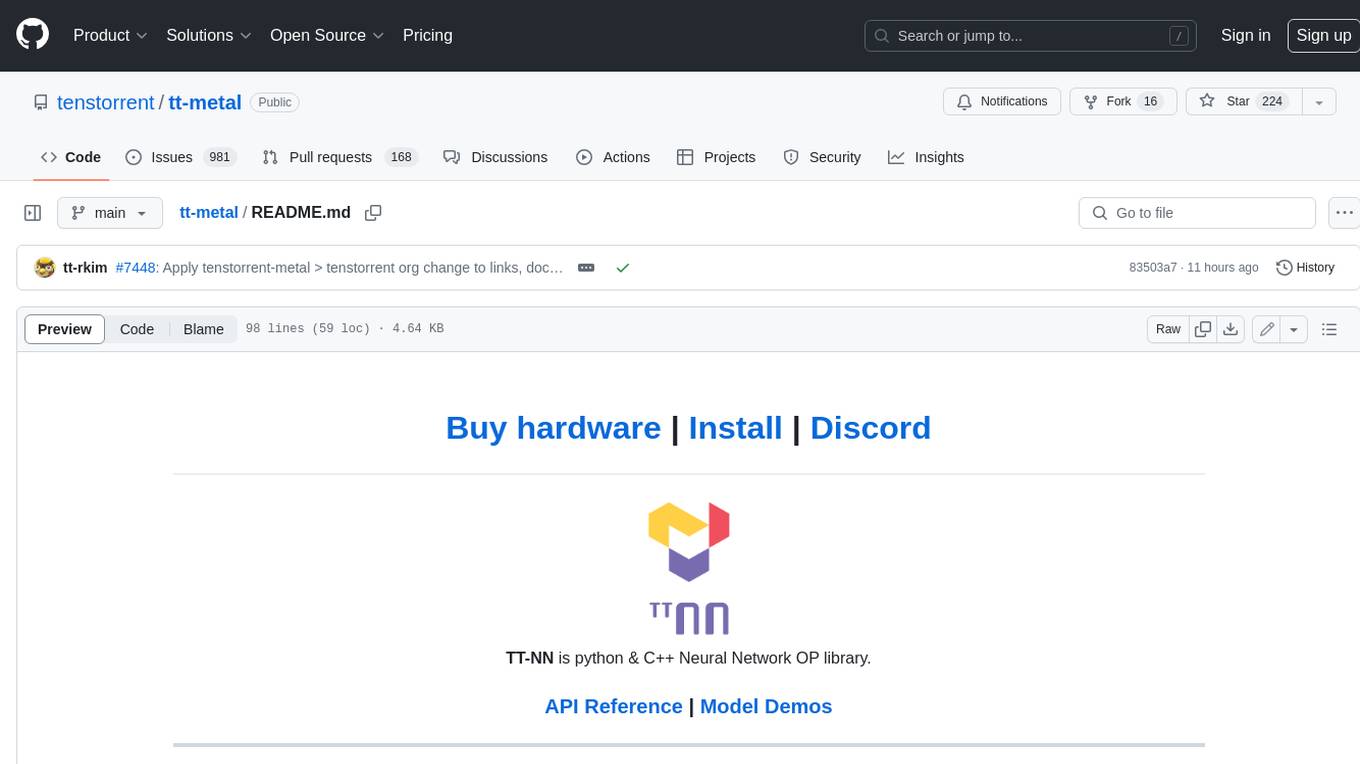
tt-metal
TT-NN is a python & C++ Neural Network OP library. It provides a low-level programming model, TT-Metalium, enabling kernel development for Tenstorrent hardware.
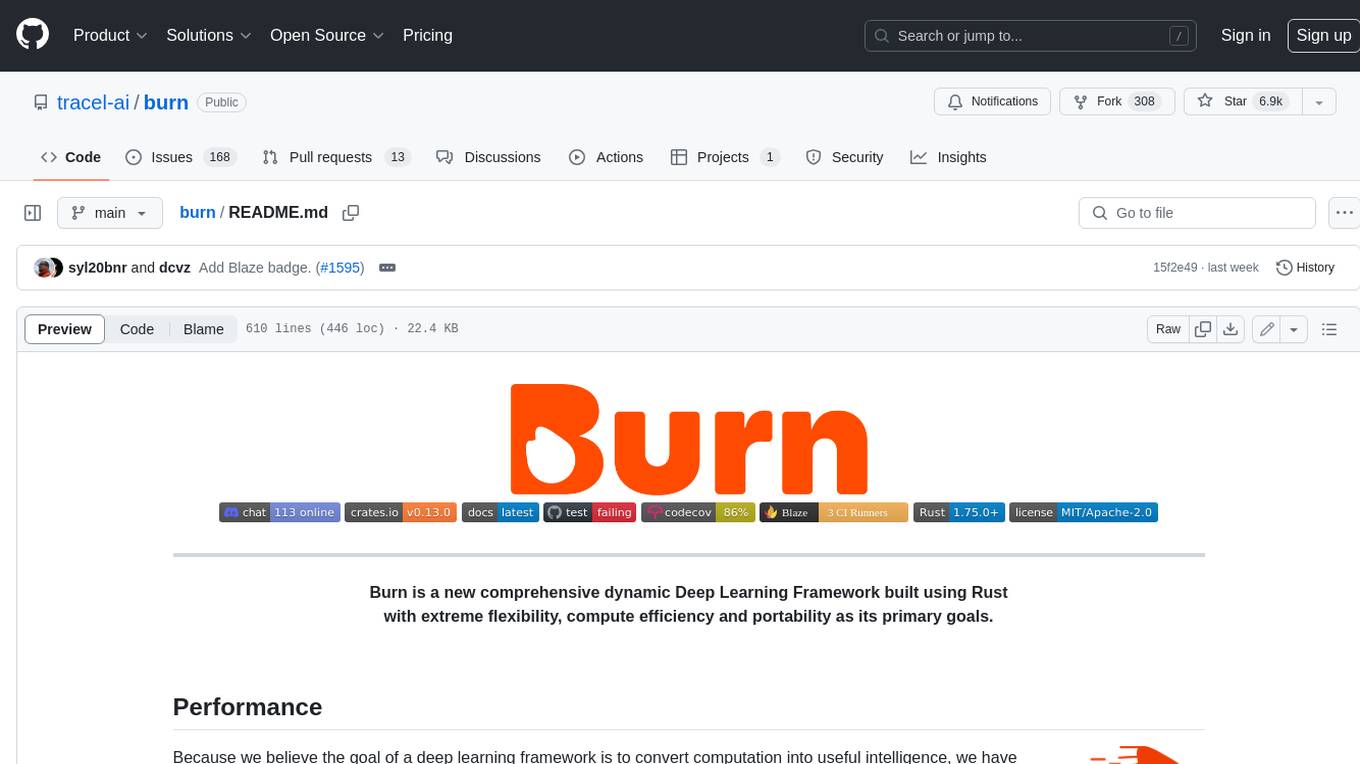
burn
Burn is a new comprehensive dynamic Deep Learning Framework built using Rust with extreme flexibility, compute efficiency and portability as its primary goals.
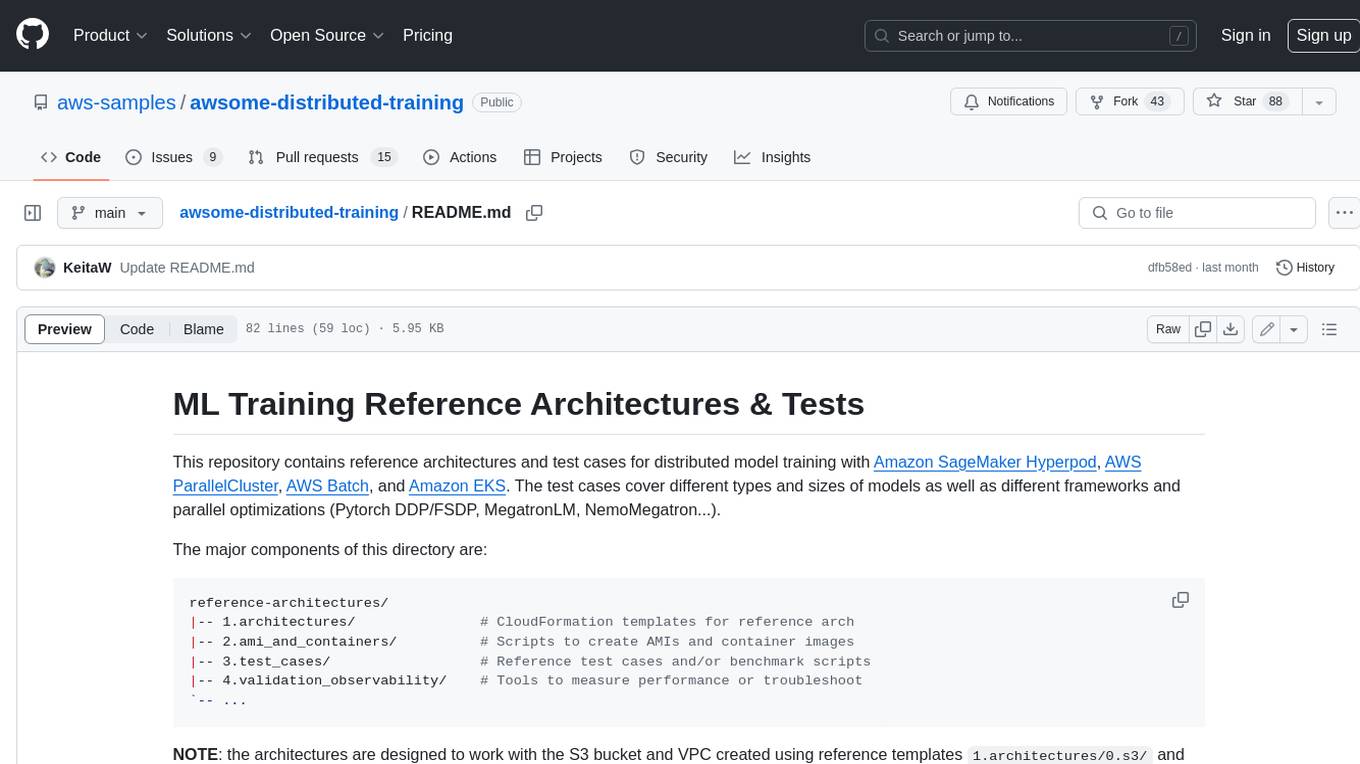
awsome-distributed-training
This repository contains reference architectures and test cases for distributed model training with Amazon SageMaker Hyperpod, AWS ParallelCluster, AWS Batch, and Amazon EKS. The test cases cover different types and sizes of models as well as different frameworks and parallel optimizations (Pytorch DDP/FSDP, MegatronLM, NemoMegatron...).
For similar jobs
weave
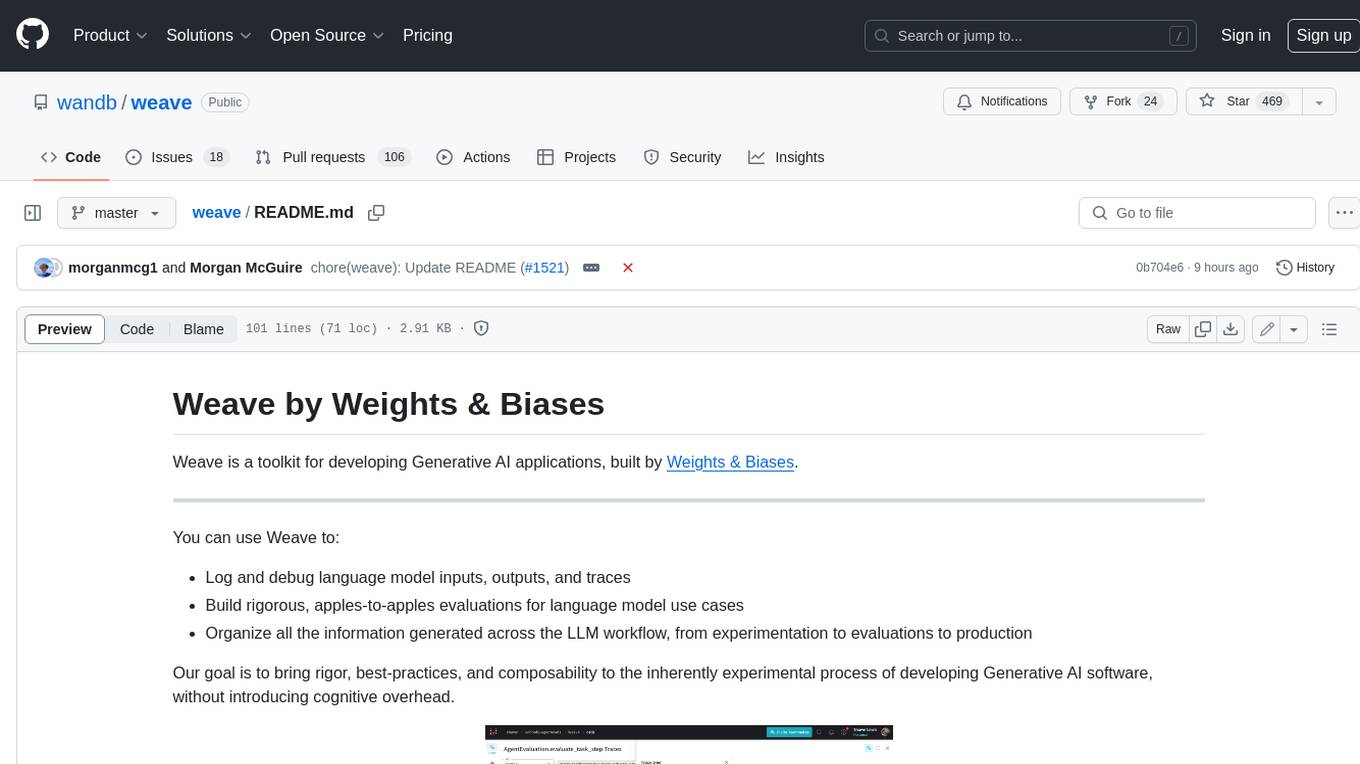
Weave is a toolkit for developing Generative AI applications, built by Weights & Biases. With Weave, you can log and debug language model inputs, outputs, and traces; build rigorous, apples-to-apples evaluations for language model use cases; and organize all the information generated across the LLM workflow, from experimentation to evaluations to production. Weave aims to bring rigor, best-practices, and composability to the inherently experimental process of developing Generative AI software, without introducing cognitive overhead.
LLMStack
LLMStack is a no-code platform for building generative AI agents, workflows, and chatbots. It allows users to connect their own data, internal tools, and GPT-powered models without any coding experience. LLMStack can be deployed to the cloud or on-premise and can be accessed via HTTP API or triggered from Slack or Discord.
VisionCraft
The VisionCraft API is a free API for using over 100 different AI models. From images to sound.
kaito
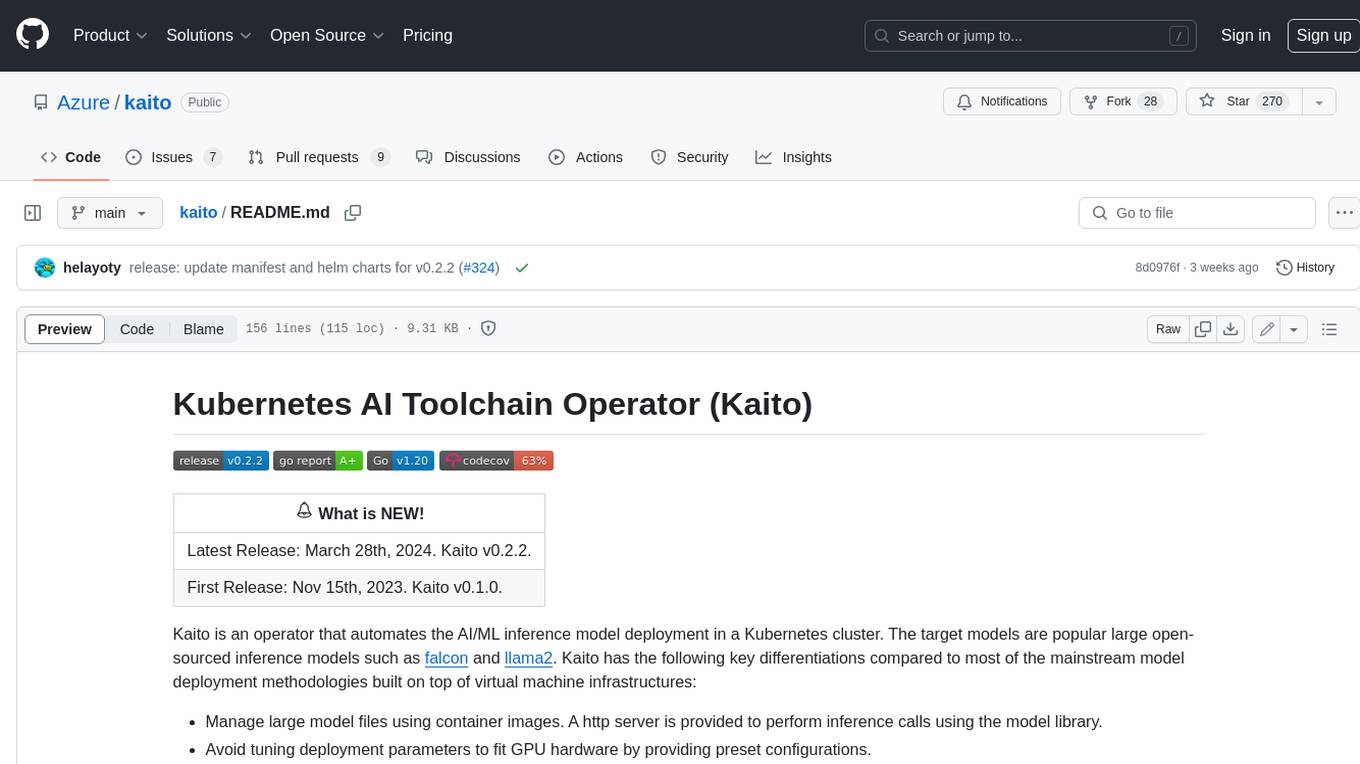
Kaito is an operator that automates the AI/ML inference model deployment in a Kubernetes cluster. It manages large model files using container images, avoids tuning deployment parameters to fit GPU hardware by providing preset configurations, auto-provisions GPU nodes based on model requirements, and hosts large model images in the public Microsoft Container Registry (MCR) if the license allows. Using Kaito, the workflow of onboarding large AI inference models in Kubernetes is largely simplified.
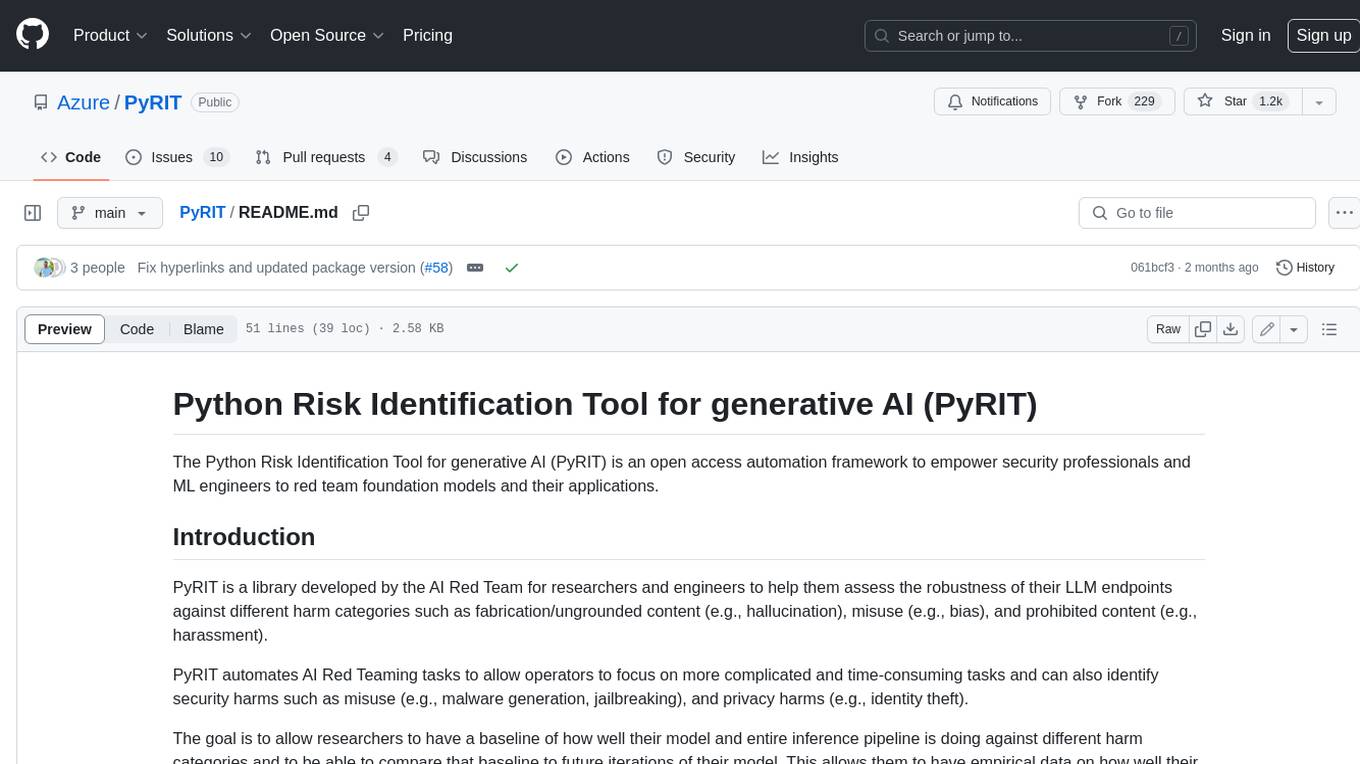
PyRIT
PyRIT is an open access automation framework designed to empower security professionals and ML engineers to red team foundation models and their applications. It automates AI Red Teaming tasks to allow operators to focus on more complicated and time-consuming tasks and can also identify security harms such as misuse (e.g., malware generation, jailbreaking), and privacy harms (e.g., identity theft). The goal is to allow researchers to have a baseline of how well their model and entire inference pipeline is doing against different harm categories and to be able to compare that baseline to future iterations of their model. This allows them to have empirical data on how well their model is doing today, and detect any degradation of performance based on future improvements.
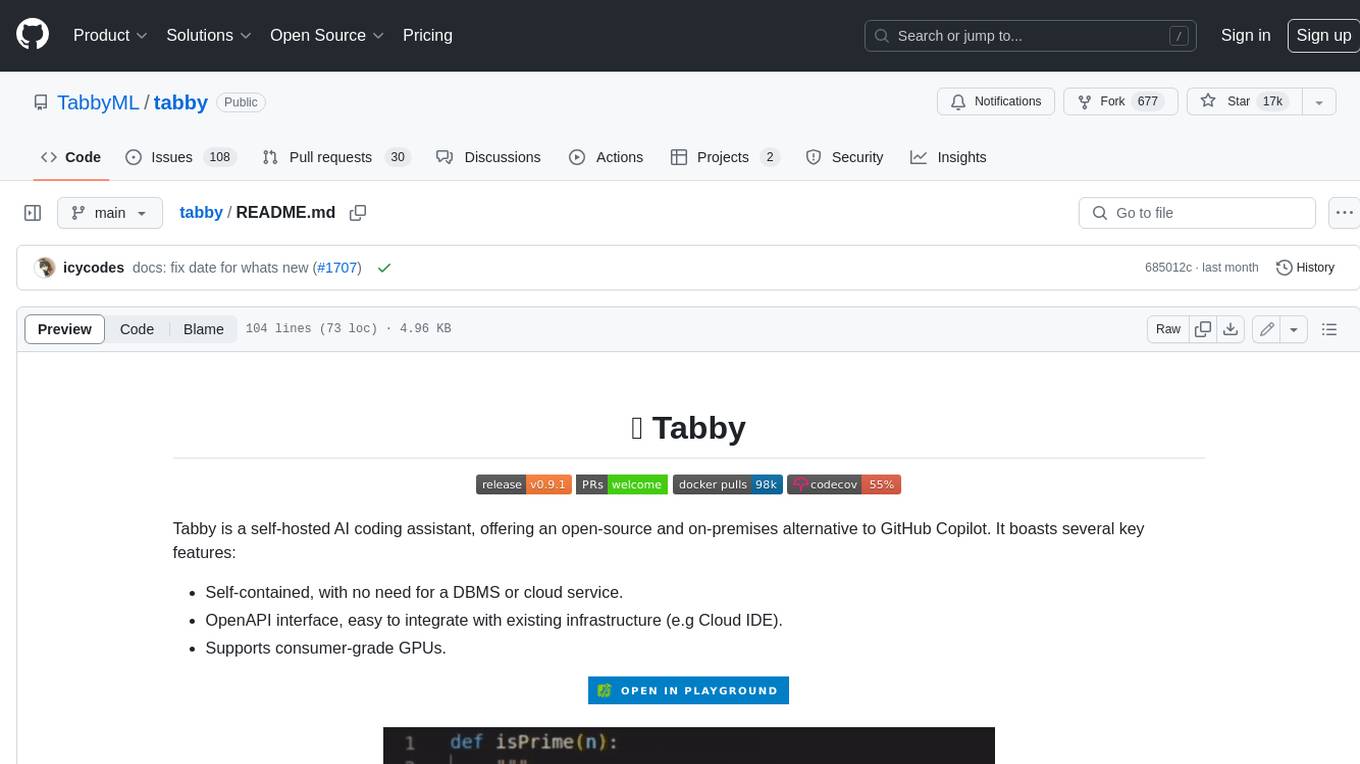
tabby
Tabby is a self-hosted AI coding assistant, offering an open-source and on-premises alternative to GitHub Copilot. It boasts several key features: * Self-contained, with no need for a DBMS or cloud service. * OpenAPI interface, easy to integrate with existing infrastructure (e.g Cloud IDE). * Supports consumer-grade GPUs.
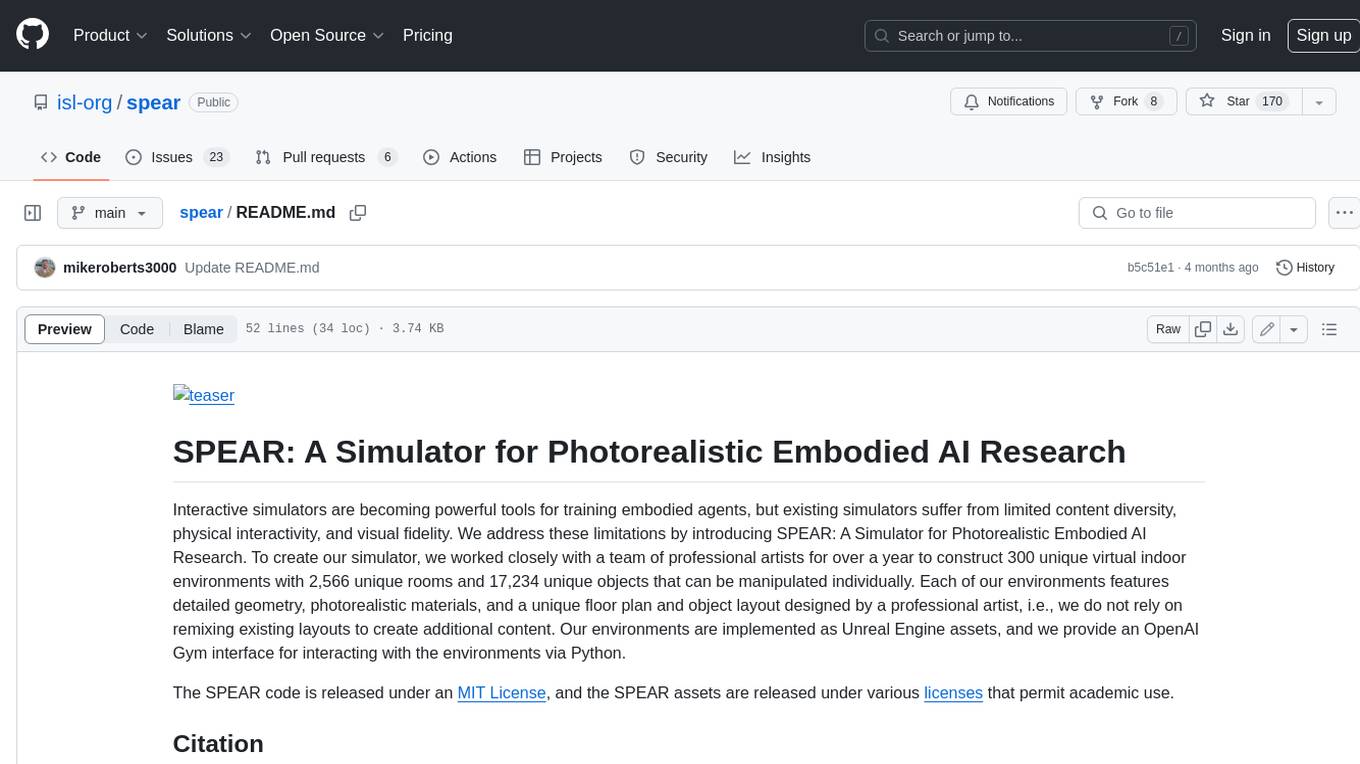
spear
SPEAR (Simulator for Photorealistic Embodied AI Research) is a powerful tool for training embodied agents. It features 300 unique virtual indoor environments with 2,566 unique rooms and 17,234 unique objects that can be manipulated individually. Each environment is designed by a professional artist and features detailed geometry, photorealistic materials, and a unique floor plan and object layout. SPEAR is implemented as Unreal Engine assets and provides an OpenAI Gym interface for interacting with the environments via Python.
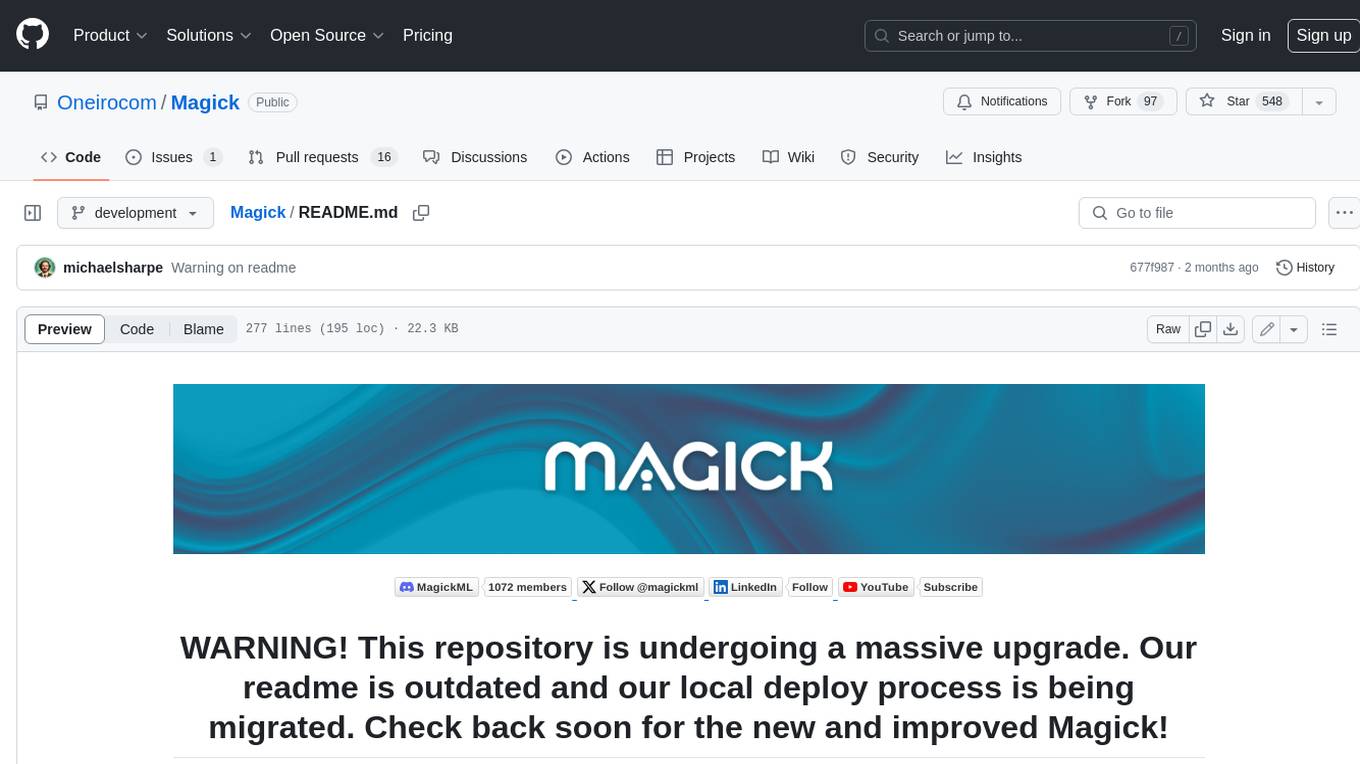
Magick
Magick is a groundbreaking visual AIDE (Artificial Intelligence Development Environment) for no-code data pipelines and multimodal agents. Magick can connect to other services and comes with nodes and templates well-suited for intelligent agents, chatbots, complex reasoning systems and realistic characters.