


cube
📊 Cube’s universal semantic layer platform is the next evolution of OLAP technology for AI, BI, spreadsheets, and embedded analytics
Stars: 18897
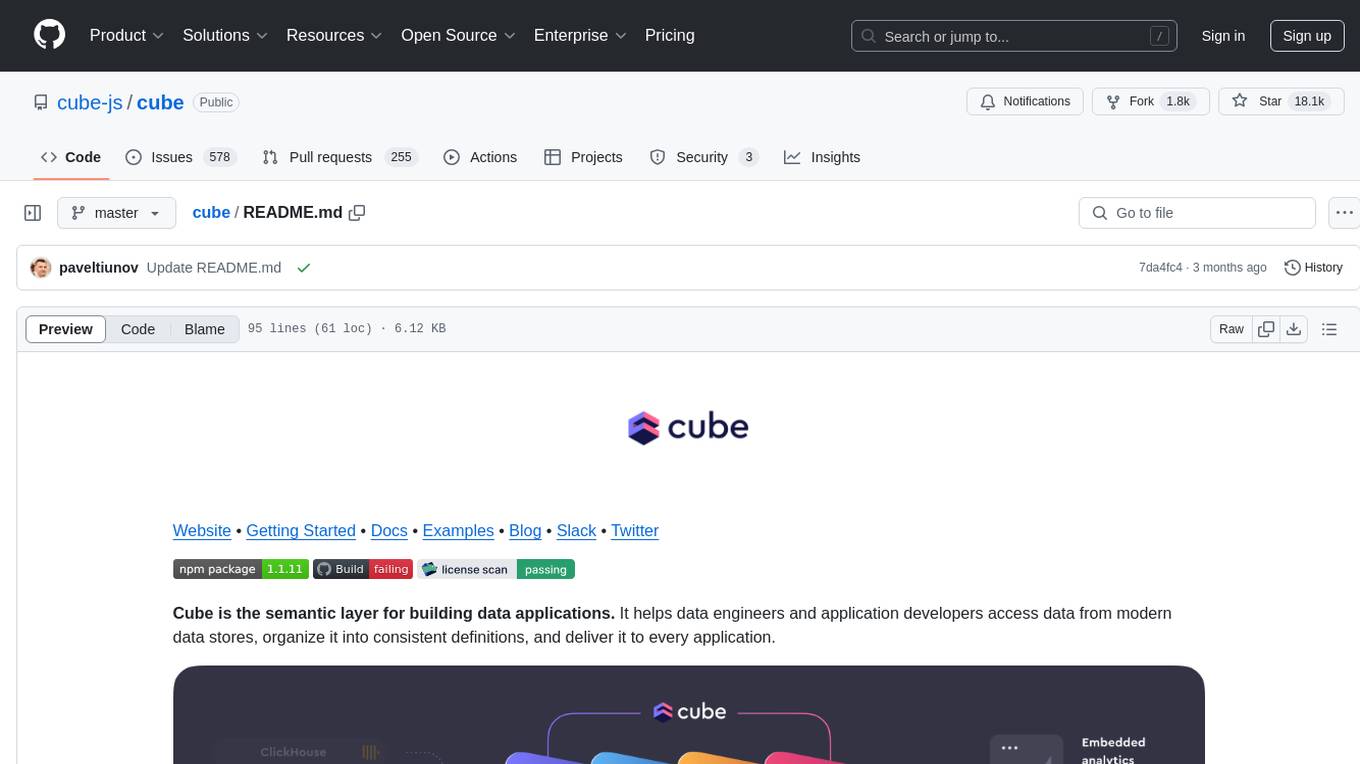
Cube is a semantic layer for building data applications, helping data engineers and application developers access data from modern data stores, organize it into consistent definitions, and deliver it to every application. It works with SQL-enabled data sources, providing sub-second latency and high concurrency for API requests. Cube addresses SQL code organization, performance, and access control issues in data applications, enabling efficient data modeling, access control, and performance optimizations for various tools like embedded analytics, dashboarding, reporting, and data notebooks.
README:

Website • Getting Started • Docs • Examples • Blog • Slack • X



Cube is the universal semantic layer for modern data applications. Born in the cloud era, Cube represents the next evolution of OLAP technology, helping data engineers and application developers access data from modern data stores, organize it into consistent definitions, and deliver it to every application.
Learn more about connecting Cube to data sources and analytics & visualization tools.
Cube was designed to work with all SQL-enabled data sources, including cloud data warehouses like Snowflake or Google BigQuery, query engines like Presto or Amazon Athena, and application databases like Postgres. Cube has a built-in relational caching engine to provide sub-second latency and high concurrency for API requests.
For more details, see the introduction page in our documentation.
As data infrastructure evolved from traditional relational databases to cloud data platforms, OLAP capabilities that once lived in specialized servers like SQL Server Analysis Services and Oracle Essbase were left behind. Today's organizations face several challenges:
-
Analytics Modeling and Multidimensionality. Modern cloud data platforms excel at processing large volumes of data but lack native support for multidimensional analysis and modeling. Cube brings OLAP-style analytics to these platforms, enabling consistent metric definitions and multidimensional analysis.
-
Performance Optimization. While cloud data warehouses have improved query performance through column-oriented storage and distributed processing, they still struggle with complex analytical workloads. Cube provides intelligent caching and pre-aggregation strategies that dramatically improve query response times.
-
Access Control and Governance. Securing and governing access to data across all consuming applications remains critical. Cube offers robust access control to ensure consistent security across your entire data ecosystem.
-
API Flexibility. Legacy OLAP tools were limited in how they exposed data. Cube provides modern REST, GraphQL, and SQL APIs along with support for traditional MDX and DAX interfaces, making it a truly universal semantic layer.
Cube is the missing OLAP engine for the cloud data platform era that provides the necessary infrastructure and features to implement efficient data modeling, access control, and performance optimizations without duplicating analytics modeling, data, or security permissions across different tools.

Cube Cloud is the fastest way to get started with Cube. It provides managed infrastructure as well as an instant and free access for development projects and proofs of concept.

For a step-by-step guide on Cube Cloud, see the docs.
Alternatively, you can get started with Cube locally or self-host it with Docker.
Once Docker is installed, in a new folder for your project, run the following command:
docker run -p 4000:4000 \
  -p 15432:15432 \
  -v ${PWD}:/cube/conf \
  -e CUBEJS_DEV_MODE=true \
  cubejs/cube
Then, open http://localhost:4000 in your browser to continue setup.
For a step-by-step guide on Docker, see the docs.
There are many ways you can contribute to Cube! Here are a few possibilities:
- Star this repo and follow us on X.
- Add Cube to your stack on Stackshare.
- Upvote issues with 👍 reaction so we know what's the demand for particular issue to prioritize it within road map.
- Create issues every time you feel something is missing or goes wrong.
- Ask questions on Stack Overflow with cube.js tag if others can have these questions as well.
- Provide pull requests for all open issues and especially for those with help wanted and good first issue labels.
All sort of contributions are welcome and extremely helpful 🙌 Please refer to the contribution guide for more information.
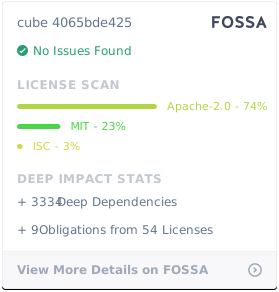
Cube Client is MIT licensed.
Cube Backend is Apache 2.0 licensed.
For Tasks:
Click tags to check more tools for each tasksFor Jobs:
Alternative AI tools for cube
Similar Open Source Tools
cube
Cube is a semantic layer for building data applications, helping data engineers and application developers access data from modern data stores, organize it into consistent definitions, and deliver it to every application. It works with SQL-enabled data sources, providing sub-second latency and high concurrency for API requests. Cube addresses SQL code organization, performance, and access control issues in data applications, enabling efficient data modeling, access control, and performance optimizations for various tools like embedded analytics, dashboarding, reporting, and data notebooks.
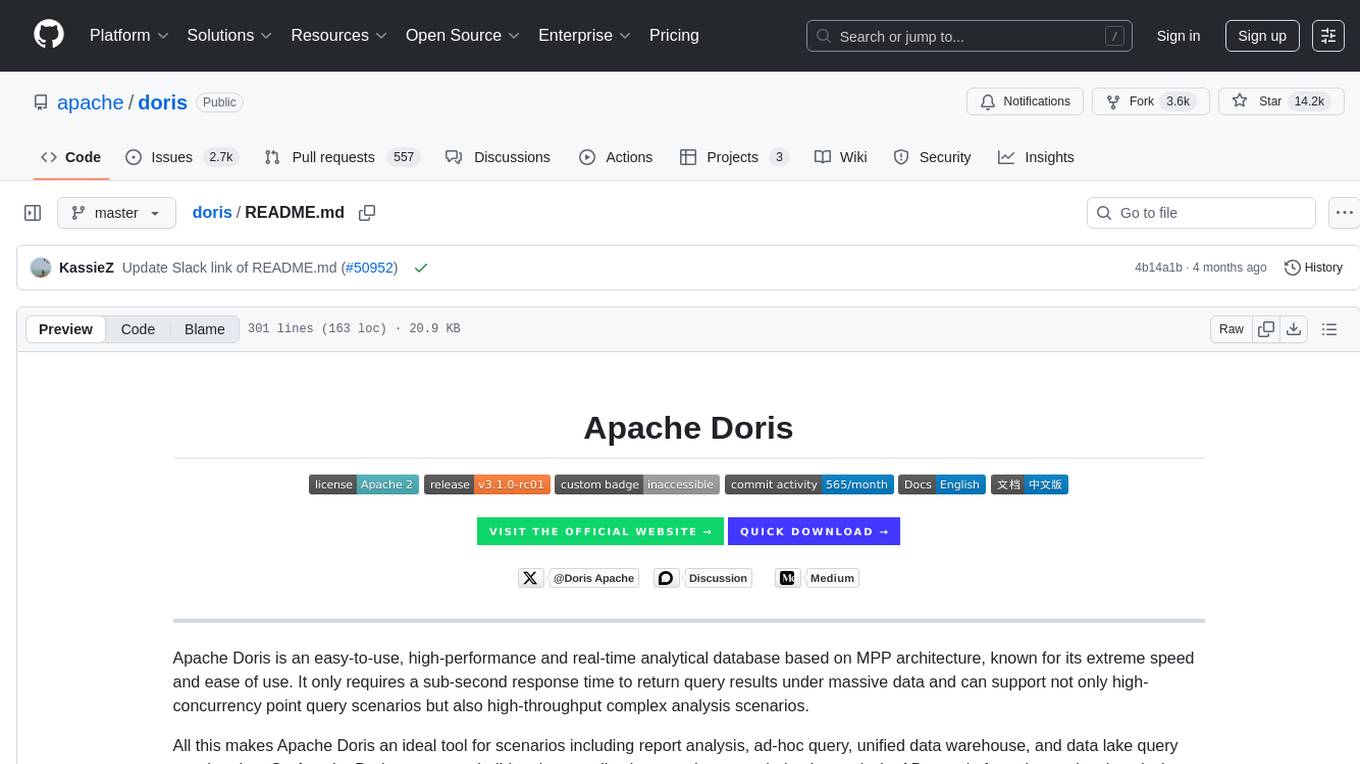
doris
Doris is a lightweight and user-friendly data visualization tool designed for quick and easy exploration of datasets. It provides a simple interface for users to upload their data and generate interactive visualizations without the need for coding. With Doris, users can easily create charts, graphs, and dashboards to analyze and present their data in a visually appealing way. The tool supports various data formats and offers customization options to tailor visualizations to specific needs. Whether you are a data analyst, researcher, or student, Doris simplifies the process of data exploration and presentation.
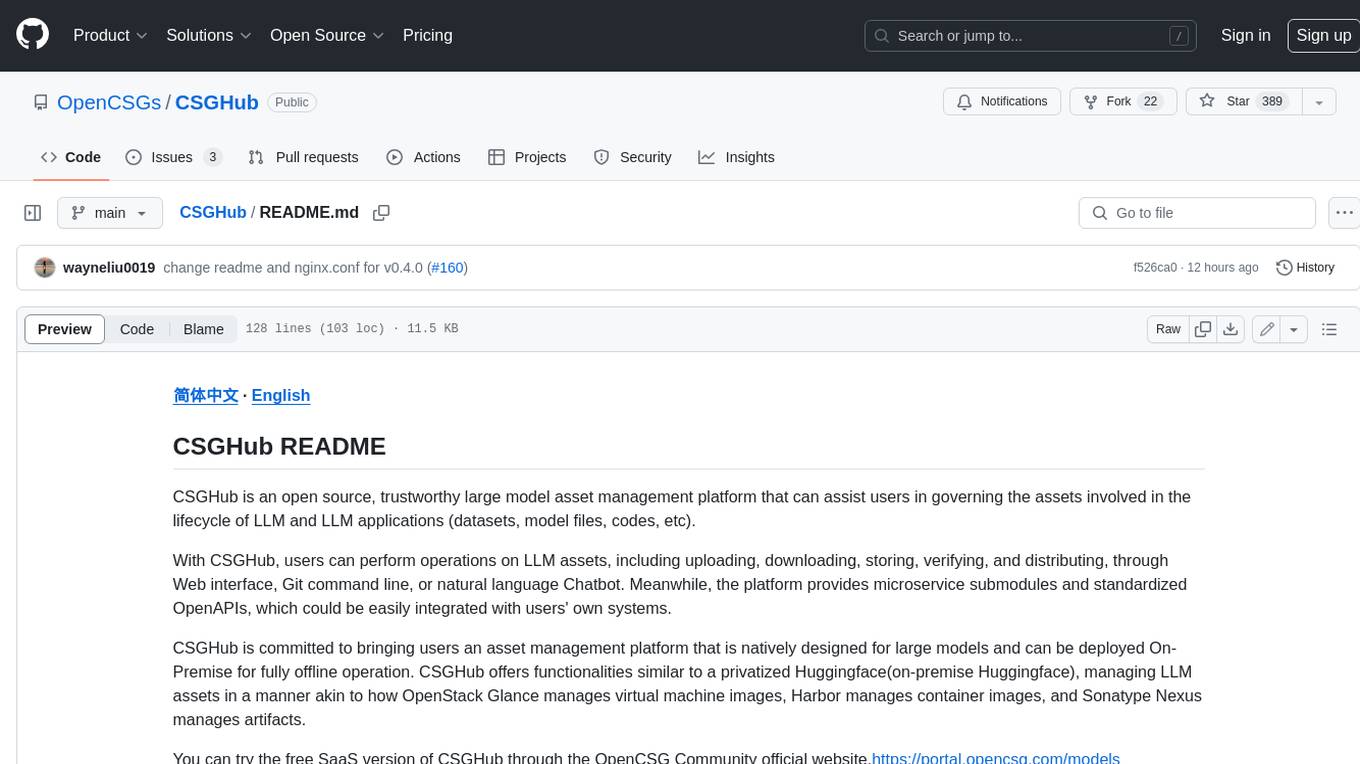
CSGHub
CSGHub is an open source, trustworthy large model asset management platform that can assist users in governing the assets involved in the lifecycle of LLM and LLM applications (datasets, model files, codes, etc). With CSGHub, users can perform operations on LLM assets, including uploading, downloading, storing, verifying, and distributing, through Web interface, Git command line, or natural language Chatbot. Meanwhile, the platform provides microservice submodules and standardized OpenAPIs, which could be easily integrated with users' own systems. CSGHub is committed to bringing users an asset management platform that is natively designed for large models and can be deployed On-Premise for fully offline operation. CSGHub offers functionalities similar to a privatized Huggingface(on-premise Huggingface), managing LLM assets in a manner akin to how OpenStack Glance manages virtual machine images, Harbor manages container images, and Sonatype Nexus manages artifacts.
wren-engine
Wren Engine is a semantic engine designed to serve as the backbone of the semantic layer for LLMs. It simplifies the user experience by translating complex data structures into a business-friendly format, enabling end-users to interact with data using familiar terminology. The engine powers the semantic layer with advanced capabilities to define and manage modeling definitions, metadata, schema, data relationships, and logic behind calculations and aggregations through an analytics-as-code design approach. By leveraging Wren Engine, organizations can ensure a developer-friendly semantic layer that reflects nuanced data relationships and dynamics, facilitating more informed decision-making and strategic insights.
awesome-mlops
Awesome MLOps is a curated list of tools related to Machine Learning Operations, covering areas such as AutoML, CI/CD for Machine Learning, Data Cataloging, Data Enrichment, Data Exploration, Data Management, Data Processing, Data Validation, Data Visualization, Drift Detection, Feature Engineering, Feature Store, Hyperparameter Tuning, Knowledge Sharing, Machine Learning Platforms, Model Fairness and Privacy, Model Interpretability, Model Lifecycle, Model Serving, Model Testing & Validation, Optimization Tools, Simplification Tools, Visual Analysis and Debugging, and Workflow Tools. The repository provides a comprehensive collection of tools and resources for individuals and teams working in the field of MLOps.
psychic
Psychic is a tool that provides a platform for users to access psychic readings and services. It offers a range of features such as tarot card readings, astrology consultations, and spiritual guidance. Users can connect with experienced psychics and receive personalized insights and advice on various aspects of their lives. The platform is designed to be user-friendly and intuitive, making it easy for users to navigate and explore the different services available. Whether you're looking for guidance on love, career, or personal growth, Psychic has you covered.
llmariner
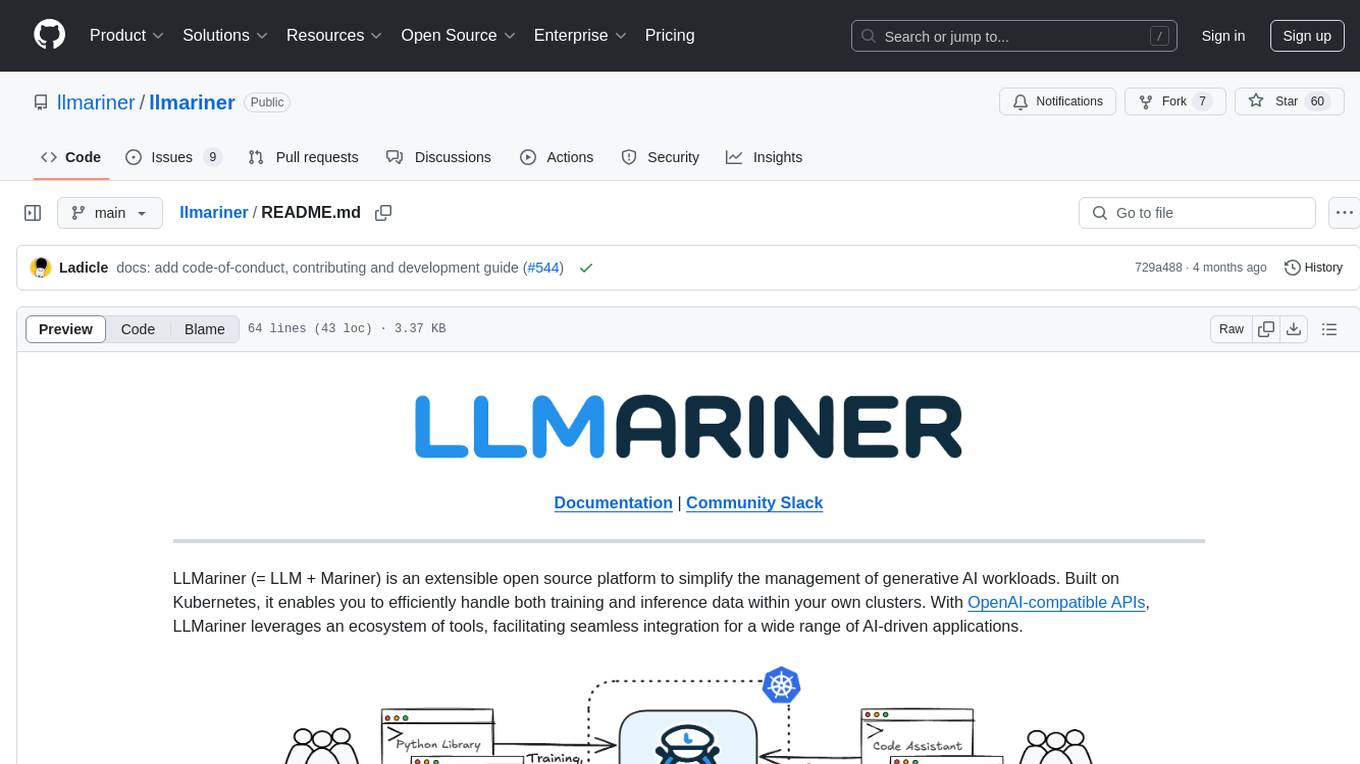
LLMariner is an extensible open source platform built on Kubernetes to simplify the management of generative AI workloads. It enables efficient handling of training and inference data within clusters, with OpenAI-compatible APIs for seamless integration with a wide range of AI-driven applications.
vulcan-sql
VulcanSQL is an Analytical Data API Framework for AI agents and data apps. It aims to help data professionals deliver RESTful APIs from databases, data warehouses or data lakes much easier and secure. It turns your SQL into APIs in no time!
SuperKnowa
SuperKnowa is a fast framework to build Enterprise RAG (Retriever Augmented Generation) Pipelines at Scale, powered by watsonx. It accelerates Enterprise Generative AI applications to get prod-ready solutions quickly on private data. The framework provides pluggable components for tackling various Generative AI use cases using Large Language Models (LLMs), allowing users to assemble building blocks to address challenges in AI-driven text generation. SuperKnowa is battle-tested from 1M to 200M private knowledge base & scaled to billions of retriever tokens.
MemoryBear
MemoryBear is a next-generation AI memory system developed by RedBear AI, focusing on overcoming limitations in knowledge storage and multi-agent collaboration. It empowers AI with human-like memory capabilities, enabling deep knowledge understanding and cognitive collaboration. The system addresses challenges such as knowledge forgetting, memory gaps in multi-agent collaboration, and semantic ambiguity during reasoning. MemoryBear's core features include memory extraction engine, graph storage, hybrid search, memory forgetting engine, self-reflection engine, and FastAPI services. It offers a standardized service architecture for efficient integration and invocation across applications.

embedJs
EmbedJs is a NodeJS framework that simplifies RAG application development by efficiently processing unstructured data. It segments data, creates relevant embeddings, and stores them in a vector database for quick retrieval.
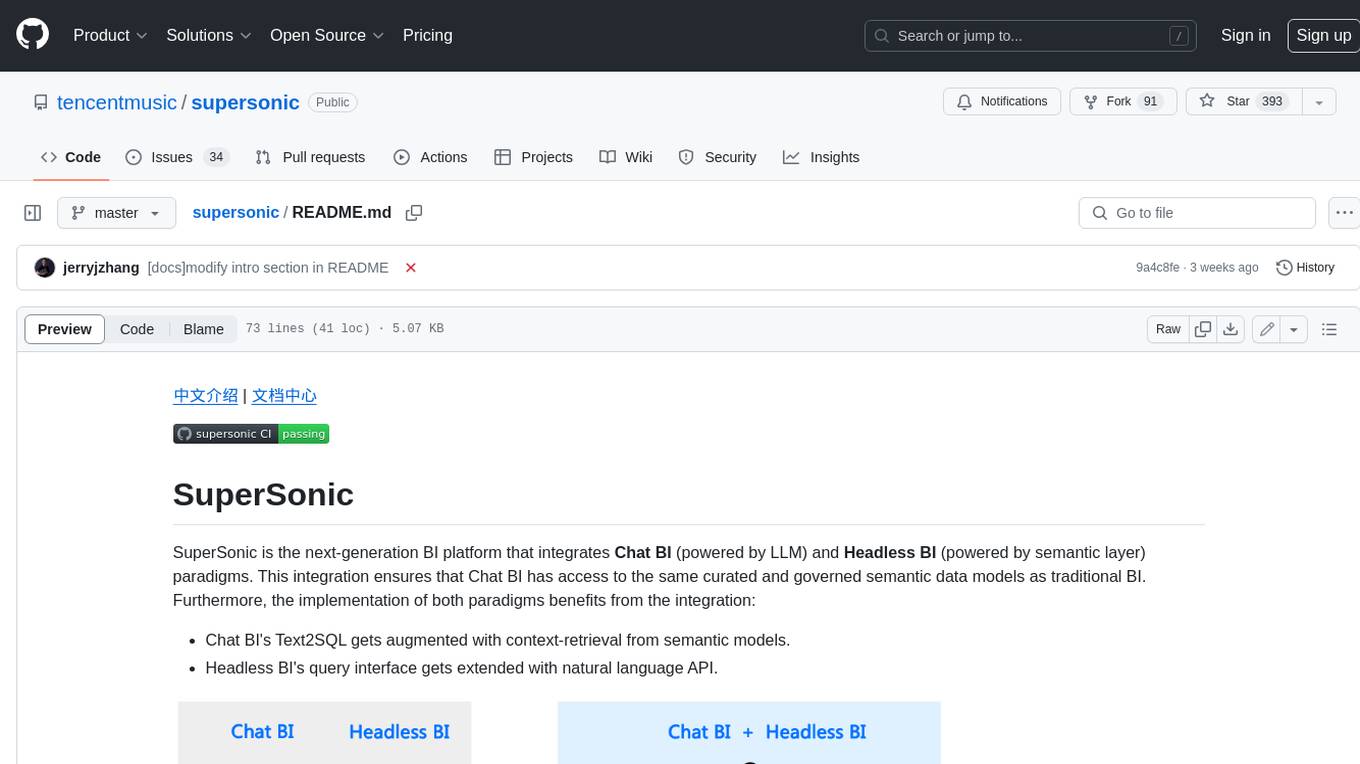
supersonic
SuperSonic is a next-generation BI platform that integrates Chat BI (powered by LLM) and Headless BI (powered by semantic layer) paradigms. This integration ensures that Chat BI has access to the same curated and governed semantic data models as traditional BI. Furthermore, the implementation of both paradigms benefits from the integration: * Chat BI's Text2SQL gets augmented with context-retrieval from semantic models. * Headless BI's query interface gets extended with natural language API. SuperSonic provides a Chat BI interface that empowers users to query data using natural language and visualize the results with suitable charts. To enable such experience, the only thing necessary is to build logical semantic models (definition of metric/dimension/tag, along with their meaning and relationships) through a Headless BI interface. Meanwhile, SuperSonic is designed to be extensible and composable, allowing custom implementations to be added and configured with Java SPI. The integration of Chat BI and Headless BI has the potential to enhance the Text2SQL generation in two dimensions: 1. Incorporate data semantics (such as business terms, column values, etc.) into the prompt, enabling LLM to better understand the semantics and reduce hallucination. 2. Offload the generation of advanced SQL syntax (such as join, formula, etc.) from LLM to the semantic layer to reduce complexity. With these ideas in mind, we develop SuperSonic as a practical reference implementation and use it to power our real-world products. Additionally, to facilitate further development we decide to open source SuperSonic as an extensible framework.
btp-cap-genai-rag
This GitHub repository provides support for developers, partners, and customers to create advanced GenAI solutions on SAP Business Technology Platform (SAP BTP) following the Reference Architecture. It includes examples on integrating Foundation Models and Large Language Models via Generative AI Hub, using LangChain in CAP, and implementing advanced techniques like Retrieval Augmented Generation (RAG) through embeddings and SAP HANA Cloud's Vector Engine for enhanced value in customer support scenarios.
nocobase
NocoBase is an extensible AI-powered no-code platform that offers total control, infinite extensibility, and AI collaboration. It enables teams to adapt quickly and reduce costs without the need for years of development or wasted resources. With NocoBase, users can deploy the platform in minutes and have complete control over their projects. The platform is data model-driven, allowing for unlimited possibilities by decoupling UI and data structure. It integrates AI capabilities seamlessly into business systems, enabling roles such as translator, analyst, researcher, or assistant. NocoBase provides a simple and intuitive user experience with a 'what you see is what you get' approach. It is designed for extension through its plugin-based architecture, allowing users to customize and extend functionalities easily.
awesome-openvino
Awesome OpenVINO is a curated list of AI projects based on the OpenVINO toolkit, offering a rich assortment of projects, libraries, and tutorials covering various topics like model optimization, deployment, and real-world applications across industries. It serves as a valuable resource continuously updated to maximize the potential of OpenVINO in projects, featuring projects like Stable Diffusion web UI, Visioncom, FastSD CPU, OpenVINO AI Plugins for GIMP, and more.
For similar tasks
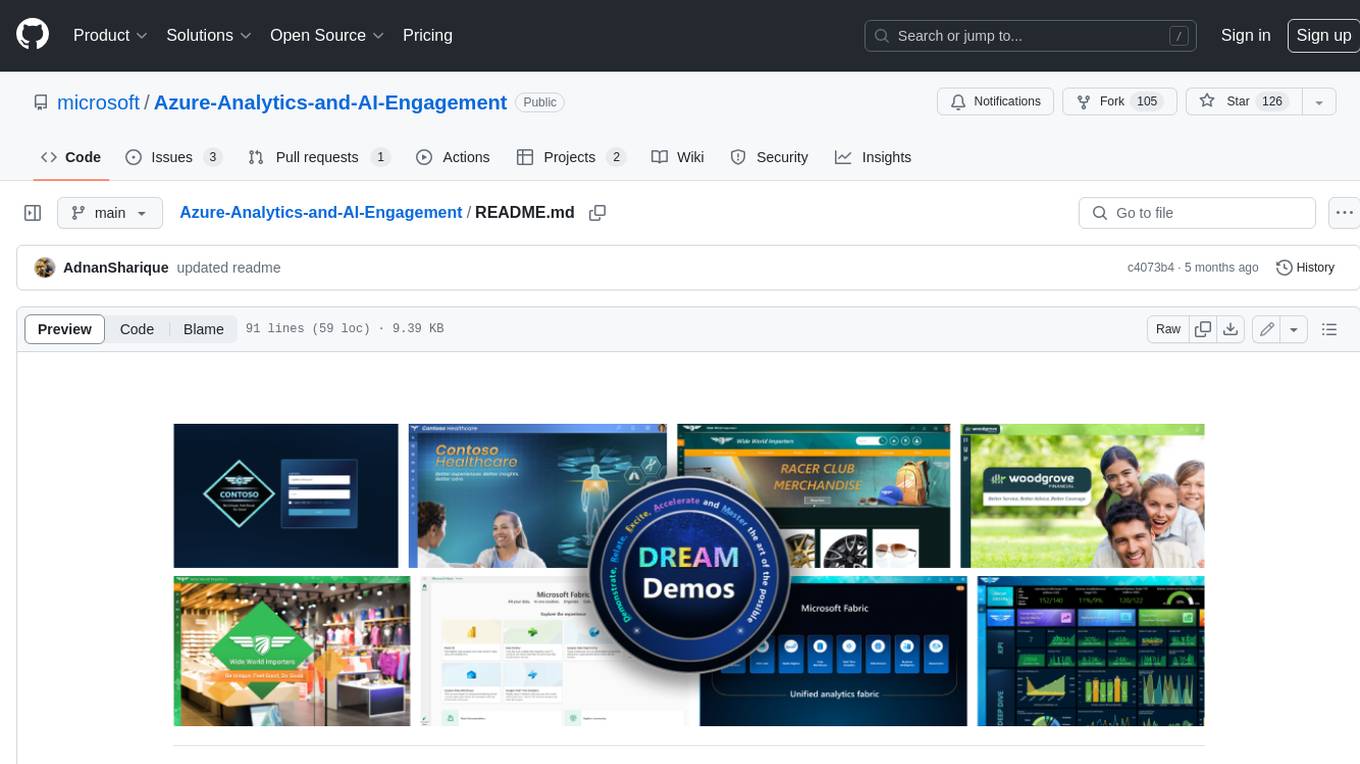
Azure-Analytics-and-AI-Engagement
The Azure-Analytics-and-AI-Engagement repository provides packaged Industry Scenario DREAM Demos with ARM templates (Containing a demo web application, Power BI reports, Synapse resources, AML Notebooks etc.) that can be deployed in a customer’s subscription using the CAPE tool within a matter of few hours. Partners can also deploy DREAM Demos in their own subscriptions using DPoC.
sorrentum
Sorrentum is an open-source project that aims to combine open-source development, startups, and brilliant students to build machine learning, AI, and Web3 / DeFi protocols geared towards finance and economics. The project provides opportunities for internships, research assistantships, and development grants, as well as the chance to work on cutting-edge problems, learn about startups, write academic papers, and get internships and full-time positions at companies working on Sorrentum applications.
tidb
TiDB is an open-source distributed SQL database that supports Hybrid Transactional and Analytical Processing (HTAP) workloads. It is MySQL compatible and features horizontal scalability, strong consistency, and high availability.

zep-python
Zep is an open-source platform for building and deploying large language model (LLM) applications. It provides a suite of tools and services that make it easy to integrate LLMs into your applications, including chat history memory, embedding, vector search, and data enrichment. Zep is designed to be scalable, reliable, and easy to use, making it a great choice for developers who want to build LLM-powered applications quickly and easily.
telemetry-airflow
This repository codifies the Airflow cluster that is deployed at workflow.telemetry.mozilla.org (behind SSO) and commonly referred to as "WTMO" or simply "Airflow". Some links relevant to users and developers of WTMO: * The `dags` directory in this repository contains some custom DAG definitions * Many of the DAGs registered with WTMO don't live in this repository, but are instead generated from ETL task definitions in bigquery-etl * The Data SRE team maintains a WTMO Developer Guide (behind SSO)
mojo
Mojo is a new programming language that bridges the gap between research and production by combining Python syntax and ecosystem with systems programming and metaprogramming features. Mojo is still young, but it is designed to become a superset of Python over time.
pandas-ai
PandasAI is a Python library that makes it easy to ask questions to your data in natural language. It helps you to explore, clean, and analyze your data using generative AI.
databend
Databend is an open-source cloud data warehouse that serves as a cost-effective alternative to Snowflake. With its focus on fast query execution and data ingestion, it's designed for complex analysis of the world's largest datasets.
For similar jobs
db2rest
DB2Rest is a modern low-code REST DATA API platform that simplifies the development of intelligent applications. It seamlessly integrates existing and new databases with language models (LMs/LLMs) and vector stores, enabling the rapid delivery of context-aware, reasoning applications without vendor lock-in.
kitops
KitOps is a packaging and versioning system for AI/ML projects that uses open standards so it works with the AI/ML, development, and DevOps tools you are already using. KitOps simplifies the handoffs between data scientists, application developers, and SREs working with LLMs and other AI/ML models. KitOps' ModelKits are a standards-based package for models, their dependencies, configurations, and codebases. ModelKits are portable, reproducible, and work with the tools you already use.
kweaver
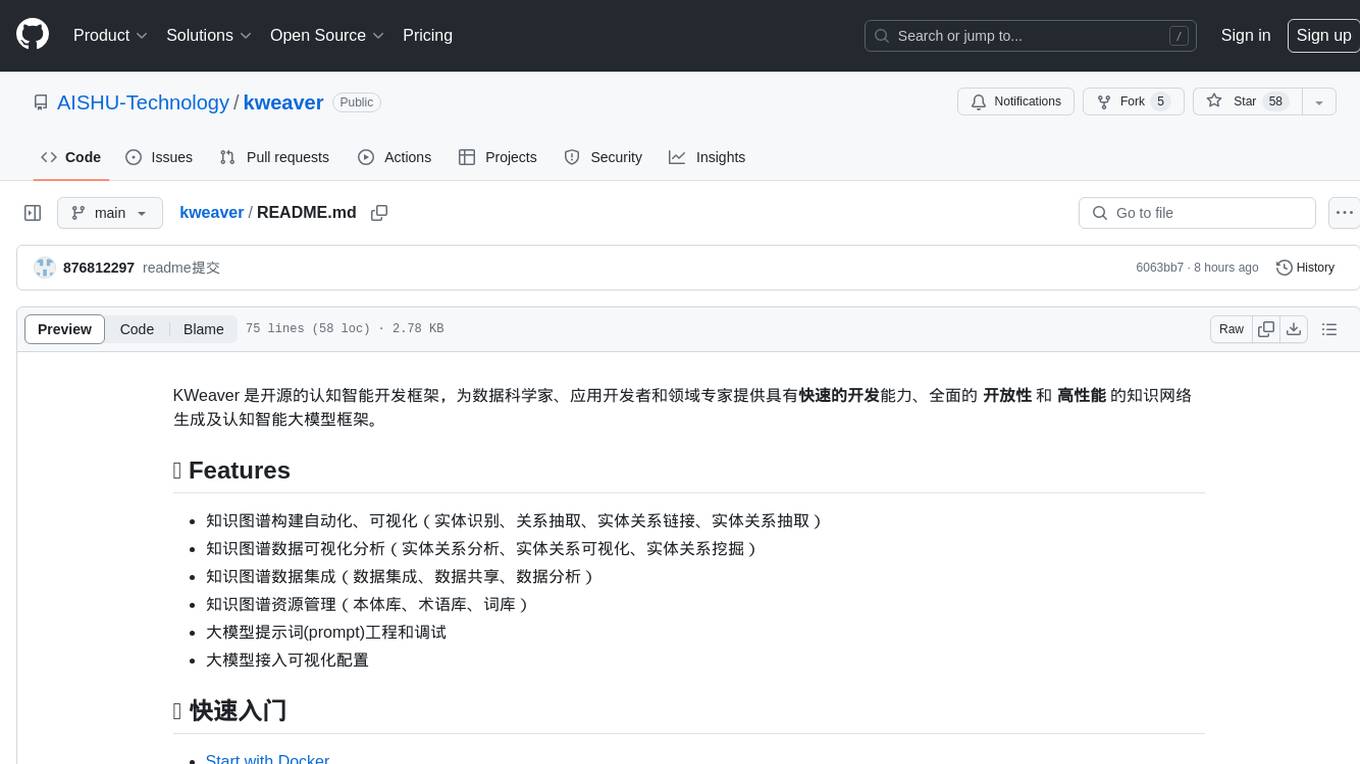
KWeaver is an open-source cognitive intelligence development framework that provides data scientists, application developers, and domain experts with the ability for rapid development, comprehensive openness, and high-performance knowledge network generation and cognitive intelligence large model framework. It offers features such as automated and visual knowledge graph construction, visualization and analysis of knowledge graph data, knowledge graph integration, knowledge graph resource management, large model prompt engineering and debugging, and visual configuration for large model access.
honey
Bee is an ORM framework that provides easy and high-efficiency database operations, allowing developers to focus on business logic development. It supports various databases and features like automatic filtering, partial field queries, pagination, and JSON format results. Bee also offers advanced functionalities like sharding, transactions, complex queries, and MongoDB ORM. The tool is designed for rapid application development in Java, offering faster development for Java Web and Spring Cloud microservices. The Enterprise Edition provides additional features like financial computing support, automatic value insertion, desensitization, dictionary value conversion, multi-tenancy, and more.
moxin
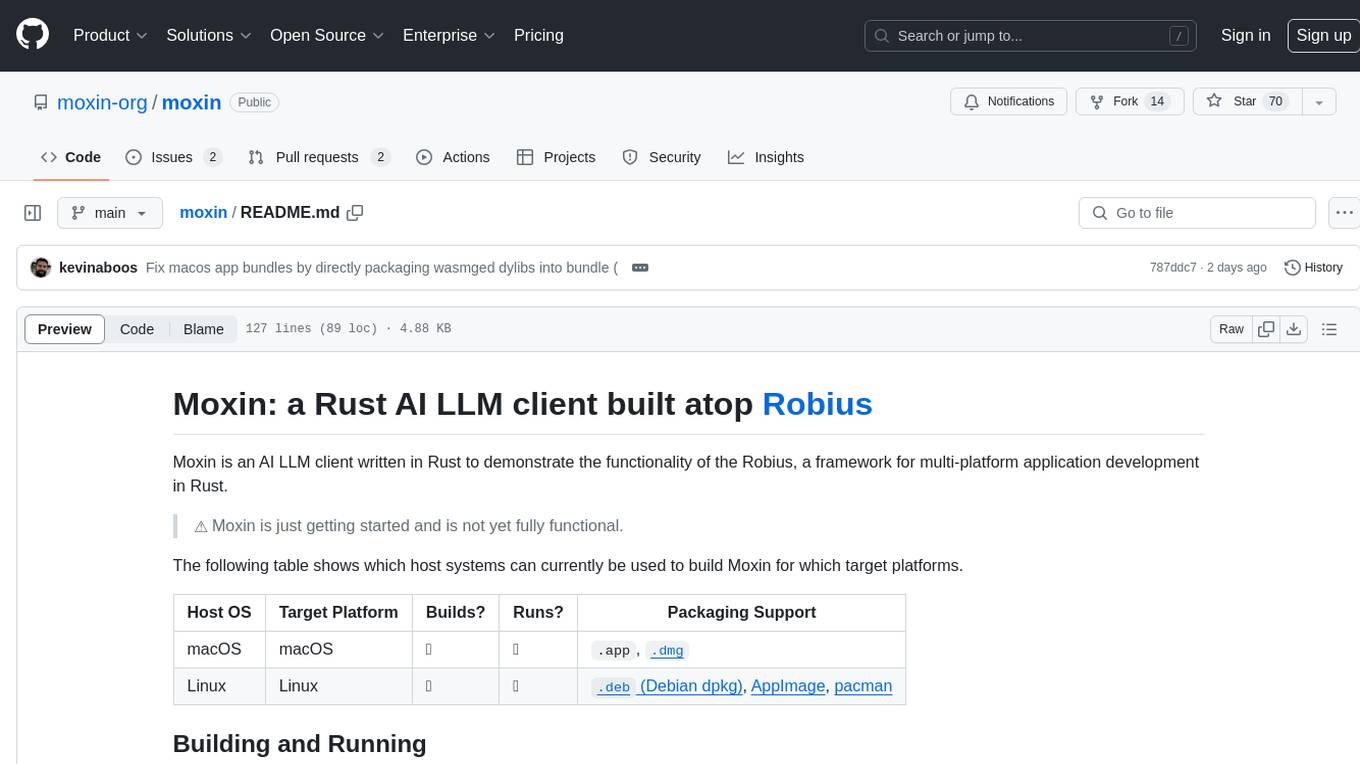
Moxin is an AI LLM client written in Rust to demonstrate the functionality of the Robius framework for multi-platform application development. It is currently in early stages of development and not fully functional. The tool supports building and running on macOS and Linux systems, with packaging options available for distribution. Users can install the required WasmEdge WASM runtime and dependencies to build and run Moxin. Packaging for distribution includes generating `.deb` Debian packages, AppImage, and pacman installation packages for Linux, as well as `.app` bundles and `.dmg` disk images for macOS. The macOS app is not signed, leading to a warning on installation, which can be resolved by removing the quarantine attribute from the installed app.
choco-builder
ChocoBuilder (aka Chocolate Factory) is an open-source LLM application development framework designed to help you easily create powerful software development SDLC + LLM generation assistants. It provides modules for integration into JVM projects, usage with RAGScript, and local deployment examples. ChocoBuilder follows a Domain Driven Problem-Solving design philosophy with key concepts like ProblemClarifier, ProblemAnalyzer, SolutionDesigner, SolutionReviewer, and SolutionExecutor. It offers use cases for desktop/IDE, server, and Android applications, with examples for frontend design, semantic code search, testcase generation, and code interpretation.
aidldemo
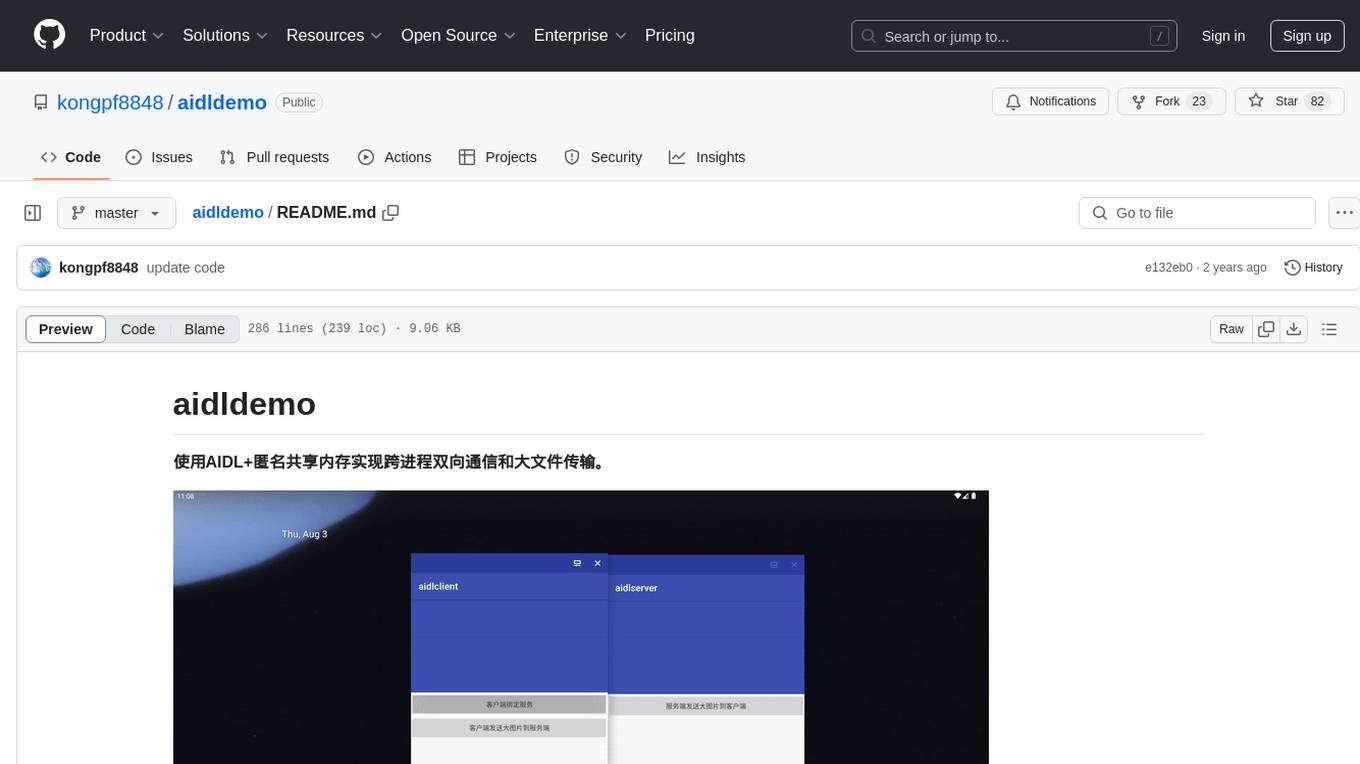
This repository demonstrates how to achieve cross-process bidirectional communication and large file transfer using AIDL and anonymous shared memory. AIDL is a way to implement Inter-Process Communication in Android, based on Binder. To overcome the data size limit of Binder, anonymous shared memory is used for large file transfer. Shared memory allows processes to share memory by mapping a common memory area into their respective process spaces. While efficient for transferring large data between processes, shared memory lacks synchronization mechanisms, requiring additional mechanisms like semaphores. Android's anonymous shared memory (Ashmem) is based on Linux shared memory and facilitates shared memory transfer using Binder and FileDescriptor. The repository provides practical examples of bidirectional communication and large file transfer between client and server using AIDL interfaces and MemoryFile in Android.
cube
Cube is a semantic layer for building data applications, helping data engineers and application developers access data from modern data stores, organize it into consistent definitions, and deliver it to every application. It works with SQL-enabled data sources, providing sub-second latency and high concurrency for API requests. Cube addresses SQL code organization, performance, and access control issues in data applications, enabling efficient data modeling, access control, and performance optimizations for various tools like embedded analytics, dashboarding, reporting, and data notebooks.