

AI tools for ray3.
Related Tools:
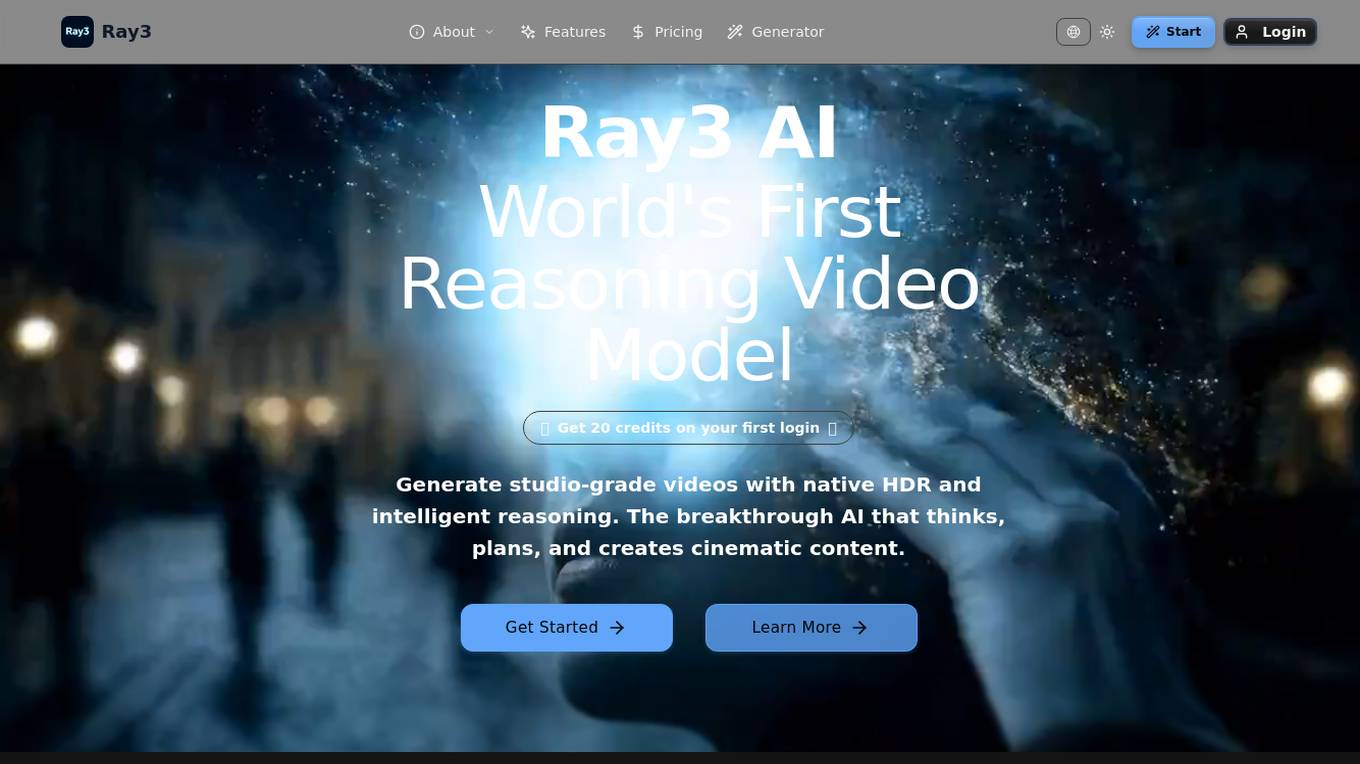
Ray3 AI
Ray3 AI is an AI video generator tool that allows users to create high-quality videos effortlessly. With features like text-to-image conversion, image editing, and aspect ratio adjustment, Ray3 AI simplifies the video creation process. Users can generate videos in various formats, including 16:9 and 9:16, with auto credits costing 10 per creation. The tool is powered by Tencent Hunyuan LIVE 5.0 and offers a seamless user experience for both beginners and experienced video creators.
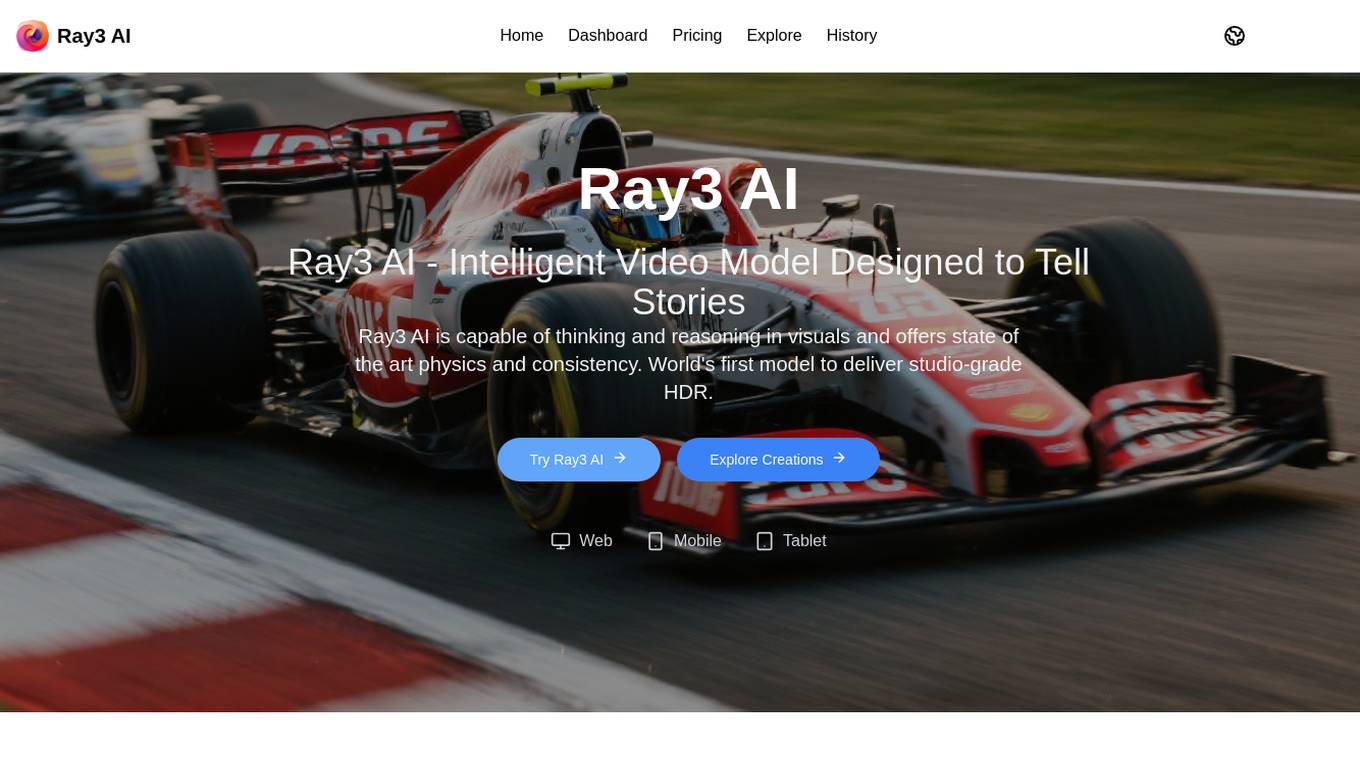
Ray3 AI
Ray3 AI is an intelligent video model designed to tell stories with state-of-the-art physics and consistency. It offers studio-grade HDR capabilities, visual reasoning, and annotation tools for precise control over video generation. The application enables creators to transform images into stunning videos, providing a platform for professionals and hobbyists to create high-quality HDR content with advanced editing features.
Ray 3
Ray 3 is the first video AI application for reasoning developed by Luma. It offers users the ability to create stunning videos with advanced visual effects and HDR generation. Ray 3 utilizes state-of-the-art visual intelligence to understand user intent, think through concepts, and deliver high-quality video outputs. With features like visual reasoning, 16-bit HDR generation, Draft Mode for faster iteration, and Chain of Thought for interpreting prompts, Ray 3 provides a seamless video creation experience for professionals across various industries.
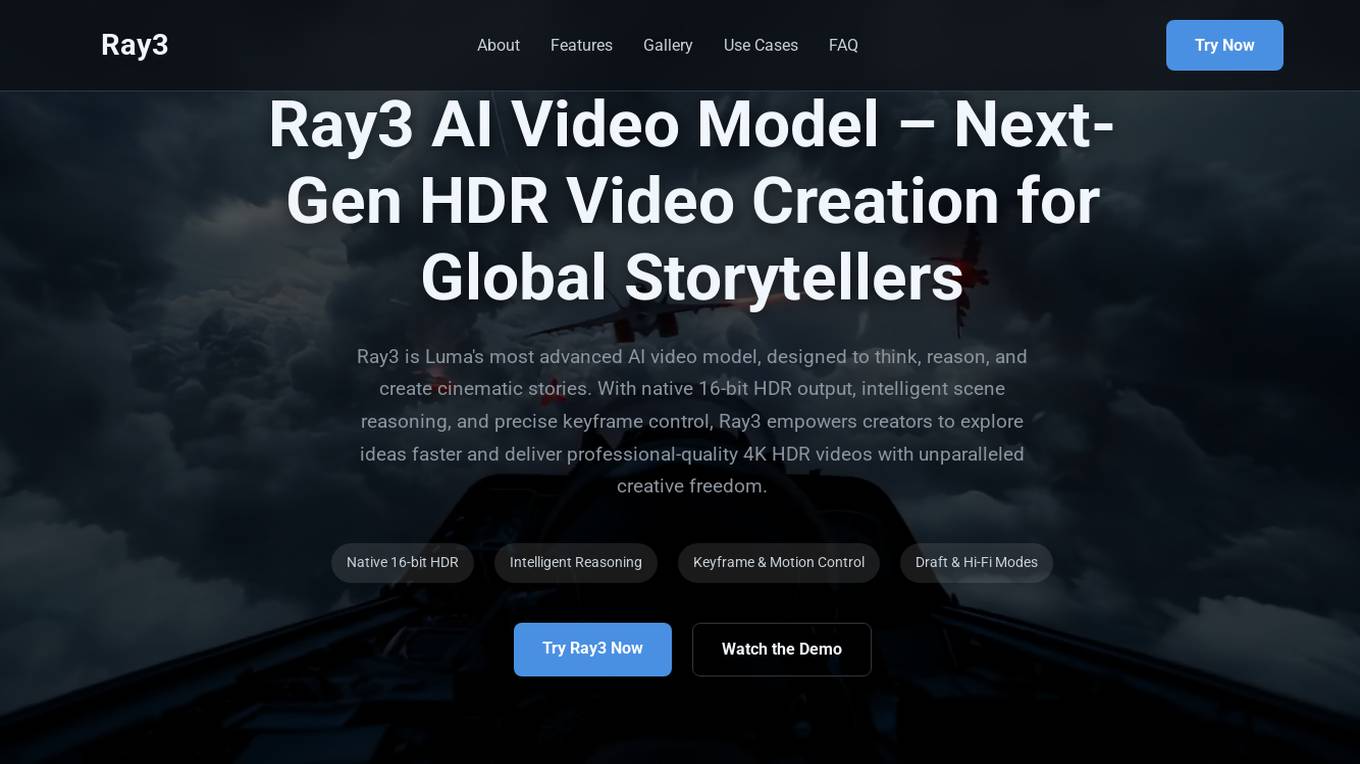
Ray3 AI Video Model
Ray3 is a cutting-edge AI video model developed by Luma, designed to revolutionize HDR video creation for storytellers worldwide. With its native 16-bit HDR output, intelligent scene reasoning, and precise keyframe control, Ray3 empowers creators to generate professional-quality 4K HDR videos with unparalleled creative freedom. It goes beyond simple text-to-video generation, offering a complete creative partnership for modern storytellers, enabling them to bring their cinematic visions to life effortlessly.
ray
Ray is a unified framework for scaling AI and Python applications. It consists of a core distributed runtime and a set of AI libraries for simplifying ML compute, including Data, Train, Tune, RLlib, and Serve. Ray runs on any machine, cluster, cloud provider, and Kubernetes, and features a growing ecosystem of community integrations. With Ray, you can seamlessly scale the same code from a laptop to a cluster, making it easy to meet the compute-intensive demands of modern ML workloads.